In short
Lenny's Podcast: Product | Growth | Career
Episode Title
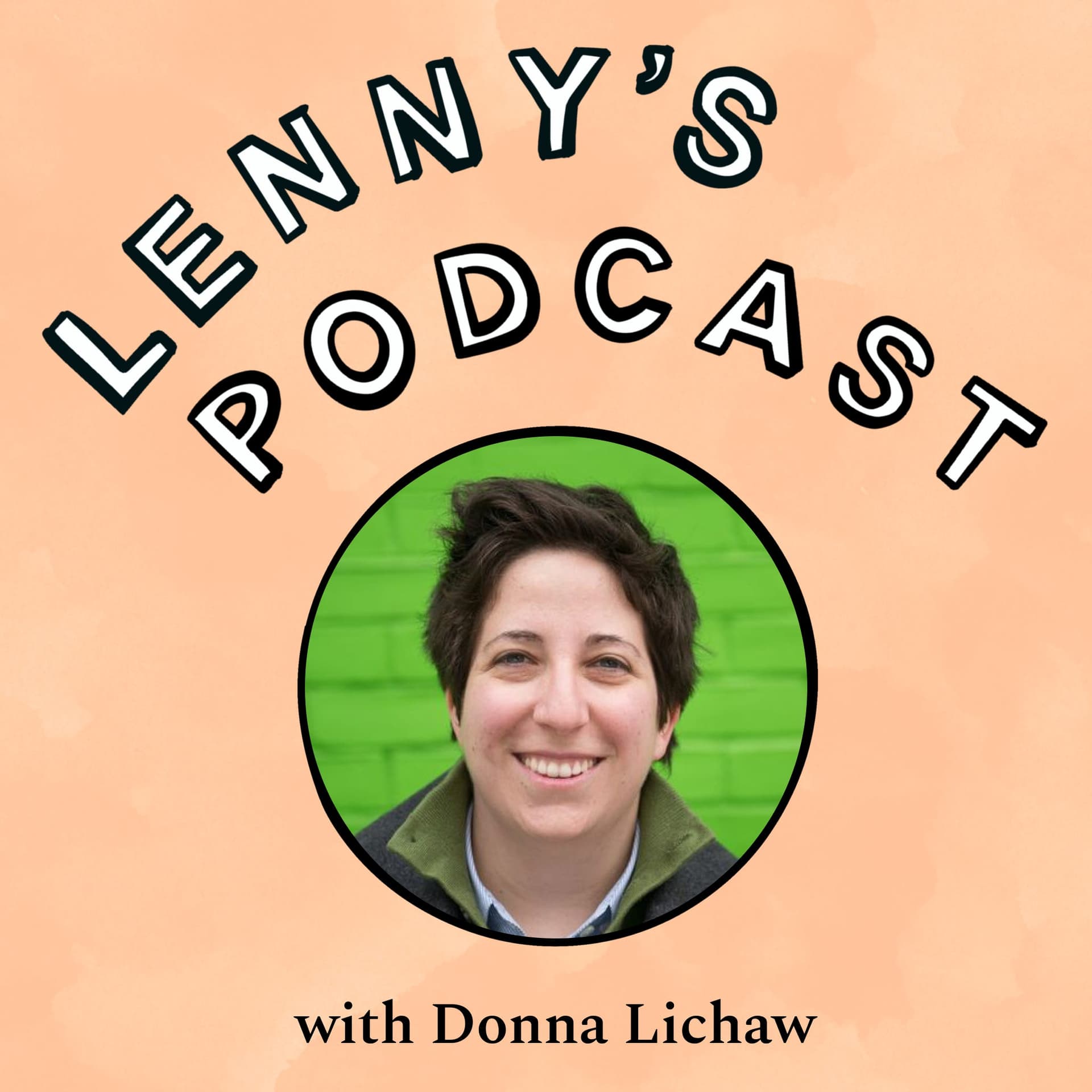
How to Discover Your Superpowers, Own Your Story, and Unlock Personal Growth | Donna Lichaw
Guest
Donna Lichaw
- Profession: Executive Coach, Keynote Speaker, Best-selling Author
- Expertise: Leadership development for CEOs, founders, and executive teams
- Notable Clients: Google, Disney, Twitter, Microsoft, Mailchimp, Adobe
- Book: *The Leader's Journey: Transforming Your Leadership to Achieve the Extraordinary*
Summary In this episode, Donna Lichaw discusses the significance of personal narratives in leadership, identifying and leveraging personal superpowers and kryptonite, overcoming impostor syndrome, and using product frameworks for personal growth.
---
Key Topics Discussed
Personal Narratives and Leadership
- Importance: Personal narratives significantly influence success and failure.
- Story-driven Leadership: Understanding and owning your story can help you become the hero in your leadership journey.
- Changing Your Story: Encourages leaders to reassess the narratives they tell themselves and others, emphasizing authenticity and purpose.
Identifying Superpowers and Kryptonite
- Superpowers:
- Why Important: Leaning into strengths yields greater impact than focusing on weaknesses.
- How to Identify: Reflect on peak life experiences and moments of high energy to discover inherent strengths.
- Kryptonite:
- Understanding Kryptonite: Recognize habits or traits that may undermine effectiveness but could also serve some beneficial purposes.
- Mitigation: Learn to manage kryptonite by understanding how it serves you or by minimizing its negative impact.
Overcoming Impostor Syndrome
- Approach: Embrace impostor syndrome as it can drive growth and improvement.
- Reframing: Instead of suppressing feelings of inadequacy, understand how they can motivate you to learn and excel.
Product Frameworks for Personal Growth
- Double Diamond Framework: Used to set personal growth goals and experiment with different approaches to achieve desired outcomes.
- Experiments: Like product tests, run small personal experiments to gather data, test hypotheses about personal development, and iterate towards goals.
Visualization and Goal Setting
- Power of Visualization: Envisioning the desired future enhances motivation and creativity.
- Goal Articulation: Encourages setting clear, attainable goals by visualizing successful outcomes and working backwards to define necessary steps.
---
Practical Exercises
Identifying Superpowers
- Reflect on Past Experiences: Consider times when you were most energized and at your best. Identify patterns or common strengths.
- Feedback from Others: Solicit feedback from colleagues or use formal assessments like StrengthsFinder or VIA Character Strengths.
Addressing Impostor Syndrome
- Self-Reflection: Regularly assess how feelings of being an impostor might push you to achieve more.
- Balanced View: Recognize when these feelings are driving positive actions and when they might be excessive and harmful.
Experimental Growth
- Run Experiments: Identify small, low-risk actions to test new skills or approaches in personal and professional settings.
- Evaluate Outcomes: Use head, heart, and hands to assess the success and impact of your experiments.
---
Tools and References
- CliftonStrengths: Strengths assessment tool
- VIA Character Strengths: Tool for identifying personal strengths
- Gestalt Coaching: Approach emphasizing awareness and understanding of current experiences
Final Thoughts
- Donna emphasizes the importance of authenticity and leveraging one's unique strengths and stories to lead effectively and make a meaningful impact.
- Encourages listeners to explore their superpowers, manage their kryptonite, and use structured frameworks to continuously grow and achieve their personal and professional aspirations.
Where to Find Donna Lichaw
- [LinkedIn](https://www.linkedin.com/in/dlichaw/)
- [Website](https://www.donnalichaw.com/)
Additional Resources
- [The Leader’s Journey](https://www.amazon.com/Leaders-Journey-Transforming-Leadership-Extraordinary/dp/1959029134)
- [Lenny’s Newsletter](https://www.lennysnewsletter.com) for more insights on product, growth, and career development.
---
Production Details
- Sponsors: OneSchema, Sendbird, Sprig
- Podcast Production: Penname Co.
- Contact: [podcast@lennyrachitsky.com](mailto:podcast@lennyrachitsky.com)
Enjoyed the episode? Subscribe and leave a review to help others find the podcast!
Written by AI. May contain mistakes. Listen to the episode to check what was said.
Transcript
Automatic transcript. May contain errors.0:00When superheroes discover what their superpowers actually are, they wreak havoc and they make a mess and it's uncomfortable and even Superman tries to get rid of his superpowers. It's hard to know what you're really great at. Patas of somebody identified their superpowers, their strengths. Pull your superpowers out of your stories from your past, your present, and then eventually figure out how to apply them and transpose them to your future. The person's story, this is central to becoming a better leader. The most effective story are the ones that we tell ourselves. They may or may not be true.
0:36Our brain doesn't know the difference once you can really understand that you may as well leverage it to be that hero.
0:46Today, my guest is Donna Lyshau. Donna is an executive coach, speaker, and best -selling author. She helps founders, CEOs, and executive teams level up their leadership skills and scale their impact while staying true to their mission, their purpose, and themselves. Donna has worked with leaders at companies like Google, Disney, Twitter, Microsoft, and Adobe, and she's also the author of the book The Leaders Journey, which is what we spend our time on. In our conversation, we talk about why the story that we tell ourselves has so much impact on our success and failure, why knowing your superpowers, and also your crypto -night, is so important to your career and how to identify these two things.
1:26How to reframe your feelings of imposter syndrome and actually use it as an advantage. How to identify your life goals, even if you have no idea what they might be, plus a ton of examples from her coaching practice of people unlocking their career using her frameworks and how they went about doing this. And so much more, if you enjoy this podcast, don't forget to subscribe and follow this podcast in your favorite podcasting app or YouTube. It's the best way to avoid missing future episodes and it helps the podcast tremendously. With that, I bring you Donna Lishow after a short word from our sponsors.
2:01Today's episode is brought to you by one schema, the immeasurable CSV importer for Sats. Customers always seem to want to give you their data in the messiest possible CSV file. And building a spreadsheet importer becomes a never ending sink for your engineering and support resources. You keep adding features to your spreadsheet importer, the customers keep writing in CSUs. Six months later, you're fixing yet another date conversion edge case bug. Most tools aren't built for handling messy data, but one schema is. Companies like Scalae i and Pave are using one schema to make it fast and easy to launch delightful spreadsheet import experiences from embeddable CSV import to importing CSVs from an SFTP folder on a recurring basis.
2:40Spreadsheet import is such an awful experience in so many products. Customers get frustrated by useless messages like error online 53 and never end up getting started with your product. One schema intelligently corrects messy data so that your customers don't have to spend hours in Excel just to get started with your product. For listeners of this podcast, one schema is offering a $1 ,000 discount. Learn more at oneschema .co slash leddie. Let me tell you about a product called Sandbird, the all -in -one communications API platform designed for both web and mobile apps. In a world saturated with multi -channel communication, product teams are discovering the effectiveness of in -app communication.
3:21With Sandbird, businesses can elevate their in -app experience with decluttered and branded communication, featuring AI powered chatbots, one -way messages, chat, video calls, and live stream capabilities, all tailored for commerce, marketing, and top tier support. Forward -thinking companies such as Hinge, Patreon, Yahoo, Accolade, and more, Use Senbird to build in -app communication experiences, a driving engagement, conversion, and retention. In -app communication has the highest conversion, highest engagement, and highest satisfaction of any communication channel. And when it comes to investing in this channel, trust Senbird to take your in -app communication experience to the next level.
4:02Start today with Senbird's free plan, and as a listener of Lenny's podcast, you'll get an additional two months of unlimited usage and access to all premium features. including creating your very own generative AI chat bot. Visit sendbird .com slash Lenny to begin your free journey. That's sendbird .com slash Lenny.
4:25Donna, thank you so much for being here and welcome to the podcast. Thanks Lenny, it's exciting to be here. So we connected through a former colleague of mine who could not stop raving about how much value she got from working with you. So also you have a new book out right here that I have the leaders journey. And so I thought it would be awesome to bring on and share your wisdom with a wider audience. Love the podcast, my clients love your stuff. And newsletter everything. So very excited to be here. Amazing. And congrats on the book, by the way. Thank you. You actually were a product manager in your previous life.
5:04You're also a designer in a previous life. These days, you're an executive coach. Just briefly, I'm curious what pulled you from product management design and the things you did before this life into executive coaching. And maybe another way to ask this question is, what's your origin story? And this is a little foreshadowing to the stuff we're going to be talking about later. Actually, it's funny. Like all origin stories, there are actually multiple episodes, multiple moments that led me to an epiphany, but the biggest aha moment was when I was working several years ago, almost a decade ago, at this point, with an executive team in Silicon Valley.
5:49And we were at a leadership retreat. And we were supposed to, at the time, I was facilitating a program on effective product leadership. Had to be a great product leader, product executive, and the biggest thing that companies wanted at the time and teams wanted was their teams to be better storytellers. And it's still something we hear today, which is, you know, to be a great product leader or a leader in general in any industries. be a great storyteller. And so at the time I was teaching, I'm facilitating storytelling, workshops and exploring that with teams. And it was a few people on this team specifically who I so appreciate their honesty and candor here, which is what this giant tech company is known for, very blunt people working there.
6:45And they pulled me aside halfway through the offsite and they were just like, honestly, story telling is not going to fix our problems. This is silly. And what they were able to tell me is that their leaders wanted them to be more effective by having greater influence. And you know, these are terms that we throw around all the time. It'd be more influential and the better leader, whatever that means, and what was happening on the ground with these executives was that they were all fighting. So, you know, out here, all the head of engineering is such a jerk or this person won't listen to me or my team is demotivated and I get it but they need to step up and work more and there's just a lot of conflict going on here and there that storytelling wouldn't fix.
7:36Like, when that happens and I talk about this in the book about a bunch, no one wants to hear your stories. You have to actually be able to connect with people and to work with people and feel good as a leader in order to really step up and lead. You know, I didn't have an answer for this team at the time and I left this off site just honestly feeling terrible and not knowing what to do about it except telling them, I think you got to go work with a coach because this is, this is beyond my pay grade. But when I left that day, I just couldn't stop thinking about this team because I had hunch that stories were still a part of something, but not what they needed.
8:17Telling stories was not the answer. And so I ended up spending what now is the next decade figuring out, all right, how do you become an effective leader? And of course, because I can't do anything lightly once I went down that path, I ended up switching out my entire business. And now that's all I do is help people be better, more effective, constant leaders who really make the impact that they want to make. So along those same lines, what's interesting is you actually found that this idea of story -telling was actually much more effective in your coaching practice instead of helping them figure out the story of the product.
8:50It's the story of the person and so kind of transitioning into the meat of your approach to coaching. I think you call it story -driven leadership. Essentially, you're finding is that story and the person's story is extremely important and powerful in helping them level up as a leader and also seeing them as the hero of their story. So I guess just with that foundation, you just talk about why that is so powerful, the idea of figuring out your own story and why you need to be the hero of your own story and just what all this means. We all as humans want to be the hero of our own story. It's how we live our lives, it's how we make choices, it's how we understand the world around us and it's how we communicate to the back to the world.
9:36With leadership it's much the same, which is we have a mission that we want to accomplish. No matter how big or small it's something we're driven to do something. If you're a leader you want to be a leader you have to be taking yourself and you have to be taking people somewhere. We also have obstacles so that's a part of any great story. There are challenges. It shouldn't be easy. It shouldn't be so hard. That's it that you fail. That's a tragedy. But there are challenges and it makes life more exciting. You don't do it alone. So it's rare that a story just has a single individual. It happens, but that's not most of life.
10:18And there are other elements that I ended up uncovering when I looked deeper into what makes the most effective leaders effective. And the biggest thing is stories that we tell people, it's like the tip of the iceberg. And if anything, it even doesn't matter. I've worked with a lot of folks who their teams say, stop it with the storytelling, stop talking at us. And they don't want any of that. But the most effective stories are the ones that we experience as we live life and that we tell ourselves as well because we have the ability by saying things like, oh, I'll never succeed, or oh, she'll never go for it, or he's such a jerk, or whatever the stories are.
11:06These are all stories. And they may or may not be true. They're usually not true, but our brain doesn't know the difference where our brain, it's like the most powerful ability our brain has is to understand and see stories everywhere. And so once you can really understand that you may as well leverage it to be that that hero in your life. And even as I say it out loud, it sounds so cheesy, but it's true. This is neuroscience and psychology. Like we just want to be the heroes. And that's what our focus is. So I want to delve deeper into that in that idea there. So people listening to this might feel like, okay, cool.
11:42Let me think about the story of my life. This sounds like a fun thing I could do. But I think your point is this is central to becoming a better leader, figuring out the story of you and kind of that change in your perspective on yourself and giving you more, like, unlocking you, I think, is a big part of it. You just talk about more just like the power and why this is so important because it's not just like cool. I'll sit around and think about, oh, here's my story is born here, I did this thing. Why is this so important to do? It's a little antithetical in a way because it goes against what a lot of us believe, especially if we have, I'll say, product backgrounds or just business backgrounds or tech backgrounds or anything where we've built things for people.
12:31For years we've had this idea that we build companies in a user -centered way, where, all right, build for the customer first and all else will follow. And there's some truth to that on the one hand, and I used to think leadership was the same, which is, well, it's not about you as a leader, it's about who are you bringing along on your journey, and how do they need to be heroes? So how do you enable everyone you work with and everyone you want to follow you to join you and feel amazing with it. That's the kind of user -centered approach, where it's not about you, it's about who you're bringing with you and the impact you wanna make.
13:13But what I learned is that it's actually, it doesn't work that way. And you need to flip that, which is when you start with you first at the center of the equation, And then I'm going to do everything for me as a diagram. So I'm thinking of concentric circles. You start with you, and this isn't also Ken Blanchard has a great model for this. We start with you. It's the inner circle. Then you are able to lead yourself. Then you can lead others. It extends to one -on -one relationships. Then once you've got that, you're able to lead groups teams. and then outward towards the business. When you figure that out and you come from the inside out, it's much, much more powerful because it's not selfish.
14:07Like I would have thought years ago, but it's purposeful. You as human, we all are driven by a mission, by purpose, by reason for what we do. and when we're able to have that power us, it then empowers us to connect with others so that we can bring it to life. And especially in a business context, but this is the case in anything, communities and family, especially in business. So it has to start with you. You gotta need fuel from somewhere. And if it comes from without, it's like an eggshell that's just ready to crack. It's not sustainable if it comes from outside. Can you give an example of someone you work with that changed their story and what impact it had on their career to make this even more real?
14:58I can think of a CEO I worked with a few years ago who on the outside was so put together. He was the CEO of a billion dollar company successful, raised money like no one's business, was able to get people excited about what he was building, join him, and when we started working together, he had recently hired an executive team, members of an executive team that were just superstars. Silicon Valley and just incredible and they were so excited to work with him. He was so excited to work with them as well. But on the inside, the story he kept telling himself was he's too nice. Nobody listens to him was another story.
15:55People don't take me seriously. was another story and then there were what I call horror stories. This is not a scientific term by any means, but horror stories that they told themselves were things like we're never gonna make it or they're never gonna listen to me or I'll never learn to be a real CEO. And the problem with stories like that is they end up taking over your identity, they shadow and cloud your everyday and actions you take and interactions you have with people. And when you focus on them so much, they very well will become true. So that's one example. I could tell you a little more about that, what we did about it.
16:45So yeah, that's exactly what I was going to ask. And then I'd love to, and then yeah, so if you could share what you did to help shift to a story and then also just how do people do this for themselves? Perfect. So in this case, and this is like every when I work with, and this is absolutely something that everyone listening and everyone in the audience can absolutely do is take a data -driven approach to the stories that you tell yourself. So for example, you know, the story, I'm too nice. You know, it could be true, could not be true. How did we get down to the bottom of that? In this case, what we did is I went out there and talked to his team.
17:36And this is something you can do for yourself as well. If you're extremely busy, you can have someone else do it for you. And I found out how people actually experienced him and his leadership. And I didn't hear he's too nice. I heard that he is so heartfelt and so caring. And that's the really cool thing. I mean, how rare is that for, you know, to hear about a CEO, especially a founder, often times you hear the opposite, which is not really true, usually when founders are not nice people, they're insecurities at play. But in this case, yeah, people are like, we love him, he's wonderful, that's why he recruited us.
18:21And so great, all right, validated and a little debunked, really nice, but not too nice, that was not a problem for anyone. So then we hear things like, okay, you know, one story he told himself was like, people don't take me seriously. They don't listen to me. What's what's going on? I need to command respect and they need to just do what I say. And I hear this all the time. So I'm using this one example, but this could be anyone I've worked with. And what we heard from people instead was it's not that they weren't listening to him, but when you're hiring super senior whipsmart executives to work for you, they don't want to be told what to do.
19:08They want to have a grand vision that they're excited about. They want maybe some goals to latch on to and help possibly with a strategy. To get there all the probably they can they got the strategy all on their own and they want to then show you how they can help you in the business meet your goals and align towards that vision so that you can build the company that you want to build. So that story, no one listens to me. It was the wrong story to be telling. What the actual story was is that people wanted him out of their business and wanted to feel empowered doing their seed level and experience super senior executive level work.
19:54But we don't want them to be absent because when he does that, it doesn't work and it's very frustrating when he just disappears for two weeks. So we need him involved but want him to give us problems to solve. Give us a vision, give us problems to solve and let us do it for you. And so they were able to write a better ending of that story together. He, you know, is exactly like user research of any kind or customer discovery, which you find out what could be possible from your customers. And then you can, ideally, you co -create a better ending together if you're building products or services.
20:30That's how you do it. If you're a leader, you do it by showing up and helping others do what they need to do in a way that feels good for you and then aligns with how you want to be doing things. And so this is one example. But I find using real research and data and actually talking to people is most effective. There are other ways to take best guesses, and I'll use the product metaphor again, which is, you know, you can try things in experiment and then see how it works and not talk to your users, but you should probably talk to your customers. In other words, your colleagues and everyone who works for you and really find out what is the true story and what is possible.
21:19There's really stories that people believe about themselves and to your point, many of them are not true when you actually look at the data. You talk to your customers, like, hey, your colleagues, I imagine many are actually true or there are feedback you get that is like you are not clear enough about stuff. Like there's things that you actually hear from other people. This is a approach help there as well or is there a different tactic for something's actually okay you are actually too nice It's not just a story in your head Absolutely, there are times when the stories that we tell ourselves are true and when we go out and find out What's possible it is something that we're doing that needs to change or?
22:05Isn't working and so one example is And this comes up sometimes as well, one executive who I worked with once. I kept getting this feedback that she was too quiet. And when we went out and got feedback, it was true. People were like, she needs to speak out more. And this is becoming a problem because she was so quiet that her team thought she was not interested in them. She would just sit back in meetings, not say anything, and they were like, God, she sucks. This is the worst boss ever. I don't even want to be at this meeting, and why is she here? Why am I here? It really was detrimental to them all working together.
22:57Then she was frustrated, because she was always wondering, well, why are they not performing? They're not stepping up. and so we was frustrating all along and it was true. She, as far as they saw it, her not speaking up was the problem. But when we got down to the bottom of what was really going on for her and not speaking up at these meetings, as she was just listening, her processing style was she had to listen and then maybe a few hours later, she'd have thoughts. And so even though the team said we do want her to participate, what they really needed to know was that it didn't have to do with speaking or not speaking, what they really needed for her was to know that she was listening to them and that she actually heard them and was going to do something about it and that she wasn't, she was quiet in these meetings, she was not checked out.
23:51And so, simple solution for that, you know, she could start trying to yell more and talk over people and be obnoxious, but nobody wants that either. And so, she just started communicating with them more about, hey, this is my style. I'm a little, little slower. I often need, you know, a couple hours to really process things. I'm here and I want you to know that. And the irony of establishing those lines of communication with your team when they're getting what they need is that you often end up doing the thing that you've been trying to do, but failing to do anyway. Because she ended up talking more with her team, just in communicating with them about her style.
24:33And then they started communicating their styles with her and with each other. And this is something that it's not in the book, but you might have heard of this idea of like a personal OS that a lot of us like to have, which is, hey, these are my work styles. This is how I process. This is how I do things. These are great ways to work with me. And here's how I'd love to work with you. And they ended up doing a lot of that and worked out really well. But it was true. She was not speaking up and it was it was having a detrimental effect. But the answer was not talking more. It actually was listening more and just having a better relationship with people.
25:08That's an awesome example. By the way, on the work in the personal lesson, another term for that I've heard is read me like your own personal read me file. Oh, I like that too. Yeah, great. So it sounds like there's kind of these two buckets, probably more buckets, but one is a story of yourself that is not true that you can disprove by looking at data, talking to people. And then there's like some almost a story people have about you that they don't quite get what's going on. And then you could change their story by communicating here. So I'm really doing it. I'm actually just listening and I'm actually really deeply paying attention.
25:40And if we pick an example, say, imposter syndrome, which comes up on this podcast where people feel like, I am an imposter in this role. Nobody knows how bad I like, I have no idea what I'm doing. It's all going to crumble if I mess up. So say someone has that in their head. Like I, everyone can tell I am an imposter and an old crumble. How would you recommend someone that this, this is real or not? understand is this a story in my head or is this real and what do people actually think? Like you go talk to people, how do you recommend people go about that?
26:17Certain stories we tell ourselves are actually quite functional and do not necessarily need to be rewritten. So, imposter syndrome, for an example, if you're going around saying, I feel like I'm an imposter. I can't believe I'm doing this. You can try to fake it till you make it. You can try it too. I always think of stew. I'm totally dating myself here, but stewart smally and Saturday night live in the 80s and and say, you know, I'm smart and I'm whatever. And like, dog. Good enough, strong enough. And gosh darn it, people, life like me or love me. There you go. So it's like, you can't do that.
27:12And it's kind of all very mechanical. And these are ways to sort of prop yourself up. But what if you took a counter -tuitive approach and looked at that story, I'm an imposter and instead asked, okay, that's a good story. How is that serving you? Because when we default to these behaviors and posture syndrome, it's something everyone has at one point or another. When we default to these behaviors of, oh, God, I'm on posture. Okay, over and over and over again. I know it doesn't feel good, but we default to that because it's serving us in one way. Otherwise, it wouldn't become a habit. it. And, you know, I always think of habits as an it.
27:59So if you have an itch, you scratch it, you feel better. So there's a reason why we scratch itches, it feels better. If you do it too much, it hurts. And something like that telling detrimental stories have that impact. But when you can intercept them, just the right time and say, okay, what if that That is true. How does it serve me to constantly say I'm an imposter whenever anything gets hard? Well, there are so, you know, one co -founder I worked with a while back. She did this whenever she things got too hard and then she was convinced and founders have this a lot. I, who am I to be running this company and what am I doing here?
Read the full transcript
28:49Oh my God, I can't be doing this. But when we looked at how that habit of calling herself an imposter, searched her, what she realizes that every time it kicked in, she worked harder. And it just meant she was hitting some kind of a growth edge. So when she would jump into action, she would learn something new. She would read 20 books. She would go out, take a class. She would listen to podcasts and on and on. and she would get better at this new thing. It was fun for her, and then she would feel less like an imposter over time. So it was a very functional thing for her. The problem is when she did that too much, and this is the case I work with a lot of women who this is the case for.
29:39She often did way too much work. And so she took on emotional labor for other people. She did 10 times as much work as she needed to do like actual work as you know in her role She was playing COO and CFO and C you know EO and it's just like she didn't need to be doing all of that and so on a spectrum of It's actually helpful give yourself a pat on the back for jumping into imposter Zone every time things get hard to the other side of this spectrum, which is okay, but when it's too much, you burn out, you're doing way too much work for other people. You're falling into these unfortunate conventional gender roles that do extra work.
30:29You don't need to. So you want to find a happy medium, but I think that the trick is with imposter syndrome to not deny it, to embrace it as much as you can, but not embrace it so much that it ends up holding you back. So yes, functional. Even things that we think are bad for us are actually good. I love that advice. It's so much easier to just like, okay, yep, it's true. Maybe I am an imposter, but here's how it can maybe help me while I feel this. And it, this actually reminds me of another coach who did a guest post in my newsletter a long time ago and her advice is like, yeah, you probably are an imposter.
31:05You are in a role you've never done before. And that's pretty normal. And that's okay. And here's how you should approach it. Yeah, especially in tech where half of the roles we have are all made up. You're probably the first person ever to have your role anyway, whether you founded the company or you're doing something else at your company. So yeah, it's a great thing. Embrace it. So the takeaway advice there is essentially ask yourself, okay, this may be how I feel. How is it helping me? And don't try to push it down and convince yourself that you're not necessarily but how is this feeling helping you?
31:41How is it serving you? It's what I have a whole chapter on kryptonite in the book, which is it's what I call kryptonite. And I use superhero metaphors pretty heavily in the book because I'm, I guess, a grown child. And I like comics and superhero stories. But, and so are my clients. So I think because I work in tech, I get to do this. I get to do this, but I like it to kryptonite, which is the things that we think harm us, actually, when we look at how they serve us, they can serve a function like kryptonite for Superman. It's how people are able to operate on him. They use a little kryptonite so they could get in there and do some surgery and then get out.
32:25So it serves a function, but it's, you know, when it's too much, that can be detrimental. So, yeah, How does it serve you? This is a question that it's so important and so, so powerful. What are some examples of other types of kryptonite that you find leaders have and how do you find that it ends up maybe serving them and being useful? They're the kinds that you should avoid and can avoid. So, for example, scheduling things is my kryptonite, but I do meetings for a living and I love being in meetings strangely. And so not scheduling is not an option, but there are ways around it. So I automate everything and some people hire assistants and there are ways to do it.
33:12So that's the kind that you're better off avoiding. There's nothing, there's nothing that serves me about having to schedule things or my inability to schedule things properly. How is that serving me? You know what? I don't care. It doesn't matter. So just the kind that you need to avoid. Or you know, you could say toxic people or people who just don't add anything to your life, you know, there are kinds of just like, all right, done moving on. But then there are the kinds that that's usually on the inner kryptonite side where you can look at, okay, well, how does this serve me. And so sort of wide swath of people example is dyslexia.
34:00So I work with a lot of founders, CEOs, and senior executives who are dyslexic. Very, very, very common, especially for CEOs. You could say, well, that's kryptonite, having to read things or do things with text and it can feel like that to a lot of people. Yet when you look at the science of something like dyslexia, it's not so much an impairment. It just means that your brain is operating at a different level in a different way than most people. same thing with ADHD and you could extend it to autism and ton of other things as well. But when you're dyslexic, you're thinking spatially. You're thinking big.
34:55You're thinking visually. You're not, you know, so yes, you mix up letters or you're struggling with big blocks of text. That's fine. If you're like founding a company, you know, you're not in documents all day long anyway, way probably so that ability to think big and spatially and visually is probably how you created your company in the first place or how, you know, if you work at a large corporation, how you, you catapulted into executive leadership that way because you're a visionary and you do all these things. So I think, kryptonite, the inner kind of kryptonite, that's how I like to think of it, which is you think it makes you weak, but when you can look at how you, it serves you.
35:34It's often not the case. So it could be something that is, you know, often classified as a disorder, like dyslexia ADHD. And it could be quirks like the one earlier. I'm too quiet. Well, no, she was just a really good listener. She just didn't realize that she had a poker face on when she was listening and no one knew she was listening. So everything, it just look at how it So, this is the kind you need to avoid, the kind of kryptonite that you need to really look at and embrace. And once you embrace it, just like with the superheroes, it becomes ideally something that's useful in small doses, like Superman, or it could be something more like Hulk, which is, you know, you could say his kryptonite is his anger, but that's also his superpower.
36:22and he can't get rid of it or if he does, he becomes Mark Ruffalo being really boring, like with his divenger mucpies and he's all meditating. I don't know what the point of that is. So yeah, that's how he's he kryptonite. It's actually a really, really amazing tool that we can all leverage. The flip side of kryptonite is super power. And I definitely wanted to spend time here. So I'm a big believer in this. You are too of just how important it is to lean into your strengths and identify what you're better at than most people and use that as your way of getting ahead of versus trying to say just remove these crypto night slash things you're not good at.
37:06For me, it was really a big deal. I actually worked with a coach while I was working and this was in the biggest step changes for me is just realizing I will never be amazing at XYZ, but I'm, turns out I'm really good these things and so let me just use those things to achieve the things I'm trying to do. As one example, I'm never going to be an amazing public speaker. I hate that stuff. Even though I do this podcast, it's not my strength. And it turns out I much prefer writing and sitting there and thinking. And that's what led to this newsletter. I started doing the thing that was pulling me and was easier for me and ends up being really successful because that's another way of achieving the same thing turns out.
37:44So here's the question, why is it so important to think about your superpowers? How do you identify your superpowers and just how do you think about this area? You know, on the one hand, there's so many studies that show that when we play to our strengths, we're much more effective than when we try to fix what's broken. It's a waste of energy to fix what's broken for the most part, but when you can amplify your strengths and figure out how to use them productively so that you can fulfill your purpose, meet your goals, do what you need to do in life and bring others along with you. It's just that you're such a bigger impact that way.
38:31I'm gonna give you an example and it's funny that we're here talking about this because so a while back I'm a rweefer spent over email I was thinking of resurrecting my newsletter and I hate writing and I've written two books I hate writing but more than hating writing I hate email like I hate sending emails reading emails I really struggle with it and but yeah I have this newsletter that people love and people were begging me to send more of over the years and at the time I was like, oh, maybe I'll, you know, dust it off. And I remember emailing you about this and asking if we could have a call because I had questions about newsletters and your answer was, no, no, no, no, no, no, no, no calls.
39:23It was the, I don't know if it was the head. Something like this. It was just like, I prefer to, I prefer to avoid calls whenever I can. Yes, there you go. So, for the avoid calls whenever I was very polite, right? But it was like, you know, happy to answer any questions you have. Can you shoot me an email? And I think, I don't know if this was my answer, but you know, my, I think my answer to me was, no, no emails. I cannot shoot. Like, I can't, I can't give you my questions written. Maybe if I can record them for you, I'll think about it. And I think in the end, the irony is I ended up resurrecting the email list a while later.
40:02And now I do send the occasional newsletters that I actually like writing and people enjoy. But I knew, okay, I'm not going to take me like five hours to write down my questions for you over email. And I knew that was not right for me. You knew, having a meeting was not right for you. And that was fine. That was great because in the end, it was easier for me to write an entire book than to write that email to you. It probably was faster to write my book than it would have been to write the email to you. And here we are having that first conversation, which is really fun, but it's a way that feels good to both of us.
40:42Play to your strengths and good things happen. It's not worth it trying to, like I could get better at writing emails, but you know what? I have worse my time and you should have more meetings and not worse your time either. Let me tell you about a product called Sprig. Next -gen product teams like Figma and Notion rely on Sprig to build products that people love. Sprig is an AI -powered platform that enables you to collect relevant product experience insights from the right users so you can make product decisions quickly and confidently. Here's how it works. It all starts with Sprig's precise targeting, which allows you to trigger in -app studies based on users' characteristics and actions taken in product.
41:23Then, Sprigs AI is layered on top of all studies to instantly surface your product's biggest learnings. Sprigs surveys enables you to target specific users to get relevant and timely feedback. Sprigs Replays enables you to capture targeted session clips to see your product experience firsthand. Sprigs AI is a game changer for product teams. They're the only platform with product level AI, meaning it analyzes data across all of your studies to centralize the most important product opportunities, trends, and correlations in one real -time feed. Visit sprig .com slash Lenny to learn more and get 10 % off.
42:02That's sprig .com slash Lenny. Is there an example you can think of of someone that you work with where identifying their strength and then leaning into that made a big impact on them. Gosh, I see this all the time. I especially see this with founder CEOs because there's this very heavy misconception that when you are again, catapulted into some kind of senior leadership position that you're supposed to be a certain way and you're supposed to be loud and opinionated and controlling and tell people what to do. But I've worked with some amazing CEOs who are just incredible listeners instead. And it's the same thing, which is they embrace what works for them.
42:53And they don't try to be what they're supposed to be. Well, they have to learn that. And I think Bob Eiger is an example from Disney. He's, I haven't met him. I know people have met him. And I just always hear such a sweet person. So nice and such a great listener. So like you can control the world and do it in your way. And so yeah, I see this all the time. Any of your strengths they operate again on that continuum with Kryptonite. But if you can figure out how to leverage them and really be comfortable with them, cool things happen. Cool things happen. The big unlock for me was realizing that you can achieve all the same things using different strengths.
43:38Like you can be an amazing CEO, being very loud, charismatic, visionary. You could also be great CEO, being very quiet and thoughtful and deliberative and working in small teams versus like everyone. Well, listen to what I have to say. Exactly. Okay, so how does somebody identify their superpowers, their strengths? I know there's some tests they could take. very tactically, what do you recommend people do? What do you send them to to figure out? Here's what I'm really good at. There are tests out there. I have personally not found them as helpful, but some people love them. And so if you've ever taken a strength spinder test or there's a VIA character strength test, I think it's called, those are the two most popular.
44:23And you can just take a multiple choice quiz and it'll tell you what your top five strengths or characteristics are. And I don't find it useful because if I just get a list of things, I will never remember what the list is and it also has no context for me. And so what I do and what I find works better for my clients as well is to pull your superpowers out of your stories from your past and your present. And then eventually figure out how to apply them and and transpose them to your future. But if you look at your peak experiences from life, from work, but especially from life, because even if you wanna be a better leader in a work context, the difference between work and life, it's very blurry.
45:15So it's better, you're better off not separating them. But if you look at your peak experiences from your past, so I would go back to when you were a kid, what something you did when you were a kid, like a project you worked on or something you were a part of that completely totally lit you up and that you were so excited about. And I would then look at something from your more recent past, like what's the project or something you worked on in the last maybe 10 years that just jazzed you up and you were just so excited to do. And then I would also look at just how did you get into your line of work, the thing that you're doing now?
45:57What's that meandering path? And when you can look at these three stories as moments in time and you can kind of lay them on top of one another, what you see at key moments is your superpowers popping through. and they're the things that empower you to make an impact. They are the things that do make an impact. And so, an example I'll give you is one of, another executive I worked with a while ago. She kept being told, in this dreaded 360 reviews at her company, They were obsessed with another big tech company. They were obsessed with superpowers at this company And so she would get these 360 reviews from her team telling her what her superpowers were And so they kept saying attention to detail And she was like what on earth I hate details like that's my kryptonite.
47:06I cannot deal with details Yeah, they kept telling her wow you're so great you know, this attention to detail, and then they kept giving her more detail -oriented stuff to do. And she was like, I want to be, we should be doing strategy and high -level stuff. What is happening here? And so, you know, with her when we, you know, she could say, my strength is strategy. And I hear that all the time, I'm a strategist. Like, that's not a, what is that? It doesn't even mean anything. That's not a superpower. Like, Maze will say, I don't know, It just that the means nothing, but when we looked at her past and her stories, what we were able to pull out is that she was really great at connecting, connecting things together, connecting themes, connecting pieces, trends, and connecting people, connecting ideas together, and then connecting people to ideas.
47:59That's when she was happiest and that's when she was most effective. And so eventually that being a connector, it was a superpower. One of her superpowers, it also became part of her identity. And over time she was able to shed that whole, you know, great attention to detail thing as she just started embracing that ability to connect and it made her much more effective at her job in the end. So yeah, look to your past and you can pull out key moments and see what your superpowers are. Well, link to these tests that you recommend and just for people to explore. I took a couple of them and they were actually really useful to me.
48:36So I think it's if nothing else, it's a good little context to have while you do this other exercise. And I don't know if I got this right, but one is think about peak experiences in your life, including childhood or mostly adult life that you recommend. Yeah, I would go back as far as you can, definitely childhood. childhood. And it can be like amazing, like happy experiences. That was you look for. It doesn't have to be happy or sad. It's just it you were at your best. It lit you up. And so, for example, like, I mean, I have a few, but you know, well, no, let me ask, enough about me. So other people can hear this in action.
49:16What is, when was the time when you were younger or kid or anytime in the past when you were just at your best really, really lit up doing something that just fueled you. To me, I guess I think of not necessarily an existing specific example, but just like accomplishing things always gets me energized. Like I did this. I did this hard thing like selling my startup. That was a peak experience. There's one. Selling your startup. Yeah. Okay. And starting the startup. And starting the startup. What compelled you to start the startup? I always had this goal of I want to start a company, which is a terrible reason to start a company.
50:04But I had a goal. I wanted to start a company. So I had set this goal in two years. I'm going to leave this job and start a company. And two years later, it's exactly what I did. What was it about starting a company that made that something that you were so interested in doing? I wanted to prove to myself that I could do it, I think, is the core of it. Like, I just want to keep reading about startups. All these people are doing interesting things. I want to just see if I can pull this off. Okay. So you wanted to just see if you could pull it off. Yeah. And I also felt like I had the skills to do this compared to other folks that were starting companies and trying it their hand to the start up.
50:41So you wanted to do it because you want to see if you could do it and you thought you thought you could do it. What's so cool when you do this exercise, if we were to do we're not going to do it now, take a little while but if you were to unpack enough of those stories even if you can't go far back to your childhood because sometimes sometimes you just not, We don't have those memories. If you could impact at least three of those scenarios, you would find themes. So for example, it could be that one of your superpowers is doing things because you can do them. And that's really cool when applied in the right ways.
51:29I don't know if you said you did the exercise. I'm curious to know what you came up with. What I'm thinking about as you talk about this is I was very shy, my entire childhood, and I think people didn't expect me to achieve big things because I was always just like this nerdy shy guy. So I think there's always this chip on my shoulder of like, I'm going to show people what I could do. I want to show that I'm capable of more. So I think there's a lot of that there. When you can look at that in context, what you could see is you could see how it's helped to you through life, even if it came from adversity.
52:05I'm sure you can also see times when that has not served you. And when over indexing, I'm going to do it just because I can do it, has actually done a disservice to you. And so that's, that's why you end up using them, which is you really look at, all right, from here to where I now want to go, how can I use this and what do I need to watch out for if I'm going to overindex and use this too much. Yeah, another blanket example that I'll give is problem solving. Like this is keen ability to solve problems. I work with a lot of high achieving especially founder CEOs who are amazing at solving problems.
52:54And that's how they got to where they are. It's usually why you start a company you're solving some good for the rest of us Maybe you do it because you want to see if you can do it. Otherwise, it's just to solve a problem, but when You're a super senior executive at some point You can't be solving problems for everyone and if you're just in the weed solving problems all day That's when you're you're not doing your real job and you're gonna be driving your the whole team in your company nuts And so you have to figure out, okay, if this like key inability to solve problems is a superpower, how do you apply it differently?
53:37That super resonates. A lot of times you're just, you're interested in the problem. You just want to, it's like a puzzle and pulls you in. Yeah. And that gets you in trouble. So to answer your question with these tests, tell me my number one strength was was adaptability that I could just adapt to situations, which has pros and cons. But I super resonates. I find that I could just fit into things and adapt. It's in a perfect example. And as you see, it has pros and cons. So again, just for people to think about, because I really think this is such an important topic, and it makes me want to write a newsletter post about this, just like how powerful it is to identify here's the things I'm very strong at, and why it's important to double down on those versus think about solving your weaknesses.
54:22So your advice here is maybe take these quizzes that will give you a sense of maybe your superpowers. And then think about your peak life experiences when you're the most yourself, I think, as I use to describe it. When you're at your best. At your best. At your best. Yep. And there's an element of also when you're energized, which came up a few times on this podcast, like look for things that give you energy. Is there something there? Yep. because then if you subscribe to, I'm sure your audience is familiar with this idea of managing your energy, not your time, which is great for managers, great for anybody.
55:01This will help you do that. If you're using your superpowers, you will have more energy if you use them too much, then it's going to detract. But you want to be doing more of that, more of what lights you up, more of what you love and Figuring out how to manage the rest whether it's outsourcing or sometimes fixing but I don't know We're all grown adult it probably is a matter of outsourcing or getting help or supplementing We don't have to fix everything There's a this guy that will link to in the show notes by another executive coach Matt Mushari who we had on the podcast Who is it's just like a walkthrough of how to do an energy audit on your day So that you can identify what gives you energy and this is actually exactly what led me to this path when I left my job I specifically paid close attention to what gives me energy after meeting I had after call after things I did in the day and what snaps me of energy and I just decided I will do more of the things that are giving me energy and Then I ended up being this newsletter and eventually this podcast.
56:04So it really works There you go, and I know Matt Machari works Similar to me, to me with a lot of founder CEOs where you have to do that. You have to do that because chances are you're spending, you're exhausted, you're burnt out, you are spending your energy in the wrong places. And so I mean it applies to anybody, but especially when you are leveling up in leadership and doing something new and hitting that growth edge, you've got to be doing it. It's just, yeah, you'll run yourself into the ground otherwise. I imagine many people are sending to this or feeling like, like, I wish I could not be in these dumb meetings that I'm in all the time and these stupid reviews.
56:47And like, there's a lot of stuff you have no control over. That also a very energy sapping. What advice would you give to people thinking Matt? Well, okay, let me qualify this with just this is why I'm not a career coach. By the way, like, I don't hate people figure it navigate. I had to change jobs or leave jobs because I think if you're spending most of your time in your day doing things that are sapping your energy and you hate your things you're doing in your job, maybe you're not in the right job. So I don't know if I was a career coach, I would just tell everyone, yeah, quit your job, I don't know what you're doing there.
57:21But there's a lot of truth to that, which is if there are things that you can control energy wise. Great. Manage your energy, not your time. If there's really nothing you could do about it, and it's the context and it's the situation, then your next best thing is trying to figure out how to change the context or the situation. So I'm pretty ruthless there, I think. This is what I still bring from product management. I'm ruthless when it comes to, you know, prioritizing things. I love it. This is prioritization. Yeah. There you go. The, this reminds me of a Steve Jobs quote that I love of his advice is just if you wake up every morning and you're feeling dread for the thing you're doing, it's okay to wake up sometimes and feeling that and feel like, uh, what I'm not excited about this day.
58:15But if it keeps happening over and over and over and over, that's a sign that maybe you should make a change. Yeah. I think they're, I mean, there's something, there's something there. And actually, I made Tiffany to bring this back to crypto night. If it's something little, like let's say Zoom fatigue, for example, I know it became definitely a topic when the pandemic hit a bunch of years ago, but I've been working remotely for God's years and even pre -pandemic. And I'm in meetings all day long. I love it. I love working with my clients. I can't, we can't, oh, they're all over the world. So we can't always travel to be with them.
58:59We do sometimes. They can't always travel to be with me. But, you know, the video is the next best thing, but it also, it can be exhausting. And so, you know, it does, I mean, I'm not just never going to have video calls ever know because I love what I do. And so I've discovered little, you know, little hacks for that one, which is like, don't schedule too many meetings a day. Great. Do lots of active stuff in between. Jim walks whatever, try to get in person, social time, no meeting days, and then, and for during meetings, I've got right here, I've got one of my squishies. There's a neurological thing with Zoom where It, you know, we're just getting stimuli from through our eyes, but we, and through our brains, but we're not getting like physical stimuli, the same, I would be getting if we were in a room together, hanging out, even having you just be on the other side of the room and we're chatting, it would be a very different physical experience that would close that circuit get tree for me and leave me more satisfied as opposed to unzoom.
1:00:13I'm all like my brains like on the lookout for something. And so I and a lot of my clients do this too. You fidgets help ground me when I'm on Zoom calls and it's like, okay, great. So there's things you can manage. But yes, like that Steve Jobs quote, you know, our idea is like if you, God, If you really don't like and are getting energy sucked for most of what you're doing in its constant You got to change your situation I really like that tip that's very practical and buy something that you can play with with your hands I use this pan actually is what I'm playing with usually with these podcasts.
1:00:50I need something squishy maybe If there's anything you recommend Let's link to it in the showments. Oh my god. I know I know I am one of my superpowers that's actually my kryptonite But if I'm humorous about it, I'll call it super power, is starting things that I don't finish. And so I have, I think I have a picture of it somewhere on my website, a superhero supply kit that I prototyped a while back that has all these different types of fidgets and chocolate and like all these things to get you through your meetings. And there are like pointy fidgets that give you energy in the morning and then there are squishy ones for the afternoon.
1:01:31I've done way too much research. I should send you one at some point. I have a few boxes prototypes and I never ended up doing anything with them. So I just send them to clients sometimes. I'll take it. Good. I'll put that on my list of things I need to do, just also my cryptidnight. Okay. So there's just a couple more things I wanted to such on and then I'll let you go. One is you have this interesting approach of using product frameworks that people will know in their day to day building product to translate that to personal growth and advice. And send your book to you use this, like they design thinking double diamond framework for helping people think about their own life and career.
1:02:13Is there a couple you could share that people can maybe think about and use if just like here's something you don't product? Here's how you can actually use this in your life and your career. I trained with Gestalt coaches and therapists when I moved into coaching. Gestalt psychology and Gestalt therapy, the idea is that, well, it's a lot of what I talk about, and especially in the book, this idea of when you want to create real, lasting, powerful change, you don't do it by forcing change to happen, you instead do it by embracing what is and what's working and then figuring out how to leverage that.
1:02:58And so it works for individual therapy, it works for coaching and also works more broadly for organizational change and giant transformational development projects or initiatives or any any kind of change. But one of the theoretical underpinnings there is, when you do understand what's working and you start to get an idea of what's possible or something that you wanna go try or do or create or make happen, you don't just go and change everything or do it all at once. You take one tiny step and run a little experiment to get data. And so the way I work and the way I learn to work, at least through coaching and Gestalt therapy, was you don't leave a session with me without having tried a little experiment first.
1:03:58So the analogy there is, you know, we would call it an in -the -room experiment versus then get out of the building and do an experiments. And if you subscribe to, I guess, I'm going to call it lean methodology, although I feel like these names change all the time. And oh, that's so 10 years ago. And I don't care what anything's called, but the idea of experimenting and getting data. And then using what you learn to make informed decisions on how to change things and then how to build things and how to make things even more successful, it works for the digital products that we build. It works for the businesses that we build and it works for ourselves.
1:04:41Then I ideally do it for all the above. And so anything you think is true or you want to do, it's a hypothesis until you test it and you go out, get data and then you can do a bigger version, bigger version, bigger version. So it works with human psychology and all the things we want to and create and learn in life just as well as with products. Is there an example of one of those little experiments you were in in the session? Bring us back to the example of that one executive from earlier to keep continuity here who thought she was too quiet and her team was complaining about her. And actually the irony, often when people come to me with things that they're embarrassed by, like on the outside she was like actually quite loud.
1:05:32Like as a person she was really loud and brash and all these things. It's just like in terms of her team they didn't like how quiet she was in meetings. Especially that dissonance there was confusing to them because she was so loud and boisterous and energetic. But using that as an example, I remember when we first realized that the reason why she was so quiet in meetings is because she was spending a lot of time doing deep listening. She started to chill out a little bit about it and and stop beating herself up as much and and started realizing, oh, that's a good thing. Why am I so insecure and like, you know, getting so angry at myself for doing this all the time?
1:06:18That's good. So she started to chill out a little bit, but then the idea of her a bigger experiment was in the next meeting later this afternoon, see what it feels like to sit there and just listen for an hour. Just see what it feels like and then see what you make of it and then we'll figure out what to do about it. But just see what it feels like to listen and be in awe of wow. I'm really listening. And so that would have been like a, you know, sort of get out of the building experiment. But the idea of doing that petrified her because she's like, I can't sit for a whole hour just like being like, yeah, patting myself in the back.
1:07:01I'm a good listener. I'm a good listener, look at me. Or like, not even good or bad, but wow, I'm really listening. That's all I ever want from people. It's just this like radical appreciation, this awe of, wow, I'm doing this. Everything changes when you figure that out. But we decided to run a little experiment because that was just, you know, why waste a whole hour of her life when we could just do something in 30 seconds in in in the room right right now. And so we tried a little little roleplay of like, all right, what would it be like to just sit here for 30 seconds? And I talked about, I don't know what.
1:07:38And just listen to me, we're having a meeting, what does it feel like for 30 seconds to do that. And we did that. And her answer was that was terrifying. You know, like that was got off. Like, oh my God, I have to do that for a whole hour. And eventually over time, it got it got easier. It was very uncomfortable. I mean, this is where I'll bring up the whole superhero analogy again in superhero stories when superheroes discover what their superpowers actually are. They don't just say, oh thanks for this gift and then run and save the world. They are every superhero has a really hard time accepting, oh this is my gift?
1:08:27Hell no. Or what do I do with this? And they wreak havoc and they make a mess and it's uncomfortable and even Superman tries to get rid of his superpowers often because he doesn't like being super and so it's hard to know what you're really really great at but when you can run little experiments that get bigger and bigger over time and really learn how to whether it's embracing your superpowers or anything. Let's say there's something you want to try. Something scary or like looking at me with my superhero supply kit and I was like, I really want to be able to gift box. Let me prototype that. Okay, fine.
1:09:06Five years later have I done anything with it. No, But I've built it. I saw it as like it felt good and then as I got bigger with my experiments of thinking about How can I mass produce this? Where would I sell it? What about taxes? Oh God and you know, not for me and that's fine So I give them a way of gifts, but whether it's product for you or your business small experiments get data Go bigger just iterate all of it. You will accomplish incredible things And I think a lot of the power there is you feel like, wow, there's something you hear at and expect. And this is like a new, interesting learning.
1:09:46Let me see where else this can go. Yes. And I think the biggest difference that was, took me a long time for me to learn is that as opposed to product development, you're going, you're testing things, not just how are, how is it working and what are the numbers? Well, even with product, I mean, we're not just looking at, you know, not just looking at numbers all the time. But when you're experimenting with yourself and with people you work with and with your teams and with your companies, it's, um, you run it through three filters. So, and this is not my term, but I'll say head heart hands. That's what I like to think of, which is head.
1:10:27Okay, how's this going? What are my thoughts? You know, you might think, yeah, okay, I'm trying. I'm listening, that's fine. Okay, next, emotionally, how is this going in your heart? Wow, I'm terrified. This feels awful or this isn't so bad or whatever it is. And, or it might be, no, that's fine. I hear that a lot. That was fine. But then, how does it feel in your body? Our bodies are ultimately where we store all of our, where we take in our stimuli and then store all of our experience. And our body also tells us what next action we should take and If you run an experiment and scan your body and it's like, yeah, that felt fine And then how do you feel in your body?
1:11:15Oh, numb Well, that will tell you something or I hear this all the time or how do you feel? my hands are on fire Or I was working with one one client yesterday and I think she said something like that that was fine and her whole face turned bright red. And then after a minute you know we were able to say like okay what's going to find versus your face turned bright red what happened there and then she realized oh I'm burning up this is not okay. So yeah run it through headheart hands life is like product thinking and it's also not. We have to go deeper and more broad with our experiences. And then we'll learn the most to be able to make the most informed, amazing decisions.
1:12:07And so cheesy, but you live a good life and make an impact and be a great leader and do all the things you want to do that way. Beautiful. The point you just made about how much of our thinking is driven by our body. We just had a whole episode on this a few episodes ago. with Johnny Miller, where we talk about the nervous system and how most of our neurons go up to our brain versus down from the brain and our body's telling our brain what we're feeling. So there's a lot. If you want to explore that as a listener, that's a great episode. We'll link to it in the show notes. Okay. You're good. Okay.
1:12:41Let me ask you a question that my colleague suggested. She gave me a few suggestions to ask you. And I imagine this is what worked for her in you two working together. So, question she had is, how as an executive coach do you help identify slash bring out goals or wishes that people have in their subconscious but are unable to realize or articulate? Start with the ending. Come up with how you want things to turn out and then work your way back. And start as far out as you want. It could be decades from now. It could be five years from now. It could be three years from now, it could be a year from now, it could be a quarter from now.
1:13:23You could do all the above. And really imagine, close your eyes, imagine you're there, engage all your senses. What do you hear? What do you smell? What do you see? What do you see? What do you feel emotionally, physically? And what are you doing? What have you accomplished? What's amazing? and then if you've got something exciting, go back to the beginning and then figure out imagine how you got there and just write that journey out and think of it as if you think of it as an experimental road map then start thinking, all right, what's the first thing I want to need to learn to know if this is right, work your way towards that and onwards.
1:14:15If you do that and you really, you're like, I have no vision, which I remember is what happened in this case. You sit with it for longer. You can't write that journey if you don't have that ending. And so you sit with it for as long as you need until you get it and then you create it. And again, it sounds so cheesy in a way. And I'm, you know, and I know it's not like I'm subscribing to this like anything you want in life. You just say it and accomplish it. I know life doesn't exist like that, but dream it, see it, and then start taking steps to get there. What you end up creating will very likely be very different than you ever imagined.
1:15:00But this is what's going to fuel you. We're human or visual creatures. And so, yeah, this is, and I have the whole mission section of the book. And I have lots of choose your own adventure options for troubleshooting and pitfalls to look out for. But yeah, that's my long -winded answer. And envision it, then figure out how you might have made it happen and go make it happen. I was going to say this is a great tease for a part of your book we didn't get to too much. So a good reason to go by the book. Something I was going to say as you're talking is I with this coach I worked with once we did this exercise and I was like okay five years or maybe 10 years I'm not working anymore.
1:15:44There's what I'm doing. I'm living here family. She's like everyone in tech is like in five years they're not working anymore. It was like done, they're tired, everybody's in that, that's their future, which is not obviously realistic, but it's hilarious. Yeah, I remember years ago, 10 years ago, I was like, 10 years from now, I'm definitely not working in tech, definitely not working in tech, and then here we are, but it's funny how things end up, but what matters is that you're clear on the impact that you want make and how you make it, you know, it's what'll end up being the case, but and that you're doing a true to yourself.
1:16:23And impact is another chapter in your book, which you're studying, that's here. So many teasers. Yes, go buy the book. The teasers. Donna, is there anything you wanted to share or leave listeners with before we get to our very exciting lightning ring? No, no, this has been so it's been so delightful chatting with you. know nothing else. Well with that we've reached our very exciting lightning round are you ready? I'm ready. First question what are two or three books that you've recommended most to other people? Here's a funny thing is I used to have all these different books for different topics.
1:16:59I'm going to give you the worst answer but it's true. All these different books for different topics and similar to when I was working in product all these different books and whatever and then eventually I realized I need to write the book that I really want to recommend. And so I did that with my last book, The User's Journey, which is all about product development and I sound so conceited but I really believe it. I now recommend my book The Most and it combines all my favorite ideas, philosophies, books out there and you can check out the bibliography to see all the 30, 50 books that you can read otherwise.
1:17:37But man, I sound like such a jerk. No, I get this because this is what my newsletter was originally is like, I will just do my best to define an answer to this question I get often and put it together and make it really good. So that I could send people here is my best answer to this question. But every time I do that, they're like, oh, brother, just like sending your own blog post to me. Like, just tell me what it, an answer. But I written the best version of it here. This is going to answer everything you we can for so I go through the same the same pain. Okay, next question. Do you have a favorite recent movie or TV show that you've really enjoyed?
1:18:15I've been watching recently and I feel funny saying this because the fourth season was on recently and it was I didn't enjoy it as much but the first few seasons were so much fun was for all mankind on Apple TV. Have Have you seen it? Yeah, you have. It was so much fun. It was all like what if the space industry was like an alternate reality in the last few decades were different than what they were. So that was very fun. And if you, you know, for work stuff, you could always, a lot of my clients love watching Ted Lasso for, you know, all the leadership stuff. And it's just a sweet show. But yeah, for all mankind is recent.
1:18:59That's really fun. Next question. Do you have a favorite interview question that you like to ask? Usually this is meant for people interviewing candidates, but is there anything that comes to mind when I ask this question? The question I always ask when I'm interviewing clients, because if we know, if I'm not excited about what you're doing, we're not going to work together. And if I want to know what that is. And so imagine it's a few years out and you've had the best however long year or three years of of your life. What would you be telling me? And I like to add a twist to that which is from Benjamin Zander in a book called The Art of Possibility where he with his students he used to say, give yourself an A.
1:19:54If you could give yourself an A at the end of the semester, what would you be writing? Like write the ending. And so I love doing that with clients, just seeing what could be possible that we could create if we work together. Same thing with job candidates, although it's reminding me, one of my first jobs I ever got out of college. This isn't the early dot com days, I remember my then who became my boss. He asked me that question when he was interviewing me like how I saw myself in five years and I remember at the time my answer was not here and hopefully making documentary films and this is like a dot com job but like in hindsight I came to my answer and that way I was like yeah I'm going to be doing something else in five years and he loved it so much that he hired me like on the spot.
1:20:47On the spot and we're still friends in many decades later. So yeah, that's my favorite interview question all around. It's similar to question people often using product of just what is the ideal experience that what's the perfect version of what we're building and let's work backwards from that or what's like the 10x version? Exactly. Or you know if you want to add to that like if you Wave of Magic Wand. It's the same, same kind of thing. What could be possible? Yeah. I love the leveraging of products. Thank you. Always. To coaching. I love it. Next question. You have a favorite product that you recently discovered that you love.
1:21:24Maybe you already mentioned the squishy thing. Maybe something else comes to mind. My fidgets, all my fidgets. I have so many, many different kinds. They're so much fun. I'm sure I have a better answer somewhere, but yeah, I would say my. If you can, if you can point us to your favorites in links, that would be awesome. I'm sure people are curious what you discovered. Yes. I curate them. I will definitely do that. That's amazing. They all have. Yep. There's also the long one, the sticky monkey noodle. So many. You're so purple. So many. Amazing. Do you have a favorite life motto that you often find yourself coming back to sharing friends or family, either in worker and life?
1:22:03It's a phrase that I got from one of my mentors and I teach it to all my clients, which is her catchphrases isn't that interesting. I have it as a sticky note on my physical sticky note on my computer monitor to remind me, which what it reminds me to do is get into what Gisjol folks call an optimistic stance. And I'm a chronic serious like a cute pessimist, anyone who knows what's me. I'm cranky, but I love this reminder to be in this optimistic stance. And it's not like, again, not that steward -smallly, wow, everything's great, woohoo. But it's a kind of radical appreciation. not isn't this good or bad, but wow, I just stubbed my toe and it really hurts.
1:22:59Isn't that interesting? Let me feel that throbbing toe or wow, someone just my, someone on my team just talked over me in a meeting 20 times in the last hour. Actually, this happened with a client Recently I was there at an executive team meeting and it's like, you know, someone kept talking over the CEO over and over and over again. And you know, often when that happens, you like bark right back or you get angry or you get quiet or whatever it is, but when you can really fully appreciate. Isn't that interesting? My shoulders are really tensing up right now. Wow, you know, whatever is going on, you often have more informed, not often you will always have more informed mindful actions that you can take or or not take.
1:23:50And so this is like you can't pay me to meditate or anything or do yoga, but mindfulness, yeah, if you could just think to yourself, isn't that interesting? Anytime something extreme happens in life, you will be shocked at what you learn and and know what you do accordingly. Very Buddhist, non -judgmental awareness. Exactly. It's not this thing, it's good or bad. Yep. Final question. I'm surprised you haven't used any Dali Parton quotes in this conversation clearly in your book, you're a big fan. I'm curious what it's a wisdom or quote that comes to mind that always, that you think of from Dali Parton.
1:24:33That might be. Yes, and thank you for reminding me, Because that's originally what I was going to say, which is one of my, I mean, there's so many dolly quotes. And I think all my favorites are in my book, of course. But one of my favorites is find out who you are and do it on purpose.
1:24:55That's amazing. Another one you don't like the, I guess my two favorites, you don't like the path you're walking on. Pay the new path. Yeah, it's, I mean, we're more in life than that. There's all, yeah, you know, Buddhist and Gestalt and mindfulness or whatever, but you could just do what Dali does and you'll be all good. Donna, thank you so much for being here. Two final questions. Working folks find you if they want to reach out and maybe work with you and how can listeners be useful to you? Great questions. And as always, the best way to find me is through my website, donalyshow .com. And that'll be in the show notes as well.
1:25:35And reach out to me for the conversation. One of my superpowers, that's also my kryptonite, is accessibility. I'm that author who will always email you back, even like I hate emailing, always email you back within a day if you send me an email about the book. Same thing about working together. whether I always make time or just just conversation, I make time for any conversations with interesting people if it is exciting to both of us to make it happen. So find me on my website, downloadlachiao .com. I'm also got tons of free stuff there that you can download as well. Everything that we talked about today, a lot of things that we talked about today are available there to play with as well.
1:26:21Amazing. I think we're gonna create a lot more superheroes with origin stories, superpowers, scriptenites, missions, impact, all the things we've written about in your book. Donna, thank you so much for being here. Thank you, Lenny. This was a treat. Bye, everyone. Thank you so much for listening. If you found this valuable, you can subscribe to the show on Apple Podcasts, Spotify or your favorite podcast app. Also, please consider giving us a rating or leaving a review as that really helps other listeners find the podcast. You can find all past episodes or learn more about the show at Lenny's Podcast .com.
1:26:59See you in the next episode!
From the publisher
Donna Lichaw is an internationally sought-after executive coach, keynote speaker, and best-selling author. She helps visionary founders, CEOs, and executive teams level up their leadership and scale their impact while staying true to their mission, purpose, and themselves. Donna works with leaders at companies like Google, Disney, Twitter, Microsoft, Mailchimp, and Adobe, as well as a plethora of mission-driven startups and nonprofits. In our conversation, we discuss:
• How our personal narratives influence our success and failure
• Why identifying your superpowers (and kryptonite) is so important, and how to do it
• The value of doubling down on your strengths rather than trying to fix weaknesses
• How to acknowledge and reframe feelings of impostor syndrome
• The Double Diamond framework for personal growth and goal-setting
• The power of visualization and how it can fuel motivation and creativity
—
Brought to you by:
• OneSchema—Import CSV data 10x faster
• Sendbird—The (all-in-one) communications API platform for mobile apps
• Sprig—Build a product people love
—
Find the full transcript at: https://www.lennysnewsletter.com/p/how-to-discover-your-superpowers
—
Where to find Donna Lichaw:
• LinkedIn: https://www.linkedin.com/in/dlichaw/
• Website: https://www.donnalichaw.com/
—
Where to find Lenny:
• Newsletter: https://www.lennysnewsletter.com
• X: https://twitter.com/lennysan
• LinkedIn: https://www.linkedin.com/in/lennyrachitsky/
—
In this episode, we cover:
(00:00) Donna’s background
(04:25) Donna’s origin story and transition to coaching
(08:38) The power of storytelling in leadership
(11:36) Becoming the hero of your own story
(14:49) Changing your story
(21:19) Understanding and shifting others’ stories
(25:41) Imposter syndrome
(31:28) Exploring different types of kryptonite
(36:41) Identifying and leveraging strengths
(43:53) Identifying superpowers
(56:39) Running experiments
(01:01:52) Using product frameworks for personal growth
(01:12:41) Identifying subconscious goals
(01:15:27) Envisioning impact
(01:16:44) Lightning round
—
Referenced:
• The Leader’s Journey: Transforming Your Leadership to Achieve the Extraordinary: https://www.amazon.com/Leaders-Journey-Transforming-Leadership-Extraordinary/dp/1959029134
• Effective Leadership Is Transformational, by Ken Blanchard: https://www.chieflearningofficer.com/2019/06/13/effective-leadership-is-transformational/
• Ken Blanchard’s website: https://www.blanchard.com/
• How to write a kickass README: https://dev.to/scottydocs/how-to-write-a-kickass-readme-5af9
• This Week #5: Overcoming impostor syndrome, introducing growth to an org, and how to partner with your Data Scientist: https://www.lennysnewsletter.com/p/this-week-overcoming-impostor-syndrome
• Community Wisdom: Dealing with impostor syndrome as a PM: https://www.lennysnewsletter.com/p/community-wisdom-dealing-with-impostor
• Stuart Smalley: https://en.wikipedia.org/wiki/Stuart_Smalley
• Kryptonite: https://en.wikipedia.org/wiki/Kryptonite
• How Dyslexic Thinking Gives Entrepreneurs a Competitive Edge: https://www.forbes.com/sites/alisoncoleman/2023/05/16/how-dyslexic-thinking-gives-entrepreneurs-a-competitive-edge/
• Characterizing Creative Thinking and Creative Achievements in Relation to Symptoms of Attention-Deficit/Hyperactivity Disorder and Autism Spectrum Disorder: https://www.ncbi.nlm.nih.gov/pmc/articles/PMC9283685/
• Robert Iger: https://thewaltdisneycompany.com/leaders/robert-a-iger/
• CliftonStrengths test: https://www.gallup.com/cliftonstrengths/en/252137/home.aspx
• VIA Character Strengths: https://www.viacharacter.org/
• How to fire people with grace, work through fear, and nurture innovation | Matt Mochary (CEO coach): https://www.lennyspodcast.com/how-to-fire-people-with-grace-work-through-fear-and-nurture-innovation-matt-mochary-ceo-coach/
•10 Steve Jobs Quotes That’ll Stick With You Long After You Read Them: https://www.themuse.com/advice/10-steve-jobs-quotes-thatll-stick-with-you-long-after-you-read-them
• Gestalt coaching: https://gestaltcenterforcoaching.com/
• Gestalt therapy: https://www.psychologytoday.com/us/therapy-types/gestalt-therapy
• Head, Heart and Hands: http://creatingminds.org/tools/head_heart_hands.htm
• Managing nerves, anxiety, and burnout | Jonny Miller (Nervous System Mastery): https://www.lennyspodcast.com/managing-nerves-anxiety-and-burnout-jonny-miller-nervous-system-mastery/
• The User’s Journey: Storymapping Products That People Love: https://www.amazon.com/Users-Journey-Storymapping-Products-People/dp/1933820314
• For All Mankind on AppleTV+: https://tv.apple.com/us/show/for-all-mankind/umc.cmc.6wsi780sz5tdbqcf11k76mkp7
• Ted Lasso on AppleTV+: https://tv.apple.com/us/show/ted-lasso/umc.cmc.vtoh0mn0xn7t3c643xqonfzy
• The Art of Possibility: Transforming Professional and Personal Life: https://www.amazon.com/Art-Possibility-Transforming-Professional-Personal/dp/0142001104
• IMPRESA Monkey Noodle Stretchy String Fidget/Sensory Toys: https://www.amazon.com/IMPRESA-Glitter-Stretchy-Phthalate-Latex-Free/dp/B0868X6NRQ
• Dolly Parton quote: https://www.goodreads.com/quotes/21268-find-out-who-you-are-and-do-it-on-purpose
• Donna’s favorite fidgets: https://pen-name.notion.site/Donna-Lichaw-s-Favorite-Fidgets-f84f241d31704a498d71d3502af1821b?pvs=4
—
Production and marketing by https://penname.co/. For inquiries about sponsoring the podcast, email podcast@lennyrachitsky.com.
—
Lenny may be an investor in the companies discussed.
This is a public episode. If you'd like to discuss this with other subscribers or get access to bonus episodes, visit www.lennysnewsletter.com/subscribe