
In short
```markdown
Lenny's Podcast
Product | Growth | Career
Episode Summary
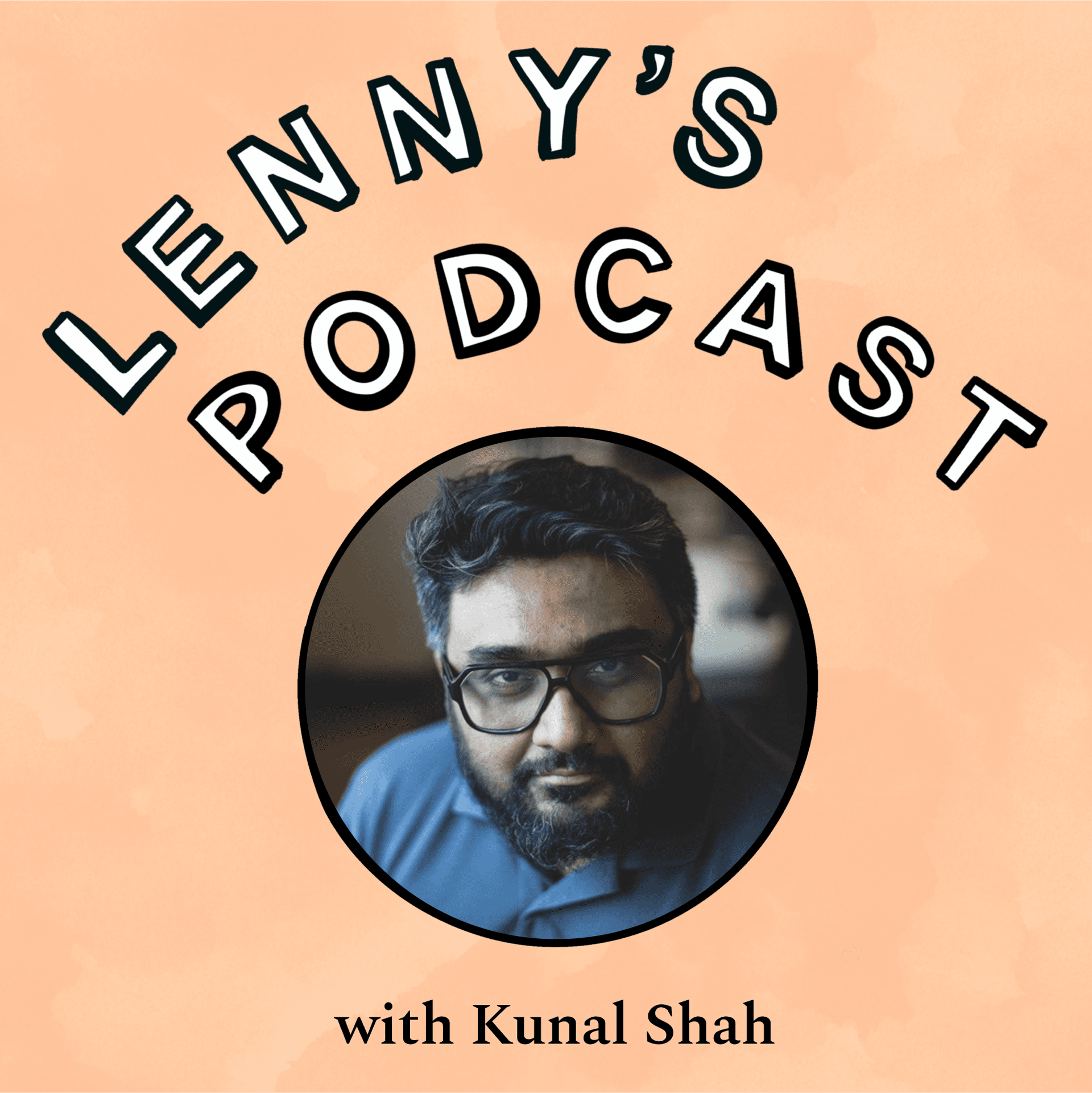
Episode Title: Kunal Shah on winning in India, second-order thinking, the philosophy of startups, and more
Guest: Kunal Shah, CEO and founder of CRED
Key Topics Discussed
- Indian CEOs in the U.S.: The prevalence and success of Indian immigrants in top CEO roles across the tech industry were explored, alongside the cultural and systemic factors contributing to this trend.
- Delta 4 Framework: Kunal Shah introduces the Delta 4 framework, a concrete method to evaluate if a product is truly transformative and significantly better than existing solutions.
- Challenges in the Indian Market: Discussions around India’s unique market dynamics, including the challenge of high daily active users (DAUs) but low average revenue per user (ARPU).
- Philosophy of Startups: Kunal discusses his background in philosophy and its influence on his approach to entrepreneurship and product development.
- Curiosity and Second-Order Thinking: The importance of staying curious and employing second-order thinking for personal and business growth was emphasized.
- Lessons from Failure: Personal anecdotes and insights on learning from failure and maintaining resilience in the face of criticism.
Detailed Insights
The Success of Indian CEOs
- Cultural and Systemic Factors: Immigrants often have a chip on their shoulder, driving them to succeed. Indian culture places a strong emphasis on education, particularly in fields like engineering and logic.
- Role of Sustenance in Leadership: Drawing parallels to Indian mythology, Kunal describes how Indian CEOs excel in maintaining the “Dharma” or foundational principles of a company, ensuring long-term sustainability without drastically altering the founder's vision.
Delta 4 Framework
- Concept: The Delta 4 framework evaluates product efficiency on a scale from 1 to 10, requiring a product to be at least 4 points better than existing solutions to ensure it is truly transformative.
- Application: This framework helps founders understand why their product might not be gaining traction and aids VCs in evaluating potential investments.
Market Dynamics in India
- DAUs vs. ARPU: Indian companies can grow their DAUs quickly due to low-cost data and high smartphone penetration, but achieving high ARPU is challenging due to lower per capita income.
- Value of Time: In India, the concept of an hourly wage is rare, affecting how consumers perceive and pay for services. The absence of the term "efficiency" in many Indian languages underscores this cultural nuance.
Building Products for India
- Focus as a Curse: In low-trust markets like India, diversification (creating a 'super app') can be more beneficial than a narrow focus due to concentrated trust in established brands.
- Brand Loyalty: Trust in well-established names (e.g., Tata) is crucial, as new brands face higher barriers in gaining consumer trust.
Philosophy and Startups
- Second-Order Thinking: This involves predicting the consequences of actions beyond the immediate effects, a skill essential for strategic planning and success.
- Curiosity as a Driver: Kunal advocates for maintaining a sense of curiosity to foster innovation and growth, recommending constant questioning and learning.
Entrepreneurial Insights
- Lessons from CRED: Building a successful company in India requires focusing on high-value customer segments and adapting traditional Western startup models to local market needs.
- Failure as a Learning Tool: Entrepreneurs should view failures as opportunities to learn, keeping the lessons while discarding the emotional weight of setbacks.
Closing Thoughts
- Encouragement for Sharing Knowledge: Kunal urges listeners and fellow entrepreneurs to share their insights and experiences to enrich the community.
- Evolution as a Life Motto: Continual learning and adapting are crucial to personal and professional development.
Lightning Round Highlights
- Favorite Books: Focus on human behavior and evolutionary biology, avoiding fixed favorites to encourage diverse learning.
- Interview Question: Hypothetical second-order thinking questions to evaluate a candidate's strategic thinking skills.
- Motivation Sources: Evolution, solving harder problems, and the transient nature of life.
Where to Find Kunal Shah
- Twitter: [@kunalb11](https://twitter.com/kunalb11)
- LinkedIn: [kunalshah1](https://www.linkedin.com/in/kunalshah1/)
- YouTube (CRED Club): [CRED Club](https://www.youtube.com/@CRED_club)
Where to Find Lenny Rachitsky
- Newsletter: [Lenny's Newsletter](https://www.lennysnewsletter.com)
- Twitter: [@lennysan](https://twitter.com/lennysan)
- LinkedIn: [Lenny Rachitsky](https://www.linkedin.com/in/lennyrachitsky/)
---
For full transcripts and more insightful content, visit [Lenny's Newsletter](https://www.lennysnewsletter.com). ```
Written by AI. May contain mistakes. Listen to the episode to check what was said.
Transcript
Automatic transcript. May contain errors.0:00Microsoft, Adobe, Alphabet, IBM, Hell out to networks, even Starbucks. The CEOs of these companies were all born in India and immigrated to the US. A lot of CEOs are done well because they follow the drama of the founders, quite well. These are the principles we're given to be and I'm going to sustain this and make it even bigger. I want to keep talking about India and how it's different and how to build products that are successful in India. No, India has ever been paid an hourly salary in their entire life. The concept of time is not the same. What do you see as the biggest opportunity for Indian startups?
0:30India's changing was now for the first time we seeing founders being respected and Unipkhan's being celebrated. We have a national startup day and probably the first generation that will have to prove ourselves to be very large profitable companies. I wouldn't want to be anywhere else in building.
0:48Today my guest is Kunal Shah. Kunal is one of the most well -known and respected entrepreneurs and product leaders in India and around the world. He shares endless wisdom on Twitter and LinkedIn, where he's got over 1 million followers. He's the CEO and founder of KRED, a Fintech startup based in India, which was last valued at over $6 billion and is of a couple years ago processed over 20 % of all credit card bill payments in India. Prior to credit, he founded three other startups, including free charge, which he sold for over $400 million to SnapDial. Kunal is a deep thinker, both about product and about life.
1:27His background is actually in philosophy, which comes across very clearly when you hear him share his advice. In our conversation, we get deep into what makes working and building an India different from the US markets and other markets, including why trust is so essential and why so many people are so much more risk -averse in India. We talk about the biggest challenges and opportunities within the India market. Why there are so many successful Indian immigrants in CEO roles across tech and what we can learn from that. Also, why companies in India can quickly grow dows, but not our poos and what that means for building products in India.
2:03We also talk about how to stay curious and open -minded in the power of second -order thinking, also stories of failure and Lots of contrarian takes and so much more. If you enjoy this podcast, don't forget to subscribe and follow this podcast in your favorite podcasting app or YouTube. It's the best way to avoid missing future episodes and it helps the podcast tremendously. A big thank you to Sian, my ET for making the connection to Kunal. With that, I bring you Kunal Shah after a short word from our sponsors. This episode is brought to you by WorkOS. Yes, if you're building a SaaS app, at some point your customers will start asking for enterprise features like SAML authentication and SCIM provisioning.
2:45That's where WorkOS comes in, making it fast and painless to add enterprise features to your app. Their APIs are easy to understand so that you can ship quickly and get back to building other features, and hundreds of other companies are already powered by WorkOS, including ones you probably know, like Versel, Webflow, and Loom. WorkOS also recently launched AuthKit, a complete authentication and user management service. It's essentially a modern alternative to Auth0, but with better pricing and more flexible APIs. AuthKit's design is stunning at a box and you can also fully customize it to fit your apps brand.
3:21It's an effortless experience from your first user all the way to your largest enterprise customer. Best of all, AuthKit is free for any developer up to 1 million users. Check it out at workos .com slash Lenny to learn more. That's workos .com slash Lenny. This episode is brought to you by Orb. As a business, you care about revenue, but as a product team, the last thing you want to do is delay a product launch or pricing change because your team has to rebuild billing from scratch. Orb is a flexible, usage -based billing engine that lets you evolve your pricing with ease. The fastest -growing product teams are companies like Versel and Repplet, Trust Orb to power their pricing changes and launches.
4:04Use Orb to ship product faster, stop worrying about billing, and evolve pricing with ease and control. Check it out at withorb .com slash Lenny and skip the line for demo or sandbox by using promo code Lenny. That's withorb .com slash Lenny.
4:25Thank you so much for being here and welcome to the podcast. Thank you so much for having me and a huge fan of everything that you do. And like I said before India is a huge beneficiary of what the stuff you do. We are all people who have learned the art of product by just figuring it out and watching some content here and there and reading some stuff. So kudos to everything that you do. And like I said earlier, that you do the fabulous job of taking the information as a symmetry of the part of product and kind of make it accessible to many of us across the world. So thank you. Wow. I really appreciate that.
5:04This is already feeling great to me. I have a huge, so this turns out this podcast has a huge audience in India as do you. And so I feel like this conversation is going to be really special and really meaningful to a lot of people. I wanted to start with something very tactical. There's a product framework that you came up with that I absolutely love and I've shared it with at least 30 founders over the last couple years and this is actually how I discovered you initially is I heard about this thing and then like who's this guy who not show and look at us now chatting. Could you explain this framework briefly and then just how you've used it or how you recommend people apply it?
5:43Oh and it's by the way it's called Delta 4. I don't know if I even said the name. Yeah, it's called the Delta 4 framework, but I think it's actually quite simple. If you think about a lot of people say that your product has to be 10x better, and it's not very measurable. You don't know if you're 10x better or not unless you're delusional. And the trigger for me was actually, I'm the unusual tech founder in the AMA philosophy. I'm the only humanities philosophy major founder in India who's got into tech. And I often wondered that most people who were my peers or people who were ahead of me were significantly smarter academically or otherwise and and why did I become successful with my first startup features which I exited in 2015 for nearly like 400 million dollars and I was like what would make this happen because I would not qualify into this super league of really the top IIT rankers that exist in India.
6:38And that got me under this philosophy quest to find out what makes things successful. So the simple framework is, like, an example that I give off and is that, imagine the old way of taking a cab ride and an Uber, right? And if I asked you, give me this score of efficiency on Uber and let's say getting the old cab, what would you say, Lenny? I'm curious, like out of 10. Yeah, I give a cab like three and an Uber, like a nine. Yeah, so every time you see that the product efficiency delta is greater than equal to four three things happen It is irreversible Second is that you have very high tolerance For it to fail at like if uber fails a little bit you will you say oh my god that I'm going to like really Stop using it.
7:29No And the third thing is that I call it the UBB unique Braggworthy proposition. So every time humans unlock a Delta 4 Productor service, they cannot stop talking or Sharing about it. And therefore all Delta 4 products will naturally Have lower cacks or sometimes zero cacks. Because people humans and think about Anyhow you discovered who the definitely not to an add. Definitely not to some performance marketing here and there. Somebody showed you the demo and you were like, My God, this is crazy and that's what I'm seeing right now. What's happening with everything on open AI and everything that is happening around LLM Feels like magic and it's kind of better for because the efficiency of doing things before and after is now showing that But the failure is the real problem, right and making everything tech does not make things more efficient.
8:18Let's take a more example Buying a suit for you online versus offline All tech, cool stuff, all these features built in. What would you say the efficiency of buying a suit online is versus the buying a suit offline? I've actually done that and it was a terrible, I did not fit at all. And so, like it's efficient, but the end result was not, it's probably often not great. So it's probably good. Or our luck efficiency support, what would you give? Of buying a suit online? Yeah, ours is offline. like it probably give it five and five. Like on offline is actually probably better experience. Yeah, that's crazy.
9:00Because you've broken the principle, this is a tech product, but the efficiency is better offline. And therefore, when the delta is lesser than four, what you will discover is that it is reversible. You will not see people bragging about it, right? and you have zero tolerance for it. So you will never go into BISO online. I can tell you that right now. So I think it's a simple framework. I believe that if many companies applied, so I know now many VCs in the US use this as part of the training program for the analysts. I know about it that somebody in Sequoia mentioned this to me that they have this part of the thing.
9:41But in India we are not still applying many of these things. I think it's a simple framework to at least know. And you can apply this to features, you can apply this to products, you can apply this to business. And often, I mean, this is a longer concept. We can talk about it in many ways because it's derived out of some study around entropy and something about evolutionary biology, which is the root of how I discovered and thought about Delta IV, that when does the species get disrupted or and what is entropy and why does low entropy require growth of high entropy and like it's a, it's a, it's a day long some podcast on its own.
10:19So some other time. Okay, we'll save that for a future follow up just diving in on the psychology of Delta 4 just to kind of summarize this because I think it's such a powerful framework and I find it useful to convince founders why their product isn't taking off. They may feel like this is better than like the classic example is a better Excel. Look, there's so much better than Excel. I can do all these things. You don't have to learn all these formulas, but the trick here and that I love is just what will people rate the existing solution what would they rate your solution one to ten? And that's to be four point higher.
10:50Otherwise, no one's going to pay attention. And I think it's pretty simple. People are busy. They have enough things to do. They have enough products and apps. They're not going to take the time to really dig into something if it's not that much better. Absolutely. Okay, I'm going to go in a totally different direction. I want to talk about Indian CEOs in the US. Okay, so today the CEOs of Microsoft, Alphabet, Adobe, which is a $250 billion company turns out, IBM, which is a $170 billion dollar company, Pell Alto Networks, which is a $100 billion dollar company, even Starbucks, also a $100 billion dollar company, I was looked at up.
11:25And then also Twitter, before Elon took over Twitter, the CEOs of these companies were all born in India and emigrated to the US. And I might be wrong, but I think this is the largest ethnic group of CEOs of tech companies, other than just white dudes in the US. Okay, so I'm curious why you think Indian immigrants are so successful in business and in tech in the US, especially in these very high positions. And as most curious, just what can we learn from that? What can we learn from their success? It's a great question. I often often wonder about it. And I have had the good fortune to meet a fair bunch of these individuals and had a chance to really explore with them what really went on.
12:07So there are a few things that pop out. And again, these are all conjectures which I can't prove in any way but it's a thought experiment in any way to talk about these things. First is in general immigrants that get out of the country are usually have chip on the shoulder in a very different way and the struggle that they have to go through to just get out and be successful and that hunger that got them there there was no privilege like they were they came from very very humble backgrounds and literally no money to start with. So I think that this force is real, right? But I can say that for many immigrants in general as well, but appreciation for math, in general or logic, which came to society in a big way, right?
12:55Kind of gave, let's say for example, lots of engineering graduates come from only a few countries because the society was bent towards, let's say, early -ness of mathematics or early -ness of this. and I think that kind of helps create status that what will get appreciated. For example, being an engineer, being a doctor, like philosophy measure, I was a write -off for the society over here. So the reason I am the rare commodity over here, because you are not considered to be very bright unless you break into these very hard exams and very, very hard things. So the filtering criteria on its own is big.
13:28But there's another interesting framework altogether, which I have actually learned from this gentleman who has devdet patnaak he applies Indian mythology and management principles together and it's an interesting thing that there are three major Indian God, one is the Pramma, the God of creation, Shiva the God of destruction, I'm super generalizing but that's the classification and the third is like Vishnu to the God of sustenance and the outtars, the word avatar comes from Vishnu keeps changing of the right, so we have had Rama, Krishna, Now all these guys are avatars of this. So what you notice is that if you take a two by two of people who are high on values and low on values, high on obedience and low on obedience, you make it interesting to buy two.
14:19Now Lord Krishna, which is one of the very popular avatars, which was non -foot -through, sort of the entrepreneurial category, which is high on values, were very low on obedience. It was known to be the naughty god and he could actually create lots of things and there is Rama which is known to be the one which follows principles and obedient right. So they will follow Dharma and scale on that and then there are these notorious characters is Ravana which is low on value, low on obedience and there is the other now which he says that he is high on obedience but lower value right. So these are the people that you don't want to be.
14:57And what you notice is that a lot of CEOs are done well because they follow the Dharma of the founders quite well. They have not diluted the Dharma of the founders who have started these companies and managed to sustain that. And a lot of CEOs have this need to say, oh, I'm going to change the company forever and it will be my identity and I will change the And then in Dharma, where I will say that the principles were given to me and I am going to sustain this and make it even bigger, comes from humility of saying that there is something built with some pure form factor and I think therefore that character stays on.
15:41And therefore the characters of Brahma and Shiva, they found the characteristic very create and destroy like that's the thing but sustenance is the harder one and therefore coming, different levels come. But when you're in a thing about the archetype of at least the ignorance here that I've seen that they are fabulous at moving between Krishna and Rama all the time, right? They can play this consistently and therefore they keep evolving and keep making these companies bigger and bigger. And I think we'll see a lot more of this in years to come because now they have the role models of these individuals who have kind of done well.
16:22But the key principle is is that if you ask the founders, they will love these CEOs if they are around because they maintain the Dharma of the thing. And for example, I say what Tim is doing is maintaining the Dharma of Steve Jobs because if you try to change the Dharma of Steve Jobs and what the values the companies are, it's very hard to imagine it to be sustaining itself forever and ever. Wow. What an answer this. What I love about this is this combination of using a two by two and Indian mythology G is like the microcosm of you, which is philosophy and tech. And so I love that and makes a lot of sense that's where your mind goes.
17:02Something else that makes me think about is, or this book a long time ago, Jim Collins, either good to greater when of his early books about leadership and he talks about level five leadership, I think, is him. And where level five leaders are ones where it's not about them, it's about the business. And they can disappear in the future and things will work great. Yes, and I feel it is very hard if you believe that your identity needs to have its own position and legacy and therefore a lot of time chasing status causes disruption because you will say that, oh, this doesn't have my signature in it and therefore becoming accepting the religion and trying to be the the pop -off it or the father of it is better than trying to say, oh, I need to have my variant of religion.
17:50And that's where the creative destruction starts happening. Interesting. Okay. So you said that there's this good balance between Krishna and Rama that happens. Can you just again summarize where they are in that two by two? Rama is high on values and high on obedience. Krishna is high on values and low on obedience, but they both are high on values, which means they will follow Dharma. And they will change the side. For example, if Satya, during the Open Aakrises, played Krishna, and God thinks out, but he'll switch back to being Rama and continue to keep scaling it up. Amazing. And just to close the loop on here, is your sense that they're like, they're actually thinking about this and they're religious?
18:35Or is this just like in the ether of growing up in India and this is just part of the culture? It's a great question. I don't think they're conscious to think about it, but I think they ever heard this. They would have even this, because that's what they grew up with. And the value systems are much more long term. For example, I believe all bad behavior in humans comes from being short term, right? And being long term comes in a very, it's a big choice to make. And a lot of times, a lot of people argue that, oh, we have arranged marriages and like it's 95 % arranged marriages and less than 1 % divorce rate comes from this whole long term thinking right that people are married through values versus attraction or lust and all of that stuff but more long term oriented and about building a family building values or no divorce rate is about we'll fix along the way versus trying to say oh I need to evolved when I had to move forward.
19:37So I think being long term about that mindset and that's why some cultures last for thousands of years because of this need for everybody to be more long term versus short. You asked, you could use a lot of that in these days. You mentioned this interesting fact about how in India, so the fact that most startups fail, you said, you know, I think the classic status 90 percent and that the risk is a lot higher to start a company and then fail. Can you just talk about what that would impact that has? How do people try to avoid that? Because that'd be amazing if you can reduce the risk of starting a company or is it just that happens and people get super in debt.
20:20I think long -term societies are naturally more risk -goers. Right? And not all great CEOs can become great founders for the same reason. In fact, I would say that it actually makes it very hard to be a founder if you've been a great CEO because you've turned into this sustainer versus destroyer or creator. So the no one I'm talking about is when you are thinking about like this capital, India's changing was now for the first time we seeing founders being respected and talked about and these unicorns being celebrated and our prime minister talks about start -ups quite openly we have a national start -up day and so on and so forth.
21:05So I think there is a thing that has changed this thing but the core principle let's understand the core human behavior basics. India still has a large range of marriage and if you are a founder and a failed founder, your chance of getting a person to marry is still a hard thing to achieve. So, if this is all true, then the appetite to take risk will be controlled. As somebody gave an interesting example to me that there is a very large, let's say, a FM CPG company in India. And let's say you do a 0 to 1 over there and see your changes in 4, 5 years and you're your zero to one failed, but you were the best person, that's why you've given the zero to one.
21:49The next year, you were like, so what have you done in the last five years? You're like, nothing, I just try to launch this failed. And you neither give up promotion in the company, neither a new company will say, oh my God, I'm gonna hire this talent. So the guy who stayed on this stable brand within the CPG company kept growing, but that has natural televisions. All he has to do is nothing in that brand. And then suddenly what you see is that he was, she's managed to do well. and this guy is done 0 to 1 has not been well. So we do not celebrate risk takers as a country yet. And I think we will change that.
22:23I think it's changing already. But we have a long way to go. One of the beautiful things I often talk about is that I was in Portugal once and I saw, I don't know if you have ever been and seen this, but in the church normally, Only the royalties allowed to be buried or cremated or whatever, they are there. Only one more category that allowed is the explorers. Vasco Di Gama, all of these guys who explored the world and took risk and took the country forward. They were given the same position as the royalty. So when we give the highest status to the stakers, the country appreciates it because ultimately they are all looking for markers of social validation.
23:05Super interesting. I want to keep talking about India and how it's different and especially what may surprise people about the market both building there And then how to build products that are successful in India I saw in a different interview you talk about how there's this big difference between Thousand our foods that in India it's really easy to get dows basically get lots of users really hard to make revenue per user And that changes the way you build product probably you just Talk about why this is the case. Why is it so much easier to get dows versus our foods? So I think our pool is a function of per capita and come off a country, right?
23:41You cannot make hundred dollars per user from a country for a product when the income is let's say $2 ,500 per year as an average for the whole country, right? So what happens is Many global companies love to come to India because we have the cheapest data Very high smartphone penetration So if you look at a lot of global giants, there are 500 million users from India or sometimes the billion numbers coming from Asia and they don't have huge articles, but they help you show the user growth, which helps you in your public market and they're getting for improve your valuations. For example, my guess is that I don't know if this data is public or not or talked about like my guess is that meta would not have more than three or four dollars per user per your monetization in India.
24:28But if you look at the user growth in India, it'll be huge. So a lot of times for global companies, India becomes a great MAU fund, but very low on RPO. And therefore a lot of Indian founders who tried to copy the Western markets and they're all going to have a few hundred million users make a terrible mistake because they will need to then go abroad to find their RPO's to balance the act. You're talking about our Netflix is a good example that where They launched in India they got lots of users, but just couldn't make a lot of money. Yeah, because for that users to find relevant content and pay for content when we have tons of free data, tons of free content, like all over the place, like short videos, which are competing with time, like so much going on over here.
25:13People actually paying for that by design is going to be less. And I'm not saying that it'll not change in 10 -20 years, but the expectation that many global companies come over here saying, I'm going to have like these tens of millions of users who start paying me absolutely come, sports modify, for Netflix, for almost anybody with or Amazon Prime for that matter has not panned out. So one of my takeaways here is just when you look at a startup as an investor especially and you see like we've got a hundred million users don't treat that the same as say a hundred million users in the US or other markets.
25:49Absolutely. One more thing is the value of time as a concept So one of the things you noticed is that no Indian has ever been paid an hourly salary in their entire life. But let me ask you a question, what was your first ever job and how are you paid? My first ever job I was tutoring women on back computers and passing Microsoft certification test and I was paid and pretty sure is hourly. Now most likely you would remember what the hourly income was and even though you've started making a lot more, you still have a concept of what the value of your one hour is. But if you ask most Indians and if you ever come to India and do this exercise when you meet them, ask them what's your income per day or income per hour.
26:34Nobody will be able to answer. No matter what their job is, they could be staff at the restaurant to somebody who's doing really basic work to anybody in a fancy job because we've never, ever be paid an hourly salary. So when you're not paid an hourly salary, the concept of time is not the same and then the concept of time is not same paying for time is hard to do right and therefore you'll see a lot of Indians who make say I don't know maybe a hundred dollars an hour still spend an hour to seven ten dollars on a flight ticket because that's what it is and if you by the way discuss that with many of the Indians in the West also you'll realize that this is a common joke that they will still fight for the ten dollars because the value of time is something that is harder to get used to unless from your childhood that the unit of time was moved smaller and smaller.
Read the full transcript
27:29That is really interesting. And you're saying that comes from just the fact that people never get paid hourly. It's always a salary and so people are like that. The concept of value in time, like many Indian languages do not have a word for efficiency. Wow. And that's true for many Asian languages. The word for the efficiency does not exist. So then how do you value it if it's not a novel category? Fascinating. There's something else along these lines of Dows and Arpus and efficiency that you talk about that I love, which is this idea that focus is is a curse in Asian markets that in the U .S.
28:08There's often this advice, focus, build one thing that's amazing that everyone loves try to make that work, scale that and then only then build a new product or build something built in a new big feature and your advice is in India and Asia markets in general. It's the opposite and I think it's because you make so little pre -user. Can you talk about that? Yeah, I think one is you make very little per user so you have to do many things but also all low trust markets and let me define low trust markets is there consumers are a lot more of trying new things because there are not institutions that protect you against a bad behavior done by a company.
28:44So for example, if I ever had a phone in a coffee shop in the US, I can think about suing them and making money off it. In India, you don't even think about suing the coffee shop or hoping that you will get any money for that. So what happens is in the low trust country, all developing nations are low trust by design because the institutions are not strong enough to really take care of many things. What happens is there is concentration of trust. So you will see that super apps, super stars, super companies all exist in low trust markets because the lack of trust creates concentration of trust.
29:21And therefore you will see one app can do 400 things. For example, we have a company like Tata that can do salt to cart, to jewelry, to anything that people will buy because it's a Tata brand because it comes from a low trust society trusting the brand and not being, oh, I'm going to go preferred to this new brand. and the joy for trying new things is not so high in low trust nations. Wow, I'm learning a lot here. I didn't know all this. So essentially brand is even more, it's exponentially more important in Indian markets. It's funny, but the oldest brand in the world is a brand called as Chavan Prash.
30:00It's a guy named Chavan who build a Prash is a sort of a that you can have for good health. And it was built in India many, many, many, many centuries ago. And when the lots of Indian business still have the name of the person behind it, even the US used to like that. Like, GP Morgan, all these guys are not some fancy name. They're name of people. And therefore, in India, trust still comes from a lot of names of people who have a lot of trust behind them in repetition behind it. I want to zoom out a little bit before we go in a different direction. What do you see as either the most pressing challenges in India right now for tech or the biggest and or the biggest opportunity for Indian startups and then just generally where do you think things will evolve in the next few years?
30:51Sometimes I wonder the challenges and the opportunities are exactly the same. For example, one of the biggest challenges we have is we have very low female participation of labor compared to many markets. But I also believe it's an opportunity because you can, let's say use AI and create many new types of business opportunities because now, like, work from home is not a concept anymore. You will actually create very interesting businesses for that. Number two is we are low on per capita income. So what AI can do instead of taking out jobs away, just make us brighter because now, like Satti talks about that now expertise is available in here.
31:34So you can actually just kind of ride on that and really make the world very equal in many, many ways. So that's massive opportunity. And also the challenge because I often make this joke that the largest employer of the world is in efficiency. And if you take that away too quickly, we'll have a very, very jobless world. So the thing is that it can be an opportunity for a country like India and also potentially a threat because we don't start becoming great at AI. I was actually just telling somebody today that maybe all of our interviews should become about giving a task that they can only perform if they were very good at AI.
32:11And no matter what the job is, you make that the minimum criteria that they cannot use that leverage that, they will become a liability in five years anyways. And last one is we have a very young demographic, very well positioned with access to technology, access to smartphones and so on and so forth, a lot of hunger. But our challenge is also that it's also the first generation that is truly learning what is entrepreneurship, what is risk and will make all sorts of mistakes get there. And I hope we don't go into shell after having these large scale failures that you have not seen before. India is not used to layoffs.
32:53Like, shut up world is used to layoffs, but in India, if you start a through layoffs, it becomes the national news and all sorts of discussions happen over here. So we are not there yet. So we are stuck between like being somewhat of a collector or some of our intervieweristic societies. So we are somewhere, India is a great remix of everything. I love this line. You just shared of inefficiencies, is the largest employer in the world. I totally get that. Okay, so let me talk, let's talk about CRED for a bit. So you had, I think three startups before CRED. Okay, and then you've been breading CRED for about six years now.
33:34I'm curious just all this journey of CRED, what you've learned or changed your mind about during this phase of your career versus previous phases. I think CRED's inside was actually quite simple realize that unfortunately the value of time and per capita income is concentrated in 20 family and families and therefore focusing on them is important and they are lot more global in their approach versus rest of India. So you have to build them very differently and I realize that ability to focus on a customer set which is not historically possible to do because everybody every investor expected us to be the next China and the only similarity of India and China was the population and nothing else was similar.
34:20So I think having that conviction that I'm going to build only for this folks and this large enough market, thankfully I had one success for somebody to bet. So our like our series A was pretty family and dollars. I would have not had that luxury if I had no success in the past because I had no product with any monetization to prove that I'm doing the right thing. It turned out okay, but I think I could get a lot of people to take risk behind my insight or my thesis is because I focused on right customer category and built on it. But I think the few things I've learned differently is that companies that are very, very good at 0 to 1 will not naturally become greater 10 to 100.
34:59There are lots of different lessons to learn. The founder has to evolve the biggest thing that has to happen. Most people who have creed are people who have not seen a bigger business than grid, which comes at its benefits and costs. So you have to gentrify the org every now and then to make people understand the value of many of these reliable things. And I often tell people that entrepreneurs are uncertainty absorbers for everybody, for for employees, for investors, for customers, they are and therefore they they they they get rewarded for being those people to remove uncertainty from people's life.
35:37But the kind of expectations keeps changing at the company of scale. For example, if you have a, let's say a seed sale investor, they are very used to very high uncertainty and they're happy with some absorption. But as you get to growth investor and you get sovereign on your capital, the amount of stability you need to provide is significantly more. And therefore, you need to evolve very, very differently. So I think those are the few lessons I have learned. You start realizing that not everybody can scale into everything and you cannot expect that you can give up to 0 to 1p and just because you're building 10 to 100.
36:12So how do you kind of coexist with those things? How do you react to big changes in the market and not become this slow company and every company goes to that? I mean, if you look at what Zach went through in the last three or years was that he had to I offered there He had to play the shiver Come and do a lot of destruction to become big again, right? So I think that's what founders can do And and it's not easy to do one of the things I've learned is that profit pools of a country Tell you a lot about what the country values and trying to copy somebody else's profit pool to your country will not be a wise idea because the countries the all user demonstrated in what profit pools exist.
36:57Let's take an example. In the thousand most profitable companies in India, the number of retailers would be probably two or three. But if you look at the western market, you will see a bunch of them because it's a consumption market plus very high divorce rate, means you are always be cocking again in the market again. You're trying to you threaten, be cool and all of that. India has very low divorce rate less than 1%. Arrange managers and fashion spend. And because we have a lower female participation of labor, India is probably the only market where female fashion spends is less than men's fashion spends.
37:33Everywhere else, it's probably 5, 6, 6 more for them. So what happens is you start appreciating what the country values. For example, I have noticed that many patriarchal societies is have very significant market gap in financial services versus consumption. And these broad patterns, you start thinking about very, very differently. So many lessons there. I love this idea of a founder being an uncertainty absorber. This other point you made about Zuck becoming the Shiva in destruction, such as on something Brian Cheskin, I chatted a bit about is how founders often start in control, giving very micro -managing, just driving the ship.
38:13And then as the company grows they delegate and power. And then things start to slow down. And then they come back and play the Shiva and take control. Again, is there anything there that you've seen? Yeah, but that's a universe. It's a universe goes through the exact same phases. So if you study in my thought, you will see that there's a broma, Vishnu, Mahesh, Thikas, and every Yogan is this gold ghost with these three phases all the time. Beautiful. I see. So this is just inevitable. This is the circle of life. Absolutely amazing. I love this. I'll just ties back to your philosophy background.
38:47I love it. It's beautiful. This episode is brought to you by Dovetail, the customer insights hub for product teams. Are you working in a feature factory building filler that nobody wants? Probably because the sad truth is that most SaaS features are rarely or never used, costing the industry billions every year. Let's change that. Product managers, Dovetail is holding their first industry conference. It's called Insight Out, and they want you to come. Over one day in San Francisco, the product community is coming together to learn how to better leverage customer insights and build products that people actually love to use.
39:25It's on April 11th, and you can hear from product leaders from Uber, Twitch, Meta, and Netflix. as they share their strategies for driving innovation, thriving in uncertainty, and balancing customer -centered work with business needs. And here's the kicker. It's absolutely free for online tickets. Just go to dovetail .com slash Lenny to register. This is thanks to Dovetail, the best way for product teams to get the most out of customer insights. Check it out at dovetail .com slash Lenny. Okay, so uncred. So here's a funny thing that happened. when I ask people on Twitter what questions to ask you on this podcast.
40:02And one of those common questions was, when do you think you'll become profitable, which is interesting because when I have other CEOs that are founding a company that is, and most companies aren't your profitable, nobody's asking that question. So I'm just curious why, why is that such a common question that comes up? It's fascinating. It's fascinating. As a country, most business of a trading, you buy something at low cost, sell it higher price and you make profit. Most of our businesses, most of our family businesses were trading, right? But building a capex heavy distribution monetizing it later on, focusing on higher revenue growth rate versus trying to get profitability first is not known to us, right?
40:47So when this series of numbers of losses, like there's a shock that why would somebody give you this kind of money? Like, and then by the way, my own dad wouldn't respect me till I was a profitable company. So it's not surprising that people in India have this comments, but it also comes from not understanding how businesses are built in internet world where VCs are giving you the capital to kind of build distribution, unique product, edge, brand, all of that stuff, and then monetize later on and monetize big and then have very large profit boost to go after. But a lot of times this comes from not understanding this business and I feel it'll change because many internet companies are now getting very profitable public listed.
41:36So we'll have a decade. Let's understand one thing. Like in the US, maybe 27, 30 % of US market cap is now tech companies. India tech companies would probably make less than 2, 3 % of the market cap. So we are mostly and I'm not saying India has this fabulous history of building very, very profitable tech companies. We are probably the first generation that will have to prove ourselves to be very large profitable companies, but we are still figuring out what this means. And the fact that this question by another I can tell you one thing that I have been asked this question by people on Twitter way more than my any of my investors ever asked me this question, which also creates an orbit charge for entrepreneurs who can actually build businesses and ability to rescap and prove their business model with very revenue high -grace, high revenue growth rate and very large brands and so on and so forth.
42:29But I find it fascinating as well. Also, one thing you'll see fascinating in India is that there is immense amount of trolling and doubt that will come in your comments. No matter what you do. So if you see any founder in India, they'll post something about the thing. The comments will rarely have appreciation. So it feels sad because when you see global companies do stuff like India will lose their shit on Apple Vision Pro and all this stuff and like the Twitter will go gaga over it but I think when it comes to and I believe NV is hyper local. We do not envy Elon Musk for all the stuff he because he's so far away.
43:13But we, we, we are own, because they were just like us, not many years ago. And therefore, NV is like Wi -Fi, it's like a, it's like an hyperlocal service. How do you stay positive and focused and not let that stuff bring you down? And you have advice for founders in India that are dealing with the same sort of feedback. It's funny that a number of calls have got from founders to start getting hit and go to person to get this call because they've seen me get it for many more years. And I tell people that we couldn't have made it this far. If we cared about criticism of everybody, versus people who've done better than us.
43:58If somebody who's done anything better than me gives me any amount of criticism, I will absolutely flip and make all the changes and evolve. And I seek feedback all the time from people, but if I start taking feedback from everybody who do not understand and no one's an empathize with what I'm doing, I'm not saying that we should not take customer feedback. That's very different. But let's say somebody commenting about your business who does not understand the no one's of it. You can't be reacting to everything. And I often tell people that there's a reason elements with lower valencies are called noble gases because they're hardest to get reactions from.
44:37That's over my head, but I love it anyway. It's so interesting. I love all these elements you're pointing out of how different building in India is that I think people in the US have no idea about. And so I appreciate you getting into all these little elements. Is there anything else around the Indian market that may surprise people before we go in a different direction about building a startup there? For all the challenges, India remains the most promising market that one can be building for right now because everything is going our way. We have all sorts of digital, public infrastructure, government support, all these great people doing extraordinary things apart from the Twitter noise and Twitter is designed for outrage getting likes.
45:21So I wouldn't read too much into it. But I think all of us are doing well because we have an audience set, an award ecosystem that is fully supporting us and really taking it forward. So I think I wouldn't want to be anywhere else in building because of this extremely vibrant crazy opportunity that one can learn from. However, I wish, I often wish that I wish I could learn one month internship with Brian and learn how to do things. And I have never had the luxury. I can only watch his podcast with you to learn a few things. But what if I got a chance to be there? And I missed that part where I've never been really trained by these extraordinary product brains, or even observed them make decisions.
46:08So I recently posted one thing that, you know, the word Operation Theater comes because operating used to be a public process. And people used to pay money to watch surgeries and see all the bloody gory stuff. and even before anesthesia is born. And there's so much joy in seeing somebody do their action. And I wish there was theater for Brian, take a product decision, take a hard call on killing a product or seeing Tim rejecting all the ideas that they have before the GTM of a product. I think we could benefit so much from that. And unfortunately, it's remained in very small circles. Because like I said, I did these and I said, you do a fabulous job of removing some of the information asymmetry and kind of making it more democratic.
46:54But there is so much more that we all could learn. And I feel extremely, and we as too many people who have the opportunity to work with the best of the best because many of us from India never had the luxury we had to figure out everything on our own. Wow. How cool would that be just to have a camera in some of those meetings just as a learning experience because like very few people are in those rooms and there's so much to learn. I think though people will find, holy shit, this one, this is how decisions are made, what is going on. And two is like, I don't want to work for this person. This sounds very difficult and stressful.
47:32This would probably some takeaways that will emerge. Kind of along these lines, something that show called credit curiosity. You often talk about the power of curiosity. I'm just curious why is curiosity so important to you and why is it important for other people to always stay curious and what values there. I think a curious person is somebody who's constantly demonstrating that they are not proud of their expertise and they will demonstrate extraordinary the amount of excitement when they face a problem which they have no clue how to solve. And therefore a lot of people stop growing because they want to constantly demonstrate their expertise versus demonstrate their curiosity, right?
48:27Because curiosity should come from security because imagine I was in a and the founder CEO of this company and this group of 60 people on WhatsApp somebody says something I'm asking a dumb question, what does this word mean? You need to have the security to feel okay with it. But a lot of people are in security, try to demonstrate expertise and do it or Google not ask this people. And I think that slows down the compounding growth. And I think it keeps you very good at adapting, right? So it's funny I was recently, GPD is my favorite thing to keep asking random questions because now I don't need to really worry about Google having those questions answered around because I can ask the GPT.
49:12So I recently asked the question that which animals have managed to survive, which species are animals that survive for more than 100 million years without changing too much. And what is common in all of them? So GPT came up with interesting answers which says that it shocks, like horseshoe crab, crocodiles and all of these people have survived to do this thing. So three distinct traits were one ability to reduce metabolism at will. Okay, it's fascinating. I can bring down my metabolism by 20 percent, like one, one is to 20 or like crazy, crazy scale, they can bring the metabolism down. The second one is, by the way, a lot of in in ancient yogis have demonstrated this as well.
49:59It comes from the same yogic practice. The second thing is about, and if you think on company's context is the same, if COVID came, could you could do so on your motorism and survive? Or you burnt your way out of the and disappeared? The second thing that was interesting was very high conversion rate on every attempt to secure food. They don't go around chasing randomly and doing things. They have a very high conversion rate which means high judgment and the deadliest bite. So they will not chase many options but if they chase something they will have the biggest bite on it and they will convert it.
50:41And the third thing that was more interesting one was they have survived all sorts of crazy environmental changes just adapting and adaptation comes from curiosity. right? And you could see those people in COVID, there were two sets of people who were completely gone into shell and they were like, who are like this curious, like, okay, so what do I do with this? Like, what happens now? Like, do I need to change something? Do I need to treat something? So, ability to change very quickly. So, I often feel that curiosity is that demonstration to adapt and learn and and and you only create more information asymmetry to me well it's nothing but information asymmetry all the best companies in the world have unfair information asymmetry and and that comes from curiosity because you're constantly collecting dots connecting dots collecting dots connecting dots and end up creating this unique edge for yourself and information asymmetry for yourself.
51:48And if you assume that I have collected enough, I mean, there are no human life is gonna be enough to connect and connect all the dots. We never be able to get, and sometimes I envy the stuff that you do because you are efficiently connecting and collecting dots by having luxury of all these people to talk to and you are making more dots getting connected. So your information asymmetry is growing. Wait until you IPO and then someday maybe leave Cret and then you could start this podcast over here on like this and connect all the dots and I think that's a reference to Danny Meyer who's the founder of all these fancy restaurants and big on hospitality and as his phrase always be collecting dots I think ABCD.
52:32Nice. Nice to that. Yeah. Okay, wait, this is really interesting. This list of what are the common traits of the most long lasting animals. They can lower their metabolism at will. They have a hike and versionarate to get food and they've survived many types of environments and I think there's a lot you can Transform as you've done to start up some leaders. This could be its own if you haven't written about this This would be a cold blog post I'm curious who you look up to in business either in India and outside India who comes to mind we're like I really inspired by these folks. I often tell people that I hate the word favorite because it tells me to become limited in my mind.
53:16So I stay away from being favorite but I learn all the time from everybody and there are so many people to learn across the world and in history, in recent past, in every time you will discover fascinating, extraordinary things about them. So I don't think I I have a person, I am this person about how did they solve this hard problem. So many other things that we started doing recently and not very ritualistic about it so far is I ask myself and my key reporties every month, we go around the table and ask ourselves what are the hardest problems we solved last month and it's very hard to come up the answer.
54:04And if you do this to the product leaders, just go around and ask what was the heart problem you solved last month, you will realize that we all stay very busy and displacement is hard. But if you notice extraordinary successful people, they will have a lot more content to talk about every month, every quarter. Because they are obsessed about making that big displacement and does not come by being busy and that's another thing that you cannot chase the big thing you don't see a crocodile being busy you see a crocodile just waiting patiently at the watering hole for that best meal and have the deadliest bite for that so the beautiful destination of predator as predators I read was the one one the least amount of calories to on the most amount of calories.
54:59So how do you become that? And I think when I meet people who are extraordinary at that and it comes in all shapes and forms, I learn something from them. So in these meetings you have, are you judging people's success based on how many hard problems they solve? Now that they've heard this, they're gonna be like, I need more. Because if you're a senior, what is the role of a senior person? You have to be the chief problem solver. I love that. I often think of leaders as a professional fire fighters who are just endless fire to put out. Kind of along the lines of people and where you learn from.
55:34Is there any sources of content? This is actually an audience question on Twitter. Onerog Verma asks this, what are your favorite sources of content to learn from in terms of what's happening in the world and what to pay attention to? I wish I could think of an answer. My method of collecting information is mostly about I come up with conjectures in my head and then I go all over the place to find out if there are proofs of what I'm saying is true or not. For example, I recently came up with a conjecture that everybody who's been successful in the history of business or vices have historically done a lot of philanthropy to create a good image for themselves and therefore being treated as a respected citizen versus being treated as a person who did vices to make wealth.
56:24And then I asked this to GPT and I GPT came up with like 50 people who did what and what were their vices, how did they change the reputation by doing lots of philanthropy and all of that stuff. And then a thing happens and then I research in all sorts of directions and and I have no boundaries to if I go to chemistry or physics or a human behavior to some universal principles. So my method of learning is constantly come up with conjectures from the dots that you've connected and then like absolutely work hard to find proof of it and then use that to connect to the next dot, right? So I often tell people that everything that you, every book you read makes your brain pour us to read the next book.
57:09That's the purpose of books, but that's true for every single thing we learn. It makes our brain more porous for the next thing that we're supposed to learn. Is there a recent example that where you got super succinctness at some topic? It's my daily life. I get sucked into topics every now and then. For example, I've been thinking about second -order effects of AI and what happens to countries and jobs and how to expect some of these things to change, not change, rate of change, rate of skill change. I got recently obsessed with what happens to lap grown diamonds. If they become big, does it kill diamond?
57:45Does it make diamonds bigger? And then I looked at parallels. So pearl industry was very big before cultured pearls came and the high status of pearls disappeared because everybody could have pearls. But not too long ago pearls were to be a very royal thing to be every prince and princesses used to have pearls around them. But as soon as it was easy to manufacture in a lab, it lost its value. So I think, so then it should I be shorting or going long on diamonds, thinking about what happens. So but there'll be a temporary period of making a lot of money on lab -grown diamonds, which will kill it will become parasitic on the status of diamonds and in destroy all its profit pools.
58:31You heard it here first time to buy some diamonds futures. I feel like there's no one in the world chat GPT impacted more than you considering how much you want to spend digging into random topics. I often wonder, Lene, if you took the most serious people and made their GPT searches public, a lot of people will learn because the problem of GPT is now it will make the people the great questions do well versus people who are looking for basic answers. So I think the words gonna be unfair to people who will ask great questions. Interesting. Okay, well I gotta ask you, is there any advice you have for asking great questions that has helped you in your work and career in life?
59:14Whenever somebody has many choices and they make the right choice in whatever's domain they have. For example, let's say you could hire anybody but you hired great people or let's say you could marry anybody but you married a great person and so on and so forth. I want you to have many choices to make. How do they make choices for that domain of expertise? And I think that is the most, and many times, they cannot be, they'll not be able to explain how they make great choices. They will really go in into that, because they don't really have their mental model figured out. They cannot articulate, they cannot coach, they cannot explain, but if you can figure out how they make great decisions in general, in whatever domain of work that they are doing, you will find many interesting insights coming over there.
1:00:01The other good questions to ask is about second order thinking, what do they think will happen to the world and why did they come to that conclusion and you see that full chain of thoughts is very powerful. For example, second order thinking is known to be the most powerful trait to predict success of somebody. But I often wonder what happened in childhood of people who became great at second -order thinking. And that question is not fully discovered or discussed yet. And I have found some loose examples of did you play strategy games or only physical games? I have a strong correlation to building, so rigor came from physical games, but second -order thinking came from playing shardsy games as a kid.
1:00:48And if you had both, you could do really well in general because you have a discipline and second order thinking together. Then did you ever have an exercise on looking at history? For example, one of the things I recommend to parents to do with their kids, I call it the Wi -Fi school is ask them a one -wide question every meal and and let them come back with the answers next day. For example, why do humans well, jewelry, and why is something in a certain way, and let them go into the full depth of history and find out why it's so expensive to advertise on Super Bowl. And then so and so forth, you just take one question.
1:01:34And if you train them on why, they evolved at a very different rate, because how water the questions which do not evolve at you were too much higher rate because why is the deep question and it breaks a lot of things in your head or another question about origin stories that how did how did elevators come into being and what made your phones happen what made microphones why is it called microphone and why is it called a phone and if you just moment moment go into this depth you see people kind of build second order thinking automatically because either you go in history and see second order thinking coming evolve with that or you play games that train your brain for second order things with the spectrum.
1:02:13But that's broad range of things that I think people should be asking. I'm looking forward to a canal. Children's raising book, like a book to help you raise kids. It's gonna be your future. I don't have kids, so I can run experiments on everybody else's kids, so it's a great thing to do. I feel like with these questions, I think the rule has to be, you can't just ask Chad G .P .T. for the answer. You have to talk about it. Actually, it's not bad. I think you should encourage it because we have to assume that we are gonna be all co -pilots of AI now. What you have to do is, did I have the second order inside that, okay, this is true, where is the similarity of this in some areas?
1:02:48Like give me an example of this found somewhere else. And so on and so forth. Amazing. Okay, I have just a couple more questions before we get to our very exciting lightning round. First, let's visit Contrarian Corner. I'm curious what's something that you believe that very few other people would agree with you on, and why do you hold that belief? Our understanding of wealth is flawed, and what wealth is. To me, wealth is nothing but storage of energy, and therefore the reason wealth is not zero sum because energy is, and we are just finding all the ways to convert energy in our advantage. We are the only species that have managed to convert all forms of energy to our advantage.
1:03:32Cannot take energy and fuel sound and solar. No other species have done this. And therefore since industrial revolution our wealth has gone like this and continue to be like that. AI and nuclear fusion and all the stuff will kind of take right there. So I have a strong view that we will never, never have equality of wealth. In fact chasing that is actually a bad idea. But if you let people do well and chase wealth they have enough wealth for everybody else and we could take a lot of people out. And another thing is complicated because we can have all this democratic arguments that oh, the wealth is concentrated and all that's about, that's the physics of wealth.
1:04:16It will always be concentrated. It changes mediums, companies, countries. They're all, to me, wealth is nothing but an anthropic complexity. They'll keep changing it form and shape. you can be fighting it or accept physics and take the benefit of the physics. I think of Elon had this interesting point that wealth is just a database where everyone's wealth, I guess, is just an arrow in the database and here's how much everyone has and you just transferring numbers around and that's the whole economy. No, but the more that is important is that you can actually increase the database size infinitely and therefore his vision of sun's energy.
1:04:58Like if we really convert all the energy to our advantage, the amount of wealth we'll create for humans is disproportionate. And all the species that have managed to collaborate and cooperate to create wealth. For example, let's define wealth as biomass. So let's say ants and bacteria and humans are the only few things that have the largest biomass on this planet because we forgot how to make energy work for an advantage. Wow. I love all the directions we've gone. Probably the last question. Is there a story of failure in your career that would be interesting to share something that taught you an important lesson?
1:05:36It's just series of failures. I think there is no escape for anybody who's There are nothing in life, not failed a lot like every day, every thing. But I would say that many initiatives, many products, companies that I've built have absolutely failed, hiring that I've failed, trust -broken, betrayals. So I think there is no end to it, but I think entrepreneurs have the weird ability to forget. about failures. And almost turn that into a lesson that you hold and you forget the story. And then like for example, COVID is literally no memory for me. I just don't remember what was COVID. It's just a blank in my head right now.
1:06:30And I think there are humans that are great at forgetting the memory of failure but remember the lesson from failure. But I think I'm constantly learning and I often believe that life is too short to make all our mistakes ourselves. So we should be learning from other people's failures as well. And a lot of times we don't do that because we believe that we are special. Nothing will like that will happen to us. But as humans, we should be learning. I would say that my life started from a failure. My family went through severe financial crisis. I just started working from age 15 and I feel till date I'm just trying to escape that failure.
1:07:09It happened in the family. So I think many of us are just fighting that initial large failure that we've had and don't want to be anywhere near that. And although we are significantly far away from that, but the feeling is exactly that. that circles back to whenever, first few questions about the chips on shoulders driving a lot of motivation. There's this phrase, chips on shoulders drive chips in pockets. That's interesting. Yeah. Is there anything more you want to share about that early challenge you went into or is that something you've shared off the net? No, I mean, I've shared that enough, but I just, I should not talk about it before because I was thinking that I would get some sympathy for that and I only till like recent past I speak about it because I want people to realize that I was not some gifted kid who had some rich parents who made me extraordinarily bright and put me in great school and colleges and I made my way through that.
1:08:11I should start talking about it early because I this is a lot of tendency to give sympathy to those people that oh, this is a gash puddle and I don't want to be given any credit it for playing that poverty card or this card or struggling for food card. Like that's not an excuse. There are so many people in the world who've done extraordinarily well because they had the gift of struggle. And I often tell people that this is the biggest curse of successful parents, that that's the only gift they'll not be able to give to the kids, the gift of struggle that they had. Wow. I think about that a lot.
1:08:47We have a kid. He's eight months now. So I'm trying to figure out the balance of struggle versus making life easy and great A new challenge for me to figure out Before we get to a very exciting lightning round. Is there anything else? You know what you wanted to share or leave listeners with anything any last nuggets of thought Well, I would love for the listeners and from different fields of product is that Please share what you're learning without being fearing judgment of your peers because that are many many people who are learning only because you share your evolution and your thoughts and I believe that a lot more could be contributing and a lot of your listeners are really bright people.
1:09:28If they all shared many people from many places in the world would learn and achieve some amount of success thanks to your sharing. Amazing. With that we've reached our very exciting lightning round. Are you ready? All set. Let's do it. First question, what are two or three books that you've recommended most to other people? It keeps changing a lot, but my books are usually around understanding human behavior, and I keep changing based on the person, but I think it's the biggest subject, all our customers, all our investors, all our employees, all our relationships, all humans, and the subject that we have weakest on is human behavior.
1:10:11How do we live this live? We're playing life on extremely hard mode if you don't learn human behaviors. I would say that's one thing. The second thing is evolutionary biology. It teaches a lot about how species evolve and how do they make decisions. And what are the core motivations that drive everybody? So that's another one I would recommend. And I don't want to make a recommendation because I can barely finish a book to be honest. So I believe in drifting and going deeper into topics. So understand the topics versus trying to say, give me these three books and I'm going to be good. And the The last one I would say is that anything that can make you learn something about their journey versus their success.
1:10:53So sometimes auto -bagraphies are too celebratory in some ways, but if you can just kind of understand how they, if any book can teach you how people recovered from a setback in great detail, is a great book to learn from. And audience member on Twitter actually asked a similar question on these lines is there's one book that you could read over and over and over. What would that be? Is there one? I absolutely don't believe in the word because I believe that we are evolving things. You might discover the same stuff coming from different books and you would say, oh, I can categorize this in my brain.
1:11:34I get it again. but I think we should we tend to become believers in it becomes too religious. Hmm, Philippine. Yeah. Next question. Do you have a favorite recent movie or TV show that you really enjoyed? I love Open Heiber because of these struggles, but an Nolan's craft of making the movies, but nothing in the recent past that I feel is right up there. They were a favorite interview question that you like to ask candidates that you're interviewing. I like to ask a hypothetical second -order thinking question. For example, if everybody who has taken a COVID vaccine dies tonight, what happens in 12 months from now?
1:12:23Can you explain the world from what happens to money, what happens to law, what happens to countries, what happens to military, what happens to stock market, what happens to order of things. I would say less than 10 % of really smart people can really have good answers. So it tells you how good they are in second -order thinking. But the question is going to keep changing. For example, we said that what if arranged marriages were banned in India, it got capital punishment for doing all these marriages, what happens to the country. How do we change from there? Like some absurd scenarios, but then what happens after that?
1:13:05Not to give away your secret sauce, but what do you look for in an answer that gives you a sense there? A range of things that they could go into and think about if this happens, be happens, and then see happens, like the leaves they could make. And just so people understand when you're talking about second order thinking, what's the simplest way to describe that concept? I think the simplest way to think about this is that being able to correctly judge the butterfly effect of an event in as close as possible. For example, okay, like a lot of people in stock market use that to say how which stocks will go up and down like that's something that has happened in the market.
1:13:46Oh, there is a war now in Russia, then what happens to the market? Can you be good at predicting that? But in everything in life like this happens and a lot of people hate this because it's very taxing to the brain brain brain absolutely hate second order thinking unless you have trained your brain with second order thinking all the time that it looks forward to it so you know convert this into a hate versus a reward cycle and that comes with probably doing it probably early on in your life later on people hate doing second order thinking. And it is, yes, that sounds like a lot of work for the brain.
1:14:26Okay, just a few more questions. Do you have a favorite product that you've recently discovered and that you really love? I'm looking forward for my vision product coming soon. It's a future, future favorite product. We have actually Boz from Medic coming on as the next guest in my recording. I'm not sure when they come out in sequence, but we're going to talk about his thoughts. Yeah. The most fascinating thing that I saw was a zuck talking about the utility of meta being better than vision pro and their product and that's exactly going to work well for Apple because when you try to make the product more utilitarian it loses status and if you study animals you realize that the one which gets the highest mating success is the one which can demonstrate ability to waste resources and not be very efficient with resources.
1:15:20And therefore, people who are known to buy a product that is wasteful, will actually own higher status. And I think Zuck made it actually quite easy for Apple to demonstrate their superior positioning by saying that, oh, we are not as efficient, we are not as cheap, we are not for everybody. Wow, just continue to blow minds even on our lightning round. Do you have a favorite life motto that you often come back to share with friends and family find useful in worker and life? It's not a favorite motto, but I think we truly are transient and we are very lucky to have this life that we have and we have to make the most out of it and all these struggles will mean nothing.
1:16:05I often tell people that this for your life to be so great that you have collected the highest amount of content when you are old, you have no end to the stories that you can talk about. It reminds me of a book I once read that really had an impact on me where somebody was trying to make a movie of their life and the producer was like, there's nothing, there's no good movie here. You have not done enough interesting things. I love it. And so he actually he turned his lens into what to do in life by thinking what would make a great story. And so he just started to do and a great story, something where you overcome challenges and achieve something you wanted.
1:16:41And so that became his life motto. I'm gonna try hard things and overcome them and that's gonna be my life. I love it. I love it. I'll link to that book in the show notes. Final question. You have this series on Twitter that you call Monday Motivations. I'm curious what's motivating you these days. I find interest filled with all these people trying to give this fake motivation and make money off that stuff and like it's almost like a Drug for people to feel oh my god. There's motivation. I'm gonna do well I just want to remind people that all success come from extraordinary amount of pain and Travel and hard work and there is no shortcut to anything material coming in life And so the Manavish motivation post comes as the anti -motivation and post because the world has filled with, I believe that the biggest profit -making scheme that I've seen in recent times is to tell people to love themselves and they'll pay you money for saying that.
1:17:39And I think the best way to love yourself is to keep evolving. So my motivation comes from evolution, connecting, dodging, solving, harder problems, and I've solved in the past. And I think life is ultimately a game that you want to feel that your levels have changed and your skills have changed constantly. Kunal, you are wonderful. Thank you so much for being here. Two final questions, working folks finding online if they want to reach out and follow up on some of this stuff. And how can listeners be useful to you? You can find me on social media. Look for Konal Shah. I'll find me everywhere.
1:18:13I usually have different personality on each social media. And in terms of being helpful, keep tagging me on interesting things that you discover, that gave you that moment of oh my god I did not know this I would love that. Amazing. Can all again thank you so much for being here. Thank you so much for having me. Bye everyone. Thank you so much for listening. If you found this valuable you can subscribe to the show on Apple Podcasts Spotify or your favorite podcast app. Also please consider giving us a rating or a leaving review as that really helps other listeners find the podcast. You can find all past episodes or learn more about the show at Lenny's podcast .com.
1:18:54See you in the next episode!
From the publisher
Kunal Shah is one of the most well-known and admired product leaders in India. He is the CEO and founder of CRED, an Indian-based fintech startup valued at over $6 billion. Prior to CRED, he founded three other startups, including Freecharge, which he sold for over $400 million to Snapdeal. He has also been an advisor to India’s most influential organizations. In our conversation, we discuss:
• The prevalence of successful Indian immigrants in top CEO roles across the tech industry
• Why companies in India can grow DAUs but not ARPU—and what that means for building products for India
• What most sets India’s market apart
• Challenges and opportunities in the Indian market
• The Delta 4 framework for building new products
• Lessons from building CRED so far
• The power of curiosity and second-order thinking
• Lessons from failure
—
Brought to you by:
• WorkOS—The modern API for auth and user identity
• Orb—The flexible billing engine for modern pricing
• Dovetail—Bring your customer into every decision
—
Find the transcript and references at: https://www.lennysnewsletter.com/p/kunal-shah-on-winning-in-india-second
—
Where to find Kunal Shah:
• X: https://twitter.com/kunalb11
• LinkedIn: https://www.linkedin.com/in/kunalshah1/
• Podcast: https://www.youtube.com/@CRED_club
—
Where to find Lenny:
• Newsletter: https://www.lennysnewsletter.com
• X: https://twitter.com/lennysan
• LinkedIn: https://www.linkedin.com/in/lennyrachitsky/
—
In this episode, we cover:
(00:00) Kunal’s background
(04:22) The Delta 4 framework
(11:00) The success of Indian CEOs in the U.S.
(19:55) Challenges and opportunities in India
(23:04) DAUs vs. ARPU in Indian markets
(25:50) The perception of time in India
(27:55) The curse of focus in Asian markets
(30:33) Challenges and opportunities in India (continued)
(33:23) Lessons learned from building CRED
(36:40) Profit pools can provide valuable insights into the values of a country
(37:55) Founders’ role in company growth
(39:55) Profitability and Indian business culture
(43:24) Advice for staying positive amid criticism
(44:41) The promising market in India
(47:35) The power of curiosity
(52:59) Who Kunal looks up to
(55:31) Kunal’s favorite sources of content
(58:42) Asking great questions
(01:02:54) Contrarian corner: Wealth is nothing but storage of energy
(01:05:26) Failure corner
(01:08:57) Closing thoughts: Share your learnings
(01:09:38) Lightning round
—
Production and marketing by https://penname.co/. For inquiries about sponsoring the podcast, email podcast@lennyrachitsky.com.
—
Lenny may be an investor in the companies discussed.
This is a public episode. If you'd like to discuss this with other subscribers or get access to bonus episodes, visit www.lennysnewsletter.com/subscribe