
 Ask ChatGPT


 Life Kit
29 Oct 2026 · 17m · 15 chapters
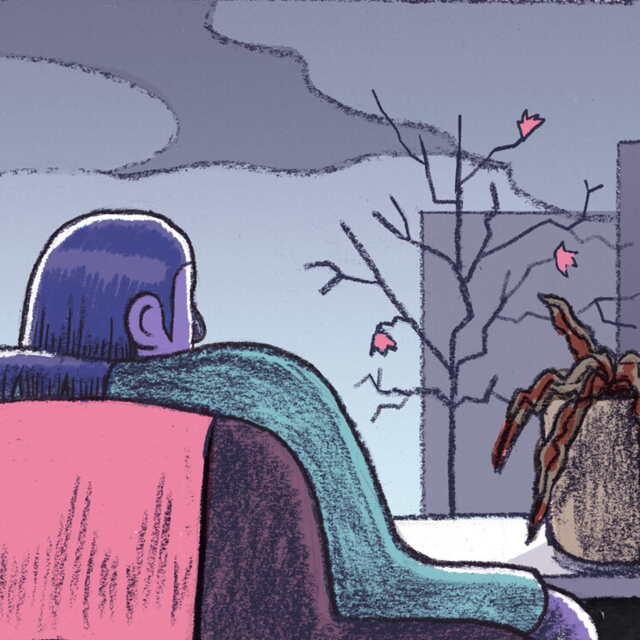
Seasonal affective disorder (SAD) and “winter blues”—why some people get depressed, sluggish, and oversleep as days get shorter, plus practical steps to cope.
Maya (MXM Tune), California singer-songwriter who wrote about winter depression at 16 after friends and family recognized her seasonal sadness. Dr. Norman Rosenthal, Georgetown psychiatry professor who studied SAD and coined the term. Emily Manoukian, Salk Institute clinical researcher studying circadian rhythms. Reporter Kavitha Cardoza.
About 1 in 20 people in the US have full-blown winter SAD; women are ~3x more vulnerable. SAD is real but can worsen gradually. Light, food timing, exercise, and stress reduction help by re-syncing internal clocks.
SAD lamp guidance (about 10,000 lux; 20–30 minutes morning). Isabella Harris describes “fog” lifting. Advice includes eating on a consistent 10–12 hour window, exercising during active hours, and planning enjoyable activities.
Written by AI. May contain mistakes.
Maya shares her personal experience with seasonal depression.
“And I was feeling sad, looking outside, seeing that the weather was really bad and that it was dark outside.”
Learn what seasonal affective disorder (SAD) is and its symptoms.
“And so that's how I kind of discovered it.”
A preview of the upcoming expert explanation on SAD.
“Reporter Kavitha Cardoza is going to explain why you might feel this way and share some simple ways to feel better and more like yourself.”
Dr. Norman Rosenthal discusses his study on seasonal affective disorder.
“Norman Rosenthal is a clinical professor of psychiatry at Georgetown University School of Medicine.”
Learn about symptoms and how to identify seasonal affective disorder.
“and that was our first study of seasonal affective disorder, which is what it became known as.”
Discover the demographics of seasonal affective disorder.
“One of Rosenthal's patients described themselves as feeling like a bear in the winter and wanting to hibernate.”
Dr. Rosenthal explains how to recognize seasonal patterns in mood.
“Women are about three times more vulnerable than men, and the condition seems to be more common in the Northern Hemisphere.”
The gradual worsening of SAD symptoms and the importance of recognition.
“But a reminder, if you have any concerns, always consult a professional.”
Dr. Rosenthal discusses the significance of light in managing SAD.
“because sad can be debilitating or worse.”
Learn about SAD lamps and their effects on symptoms.
“I like the boxes that transmit the light downwards because that's how we evolved to see light.”
The importance of natural light and environmental cues for managing SAD.
“and it brings you to like a sharper alertness.”
Understanding the impact of diet and circadian rhythms on SAD.
“This message comes from 80 ,000 Hours, a nonprofit whose career guide has already helped over 3 ,000 people change path to work on the world's biggest problems.”
The role of exercise and environmental signals in managing SAD.
“She says it's not just what you eat and how much, but when.”
Learn practical strategies to combat seasonal affective disorder through lifestyle changes and self-care.
“Really controlling those external cues allows your body to really respond to the environment much better.”
Explore the role of medication in managing seasonal affective disorder alongside lifestyle adjustments.
“We haven't talked about medications, mostly because, well, we're not doctors.”

Get the gist, explore an idea or ask about something said.
 Claude
On Life Kit, what are the key points of this episode?
Searching your listeningAutomatic transcript. May contain errors.
0:00This message comes from Easy Cater, making it easy for organizations to order food for meetings and events from favorite restaurants, set up meal programs for their employees, and manage food spend all in one place at easycater.com. Hey, everybody. It's Marielle. Seasonal affective disorder may not be your typical inspiration for a song, but when Maya was a teenager, she was trying to understand her feelings. Seasonal depression's got me sleeping off the days, and we've wasted all our time feeling gray. That's Maya, who also goes by the name MXM Tune. She's a singer-songwriter from California.
0:41She doesn't use her last name publicly to protect the privacy of her family. And I was feeling sad, looking outside, seeing that the weather was really bad and that it was dark outside. like just lying there for hours and hours not knowing how to get out of bed and move or do anything and it just makes it really difficult to do basic normal things like getting up and going to eat a meal or going to drink water or even using the bathroom. And she wrote that song when she was a teenager trying to understand her dark feelings during the winter. Being 16 at the time Maya turned to social media. I went on Twitter and I was like am I crazy because I feel really sad right now and the weather is really horrible and I don't like it.
1:23And people are like, that sounds like you have seasonal affective disorder. It's like sad and you should look into it. So I talked to my parents and they're like, yeah, that's also something that I experience and go through. And I talked to my friends and they're like, yeah, that's also something that I go through. And I just realized that everybody feels horrible weather outside also makes you feel horrible inside. And so that's how I kind of discovered it. On this episode of Life Kit, we are talking about seasonal affective disorder or SAD. It's a type of depression that's related to the change in seasons.
1:51Maybe you've never put a name to why, come winter, you just wanted to stay under the covers all day, or you didn't want to meet friends, or just felt like you were in a fog. Reporter Kavitha Cardoza is going to explain why you might feel this way and share some simple ways to feel better and more like yourself.
2:12Stay tuned for the following announcements and messages from our sponsors. This message comes from Prolon with their five-day fasting mimicking diet, a clinically developed nutrition program with the goal of promoting fat loss while protecting lean body mass. Learn more at prolonlife.com slash NPR. This message comes from Easy Cater, the workplace food platform. Easy Cater helps organizations order food from favorite restaurants, meet dietary needs, and stay on budget. With employee meal programs, flexible payment options, and 24-7 customer support all on one platform. Learn more at easycater.com.
2:50This message comes from Rinse. Your dog believes you are magnificent, capable of anything. Your dog has watched you spend hours a week moving fabric between machines and has never once lost faith. The question was never whether you could become the person your dog thinks you are. It's what's in the way. Turns out, just the laundry. Not anymore. Rinse picks up your laundry, cleans it expertly, and delivers it back while you get on with being magnificent. Sign up today at Rinse.com. Rinse. It's time to be great. Dr. Norman Rosenthal is a clinical professor of psychiatry at Georgetown University School of Medicine.
3:32Years ago, he noticed feeling less energetic during the winter and began studying the problem in others who said they felt the same way. Just like the autumn leaves, they became depressed on schedule, people getting less energetic and feeling worse as the days got shorter. And then in the spring, all of that being reversed. So it seemed like quite a distinct syndrome. and that was our first study of seasonal affective disorder, which is what it became known as. He found about 1 in 20 people in the US has seasonal affective disorder or full-blown winter depression. Feeling sluggish, depressed, oversleeping, overeating, you may gain weight and be disinterested in doing things you previously enjoyed.
4:20Many more have the winter blues, a milder version where you feel like basically a sadder, sleepier or slower version of yourself. One of Rosenthal's patients described themselves as feeling like a bear in the winter and wanting to hibernate. So if you feel any identification with a hibernating bear, think you might well have sad. But in spring, those symptoms go away and you start feeling like yourself again. Women are about three times more vulnerable than men, and the condition seems to be more common in the Northern Hemisphere. Rosenthal says mood disorders were called affective disorders. Affect is just another word for mood.
5:01And I thought, well, this is seasonal. And if we have seasonal affective disorder, it would be a snappy acronym, SAD. And that's what it's become known as ever since. So now we know what we're dealing with, let's talk about a game plan.
5:21Tickaway one is recognize your symptoms and their seasonal pattern. A funny, well, not so funny story. A few years ago, I called a friend in January. I was in tears and she said, I was expecting this. And I said, what do you mean? And she said, Kavita, you always call me crying in January. It shouldn't have taken me years to connect my sadness with the seasons. Dr. Rosenthal says if every fall, when it gets darker earlier, you feel like things are getting more difficult. Ask yourself, does it get better in the bright days of spring and summer? And if the answer is yes, it's almost a diagnosis one can make on one's own.
6:01You probably have sad. But a reminder, if you have any concerns, always consult a professional. Rosenthal says the change in seasons affect people along a spectrum, meaning some people don't feel different at all and some people are quite disabled by it. We've defined SAD as being people who would go to a doctor because the problem was bad enough. There's been a lot of scepticism over the years about whether SAD is a real disorder. Rosenthal says that's because it creeps up on you. For example, it might be a little bit serious in September and a little worse in October and a little worse in November.
6:41It's a little bit like the story of the frog in the bowl that keeps getting warmed up and he doesn't really realise that he's going to die of overheating because it happens so incrementally. That's how it is with sad and the winter blues. But he says recognizing your symptoms and taking them seriously is critical, because sad can be debilitating or worse. Tickaway two is let there be light, because light and not getting enough of it is at the heart of this disorder. Light is the main cue for when to wake up and when to sleep. It kind of acts as a universal synchronizer between all life. We'll talk more about that in a second.
7:24It turns out that a fundamental part of the physiology of this condition is that some people just need more light. They don't seem as sensitive to light as other people. One often recommended fix for this is a sad lamp. Rosenthal says these lamps generate light that's far more intense than indoor lighting. About 10 ,000 lux, a measurement of light. I like fixtures that are a little larger. For example, maybe one foot by one and a half feet. One foot up and down, one and a half foot across. He says this light is absorbed through the eyes, not the skin. And I never stare at the light. It's always coming down a little bit from an upper angle.
8:08I like the boxes that transmit the light downwards because that's how we evolved to see light. with the heavens above and the sun shining down so that it comes and hits the bottom part of our retina, the morning is often the best time. And the earlier, the better. He says if you use a lamp for about 20 to 30 minutes a day, you should feel a difference within two weeks. If you don't, return it. Recent studies suggest that the value of preventative light therapy is inconclusive. It's really a patient's preference whether to use it or not. But Rosenthal says it's still a common treatment for those with SAD because for some, SAD lamps can make a big difference.
8:51Like Isabella Harris, who's known as is in the vlogging world and lives in Virginia. She experiences SAD as general like fogginess and sleepiness. Most people go about their day normally with indoor lighting, but for people with SAD, that indoor lighting is the equivalent of darkness. is bought a sad lamp, as they're known, and the result was night and day. It's like what someone feels like when they jump into cold water and it brings you to like a sharper alertness. If I come in like feeling a bit foggy headed, I'll turn it on and it functions a lot like taking a walk outside. just like allowing my brain to wake up a little bit.
9:40And that's probably not the clinical term, but it feels like it's like waking up. And on the days that I don't, I notice a significant difference in, you know, irritability and kind of just general hopelessness and definitely energy levels. And even if you do use a sat lamp, make sure you're still trying to get as much natural light as possible. Go outside even if you don't feel like it. Even when it seems overcast, you're still getting light from the sun. And remember, small things can make a difference. So trim any overgrowth around your windows and clean the panes.
10:24We'll have more Life Kit after the break. Stay tuned for the following announcements and messages from our sponsors. This message comes from Rinse. A well-designed life doesn't run on default settings. You chose the walkable neighborhood. Your coffee order became oddly specific. You spent three weeks choosing your mattress. But your laundry routine? That one somehow escaped the redesign. Should that really be the one update you skipped? Consider this the patch. Rinse picks up your laundry and dry cleaning, cleans it expertly, and delivers it back. Sign up today at Rinse.com. Rinse. It's time to be great.
11:03This message comes from 80 ,000 Hours, a nonprofit whose career guide has already helped over 3 ,000 people change path to work on the world's biggest problems. Get it free at 80 ,000Hours.org slash NPR. TicketWay 3 is being thoughtful and consistent about what you eat. Dr. Rosenthal says people with SAD have a tremendous craving. for carbohydrates. They crave sweets and starches. And needless to say, that puts on weight and they can't always take it off in the summer. So every year they're ratcheting up a little more, a little more, and it's a real problem. Emily Mnougian is a PhD and clinical researcher at the Salk Institute for Biological Studies.
11:48She says it's not just what you eat and how much, but when. To understand this, we need to talk about circadian rhythms. Circadian is just Latin for about a day. And so when we talk about circadian rhythms, it's referring to these 24-hour rhythms that we have within our body and kind of throughout biology. Think of every cell and system in your body as having a tiny clock. And each of these tiny clocks are on approximately 24-hour cycles. So a master clock in your brain has to coordinate and make sure they all work together. This circadian system essentially signals your body what time of day it is, what time of year it is, and helps match your behavior with the environment.
12:31Manukian says people with SAD usually have a sort of delay in their circadian rhythm, meaning something's a little off. It might really be getting at that they're having a harder time coordinating their internal rhythms with the environment. And so as you start to not be able to re-sync every day, that can lead to kind of this misalignment of my body doesn't think it's time and now I'm forcing it to wake up. Manoukian says just like light, food is a strong environmental signal. If you're eating, your body thinks it should be awake. Eating is the biggest cue to your digestive system, to the rest of your body.
13:03So what does this have to do with SAD? She says when days get shorter, eating or not eating is a good way to signal all those tiny clocks. Being able to coordinate your internal clocks with your environment can kind of help ease any burden that changes in seasons might have. Make sure to stop eating three hours before you go to bed so your body knows it's time to rest. By just controlling the time that you eat and say, keep it to a consistent 10 to 12 hours every day, you're now giving your body a really strong cue to tell it the time of day that it is, regardless of anything else that's going on.
13:35Takeaway four is get some exercise. Emily Manoogian says like light or food, it's another environmental cue that helps signal all those internal clocks what time it is. There's a lot more data coming out now on how physical activity actually affects your clocks and how that feedback feeds back on the master clock in the brain to be able to kind of coordinate your system. She says physical activity is a cue that says wake up. And so by doing things like exercising, you know, during the active time of your day can actually help your body again, know kind of what time of day it is, coordinate, you know, using all that energy and, you know, stimulating the brain to be awake to the right time of day, and then allowing your body to really rest in the evening.
14:20Really controlling those external cues allows your body to really respond to the environment much better. If you work out indoors, Rosenthal says make sure you put on that sad lamp for a twofer. I never work out indoors during the winter without having my light box on and I would encourage other people, especially those with this problem, to do the same. He says when it's cold and dark and you don't feel energetic and aren't active, it's a vicious cycle. You don't feel like getting up in the morning so you pull the covers over your head, so you get less light, so you feel more depressed, so you feel even less like getting up.
14:59Whereas if you force yourself to get up, then push yourself to do all these things, then you can feel much, much better. And feeling much, much better is the goal. Takeaway five is to reduce stress. You may want to decorate a room with bright colors and photographs that make you smile. You may want to see a therapist and talk through how you feel. you may want to try meditation. Rosenthal says the effects of practicing meditation and SAD haven't been fully studied yet, but he believes it can help. What meditation does is it de-stresses you. He says seasonal affective disorder has three main causes.
15:40There's a genetic component, a lack of light component, and there's stress. Stress is going to bring out the symptoms because if you didn't have anything you had to get up and do, and you could lie around, it wouldn't emerge in such a symptomatic way. But it's when you've got things to do and you're feeling down and not thinking straight and not feeling effective, that's when you can really feel most depressed. So anything that reduces stress, which meditation can do, can make a better adjustment to the winter. Another thing you can do is make pleasurable plans, maybe painting or dancing or meeting a friend.
16:25Because sometimes when you plan to do something enjoyable and you make yourself go through with it, in spite of everything, you find yourself having a wonderful time. Maya says she doesn't wait for occasions like a birthday or holidays to do something special. I think as people, I know for myself at least, I spend so much time waiting for other people to give me permission to be excited about things. And I think The moment where we can kind of choose to make our own calendars and schedules something that genuinely will bring us joy is a really big changing point. She celebrates the little things.
17:03And so I try and make myself have things to look forward to, whether it's like baking a pie on the weekend or drinking a cup of tea every single day. And that fuels me a little bit more and feeds me as a person when I'm not able to go outside and feel fed by the world. For Maya, an important form of self-care is songwriting. And a few years ago, she released Seasonal Depression as MXM Tune.
17:39She also accepts that for her, winter will never feel like summer. I think that's been something that I've also reminded myself, is that it's just an indication that the year is passing by and that's okay. And reminding yourself that everything is cyclical and, you know, it's bad right now, but it will be good in the future.
18:08We haven't talked about medications, mostly because, well, we're not doctors. but Dr. Rosenthal who is says a lot of people do really well following these simple measures but if you don't find yourself feeling better or sad is interfering with your personal relationships or work he says medication can be very effective keep in mind none of this will make the disorder go away but as Rosenthal puts it it's not a cure but it's like if you do all the things I've said then sometimes the SAD dies of neglect.
19:10Lauren Gonzalez is our executive producer. Our production team also includes Claire Marie Schneider, Margaret Serino, and Sylvie Douglas. Engineering support comes from Sina Lafredo. I'm Mariel Segara. Thanks for listening.
19:31Stay tuned for the following announcements and messages from our sponsors. This message comes from Jerry. Noticing your car insurance rate creep up even without tickets or claims? You're not alone. That's why there's Jerry. Jerry handles the legwork by comparing quotes side by side from over 50 top insurers, so you can confidently hit buy. No spam calls, no hidden fees. Jerry even tracks rates and alerts you when it's best to shop. Drivers who save with Jerry could save over$1 ,300 a year. Don't overpay. Download the Jerry app or visit jerry.ai slash NPR today. This message comes from Charles Schwab with their original podcast, Choiceology.
20:12Choiceology is a show about the psychology and economics behind people's decisions. Download the latest episode and subscribe at schwab.com slash podcast.


