
 Ask ChatGPT
 Lightwork
18 Aug 2026 · 33m · 16 chapters
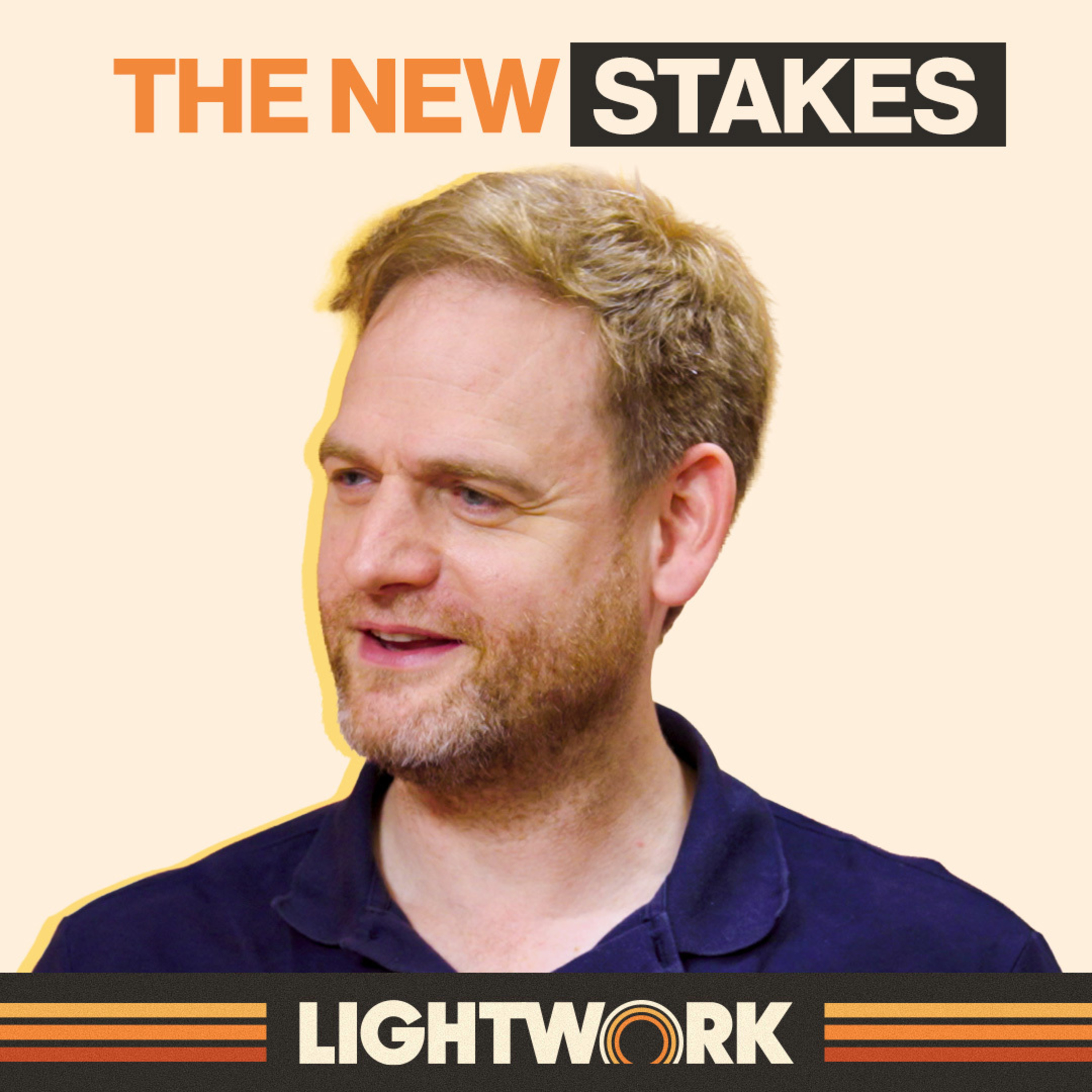
Eon CEO: “The Cloud Is Just Someone Else's Computer” | Lightwork
In short
Eon CEO Ofir Ehrlich argues “the cloud is just someone else’s computer” and that enterprise data backup/protection is being reshaped by AI. He says backup is not “solved” in cloud environments because cloud resources are created/modified by many teams, snapshots are costly/cumbersome, and restoring old data is often unusable. Eon builds “autonomous data foundation” to ingest, map, classify, and make historical and current cloud data searchable/browsable/queryable, enabling easier recovery and safer AI/data activation.
Guest background
Ofir Ehrlich co-founded CloudEndure, sold it to Amazon, led AWS cloud migration/disaster recovery, then founded Eon in early 2024. He previously started four companies and worked in engineering/VP roles.
Key claims
data is the enterprise differentiator; cloud backup costs can reach 10–30% of cloud spend; AI increases the value of stored enterprise data; “shared responsibility” leaves customers responsible for protection.
Notable examples
a major AWS customer ransomware incident where ~60% of infrastructure was hit; a CEO example processing 2+ petabytes/day, improving accuracy/performance, reducing noise, lowering cost, and enabling new markets.
Written by AI. May contain mistakes.
Chapters
0:54
The Importance of Data
Discover why data is crucial for companies and how it relates to AI.
“I think what's really interesting about this moment is whenever I think about Eon, people think data backup.”
1:46
Ophir's Entrepreneurial Journey
Hear Ophir's story of starting multiple companies and his challenges.
“rome and leah objectively it's important objectively cutest kids ever born i've seen them and they're very cute.”
2:56
Transitioning to the Cloud
Explore the reasons companies moved from on-premises to the cloud.
“His friend's actually my co-founder now.”
5:20
Understanding Cloud Responsibilities
Learn the shared responsibility model between cloud providers and customers.
“And maybe to take a step back, like why would a company, I mean, I know this is now pretty standard, but back then why was it so critical that a company would move from on-prem to the cloud?”
6:16
Ophir's Insights and Experiences
Gain insights from Ophir's experiences as an angel investor and advisor.
“They had data in the cloud and someone hacked it and they came to the cloud providers.”
8:00
The Dual Nature of Founders
Understand the duality of imposter syndrome and confidence in entrepreneurship.
“It also helped me see things from the eyes of investors, from the eyes of acquirers.”
9:34
Work Ethic and Passion
Discover Ophir's intense work ethic and passion for his ventures.
“And I need to do something where I have a significant unfair advantage.”
11:15
Eon's Unique Positioning
Learn about Eon’s role in the fast-evolving data landscape.
“doing that and you know hopefully eon will be forever and ever and be a large company but even 10 20 years whatever if i ever will leave the company or whatever in 20 years i'm just gonna I'll do another one.”
12:20
Ransomware and Data Protection
Explore the challenges of data protection in the face of ransomware attacks.
“For 30 years, 40 years, it was exactly the same.”
14:00
Challenges in Cloud Migration and Backup
Explore the pain points and misconceptions around cloud migration and data backup solutions.
“I don't know where to do it, but it was before, you know, agents started to rule the world and, you know, anthropic became a thing and those kinds of things.”
Show all 16 chapters
17:45
The Value of Data in Modern Enterprises
Understand the importance of data accessibility and management in enterprises today.
“And the auditor comes and says, okay, bring me all the documents from five years ago, but where is it?”
23:08
Building a Strong Founding Team
Learn about the significance of trust and friendship in founding a successful startup.
“Yeah, just to kind of make it make sense around the data opportunity in the age of AI, I think for some folks are like, OK, I don't understand even why data is so valuable in this era.”
28:00
Building Strong Relationships Among Founders
Learn why trust and friendship among co-founders are crucial for success.
“we got acquired by Amazon, a previous company.”
29:00
The Importance of Enjoying Work
Discover how having fun at work can lead to a successful company culture.
“of my general philosophy people laugh at me sometimes i say that i take funds seriously and it means that it applies to you know people that are bringing to the company people that i I work with that.”
30:06
Excitement in the Changing Tech Landscape
Explore the rapid evolution in technology and what it means for founders today.
“and do the thing you love for hopefully many, many, many years to come.”
31:35
The Call to Be Bold in Building
Understand the importance of ambition and belief in making impactful changes.
“You know, we always remind ourselves at Lacey that like, you know, progress is not the default.”

Ask about this episode
Get the gist, explore an idea or ask about something said.
 Claude
On Lightwork, what are the key points of this episode?
Searching your listeningTranscript
Automatic transcript. May contain errors.
0:00Tell you a secret, the cloud is just someone else's computer. Our guest this week has spent his career keeping enterprise data safe. You see companies trying to understand what the cloud is, and they tell you it's infinite, it's robust, reliable, everything is stored there. But people understand that AI changes things, they don't understand by how much. Ofir Ehrlich co-founded CloudEndure, sold it to Amazon, and led AWS's cloud migration and disaster recovery business before founding Eon in early 2024. I started four companies in total. Eon went from founding to a$4 billion valuation in under two years because it turns out the supposedly boring pile of data that every company pays to store is the exact thing AI needs to be useful.
0:45If you're a large company, what is the most important thing that you have that differentiates you from everyone else? Well, that's your data. Ophir, welcome to Lightwork. Thank you so much for being here today. I think what's really interesting about this moment is whenever I think about Eon, people think data backup. And for a lot of people, less familiar with how all of our enterprise software works, how the Internet works, they're not realizing that every single thing there is a record of. There's a document. People are keeping a daily record of every version of a customer record. All of this is stored somewhere.
1:21And notoriously, people think this is, you know, a relatively solved thing. but you decided actually in a time when ai was ultra hot to go after this space because i want to spend a lot of time learning more about the company that you're building what eon is spending time on but also hear more about you as an entrepreneur building in this space so wonderful it's a real pleasure to be here thank you very much for having me on the show so first and foremost i always say my name is of fear i'm married to wonderful julia father to rome and leah objectively it's important objectively cutest kids ever born i've seen them and they're very cute.
1:55Incredibly cute. It's very, very dangerous. And my son is a hard negotiator. Right now, he doesn't want to go to the kindergarten and trying to figure out what to do. I can't believe you're CEO of this amazing company and you can't out-negotiate a three-year-old. No, no, no. He's the best. He's going to be a CEO of a Fortune 1 company. You're training him already. Exactly. He's training me. Boring stuff. I started programming when I was nine. Apparently, it wasn't a bad idea. at the end of 2017 during the first internet bubble. I worked at a startup company. And then I thought, ah, it's a great idea.
2:27Let's start a few companies. I think maybe I don't know what I'm doing. I started four companies in total. First one, I had no idea what they're doing, to be honest. Really, no one did, by the way. It was 2006. No one knew what they're doing. Neither did I. The company got shut down. And then we decided, me and a few friends, let's start another company. and it was at the peak of the financial crisis here in New York. And I remember going with a friend of mine to Times Square. His friend's actually my co-founder now. And he pointed me at a sign saying, you know, for 106 years, there was a sign stating Lehman Brothers yesterday and they took it off.
3:06I said, what's the big deal? Who cares? I mean, tech, this is finance. Came back home, realized, who cares? Me trying to raise funds for the next company. It was super, super hard. But eventually raised about a million dollars. A year and a half later, sold the company to a national trend company called Lineback Networks. I spent a year and a half there as VP of engineering and then left. And the same thing, they decided, let's start another company. This time, let's do something a bit bigger. And this company was called CloudEndure. Weird name. The reason we chose that, it looked for an available.com domain.
3:41And we said, okay, let's change it later. Never changed it since. This company was the first time I encountered something in the world of backup, data, this kind of things. I'm a computer geek from very early on, data, backup, even cyber. But doing it hardcore, that was the first time. And we developed technology that enabled large enterprises to move from on-premises to the cloud with no downtime or data loss. And this was for two business purposes. First one is migration, taking all of your data center, moving it into the cloud. The cloud was pretty new and turning off lights and data center.
4:17Second thing is what is called disaster cover, which is like a hot backup. It means that if a meteorite hurt your data center, you can immediately move all the applications to the cloud. Nothing interferes to the customer. The customer is not disrupted. And then going back when everything is settled. We raised about$18 million in this company. I sold it to Amazon in January 19 for a few hundreds of millions of dollars. And then two really interesting things happened to me. First one is that we had a front row seat. Look at all those really big customers moving to the cloud. Now, if you look at AI right now, moving to the cloud looks like peanuts, way smaller than this event.
5:01Seat was massive. You see companies trying to understand what the cloud is. and they tell you it's infinite, it's robust, reliable, everything is stored there, but tell you a secret, the cloud is just someone else's computer. The bits are on the internet. Good luck associating your process document with the physical disk that they own. And maybe to take a step back, like why would a company, I mean, I know this is now pretty standard, but back then why was it so critical that a company would move from on-prem to the cloud? What happened was two reasons. First, it was really truly economical. and you're able to move from a CapEx to OPEX, paying only for what you need.
5:43Other hand, it was really cool. And everyone wanted to be a part of the cool web, which is also very, very important. And you have all those new cool capabilities in the cloud. Looks what's happening today. All of a sudden, Google have a new AI thingy and Amazon have a new storage thingy. So it's really cool. You get more and more and more features as you move there. So people wanted to move to the cloud and they found out that the cloud just saw on its computer, as I said, and to actually care and actually decide what they're going to do. And whenever, you know, something bad happened, we wanted to do something with cloud providers.
6:16I don't know, they got hacked. They had data in the cloud and someone hacked it and they came to the cloud providers. The chief information security officer says, hey, please, please help me. What should I do? I lost control. And the cloud providers told them, as I learned in my public speaking course in AWS, I'm so, so sorry. And it's for all the clouds. It's not no one in particular. So sorry, but shared responsibility model. This means that we, the cloud providers, we provide compute, we provide storage, but all kinds of specific services, you, the customer, you're responsible for everything.
6:53And we grew the business significantly inside AWS. So that was the first thing that happened to me. I looked at, I had a front row seat looking at all of those companies moving to the cloud and then realizing what it means moving to this new apartment. The other thing that happened to me is that I said, I want to understand how the world works better. The best way to do that, what I thought, which turned out to be, I think, true, is to become an angel investor. And later I started advising a few venture firms all over the world. The main reason to do that is, even though I think that in general, angel investing is a losing asset class, it helped scale me up.
7:30I started working with so many CEOs, looking at what they're doing, looking at the decision making. Sometimes I said, oh my God, they're complete idiots. Why are they doing that? But you know what? I wasn't accountable or liable for those decisions. And then in three or six months, I could actually see what's actually going on and realize whether I was really correct. Being smug, I knew what's going to happen. Or, oh my God, I couldn't think the opposite of what I think was going to happen. And it scaled me and taught me a lot. It also helped me see things from the eyes of investors, from the eyes of acquirers.
8:08Investors could be hedge funds, could be private equities, could be VCs, could be small ones, big ones, institutionals. So it's a really, really fascinating way to look at the world. And I actually fell in love with it. And it was truly magnificent. And for a brief while, I spent four years on Amazon. When I left, I said, maybe what I need to do is go full-time VC. But you know what? I really want to start a company. I know. You were like, you did it three times. Why not a fourth? Now, I said, I'll tell you a secret. I have a dual personality in the state that I have one personality. I have an imposter syndrome.
8:48Any moment, everyone here, and you are going to find out, I have no idea what I'm speaking about. My other personality is, get the hell out of my way. I know exactly what I'm doing. And they coexist. But I actually will say that is like, when I think about great founders, that is actually so much of the DNA is like, you have to be infinitely curious about the world and constantly change your assumptions. But also when you have conviction, something, execute. And it's like, the phrase is like, strong opinions loosely held. And I feel like that's, yeah. Exactly. You know what? That was my next sentence precisely.
9:21And I love it. I'm going to do it until I'm at least on 200 with good health, hopefully. It's something that I really enjoy doing. And you know, when I thought maybe I'd go full time, I said, I know better than them. I know what to do. I understand the world. And I need to do something where I have a significant unfair advantage. I can have unfair advantage because I know the market. I can have unfair advantage because I know VCs and how they think. I know how the cloud think. we have the best team that I could think of I'm able to work with my best friends this is incredible and you know it just I can I have access to talent I know how to solve things technically I understand I hope the business problem and we had the luxury to be able to do significant validation before launching and because we had all those connections and relationship and understanding of the market.
10:15So it was something that we said, I just have to do it and I'm going to enjoy it so much. And you know, when it started, my wife asked me, we started dating during my cloud and those days before sending it to Amazon. And then it was very intense until acquisition. And then it was less intense from a mental perspective. And then she asked me, Ophir, how hard are you going to work? and I told her, listen, because I'm experienced, I could tell you I'm going to work eight hours a day and I'm going to be home for every weekend and for every supper and never go fly. But because I'm experienced and I know how the world works and I know how I work, I'm going to work 24-7.
10:58I'm going to live on a plane. And this is a decision that we need to take and understand that this is what's going to happen. And I think she didn't believe me at the time. She said, yeah, but probably. I said, no, no, no. this is what's going to happen and this is really what's happening right now and working all the time but you know what i just love this i enjoy it all the time i'm never never going to to quit doing that and you know hopefully eon will be forever and ever and be a large company but even 10 20 years whatever if i ever will leave the company or whatever in 20 years i'm just gonna I'll do another one.
11:35So bear to stick with this one. And this is what I love. My hobby, people have hobby. I used to have hobby playing poker. I did it a lot in the past. I really enjoyed that, the mental challenge with very smart people. Have to do a Portco poker night. Exactly. It's important. It's important. But my hobby today is, it's fun, it's venture. My hobby is investing. I love it. I love speaking with founders. I love it. and I want to continue always being curious, understand how the world works, how the world's changing. And right now the world is changing faster than any time, remember, in the past. Now I know I have more knowledge today and we have recency bias, but still, oh my God, even how you sell software dramatically changed since two years ago.
12:25For 30 years, 40 years, it was exactly the same. And now it changes. And it's not just technology, It's how it implicates our lives. And if today, more than any time, as a startup founder, on the one end, you need to have kind of vision, make sure you focus, execute, heads down on executing. I hate to say a phrase, by the way, because you need to always be curious. Understand the world's changing? Yeah. Change with that. And that's really immensely important. Hearing your targets is so energizing. And I know Ian has been a total rocket ship. And so I can only imagine how many flights and hours have gone into that.
13:05And so I have an amazing team around you, which I want to get into how you assembled this rock star team. But I guess even double down a little bit more into what you're building, because I do think there's an interesting story. You brought up this idea that the world is changing so quickly. And as a founder, you have to be curious. You have to constantly adapt with the things happening around you while also building and being heads down and pushing things to production. It sounds like Eon is playing in this space where people might think, okay, data backup, data protection, it's a relatively soft space.
13:36But it sounds like with AI, there's a lot that's being challenged in how you have to think about this asset. Absolutely. So I'll tell you how it started. When we started, I said, I'm this crazy person, crazy, starting a non-AI company in an AI world. Now, remember, it was the beginning of 2024. So it was post-chat GBT moment. It was post-chat GBT moment, exactly. I don't know where to do it, but it was before, you know, agents started to rule the world and, you know, anthropic became a thing and those kinds of things. And we said we had an unfair advantage and we want to do something where we can really, really influence and make a difference.
14:15And we saw so many customers. I mean, I think there's no one in the world seeing more migration to cloud. We've been in the weeds with those customers. We're understanding their pain. We're understanding that there's a new way to do things. And I can tell you that I also thought that backup is solved. And what changed me is that when I was at AWS, one of the big customers that we had, that we were actually in touch with. We were at large scale, so we weren't in touch with any customers. But this was someone that we engaged with a lot. And one day, I read online, those guys had ransomware, attacked them.
14:48Now, they were doing anything humanly possible in terms of time, effort, money to protect their data. So I was sure that if they were attacked by Ranshorn, it's actually going to be a success story for AWS, for the disaster recovery team. So it's going to be great. So we called them up just to make sure everything's fine. And to our surprise, 60 % or so of their infrastructure got hit really bad. And I thought, ah, backup is solved. I mean, come on, there's so many incumbents. It's a problem that exists for so long. I mean, how could it be? And we realized that there are a lot of challenges in the cloud that simply didn't exist on-premises in the old world.
15:27And all the incumbents in the space, they all started, all of them were no real large companies, enterprises in the cloud. Because companies really moved to the cloud, mainly around COVID, 2020, if you remember what it is. No one remembers what it is, right? Ages ago now. Exactly, ages ago. Who knows? Some pandemic. 2020, 21, that's where the real migration to the cloud started. And it was still pretty challenging to be a GPT moment. And it started moving to the cloud, and they didn't really know what to do. And everything is behaving different than the cloud on-premises. Let's say I want to have another disk.
16:08What do I do? I open a ticket for IT. I want to say IT picks it up, handles it, tells me, okay, sends me a disk or something like that. in the cloud it's completely different every person can create remove modify resources as much as they want yeah and you basically have no control so they didn't even realize what they should do they didn't realize how much it's going to cost them they had all those new crazy cool abilities or databases data warehouses in the cloud but they didn't know do we need to protect that how it's not transparent it's going to cost a lot of money all this storage of those backups is called snapshots it's like tapes it's it's like it's like the virtual equivalent of sitting in some warehouse somewhere and you need to retrieve the data it's really really cumbersome we understand what we need to do to do differently but we also understood that there's a new market i just spoke about a customer that they weren't aware so where's the market the market is was this new organization which was called cloud infrastructure cloud operations or cloud engineering.
17:11It's a new organization inside large enterprises. They control all of the cloud, which could get to billions of dollars annually. So that's huge. That's a vast amount of money that they're not even accountable for. And in simple analogy terms, it's like, this is where the company is storing all historical records of all files. Everything. Both historical records and up-to-date records. And it's very hard for to distinguish. They call it storage. We understand that if you look at it differently, for storage of historical records, if we build data foundation, if we build a unique storage platform in the cloud, software only, we're still not on-premises anymore, we can both create a really, really great solution that will help ingest data from identifying all of your cloud resources across everything, all of your state, bring everything logically together without hassle, store that efficiently, so it's both dramatically lower cost but way better product and we can also also do some magical things which is actually making all of this data searchable yeah browsable and usable now this was actually something that we didn't expect would be so significant in this new world because when we started to look at backup and then you're able to access that because let's say you're an insurance company and you spill coffee in the kitchen, Claire.
18:39Five years ago, now there's a lawsuit. And the auditor comes and says, okay, bring me all the documents from five years ago, but where is it? Yeah, before I own, what do you do? What do you do? So you bring a SWAT team between 10 and 30 people. They go around their office, the virtual office, trying to find where did I put the data. Let's say that they found the data. It's on a server in AWS in Singapore. Great. Now that just needs to retrieve that. It's amazing. So you found it, you actually stored the data, which is most of the time it's not even there. And now you need to restore data, but it's a data, it's not a database.
19:11It's from five years ago. It's in an attic. Exactly. And when you try to restore it and try to understand where it is, you find out it contains old software. It doesn't work anymore. It's security vulnerabilities from five years ago. You know how many security vulnerabilities were? It used to run in some network. The network doesn't exist anymore. And who is the password for database? I think you got fired for, you know, for spilling coffee. So you need to bring the DBAs and network teams and system just to restore a few records. And you know what? That's not the right thing. And for like some of these massive companies, this type of workflow is just happening on a daily basis.
19:48Exactly. It's their day to day. And you see teams of tens and hundreds of people just doing that. Going to the attic and all this friction. And then they understand they don't want to do it. So they're doing the minimal amount of work and they're not even trying to bring that. It becomes something that you don't trust. And you pay so much money for that, like something 10, 20, 30 % of your cloud spend, which is huge, and you don't sleep well at night. And we found out that if we make everything easily ingestible, searchable, browsable, queryable, we can activate that. We can make it useful for you.
20:22And we said we use it so easy recovery. But here's what was interesting that happened. We started showing that to customers. and they started connecting us to data teams and they started connecting us to AI teams because every day there's a new model. Every day there's a new compute platform. And I think they're great. It's very easy switching costs. You know, you switch from one to another immediately. What is more today? What, if you're a company, if you're a large company, what is the most important thing that you have that differentiates you from everyone else? Well, that's your data. The data that you're creating now, the data that was accrued throughout the years.
20:58but you know what it's locked there are multiple people in multiple business units that each of them have data they don't know what it has let's say you're you know the director of data and you got tasked by the cto the ceo you gotta get all the data and do something with it because yeah it's really cool it's really helpful and we need to be a part of this movement and it's actually usable. So that's amazing. You want to use all those NeoCloud, all those really cool compute tools. You want to close on your data, you want to run it through data rigs and process that. You want to push it into ClickHouse and do crazy stuff.
21:36Great. How do you do that? Data is locked. Multiple business owners, each of them has their own data. They're scared because they have maybe financial, maybe the salary of the CEO is hiding there and it could be leaked if they give it to you because Claude would ask question and get these answers and they will be the ones to blame so what do you do so we found out that the same technology is saying can provide real value if you take all of your data identify map it classify it create a generability map and contracts around everything so we know everything about your data or let you know actually everything about your data yeah you can actually activate data and use that with all of those tools and immediately switch between with all of them when you know that your data is safe and is posted in the right way that you choose and prepared to be consumed in the best way possible by every tool of your choice, whether it's today, whether it's tomorrow, or in three or five years.
22:32So that's what we became. We're doing autonomous data foundation. We're doing data backup still. It's very important because you get a chance to take a look at all the data. That's the foundations of it. Exactly. But you also know how to take data, ingest it, whether it's real-time from real-time events, whatever databases, process that and prepare that for consumption. So they can use whatever tools that, you know, top of the line today, you know, moving between cloud seamlessly with very low cost compared to every other option with very high quality, with very high performance and make everything usable.
23:08So that's what we're doing. Yeah, just to kind of make it make sense around the data opportunity in the age of AI, I think for some folks are like, OK, I don't understand even why data is so valuable in this era. But I think just to make it tangible, for example, the question that always comes up as we look at startups and you, you know, you angel invest. And so you understand this and you see this with the founders who are trying to harvest all of that data. you know the difference between why google ai tools might be so helpful for me is that they have so much data on me as a human and my writing patterns and every like everything on me versus new ai tool might be really great but they don't have that data and distribution and so just to kind of illustrate the difference between if you were a company and having access to that data you have so much more advantage if you can harvest it and use it accurately and so that's why it's so important for all these enterprises to be able to have clean data.
24:02And what your service, I think, to again, make like super simple analogy, it's like instead of that attic motion where you have like a bunch of people going in and out and nobody can find anything, you just basically built like a sweeper that just like, help me find this. And it just like instantly. Exactly. We help you find it when you need it. We also make sure to find all the data when you try to understand where's my important data? Where is my data that I don't want to expose? What's the that they bring everything so when you search it, it's there and it's usable. And it's actually, you can actually get real results that you need for your business.
24:39And it's really cool. What is your process for making that data usable? So maybe not in CTO terms, but for CEO terms, I have an enterprise. How are you making that usable for me? So I'll tell you something. We just had a discussion with a CEO of a large customer. and they are processing over, they are written bidding ad network. They're processing over two petabytes of data a day. Wow. So that's a lot of data they're processing. And they told us, you know, at Ophir, we didn't understand initially how much impact it's going to be on the company, but we're able to get to new markets now. We're able to get significant profitability.
25:23One is because we're able to get the data with much higher performance, higher accuracy, in yet reduce reduction of noise, ability to identify data that is bogus or that is redundant or that we don't need. And we do that at a fraction of the cost that we used to do before. So it's a better product, better value, simplifies everything, all of their work, at a lower cost. Yeah. Enables them to literally focus on their business and make it more significant. and they told us that they were able to continuously grow because of that significantly. Even into markets, they didn't have access to before because it was too cumbersome or they had too much noise in the data or they needed performance and didn't meet the SLAs or it was not good enough for economics.
26:12And now everything is solved and we can see we're growing with them. So their consumption is growing with them. So it's everyone's happening. So I really want some cliche, but it's true that I'm taking from my AWS days and I'm a trouble with that, think from the customer backwards. If you're able to deliver real value, customer will love and grow with you. And that's what we're attempting to do and we're very fortunate to do it even with the CEOs. The CEOs even get it. Sometimes you explain CTO, CDO, CEO in technical terms, but you can also help the CEOs and this is how I impact your bottom line.
26:47It is so helpful for you to talk about your founder journey. It was really so inspiring. I know you referenced a bunch of really important people that have contributed to his journey, obviously. Foundational to that, Julia, your two kids, but also it sounds like you have a great team around you. Tell us a little bit more about who you've decided to build this with. So I have two co-founders. One of them is Gunan. Gunan is my best friend only for the last 26 years. Only 26. Exactly. Since he was 17, I'm 18. Now I'm exposing my age. And we continuously were speaking every day, even when we were working in separate companies.
27:23and we didn't want to work together because we're best friends what's going to happen and like in CloudEndure previous company we didn't want to do it honestly because he doesn't deliver I don't know what's going to happen but his mom decided that we have to work together and if his mom says that this is what we're doing and today to be honest I don't understand how to not work with him Gones is president CRO he runs all of go to market it. My other co-founder is Ron. Actually, I hired him eight years ago in AWS, just when we got acquired by Amazon, a previous company. But he became so significant, so important.
28:09He actually became general manager of everything we built. He managed engineering, but also professional services and marketing and sales and bidding and whatnot. And we worked so well together because so good friends we said we just have to we have to work together there's no way around it and i'll tell you a secret i think that's for founders think that's the most important thing i think that if i wouldn't start company friends i wouldn't start company i think that i have to feel like i have super strong founders that will be with me rain or shine that i can trust them that they're both superstars in what they do and also really good friends of mine in general because if the end of the day you go to work i would say even more i work 24 7.
28:58you want to do it with people that you trust and love and that's super super super important and that's part of my general philosophy people laugh at me sometimes i say that i take funds seriously and it means that it applies to you know people that are bringing to the company people that i I work with that. Even my investor was very fortunate to be able to choose. I say that if you take a really brilliant group of people, point them to the right direction and let them run. You need management. You need processes, whatever. But if they have fun, everything will fall into place. If they don't, no matter which process you're going to put in place, no matter what change is going to do, no matter what financial motivation you're going to put, nothing will work.
29:45So having fun doesn't mean Disneyland. It means really enjoying every day, saying, well, I'm so fortunate to be here every day. I think it's paramount to building a significant company. And I'm very fortunate to be with great friends as co-founders and great team that we assembled around us. Yeah, and I can see that when you're talking, it's like how lucky you are to be able to build with such great people and do the thing you love for hopefully many, many, many years to come. I think on an ending note, I love the curiosity that you have in the world. I think that's such an important part of great founders.
30:22Since you have so much exposure into investing in the space, you're building in the space. As part of being a founder, you have to track what's happening in the ecosystem. Is there anything in the AI world or beyond even in software generally that is exciting you in this moment? I think what's exciting me right now is actually not specific technology either, but the meta. The pace of how things are changing, not just from a technological perspective, which is insane. I don't think that since the Industrial Revolution, not even the internet was so significant to what's happening today. I think even people understand that AI changes things, they don't understand by how much.
31:00What's fascinating me is how processes became different. How companies are consuming software in a completely different way. Or hardware. how new companies are being founded, how important it is today to be, you know, first principal thinker and innovator versus, oh, I have 20 years of experience. Let's do more of the same. I think there's an opportunity in thread in the market right now. And I think that it's the best time to be a founder, the best time to be curious. Yes. And the moment you start being curious, that's when you're going to lose. Yeah. So really, I enjoy every month of that, truly.
31:37Yeah, I love that. You know, we always remind ourselves at Lacey that like, you know, progress is not the default. You need people who truly believe that they can change the world. And now is this moment to be bold and to be ambitious and to throw your heart and mind into something great. And it's just been never more exciting to build. Absolutely, absolutely. Thank you so much for joining us. Thank you very much. It was a true pleasure. I can't believe we're already out of time. I know, I feel like there's so much more I want to learn about you and like so much more I want to get in the nitty gritty of Eon.
32:06But hopefully this was a great primer for folks. and there's you know you all put out so many great resources so for any of those technical folks i'm sure they'll find their way um as they dig into absolutely so thank you very much it was a pleasure to be here thank you
From the publisher
Ofir Ehrlich, CEO and co-founder of Eon, joins Claire Zau to explain why the cloud data enterprises pay to store and rarely open turned out to be the thing their AI needs most. Ofir walks through the four companies he has started, including CloudEndure, which he sold to Amazon before leading AWS's cloud migration and disaster recovery business. He assumed backup was a solved problem until a customer he had worked closely with was hit by ransomware and lost access to a significant portion of their infrastructure, which sent him looking at what breaks in the cloud that never broke on premises.
They discuss how enterprise data sits locked across business units that cannot say what they hold, what happens when an auditor asks for records from five years ago and the database no longer runs, and why backup can rack up a company's cloud spend while staying something nobody trusts. As models and compute platforms become easy to swap, Ofir argues, a company's accumulated data becomes what actually differentiates it. He also talks about building Eon with a best friend of 26 years and a colleague he hired at AWS, and why he would not start a company without friends in it.
Chapters:00:00 Welcome, Ofir Ehrlich!05:22 Why Companies Moved to the Cloud07:08 Learning Through Angel Investing08:41 The Founder Mindset: Imposter Syndrome vs. Conviction10:23 Building a Company Around What You Love13:11 How AI Is Changing Enterprise Data17:05 The New Cloud Infrastructure Organization19:09 Why Recovering Old Data Can Be So Difficult20:25 Why AI Teams Need Enterprise Data22:33 What Eon Actually Does24:40 How Eon Helps Make Data Usable26:47 Choosing Eon's Co-Founders30:29 What's Exciting in AI Right Now?31:37 Final Thoughts
More from Lightwork
All episodesWe use cookies.They keep VO running smoothly and help us improve it. Privacy policy