
In short
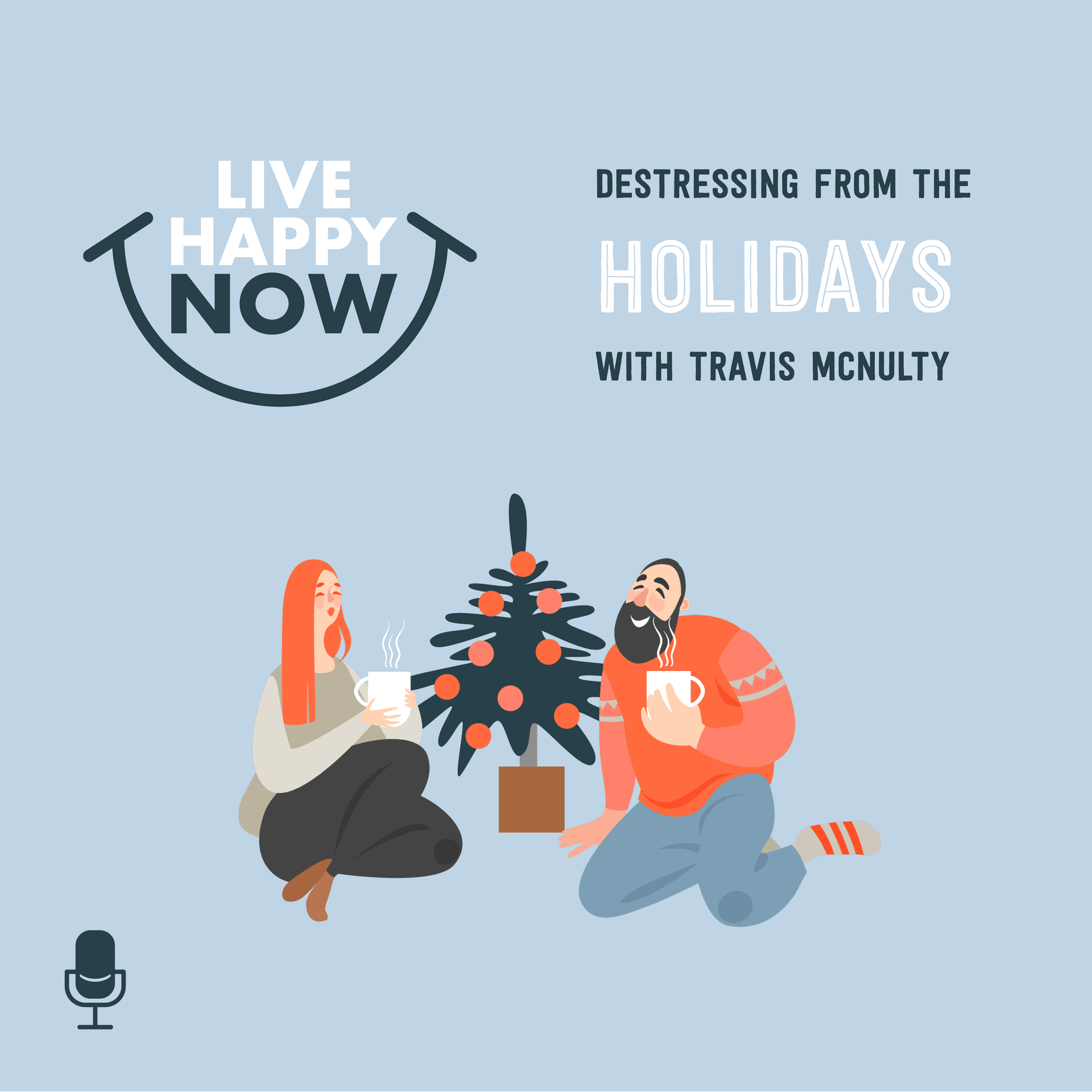
How to de-stress the holiday season by managing seasonal anxiety, emotional overwhelm, and nervous-system “role regression” triggered by family dynamics and expectations; includes practical tools (exercise, diaphragmatic breathing) and boundary-setting strategies (realistic expectations, saying no, protecting energy, reframing thoughts/behavior).
Guest background
Travis McNulty is a licensed mental health counselor and clinical director/founder of McNulty Counseling and Wellness in Florida.
Key claims
Holidays activate stored childhood roles (fixer/overachiever/peacemaker/invisible). Stress may not be physiologically new, but it recurs via triggers. “Exhaust the body, tame the mind” helps downregulate fight-or-flight. Overperforming and performance-based esteem fuel unrealistic expectations; psychological permission to say no and stop trying to change others reduces chaos.
Notable examples
A “lion cage” analogy for conditioned threat responses; a friend who fistfights his brother in adulthood; hosts melting down when guests (e.g., mother-in-law) don’t meet expectations.
Written by AI. May contain mistakes. Listen to the episode to check what was said.
Chapters
Tap a time to open that second in VOUnderstanding Holiday Stress
0:45 to 2:52
Explore why the holidays trigger stress and the impact of family dynamics.
“Travis, thank you for joining me on the show this week.”
Revisiting Past Roles During Holidays
2:52 to 7:27
Discuss how returning home during holidays can trigger childhood roles and stress.
“You know, how the brain works in terms of whenever you walk into an environment, for example, you walk into your home that you haven't been in in 10 years, we slip into almost like a role regression, right?”
Tools for Managing Holiday Overwhelm
7:27 to 12:30
Learn effective strategies to manage stress, including physical activity and setting boundaries.
“How would I like to react in the future?”
Setting Boundaries for Holiday Enjoyment
13:36 to 14:00
Strategies to set personal boundaries and enjoy the holiday season without stress.
“And now, let's hear more from Travis McNulty.”
Navigating Holiday Boundaries
14:00 to 15:03
Learn how to set personal boundaries during holiday gatherings.
“like let everybody get through the christmas hanukkah all of that celebration and then we can have them when they're when everyone's not just looking at their watch and saying i got to get out of here.”
Identifying Energizing Relationships
15:03 to 17:02
Understand the importance of surrounding yourself with positive influences.
“and just thinking about it because we get so busy in our day to day that I know for me, Thanksgiving's on Thursday and I forget what week it is sometime.”
Proactive Holiday Planning
17:02 to 18:53
Explore strategies to plan for enjoyable holiday experiences.
“think that's another useful tool and technique that I use with some of my clients as well.”
Managing Stress and Expectations
18:53 to 21:28
Discover how to manage stress and expectations during family gatherings.
“And I think to that point as well, a lot of people will try and manage another adult's behaviors or their reactions or, and it just becomes so overwhelming that people look forward to the holidays going too quick.”
Finding Joy in Hosting
21:28 to 24:01
Learn how to enjoy hosting holiday gatherings amidst pressures.
“And those are the real heroes, the people who host the holiday gatherings.”
Transcript
Automatic transcript. May contain errors.0:03Thank you for joining us for episode 548 of Live Happy Now. We have now officially entered the holiday season, which means some of us are already starting to feel a little bit stressed. I'm your host Paula Felps and this week I'm joined by licensed mental health counselor Travis McNulty, clinical director and founder of McNulty Counseling and Wellness in Florida. He's here to talk about how we can de-stress this holiday season and overcome the emotional overwhelm that keeps the season from being its merriest. Travis shares tips to help us ward off seasonal anxiety before it sets in and tells us how setting better boundaries can turn holiday chaos into calm.
0:43Let's have a listen. Travis, thank you for joining me on the show this week. Of course. Thanks for having me. I'm excited to connect. Oh, yes, so am I because it is the holiday season, which means everybody is incredibly busy. And that's why I wanted to talk to you. We want to really talk about how we can address that emotional overwhelm that accompanies this season. So to start this off, let's start with a seemingly simple question. That is, why do the holidays cause so much stress for us? Yeah, absolutely. And it's a great question. And I think it's so easy for us to get sidetracked in what the ideal holiday looks like.
1:22You know, we watch Hallmark and we see everybody's opening presents. The family's getting along. Snow's falling down. But I think the holidays can be so much different depending on family dynamics, but also the weight that we carry from like a performance based perspective from going in from our careers into family life and transitioning. And I think the brain just becomes habituated and desensitized into perform, perform, perform. And then when it comes to, OK, let's chill and relax, it's really difficult to downregulate that nervous system. Do we have some culpability in this stress that we feel like?
1:59Do we start dreading it? Do we start going, oh, my God, this is going to be horrible? Like, do we kind of set ourselves up to get stressed out for the holidays? Yeah, absolutely. I think, again, it goes back to more our expectations for how the holidays are supposed to be versus what usually happens in reality. And I think a lot of people can become desensitized into thinking, oh, this holiday is going to be different and things are going to be fantastic. but then, you know, we have kids, again, family members, you name it. We have so many different stressors around the holidays and it's important for us to stay grounded by really taking a introspective look into going, how do I want my holiday to go this year?
2:40What does it look like? What's realistic and what's sustainable throughout the holidays as opposed to everything's going to be perfect because then you end up setting yourself up for failure. Yeah, because we know they're coming every year. So why don't we have better tools to prepare for them? You know, how the brain works in terms of whenever you walk into an environment, for example, you walk into your home that you haven't been in in 10 years, we slip into almost like a role regression, right? So we regress into childhood roles where adults, we reunite with families, we slip back into these older emotional roles, right?
3:16So the fixer, the overachiever, the invisible one, the peacemaker. And I think when you're already coming into December, already somewhat depleted, and then you go to, okay, I'm going to go into my old house with my old friends, my old family members. And I don't know about you, but when I go home, I see old trophies. I see pictures. I mean, it's literally like a time capsule, I guess, going back home. And not a lot has changed. So it's like there's this internal conflict that happens where it's like, who was I before and who am I now? And so those emotional experiences can present in different ways when we're triggered by certain things in our environment that may not necessarily be conducive to who we are now.
4:02So then how does holiday stress differ from the stress that we feel every day? Because all of us are under some sort of stress and pressure. Yeah, absolutely. And I think like, you know, our nervous system remembers, again, going back to those childhood roles. So these holidays activate old patterns stored in this nervous system. So it may not necessarily be a different stress from a physiological perspective, but it is something that can recur over and over. And it's very difficult for, I think, a lot of people to overcome it or understand why they behave differently during the holidays and how certain aspects of their lives can subconsciously be triggered and dictate behaviors that we're not always proud of.
4:51Or it can also, on the other end, it can allow us to relax and enjoy the holidays as well. I'm interested to see how people respond to the holidays. I have friends that when they go back, literally this guy and his brother get into a fist fight, a fist fight. They're now in their 30s. And it's like, wait a minute, because he's not the kind of guy that's going to get into a fight normally. And it's like, how does this happen? So what is it that goes on in our brains? It just like switches back to some other mode. Let me give you an example. So you're a lion tamer, right? And if I did, you know, I put you into a lion cage and it's your first time.
5:34The first thing that you're going to do. You see this lion and it's scary. So your physiological response is, I'm in danger. I'm in fear. I'm in this fight or flight mode, right? So adrenaline, testosterone, cortisol, all these things that protect you from or protect you from death, ultimately keeping you alive are released in this lion cage. Now, over time, you learn how to deal with the lions and you're trained, okay, if I do this, then my brother will do this. If I do that, my brother will react in this way. So, and as time goes on, so you spend time in this lion cage with this lion, aka the brother in this example, right?
6:14As time progresses, we've learned to deal with them and you don't become as activated. Now, if I take you outside of this lion cage though, and five or six years go by, but I put you back into the lion cage, even if the lion's not there, your brain subconsciously is triggered by, hey, this is an environment in which I perceive as threat. And if I don't act in certain ways that were adaptive at the time, then I'm not going to survive. Now, it's crazy to think actually how the brain works in that capacity where it's literally translating different messages and biochemical signals throughout the body that I am under perceived threat.
6:57I am stressed out to the absolute max and I need to either fight or flight. So for that example, with your friend who literally fistfights his brother, the only thing that he knew how to handle this situation growing up was I am going to this thing causing me threat or harm. I'm going to either bite or flight or run away. Right. So it's really important going into the holidays that people do some sort of introspection and understand whether it's the people they're going to be around or the environment they're going to be around so that they can adequately prepare. And how did I react before? How would I like to react in the future?
7:36Understand the triggers associated with these types of people so that when they do come up, they have more of a, they're able to reframe their thoughts, emotions, and behaviors so that they're not as reactive as they once were, which again, mitigates the maladaptive behavioral pattern so that you can live peacefully, you can enjoy your time with your brother, and it's not going to be this fist fight, knock down, drag out every single time you see him. Right, right. So since this is such a specific form of stress and anxiety, are there specific tools that we can use during this time of year to help manage that overwhelm that a lot of people are feeling?
8:17Yeah, Paula. I think the number one thing and the easiest antidepressant out there is physical activity, exercise. Before you go get in your car, you're going to go sit in traffic. People are going to be beeping. Everybody's still in a rush, even though it is the holidays. I think the easiest thing that you can do and what I tell my clients is, you know, exhaust the body, tame the mind. So I love that. Yeah. You're able to actually work out all of those chemicals, the testosterone, the hormones, you get diaphragmatic breathing in, and that's just belly breathing. So it helps your brain understand that you're not actually in a state of fight or flight.
8:54And what that is, is breathing very deep through the actual abdomen. And it's something that we're not accustomed to, especially with a sedentary lifestyle. We're sitting at desks all day. We're breathing from our chest, very shallow. So you could do this by taking in four seconds in through the nose, holding it for four seconds and then releasing for another eight seconds. And what this does is it tricks your brain into actually feeling like you are in a 100 % relaxed state, even though you're exposed to certain environmental triggers that would put you in that fight or flight state as if you were in front of this lion or something's attacking you.
9:34So it overrides your nervous system so you're able to relax and be at peace anywhere, anytime. And that is a really good trick, tool, tip, whatever we want to call it, for people to learn before they have to get into traffic, before they jump on that plane, before they get back into those holiday environments, because it works anywhere and nobody has to know you're doing it. So obviously, if you need to take a brisk walk, people are going to notice that. But breathing is something you can even, if you need to excuse yourself and step into another room and do a few minutes of just deep breathing and it can completely reset you.
10:12So I think that's a fantastic tool for someone to have in their toolkit as they go into the season. Absolutely. Or another thing that gets that overwhelm going is that we have this pool of so many activities and so many demands. We have like family members, we have friends who want to get together and do their holiday thing. We have work obligations. So we are trying to shove a lot of activity into a short time span. And then on top of that, we have our regular lives and we have to shop. And everybody who's listening to this is just like, okay, thanks. You just reminded me of how much I have to do.
10:47So y 'all are welcome for that. So what are some strategies that we can use to kind of set boundaries in these different areas so that we aren't just making it sometimes getting to Christmas feels like you're just like dragging yourself across this finish line and you're completely depleted and you don't really enjoy the day because you're just so exhausted. How do we set boundaries beforehand so we can really walk into those last few days of the holiday season and enjoy them? Yeah, I think a lot of society, in American society specifically, runs off of performance based esteem. How well I do in this area is how I feel will determine how I feel about myself in any given day, whether it's, you know, from kids in school, academics to work to how I show up as a partner.
11:35And I think the biggest thing that my clients, especially higher performers do is set unrealistic expectations for themselves. And it sounds so silly and easy to do. You would think, why doesn't everybody do this? But if I tell you, you know, you got to perform at a 10 out of 10, most of your listeners are probably going to say, okay, well, how do I get to an 11? And then once I do get to that 10, well, I could have done this better. Give yourself some grace. Identify exactly what does look like the perfect holiday season for you. How can I show up as a partner, as a father or a mother, as a family member in my career?
12:13Also for yourself, not forgetting yourself. That's like the biggest thing. Because if you can identify that ahead of time, then if you're in this mindset of constantly trying to overperform, you'll never be able to enjoy it. You'll feel stressed out the entire holidays. And then it's just going to be this, you know, there's a point of regression where you're going to be unhappy. We'll be right back with more of Live Happy Now. If you've ever wished your brain had a switch you could flip to be more positive, we've got good news for you. It kind of does. Neuroscience tells us that you can actually train your brain to look for the good.
12:50And once you start practicing, it gets easier, faster and a whole lot more fun. That's exactly why every Tuesday in our Live Happy Weekly Newsletter we give you a quick little workout for your optimism muscles. The look for the good word search. It's a tiny puzzle with a big purpose. Every week you hunt for words that spark gratitude, joy, resilience, all the good stuff your brain loves to build on. It takes just a couple of minutes, feels like a win, and gives your brain a gentle nudge toward noticing what's going right. Think of it as a microdose of positivity disguised as a game. So if you want to get better at seeing the bright spots, even on messy days, subscribe to our Live Happy weekly newsletter by visiting us at livehappy.com and play along with our Look for the Good word search.
13:36Your brain will thank you.
13:43And now, let's hear more from Travis McNulty. with some people you can actually say yes we've got to get together for the holidays but let's do it after the new year you know not everything is mandatory i know a company that does that they have their holiday party the first weekend of the new year because it's like let's give everybody like let everybody get through the christmas hanukkah all of that celebration and then we can have them when they're when everyone's not just looking at their watch and saying i got to get out of here. Yeah. And I think our practice, we actually thought about doing that this upcoming January, because it is, it's tough to get everybody together and everybody does want to, you want to see each other.
14:24But again, it comes down to setting these personal boundaries and going, you know, what am I capable of? What's my bandwidth here? And then identifying, okay, this for me, for my family and for my career, these are the things that I want to achieve and enjoy. I think a lot of people, it's like, I have to have the best time. But instead of focusing on having the best time and squeezing, you know, all the juice out of everything, it's just a matter of like trying to find that balance to where you're around the people that you want to be around. There are going to be some people that you're not always going to want to be around.
15:00But I think having boundaries for yourself, for the time that you're spending with certain people, and just thinking about it because we get so busy in our day to day that I know for me, Thanksgiving's on Thursday and I forget what week it is sometime. I have two young kids at home and it's very easy for me to just go, go, go, go. And then it's like, oh, Thanksgiving's here. And I haven't even thought about any of it. So you're this high performing individual where you you're constantly trying to be on and then the holiday sneaks up on you. And then it's like, okay, I'm going to keep being on, but this is a time to relax and enjoy as much as it is to spend as much time with the people who you really love to be around.
15:41So how do we learn to give ourselves permission to say no to things that we don't want to do? There are expectations. And I know this is a big, big struggle for a lot of women that I know. How do we manage that? Yeah, again, I think for me, it's defining what that looks like for you. And I actually had this conversation with a colleague recently. It's like, you know, trying to be the perfect mom, trying to be the perfect host, trying to get the perfect gifts. It's just like, you know, at the end of the day, I think most people just want to be around the people that they love, doing things that they enjoy without having to stress too much about anything.
16:23And I think like Like what I usually frame, how I usually frame holidays with my clients is like, what if your sole goal wasn't to make sure the people around you are having a good time, but like, what does a good time look for you? And work backwards from that, as opposed to letting everything and everybody else dictate what that's going to look like, because you're going to run into those friends, family members, or whomever you haven't seen in a while, and you can't avoid it. but setting healthy boundaries ahead of time and being okay with that. That's the kicker. Well, I would like to spend more time with this person because then it brings me energy.
17:01And I think that's another useful tool and technique that I use with some of my clients as well. Who are the people around you that are going to bring you energy? And who are the people who are going to be the vampires? And same with the activities too. What are the vampiric activities that you don't want to do? What are the things that get you lit up? And do as many of those things as you can that energize you as much as it does, you know, the things that you don't want to do. And should you kind of write that down and figure out, like maybe list everything that you have going on and decide? Because some years it feels impossible to fit it all in.
17:42Well, yeah, Yeah, it's a great point, Paul. And I think the brain tends to focus on the thing. I want to avoid pain first. So I'm going to go, and especially with people who are, again, coming into the holidays, balls to the wall, and who haven't slowed down. It's like, all right, I'm going to tackle the biggest problem first. And I'm only going to ruminate and fixate on how to either, again, do that fight or flight where I'm going to either avoid that person completely, or even if I have to be there, I'm actually going to have an enjoyable time for myself. And I think writing those things down so that you know exactly, again, what your ideal holiday is, taking the time for yourself, giving yourself permission to walk away from things or engagements that you don't necessarily enjoy.
18:33It's imperative at this point. You got to protect your own energy. I love that because it makes our holidays so intentional. A lot of times we just feel like we're caught up in this undertow and we're just moving along to get through it all. And I love that. That really gives us a fixed point of here's what I want from it. Then you can really evaluate each activity of does this serve my end goal? And I think to that point as well, a lot of people will try and manage another adult's behaviors or their reactions or, and it just becomes so overwhelming that people look forward to the holidays going too quick.
19:14And it's like, you know, man, maybe if instead of I can't change my environment, if I can reframe certain thoughts about certain things or people and how I'm going to behave proactively, then I think a lot of, a lot of people, a lot of our clients find that it's really not as bad as the brain tends to catastrophize as things could be. And you'll see much less avoidance for people you may not necessarily had wanted to have been around. So when we're in the thick of it, how can we recognize that the signs of stress are escalating? Because that's what happens, right? We get in and it's like that boiling frogs thing.
19:56And then all of a sudden you're like, I was fine yesterday. And now I'm about ready to get on top of the roof and just start picking people off. I know the feeling. Absolutely. It gets overwhelming. And I think at times, if we don't take the time, sit back, analyze exactly what our situation is or the opportunities that we have, who we want to spend the time with, how we want to spend it, you're just going to come back into that negative feedback loop where, and And it's really sad because I'll see this happen. And family therapy, you know, people won't go home for Christmas or for whatever holiday.
20:32And then they'll go years and years having this distant relationship only to find out the people that you thought hadn't grown or changed have actually changed completely. So it's like missing out on all this. It's like an opportunity cost for how we grew up when the holidays were what they were when we were a younger child. even if it wasn't as unpleasant, you're still going to see this. It makes it easier for the brain to conceptualize behavioral patterns, knowing that this is how my life was, this is how it's going to be forever. But if you take a step back and really maybe have taken the time, go to family therapy, process some of the things that may keep rearing their heads up, it's a proactive approach to, again, a situation where the brain wants to avoid pain.
21:25That makes perfect sense. And there's one more aspect of the holidays that I want to talk about. And those are the real heroes, the people who host the holiday gatherings. Because not only do they have all the things we've already talked about, now they have people coming in. There's this added layer of pressure and expectation. Maybe your mother-in-law's coming in and it's like nothing you do is going to measure up. So I've seen some really interesting meltdowns with people who are hosting. So how do we manage those expectations so we can truly enjoy it and just not be like, by the end of the day, like, I want these people out of my house now?
22:03Yeah, absolutely. And I think, you know, one, if your nervous system is grounded, emotional chaos doesn't affect you the same way, like period. And I think that really starts in giving yourself psychological permission to one, say no. Obviously, if you're hosting, you can't leave early. But for those who do need to leave early, you can leave early, take breaks, not try and fix a room. And I think the number one thing that we see in our industry is we try and change other people's behaviors. A lot of as much as I'm talking about adults being able to shift into different behavioral patterns and thought cycles, some people don't want to change.
22:44And it's okay. The more that I see people try and change other people's behaviors, the more frustrated they get themselves psychologically, and the more stressed out they get. And again, it creates a negative association with the holidays that are supposed to be joyful. So, you know, finding that intention to if somebody does engage with you, you don't need to defend yourself, you don't need to join in every conversation. I think clarifying your role in terms of like where you sit in this family dynamic, it's not your job is not to manage the family system. You just have to relax, enjoy yourself.
23:23And I think that's the biggest component to what I'd like to leave you with is if your focus is I'm going to enjoy myself and here's how I enjoy myself. Even if there are people out there or events out there that you don't want to do, you don't want to be around, the brain will start to look in that way of like, I want to go towards positivity instead of avoiding pain. And I think you'll find that you'll actually enjoy your holidays much better if you have that very clear definition for yourself and how you want to act and how you want to enjoy that for yourself. That is such a fantastic parting shot.
24:04What great advice to leave our listeners with. And we're going to tell them how they can find you, how they can learn more about the work that you're doing. But Travis, I really thank you for sitting down and talking with us. And hopefully we'll help people get through these holidays with a little bit bigger smile on their face and breathing a little bit easier. Thanks a lot, Paula. It's been a pleasure.
24:27that was travis mcnulty talking with me about overcoming emotional overwhelm this holiday season if you'd like to learn more about travis or follow him online just visit us at livehappy.com and click on this podcast episode that is all we have time for today we'll meet you back here again next week for an all-new episode and until then this is paula phelps reminding you to make every day a happy one.
From the publisher
As the holidays approach and everyone gets busier than ever, feelings of goodwill can give way to stress and anxiety. This week, host Paula Felps sits down with licensed mental health counselor Travis McNulty, clinical director and founder of McNulty Counseling and Wellness, to explore how we can reduce holiday stress and emotional overwhelm. Travis explains why the season often triggers old family roles and patterns, how expectations can set us up for disappointment, and what practical tools we can use to stay grounded. From breathing techniques to boundary-setting, he shares strategies to help us move through the holidays with more calm, intention, and joy.
In this episode, you’ll learn:
- Why holiday environments can trigger old emotional roles and stress responses.
- Simple tools like exercise and diaphragmatic breathing to calm the nervous system.
- How setting boundaries and redefining expectations can make the holidays more enjoyable.