
In short
Back-to-school stress for parents and caregivers, including grandparents raising grandchildren; how to find calm through gradual planning, self-regulation, journaling, delegation, communication, and routines; when to seek professional help for persistent distress or bullying-related signs.
Guest
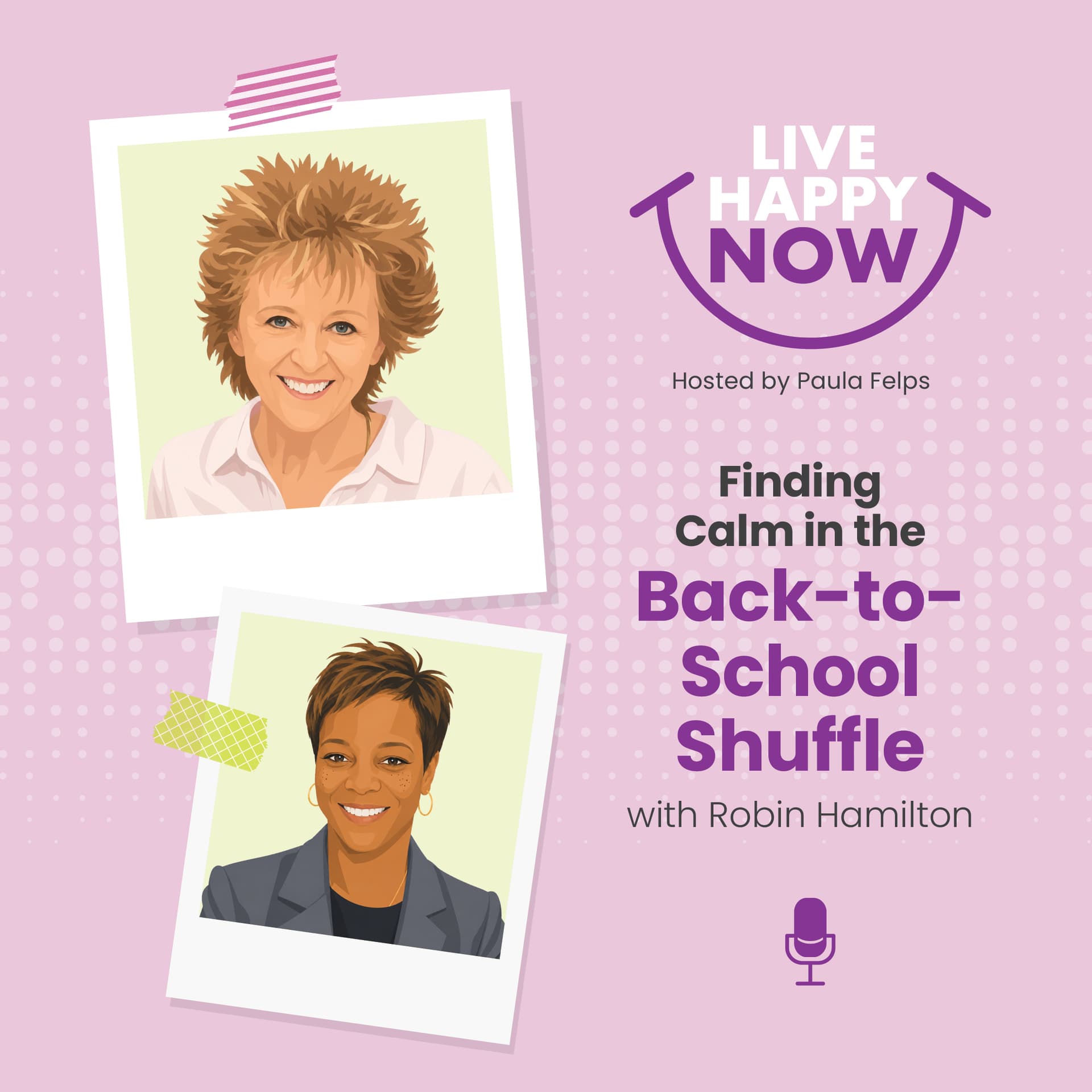
Robin Hamilton, a therapist who works with families and discusses nervous-system regulation, mental load, and emotional communication.
Key claims
Back-to-school chaos is stressful because transitions happen abruptly and simultaneously for parents and kids; planning ahead and breaking tasks into smaller pieces reduces anxiety. “Good enough is enough,” and support/delegation prevents burnout. Parents should check in with their bodies, communicate feelings, and use time-outs/reset periods. Persistent irritability, sleep/eating changes, or worsening behavior warrants professional help.
Notable examples
Grandparents using “tag team” shifts and naps; nightly family check-ins (“How do you feel today? What do you need?”); school meetings to address bullying; child therapy if a child won’t talk to parents.
Written by AI. May contain mistakes. Listen to the episode to check what was said.
Chapters
Tap a time to open that second in VOUnderstanding Back-to-School Stress for Parents
0:36 to 2:26
Exploration of the simultaneous transitions for parents and children during back-to-school season.
“Robin, thank you so much for joining me this week on Live Happy Now.”
Strategies for a Smooth Transition
2:26 to 3:42
Advice on planning and gradual transitions to alleviate anxiety for parents and children.
“And how can you kind of make that a process that happens daily instead of being at the first of the year, okay, I've got it organized and we're going to go into this.”
The Importance of Delegating Responsibilities
3:42 to 4:46
Discussion on how parents, especially moms, can delegate tasks and manage expectations.
“We get in our heads and we want to do things so quickly.”
Navigating Help-Seeking and Support
4:46 to 6:11
Insights into asking for help and the importance of self-awareness for parents.
“So I feel like just taking a deep breath in through the nose and out through the mouth and just say, you know what?”
Mental Load and Communication
6:11 to 7:20
Discussion on the invisible mental load parents carry and the importance of communication.
“I used to have neighbors that were raising their grandchildren and they quickly figured out that they couldn't do it all together.”
Finding Personal Relief and Self-Care
7:20 to 10:06
Strategies for managing overwhelming feelings and the significance of self-care.
“First of all, can you talk about how that affects us and the importance of acknowledging that?”
Journaling and Connecting with Other Parents
11:18 to 13:10
Tips for journaling prompts and finding supportive community among parents.
“And now, let's hear more from Robin Hamilton.”
Managing Financial Stress During Back-to-School
13:10 to 14:01
Advice on coping with financial pressures and managing expectations during school season.
“Maybe if you're a stay-at-home mom or something like that, after the kids are off, go do something for yourself.”
Managing Stress During Back-to-School
14:01 to 15:05
Learn how to alleviate stress by focusing on manageable tasks.
“So don't stress yourself out over things you have no control over, just do your best.”
Communicating Emotions to Children
15:06 to 16:16
Discover ways to communicate your feelings and regulate emotions for the benefit of your child.
“We worry about things that we have no control over.”
Show all 14 chapters
Addressing Children's School Anxiety
16:17 to 18:08
Learn strategies for helping children deal with school-related fears and anxiety.
“So then the kids will benefit from that because the parent is teaching the child how to, again, regulate their own emotions and communicate what they're feeling.”
Recognizing Behavioral Changes in Children
18:09 to 19:39
Understand how to identify behavioral changes that may signal deeper issues.
“They don't like to be confrontational, which isn't really confrontational.”
Establishing Family Check-in Routines
19:40 to 20:46
Learn about the importance of family check-ins for emotional wellness.
“If you notice that this has been going on for quite some time and there's nothing happening, but it's getting worse, then it's time to step in before it does get out of control.”
Self-Care Tips for Parents
20:47 to 21:46
Discover essential self-care practices important for parental well-being.
“It makes the child go to bed with like happier thoughts in their head.”
Transcript
Automatic transcript. May contain errors.0:03Robin Hamilton:Welcome to Live Happy Now, where we explore the science and the stories that help us live with more joy, resilience, and connection. I'm your host, Paula Phelps, and each week we sit down with experts and everyday heroes who show us how happiness grows when we put it into practice. Back to school season is in full swing, and that can mean a stressful time for parents and other caregivers. This week, therapist Robin Hamilton joins me to talk about how parents can find calm amid this chaos and create intentional practices to help their days run more smoothly. Let's dive in. Robin, thank you so much for joining me this week on Live Happy Now.
0:41Thank you for having me.
0:42Robin Hamilton:Well, this is a big time of year, back to school. It brings up a lot of different emotions for parents and for kids and for everybody else in the house. Sure, yeah. So much of the focus is about kids during this time of year. I know we talked about on last week's episode. And that's fair. It is about kids going back to school, but parents are definitely affected by everything that's going on. So in your practice, what do you see as the biggest stressor for parents during this time of year? Well, the fact that their transition and the kids' transition is primarily happening simultaneously. Sometimes the parents have to go back to work as well.
1:21So everything is like happening right now and it's abrupt. Like they don't really take the time to do it gradually. Everything kind of happens all at once. So you have to go back to the backpacks, the lunches, the transportation arrangements and things like that. And then the parents have to get their stuff together for what they have going on. So I just feel like that's very stressful for them.
1:43Robin Hamilton:For those who haven't yet gone back to school, because I know in the South we've started already, but then some of the northern states, it takes a little. They get to start a little bit later. They get more of a reprieve. For those who haven't yet started, are there ways to make it more of a transition and less of this abrupt one day it's summer and now I'm back in school? Yes. If they start to plan early, say like the kids need rides to school or something like that, plan that stuff out earlier. Clothes, you do that stuff instead of right at the beginning of the next day. You start school, do it right, you know, in the beginning.
2:15Like, OK, let's plan out the week. What are we going to wear? What are we going to buy? those types of things. So it definitely reduces the anxiety if you plan ahead and just do things gradually as opposed to all at once.
2:26Robin Hamilton:And how can you kind of make that a process that happens daily instead of being at the first of the year, okay, I've got it organized and we're going to go into this. And then by like three weeks in, it's chaos. Yeah. Journal, write things down, write down what it is that you need. I like to say just freehand, right? Okay. This is what I need and then categorize it. This is what I need for the week and then categorize it again. This is what I need for the day. That way it doesn't seem like it's a whole bunch of disorganized chaos that you, because it's overwhelming when you think like that. But when you write it and make it plain and put it into smaller pieces, then it becomes much more manageable.
3:02Robin Hamilton:And also being able to count on a partner. Not everyone has that. And then sometimes not bashing the guys, but sometimes the moms take most of this load. And so how can we learn to better delegate that? So moms, they have to just decide that sometimes good enough is enough. You know what I mean? We want things to be perfect. We want things to be specific ways, but it also raises our anxiety levels. You know what I mean? So make sure you have a source of support, whether if it's not your significant other, maybe it's a family member or a friend or something like that. Just make sure that there's somebody there to help take a little bit of the load off of you and just relax because we do that.
3:44We get in our heads and we want to do things so quickly. We want things done specific ways, but good enough sometimes is enough. And if we can adopt that, then we can relax a little bit more.
3:54Robin Hamilton:And how do we ask for help? Because it's also in our head that my mom did this, her mom did this, I should be able to do this and handle it. How do we learn to actually reach out and get some help? Well, get in touch with your body. What am I feeling, right? Do a check-in and say, okay, what's different today? Why am I feeling this way? What do I need? What's the source of these extra feelings? Okay, so what do I need? I need help with XYZ. Well, who can I ask for that? You know what I mean? And don't be afraid. There's nothing to be ashamed of because a lot of people, we want to wear these different hats and we want to wear them well, but sometimes we need help and it's okay to ask for help without being embarrassed because I know certain people outside of the family like to shame other people.
4:40There's a lot of that that goes on. You know, you had those kids. You did that. You got married. You know what I mean? And we internalize that. So I feel like just taking a deep breath in through the nose and out through the mouth and just say, you know what? This is what I'm feeling. This is what I need. And I'm going to ask for that help.
4:57Robin Hamilton:That's terrific. So we are talking about parents. But when we're talking about parents, it's not just parents raising children. We also have a lot of grandparents who are raising their grandchildren now. and what are some of the special challenges they might face? Because there's a generation removed between that back to school process and it's changed dramatically. Sure. Grandparents, the energy levels are just different. You know, for me, I've got three granddaughters. The oldest one is six, the other one's two, and the other one's three. So there's a lot of energy there. And I was just thinking, oh, my God, I could not do this.
5:34Like, there's just no way. Okay. So I feel like grandparents, they just have to pause and not get ahead of themselves. Probably just come down to the level of the children and just communicate. This is what I used to be able to do. I can't do this anymore. This is where I need you to step up and help. And if they're smaller, then the grandparents have to, again, just learn what they're able to do and don't overdo it. Don't overextend your energy levels, whatever that looks like, whether it's mental energy, physical energy, or whatever that might be, but just pause and just really be in touch with yourself and just give only what you can give and don't do anything more than that.
6:12Robin Hamilton:Yeah. I used to have neighbors that were raising their grandchildren and they quickly figured out that they couldn't do it all together. So they kind of started this tag team thing. Like she would take the morning shift with them and he would take the afternoon and she'd go take a nap. And yeah, so they've had to figure out this rhythm and this process that worked for them. That's exactly what I'm talking about. Just know what you can do. They figured it out. So it made it work like a well-oiled machine. Otherwise, they're going to burn out and we don't want that. Right. Because it's hard to bounce back from that.
6:44Robin Hamilton:Exactly. And once that school year starts, you can't just stop. Right. And the kids don't understand that. They see, they might look at it like rejection of some sort. But meanwhile, the grandparents just don't have it in them and the kids don't understand that. Right. So another thing that causes some stress is that mental load, that invisible labor that creates such a heavy mental load, like the paperwork, the supplies, the transportation arrangements, communicating with teachers. And I think that's something that doesn't really get addressed. It's like this underlying challenge, but we don't really talk about it.
7:20Robin Hamilton:First of all, can you talk about how that affects us and the importance of acknowledging that? people have to learn how to regulate themselves instead of allowing all these extra entities to upset their nervous system i'd like to say you know what i mean so the communication is always key you always have to be in touch with whatever your body is feeling so you don't allow it to get out of control so if we need to talk about school or whatever the case might be with the teachers whatever whatever you're feeling it has to be communicated because if we internalize it what happens. It gets bigger.
7:54It gets louder. And then the problems that seem like they never go away. Now you're adopting, you're bringing in other problems. It could be physical problems. It could be, you know what I mean? Just because we won't talk about the things that we need to talk about. So regulate yourself and just be in touch with what it is that you you're feeling and then speak it. I love the word communicate. I think it is this huge. We have got to open our mouths and speak our pieces to people.
8:17Robin Hamilton:What about someone who feels like they really cannot take all this on? It just feels too overwhelming. It's too much. And you have no choice. It's not as if you can opt out, but they feel it is so big for them. How do they kind of get some relief? When do they need to seek professional help? When things become persistent and maybe they start becoming irritable and they become like angry, that means that whatever you're internalizing is spilling over into your mental health. So I know what's helpful is when you're feeling like that, write down what's overwhelming you, write down how it's making you feel and write down what you need.
8:57And that way, when you go to seek the help, you have everything right there. And it's black and white. It's not like gray areas. You know exactly what's happening because, okay, I have all this stuff that I have to take on. Now I can't do it. Now I can't sleep. I'm not eating right. I have headaches. You see what I'm saying? And so if you write down what's causing the overwhelming, then the source of support can help you break that down and see what you can eliminate and see what you can keep.
9:23Robin Hamilton:We may be reluctant to seek that help for a couple of reasons. One, being the time it takes, because how am I going to spend more time when I already don't have enough time? Can you speak to that and the importance of taking that time for yourself? Self-care is so important because if we don't take care of ourselves, then how are we going and be able to take care of other people. So even if you take 10 minutes out of your day to pause, then maybe the next day you could do 15. Gradually increase it. And it does get easier because we always say we don't have time, but yes, we do. We have time for what we want to do.
9:59We have time to go make some food. You have time to talk on the phone. So you have time to go sit and do nothing with yourself. And it's very important so you can get your nervous system to reset. Because if we're always operating in chaos, then we're never going to really get ourselves back to our baseline. So I feel like it's really important. If you feel like you don't have time, start small and then gradually increase it. But just make sure that you're doing something for yourself that doesn't require extending to other people.
10:29Robin Hamilton:We'll be right back with more of Live Happy Now.
10:35Robin Hamilton:If you're looking for a little more joy in your week, we've got two ways to help you boost your mood right when you need it the most. Our Sunday Sillies newsletter has become a huge hit with listeners, bringing you a weekly pep talk, a couple of lighthearted happiness hacks, and a few ideas to help you wrap up the weekend with a smile. And starting in September, we're giving your Monday mornings a lift, too. Our new Wake Up Happy text campaign will send you a tiny dose of encouragement to start your week feeling grounded, supported, and ready for whatever comes next. So you can end your Sunday with a smile and begin your Monday with a little spark of joy.
11:12Robin Hamilton:Watch for more details when you sign up for Sunday Sillies under the Connect tab at livehappy.com. And let a happier week find you.
11:23Robin Hamilton:And now, let's hear more from Robin Hamilton. You talked about journaling, which is absolutely a tremendous tool to kind of get out your feelings and understand yourself what is going on within you. What are some prompts that people could use to kind of start that journaling process? Just daily check-ins. Maybe write a sentence that says, what am I feeling today? Okay. And then maybe underneath that, what do I need today? Just different things where you're checking in with yourself. Am I feeling overwhelmed? Okay. If I'm feeling overwhelmed, what's causing this? Because when you write it and you see it, then it becomes clearer as opposed to internalizing it.
12:03You know what I mean? So just daily, just sit down with a paper and a pencil and just ask yourself these questions. It doesn't have to be anything lengthy. Just check in with yourself.
12:12Robin Hamilton:And how about finding other parents that are kind of going through it? How can you put something together where you feel less alone in what you're going through? Well, first of all, be careful that you're not trauma bonding with other parents. You know, other parents could have wars going on. Next thing you know, you have this parent that's dumping on you. You don't want that. So maybe find a happy place where people are at a playground or something like that, or a park where people walk. Just strike up conversation. Go to a coffee shop or something like that. Just strike up conversations with people and just try to stay away from the glum of life.
12:52Just be positive and speak positive about the things that you enjoy. Then that's going to draw that out of that other parent because you don't want to sit there and complain about your life. And then they're going to do the same thing. That's not healthy. Yeah, nobody's benefiting from that. Right, exactly, exactly. And I feel like start a routine. Maybe if you're a stay-at-home mom or something like that, after the kids are off, go do something for yourself. Take 30 minutes out of the day. Just start a routine to where you're doing something habitually, right? And then that way, you're going to look forward to it more so.
13:25Because, okay, now the kids are off. I can go meet with Sally over here, and we're going to go do our walk or whatever the case might be. So I feel like doing that is very helpful also.
13:35Robin Hamilton:Absolutely. And I know one of the things that can really weigh into our stress during this time is all the financial burden. If they're already in the thick of it and they're panicking right now about the money, talk to us about what they can do to breathe and get through this time. This, like I said earlier, this understand that sometimes good enough is enough. and you can only do what you can do, right? So don't stress yourself out over things you have no control over, just do your best. And sometimes that's better than what you think you might have to do. You know what I mean? So just breathe and just say, you know what?
14:12This year I can't do what I wanted to do, but I'm gonna do this and that's good enough. And you feel like a whole weight is lifted off of your shoulders whenever you say that to yourself. Like, you know what? I did my best and that's all I can do. And you become okay with it. And then the burden lifts, it lifts. Because if you think about it, what are we worrying about? We can't change it. So what are we worrying about? So I'm just going to exhale. And I did my best.
14:35Robin Hamilton:A few months ago, I did a podcast with Dr. Seth Gillihan. And he talked about in his times of stress, he uses the phrase just this. So instead of looking at everything he has to do, he breaks it down into one thing. So maybe it's like I just have to buy school supplies, just this. Like that is the only thing. And that's something that's really stuck with me. And it seems very relevant during this time of year where you can just focus in on one thing and say, that's it. And guess what? It's good enough. There you go. There it is. Yeah, it's very freeing. We worry about things that we have no control over.
15:12And at the end of the day, once that thing passes and we reflect, it's like, well, what was I so worried about that for? It wasn't as bad as I made it out to be. So that goes back to what regulating yourself and just being in touch with what you're feeling and what's causing these emotions to be heightened.
15:27Robin Hamilton:And how will regulating ourselves benefit our children? Because obviously they pick up our stress and they don't maybe understand the why of it, but they know it's there. So talk about how this is really a gift that we can give our children. Right. So you can say to the child, look, I'm feeling a little bit overwhelmed right now. I need 10, 15 minutes or 30 minutes to reset. It has nothing to do with you, because if we don't say that, then it's coming out towards them in different ways. Like we're snappy. We're yelling at them because we didn't take the time. So there I go back to the word communicate, communicate what you're feeling, being in touch.
16:02You're saying, OK, I don't feel like cooking. These kids are screaming. My husband's not helping me. Time out. I need to take a time out. OK, give me 15, 20 minutes to reset to my nervous system. It gets back to the baseline and then I'll come back and revisit. And I feel like that's important. So then the kids will benefit from that because the parent is teaching the child how to, again, regulate their own emotions and communicate what they're feeling. So that is a gift that keeps on giving.
16:28Robin Hamilton:For parents who have children who are reluctant or perhaps even dreading it, really, maybe they've been bullied, maybe they're scared they're going to a new school. What are some of the ways that a parent can address that with a child? Because that also adds to our stress if we see our child being so distraught. Ask the child what they're feeling, you know, because if we're not in touch with our emotions and we tend to bottle them up and suppress and that's not good at all. And then let the child know that it's OK to feel what they're feeling and then ask the child, what do you need? What do you feel like you would need to make this go away or make you feel better instead of trying to take it on ourselves?
17:06Because that allows the child to be expressive. No matter what the age is, they have to be able to express and not be afraid to speak their piece. And you know what I mean? And so that whole bullying thing is it's scary to have to go back to school with those same type of people. But we just have to make sure that the kid feels safe, the kid feels heard and seen by the parent and they feel protected. So that way that builds their confidence that they can face whatever it is that they have to face.
17:32Robin Hamilton:And should the parent then talk with the school? What can the parent do? Because we want to do something, right? How do they move forward with that? I would suggest maybe setting up a meeting with the school officials, the parent of the bullied child or whatever the situation is, and everybody sit down and talk and find out what the need is of that person who's, quote unquote, victimized. And then that way, again, it goes back to that child feeling safe, feeling heard. And this is the safeguards we're going to put in place so that you can come to school and be happy and learn like you're supposed to.
18:06And sometimes, too, parents, they don't like to do that either. They don't like to be confrontational, which isn't really confrontational. But the whole goal is to protect the child. So you definitely have to address it. You cannot overlook it. So if it's something that the kid's feeling upset about, we have to get it out of their system because then it turns into something else.
18:27Robin Hamilton:And that's good, too, because, again, you're teaching them that this is how we deal with conflict. This is how we deal with a problem. We don't just hope it's going to be better this year. Right. If your child gets into the school year and is showing signs of distress, like maybe crying, not sleeping, not eating, eating too much, and they won't really address it, how can you sit down with a child and find out what's really going on at school? If the child doesn't want to talk to a parent or a trusted friend, then maybe they could benefit from a therapist, perhaps, because child therapists have a way of bringing those things out.
Read the full transcript
19:02And that's what they're trained to do. You know what I mean? So a parent should never give up on a child who doesn't want to talk because the child might be embarrassed. The child might be in fear of repercussions. You see what I'm saying? So sometimes a third party that's not directly related to the family system can bring those things out. And then that third party can come back to the mom and say, this is what's going on. And this is how you should help the child.
19:24Robin Hamilton:And at what point do you know that's the route you need to go? Whenever you see the behavior changes like irritability, you're not eating, you're not talking, you're not doing things that were once making you happy, like playing with your friends or your video games. If the behavioral changes persist for more than two weeks or, you know what I mean? If you notice that this has been going on for quite some time and there's nothing happening, but it's getting worse, then it's time to step in before it does get out of control. What's a good end of day practice you can do as a family so everyone can kind of release some emotion and start the evening so that they look forward to the next day?
20:03Start that routine. It could be a bedtime routine. OK, kids, let's all do our check-ins. And then we all sit around and we talk, Sally, how do you feel today? And go around the room. And then what do you need? And just have those check-ins. And so make it fun. But we're doing it together. We're facilitating communication. we're letting the family know that we see you we hear you you're protected you're safe just get out whatever it is it's in there because i don't want you to suppress or feel like you can't talk to us and same with the parents they have to be able to it's like when you're sick you feel like oh my god i feel like i'm going to throw up and so when you do what happens you feel better you know as opposed to keeping it inside so you have to get it out so i would really highly recommend doing like a nightly routine where it's time to check in and make it fun i like that i like that a lot
20:51Robin Hamilton:It makes the child go to bed with like happier thoughts in their head. And that's going to change how they wake up in the morning. Exactly. Yep. All right. So this is the part where you give us all this pep talk, all the parents who are like, oh, I can't get through this time of year. Tell us it's going to be okay. And give us your best tips for just making the next few weeks spectacular. Just like I said, be in touch with yourself. Take 10 to 15 minutes to yourself. it is paramount that you do that. Just no phone, no TV, no nothing like that. Let good enough be enough. Make sure that you have a source of support, whether it be a friend, family, a podcast or something like that.
21:32But just make sure that you are always filling your cup back up as opposed to it emptying all day with everything you have to do with everybody else. Because if you don't take care of yourself, you will not be good enough for anybody else. And that's really important to put yourself first in an unapologetic way.
21:48Robin Hamilton:I love that. Robin, thank you so much. I know parents are at varying stages of disbelief and denial right now, but hopefully we've got something here that's going to stick to their ribs and make them feel a lot better about what we're about to jump right into. So thank you so much for sitting down with me today. You're welcome. I really appreciate it. Thank you for having me.
22:13Robin Hamilton:That was Robin Hamilton offering tips on how parents can ease their own stress and breathe easier this back to school season. If you'd like to learn more, just visit us at livehappy.com and click on this podcast episode. That's all we have time for today. We'll meet you back here again next week for an all new episode. And until then, this is Paula Phelps reminding you to make every day a happy one.
From the publisher
Back‑to‑school season isn’t just a transition for kids; it’s a major emotional and logistical shift for parents and other caregivers, too. In this episode, therapist Robin Hamilton talks about the invisible mental load caregivers carry, why this time of year feels so overwhelming, and how to create calmer, more intentional routines for yourself and your family. Whether you’re juggling schedules, managing stress, or navigating school‑related challenges, this conversation offers grounded, compassionate guidance to help you breathe easier and feel more supported.
In this episode, you’ll learn:
- Why back‑to‑school transitions feel so stressful — and how to make them smoother.
- Guilt-free ways to regulate your emotions and communicate your needs.
- What to do when your child is anxious, overwhelmed, or reluctant to return to school.