
In short
No-BS mindfulness and metta (loving-kindness) for “messy lives,” emphasizing pausing instead of fixing, and using loving kindness as an antidote to hate and fear.
Guest
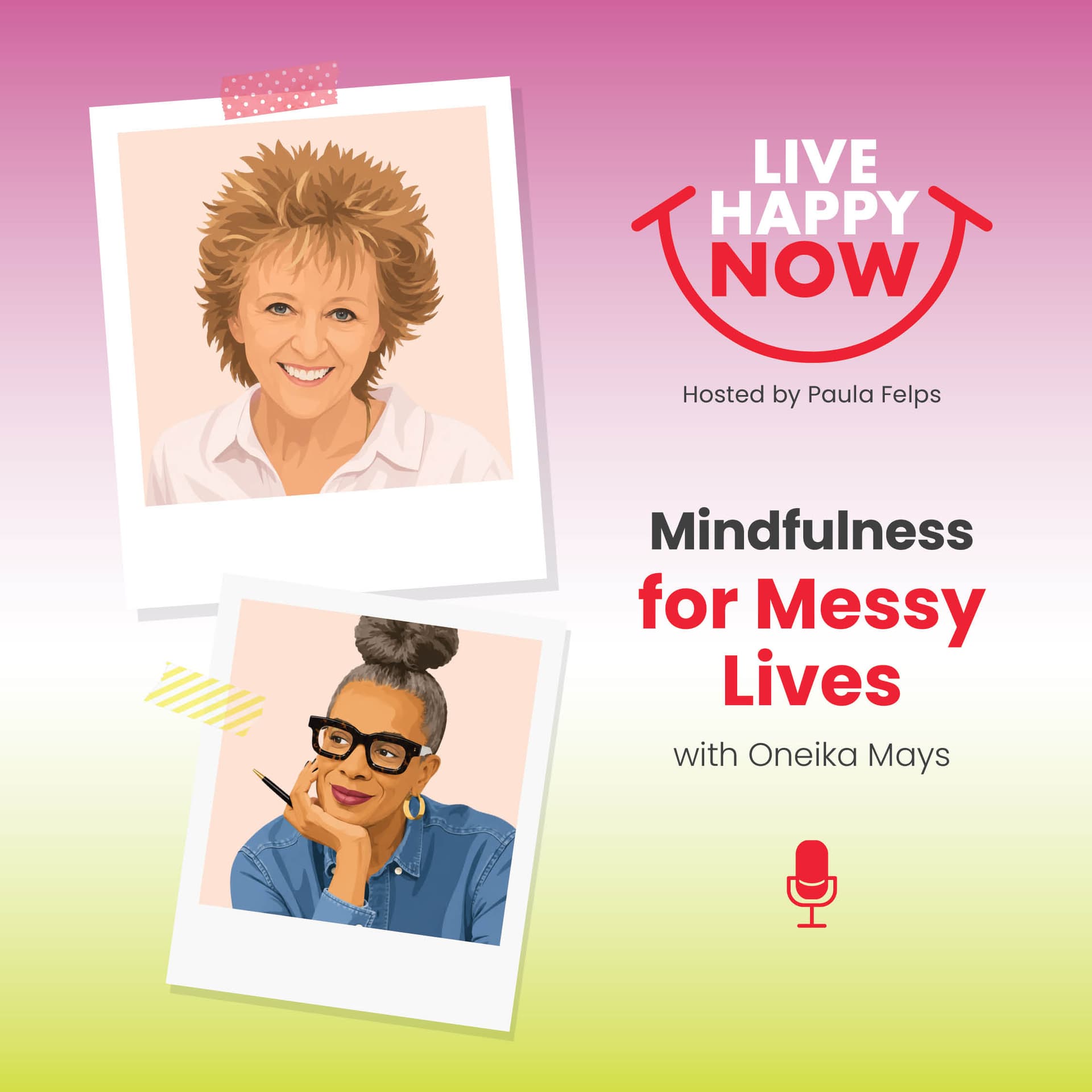
Oneika Mays is a storyteller, author, and yoga teacher who became Rikers Island’s first mindfulness coach. She’s also a Reiki master. Her path began after a 2008 tragedy: the death of her partner overseas in Iraq, leading her back to yoga and meditation. She volunteered at Rikers and later helped launch a wellness program in the women’s jail, working with acupuncturists and wellness staff, including with trans and non-binary people.
Key claims
Meditation isn’t about feeling good; it’s about being with what’s happening. Transformation is in response, not life circumstances. Metta starts with self-love and expands outward, including “difficult people,” and supports non-harm and forgiveness while still allowing accountability.
Notable examples
Rikers jail yoga/meditation classes; using metta phrases (“May you be safe, happy, healthy, live with ease”); starting mindfulness by mindfully brushing teeth or pausing before driving.
Written by AI. May contain mistakes. Listen to the episode to check what was said.
Chapters
Tap a time to open that second in VOOneika's Journey to Mindfulness
0:37 to 1:15
Oneika shares her inspiring backstory and discovery of meditation and yoga.
“Onika, thank you so much for joining me on Live Happy Now.”
Transformation Through Mindfulness
1:15 to 4:21
Discussion on how mindfulness transformed Oneika's life and responses to challenges.
“I found meditation and yoga kind of the long way around.”
Teaching Mindfulness and Yoga
4:21 to 6:01
Oneika talks about her journey into teaching mindfulness and yoga, particularly at Rikers Island.
“I used to feel really overwhelmed by everything outside that was happening because my relationship with it was really adversarial.”
Experiences at Rikers Island
6:01 to 10:46
Oneika shares her experiences teaching mindfulness in a challenging environment like Rikers.
“But in my career before, I was a teacher in a lot of ways because I used to lead different teams.”
No BS Approach to Meditation
10:46 to 14:01
Oneika explains her accessible approach to meditation, focusing on its relevance to everyday life.
“And I never want the system to look better than it is.”
The Essence of Yoga Practice
14:01 to 14:49
Explore how yoga practice can vary between cultures while maintaining its core principles.
“But there was always a sense that it had to be done a certain way, that things needed to look a certain way on the outside.”
Understanding Metta: Loving Kindness
15:48 to 17:05
Learn about the concept of metta in Buddhism and its transformative power.
“And now let's hear more from Onika Mays.”
Overcoming Self-Love Barriers
17:06 to 19:18
Discuss strategies to help individuals practice self-love and kindness.
“It's partnered with compassion, like sympathetic joy, where we celebrate somebody else, and then also equanimity.”
The Impact of Loving Kindness
19:19 to 20:44
Discover how loving kindness meditation can lead to personal transformation and peace.
“So I think that's also important to remember.”
Using Metta to Combat Hate
20:45 to 22:46
Understand how metta meditation can counteract hate and fear in turbulent times.
“Mindfulness can be a step for us to step into loving kindness when we can have that pause.”
Show all 18 chapters
Small Acts of Kindness for Change
22:47 to 24:45
Learn the significance of small acts of kindness in creating a ripple effect of change.
“dismantle the master's house using the master's tools.”
Embracing Life’s Full Spectrum
24:46 to 26:52
Explore the complexity of emotions and the role of meditation in accepting them.
“bit more kindly than we used to, that matters.”
Rethinking Happiness and Meditation
26:53 to 28:05
Challenge the notion that meditation is solely for feeling good; it's about acceptance.
“You say meditation isn't about feeling good.”
The Complexity of Human Emotions
28:05 to 29:06
Explore the beauty of emotions and the importance of accepting all feelings.
“The human experience, we are so lucky to be people and to recognize that we have the ability to think and to be with everything that's going on.”
Starting a No BS Meditation Practice
29:06 to 29:44
Learn practical tips for beginning a simplified meditation practice.
“And then because life is not joy all of the time, when joy disappears, we somehow think we failed.”
Mindfulness in Daily Activities
29:44 to 31:00
Discover how to incorporate mindfulness into everyday tasks.
“We can apply mindfulness to activities that we're already doing.”
Recognizing Distraction as Mindfulness
31:00 to 32:00
Understand the significance of acknowledging distractions in mindfulness.
“I've been doing it for about four months now.”
Love Without Liking
32:00 to 32:36
Learn how to love others without needing to like them.
“We're going to tell our listeners about your book.”
Transcript
Automatic transcript. May contain errors.0:03Oneika Mays:Thank you for joining me for episode 580 of Live Happy Now. If you like your mindfulness served up with honesty and accessibility, you're going to love this week's guest. I'm your host, Paula Phelps, and today I'm joined by Oneika Mays, a storyteller, author, and yoga teacher who became Rikers Island's first ever mindfulness coach. In her new book, Sit With Me, A No BS Journey to Mindfulness and Meditation, Onika shares her accessible style of meta and mindfulness and demonstrates why it's a perfect fit for the messy realities of today's world. Let's dive in. Onika, thank you so much for joining me on Live Happy Now.
0:42I'm so happy to be here with you, Paula.
0:44Oneika Mays:I've been excited to talk to you ever since I got your book and I started digging into it. And, you know, we have talked about mindfulness and meditation many times on Live Happy Now, but we have never talked about it the way that we're going to talk about it today. And you give us what you call a no BS approach to mindfulness and meditation, which we're going to dig into. But before we get to that, can we start by having you talk about how you discovered meditation because your backstory is pretty amazing. Yeah, I would love to. I found meditation and yoga kind of the long way around. I had a personal tragedy that happened back in 2008 and someone who I was in love with died overseas in Iraq.
1:29And it left me feeling completely untethered to myself. I was in my mid-30s, yeah, mid-30-ish. And I felt like the world was pulled out from under me. I hadn't lost somebody who was like my age before. And I did all of the things you're not supposed to do when you're grieving. So I got a new job. I got engaged to somebody else, made all these big decisions, and then it all fell apart. And I found myself like on a yoga mat. I had been introduced to yoga in the late 90s, and I loved it. It actually really shifted something in me, but I wasn't ready to meet myself, right? I say sometimes, too, that yoga found me rather than I found yoga, but because I met myself for the first time.
2:16So when Mike, I call him in the book, got killed, I found myself going back to a yoga mat and felt so empowered as a black woman, as a queer woman. I felt like, oh, I can I can be myself and be comfortable with myself, even when there's parts of me that I don't necessarily like. And so I got really hooked on feeling strong. And then when I injured my shoulder, I started to sit a lot more, started to really get into this idea of being still with myself. And it was a really powerful and transformative experience. So I found myself teaching in places that, you know, folks who were marginalized were.
2:55So I went to Rikers Island to start to volunteer and then work there full time.
2:59Oneika Mays:Yes, and I want to talk about that because I think that will really surprise people. And the way you describe it in the book is haunting and beautiful. But what really struck me about your story is how you were completely transformed once you embraced meditation and yoga. And what is the difference between the person that tries it and is like, eh, that's okay, and the way that it just absolutely made the butterfly out of the caterpillar for you? You know, I think it was the idea that when I first discovered mindfulness, which, you know, is defined as being with whatever is happening in the moment and not trying to fix and change it.
3:41So if you try it and you're like, it didn't do anything for me. The fact that you're even saying like, I don't feel anything is you being with yourself in a particular moment.
3:52Oneika Mays:Oh, interesting. You know what I mean? I think there's a lot of us who think like, oh, I'm going to meditate and life is going to be really beautiful or I'm going to feel completely shifted. But what I realized was, oh, this is my life that I'm living and this is the reality. And instead of reacting to everything that's happening around me, meditation gave me an opportunity to pause. And then I started responding instead of feeling so reactive all of the time. And that was the transformation. So it's not like my life changed dramatically, but my response to how my life was is what changed. And I felt so empowered by that.
4:31I used to feel really overwhelmed by everything outside that was happening because my relationship with it was really adversarial. You know, I don't think I've ever, you know, processed that and said that exactly like that before, but it felt like I was in conflict with everything. And then when I discovered mindfulness and I took that pause, I could ask myself, is this conflict or is there something happening in me that I need to soften into? And that's when the shift started to happen to my life, to my relationships and to myself.
5:07Oneika Mays:That's beautiful. Beautiful. So what made you then want to teach it? Because you also became a Reiki master. You did so much with this whole area of practice. It's because it felt like such a blessing. It gives me a lump in my throat to even say that. I felt like it was a blessing to be able to find this path. And I felt like I had wanted to give back in ways before, but maybe couldn't articulate how or articulate why. And when I discovered this practice, I was like, oh, this is meant to be shared. It's meant to be shared with other people. And we don't keep it to ourselves because I recognized the interdependence of how we live our lives, that I am a part of something larger and I have to take care of myself to be connected with the world.
5:57So teaching just felt like a natural extension. And you don't have to do trainings to teach. You can just do them to deepen. But in my career before, I was a teacher in a lot of ways because I used to lead different teams. So I was doing training. So this just seemed like another way to sort of express that side of me.
6:17Oneika Mays:And then you, as you said earlier, you volunteered at Rikers and then that led to you teaching there for a decade. Tell us, first of all, how you started volunteering and that whole genesis of that journey? Yeah. So when I became a yoga teacher and I was so fortunate, I got to teach almost full-time yoga right out of the gate, which is very unusual to be able to teach full-time. And in a conversation with my cousin, we talk about social justice stuff. My family is very politically active and my grandfather was an activist and my grandmother and my mother's really active. So when we were talking about yoga and how blessed I felt to be on this new path and embrace this, you know, like spiritual life that I had, she was like, oh, you should be teaching in jail.
7:02Like that's how it happened. And I was like, oh yeah, you know what? Yeah. Why not? I should be. So I went to Google and typed in teaching yoga in jails in New York city. I know it's like, it's that simple. I wish I had some real sexy story, but that's it. And then I found a nonprofit and I started volunteering with them and did some other trainings and trauma-informed practices because teaching inside an environment like that uses different skills because you really have to know yourself so deeply. So you are showing up for people so they can be empowered and find their own sovereignty. And because the environment is so oppressive.
7:44And so I volunteered there for about six years. Then I also started teaching other teachers how to do this work inside jails. And then I got an opportunity to interview for this incredible new position to be a mindfulness coach. So I helped to launch a wellness program at Rikers. And I was working in the women's jail and I worked with an acupuncturist and a wellness coach. And we did some incredible work with women, with trans folks, non-binary folks in the women's jail at Rikers Island. And it completely changed my life because I think that's when I realized, oh, this is what it means to show up for yourself and to show up for other people.
8:23Oneika Mays:And how does it affect you to walk into that environment? In your book, just the description of going into the jail, going into that system and what you had to go through each time you visited was something that we don't think about. It's not like Orange is the New Black where they just show up and somebody lets them come in. It's very different than that. So what is it that really spoke to you and how did that affect you to be going into that environment? I think what impacted me when I was inside was I got a calling. Like the first time I walked inside and I met, you know, students who would be in my yoga classes.
9:05And it was just this sense of like, oh, I belong here. And I think it's because you connect with people. And I knew I've never been incarcerated, but what I did connect with, there were so many black and brown women who were incarcerated and who are still incarcerated at Rikers. And I saw myself in them and they saw themselves in me. And it's like bearing witness to people's experiences. You just realize people people everywhere. And what I realized that in some ways, my classes were different because of Rikers Island. But in so many ways, teaching a class and being with people was just like being in a yoga studio.
9:46And I hadn't been impacted or sort of recognized what it was like to be inside a jail. And so that carried with me when I left and the sense of guilt that I felt when I had to leave knowing people were still locked up. And that tethering to the island is what kept me coming back every day because people want to be seen. And so many of those women feel forgotten and lost. And so I wanted to make sure that I was witnessing them and bearing witness to their experience. And that's what kept me going back, you know, day after day.
10:20Oneika Mays:Was it hard to leave that? In a lot of ways, yes, it felt impossible because I was so connected to a lot of the people that I I was working with who were coming to see me for meditation or yoga or just to take a breath. So that was really hard. And it was hard to leave some of the folks who I'd grown so close with who were my colleagues. And in other ways, it was the easiest thing I had to do because I felt so burnt out. And I felt like I wasn't necessarily helping from like a macro perspective, because in some ways I felt like once people knew about our program, they thought we were doing, you know, and I put this in air quotes, like, such good work.
11:00And I never want the system to look better than it is. Like I want people to, to know that it's still terrible. And just because there's someone teaching meditation and yoga there, it doesn't mean that it's okay. And we still need to find ways to humanely have conversations about what happens when we make mistakes, what happens when we, you know, we lose our way and to recognize that so many people are there because they live in areas that are over-policed. So in that way, it was the easiest thing because I felt like I couldn't go on every single day doing what I was doing. If I wasn't taking care of myself, there wasn't any way that I was going to be showing up fully 100 % for the folks that I was supposed to be serving.
11:44Oneika Mays:Let's talk about your no BS approach to meditation. What does it mean and how did you come upon this? You know, when I was studying yoga and I was in a lot of environments and when I did my meditation training as well, I didn't feel like I was always heard. Every part of my story was always heard. And when I would talk about my experiences being black or being queer and feeling like, how do I teach from this perspective? I felt like I was often shut down or told that that wasn't important, that I just needed to focus on the teachings. And like politics didn't belong in a yoga studio or politics didn't belong, you know, with a meditation teacher inside, you know, know, a meditation studio, but I felt like that's not what I got from the teachings at all.
12:32And in fact, you know, if you really study yoga and this idea of oneness, right, yoga means young or yoke or union. So you are one with everything and everyone around you. So to ignore a group of people's experiences is actually not to be practicing yoga. And so I realized that I wanted to strip away a lot of the dogma, a lot of the inaccessibility I used to run up against when I was in certain spaces. And that meditation and yoga is for messy people. It's for the messiness of life. It's for the messiness of who we are. And we don't have to change ourselves to practice it. In fact, our lives may not necessarily change that much after we practice.
13:17And I don't feel like that's talked about enough, but we change about how we're reacting and responding to our environment. And that's like the core of what I teach, a really accessible practice that this is for everyone, no matter who you are, you don't need money to do it. You don't need special clothes to do it. And you don't need to go somewhere to do it. And it starts with you.
13:41Oneika Mays:And that's so good because there has been a kind of a mindset that yoga is more of an elite thing. It really did need to trickle out and be able to reach the masses. You know, and I loved where, you know, I practiced and got my first 200-hour training. I mean, it changed my life because here I am sort of doing it. But there was always a sense that it had to be done a certain way, that things needed to look a certain way on the outside. And I didn't feel like there were enough conversations about our own internal landscape and how that can shift and how yoga might look different in Iowa than it does in Harlem.
14:21But that doesn't mean that it's not the same practice. And the more folks who are teaching it, who look different and who have different abilities and who are all different shapes and sizes, we all have something to bring to the practice if we're teaching it from its roots. And that's why I love it. And that's why I continue to teach and that I teach from my perspective because that's what the teachings have taught me. And it's not something I do, but it's like how I live.
14:49Oneika Mays:We'll be right back with more of Live Happy Now.
14:55Oneika Mays:If you're looking for your new favorite summer t-shirt, we've got you covered. Check out our brand new Live Happy t-shirts in the Live Happy Store so you can share your happiness wherever you go. Whether you're heading to the beach, walking the dog, or just grabbing your morning coffee, These teas are your new go-to for spreading joy everywhere you go. Show everyone your happy style with these bold new shirts, or pick up one of our classics in the online shop at store.livehappy.com. That's store.livehappy.com. And because we love a little extra happiness, you'll get a free gift with every order.
15:33Oneika Mays:Yep, every single one. So as the summer heats up, slip into something joyful. Grab a new live happy summer tea today and let your shirt do the smiling because happiness looks good on you.
15:48Oneika Mays:And now let's hear more from Onika Mays. We cannot talk about your approach without diving into metta. So tell us what that is. So metta is the Pali word for loving kindness. And it's rooted in Buddhism. And there's also talk of metta or loving kindness also in Hinduism as well. But from a Buddhist perspective, it's an unconditional love. And it's a love that we don't have to earn. It just exists. But the way that it exists is that we start with ourselves loving ourselves unconditionally. And then it expands. It starts to reach out. So then we recognize that we love people who are close to us.
16:27And then we start to expand that circle even wider. So we start to include people we don't know really well. the people who maybe are on the outskirts of our lives. And then we start to even incorporate difficult people, people, you know, in Buddhism, we traditionally call it like the enemy. And so this allows us to move through the world in a way with a sense of ease with people and with the, with the world. It's so powerful because when we embody it, we realize that more and more exists. It doesn't ever run out. So we don't have to be stingy with it. And it can transform our relationships. And it's part of the way that we live in Buddhism.
17:07It's partnered with compassion, like sympathetic joy, where we celebrate somebody else, and then also equanimity. And as a meditation, we practice it by offering phrases. So we say, may you be safe, may you be happy, may you be healthy, and may you live with ease. And then we do that for those different groups that I mentioned.
17:27Oneika Mays:And for people who are starting it, sometimes it can be very difficult to say it for themselves because that's where we start. May I be happy? May I be at peace? How do you help people get past that barricade that we oftentimes have? It's amazing how difficult it can be to give that wish to yourself. I used to encounter this so much with a lot of the women that I would work with at Rikers who felt like they were taking care of everybody else but themselves, to even think about yourself first can sometimes seem selfish or challenging. And Sharon Salzberg, who is an unbelievable meditation teacher, who's the reason that so many of us in the United States know Mehta, she said a way to think of it or a way in to loving ourselves is to imagine someone we love, whether it's a child or a loved one or even a furry companion loving us so we can hold on to that.
18:23And then from that place, we can start to love ourselves and offer ourselves that loving kindness. We can also think of a time when we were celebrating something so we can get that feeling of, you know, what it felt like to love ourselves or a time that we were really proud of ourselves. So those are, those are ways in. And I think it's also important to note that it's not like when you do this, you're like, oh my gosh, I love myself so much. It's so great. I'm so great. It shouldn't even necessarily work like that. But you start to notice like, if you're somebody who doesn't talk to yourself in a nice voice, and I'm one of those people, and something happens, and then the voice in your head is even just a little bit nicer, that's the win.
19:08And we look for those things to celebrate, rather than some giant transformation where we're seeing the world through rose-colored glasses. It doesn't necessarily happen some big shift. So I think that's also important to remember. It's a little bit out of time.
19:23Oneika Mays:But why does it change us so much? Because when I'm out of whack, I know that is the practice I have to go back to, is that loving kindness meditation. Because it starts with me feeling really frustrated with myself and then mad at everybody else too. And so that for me is that cue like, okay, this is what you need to be getting on. Why is it so transformative for us? Because we feel a sense of spaciousness and we don't feel so tight around the things that are happening in our lives. I used to compare my unhappiness or my discomfort, right? There's, I think it's because we start to melt the discomfort.
20:02When we're out of whack, we are generally uncomfortable with something, right? We don't want to deal with something that's going on in our lives, or there's something we wanted that we didn't get, or we got something we didn't want. So when we practice things like loving kindness, there's a sense of ease that we're not trying to fix or change anything. And it allows us to be with whatever is going on. And when we can be with something with a sense of ease, that allows us to step into more love because we feel relaxed. We feel comfortable. We feel at one with what's happening. That is how we find peace.
20:41That's how we find balance in the world. And loving kindness is a way to do that. Mindfulness can be a step for us to step into loving kindness when we can have that pause. So we learn how to pause and say, what's going on? This is really happening right now. This thing that I don't want to be happening is happening. And I realized that I can be with that and myself at the same time. And when we do that, we can also start to make decisions. So we can say like, you know what, this is happening, and here's how I can change it. This is happening, and there's nothing I can do about it. So let me be okay with that too.
21:16Oneika Mays:And I think that's particularly relevant for us right now. It's not breaking news that we are living in complicated times. And for many of us, like sending love to people who are hurting others right now might feel like the last thing that we want to do. Can you put into context how we use this meta approach in these specific times? When we have hate in our hearts, the Buddha told us that meta is the antidote to hate and also to fear. When we are moving from a place of fear or a place of hate, that burns us out. It doesn't accomplish anything. So when we're thinking about people who are causing harm in the world, when we can send them love and the hope for healing, for them not to cause any more harm, that's the solution to this.
22:09Love is actually the answer when we wish people not to be causing harm because if they're not causing harm to other people, they are also not hurting themselves. And that also has a ripple effect. And when we're wishing love for people who are doing difficult things, what we're really also stepping into is forgiveness, right? And the power of forgiveness. And it allows us to disconnect from the energy of something that's going on. Doesn't mean we're okay with it. It doesn't mean that we're not holding people accountable. It doesn't mean that we don't show up and protest for change, but we're doing that from a place of love and a place of non-harm rather than sort of, you know, there's that great Audre Lorde quote that we don't dismantle the master's house using the master's tools.
22:55And I feel like love is a way to dismantle without causing more harm. And we do that with love. We know how much happier we feel when we are stepping into love versus hate. Hate can fuel us and we can still have anger Anger is also a really good tool, but we don't allow it to overcome us. We don't allow it to sort of drive the way that we move through the world.
Read the full transcript
23:18Oneika Mays:So let's talk about what that looks like in our day-to-day lives right now, as we're trying to balance a sense of wanting to be part of change and wanting things to be different, but also finding peace. And how do we do that? It starts with us. And I know that sounds really corny and trite, but it's true. We start with what we know and where we can, and that is generally with ourselves. How can I offer myself some more kindness today? How can I offer a kind word to my neighbor across the street or a colleague that I'm working with or a family member? That's such a powerful tool. I think sometimes with everything that's going on, it feels so overwhelming and we think we have to fix everything.
24:03Find the one thing that's important to you and start there. Can you imagine if even an eighth of the population sat with themselves for two minutes a day and said, you know what? May I be safe. May the people I love be safe. May the people I don't know be safe. May the people that I'm having problems with be safe. Just the relaxation, that ripple effect could be huge. And we may not think that it does anything. We know the adage of the kindness of strangers. We know how powerful a kind word feels to us when we hear it, when we need it. So by starting with ourselves and by noticing that we start to talk to ourselves a little bit more kindly than we used to, that matters.
24:53And I don't think that that should be minimized. And I think if we start to embrace that, we recognize that we have a lot more room to do other things where we might be showing up.
25:04Oneika Mays:And how does that help us find peace? Because there's a lot of things that aren't peaceful right now. How can that help us discover it? It helps us discover it because it helps us say, like, this is actually going on. We may not be able to change everything in the world. You know, I think there's changes that I won't live to see. And that is the way that it is. And that's okay to some extent if I know what I am doing is putting a ripple effect out there because I can't make change if I don't sort of articulate it out loud for other people to hear. So other people start to pick up that baton and then they do it.
25:41And to make a wish for when I'm not here, when I'm an ancestor, I can show up as a good ancestor for people to call on me. So we start to practice for what life could be like when we're not here, but it matters. It matters that we try to make the world a better place than when we left it. And that's going to mean that some things are unfinished? We can't finish things. That's just the way that life is. Things don't get finished and things may not change completely. But are we doing the small bits that we can to make the world a little bit better than when we came into it?
26:14Oneika Mays:What a great perspective. I love being able to embrace that kind of outlook on life. And that has to change the way that you walk in the world completely. Yeah. Life isn't always happy and suffering happens and we do what we can to minimize that suffering. And that can give us a sense of balance and peace to know that we're part of it, that we're not pretending that it's not happening, that we're not wishing for it to end and not doing something about it by showing up and being an example for other people to see like, I'm doing my best to live a peaceful life. That is what life is about. One more thing that I did want to talk about is you say, this will probably surprise a lot of people.
26:58Oneika Mays:You say meditation isn't about feeling good. And a lot of people turn to it because we think that it's going to make us feel good. So explain that. And if it's not about feeling good, what is this about? So I don't meditate to feel great. I meditate to be with whatever is happening in the moment. Joy is often a byproduct of that. Because I'm balanced and because I find a sense of peace, I can find some joy. But there are times in my life, there's not a lot of joy. You know, when my dad died, I was terribly sad. I was grieving and that grief, you know, was overwhelming and I wasn't trying to bypass it or jump over it, but I needed to be with it because I think even in painful things that happened, especially like something like grief, If we lose somebody we love, when we can be with that, we also remember we are so sad because we loved that person so much.
27:57Two things can exist, right? I can find the joy in that and also recognize that my heart is broken. Life is about being everything. The human experience, we are so lucky to be people and to recognize that we have the ability to think and to be with everything that's going on. And the range of emotions that we get to have is really beautiful. But that doesn't mean that we have to feel great all of the time. And sometimes it's good not to feel great if you hurt somebody. We should be feeling a little bit of shame if we cause harm, right? We have our emotions for a reason. It's when we get caught up in the stories about those emotions and we overly identify with them.
28:40Meditation helps us recognize that there are certain emotions that we have going on and it helps us connect with the world, but we don't have to feel good all of the time. And in fact, feeling good all of the time shouldn't even be the point about being a person.
28:54Oneika Mays:Yeah, it's kind of the message we've started getting though. Like you should be happy. You should have a great life 24-7. and it's not really what's happening. It's not happy. And then because life is not joy all of the time, when joy disappears, we somehow think we failed. We don't feel good. So we think we're failing rather than just saying, oh, this is how I am right now, right? And being able to recognize who we are, what we're feeling at any given point in time allows us to be more connected to who we are. And we're more empowered because of that. joy can end up being a byproduct because we recognize that.
29:33Oneika Mays:So how does someone start a no BS meditation practice? You start small. You don't try to sit for like a half hour at a time. When it comes to like a mindfulness practice, you don't even have to start with sitting. We can apply mindfulness to activities that we're already doing. And again, mindfulness is paying attention to what we're doing without trying to fix or change it. So you can start your day mindfully by mindfully brushing your teeth and you can brush your teeth mindfully, paying attention to how the toothbrush feels in your hand. What does the toothpaste taste like? What does it feel like to move the toothbrush up and down?
30:14What does it feel like to spit the toothpaste into the sink? And when you notice you wander off and get distracted, you bring yourself back. If you do that, you're practicing mindfulness. mindfulness you're not doing it as a meditation but you're doing an activity mindfully and then you can start to maybe sit for a minute once or twice a week mindfully it can be before you get into the car before you start the car what a great time to practice mindfulness right before you start driving so you sit mindfully for a second and say like okay here i am how does it feel to sit in the car my hands on the steering wheel you do that for 30 seconds and you notice the shoulders drop You notice that you're connected, that you're engaged with life.
30:59Oneika Mays:That's interesting because that's kind of in the last few months, I've been working on what I call developing a habit of noticing. I've been doing it for about four months now. And you see how when my mind starts to wander, I become aware of that, where it's like, hey, wait, we're not thinking about that right now. Come back over here. This is what we're doing. So that really is. It's a great way to just start implementing that and grow into it. Yeah. Yeah. And I think you said something so important that I think is, is worth repeating. I read, you said, I recognize when I wander off and then I tell myself to come back.
31:34That's mindfulness. That is mindfulness in action. We recognize we're distracted. And when we return to ourselves, we do that over and over again. The moment you say, oh, I'm distracted. We are never more mindful than we are in that moment, recognizing that we're distracted. That's the practice. It's not trying to hang on to the present moment, but noticing when we've wandered off.
32:00Oneika Mays:So you have so much to teach us. We're going to tell our listeners about your book. We're going to tell them where they can find you. What is it that you really hope that the listeners today take away from this conversation? That they are capable of loving themselves and other people. And I know, especially in these times, we think that we have to be liking everyone and everything, but we don't have to like people to love them. And I think if we can step into that for ourselves and others, we will find that peace is on the other side of all of this. That's absolutely beautiful. Thank you for your time today.
32:40Oneika Mays:Thank you for all the work that you are doing. And let's do this again. Oh, thank you. This was such a joy.
32:51Oneika Mays:That was Anika Mays talking about mindfulness and meditation for today's world. If you'd like to learn more about Anika and her work, follow her on social media or check out her book, Sit With Me, A No BS Journey to Mindfulness and Meditation. Just visit us at livehappy.com and click on this episode. That's all we have time for today. We'll meet you back here again next week for an all new episode. And until then, this is Paula Phelps reminding you to make every day a happy one.
33:21Thank you.
From the publisher
If you like your mindfulness served without BS, you’re going to love this week’s episode! Join us as mindfulness coach and yoga teacher Oneika Mays shares insights from her book, Sit with Me: A No-BS Journey to Mindfulness and Meditation. Oneika explains how yoga helped her reclaim her sense of self; why teaching mindfulness inside Rikers Island transformed her understanding of compassion, justice, and human connection; and how loving‑kindness (or metta) can help us navigate a world that feels heavy and chaotic.
In this episode, you’ll learn:
- How mindfulness helped Oneika move from reactivity to response — and why that shift changed her life.
- Why loving‑kindness (metta) is a powerful antidote to fear, hate, and overwhelm in difficult times.
- What meditation is really for — and why it’s not about feeling good.