
In short
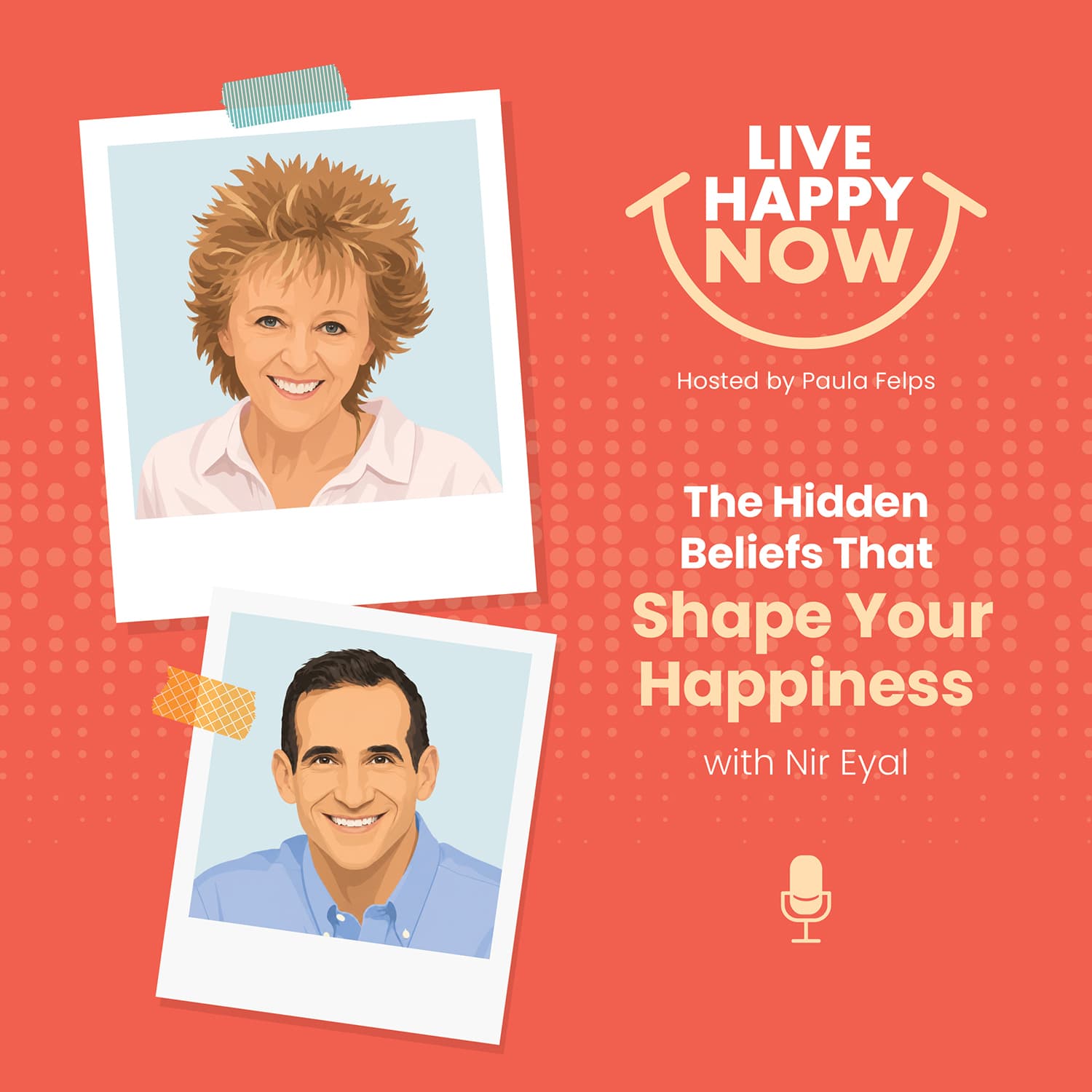
How “hidden beliefs” shape motivation, emotional reactions, and the suffering people create; beliefs are “tools, not truths,” and changing them can sustain persistence and reduce suffering (pain vs suffering). Nir Eyal explains belief vs facts vs faith, where beliefs come from (childhood, culture, repeated messages), and uses inquiry-based stress reduction/“turnaround” questions to reframe a belief.
Guest background
Nir Eyal is a bestselling author; he previously wrote Indistractable and focuses on behavior, motivation, and persistence through research.
Key claims
Motivation is a triangle of behavior, benefit, and especially belief; limiting beliefs sap motivation and increase suffering; suffering is internal judgment; people misattribute emotions to external causes; you don’t need beliefs to be “true,” only helpful.
Notable examples
terminal brain cancer patient reframing suffering; diet/height fear and “coffer illusion”; Eyal’s story about his mother judging flowers, then using turnarounds to shift beliefs and reduce his distress.
Written by AI. May contain mistakes. Listen to the episode to check what was said.
Chapters
Tap a time to open that second in VONir Eyal's Journey to Understanding Beliefs
0:00 to 0:34
Nir Eyal shares his motivation for writing about beliefs and their impact.
“We're already helping you wrap up your weekend with a smile, so why not let us start your Monday with an encouraging boost, too?”
Nir Eyal's Journey to Understanding Beliefs
1:45 to 2:41
Nir Eyal shares his motivation for writing about beliefs and their impact.
“Nir, thank you so much for joining me on Live Happy Now.”
The Role of Beliefs in Motivation and Persistence
2:41 to 4:46
Exploration of how beliefs influence motivation and the concept of persistence.
“several years ago, I had this phone call with a reader of one of my last books, Indistractable.”
Distinguishing Beliefs, Facts, and Faith
4:46 to 8:31
Nir Eyal explains the differences between beliefs, facts, and faith.
“that in order to get someone to do something, in order to motivate someone, you have to know what to do, the behavior, and you need the benefit, classic incentives model.”
Where Do Our Beliefs Come From?
8:31 to 9:39
Discussion on the origins of beliefs and the importance of examining them.
“Even if we don't know they're true, because beliefs are tools, not truths.”
The Connection Between Beliefs and Suffering
9:39 to 13:47
How limiting beliefs can lead to increased suffering and the need for change.
“And where do we even start with examining our beliefs, thinking about what we believe?”
Sponsor Reminder and Introduction
14:00 to 14:12
Nir Eyal is introduced as the guest to discuss suffering and happiness.
“So sign up and let us give your Monday mornings a makeover.”
Identifying Personal Suffering
14:15 to 15:22
Nir Eyal discusses the importance of identifying suffering in various life aspects.
“So I would start with where is the suffering in your life?”
Personal Example of Maternal Judgment
15:23 to 16:43
Nir shares a personal story about his mother's judgmental nature and its impact on him.
“You want me to give you a very personal example?”
The Turnaround Technique Explained
16:44 to 17:42
Nir explains the turnaround technique used to address personal beliefs and suffering.
“She turns to me and she says, Nir, would you like to do a turnaround on that?”
Show all 14 chapters
Four Questions for Self-Inquiry
17:43 to 19:59
Nir outlines a structured approach to self-inquiry with four critical questions.
“And I found it to be an absolutely life-changing practice.”
Exploring Misattribution of Emotion
20:00 to 22:27
Nir discusses the concept of misattribution of emotion and how it affects perceptions.
“My mother is too judgmental and hard to please.”
Beliefs as Tools, Not Truths
22:28 to 24:46
Nir emphasizes that beliefs are subjective tools that can either help or hinder us.
“when this thing that I planned and spent a lot of time and money on didn't work out the way I wanted it to, I felt bad.”
Shifting Perceptions Through Belief Change
24:47 to 27:35
Nir explains how changing beliefs can radically alter perceptions and reality.
“And I wonder how it changes what we focus on when we change those beliefs.”
Transcript
Automatic transcript. May contain errors.0:00We're already helping you wrap up your weekend with a smile, so why not let us start your Monday with an encouraging boost, too? Wake Up Happy is the newest addition to our mission to make every day happier, and it's a Monday morning lift you don't want to miss. When you sign up, we'll send you one quick, uplifting text every Monday morning to kick those beginning-of-the-week blues to the curb and help you rise and shine a little easier. Think of it as the best wake-up call you'll get all week, delivered right when you need it the most. Sign up, sleep well, and let us help you start your week with a smile.
0:34To get your weekly Wake Up Happy text, visit livehappy.com and sign up for our Sunday Sillies newsletter. You'll get the option to receive a free Wake Up Happy text every Monday. And if you're already getting Sunday Sillies, you'll see a prompt asking if you'd like to opt in. So sign up and let us give your Monday mornings a makeover. The other days we'll be so jealous.
0:59Welcome to Live Happy Now, where we explore the science and stories that help us live with more joy, resilience, and connection. I'm your host, Paula Phelps, and each week we sit down with experts and everyday heroes who show us how happiness grows when we put it into practice. Examining our beliefs can transform the way we see the world and even change how we relate to the people we care about. This week, I'm joined by bestselling author Nir Eyal, whose new book, Beyond Belief, shows how our unquestioned beliefs quietly shape our behavior, our happiness, and our ability to persist through life's challenges.
1:35Join me as he explains how beliefs influence our motivation, our emotional responses, and the suffering we unintentionally create for ourselves. Let's dive in. Nir, thank you so much for joining me on Live Happy Now.
1:47Nir Eyal:Oh, Paula, it's a real pleasure and an honor. I'm so glad to be here with you. Oh, we've been trying to make this work. The audience has no idea what we've gone through. We keep trying to make our schedules work. And so I'm glad that it finally came together and we're able to have this conversation. Me too. Me too. So you've released a fantastic book called Beyond Belief. Oh my gosh. It's so good and it's so timely. And I really, before we dig into what it's all about, tell us a little bit about your backstory of how you became so interested and aware of the power of beliefs. Yeah, so I write books about struggles that I have myself.
2:23Nir Eyal:I'm not one of these authors that tells you what they know. I write because I have questions I want to know, and I'm bringing the reader along on that journey. My friend Gretchen Rubin says, research is me-search, and that is so true. So I spent six years trying to figure out the answers to the questions I had with this book. The Genesis came out of kind of a funny phone call. several years ago, I had this phone call with a reader of one of my last books, Indistractable. And they called me up and they said, Hey, I read Indistractable. And, you know, it was a great book. I really enjoyed it, but it didn't work for me.
2:59Nir Eyal:And I said, Oh, that's interesting. You know, tell me more because, you know, I spent six years on that one as well. And I've got 30 pages of peer reviewed studies in the, in the bibliography and it changed my life. You know, so, so I really want to know, let's go step by step and figure out where it didn't work for you. So let's start with step one. How did step one go? And they said, ah, you know what? I read step one. I read it. I definitely read it. It's just that I didn't do it. Okay, I understand. Okay, fine. Let's go to step two. How did step two go? Yeah, I remember step two. Step two was super interesting.
3:29Nir Eyal:I really enjoyed it. Just that I didn't do that one either. And I was kind of racking my brain here. How is it that people would sometimes wait for months to tell the author of a book that they had read, that the thing that they didn't do didn't work. And at first I thought, well, is this guy crazy? Is it me? Like, did I write a bad book? What happened here? Then I realized, wait a minute, wait a minute. I do this all the time. I have loads of books that I've read and haven't put into practice. I've watched the YouTube videos and the podcast episodes and I have paid gurus and experts that gave me great advice that I haven't put into practice.
4:02Nir Eyal:Why? And I think this is one of the seminal questions of our age when we have so much information. I mean, there's no secrets anymore. If you want to know how to do something, read a book, ask Google, ask ChatGPT. It's all out there. So why is it that despite having all this information, why don't we all just achieve our wildest dreams and our greatest goals? What separates those who accomplish their goals and those who don't? And it turns out that it's not intelligence. It's not even resources. A lot of people who have every advantage in the world accomplish very little. And some people who start from the bottom and have every disadvantage go on to do amazing things.
4:36Nir Eyal:It's certainly not skill. skill can be learned. Information can be acquired. So what is it? So why don't we do what we know we need to do? And so that was kind of the central question. If we have the classic economics says that in order to get someone to do something, in order to motivate someone, you have to know what to do, the behavior, and you need the benefit, classic incentives model. But that can't be all there is to it. We know if it was that easy, we would have six-pack abs and be multimillionaires, but that's clearly not what's going on. What's missing is that motivation is not a straight line between behavior and benefit, motivation is a triangle.
5:10Nir Eyal:That in order to sustain motivation, and that turns out to be the seminal most important trait of someone who accomplishes their goals, it's just persistence. It's not intelligence. It's not resources. It's persistence. That turns out to be what studies find is the most important trait. It's not that persistence guarantees success, that quitting guarantees failure. So if persistence is so important, how do we persist? Well, we stay motivated. Well, how do we stay motivated? We have to understand that in order to sustain motivation, we need not only the behavior, knowing what to do, we not only need the benefit, why we're doing it, but most importantly, what sustains motivation is belief.
5:48Nir Eyal:That if I'm working for a boss who I don't believe has my best interest at heart, I don't believe they know what they're doing, I don't believe they're gonna give me that raise, that promotion I deserve, am I gonna stay motivated? Am I gonna persist for that person? No, I'll slack off and probably quit at some point. Conversely, if I don't believe in my own ability to do a behavior, maybe if I tell myself, I'm not cut out for this, I'm not ready, this is too hard, who do I think I am? I'm also not going to persist. So in order to sustain our motivation over the long term, we have to have not only the behavior, not only the benefit, but most importantly, the belief.
6:21Nir Eyal:That's what holds it all together. And so that's what Beyond Belief is all about. So when we talk about beliefs, tell us what you mean. Like what's the difference between belief and a fact or even faith? Because you make a distinction. Absolutely. So we use this word kind of interchangeably. When I say I believe this, I believe that, it's kind of a synonym for fact. But a belief is not a fact. A fact is an objective truth. It is something that is true whether or not you believe in it. So the world is more like a sphere than it is flat. I'm sorry if you have any flat earthers in your audience. The world doesn't care what you believe.
6:55Nir Eyal:Fact is a fact. So facts are objective truths. You cannot change facts. The other end of the spectrum is faith. Faith is a conviction that does not require evidence. God rewards the righteous. There's no amount of evidence that's going to convince someone not to hold that faith, nor should it. It's a matter of personal faith, right? Between fact and faith is something very special, and that's what we call a belief. A belief is a conviction that is open to revision based on evidence. Conviction that is open to revision based on evidence. And what's so magical about these beliefs, why I think they're so important, is that unlike faith, which people almost never change, unlike facts, which you cannot change, beliefs are malleable.
7:37Nir Eyal:We can choose our beliefs. And that's what makes them so powerful. The most important discovery I made in the book and these reams of research that I looked through really boils down to this, that beliefs are tools, not truths. Beliefs are tools, not truths. We keep hanging on to these beliefs, thinking that they are facts when they're not. And I think most of our problems in the world, whether it's personal problems, interpersonal problems, geopolitical problems, all come from the same cause. It's that people don't recognize that they're thinking of their faith as a fact when it's not just a matter of faith.
8:15Nir Eyal:And they don't recognize that the things that they think are facts, many of them are just beliefs. And so if we can distinguish between the three and most importantly, pick the beliefs that serve us rather than hurt us, even if we don't know if they are true, that's the big kicker. Even if we don't know they're true, because beliefs are tools, not truths. So where do our beliefs come from? Because I think your book really made me start reevaluating like, what do I believe? Because we go through life and we don't really have to think about it. We know we think or we believe something. So tell us where these beliefs come from.
8:51Nir Eyal:Well, that's a huge compliment what you just said, that the book made you evaluate whether, you know, where do your beliefs come from and are they serving you? Because most people never for their whole lives pause and ask themselves that very question. Because all of our beliefs come from somewhere. It's either from our childhood, from our culture, from something somebody said to us that we've repeated time and time again until we act like it's true. So now that we recognize that we don't have to keep carrying these beliefs, we can choose them. That means that we can stop, ask ourselves, hey, is this belief that I keep carrying around with me?
9:27Nir Eyal:It's like a big, heavy sack that you've been carrying for years and years. Is it really a fact? And does it serve me? Or could I change my belief? And what would that do for me? So that's, I think, a huge revelation that the beliefs you have are not your fault, but they are your responsibility. I love that. And where do we even start with examining our beliefs, thinking about what we believe? I think especially now in this climate, there's a lot of very strong opinions that we might adopt as beliefs. We start with ourselves. We need to understand where the suffering in our life comes from. And that's really the goal, right, of changing your beliefs.
10:08Nir Eyal:What we find is that when we have these limiting beliefs, what's the definition of a limiting belief? A limiting belief is a belief that saps your motivation and increases your suffering. So if you believe that that person is an idiot because of their political views or because it's your mom or because it's your angry neighbor or whatever. What does that do to your motivation to work on that relationship? It lowers it, right? What does that do to your suffering? It increases it. So the goal is not necessarily to change people's minds. You know, if you are waiting to ease your suffering based on what other people think and do, don't hold your breath.
10:49Nir Eyal:You're going to suffocate. Happiness doesn't work that way. And we need to recognize where our suffering actually comes from. Where does suffering come from? Where does suffering live? I know you're a happiness expert, but let's look at the opposite, the things that make us unhappy. Where is suffering? Suffering is not out here. Suffering is not because of what's going on in the world. Suffering is not because of what other people are doing or what they think or what they believe. Suffering happens here. All suffering happens here. Where else could suffering exist? And so it's very important that we understand that suffering is real, but it's also a judgment.
11:23Nir Eyal:That is the source of all suffering. And this isn't new. I didn't invent this. This comes from Stoicism. It comes from Buddhism. Many traditions for a very long time have said this. It's just that now science is catching up with what philosophy has said for quite a long time, that there's a big difference between pain and suffering. And what moderates the two turns out is belief. And so it's not that we should be passive. It's not that we shouldn't fight for things to improve in the world, for justice. It's absolutely we should stay committed to those things. And the only way I think we can stay committed is to increase our motivation and decrease our suffering.
12:00Nir Eyal:You know, I talked to a lot of people who are very altruistic, who are trying to help the world. And they tell me about all the problems and they're totally burned out because they associate what they're doing with suffering, right? That how can people believe that? And how can people treat the way they do others the way they do? And how can we do this and that? It's so terrible. And they're completely deflated and they're completely unmotivated because they've attached what those people are doing as a judgment that they should suffer from themselves. Whereas when they have a liberating belief that says, good, I'm glad that person disagrees with me.
12:38Nir Eyal:Amazing. Now I get a chance to test my own beliefs. Maybe this is an opportunity to practice patience. Maybe I'll learn something. Right? So changing those beliefs from limiting beliefs to liberating beliefs is really the core of separating pain from suffering and sustaining motivation long enough to actually make a difference in the world. And where do we start doing that? Because first we have to examine what we actually believe and then re-examine whether or not that serves us. We'll be right back with more of Live Happy Now.
13:13We're already helping you wrap up your weekend with a smile, so why not let us start your Monday with an encouraging boost too. Wake Up Happy is the newest addition to our mission to make every day happier, and it's a Monday morning lift you don't want to miss. When you sign up, we'll send you one quick, uplifting text every Monday morning to kick those beginning-of-the-week blues to the curb and help you rise and shine a little easier. Think of it as the best wake-up call you'll get all week, delivered right when you need it the most. Sign up, sleep well, and let us help you start your week with a smile.
13:47To get your weekly wake-up happy text, visit livehappy.com and sign up for our Sunday Sillies newsletter. You'll get the option to receive a free wake-up happy text every Monday. And if you're already getting Sunday Sillies, you'll see a prompt asking if you'd like to opt in. So sign up and let us give your Monday mornings a makeover. The other days we'll be so jealous.
14:11And now let's hear more from Nir Eyal. So I would start with where is the suffering in your life?
14:19Nir Eyal:That's where we start. And no suffering is too big or too small. I worked with a lady the other day who said her suffering, what was on her mind was that morning she was stuck in traffic and she was with her child and she got very annoyed in traffic and she said a few things that she did not want to say in front of her child. And it was causing her suffering that she couldn't control her emotions when she was stuck in traffic, you know, kind of a petty example. I've seen a woman use some of the techniques I describe in the book who was suffering from terminal brain cancer. I mean, talk about something that you think would be justified to suffer from.
14:56Nir Eyal:And she transcended her suffering using some of these techniques. So where we started, we ask ourselves, where are we suffering? It could be a relationship, It could be a New Year's resolution that you don't know why you're putting off year after year. It could be some kind of dream deferred. It could be something that is causing you an annoyance in your life. You know, maybe it's, I hate that my political opponents disagree with me. How can anybody believe the other side is right? It could be something as simple as that. Anywhere you are suffering in your life. You want me to give you a very personal example?
15:25Please do.
15:26Nir Eyal:Yeah, sure. So in my life, one of my longest held beliefs was that my mother is very judgmental. she's just a very hard to please person. And I probably have some brothers and sisters among your audience who empathize with me. You're going to have a fan club here real quick. Mom? Yeah, exactly. So a few years ago, I wanted to do something nice for her. And it was her birthday. And so I wanted to send her some flowers. The problem was I was in Singapore and she was in central Florida where I grew up and sending flowers from literally the other side of the planet, not so easy. I had to stay up till 1am.
16:01Nir Eyal:I called the best florist I could find. I found the best bouquet I could afford. And I made sure that they arrived on time. And I was sure that my mom was going to tell me what an amazing son I am. That's not what happened. What happened, Paula? No, that's not what happened. What happened was I call her up the next day. And I say, hey, mom, happy birthday. Did you get the flowers I sent? To which she says, yes, I got the flowers. Thank you. But just so you know, they're not that nice. In fact, they're half dead. So don't order from that florist again. To which I said, well, that's the last time I buy you flowers or something like that.
16:36Nir Eyal:And I'm not happy I said it. I regret it. But that's what came out. Now, my wife, who is also my editor, she's on the cover of the book. She knows all my research and she heard the entire conversation. She turns to me and she says, Nir, would you like to do a turnaround on that? To which I said, no, I do not want to do it. I am happy with my answer. Exactly. Thank you. Because you know what? I need to vent. I'm not going to do your touchy-feely hocus pocus. I need to vent. That's what we're told. When someone hurts our feelings, we need to speak our truth. We can't keep it inside. We need to vent about them, right?
17:09Nir Eyal:Well, in fact, the research literature shows that that's wrong. That when we vent about people, we're doing nothing but reinforcing our beliefs about them. Because we don't see people as they are. We see people as we are, as we believe them to be. So you're just reinforcing this patina of a person, not who they actually are. So I put that aside. I took my wife's advice. I took out a piece of paper and I did a turnaround. And here's what a turnaround is. And I'm happy for folks to follow along if they want. I'll be the guinea pig here. A turnaround is a technique that comes from inquiry-based stress reduction.
17:42Nir Eyal:And it's been validated in many studies to be a very, very effective way to ease your suffering. And I found it to be an absolutely life-changing practice. And here's what house inquiry-based stress reduction works. Some of you might recognize it from the work of Byron Katie. She actually was working. She was channeling a technique actually that's been with us for over 2 ,500 years. You can see a direct line from different people who have used this technique all the way back to Aristotle 2 ,500 years ago. And so what the technique asks us - So you're saying it has a bit of a track record is what you're talking about.
18:10Nir Eyal:It has a bit of a track record. Yes, but I think it's one of the most underutilized techniques. I mean, it is true. I do this sometimes five, six times a day. It's so helpful in my life. So inquiry-based stress reduction asks us first, first thing you do is you ask yourself, where are you suffering? Okay, it could be no suffering is too big or too small. Where's the suffering in your life? Maybe it's a relationship, maybe it's a dream deferred, maybe it's whatever's annoying you, causing you suffering in any shape or form in your life. Just write that down and then ask yourself why. Why is that causing you suffering?
18:40Nir Eyal:I'll give you an example. In my life, what is causing me suffering is my mom. Why? Because she is really judgmental and hard to please. Okay, now we have four questions to ask ourselves. The first question is, is that why true? My mother is too judgmental and hard to please. Is it true? That's question number one. Paula, let me ask you, when someone sends you flowers from the other side of the planet, the appropriate response is? Thank you, they're beautiful. This is why we're good friends. Exactly, thank you, Paula. Clearly, it's a fact my mom was being too judgmental and hard to please. Who says that?
19:15Nir Eyal:You say thank you and that's it. You don't complain that the flowers weren't nice enough. Okay. Let's go to question number two. Question number two. Is it absolutely true? Is it absolutely true? It sounds like the first question. It's not exactly the same. Is it absolutely true? Can I be 100 % certain, no doubt whatsoever, that the reason I am suffering is because my mother is too judgmental and hard to please? There's no other reason. Can I be 100 % absolutely sure that that is true? Interesting. I can't be 100 % sure. There might be some other reason. Okay, fine. Third question, how do I feel or who do I become when I hold on to that belief?
19:55Nir Eyal:So if you wrote down your why, ask yourself, how do I feel when I hold on to that why? Why am I suffering? My mother is too judgmental and hard to please. When I held on to that belief, I felt bad. I felt short-tempered. I felt anxious. I didn't feel like myself. Okay, now the fourth and final question, who would I be without that belief? So again, if you close your eyes and you just let that belief dissolve, just imagine that belief doesn't exist anymore. How do you feel? Well, for me, when I imagined that, just to pretend, what would it feel like if that belief disappeared? I felt lighter. I felt physically lighter.
20:34Nir Eyal:I felt less anxious. I felt less stressed. I felt more like the person I wanted to become. So now in just four questions, I realized that the thing I was sure was a fact, wasn't a fact, it was just a belief, that holding onto it was causing me suffering and that letting it go made me feel way better. And now it's time for the turnaround. The turnaround asks us the most important question, which is, could the opposite be true? So take your why that you think is causing your suffering. Okay, I'm suffering because I'm stuck in traffic. I'm suffering because my mom is annoying. I'm suffering because I have a brain tumor.
21:08Nir Eyal:and ask yourself, could the opposite be true? Such a simple question. Could the opposite be true? So I'll be the guinea pig again. My mother is too judgmental and hard to please. That's why I'm suffering. Could the opposite of that also be true? What's the opposite? My mother is not too judgmental and hard to please. Could that be true? Well, she did say thank you for the flowers, didn't she? And she was just saying a statement of fact. The flowers weren't so nice. And she was just giving me advice so that I wouldn't get scammed by this florist. So maybe, just maybe, she was trying to be helpful, not hurtful.
Read the full transcript
21:41Nir Eyal:Could be. Could be true. I'm not saying it is true, but it could be true. Okay, let's do another turnaround. The opposite of my mother's two judgments on hard to please could be I am two judgments on hard to please. Oh. How could that be true? Well, wasn't I the one who had stayed up till one in the morning rehearsing verbatim exactly the words of praise that I deserve to hear telling me what a great son I was? And when I didn't get those words of praise exactly as I deserved to hear them, I lost it. So who was being judgmental? Okay, now there's a fourth turnaround. The opposite of my mother is too judgmental and hard to please could be I am too judgmental and hard to please towards myself.
22:25Nir Eyal:Well, how could that be true? Well, that actually turned out to be the most true because the more I thought about it, when this thing that I planned and spent a lot of time and money on didn't work out the way I wanted it to, I felt bad. I felt incompetent. I felt like I'd messed up. And this is what we call a very important concept in psychology. This is called misattribution of emotion. A misattribution of emotion is when we feel crummy on the inside. And so we attribute it to something on the outside. Can you believe what she said? I can't believe he did this. Could you see what's happening in the world today?
23:01Nir Eyal:Did this happen? That's this war, this thing. That is all happening out there. The suffering is always happening up here in your head. Always. Suffering is not happening out there. It's always happening in your head. And that's what I was doing to my mom. I was attributing the way I felt inside to her as the cause. Now, I have four beliefs. Okay, I started with one. Now, I have four other beliefs, okay? Which one of those is true? Which one is false? All of them? None of them? Who cares? Who cares? We spend so much time arguing, when you said this, you meant to do that. These aren't facts. They're just beliefs.
23:41Nir Eyal:It's perception. They're completely subjective. So it doesn't matter which one is true and false. What matters is which one serves me and which one hurts me. Beliefs are tools, not truths. The first belief that the only way I could be happy was if my mom would change because my mother is too judgmental and hard to please. So for me to stop suffering, she had to change. Now, Paula, you haven't met my mom. I'm telling you that ain't gonna happen. Because as we said earlier, when you wait for other things to change outside of you so you can finally stop suffering, don't hold your breath, you're gonna suffocate.
24:13Nir Eyal:The other three beliefs I could do something with. Now, does it mean we have to be best friends? Does it mean we have to have picnics in the park every day? No, it doesn't mean any of that. It just means I no longer have to suffer in my relationship with my mom. And so now I'm much more motivated to work on that relationship. Who the heck wants to be in a relationship with someone who's judgmental and hard to please? Nobody. So now I'm more motivated to work on that relationship and I don't have to suffer in that relationship. It doesn't mean I'd have to be around her every day. That's not what the goal of this exercise.
24:42Nir Eyal:It's just a way to unlock what's already within you. This ability to have greater patience, to have greater ability to be the person you actually want to be as opposed to being enslaved by this cage of your own creation that is created by your limiting beliefs. That is fascinating. And I wonder how it changes what we focus on when we change those beliefs. Yes, absolutely. I mean, the evidence is overwhelming that beliefs change what we see, what we feel, and what we do. And I'm not speaking figuratively. I'm literally speaking here that what you believe will change how you perceive reality. We know that people who are on a diet see food as larger, that people who are afraid of heights see distances as further away, that I can show two people the exact same image and one will see squares and one will see circles.
25:42Nir Eyal:It's called the coffer illusion. You can look it up for yourself. This is totally based on our background, on our beliefs, what we're experiencing. So we like to say that I'll believe it when I see it. Actually, the exact opposite is true, that you see what you believe. And so that's very, very important because we need to realize that we don't see reality accurately. One of the myths, one of the lies that the brain tells us is that you see things as they really are. You absolutely do not see things as they are. And if you can't see reality clearly, why do you think you can see others' perspectives clearly?
26:15Nir Eyal:You can't. You can't even see your own reality clearly. So we need to have much more intellectual humility about our ability to induce what we think others intend for, intend in their lives, because we don't even know ourselves how reality is accurately portrayed. That is so incredible. It's just a one more example of some of the great information that you have packed into this book. You have a lot of powerful insights and true, genuine, deep wisdom in Beyond Belief. So what is it that you hope every reader takes away from this book? Yeah, a few things. So number one, that we do not see reality clearly.
26:54Nir Eyal:None of us can. It's impossible. There's just too much information. And so your brain doesn't see reality as it is. It sees reality as it believes it to be. So I want everyone to have the intellectual humility to realize that we don't see reality clearly. We see it filtered by our beliefs. Number two is that you are capable of far more than you know, and what you are capable of is not based on the fact that you can do what you can do, but actually that you can do what you believe you can do, that you are limited by your beliefs. And that finally that your beliefs dictate your reality not everyone's reality But how you perceive reality is dictated by your beliefs And so if you change your beliefs you change what you feel what you see what you do and ultimately who you become Fantastic near thank you so much for spending time with me today We're going to tell our listeners how they can find you how they can find the book.
27:48Nir Eyal:I appreciate it very very much You've got it. Thank you so much Thank you
27:57That was Nir Eyal talking about the power of our beliefs. If you'd like to learn more about Nir, check out his books, follow him on social media, or download his free five-minute belief change guide. Just visit us at livehappy.com and click on this podcast episode. That is all we have time for today. We'll meet you back here again next week for an all-new episode. And until then, this is Paula Phelps reminding you to make every day a happy one.
28:25Thank you.
From the publisher
Examining our beliefs can transform the way we see the world — and even change how we relate to the people we care about. This week, bestselling author Nir Eyal talks about his new book, Beyond Belief, and explains how our beliefs quietly shape our behavior, our happiness, and our ability to persist through life’s challenges. He explains how beliefs influence our motivation, our emotional responses, and the suffering we unintentionally create for ourselves. If you’ve ever felt stuck, overwhelmed, or frustrated by your own patterns, this episode offers a fresh, science‑backed way forward.
In this episode, you'll learn:
- How examining our beliefs allows us to approach relationships with more clarity and compassion.
- How to identify limiting beliefs that increase suffering and sabotage motivation.
- A simple, evidence‑based technique for transforming painful beliefs into empowering ones.