
In short
Emotional sensitivity as a strength, including the brain science behind it and how to manage “rejection sensitive dysphoria” (RSD) instead of shaming yourself. The episode reframes sensitivity on a spectrum (from emotional numbness to intense, slow-to-return emotional responses) and argues that it’s about regulation, not becoming less sensitive.
Guest backgrounds
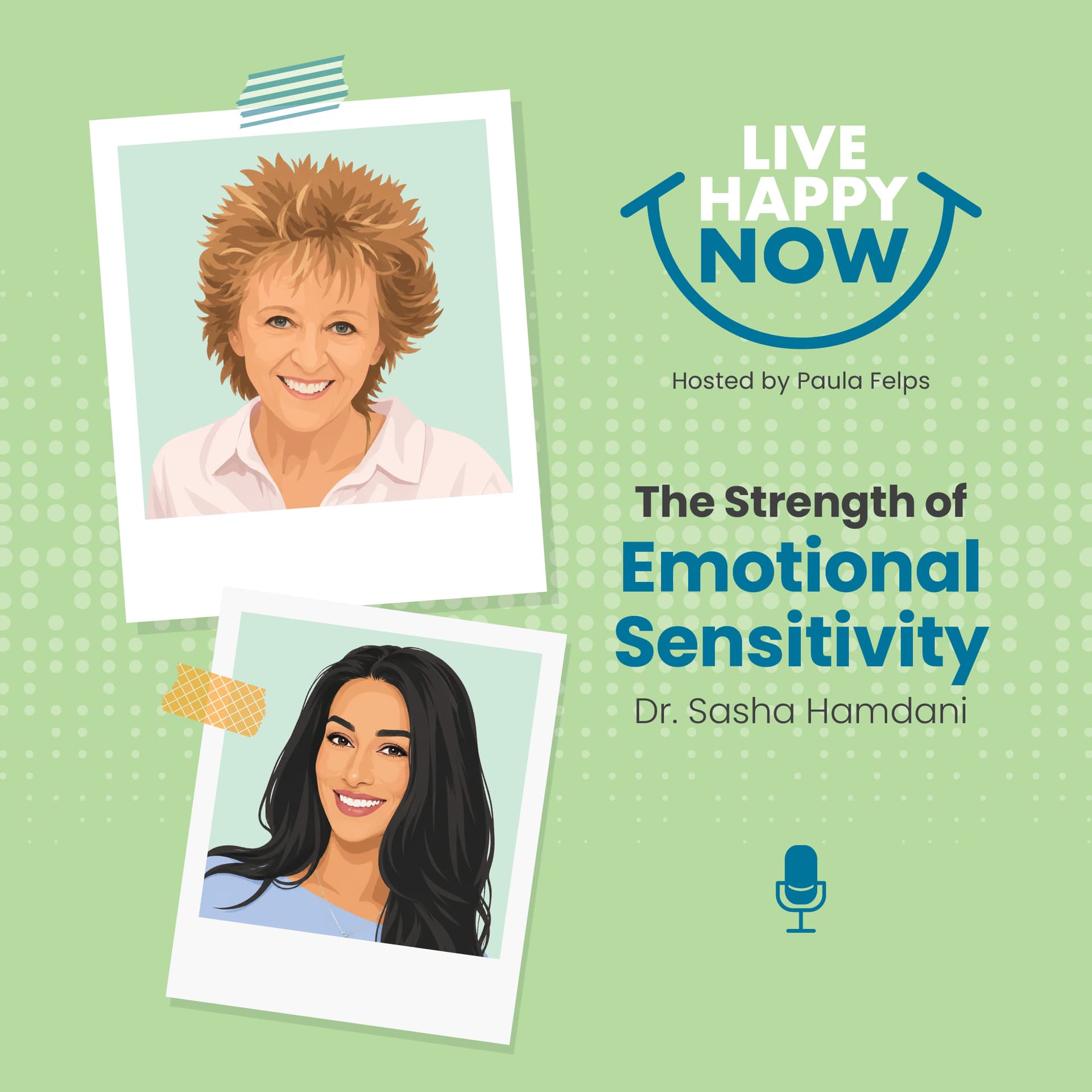
Dr. Sasha Hamdani is a psychiatrist and author of Too Sensitive. She treats patients and links her research to her own lived experience; she also describes how her father’s emotional sensitivity became a family strength.
Key claims
Highly sensitive people often have a hyper-reactive amygdala and an under-responsive prefrontal cortex, so threat responses flood the body with neurochemicals and take time to settle. Sensitivity is largely genetic/wired, though trauma, hormones, and other factors can intensify it. Recognizing the pattern reduces shame and enables evidence-based tools.
Notable examples
Her father adapting to her mother’s postpartum anxiety by creating an office setup to reduce her distress; her own realization after her father’s cancer diagnosis shifted her emotions and affected her functioning.
Written by AI. May contain mistakes. Listen to the episode to check what was said.
Chapters
Tap a time to open that second in VOUnderstanding Sensitivity
0:00 to 0:34
Dr. Hamdani shares her personal experiences with emotional sensitivity.
“We're already helping you wrap up your weekend with a smile, so why not let us start your Monday with an encouraging boost, too?”
Understanding Sensitivity
1:39 to 3:59
Dr. Hamdani shares her personal experiences with emotional sensitivity.
“Sasha, thank you for joining me on Live Happy Now.”
Rejection Sensitive Dysphoria
3:59 to 6:15
Exploring rejection sensitive dysphoria and its neurological basis.
“And then tell us in layman's term, talk to me like a five-year-old.”
The Spectrum of Emotional Sensitivity
6:15 to 13:20
Discussion on the emotional sensitivity spectrum and its implications.
“So is that something we're wired that way?”
The Spectrum of Emotional Sensitivity
13:26 to 13:39
Discussion on the emotional sensitivity spectrum and its implications.
“You'll get the option to receive a free wake-up happy text every Monday.”
Harnessing Sensitivity as Strength
13:39 to 14:00
Strategies for leveraging emotional sensitivity as a strength.
“So once someone recognizes that, like I have a sibling who, she owns it.”
Harnessing Emotional Sensitivity as Strength
14:00 to 16:32
Learn how to identify and utilize emotional sensitivity positively.
“and once you've identified that within yourself, how do you start using it as a strength?”
The Importance of Emotional Literacy in Development
16:33 to 18:11
Discover the benefits of emotional literacy from a young age and its impact.
“And I was curious, is sensitivity going to become the new anxiety, like where instead of just shoving it aside and not talking about it, we're going to be like, okay, that's a reaction because of sensitivity.”
The Evolutionary Benefits of Sensitivity
18:12 to 21:58
Understand the historical advantages of being emotionally sensitive.
“figure out what we where we go from here.”
Navigating Emotions and Decision Making
21:59 to 24:19
Learn how emotional awareness influences better decision-making.
“And so there is a gift inside of this once you accept it and settle into it and start learning to listen to it.”
Show all 12 chapters
Practical Steps to Embrace Sensitivity
24:20 to 25:03
Explore actionable steps to harness emotional sensitivity as a strength.
“Because I think when you fight it, it becomes really hard.”
The Author's Goals for the Book
25:04 to 25:59
Learn about the author's intentions with her book on emotional sensitivity.
“some of these things that I've been told, but try to do it when I'm less dysregulated, that's going to help you.”
Transcript
Automatic transcript. May contain errors.0:00Dr. Sasha Hamdani:We're already helping you wrap up your weekend with a smile, so why not let us start your Monday with an encouraging boost, too? Wake Up Happy is the newest addition to our mission to make every day happier, and it's a Monday morning lift you don't want to miss. When you sign up, we'll send you one quick, uplifting text every Monday morning to kick those beginning-of-the-week blues to the curb and help you rise and shine a little easier. Think of it as the best wake-up call you'll get all week, delivered right when you need it the most. Sign up, sleep well, and let us help you start your week with a smile.
0:34Dr. Sasha Hamdani:To get your weekly Wake Up Happy text, visit livehappy.com and sign up for our Sunday Sillies newsletter. You'll get the option to receive a free Wake Up Happy text every Monday. And if you're already getting Sunday Sillies, you'll see a prompt asking if you'd like to opt in. So sign up and let us give your Monday mornings a makeover. The other days we'll be so jealous.
0:59Dr. Sasha Hamdani:Welcome to Live Happy Now, where we explore the science and stories that help us live with more joy, resilience, and connection. I'm your host, Paula Phelps, and each week I sit down with experts and everyday heroes who show us how happiness grows when we put it into practice. This week, it's time to explore our sensitive side with psychiatrist and author, Dr. Sasha Hamdani. She's here to walk us through the often misunderstood world of sensitivity. what it is, why it shows up the way it does, and how it can become one of our greatest strengths. Listen as she breaks down the science behind deep feeling and offers a fresh perspective on why sensitive people often thrive once they understand how they're wired.
1:39Dr. Sasha Hamdani:Let's dive in. Dr. Sasha, thank you for joining me on Live Happy Now. Thank you so much for having me. You have such a great topic to talk to us about. I think just about all of us can immediately recall a time when someone told us we were too sensitive. I mean, when I received the email about your book, I was like, oh yeah, I know about 30 times that come immediately to mind. So talk to us about why this subject resonates with you and why it's so important. I think I am one of those people. I've been hearing that from my genesis, I guess. So it's something that I am intimately familiar with. But then as I got into the medical field and started treating my own patients, it's also something that I saw as a pattern over and over and over again with people who believed they were too much, believed they were too sensitive, and how limiting that became to their lives.
2:36So I started thinking about this kind of conceptually, and it wasn't until truly till my dad got sick. He had he was diagnosed with cancer and he passed like it was just so messed up. He was diagnosed with stage one cancer. We went through all the things he had to. And then when we went for our follow up, they were like, oh, it's stage four. And he died. Oh, my gosh. It was just whiplash. Thank you so much. It was horrific. But that was the first. And by the way, I was like an adult. I was a grownup. This was just a few years ago. So I was a practicing psychiatrist. But even for me, that was the first time I actually linked together how my emotional status directly impacted my functional status.
3:19And it made me actually look back and reflect upon all of these episodes of when my emotions felt too big or too scary and how it just completely prevented me from doing the things that I needed to do. So then that got me really researching that topic to figure out, like, are there people who process emotions differently?
3:38Dr. Sasha Hamdani:That is so interesting. And I know that anybody who has been in that boat of saying, like, okay, I'm too sensitive, and they're looking at somebody else and saying, like, why don't they do this? This kind of research is so important because it validates that what we're feeling is not wrong and that it's legitimate. That's how we are. And there's a way to work through it. Now, and you introduced a phrase that was brand new to me, RSD. Talk about what that stands for. And then tell us in layman's term, talk to me like a five-year-old. Tell me what that is. Well, it's perfect because I was talking to a five-year-old like mere moments ago.
4:14Awesome. So rejection sensitive dysphoria, so RSD, is this incredibly robust, so a big, strong response, mostly emotional response. Sometimes people feel it physically when people feel rejected or criticized or feel like they're disappointing someone. It's literally your nervous system response to those triggers.
4:37Dr. Sasha Hamdani:And it can completely shut us down, correct? Like that's not abnormal when we react that way. Can you explain that a little bit more? Because it can oftentimes feel like we are maybe overreacting in the eyes of others. So, I mean, there's lots of different factors that go into it. But if you wanted a really, really like simplified version, basically, there are two areas of the brain that you really think about. The first one is kind of the emotional processing, threat detecting center of the brain called the amygdala. For people that are highly emotionally sensitive, this area of the brain is more reactive.
5:14It's hyper responsive. Then the second part of the brain you think about is the prefrontal cortex, which is in charge of, you know, it's a logical part of your brain. decision making and processing and judgment. And that is under responsive. So basically, there is a group of people that are neurologically wired to feel things emotionally, very strongly first, and then that logical part lags. So when you start to think about things and conceptualize emotional processing and responses, and you're just thinking about like, God, that person really overreacted, blew it out of proportion. But then you actually start thinking about like, what are the areas of the brain that were lighting up and what were they responding to?
5:56It makes sense. Their body is just being completely flooded with these neurochemicals because your brain thinks you are in danger. And it takes a while for those neurochemicals to clear and your frontal lobe to come back on and be like, oh, okay, maybe this wasn't that big of a deal. But your brain and body thinks it is.
6:15Dr. Sasha Hamdani:So is that something we're wired that way? Is it something that trauma creates in us? How does this all unfold? Most of the time, you are genetically kind of wired to be that you were born this way. And I can tell you, I know that to be true, because I don't know. I don't know what time where I didn't feel this way. So I think that there's a big part of it. Now, there are other things that absolutely predispose you to exacerbation of this or change kind of where you fall on that emotional sensitivity spectrum. Trauma is definitely a big one. Just different things in terms of hormones, huge. That's like a constantly fluctuating baseline with that.
6:55I think there's things that shift it, but in general, we're talking about, this is what you were wired with. This is how your brain was built. And this is kind of that for a subset of people, there are some people that process things very deeply, very quickly and for a long time. And that's the kind of grouping I'm talking about. That's where I live.
7:16Dr. Sasha Hamdani:So is that something people should try to change or do they learn to work with it? Or what is the best approach? So first of all, I know I yap a lot about how difficult it is to feel all those things, right? But at the same time, like, especially as I've been researching more, like I can see that it directly came from my dad. Like my dad was very emotionally sensitive. And I see how he took that emotional sensitivity and really, truly made it into a strength. He lifted up everyone around him. He built and the way that he was the lion of our family, just like this, the emotional heart and soul of our family.
7:57And so I look at that as kind of this like blueprint going forward because I was like, OK, like this is not something to be ashamed of or be scared of. this is something that we need to learn how to manage because there's some beautiful benefits that come from being emotionally sensitive. So it's not really about becoming less sensitive. It's just becoming more in control.
8:22Dr. Sasha Hamdani:I love that. So tell us first, we want to get into reframing how we view sensitivity. But first of all, can we talk about how misunderstood it is? What is it that many people get wrong about highly sensitive individuals? It's just, it's hard because the world right now is just objectively very hard. And it really, really doesn't cater to highly sensitive person because like every time I open my phone, it's like I'm being slapped in the face. It feels like that. It's just everywhere you turn, there is like very emotionally heavy things happening. I feel like because of that, the way that our society is built is it seems to really reward people or praise people if you stuff down your emotions, which is not the healthiest way to approach things, right?
9:12What you get praised for is not when you have an emotional response, you get praised like, oh, you handled that so well.
9:18Dr. Sasha Hamdani:By not handling it. Right. By suppressing it or pushing it away or like, God, your dad just died, but you're doing so much. This is so great. And so you look at your life in terms of like, you know people are applauded for shoving those emotions down and becoming productive and so it it lends to this very emotionally stunted very hypercritical very harsh world that we're living in and so i think that one of the most misunderstood things about emotionally sensitive people is that a lot of times people are like these are people that are fragile that are weak that can't handle things and these are people that it's not that they can't do any of these things it's that they just feel things very very very strongly and and second point is that a lot of them haven't been given tools of how to get through those moments and so if you are kind of navigating this area where you feel things really deeply you haven't been given the tools and the rest of the world is telling you you should be over by now this isn't that big of a deal then you're just left to kind of feel very lost and misunderstood and in your book how do you kind of address that to help them reframe sensitivity as a strength rather than a liability?
10:38Dr. Sasha Hamdani:So, I mean, I think this is kind of, it's an interesting book to write because it's coming from the perspective of someone who's lived it. Like it has my lived experience, but it's also coming from the side of a psychiatrist who treats and like looks at this in a patient population. So it's kind of looking at things from both sides. I think the way that when things were explained to me in medical school and residency, the only way I understood them, especially with psychiatry, where it's like, you can't just like, look at a brain and know what's going on. For more like, nebulous concepts and things you can't like actually see.
11:13I think you have to understand that underlying mechanism in the brain. So the book starts with just talking about what's happening in the brain. And I think that's a very, very logical and important place to start. And then it moves into how do you know what's too sensitive? Like what is not sensitive enough? What's normal sensitivity? What's too sensitive? Where, what is that? Because it feels very subjective. And when I was going through all of my research and try, I kept coming back to this point and I'm like, where do we draw the lines? And I think when you look at emotional sensitivity, like a spectrum, and if you're looking at the middle of the spectrum of an emotional trigger and someone elevates their mood appropriately or depreciates their mood appropriately, but it's situationally driven.
11:58Something is happening, you respond appropriately. On one side of the spectrum is apathy or emotional numbness. You're, you know, something emotional happens and you're not going up or down either way. You're like, meh. And so that's, that's one end of the spectrum. And then if you look at that other end of the spectrum is that's where the people who an emotional thing happens and they elevate quickly and strongly. And for a long time, it takes them to kind of return back to their baseline. And so and then when you look at that kind of spectrum, why is there a difference? And so the difference is for many different things, but a lot of it boils down to just wiring.
12:35Some people just are emotionally responsive in a different way.
12:40Dr. Sasha Hamdani:We'll be right back with more of Live Happy Now.
12:46Dr. Sasha Hamdani:We're already helping you wrap up your weekend with a smile, so why not let us start your Monday with an encouraging boost, too? Wake Up Happy is the newest addition to our mission to make every day happier, and it's a Monday morning lift you don't want to miss. When you sign up, we'll send you one quick, uplifting text every Monday morning to kick those beginning-of-the-week blues to the curb and help you rise and shine a little easier. Think of it as the best wake-up call you'll get all week, delivered right when you need it the most. Sign up, sleep well, and let us help you start your week with a smile.
13:20Dr. Sasha Hamdani:To get your weekly wake-up happy text, visit livehappy.com and sign up for our Sunday Sillies newsletter. You'll get the option to receive a free wake-up happy text every Monday. And if you're already getting Sunday Sillies, you'll see a prompt asking if you'd like to opt in. So sign up and let us give your Monday mornings a makeover. The other days will be so jealous.
13:44Dr. Sasha Hamdani:And now let's hear more from Dr. Sasha Hamdan. So once someone recognizes that, like I have a sibling who, she owns it. She'll say like, well, this happened and I got very tearful. So she's kind of come up with her own lingo of how she describes what happened. and once you've identified that within yourself, how do you start using it as a strength? How do you harness that? Because it is something that can be very helpful in navigating the world. It is. It definitely is. I think the first thing is, you know, recognizing it. Because if you recognize it, you automatically remove a lot of that shame and the guilt with it.
14:27Because I think that that's something that just kind of, number one, it shuts down your functionality. Number two, it prevents you from kind of moving forward and gaining the positives from that situation because you're just trapped in the negatives. So if you are able to see it, this has a name, this is due to my wiring, then you can actually start to use tools to kind of work your way out of those moments. And every single one, Paula, I put 12 tools in that book, and I pulled them from every area of psychology and psychiatry and neuroscience, trying to find the 12 that were the most research-backed, evidence-based to get you relief in the moment and then resilience over time.
15:07So trying to find 12 tools, guess what? You have heard every single one of them before. Every single one you have heard and you've probably been told to do at some point in time a variation of any one of these tools. But the difference is that in this book, it teaches you when to apply the tool and how to apply the tool. And then it gives you the opportunity to practice when you're not dysregulated. Because I think that if you're right in the middle of a spiral, and I use my mom as an example because she's always the person who does this, take a deep breath. And I'm like, I don't even remember how to breathe right now.
15:44So that's not in my wheelhouse. So learning how to practice those and when to apply it, That is going to be so incredibly beneficial moving forward. When you get into these episodes, if you can recognize it and then you know what tool to use, you're already so far ahead of the game. And then these episodes become shorter. They become more manageable. And then you start to see, okay, I got through this emotional up and down. What can I pull from this? What was the positive? What did I glean from that? because you're not using up all that emotional energy and that brain power just to survive in the moment.
16:21You're able to kind of pull away the positives from it and actually move on from this and actually use it as a skill and a benefit. Yeah.
16:29Dr. Sasha Hamdani:What I like about your approach is, as you mentioned, it's a toolkit and it was so reminiscent to me about how I learned to deal with anxiety. And there's so many parallels on that. And I was curious, is sensitivity going to become the new anxiety, like where instead of just shoving it aside and not talking about it, we're going to be like, okay, that's a reaction because of sensitivity. And we start bringing that into our everyday lexicon instead of being like, oh, you're just too sensitive. Do you see that? I hope so. Yeah. Do you see it shift? I hope so. I feel like, honestly, especially since I have two young kids, I feel like my life would have been so much better if I learned about this in school.
17:14And like, as I was growing, I mean, and objectively, like elementary school, fine. Middle school, hard. High school, hard. Like from the social development perspective. And I feel like everybody is just like raging full of hormones and they're dealing with their own sensitivities and their brains aren't fully developed. And it's just like, it's nightmare fuel. It's so hard. And so I wish that, I think that everybody in the universe could benefit from emotional literacy. So if there was a way that we could talk about this at earlier stages and at least become more aware, even as parents, so that we could aid our children, I think it'll lend for a much more gentle transition into adulthood.
17:56Dr. Sasha Hamdani:You do bring out that there are upsides. Like this isn't just a negative thing. It's not like sensitivity is so bad. No. Like the creativity, the intuition that comes with it, the empathy. Let's talk about all the gifts that come with it. I think that being a highly emotionally sensitive person, I mean, from an evolutionary perspective, I mean, if you think about it right from the beginning, being emotionally sensitive, you would perceive things much sooner than the rest of the tribe where you could pick up where there was danger, you could repair bonds within a tribe, you could figure out even without talking or seeing what was going on, just from like energy shifts in the thing, you're like, okay, there is a rift that's forming, let's try to think about it.
18:41figure out what we where we go from here. So I think that there is, you know, we're just running on kind of ancient software. We just have continued this, right? Moving forward. And now in modern day society, what we look at is some of these incredible strengths, I'll list out some of them, and I'll give you my favorite example. But I think that you are able to pick up on things that maybe other people completely miss, because you're filtering such a tremendous amount of emotional data, I can walk into a room, my kid doesn't have to say anything, they don't have to look at me. And I know exactly what is going on in their brain.
19:17I know kind of how to respond in that moment. You have this greater, just resting state for empathy. And I think that that because I'm emotionally sensitive, it has given me success in being a psychiatrist, it's given me it's helped me become a better clinician, it's helped me become a better partner, a better parent, a better a person in general, I think that you're able to understand other people's emotional needs. And you're able to problem solve around those. Because sometimes when I would get into situations, or if I had been put in positions of leadership or things like that, I would get arrive at conclusions of how to kind of make everyone kind of happy.
20:02And other people would be like, I never, I literally never even thought of that as a solution. again a lot of this is I had the benefit of like watching my dad do this so he was a CEO of a company and like the thing that he I think will be remembered for the most is just the way that he ran his company was so unusual in that and a lot of this I'm finding out like after he passed I didn't he didn't tell us any of this but when we were at the at his funeral somebody from his office came up to us and he was like, I worked with your dad for many, many, many years before we moved. And my wife had terrible postpartum anxiety, terrible, terrible, terrible postpartum anxiety.
20:47And I was like gently trying to say that around your dad, but I didn't even have the words. Your dad didn't even have to get an explanation when my wife would have, he just saw one day that my wife is having a hard time leaving me when she dropped me off for work. My dad created an office space for this woman next to this man so that she wouldn't feel anxious. And so, and I'm hearing all this and like, I had no idea that was happening. And it was just like to foster this environment that, you know, we see these things and we, you know, we'll work with what, what you can work with. But this man flew across the US to tell me the story.
21:28And I was like, these are the perks of being emotionally sensitive.
21:31Dr. Sasha Hamdani:And once you realize that that is your operating system, you can change how you make decisions. Because I think, like I was raised, you make decisions logically, right? You make it with your head. My decisions made with my head do not do as well as those made with my heart and following your gut. And I've made some interesting choices in the last few years where people said, why did you do that? I said, because I don't know. I got said to do it and it's all worked out very beautifully. And so there is a gift inside of this once you accept it and settle into it and start learning to listen to it.
22:10I wholeheartedly agree. And I don't think I've ever actually even put that together, but there is, I feel the same way. The decisions that I've tried to agonize and plot out and figure out every sort of vantage point from, it's never regulated my nervous system. The decisions that I've made, because this is what my heart is leaning towards, this is where my gut is leaning towards, I feel very at home almost immediately. And it's always the right choice, always.
Read the full transcript
22:37Dr. Sasha Hamdani:So where can people start? We're going to tell them how to find you and how to find your book. But what are some small steps that people can start taking right away to learn to embrace this and learn how to harness this as a superpower and look at it as a strength? I don't like the term superpower because I think that it is an incredible strength. But I think that part of looking at anything in life is looking at it as a realistic thing. Because I think when I've tried to reframe it as this superpower, this emotional sensitivity, then when I do feel bad, when I'm triggered and I'm having these big, robust emotional responses that I can't work my way out of as easily as others, I beat myself up about it.
23:21So I've really been careful to not even put myself in that situation where I put on an overly positive spin. Because for me, it's just like, this is how I'm wired. There's good stuff. There's bad stuff. And then it's just realistically. So I think the first step is really knowing your patterns. If you can recognize this sounds like me, I think I am emotionally sensitive. The rest will come. The rest will come in terms of how, because you will start to reframe and rephrase the world around you. Because if you're like, this isn't just a me thing. This isn't just like, I am a problem. I'm bad. I'm lazy.
23:57I'm broken. I'm fragile. I'm weak. I can't handle this. Because that's what I've been telling myself for 40 years. Instead, you can actually see I'm wired to process emotion differently. And now I'm processing all of this stuff and I'm feeling it deeply. And you know what? In a lot of that, there are gifts. So let me navigate through this moment because I know I'm feeling it deeply and take what I need to take from it. Because I think when you fight it, it becomes really hard. So I think just recognizing it and then just you will reframe the world around you. And then if you can find things that help you get out of that moment.
24:37And I tell people, like, that's not even something that you need to go. And if you want to get my book and look at that toolkit, great. But a lot of it is the tools in there are things that you've heard. They're things like, you know, grounding yourself with deep breaths. So leaning into that meditative practice and grounding practice. There's things like challenging negative thoughts, reframing. kind of, it's stuff that you've heard. And so even if it's like, okay, well, I'm going to re-explore some of these things that I've been told, but try to do it when I'm less dysregulated, that's going to help you.
25:11That's fantastic.
25:12Dr. Sasha Hamdani:So I know we have to let you go, but I know that we're going to have you back because you and I are going to have another terrific conversation about how to raise sensitive children. I think that's a fantastic topic that a lot of parents will be interested in. So we're going to be doing that here in a few weeks. But as I let you go, So what's your hope for this book as you're sending it out into the world? Do you want to hear my sneaky agenda? Yes. Tell me the sneaky agenda. I love sneaky agendas. Okay, well, great. I wrote this book, you know, because I was focusing on the emotional sensitivity component.
25:46A lot of that preliminary research was really done, especially with RSD, was done in the context of ADHD. And so when you look at ADHD, right now we're at this, the whole diagnostic criteria, it's real dumb. Like it doesn't encapsulate anything. And so my goal is that with enough knowledge and understanding about emotions and emotional processing and emotional regulation, that we can take the ADHD criteria and put emotional regulation in it because it needs to be there. because I think that's going to be life-changing for so many people. And also the rest of the world is here. Europe changed their criteria in 2019 to include this.
26:27So the U.S. is frankly behind. And so I'm hoping that this book just kind of like...
26:33Dr. Sasha Hamdani:Helps you move along. I love that. I love that. I love the good that you're putting out into the world. I love your commitment to helping us live better lives. And I'm really excited to have you back and talk again about how to raise sensitive kids. So thank you again for writing this book, for coming on the show, sitting down with me today. And I look forward to talking to you soon. Yeah, thank you, Paula. I loved it.
26:59Dr. Sasha Hamdani:That was Dr. Sasha Hamdani explaining the science of sensitivity and how we can turn it into one of our greatest assets. If you'd like to learn more about Dr. Sasha, check out her book, Too Sensitive, or follow her on social media. Just visit us at livehappy.com and click on this podcast episode. That's all we have time for today. We'll meet you back here again next week for an all-new episode. And until then, this is Paula Phelps reminding you to make every day a happy one.
From the publisher
What if sensitivity was actually your greatest strength? In this episode, psychiatrist and author Dr. Sasha Hamdani explains the often‑misunderstood world of sensitivity — what it is, why it shows up the way it does, and how it can become one of our greatest strengths. Listen as she breaks down the science behind deep feeling and offers a fresh perspective on why sensitive people often thrive once they understand their wiring.
In this episode, you’ll learn:
- How sensitivity enhances perception, intuition, and emotional attunement.
- Why sensitive individuals often excel at empathy, discernment, and nuanced communication.
- Practical ways to harness sensitivity as a source of resilience, clarity, and personal power.