
In short
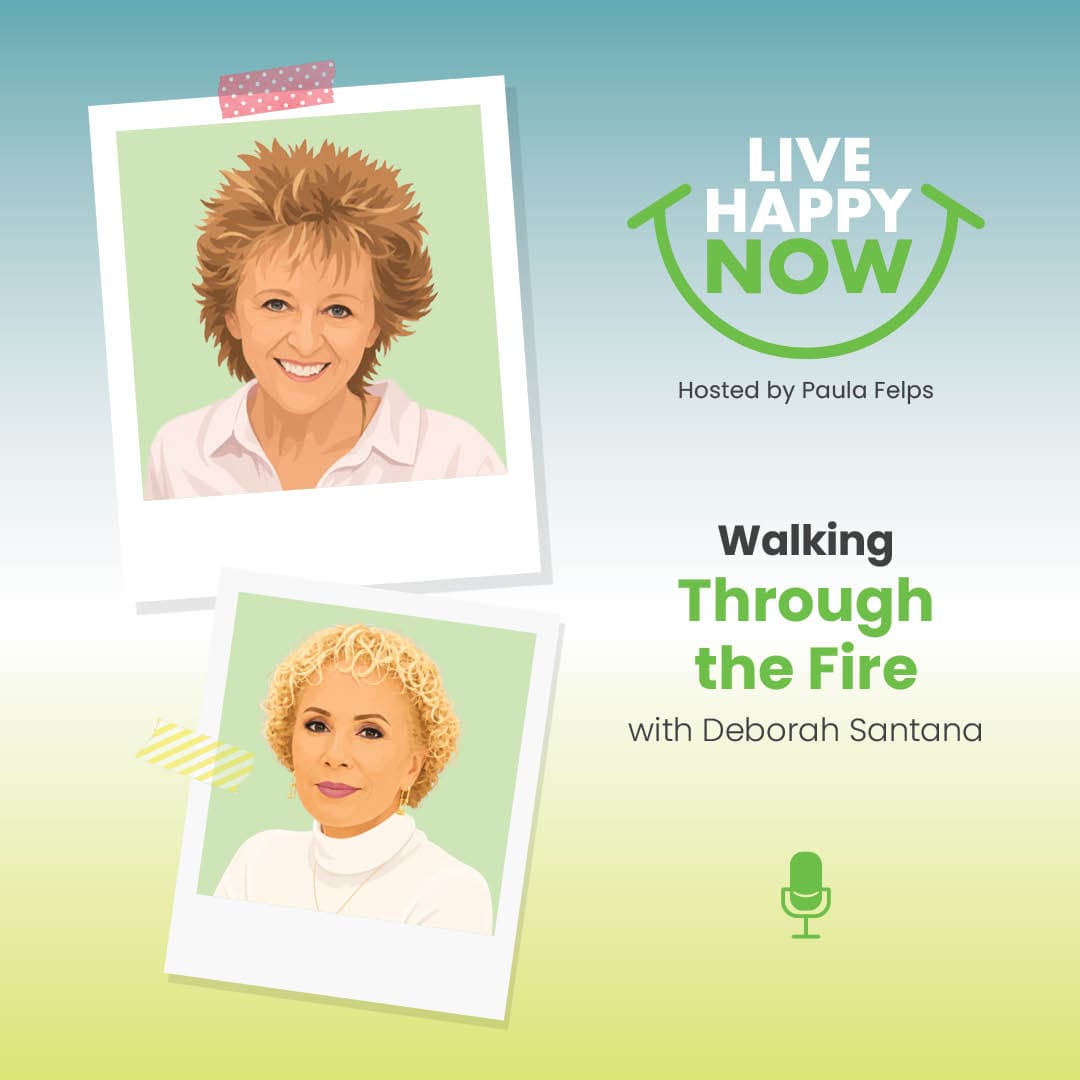
Deborah Santana discusses her memoir Loving the Fire, Choosing Me, Finding Freedom—how she reclaimed her identity after decades living in roles as a wife, mother, and businesswoman, and how spirituality and radical honesty helped her leave a high-profile 34-year marriage.
Guest background
Deborah Santana is an author and activist with a long meditation practice (since age 21). She has written a prior memoir, Space Between the Stars (2006), and supports global causes including Dharaja Academy in Kenya (supporting girls’ secondary education for about 14–16 years). She also engages in work related to domestic violence and museums/education.
Key claims
Leaving wasn’t about “dirt” or blame; it was about taking responsibility, walking through “fire” while maintaining integrity, and becoming honest enough to “unstick” one’s life story.
Notable examples
Los Angeles wildfires (Eaton and Palisades) inspiring the “loving the fire” metaphor; her mother’s death as the turning point; her family’s interracial marriage history (illegal during their upbringing) and civil-rights-era safety; activism deepened by visiting South Africa—Robben Island, Mandela’s cell, meeting Mandela at his foundation, and hearing him speak to 90,000 people.
Written by AI. May contain mistakes. Listen to the episode to check what was said.
Chapters
Tap a time to open that second in VOFinding Courage to Choose a Different Path
0:45 to 2:18
Deborah Santana discusses her journey of reclaiming her identity and the inspiration behind her memoir.
“34-year marriage and go through one of the most difficult chapters of her life, only to emerge with clarity, purpose, and a renewed sense of self.”
Loving the Fire: A Metaphor for Transformation
2:18 to 4:26
Deborah explains the title of her memoir and its connection to her personal journey through hardship.
“And how did they respond to it when the book came out?”
The Impact of Family History on Identity
4:26 to 7:21
Deborah reflects on her family background and the strength it provided her throughout her life.
“And we will be stronger and better people because of it.”
Reflections on Society and Ongoing Struggles
7:21 to 11:00
Deborah shares her thoughts on societal issues and the importance of connection and love amidst challenges.
“I think that so many people, and I do not take lightly that many people don't have families that nurture them and love them and are examples of strength.”
Writing as a Journey of Self-Expression
11:00 to 12:51
Deborah discusses the evolution of her writing and the vulnerability involved in sharing her personal story.
“Now, this is actually your second memoir because you released Space Between the Stars in 2006.”
Vulnerability in Writing
14:01 to 15:48
Learn about the importance of vulnerability and personal responsibility in writing.
“what as a writer made you feel safe enough to be so vulnerable and really splay yourself out there?”
Activism and Storytelling
15:48 to 17:17
Discover how activism and listening to others' stories influence personal healing.
“But in my life, and I think in those who are not in a war-torn area, really the choices we make in general are our own.”
Significant Life Transformations
17:17 to 19:00
Explore the impactful experiences that transformed Deborah's activism and life perspective.
“It includes motherhood, complete reinvention, your business work.”
Walking Through the Fire
19:00 to 21:58
Understand the steps to navigate through difficult life challenges and align with your purpose.
“And when you're doing it on that scale, I can imagine that the repercussions that you have within yourself are just incredibly powerful.”
Encouragement for Change
21:58 to 23:20
Find inspiration to unstick your life story and pursue personal dreams and wellbeing.
“Yeah, it is a marvelous way to end it because it does give you this go forth and try it for yourself missive.”
Show all 11 chapters
Future Aspirations
23:20 to 24:51
Learn about Deborah's ambitions and the significance of recognizing indigenous sovereignty.
“So we're going to tell our listeners a little bit more about you, but before I wrap things up, what is next for you?”
Transcript
Automatic transcript. May contain errors.0:03Thank you for joining me for episode 576 of Live Happy Now. Today we're talking about something that many of us experience, that moment when we realize our life no longer reflects who we truly are. And this week's guest tells us how to find the courage to choose a different path. I'm your host, Paula Felps, and this week I'm joined by author and activist Deborah Santana. Her new memoir, Loving the Fire, Choosing Me, Finding Freedom, chronicles her journey of reclaiming her identity after decades of living in roles that kept her spirit on the sidelines. Debra shares how spirituality and deep personal honesty helped her walk away from a high-profile 34-year marriage and go through one of the most difficult chapters of her life, only to emerge with clarity, purpose, and a renewed sense of self.
0:54Let's find out how she did it. Debra, thank you so much for joining me here for the Live Happy Summer Reading Program. Thank you, Paula. I am excited to live happy with you. All right. And you do live happy. Your book is a testament to living happy. It is a powerful book. I think so many of our listeners can relate to it because, you know, they've gotten lost in the roles of mother and wife and business. And that's exactly your starting point in this book. So can you talk a little bit about who you had in mind as you were writing this book? Actually, beginning the writing years ago, I really had women and people who were stuck in something that maybe they needed to transcend or move away from.
1:43But as I continued my writing, because I really wanted to show what I've done with my own life, not that it's big or anything spectacular, but just that I actually was a whole person. And I really wanted to start writing towards my children because my grown children know who I am on a certain level, but because I was sort of on the sidelines during their transformative years, I don't think they really knew what I was living. Mm-hmm. And how did they respond to it when the book came out? Well, they're all completely supportive. My youngest actually was just in New York with me and went to my reading at the Tibet house, which was so fantastic.
2:31And she's, you know, they're very proud of me that I have persevered my own life. And I really try to be that example for them so that if they get caught in something later on, they'll say, oh, but mom did this. So we're going to go ahead and be strong and courageous. That's fantastic. And I think everyone gets that same sense from reading that book like that. Wow. Because you really frame it well of it's not that you were making an easy decision, you were making the right decision to leave and to start your own life. And I think for anyone who is stuck, as you said, it's such an inspirational, like, I can do this.
3:05Yes. And I should do this for me. Yes. Yes. Even though I hate to use shoulds and woulds, but I think that... Some cases they're necessary. Yes. So tell us about the title, Loving the Fire. Where did that come from? As I finished this final draft, we had just had our really huge devastating fires here in Los Angeles. And my home was right in the middle of the two, the Eaton Fire and the Palisades Fire. And although the fire didn't touch me then, it just reminded me of what I'd been through when I left my marriage. It reminded me that fire was burning on both sides and that I was safe and I felt I was safe, but I also felt I could have been incinerated.
3:55And so what I do, and in my own life, when I was leaving my marriage, I felt pretty alone because a lot of people had to make choices as they do in divorce. And people often thought I was so strong, so they didn't have to check in on me. So I use that analogy of loving the fire because I see how if we can walk through the fires of our lives and maintain an integrity to who we are, we will come through the other side. And there will be new trees that grow. There will be new shoots that bloom. And we will be stronger and better people because of it. That's absolutely beautiful. I love that. And you know, your writing is so beautiful.
4:42I cannot say that enough. And there was a line that hooked me at the very beginning. This is the one that was just made me want to completely dive in. So after describing the work that you had done for decades as a wife and a mother and a businesswoman, you wrote, but now my work was to be true to my own spirit. And that resonated so strongly for me. And I think a lot of women know that truth exists for them, but it's hard for them to move from their current reality to that version of themselves. And so can you talk about how you found the courage to do that? You describe it so well in the book.
5:17I really have always followed my heart and I have had a long meditation practice since I was 21. So I am familiar with sitting in the silence and listening to my essence and listening to who I am. And I think that the way that I finally got to leaving and choosing me, finding freedom, was when my mom died. Because so much of the reason I stayed was for this global family, right? People who saw us as this perfect unit or people who relied on us to be strong for them. And my mom in particular really loved Carlos and really loved our family. And I, for some reason I could not, I don't want to say disappoint her, but she, after my dad died, she suffered from emphysema and she was on oxygen and we took her still places with us and she was vibrant and active, but I felt like she needed that family unit.
6:26And I needed to be not thinking about what other people needed to choose me. So what finally happened was my mom passed away. And when she passed away, I felt her foot on my back saying, ah, now I see what you've been enduring. Go. Wow. That just, that gives me chills just to hear you say that. That just gives me a chill and so powerful. And your spirituality is woven so deeply through this book. And as you just articulated, it's just a part of who you are. You brought up your family and your family history is fascinating because you have a literally bulletproof grandmother, which everyone has to pick up the book to find out that story.
7:09That's incredible. And you've got a famous father. And then the fact that your parents' interracial marriage was illegal. So how do you think the strength that ran through that entire family bloodline helped shape you? It was a gift. I think that so many people, and I do not take lightly that many people don't have families that nurture them and love them and are examples of strength. My sister and I talk about this all the time, how we were gifted this amazing, remarkable couple who chose us to be their children. And they just loved us so much. And we felt that love. And in our home, it was a safe haven because we were in the time of the civil rights movement when we were growing up.
7:55And as is true now in America, there is always this way to try to marginalize people of color and to diminish those who don't fit into a white, typical, stereotypical, patriarchal role. So we grew up knowing that that was outside our home, but in our home was this safe beauty of love and strength. And my parents didn't talk a lot about what they endured as an interracial couple. My mom, Irish, English, Scottish, and my dad, African-American. But we could see it and we could feel it. And we knew we heard some stories of what they'd gone through, but they didn't focus on that. They didn't focus on the negativity or the suffering.
8:44They focused on building our backbones and making sure my sister and I knew we were valuable and valued and that society would need to accept us. I love that. And do you think that now frames how you are looking at what's going on in our world today? Absolutely. I just can't really fathom that we're still fighting the same battles that have been fought forever. And yet, looking at other civilizations and looking at history, humans have always hated humans. It's just remarkable. And last year, I was in Scotland because my son-in-law is Scottish and we go occasionally. And I went to St. Andrews.
9:32I went to the old ruins there. and was reading the history of how these kings and these leaders were putting people they didn't agree with in the dungeons and torturing them. And I thought, this is just humanity. That's just kind of what we do. This is what we do. And yet, there's a strong core of us who know that life is grander than that, and that we do have a oneness with all people, and that we do want to be in community and love each other and lift each other up and have these communications and relationships that are based on our heart's love and boosting each other up in society. So I do have an interesting perspective now.
10:17It's like, I don't ever think this is going to go away. And yet I want to be more connected to people like you and people around the world who know that there's a higher way to live. But you've done so much work and your book spells out how you are helping people around the world and how that's so much a part of you. And so that's absolutely incredible. You can see where your heritage really shines through and carrying on and being like nurturing other people throughout the world. I just want to say that I feel lucky. Rather than be of the ilk of a billionaire who doesn't care about anybody, I would much rather be in the struggle with those who want to be in the struggle, right?
10:58That's a great way to frame it. I love that. Now, this is actually your second memoir because you released Space Between the Stars in 2006. How did that book differ from Loving the Fire? And I'm also curious if one was more challenging to write than the other. That's a great question. 20 years ago, I was a completely different person. And when I published Space Between the Stars, I was still feeling like I was part of that lesser known person. And publishing Space Between the Stars was huge for me because it took me seven years to write. And I started off in a writing group at a bookstore, Book Passage in Corte Madera.
11:42And I was so afraid to say who I was. You know, although I was in this famous relationship, I didn't want people to know me as that. I wanted to be known for myself. So it was really hard for me to start expressing this inner person in my childhood and coming of age story. And yet I found a beautiful writing group to work with. And I was in many writing groups until I finished that memoir. and when I published it I felt seen as me but I still had a little bit of fear of standing in my own truth and standing up as me and now with fire of course the whole intention was to say who I am and who I always have been but also to leave out the parts that I already addressed in space between the stars and really talk about me as a grown-up person with values and inspirations that are unique to me.
12:44We'll be right back with more of Live Happy Now.
12:50If you've ever wished your brain had a switch you could flip to be more positive, we've got good news for you. It kind of does. Neuroscience tells us that you can actually train your brain to look for the good. And once you start practicing, it gets easier, faster, and a whole lot more fun. That's exactly why every Tuesday in our Live Happy Weekly Newsletter, we give you a quick little workout for your optimism muscles. The look for the good word search. It's a tiny puzzle with a big purpose. Every week, you hunt for words that spark gratitude, joy, resilience, all the good stuff your brain loves to build on.
13:26It takes just a couple of minutes, feels like a win, and gives your brain a gentle nudge toward noticing what's going right. Think of it as a microdose of positivity disguised as a game. So if you want to get better at seeing the bright spots, even on messy days, subscribe to our Live Happy weekly newsletter by visiting us at livehappy.com and play along with our Look for the Good Word search. Your brain will thank you.
13:53And now let's hear more from Deborah Santana. And in both books, you go deep because memoirs are personal. You have to do that. You have to really open yourself up. what as a writer made you feel safe enough to be so vulnerable and really splay yourself out there? I really only talk about me. I really only expose me. So even though I'm talking in some parts about other people, I don't expose what I went through that was harmful to me, or I don't criticize really the other people's choices. It was a very intentional way. And I try to be like this in my life all the time. I'm not going to gossip and tell the little secrets I know about people.
14:46I really want to be respectful of every individual's trajectory in their life. So I really try to only talk about me and I talk about, well, I made this choice. I don't bash Carlos or other people. I just talk about why did I make this choice to accept that behavior that wasn't loving to me? And I think that's what really gave me the courage to publish Loving the Fire. Yeah, anyone that's just looking for dirt isn't going to be sorely disappointed. Yes, they're going to be very disappointed. And I find that so admirable in today's tell all society and everything like trying to make it salacious to get more sales.
15:28There's such a respectful approach, even as you left your marriage and even for all for the infidelity and the problems and the reasons that you left. You're very respectful of it. Well, you know, if you take responsibility for your own life, you're going to end up in the center of it in terms of whatever happens. I mean, other than people who are in Gaza or Sudan or Iran or places of turmoil and complete and total war, those people are innocents. But in my life, and I think in those who are not in a war-torn area, really the choices we make in general are our own. And so to own the choices and to be responsible and accountable for what we are experiencing is a big step towards healing.
16:21Part of your story woven throughout that is your work in activism and in service. So how has giving back to others been part of that healing journey that you've been on? I love other people's stories. And so as I work in the world, and an example would be the Dharaja Academy in Kenya that I've supported for, gosh, 14 years, 16 years. I love those girls' stories. These girls would not be able to go to secondary school were it not for the generous donations of people around the world. And each of those girls has such a remarkable story that it inspires me. So as I work with others in whatever with domestic violence cases, with the Courage Museum, even at the Smithsonian, whatever work I do, I am listening to human beings tell their significant stories about their lives.
17:17And that inspires me and lifts me up. Your story includes spirituality. It includes motherhood, complete reinvention, your business work. Was there any one area of your life that was most transformed throughout this journey? I look at all of the beautiful opportunities I've had. And when our family traveled to South Africa in 2006 for Archbishop Tutu's 75th birthday, we had already been involved with the anti-apartheid movement. And when Mandela was freed, we actually, my daughter and I went to hear him speak at the Oakland Coliseum with 90 ,000 people cheering and bouncing up and down. So I think our travel to South Africa really was significant because I had supported these freedom fighters and read about them and interacted with Archbishop Tutu earlier because he'd come to America.
18:20And we had the, as I say in my book, the immense joy to have him in our home. But I think that trip, because I had mentally observed apartheid, but had not been on the ground. So visiting Robben Island, standing in Mandela's cell, meeting him at his foundation in Johannesburg, and all of the things, seeing the AIDS babies and traveling to Ingwabuma, which I eventually made a short documentary about. All of that really changed my activism into something that was tangible. We talk so much at Live Happy about how giving back to others, how it transforms us, how it changes us. And when you're doing it on that scale, I can imagine that the repercussions that you have within yourself are just incredibly powerful.
19:13So at the end of the book, you share ideas about walking through the fire. So for someone who is facing a difficult time, a difficult chapter in their life, what does that practice look like in everyday living? Well, I share how I walked through the fire. So the first is one must sit in silence and see how they're out of alignment in their life. And for me, of course, because I sit in silence every day, I knew, I had known for a long time my life's purpose was out of alignment with my actual living. So that's the first step. Really be honest with yourself and then journal about it. One of the beauties that I've been able to experience is free writing or writing practice.
20:01And I did that a lot with Natalie Goldberg for many years in Taos and sitting down and writing with no editor. So there's no one over your shoulder criticizing what you're writing. No one, you just write. And if you do a free write, you journal for as long as it takes and as many days as it takes to see who you really are and tell the truth about your life. What is out of alignment? I used to have every New Year's Eve, my journals would always say, I'm going to do this year differently. I'm going to, you know, and every year I didn't do it. I'd never made the big change until I left. so one must know what they need to do differently and then I think you have to really I talk about making a collage or a vision board because that's something visual and just pull images and when you put them in front of you you see what where you're really leaning what you're looking for what your journey what your journey could be last year I did a workshop in in a beautiful spa place at Miraval.
21:06And one of the images I pulled was this woman in a beautiful red dress, and she was sort of doing a flamenco dance. And that's really not me. But I pulled that image, and I thought, no, that's going to be me on my book tour next year. So you envision for your life. And then one of the most important things I did was I realized who was toxic to my journey, and I moved away from them. And then I realized who brought light to my life, and I brought them closer. And that's how we begin our journey. And then you make the decision. Am I comfortable here or do I want to make a change? And how do I make that change?
21:42And you start plotting. So I have that at the end of my book, How to Walk Through Fire. And I encourage everybody, if you're thinking about changing, making a change, doing the most in your life for your highest good and wellbeing, not someone else's, I encourage them to look at that. Yeah, it is a marvelous way to end it because it does give you this go forth and try it for yourself missive. So oftentimes you finish the book and it's like, oh, I really enjoyed that time with them. I wish I didn't have to go. But now it's kind of like you were giving us a gift to keep walking forward and creating that for ourselves.
22:18So now that that's out in the world, now that your memoir is out in the world, what kind of conversations or connections are you hoping that it sparks among women? I really hope it sparks honesty. Because for so long, I never told anybody how I was feeling, really. I didn't want to share information, especially in a high profile relationship, I didn't want to share things that were really private. And I also don't like saying the same thing over and over again. I think when you don't make a change, basically, and I don't want to use the word complaining, but it's really your story is stuck. So I want people to read the book and unstick their stories.
23:04You know, if you have a dream, make a plan. You know, if you have a vision for yourself, choose you and never, never, never accept violence or degradation to your beautiful soul. Oh, that's beautiful. So we're going to tell our listeners a little bit more about you, but before I wrap things up, what is next for you? What are you working on now? Oh, gosh, well, I'm in the midst of promoting this book and going around the country and trying to do that. And, you know, after that, I really don't have a bucket list, but I have one thing I really want to do next year. And I want to travel to Alaska, to the native lands there.
23:54A big part of my life is recognizing the sovereignty of Native Americans and indigenous people around the world. So I want to really delve more into that. And I feel like that's such a grounding for me because otherwise I'm skating along the surface of what humanity really is. So that's just one thing. And then, of course, I'll keep writing and I don't know what's next. I love that. Well, look, hopefully that's going to lead to another book because this one is a treasure. And I appreciate you sitting down with me. I appreciate you being part of our summer reading program. We're going to tell our listeners how they can find you, how they can find your books, how they can follow you on social media.
24:37And we're also going to let them download a free Loving the Fire workbook. So, Debra, thank you. I wish the best for you and for this book. and I hope all our listeners check you out. Thank you so much, Paula. I appreciate you and your listeners.
24:57That was Debra Santana talking about her book, Loving the Fire, Choosing Me, Finding Freedom. Debra is part of our all new Live Happy Summer Reading Program. And if you'd like to read along with us, make sure you download the Summer Reading Tracker. It's an easy way to read along with us each week and jot down your insights as you go. You can also find out how to order Deborah's book, follow her on social media, or get a free Loving the Fire workbook along with a guide on how to walk through fire. All of these links are waiting for you when you visit us at livehappy.com and click on this episode.
25:32That's all we have for today. We'll meet you back here again next week for an all-new episode featuring Elizabeth Margulis talking about her new book, Transported, The Everyday Magic of Musical Daydreams. which explores how music can help free our minds, inspire our imaginations, and awaken lost memories. Until then, this is Paula Phelps, reminding you to make every day a happy one.
From the publisher
The Live Happy Summer Reading Program continues this week as host Paula Felps sits down with author and activist Deborah Santana to talk about Loving the Fire: Choosing Me, Finding Freedom, her powerful memoir about identity, courage, reinvention, and choosing a life aligned with your spirit. In this episode, Deborah candidly shares how she found the strength to leave a life that no longer reflected who she was, the spiritual practices that guided her, and the generational resilience that shaped her path. Listen as Deborah shares how stepping into your truth can transform not only your life, but the lives of those around you.
In this episode, you’ll learn:
- How Deborah found the courage to leave a life that no longer aligned with her spirit.
- The role generational strength, family history, and activism built her identity — and continue guiding her work today.
- What it means to “walk through the fire” in your own life, and how to recognize misalignment, reclaim your voice, and choose a path rooted in integrity and self‑reflection.