Ask ChatGPT
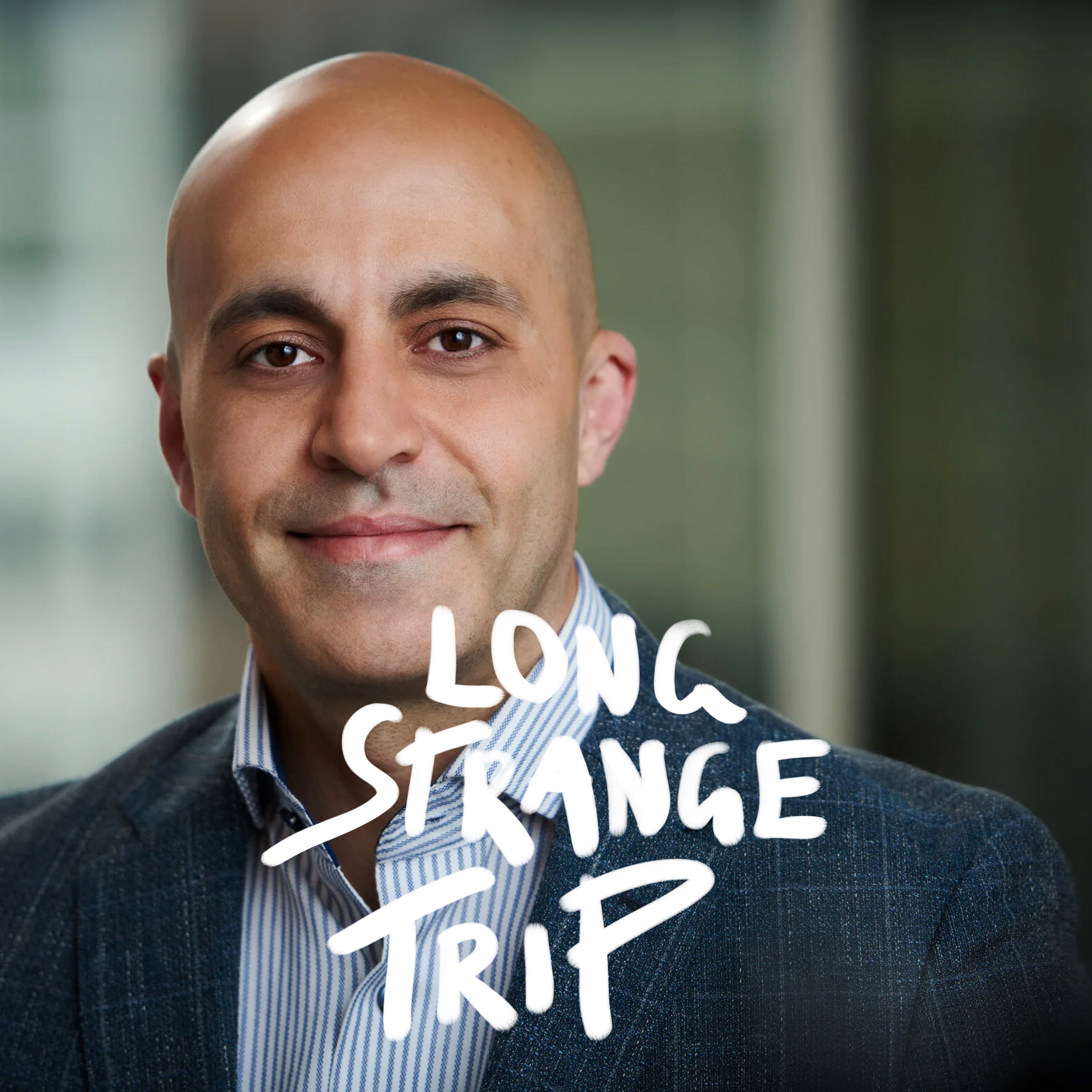

 Long Strange Trip: CEO to CEO with Brian Halligan
29 Oct 2026 · 1h 1m · 30 chapters
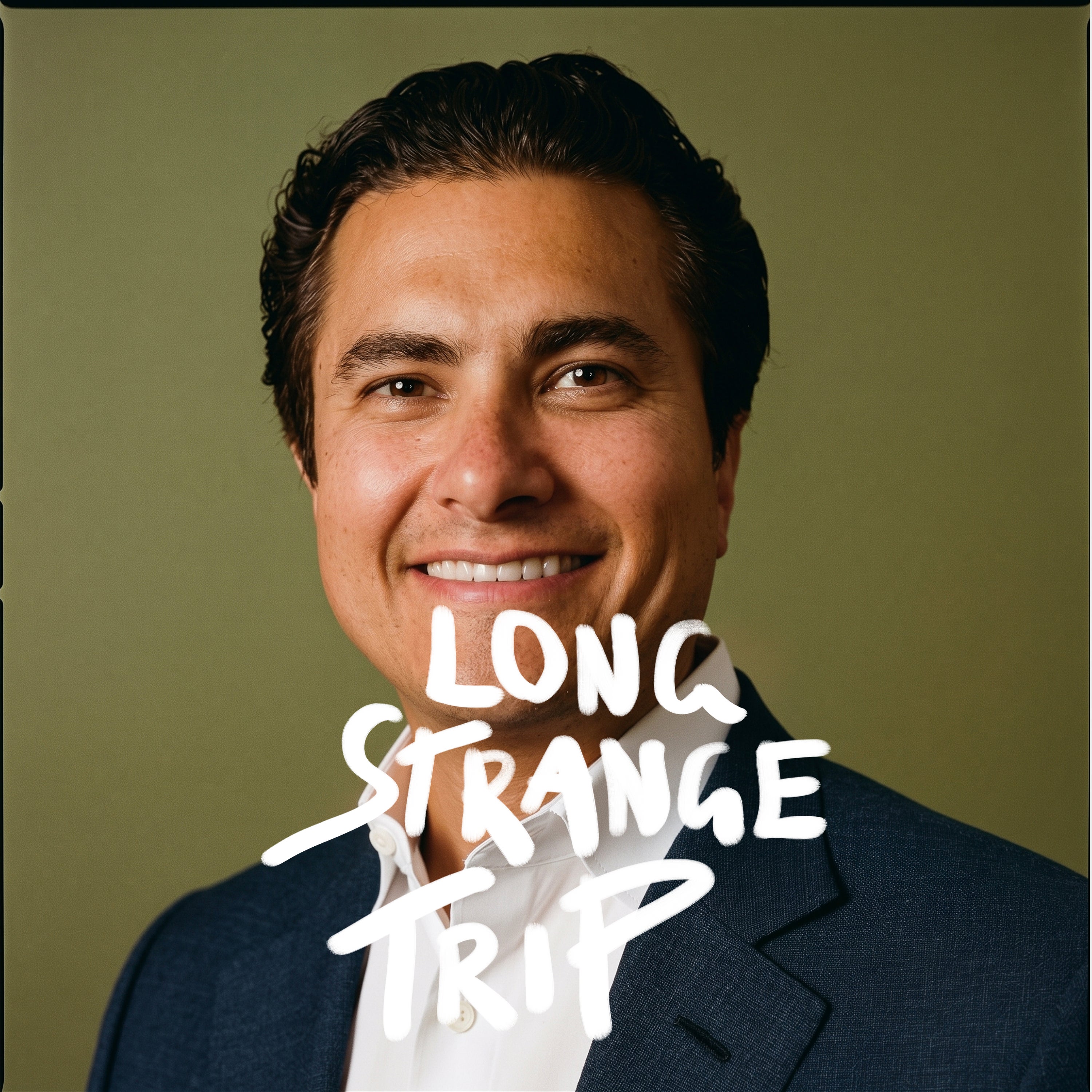
Crusoe CEO Chase Lochmiller explains how the company builds vertically integrated “energy-first” AI infrastructure—turning stranded energy into compute, scaling data centers/AI factories, and operating a managed AI cloud platform—while also covering CEO scaling, cross-org execution, leadership coaching, hiring/firing, and handling community/political criticism of AI data centers.
Chase Lochmiller is Crusoe’s CEO (company surpassed 2,000 employees; he references a $31B valuation after a recent close). He previously pursued paths including becoming a hedge fund trader and mountaineering (climbed Mount Everest), and he studied AI (Stanford; research in computer vision/NLP). He started in stranded-energy compute, initially monetizing via Bitcoin mining.
Scaling requires domain-expert DRIs plus weekly staff alignment; CEO paranoia should not derail execution (“startups die from suicide”); AI infrastructure is like oil-and-gas “super majors” (upstream/midstream/downstream) with natural collaboration; Crusoe’s data-center criticism is largely a “marketing problem” vs “truth”; energy solutions must be diversified (not a silver bullet).
flared natural gas in North Dakota powering small modular generators/data centers for Bitcoin; ChatGPT launch (Nov 30, 2022) as a “magic moment” for AI compute demand; partnerships like Blue Energy (nuclear in the ocean) and SMR-powered AI factory at Idaho National Lab with Ollo; energy sourcing in Iceland (geothermal/hydropower) and Norway (underutilized hydropower).
Written by AI. May contain mistakes.
Learn about Crusoe's vertically integrated business model and Chase's role.
“We have a complex business because it's vertically integrated and it spans like a huge scope of different work streams.”
Discover Chase's diverse background and the challenges he faced.
“Chase, welcome to The Long Strange Trip.”
Understand the complexities and surprises of being a CEO.
“I think that's been the through line of my career, take on big challenges, solve hard problems that are exciting and inspiring to me.”
Explore the importance of trust and continuous improvement in leadership.
“When you zoom back out over the course of a month, a year, five years, the results can be astounding.”
Learn how to manage complexity and trust within a growing organization.
“then building and operating a managed AI cloud platform and with managed AI services.”
Discover strategies for effective communication in large teams.
“I kind of said to everybody, like, how many people in your organization do you deeply trust enough to say you're the DRI on this thing that cuts across the whole org and have deep trust?”
Understand how to keep a sense of urgency in a growing company.
“And that's why there are opportunities always for startups is that they can be more nimble.”
Reflect on the importance of mentorship and learning from failures.
“we're gonna go out of business tomorrow versus, hey, the opportunity we have to change the world should inspire you to work hard.”
Learn about Chase's journey and challenges in becoming a leader at Crusoe.
“latest and greatest, you know, economist book was.”
Chase shares common mistakes CEOs make and the importance of execution.
“And it took making mistakes and failing and learning on the job and just going on my own personal journey and my own personal path to embed a lot of scar tissue that I could then leverage in the future.”
Discussion on the importance of collaboration over competition in business.
“My paranoia would go up and down sine wave over time.”
Exploring various energy sources and solutions for powering AI infrastructure.
“In addition to my Sequoia work, I started an ocean fund called Propeller.”
Chase explains the strategic shift from Bitcoin mining to AI infrastructure.
“Norway is another great market for us where they have a lot of low-cost hydropower that's being underutilized and can be built bigger than it is today.”
Chase discusses the evolution of Crusoe's business model and its focus on AI.
“Well, so the thing was, is that I think externally, a lot of people thought this was a pivot for us.”
Learn how the integration of Bitcoin and AI fueled business growth.
“And we sort of created this great flywheel effect with the Bitcoin business.”
Discover the reasons behind the strategic divestment from Bitcoin for AI focus.
“So November 30th, 2022, I think that was just like the moment that changed everything.”
Explore how coaching influenced Chase Lochmiller's leadership style.
“And I, and, uh, Tejas Shaw, who's the CEO there, um, you know, just deep amount of respect for that team.”
Understand the complexities of managing people within a growing company.
“And at some point you just like, stop having to prepare as much for things.”
Examine the difficult decisions CEOs face regarding employee retention.
“I mean, people say this and it's, you know, I may, I may sound like I'm, you know, repeating the common folklore, but like, you know, so many of the problems with building companies are people problems, right?”
Learn how competitive sports experiences shape business culture and team dynamics.
“Two of my recent interviews, I interviewed Ali Gozi from Databricks.”
Learn about the importance of team dynamics and culture in overcoming challenges.
“And, uh, but look, I don't think there's any right answer.”
Explore how to foster a diverse culture that values contributions from all team members.
“People rhymed at HubSpot, but in your organization, you have AI researchers and you have welders.”
Understand how to navigate and respond to criticism within the tech sector.
“people in your industry when they're presenting at conferences, like people are attacking them or protesting them.”
Discover effective strategies for dealing with security concerns and public backlash.
“We haven't been able to get the truth out there.”
Learn the importance of fostering a culture where employees feel safe to voice concerns.
“Do you think having thick skin is a very important attribute for a CEO?”
Gain insights on how climbing Mount Everest parallels challenges in leadership.
“And I would imagine other people are interested.”
Experience the profound emotions felt upon reaching the summit of Everest.
“And you're, you actually acclimatize on the mountains.”
Chase shares his awe-inspiring experience reaching a mountain summit.
“And, you know, my partner was really the person who inspired me to continue.”
Chase expresses gratitude for support and acknowledges Brian.
“So we spent about an hour, uh, up at the summit and, you know, just took a bunch of pictures, uh, you know, just really enjoyed this, this, this, uh, heroic moment of achievement.”
Brian shares insights from Chase's journey as a CEO and key lessons learned.
“He is a very legit CEO scaling that business really well.”

Get the gist, explore an idea or ask about something said.
 Claude
On Long Strange Trip: CEO to CEO with Brian Halligan, what are the key points of this episode?
Searching your listeningAutomatic transcript. May contain errors.
0:00Chase Lochmiller: We have a complex business because it's vertically integrated and it spans like a huge scope of different work streams. Everything from energy generation and bringing electrons online, building power plants, working with independent power producers and utilities, to building data centers, operating at scale, very large scale AI factories to very small scale AI factories, and then building and operating a managed AI cloud platform with managed AI services. What's made me very scalable as a leader is that we have these critical areas of domain expertise where I can move around and I can go very deep with any individual, but I trust them a lot to be making the right decisions as we're sort of scaling things.
0:39Chase Lochmiller: And everybody has a broad perspective of what we're doing at the macro scale and how each individual leader contributes to that vertically integrated AI infrastructure platform that we're building here at Crusoe.
1:10Brian Halligan: okay everybody today we have on chase lockmiller gruso's building so many of the data centers that power of the age of intelligence. He's a very professional CEO, and he talks all about the road from zero beginnings to a$31 billion valuation that he just closed. He gets into the nuts and bolts of scaling a very operationally intensive business. I think you're going to like it. Chase, welcome to The Long Strange Trip.
1:39Chase Lochmiller: Brian, thanks for having me.
1:40Brian Halligan: We call this The Long Strange Trip because my journey as a CEO was a very long, strange trip. Kind of tracking your career, you've had a long, maybe not strange, but interesting trip. Like you were on track to become a professor. You became a hedge fund trader. You became a mountaineer climbing Mount Everest, among other things. You're kind of an energy entrepreneur, at least through my lens when you first got going. And now you're the world's best data center builder. Is there a through line in all of this, Chase?
2:13Chase Lochmiller: As a person, I've always been attracted to trying to solve hard problems. I think that's been the through line of my career, take on big challenges, solve hard problems that are exciting and inspiring to me.
2:31Brian Halligan: One hard problem is becoming a CEO and scaling as a CEO in and of itself is a hard problem. What has surprised you about, you know, all of a sudden you're a CEO and you got to build this company? What do people have wrong about the CEO journey?
2:47Chase Lochmiller: It can sometimes be misleading to just take a snapshot of someone like deep into it and just assume it's some linear path on how you actually get there. I was actually having this discussion with another CEO. You know, when you're a founder CEO, you sort of have this benefit of sort of, you know, the boiling frog syndrome where, you know, right now things are really crazy at Crusoe. There's just so much happening. Everything's happening very quickly. The scale at which it's happening is crazy. You know, when people get dropped into Crusoe and they start working at Crusoe, it's like it's intense.
3:23Chase Lochmiller: And there's just a lot going on across the company. and there's a question of like, how do you actually hold that all in one person's head? And when you're the founder CEO, you have so much context of like the history of how you got here. And it wasn't always this crazy, right? Like when we first started, it was just me and my co-founder. It was just the two of us for quite a while. And then we had our first hire and we had our first incremental hires. And when we were 10 people, it felt crazy, but it's nothing compared to what it is today. And the journey of a CEO is, journey of a founder CEO is like, you have to continually be upping your game.
4:02You have to be continually investing in yourself to be able to scale if you want to have a scaled business.
4:09Chase Lochmiller: and you know this is partially reflected like you know crucible we have a core company value that's like live on the infinite growth loop like nobody is nobody's a finished product right nothing we've done here is a finished product uh everything is a work in progress every person is work in progress and every single day we try to improve on who we were yesterday and if you look at those compounding returns of those continuous focus on improvements and how you actually get better. When you zoom back out over the course of a month, a year, five years, the results can be astounding. Okay.
4:46Brian Halligan: Actually, I had quite an interesting day today. I run something called the Kids Table and the Adults Table for Sequoia. And it's basically getting a bunch of CEOs together, all founder CEOs, to kind of talk about their problems and try to help each other with the journey. And we've got a bunch of them between 20 and 2000 employees. All of them are ripping, like really ripping. And I got a quote from one of the CEOs today. My business becoming dizzingly complex beneath me. How the hell do I keep up? Did you do you have that feeling today? Or did you have the thing? I had that I had that feeling.
5:23Chase Lochmiller: If someone were to take me off the streets and parachute me in and drop me in to say, hey, go run this company, Crusoe, I would absolutely 100 % have that dizzying, paralyzing anxiety feeling. I actually feel great about where we're at within Crusoe because I've been there for every step of the journey. And I've been able to surround myself with incredibly dynamic and capable leaders that I'm able to offload and trust a lot of responsibility and resources to. And, you know, we sort of, you know, we have a complex business because it's vertically integrated and it spans like a huge scope of different work streams.
6:02Chase Lochmiller: Everything from, you know, energy generation and, you know, bringing electrons online, building power plants, working with independent power producers and utilities to building data centers, operating at scale, very large scale AI factories to very small scale AI factories and then building and operating a managed AI cloud platform and with managed AI services. is it's a whole wide spectrum of different employees. And we have factories where we're manufacturing critical electrical equipment for data centers. And then we have AI researchers that are working on the best, most effective ways to serve and host AI models and manage the KVCache.
6:40Chase Lochmiller: And there's a whole bunch of different folks in between. So what's made me very scalable as a leader is that I have been able to find domain experts in each of these key verticals from energy, data centers, manufacturing, and AI cloud computing. And if you look at the folks here at Crusoe, we have these critical areas of domain expertise where individually I can move around and I can go very deep with any individual, but I trust them a lot to be making the right decisions as we're sort of scaling things. And everybody has at least a broad perspective of what we're doing at the macro scale and how each individual component, each individual leader contributes to that broader, vertically integrated AI infrastructure platform that we're building here at Crusoe.
7:34Brian Halligan: Trust is an interesting word. We talked about it on the call. Actually, I just finished a call before this. I kind of said to everybody, like, how many people in your organization do you deeply trust enough to say you're the DRI on this thing that cuts across the whole org and have deep trust? And it was like three to four people on average. Are you just a naturally trusting fellow? Did you have to learn to let go?
7:58Chase Lochmiller: I don't think my team would describe me as like a just naturally very trusting person. Look, it's not that I'm like, you know, hands off, go, you know, go for it. You know, you know, go, go do whatever you want. That's that's not really my approach to management. It's really I want to understand what we're doing in this vertical. We're we have alignment on a direction we're headed. I get it and I get how it influences the other pieces of the business. And then I hold my team accountable to go execute on what we agreed upon from a plan perspective.
8:33Brian Halligan: Okay. On that DRI topic, it seems to me as CEOs grow, they've got their orgs. Those orgs get bigger. They struggle with getting things done across the orgs. They, at some point, are like, we need DRIs. We need to entrust those DRIs. And the bigger the orgs get, the harder it gets. and you've got like four different major orgs underneath you. How do you get someone that cuts across? How do you have many versions of you?
9:02Chase Lochmiller: You know, we struggle with this problem just like any organization, right? Anytime you're trying to do something that is cross-org, you know, pulling in resources from one team to work with another resource from another team, you know, it just is complicated. You know, we do have a program management function which helps, but, you know, who's ultimately accountable for delivery of a lot of these things. The way I find is like, you know, I run a, I run a staff meeting once a week that like has, you know, a lot of the, you know, key executives and my direct reports in the meeting. And we cover things across the whole business.
9:39Chase Lochmiller: And, you know, when there are pain points of how teams are working together, they, they surface in those meetings and, you know, we try to address them. But there is an inherent tension to doing things that are cross-functional or cross-organization. We've sort of had to figure it out, though. Just being a vertically integrated business, having collaboration between those layers where you're transitioning across the stack, I think is a critical function if you're going to be successful as a vertically integrated company.
10:11Brian Halligan: And then what have you learned about that? Like you must have skinned your knees on it. Any ahas other than the staff meeting?
10:18Chase Lochmiller: You know, I was always used to just working in smaller teams and smaller organizations. And if I said something once, people kind of listened and, you know, we worked in a small group and, you know, it all kind of worked itself out. I found it that as soon as I'm sort of getting sick of hearing myself say something, then And we're just scratching the surface of when I'm just hitting the point where I'm saying it enough times. And so just that whole communication layer about getting people on the same page to march in the same direction, it's sometimes painful the amount of times you have to remind people of what we're doing and why we're doing it and who's doing what.
11:03Chase Lochmiller: But that's sort of what it takes to get alignment. And I think that is one of the challenges of running a bigger organization. And that's why there are opportunities always for startups is that they can be more nimble. They can move quicker than bigger companies. And we're trying to fight that inertia of a bigger company to be able to continue to move fast and capture the opportunity at this moment in time when it's sort of required to be a dynamic organization to succeed in today's business age.
11:37Brian Halligan: Yeah, your business is such that you have to go fast. You can't take your time. Most CEOs complain that as they get bigger, they slow down. own. Have you figured out ways to keep the pace up or have you slowed down?
11:50Chase Lochmiller: I mean, it feels faster and crazier than it's ever been. Like at Caruso, there's a lot of big things happening on a daily basis. So I would say we are continuing to move with incredible urgency. You know, I think Elon's probably like the best in the world at this, but like, you know, just trying to eliminate any sense of like entitlement or, you know, eliminate any sense of like, hey, just you should be comfortable. Like we made it like we're here. Now we just have to coast. Elon has this superpower of, you know, simultaneously enabling people to believe that if they're successful, they're going to change the world and there will be this incredible financial outcome and this incredible outcome that's driving massive impact.
12:38while also holding people accountable
12:42Chase Lochmiller: through the high pressure of like, we're gonna go out of business tomorrow. And if you don't act within the greatest degree of urgency that you're physically capable of, we're gonna die. And holding that tension is quite a superpower. I would say that I'm not quite as extreme as Elon in driving this tension of, we're gonna go out of business tomorrow versus, hey, the opportunity we have to change the world should inspire you to work hard. But I do think that threading the needle of that is an incredibly important thing to be able to drive a large organization to move quickly and with a high degree of urgency.
13:24Chase Lochmiller: Okay.
13:25Brian Halligan: This is your first time running a company like this. Do you study other CEOs and try to borrow pieces of their playbook? Is Elon your guy? You're trying to borrow big pieces? Who do you look up to?
13:37Chase Lochmiller: It's kind of funny. Crusoe is now the largest company I've ever worked for. And, you know, we recently surpassed 2 ,000 employees. And, you know, I used to read a ton of books across fiction, nonfiction, you know, kind of whatever I was interested in, sort of a wide ranging things from, you know, science fiction and, you know, technical books to, you know, novels and, you know, whatever the latest and greatest, you know, economist book was. but uh i shifted when i started crusoe there was like a period where i just binged on like every you know every good business book recommendation anybody would give me i would like you know binge those things and i got to you know i had the fortune of having a number of great mentors i had a great coach um that that really helped me grow into becoming a leader of of people because i'd never really been a leader of a big organization before starting crusoe either and so So it definitely took work.
14:32Chase Lochmiller: It took effort to get to where I'm at in terms of what does it take to be a good manager. And it took making mistakes and failing and learning on the job and just going on my own personal journey and my own personal path to embed a lot of scar tissue that I could then leverage in the future. I do think that there are certainly mentors and people that I look up to that I have closer relationships with. I do very much look up to guys like Elon that I think is just one of the greatest entrepreneurs and greatest business builders and greatest visionaries that humanity has ever had.
15:13Brian Halligan: If you don't mind, what were some of those mistakes with some of that scar tissue that all the other CEOs out there are probably going to make the same mistake?
15:21Chase Lochmiller: One of the things that struck me early on was, you know, sometimes when you're a CEO, you're sort of singularly focused on building this business and you're sort of watching what's happening out in the market. You're, you know, scrolling X or, you know, whatever news sources you have and you see something else that's happening in the marketplace. And you're like, hey, that other group's kind of like trying to do the same thing that I'm doing. Or, you know, I have this new competitor that just raised this big round or, you know, you're always kind of like looking over your shoulder. There's like a bit of a paranoia.
15:55Chase Lochmiller: And like one of the great pieces of advice that I got, you know, early on was like most startups die from suicide, not from homicide. It's not other businesses that kill you. It's you fundamentally not executing on the thing that's in front of you and you not building the right culture, not attracting the right people, not focusing on the right business opportunity because any, you know, real meaningful business opportunity worth pursuing, you know, it's not typically going to be a single winner take all business. And, you know, if it's a good business opportunity, it probably means there's room for multiple winners.
16:31Chase Lochmiller: And so if someone else is pursuing it, you should almost kind of view that as a compliment, almost a validation of like the business opportunity, but it's really up to you and it's really up to your management team. And it's really up to the team you put together to really execute against that opportunity, not be worried about like how you're going to get, uh, you know, killed by the competition.
16:50Brian Halligan: My paranoia would go up and down sine wave over time. Uh, I think if I were in your shoes, I'd be pretty paranoid right now. Are you, where are you on your paranoia, paranoia sine wave?
17:02Chase Lochmiller: You know, I'm not really paranoid with competition. I mean, you know, in certain regards, like, you know, Crusoe is an infrastructure business, right? And there are, we don't view it as a winner take all category. We think there's going to be a number of great businesses built here. And I think, you know, even people that even groups that people would paint as competition to us, I view it as like, there's far more ways for us to work together than work against each other. I think, you know, the greatest opportunity of our lifetime is building the infrastructure layer of intelligence. And it's, again, it's not going to be a winner take all opportunity.
17:36Chase Lochmiller: And one kind of comparison that I've often made is that, you know, I kind of view this compute infrastructure layer of AI or SI, I guess as people are calling it now today, this infrastructure layer of super intelligence is really, there's a lot of effective comparisons to the oil and gas industry. And if you look at the value chain across the oil and gas industry, it's typically broken down into three components. You have the upstream business where people are actually drilling holes in the ground and pumping wells of oil and gas. You have the midstream business, which is where you're taking those raw commodities and transporting them from the wellhead to the natural gas processing plant or the oil refinery.
18:20Chase Lochmiller: And then you have the downstream business, which is actually processing those raw outputs from the earth and then converting them into usable materials, whether it's gasoline or jet fuel or plastics or whatever it is. And then you're ultimately selling that in the market. And within that stack, there's all these different different margins that move up and down depending on the prices of oil, depending on the demand from consumers, depending on the demand from businesses. And for us, I view it as we're trying to build an AI super major in the same way that Exxon and Chevron are super majors in the oil and gas industry.
18:53Chase Lochmiller: And with that, you sort of have this embedded risk management where Exxon very famously doesn't hedge their oil exposure because when oil prices come down, their upstream business at the wellhead, those margins actually get compressed, but their downstream business at the refinery, those margins actually expand because the raw input costs actually go down. And they have these natural areas of collaboration versus competition where they're competing with other upstream businesses. But when they have a pipeline in an area, They're serving other upstream businesses that they may compete with. And I think Crusoe's kind of similar in that regard.
19:34Chase Lochmiller: We're willing to partner with businesses that we may compete with in other cases. But again, it comes back to this perspective that I just feel like there's so many more ways for us to help each other than for us to work against each other.
19:47Brian Halligan: Can I say something weird to you? Yeah, please. In addition to my Sequoia work, I started an ocean fund called Propeller. And I heard a pitch yesterday from a company, and I'm not sure about this company, but or about this industry is mining, you know, rare earth metals from the ocean. And same analogy, like we're going to do it end to end, we're going to build an exon was the exact same company that they talked about as a super vertically integrated version. And speaking of that, we invested in Blue Energy. And I know you know Jake from Blue Energy building nuclear in the ocean. Can you talk about that?
20:31Brian Halligan: You've had a kind of a journey with the energy office. It seems like you started in just like there's wasted energy out there and we're going to put it to work. And you're still doing it. But it sounds like the Abilene facility is a lot of just natural gas. Like, where are you?
20:47Chase Lochmiller: At this point, you know, Crusoe is very focused on activating megawatts for intelligence. And that requires all sorts of energy resources and all sorts of different use cases. At times, it's natural gas. You know, we're focused on trying to find and catalyze innovative new energy solutions that can be things like blue energy. They're trying out new nuclear energy production technologies. We have another partnership with Ollo that we announced recently where we're trying to bring to life the first SMR-powered AI factory at the Idaho National Lab. We've done stuff with behind-the-meter wind, with behind-the-meter gas, with behind-the-meter solar, with batteries.
21:34Chase Lochmiller: We've tried many different things. We've gone to Iceland, where Iceland's this geological phenomenon that it exists, but It's this land of fire and ice where you have very abundant, low-cost geothermal energy, very low-cost hydropower, and not a lot of people, and very cheap, efficient cooling. And bringing the demand for power there via compute has been our philosophy. And that's really what we mean when we say take an energy-first approach to building compute infrastructure. Norway is another great market for us where they have a lot of low-cost hydropower that's being underutilized and can be built bigger than it is today.
22:16Chase Lochmiller: And so we don't think it's a silver bullet. We think compute infrastructure will be ubiquitous to serve the infrastructure layer of intelligence that's ultimately going to power global economic development. And so you need to use different energy solutions in different cases. And so we're really excited about a lot of the innovation taking place in the industry. And Blue Energy is another great example of like, can we leverage the same steam turbine technology that is needed for gas generation to basically – that's needed for both gas generation and nuclear energy to be a sort of bridge between gas and baseload firm nuclear power?
22:57Chase Lochmiller: You know, all of these things we think are great. We think a lot of the development in new battery technology is really exciting. Everything from like, you know, what's happening with companies like Redwood Materials that are repurposing used electric vehicle batteries and used lithium ion batteries to long duration storage solutions like Form Energy and Intora that we think will be cost effective 100 hour batteries. And so there's like a spectrum of whole different things. And we kind of view it as like, we sort of need them all. The demand from intelligence for energy is voracious. And it's really going to accelerate the human progress as it has more access to energy.
23:44One of the things I find fascinating about you and your company is you started essentially in the Bitcoin mining industry with stranded energy, putting that to work.
23:56Brian Halligan: And it was a really good business. You were cranking with it. And it sounds like from the beginning, you sort of foresaw there's going to be a need for AI infrastructure. And you started building it out. And it rhymed. At some point, you decided we're going to sell off this. most of our business is this Bitcoin mining business. When did you make that decision? How did you tell your board? Take us behind the scenes on when that became a good idea in your head. That was a bold move.
24:27Chase Lochmiller: Well, so the thing was, is that I think externally, a lot of people thought this was a pivot for us. But internally, and if you talk to any of our investors or any of our employees that have been here for a very long time, they'll tell you that this was sort of the plan all along was this energy first approach to computing. You know, I had been doing research in AI, like as a, as a quant portfolio manager. And then, you know, I was at, as at Stanford for grad school and working in AI and doing a lot of work in computer vision and natural language processing. And I was like pretty AI pilled, like early days.
25:00Chase Lochmiller: Like, you know, when, uh, you know, I was reading things like, like, like one of the more influential things on me was actually Tim Urban had this blog called Wait But Why. And he wrote this. Yeah, it's great. It's fantastic. Just like everybody should go out and read that, you know, but there were a couple pieces that were particularly influential on me. There was one that was like about the path to super intelligence. And in it, you know, he sort of like espoused this thesis that like, you know, these these multilayer neural networks were essentially like really good nonlinear modeling, you know, know, mechanisms that as they had more data and more compute, they just got better and better at modeling, you know, whatever, whatever thing that you're trying to model, whether it's, you know, natural language or, you know, computer vision or, you know, whatever it was.
25:51Chase Lochmiller: And so I was sort of playing that out and felt like, you know, AI was this meta science that wasn't going to improve one thing. It was going to improve everything. Right. So I had this professor at Stanford named Andrew Ng and, you know, he has this famous saying where he says, you know, AI is like electricity, right? Electricity is not good for one thing, right? If you ask someone, what is electricity good for? It's not like, oh, electricity is good to like turn on the lights. It's like, yes, it's good at turning on the lights. And it's also good at powering my computer and my car and heating my stove and, you know, all these different things that we really take for granted with electricity.
26:29Chase Lochmiller: And so it's not just like one thing that, you know, that, that, that AI is good for it's, it's really good for everything. And, and, you know, I was, I had like high conviction of this fairly early days. And, you know, I felt like if data and compute were the bottlenecks, ultimately compute becomes an energy problem. And when you, you sort of play that out and think about that at scale, and we'd sort of seen this unfolding actually with Bitcoin mining. And so the original thesis for the business was like, go find stranded energy that is otherwise being underutilized and bring a market to that stranded energy with compute.
27:07Chase Lochmiller: Instead of trying to bring that stranded energy to a market where it can be bought and sold, bring the market to the energy. And that's what led us to our initial stranded energy resource was natural gas that was being flared in the oil in the oil field where, you know, oil companies were drilling for oil. They produce natural gas as a by-product and then absent having a pipeline, they just light it on fire. And it was this huge environmental liability. It was a waste product. They were paying money to dispose of it. It's a disaster. Um, and you know, it's still happening at scale today, but, uh, you know, our solution to that was we would bring these small modular generators and these small modular data centers.
27:48Chase Lochmiller: And we would basically utilize that gas on site and use it to power compute infrastructure, which our first monetization engine of that was Bitcoin mining. It was the easiest way to take energy and turn it into money. And we sort of created this great flywheel effect with the Bitcoin business. And there were definitely criticisms early days when I was like, hey, I'm trying to do this AI cloud platform. And people were like, what are you talking about? Why are you spending any resources on that? Like, uh, you have this great thing. You're like making all this money in Bitcoin. Like, what are you, what are you talking about?
28:21Chase Lochmiller: Why would you focus on anything else? And, um, you know, we, we, we tried a ton of stuff and we failed and we screwed a bunch of stuff up in terms of like building out our first AI, AI clusters. And we're trying to figure out what the product looked like and who we were going to serve. And I called a bunch of my friends that were researchers at universities and saying, you know, Hey, can you, can you, do you have a use for these GPUs that I'm powering from this gas in the middle of the Bakken oil field in North Dakota. And there were just like many different iterations of trying to get that business to life.
28:52Chase Lochmiller: But the magic moment was really the launch of ChatGPT. So November 30th, 2022, I think that was just like the moment that changed everything. And it led to all these new startups that were demanding the exact type of compute infrastructure that we had been building and the exact type of solutions that we had been building from a storage, compute, networking, et cetera. Now, I had always felt that like Bitcoin and AI, and I still feel this way, that they actually go together very well because AI data centers do not consume energy in the same way that Bitcoin mining does. Bitcoin mining is very like, you can almost give it like a fixed draw amount of power and say like, stay at that power level and just like consume that.
29:39Chase Lochmiller: And it will be like very flat line. and then you can move that up and down depending on demand response and what available energy is. AI has a bit more variance in terms of its overall power utilization. And you see this in certain, certainly when you're training big workloads for inference and training, but you also have seasonality with cooling. You tend to have higher PUE during the day when you're having to run your air conditioning units and your chillers more aggressively because it's hotter. Then at night, when you have more natural cooling, depending on workloads that are being run on the clusters, things can ebb and flow a bit.
30:20Brian Halligan: Okay, but I'm going to come back to you. You were thinking it was an AI company all along. You made a decision to sell off what was a good business. Why didn't you just keep it? When did you broach that with the team? When did that become a good idea in your head? Did you get pushback on it?
30:39Chase Lochmiller: Uh, part of it was we had a great partner that we felt like this business we built would land in a really good home, which was NYDIG. Uh, and, and, you know, I, I really, Ross Stevens has become a good friend, you know, over the years. And I, and, uh, Tejas Shaw, who's the CEO there, um, you know, just deep amount of respect for that team. And we felt like they were great people that would, you know, be great stewards of this business. And they had a lot of experience within natural gas in terms of, you know, Stone Ridge has built out one of the largest natural gas businesses in the United States.
31:11Chase Lochmiller: And so this intersection of people that knew and had operated natural gas assets at scale and were deeply involved in the Bitcoin ecosystem, we felt like they were great partners for that business. But really, I think what drove me to divest that business was really focus. And we are doing a lot at Crusoe and increasingly we were doing more. And it felt like we were having to balance this tension between do we allocate capital and resources and attention towards our Bitcoin business or against this AI infrastructure business. And we were also getting feedback from investors where it would make the story too complex in the eye of an investor where they would say, okay, I love what you're doing over here on this AI business, but my firm were actually blocked from making any investments that are tied to crypto.
32:12Chase Lochmiller: So there were challenges to just making the business focused and making it, you know, this category defining company across vertically integrated AI infrastructure and not having the distraction of being anything related to Bitcoin. And so, you know, I am still personally a huge Bitcoin supporter and holder. And, you know, I think it's an important thing to exist for the world as a, you know, non state-controlled, decentralized, digitally native, open monetary ecosystem. But it was the right thing for Crusoe to go all in on AI infrastructure.
32:50Brian Halligan: One thing I'm noticing about you on this call, and I've watched you in other formats, is you're very polished, Chase. Most CEOs don't have your level of polish. Is that something you learned along the way? You said you had a coach, Did your coach help you with that?
33:10Chase Lochmiller: I had a coach and I still, we're still, we're still quite close. We're not working as closely together as we once did, but Shane Metcalf, he was a phenomenal, phenomenal coach for me. I learned so much from him. I, public speaking was never something that came naturally to me. It was something I had to work really, really hard at because I, I just wasn't doing it. like I'd given lectures and things like at, you know, universities and, uh, but it wasn't a, it wasn't something that I was routinely doing, especially like the quant space is a very, you know, it's a very technical industry. So you're working with very smart people, but you're, you're doing it in a very secretive way, right?
33:52Chase Lochmiller: It's like you, you're very open with your teammates and then you don't tell anything to anybody in the world about what you're doing for fear that you might leak some of your alpha. So I was like never out in the world, like presenting stuff. And, and so it was something that I had to work very, very hard at to just be prepared for what I was going to say, how I was going to say it. And, you know, I think if you do it enough, you just get practice. And at some point you just like, stop having to prepare as much for things. And then most things at this point, I kind of just like wing them, uh, because you know, like there's certainly things that like just require tremendous amount of preparation but uh you know i think i'm often better off the cuff because i you know it's just like how how i think through things and i i'm i've developed a good skill set of being able to explain what's in my mind uh you know fairly clearly to to to whoever i'm talking to what else did you learn from first
34:49Brian Halligan: of all should all the ceos i work with hire a coach yes and like yeah so getting interesting What did you learn? Like, what did Shane teach you or what did he push you on? You know, one of our investors, Felicis, they had this really cool thing they do for companies.
35:06Chase Lochmiller: And I haven't seen anybody else do this. But they have a budget for, like, personal investment, essentially. It's like, you know, it's not – it's, like, meant for, like, self-improvement. And it's meant for things like executive coaching and off sites and just ways of up leveling yourself as a leader, because they're like, look, we're making this big investment in like the founder, the CEO, and, you know, we're betting on you being able to get better that you're not a static version of yourself, that you're actually going to be a, you know, a better version of yourself for the course of time, you know, as the business grows.
35:43Chase Lochmiller: And, you know, I think I just thought that was like such a thoughtful approach to the investment, especially like in venture where like the investments are so much about the people and the ability of the founder to scale. Uh, you know, I, Shane, like early days, it just felt like Shane was a guy that like always had the answer to the problem that I was like racking my brain on. And, you know, he was as much of, uh, a coach as like, almost like a therapist. for me.
36:13Brian Halligan: That's how I deal with my CEOs.
36:15Chase Lochmiller: It was, so, you know, we, we really did have a very, you know, still do a very, very special relationship that's very trusted. And I just felt like, you know, it's something you have to work at and you build this trust with a person. And even if it doesn't feel like you're making progress on any given session, you're laying the groundwork and you're laying this foundation for when that really big thing does pop up, this person knows you so deeply and they know where your blind spots are and they know how you might be responding in a certain situation and they know how to like guide you to course correct, uh, to be able to, you know, rise to whatever occasion it is.
36:57Chase Lochmiller: And, you know, I think, I don't know. I mean, people say this and it's, you know, I may, I may sound like I'm, you know, repeating the common folklore, but like, you know, so many of the problems with building companies are people problems, right? Being able to effectively navigate the people side of this is like, it's, that's like most of the challenges. Like, you know, you get these smart, ambitious and opinionated people getting everybody to work and row in the same direction and agree on things, or if they don't agree to commit to whatever pathway you're taking. I mean, that is always the hardest thing.
37:32Chase Lochmiller: And, uh, you know, as a CEO, I think, sometimes the biggest challenges are when do I keep believing in someone and when do I decide, hey, we need to move on and we need a different person in this role. Or how do we get two brilliant people to work together on something that are fundamentally disagreeing? I don't know. I've just found the people to be the hardest thing and also the greatest superpower if you can get it right.
38:02Brian Halligan: People always said to me, you should hire slow and fire fast. I did the opposite, particularly on the fire side. It sounds like you move some people out. Did you do it too slowly? Did you ever regret it? Or were the signals that kind of push you over the edge?
38:20Chase Lochmiller: I think almost always there's a bias towards you just end up firing people too slowly. It's just like there's an inherent bias. So even if you're very responsive, like, you know, I do think that for most CEOs, you know, when you fire someone, you've clearly been thinking about it for a long time. And it's almost like when you started thinking about it, that was sort of the right time to fire them. But like, you know, it's hard to.
38:49Brian Halligan: What signal are you looking at? Is it other people on the team saying this person's subpar? What is it?
38:57Chase Lochmiller: It's not that. That is definitely like a data point. I think our job as a CEO is you are reading this mosaic of information, right? You have all these little tidbits and they're often from very different parts of the organization and different, you know, coming from someone super technicals, coming from someone, you know, that's like, more of a people person coming, you know, like all these like different things. And you're sort of amassing all these different pieces of information. And, you know, it's up to you to like make a judgment call around like what the best decision is for the company.
39:35Chase Lochmiller: I do think that I forget who published, I think it was like first round capital has this really great blog called like the startup laws of physics. And, you know, the crux of it is something along the lines of, you know, people scale linearly, companies scale exponentially. So you sort of have this great company scale exponentially. So you sort of have this dynamic where even if you challenge your people to continue to grow and continue to invest in themselves, if the company really grows in the way that you're sort of setting out as an ambitious leader, oftentimes like the person who was the right person for that role at one point in time may not be able to grow and scale to be the person in that role two years later when the company is 10 times bigger.
40:24Chase Lochmiller: And that's a hard reality to face as a leader because you end up in the trenches with these people. You end up like working late nights, early mornings. You know, you see these people really giving everything they have, you know, to the mission. And when you have those moments where the company outgrows the person, it's really, it's just hard, right? Because you care a lot about these people on a personal basis, even if you know the best thing for the company is to, you know, find someone new for a specific role. Anyway, coming back to why I've fired people in the past, it's almost like every case is a snowflake.
41:00Chase Lochmiller: Every single one is different. And it's ultimately up to you to make the judgment call of what's the right thing for the business.
41:09Brian Halligan: Okay. Two of my recent interviews, I interviewed Ali Gozi from Databricks. Love him. Great guy. And he's basically had the same management team for 10 years with the exception. He turned over one person. And then Devit Tacharya is a friend of mine. and coming on the pod. On average, he turned over two per year on the exec team for lots of reasons. I find that odd. They're in kind of similar businesses and they're both really good and they're so different.
41:45Chase Lochmiller: Totally. Actually, my current COOs and CFO worked alongside Dave at MongoDB for about a decade. So he wasn't one of the people that was churned.
41:58Brian Halligan: by churn, I mean, some of them leave.
42:00Chase Lochmiller: No, I totally understand. And, uh, but look, I don't think there's any right answer. And, um, you know, I, I've seen different things work. Uh, I think what I've found most effective for me is that, um, if you have someone that's really struggling, the team recognizes it. And, you know, we, we, we view it as, you know, the team is ultimately there to win. And, you know, I, I mean, I saw this, I grew up playing competitive sports And, you know, if you, if you were on a team, you always loved your teammates, you know, you had a strong, a special bond that like came from, you know, the locker room down the field.
42:34Chase Lochmiller: And, you know, if you had a teammate that was just like struggling or, uh, you know, a weak link and, uh, you know, led to, you know, the team's downfall, you know, it was like you, you knew that the right thing to do was to replace that person with someone.
42:48Brian Halligan: It sounds like you're in the middle of those two.
42:51Chase Lochmiller: I'm in the middle of the two for sure. Fine. Yeah.
42:54Brian Halligan: Speaking of teams and people, one thing that is fascinating about your business, and I just think about the culture we built at HubSpot. People rhymed at HubSpot, but in your organization, you have AI researchers and you have welders. How do you create a culture across all of them? Are they different cultures? How do you comp people across all of it? How does all that work?
43:17Chase Lochmiller: It's a great question. We've always felt like we've had an incredibly diverse culture just from the people that are coming to help build this. And one of our core values is tapping into the collective genius, right? It's like no one person has all the domain expertise to deliver the full solution that we're trying to bring to bear. And we all can learn from one another. and all of us working together towards a cohesive solution is going to result in an amplified result that none of us could have done individually. And, you know, there have been critical innovations that people have gotten from, you know, people like electricians that are, you know, working on wiring things up to, you know, the researchers are then benefiting from, you know, those specific use cases.
44:04Chase Lochmiller: And, you know, how we think about, you know, the whole building management system, how we think about sort of the operating system from, you know, the electron to the token, I think is something that really sets us apart.
44:14Brian Halligan: I read an article in the journal about VCs and people in your industry when they're presenting at conferences, like people are attacking them or protesting them. And you're sort of in the middle of a wave. It's an election issue around the data centers. And I've heard your story on why it's good for communities and why it's great for humanity. Are you facing some of that heavy criticism yourself? And how do you deal with it personally? Do you have security? How tricky is this for you?
44:48Chase Lochmiller: The way I think about it is when I look around at the people at Crusoe, these are all people that want to do good for the world. There's not a single person I met at Crusoe that doesn't want to do good for the world. And I believe fundamentally that there is a right way to, you know, bring this infrastructure to life where everybody can benefit, you know, energy, you know, from a water usage standpoint, from a tax revenue standpoint, from a school and community standpoint, and then from, you know, the end use cases and how it's actually fueling human progress through, you know, the greatest technological wave we've ever experienced.
45:26Brian Halligan: I've heard you explain it. You explain it extremely well and you make a lot of sense. And I wish the rest of the AI leaders would explain it as well as you did. But for you, you must be catching a lot of flack.
45:40Chase Lochmiller: Well, so my major thing is I always try to take a very first principled approach to things. And if I have high conviction in something that I've built up from a set of ground truth facts, I have no problem disagreeing with someone. And I can try to poke holes into why someone else I think is wrong and why we're trying to do things the right way. But I do feel like fundamentally at Crusoe permeates in the culture like people want to do this the right way. People want to do this as a good service to the world. This has become a political issue, particularly around the AI data centers. And there's just so much misinformation around this out there that I've often said that what the data center industry, their biggest problem is we have a marketing problem.
46:32Chase Lochmiller: We haven't been able to get the truth out there. And to me, the truth is on our side. And so when you explain the truth, and I've been in these rooms where I go to these local communities. I meet with the county judge. I meet with, you know, folks in these communities that we're building infrastructure. And when you sit down and you really explain to them what's happening and, you know, you're not coming at it from like, hey, I'm smarter than you. You got to like, listen to me. It's like, it's like, here's just like what's happening. And here's, here's how we're trying to do our very best to make it good for you and good for us and good for the world.
47:04Chase Lochmiller: And, you know, I think when you have those conversations, like people are receptive to it, right? Independent of politics, political allegiances, I think people are receptive to authenticity and facts. And so that's really our approach to this. Now, am I worried from a security standpoint? Sure. We've had to increase our security footprint just given there's crazy people out there that want to create a big statement. So, yeah. Yeah.
47:38Brian Halligan: Yeah. And so I assume some of these rooms you're walking into, there's some hysterical people. What is that like? The first room you walk into and people are screaming and yelling at you like there's no training for that.
47:50Chase Lochmiller: Again, I think honestly, like appealing to, you know, their humanity and like understanding why someone may be, you know, saying what they're saying. I think listening to the facts, I think like, you know, I often have very strong opinions, but I can always change them in light of new information and new facts. So like, that's like, I think it's important to have that like intellectual flexibility to say like, hey, I had high conviction that we're doing things the right way. Upon learning this new thing, we should probably be doing this differently. And we could probably be doing this better. And I think like, that is like an inherent growth mindset that we have here as a company.
48:28Chase Lochmiller: And, you know, I've tried to channel as a leader, like to, you know, have, you know, the ability to listen to, you know, these, these, these, these criticisms and, and, and, uh, you know, try to try to filter out like what is crazed hysteria that's, you know, unfounded in truth and what's like legitimate critical feedback that we should, you know, be using to become a better steward of these communities.
48:53Brian Halligan: Do you think having thick skin is a very important attribute for a CEO? A hundred percent.
49:01Chase Lochmiller: Like, uh, yeah, I mean, just your job is to like, be the receiver of bad news very frequently and then be able to think with a clear mind and, you know, make decisions in light of that, that, that bad news. And I think the other thing that, you know, is important for a leader is like, and, you know, frankly, something that I'm always struggling with is like, as the company grows and the company gets bigger, I I'm like, I'm like further from like a, a distance from like individuals, you know, on the front lines of the company. So trying to like close the gap, making sure that I'm always approachable to like, that people can speak truth to power, right?
49:44Chase Lochmiller: You want to be in a position where people can voice their concerns and be heard. And, you know, in light of presenting truth, in the context of everything else that's happening that you can actually adjust the direction of your business.
50:00Brian Halligan: Do you have methods to encourage that to make sure people will stand up to you? Because the 2 ,000th person you hire, they put you on a pedestal. The 20th person's beating you up day to day.
50:11Chase Lochmiller: Yeah, I mean, honestly, it's like mining for it, just asking for it relentlessly. I think when people see examples of you taking criticism and feedback, responding to it, changing your mind. I think it empowers people to be like, oh, actually my voice should, you know, I should voice my concern. And, you know, like, I think people often have this perspective that you as the leader, you as the CEO, you want to only want to hear the good news. Generally, like the good news is great. Like I want to hear it, but like, I care way less about the good news than I do about the bad news. So like trying to, trying to like run into those, like what's going wrong?
50:50Chase Lochmiller: Like, what are we bad at? Like, you know, how do we fix these things? What are the problems? How do I go resolve those? Like, you know, I think that is a critical characteristic of a CEO is like being that willingness to go seek out and like run into the burning buildings, figure out the problems and, you know, go try to, you know, help help resolve them.
51:08Brian Halligan: Okay, this question's for me. And I would imagine other people are interested. I've never met someone that climbed Mount Everest. And I'm really impressed. What is it like? What is the training like? What does it feel like when you get to the top of that mountain?
51:29Chase Lochmiller: You know, in a lot of ways, like a company culture is sort of a reflection of, you know, the CEO or the founder's culture. And, you know, that's really what's happened at Crusoe. Like we actually have a core company value to think like a mountaineer, which is like this sense of cultural resilience and preparation and planning and, you know, willingness to endure the expedition. a lot of that value and the practices that we've written about for that value describe a lot of what it's like to climb Mount Everest. And so, you know, there's actually this whole internal presentation I have around, you know, the various Everest trips that I had, because I actually tried to climb Mount Everest once in 2014, and there was a big avalanche that occurred, and it ended up killing 15 Sherpas in the Kumbu Icefall.
52:10Chase Lochmiller: And, you know, I made sort of this conscious decision, like, you know, I came back and my wife was like, oh, thank God, like that chapter is done. And like, you don't have to do this anymore. And I was like, look, this thing like haunts me. And like, it's all I think about. And like, I like have to go back. She's like, you're insane. But like, if you're going to do that, please do it before we have kids. So, but when I thought about that, it was like very much like when you think about Mount Everest, you know, and I climbed on the south side, which is, you know, the Nepal side through the Kumbu Valley, there's this, you know, You basically start at base camp and then, or you trek up to base camp and then you go from base camp to camp one.
52:48Chase Lochmiller: And then there's camp two, camp three, camp four. And then you have this push to the summit. Well, the two most dangerous areas on the mountain are basically from camp four to the summit, which is frequently referred to as the death zone. This is where you're above 8 ,000 meters. So, you know, very intuitive why that's dangerous. You're at very, very high altitude where humans really shouldn't be living. Um, but the other most dangerous area is this area between base camp and camp one, which is called the Kumbu Icefall. So this was the area where, uh, you know, this disaster occurred when I was there in 2014.
53:23Chase Lochmiller: And, uh, the thing about the Kumbu Icefall is that, you know, it's, it's a glacier that's sort of falling, right? So it's this beautiful, like really cool ice jungle gym, but there's a lot of things that are just like stochastic risk, right? It's like these things that are totally outside of your control where it's like a Ciroc falls or an avalanche occurs and, you know, oops, you die. And that was the type of risk where I was like, look, I know there are ways I can consciously train and prepare for the high elevation and, you know, I can manage my risk up there like more effectively. And I know consciously I'm taking that risk.
53:59Chase Lochmiller: The risk I felt less comfortable with was this stochastic risk. and a traditional Everest expedition involves going from base camp to camp one. And you're, you actually acclimatize on the mountains. You go base camp, camp one, back to base camp, base camp, camp one, camp two, back to base camp, up to camp three, back to base camp. And you actually end up doing eight trips through the Kumbu ice fall. So like four round trips on a typical commercially guided expedition in order to de-risk that me and my climbing partner actually designed a different approach to climbing Everest, which was we ended up going and climbing a bunch of mountains nearby and spending a lot of time at the summits of those mountains so that we would acclimatize without taking this stochastic risk in the Kumbu Icefall.
54:45Chase Lochmiller: And we actually only did one big acclimatization trip up Mount Everest and then back to base camp. So we ended up doing basically four passes through the Kumbu Icefall instead of eight. I was conscious of the risks that I wanted to take. The planning, preparation, all that, we had to think through a ton of stuff, a lot of training, a lot of long distance trail running, and a couple of different high altitude training trips. But the point I want to get across is conscious risk-taking and intense planning and preparation that really went into a very successful Everest summit in 2018.
55:24Brian Halligan: You worked so hard at it and you wanted it so badly. What was the feeling inside of you when you got to the top?
55:30Chase Lochmiller: It was like, because I almost turned around at this area called the balcony. It's about 8 ,600 meters. So the summit's 8848. And so, you know, not too far from the summit in terms of elevation, but like it felt impossibly far and it was still dark out, right? So we left camp four at like 11 PM. It was still dark out when we got to the balcony. My, you know, you feel terrible. Like, you know, I hadn't eaten much in the last 48 hours. Like I was dehydrated. I felt awful. My legs were cramping. And it was dark, right? And, you know, my partner was really the person who inspired me to continue. Like I felt fine apart from those things.
56:15Chase Lochmiller: So it wasn't like felt like I was putting myself at risk. and once the sun came up and you start seeing the sunrise and you're sort of high up in this mountain, you're like, you're just inspired by, you know, your surroundings. You know, it was this elevation of your spirits and gave you the adrenaline to kind of like make the push through that final, you know, 250 meters. And, you know, when I got to the summit, I think, you know, my feeling was, was really one of just sheer awe, just like, you know, just a, a sense of awe for the universe and, you know, an offer, you know, this, you know, being on the summit and sort of experiencing, you know, the, the, the whole, the whole world around me, um, you know, I think, I think was just a really special one and it makes you feel small.
57:06Right.
57:06Chase Lochmiller: And, uh, you know, I think, I think there's something, uh, very interesting about like, you know, having that sense of like, I'm small and I'm inspired by the world around me and just like the magnificence of existence. And, uh, you know, that was kind of my, my experience on the summit. We, we, it was beautiful. We had about, we had a very sunny day. So we spent about an hour, uh, up at the summit and, you know, just took a bunch of pictures, uh, you know, just really enjoyed this, this, this, uh, heroic moment of achievement.
57:36Brian Halligan: Congratulations on all your success. I'm rooting for you. You're a fantastic CEO. Thanks for coming on.
57:43Chase Lochmiller: Brian, thanks for having me. This was really fun.
57:45Brian Halligan: Okay. Hope you liked that episode with Chase. He is a very legit CEO scaling that business really well. I'll give you a couple of my takeaways. My first takeaway is kind of on him as a homo sapien. He's a person who really likes hard challenges. And like when I recruit and I fund CEOs, that's definitely a quality that I look for. I liked how we talked about just how much the CEO job changed. He had never done anything like that before. He's eight years into the journey. And man, he's a learning machine. He read a lot about it. He hired a coach. It sounds like his coach was really useful. And I coach a bunch of Sequoia CEOs.
58:27Brian Halligan: And, you know, some of it is giving them advice, but a lot of it is gaining context. and listening to the problems, and empathizing, and really kind of being like a therapist. So he benefited a lot from that. The other thing he worked hard on, it sounds like his public speaking, he's very smooth, like really articulate and smooth. And it sounds like that wasn't his default setting. He's had to really work at that. And I think that's important. Like if you're up in front of your company, you're up in front of investors, I don't think it hurts to be articulate and smooth. I like the way he talked about competition.
59:03Brian Halligan: He said something we used to say at HubSpot all the time. You're much more likely to die of suicide than murder. It was very much our case. It sounds to me he's really into competition. And I think a lot of founders frown on that. We had major competition over many, many years with Salesforce.com. So I wouldn't shy away from that. The other thing I always did is I always got to know our competitors just because you never know. And so don't be afraid to reach out to your competitors and have coffee. The last thing I took that I really liked is as the organization gets bigger, and I felt this at HubSpot, everyone wants to give you good news.
59:42Brian Halligan: You're the CEO and they expect you want to hear good news. And you really want the opposite. You want to hear the bad news and you want to train the organization to give you that bad news. So almost encouraging people when they push back at you and when they give you bad news inside of a, you know, a pretty good size setting. I think that's a really important quality in CEOs. The other thing that I think is an important CEO quality that I think he does, and you might too, but he has very strong opinions, as you've heard. But if the facts change, he's willing to change his mind. And being stubborn is a really tough quality in a CEO.
1:00:21Brian Halligan: It makes you quite hard to follow. Anyway, those are some of takeaways I thought he was great it's amazing business he's an amazing CEO I hope you liked it and I'll see you next time on long strange trip
Chase Lochmiller runs one of the most operationally complex companies in AI: Crusoe builds power plants, manufactures electrical equipment, operates gigawatt-scale data centers, and runs a managed AI cloud on top, all under one roof. He just closed a round at a $31 billion valuation, and he got there by selling off the Bitcoin mining business that was paying the bills.
Chase explains why Crusoe is modeled on Exxon, not a cloud provider, and why he partners with companies that look like competitors. He makes the case that a company that outgrows the person who got it there is the rule, not the exception, and that CEOs almost always fire too slowly. He also talks candidly about hiring a coach, working hard to become a polished speaker when it didn’t come naturally, and why the data center industry’s biggest problem is a marketing problem.
I meet with a group of Sequoia founder CEOs between 20 and 2,000 employees, and one of them told me his business is becoming dizzyingly complex beneath him. Chase has the clearest answer I’ve heard for how to hold that in your head.
And yes, we talk about summiting Everest.
0:00 – Introduction
2:12 – The boiling frog: how a founder holds a 2,000-person company in his head
8:16 – DRIs, the weekly staff meeting, and saying it until you're sick of it
11:19 – Urgency at scale: Elon's "change the world or die tomorrow" tension
14:55 – Startups die of suicide, not homicide
19:29 – Energy first: flared gas, Iceland hydro, and nuclear
23:26 – Bitcoin to AI was the plan all along
32:36 – Polish is learned: coaches, public speaking, and Felicis's self-improvement budget
37:48 – Firing too slowly, and when the company outgrows the person
42:39 – Welders and AI researchers, the data center backlash, and mining for bad news
50:54 – Everest: designing around the Khumbu Icefall's stochastic risk
57:31 – Brian's takeaways