Ask ChatGPT
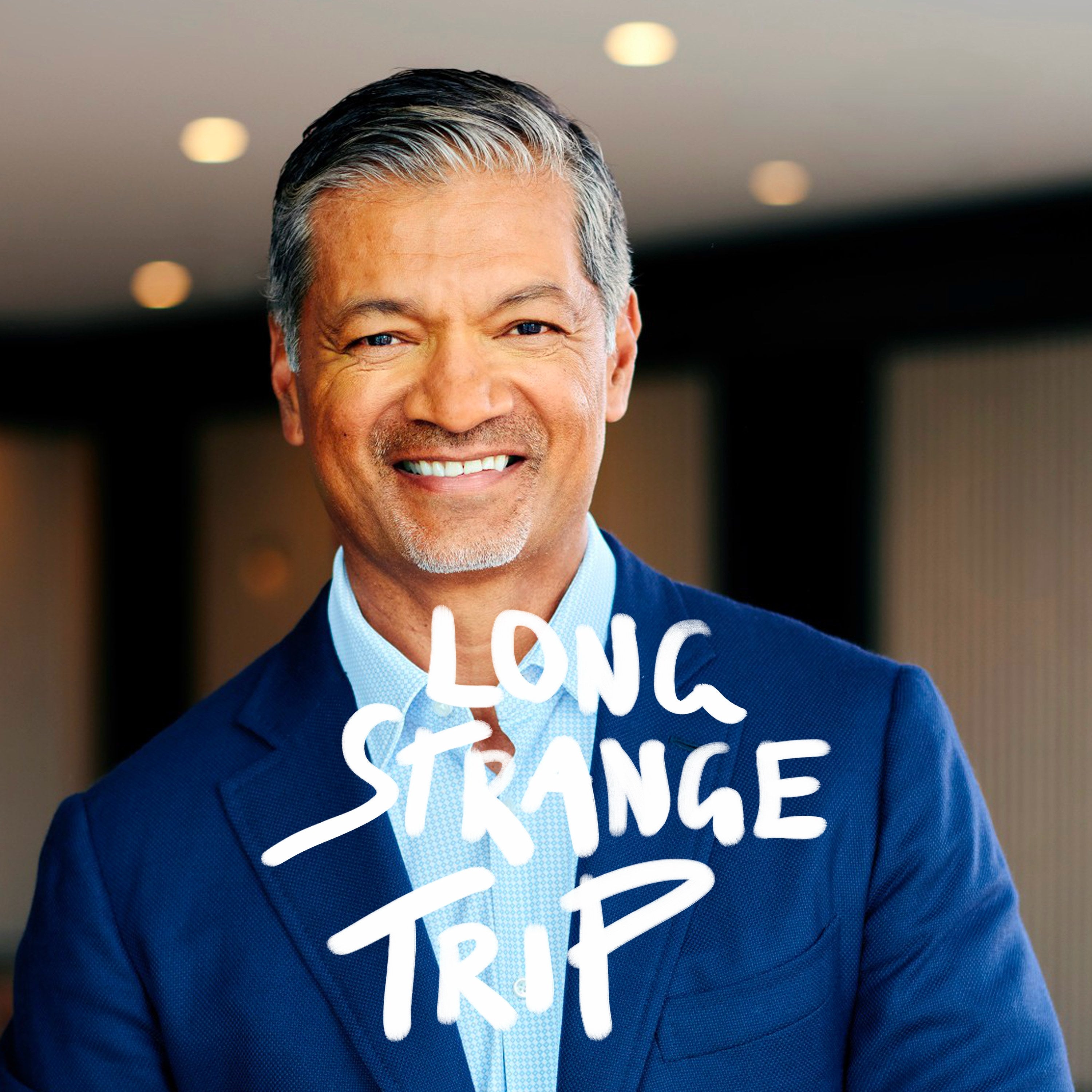

 Long Strange Trip: CEO to CEO with Brian Halligan
8 Oct 2026 · 1h 6m · 24 chapters

Luca Ferrari explains how Bending Spoons builds an “operating system” to acquire and permanently operate digital businesses, integrating them onto a shared tech foundation with shared teams, replatforming code, and rebuilding orgs to improve performance and monetization.
Luca Ferrari is the CEO and long-time operator of Bending Spoons (13 years building the model). The episode notes the company’s IPO equity value around $18B at the time.
Written by AI. May contain mistakes.
Discover why graduating from top universities doesn't guarantee success.
“I think people will be surprised by how poorly graduating from Harvard or Stanford predicts performance.”
Learn about Bending Spoons' innovative approach to acquiring and integrating tech companies.
“I think by this point, most of the listeners have heard of Bending Spoons, but I doubt they understand the model in what the magic is.”
Explore how Bending Spoons integrates acquired companies into a cohesive platform.
“I've been doing it for 13 years at this point.”
Understand how talent density impacts the operational success of Bending Spoons.
“Is the magic, Luca, in the picking or in the operating?”
Learn about the unique strategies used to attract and retain top talent.
“So I spend most of my time with CEOs these days and everyone talks about being have high talent density, being a talent magnet.”
Discover the criteria and signals used to assess potential hires at Bending Spoons.
“If you do them consistently, I think you develop a very powerful flywheel.”
Learn how various signals, including political activity, can better predict a candidate's potential than just academic credentials.
“So I guess you get a similar answer from my quantitative trader.”
Discover effective hiring strategies that emphasize practical testing over traditional interviews.
“We find that a lot of the best signals in our case come from the practical tests, the things we do or ask candidates to go through.”
Understand how structured reference checks can provide valuable insights into a candidate's potential.
“The other thing I wanted to ask you about is just blind references.”
Explore the difference between being a leader and a manager and how to navigate both roles effectively.
“So you can make it predictive, but you need to put in the effort and the structure before you get there.”
Learn how to balance visionary thinking with practical problem-solving as a CEO.
“I think you're much better off obsessing over, first and foremost, a strategy.”
Learn about the importance of balancing strategic vision with hands-on management as a CEO.
“I want to give myself a little pat on the shoulder.”
Explore the challenges of coaching executives and the balance between experience and potential in hiring.
“And similar to me, I had never been CEO of a company with thousands of employees in public.”
Discover why prioritizing talent over experience can lead to better outcomes in a competitive market.
“And also, there is a trade-off between talent and experience in a competitive labor market.”
Learn what qualities are essential in leaders and how to assess their potential for success.
“So when you find an obstacle or you identify a shortcoming in your skill set, you'll be hell-bent on overcoming that.”
Understand the significance of a feedback culture in personal and organizational growth.
“I tell you the one thing that helped me on my journey.”
Learn how Luca Ferrari fosters a culture of feedback and appreciation at Bending Spoons.
“Yeah, so we're big on feedback, a bit like you just described.”
Discover how Bending Spoons maintains a fluid organizational structure without a traditional executive team.
“there's a saying in some old school saying that you should give five pieces of positive feedback to every one kind of, you know, correction.”
Explore the importance of simplicity and the concept of relentless simplification in business.
“It's basically a matrix organization with functions and teams, functions being in charge of how things are done, you know, the hard skills, I'm oversimplifying, and teams being in charge of what we do.”
Examine the pros and cons of building a tech company in Milan versus Silicon Valley.
“We have a value actually or a quality that we call relentless simplification.”
Discover the rationale behind starting a company in Milan and its advantages.
“Do you perennially feel like you're not a cool kid because you're in Milan?”
Learn about the vision for knowledge and wealth distribution beyond Silicon Valley.
“where we had completed our engineering studies and launched and then shut down our AI startup.”
Explore the importance of integrity in leadership and personal experiences that shaped it.
“So I cannot definitively say that we would have done less well had we started in Silicon Valley.”
Understand unique hiring strategies and the importance of team dynamics for company success.
“Good luck on your journey into a trillion dollars, my friend.”

Get the gist, explore an idea or ask about something said.
 Claude
On Long Strange Trip: CEO to CEO with Brian Halligan, what are the key points of this episode?
Searching your listeningAutomatic transcript. May contain errors.
0:00I think people will be surprised by how poorly graduating from Harvard or Stanford predicts performance. Like people think, oh, you must be a genius. No, actually, yeah, you're probably a little bit stronger than people graduating in other universities, but not so much stronger. And often we find that people tend to lose some of that potential raw talent edge by being a bit more entitled and thinking too highly of themselves.
0:44Brian Halligan: Okay, today we have Luca Ferrari on. I wanted him to have him on for a long time because he runs Bending Spoons, which is this fascinating company. It's like a little bit of a private equity roll-up company, but it's really a tech platform company. and it's unique. I can't find any other company that sort of rhymes with it. He is very unique in the way he thinks and the way he builds and the way he CEOs. Hope you like it. Okay, Luca, welcome to Long Strange Trip. Thanks for coming on. Thank you for having me. My pleasure. Okay. I think by this point, most of the listeners have heard of Bending Spoons, but I doubt they understand the model in what the magic is.
1:25Brian Halligan: So if you wouldn't mind educating us like two, three minutes on how it works and what's special about it. Yeah, sure. So we, I mean, the entire thesis on which the company is built is that if we can build a machine, a system whereby we can operate digital technology businesses better than almost anybody else, then we are pretty much guaranteed to be able to compound capital efficiently for a very long time through acquisitions. And the reason is that if a lot of businesses are basically better off once they're integrated into the system, what we call our platform, than being operated as standalone companies by someone else, then we should be able to offer prices to people that are appealing.
2:08And so they will sell their businesses to us and we still deliver a high return for shareholders. So that's the thinking behind it. Of course, the difficult part is to build that system, that platform, so that we can operate these businesses better than almost anybody else. And that's what we have poured our hearts and minds into over the past, well, 13 years, technically. And so we have tried to have an amazing team of people, strong culture, powerful proprietary technologies, lots of proprietary data. And what we do, we buy these businesses, we integrate them very deeply into this platform. So we have a shared R &D, marketing, G &A team that can fluidly move across all of our businesses.
2:52We basically replatform the acquired businesses so that they're based on the same technological foundation. An investor at some point called it an operating system. I think it's a pretty apt comparison or metaphor. And then we transformed them pretty deeply so we can rebuild the org, rewrite big chunks of the code base, react to cloud infrastructure. We tried to launch useful new features, fixed bugs, improved performance, rethink when it's efficient in marketing. So there is a serial acquire component that you will find in private equity, you'll find in companies like Berkshire Hathaway or Transdine.
3:32The big difference, certainly vis-a-vis private equity, is that we are not a fund. We buy off our balance sheet. We have never sold a material business. We don't intend to sell one in the future. So we buy to hold and operate forever. And the other very big difference is definitely vis-a-vis private equity, but also certainly the Berkshires of the world, is that we transform these businesses pretty deeply and we integrate them all together. so they're much simplified, a bit like they go from being a company to being a product installed on the same foundation, basically. So that's the model. I've been doing it for 13 years at this point.
4:07Brian Halligan: Yeah, it's going remarkably well. You went public. What's roughly the market cap? At the time of IPO a few months ago,$18 billion, I think, equity value. Congratulations. I'm a huge fan of the model. It's really unique. I was comparing in my head to Berkshire Hathaway, But it reminds me when I was in my 20s, I worked for a U.S. company called PTC and they moved me to Japan to set up the Japanese operations when I was very young. And my office was inside of Mitsubishi headquarters. And so I dealt with Mitsubishi headquarters people, but like all the different divisions. It feels more like Mitsubishi or Samsung than it does like some big P.E.
4:51Brian Halligan: firm or like Berkshire. How would you describe it? Yeah, I don't know those companies that well, so I can say for sure. But again, the distinctive features are we buy to hold and operate forever. So I think that kind of strikes out PE firms. And then again, this very deep integration. Most companies that acquire other companies serially, in my experience, try to run them somewhat separately for the most part. At least that's what I've seen. We take the completely opposite approach where we, again, we make sure to have the same technological foundation, broadly speaking, the same core team that moves fluidly across to go after R &D opportunities and withdraw when those are exhausted.
5:36And then a lot of serial acquirers keep these companies, broadly speaking, the same way they were before. we change them completely from the ground up. And it's very time consuming and challenging. But the upside, the bright side of that is we generally deliver very high returns. So I don't know. I think I don't really know of any company that does it this way out there.
5:59Brian Halligan: It's kind of an end of one. I agree. It's kind of an end of one. Is the magic, Luca, in the picking or in the operating? And what percentage would you give it? No, I mean, it's almost completely the operating. I'd say the platform I described, we couldn't do what we do. So I'd like to think we've gotten pretty good at selecting the right businesses, but it's relatively easy to deliver high returns if you have access to our platform. Because, for example, we have been enjoying an inflow of exceptional talent. We got 800 ,000 applications last year. We hired fewer than 300 people. so when you have amazing engineers designers product managers general managers it's much easier to take a business and rethink it from the you know from the ground up and run it much more successfully anyone who's run a certainly a digital business probably any business but certainly a digital business for a sufficiently long period of time will tell you that headcount matters not a lot but it's just how good the people are in the culture you've established and so we when you have access to this caliber of people you can run a business with 20 people that someone else would need 200 people for.
7:08And so that alone will give you both cost efficiencies and opportunity to innovate faster, improve monetization faster. So that's an element, for instance, of our advantage vis-a-vis these companies being run as standalone or businesses being run as standalone companies. We have invested a lot over the past decade in building powerful proprietary technologies to do everything pretty much, I mean, across the board that you need to run a digital business that are natively integrated with one another. and it just makes everything so much more effective and faster. If I were to run one of these businesses on a standalone basis, I don't know that I would be, well, certainly wouldn't have the resources to build this technology.
7:46It wouldn't even know where to start. And so, you know, that's also kind of a cheat code. So definitely the operational part is far more important than the picking. But we try to pick well, obviously. Why do it poorly if you can do it well?
8:00Brian Halligan: And Luca, let's just, I want to click on the hiring. So I spend most of my time with CEOs these days and everyone talks about being have high talent density, being a talent magnet. And a lot of them pull it off early. But as it scales, it it kind of inevitably waters down. You seem to have almost industrialized this talent density idea. And you have some very unique ways of pulling in applications, pulling an interest at the top of the funnel, of qualifying the interest. Let's just talk about the top of the funnel and talk about the qualification process and talk about it like roll the clock back when you were nobody's.
8:43Brian Halligan: No one had ever heard of you. You had no employer brand. You had no inbound interest. How did you get the talent flywheel kind of rolling? Yeah, so we basically believe that if you have a strategy that works or can work, that almost all that matters is the talent you deploy toward the execution of that strategy and the culture, meaning like the rules of the game, how people interact with one another, what they choose to do and how. Those are the areas we have obsessed over pretty much since the beginning. Now, you're right. I mean, you start with nothing. And so that's what founders or early team members need to do well.
9:25That's basically punching above their weight. I remember early on spending at least 50 % of my time, probably more for at least the first two, three years on recruiting, among other talent-related things. And I and a couple others managed to find at least of the best graduates. At the time, we hired pretty much only in Italy now or international. But at some of the best Italian universities, we managed to find lists of graduates and we tracked them down. And I remember calling hundreds of them, probably harassing a few until they accepted to join us. And later, we built a pretty substantial talent team.
10:13These days we have scientists, researchers, and we treat the selection of talent within our pipeline probably similarly to how a quantitative trader would pick in stocks. So we look for all signals and then test signals against future performance to determine whether they're predictive or what combinations of signals are. and keep iterating. It's a very rigorous and sophisticated system. At this point, we assess hundreds of signals in each application. So that helps you select potentially dramatically better given the same level of employer brand and ability to attract applications. And half the game is also attracting very good applications because if only geniuses apply, then it's easier to build a good team.
11:11And so there, I think we have kind of an unfair advantage with our model. We found that a lot of engineers, designers, product managers absolutely love the idea of being able to work at a company where they can, say, spend nine months helping rebuild, say, Vimeo's video infrastructure. And then six months rethinking advertising on AOL. And then maybe a year building a platform technology, all with the same employer, broadly speaking, with the same colleagues, with the same culture. track record they're building does not get diluted when you change employer. Obviously, a lot of that is lost. You have to reestablish credibility.
11:49And so that's a very powerful point of attraction. And the other one is because we've been so systematic and uncompromising on having extremely high levels of talent density, pretty much from the beginning, of course, compatibly with our appeal to candidates at each point in time, Once that's in place, it's a powerful means of retaining excellent performance and attractive more of those. Because when people find that they love their colleagues, they never leave. We have essentially zero regrettable churn. We had 0.6 % regrettable churn of Spooners, the members of our core team, last year. And trust me, they're approaching attempts on big tech all the time.
12:36So it's not for a lack of opportunities. And equally, these people will tell their former fellow students or whatever. Oh, it's amazing here. You should apply. So it makes your life easier. But it's very difficult to get to a very high level of talent density late in a company's history. You need to establish it from the beginning and just be completely obsessed with it and never giving up, even when it means hiring way fewer people than you'd like to for prolonged periods of time, parting ways with people who are being helpful just because you think you have better people. It's quite painful, both because nobody is a sociopath here, as in most companies.
13:14You don't like to tell someone who's a perfectly good contributor that they should look for another job. And also, you're losing on good capacity in the short term to look for amazing capacity down the line. So those are difficult things to do. If you do them consistently, I think you develop a very powerful flywheel. It sounds like kind of a data science type team that is looking at all the inbound and is looking for signals.
13:40Brian Halligan: What are the signals that are most strongly correlated with success? The R-squared is high. And then once you get beyond that, I assume there's a human interview. What are the questions that tease out what you're looking for that maybe aren't obvious? Yeah, so we're fairly secretive about the details. So I guess you get a similar answer from my quantitative trader. That was my metaphor earlier. But now I can share some of this. There are some obvious signals in people's applications. You know, their GPA, for example. It's not super strong, but it's helpful. The university graduated from. I think people would be surprised by how poorly graduating from Harvard or Stanford predicts performance.
14:28like people think, oh, you must be a genius. No, actually, yeah, you're probably a little bit stronger than people graduating in other universities, but not so much stronger. And often we find that people tend to lose some of that potential raw talent edge by being a bit more entitled and thinking too highly of themselves. But it's still predictive. I mean, all else being equal, someone from Harvard will do a little bit better than someone from a less well-known university. So some of those are probably somewhat obvious. There are many that are not. One I can share, which is relatively predictive.
15:03I was surprised when this came up. We found that if someone is politically active as a teenager, but sees these to be in their early twenties, that tends to correlate highly with someone's drive and entrepreneurial mindset. And the way we have explained it is, which at least are highly valued qualities, the way we've explained it is that if you are 17 years old and school is not enough, you want to, you feel like you need to do more, that shows agency, that shows productivity, that shows a level of not settling for the status quo that's generally healthy. But if you still do that when you're 25, 26, 30, it means it's probably a life mission, which is perfectly fine, but likely incompatible with your job, your career being, you know, top priority.
16:02Your job is probably, probably takes a backseat to your political aspiration.
16:06Brian Halligan: How do you find that signal? Do you ask them that question in an interview? Do you look through their old Instagram? Like, how does that signal even arise in the process? Thankfully, people think they need to include leadership experiences in their CVs because that gets you a job at, you know, consulting company or something. So most people we find would include something significant in that area if they did it. But in any case, we do ask later in the process, whether it's an interview or written assessments, questions that would very clearly lend themselves to people sharing this sort of thing.
16:39And with this, I'll get to the other thing you can do, which is you shouldn't be passive in accepting whatever signals are present in someone's application. You can be very proactive. We find that a lot of the best signals in our case come from the practical tests, the things we do or ask candidates to go through. and so you can elicit signals that way. Interviews are, of all the typical elements in a selection process, at least in our experience, are the worst predictors, but you can make them decent if you give interviewers extremely precise questions they need to ask and you tell them to ask them exactly in the same way and then you make sure that the answers are recorded and assessed separately.
17:31So what's completely useless, pretty much, is having someone talk to someone else with essentially no guidelines or just a high-level agenda and then tell you, I like the guy, I didn't like the guy. That's noise, pretty much. So if you structure it a lot and you try to separate the actual conducting of the interview from the evaluation of the responses, then it can be somewhat predictive.
17:56Brian Halligan: Can I tell you about HubSpot unlocked on the sales side a good process for doing this where we scaled our inside sales org from 10 to 1 ,000. We're kind of like you. We had a better, it was harder to get into HubSpot than Harvard. So we had lots of inbound. And we would look at all the resumes. And we would look for people who went to a state school. You know, went to University of Vermont, University of Wisconsin. We weren't looking for Harvard and MIT. And we looked for a person who had done a sport, who was athletic and competitive. And we didn't think too much about it. We didn't interview them in a standard way.
18:39Brian Halligan: We just said, if they look kind of like this, let's give them a half an hour. And we give them a half an hour with a person. And what that person would do was set up a role play. So I would be the HubSpot employee, you'd be the potential. I'd set it up and then I'd have you sell to me and I'd give you 12 minutes to sell to me so selling me whatever and I'm hearing I'm giving you objections we finish it then I would give you feedback Luca on how you did I give you a minute to think about it and then we do the exact same thing again and if the person absorbed that feedback and did a half decent job at the uh you know at the pitch we would do a couple blind references boom we hired him that actually really ended up scaling for us.
19:22Brian Halligan: We didn't do the normal interviews. That really worked on the sales side because I kind of agree with you. The other thing I wanted to ask you about is just blind references. Where is that in your signal? Yeah, we do that as the very last step. No, we don't do actually blind references. We do references. We don't do blind references because they're illegal in Italy. So you can't ask. And so we figured, okay, let's just have a method that works across jurisdictions, even though I know in the US you can call people and ask, oh, how was this team member? But we do references. It's the candidate who presents a few names.
19:58We try to guide it toward, OK, give me people who had plenty of exposure. We try to get at least one person for at least the couple of biggest experiences someone had and ideally their manager if possible. But ultimately, it's their call. And we structured those interviews with references quite a lot as well. And we find that they can be predictive. But again, you need to be scientific about it. If you leave it to someone picking up the phone and calling, then almost always it's positive. Very rarely do people give you names of people who will criticize them. And so you need to be very specific in your questions and ask to make hard grading decisions.
20:41You know, for example, we ask them, okay, of the 20 people you've worked with the most, say something like this. I'm just, would you say this person is the best or top five? And then you try to ask a few follow-up questions to make sure there's a little bit of substance behind that response. And you find that people who are enthusiastic, often they will tell you, well, it's above average. And you're like, you know, hold on a sec. It sounded like this person was a genius and you're telling me it's maybe, you know, ranked 8 out of 20. which is nice. So you can make it predictive, but you need to put in the effort and the structure before you get there.
21:18Brian Halligan: Okay, I love that advice. I get a lot of blind references when people do that to me. I think it's brilliant. Is that the best person that's ever worked for you? Well, no. And they say, why? Okay, that opens things up. I want to talk about you. I you're the 20th CEO I've interviewed it's been really fun and honestly my thesis when I started this podcast was I'm going to figure out kind of a common thread what everyone's doing and I'm going to write it down I'm going to kind of standardize it the truth is there's not even close to a common thread everyone does it differently and there is no playbook and the Playbooks are changing extra fast right now.
22:02Brian Halligan: And my last two interviews are emblematic of it. I interviewed Tarek from CalShe, and he and his co-founder have, I forget, 200 employees. There's no levels of management. They all report to those two. And he referred to it in the podcast as Management by Chaos. My last interview was with Ali Yotsi from Databricks, and he's got eight direct reports. It's, you know, very structured. his direct report team. He has three meetings a week with his direct reports. He has a QBR once a quarter, and then he has an off-site strategy session once a quarter. So polar opposites, both doing extremely well. Where do you fit in that spectrum?
22:47Probably somewhere in between. I think these things are generally more formal approaches to management. I think they're greatly overestimated. the impact. I think if you, you know, in a company's outcome, I think almost all of the outcome depends on essentially your strategy, what people sometimes call product market fit, but also the modes you have. And, you know, that's overwhelmingly what drives it. I always ask myself, to me, a business is a good business if it would do well, even if management was mediocre, maybe not awful, but mediocre. So that's, you know, that's the first thing. And the second thing that matters to me is talent levels and culture, which culture is really like, you know, how do you make decisions?
23:31What matters? What doesn't? What do we value? What do we not value? Then everything else, you know, reporting lines, whether you have OKRs or you keep it fluid and informal span of control. I'm sure it does matter on the margin, you know, making things a bit better, a bit worse. And I'm sure different solutions would be optimal depending on the people involved, Because ultimately, a manager, a CEO is some sort of a leader or should be. And the same strategy, the same approach to working with others depends on the human capital you have. Different people react different. The culture you're trying to foster.
24:08But I think within reason, that doesn't make a huge difference. Maybe like a plus minus 10 % kind of impact. I think you're much better off obsessing over, first and foremost, a strategy. But then once that's in place, the qualities of the people and the culture you establish. So if the 200 % organization chaotic, super high, I don't know them, but assuming super high talent density, a culture of business orientation, rationality, hard work, even if a little extra structure theoretically could be helpful. I think the talent and the culture will mostly trump any such gap or close any such gap and vice versa.
24:52Maybe in the other extreme, a little bit more fluidity and flexibility would be ideal. But if you have very good people and a great culture, let's get it done for the benefit of the business. People will not get stuck because there is a little extra structure. So I haven't thought a lot about these things. I'm convinced they're not the most important thing, to be honest, in excelling in business.
25:13Brian Halligan: Fascinating. When I was the CEO, I tried to get better and evolve as the business scaled. And I got a lot of feedback. And one of the pieces of feedback I got a couple of times was, Brian, you're a very good leader and a very bad manager. Where are you on that? I don't know. You know, I get a lot of feedback. I don't think anyone kind of rated me on those two, against those two archetypes, your job descriptions. What do you think? A little self-reflection here.
25:50I don't think, yeah, I'm not sure if I'm a good leader or a good manager, to be honest. I generally feel that I'm pretty privileged that I work with very good people. I tend to be more self-conscious and question whether I'm doing enough and I'm living up to expectations. So I tend to see the glass half empty. So my instinctual reaction would be I'm probably not terrible at either. I would be disingenuous if I told you I think I suck. But I would probably rate myself something like okay at both, but not necessarily amazing. I'm probably a better leader than manager, if I understand what you're hinting at.
26:38I think I've generally done okay at setting a vision that made sense and a compelling vision and communicating that reasonably well. If I've succeeded as a leader as being mostly through what I would call servant leadership, like just working super hard and helping people as much as I could. I don't think I'm the kind of William Wallace kind of leader, someone making a grand speech and everybody, you know, get their heart and get their hearts pounding and everybody, you know, gets to work. But when you work with someone who walks the talk and is in the trenches and does their best, I think you tend to be inspired.
27:16So maybe that kind of person. I try to be that kind of person. I don't think I'm a great manager. I don't think I'm the best at running one on ones or anything like that.
27:22Brian Halligan: Okay. One of the things I used to say to myself is actually I got this quote from Eleanor Roosevelt of all people. I wanted to keep my head in the clouds, but my feet on the ground. And by that I meant I wanted to be okay, a JV, William Wallace painting a picture of the future, getting everyone excited about where we're going, looking over their horizon. But feet on the ground is like, holy crap, there are a lot of problems and we have to deal with all these frigging problems. and my glass was very half empty and I spent a lot of times a little negative looking at the problems. Where are you in the Eleanor Roosevelt quote?
28:02I want to give myself a little pat on the shoulder. I think if there's one thing I tend to do reasonably well is being able to see the big picture. So, you know, I guess heading the cloud kind of thing. Maybe I'm not the best at, say, articulating it again with the grand speech, But I think I'm pretty good at, you know, in the substance at understanding what matters, what doesn't, where the opportunity is, what logically we should be doing and what's just noise. And I think I've historically been very hands on in the details, in the trenches. I think it's a good quality that you want to have as an entrepreneur and CEO.
28:41I don't think it's a it's not super widespread in the population, but it's quite commonly found, I think, in entrepreneurs and CEOs. And I think it's quite powerful because if you don't have the big picture, you can't really set a direction, a strategy that's the winning strategy unless someone else brings it to you, which is always nice. But you can't count on that happening. Hope is not a strategy, as they say. But if you're not in the details, in the trenches, feet firmly planted on the ground, then I think you're unlikely to be able to inform that big picture properly. You're unlikely to be inspiring to your colleagues.
29:16Very few people like working with people who are in an ivory tower. They don't get their hands dirty. It doesn't really scale. I think it's not good. You're not in a position to assess others, to coach others, because you don't really know anything about the work at some point. So I do believe you need both to be successful and, you know, finding some sort of equilibrium. I find it's easier to sequence those activities and trying to run them in parallel. So I try to have times where I'm very much in the clouds thinking, okay, what are the big problems and big opportunities? How should you go about them and be more of an architect?
29:51And then long stretches where I just get into execution mode and I'm, you know, mud head to toe just getting stuff done, you know, blood, sweat and tears. I think it's quite difficult to be both at the same time, but you can be both in sequence.
30:06Brian Halligan: Let's talk about coaching for a second. And similar to me, I had never been CEO of a company with thousands of employees in public. And I was figuring out as I went along. And sometimes I just didn't feel qualified to coach some of my executives. Do you ever have that feeling? And also related to that, so many of the CEOs I'm working with, like, they have a very talented person internally. They're on their way up. Should they bet on that person or find someone who's seen the movie before and has a little bit of experience? And it's like that's happening everywhere across Silicon Valley right now.
30:41Brian Halligan: Should we hire the bet and they've done that person? Or should we make the person bet on the person who's on their way up and really hasn't seen anything close to this movie? So on coaching, I'm certainly inadequate as a coach often with people I work with. I don't think at Ben Nispolence, we work off the assumption that our managers should always be capable of solving or advising on a solution across all problems that are experienced by the direct reports. We just think that any one person may be able to coach any other person on some things, and they should do so regardless of reporting lines.
31:20I think a good manager would generally be someone very smart, a good problem solver, so at least they can provide kind of generalist support. They should be emotionally supported and ready to get their hands dirty. But ultimately, being someone's manager doesn't mean you're always better positioned to solve a problem for them. There are so many skills needed in a business like yours, like ours, that obviously you need to divide and conquer in any case. I've never been a big fan of, I mean, we do value experience, but I think we value experience a lot less than most people. I believe that, yes, being there, done that helps, but there are a few big buts.
32:04The first one is the world changes pretty fast. So I'm not exactly certain that someone who did something seven years ago, that still applies all that well. and there is a huge risk that people will be blind as to the new context because they did it that way and they will just try to paste whatever solution they applied before. So maybe you buy some good, but you also buy a lot of bad. I'm not sure which of the two is stronger. For a company like Benny Spoons, also we have such a, as far as I can tell, distinctive culture that we found that every time we hired someone, almost every time we hired someone very experienced, they struggled to adapt.
32:41we're so hands-on no politics, radically candid everybody needs to carry their own weight and it doesn't translate well often people who have been successful at large tech companies they tend to have a different style to leadership which may very well be optimal at those companies, I don't know but it's not at Bending Spoon so we also need to account for the cost of that cultural change which sometimes doesn't even happen and if it does it takes a long time um and last but not least i find that generally people lose motivation as they gain experience and so you need to consider whether it's better to have someone with 20 years of experience but i don't know six out of ten motivation or someone with two years of experience but 10 out of 10 motivation i find often the latter is better it depends on the situation so we're generally we're not big on on experience we have hired experienced people occasionally we prefer to hire that changes
33:39Brian Halligan: as you've scaled have you changed your mind at all on that or you're like actually no yeah interesting no and i may be wrong look we have tried it's not that we never hired experienced we have hired some experienced people with great success you know it's not that we we were completely close-minded uh regarding that but um no we we keep investing in uh students or new graduates or people with a couple years of experience where we think that we can really help them mold their skill set and professional culture in the way that we believe will best serve them and the company in the long run. And also, there is a trade-off between talent and experience in a competitive labor market.
34:20And experience, we can provide it to you. We just need to be a little bit patient. Talent, we can't. And so we focus more on talent than experience. So I'll consider we're happy with this. we wouldn't change it necessarily. But we have encountered difficult situations sometimes where maybe we have a 25-year-old lead engineer or something showing up at an acquired company and essentially being the person in charge on our end and people with 20 years of experience thinking, does this guy even know what he's doing? And I think our track record consistently shows, yeah, it does or she does. But I can see how it's a more difficult sale than if we had a 50-year-old person with 30 years of experience come in and say the same things.
35:08It's much easier to assume that person is competent.
35:11Brian Halligan: I've spoken to a couple of the founders of companies you've acquired, and one of them said the person that replaced them was 25, and the other said the person who replaced them was 27. They didn't seem bothered by it, but I thought that was kind of interesting. What I'm curious about is like, let's just say that 25-year-old that takes over, I don't know, me or whatever company you're buying. What are you looking for in that person who's going to run that show? Is there a certain quality you're looking for? I know you rotate them around, but let's say it's the first go at it. What are you looking for?
35:46Yeah, and we wouldn't put someone in that position we haven't tested in a smaller version of it, to be clear. So it's generally someone who led a team or a smaller business before. But yes, it could be someone with just three, four years of experience, a very, very junior. Well, on a high level, we look for smart and what we call extreme ownership. Being smart for us, I mean, pretty obviously, you learn very quickly and we have evidence of that. And you're capable, consistently capable of high quality reasoning. So when you propose a solution or you diagnose a problem, consistently what you say or write makes a lot of sense.
36:28There's meaning of all the answers, but your analysis is always rational, accurate, logically sound. We think that works across the board and in almost any position. Two, we want you to have extreme ownership, which means you care tremendously about becoming the best in the world at your job, bringing the greatest possible contribution to your team and the company. You're almost fanatical about that. So when you find an obstacle or you identify a shortcoming in your skill set, you'll be hell-bent on overcoming that. But then, of course, we look for more specific skills. But that's really like we find that that's 80 percent of the when those are in place in big ways, those qualities that you're very, very likely to succeed.
37:18Assuming you're, you know, you can communicate a little bit. You're you're nice. You're not an asshole. Those, you know, hygienic factors. But the core killer features are those two.
37:28Brian Halligan: And when it doesn't work, so you put in the 25 year old to run it and like, I don't know, there's an immune system rejection or they just weren't up to it. what is it that falls down? I think when that's happened very rarely, I can only think of one or two cases, but when that's happened, I think it's been primarily one of two things. One, the person, while very, very good, because it could also be that we misjudged those qualities, but so far it hasn't been because of any such, we haven't seen any such case, at least for our general managers. What we're saying is either the person, we basically, we didn't pay enough attention at a person's ability to lead others, call it communication, a certain level of common sense and empathy.
38:19And so they were incredibly smart problem solvers. They moved 100 miles an hour, but they failed to notice when someone was a little bit off, had an issue, they didn't say the right thing at the right time, and that basically created a level of hostility or at least friction that ultimately made them untenable as leaders. The other case was where enough people in the org, for all sorts of reasons, felt more competent. And although this person was great and super nice and empathetic and communicative, these people couldn't get over the fact that, oh, I'm so much more experienced. I cannot be led by this person, even if just formally.
39:09That's been very rare, but I can remember one such case where that occurred. And look, and there we could do one of two things. We either move or part ways with these people who reject leadership or we change the leader. And it depends on the context of which of the two makes more sense.
39:25Brian Halligan: How do you develop these people? Like, do you actually train them, develop them, coach them? Or it's like they're smart, they're going to figure it out. You kind of throw them into it and they're good. Yeah, we have training materials, but broadly, I think 90 % of the outcome depends on you throw them into the deep end of the pool. You know, you give them way more responsibility that seems reasonable. And then you surround them with amazing colleagues. We find that we learn primarily by working with amazing people. Almost invariably, some of the people around you will be better than you at some things.
40:01And so if you try to emulate those good traits, you'll learn from those. And also, you know, they will suck at some things. And if you notice the weaknesses, you can avoid falling into the same trap yourself. So the level of responsibility and the level of talent around you are the two things that we find drive growth the most. But yeah, I mean, a little bit of formal training here and there and active coaching certainly adds that 10, 20 percent extra for sure.
40:29Brian Halligan: I tell you the one thing that helped me on my journey. We decided we're going to do a 360-degree review for me, which was a good idea. And my co-founder volunteered, which is a strange thing because he's really introverted. And he's like, how do I do this without talking to other homo sapiens? And so he did a net promoter survey. First question is, on a scale of one to 10, I'd like you to recommend Brian as the CEO of HubSpot. And number two is, why did you give that number? and then send it out to like 25 people to board customers employees and like people wrote freaking novels I mean they really wrote long novels and he spent some time correlated it showed me the histogram very helpful and then he did something clever like for each he had a feature for each feature be like here's a feature and he would pull out direct quotes on what people said about the feature so it really hit home to me that okay that's a feature in the first 10 pages I'm going through the report and I'm like, feature, feature, I got this.
41:28Brian Halligan: I am fantastic at the COP. I have this absolutely nailed. Page 11 is where the bug started. And then that's painful. And the direct quotes in there, it was incredibly helpful to help me get better. One of my ahas, by the way, was some of the features were bugs. You know, people didn't like that. I was really passionate And sometimes I get really excited about things. And so the first year, I tried to fix all my bugs. And then second, third, fourth year, I'm like, I'm going to pick one or two of the bugs that I'm going to work on. How do you personally go about getting feedback and getting better?
42:08Brian Halligan: And how do you do that with your folks? Yeah, so we're big on feedback, a bit like you just described. We have something called radical candor internally. Basically, the idea is you should always tell people when you see something good or bad, as long as you don't share that because you're venting or because you believe there's a chance that they could improve or the team could benefit or the company could benefit, you should share. Don't worry about the accuracy of what you're saying, the wording, whether you hurt feelings. Obviously, try to be nice if you can, but that's secondary to being honest.
42:40and so it's of course we're not perfect not everybody does it not all the time but we try to have this environment where uh opinions and and and observations flow very quickly and abundantly so that's a very good source of um of learning uh face you make everyone do it face to face yeah we try but our recommendation is to if you if it happens in person say it immediately even in front of everybody in a meeting, don't delay, just say it. Again, respectfully and pathetically, but just straight up. If it's something that you notice through asynchronous communications, such as on Slack, then you can send them a message or whatever.
43:19Like it's really secondary, as long as you do it and you're fully candid. So that helps a lot. And then we have once a year, we have something a little bit like what you described, where we give more structured feedback based on a bunch of assessors, not 25 but more like 6 to 10 depending on the person. Additionally, and so that applies to me as well. I try to also once a year identify at least one major point of improvement. I went through exactly the same thing where I had five and then I figured halfway through the year it's too many. If these are challenging to improve, five is too many. So I try to have one per year that I try to get a lot better at.
44:03Brian Halligan: What's your one right now, Luca? I happen to be someone who, I told you earlier that, I don't remember exactly the words I used, but the message I was trying to convey is probably the greatest privilege I feel I have in my life right now, and I've had it for a while, is the quality of the people I get to work with. I don't mean it, and I really mean it. I really believe it to be the case. and as I appreciate their skills and talents and their contribution tremendously I'm awful at saying that aloud I'm very critical of myself too to be clear I generally at night when I call it a day generally I'm disappointed in myself okay so it's not I'm I'm the same way toward myself as I am to others maybe more more more critical of myself I'd like to think but so anyway the point is even people I I hold in the highest esteem I rarely tell them how amazing they are and so I I decided that I need to be better at at telling them how much I appreciate them again in a fully honest way you know it's not like this has not been hypocritical just voicing the what I know unconsciously but I don't really linger on so I've tried to do that a lot more I think it's been a half a success half a failure but certainly an improvement over past levels I'd be exact same game feedback all pretty much every year.
45:29Brian Halligan: And I would, and I'm like, and there's a, there's a saying in some old school saying that you should give five pieces of positive feedback to every one kind of, you know, correction. I would definitely the opposite. Let's use all six slots for corrections. It's pretty close to that. And so I worked on that. I got slightly better into the point where I would put like a 15 minute slot on Friday afternoon, like give compliments to force myself to do it. So I hear you. Most CEOs have that same. A lot of CEOs also get feedback from their teams that their trust circle is just small. They trust four people and they run everything through those four people and everyone else feels like their very arm's length.
46:16Brian Halligan: Do you get that? No, actually, I haven't gotten this feedback. We're quite distributed in that way. We don't even have an executive team or a leadership team. There's no clear... I mean, people could reconstruct it and say, okay, I think whoever leads product should be in there and whoever, but we never... We did have it many years ago. We dropped it because we found the precise definition of that group didn't help at all because it would lead to some people being involved in discussions who shouldn't be involved just because they're part at the executive team and then some people missing in discussions because you know we needed to have a discussion at the executive team level so now we're just okay you involved whoever needs to be involved no matter let's say the title or or the standing uh fuck the executive team we don't need an executive team yeah interesting so how is it organized like if you do let's just say you're doing strategy off-site where you want to think big things and do some navel gazing who's there I would invite people who I think can contribute the most or take away the most.
47:19Sometimes we invite someone who, in general, and I think this is not just me, but the company, we hate meetings and we hate big meetings. But there are cases where inviting someone who won't contribute to the meeting could still be a good thing if you think they can learn something. Inviting someone just so they feel good about themselves is never an option, though. It has to be useful. I would try to invite the people who I think could contribute the most. I would have to think about who those people are, some names come to mind, but also depending on the precise, say, part of the strategy or angle, I would invite different people.
47:57Brian Halligan: Luca, it doesn't sound like you have an org chart. You're more like Calci. There's no, I report to Luca. No, we do. We do, actually. It's an algorithm. So we have two. It's basically a matrix organization with functions and teams, functions being in charge of how things are done, you know, the hard skills, I'm oversimplifying, and teams being in charge of what we do. So like the objectives, what we're trying to accomplish to make Bending Spoons more successful. And then every person has a functional lead and a team lead, and it all flows to a single node, which currently would be me, is me um but you know it's basically whoever the ceo is at that point in time um so there is a pretty specific formal org and we use it to automate a lot of stuff but uh um we we remind people that it's only uh useful to the extent that it's useful it's in no way they should feel limited by it or it's just quite fluid we've had many cases where someone is a lead for a while them goes back to being an individual contributor.
49:01Brian Halligan: You said something interesting, whoever's the CEO at that point in time.
49:09Brian Halligan: I had a chance to chat with Joseph Wong a year ago, and he's got a unique style where he's got 60 direct reports. And similar to you, he gives direct feedback, positive and negative in public. He doesn't do one-on-ones. and I asked him like when if and when you ever retire will the person who replaces you inherit that and use that system and he said oh no hell no this is kind of built for me specifically it's the way I work somebody else should come in and completely rewrite it you said as long as you're CEO what did you mean by that and do you agree with Jensen? Yeah, absolutely. I mean, look, as I said earlier, it's almost like if you're coaching or running a sports team.
49:53I think you'd be a fool saying, well, the way to win is this and that's the only way to win or the best way to win, no matter the people you have on the team, right? So the players. And so, yes, I mean, if and when we change our CEO, I would encourage her or him to see whether any change is warranted. I mean, they don't have to change anything if they like it the way it is, but equally they should feel free to change things if they thought that would improve things.
50:22Brian Halligan: Okay. Just from talking to you, you're a very first principles person. It feels like kind of a big skepticism of conventional wisdom. I was sort of the same way back in the day. What is conventional wisdom right about that you do? That maybe you are like, this is wrong. We're going to rethink it, but it's fun of wheels. We should just do what everybody else does. You know, we've tried to build this company from the ground up. Yeah, questioning everything, not because we thought we knew better, but because we believe that. So we had this ambition of building one of the most successful companies of all time, knowing full well that we would very likely not succeed.
50:57But we thought that if that was how high the bar was going to be, the only chance we had to achieve that level of ambition was to do something differently. If you emulate what everybody else is doing, you're guaranteed to be approximately mediocre. I mean, a little bit better, a little bit worse. And so we never even bothered understanding what conventional wisdom was. We just tried to, for each important problem, we just tried to find the optimal solution given our particular context and vision. So, yeah, I don't know. I'm sure there are plenty of things in conventional wisdom that make sense.
51:35I don't know. Like, being nice to people, I guess that's – I agree.
51:38Brian Halligan: One thing that's kind of interesting that people ask me about all the time is AI Native companies seem to be running a little bit different than companies founded before ChatGPT. You're kind of famous for simplifying things. So I want to hear about that. A lot of people are just doing a lot of stuff at once. Like in year two, they're going international. In year three, they're starting, they're acquiring a business. Like things are just moving so much faster. Stuff that took HubSpot eight years, people are doing in the first couple of years. And in HubSpot, I was a big simplification guy. I even got myself a no hat.
52:12Oh, that's awesome. I go to a big meeting.
52:16Brian Halligan: And good thing about HubSpot, everyone's got great ideas. We should do this. And I would always, we're definitely a company that was much more likely to die of overeating than starvation. And so I bought this for everyone, the no hat. Things seem to be changing. I've noticed these companies, like they're wearing yes hats and they're getting a lot done and they're pulling it off. What's your reaction to that? It's certainly a winning strategy to be a radical simplifier. Yeah. Because complexity means costs, means being slower, being worse, generally speaking. But the perfect balance depends on your particular context.
52:59Obviously, if you were to build a business, let's say, in the 1800s with no technology, no internet, probably a labor market that was way less efficient, clearly at the time you should have chosen to do a lot less than would have been reasonable in the 1990s. And so if we take modern technology and AI and what we've learned, I'm not surprised we can do more given the same, let's say, resources than we could in the past. But I think as a general rule, leaning less rather than more is a very, very useful thing, even in this day and age. Particularly because I think the fact that some of these companies are pulling it off, it doesn't mean that they've chosen the right path.
53:47We don't know how well they would have done had they done three rather than four things and dropping the smallest least important one. Maybe the biggest most important one would have been 35 % better and bigger and maybe it's a net positive. We have a value actually or a quality that we call relentless simplification. We measure ourselves against and we demand.
54:14Brian Halligan: How do you measure yourself? That's fascinating. Yeah, measure, I meant like we assess ourselves against. It's not, frankly, it's not very quantifiable, but we want people to, every time, so the rule goes like this. Every time someone recommends that we should add complexity, whether it's a step in a process, a feature, a team, head count to a team, you name it, any element of the system, The burden of proof is on those making that recommendation. Those who believe it's a bad idea don't need to bother bringing any proof. They're fine. And so if we choose to go forward, there needs to be very clear proof that it makes sense.
54:53Or it has to be revertible and the people who drive the initiative need to then determine whether it was a clear success and otherwise revert it pretty quickly. The other part of the rule is that we need to stay alert and question complexity that's been there for a while because we become blind to it as human beings. And anyone who does that should always be applauded, even if it's a nuisance that, oh, my goodness, again, we're questioning this process or this policy. But yes, if you have better technology, AI is amazing. And, you know, as someone who failed with AI startup in 2010, I mean, I didn't fail 2010.
55:31We started in 2010, failed in 2013. Clearly, I believe in the power of technology. I'm not surprised we can do a lot more today than we could 20 years ago.
55:41Brian Halligan: You decided to base a company in Milan. We were based in Boston. I felt like there were some big pluses and big minuses to being in Boston. A lot of people think just you can't create a great company out of Silicon Valley. That's obviously not me. Why didn't you do Milan? What are the pluses and minuses of building outside the valley? Do you perennially feel like you're not a cool kid because you're in Milan? You know, I actually couldn't care less about coolness. Someone who buys a company like AOL cannot possibly care about coolness.
56:17If anything, or maybe I do care, but I think that the uncool is cool. You choose. It's one or the other. I'm not certain. What are the pluses and what are the minuses?
56:28Brian Halligan: My thesis is San Francisco is the best place in the world to start a company, but holy crap is it hard to scale there. It's so expensive that there's not a lot of loyalty. It's just darn hard to scale. What's your thesis on it? Yeah, I mean, look, I haven't built a company in San Francisco, so I can't really tell for sure. It does strike me as a place. If you have the coolest, highest potential, best resourced company on the planet, I think that's where we want to build it. You can probably absorb the most talent, the fastest there than anywhere else. If you are more of a middling project, and by the way, middling by Silicon Valley standards is a pretty high bar, then it may be harder there than in many other locations.
57:11In any case, we chose Italy, Milan. Today, we're an international company. We're hiring way more people outside of Italy than in Italy at this point, but including now more and more in the States. I think we'll probably open offices there in the next year. But yes, we started it in Milan, Italy. on purpose we actually were in Denmark with my co-founders where we had completed our engineering studies and launched and then shut down our AI startup. We had two main reasons. One was extremely commercial and selfish. Basically what you described we thought Italy, 60 million people, excellent education, relatively few amazing companies, certainly very few if any up and coming tech companies could be a win-win for us in the talent.
57:58Like we brought a lot of ambition. We thought an idea that made a lot of sense, a project that we thought was exciting. And so a lot of people would otherwise be relegated to joining an inferior business or moving abroad, but they had their family there, they loved it there, could actually stay and have everything, both an exciting job and stay with their families. And so we thought we'd be able to build a better team basically for the same dollars or an equally good team for cheaper, which I think has proven to be true and a significant advantage. The other reason was more missionary. I believe, and I think my co-founders did too, and we certainly believe so today, that the world in general is a better place if knowledge, opportunity, wealth are a little bit better distributed.
58:53I think it's totally fine and probably even a good thing that you have one or two hubs like Silicon Valley that are one notch above. I think the world probably needs that to achieve maximum prosperity. But I think if the gap becomes immense and basically everything that matters happens in one or two places, it's a really big problem, including for the people who live in those places in the long run. And so we wanted to do our part, you know, 1%, make a 1 % change by showing you can build a world-beating company with massive ambitions in an unlikely place. Italy being one of many, clearly, but, you know, we are Italian.
59:30It was easy. We understood the culture better. So that was it. And we don't regret it. I think it was a good move. You can never A-B test life. So I cannot definitively say that we would have done less well had we started in Silicon Valley. But I do suspect that this has been a better choice for us.
59:47Brian Halligan: My last question. So I interviewed three of the founders. Didn't interview. I called three of the founders of companies you acquired. And all three of them said the same thing. They said, you are exceptionally high integrity. I don't hear that a lot about CEOs necessarily. And I don't hear that a lot in preparation for these calls. Are there some principles around that you live by? And what are they? And what can we borrow from you? I don't know that, you know, it's up to you to determine whether it's worth borrowing. But it's not a point of expedience. It's a moral point. So that morality is very personal.
1:00:31At some point early in my adult life, I decided that I never. So, I mean, I can be transparent about it. it's not so my early early 20s i i cheated on my girlfriend at the time and and i was so ashamed sometimes i think making a big mistake is a better way of learning than rationalizing how you should conduct yourself i was so ashamed of myself that i made a promise to myself to never lie but also never omit something important that people should know um even if it's to my detriment. So I've tried to extend that to all aspects of my life. I suspect that although it's sometimes costly in the short run, it tends to pay off in the long run.
1:01:20I'm very glad. You know, you just made my day sharing that feedback. I didn't know you talked to them. But I'm glad you did. And I'm glad they said that over, you know, praising my looks or something. Because no because it really matters no joke society really matters to me it's a it's a it's a life mission i set for myself to to be that kind of person you can trust is telling you things as they are at least as as i think they are um and yeah i think it does pay off in the long run when you're you become known as someone who can be trusted uh it's easier to to have a good life you know make good friends and relationships that last that matter do you know do business you know like People will come to you and say, okay, we're looking to sell.
1:02:06We believe you guys. Your word means something. But it doesn't come from a place of seeking experience. It's really just a moral point for me, and it's very subjective in that regard.
1:02:18Brian Halligan: I love that. I'm going to leave it there. Congratulations on building something really special. Good luck on your journey into a trillion dollars, my friend. We'll do our best. Thank you. It's been a pleasure. Thank you for having me, Brian. Appreciate it. Okay. I thought Luca was really interesting. His company is doing really well. And the guy beats to his own drummer. Just to stick on the ending there. I mean, for CEOs, integrity is really an underrated thing. You are what your word is. You've got a great reputation probably, but you do one stupid thing and you can kind of have that crash down.
1:02:51Brian Halligan: So I like that. I like that he's like, I never lie and I never omit important info. And he could have just said that and I'd be like, that's a bunch of BS. But I had three of the companies he acquired kind of say the same thing. It reminds me of my last interview with Ali Goetsy from Databricks, where he's like, the worst thing you can be as a CEO is conflict diverse. And like, if you're never going to omit important information when talking to someone, you're going to have conflict. And so that just sort of reinforces that in my mind. Other things I really thought were unique was like, the way he does hiring is really unique along a lot of different levels.
1:03:29Brian Halligan: I mean, he's very conscious about the top of his funnel and how he brings people in. He's very conscious about his employee brand. This does rhyme with HubSpot. We had a woman named Katie Burke, who she was a marketer, actually, that we moved into RunHR, and she was excellent at it. And she treated it like marketing. Like, how do we create a flywheel? How do we pull people in and create a real employee brand? And now she's the COO, actually, at Harvey. But I think that's really important for scaling companies, create a hiring brand. Getting very good at hiring, I think, is important. He's got a whole darn data science team looking at hundreds or thousands of signals, trying to find the right candidates.
1:04:12Brian Halligan: And it sounds like he does lots of interesting things in that process. One of the least interesting things, it sounds like he does, is the interview itself. I kind of agree with that. Like when I interview, everyone's good at being interviewed now. And so I discount that a little bit relative to other signals. So I thought that was I thought that was pretty interesting. I mean, he's pretty obsessive on talent. He, you know, he said it. He said it on this pod. I've heard him say it other times, like you just can't drop the bar. And like as companies scale, they inevitably do drop the bar. And it sounds like he really hasn't.
1:04:46Brian Halligan: And he's stuck on that. And it causes a lot of suffering and a lot of people working very long hours. But he he sticks with that. And, you know, he weighed in on the age old battle that I hear from CEOs all the time. Should I hire for experience or slope? And he's at a pretty big scale and he's still like full on slope over experience. I think his management team is probably other than his founders are all in their 20s and have high slope and it's working for him. I'm not saying that's the answer. I think for some people, experience matters. He also buys a lot of companies in the in like the PLG type sales motion where, you know, it's not necessarily enterprise sales or maybe some experience might be useful.
1:05:28Brian Halligan: But that's where he comes in on that. He talks so much about team, team, team. But then at one point he's like, actually, you can have a mediocre team if your strategy is really good, which I thought hurt my head a little bit. And then he also talked about when he buys a company, is it more his picking or his operating? So operating, you know, he's a really good operator. I think the reality is you have to be really good at all of that stuff. You need to have a really compelling strategy and that's unique relative to your competitors. It is compelling to your potential customers. You need to be an amazing operator and you need to have an amazing team.
1:06:04Brian Halligan: There's not really any shortcut on any of that stuff. Anyway, that's Luca. I thought he was really interesting and smart and I hope you liked it.
1:06:18you
Luca Ferrari is co-founder and CEO of Bending Spoons, a serial acquirer of AOL, Vimeo and Evernote, Airtable, etc, that buys to hold forever, and whose only real edge is that it operates software companies better than almost anyone else.
Bending Spoons got 800,000 job applications last year and hired fewer than 300 people. Luca runs hiring the way a quant runs a portfolio — hundreds of signals tested against future performance — and he's blunt about what the data says. Harvard and Stanford barely predict anything. Interviews are the worst signal in the process unless they're scripted. The best candidates were politically active as teenagers and stopped in their 20s. He hires for slope over experience, which is why a 25-year-old routinely shows up to run a company Bending Spoons just bought, and why he thinks experienced hires from big tech lose motivation and struggle to adapt. He also explains why Bending Spoons has no executive team, why the burden of proof always sits with whoever wants to add complexity, and why he stayed in Milan on purpose.
I called three founders whose companies Luca acquired before this interview. All three, unprompted, said the same thing: exceptionally high integrity. His answer about where that comes from is the most honest closing I've had on this show.
Chapters:
0:00 – Introduction
1:13 – The Bending Spoons model: buy to hold forever, then rebuild from the ground up
8:07 – 800,000 applicants, fewer than 300 hires: industrializing talent density
13:45 – Hiring like a quant trader: hundreds of signals, scripted interviews
21:45 – Why strategy and talent trump org structure
25:34 – Leader or manager? Head in the clouds, feet on the ground, but never both at once
30:38 – Slope over experience: why 25-year-olds run the companies Bending Spoons buys
41:08 – Radical candor, the 360 that found Brian's bugs, and picking one flaw a year
47:00 – No exec team, no sacred org chart: whoever is CEO should rewrite the system
51:27 – Question everything, add nothing: the burden of proof is on whoever adds complexity
57:08 – Why Milan? The uncool is cool; the world needs more than one Silicon Valley
1:01:16 – Never lie, never omit: the high-integrity code
1:04:02 – Brian's takeaways