
 Ask ChatGPT
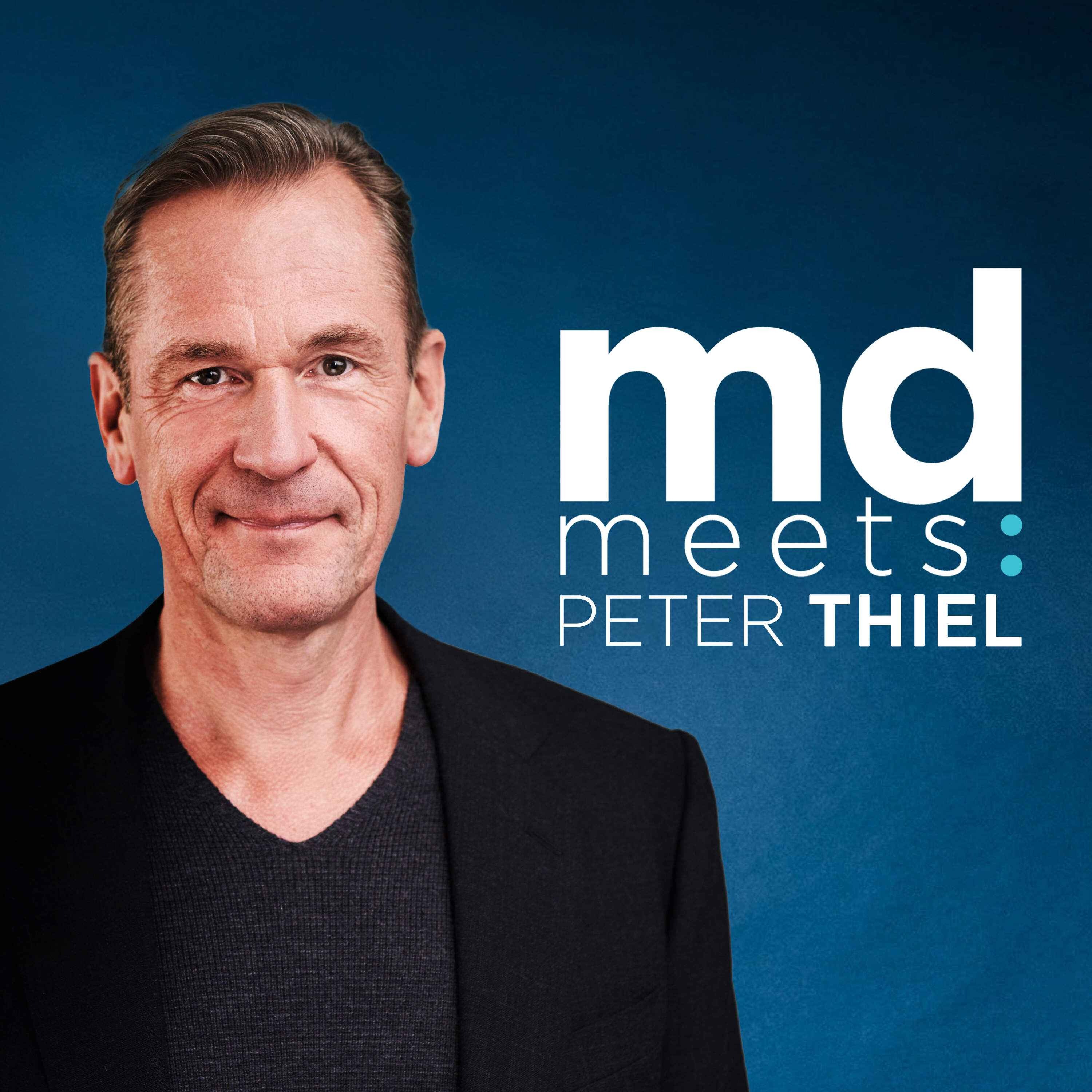
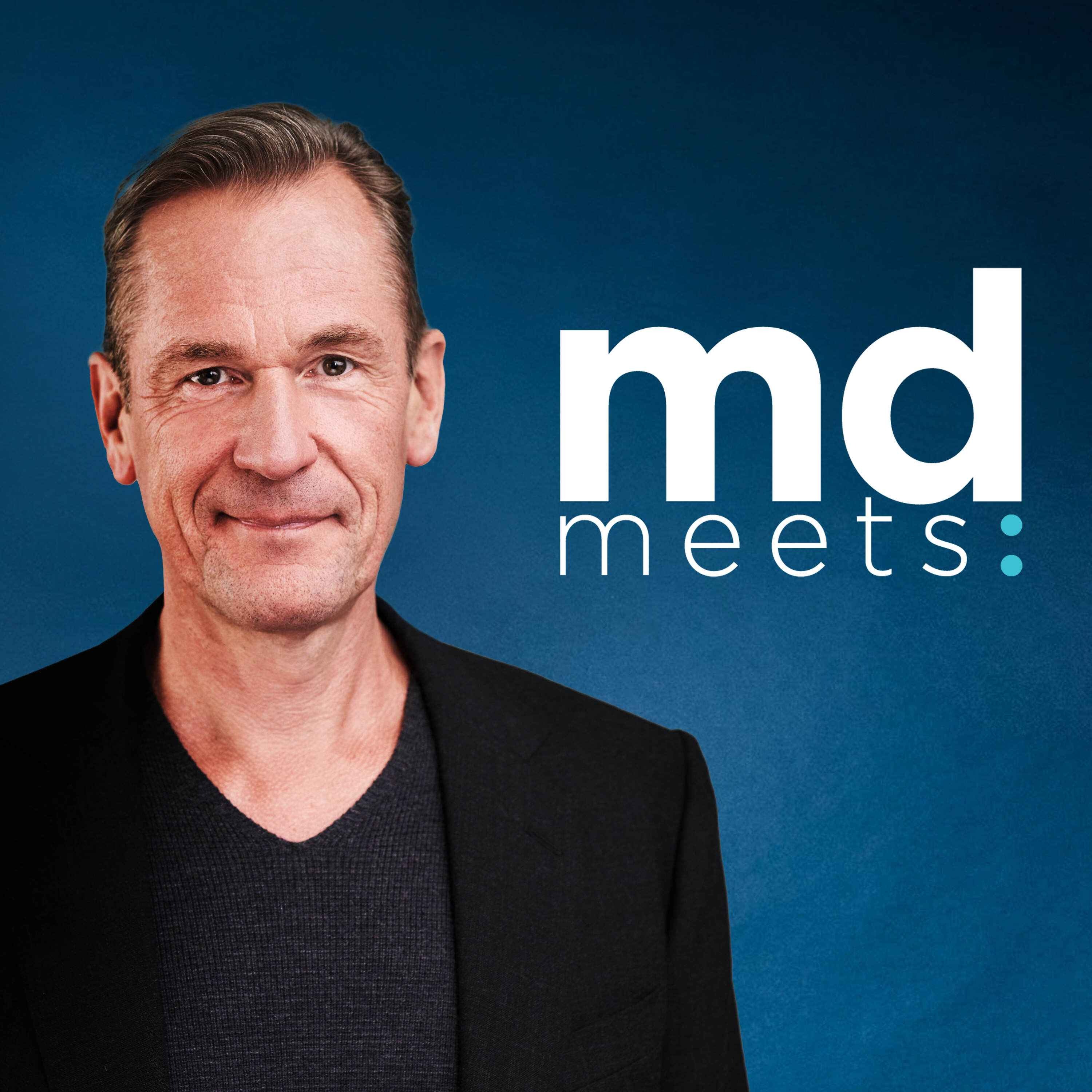

Aleksandar Vučić (Serbia) discusses his decision to meet Ukrainian President Volodymyr Zelensky despite Serbia’s close ties to Russia, arguing Serbia is pursuing an EU path without joining sanctions. He also comments on the Ukraine war’s likely timeline, “hybrid warfare” risks to Europe, and why he believes peace negotiations and ceasefires should be pursued sooner.
The episode features Serbian President Aleksandar Vučić. The interviewer is Matthias (Matias), who challenges Vučić on defense, sanctions, and geopolitical alignment.
Vučić says the Zelensky visit focused on Serbia’s EU path and cooperation on EU-related market access, not defense escalation; he denies direct ammunition deliveries to Ukraine. He claims Serbia is militarily neutral, will not join Russia sanctions, and that “hybrid war” is mutual. He predicts no end to the war this year and not before next spring, arguing one side must be stronger to stop fighting.
Serbia’s trade with Ukraine rising to about €500 million; drone factory plans with Israelis (opened by end of September); Serbia’s gas and oil ties with Russia; criticism from Western and Russian media; references to ceasefire/negotiations and the 1999 NATO war over Serbia.
Written by AI. May contain mistakes.
Discussion on Serbia's historical ties with Russia and Ukraine, and the dynamics affecting current relations.
“First of all, we have met each other many times, and both Russians and Ukrainians, they have always been traditional friends of Serbia, Slavic, as we used to say, sisters and brothers.”
Exploration of Serbia's aspirations for EU membership and economic discussions with Ukraine.
“I really try to understand the most important aspect conceptually behind that visit.”
Insights into Serbia's military neutrality and defense agreements, including drone manufacturing.
“and how we can better understand our future out of the EU or within the EU.”
Analysis of the backlash in Serbia following Zelensky's visit and the implications for domestic politics.
“And yeah, that was something that he knew, and it's going to be, I believe, pretty much sophisticated drones that were produced so far only by Israelis, and now those drones will be produced in Saudi Arabia.”
Discussion on Serbia's strategy of balancing ties with multiple countries while prioritizing national interests.
“But we tried to understand what was going on in Europe, what was going on in the United States, what was going on in Russia and all over the world.”
Details on Serbia's military exports and the political implications of meeting with both Ukrainian and Russian leaders.
“it's like everything is related to each other and everything is interconnected.”
A candid exploration of the guest's relationship with Vladimir Putin, including discussions on cooperation and independence.
“You are already, as far as I know, delivering ammunition to Ukraine.”
Discussing Serbia's historical ties and current relations with Russia.
“As you know, as you can see, a lot of common denominators, a lot of common interests, and it was very regular, very normal to discuss all these issues with a friendly country as it was and as it is Russian.”
Exploring how Vladimir Putin has changed over time and during the Ukraine war.
“over the last decades and particularly how Putin has changed during the war in Ukraine.”
Examining the concept of hybrid warfare and its implications for Europe.
“a very important asset with regard to modern warfare and technologies behind it.”
Discussing the necessity of negotiations and the challenges involved in achieving peace.
“What should they do perhaps together in order to change?”
Analyzing the shifting dynamics of the Russia-Ukraine conflict and its wider effects.
“No, I'm trying to say the truth, but I'm not sure that anyone wants to hear the truth.”
A discussion on the implications of territorial integrity in the context of Serbia, Ukraine, and international law.
“And that is also to be seen in a larger geopolitical world order context.”
An exploration of Serbia's strategic goals regarding EU membership and the ongoing challenges faced in the accession process.
“I know that it is one of the most important goals that you have EU membership of Serbia.”
A critical assessment of the current European landscape, including migration, economic performance, and the need for strategic decisions.
“justice and judiciary issue through Venice Commission and the other institutions we have already delivered.”
Exploring Europe's economic challenges and the need for change to compete globally.
“because everybody's now waiting for strong German economy to deliver money to those guys that are poorer in Europe, and everybody's thinking of themselves.”
Discussion about the political landscape and upcoming elections in Serbia.
“Is your ambition, are you ready to become the prime minister of your country?”
Insights on the potential for global conflict and the future world order.
“To me, what I think personally, and I'm not going to explain why I think this, I think that we are at the beginning of a bigger war.”

Get the gist, explore an idea or ask about something said.
 Claude
On MD MEETS, what are the key points of this episode?
Searching your listeningAutomatic transcript. May contain errors.
0:00I hate to say this. If you ask me what I think personally, I think that we are at the beginning of a bigger one.
0:20Mr. President, you are considered to be the leader in Europe closest to Russia, particularly close to Putin, whom you personally know and have met many, many times. So it was a big surprise, quite a coup, that you invited the Ukrainian president, Zelensky, and had a long conversation with him yesterday during his state visit to Serbia. So why did you invite him? First of all, we have met each other many times, and both Russians and Ukrainians, they have always been traditional friends of Serbia, Slavic, as we used to say, sisters and brothers. and Ukraine is an important partner. And speaking even about the level of trade, we successfully increased and improved that from, let's say, 30-40 million up to half a billion of euros and all the numbers are going down.
1:19And I can tell you in a way that Western media is always exaggerating and dictating in its crime as Russia's pocket state and whatever else, which was not true because they were always a sovereign nation. On the other hand, you have the guys, and I cannot say the majority of the population, but a big portion of our people that are, as a matter of fact, very much anti-Ukrainian oriented, not because they have something against Ukraine, but they have many things very much in favor of Russia. I was taking care. But let me try to then understand the real overriding agenda. I mean, there must be a conceptual thought behind it.
2:00Is it rather economic interests? Is it rather EU agenda in order to show that you are a potential EU member and that in a spirit of solidarity? Or is it really conceptually kind of switching sides that you think and see that Russia is about to lose the war in Ukraine and that's why it is now in a way time to build new alliances? I really try to understand the most important aspect conceptually behind that visit. First of all, the main topic of work presentation was our EU path. And I was explaining something that I was writing and signing together with Eddie Rama. And it's an issue of unique market, open borders within Europe, because I believe that speaking in a realistic way, we cannot expect to become a part of Europe until 2030 or even furthermore.
2:54And having that in mind, I wanted to discuss it with Ukraine because I'm less optimistic than President Zelensky is about the Ukrainian-European path as well. And I was not hiding it. I said to him what I thought. And that's it. I wanted to hear him. And I learned a lot from him about his experiences, his thoughts, and his expectations. At the end, I think it was very important to make a better cooperation between our two countries regarding the EU path of both of us and how we can, cannot say fully coordinate, but at least cooperate on that path and how we can better understand our future out of the EU or within the EU.
3:36Did you discuss with the president next to the topics that have already been explained publicly, a pre-trade agreement between Ukraine and Serbia? and some economic corporations. Did you discuss also concrete plans with regard to defense? There is this speculation that you are about to build drones together with Ukraine and the UAE. Did these topics play a role in your conversations? Actually, we did not speak about it. And of course, we spoke about war. We spoke about everything else. but we are building that drone factory with Israelis, and this plant will be opened by the end of September. And yeah, that was something that he knew, and it's going to be, I believe, pretty much sophisticated drones that were produced so far only by Israelis, and now those drones will be produced in Saudi Arabia.
4:34But we discussed free trade agreement, we discussed an overall situation which is very important, because for you, it's easy. You have your sides and Serbia has no side. We are a militarily neutral country. We are on the EU path and will be on the EU path. And let us see. But you did not join the EU sanctions against Russia. So that was your decision in favor of Russia in a way. And now this new kind of alliance with Ukraine. That's just a problem. This decision, Matias, was in favor of Serbia. We were bringing and making decisions in accordance with Serbia's interests, not in the interests of any other country.
5:12And I'm not here to please Russians, to please Ukrainians, to please anyone else but Serbians. And I see that there are a lot of misunderstandings in Serbia. I'm now seen as a biggest traitor because I was meeting President Zelensky like that was not my job. Because if someone's against Russia, you don't have your right to meet him. And I cannot say that, I can say that nothing that we talked was bad for Serbia or bad for Ukraine. We discussed even participation of Ukrainian companies in our important infrastructural projects. And these talks were very serious. We were discussing like a global political map in a way that we both understood.
5:54Because not only because of the fact that we are both Slavs, that our nations have always been close to each other. But we tried to understand what was going on in Europe, what was going on in the United States, what was going on in Russia and all over the world. And I think it was a very useful meeting for both of us. I know that no one, actually absolutely no one, likes and appreciates this type of politics. And everybody was saying you have many different chairs, you have to pick one and that's it. Yes, we picked that. That's Serbian chair. Why say this? This is, we have our strategic goal, which is full-flash membership status in the European Union.
6:37Number two, we want to keep our traditional ties, not only with Russia, but with China, India, and all the other countries. With African countries, with many of them, we were together in that non-aligned movement 30, 40, 50, 60 years ago. And this is something that we believe served the best for Serbian interests. And that I'm right, I have some clues. First half of this year, Serbia was number one country speaking about the level of growth rate in Ontario, 3.5%. Next year, it's foreseen by an IMF, by a World Bank, not by me, that we are going to be at a level of 4.5, and we expect 4.3. But anyway, we'll be number one even next year.
7:20You cannot divide global politics, international politics, and your economic situation because it's like everything is related to each other and everything is interconnected. This is what I think that we were doing in the very best interest of Soviet. And that was it. And to tell you the truth, we'll have elections within 70-80 days. And I don't care what people will say. I care what people will say to me, but I don't care what people will criticize regarding something that I believe very much that we did in the very best interest of Serbian people. There was nothing bad in Zelensky's visit, to the contrary, and I believe that this will be seen in the future.
8:03And on the other hand, I'll have to speak, doesn't matter whether it's going to be within seven days or one month with Putin on oil industry of Serbia, because you know that we have these problems with central continent and anything else. No, but I mean, particularly because you were criticized very predictably in your own country because of that visit, I assume that there must be a very big overriding conceptual thought behind it, an interest behind it, because otherwise it wouldn't have been worth it. So let me get back again to defense issues. You said that you are building drones together with Israel.
8:44You are already, as far as I know, delivering ammunition to Ukraine. Could you imagine to do more for Ukraine, building weapons, delivering weapons, supporting Ukraine in that conflict in order to help them to defend their country? Or would you exclude that for the future? We haven't been delivering to Ukraine our ammunition, but what was happening, surely, and we discussed it with Russland as well, we were selling our ammunition to some or to many Western partners, to some African countries as well, and then that armament torn us and the ammunition was ending, in a way, in Ukraine. And Zelensky, he knew our rules, he knew everything, and we were discussing issues, what we're going to do even after the war, what we can do together on third markets, even regarding defense industry, but not direct deliverance or whatever.
9:43And we were discussing also financial support from Serbia, how to revive, renew or some of smaller towns in Ukraine, something that we'll invest to. We discussed all the other issues, but this was not an issue. Was there any surprise during the meeting, during the conversation that you had? something that he mentioned, something that he asked for that you didn't expect that surprised you? We know each other. We were meeting each other for many years and we have always had good contacts and good relationship because I do understand his position and I believe that he does understand my position.
10:18We have a very thorough and a very compelling discussion on many issues. This is all I could say. So let's speak perhaps a little bit more about the Russian perspective here, you have not only been criticized in Serbia, but also Russian propaganda predictably criticized this event. So, how should I think about the days or weeks before the visit? I assume that the Russian president was not surprised by it. So, I assume you spoke to him about it. What is his take on that move? I didn't speak to him because I'm not announcing my political agenda to anyone, because Serbia is not a puppet of any other country in the world.
11:02We have our own agenda, and we take care of our foreign policy. That's it. I didn't speak to him like he didn't speak to me, meeting Trump or Witkow, Kushner, all the others, or Europeans, or whoever else. We are an independent country, and this will remain the same in the future. Did you see any kind of indirect efforts from the Russian side to prevent that visit? I saw a lot of words of criticism against myself, always pretty much the same journalist, but with no real arguments. You know, even here, it's very strange in Serbia. Those big patriots that would always say Ucic is not defending our national interests in a proper way, that were always speaking about Kosovo.
11:49Even Rezalenski was saying, yes, we do advocate, we do support territorial integrity of Serbia in accordance with UN Characters and UN resolutions. They went against him once again and against me because even Kosovo doesn't matter because some people had to be aligned only with Russia, and I'm aligned only with Serbia's interests, not with Russia's interests. Of course, they were criticizing me, and they are criticizing me, and they will continue. you saw and in a way that I was criticized by many in the West and that's it. I'm keeping my position and will always think that's the best position of Serbia.
12:30And if you ask me whether I'm going to ask anyone else in the future who I'm going to meet and what I'm going to speak about, I will never do it. Otherwise, I'll never be in a position of the president or prime minister or whatever in this country. Could you describe perhaps a little more in general your relationship with Vladimir Putin, whom you know for many, many years, whom you have visited many times, and with whom you speak regularly? How is that relationship? Is it friendship? Is it political pragmatism? And how in practice does it function? Could you describe that a little bit? I have less contacts recently than it used to be the case.
13:14We were seeing each other not once, but several times a year. I had a mutual respect there to say, and I spoke to him, I don't know exactly, 21 times, 22 times, and was visiting Russia many times. He was visiting Serbia as well, and we used to have, and will always have, traditional ties with Russia, and also we have always been commemorating Victory's Day on land of May, always together because that time we had a huge impact on liberation of Serbia, and also we had huge economic interests. We are still getting majority of gas quantities from Russia, and at the same time they are still owners of our oil industry, which was sold to them by previous government in 2008.
14:05As you know, as you can see, a lot of common denominators, a lot of common interests, and it was very regular, very normal to discuss all these issues with a friendly country as it was and as it is Russian. But what was not true, what was always like tried to be dictated to everybody in Europe was the fact that we were depicted as Russians. oppis, as little Russians, whatever, which has never been the case. We are proud, sir, and we have always been taking care of our country and our nation. And speaking about Vladimir Kutat, he is an intelligent person, tough person, but he's also a man that, I don't know whether he likes to hear it or not, but he was able to hear different opinions on different issues from the other people.
14:56At least he was ready to listen to me when I was thinking different. 98 of the top 100 U.S. accounting firms trust Bill to simplify and secure BillPay. That's proven financial infrastructure built on over a trillion dollars of secure payments. Visit Bill.com slash proven for a special offer. Could you describe how Putin has changed over the last decades and particularly how Putin has changed during the war in Ukraine. Is it still the same Putin? Matthias, even if I see something, even if I feel something, I cannot speak about it because no doubt that I have changed myself. It's regular, it's normal that people are changed and I cannot define it properly and I would overestimate my knowledge and even my nose if I will start speaking about it.
15:57I really expect that he'll get a peaceful solution at the end. Is it possible that Putin gets more and more nervous about the outcome of the war because the domestic pressure on him is increasing? And could that lead to a change in strategy? You have both leadership in both countries under big pressure, a whole thing in Russia and Ukraine, and it's not easy for anyone who is losing hundreds or tens of soldiers on a daily basis, and not only that, it's not that easy. It cannot be an easy economic situation during the war in any single country. I can imagine how difficult that is for both Russian and Ukrainian leaders.
16:39If you ask me about my forecasts, I don't see the end of the war this year, and I don't see the end of the war before next spring. I'll tell you why, because I think that one side has to be stronger and this or another way victorious in order to stop the war. Otherwise, in today's deal meet, I don't see the possibility for possible compromising solutions. What is then today Putin's realistic endgame? What does he really want to achieve with this war? I cannot say anything on behalf of him. I can have some predictions for myself, but it would be irresponsible speaking about it publicly and openly.
17:21But what I believe is that she wants to take control of entire Donbass area, and then I think he'll be ready for the end of the war. Which means he still needs to take full control of Olyman, Ahatorsk, Slaviansk, and that'll be from his point of view. In any case, Ukraine turned out to be way stronger than expected and is meanwhile perceived in the world not any longer as a poor victim, but rather as a very important asset with regard to modern warfare and technologies behind it. So, in a way, the outcome from today's perspective is surprising. And that leads me to a different question here. I'm very much under the impression of the various attacks, cyber attacks, attacks on leaders of defense companies, but also attacks like the one a few days ago where a drone with explosives was used at the airport of Leipzig.
18:33So in a way, you could say Germany and Europe is already under attack without any proof so far who is behind it, but a lot of suspicion and likelihood in that context. So could it be that the Russian president, Vladimir Putin, has changed his priorities while he may not achieve his goals in Ukraine, because Ukraine is way stronger than expected, he could switch gears and go more aggressively against Europe, against Germany, with all instruments of hybrid warfare, and in the end, perhaps, not win the war in Ukraine, but win a hybrid war in Europe. Matthias, you're speaking about hybrid war that was ongoing or launched by Russia against Germany and some other European countries, but it's pretty much the same that Europe Europe was doing against Russia or even what Europe was doing against Russia was more than that.
19:34You were arming up or you were the Ukraine sanctioning Russia, you were at the same time financially supported to Ukraine. What is that if not a hybrid war against Russia? They were doing pretty much the same. It doesn't mean that I agree with that, but I'm telling you that there is an easy justification if they really do so. And from here we noticed, we had some examples and we, as a matter of fact, operated even with your intelligence agencies in order to prevent some of these private attacks. We had some successes very recently, and I could do that even in your public, got these informations.
20:19But what you all need to do, it's more of a rational approach. You need to put yourself into, but yes, I know that it's very difficult to speak to people when they are one-sided, but you need to put yourself into both Shuzo Zelensky, Shuzo Putin, and then to make some conclusions and rational decisions. Otherwise, it will lead us nowhere. It will lead us to... But what does that mean concretely? I mean, what should then Europe do? What should the United States do? What should they do perhaps together in order to change? I'll tell you what would, if I were them, what would I do? If I were American president and if I were a big European leader as German leaders or French leader or whatever, I wouldn't wait for full exhaustion of Russian troops and would not wait for the certain moment where we believe that Russia will become much weaker because of that war in Ukraine.
21:15I would work tirelessly on a daily basis in order to bring two sides to a negotiating table, and once again in order to stop the war as soon as possible, to make true ceasefire, whatever you call it. When people stop killing each other, then everything will become more possible, speaking about final agreement. And that can be refused by one side, by both sides, whatever, thousands of times. Even after 1 ,000 times, I would still be insisting on, Because if you analyze today's situation, I believe that, and I know that at the end you can agree with me on this, nobody wants to see peace. Everybody wants to see the defeat of the other side.
21:55And there are people in the world that would like to see the real peace, not the peace that will suit, that will fit our interests. But we need peace. Doesn't matter what peace, that peace is better than the war. And then you're going to say, but we don't need that. It's not going to be. It's going to be justification of invasion and that and that. Hey, come on. What was the justification of invasion against Serbia? And it was better to reach that arrangement after 78 days of war with NATO from our side and from NATO's side as well in 1999 than to continue that war. And it's always a better option.
22:29And then you start negotiating, then you do something, whatever. It's always by far the best possible option. This is what I believe. And I know that everybody will spit on my statements because they will say he is doing that for the other side. Today, I'm the most criticized person in Western medias, and at the very same day, which is Sunday, take a look, I don't know, 9th or something like that of August, the most criticized person in Russian medias as well. And it gives me a right to say what I really think about, and it cannot be the case that I am that very much disliked from both because I was taking care of one side.
23:06No, I'm trying to say the truth, but I'm not sure that anyone wants to hear the truth. Because what has changed in your personal view with regard to the conflict and with regard to Russia over the last years and months and weeks? Something must have changed. A lot has changed. I learned a lot. First of all, I learned a lot. And you're right. Ukraine showed the ability, real ability to defend itself. And at the same time, you know, it was unimaginable for me that Russia can lose a sort of influence in both Caucasus Republics, Azerbaijan and Armenia, which today seems to be inevitable. And it shows to me that, politically speaking, things were and things looked different than I saw it five, six years ago.
23:49But speaking about Serbia, from the very first moment, we were having a very rational, very objective approach, supporting territorial integrity of Ukraine, UN Charter, which is very principled, and at the same time we were, as you have already said, the only country that did not impose sanctions over Russia, but you need to understand that we were under sanctions of Europe and United States for many years, and we know how does it go, and it would be like doing against someone something that we were victims of in the past, and it was very difficult for us, and I believe that we brought up, at the end, a good decision, a good decision for Serbia.
24:31But I cannot speak about everything that I see. Of course I cannot. I cannot speak about many things that are actually changed in the world openly, because that will harm political position of my country, which I love the most, and that's it. But what I was able to say, I believe that I was really sad to hear. You spoke to Putin, you spoke to Zelensky. Who has at this moment the more realistic view on the war and its potential outcome? I cannot say that because I don't know what would be the final outcome, what would be the end of the war. But what I can say, because I spoke by phone to President Putin a few months ago, and what I can say…
25:12When did you speak last time? I believe two, three months ago, four months ago. We had this discussion regarding the oil industry of Serbia and everything else. Did you speak more frequently together, let's say a year ago or two years ago? Has that relationship suffered a little bit? Yeah, we spoke more often, let's say, three, four, five years ago that it was a test a year ago or two years ago, no doubt. How high is the danger that if Putin faces more and more successful defense in Ukraine than expected and is less successful than planned, that he is doing things that could really escalate and could really get dangerous?
25:55How nervous is he, according to you? He is nervous or he is not because I don't know. I cannot be. I'm not someone who is able to say this because I see that people are saying in Western press, Vucic is nervous because of that, although I was not nervous at all. And it's a very wrong assessment that I see from time to time. What I can say is that I believe that he'll do his best in order to take full control of Donbass area using all conventional means. That's it. That's what I think. Could you imagine that he is systematically testing Article 5 with these forms of hybrid warfare in order to test and see how firm NATO is?
26:39But yes, you're one of the smartest people I have ever met. But you're so much one-sided, which is okay to me. Because you always speak about hybrid war that is coming only from Russia. But he has a very simple response to that, which is, you launch that hybrid war against him as well. And he's going to say to his people, and not wrongfully, that he was responding to that. Then you can say, okay, you started first of that segment. We need more talks about how to stop the war. This is what we need. And you're speaking all the time. You're speaking all the time in a way, okay, how are we going to beat Putin?
27:11How are we going to win against Russia? I don't know how you can win against Russia, because I believe that it's not going to happen easily, because at the end, Russia is a nuclear power and it cannot be attacked by anyone easily or whatever. And we need a compromising solution, not a defeat of any side. But just to avoid misunderstanding, as any reasonable person, I'm also absolutely interested in peace. That is the most important goal. The only question is how. And if peace comes with the cost that you basically surrender towards an aggressor or that you accept that territory is occupied in a war, then I think you are sending the wrong signals to the world.
28:00And that is also to be seen in a larger geopolitical world order context. Can I ask you something, Matthias? If you want to have this kind of discussion, because I believe that would be good for your viewers to hear it. Why did you take 14 % of Serbian territory, which was guaranteed by UN Trata and by UN resolution as well, and it was happening just after the aggression against the Republic of Serbia, which was led by 19 NATO countries without permission of Security Council of the United Nations? And then you want me to ask you thousands of times, was it just a solution to do it? Or my question would be, wasn't that an opening of Big Pandora's box?
28:43And at the end, actually it was. And you cannot have this kind of double standards or saying, well, this was okay, although we didn't get Security Council, UN Security Council decision and permission on that, but we were doing so, and we were taking Serbian territory, although that was internationally recognized territory, and although we did it against UN Charter, but we are strongly against it because it's a wrong message when it's happening in Ukraine. And I agree with you. No, no, no, Matias, I agree with you. That's why I can say that we do support territorial integrity of Ukraine. And we do support territorial integrity of Ukraine.
29:23But we have this right to say, and even with that, we are saying we need to reach a peace. And you are saying, well, we need to avoid, we need to avert any kind of wrong messages to the world. But we have already had wrong messages. You can now discuss it whether it was humanitarian disaster in Serbia or it was not humanitarian disaster. Then Russians will say it was humanitarian disaster in the east of Ukraine. They banned their language and everything else. put that aside let us stick to international public law and let us stick to something that is an interest of all the people which is peace it has to be a compromising solution there will be never ever good messages after any single war in the world never ever it has never been the case what were the good messages after the second world war what were very good messages tell me that we are now in a way close to the very similar situation more or less what were the good I insist in that context only on one principle, that if we discuss negotiations, peace solutions, compromise, that we do not mix up perpetrator and victim, that we do not mix up started a conflict and who reacted to the conflict.
30:38And that is true in the case of Russia and Ukraine. Ukraine did not interfere into territorial integrity of Russia, did not start any military actions against Russia, not at all. It was just attacked. And the same is true in Israel. It was not Israel attacking Hamas. It was Hamas attacking Israel on October 7th. And sometimes this seems to be locked. And this turning right down of perpetrator and victim of the beginner and the reaction to this, this I do not tolerate. I fully agree with you. My question is, which territory Serbia attacked that caused your reaction that you bombed Serbia? It was Serbia.
31:16It was Serbian territory. We believe still, and in accordance with our constitution, it is. But my question to you is, whether that was somewhere abroad or here in Serbia. That was happening in Serbia. That's why I'm telling you. Anyway. Honestly, I think Russia, Ukraine is complicated enough. Let's not dive deep into this conflict. I know that it is, of course, very kind of emotional indeed for you. I have this context. I have this context. That also explains a lot of what we have discussed. Life can be a lot sometimes. Traffic, taxes, and that dreaded text that just says, call me. Why not go where life is good?
31:58Escape to Pluto TV.
32:22I mean, behind you is the European flag. I know that it is one of the most important goals that you have EU membership of Serbia. Yes. Let me again ask whether this visit yesterday plays a role in that bigger scheme of things, plays a role in the sense that you are shifting more to the EU and its interests. Could there be also an aspect of it? Yeah, we discussed that. And that there is a strategic goal of Serbia. And I'm not, I believe that I'm a decent person, but I'm not someone who is very much flamboyant about the EU accession process and everything else, and I'll tell you why. Even with that, I showed my skepticism because I am a realist, and I see what is happening within EU, and I don't criticize that.
33:20I take it as a fact. You know, just three-four months ago, I had an important meeting with Ursu and Antonio. Then after that, they invited me to go to TiVAT, and I had a very important meeting with Chancellor Mertz, with President Macron, and with two presidents, von der Leyen and Kosta. And I was all alone. And we were discussing the issues, EU path of Serbia, and they were asking me whether I was still standing on a position, I myself personally, on Serbia's EU path? And I said to them, yes. But the real issue is whether I'm disappointed with many things, as you are with me. I am also disappointed with many things that were happening to us, particularly after 2013, after Brussels' agreement which we signed, and only one thing that had to be done by Albanian authorities in Kosovo, which was formation of Serb Municipal Association, was not delivered at all, but it was co-signed by European Union.
34:20And in But we, at the same time, delivered on dismantling some of our institutions and everything else. But even forgetting that, we had some things to deal with which no other country has dealt with, which is not only Kosovo issue, which is a special chapter, 35 chapter. We are the only one who has that chapter, as a matter of fact. But it's also about some, let's say, regulatory agency for electronic medias. What was, in a way, tried to be imposed on Serbia was the case nowhere else in Europe. And I was profoundly grateful to Antonio Costa and to Ursula. And they were saying that, they were confirming that.
35:03They were saying, really, at that meeting, okay, what Alexander is facing regarding that, it's the case that was not present anywhere else. And then we had a very good discussion. And those people said to me, okay, you do this, Alexander, and we'll deliver on this. And we delivered on four items, on four items that we were asked for. Four out of four. And even after that, European Council did not open Cluster 3 for Serbia. And they expected like a huge political avalanche from Serbia for myself to say to people, now we are not on EU paths, we are, I'm angry. No, I'm not. I expected that. I expected that because you were creating, not you, Matias, but many people were creating an overall atmosphere against Serbia in the recent years, lying about sonic weapons, lying about Sarajevo Safari, I cannot say it's a fabrication, it's a lie, lying about many other things.
35:56Then when you dehumanize one, when you dehumanize the person, how you can deal with him? Then you can say, okay, they progressed a new path. How can I say that we progressed a new path if that guy was killing innocent civilians somewhere? Although it doesn't matter whether it's a pure lie or not, who cares? And you do this kind of dehumanization, criminalization, not to mention denial of the real results, because Serbia progressed the most in an entire region. Serbia overtook Montenegro. We were lagging behind for 50%. 50 % they were ahead of us regarding average wages. And now we are ahead of them, with a very low public debt-to-GDP ratio.
36:33Is it acknowledged? Is it confessed by all the others in Europe? No, it's not. Serbia is today, just for you to know 51 % of overall Western Balkans GDP uh we are 57.1 % of overall Western Balkans export to European Union countries Serbian is 57.1 % and we are 61 % of overall FDI attraction it's it's you know it's like and then you say to us okay you're not good enough okay we are not good enough you always speak about merit-based but we see that it's not about merit-based, it's about politics-based. But whether we are going to, what I'm going to surprise them, we are going to be even more on EU path and we are going to deliver even more and even faster and even in a more efficient way in order to see what they're going to say to us.
37:20Even if they're going to get to us with two more, three more preconditions, always moving targets, we'll say, okay, we'll fulfill that as well. We'll fulfill that as well in order to show you that we have no problems with that. All the recommendations, all all the recommendations for elections we're going to fulfill. Everything you asked us about that, justice and judiciary issue through Venice Commission and the other institutions we have already delivered. Whatever else, we're going to do it. What I would really like to find out, why is Europe so important for you? Europe's performance these days is not the most convincing one.
37:58With regard to migration, with regard to growth, with regard to innovation and so on. Europe is criticized big times all around the world, is lagging behind the United States and other growing economies. And at the same time, Europe faces three main antagonists or adversaries of the open society model of Europe. That is Russia, that are Islamists and particularly Iranian proxies, and that is most importantly China. To two of the three, you have very close and longstanding relations and a lot of business ties, China and Russia. And you could simply say, they are my allies. Why do I need the EU?
38:46Could you explain where you see Europe 10 years from now and why Europe matters so much for you? I'll tell you. First of all, I believe I'm not going to flatter European Union officials and all the others because I don't do that. Because everything you said, you were pretty much right. As Europeans, we are lagging behind. We are lagging behind because we work less than Chinese and Americans. Let us make it very clear. Is it true, Matthias? It's true. You know how much people in the United States work? They have longer working hours, even less paid, but they still have an eye of a tiger in order to deliver the very best results.
39:23It's very much the same situation in China. In Europe, we enjoy our lives, all of us. I'm not excluding Serbia. We indulge our lives. We go twice for a vacation, 15 times a year, and to city break, making city break destinations. And we believe that something will come out of the blue that we'll be able not to lagging behind the United States and China. This is reason number one. We work less than Chinese and Americans. And it's our fault. It's not their fault. This is number one. We need to change something on this. And we'll have to work harder and we'll have to work more. Number two, we have to change ourselves.
40:01We have to understand what is going on in the world. We have to understand why China is progressing so well, so fast, and why we are not doing so. And I was trying to make the very best connections for my country, with China, with the United States of America, with all the others. of course with europeans in order to create the very best conditions for business growth for economy growth in serbia and we partly did it which is seen in the results but what we need what i believe that europe need to do i cannot tell you where do i see europe in 10 years because what i see you know people are having this type of burden on their shoulders whenever i see them I see that they have their internal issues, they have external issues.
40:48Always Ukraine is a separate issue, another issue. They are pushed by their domestic audiences. There are no strategic decisions, Matthias. There are no strategic decisions, and we need strategic political decisions. not to flatter social networks, not to flatter the crazy guys that would get their vote for just whatever, because they are loud enough in social networks. Europe need to change itself as soon as possible. You speak about migration. One intelligence agency can organize what was happening in Ceuta. Another one will be able to organize it in a bigger number somewhere else. and we are not ready and we are not ready to respond on anything.
41:33I was asking Angela Merkel several times, what is your expectation? And was asking all the others from Serbia, what we need to do regarding migration crisis. And then I was doing something like I thought by myself that was good for the country and that was good for Europe. Although I didn't get, cannot say instructions because I don't take instructions, but I didn't get really even advices on this. And Europe has to speak in a proper way because everybody's now waiting for strong German economy to deliver money to those guys that are poorer in Europe, and everybody's thinking of themselves. But we need to think about Europe in general, and Europe in general has to change itself.
42:22Otherwise, we'll be lagging behind United States and China significantly in the future, with the growth rate averagely 0.8, which is first six months average rate for the Eurozone, 0.8, you cannot compare with 5 % in China. You just cannot race with them. And this is true. And it's not the case for one year, it's not the case for two years, it's the case in last 10 years. And it will remain so in next 10 years. And then someone has to say, okay, we are losing demographically, we are losing in all different fields, economically. Germany, the most and the best industrialized country, is lagging behind Chinese today.
43:07What is your advice to Chancellor Mertz? He needs to change all of us. It's not about changing habits. It's about changing everything. I don't know who'll be able to deliver on this. Most probably, I wouldn't be able to deliver here in Serbia. But if you remember when Syriza was winning elections in Greece, then when they were saying, okay, we're going to take war compensation from Germany and we'll live nicely, we don't need to work. I was saying, no, no, no. These ideas in Serbia, no, we need to work very hard. And I was cutting public wages, was cutting pensions, and was making a new labor law, which would...
43:43So your advice would be Germans need to work harder? And Serbs as well. We are still more diligent than us. Is it actually true that you are learning German since quite a while? Yes, I do. I was better speaking German a year ago, but my daughter, she speaks perfect German. She used to study in Berlin and she speaks, I cannot say perfect, but very, very good German, English and Russian as well. We have to come to an end, but I have to ask you about the upcoming election in your country. It's going to happen in a couple of weeks and maybe you will change roles. Is your ambition, are you ready to become the prime minister of your country?
44:26First of all, with people from the party which I belong to, also, then it's up to people in Serbia, if we decide so. It's today, the other side, so-called students list, they say that they're in the lead. I believe them will have, no doubt, very tough election campaign. But I believe that what I was saying, and I was inviting them for talks, conversation, which they did not accept, I believe it's important that I have already said if they win elections for 1%, 0.5 % margin, that I will immediately admit that, will acknowledge it, and will congratulate them. I didn't hear that from the other side.
45:06But anyway, we'll see what people of Serbia will decide. It will happen most probably either October or early November. Okay, to conclude, two last questions rather about the very big picture. The war in five years, Will we have peace, a bearable solution, or could it, like World War I, which in a way was initiated in your country indirectly, is it possible that we are only at the beginning of a way bigger global war, or in any case a war between Europe and autocrats like Russia? To me, what I think personally, and I'm not going to explain why I think this, I think that we are at the beginning of a bigger war.
45:55And that's why I was hoping that someone else would have done something so far in order to create a peace. It didn't happen, and it won't happen soon, which means that we are on the edge of a much, much bigger war. I hate to say this. That leads, in a way, indirectly to the very last question, world order. Five years down the road, how do you see it? Which role is Europe going to play? Which role is America going to play? Which role is China going to play? Will China be then or in 10 years the largest economy in the world and the dominating political factor? Will autocratic systems be stronger or will the open society model be healthier than today?
46:33What is your prediction? How is world order going to look like? People in different countries will strive for bigger independence for themselves and less independence from outside. On the other hand, you have two big powers, which are United States of America and China. You have the third one, which is the Ushukbi European Union. I'm not sure whether Europe will be able, and I hope it will be able, to establish itself as a third killer. Number four, you'll have Russia, India, and the other huge continental or regional powers. You'll see this new alliance between Turkey, Pakistan, and Saudi Arabia as well.
47:12And this will create a totally different divisions and atmosphere all over the world. And if you ask me how this will look like in five years, I would say we'll be in a process still of defining it with more destructive means than it is the case today. And it's good. Everything is digitized and someone will be able to assess my words with institutions. Thank you very much for taking the time for this conversation. Thanks a lot.
47:44Thank you.
"I think we are at the beginning of a bigger war."
In this episode of MD MEETS, Mathias Döpfner sits down with Serbian President Aleksandar Vučić just one day after his highly controversial meeting with Ukrainian President Volodymyr Zelensky.
Long regarded as one of Europe's leaders closest to Vladimir Putin, Vučić explains why he welcomed Zelensky to Belgrade, why Serbia refuses to choose between East and West, and why he believes his country's independent foreign policy serves Serbian interests better than alignment with any geopolitical bloc. The conversation explores Serbia's balancing act between Russia, Ukraine, China and the European Union, the future of peace negotiations, hybrid warfare, NATO, Kosovo, and the changing balance of global power. Vučić also shares his concerns about Europe's economic decline, argues that the continent must work harder to remain competitive, and explains why he believes the world is entering a new and more dangerous era.
Is Europe prepared for a changing world order? And are today's conflicts only the beginning of something much bigger?
Subscribe for essential insights, candid perspectives, and the dialogues that matter most
Video: youtube.com/@mdmeets | Web: https://mdmeets.com | Mail: [email protected]
MD MEETS is a podcast of Axel Springer SE. Produced by Daniel van Moll. All rights reserved
Unauthorized reproduction or distribution of this content is prohibited. For more information and updates, follow us on Instagram: instagram.com/mdmeets
Hosted on Acast. See acast.com/privacy for more information.