Ask ChatGPT

Two segments. First, a Bloomberg Tech Minute on SpaceX hiring culture and equity incentives. Second, Merrin Talks Money Market Wrap on how rising interest rates raise the cost of government debt, potentially forcing “financial repression”/global devaluation, with UK-specific bond-market moves.
John Stebek, author of the Money Stilled Newsletter and a senior Bloomberg reporter; Merrin Somerset-Webb, UK editor-at-large (host).
Stebek covers markets and policy; Somerset-Webb is a UK-focused editor and co-host.
SpaceX hires for “raw, innate intelligence,” values hands-on experience over degrees, demands long hours/weekends, and offers equity (RSUs/stock). For markets, higher rates increase governments’ interest-burden share of tax revenue; the UK’s pause on selling long-dated gilts reduced long yields (30-year yield fell from near 6%).
SpaceX recruiter claims about Elon Musk resume review and culture loyalty; Bank of England stopping gilt sales after 2049 and holding ~20% of long-dated market on its balance sheet; discussion of potential UK rate path toward ~4%+ and inflation pressures from energy resets.
Written by AI. May contain mistakes.
Introduction to the topics of the week in the markets.
“it's the space exploration dream that draws people to the company, and Musk invokes that dream regularly to remind workers why they're there.”
Introduction to the topics of the week in the markets.
“Copyright 2026, JPMorgan Chase and Company.”
Discussion on the implications of AI and societal beliefs.
“Welcome to the Merrin Talks Money Market Wrap where we talk about the biggest moves in the markets this week and what is driving them.”
Exploration of potential risks and misuse of AI technologies.
“And I think at the moment they're trying to cover up the fact that they're actually not taking very good care of what they're doing.”
Analysis of interest rates and their implications for the economy.
“So it's not extinction level stuff, but it's kind of catastrophe stuff.”
Discussion on the Bank of England's actions and market reactions.
“Okay, okay, John, now we are going to talk about the thing that might actually bring down the AI bubble, if it is a bubble.”
Insight into global economic challenges due to rising interest rates.
“Probably the biggest thing that Bank of England has been actively selling gilts into a market which is already sick of gilts.”
Discussion on government debt and inflation's impact on economies.
“And also, I mean, you know, maybe this marks a lull in the kind of bond market panic.”
Speculations on upcoming budget decisions and their economic implications.
“And over the years, you and I have spoken a lot about financial repression and how we get out of this.”

Get the gist, explore an idea or ask about something said.
 Claude
On Merryn Talks Money, what are the key points of this episode?
Searching your listeningAutomatic transcript. May contain errors.
0:01Merryn Somerset Webb: This is the Bloomberg Tech Minute brought to you by ChachiPT. I'm Carol Masser. Getting hired at SpaceX requires exceptional ability and may include having Elon Musk review a candidate's resume. So writes Bloomberg Businessweek's Lauren Grush. She reports that the company culture is defined by Musk and job candidates must understand that a commitment to SpaceX means adhering to this culture and exhibiting loyalty to Elon Musk. To get hired, candidates must demonstrate their achievements from past jobs, and hands-on experience matters more to recruiters than advanced degrees, with the company looking for people with raw, innate intelligence.
0:39Merryn Somerset Webb: A spokesperson for SpaceX didn't respond to a request for comment on its recruiting and hiring practices, but according to recruiters, advisors, and those who've interviewed for jobs there, it's the space exploration dream that draws people to the company, and Musk invokes that dream regularly to remind workers why they're there. Prospective hires are told that the job will require stamina, including in job ads that candidates, quote, must be willing to work extended hours and weekends as needed. One major perk for all that hard work? Employees' access to equity, either the right to buy shares or payment in the form of restricted stock units that vest over time.
1:16Merryn Somerset Webb: That's the Bloomberg Tech Minute brought to you by ChachiPT. Get started at ChachiPT.com. Small businesses are the pulse of every community. They bring people together, create opportunities, and drive growth. Chase for Business helps business owners like you with personalized guidance and convenient digital tools all in one place. With that guidance and your determination, you can take your business farther and help build a brighter future for your community. Learn more at chase.com slash business. Chase for Business. Make more of what's yours. The Chase mobile app is available for select mobile devices, Message and data rates may apply.
1:54Merryn Somerset Webb: JPMorgan Chase Bank, N.A. Member FDIC. Copyright 2026, JPMorgan Chase and Company. If you listen to financial news, you know a lot of time is spent thinking about what's next. The next opportunity. The next investment. The next move. But sometimes what matters most is being ready for what you never saw coming. For more than 75 years, Cincinnati Insurance has worked with independent agents to help protect businesses, homes, valuables, and more. Because planning for the future isn't only about knowing what's next. It's about making sure you're ready for what you can't predict. Let Cincinnati Insurance make your bad day better.
2:34Merryn Somerset Webb: Find an independent agent at CINFIN.com. Bloomberg Audio Studios Podcasts, Radio, News
2:56Merryn Somerset Webb: Welcome to the Merrin Talks Money Market Wrap where we talk about the biggest moves in the markets this week and what is driving them. I am Merrin Somerset-Webb, UK editor-at-large And I'm John Stebek, author of the Money Stilled Newsletter and a senior reporter at Bloomberg. And still here. And still here. John, this isn't going to be an AI podcast, but I've been watching you on Twitter. Well, I watch you on Twitter all the time, and that's just the way it is. Atypically active, even by my standards. You really believe that AI could lead to our extinction. I don't, by the way, believe that for a second.
3:26Merryn Somerset Webb: No, no. It's nonsense propaganda ahead of big IPOs. No, I think that AI is at risk of doing something if we don't hold the companies responsible for it, more responsible for what they're doing. And I think at the moment they're trying to cover up the fact that they're actually not taking very good care of what they're doing. But they're also asking, aren't they, to have their liability taken away from them? Exactly. By saying, oh, we need to slow down. Oh, we need regulation. Someone else needs to take responsibility for the bad stuff that we might do. Yeah. I mean, this is very big corporations in the EU, isn't it?
4:02It is. And it's also their own in-house regulator, because all of these regulators, or sorry, the regulator that certainly Anthropic suggested has its roots in the effect of altruism movement. And without getting too conspiratorial, because obviously people who believe the same things flock together. It's not, they don't have to be.
4:22Merryn Somerset Webb: But do you know, John, how we keep saying these days that one day something's a conspiracy theory and the next day it's true. Well, yeah, I do know that too. So we have to be careful about how you label stuff these days. Exactly. But I do think, yeah, no, I think everybody, basically, there's a load of people that believe and actually genuinely believe that ai is going to be a super being at some point and to me that's a very religious belief and i think that some of them are being partly taken for a ride and there is also a lot of skewed incentives but i do think equally the ai as in misuse of llms and them charging ahead and trying to get them to work in certain ways could kind of, you know, cyber hacking.
5:00If it breaks something in the, you know, air traffic control system or something like that, that'd be pretty bad. So it's not extinction level stuff, but it's kind of catastrophe stuff.
5:08Merryn Somerset Webb: It kind of seems to me, I keep thinking about this, you know, and if you really believe, if you really believe that LLMs are that powerful, I don't, by the way, and if you really believe that it's possible that we will develop genuine AI as actual artificial intelligence instead of man-made data analysis, which is what it is at the moment. If you actually believe that, would you actually invest in AI? Of course you wouldn't. You'd spend all your money right now. Right now, because either we're all going to die or money isn't necessary because we move into a utopia, right? So, you know, spend your money now, go on holiday.
5:41Merryn Somerset Webb: No, totally. Don't invest in these IPOs. Waste of time. Aye, it's an abundance outcome or a disaster outcome. Yeah, this is very... But yeah, and I do agree. I think fundamentally, the guys do need the hype. And I do find it amazing that, well, there's two groups. There's people who seem to be totally naive to me, and they just take this all at face value and say, oh, well, even if there's a 1 % chance it could wipe us out, we need to do this, this, and this. And then there's the people who are still sort of saying that AI is basically nothing. And I think they're wrong as well. I mean, they're as wrong as the people who said the internet was no better than the fax machine, where back in 2000, it was clearly a thing.
6:20I mean, we're still coming down on, it's a big technological deal that's been massively overhyped. And we're probably, sorry, I was about to swear, spending too much capital on something that's not going to work. I was going to say f***ing away, but no, no, okay. No, we're not allowed to swear on these podcasts. You need to play that one out. All right.
6:42Merryn Somerset Webb: Okay, okay, John, now we are going to talk about the thing that might actually bring down the AI bubble, if it is a bubble. Of course, they're really bringing it down, which, of course, is the rising cost of credit. Yes. So we are in interest rate week. Yeah. Yeah. And this week we've had the Fed putting up rates. Yeah. Not by much. No, but it wasn't a surprise, but it was kind of, I think markets thought, oh, right, Warsh actually does mean business. Was it a surprise to you? It wasn't a surprise to me, but if you look at the kind of markets then, and the kind And the general reaction was, OK, so this guy is actually serious and he does want to tackle inflation.
7:20He's not going to be bullied by Trump. He's going to be bullied by the bond market instead. And also it was, what do you call it, it was a consensus vote, which is not that unusual for the Fed. But they were all behind them.
7:33Merryn Somerset Webb: OK, so rates up in the US, rate not up here. No, no. I mean that was interesting because I mean obviously the Bank of England is kind of a bit yeah it's not a high conviction and I think if the Fed had put up rates and they had been aware the Fed was going to put up rates they might have kind of copied it but the more interesting thing they did was change quantitative tightening and although that's very confusing and all the rest of it and kind of nobody really understood what QE did in the first place and no one really understands That's what QT does. Probably the biggest thing that Bank of England has been actively selling gilts into a market which is already sick of gilts.
8:17And what the bank has now finally said after three years, four years, in fact, of doing this is that, oh, actually, maybe we should stop. And not only that.
8:25Merryn Somerset Webb: Because that's part of what is pushing yields up. So one of the things in the UK is that we look at our bond yields, gilts yields, and they're higher than other people's. And everyone says, well, why is that? And we say, well, it's because we have no plan to deal with public debt and it's because we're more prone to inflation than other countries, etc. But also in there is the fact that if you increase the supply of something, obviously you push the price down. And with bonds, you push the price down, the yield goes up. That's just how it works. If you take that supply out of the market, you might expect yields to fall slightly.
9:02And that's what's happened. in fact the yields on the long term bonds because what they've said is for a start we're going to pause selling any for just now until we've worked out a conversation with the debt management office that's another issue we probably shouldn't talk about yet but in terms of the actual long bonds so anything that matures after 2049 they're not going to sell them they're going to sit on them until they mature and so that means looking at it about 20 % of the long dated gilt market is on the Bank of England's balance sheet. So you've basically removed an overhang of about a fifth from the market.
9:43So it's not really any wonder that the 30-year yield, which was threatening to go above 6%, has kind of dropped significantly today. And also, I mean, you know, maybe this marks a lull in the kind of bond market panic. I don't know that it's a turning point because we get plenty of inflation to come.
10:04Merryn Somerset Webb: Yeah, and there's plenty of reasons to think that the UK is not going to be better managed going forward than it is at the moment. No, no, definitely not. And we definitely expect rates to go up over the rest of the year, right? So we stick at 3.75 % now, but there's every expectation that it goes up to 4 % and then 4.25%, maybe 4.5 % by the end of the year. Not by the end of the year, by the beginning of next year. Yeah. Yeah, so you've got that coming. And we know that inflation is probably going to push up. What is it? Just over three now, push up over four. It almost has to, because gas prices are going on, the energy prices are going to go up by 25 % or something, or likely to, at the next quarterly reset.
10:42So yeah, above 4%.
10:43Merryn Somerset Webb: And the longer that lasts, the more likely it is the rates have to keep rising. Oh yeah, because the bank looks stupid. Again. And they have to keep writing these letters to the Chancellor. Yeah. They must have a stock one for that by now. I mean, they've got to be getting charged GPT to do it. I think. Finally, an effective use for AI. It doesn't matter how many mistakes it makes because those letters were full of nonsense anyway. All good. But listen, here's a question. So it's not just here, but it is everywhere that as rates rise, the interest burden for governments gets increasingly intense.
11:15Merryn Somerset Webb: So everywhere, the percentage of tax revenues that goes on paying interest alone gets higher and higher and higher and higher and higher. And over the years, you and I have spoken a lot about financial repression and how we get out of this. And the way that you get out of large amounts of public debt is not by having high interest rates. That's not how it works. You need to have interest rates below inflation or below nominal growth at least. So I was reading something today that basically said, look, at this point, everyone's in the same trouble. So it's not like just one country will run financial repression or two will run financial repression.
11:47Merryn Somerset Webb: Basically, everybody's got to get rates below inflation or below nominal growth. So the great global devaluation is almost upon us. The question being, how long can all the big economies keep rates at this level or have them higher? It's unsustainable. So at some point, either inflation has to go much higher, or rates have to start falling again, or this debt interest burden becomes unsustainable. So the purchasing power of every currency will fall soon by gold. I mean, yeah, I think buying gold is perfectly reasonable, valid. And we've said it a million times, but it makes a lot of sense. And I do think, well, I mean, the other thing the Bank of England did do today was something that looks as if it might end up being like the kind of Besant-style Operation Twist thing.
12:36So basically it sells the longer-dated gilts to the debt management office and they replace it with shorter-dated ones. and so to kind of bring down longer term interest rates and again it's all very financially repression-y Manipulative-y Well it'll be interesting to see what happens in the budget and if they make any more steps towards capital nudges or even capital controls
13:02Merryn Somerset Webb: And there you have it, I've found the one man in London who's looking forward to the budget I can't wait Thanks John
13:15Merryn Somerset Webb: Thanks for listening to this week's Merrin Talks Money Markets Wrap. If you like us, rate, review and subscribe wherever you listen to podcasts. Also be sure to follow me and John on X or Twitter at MerrinSW and John underscore Stepak. This episode was produced by Sam Asadi and Moses and questions and comments on this show. And all our shows are always welcome. Our show email is MerrinMoney at Bloomberg.net.
13:41Merryn Somerset Webb: The world of business is constantly evolving. and Comcast Business keeps you totally in step with secure AI-backed networking in more than 100 countries. They're powering over 90 % of the Fortune 500 and millions of small businesses. That's a lot of muscle. And behind it all, thousands of experts answering your call at 2 a.m. like it's 2 p.m. One partner powering how business gets done for companies around the globe. When you add it all up, no one does business like Comcast Business. Quick question for you. How much of your day is spent typing? Email, Slack, notes, prompts to chat GPT. Whisperflow is a voice-to-text app.
14:18Merryn Somerset Webb: Instead of typing, you talk and it types for you in any app on your Mac, Windows, iPhone, or Android. It takes out the ums, fixes the typos, and the result sounds like you wrote it. Four times faster than typing. So the email that used to take two minutes now takes 30 seconds. Whisperflow is free. Download it at whisperflow.ai. That's W-I-S-P-R flow dot A-I. If you're a business owner, you need a card that can keep up. With the Delta SkyMiles Reserve Business American Express card, everyday purchases transform into miles you can use towards future travel. So business as usual can lead to a well-deserved getaway.
14:55Merryn Somerset Webb: And for a limited time, card members can earn 200 ,000 bonus miles, the highest miles offered this year. Whether you're traveling for business or planning your next adventure, now's a great time to make every purchase go further. Apply today at www.delta.com slash podcast. Offer ends November 4th. Minimum spending requirements and terms apply.
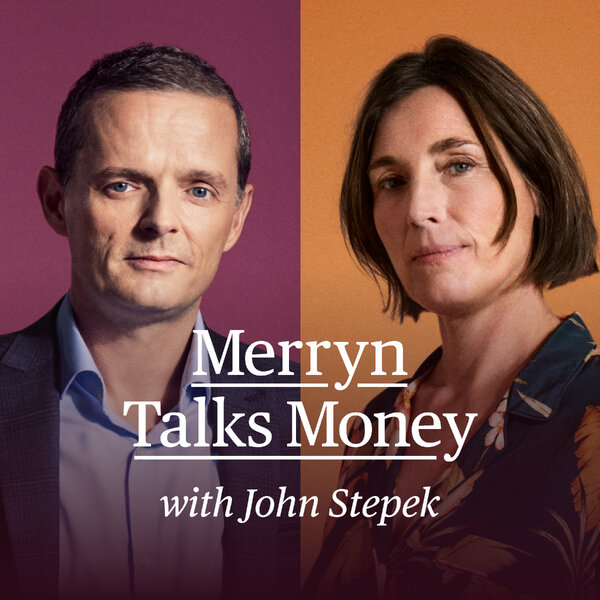
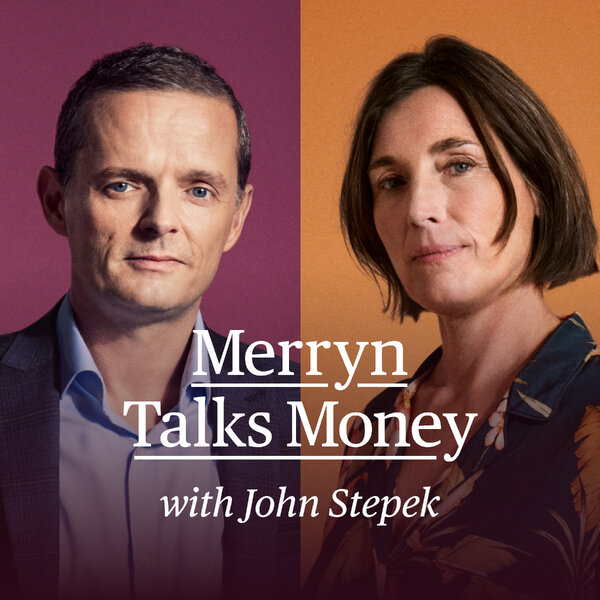
It’s interest-rate week, with central banks around the world making key decisions. Merryn Somerset Webb and John Stepek discuss what rising rates mean for markets, government debt and your money — and why financial repression and currency devaluation could be coming back into focus.
See omnystudio.com/listener for privacy information.