Ask ChatGPT
 Merryn Talks Money
23 Oct 2026 · 20m · 7 chapters
Merrin Talks Money Market Wrap discusses (1) French 10-year bond yields surging and the France–Germany “LIS T spread” widening to near euro-crisis highs, (2) why UK gilts are comparatively calm ahead of the UK budget, and (3) “AI neoclouds” facing pressure as AI infrastructure financing and IPO plans wobble.
Sam Unstead, co-editor of Bloomberg’s Markets Today blog; writes about UK stocks, economics, central banks, and global markets.
France’s political uncertainty (especially ahead of next year’s election) is driving investors to demand higher yields; the ECB is unlikely to intervene soon because levels aren’t yet “disorderly.” UK reassurance from Andy Burnham and Chancellor John Healey is calming markets. In AI, leveraged neocloud IPOs are first to feel stress as hyperscalers can self-fund.
France–UK 10-year spread falling from ~150 bps (May) to ~30 bps; N-Scale (UK/Essex) and Microsoft pulling out of a major data-center project; Firmus IPO pulled in Australia; IPO flops in South Korea; Meta–Apple tie-up enabling more local AI use.
Written by AI. May contain mistakes.
Discussion about the hiring practices and culture at SpaceX.
“it's the space exploration dream that draws people to the company, and Musk invokes that dream regularly to remind workers why they're there.”
An overview of the current state of French bond yields and political risks.
“I'm John Stebik, senior reporter and author of the Mindstilled newsletter.”
Discussion on how European bond markets are shifting in response to various factors.
“It has been a, I mean, a striking shift, you know, in the way that the French assets in general actually are being looked at, you know, over the course of the last couple of months.”
Exploration of how political stability in Europe affects investment strategies.
“So there's a very specific narrative going on in European bond markets where investors are assessing who they do and do not like.”
Exploration of how political stability in Europe affects investment strategies.
“So where am I going to put that money in?”
Discussion on the current state of French bond markets and implications for the Eurozone.
Examination of the challenges faced by neoclouds amidst market fluctuations.
“think, you know, we need the, you need copper, you need all these different commodities, you need to build out all these, these connectors to grids all over the world.”

Get the gist, explore an idea or ask about something said.
 Claude
On Merryn Talks Money, what are the key points of this episode?
Searching your listeningAutomatic transcript. May contain errors.
0:01Sam Unsted: This is the Bloomberg Tech Minute brought to you by ChachiPT. I'm Carol Masser. Getting hired at SpaceX requires exceptional ability and may include having Elon Musk review a candidate's resume. So writes Bloomberg Businessweek's Lauren Grush. She reports that the company culture is defined by Musk and job candidates must understand that a commitment to SpaceX means adhering to this culture and exhibiting loyalty to Elon Musk. To get hired, candidates must demonstrate their achievements from past jobs, and hands-on experience matters more to recruiters than advanced degrees, with the company looking for people with raw, innate intelligence.
0:39Sam Unsted: A spokesperson for SpaceX didn't respond to a request for comment on its recruiting and hiring practices, but according to recruiters, advisors, and those who've interviewed for jobs there, it's the space exploration dream that draws people to the company, and Musk invokes that dream regularly to remind workers why they're there. Prospective hires are told that the job will require stamina, including in job ads that candidates, quote, must be willing to work extended hours and weekends as needed. One major perk for all that hard work? Employees' access to equity, either the right to buy shares or payment in the form of restricted stock units that vest over time.
1:16Sam Unsted: That's the Bloomberg Tech Minute brought to you by ChachiPT. Get started at ChachiPT.com. If you listen to financial news, you know a lot of time is spent thinking about what's next. The next opportunity. The next investment. The next move. But sometimes what matters most is being ready for what you never saw coming. For more than 75 years, Cincinnati Insurance has worked with independent agents to help protect businesses, homes, valuables, and more. Because planning for the future isn't only about knowing what's next. It's about making sure you're ready for what you can't predict. Let Cincinnati insurance make your bad day better.
1:56Sam Unsted: Find an independent agent at CINFIN.com. The world of business is constantly evolving, and Comcast Business keeps you totally in step with secure AI-backed networking in more than 100 countries. They're powering over 90 % of the Fortune 500 and millions of small businesses. That's a lot of muscle. And behind it all, thousands of experts answering your call at 2 a.m. like it's 2 p.m. One partner powering how business gets done for companies around the globe. When you add it all up, no one does business like Comcast Business. Bloomberg Audio Studios. Podcasts. Radio. News.
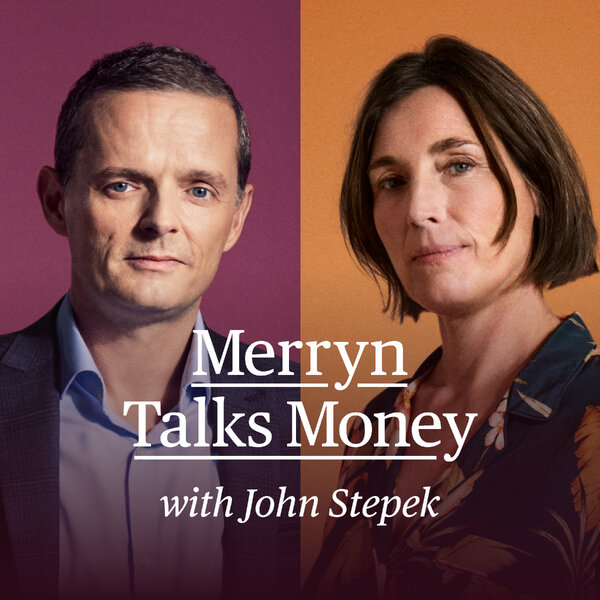
2:48Sam Unsted: Welcome to the Merrin Talks Money Market Wrap, where we talk about the biggest moves in markets this week and what's driving them. I'm John Stebik, senior reporter and author of the Mindstilled newsletter. I'm in today while Merrin's out, and joining me in the studio is one of our regular guests, Sam Unstead. Sam is the co-editor of Bloomberg's Markets Today blog, who've also launched a newsletter recently you should sign up for, and Sam writes about UK stocks, economics, central banks and global markets. Today we're going to be talking about French bond yields, which have exploded higher. We're talking briefly about the UK and why we're currently somewhat in the good books for a change.
3:28Sam Unsted: And we'll also be talking about AI and what's been going on with the latest wobbles in that market. Sam, thanks very much for joining us again. It's nice to have you back on the show. Don't you worry me. So I just wanted to warn our more sensitive readers that today you're going to hear the worst butchering of a foreign accent by a Scotsman since Sean Connery was in his prime. So, you know, just turn down the sound now, particularly if you're French, but I have to say, Zoot, alor, and Sacrebleu. What's been going on in the French porn market this week?
4:06John Stepek: Well, nothing good. It has been a, I mean, a striking shift, you know, in the way that the French assets in general actually are being looked at, you know, over the course of the last couple of months. you know so so with uh the french debt situation and their political situation this does come up like this has happened previously not to this extent but pretty much every time they come around to what are we going to do about the deficit you get a similar kind of bit of risk coming into into french bonds but those incidences have not been accompanied by an election next year and so the political risk in france is now i mean really quite drastically high
4:51Sam Unsted: Yeah, because you look at the, just for clarity, the way you measure this is a thing called list spread, which is the gap between the borrowing cost of French 10-year bonds and German 10-year bonds. And the highest that's ever been is just under 190 basis points. That's 1.9 percentage points. And today it's back up at close to, not far off 1.8. So it got up to about 178 basis points than today. to do and so that is um and that's the highest since the eurozone financial crisis so we really are talking about the kind of proper panic aren't we yeah so not panic actually but but a lot of a
5:32John Stepek: lot of worry yeah yeah yeah we won't go all the way to panic just although i think we're not you know not far off of that but one thing that's that's very interesting about it is that when you look at your bond screens and you know which tend to have all the european countries on them For the most part this year, they generally have been moving in tandem because most of the movement has been based on oil prices and then on to interest rates and the curve for the European Central Bank. Now, you're looking at your screens and German yields today are down. They're actually falling by quite a bit and French yields and Italian yields are going up.
6:04John Stepek: So there's a very specific narrative going on in European bond markets where investors are assessing who they do and do not like. And actually, as someone who works on a UK-focused blog, Giltz, which have been carrying the so-called moron premium for a while, and they still do, the gap between French yields and UK yields was, I think back in May, was about 150 basis points. Now it's about 30. So it's a huge change in where investor concerns about political risk, about government debt are being focused.
6:38Sam Unsted: Yes, it's nice to be out of the spotlight from a UK point of view. I mean, you're right. I was looking at the spread between France and Britain and basically 10-year gilts haven't yielded less than French debt since 2013. But we're now only, like you say, about 30 basis, 0.3 % away. And so again, I mean, I guess that reflects, it doesn't just reflect France blowing up either. to be fair to our credit the market seems to be given the benefit of the doubt so far ahead of the budget next week which is interesting
7:18John Stepek: just briefly on the UK looking towards the budget next week the thing that most investors seem to be saying is that when Andy Burnham first came in and previous to him coming in as well there were concerns And the comments he made around finding flexibility in the fiscal rules, that caused a little bit of nervousness. Not as much as we've seen previously, but some. But they have been, Andy Burnham and also the Chancellor John Healy, very, very clear. And in fact, have probably said at this point, maybe a hundred times, we are going to stick to the fiscal rules. and we are going to find a way to do what we want to do without causing a huge upset in the bond market.
8:03John Stepek: Whether that happens or not, you know, we shall see next week. But certainly most investors are just not that worried. They just feel as though it's going to be kind of okay. And that worry is just very, very much honing in on France. And then, you know, going out to the sort of weaker, if you like, parts of the Eurozone, as far as investors are concerned, and Italian bonds. And, you know, you could feel a bit sorry for Italy in some ways because, you know, they in the past were always, you know, BTPs, Italian government bonds, were the ones that would have that kind of role that guilt had played for quite a long time.
8:37John Stepek: Guilts would sometimes just sort of sell off for almost no reason. That happened to Italy a lot, again, because of a lot of government change, which is, again, something we share with them. That's no longer been the case in Italy. Actually, they've been, for them, extremely stable politically over the course of the last couple of years. but because there's this concern in France that's spreading out to the rest of the Eurozone and it's dragging Italy along there.
8:59Sam Unsted: It's interesting, isn't it? Because on the one hand, Britain obviously has had some economic growth, some kind of surprises to the upside, some figures that have kind of made the market feel more comfortable. But really, I think you'd probably have to argue that what's made the difference is that Healy and Burnham essentially speak in a more reassuring way. than Stan Martin Reeves did.
9:25John Stepek: Yes.
9:25Sam Unsted: And from that point of view, it is almost purely a kind of presentational political issue. I think the market probably feels that, okay, these guys broadly seem to be in charge. The party broadly seems to be behind them and they're roughly saying the right things. And we'll see if that comes to fruition at the budget, but there's that sense of kind of confidence that, and it is in the politics. And I think what's interesting for people who've been in markets since, you know, whatever, the kind of 2000s and the 2010s, the assumption was mostly that politics didn't matter and it was kind of a side issue.
10:05Sam Unsted: And obviously, this is very much demonstrated that it's not, because ultimately, the French thing boils down to it's not the fact that the debt is so high. It's the fact that there is nobody, essentially nobody in charge at the moment. And we don't know who's going to be in charge in about, well, what is it? It's going to be at least six to eight months before we actually have a clear view about it.
10:32John Stepek: That is a really good point because, as I say, you're in a European debt market or a global debt market, really, or global government bond market, which, you know, for the first, maybe for the first time ever, really, is competing with a whole new set of potential borrowers, right, from the AI trade. And in all honesty, if you're sat there, who do you want to lend money to? You've got France over here, where, as you just mentioned, the politics is a real mess at the moment. And the election is unlikely to clear any of that up. So the political risk is really high. Or do you want to lend that money to Microsoft to just throw off an enormous amount of cash and are continuing to drive 25 % growth?
11:13John Stepek: So where am I going to put that money in? Obviously, Microsoft don't need as much money as France does. But even so, like within a market where there's this huge extra set of considerations to take as to who's in the market and there is only so much money to go around. If you have a political situation like that, anything you can use to kind of divide up, like who do you want to lend to and where is the weaker part of the market, investors will use it.
11:44Sam Unsted: This is the Bloomberg Tech Minute brought to you by Chachi PT. I'm Carol Masser. Getting hired at SpaceX requires exceptional ability and may include having Elon Musk review a candidate's resume. So writes Bloomberg Businessweek's Lauren Grush. She reports that the company culture is defined by Musk and job candidates must understand that a commitment to SpaceX means adhering to this culture and exhibiting loyalty to Elon Musk. To get hired, candidates must demonstrate their achievements from past jobs, and hands-on experience matters more to recruiters than advanced degrees, with the company looking for people with raw, innate intelligence.
12:21Sam Unsted: A spokesperson for SpaceX didn't respond to a request for comment on its recruiting and hiring practices, but according to recruiters, advisors, and those who've interviewed for jobs there, it's the space exploration dream that draws people to the company. and Musk invokes that dream regularly to remind workers why they're there. Prospective hires are told that the job will require stamina, including in job ads that candidates, quote, must be willing to work extended hours and weekends as needed. One major perk for all that hard work? Employees' access to equity, either the right to buy shares or payment in the form of restricted stock units that vest over time.
12:59Sam Unsted: That's the Bloomberg Tech Minute brought to you by ChachiPT. Get started at ChachiPT.com. The world of business is constantly evolving. Every day, new challenges, new opportunities, new ways of working. Comcast Business keeps you totally in step with secure AI-backed networking built to power the way modern business gets things done today in more than 100 countries around the world. That's some serious muscle. And get this, Comcast Business powers over 90 % of the Fortune 500 and millions of small businesses. Behind it all, network engineers, cybersecurity specialists, support teams, thousands of experts answering your call at 2 a.m.
13:43Sam Unsted: like it's 2 p.m. Always on, always ready. That's a lot of coffee. One partner powering how business gets done for companies of every size all around the globe. When you add it all up, no one does business like Comcast business. A business gift is never just a gift. It's a thank you, a milestone, a moment of appreciation. It's a message about how much someone matters and what your brand stands for. At 4imprint, you'll find thousands of customizable options, like premium apparel, branded drinkware, tech, totes, and more, each chosen not just for function, but for meaning. You can tailor every detail, your logo, your message, your presentation, so your gift feels personal and on-brand.
14:27Sam Unsted: And with expert support, dependable service, and thousands without a setup fee, creating something thoughtful doesn't mean making it complicated. Every order is backed by 4imprint's 360-degree guarantee, so you can be 4imprint certain it'll arrive exactly as expected, on time, and with the care your brand deserves. Because when the moment matters, the right gift speaks volumes, and the right partner makes it easy. Explore gifting with purpose and certainty at 4imprint.com. 4imprint. 4certain. Your team is on a deadline,
14:59John Stepek: But moving all your enterprise data will take time your business simply doesn't have. IBM technology lets AI work with your data where it already lives. With an open hybrid cloud approach designed to build on your existing investments. It's another way IBM helps you put your data to work. Let's create smarter business. IBM. Visit ibm.com to learn more.
15:30Sam Unsted: kind of just rampant speculation time here just out of curiosity because because obviously you know this is the spread is blowing out so that's that's the technical term for saying france is it's costing france a lot more to border than germany um there is an element of spillover into italy as well which is arguably not entirely deserved and the european central bank at least part of its job is to keep an eye on these things now obviously it would say at the moment well actually we're only allowed to intervene to close the spreads if there's something irrational driving it yeah whereas it's actually perfectly rational to want to charge France more to lend money at what point do you think the ECB starts to say actually this is all there's a risk that this is existential for the euro and that kind of gives them permission at that point
16:28John Stepek: doesn't it yeah i mean i i think we're quite a long way from that yeah because i think the so
16:34Sam Unsted: if you if you look back to exact spread number some if you look back to the um to the the euro
16:40John Stepek: crisis um you know what nearly 15 years ago now but um if you look back to that the the underlying underlying issues like in terms of the banking sector and stuff like that was was much more fraught and much more difficult than it is now you know everything now is much more regulated um that the financial system is is much more robust yes this isn't about the banks this is
17:03Sam Unsted: very much sovereign debt so that's a good point yeah and and i think yeah yeah so the spread is
17:08John Stepek: is you know to germany has gone out quite a bit but at the actual yield on on french bonds yes it is much higher than it was but it's not at those kinds of levels where you would look at it and you know if you're if you're invested in it kind of start crying like it's not that bad yet um and when you look at the yield compared you say the yield has closed against the uk but it is still below so it's we're not quite at that kind of uh the word i think they would use disorderly we're not quite at that kind of point just yet i suppose my assumption is that
17:40Sam Unsted: we probably won't see anything until we do start getting headlines about the the like you know you one big day where the euro suddenly craters by a percentage point against the dollar or even the
17:50John Stepek: pound or something like that well and there are also lots of other considerations to take into account of over which europe and the european central bank have no control whatsoever um you know oil prices for example the ai trade you know and whether whether there's a bubble there if that bubble bursts you know that kind of thing so there are lots of other things to take into account but
18:08Sam Unsted: i think i think we're a way off just yet that's and see that's a really interesting point then lost to turn into the ai and also the energy um but obviously ai said it's had quite a few wobbly weeks really and every week seems to bring a sort of fresh a fresh bit just getting knocked out the story like like it's interesting because a lot i hadn't really appreciated it but whenever you start looking around the world a lot of these neo clouds particularly are having either ipos falling flat on their faces like in South Korea or in Australia. Obviously, one completely failed to take off like the night before it was pulled.
18:49Sam Unsted: And I'm sure I saw another couple of kind of slightly smaller ones this week. Again, I think it was Australia where they've either come out and had to, I think one of them was failed to get kind of power connections for its data center and the shares collapsed by about 40%. Well, so we can claim that one.
19:08John Stepek: That's N-Scale in the UK. Yeah, well, I know that one, but there was another one as well.
19:11Sam Unsted: But yeah, the neocloud specifically seem to be causing the angst this week.
19:18John Stepek: Yeah, I mean, there's a corollary to draw with bond markets, which is that, you know, if you are starting to get a little concerned about how much money is being borrowed in the AI sector or industry or however you want to term it, you start to think about, okay, well, you know, who do I want to lend to? You know, who are the, and like I said, like the hyperscalers, Yes, they are spending an enormous amount of money, but they've got the money. And if they need to borrow some money, they can because they generate huge amounts of cash, even with the capex that they're doing. The NeoClouds, you know, are, you know, in some respects, they're almost sort of startups, you know, but really big startups or really valuable startups because they are, you know, highly leveraged to how everything goes.
20:01John Stepek: if, for example, so the N-Scale thing was very interesting because, you know, that's a company that are trying to list, unfortunately, in the US. They're a London, a very UK-based company.
20:11Sam Unsted: Despite being based at Essex or something like that. Yeah.
20:15John Stepek: But they've already had a bit of pushback on the valuation. So they've had quite a difficult, you know, week or two. And then Microsoft pulling out of that data center, which I think is in Essex. I think that was in Essex, yeah. I think it's the largest data center project in the country in terms of the sort of the overall value of it. It leaves them in a difficult position because I think I remember this from the story this week, but the vast majority, more than 80 % of their revenue comes purely from Microsoft and Anthropic. And so they are extremely leveraged businesses. So yeah, if you're looking around, where are you going to lend the money?
20:46John Stepek: You do need to, or who are you going to buy as a stock investor? you do need to have a think about you know where do i if the cracks are going to appear where are they going to appear first and it does seem that people are have decided neoclouds which is a word that i don't think i ever thought would just enter my lexicon but now i'm saying it i've
21:03Sam Unsted: said it about six times now it just trips off the tongue doesn't it well it seems just they're almost like these very leveraged slivers of data centers that are wedged in between the hyperscalers themselves and the likes of Anthropic. I mean, I guess if Trouble was going to show up, they are kind of obvious candidates because they're almost like a mortgage on a data centre in terms of their kind of structure. Whereas at least Microsoft is and Google, they're still Microsoft and Google and Anthropic and Chat or whatever they are, but they're not the same thing, is that?
21:42John Stepek: No, no, not at all. I mean, in some respects, you haven't really seen companies like that. These big tech companies really exist before in terms of just the sheer scale. Maybe you have to probably go back to the beginning of the 20th century for this kind of enormousness of company. But for the neoclouds in particular, these are the companies that are in the midst of trying to IPO. A lot of them are trying to IPO. You mentioned Firmus, which is the company in Australia who had to pull their IPO. And there was a big flop as well in South Korea. they need those ipos you know they need to raise that money because they need to shore up their their balance sheet so they can continue this this you know incredible amount of investing that needs to be done in order to to meet the the demands of the ai build out which then as you actually just mentioned as well energy just quickly as well is then bumping up against the you know it's just it is i would say almost impossible to build enough energy capacity to actually connect all of these things to the grid as well.
22:40John Stepek: So then that creates delays. And these are all of the things that are starting to rumble like this, this question of, yes, there's hundreds of billions of dollars being spent on building out the AI, but can we do it like in the timescale that we think, you know, we need the, you need copper, you need all these different commodities, you need to build out all these, these connectors to grids all over the world. And it's hard, complicated, long work and so the speed it's all moved at the neoclouds are the ones who are probably getting the first little bit of kind of pushback that this is maybe this has gone a bit too fast well
23:13Sam Unsted: yeah and this what i find really interesting is the ai uh bubble or whatever is kind of reminding me a lot of the commodity super cycle and the high prices are the cure for high prices and so the high price of the chips means that people are starting to use the chips more efficiently because the other thing that has freaked people out slightly is this kind of meta kind of joint venture. It's not a joint venture, but a tie-up with Apple. Yeah. You can basically run Meta's AI agent Muse on Apple hardware, and it's not running on your local Mac. You'd still have to spend quite a lot. It's kind of a business thing rather than a consumer thing.
23:55Sam Unsted: But the point is that runs locally, and you don't need the data center for as much stuff. And then there's that kind of question of, well, wait a minute, if you don't need as much data center capacity, then actually have we spent too much money on these things already? So it's going to be interesting to see how that all plays out.
24:15John Stepek: Yeah, because if the answer to that ends up being no, then it kind of upends everything, because the amount of spending is truly, truly unbelievable. Not just on the most eye-opening, I suppose, is all the hyperscalers and the capex plans. But power companies, electricity companies, grid companies, miners who've got to get new mines going, which again is a long, difficult process. All of a sudden, they're all like, oh, hang on a minute. Do we continue with this? Do we pull back? Do we stop investing in this? It creates an enormous amount of uncertainty and markets really don't like uncertainty.
24:56Sam Unsted: Yeah, it's always the problem with these kind of very capital intensive and long lead time projects is there's always a point at which someone's left hanging like, oh, wait, I've only just opened this copper mine that you all needed 10 years ago and suddenly the price is down half. But anyway, that's such is life. Thanks very much, Sam. Excellent. Have you on again and have you on again soon, I'm sure.
25:19John Stepek: You're welcome. Thank you very much for having me.
25:24Sam Unsted: Thanks for listening to this week's Merrin Talks Money Markets Wrap. If you like our show, rate, review and subscribe wherever you listen to podcasts and be sure to follow me on x at john underscore stepek and merrin at merrinsw. This episode was produced by Summer Sadie, Moses Andem and Jennifer Seeley. Questions and comments on this show and all our shows are always welcome. Our show email is merrinmoneyatbloomberg.net Special thanks to Sam Oinstead.
26:20Sam Unsted: worked with independent agents to help protect businesses, homes, valuables, and more. Because planning for the future isn't only about knowing what's next. It's about making sure you're ready for what you can't predict. Let Cincinnati insurance make your bad day better. Find an independent agent at CINFIN.com. The world of business is constantly evolving and Comcast business keeps you totally in step with secure AI-backed networking in more than 100 countries. They're powering over 90 % of the Fortune 500 and millions of small businesses. That's a lot of muscle. And behind it all, thousands of experts answering your call at 2 a.m.
26:59Sam Unsted: like it's 2 p.m. One partner powering how business gets done for companies around the globe. When you add it all up, no one does business like Comcast Business.
27:09John Stepek: Quick question for you. How much of your day is spent typing? Email, Slack, notes, prompts to chat GPT? Whisperflow is a voice-to-text app. Instead of typing, you talk and it types for you in any app on your Mac, Windows, iPhone, or Android. It takes out the ums, fixes the typos, and the result sounds like you wrote it, four times faster than typing. So the email that used to take two minutes now takes 30 seconds. Whisperflow is free. Download it at whisperflow.ai. That's W-I-S-P-R flow dot A-I.
27:39Sam Unsted: Wise is the smart way to manage the currencies you need around the globe. When you send money abroad using your bank, you could get hit with hidden fees and exchange rate markups. There's a better way. Try Wise. Wise uses the exchange rate you'd usually find on Google with no unwelcome surprises. Plus, most transfers happen in under 20 seconds, which means your money arrives in less time than you've been listening to me. It's simple and free to sign up when you download the Wise app. Be smart. Get wise. T's and C's apply.
Are we heading for another eurozone panic? This week, John Stepek and Bloomberg’s Sam Unsted discuss why political uncertainty in France is pushing up the country's borrowing costs, why the UK
has (perhaps surprisingly) managed to avoid similar pressure, and where the first signs of strain are emerging in the AI boom. They also explore what slowing AI investment could mean for the
investors, governments and industries banking on its growth.
See omnystudio.com/listener for privacy information.