Ask ChatGPT
 Merryn Talks Money
29 Oct 2026 · 38m · 21 chapters
A UK Budget 2026 special and market wrap, focusing on tax/ISA changes, fiscal drag and wage compression, housing incentives, and investor implications; plus a brief tech segment on Anthropic IPO and Alphabet/Google stock worries.
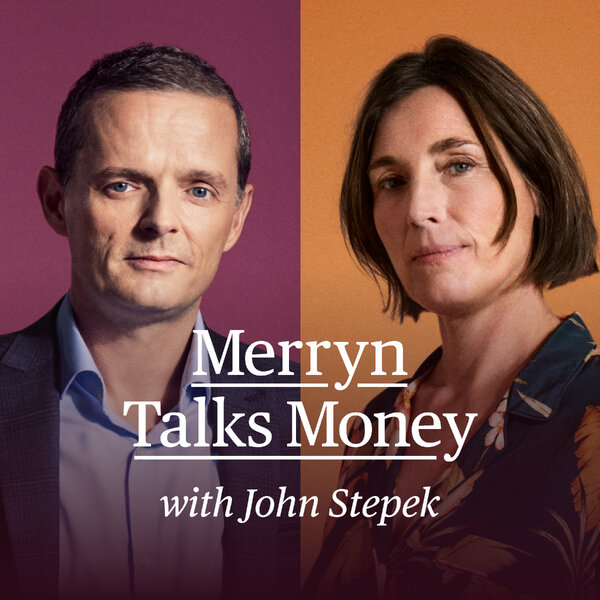
Anna MacDonald, Investment Strategy Director at Hargreaves Lansdown (oversees research on shares, funds, and investment trends). John Stevick, Senior Reporter and author of Money to Sell newsletter.
Budget keeps “can kicked down the road” problems—debt near 100% of GDP, debt interest burden, weak growth forecasts, and complexity undermining investor confidence.
no CGT increases; cash ISA simplicity vs new “starter ISA” details; “starter ISA” uncertainty; fiscal drag pushing more workers into higher tax bands (e.g., nurses from 1 in 10 to 1 in 3 at 40%+); buy-to-let and savings rate changes; first-time buyer scheme criticized as costly/uncertain; stamp duty on shares potentially replaced by a securities transfer tax from 2027.
Written by AI. May contain mistakes.
Exploration of the UK's budget plans and their implications.
“it's the space exploration dream that draws people to the company, and Musk invokes that dream regularly to remind workers why they're there.”
Insights into investment strategies and changes affecting ISAs.
“Right, Anna, there's been a lot of talk about the budget, a lot of talk, even though it was really remarkably boring.”
Analysis of fiscal drag and its effect on various professions.
“We don't know what that's going to be yet, do we?”
Discussion on how the definition of a high earner has changed in the UK.
“But again, it's a change, yet another change to this regime.”
An examination of ongoing economic challenges and future projections.
“In the second year, nearly 180 % increases in people taking tax-free cash for their pensions because they were worried about what was going to happen.”
Discussion on tax incentives for entrepreneurs and their effectiveness.
“We know that household disposable income by the end of this decade will have barely budged.”
Discussion on the need for greater ambition in scaling companies beyond initial valuations.
“But I think just so that nobody phones his arm and says, oh, I know she doesn't think 10 million's a lot of money.”
Analysis of the political landscape and implications of upcoming budgets and elections.
“Free to try on Mac and Windows at whisperflow.ai.”
Exploration of the impacts of new tax policies on small businesses and self-employed individuals.
“Oh, for God's sake, I can't honestly, I can't stand this.”
Discussion on the increasing complexity of tax legislation and its effects on individuals and businesses.
“And that is also the case, of course, for freelancers, for small businesses, for sole traders.”
Analysis of the implications of increased tax rates on savings and investment behavior.
“is the extra two percentage points on saving income and on rental income.”
Discussion on the difficulties faced by buy-to-let investors in the current market.
“And again, it's back to those manifested commitments they got themselves stuck into about raising taxes for working people.”
Critique of the Help to Buy scheme and its financial implications for new homeowners.
“the government, whatever it is you owe them according to what the price should have been.”
Discussion on recent market trends and investment losses.
“had sold for less than the price they were bought for.”
Debate on proposed changes to UK investment taxes and their implications.
“Anna, is there anything else that we should talk about in the budget?”
Analysis of new marginal tax rates affecting pensioners in the UK.
“John, was there anything else that you saw that we should talk about?”
Speculation on upcoming economic plans and potential election impacts.
“I guess it's the same story as rent controls, isn't it?”
Exploration of the Anthropic IPO and its implications in AI investment.
“Now, moving on, moving on, away from all that, what we can look forward to for the rest of this year is the Anthropic IPO.”
Discussion on Google's recent market performance and investor sentiment.
“We've all been looking at the risks or been thinking about etc.”
Insights into retail investor behavior and preferences regarding IPOs.
“We still have investors buying low cost ways into the market, very diversified trackers, global trackers.”
Discussion on the popularity and implications of SpaceX shares among retail investors.
“And just to let you know on SpaceX, we were, I would like to say, the number one place for IPOs this year for Hargreaves Lansdowne.”

Get the gist, explore an idea or ask about something said.
 Claude
On Merryn Talks Money, what are the key points of this episode?
Searching your listeningAutomatic transcript. May contain errors.
0:01This is the Bloomberg Tech Minute brought to you by ChachiPT. I'm Carol Masser. Getting hired at SpaceX requires exceptional ability and may include having Elon Musk review a candidate's resume. So writes Bloomberg Businessweek's Lauren Grush. She reports that the company culture is defined by Musk and job candidates must understand that a commitment to SpaceX means adhering to this culture and exhibiting loyalty to Elon Musk. To get hired, candidates must demonstrate their achievements from past jobs, and hands-on experience matters more to recruiters than advanced degrees, with the company looking for people with raw, innate intelligence.
0:39A spokesperson for SpaceX didn't respond to a request for comment on its recruiting and hiring practices, but according to recruiters, advisors, and those who've interviewed for jobs there, it's the space exploration dream that draws people to the company, and Musk invokes that dream regularly to remind workers why they're there. Prospective hires are told that the job will require stamina, including in job ads that candidates, quote, must be willing to work extended hours and weekends as needed. One major perk for all that hard work? Employees' access to equity, either the right to buy shares or payment in the form of restricted stock units that vest over time.
1:16That's the Bloomberg Tech Minute brought to you by ChachiPT. Get started at ChachiPT.com. Being a small business owner isn't just a career, it's a calling. Chase for Business knows how much heart and effort go into building something of your own. Manage all your business finances, from banking to payments to credit cards, all in one place with Chase's digital tools. Plus, access online resources designed to help your business thrive. Learn more at chase.com slash business. Chase for Business. Make more of what's yours. The Chase Mobile app is available for select mobile devices. Message and data rates may apply.
1:53JPMorgan Chase Bank N.A. Member FDIC. Copyright 2026. JPMorgan Chase and Company. Bloomberg Audio Studios. Podcasts. Radio. News.
2:18Welcome to the Merin Talks Money Market Wrap, where we talk about the biggest moves in the market this week and what is driving them. I'm Merin Somerset-Webb, UK Money Editor-at-Large. And I'm John Stevick, Senior Reporter and author of the Money to Sell newsletter. Now, today we are bringing you a UK Budget 2026 special, though we may talk about a few other things along the way, but mostly budget. And to mark the occasion, we are joined by a friend of the show, Anna MacDonald. Anna is Investment Strategy Director at Hargreaves Landsat, where She oversees research across shares, funds and wider investment trends, helping investors make sense of what's happening in the economy and markets, which amazingly is what we do too.
2:55Anna, great to have you back on the show. Thank you for having me. Right, Anna, there's been a lot of talk about the budget, a lot of talk, even though it was really remarkably boring. What is your quick take on it? Well, I mean, I think I'm hearing lots of takes on it and from it's a nothing burger to people actually thinking there are a few mounting concerns about it. And I think that's really because it feels like the can has been kicked down the road and actually what fundamentally has changed. in terms of things that I think were pretty positive that went with what we really wanted to see no increases to CGT that was very helpful the cash ISA thing was you know we like the idea of ISAs being simple and easy to understand and not being changed the whole time so in a way it was a reversal but we do know that cash ISAs are popular and I think you'd like this stat that one in five people who open a cash ISA with us go on within six months to open a stocks and shares ISA.
4:02So perhaps it is the first step to getting people investing. And I think that the reduction in the limit had led to quite a lot of confusion and sort of a bit of worry. When it comes to the new investor incentives for stocks and shares ISAs, devil is going to be in the detail in that. We are speaking to Treasury about it. Is this the starter ISA? Yeah, the starter ISA. We don't know what that's going to be yet, do we? I mean, we just don't have the details yet. I mean, we are involved in the early stages of discussion. As with anything, we want things to be simple, accessible, compelling, all that kind of jazz.
4:41Can I just ask something? Given that you presumably like all your competitors spent the best part of nine months or so preparing for all the anti-avoidance things that were going to affect the swap out from cash, and then got told, presumably a couple of days ago, you didn't actually have to waste any time and money doing that. How keen are you in kind of like interacting with the Treasury again over? Well, I mean, the thing is, you are going to prioritise things to put something in place. So we launched a money market fund last week. It's a standalone great product in itself, and it has a great use.
5:20And I think for a lot of people who've always been savers, it's just that first step on the road to investing. So it's great. But, you know, definitely you prioritize things, don't you? You want to find for your clients the right ways to sort of navigate the system. And so what we, you know, potentially we wouldn't have rushed to do something like that. But we now have this product and we're happy with it. And we think actually it's quite a good option. And I think I noticed your tweet, Maren, about yesterday about cash ISIS. And actually, you know, if people are just going to stick with their cash ISIS, with their banks, we know that the high street banks, the average rate of savings they pay, the average rate of interest they pay on savings is less than 1%.
6:05So most people should be trying harder to get a better rate on cash outside of cash ISA and then using their ISA allowance for stocks and shares. So there's that. So I think I think, you know, I was quite pro the idea of being pushed and people being pushed into shares ISAs over cash ISAs. So I don't think that that that Rachel Reeves' plan was an ideal one. I quite liked the idea. But now we've got much more complication coming forward, haven't we? because we're now losing the Lysa and we've got the first time buyer, I said, which is another thing altogether, which is remarkably similar to the Lysa, but different because you're now not going to lose any of your own money if you withdraw it early, right?
6:48And you don't get the bonus until the end, but you can then take your own money out without a penalty. So that's a better product. But again, it's a change, yet another change to this regime. And every time we see changes, we see it just has another chink in damaging investor confidence and savers confidence. So we really see that. And when, for example, we were quite pleased, actually, there was not too much rumour in advance of this budget in terms of, for example, last year and the year before. In the month running up to the budget, we saw in the first year 140%. In the second year, nearly 180 % increases in people taking tax-free cash for their pensions because they were worried about what was going to happen.
7:32And that's something you can't reverse. You can't just suddenly go and pay that money back in. That tax wrapper has gone for you as a benefit. And so we were pleased about the lack of rumour heading into this. But as you say, Maren, the more changes, the more complexity you introduce, the harder it is for anyone to make plans. And so we would love just let's stop tinkering with ISAs. let's keep let's have like five years of no changes to tax-free thresholds or allowances and things like that maybe index link them if you will but but but let's make it really easy and simple for people to add to their pensions add to their ices and that means that we all become less reliant in the future you know we become able to meet our needs and surely that's a good thing Yeah, I suppose there were lots of things that we kind of wished would have been fiddled with.
8:29And one of the things that I think we would quite like to see fiddled with, we would like to see a reversal or at least a simplification of the way that IHT is going to be charged on pensions. Because you know how people are going to be paying almost ridiculous amounts of tax on pensions. Their state will be paying almost ridiculous amounts of tax on their pensions. So we might have hoped for a reversal of that. We might have hoped for a reversal or at least a little compassion around IHT on family. family firms and farms. We might have hoped for some reduction in the amount of fiscal drag out there.
9:01John, I know that you worry about this all the time. Fiscal drag and wage compression, these are the things that keep you up at night, right, John? Both of these things came out of this budget in a really bad way. Yeah, well, I mean, just unchanged really, but that's the bad thing. It's just, it's absolutely nuts when you look at what fiscal drag has done. And to be fair, I think normal people actually are quite aware of fiscal drag now. But because it's such a quiet thing, you still don't appreciate the extent to which it's affected people's wages. I looked at this earlier this week. And in 2021, one in 10 nursing professionals, roughly, was a 40 % taxpayer or above.
9:43Now it's one in three. I was looking at that. You tweeted about that. That's extraordinary. It's absolutely bonkers. And I mean, I chose nurses because nurses are obviously, you know, in terms of who is a sympathetic, relatively low paid worker, that's the profession. But the same thing goes for, I mean, we teach our secondary school teachers has gone from one in five to almost half. And actually now more than half of police officers are 40 % taxpayers as well. So, I mean, it is really quite astonishing what's happened. And again, to just be very clear, those people, it's not as if they've been given massive pay rises.
10:17All that's happened is they've been given, with inflation, pay rises that have taken them into the higher tax net. So they aren't suddenly a lot better paid. We aren't suddenly, you know, whatever, appreciating them a lot more. It's just, you know, that's what fiscal drag has done. Well, there are some extraordinary numbers out there on this. And with the rise in the minimum wage as well, so you've seen this compression in wages that you often talk about, John. It used to be, you know, only a decade ago that by the time you hit the higher rate, you were being paid over three times the minimum wage.
10:48Now it's 1.8 times. And then if that higher rate band had kept the inflation, it would be nearly£100 ,000. Really, would it? Gosh, that's impressive. It would be 97 or 98, something like that. So, you know, we really have totally redefined what it means to be a high earner in the UK. So perhaps what it means to have the minimum wage, it's actually, it's quite considerable. Well, yeah, we've redefined low earner. It's actually basically don't insist anymore, which is like, I mean, some people may think that's an achievement, but if you're a 16-year-old who can't get a job and you want one and you don't actually need to get 66 % in the median salary, then no, it's not very helpful at all.
11:32No. So I think that, Let's go back onto the beginning of the budget conversation a little bit, actually, because I think, John, you and I were talking about this this morning. We were on Bloomberg Television talking about the budget. And one of the things that we were trying to make clear is that while we talk about all the fiddling around the edges and what you called it, the tapas budget on Twitter, didn't you? I liked that. I liked that, the tapas budget. All the fiddling around the edges. But the background is exactly as it was, exactly as it was. We've got debt to GDP approaching 100%. 100%.
12:04We've got tax revenues coming in at about 37, heading towards 38, 39, 40 % of GDP. We've got state spending coming in at 44, heading to 45 % of GDP. We have a major problem with one pound in every 10 spent by the state being spent on debt interest. And every single possible solution to any of these things has been kicked into next year. How do we pay for defense? How do we deal with welfare? How do we get this deficit really down as opposed to pretend-y down, which is we've got at the moment? All these problems remain there. We know that household disposable income by the end of this decade will have barely budged.
12:46And we have the forecast for growth next year and the year after and the year after. Never go over 2%. Never go over 2%. I mean, maybe they will. That would be nice. But even if they hit 2%, this is pathetic. Pathetic. So the background here remains really bad. And I did go through this, you know, I did go through this, trying to find things to be optimistic about. Well, you know, there's a lot of common sense coming in here on energy. Well, you know, they're having a go at pretending to be nice to entrepreneurs and small businesses. But none of those things really come through. And we looked this morning, didn't we, John, at this founder's relief business.
13:20The idea that when you sell your business, you'll be able to pay 10 % up to 10 million rather than all the normal taxes. And then you sit down, you look at what you have to do to qualify this. And as far as I can see, nobody will ever qualify for this. Ever, ever. Simply not possible. But also there is that thing, don't you think, when you talk about founders leave up to 10 million. Now, 10 million sounds like a lot of money. But when you think, is there a single founder at 10 million who's going to go, oh, yes, I've had enough now. I want to stop. And what kind of culture have we got there? People in the US don't get out of bed for that.
13:55you know when they talk about they're talking really significant sums not small amounts which are very welcome but 10 million is not it's not a game changer that sounds awful but this is not taking the scale-ups from 10 million out to being our next listed companies of the future i mean that that's what we want and we're not we're not yet getting that i don't think yeah i mean your point is like mark zuckerberg didn't sell facebook when he was offered something like a billion for and everyone thought it was nuts. But I think just so that nobody phones his arm and says, oh, I know she doesn't think 10 million's a lot of money.
14:29It's not a lot of money in this context. So, you know, keep your complaints to yourselves. Yeah, sorry, I don't mean to sound sort of flippant in that at all. No, you're not, that's the point. But I'm just saying we need ambition for those people. Actually, what we're still missing, I think we've got good VCT and good EIS culture, all that kind of thing. But what we're still missing is that extra leg that takes those companies and moves them up to the next level and doesn't get them bought by overseas investors.
15:00This is the Bloomberg Tech Minute brought to you by ChachiPT. I'm Carol Masser. Getting hired at SpaceX requires exceptional ability and may include having Elon Musk review a candidate's resume. So writes Bloomberg Businessweek's Lauren Grush. She reports that the company culture is defined by Musk and job candidates must understand that a commitment to SpaceX means adhering to this culture and exhibiting loyalty to Elon Musk. To get hired, candidates must demonstrate their achievements from past jobs, and hands-on experience matters more to recruiters than advanced degrees, with the company looking for people with raw, innate intelligence.
15:38A spokesperson for SpaceX didn't respond to a request for comment on its recruiting and hiring practices, but according to recruiters, advisors, and those who've interviewed for jobs there, It's the space exploration dream that draws people to the company, and Musk invokes that dream regularly to remind workers why they're there. Prospective hires are told that the job will require stamina, including in job ads that candidates, quote, must be willing to work extended hours and weekends as needed. One major perk for all that hard work? Employees' access to equity, either the right to buy shares or payment in the form of restricted stock units that vest over time.
16:15That's the Bloomberg Tech Minute brought to you by ChatGPT. Get started at ChatGPT.com.
16:45Tuesday? Free to try on Mac and Windows at whisperflow.ai. That's W-I-S-P-R flow dot AI.
16:57So do you think the answer to why it's not, why it is a kick the can down the road budget is because there maybe is another big political event happening in the short, in the shorter term? I think there's quite a lot going on here. I mean, you could, if you were being generous, you could say, look, they've got a lot of investigations going on here. They're looking at welfare, they're looking at defence, they're trying to figure stuff out. Burnham hasn't been in place that long, although one would have thought he'd been thinking about it in advance, but you know, whatever. No one seems to think in advance in politics anymore.
17:25So you could say that, and there's a spending review coming, and we'll get some proper stuff then. You could say that, but I think probably we all suspect there's an election coming, don't we? I'd be interested to get your take on this, Anna, because I can totally see the argument, and I'm thinking basically on the side of an early election, but I am I'm also wondering what happens, because if he says we're going to have an election so that I can raise taxes, that doesn't, how do you sell the story? Well, I think, I don't know how they sell the story. And I was thinking about Brenda from Bristol who said, oh, not another one.
18:02Do you remember that? You're joking. Not another one? Oh, for God's sake, I can't honestly, I can't stand this. But I do think internally, it's probably an easier sell, because I saw a Sir John Curtis presentation at the Conservative Party conference. And it was quite so sobering, I think, for the Conservatives in the room there, because whilst it does feel like we're getting back to two party politics, the Green vote has really diminished. Labour is ahead in the polls and the Conservatives' vote has been fragmented by the reform. And even if reform aren't polling what they were, they're still taking enough of that vote away from the Conservatives that the Prime Minister and others might feel quite confident about going into that election.
18:54And we may either have some kind of resolution in the Middle East and some kind of oil price fall, or simply we start lapping those comparatives. And that means that things start to feel a bit better. And perhaps actually you don't need to go for such a big tax and spend. You just want to get yourself in for another five-year term so you can put your 10-year plan into action. And remember, whilst our yields, so the return that investors are asking on our bonds is quite high and it's still higher than our European neighbours. Since we last had the potential ideas of some kind of resolution in the Middle East, it's say in July, our bond yields have gone up an awful lot less than our neighbours in France and others in Europe and in the US.
19:46So I think there potentially is a small amount of credit being given to things like triple lock to double lock, which doesn't make a huge difference by 2030. But by the end of 2030s is 25 billion. by the end of 2040s is 50 billion per year. This does make a difference. It does start to compound. And maybe, maybe we are seen as slightly less politically risky than some other countries at the moment. And a small amount, little incremental bits and start getting into a kind of virtuous circle around borrowing costs instead of a vicious circle would be a very, very happy place to be. Not entirely convinced.
20:29I'm trying to be positive Mary yeah no good work good work good work there were a few bits and bobs in the budget that haven't really been discussed that much and one of the things that I thought was quite interesting and we haven't really got to the bottom of yet is how often people who pay their taxes via self-assessment are going to be asked to pay you know the moment you pay twice a year and you kind of top up and there is a suggestion that you'll now have to pay quarterly or monthly which I think will be an enormous strain on small businesses And that one of the things that, John, you and I have talked about before is the way that politicians tend not to understand how income works in the real world, in the private economy, the way that our incomes go through life cycles instead of being constant forever.
21:10And that is also the case, of course, for freelancers, for small businesses, for sole traders. You see very, very lumpy income over a year. So if you're then asked to pay monthly, that's going to have an unpleasant cash flow effect, particularly at the beginning for some businesses. and we know that the government is anticipating raising quite a lot of money from other people's cash flow difficulties. I think they've put in 1.3 billion for it. That seems to me the kind of little thing that can be quite easily overlooked but might cause quite a lot of people some trouble. I agree. I was looking at this this morning as an example of some more complexity that they've just lacked in.
21:47And effectively what you're doing is you're taking a very liquid institution like HMRC and a load of illiquid institutions like small businesses and you're demanding that they take all the cash flow risk all of a sudden. And I just think that that's actually a really, yeah, I think you're absolutely right. So it's not been a budget for beauticians and the white men. No, it isn't at all. You're right. It really isn't. Not the ones that are paying their taxes. Yeah, and I think that the number of tax changes from this budget has been counted up to be 50. And that adds to a further 50, I think, since the previous Chancellor started.
22:23And I think what happens is that legislation comes on top of further legislation or these kind of changes and someone forgets to take away the legislation that no longer should apply. And therefore, actually, it becomes quite difficult as a small business owner or as a private individual. If you're not making a huge amount of money, you can't afford the expense of tax advice. And the tax advice gets ever more cumbersome and more convoluted with each passing legislative change. And that makes it just, it doesn't benefit the beautician or the white band man who just has more and more to navigate each time.
22:57Yeah, this is nothing to MPs because PAYE, flat incomes. Anyway, the other thing that we should probably mention is the extra two percentage points on saving income and on rental income. Now, the extra two percentage points on saving income, that's added to the two percentage points that were added, what, last year, John? Well, yeah, they were added. Basically, it's all going up by four percentage points in April. It was headlined by Rachel. Yeah. So that's something that, again, we were talking about this earlier, something that might push people into buying gilts instead of having deposit accounts, which is old fashioned financial repression.
23:37Or maybe it'll push people, Anna, into some of your products. We have a lot of gilt buyers at the moment. I bet. They are buying those low coupon gilts. As you know, they don't have capital gains tax to pay on them. and we've got some who, there was a big expiry last week and about half of them have gone back into the January 2028, but some are going really quite adventurous and going out to 2056, 2061. That's not the same thing. I know. Oh God, that's, yeah. But yeah, some of them are quite adventurous, but most of them are going for the shorter dated lower coupon. Yeah, I've been doing the very shorter dated ones.
24:18Yeah, like the January 28th. That's what, yes. We know that from our special gold-plated Merrin line on the Hargree's Lansdowne platform. And so, yes, I mean, again, this whole increase in the savings rate for a higher rate taxpayer, I mean, it's really quite considerable tax that you're paying. Yeah, nearly 50%. Yeah. 49%. 49%. And so that is tricky. And again, it's back to those manifested commitments they got themselves stuck into about raising taxes for working people. Now, the other one, of course, is buy-to-let investors. I mean, this is just over, isn't it? It's done. It's done. I mean, who would get into that business now?
25:03And then, of course, even OBR have said that that may lead to higher rents in future, because what are you going to do if you're paying 50 % on your income from your buy to let? You're going to put rents up, aren't you? And also, we know that the OBR have also put in how much house building in itself has been hit. So an ever shrinking supply of properties to let or properties to buy or that exist is going to lead to more and more issues around pricing, whether you're a renter or a buyer. Of course, we now also have effective rent control, so maybe rents won't go up that much, you know, but certainly supply will come down.
25:37Well, that was interesting about your first home thing as well. All the house builders kind of crated about halfway through the budget when they realised that the structure's not the same as help to buy, which was basically help to pay your chief executive's bonus. And that's not actually the case for this. It's much more expensive for them to take part. and well on the one hand I'm kind of like well that's a good thing on the other hand it's kind of like well that also means that nothing's probably going to come of it How does this one work John? What's the difference? Well basically as far as I understand I haven't looked into it in detail but the more houses that you sell as a house builder through this the more of a kind of essentially commission you have to give to the government to be part of the scheme and as far as I'm aware the conditions on this one are more expensive than the last time though.
26:29I would need to look into that law properly. It's an equity stake, not a loan, right? You come in with your 2.5 % deposit and then you can get the government to effectively buy part for you as an equity stake. That's the same law as the last one because then when you buy the government out, you have to pay them whatever the valuation is of the property. And that's one of the problems where the original helped to buy schemes now that people are trying to sell and the prices of flats have gone down, some of them find that the valuations only last for three months at a time. And if you end up selling it for less than the valuation, you still have to pay the government stake according to what the valuation was.
27:14So basically, if you get gesunders or something like that, you're still in a hole for whatever it was, the government, whatever it is you owe them according to what the price should have been. Yeah, but even so, the government is going to end up losing money, right? I remember we said this right back at the beginning, it helped to buy, John. Everyone said, well, you know, price go up forever. We can't lose as a government. But actually, well, hello. Oh, yeah, I mean, yeah. No, you can lose. Yeah. And the problem is the sort of stuff that's been bought for you to help to buy is generally kind of flat.
27:45Yeah. Well, it had to be. I mean, it had to be new build, right? And it's new build that has lost the most value in this, what should we call it, correction so far. Yeah, aye. I think, I can't remember, I was looking at the stats, but it was something like half of them that had been sold so far had sold for less than the price they were bought for. And that was like, you know, going back, I mean, it started about 10 years ago, didn't it? Yeah. But almost all of the ones that had been bought in the 2020s had been sold at a loss. It was quite striking. Miseries, miseries.
28:25This is the Bloomberg Tech Minute brought to you by Chachi PT. I'm Carol Masser. Getting hired at SpaceX requires exceptional ability and may include having Elon Musk review a candidate's resume. So writes Bloomberg Businessweek's Lauren Grush. She reports that the company culture is defined by Musk and job candidates must understand that a commitment to SpaceX means adhering to this culture and exhibiting loyalty to Elon Musk. To get hired, candidates must demonstrate their achievements from past jobs, and hands-on experience matters more to recruiters than advanced degrees, with the company looking for people with raw, innate intelligence.
29:03A spokesperson for SpaceX didn't respond to a request for comment on its recruiting and hiring practices, but according to recruiters, advisors, and those who've interviewed for jobs there, it's the space exploration dream that draws people to the company, and Musk invokes that dream regularly to remind workers why they're there. Prospective hires are told that the job will require stamina, including in job ads that candidates, quote, must be willing to work extended hours and weekends as needed. One major perk for all that hard work? Employees' access to equity, either the right to buy shares or payment in the form of restricted stock units that vest over time.
29:41That's the Bloomberg Tech Minute brought to you by ChachiPT. Get started at ChachiPT.com. Most meeting note takers get the easy words right and the important ones wrong. The client's name, the acronym, Whisperflow NoteTaker is built to get the hard words right. It takes notes on any meeting platform, Zoom, Google Meet, Teams, even WhatsApp calls, keeps every meeting searchable, and connects to Claude or Chat GPT so you can ask, what did we agree to last Tuesday? Free to try on Mac and Windows at whisperflow.ai. That's WISPRflow.ai.
30:21Anna, is there anything else that we should talk about in the budget? Anything else that you found interesting? Well, it was in the Red Book. So to be discovered afterwards was that something quite encouraging, maybe, which is stamp duty on shares is going to be replaced by a securities transfer tax from 2027. And the best line in it, I think, is the government recognizes the potential economic benefits of cutting stamp taxes on shares. And we'll keep this under review. Now, I know you guys are signed up to this idea, too. We have on the platform, we've got over 200 billion pounds. It may stun you to know that over 20 percent of that is in direct UK shares and investment trusts.
31:05So I think our clients are plenty invested enough in the UK. What we need to do is to attract international investment. And I think if we get rid of stamp duty, that does start to level the playing field. Because why does someone want to spend 0.5 % buying a share in, I don't know, Tesco, when they don't have to pay anything if they're buying a share in Tesla? or, you know, it's just, I think our UK domestic investors are there. Actually, I think retail investors are pretty strongly there. And what we really need to do is encourage pension funds to invest more and we need to encourage international capital here.
31:47And let's just level the playing field. So I think there would be, we're seeing company after company leaving the UK market at the moment. And we don't want that to happen. That's also very poor for tax revenue raising for the government. And so I think that would be great. And I really hope that that consideration continues and that they do take that away. So we continue to campaign for that because, I mean, obviously our clients would like it too, not to have to pay a transaction tax. But as with anything, transaction taxes just clog the wheels. Yeah, I mean, I'm just absolutely amazed that no recent government has done this already.
32:24There's been so much campaigning for it. There are more than enough academic studies showing how painful it is for the UK market to have this tax. And, you know, I wrote about it a few years ago, maybe five or six years ago, I wrote a column about Time Duty, which I really thought international investors would find kind of niche or uninteresting. And I was amazed by how many emails I got, particularly from America saying, yeah, that's why we don't buy UK shares. Why would we pay half a percent on every trade? And if you're a high frequency trader, why would you do it? I mean, that actually really does add up to doing quite a lot of tax.
32:59Yeah. Yeah. So that was that. No, I agree with you, Anna. That would be great. So far, a change of name isn't quite enough. We'd like to see actually an actual change. An actual change is what we'd like. At least the comment is in there, the recognition. Yeah, that's good. Which is something, I think. Yeah, you know, that was one of the positives that I took out of this budget. My desperate attempt to find a positive was that quite a lot of problems, while they haven't been solved or indeed even addressed, they have been recognised. And this is the beginning. Yeah, exactly. John, was there anything else that you saw that we should talk about?
33:30We've got a new marginal tax rate, 53 % for state pensioners. That's my favourite. We get to add a new cliff edge. Maybe that should be a goal for chancellors. Add a new cliff edge every single year. Don't encourage them. Tell us how that works, John. Tell the pensioners in the audience. Is that your tax rate going to work for them? Well, look, I do happen to be one of the people who is solely dependent on the state pension and is going up above the tax threshold next year because the personal allowance is£12 ,570 and the state pension is going up to£13 ,036. So to avoid nasty headlines in the papers, the Chancellor promised to make sure that anyone who is only reliant on the state pension will not pay any tax.
34:18And so in order to accommodate this, we have this elaborate kind of like taper, which is exactly like the£100 ,000 mark where you get£1 taken away from your personal allowance for every£2, except this one is a tiny little extra allowance, and then you get£1 taken away for every£3 you're over it. So if you earn something like£13 ,360, you will no longer get this. So there's a 53 % marginal tax rate between about£13 ,036 and£13 ,300 and something pounds. Oh my goodness. There we go. Excellent. I mean it's interesting isn't it Your granny's paying 53 % marginal tax That's appalling It's more than you're paying on your savings John Exactly One rule for the rich One rule for your working class
35:08So John I like your point That it's possible that chancellors play this game with each other That you know every new chancellor thinks Well what cliff edge can I put in place Someone's done Someone's done a you know 58, 62, 74 What can I get in here But, you know, for everybody else, every economist, every analyst, every journalist, we all agree that tax simplification is the answer to everything. But all chancellors clearly completely disagree. They think that tax complication is the answer to all their problems. It's unresolvable, isn't it? I guess it's the same story as rent controls, isn't it?
35:46It's basically politics versus economics. What's popular in one is completely wrongheaded in the other. And I don't actually know how you reconcile that, but that's why we're, I mean, fundamentally, that's why we're in the hole that we're in. Okay. So all the exciting stuff comes next year, I think, is where we agree. Next year, they've got to come up with some actual plans for welfare, some actual plans for defence, and maybe even an election. Something to look forward to. Excellent. Okay. Now, moving on, moving on, away from all that, what we can look forward to for the rest of this year is the Anthropic IPO.
36:25Excited, John? I am very excited about this, actually. Mainly because it gave me a kind of reason to actually look at AI and try and figure out how all the pieces bulk together. And actually, I still don't particularly know, but at least I can explain that Anthropic's basically like a sandwich maker, except it takes microchips and then turns them into Claude and then sells Claude. Poor Claude. poor Claude and then that's how you have to think about it and then if you do want to sit down and value it yourself at least you have a rough idea where all the moving parts are if they can make the cost of making the sandwich lower than the money they make from selling the sandwich then that's them they're sorted but the cost is very very high the cost is very very high it's as if they're making an awful lot of sandwiches at the same time and then hoping and nobody wants to buy them everyone wants them for free yes Right?
37:21Everyone wants the sandwich for free. And if they are going to pay for the sandwich, they're only going to pay for a tiny bit of it. See, I mean, this is one place where I do wonder, because maybe this is, because at first you look and you think, is there a moat here? And you think, well, no, because there's kind of open source AI and all the rest of it. But if you get in there first and you get companies to start using it, and lots of people clearly do swear by Claude, because I see people talking about it all the time, particularly the kind of techie people but not yet I mean these are people they may not be paying enough I think that's fair but presumably on the other side the kind of cost side if you can squash down basically the amount of compute you need to use to create a half decent AI production unit then that's what I mean again I think you can be sceptical about this either way but I'm also I'm trying to recognise that I also didn't buy the Google IPO.
38:21And that was like probably the biggest investment mistake I've made of many, obviously. Obviously, we've all been reading about Anthropic. We've all been looking at the risks or been thinking about etc. Now, my favorite bit in the whole thing is the idea from the Anthropic founders that we shouldn't look at investing in the shares in purely transactional terms. Now, I think that we should look at buying them in only transactional terms. And it seems to me that when we've got to the point in a cycle when people start telling us that we should be investing not on the basis of businesses, however good they are, and numbers and valuations, but on something a bit more woo-woo, I start to worry.
39:06I mean, I absolutely agree. Obviously, Anthropic has got that kind of slightly hippie element to it, And it's always hard to work out how much of that is kind of cynical hype and how much of it is earnest belief. And I think it's probably about 50-50. But yeah, I mean, whenever you're being asked to take all these things on faith, there's so many kind of top of the market signals for... We've had them all this year. There's been stuff coming along. This moves us neatly, neatly to Alphabet and to Google. and the Nasdaq as a whole is off 4.5 % since the beginning of the month. So there's quite a lot going on here.
39:49Anna, have you been looking at Google Alphabet now and see what's happened to that? Yeah, I mean, it just shows you, I think, that the investors are feeling a bit nervous and it doesn't take many cracks in a business to be punished by the stock market. So the shares are down more than double digit and where we are seeing huge growth is still in cloud. I mean, it's over 100 % growth. That's pretty strong. But what the core of the business is still search. And that was a bit weaker than people looked for. And that's really just a tiny bit weaker. Right. I mean, it's really not much. But I think in an environment where not long ago they did quite a big equity raise, didn't they?
40:29So you've got potentially you've just got that nervousness that's coming through saying, well, I mean, the whole point about these, if you remember back in the halcyon days, a couple of years ago, that these guys could really afford to invest in AI because they were just cash flow machines. A lot of them are going cash flow negative. And if the core parts of the business, no matter how great they are, just seem to be crumbling a little bit, what does that say about the security of that long-term investment? So I think that, I mean, Alphabet has got a lot of strings to it, but it's strings to its bow and it's got the TPUs that it can now sell.
41:06It's got huge growth in the cloud, But it's just it shows you wobbles around the business, wobbles that investors really take quite seriously, which is those engines that were driving the growth. If they seem to be floundering a little bit, I wouldn't be surprised investors take pause for breath on that. And are your investors taking pause? And when you look at your most bought, most sold, etc., are people still going into tech, still going into America or are they moving into things slightly more defensively? We still have investors buying low cost ways into the market, very diversified trackers, global trackers.
41:40And actually, if you think about it, the UK market has been a wonderful counterfoil to that, the sort of non-AI trade, which is running neck and neck with the S &P this year. FTSE has done just as well. So maybe not on share price terms, but if you add in that dividend, so it's been a lovely little counter to that. So we've still got investors buying low-cost exposure to that. And just to let you know on SpaceX, we were, I would like to say, the number one place for IPOs this year for Hargreaves Lansdowne. We had a lot of retail investors going in. They're doing their first ever share trades in SpaceX.
42:17And we spent a lot of time talking about, this should be a small part of your portfolio, this is for the long term. And nearly 80 % of those buyers are still holding on to those shares. So I think that actually shows that sometimes that messaging is getting through. So we're seeing big diversified plays, we're seeing lots of guilt buying, as I said, and we are still seeing some UK shares are still very popular, but also they like the tech trade and their SpaceX, for example, is a good example of that. Yeah, I've still got my SpaceX shares. I'm trying to make enough money from them to take John out to a drink.
42:55Yeah, but John's very expensive. John's very expensive. We know that. And I only got a very small allocation, so I've got to hang on a bit longer and really hope. I'm glad you said I'm expensive, at least that's good. We can get out of bed for less than 10 million pounds a day, will you, John? Oh, exactly. Everyone knows that. on that happy note thank you both very much for joining us today
43:22thanks for listening to this week's merion talks money markets wrap if you like our show rate review and subscribe wherever you listen to your podcasts also be sure to follow me and john on x or twitter i'm at merion sw and john is john underscore stepik this episode was produced by samasadi and moses and um questions and comments on this show and all our shows are always welcome Our show email is merrimoneyatbloomberg.net. Special thanks to Anna McDonald.
43:49For big business, AI opened up a world of promise, but that world of promise turned into a world of pain. Cost spiraling, data trapped, security and governance risks multiplying, and ROI out of reach. That's why enterprises turned to Boomi to connect data, apps, and AI, helping them operate securely, efficiently, and at scale. Boomi turns a world of AI pain into a world of AI gain. As Boomi says, we got you. Head to boomi.com. That's B-O-O-M-I dot com. The world of business is constantly evolving, and Comcast Business keeps you totally in step with secure AI-backed networking in more than 100 countries.
44:30They're powering over 90 % of the Fortune 500 and millions of small businesses. That's a lot of muscle. And behind it all, thousands of experts answering your call at 2 a.m. like it's 2 p.m. One partner powering how business gets done for companies around the globe. When you add it all up, no one does business like Comcast Business. If you're a business owner, you need a card that can keep up. With the Delta SkyMiles Reserve Business American Express card, everyday purchases transform into miles you can use towards future travel. So business as usual can lead to a well-deserved getaway. And for a limited time, card members can earn 200 ,000 bonus miles, the highest miles offered this year.
45:12Whether you're traveling for business or planning your next adventure, now's a great time to make every purchase go further. Apply today at www.delta.com slash podcast. Offer ends November 4th. Minimum spending requirements and terms apply. This podcast is brought to you by Navy Federal Credit Union. Their flagship Premier Card gives you four times points on all travel. Earn on flights, hotels, ride shares, and more. Plus, the Flagship Premier card doesn't require you to use any booking portals and has no rewards limits. It's all the travel, none of the baggage. Visit NavyFederal.org slash Flagship Premier to find out more.
45:50Navy Federal is insured by NCUA. Terms and conditions apply for rewards.
Merryn Somerset Webb and John Stepek are joined by Hargreaves Lansdown’s Anna Macdonald to unpack the UK Budget, from fiscal drag and tax complexity to what it means for investors and small businesses. Plus, they ask whether the market's drastic reaction to a mild disappointment from Alphabet is a sign that AI exuberance is nearing an end.
See omnystudio.com/listener for privacy information.