Ask ChatGPT
 Merryn Talks Money
11 Sep 2026 · 27m · 9 chapters
This episode of Merlin Talks Money Market Wrap (with a Bloomberg Tech Minute intro) covers: Scott Bessent’s “I’m the house now” comments and whether Treasury actions can lower US bond yields; why global bond yields—especially the UK’s—remain pressured by inflation and term premium; Japan/yen dynamics and the risk of a yen carry-trade unwind; and a brief debate on AI bubble risk and “human extinction” claims.
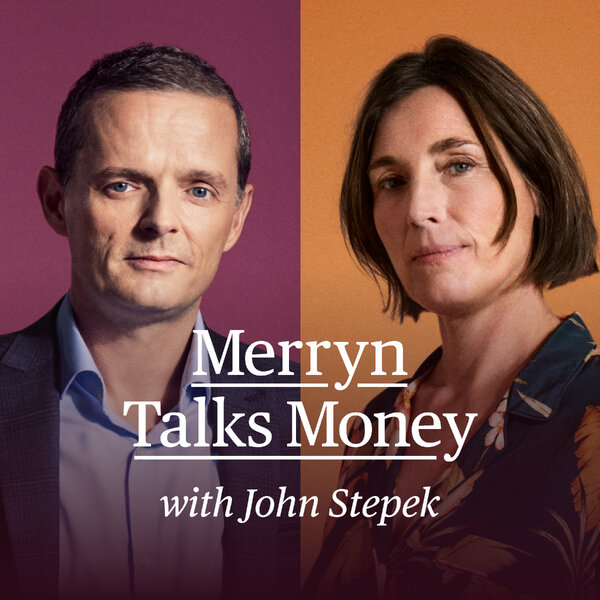
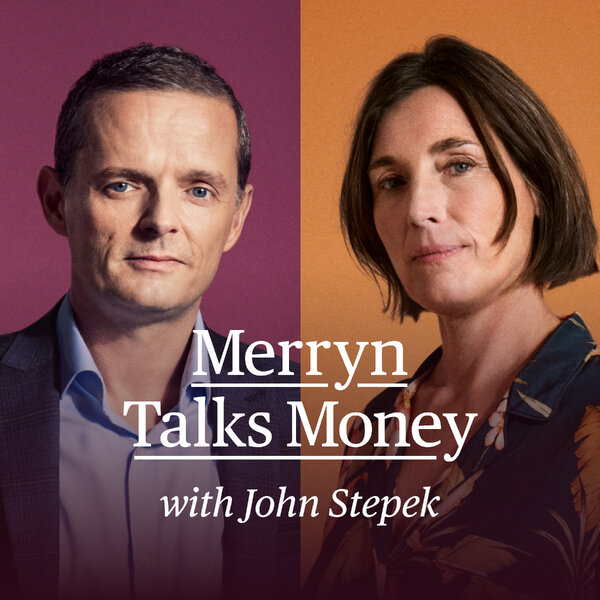
Simon White, a Bloomberg macro strategist and regular contributor. Host: John Stebbick (Money to Stilt newsletter).
Bessent’s long-end buybacks may reduce term premium risk but yields stay high due to rising Fed hike expectations; UK yields are high largely because of inflation-linked term premium and political reluctance to make spending/tax cuts. Japan’s interventions may encourage hedging and volatility. AI: extinction probabilities are unknowable; risks include misalignment (e.g., “paper clips” scenario).
ERM peg break in early 1990s; yen rally in 2015–16; August 2024 “flash crash”; Anthropic/OpenAI “10%” doomer remarks; Jensen Huang and Sam Altman magazine covers.
Written by AI. May contain mistakes.
Exploration of SpaceX's rigorous hiring standards and company culture.
“it's the space exploration dream that draws people to the company, and Musk invokes that dream regularly to remind workers why they're there.”
Exploration of SpaceX's rigorous hiring standards and company culture.
Discussion on Scott Bessent's recent comments and market strategies.
Analysis of bond yields, market reactions, and implications for the economy.
Exploration of the Japanese yen's influence on global markets and economic policies.
“And I've got to say the Japanese authorities don't really seem to care because they seem to want it to go that way.”
Discussion on inflation in Japan and strategies for currency hedging.
“And this is basically the dreaded yen carry trade, unwind.”
Learn about SpaceX's unique hiring practices and what they prioritize in candidates.
“is defined by Musk, and job candidates must understand that a commitment to SpaceX means adhering to this culture and exhibiting loyalty to Elon Musk.”
Exploration of the current UK bond yields, inflation issues, and political perspectives.
“Shall we move on to bond yields generally?”
The discussion covers market trends, potential corrections, and future opportunities.
“But yeah, I mean, I think it feels like, I mean, prices right now are obviously kind of chopping sideways.”

Get the gist, explore an idea or ask about something said.
 Claude
On Merryn Talks Money, what are the key points of this episode?
Searching your listeningAutomatic transcript. May contain errors.
0:01This is the Bloomberg Tech Minute brought to you by ChachiPT. I'm Carol Masser. Getting hired at SpaceX requires exceptional ability and may include having Elon Musk review a candidate's resume. So writes Bloomberg Businessweek's Lauren Grush. She reports that the company culture is defined by Musk and job candidates must understand that a commitment to SpaceX means adhering to this culture and exhibiting loyalty to Elon Musk. To get hired, candidates must demonstrate their achievements from past jobs, and hands-on experience matters more to recruiters than advanced degrees, with the company looking for people with raw, innate intelligence.
0:39A spokesperson for SpaceX didn't respond to a request for comment on its recruiting and hiring practices, but according to recruiters, advisors, and those who've interviewed for jobs there, it's the space exploration dream that draws people to the company, and Musk invokes that dream regularly to remind workers why they're there. Prospective hires are told that the job will require stamina, including in job ads that candidates, quote, must be willing to work extended hours and weekends as needed. One major perk for all that hard work? Employees' access to equity, either the right to buy shares or payment in the form of restricted stock units that vest over time.
1:16That's the Bloomberg Tech Minute brought to you by ChachiPT. Get started at ChachiPT.com. For big business, AI opened up a world of promise, but that world of promise turned into a world of pain. Cost spiraling, data trapped, security and governance risks multiplying, and ROI out of reach. That's why enterprises turned to Boomi to connect data, apps, and AI, helping them operate securely, efficiently, and at scale. Boomi turns a world of AI pain into a world of AI gain. As Boomi says, we got you. Head to boomi.com. That's B-O-O-M-I dot com. Bloomberg Audio Studios. Podcasts. Radio. News.
2:14Welcome to the Merlin Talks Money Market Wrap, where we talk about the biggest moves in the markets this week and what's driving them. I'm John Stebbick, senior reporter and author of the Money to Stilt newsletter And joining me this week, a man who's becoming something of a regular Bloomberg macro strategist, Simon White Welcome back Simon, good to see you again Thanks for having me again John And I hope I didn't jump the gun there by saying you're becoming a regular Oh my god, I'm going to twist your arm in the future as well But anyway, so Simon, this week's chat, I wanted us to get into a few of the big topics this week First I think we'll have a wee chat about Scott Besant The US Treasury Secretary And what he's been doing And then I think Really the biggest story of the week Is bond yields and what's been happening with them Globally but particularly in the UK And if we get two minutes we can maybe Touch on AI at the end because A load of people At Anthropic and OpenAI Have been saying that it's going to murder us all in our sleep Or something along those lines But let's start with Scott Besant So this week he kind of came out and said I am the house I am the house now I have pretty good insight into what the Bank of Japan is going to do You can bet against me if you want And kind of challenged the market to bet against him In the various things that he's trying to do So do you want to talk us through what he's actually doing And whether he's actually having any success at it?
3:41Well thanks for the intro And I'm glad we're keeping the human extinction thing to the second part the show will still the least important bit yeah yeah yeah well we've still got time right exactly yes Scott Besson is yeah that was quite a comment you know I'm the house now which is kind of remarkable in a way for someone like him to say because he's got personal experience of betting against the house and succeeding right everyone knows now that he bet against Sterling in the early 90s and that worked they broke the peg at the ERM so I'm kind of yeah a bit surprised he's saying that but he keeps talking about his asymmetric information so we'll find out what that is at some point He's basically saying that I've got insider knowledge and you guys are going to lose It does seem quite a gutsy thing to set himself up as a target in that way but presumably Well you'd think it's sort of a case of don't watch what I say but watch what I do and he's not really done much, I mean he's done the buybacks of course and the purpose of that really is well look they've got a yield issue and they've got a massive So what they're doing is they're buying back US treasury coins at what's called the long end so like 30 years basically isn't it?
4:56Yeah so basically they've got all this debt outstanding and they're like let's buy back some of them, issue some shorter term debt so in theory it's neutral and that should hopefully help improve liquidity they actually have not really specifically said it's to lower yields but to improve liquidity but obviously they want lower yields because they've got a trillion dollar a year interest rate bill yeah which if you think is nuts like whether the entire uk economy is what four trillion or five or something like that they've got a fifth of that and just an interest which is just as wild anyway so the hope is that and actually to be fair so i was looking at this on its own terms it's actually worked so far so you did that announcement a few weeks ago if you look at the term premium based on the yield curve of longer terms.
5:39The term being, by the way, is the risk embedded in a bond. So you've basically got two parts of risk. You've got what you think the central bank's going to do, so the Fed, in terms of rate hikes. And then anything that's left over is really the extra risk for owning that bond. So really, he wants to get that down because that shows that US debt has become less risky. And on those terms, it's actually working. Problem is, though, the yield hasn't moved. And that's ultimately what they have to pay, the Treasury has to pay. And the reason why the yield's not moved is because basically Fed expectations are going up.
6:16So people are expecting the Fed to hike more. So basically the backdrop has changed and that's pushed up the yields, but the bit that Besant technically wants to target, which is the perceived riskiness of the US Treasury, that's actually worked, but he's still in trouble because... The yields are moving. So it's kind of... It's still always much. But it's classic. You've now got, it's the Fed against the Treasury, right? And we know who ultimately is going to win that battle. But that's partly the problem now is Walsh has got, obviously, he's got oil going up past$100 again as the Middle Eastern conflict re-escalates.
6:51And you had some pretty good job numbers last week in the US. So you put all that together and the Fed's kind of like in a very invidious position, right? And really, whether the buybacks work in that yield sense really comes down to the Fed right now. So I wouldn't want to be Kevin Warsh, because he's either going to upset the White House, or he's going to upset the Besant House, as in the casino. One of them he's going to upset, right? If not both of them. I mean, that really is... Yeah, he is kind of between a rock and a hard place from that point of view, which I guess means the easy, obvious thing for him to do would just be do what he thinks you should do.
7:28But I guess we'll see. Easier said than done. It's easier said than done. But in terms of what happened with the yen this week, because also that's another thing where Besant set himself up essentially is, I mean, I do, on another point, I find it quite interesting that effectively he really is kind of interfering in another country's monetary policy in quite a dramatic way. And I've got to say the Japanese authorities don't really seem to care because they seem to want it to go that way. It'll be interesting to see what happens if they ever start to disagree. But tell us what's happening there.
8:02Well, I guess it's a global casino, right? So it's not just betting on US Treasuries, it's the yen. It's kind of joined up. I mean, Japan is the largest owner of US Treasuries. So I think the worry is that they are forced to start selling these Treasuries to essentially to support their currency. And Scott Besson and the Treasury don't want that. So I think that was part of the thinking behind this, let's help the Japanese support the yen. But in that sense, they're actually probably pushing an open door now. And they've probably got more chance of success with that than the buybacks, because you're at the stage now where the Japanese basically have all these, they've got like$5 trillion on assets that they own abroad.
8:44So it's massive. I don't think any other country owns as many foreign assets. And a lot of it's unhedged, which basically means that if the yen sort of goes up a lot, they lose a lot of money. And so you've got this stage and the yen started to rally a bit because you've had some of these interventions. So it's moving in that direction. But the more it does, the more it draws in these unhedged investors. Because they're suddenly like, oh, I'm losing money now. I better hedge or take off the position or whatever. But that then feeds in itself and becomes self-fulfilling. And if you look at like, the hedge ratios are very low right now.
9:19So there's a lot of potential there. And second of all, you can look at various measures that show that they're getting more sensitive to the currency rising. So there's more chance that they're likely to hedge. So I think Besson's actually pushing an open door on that one. And this is basically the dreaded yen carry trade, unwind. Yes. So basically the Japanese bring all their money home, at least in theory, and everything else. They don't even need to bring it home. They just need to put the hedges on so they can actually leave the assets. So that's kind of what I'm thinking. You know what? they're like, do you know what, better hedge now, because we've let ourselves, we'll keep the assets, we don't need to sell treasuries and annoy Scott Besson, right?
10:00I really like getting his way. Just get the hedge ratios back. And that in itself, because at 2015-2016, that was a big part of the yen rally then. The yen rallied about 20-25 % over that period. A big part of it was suddenly the Japanese going, right, we need to hedge again. Yeah, and that was pretty disruptive in markets as far as I can remember. And obviously August 2024 was when we saw a kind of, that was more a kind of flash crash type situation, wasn't it? That was a floppy, yeah. So in terms of what you should watch out for, certainly as a private retail investor, this is the kind of thing that could create volatility from time to time.
10:42Well, eventually, if you are, because usually I basically say readers if you own say you're a British person and you own a Japanese fund and you own it in sterling you haven't thought because obviously you can buy hedged versions of these things my take tends to be don't worry about it you've got enough to worry about choosing equities and equity funds without bothering your head about what's going to happen to the currency you might as well kind of like take the swings with the roundabouts because hedging is essentially just taking that risk in a different way. I'm just curious, what's your take on that as someone who's more accustomed to the institutional side and thinking about currency hedging?
11:25I'd take the other side with that. Ah, interesting. I think Japanese is a great trade. It's a stock trade. But I think the real, it's a big, big trade. And that really would come down to the big move is an inflationary move. So Japan has always had a potential inflation problem. but now it's really beginning to take flight. So not only is measures of inflation rising, but measures of inflation expectation are, they were already high, by the way, because they rose after the pandemic. They kind of leveled up and now they're rising again. So there's a real, I think we've got a real inflation problem.
11:57You know, be careful what you wish for in Japan. They're over-invested in bonds and under-invested in equities. They start to see there's an inflation problem. Equities could massively benefit, right? So you suddenly see the surge of domestic money into the equity market. The problem with that, of course, is there's an inflation problem. And the yen will be the pressure valve there. So that's why owning Japanese equities is a great thing, I think. You want to have that currency hedged. Interesting. Okay. So basically you're saying that if they do jump into Japanese equities, and I own the sterling version of these assets.
12:37So I guess what I'm saying is if the yen goes up against sterling, then you're laughing, assuming the equities don't fall off a cliff. But what you're saying is that it might actually go the other way. I think that's exactly what I'm saying. If the big trade here, if I'm right, and it's a big inflation thing in Japan, and Japan will do everything to try and prevent that, the release valve, if you like, the adjustment mechanism will be the yen. The yen will go. if you've got a big inflation problem in Japan the yen will go so over the longer run you're expecting the yen to weaken further rather than you could see in the shorter term money coming in and all that stuff but once that hedging is done it's kind of done that's quite interesting you reckon it's probably worth actually hedging your Japanese 100 % of all the kind of sorry to you John's just run out the door to hedge his Japanese equities dit, jag ska ihåg upp.
14:05is defined by Musk, and job candidates must understand that a commitment to SpaceX means adhering to this culture and exhibiting loyalty to Elon Musk. To get hired, candidates must demonstrate their achievements from past jobs, and hands-on experience matters more to recruiters than advanced degrees, with the company looking for people with raw, innate intelligence. A spokesperson for SpaceX didn't respond to a request for comment on its recruiting and hiring practices. But according to recruiters, advisors, and those who've interviewed for jobs there, it's the space exploration dream that draws people to the company.
14:40And Musk invokes that dream regularly to remind workers why they're there. Prospective hires are told that the job will require stamina, including in job ads that candidates, quote, must be willing to work extended hours and weekends as needed. One major perk for all that hard work? Employees' access to equity, either the right to buy shares or payment in the form of restricted stock units that vest over time. That's the Bloomberg Tech Minute brought to you by ChachiPT. Get started at ChachiPT.com.
15:19They were lined that bombshell. Shall we move on to bond yields generally? Because obviously, this is partly what Besant's headache is but it's even more a massive headache for us here in the UK because we've got the highest bond yields in the G7 and the reason for that is because we seem to have the most inflation prone economy in the G7 and it doesn't really look as if Andy Burnham and John Healy are especially inclined to tackle that issue as far as I could see from Prime Minister's question time this week. I mean, I know you saw it as well, but Kemi Badenow was saying to Andy Burnham, like, well, you know, how are you going to increase spending on defence?
16:07And Burnham's going to... So we don't want national security at the expense of social security. Which is pretty clear, right? Yes, we do everything to support our national security, but it can't come at the expense of social security. having strong national security also... Yeah, I mean, they said, I think Clarified said we're against crude cuts. But the stage is set and you kind of know, I think, where people's kind of sympathies lie. You know, I don't think many Labour MPs got into power or into government or into becoming MP to save money. You know, it's not really, you know, the thing that I guess that they're kind of driven by.
16:47So it's kind of like you can sort of see which way the wind's blowing. but Burnham has you know they've got this commitment to 3 % I think or they're going to lay it out 3 % by 2030 and then what 3.5 by 2035 and that's kind of like quite a long time right it doesn't feel there's enough urgency like if they're saying all these things but if they really believe that it was an urgent problem they'd be saying different things I think right and there would be there'd be a different conversation happening right now and you wouldn't even be putting and by the way it's not to pick on I know the right is sort of saying, or sorry, Burnham is saying this is like an easy left-wing, right-wing thing.
17:25It's like, if you look at like, I had to look at this chat GBT number, so take with caution. But I said, which departments, what's the increase in spending since 2019? Top of the bill is the DWP. There's 100 billion pounds, which is 40 % of the entire increase of the increase in expenditure overall. So like any, you'd have to look at the thing. And a Treasury insider, this is too political, said that the low-hanging fruit is done. The only welfare cuts are really left. So I don't think it really is a right versus left thing anymore. It's just a practical accounting thing. Well, this is it. I mean, to be fair, to Burnham and even to the Starnham administration, I mean, this is coming at the end of a long period of, again, the Conservative government.
18:14and before that, even the new Labour government, whereby we've been getting rid of the guns in favour of the butter for a long time. I mean, it was in the mid-80s, wasn't it? I think something like defence spending was something like 8 % of GDP and the welfare budget was at the opposite end and now they've basically switched sides. And I think clearly one of the big issues, the only real issue with the right-left divide is that there's a presentation thing. and that it was never quite as over that, well, we're just getting rid of the defence budget so we can basically fund the state pension. I think we've got the American taxpayers to thank for that, really.
18:57Yeah, aye. I mean, they've essentially indirectly funded this welfare that otherwise probably should have been spent or some of it on defence. Yeah, and the Americans have been saying, as we've said here before, they've been saying politely for years, Guys, you need to stop relying on our taxpayers to defend your country. And now that Donald Trump's in, obviously, they've started saying it a lot less politely. But even then, you kind of look at even what's happening in Germany. And so, like, obviously, one of the big things that happened was that last year they had the German Cedric Burgundy rearm, basically, because kind of Donald Trump and J.D.
19:33Vance. JD Vance made a big speech and it kind of made everyone kind of panic because it really kind of drew a line under, look, seriously, we need you guys to spend more. But even that's kind of running into issues. And whenever you look at what they end up spending the money on, it's essentially at best infrastructure. And sometimes effectively just welfare adjacent stuff is not actually going on. Like frontline defence. Yeah, exactly. I mean, I think that happened here as well. they talk about like they included in the budget what they pay essentially for payments for veterans. Yeah. And you're like, okay, this is maybe not the sort of thing where you should be trying to equivocate and obfuscate with the language.
20:14This is like, it feels like there's an urgency. And to be fair, you know, we, by the standards of Europe, we do still spend a reasonable chunk of GDP and the 2 % has been high for the Eurozone particularly, but clearly it's not sufficient anymore. and I do think that you're right there's this problem where our muscle memory where our politicians are stuck in this world where you could basically rely on the defence budget to fund everything else but that's no longer the case but we're also up against it because we've spent so much that it is that thing as your treasury chap said there's nothing left but hard choices but who's going to be the one that says we're going to scrap the triple lock and therefore loses the next election um yes it's a hard sell it's a hard sell well it is well it isn't it isn't but i think yeah i mean i think if you're obviously a recipient of that it's a hard sell to you um and i think well that's that you've ended up with a kind of quote-unquote client state because the more people you've got on benefits you more you've got a franchise yeah right and they're all aware of that right i mean even reform surprisingly actually.
21:28They've talked about they're going to cut 50 billion. A lot of reform voters are against it. I'm surprised they kind of went down that route. But I think no matter which party it is, they're going to face that problem. Reform have also made some really frankly ridiculous promises about raising the income tax personal allowance to£15 ,000. That kind of talk is not serious either. and so while I can see why there's an appetite for policy change in the country hardly anyone is seriously talking about the actual changes that we need which is to broaden the tax base and kind of cut the spending and that is going to involve some kind of uncomfortable choices but is it the bond market that's going to have to force us to do it?
22:21I think that's the big question. Well, I mean, it has to be something, I guess, it almost feels like there has to be something dramatic that happens. I mean, the problem is, of course, is that you mentioned like UK yields. They are high, but they're kind of rising everywhere. And again, it's funnily enough, it's the term premium again. So actually the extra risk. So since Burnham became prime minister, like last month or two months in July, term premium in the UK has gone nowhere. It's actually not moved. So actually, if you look at the risk, the yields have gone up, but the actual underlying risk hasn't actually altered.
22:52but almost like i wouldn't want him to know that because because it reclates his reflexivity it's like and trump's a bit doing it in the u.s with the stock market so he can escalate the war yeah and if he knows the stock market's kind of close to highs it's certainly not down a lot but then of course that creates fertile ground for exactly what you don't want to happen to happen yeah and in this in our case yields go sky high maybe in the u.s it's yields and and stocks all the rest of it so yeah i think to force the hard choices you need to see something dramatic happening but well it doesn't happen it allows the easy the easy route right yeah um and i mean this this i guess this is the other problem because it now feels as if we're settling in for a longer war than people had anticipated and between the us and iran and so all of this pressure on energy prices is just going to go worse um so even if the country specific risk doesn't change if the term premium doesn't change the base the underlying chunk that's pushing up kind of yields is going to keep going up but I guess that's something we'll just have to keep an eye on shall we quickly talk about AI very briefly the human extinction part I'm just curious about, because honestly a lot of that stuff is philosophical and you've written some good pieces this week about the practicalities of the AI bubble and whether it's going to pop or not but on the extinction side of this stuff so a cynic would say to my mind at least that okay these guys are coming out and saying because basically what's happened is one guy resigned from Anthropic was it and said that I don't want to do this job anymore because I think there's a 10 % chance that AI's going to destroy the world Maybe he should put a bet on with the Besant Casino for that right?
24:43Exactly! What a great bet! I don't know who he's going to claim it off Human Extinction go long well yeah so the 10 % thing and then his boss basically came out or you know former boss presumably and said well no no he's right we do believe this and this is what we think so this is what we're trying to do about it and I think Asini obviously would say right well the whole doomer element of AI is to basically drum up their share prices before the IPO because they're running out of you know there's so many other things you can question AI on in terms of its economics.
25:23But what's the other side of that? What kind of arguments have you seen or do you think? What are the chances that it would, should we take this at all seriously? I mean, obviously nobody knows. I mean, all I know is that the more I follow and read these guys and women and all the rest of it that are in this area, and they're all experts, but they all just allot and disagree, which tells you that obviously nobody really knows. So I'd say that's one thing. And I think, you know, Jan LeCun, who was the former head of AI at Meta, he now has his own company, but he was always of the point of view that, you know, you have to have bad motives.
26:03Like the AI would have to have bad motives to destroy mankind. And that certainly might be true. And I agree with that. We can't just assume that an AI might be intelligent, but it might not have the same motivations as humans. But also it could just be a mistake, what they call misalignment. So it's not necessarily evil in any sense. It's just a misalignment and it misinterprets what we think is an innocent instruction. The classic example is making paper clips. And the AI just goes ahead and turns every energy resource in the universe, including us, into paper clips. It's like the scene in, I think it's Fantasia, where he wants the magic broom to fill up the cauldron of water.
26:45Oh, yeah, the sorcerer's apprentice. But because it doesn't actually know when it's exactly full, so it just keeps on just in case and then ends up flooding everything. I mean, that's a misalignment problem because it didn't understand the instruction, the way we would instruct it. So I think there is a risk, but, I mean, trying to put numbers on it, I really don't know. It's difficult. I think, I mean, I'm personally not overly worried about it because I think we're in a bit of a hype cycle. And obviously these words might come back to bite me. There'll be nobody around, I see. There'll be nobody around, exactly.
27:19So I'm all right, I'll get my bet off Scott Besson. And yeah, so I think I'm sort of inclined to sort of, there's a lot of hype and people are seeing exponentials everywhere, which is what happens in the middle of a hype cycle. So I'm kind of just resting a little bit on that. But undoubtedly there are risks. but I think it's very hard to put a number in it and even then I think that number is going to be super high. And on a slightly more practical investment level how close do you think we are to the top on this bubble because I've seen, well A, Jensen Wang was on the cover of The Economist actually doing a Sorcerer's Apprentice type kind of image.
27:58Sorcerer of Silicon Yeah, that was it it was very Wizard of Ozzy as well the kind of colours but also Sam Altman and one of his sidekicks at OpenAI are on the cover of Time and okay I mean the headlines trust us but again we all know the magazine cover indicator if you're on the cover of Time and you're a CEO or a politician probably means that your time in the spotlight is about to kind of turn a little bit less favourable I mean if we have seen a peak or we are going to see a peak jank a year, six months. I mean, maybe already. But yeah, I mean, I think it feels like, I mean, prices right now are obviously kind of chopping sideways.
28:42Yeah. And so I could see like a correction in the market, 10 or 15%, just to let some of the air out. And that's kind of happening a little bit now with the consolidation. In terms of like, when does the message come across that the overall trade, like they've overbuilt capacity? I mean, that could be a bit longer because they're spending hand over fist right now. Yeah. and nobody really knows for sure exactly what the demand for a computing power is going to be i mean i suspect they'll overbuild and they'll find out because it's all based on essentially infinite demand so all the assumptions assume that just demands essentially unbounded and i think that's stretched too far so they'll probably find at some point but that that could be a little bit further out but in the interim yeah you could easily have enough of a correction that actually might be an interim buying opportunity, right?
29:30Because if you sort of think, well, maybe the actual peak in the buggles are not going to be another like 12 to 18 months, then you've got a window to get in at like a reasonable value or better valuation. But yeah, I think we'll find out. Well, thanks, Simon. I think that was a really good chat and I think we'll have to leave it there because we've overshot our allotted time period. The AI will come and switch us off if I'm not careful. If we're still around, yeah.
30:01Thanks for listening to this week's Merrin Talks Money Market Rap If you like our show, rate, review and subscribe Wherever you listen to podcasts Be sure to follow me and Merrin on X on Twitter Merrin is at Merrin SW And I'm John underscore Stepik This episode was produced by Summer Saturday Sound design by Blake Maples Questions and comments on this show And all our shows are always welcome The show email is merrinmoneyatbloomberg.net
30:55www.bloomberg.com slash tech London.
Britain’s bond yields are the highest in the G7, as renewed inflation pressures collide with rising defense costs and a government reluctant to make politically painful spending choices. This week, John Stepek is joined by Bloomberg macro strategist Simon White to discuss whether markets will ultimately force Britain’s hand, what Scott Bessent’s interventions mean for US Treasuries and the yen, and whether the AI boom is getting closer to a correction.
See omnystudio.com/listener for privacy information.