Ask ChatGPT
 Merryn Talks Money
30 Sep 2026 · 11m · 6 chapters

Listener Q&A on retirement investing and market mechanics, plus a brief segment on gold ETFs/ETCs. Guests/hosts: Merrin Somerset-Webb and senior reporter John Steppett (Money Distilled author).
none mentioned beyond their roles as host/reporter and author.
For gold, physically backed ETFs/ETCs can be “pretty safe” for price exposure, but carry custodian/insolvency/management/financial risks; for “apocalyptic” insurance, only accessible physical gold truly fits, though it’s harder to store. For small-cap investing, buying shares can support firms more than in large-company protest selling because higher share prices lower future cost of capital and help future fundraising; going public can also be about profile. For retirement (DC/SIP wrapper), de-risk by increasing diversification and shifting toward cash/cash equivalents or short-term gilts as retirement nears, while staying invested.
SpaceX hiring culture (Elon Musk resume review, long hours, equity/RSUs); EV demand stabilization (Tesla/Rivian better-than-expected sales, EV share ~6%); EV inventory days reduced; used EVs/hybrids gaining share.
Written by AI. May contain mistakes.
Discussion on risks and benefits of holding gold through ETFs versus physical gold.
“it's the space exploration dream that draws people to the company, and Musk invokes that dream regularly to remind workers why they're there.”
Exploring risk tolerance in gold investment and the need for physical gold.
“about from someone who came from one of our fringe shows in Edinburgh.”
Delving into the implications of buying shares in small companies versus larger firms.
“So you probably should have a bit more physical gold literally to hand than you do at the moment, I guess would be the only kind of bit I would add to what you said.”
Discussion on the importance of market participation for businesses.
“kind of benefit from as opposed to, you know, buying into SpaceX once it's already made a trillion percent on the private market, then this is the kind of thing that we want to encourage.”
Insights on how to manage investments leading up to retirement.
“Thank you Robert for your question By the way, Robert says that you're great John So that's nice.”
Insights on how to manage investments leading up to retirement.
“Artificial intelligence is transforming how businesses operate.”

Get the gist, explore an idea or ask about something said.
 Claude
On Merryn Talks Money, what are the key points of this episode?
Searching your listeningAutomatic transcript. May contain errors.
0:01This is the Bloomberg Tech Minute brought to you by ChachiPT. I'm Carol Masser. Getting hired at SpaceX requires exceptional ability and may include having Elon Musk review a candidate's resume. So writes Bloomberg Businessweek's Lauren Grush. She reports that the company culture is defined by Musk and job candidates must understand that a commitment to SpaceX means adhering to this culture and exhibiting loyalty to Elon Musk. To get hired, candidates must demonstrate their achievements from past jobs, and hands-on experience matters more to recruiters than advanced degrees, with the company looking for people with raw, innate intelligence.
0:39A spokesperson for SpaceX didn't respond to a request for comment on its recruiting and hiring practices, but according to recruiters, advisors, and those who've interviewed for jobs there, it's the space exploration dream that draws people to the company, and Musk invokes that dream regularly to remind workers why they're there. Prospective hires are told that the job will require stamina, including in job ads that candidates, quote, must be willing to work extended hours and weekends as needed. One major perk for all that hard work? Employees' access to equity, either the right to buy shares or payment in the form of restricted stock units that vest over time.
1:16That's the Bloomberg Tech Minute brought to you by ChachiPT. Get started at ChachiPT.com. WISE is the smart way to manage the currencies you need around the globe. When you send money abroad using your bank, you could get hit with hidden fees and exchange rate markups. There's a better way. Try WISE. WISE uses the exchange rate you'd usually find on Google, with no unwelcome surprises. Plus, most transfers happen in under 20 seconds, which means your money arrives in less time than you've been listening to me. It's simple and free to sign up when you download the WISE app. Be smart. Get WISE. T's and C's apply.
1:53If you're a business owner, you need a card that can keep up. With the Delta SkyMiles Reserve Business American Express card, everyday purchases transform into miles you can use towards future travel. So business as usual can lead to a well-deserved getaway. And for a limited time, card members can earn 200 ,000 bonus miles, the highest miles offered this year. Whether you're traveling for business or planning your next adventure, now's a great time to make every purchase go further. Apply today at www.delta.com slash podcast. Offer ends November 4th. Minimum spending requirements and terms apply.
2:32Bloomberg Audio Studios. Podcasts. Radio. News.
2:47Welcome to Merrin Talks Your Money, the personal finance edition of Merrin Talks Money. In these bonus podcasts, we talk about the best strategies for making the most of your money. I'm Merrin Somerset-Webb and with me, senior reporter and money-distilled author, John Steppett. Hi, John. Hi, Mel. John, we get a lot of emails, which we love. We love emails. Send us more emails. Today, we are digging into the show inbox and pulling out some of the questions that listeners have sent us to discuss. Okay, so the first one is one that I know we both have firm answers to it, and it's about from someone who came from one of our fringe shows in Edinburgh.
3:22And basically, he holds the majority of his gold through one of the physically backed ETFs rather than owning it directly. Increasingly, he says, he's been wondering about the risks inherent in holding gold this way and whether some of those risks potentially undermine the very reasons for owning gold in the first place. So he wants to know, how comfortable are we with the idea of physically backed ETFs or ETCs as a long-term way of holding gold? Now, I have a very clear answer to that, which is that you're holding gold as emergency insurance. So I think that you should have a reasonable amount of your gold in actual, physical, easy-to-access gold, just in case all the worst things really happen all at once, and then you have your gold.
4:14But you can also, you know, gold in an ETF or ETC with a good provider is a pretty safe way to do. Yes, you are inside the financial system. Yes, you do have custodian risk. and management risk and financial risk to the extent it's entirely possible that your provider might become insolvent, might go bust, and then it'll be difficult for you to reclaim your money. But the gold is there. The gold is there. And while you don't have an individually allocated bit of gold, you have a share of the existing gold. So are there risks with it? Absolutely. but the gold is there. So yes, you should have a reasonable amount, I think, as physical gold, because one of the reasons for holding gold is because terrible, terrible things can happen.
5:02But if you're holding it as a protection against inflation or the general collapse of fiat currencies or repression that doesn't involve seizing gold, then it's a perfectly good way to capture that upside. Is that fair, John? Yeah, I do think that's fair I mean, I think in a funny kind of way There's a risk appetite thing going on here And the honest truth is that I am not so worried about the physical side I definitely take your point about If you're genuinely worried about a kind of apocalypse So if you genuinely want to insure against an apocalyptic scenario Then the only answer is to have some physical gold That you can literally access which creates its own problems.
5:48It's a pain in the neck to store and you have to have a safe, things like that. But it's, you know, if that's what you want, then that's what you need to have. I'm perfectly comfortable with the idea of physically gold-backed ETF. Don't have any kind of worries about that. I think it's a good way to get exposure to the price. But what I would say is this reader has pointed out that they actually do hold quite a lot of gold relative to, I guess, you know, certainly what your average kind of investor does. And so from that point of view, I would think that, well, you're clearly somebody that is worried about this sort of thing.
6:23So yes, you specifically probably have got a lower risk tolerance for the emergency scenario. So you probably should have a bit more physical gold literally to hand than you do at the moment, I guess would be the only kind of bit I would add to what you said. Okay, fair enough.
6:49This is the Bloomberg Tech Minute brought to you by Chachi PT. Now with Chachi PT work, I'm Carol Masser. Just when it seemed American car buyers had left electric vehicles for dead, there are new signs of life in that corner of the auto market. Bloomberg's Kara Carlson and Gabby Coppola report that Tesla and Rivian each posted better-than-expected EV sales for the third quarter. Executives at Hyundai and Ford say dealers are asking for more battery-powered inventory to sell as customers come back. Even some lower volume models from Toyota and GM's Cadillac brand are gaining momentum. Dealers have also sold through much of that excess inventory, going from about a 180-day supply of EVs in early 2026 to 78 days' worth in August, roughly in line with industry stocks of vehicles with combustion engines.
7:36It all points to EV demand that's beginning to stabilize after last year's boom and bust, tied to the cancellation of generous U.S. tax credits for EV buyers. EV sales have stabilized at close to 6 % of the U.S. market this year, according to researcher Cox Automotive. To be sure, many automakers continue to report weak year-over-year EV sales, and a demand boom for new EVs has not materialized. Instead, shoppers are snapping up gas-electric hybrids, as well as used EVs which can be had for prices similar to their conventional counterparts. That's the Bloomberg Tech Minute brought to you by ChachiPT.
8:09Get started at ChachiPT.com slash work. Available with all paid ChachiPT plans. The world of business is constantly evolving. Every day, new challenges, new opportunities, new ways of working. Comcast Business keeps you totally in step with secure AI-backed networking built to power the way modern business gets things done today in more than 100 countries around the world. That's some serious muscle. And get this, Comcast business powers over 90 % of the Fortune 500 and millions of small businesses. Behind it all, network engineers, cybersecurity specialists, support teams, thousands of experts answering your call at 2 a.m.
8:54like it's 2 p.m. Always on, always ready. That's a lot of coffee. One partner powering how business gets done for companies of every size all around the globe. When you add it all up, no one does business like Comcast Business. Running a small business takes everything you've got. But with Chase for Business, you're not alone. They bring together local support and a broad range of resources to more than 7 million customers. With a deep understanding of your day-to-day needs, they provide products and guidance built to help you thrive. Right now, earn$500 when you open a new Chase Business Complete Checking account for new business checking customers with qualifying activities.
9:33Offer expires January 21st, 2027. Chase Business Complete Checking has the flexible tools you need to accept payments, make deposits, and manage your finances with confidence. Learn more at chase.com slash podcast biz offer. Chase, make more of what's yours. Fees may apply to Chase Business Complete Checking Accounts. The$500 offer is available for new business checking accounts with qualifying activities through 1-21-2027. Eligibility and qualification requirements must be met. Additional restrictions may apply. Please speak with a business banker for more information. JPMorgan Chase Bank, NA.
10:09Member FDIC. Your team is on a deadline, but moving all your enterprise data will take time your business simply doesn't have. IBM technology lets AI work with your data where it already lives, with an open hybrid cloud approach designed to build on your existing investments. It's another way IBM helps you put your data to work. Let's create smarter business. IBM. Visit ibm.com to learn more.
10:44Right, John, here's another one, which I actually think is kind of interesting, and we've discussed it the other way around previously. So it's from Tim, and he's writing about one of the podcasts we did recently. This one was with Lawrence Hulse, who is from Onward Opportunities, basically invested in small caps. And along the way in the podcast, he mentions that him buying the shares supports the businesses that he's buying into. And Tim says, you get this often, but what does it mean in that if you're just buying shares in the secondary market, it doesn't seem to hold. So an investment fund buying a stake is just facilitating the selling of other investors.
11:24the funds, the shares just switch hands, but there's no impact on the firm itself. Now, that is absolutely fair. And one of the things that we've talked about, or I've written about quite a lot over the years, is that when people sell shares in big companies as a protest, you know, sell shares in tobacco companies or whatever, it makes absolutely no difference whatsoever to anything because the capital has already been raised and the company just carries on as is. But it's different, I think, if we're talking about small companies who may need to raise money again in the future. The higher the share price, the lower their cost of capital effectively.
12:04So if they want to raise more money, they want to issue shares at a high price. So if you're supporting a smaller company that may need an injection of capital, then simply by buying and holding the shares, you are to a degree supporting them. So that does kind of work. And also, of course, but in the same way, you're providing them with the ability to pay their employees with some kind of equity stake or some kind of option stake, which we don't necessarily always approve of. But nonetheless, there's a positive for company management. So I'd say that if you're right down the bottom of the market cap structure, that can work.
12:38And if you look at the other way around, one of the things that we've talked about, not quite the other way around, but with bigger companies, we've talked previously about the way that passive pushes some shares in some companies up to what appear to be unreasonable valuations relative to their business. And one of the things that that does is the misallocation of capital on the other side, and it allows companies to raise large amounts of money very cheaply when maybe they wouldn't have otherwise. So it holds in that kind of place. You have to be raising capital or be needing at some point to raise capital for it to matter.
13:12Have I explained that well or have I made a complete mess of explaining it? No, no, no. I think you've explained the practical side of it really well there. but also there's the other point of when you go public there's an element of doing that for profile as well and it's one thing if you're BP you don't need the profile but if you're a kind of small cap that's just going public on AIM or even at the bottom end of the footsie then at least one of the reasons a lot of companies do that is to get some kind of exposure some kind of profile and obviously investing in it is a good way to kind of like help them on that front as well.
13:52You know, I know the other point that we're always talking about is if we want to have companies that, you know, British people, if you like, kind of benefit from as opposed to, you know, buying into SpaceX once it's already made a trillion percent on the private market, then this is the kind of thing that we want to encourage. And that's getting away from what Tim's asking to an extent. but if you want to have a thriving ecosystem of businesses then they need to know that they can go on the market and someone's going to be interested in their shares because if they don't then if Lawrence House isn't buying them then who is going to buy them I think this is the other issue why have a market at all Okay, I think we're agreed on that Right, one more question before we finish up today This is from Robert in Sevenoots Thank you Robert for your question By the way, Robert says that you're great John So that's nice.
14:47He is suggesting that we do some podcasts or even just talk about how you manage a tricky 10 years before you actually start taking your pension, assuming you have a DC pension that's inside a SIP wrapper, for example. How do you balance the move to less risky assets while at the same time acknowledging you may be investing for 13 more years? Now, actually, we should do a proper podcast on this, but there is one thing that I wanted to say about it, which is that, of course, you can bring your risk levels down. You become increasingly diversified. Maybe you move more into equity income, et cetera.
15:17So there's lots of things you can do to bring down your risk while being fully invested. But the one thing that I would say is this is a time to have more cash or cash equivalents. So as a younger investor, we always say, well, you know, maybe you should have six months worth of spending money in cash. That makes sense. And then the rest of your money, you have time for it to grow. But if you are older, it seems to me that you should have quite significantly more of that either in cash or short-term gilts. Yeah and I think the other thing to remember is that it's moving from because when you're younger you're investing for growth but the older perhaps not the older you get the closer you get to your retirement goals or whatever your financial goal the more you should be focusing on okay I've made it now can I protect it so the kind of wealth protection element so having a kind of clear idea how much you think you need is also really helpful there because then it gives you the confidence to do the kind of de-risking that perhaps you need to do because it's hard it's hard to shift out that mode of like oh I want to make X percent and realise actually what I've got is just about enough so maybe I should be looking for something that delivers Y percent instead and that's particularly the case if historically you've found investing to be kind of fun you know there's an expert it's not so much fun right you have to maybe you have to do what we always suggest people do which is that you move the majority of into more diversified more income generating etc and just keep a little bit for playing yeah yeah anyway we should do a full podcast on this and we'll try and find a proper expert come and talk to us about this anyway more questions please send them in we like them and also it makes us think which is useful
17:05thanks for listening to this week's Merrin Talks Your Money if you like our show rate, review and subscribe wherever you listen to podcasts also be sure to follow me and John on x at Merrin SW and John underscore Stapik this episode was produced by Zamasadi and Moses Andam questions and comments on this show and all our shows are always welcome our show email is
17:31Artificial intelligence is transforming how businesses operate. But what will it take to build a truly autonomous AI enterprise? On October 28th in Boston, join the Bloomberg Tech Briefing, Building the Agentic Enterprise, to hear business and technology leaders explore the strategies needed to build cyber resiliency and secure trusted AI systems for the agentic AI era. Proudly sponsored by HPE. Learn more and register at bloomberglive.com slash bloombergtechbriefing.
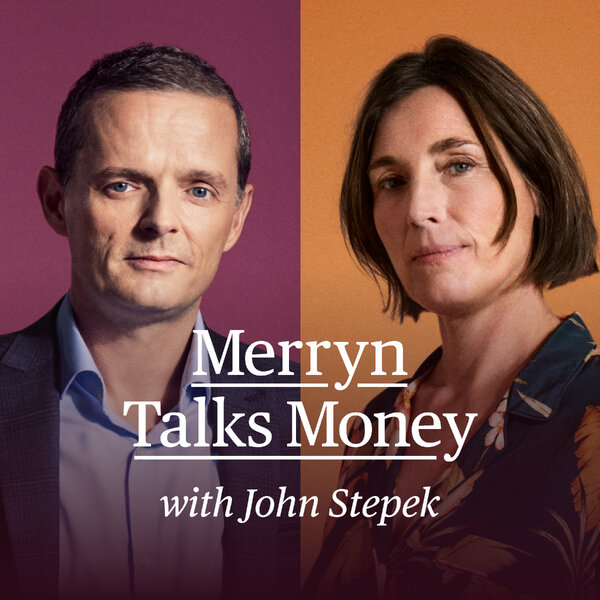
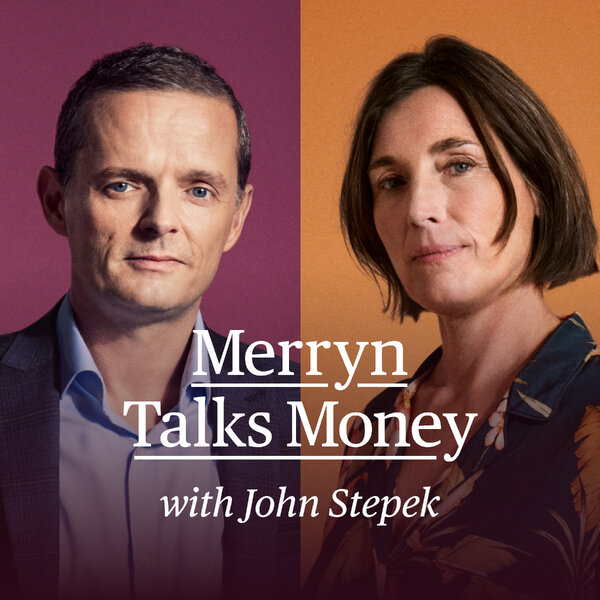
Merryn Somerset Webb and John Stepek answer some of your questions. They explore the differences between holding physical gold and investing through an ETF, whether or not buying shares actually benefits the company you've invested in, and how best to adjust your retirement investment strategy as you draw closer to the big day.
See omnystudio.com/listener for privacy information.