Ask ChatGPT

Episode 2 of Bloomberg’s “The Portfolio Reset” argues that passive investing no longer guarantees exposure to the next big winners because much growth happens in private markets (e.g., SpaceX) and because passive flows can distort prices and concentrate holdings.
Lauren Grush (Bloomberg Businessweek reporter, wrote about SpaceX recruiting culture); Matt Levine (Bloomberg columnist); Paul Kearney (Asset Risk Consultants); Simon E. Cook (Downing Fund Managers); Michael Green (former hedge fund manager at Canyon Capital; worked for Peter Thiel); Jack Bogle is cited; plus Simon Ebencourt (index/flow discussion); SpaceX spokesperson declined comment.
Private-market access is limited; passive funds buy/sell mechanically, amplifying big stocks; index rules force valuation/philosophical judgments; “passive” is implementation, not strategy.
SpaceX IPO valuation (~$1.8T/$2T range), Millennium Management trading ~$4B on index-change expectations, and equity vesting/hours in SpaceX hiring.
Written by AI. May contain mistakes.
Discussion about hiring practices and company culture at SpaceX.
“it's the space exploration dream that draws people to the company, and Musk invokes that dream regularly to remind workers why they're there.”
Exploration of SpaceX's IPO and its significance in the market.
“The Chase Mobile app is available for select mobile devices.”
Analysis of the shift from public to private markets and investment strategies.
“and the investors who arrived at the IPO.”
Discussion on the dominance of passive investing and its implications.
“I'm Merrin Somerset-Webb, editor-at-large for Bloomberg UK Money and author of the weekly Merrin Talks Money newsletter.”
Exploration of the necessity of active investors in a predominantly passive market.
“But this is not the market that we have today.”
Learn how passive funds operate and influence market dynamics.
“They are always active investors because they are deploying capital continuously.”
Explore the challenges and misconceptions surrounding passive investing.
“Please speak with a business banker for more information.”
Explore the challenges and misconceptions surrounding passive investing.
“Now, John, remember how we started this episode with SpaceX?”
Learn about the complexities of portfolio management and the importance of active judgment.
“really concentrated in the winners of the last decade and particularly in technology.”
Get a sneak peek into the practical insights and future discussions about portfolio resets.
“I think that's honestly what's keeping us down.”

Get the gist, explore an idea or ask about something said.
 Claude
On Merryn Talks Money, what are the key points of this episode?
Searching your listeningAutomatic transcript. May contain errors.
0:01This is the Bloomberg Tech Minute brought to you by ChachiPT. I'm Carol Masser. Getting hired at SpaceX requires exceptional ability and may include having Elon Musk review a candidate's resume. So writes Bloomberg Businessweek's Lauren Grush. She reports that the company culture is defined by Musk and job candidates must understand that a commitment to SpaceX means adhering to this culture and exhibiting loyalty to Elon Musk. To get hired, candidates must demonstrate their achievements from past jobs, and hands-on experience matters more to recruiters than advanced degrees, with the company looking for people with raw, innate intelligence.
0:39A spokesperson for SpaceX didn't respond to a request for comment on its recruiting and hiring practices, but according to recruiters, advisors, and those who've interviewed for jobs there, it's the space exploration dream that draws people to the company, and Musk invokes that dream regularly to remind workers why they're there. Prospective hires are told that the job will require stamina, including in job ads that candidates, quote, must be willing to work extended hours and weekends as needed. One major perk for all that hard work? Employees' access to equity, either the right to buy shares or payment in the form of restricted stock units that vest over time.
1:16That's the Bloomberg Tech Minute brought to you by ChachiPT. Get started at ChachiPT.com. For big business, AI opened up a world of promise, but that world of promise turned into a world of pain. Cost spiraling, data trapped, security and governance risks multiplying, and ROI out of reach. That's why enterprises turned to Boomi to connect data, apps, and AI, helping them operate securely, efficiently, and at scale. Boomi turns a world of AI pain into a world of AI gain. As Boomi says, we got you. Head to boomi.com. That's B-O-O-M-I dot com.
2:21The Chase Mobile app is available for select mobile devices. Message and data rates may apply. JPMorgan Chase Bank, N.A. Member FDIC. Copyright 2026. JPMorgan Chase and Company.
2:36Bloomberg Audio Studios. Podcasts. Radio. News. We have SpaceX shares indicated to open 29 % above the IPO price of$135. How big a deal is this SpaceX IPO? I mean, the numbers are eye-popping. How big a deal? The biggest deal ever, literally. SpaceX had the largest ever IPO. It's now one of the most valuable companies in the world. Nearly$2 trillion. That was the valuation SpaceX carried on to the stock market when it finally went public in June 2026. Not a scrappy startup, not even a fast-growing billion-dollar company. On its first day as a listed company, SpaceX was already one of the most valuable businesses on the planet.
3:21And that's what made this listing so extraordinary. Because for public market investors, this is the beginning. But for SpaceX and all the private investors already part of the company's journey, an enormous amount of the growth had already happened. So, rewind more than 20 years. Back to 2002 when SpaceX was founded. Its early investors were putting money into a company that were still trying to prove it could reliably get a rocket into orbit. Any launch that goes well is significant, but this one is sort of a big deal because it proves out this basic idea that rockets and spacecraft can be reused successfully.
3:56Then came the breakthroughs. Rockets landed, astronauts went into orbit, Starlink satellites filled the sky, and as the technology was being proven, the value of the company was claiming alongside it. And the latest funding round by SpaceX Value's Elon Musk company at about 74 billion investors put in 850 million led by Sequoia Capital. 74 billion dollars there, then hundreds of billions and eventually two trillion dollars by the time SpaceX reached the public market. So you just need to think about the difference between investors who got in along the way and the investors who arrived at the IPO.
4:29So the founders, the employees, the venture capitalists, the cleaners, other private investors, they all owned SpaceX while it was making that journey from an experimental rocket company to one of the biggest businesses in the world and still an experimental rocket company. But by the time it was listed, much of that extraordinary increase in value had already happened. We wanted to bring you to the floor of the NASDAQ, where SpaceX executives are ringing in today's trading. They're celebrating the launch of their highly anticipated historic IPO. Now that bell marked the moment that SpaceX finally entered the public markets, but it also marked something else.
5:04A huge amount of wealth created by one of the defining companies of the past two decades being created before it even got there. And that matters if your investment strategy is built around one very simple idea. Buy the public market and let capitalism do the rest. Some of the most important companies of this generation have been able to raise enormous amounts of money without going anywhere near a stock exchange. We are now going to break records in 2026 for IPOs and secondaries. And SpaceX, of course, is the granddaddy kicking it all off in a big way. But we're going to see OpenAI and Anthropik and probably some others.
5:43They are staying private for longer and they are becoming bigger while they're private.
5:54Welcome back to our special miniseries, The Portfolio Reset, getting your money to do more. I'm Merrin Somerset-Webb, editor-at-large for Bloomberg UK Money and author of the weekly Merrin Talks Money newsletter. And I'm John Steppich, senior reporter and author of the daily Money Stilled newsletter. And over three episodes, we are questioning some of the assumptions underpinning markets today and how to think about what that might mean for your own investment strategy. This is episode two, so if you haven't listened to episode one, go back and do that first. In that episode, we looked at how passive investing went from a genuinely revolutionary idea to something approaching the default investment strategy.
6:32And we also explained how rising concentration in major indices, particularly in the US, is making passive portfolios less diversified and potentially more risky. In this episode, we're going to continue to look at how the market around passive investing is changing and how passive investing is in turn changing the market. We'll look at how fund managers are now trading around passive flows and how the rules that decide what's getting into an index can shape the way passive investing works.
7:04We explained in the first episode of this series that for decades, one of the great attractions of passive investing was very simple. If you buy the market, you will profit from the growth of the next generation of winners. But that logic doesn't apply anymore. if more of that growth happens before those companies ever enter the market you are buying. Yeah, man. So 20 or 30 years ago, you could realistically say, if you want exposure to capitalism overall, then just buy public markets. But today, it's not as clear that those two things actually overlap quite as neatly. You know, you see things like SpaceX going public at a$1.8 trillion valuation.
7:44Maybe it will grow rapidly into a$20 trillion valuation in the next few years. And the people who bought right after the IPO will do great. But$1.8 trillion is a lot of money, right? Like a lot of growth that has happened at SpaceX over a long period of time has gone entirely to private investors. That's Bloomberg columnist Matt Levine making a point that brings us to a fairly obvious question, John. If I am missing all this growth because I'm stuck in public markets, why don't I just invest in private markets instead? Yeah, I mean, that sounds good. But unfortunately, it's not quite that easy.
8:16I think there's a danger that's really worth kind of spending a bit of time on. So we all know now that private markets are increasingly being sold to individual investors as the next great opportunity. And that includes things like governments being desperate to cram them into your pension fund. There's an incredibly large difference between saying that some of the world's best investments have been in private markets like SpaceX or whatever, and saying that private market investments that you can get hold of right now are going to also be the world's best investments. It's all about access, isn't it?
8:51Yep. The private equity space is dominated by large institutional players that have been backing the most successful firms for decades. it's very difficult for private clients to get that same type of return. That's Paul Kearney at Asset Risk Consultants. And there's a particularly nasty statistical problem here as well, which is that private equity returns are hugely dispersed. So the best managers have absolutely extraordinary records, but the less good ones can be less spectacular. Yeah, exactly. And so knowing that Yale or some other giant famous pension fund has made fantastic returns from private equity isn't terribly helpful if you can't invest in the funds that they invest in.
9:32Exactly. And Bloomberg columnist Matt Levine makes a different but rather related argument, which is to say that the private equity sector in itself has now become absolutely enormous and its sheer size in itself changes the returns that you can potentially get from it. When private equity was 1 % of listed equities, then you're getting kind of the lowest hanging fruit, right? You're getting buyout funds buying the companies that are most susceptible to being improved by the private equity playbook that are most poorly managed or have the poorest capital structure. And you can get huge returns from private equity.
10:10So in other words, try and imagine private equity as a small group of super clever people hunting around for badly run businesses that they can pick up cheaply, fix and sell on. Also, imagine those people are really very good at it. Now, if that's what's happening, there could be enormous returns available. But then imagine suddenly that you've got much, much more money piling into the same strategy. And at the same time, maybe the managers aren't quite as super clever and it doesn't work in the same way. When private equity is like a trillion dollars, it's like a competitor to an index fund. You're kind of buying every company and you're buying them in a slightly different way where private equity would argue you have better incentive structures for management.
10:54you have better capital structure, you should expect a higher return, but it's not clear that's true. And what you're not getting is the best companies or even the best buyout farms. You're getting sort of like a mass-produced beta-like product. Okay, so that's the first problem. Passive investing alone no longer gives you exposure to some of the best companies because those aren't even being listed anymore. And you can't fix that problem for yourself by investing in a random private equity fund because that's not the same as it was either. Let's talk about an expect change in the market that means passive is not always cracked up to be.
11:27And that is it's actually attracting too much of our money now. Is it becoming too dominant? When the idea of passive investing initially took shape, it was a tiny participant in a market dominated by people actively deciding what individual companies were worth and buying or selling them on the back of that decision. But this is not the market that we have today. Jack Bogle himself always said that this will only work when it's a small part of the market because what that market relies on are the collective decisions of loads and loads and loads of different investors. That is Simon Evan Cook, fund manager at Downing Fund Managers and his point is that passive investing needs active investors.
12:14Yeah and that's absolutely right because for a tracker to work someone has to be doing the work of deciding what the companies in the tracker are actually worth and simon's argument is that this balance has now shifted and shifted too far in the wrong direction back in the 70s just a tiny little piece of the market that was aping what everyone else was doing fast forward to today the market is increasingly driven by passive flows. So the question is, who's driving the bus? What happens when passive goes from being a passenger in the market to being one of the biggest vehicles in it, possibly even the actual driver?
12:52Yeah, I think this is really worth unpacking because this kind of gets to the heart of the problem. Because if you think about what fundamentally investing is about, that starts with the company. It starts with its profits, its debt, its management, its prospects, whatever dividends it might be. you weigh all that up and you ask a simple question, given what I know, is this company worth buying at today's price? The key point is that a passive fund doesn't even do it. Money comes in, investors buy the tracker, the fund allocates it according to the rules of the index, money goes out and the fund then sells according to those same rules.
13:30Every single day they receive inflows from investors in the form of cash and that cash needs to be reinvested in the manner of the portfolio. That cash deployment creates an additional flow. It also means that they are never passive investors. We spoke to Michael Green about this idea. He is a former hedge fund manager who worked for Canyon Capital and for tech billionaire Peter Thiel. He's been pretty vocal about his belief that passive investing is in itself distorting markets. So he frames passive funds as being like super simplistic active funds, which I think is kind of a useful way to understand why this might be affecting overall capital allocation across markets.
14:12They are always active investors because they are deploying capital continuously. They're just active investors that operate off of the world's simplest algorithm. Did you give me cash? If so, then buy. Did you ask for cash? If so, then sell. So here's the takeaway. Money comes into your ETF, your tracker, whatever you buy. Money goes out of the same vehicle. You sell. That's the key point. So the ETF of the tracker fund is just a wrapper. The money goes into that and it's then distributed to the stocks in the underlying index. And so that is what affects the index itself. So because of the way the money is directed, the biggest stocks get even more money and then they get bigger and then they get more money.
14:53And so it becomes a kind of self-feeding cycle. and also when and if people start to sell, for example, when they start to retire, the same process will go into reverse. Yeah, so you buy, you buy the ETF, the manager of the ETF goes out and buys the stocks. So money in, buy, money out, sell. So Simon Ebencourt makes a very similar point, just from a slightly different direction. If you've got money coming into the market and it is not particularly worried about what it's buying, it will push up the price of the things that it's buying. That's regardless of whether these things are cheap and worth buying or expensive and possibly overvalued.
15:28That is exactly the concern. And that lack of interest from an index into whether things are cheap or expensive, something you would in the old days by the board or sold, isn't relevant. And that potentially changes the game for everybody else because the flows themselves can move prices, which means investors have an incentive not to think about the fundamentals, but just to predict where the money is going. So don't think about what a company is worth, not relevant anymore. Just think about where the money is flowing. Yeah, and this is the other point. That is actually changing what even the active investors look for.
16:03So, for example, there's now a huge business in trying to predict these index-driven flows. So Bloomberg recently reported, so in June, there was a big hedge fund group called Millennium Management, and two teams there made about$4 billion between them, simply trading around expected index changes. and that was more than half of the firm's profits for the month. So it is actually a lot of money. And the basic idea is simple. You work out what stocks are likely to be added to an index and you buy them before the passive funds have to. And so you potentially benefit when all that passive money follows.
16:33And you do the reverse for the stocks that are likely to be removed from the index. You short them before the index funds are forced to sell. So you're not actually betting on the prospects for the underlying company. You're betting on where the passive money is going to move next. Sounds mad when you look like that, doesn't it? It also brings up a bigger philosophical question. So if your investor is looking at balance sheets or talking to management and making the decisions about where capital deserves, keyword deserves to go, then who actually performs that vital function? Well, exactly. And as Simon Evan Cook puts it, none of this is conducive to traditional quality focused allocation of capital.
17:13If you have suddenly got a problem where nobody in the market is really particularly caring about what a balance sheet looks like, what a company's debt level is, how good the management are, then, yeah, that to me weakens the case for capitalism, of which the stock market is, you know, the central beating heart. Capital allocation is no longer primarily driven by investing in the best companies. It's driven by pumping ever more money into the biggest companies.
17:49This is the Bloomberg Tech Minute brought to you by ChachiPT. I'm Carol Masser. Getting hired at SpaceX requires exceptional ability and may include having Elon Musk review a candidate's resume. So writes Bloomberg Businessweek's Lauren Grush. She reports that the company culture is defined by Musk and job candidates must understand that a commitment to SpaceX means adhering to this culture and exhibiting loyalty to Elon Musk. To get hired, candidates must demonstrate their achievements from past jobs, and hands-on experience matters more to recruiters than advanced degrees, with the company looking for people with raw, innate intelligence.
18:26A spokesperson for SpaceX didn't respond to a request for comment on its recruiting and hiring practices, but according to recruiters, advisors, and those who've interviewed for jobs there, It's the space exploration dream that draws people to the company, and Musk invokes that dream regularly to remind workers why they're there. Prospective hires are told that the job will require stamina, including in job ads that candidates, quote, must be willing to work extended hours and weekends as needed. One major perk for all that hard work? Employees' access to equity, either the right to buy shares or payment in the form of restricted stock units that vest over time.
19:04That's the Bloomberg Tech Minute brought to you by ChachiPT. Get started at ChachiPT.com.
19:56Thank you.
20:04Additional restrictions may apply. Please speak with a business banker for more information. JPMorgan Chase Bank, N.A., member FDIC. For big business, AI opened up a world of promise, but that world of promise turned into a world of pain. Cost spiraling, data scattered across disconnected systems, security and governance increasingly complex, AI initiatives struggling to scale, and ROI that remains frustratingly out of reach. The challenge isn't AI itself, it's having the infrastructure AI needs to succeed, which is right where Boomi says we got you. Tens of thousands of enterprises trust Boomi to connect data, applications, processes, and AI.
20:44With Boomi, businesses can eliminate silos, automate workflows, strengthen governance, and create the foundation AI needs to perform at scale. The result? Faster innovation, more efficiency, better business outcomes. Boomi turns a world of AI pain into a world of AI gain. As Boomi says, we got you. Head to boomi.com to learn more. That's B-O-O-M-I dot com. Your business operates under pressure and you need control over your data. But IBM research shows only 9 % of companies have real oversight of their technology. IBM's open hybrid cloud approach is designed to give you visibility with built-in governance tools, data sovereignty, and compliance reporting.
21:28It's another way IBM helps you stay in control of your data. Let's create smarter business. IBM. Visit ibm.com to learn more.
21:43Now, John, remember how we started this episode with SpaceX? And we did that because it was a great example of a company that has had most of its extraordinary growth in private before finally coming to the public markets. Which, as we explained, is a big problem for passive investors. But we also chose to start the episode with SpaceX because it illustrates some of the other challenges to passive investing that we've been talking about. And that is once a company like SpaceX does go public, what are the index providers then supposed to do with it? SpaceX is a quite large chunk of the investable universe of U.S.
22:17large-cap stocks right now. And so if you run a U.S. large-cap index, you might think, well, we'd better have SpaceX in our index because it's a large chunk of the investable universe. And if we don't have it in our index, then we are not tracking that universe for our investors. That's Bloomberg columnist Matt Levine pointing out the first problem. If SpaceX is big enough, leaving it out starts to make the index look less like the market that it's supposed to represent. But overlaid on that, you have one historical index rules that could be as simple as like, we will wait a while after a company was public to include it in the index, or could be as complicated as the S &P's rule of we require sustained profitability before we include it in the index.
22:54And so SpaceX does not meet that requirement. So the index providers can't simply say, it's huge, put it in. They have rules and SpaceX might not fit those rules. And then also you have just people's very, very, very strong views about valuation, right? And so you have SpaceX going public at a giant valuation that's 100 times revenue. And this is where it becomes much more uncomfortable for something that is supposed to be passive. You have some people saying, if you don't put SpaceX in the index, we will miss out on this incredibly valuable company and that will be bad for index investors. And you have other people saying, if you put SpaceX in the index at this incredibly inflated valuation, it will go down and that will be bad for index investors.
23:37Either way, somebody has to make a judgment. And so as an index manager, you have to make decisions that are to some extent like philosophical about like the meaning of your index and the value of your rules. And they're to some extent valuation decisions. And this gets right to the problem with the word passive and the very thing that we've been trying to get across so far in this series. There is no entirely neutral answer. There's nothing you can do that is genuinely passive. You include SpaceX, immediately you have made a decision. You don't include it, you have made a decision. Change your rules so that you can include it.
24:11And you have definitely made a decision and a very, very active one at that. So as Matt points out, if you're an index manager, you might not think of yourself as a fund manager in the same way that active fund managers have been thought historically. But that doesn't mean that you're not going to have to make judgments. You're going to have to make philosophical judgments. You're going to have to make moral judgments and even valuation judgments about what your index is supposed to represent. Yes, so regardless of this word passive, somewhere along the chain, somebody has to be active. Exactly, which brings us right back to something that Paul Carney told us at the very beginning.
24:46There is no such thing as passive investing, because investing means the creation of a portfolio which requires judgment. Okay, so after all that, what am I actually meant to do? I don't know, John. I'm not telling you to do anything. I would never ever do that. But what I am saying is that no one should stop using passive funds. Oh, good. That is a relief. I'm glad to hear that at least. Yeah, but they're exactly as they always were. They're incredibly useful. They're cheap, they're simple, and they can give you this wonderful broad exposure across the market. I mean, it's not as broad as you once thought, but it still is pretty broad.
25:22And what we are saying is that passive investing is just a way of buying investments. It's a way of investing. It's not actually an investment strategy in itself. And this, I think, is where Paul makes the most useful distinction of all. Passive is the way you implement, not the way you build a portfolio. That can only be about active judgment. So in other words, yes, you can use passive funds to build a portfolio. But in doing so, you are not doing anything passive. You still have to build a portfolio. You have to decide, yes, you, how much you want in equities, how much in bonds, how much in gold, how much in America, how much in technology, how much in emerging markets.
26:03And whether the risks that you are taking when you put that portfolio together actually matches with what you want their money to do, where you end goal is. You know what? All of that sounds suspiciously like active investing. We're going to give it a different name, John. We are not going to call it active investing because that would be rude to active investors. What we're going to do is call it something else, something quite good, I think. Active decision making. Active decision making. I like that. So this is the most important lesson from this episode. You don't need to become a stock picker.
26:32And quite frankly, you probably shouldn't unless you've got a lot of time and you're really good at it. You'll probably lose money. But you do need to become the active manager of your own asset allocation. You need to be an active decision maker. And that starts not with asking what's going to go up next, but with a much more boring question. What is this money actually for? Yeah, John, it's pretty boring. But it is very, very important. If you are 25, for example, you are investing for a retirement that is 40 years away. Maybe, sorry to be depressing, but maybe 50 years away at this point. And that's another podcast altogether.
27:07So that's one portfolio. If you're saving for a house deposit that you need in three years, four years, five years at this point, please wait, everybody. That is something completely different. So before you start looking at these building blocks, you have to work out what you're trying to achieve. Then you can start assembling your equities, your bonds, cash, gold, different countries, different kind of companies. Then you can start looking at different types of funds, both passive and active, that may be a good way of getting into those themes. So you've got to start from the end goal and then you've got to work backwards.
27:38So all this means we end up somewhere slightly uncomfortable, somewhere where passive investing is absolutely not a bad idea, but the phrase buy the market doesn't mean quite what it did. So passive is bigger than it was. And that means that it has almost certainly, I think I would actually go certainly, it has changed the way that markets work. At the same time, the market cap weighting that we talked about earlier has left portfolios really concentrated in the winners of the last decade and particularly in technology. And at the same time, lots of the growth that you might want exposure to, both in technology and other things, by the way, is taking place outside public markets.
28:18So even when you start deciding what passive index to own, you've got to think about geography, about asset classes, about concentration, about risk. And this isn't easy. There isn't an easy way to do it. Right. So we're definitely not saying abandon passive. What we're asking you to do is don't confuse passive implementation with passive thinking. Your portfolio still requires judgment regardless of how hands off you want it to be. And that is what's going to take us on to episode three. We spent two episodes telling you how we got here and what's changed. But next time, we're going to get into the really fun bit.
28:54We get practical. What does a portfolio reset actually look like? And how do you work out how much risk you should be taking? I think that's honestly what's keeping us down. Lack of ability to take the risks that are meaningful or important to us. Well, look at how you spread that risk. The answer probably always is to diversify across rather than try and pick winners. And we'll challenge some of the old rules about what actually belongs in your portfolio. I don't think young people need bonds. So what did you own? How much did you own? And how do you put it all together for the long term? All coming next week.
29:29Really looking forward to it. Yeah, me too.
29:37Thanks for listening to the second episode in our three-part investment series. And a reminder, we will have a final episode addressing listeners' questions. So please do send them into our show email, merinmoneyatbloomberg.net. You can send it in as an email or a voice note. We may even play your question on the show. And as always, if you like this episode, share it with a few friends and leave us a review wherever you listen to your podcasts. This episode was produced by Samasadi, Moses and I'm Jennifer Seeley. Amy Keene is executive producer for Talk Podcast and Cheryl Brumley is our head of podcast.
30:09We will be back next week with more.
30:30business as usual can lead to a well-deserved getaway. And for a limited time, card members can earn 200 ,000 bonus miles, the highest miles offered this year. Whether you're traveling for business or planning your next adventure, now's a great time to make every purchase go further. Apply today at www.delta.com slash podcast. Offer ends November 4th. Minimum spending requirements and terms apply. If you listen to financial news, you know a lot of time is spent thinking about what's next, the next opportunity, the next investment, the next move. But sometimes what matters most is being ready for what you never saw coming.
31:08For more than 75 years, Cincinnati Insurance has worked with independent agents to help protect businesses, homes, valuables, and more. Because planning for the future isn't only about knowing what's next, it's about making sure you're ready for what you can't predict. Let Cincinnati Insurance make your bad day better. Find an independent agent at CINFIN.com. For big business, AI opened up a world of promise, but that world of promise turned into a world of pain. Cost spiraling, data trapped, security and governance risks multiplying, and ROI out of reach. That's why enterprises turned to Boomi to connect data, apps, and AI, helping them operate securely, efficiently, and at scale.
31:52Boomi turns a world of AI pain into a world of AI gain. As Boomi says, we got you. Head to boomi.com. That's B-O-O-M-I dot com. The world of business is constantly evolving, and Comcast Business keeps you totally in step with secure AI-backed networking in more than 100 countries. They're powering over 90 % of the Fortune 500 and millions of small businesses. That's a lot of muscle. And behind it all, thousands of experts answering your call at 2 a.m. like it's 2 p.m. One partner powering how business gets done for companies around the globe. When you add it all up, no one does business like Comcast Business.
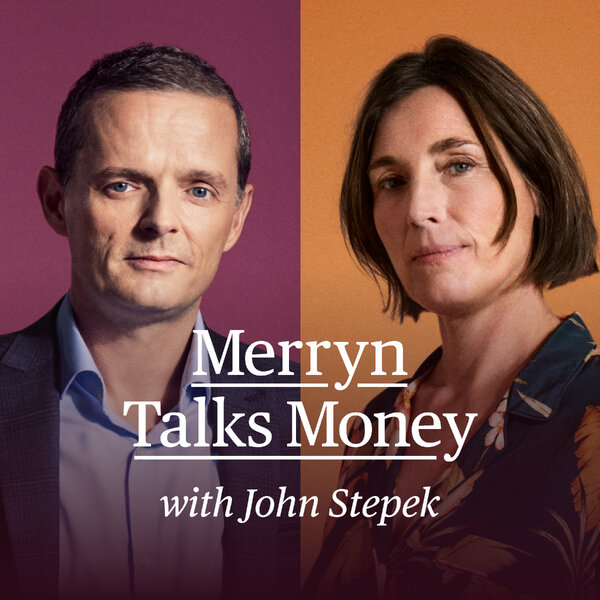
Passive investing was designed to track the market, not shape it. But as Merryn Somerset Webb and John Stepek explore in the second episode of The Portfolio Reset, the enormous growth of passive investing has changed the market it was built to follow, just as some of the world’s most valuable companies are staying private for longer.
Using SpaceX as an example, they examine the changing relationship between public and private markets and why no investment is truly passive — someone is always making a decision somewhere in the process. As passive flows grow powerful enough to move markets, Merryn and John explain why investors should make sure they’re making active decisions in pursuit of their own financial goals, rather than leaving those decisions in the hands of strangers.
See omnystudio.com/listener for privacy information.