
In short
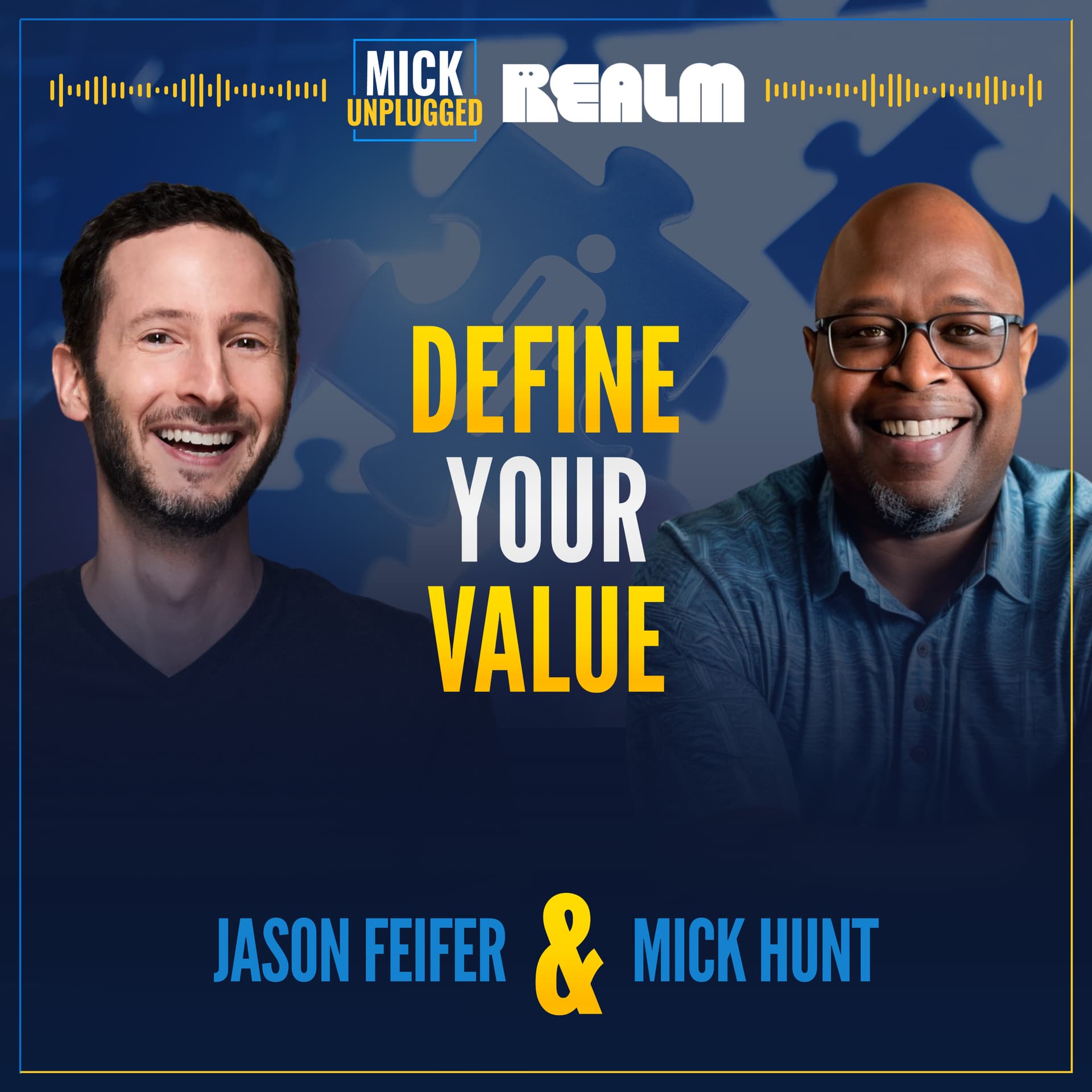
Podcast Episode Notes: Mick Unplugged - Define Your Value: Own Your Identity & Growth with Jason Feifer
Podcast Overview Title: Mick Unplugged Host: Mick Hunt Description: A podcast that encourages listeners to discover their core driving force, moving beyond the conventional 'Why' to embrace 'Because.' It aims to empower leaders and individuals to create meaningful impacts in their lives through Modern Leadership principles.
Episode Details Episode Title: Define Your Value: Own Your Identity & Growth with Jason Feifer Guest: Jason Feifer - Editor-in-Chief of Entrepreneur Magazine, storyteller, and a champion for maintaining identity in changing environments.
Episode Summary In this episode, Mick Hunt interviews Jason Feifer, who shares insightful perspectives on identity, ownership, and adapting to change in the business landscape. Jason emphasizes the importance of recognizing one's core value beyond job titles and encourages listeners to embrace their unique perspectives as they navigate their professional journeys.
Key Takeaways
- Ownership of Identity:
- Titles are temporary; true value comes from your unique voice and perspective.
- Focus on what you can own—your voice, your insights, and the value you provide.
- Redefining Your "Because":
- Your core purpose should reflect a state of being that you wish to create and maintain.
- Decisions should be aligned with this state of being for greater fulfillment.
- The 5% Character:
- Instead of sharing everything, develop a relatable and focused version of yourself for personal branding.
- This character should resonate with your audience and be scalable in its delivery.
- Embracing Change:
- Change is often viewed negatively, but it can lead to significant growth and new opportunities.
- Jason's book, *Build for Tomorrow*, outlines the four stages of change: panic, adaptation, new normal, and wouldn’t go back.
Sound Bytes
- "The thing that I can own is my voice and my perspective."
- "I help people reclaim their sense of self; that’s what I do, not sell cosmetics."
- "The magic formula for perfect media production is the right balance of predictability and surprise."
Links and Resources
- Jason Feifer's Links:
- [LinkedIn](https://www.linkedin.com/in/jason-feifer-b04543a/)
- [Website](https://www.jasonfeifer.com/)
- [Facebook](https://www.facebook.com/jasonfeifer)
- [Instagram](https://www.instagram.com/heyfeifer/)
- [X](https://x.com/heyfeifer)
- [Podcast: Help Wanted](https://podcasts.apple.com/us/podcast/help-wanted/id1456031960)
- [Book: Build for Tomorrow](https://a.co/d/gCmO03O)
- [Newsletter: One Thing Better](https://www.jasonfeifer.com/newsletter/)
- Mick Hunt's Links:
- [YouTube](http://www.youtube.com/@MickUnpluggedPodcast)
- [Instagram](https://www.instagram.com/mickunplugged/)
- [LinkedIn](https://www.linkedin.com/in/mickhunt/)
- [Website](http://mickhuntofficial.com)
Conclusion The episode is rich with practical advice and deep insights into personal branding, identity, and the power of embracing change. Jason Feifer’s message encourages listeners to take ownership of their narratives and redefine their value in ever-evolving landscapes. As Mick emphasizes, recognizing and unleashing your 'because' is your superpower.
Call to Action Listeners are encouraged to connect with both Mick and Jason online, share their insights from the episode, and consider how they can apply the principles discussed to their personal and professional lives.
Written by AI. May contain mistakes. Listen to the episode to check what was said.
Chapters
Tap a time to open that second in VOFangirling Over Jason Pfeiffer
0:58 to 2:00
Mick expresses admiration for Jason Pfeiffer, discussing his impact and contributions.
“And I don't do this a lot, but I'm going to fanboy out because I'm talking to someone that I have looked up to and admired and followed for a long time.”
Understanding Ownership and Identity
2:00 to 3:56
Jason discusses the concept of ownership in one's identity beyond job titles.
“And I appreciate the way that you said that, by the way, Mick, because you were like, you know, the title, sure, sure, sure.”
The Power of Availability
3:56 to 6:40
Jason elaborates on the importance of recognizing available opportunities for growth.
“Well, it definitely means the world to me.”
Defining Your State of Being
6:40 to 9:09
Jason shares insights on finding fulfillment in physical motion and engaging with others.
“tremendous personal growth and discovery and the kinds of experiences that I can't even imagine.”
Distinguishing Skills from Identity
9:09 to 10:00
Jason challenges the notion of equating skills with personal identity, offering profound insights.
“Like we were told that athletes are athletes, right?”
Building a Transferable Identity
10:00 to 14:01
Jason explains how to craft a resilient identity that withstands change by focusing on transferable values.
“And it made me change my outlook on myself first.”
Finding Your True Identity in Entrepreneurship
14:01 to 15:32
Explore the journey of self-discovery in business and personal branding.
“Dude, again, that's why I love you, man.”
The Importance of a Mission Statement
15:33 to 18:35
Learn how to define a mission statement that reflects your true value and adapts through changes.
“And I'll tell you, Mick, I travel around and I give a lot of corporate keynotes.”
Maximizing Your Personal Brand
18:36 to 20:56
Discover practical steps to enhance your personal brand and connect with your audience.
“So for the person that's watching or listening right now, and they're like, Jason, Mick, that sounds awesome.”
Creating a Focused Version of Yourself
20:57 to 23:08
Understand how to present a curated version of yourself that resonates with your audience.
“So let me make it really easy and simple.”
Show all 19 chapters
Balancing Predictability and Surprise in Content
23:09 to 28:00
Learn the essential balance between predictability and surprise to engage your audience effectively.
“A brand is simple, repeatable, and scalable.”
The Balance of Predictability and Surprise
28:00 to 28:58
Learn how to strike the right balance in delivering content that meets audience expectations.
“If I started to share stuff about politics, sports, stuff that's just sort of like off-subject, people would say, what is this?”
Embracing Change in Business
28:59 to 29:56
Discover the importance of embracing change and how it can transform your business.
“I was going to say, I'd be happy to give you more time, but I also agree that I love your commitment, by the way, to the commute length podcast.”
Understanding the Four Stages of Change
29:57 to 31:14
Explore the four phases of change and how they impact entrepreneurs and leaders.
“And I know that people on my, I know Chris Smith is listening to this right now.”
Case Study: Lena's Wigs and COVID-19 Adaptation
31:15 to 34:25
Learn from Lena's Wigs how COVID-19 forced a positive business change.
“because I was watching all these people, literally everybody, literally everybody go through the same change at the same time and then radically deviate in how they were responding to it.”
Communicating Change Effectively
34:26 to 36:58
Understand how to effectively communicate change to your team to ease anxiety.
“and doing the thing that I thought was so stupid that I would have never considered it unless I was forced to.”
The Importance of Vulnerability in Leadership
36:59 to 37:49
Discover why showing vulnerability as a leader fosters trust and relatability.
“So number one, you are seeing that and you are giving that to them.”
Creating Connections with Your Audience
38:27 to 40:11
Learn how to engage with your audience meaningfully to foster loyalty.
“I'm going to do the first 40 because if you're an entrepreneur, you definitely need this book.”
Finding and Following Jason Pfeiffer
40:12 to 41:36
Discover how to connect with Jason and engage with his content.
“If somebody reaches out, reach back, reply, give people reasons to.”
Transcript
Automatic transcript. May contain errors.0:28We always recommend Shopify. You're listening to Mick Unplugged, hosted by the one and only Mick Hunt. This is where purpose meets power and stories spark transformation. Mick takes you beyond the motivation and into meaning, helping you discover your because and becoming unstoppable. I'm Rudy Rush, and trust me, you're in the right place. Let's get unplugged.
0:57Ladies and gentlemen, welcome to another exciting episode of Mick Unplugged. And I don't do this a lot, but I'm going to fanboy out because I'm talking to someone that I have looked up to and admired and followed for a long time. He is the storyteller behind Entrepreneur Magazine. He is someone whose social media is so tight that I've been following it for a couple of years and his content is truly amazing. He's a visionary. He has a future-proof mindset. He is the GOAT. And you all know I don't use that term a lot. He is the GOAT, Mr. Jason Pfeiffer. Jason, how are you doing today, brother? Oh my God, Mick, what a generous intro.
1:37I'm really glad that that was recorded so that I can play it back to myself whenever I'm feeling down. That was wonderful. It's so great to be here with you. Bro, I'm the honored one. Like when I tell you that I've been a huge fan with the work that you've done an entrepreneur for a long time and not just the title of editor in chief. You get that title because of the great work that you do. Right. Like that's just not something that you just walk into one day and say, hey, I'm editor in chief. But the way that you humanize people, the way that you study entrepreneurs, like I get so much wisdom just from looking at your years of content on things that you've learned by being around entrepreneurs, insights that you've given.
2:18Man, I just I owe you so much. You have no idea. My God, that is an honor to hear. And I appreciate the way that you said that, by the way, Mick, because you were like, you know, the title, sure, sure, sure. But this is what you really do. and I love that because I don't want people to know me by the title, to be honest with you, because in life, there are really two kinds of things. They're the things that you rent and the things that you own. And the title is something that I rent. It's not my company. It's never going to be my company. And so I rent this title for some period of time and then that time will end and somebody else will get it.
2:55And so I have always been focused on what can I own? And the The thing that I can own is my voice and my perspective and the value that I bring to others. And I hope people recognize that. And the thing that you're picking up is the thing that I have. I have this theory that all humans have the same skill. We all have one skill, and that is pattern recognition. And the thing that makes us different is that we're all good at recognizing different patterns. And the thing that I think I'm good at is recognizing patterns of how people talk and communicate and think and then how to best process and repeat that to other people in memorable ways.
3:35That's the thing that I do. And once you figure out what pattern you fit with, you can lean everything into it and you have no idea where it will bring you. Like, for example, that I've just been out there doing my thing and I had no idea that it was crossing your path, that it was meaning something to you. And that means the world. Well, it definitely means the world to me. There's so much that I picked up on a personal level, definitely on a business level. And I owe you a lot. And we're going to go into a lot of that today. And I didn't even I didn't even mention the book that probably saved my business.
4:12We're going to get there, too. You didn't know that you did that, but I did not. One of my businesses. Oh, my God. I didn't know what I was walking into today, Mick. This is incredible. I said I didn't want to fanboy on you, man, but you can ask everyone on my teams. They'll tell you. My top five people, Jason Pfeiffer, is in the top five. I don't want to upset other folks. I'm just going to say you're in the top five. Sure, sure, sure. Could be number one, but whatever. Everyone else can dream of where they are on that list. Yeah. Holy cow, man. What a true honor. Well, I'm really excited to be here and to talk about whatever you want to talk about.
4:48Well, I want to ask you the question I ask everyone. I know you listen to the show, so you know about your because, that thing that's deeper than your why. If I were to say, you know, Jason Pfeiffer, what's your purpose? Why do you do the things that you do today? What's your because? What would that be? So I do indeed know that you asked that question. I think it's a great question. I have two answers for you. Answer number one is that when I got to Entrepreneur Magazine, I was just a magazine guy. My background was in making media. And when I first arrived at Entrepreneur, originally as the number two at the magazine, and then about nine months later, the editor-in-chief left, you know, again, renting the title.
5:29And it was passed along to me. And I thought of it as just a media job, which is just the job here is to make a great piece of media. And after about a year of reworking the magazine and working deeply in the brand, I started to say yes to interview requests. And I started to go on to podcasts and television stuff, radio. And I realized that people were talking to me with an expectation that I didn't necessarily have of myself. I thought of myself as maybe a storyteller and a media guy. And they saw me as an authority. And I didn't feel like an authority, Mick, at all. It was an imposter syndrome thing.
6:05I just didn't know how to live up to the thing that they thought I was. But I realized if I could live up to the thing that they thought I was, then opportunities were boundless. And that was a personal challenge, which was, how do I think bigger about myself? How do I own ideas and identities that, frankly, I'm not comfortable doing right now? If I can push myself out of the smallness of what I thought I was into something that's bigger, that I don't even know what the boundaries are. I think that on the other end of that is tremendous personal growth and discovery and the kinds of experiences that I can't even imagine.
6:46And I just wanted to go there. And so a big part of my because was seeing that there's opportunity available. I love the word available. I'm kind of obsessed with the word available. And the reason, by the way, is because there's the things that are asked of you, and then there are the things that are available to you. And those are totally different things. The things that are available to you, nobody's asking you to do that. They may not even be that visible, but the more you search for them, the more you realize they are available. And that is the pathway to growth. I just wanted to do it because I thought a bigger life was on the other end of it.
7:18And it turns out that that's true. So that's answer number one. The answer number two is that I was having a conversation with a friend of mine. I'm sure you've had many conversations like this, where we were like, what is the point? Like, what are we working towards? Why do we do this? And what do we do with the money we've made and everything? And I wanted an answer to that, like a real answer to that. And so I challenged myself. I thought, what makes me happy on an average day? You know, it's kind of not worth asking what makes you happy on a special day because those days don't repeat. But what makes you happy on an average day?
7:49And I realized that it was this very hyper-specific thing. And it was being in physical motion, engaging with interesting people about interesting things. And so that could mean running around town. I live in New York, you know, just kind of bopping around the city to different meetings and meeting interesting people, some who I know well, some who I'm going to get to know. It could mean flying across the country for a talk. And then while I'm there, I'm also going to take a bunch of meetings. I just love kind of moving. I ask people if they'll take walks with me instead of coffees with me. And so I realized that is a state of being.
8:21This is the phrase I came up with. That is a state of being. My state of being that I want to live in is moving physically, interacting with interesting people about interesting things. And everything that I do, all my choices that I make, all the things that I commit myself to are really about either creating or maintaining that state of being. And I think that we can all step back and ask ourselves, what state of being do I like to be in? Is it a state of being of constant building? Is it a constant problem-solving state of being? Is it just about building, maintaining relationships? What's the thing, the essence, the thing that I love inside of my life?
8:58Because once you know that, then you can make decisions about what you commit to based on whether or not it creates or maintains that state. Dude, that is so amazing. And we're about to have a continuation of this masterclass that you're dropping on us right now, because you've said something and you've said it many times in different ways but the first time i heard it out of your mouth i frozen my tracks because it went against the grain of everything that we were taught in society from youth to adults you said that we often confuse our skills with who we are right i'd love for you to break that down man because when i first heard you say that I was like, wait a second, right?
9:45Like we were told that athletes are athletes, right? We were told that comedians are comedians. We were told that business people are business people. And when you break it down further, accountants are accountants. But you challenged me to say your skill set isn't necessarily who you are. And I was like, wow. And it made me change my outlook on myself first. And then honestly, how I was building my teams in the corporate level. Oh, wow. Well, yeah, you know, it came from this realization that I had, honestly, when I was struggling to understand my identity as major parts of my career change. So I started as a local newspaper reporter and I loved being a local newspaper reporter.
10:27I had dreams of being a newspaper reporter. And so it became my identity. I am a newspaper. If someone came up to me at a party and asked what I did, that's what I would say. I'm a newspaper reporter. And that's fine. There's nothing wrong with it. But the problem is that when we tie our identities to the output of our work or the roles that we occupy, then as soon as any of those things change, it doesn't just feel like a change to our work. It feels like a challenge to who we are. And I think that is the reason why so many people hold on to what came before instead of being open to what comes next is because they are anchoring their identities in the roles or the tasks.
11:04And so we need a better way to understand ourselves. And I came to think of this as the thing that does not change in times of change. And as I met with entrepreneurs and incredible leaders, I started to hear them articulate their identities in this really interesting way. I'll just give you two examples. I remember talking to a founder of a baking mix company who said, I don't sell baking mixes. I bring joy to people through sweet baked goods. And then I was talking to the president of a cosmetics company who said, I don't sell cosmetics. I help people reclaim their sense of self. And what's happening there is really interesting.
11:43They are setting aside the thing that they do, and they are instead identifying a transferable value, something that they have that others always need so that whenever anything changes, it doesn't actually challenge that transferable value. Instead, all it does is it creates a new opportunity for them to do the thing that they already do best. And so the way in which I found to do this is to follow this framework that they just were organically talking about. It's a short sentence. It starts with I, and then every word is carefully selected because it's not anchored to something that's easily changeable.
12:23This is the mission statement for yourself that you should create. So it's the difference for me between I am a magazine editor, which is so deeply changeable. I mean, you know, Mick, I've turned off my notifications so that I can focus just on you right now, but I could have just gotten an email telling me that I am fired from Entrepreneur Magazine, at which point I am not a magazine editor. It's so deeply changeable. But how's this? I tell stories in my own voice. Seven words. Stories is this word that really anchors me because I can tell stories to you right now, but in a book, in my own podcast, in my newsletters, when I'm standing on stage talking to, you know, 500 people at Clorox or Pfizer or whatever, like I tell stories wherever I want, frankly.
13:08And there is infinite value in knowing how to connect someone's needs to a story that can help them. And then in my own voice is me setting the terms for how I want to operate at this stage of my career. So that insight helped me through that period of transition that I was telling you about earlier, where I had to go from, hey, well, wait, all I do is that I make magazines. That's all I do, right? Which is what you're talking about with skillset. Like, I just know how to do this thing and let me live inside that box of that thing. But there's another way of thinking about it, which is, what do I understand?
13:45What am I driven by? That has enabled me to develop these skills in the first place, that enabled me to get those roles. Because that thing that's deeper is the thing that truly, truly will enable us to move forward and to be grounded no matter what changes. Dude, again, that's why I love you, man. When I say that that thing changed me, it helped me a couple of years ago when, I'm not going to say I was going through a brand crisis, but it was one of those things where, and you get this, right? Serial entrepreneurs do so many things. And I remember I was talking to my mentor, Damon John, right?
14:26And I was like, Damon, I don't know how to get this message across because I feel like I'm going to confuse people. Am I a podcaster? Am I a business strategist? Do I do emotional intelligence? Like, I don't want people to feel like I'm selling something every time they meet me. And he said, Be who you are. And the moment he said that, one of your posts popped up and I was like, Jason saying the same thing. And then you were able to help me with what you just said. And so my message truly became one of two things. I either help humans emotionally connect with other humans. Right. Or, you know, I help people find their true because.
15:03And what you just said is how I took it. That evolves as I evolve. Right. That is always going to be a constant no matter what I do. Like those two things are who I am. And so that helped me because maybe I'm not on a podcast. Maybe I'm on television or maybe I'm working with the Fortune 500. But those two things are always going to be true as to who I am and what I do. So I owe that to you and I thank you more than you'll ever know. Oh, my God. I love hearing that. And I'll tell you, Mick, I travel around and I give a lot of corporate keynotes. and I have a whole segment at the start, which is all about this and helping people get to this particular mission statement.
15:47And then I hop off the stage and I run around the room and I have people share it. And I have heard the most incredible things, but two things that just popped into my head as you were sharing yours and how what you said matches what I hear from so many folks is number one, a great filter for whether or not you found the right mission statement for yourself is, is this something everyone always needs? No matter what changes, is there a need for the thing that I have and that I am? Because if you've identified that, then you are always valuable no matter what changes. You know, you may have to figure it out a little bit.
16:23There's gonna be some changes to the structure and delivery, but you know that there's a need. And what you said there about yourself could not complete that mission more. And then the other thing was finding something that feels true no matter what changes in your career or in your work. I will never forget a woman in Chicago said this to me. She had just put a thriving consulting business on hold because she had had her first child and she wanted to stay at home and raise that first child for a while. And she said that she has really struggled with that, not because of raising children, the part as that is, I have two little ones, so I get it, but because it really challenged her sense of self.
17:06She didn't relate to the phrase stay-at-home mom, even though that's technically what she was right now. And so she didn't know how to think of herself. And then she came to, through this exercise, this statement. I help people become the best versions of themselves, which works equally for the consulting business as it does for raising a child and whatever she does next. People do not spend the time to step back. I think the more experienced you are, the less you spend time thinking about this kind of stuff. And you need to, because you need to understand what your value is, because then you can always own that.
17:46Look, Damon, anyone who knows Damon's story, knows that at the very beginning of FUBU, when they had signed LL Cool J, which is a huge deal, they decided to carve out some of their marketing budget away from the LL Cool J stuff and just towards promoting the founders, just promoting Damon. And the reason for that was because, you know, look, LL Cool J comes, LL Cool J goes. You got to be able to own your own identity and to be the person that people connect with. And if they connect with you, then they'll connect with whatever it is that you have to offer. And I love that story about Damon because that was personal branding long before that term existed, long before, but he understood it.
18:27And I think we all need to understand that no matter what we do, we better be able to define ourselves and make sure that others recognize that definition. Truly agree. So for the person that's watching or listening right now, and they're like, Jason, Mick, that sounds awesome. How do I do that? I'm a lowly, not lowly. I don't mean it that way. I'm a consultant. I'm an insurance agent. Yeah, I own a bakery down the street. You are so spot on that you are a brand now, right? Like, I tell most people that I work with, if you're not your own publicist, you've already lost, right? Because social media makes it so much easier to promote yourself, to be as visible as you can be.
19:11How does someone take that first step when that's not who they have naturally been? Yeah. Well, look, there are a couple ways to think about this. So number one is just who are you and what value are you providing? So if you run a bakery, I mean, I just use that example of the baking mix CEO who said, I bring joy to people with sweet baked goods. You can embody that, too. That's what you're doing. A bakery is not selling sweet baked goods. A bakery is selling joy. And you are bringing joy to your community. You are a place that people come to when they either want joy or they want to bring joy to somebody else.
19:48So once you understand and appreciate that, you can think, how can I make that a little better? How can I be a little more joyful? How can I be proactively making sure that when people want joy, when they think of joy, they come here and that I embody that too? How do you go out of your way to connect with the people who walk in so that they are thinking about you when they're enjoying whatever it is that you created? And now what you're really doing here is you're defining a specific value that you have that's related to your brand. Because if we're going to get into personal branding, and I know that that sounds like just pulling teeth for a lot of people.
20:30Nobody, people don't want to do this. And I understand it. It's exhausting, but it's so valuable as well. If you're not maximizing yourself as an asset, you are leaving so much money on the table. People connect with people, not with brands. They want to connect with you, not just the thing that you sell, you. So the more in which you put yourself out there, the more in which they will love you and the things that you have to offer. And I know that that sounds exhausting. So let me make it really easy and simple. When you put yourself out there, you're not putting yourself out there. That sounds like a lot to put yourself out there.
21:08Maybe you're a more private person. Maybe you think, nobody cares what I have to say. That's fine. That's fine. You're not putting yourself out there. You know what you're doing? You're creating a little character and that character is a really focused version of you. It's the 5 % of you that's most relevant to your consumer. It's like asking, what does my product do? What does my product solve for people? And how can I solve a version of that as well through my own communication and my own personality? So if you're selling sweet baked goods and your problem that you're solving is people need more joy in their lives and I'm going to deliver that joy.
21:48Well, okay. How do you do that too on social media? Is it through suggestions of baking recipes? Is it delightful cakes? Because people just love looking at cakes. Is it process of making something? People will love watching the way that you make your cookies or whatever. They'll love it. They'll love it so much. So you're creating a narrow focused version of you. I think of myself as, I call it the 5 % character. You're creating a 5 % character version of yourself that you can embody so that whenever you show up on social, whenever it's time to make a video, whenever it's time to come on a podcast, you slip into this character and you know who this character is and how they talk and how they think because they are the delivery system for the thing that you're offering.
22:32What do I offer? I offer optimism and I offer a sense that you can do it and I want to simplify complex problems. So Mick, when I come on here, I'm so excited to connect with you, the person, but I am also showing up as Jason Pfeiffer, the character. Jason Pfeiffer, the character who talks in this way and who talks about these things and has this specific set of ideas that he goes back to. Jason Pfeiffer, the guy who you'd have lunch with, you know, we could also talk about this stuff, but we'll talk about random other stuff, too, that has no business being on this podcast. I am creating a focused version of me right now, and you create a focused version of you.
23:13A brand is three things. A brand is simple, repeatable, and scalable. And all you have to do is turn yourself into something that is simple, repeatable, and scalable as well. What is the simple thing that people should understand from you? How do you do that over and over and over again? And then how do you reach the most number of people with it? It's that simple. Amazing. Amazing. And I want to go to the opposite side of this because this is something I also learned from you. because two years ago, I wasn't on social media. I was on LinkedIn, but on LinkedIn, you just throw some posts out there or whatever.
23:47I wasn't on Instagram and I wasn't doing video content. And so I studied you because I heard people say, hey, Mick, just make content, just do whatever. But I started looking at people and I couldn't understand their identity. And so that's where I wanna go. There are people that are putting out content, but I think they're doing it wrong. meaning you need to have some centralized theme or message. It doesn't mean that every video or every post has to be on a centralized theme, but I should be able to, after a couple of posts, know who you are, the individual. And I see so many people getting it wrong because they'll just film anything.
24:28And sometimes that's too distracting. And I will tell you, I know you know this too, because I know you know the algorithm people. That's the worst thing you can actually do for the algorithm is to not have some type of centralized thing because they don't know how to help you. And believe it or not, the algorithm is helping you because it's helping them. Yeah, well, the algorithm wants to know who is your audience so that it can deliver what you're making to that audience. And then it's going to watch and see if that audience connects with it and likes it. And if so, it's going to expand and show it to more audience.
24:58And then if you've really killed it, it'll start to go beyond that audience. So, yeah, you know, people always feel like they're fighting the algorithm. but actually the algorithm wants you to succeed. It's trying to understand what you have to offer and who that audience is. It's almost as if every post that you make has a total addressable audience. And so it's trying to figure out who they are and do they actually like the thing that you made? But you're absolutely right. People go off on random things. I remember talking to a founder once. She had a mental health company and she's like, you know, I know I need to build a personal brand.
25:31And so I should be talking about mental health because that's my company, but I'm also really into crypto. And she started listing off like four other things she's really into. And she's like, so can I just talk about all those? And the answer is no, no, don't do that. Talk about that with your friends, but you're building a business asset out there. And that business asset has to be clearly and easily and quickly understandable. Here's another way of thinking about it. It's not just a business asset. when you start an Instagram feed or decide to start treating your Instagram feed as a business asset or a LinkedIn, whatever, what you're really doing is you're creating a small media company.
Read the full transcript
26:11You are, you're creating a small media company. And I will tell you from a full career in media, I've worked at so many national magazines. I've been running a national magazine for the last decade at Entrepreneur. I will tell you the magic formula for perfect media production, which you need because if you're building a personal brand, you are a media producer. And here it is. The formula is it has to be the right balance of predictability and surprise. That's it. So let's break that down. Predictability. When somebody follows you, they are doing that because you predictably deliver value that they want.
26:54So they have an interest set, they have a problem to solve, and they see you as a solution. And maybe that interest set is, I'm interested in getting healthier and you create fitness content. Maybe that is, you know, I would like to be delighted during my day and you produce comedy. Whatever it is, they are coming to you not because you put random things out, but rather because they understand the value that they derive from you and that they believe you're going to deliver predictably every single time. But if you are too predictable, then you are boring. And now they're not interested. So now we go to surprise.
27:35You have to deliver the thing that they expect, but in a new, interesting, unexpected way all the time. That's the reason that they're going to stand by and watch. Now, you can get this balance wrong. You can be too predictable, you're boring, you can be too surprising, and you're off-putting. Because if me, who I write and make content for entrepreneurs and aspirational people building their careers, like I just, I want you to do better and build things that you love. That's my identity, basically. If I started to share stuff about politics, sports, stuff that's just sort of like off-subject, people would say, what is this?
28:11I don't like this anymore. Right, it's sort of like picking up Entrepreneur Magazine and then opening the cover and discovering that you've actually bought 17 magazine. Like, I'm not interested in 17 magazine. I want an entrepreneur magazine. So it can't be too surprising. It has to be the right balance of predictability and surprise. So you need to think, what do people expect from me? What is the reason? What is the problem that they have that they are coming to me to solve through content? And then how do I reliably, predictably, but surprisingly deliver that to them? If you can find that balance right, you will only build audience.
28:46If you're watching or listening, I told you this was a masterclass. You know, Jason, there's so much I want to talk to you about that I didn't even get into because one, I want to respect your time and two, like, I don't like long podcasts because I don't have any attention. I was going to say, I'd be happy to give you more time, but I also agree that I love your commitment, by the way, to the commute length podcast. I can't listen to a two hour podcast. I just can't. I appreciate that it's fun to make, but I don't want to hear it. No, no. But what I didn't tell you was how you saved my business.
29:20Yeah. One of my businesses. Right. So I'm going to be quick. Okay. Because one of the books that I have behind me over there is Build for Tomorrow. Yeah, man. That's my book. Right. That book written by Jason Pfeiffer. That book, if you're an entrepreneur, if you're a leader, if you have thoughts of being an entrepreneur or a leader, you need the book. Because it challenged me again. I don't know why you challenged me so much, Jason, but you do. So one of the words that I used to hate in my company was change. Didn't allow people to say it because as an entrepreneur, I said, you always have to evolve.
29:51Right. And I don't want to look at things as change because in my mind, change had a negative connotation. And I know that people on my, I know Chris Smith is listening to this right now. And she's probably laughing because she would call me not just a serial entrepreneur, but a serial changer. Like I was always tested quick. And if it doesn't work, we don't need to beat a dead horse. Right. Let's just move on to something else. But you challenged me to embrace change, the word change, because there's stages to change. And what I realized was I was just afraid of a couple of stages of change for my team.
30:24Like, I don't have an issue changing. I never wanted to have the perception that Mick is quick to change. Mick is going to let something happen and then he's going to change how we do things. But then I embraced it because it's like, wait a second. That's what I'm supposed to do that. As the leader, as the one that the buck stops with me, I've got to be able to stop certain things from happening. And it's okay for me to say it's a change. I would love for you to take just a couple of moments. This is my push for Build for Tomorrow because I think everyone needs it. But you broke down the stages of change for me and it saved my business because I thought I was going to have to fire all my employees.
31:01Oh my God. Wow, I'm so honored, man. Yeah, well, so the book is structured in this way, in which I make this argument. that all change happens in four phases, which is panic, adaptation, new normal, and wouldn't go back. And that insight actually came out of COVID because I was watching all these people, literally everybody, literally everybody go through the same change at the same time and then radically deviate in how they were responding to it. And the most fascinating thing that I saw, and I saw it over and over and over again, was when people would make a change as a last resort and then it turned out to be the best thing for their lives or their businesses.
31:44It was the thing that they had been avoiding, the thing that they thought was a terrible idea that turned out to be the thing that they needed all along. I'll give you a quick example. There was this woman named Lena and she has a store in Baltimore called Lena's Wigs. And she used to operate this as a storefront, which meant that you know how a storefront works. She's got a wig shop. People can walk in off the street. They can browse the wigs. Lena had an employee who would greet people when they walked in off the street. And there's another way to run this business, and that is appointment only.
32:12But Lena never wanted to do that. Why would you do that? Why would you make it harder for people to come into your store? Instead, just keep the door open, let people walk in at will. Appointment only, terrible idea. That's what she always thought. And then COVID. And she couldn't have people walk in off the street anymore. And so she had to move to an appointment only system. And what she found was that sales increased and her customers were happier. Why? Why? The answer is fascinating. It is because, Mick, do you know who does not buy wigs? The answer is people who walk in off the street. They don't buy wigs.
32:47They browse wigs. They're just kind of curious. They like looking at them. But the people who buy wigs are people who are buying them typically for very personal reasons, usually health or religious. And those people would far prefer a private experience where they are not surrounded by random people off the street. So here, Lena had structured her entire business and was paying an employee to serve the people who were not her customer at the expense of the people who actually were her customer. And she didn't realize this until she was forced into this change. And so she told me about this. And then a little while later, she told me this.
33:24She's telling me, by the way, because I just love engaging with people. This is, I think, just a core part of my job, and it should be anybody's job, is just constantly engaging with people and hearing ideas and processing them, recognizing those patterns that I talked about earlier. So, Lena tells me, she's like, this is the business now. The business is appointment only. I'm, in fact, doing so much work that she was able to rehire that person, but who's now just managing appointments. And she has leaned heavily into social media and into her website and into the things that she never thought was relevant for her business.
33:54And this is what I'm talking about when I'm talking about a wouldn't go back moment, that when we go through change, we go through that panic. Oh my God, this whole thing is going to fall apart. And then we start to adapt because we have to. And then we create some kind of new normal where we say, well, I guess this is the thing that I'm comfortable with now. But we finally, finally, finally can reach this thing where we say, I wouldn't go back to the time before. I wouldn't go back to the way it was before because I found something new and I found something better. And it came out of being challenged and it came out of having to explore and going outside of my boundaries and doing the thing that I thought was so stupid that I would have never considered it unless I was forced to.
34:32And that should tell us something. Mick, what it should tell us is that these opportunities to reconsider what we used to think was impossible are always around us. And we don't need to wait for a gigantic catastrophe to explore them ourselves. Amen, amen, amen. And what your book allowed for me wasn't for me. It was for my team to understand the four stages of change because I couldn't articulate it. And what I personally feared as the owner was panic, but not for me, panic of my team. And once I was able to articulate a change the right way, the Jason Pfeiffer way, as we call it internally, which is, OK, here's what we're going to do.
35:16And here's what you're going to be panicked about. So I would address the panic for them up front. But then everybody now knows we're going to get to a point where we never go back. And so I'm held accountable to that rule, that if I introduce a new workflow, a new idea, a new way of doing whatever it is, and not just me, but anyone on the team, we have to show what this is going to look like. We address panic up front. Hey, we know it's shocking. It's different. It goes against the grain. We got it. You're going to be uncomfortable. We know it. But in 30 days, it's going to look like this. And in 90 days, it's going to look like this.
35:54In 120 days, you're never going to want to go back to the way we're doing it. Now, that's our rule. That is our internal rule. And that's why you saved my business. I love to hear that. I'm thrilled that I had any amount of impact on your business. But you have translated that so perfectly. Because what you did there in the way in which you communicate that to people is that, number one, you saw them. and you made sure that they see that you see them. You know this is going to be hard, that you're not expecting them to adopt it immediately. You know, the number one mistake that people make, leaders make when they're introducing change to other people is that they forget that as the leader, they either created the idea or they worked with someone else who did and they had time to adapt to it, to feel good about it, to understand it before introducing it to their teams.
36:44And now they're expecting their teams to just roll with it without taking that same time to adjust, to absorb. We need to give other people the grace that we ourselves had when we were facing that same change. So number one, you are seeing that and you are giving that to them. And I really appreciate that you are doing that. And I'm sure everyone on your team does too. And then the other thing that's so critical that you're doing is you are leading with both vulnerability and a plan in that it's okay to say, you know, we're changing and this is going to be kind of crazy. We're going to go through some stuff and I can't predict exactly how it's going to turn out.
37:25That's a fine thing for a leader to say. In fact, I think that it makes a leader relatable. I think that leaders should show vulnerability, but you got to follow it up with, and here's what we're going to do, right? It's like, this is going to be challenging, but I got a plan. People will freak out if you just say, this is going to be challenging. Good luck. And then you like walk out there. They don't like that. Nobody likes that. But this is going to be challenging. And I've got a plan. People like that because now you are both the person that they can relate to and you're the person who's going to see it through.
37:58And that is the kind of leader that you're describing for yourself right now. And I really love to hear that. Love it. So everybody that listens or watches the show, you know, when I have a book that has impacted either me personally or my businesses, I offer that book out. So the first 20 people that message me, and I don't care if it's LinkedIn, Instagram, if you have my cell, text me. The first 20 people, I'm going to order that book for you and have it shipped to you. Build for tomorrow because it's that impactful. It's so impactful. I'm going to do the first 40 because if you're an entrepreneur, you definitely need this book.
38:33The way society goes through now, I think even internally for individual change, you need that book, but because it did so much for my teams and my business. And now it's a core philosophy that we have. Like we've truly embedded it into our change management process. That it's what we do. It's who we are. The first 40 people, I'm buying 40 copies. DM this man right now. I, and if you get the book, please reach out to me. I want to know that you got it. I want to know what you think about it. Mick, I, I mean, I love everything about what you just, first of all, thank you for supporting my work and supporting your listeners and sharing it.
39:08Truly, I've used the word honored 17 times in this podcast, but it's just true. But I'll tell you also what I just really love about the thing that you're doing here right now is you're just encouraging that connection. And that I think is the most important part about, you know, just to go back to talking about making things for other people, making content. You're now making so much great content. I hate the word content, by the way, because it just flattens everything out, but I don't have a better word for it, so I'll just keep using it, is that it can't just be a broadcast vehicle. It can't just be about making something and sending it out to people and then not caring about what they think.
39:41So what you're doing here and what everyone should do, what you're modeling right now is creating incentives and reasons for people to reach out, to know that you're someone that they're not just going to listen to, but they can connect with, that they can connect with literally, but also emotionally. I have people who buy something from me because they tell me three years ago, you responded to a DM that I sent. It matters so much. It is literally the easiest thing to do in the world is to just have nice exchanges with people. If somebody reaches out, reach back, reply, give people reasons to.
40:17If you run that bakery in your community, give people reasons to reach out, to comment on the things that you post, and then you have to respond back, to just come into the store and say hello. Anything that you can do to facilitate, not content, a connection is the foundation of your growth tomorrow. So Mick, again, you have modeled that and I really appreciate it. Bro, you just made my day. I'm recording that and I'm taking that everywhere with me, just so you know. All right, Jason, getting you out, where can people find and follow you? I mean, I know you're Jason Pfeiffer, but where do you want people to connect with you?
40:53Sure. So here's the number one thing that I'd love for you to do, which is actually subscribe to my newsletter. It's called One Thing Better. Each week, one way to be more successful and satisfied, build a career or company that you love. And you can get that at onethingbetter.email. That's a web address. So you just plug that into a browser, onethingbetter.email. I'm also very active on LinkedIn and Instagram and I would love for you to find me. And if you DM me, I will respond. If you tag me and tell me what you loved about this episode, tag me, tag Mick, I guarantee you I will respond. I'm watching that stuff all the time, and I love making that connection.
41:28So thank you. Jason, you're amazing. Brother, again, you mean more to me than you'll ever know. I'm honored that you spent time on the show. Love you, bro. And to all the viewers and listeners, remember, your because is your superpower. Go Unleash It. That's another powerful conversation on Mick Unplugged. If this episode moved you, and I'm sure it did, follow the show wherever you listen. Share it with someone who needs that spark. And leave a review so more people can find their because. I'm Rudy Rush, and until next time, stay driven, stay focused, and stay unplugged.
From the publisher
Jason Feifer is the visionary Editor-in-Chief of Entrepreneur Magazine, a master storyteller, and a future-proof mindset architect who empowers business leaders to own their identity and thrive amidst constant change. With a dynamic presence across media and a unique ability to simplify complex ideas, Jason transforms challenges into opportunities, guiding entrepreneurs to build resilient businesses and lives they love.
Takeaways:
- The Value of Ownership in Your Identity: A title is rented, but your unique voice, perspective, and the value you bring are what you truly own, providing stability and growth regardless of your current role.
- Redefining Your "Because": Your core purpose isn't just about what you do, but the "state of being" you wish to create and maintain, driving every decision and commitment you make.
- The Power of a 5% Character: Instead of attempting to share everything, develop a focused, relatable version of yourself that serves as a consistent and understandable asset for your personal brand and audience.
Sound Bytes:
"The thing that I can own is my voice and my perspective and the value that I bring to others."
"It's the difference for me between I am a magazine editor, which is so deeply changeable... But how's this? I tell stories in my own voice."
"The magic formula for perfect media production... is it has to be the right balance of predictability and surprise."
Connect & Discover Jason:
LinkedIn: @jason-feifer
Website: jasonfeifer.com
Facebook: @jasonfeifer
Instagram: @heyfeifer
X: @heyfeifer
Podcast: Help Wanted
Book: Build for Tomorrow
Newsletter: One Thing Better
FOLLOW MICK ON:
YouTube: @MickUnpluggedPodcast
Instagram: @mickunplugged
LinkedIn: @mickhunt
Website: mickhuntofficial.com
See Privacy Policy at https://art19.com/privacy and California Privacy Notice at https://art19.com/privacy#do-not-sell-my-info.


