Ask ChatGPT
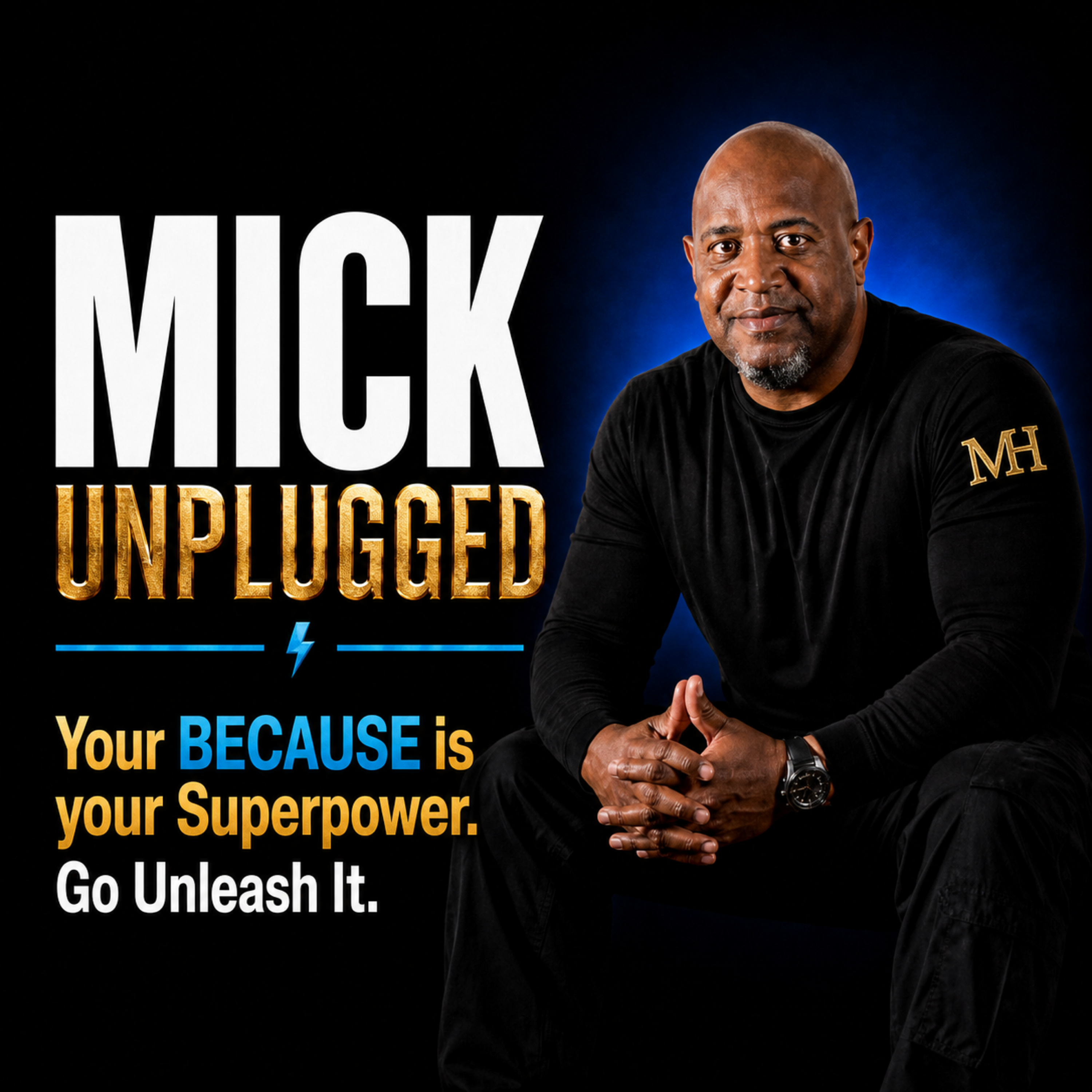
 Mick Unplugged
1 Oct 2026 · 1h 2m · 22 chapters

Tactical empathy for negotiations—“fight less, win more”—using pressure-tested communication skills from hostage negotiation and sales.
Derek Gaunt, 29-year law enforcement veteran; commander of hostage negotiation teams in the Metro D.C. area. Background includes narcotics and major crimes work; later promotions through sergeant and lieutenant before leading hostage negotiations. He emphasizes how race and enforcement inequity shaped his approach.
Written by AI. May contain mistakes.
Learn about the high-pressure tactics used in negotiation scenarios.
“I give them both barrels as soon as they sit down.”
Discover the importance of connection and trust in coaching and negotiation.
“So much that I owe you, and we're going to talk a lot about that, man.”
Understand how negative emotions influence decision-making and behavior.
“You know, I get more gratitude out of hearing feedback from people saying, yeah, I'm making more money, but I also just repaired a rift in my family that's been existing for the last 15 years.”
Explore Derek Gaunt's motivations and the importance of giving back through communication.
“because they will not take the time to really surface those negative emotions and dynamics.”
Derek shares his experiences and challenges in law enforcement as a person of color.
“Because we spend most of our lives stuck between a rock and a hard place.”
Learn about the role of tactical empathy in negotiations and its broader implications.
“I get chills all the time, man, because, and I'm going to look at the camera directly and say this.”
Learn how framing discussions around understanding perspectives can lead to better negotiation outcomes.
“based on what you learn within that conversation.”
Discover the importance of asking open-ended questions to understand what success looks like for the other party.
“walk over to the side of the street, stand shoulder to shoulder with them, and look at what the lay of the land looks like from their perspective.”
Explore the risks of overlooking non-verbal cues and signals during negotiations.
“You said, ask the question and pay attention to the answer.”
Understand how different tones can influence negotiation dynamics and participant responses.
“And that's going to, it's going to come back.”
Learn how changing your tone of voice can influence negotiations and reactions.
“They're so beat up when I'm in the accommodator's voice, they don't even catch the switch to the analyst voice.”
Discover why voice communication is more effective than emails in negotiations.
“attention or listening it's 2026 email text social media dms very easy a lot of times convenient it.”
Get insights into the new book and learn about a giveaway for listeners.
“The first 20 people on LinkedIn that messaged me fight less, win more, I'm going to give you a copy of the book.”
Discover how a conversation over lunch influenced Derek's career path.
“This product is not intended to diagnose, treat, cure, or prevent any disease.”
Explore the qualities Derek seeks in mentees and how to foster effective learning environments.
“So I guess that counts for something too, right?”
Hear real-life examples of how Derek's teachings have transformed lives.
“Well, I appreciate that you decided to open up for me.”
Understand the pitfalls of using common ground in conversations and its effects on trust.
“It's making me so much money, but I wanted to fly down here and thank you personally because my brother and I have not talked to each other in 15 years.”
Learn how attitude during a traffic stop can influence outcomes.
“And I'm going to look at the camera and tell you guys this.”
Understand why silence is a critical tactic in negotiations.
“What's one negotiation tactic people often overlook?”
Explore the importance of trust over respect in building relationships.
“Respect will be manifested later after they see that you're trustworthy.”
Discover how sticking to training can prevent mistakes and pain.
“You know, I'm going to say who I would want to play me.”
Engage in a light-hearted discussion about casting a biopic.
“Even though when you do, you know, 60 seconds or she dies, you say, you know, this isn't like Denzel.”

Get the gist, explore an idea or ask about something said.
 Claude
On Mick Unplugged, what are the key points of this episode?
Searching your listeningAutomatic transcript. May contain errors.
0:00I start out in that assertive voice. I give them both barrels as soon as they sit down. I want it in 60 seconds or she's going to die. They're told before they get into the hot seat, you cannot negotiate drugs or alcohol, weapons or ammunition, exchange of hostages or transportation. As soon as they sit down, the first thing I ask them for is a prohibited item. And I'm continually amazed at how many people will offer up a car. And the takeaway for the participants is under pressure, even if you're not a bad person, if you don't know how to say no, you're going to lie.
0:42Mick: Ladies and gentlemen, welcome to another exciting episode of Mick Unplugged. And this one is personal. We talk about a guy who's changed my life, who's changed my business, and more importantly, has made me a better man than I ever thought was possible. He's a 29-year law enforcement veteran spending some time as the commander of hostage negotiation teams in the Metro D.C. area. He is a guy that is going to teach us how to fight less and win more. My coach, Mr. Derek Gaunt. Derek, how are you doing today, brother? Doing well, man. Thank you for having me. I appreciate it. Thank you for being here.
1:18Mick: So much that I owe you, and we're going to talk a lot about that, man. But, you know, the first time I met you, I felt connected because I felt like you were that best friend that's going to coach you hard, but love you harder. Right. Like I felt that with their personality, like you genuinely care, but you're always going to tell the truth. and I felt that connection. And I just want to thank you for that because you don't realize the books that you've written, again, getting to be coached by you, just how special that is to me. So I owe you thanks and gratitude. I appreciate that. That's very kind of you to say.
1:58Yes, sir.
1:58Mick: It's fun. You know, to your point, I get a charge out of it because I can see the impact that it's having on people, not so much their professional life, although we just were talking about professionally, but the personal life. You know, I get more gratitude out of hearing feedback from people saying, yeah, I'm making more money, but I also just repaired a rift in my family that's been existing for the last 15 years. And that's, for me, that's gold. You talk about it, man. And I mean, I remember we were in Dallas in March and you and Chris were on stage challenging people. If you've had deals that have stalled, like send a text message.
2:47Mick: Have you given up on blah, blah, blah? And that day I converted like three hundred thousand dollars in like investment deals. And then you've helped me close a million dollar deal. And it's not about the money. It's about the confidence. Like what you've instilled in me is confidence that in front of my team, if I'm at a negotiation sales deal, even in the household, you've just given me confidence that, hey, understand the rules of engagement. Know the words that you're going to say. And most importantly, pay attention. Yep. Pay attention. So thank you. Yeah, man. If we can get more people to close their mouths and just listen to what the other side is saying.
3:29and when I'm talking about listening and I know for your sake I'm preaching to the choir but for your viewers and your listeners I'm talking about being able to really understand the human nature response which dictates that negative emotions and negative dynamics drive decision making and drive behavior and so you get your head around that that's where the confidence comes from because you now put yourself at a distinct advantage over the majority of the population because they will not take the time to really surface those negative emotions and dynamics. They'll just let them lie dormant and hope that they don't rear their ugly head.
4:10And that's going to happen eventually.
4:12Mick: Yeah. So I've always wanted to ask you this question, but I was like, I'm going to wait for the podcast so that I can hear it directly. You know, I always start my show with asking my guests, what's their because? That thing that's deeper than your why. Simon Sinek, a good friend of mine, taught us to start with why, but I think we're fueled by our because, that passion, that ongoing thing. You've accomplished so much in life. At any time, you could stop being Derek, right? You could stop coaching. You could stop. I don't mean it physically. Don't leave me. But you don't have to do the things that you do.
4:48Mick: What's your because? Why do you continue to do the thing? it's it's almost like a um it's almost like a obligatory give back because i i have benefited from a lot of good fortune blessings however you want to couch it uh over the course of my life and a lot of it was based on my ability to communicate one person to another i decided to pay it back because they're
5:18not to be hyperbolic, but the black swan methodology, if it was adopted by everybody globally, we wouldn't be in half the mess that we're in right now. And it's, and it's, it boils down to this one side refusing to articulate their recognition of another side's perspective. and that's why we're blowing boats up in the Straits of Hormuz, that's why we are there's conflict, micro conflicts all over the globe because one side is not will not, refuses to acknowledge the perspective, not agree with it, just acknowledge the perspective and so I think learning that over the course of my lifetime was a gift
6:09Mick: why not share it i love it so speaking of of that talk about your journey into law enforcement right um you know for me growing up my grandfather was law enforcement he was the first black police officer in our hometown so we always grew up with this innate respect for for law enforcement like my entire family but i know for a lot of people especially people of color right like there's I don't want to say a fear but there's a lack of trust yeah what was your journey like being on the other side it was hard man I'm it and and it's it's gotten increasingly difficult for men and women of color uh in in law enforcement but my journey um you know it's it's difficult looking like other members of the community but enforcing rules and those rules have not always been enforced with equity and so I've as a black man have to deal with that and the negative emotions and dynamics that are associated with that you know I have been called every disparaging name that you can think of when I was when I was wearing the badge I think, to your point, one of the most unheralded stories in American history is the story of the black cop.
7:46Because we spend most of our lives stuck between a rock and a hard place. And we've got to appease two different groups that are expecting two different things. And it's taxing. It wears on you.
8:03but I came up in a time I started in a time when crack cocaine was in its heyday and those of us who are over a certain age remember how almost every black or brown community in this country was being just obliterated because of the influx of this drug of these drugs and so when I came on it was high speed, low drag, adrenaline dumps every single night. And the enforcement was different back then. You could not enforce the law now the way we did back then. Right. Because you'll be wearing an orange jumpsuit. You know what I'm saying? Yeah. And so it was always a struggle, especially when I started doing narcotics.
8:54That's when it got really difficult because I was in the same pockets around the city all of the time, and I was seeing just how bad human beings treated themselves and treated each other. Interestingly enough, it wasn't until I slowed down, I got transferred to the criminal investigation section, I started working major crimes that I started to see things more holistically and see things from the perspective of the bad guy, for example. He sits down across from me and is adamant. He doesn't know what I'm talking about. He ain't telling me nothing, blah, blah, blah. and the skills that we talk about in fight less, win more, and never split the difference, are the same skills that I used during those interviews in order to get him to provide the information that I needed, whether it was information on other people or for him to criminally implicate himself in the case that I was working.
9:59And so that forced me into tactical empathy. That forced me to see what this guy was seeing. What does the lay of the land look like from his perspective? Because as soon as I can demonstrate that I understand this is how he views it, that's when he stops looking at me as a threat. And that's when he starts to reciprocate. That's probably one of the most powerful aspects of tactical empathy is reciprocation. People feel obligated to return the favor to you. And in his case, it's given me the information I need to move the case forward. And so you're talking about an evolution in my thinking, my mindset, my maturity level.
10:44And the maturity level kept growing when I got promoted to sergeant, then I got promoted to lieutenant, and then I took over the hostage negotiations team. And so my journey was replete with challenges because of the color of my skin. But the flip side of that coin is that I got into some very cool stuff. And I figured out very early that I could say specific things in a specific manner to elicit specific information that nobody else could get. And I could use that information to influence that person into doing what I needed them to do. And I, you know, once I realized there was a methodology and a process, I was hooked.
11:27I was hooked because I could move the needle without being offensive. I could establish trust-based influence without manipulating the other side. And so when you can do that, when you've mastered that, the world's your oyster. I get chills all the time, man, because, and I'm going to look at the camera directly and say this.
11:51Mick: If you've never read Never Split the Difference, if you haven't picked up Fight Less, Win More, if you haven't looked at the Black Swan group, like, you totally need to because I'm going to call it the stuff. But the lessons work, right? You have to be willing. You have to be willing to let go of ego. You have to be willing to let go of the way you think things should go. But if you embrace it, dude, it works. And I'm living proof of that. Like, my whole life changed because I got to understand more. Like, I would say, and I'm going to move to what I call the unplugged truth. So I'm going to give you an unplugged truth right here.
12:32Mick: The biggest thing that you've ever taught me was Mick. When you're at a negotiation table and then there becomes friction. And friction all the time for you that's watching or listening doesn't mean anger. It just means, hey, they don't understand something. That's friction. And you asked me, what would I do? And I said, oh, well, I'm going to meet them in the middle. And you said, what does that solve? And I was like, I don't know. And you said, well, how about going to stand beside them and look at you from their view? Look at the situation from their view so that you understand it. And it totally changed my life, man.
13:11Mick: Because what you were saying was you can't have empathy. tactical, empathetic leadership, any of that without seeing the viewpoint, whether you agree with it or not, you've got to see it. And it changed my perspective. I'd love for you to go into that a little bit. Yeah. So it's, it's a matter of putting your goal and objective in abeyance. When you sit down with that other person, you know where you want to end up, but you know that your decision to end up there is based on incomplete information. Because the person with whom you're engaging is not telling you the whole story. And so you have to go into these conversations assuming that you have something to learn.
13:57So I never encourage leading with your goal and objective because your goal and objective may change based on what you learn within that conversation. But this idea that we can convince anyone if we can just talk to them long enough is a fallacy. You're wasting your time with a bunch of explanation and exposition about where you want to end up. We see, we all go into these conversations with our goal and objective and we all, we throw it on the table and we say to the other person, um, here's all my data and information. Here's where I want to end up. Here's why I want to end up there. It's all in there.
14:35You should make this decision.
14:39And they haven't taken the time to show them that you understand what their worldview is. My goal and objective as a hostage negotiator was to have the person release the hostages, put his weapon down, come outside and submit to authority. Those three things. That's my goal and objective. I never led with that when I called inside of a crisis site. Right. Right. Never. I wanted to get their perspective first. They are used to having police command, command, command, demand, demand, demand, push, push, push, push, push. And here, as soon as I get on the phone, I'm flipping the script. First question is, I know you're scared to death.
15:25How did we get here today? And immediately it catches them off guard because it's not, you know, we got the place around it, put the gun down, come on. It's none of that mess. And so immediately, they're caught off guard. Immediately, their negative emotions and dynamics start to dissipate. Does it come all the way down and are they ready to come out immediately? No. But that's just the beginning. And so this idea that your world looks like somebody else's is problematic. You thinking that you are normal is problematic. because what you have said to me by taking the stance that I am normal, you put me in the position that if I disagree with you, I'm not normal.
16:12I'm abnormal.
16:13Mick: Right. So if your normal and my normal doesn't line up, somebody's normal is off. And so let's take the time to discuss that. Yeah. The analogy that you use is one that I try to spit out as often as I can. and we are conditioned to saying to our counterpart, come on over here, join me on the side of the street, let me show you. And instead of beckoning them over to your point, walk over to the side of the street, stand shoulder to shoulder with them, and look at what the lay of the land looks like from their perspective. And again, it's not going to bear you fruit immediately, but incrementally you're going to start breaking down defenses, You're going to start improving their cognitive ability.
17:01And then you can start to explain. See, and I want all you guys to understand. When I talk about explaining, we used to say that if you're explaining, you're losing. The reality is if you're explaining too early, you're losing. What does too early mean? Before you've let them explain and before you've been given permission by them. And so I always say, let the other side go first.
17:31Mick: Always. Let him go first. Always. And if you're watching, I'm going to give you a tip that Derek taught me in a sales negotiation. And I'm sorry because my client is probably listening to this call. So you can blame Derek. But we won together. We won together. You told me to ask a question that I was like, I already know the answer. But I asked it and I got the wrong answer that I was looking for, which ended up being the right answer. So you told me to ask the client, what does success look like to you? And that was my initial question in the negotiation standpoint of the sales process. We knew all the things.
18:14Mick: We knew the terms and all that. But I never thought to ask, what does success look like? and what I thought success was going to be was so minute on my end and I was like oh I should have asked this five weeks ago because we could have probably gotten here sooner and at the same time it was less on my plate when I figured out what they really wanted out of the whole deal and it was like oh yeah I can do that price won't change but I can do that but you taught me to ask what does success look like? And to do it with no preconceived notion, because that was the bigger part. You said, ask the question and pay attention to the answer.
18:54Yeah. Yeah. And, you know, many times we intuitively think we know what's going on with the other side and we make assumptions that we don't test. And that's when we wind up getting burned. So what does success look like for you, success by and large is arbitrary and capricious. What it means to you doesn't mean the same to me, doesn't mean the same to anybody in that room over there. And so I know that people have different constitutions. We have three different personality types within the Black Swan method, which means that the likelihood you're going to sit down with someone who has a worldview dramatically different than yours is huge.
19:39Like 66%. There's a two-thirds chance that the person you sit down with doesn't look at the world the same way you do, which means their definition of success is not going to be the same as yours. So we've got to flesh that out, not assume that we know, test the assumption. What does the success look like for you? And then all of a sudden he starts talking about terms instead of price and you're like,
20:03Mick: right you know right a detailed 90-day onboarding plan because you were right he's an analyst so he wanted a detailed plan because he's the cio right of the company that's all he needed for him to win with the ceo was here's the game plan yep don't care how much it costs we trust mick here's the 90-day onboarding plan that that was success for him and i was like that's all i had to do. The whole time. And the other thing, you sparked a thought here that I think is really important and that is
20:40in these conversations you have to be like TSA. If you see something, you gotta say something. There are many people who will engage someone else about a business deal and
20:57intuitively they're picking up signals that something is amiss with the person on the other side but they're so thirsty for the consummation of that deal they say to themselves i hope i just didn't see that i hope he didn't mean what it sounded like he just meant i'm not going to pay attention to that i'm going to move over here because i don't want to screw this up You do that at your own peril because he showed you non-verbally, maybe verbally, but it's usually non-verbally, that there's an issue here. From his perspective, he's communicating with you. You're ignoring it.
21:36Mick: You ever open the fridge and think, what's for dinner? After a full day, that decision ought to be easy. That's where ButcherBox comes in. ButcherBox delivers 100 % grass-fed beef, organic chicken, wild-caught seafood, and more, all sourced to standards they can actually tell you about. They've already done the research and made the tough sourcing decisions, so all you have to do is decide what's for dinner. When it's time for hibachi, my protein comes from ButcherBox and ButcherBox only. Every box is customizable, so you can choose the cuts and proteins that fit your routine. Whether you're grilling for friends, feeding the family on a Tuesday, or trying to avoid another expensive takeout order, you've already got great protein ready to go.
22:18Mick: If you're looking for an easier way to get great meals on the table, give ButcherBox a try. Go to butcherbox.com slash mick to get$20 off your first box, plus ground beef, steak tips, or chicken breast in every box for life. With free shipping always. That's butcherbox.com slash mick. Again, that's butcherbox.com slash mick. Be sure to use our link so they know we sent you. You work hard for your money. Paying fees just to keep it somewhere? That deserves a second look. Chime is changing the way people bank. They're not like traditional banks that charge fees and gatekeep perks and rewards. Chime offers the most rewarding fee-free banking.
22:54Mick: No overdraft fees, no monthly fees, no minimum balance fees. Get 5 % cash back on ChimeCard in a category of choice, like gas or groceries, while building credit through regular, everyday spending with no credit check. Grow your money faster with a savings rate that's nine times the national average. And in a pinch, SpotMe lets you overdraft up to$200 fee-free. Join the millions who are already banking fee-free with America's number one choice for banking. Head to chime.com slash mick. That is chime.com slash mick. Sign up now. It only takes a few minutes. Chime is a fintech, not a bank. Banking services and Chime card provided by Chime's bank partners.
23:37Mick: Qualifying direct deposits required. Terms and limits apply. Go to chime.com slash disclosures for details. Right. And that's going to, it's going to come back. It ain't going anywhere. And when it comes back, it's coming back with heat. And you're going to pay for it at some point. And these are the same people who wind up bailing on the agreement two, three, four weeks down the road. And then my client, not you, will come back to me and say, all of a sudden, he's being a jerk. All of a sudden, he's not returning my calls. All of a sudden, all of a sudden. And I said, let's walk this backwards.
24:11And I'm like, this is not all of a sudden. He was sending you signals the entire time. And this is the manifestation of your ignoring the signals. So what's the point? You ignore it at your own peril. The negative emotions left unaddressed never die. They come back and they come back stronger. And you're going to pay for the fact that you ignored it. Because again, from his perspective, he was clear. You missed it.
24:41Mick: Yeah. Yeah. So much I learned. So much I learned. So I'm going to move to what I call the hot take, but it's really the hot seat.
24:51Mick: One of the best exercises, and we're going to have a link to the YouTube video, is 60 seconds where she dies. I love that exercise because it puts you in the hot seat. And you always frame it to the audience or the group. So typically what happens is, you know, Derek is going to play the role of a bank robber. There's going to be a person who then is a hostage negotiator, right? And a lot of times the people that are in the audience are like, oh, I'd ask this question. I'd ask that question. Derek gives it to you in the real world. And I've yet to ever see anyone come in, want to do it perfect because we all are going to mess up.
25:32Mick: But I feel like that exercise helps me so much because I'm prepared for, again, looking at things from their perspective, asking how did we get here? Why are we here? What does success look like to you? Like, I learned all that through you. But the 60 Seconds or She Dies exercise is freaking phenomenal. Yeah, it's one of our favorites because it tests a couple of things. Number one, it not test. It shows a couple of things. Number one, it shows exactly what pressure will do to somebody's ability to perform. In the exercise, as you know, we use three different voices. The assertive voice where I'm being a jerk.
26:17The analyst voice where I'm flatline, devoid of emotion. I'm neither up nor down. It's hard to get a read on me. And then there's the accommodator's voice where I'm upbeat and playful. and when I use the exercise one of the biggest takeaways for everyone is the damage your tone can do in a conversation I start out in that assertive voice and I give them both barrels as soon as they sit down I need a car and I need it here now I wanted in 60 seconds or she's going to die yeah now so that your listeners and viewers know, they're told before they get into the hot seat, you cannot negotiate drugs or alcohol, weapons or ammunition, exchange of hostages or transportation.
27:07Right. As soon as they sit down, the first thing I asked them for is a prohibited item. Right. And I'm continually amazed at how many people, they were just told, you can't do it, will offer up a car.
27:21Mick: Right. Because, which is a lie. They know they can't give it to me. Right. And so their default is under pressure, I'm going to lie. And the takeaway for the participants is, you know, they think it's a fun, cool type of exercise because they get to go up against a hostage negotiator and, you know, play the role. But more importantly, it's this idea that under pressure, even if you're not a bad person, if you don't know how to say no, you're going to lie. Just to have your equilibrium restored.
28:03Switching to the analyst voice. They're so beat up when I'm in the accommodator's voice, they don't even catch the switch to the analyst voice. and where I'm talking pretty much like this. And they know there's been a change. They just don't know what it is because their brain is still scrambled. But to a man and a woman, when I go to the accommodator's voice, what happens? Everybody gets more verbose. Their brain is unlocked. They can start to think of things. Now they're starting to use the actual black swan skills on me. And nothing has changed except my tone of voice. So one of the takeaways is you can dial somebody up and you can dial them back just based on your tone of voice.
28:54People will ask. I got a conversation with Mick Hunt next week, and he's a jerk. He's always yelling at me, and I'm tired of it. So the next time he yells at me, Derek, is it okay for me to yell at Mick? I'm sorry, yell at Mick. I'm thinking of Nick Peluso, the guy that works with us. Is it okay for us to yell at Mick? And my answer is always the same. Yes, if your intent is to make Mick dumber in the moment, yeah, go ahead and yell at him. And you guys will be the equivalent of two goats on the side of a hill just banging your heads against one another. Nothing will get accomplished. So the other takeaway.
29:32People say it's a cute idea, neat exercise, but it's not realistic to my world. and my response is always the same. The analogy to your world, do this or I'm going to a competitor. That's a car in 60 seconds or she dies. Give me a raise or I'm leaving. That's a car in 60 seconds or she dies. I need it by Thursday, deal is off. That's a car in 60 seconds. And most times, they don't even give you 60 seconds. They want to know right then, in the moment. Right. And so instead of getting hung up on what they're asking for, what's the because? Exactly. What's the because? Yeah. You're asking for a car because.
30:17Mm-hmm. And I throw that question out to the group. And then they'll start to fire it out because he's afraid. He's afraid of what? Dying or going to jail. What else is he saying with I want a car in 60 seconds or she dies? He's under a lot of pressure pressure from what he had a plan plan got interrupted didn't have a plan for the interruption So he's in a state of crisis These are all people with no hostage background hostage take or hostage negotiation background And intuitively they're picking up the because from this guy That's where you need to be in all of your sensitive conversations picking up on the because not In every tough conversation There's a presenting dynamic or emotion, and then there's a latent dynamic or emotion.
31:01Going after the presenting is good. Going after the latent is great. When you can start to articulate for your counterpart things that they cannot or will not articulate for themselves, man, you're in there. You are in the game. But this idea of any time that you get an objection or pushback from anyone, instead of getting in your feelings, instead of freaking out saying, ooh, I better go make some changes or I'm going to lose the business, find out the because.
31:33Mick: That's it. Because you will find that what they're objecting to is not what they're really afraid of. When somebody says, cut your price or going to a competitor, what they're telling you is, I've been burned by somebody that looks just like you in the past. Right. That's what I'm going after. And the sooner I articulate that for them, the sooner those defenses start coming down. Ironically, Most people that are watching, you know that I started my life in the insurance space, right? And so without, I wasn't Black Swan then or anything like that. I hadn't been coached by Derek then. But you hear that a lot in insurance, right?
32:08Mick: Like, if you can't get me a discount, I'm going elsewhere. And in the business world, on the business insurance side, that would always lead me to think, wait, have sales gone down? Right? Like, does he or she really need costs to go down because they can't afford it? And your sales actually can impact your rate. And so that would lead me to have deeper conversations. And I've won more business by asking when someone would say price is important or, hey, you got to cut your rate or I'm gone. It allows you to have better conversations if you know how to have better conversations. Right. And you've got to, when you hear, you know, cut your Rachel or I'm going to go to someone else, immediately you should ask yourself, all right, that's what she said.
33:03What did she mean? What did she not say with those words? and the minute you put on that curiosity hat and you start to dig because when somebody says that to you they're telling you that okay your current rate is not appealing to them which means the flip side of that is there is a rate that would be appealing to them right do you know what that rate is no so you have to figure it out yeah where is it coming from yeah is it legit that you know she's got she's choosing between putting food on the table or insuring the car or is she just worrying about being taken advantage just because she's a woman right right right and so if she's been burned in the past right and so it could be any of those things but we don't know curiosity will tell you your intuition is going to tell you that something's going on curiosity is
34:02Mick: how you find out what it is totally agree before we go into fight less win more i have to give you more kudos and this is like a free master class for everybody that's watching this by the way one of the things that you taught me and everybody that's watching i want you to pay attention or listening it's 2026 email text social media dms very easy a lot of times convenient it. Derek, you told me a couple of weeks ago, please, no matter what you do, pick up the phone. Don't send this an email because you need to hear the response. You need to hear and listen to the tonality, to the pace. And I was like, damn it, Derek is right again.
34:47Mick: Derek is right again. Why is that so important? And why are people missing that? People are missing it because email is comfortable. There's a barrier. I don't have to look at you when I tell you no or I disappoint you. They're the long pause. I don't have to deal with any of that. I can just send an email and then that's that. So it provides us with what we believe is a certain level of protection. But to your original point um in electronic communication like that you just lose too much data the nuance is completely lost this is this is why uh emojis were invented because it was not very long after we started using text messaging for uh expansive communication that we realized that hey i need Mick to know that I'm just joking about this.
35:50So I'm going to send this text with a smiley face on the end of it. So he knows because you lose too much data in text messaging. So just like I did for you, all of my clients, I'm telling them stop the back and forth over email, right? You want to send a long email? Cause I ask him all the time. I said, how many of you guys love reading long emails and nobody raises their hand. And then I say, how many of you write long emails? And almost every hand goes up. So we don't like to read them, but we'll put one together. And we don't like to read them because it puts us in a negative state. And you send me a long email about negotiation going back and forth and you beautifully crafted, you got bullet points and tables and all of that stuff in there.
36:36I'm going to pick out the one line that I hate in that email and that's all I'm going to fixate on. And so all of your other beautiful work, I'm not even paying attention to because that one sentence right there is the one that really gets to me. So I say, stay away from the emails for the back and forth. You want to draft a long one to summarize what you talked about on the phone, have at it. Now there'll be people that are watching this, listen to this, will say, well, I'm dealing with a counterpart. All he wants to do is talk via text or email. He doesn't want to get on the phone. You probably haven't forced the issue.
37:13You probably haven't asked because you've just chalked it up to that's just Mick being Mick. And there are people like that will try to hide behind the electronic communication. So when you're dealing with someone like that, my recommendation is they send you an email that looks like they want to go back and forth. pick out one thing in the email and label it. Sounds like blah, blah, blah. One sentence, send it back. And I'm going to make their email communication with me so cumbersome that it's their idea that they get on the phone.
37:53But phone, face-to-face is best. Zoom, next best. Voice-to-voice is third best. Email as a very last resort.
38:02Mick: There you go. There you go. All right, I'm going to give you a hot take. Hot take. Hot take. The three best books I've ever read in my life. In no order. No order. Never Split the Difference. Overcoming Impossible. Robert Irvine. Fight Less, Win More. And then I'm going to give you a fourth one because I have to. Ego, Authority, Failure. Back there. Four best books I've ever read. and and by best their books always go back to right um not to get spiritual or anything like that but it's like how many people have read the bible 6 000 times right these books are that for me let's talk about fight less win more what was the because about putting this book together um we were looking to produce something that was less academic and more uh field worthy okay um and and so it's a distillation of never never split the difference difference and and it's a um not only is it a distillation but it is an evolution of the thought processes that were born out of never split the difference never split the difference came out in 16 we have prided ourselves on not sitting on our laurels and we're going to continue to evolve this stuff there are things that he talked about and never split the difference that we don't we don't even do it anymore we don't talk about anymore because we're always trying to get better because people are getting better people evolve our stuff has to evolve there there are uh competing companies out there out there that have been their stuff has been the same stuff for 30 years they're still putting out the same stuff we don't want to be like that and so and and a lot of the stuff that's in here was born out of conversations with coaching clients and so we wanted to break down on the skills have you view the skills through a different prism and then there are prompts and takeaways and work that you need to do at the end of every chapter to keep this stuff top of mind because you know when you first saw Never Split the Difference and you first got exposed to our stuff you were like what?
40:22Right. This is the most counterintuitive stuff I have ever heard of in my life and that's the biggest challenge for people is because it's a 180 swap in the direction that they used to go in and by and large I mean we're not we're not training and coaching slugs they're making money they're just not making the money they could be making and so but they're comfortable with that. They say, why, I'm, I'm, I'm successful doing what I, why would I do that? And so that's a challenge and a hurdle. This book helps to navigate that hurdle. It, it, it, it, it, it explains the recipe a little bit better.
40:59Mick: Yeah. So here's what I'm going to do. I'm not going to wait till the end of the show for the next, the first 20 people. Let's go LinkedIn. Cause I'm more of a LinkedIn guy. The first 20 people on LinkedIn that messaged me fight less, win more, I'm going to give you a copy of the book. So I'm going to buy 20 copies. We're going to have 20 people do it. And then I think we're going to create a little mastermind around it. Because if I'm going to give you a book, I also want to make sure you're reading it. And we're going to discuss it. I'm not going to coach you. Derek or someone on the Black Swan team could be available.
41:39Mick: But this book is so important. If you're a leader, if you're in the C-suite, if you're a salesperson, this is a must have. And you all know that I don't do that much on the show. This is a must have. So Derek, that's what I'm going to do if you allow me. Absolutely. On Mick Unplugged, we talk about showing up with purpose. For me, that includes taking care of myself without overcomplicating my day. That's what I appreciate about I Am 8. One drink makes my daily routine simpler and easier to stick with. IM8's Daily Ultimate Essentials bring 16 supplements into one drink with 90 ingredients across nine major organ systems for$2.61 a day.
42:20Mick: Co-founded by David Beckham, it was built by leading doctors and researchers. I use IM8. Give it a try. Go to im8health.com slash mick right now or click on the link in the description and use code mick for a free welcome kit, five free travel sachets, plus 10 % off your order. That's code mick at im8health.com slash mick. Code mick at im8health.com slash mick. These statements have not been evaluated by the Food and Drug Administration. This product is not intended to diagnose, treat, cure, or prevent any disease. I love it. Absolutely. Absolutely. You know, if we can get this into the hands of as many people as have gotten their hands on never split the difference, we'll be closer to taking over the world.
43:06Mick: I'm ready. I'm ready for that. So you are my mentor. You're my coach. In this segment, I call The Room.
43:18Mick: Was there a room, a dinner, a moment that changed the trajectory of your life or career? oh wow that in prep you for that one the all right so there's there was one particular moment I was at a restaurant having lunch with the guy that I used to work with very briefly who went on to become a deputy sheriff mm-hmm and he and I were having lunch and the topic came up was to the future what do you think about for the future mm-hmm I said you know I'm I'm young I'm 20 something years old I don't know what I'm doing in the future I just I'm just like Kane wandering the more I'm doing the earth trying to find myself and he says have you ever thought about law enforcement I said yeah you know I thought about it but I don't and he looked me and he goes well what are you gonna do about it I was like, oh, all right.
44:26And so it was that conversation with him that led me to throw my hat in the ring. And I applied to several different agencies. And one of the agencies that I applied was not the one that ultimately hired me, but I was in their process. And he was asking, he goes, are you applying in other places? And I said, yes, I am. He goes, I'm going to give you a piece of advice. You go with the first agency that says yes. Because back then, it's not like now, back then, it was hard to get people. It was very competitive. And, you know, it was hard to break into the business. So he said, go with the first agency that says yes.
45:07And that was the Alexandria Police Department, Alexandria, Virginia, back in 1988. And I haven't looked back since. So that was probably the room that changed my life as I was coming into adulthood. And at the place that I was working, that's where I met my wife. So I guess that counts for something too, right?
45:31Mick: That was a smart answer, sir. A smart answer. And people like me, right? Like you've taken the time to mentor, to coach. What do you look for as you're creating rooms for other people? What do you look for in that other person? are you coachable? Can you, can you close your mouth and listen? I'm going to be quite frank with you. There are some coaching clients, you know, the coaching session is only an hour. There are some coaching clients that get on there and they eat up 25 minutes, me, me, me, I, I, I for 25 minutes. And I'm scratching my head going, okay, you're telling me, me, me, me, I, I, I, you're already doing this stuff why are you on the phone with me um and i want people who know that they don't know everything who are capable and mature enough to take what they already have grab our stuff and make something new people who have an open mind and um those those folks are few and far between but what i'm looking for is coachability, coachability, coachability.
46:46Because, you know, the, oops, the people that I'm engaged with, they're rock stars. They're like you. They're making money hand over fist. But they're all coming to me with a sense of humbleness and a sense of, I don't know everything and a sense of, I'm going to have an open mind. And, and, and so when I create a room those are the people that I want to invite into the into the room I'll be quite frank with you most most of our not most many of our corporate clients are difficult to work with because we have somebody in L &D or somebody in mid-level management who's a big fan of our stuff and they want to bring us in mm-hmm and there's no support from up there and there's no support from the from the downliners and so we get into a room 60 people only five of them want to be there and so it's like it's like pulling teeth and so when I create rooms I'm looking for people like yourself who are spending their own coin to get better because now there's an investment now now they they want to do it because they are investing not only time but they're investing money into making themselves better so when I create those rooms I'm looking for people who are ready, willing, and able, open mind, and coachable.
48:11Well, I appreciate that you decided to open up for me.
48:16Mick: I really do, man. It's just so much to continue to learn, right? And one of the things that I've really gotten, it's actually through you, is consistency and solving the little things, right? I think so much when we look at even the 60 seconds where she dies, what are the little things? What's the little things that everybody can win on? What are the little things that you're overlooking? What are the little things that they want that could become big things if you miss it? I'm going to implore people, if you're watching, if you're listening, definitely check out Black Swan. Definitely get the book because it will change your life.
49:03Mick: you've changed my life, though. That's good to hear. And as I mentioned earlier, it's not the first time I've heard it. There's a story that I tell all the time. I'll keep it. I'll keep the person protected. But she flew from Hawaii to San Francisco, San Diego. We were doing a hit in San Diego. She's a big fan. so she flies she has her her time with us for that one day she flies back to Hawaii and she's also a real estate agent and she's a part of our real estate coaching call so we concluded a coaching call virtually and she says hey Derek can you and Marcella stay on after because I'd like to run something by you so normally don't like to give away time like that but you know i felt obligated to do that because she's you know she's a fan so she tells us the story and the bottom line is her application has been stalled with customs and her visa is about to run out she thinks she's gonna get thrown out of the country she is beside herself because this this customs and border person has not it seems like they're ignoring her like they're disinterested and she goes I need to I need to jump start this conversation with it and so we worked out a strategy for her to jump start the conversation fast forward six months we do a hit in LA she flies back to LA with her husband tears in her eyes and she's holding up her card and so every time I hear somebody like you say it's done something for me personally it always takes me back to her and her using the skills and against somebody who works for the US government who you know they're inclined not to move very fast Right, right.
51:17And from ghosting her to jump-starting it and getting her card so that she could stay in the country and continue to work for permanent residency is huge. Yeah. When a lady flies to Dallas to tell us, I love your stuff. It's making me so much money, but I wanted to fly down here and thank you personally because my brother and I have not talked to each other in 15 years. And I started to employ these strategies with him. It broke the ice. We're not the best of friends, but he's answering my calls. He's returning my emails. There you go.
52:01That's, as I mentioned earlier, I like making people more money. I like how they can repair things within their personal life as well.
52:12Mick: You're a godsend, brother. You're a godsend. All right. I'm going to get you out of here. I call it the unplug five. Rapid fire. Uh-oh. Five questions. Let me work the whistle. You're used to the hot seat, so I'm not even worried about you. What's one word that can destroy trust? Or phrase. One word or phrase. Me too. You're adding on. Me too. No, it's not one word. That is my phrase. When I'm talking about me too, I'm talking about common ground. When somebody interjects in the conversation a me too statement, you start talking about baseball because your son plays baseball. And I say, really?
53:08I coach baseball. As soon as I say that, I've officially said, you're not important anymore. This conversation is now about me. That was not my intent, but that's how it's going to be perceived. And so this idea of I've got a problem with people who weaponize common ground, who assume that because your son plays baseball and I coach baseball, we're going to come to an agreement because now we're like one another. And I can feel it when somebody throws out common ground with the intent on trying to move me somewhere before it's time. And most people hang their hats. And I'm not telling you that common ground is 100 % evil.
53:59But it can be if it's weaponized. And if it raises the hackles of the person with whom you're using it on, it's going to stink. And you're going to shut that person down. Wow. I don't know, this is for the benefit of your listeners and viewers, because I know you've heard it before, but I'm taking back to 1990. I'm going to go back to 1990. I was a young gun on the streets. I had just gotten cut loose. I'm not even 24 years old yet, and they gave me a gun and a badge, brother, and I was on one. I was stopping everything that moved so you come through my city and you're doing seven over the speed limit you were getting paper back then and so one night I'm on my way back to the station and a guy blows a red light in front of me and so I pull out behind him light him up pull him over to the side of the road and I grab the mic I mark out on traffic the dispatcher and I look up I haven't even got my seatbelt off.
55:13And there's a, I can tell there's a badge hanging out of the window. Yeah. So what is he telling me? What message is he sending me right now? He's sending me a message. I'm just like you. Therefore, you're going to let me go. We're good. Right. I'm in my feelings because I know he's, he's making assumptions about me and he doesn't know me yet. So that was his first mistake. Second mistake. was he says to me, as I approached the car, and he says it just like this,
55:52what seems to be the problem, officer?
56:00And I'm going to look at the camera and tell you guys this. Your attitude when you are stopped is a pretty good marker as to whether or not you're going to get a ticket. So that was his attitude. What seems to be the problem, officer? So I take his credentials from him and I look at it. And it says, special agent, United States government. Uh-oh, he's a Fed. That's strike three. and it says US Department of Housing and Urban Development and I said bro this doesn't count you see your driver's license registration but I was in my feelings because he tried to common ground me and so word to the wise be careful trying to common ground people it's got to be genuine it's got to feel like you're not trying to take them somewhere.
56:57It's got to be a part of the natural flow of the conversation.
57:01Mick: I love that. I love that. Next one. What's one negotiation tactic people often overlook? Silence. Closing your mouth. People believe that negotiation is about me convincing somebody else about you shutting your mouth to learn. Negotiation is a guided discovery process. If you are talking, you are not discovering anything. So the biggest mistake people make is not closing their mouth, feeling like they need to treat the conversation as a tennis match. I serve, you volley, I return, and then we're just going to keep doing that. No. You can play tennis with your conversation, but let the ball bounce two, three times before you try to return it back over the net.
57:48make sure that you understand what the because is behind the question or the statement we are knee-jerk reactionary people we hear a question immediately we want to fire off on an answer when most of the time the question that they ask is not the one that they want an answer they ask you question a they want the answer to question b but for whatever reason they're not asking you question b and so this idea of i'm in this conversation to learn the best way to learn
58:18Mick: shut your mouth love it you taught me that trust or respect what comes first trust yeah without question anybody anywhere on the planet would do anything for you if two things were true number one it was it's in their capability and number two they trust you you can get anybody to do anything and And so trust comes first. Respect will be manifested later after they see that you're trustworthy. Yes, sir. Yes, sir. What's one lesson that pain taught you? One lesson that pain taught me. Stick to your training. your training and i don't care training for whatever is never going to fail you unless you start to ignore it and the minute i start ignoring how i was trained is the minute i started to make mistakes which translated itself into feeling pain and so one of my mentors way back in the day said when we go out on these calls all I want you to do is stick to the way you were trained your training will never fail you we were trained in a certain way to do certain things just stick to that it's been tested it's been proven and and so there have been times in my life professionally and personally where I deviated from that and it cost me I get that one Last one.
59:56Mick: Your biopic's coming out. Who's playing you?
1:00:03My biopic is coming out. Who's playing me? You know, I'm going to say who I would want to play me. All right. Go ahead. Go ahead. Go ahead. Go ahead. Go ahead. Go ahead. Ha, ha, ha. Yeah.
1:00:22Mick: Denzel, huh? Denzel. Even though when you do, you know, 60 seconds or she dies, you say, you know, this isn't like Denzel. I'm not going inside to go talk to the hostage ghost or to the suspect. I got you. I love it, man. Denzel, you can play him. I believe it. Derek, brother, I appreciate you so much. Man, thanks for the invite again. This has been cool. I had to. My coach is here. My coach is here. And I'm here for you anytime, man. And so if you want to kick this can down the street again at some point, I'd be happy to come back down here and chop it up. We'll do it. We'll do it. I appreciate you, brother.
1:01:02Mick: To all the viewers and listeners, remember your because is your superpower. Go Unleash It.
Your next difficult conversation may not need a stronger argument. It may need a better question.
In this episode of Mick Unplugged, Mick sits down with his coach, Derek Gaunt, for a personal conversation about the communication skills that changed how Mick leads, negotiates, and approaches conflict.
Derek draws on his law-enforcement and hostage-negotiation experience to explain tactical empathy: recognizing another person's perspective without having to agree with it. He breaks down why explaining too early creates resistance, how tone affects a conversation, and why an objection can point to a concern that has not yet been spoken aloud.
Mick shares how asking what success looked like to a client uncovered a need he had missed. Derek also discusses the practical ideas behind Fight Less, Win More, the role of curiosity, and why difficult conversations often deserve a phone call instead of another long email.
The conversation closes with lessons on coachability, silence, trust, and staying grounded under pressure.
In this episode
Why acknowledging a perspective is different from agreeing with it.
How listening helps uncover the information missing from your assumptions.
Why you should ask what success looks like before deciding what someone needs.
What a hostage-negotiation training exercise reveals about tone and pressure.
How unaddressed concerns can resurface after an agreement.
Why Derek encourages live conversation for sensitive back-and-forth discussions.
What coachability looks like when someone is already successful.
How silence creates space to learn.
Takeaways
Before your next difficult conversation, replace one assumption with a question. Listen to the answer before preparing your response.
Follow Mick Unplugged for more conversations about the because behind how we live, lead, and grow.
Connect & Discover:
Instagram: @derekmgaunt
LinkedIn: @derek-gaunt-2943a824
Website: The Black Swan Group
Book: Fight Less, Win More: How Master Negotiators Influence Hearts, Minds and Deals
Clip: 60 Seconds or She Dies
FOLLOW MICK ON:
Spotify: MickUnplugged
Instagram: @mickunplugged
Facebook: @mickunpluggedYouTube: @MickUnpluggedPodcast
LinkedIn: @mickhunt
Website: MickHuntOfficial.com
Website: howtobeagoodleader.com
Website: Leadloudseries.com
Apple: MickUnplugged
Book: How to be A Good Leader When You’ve Never Had One
#MickUnplugged #Leadership #Podcast #DerekGaunt #Negotiation