 Ask ChatGPT


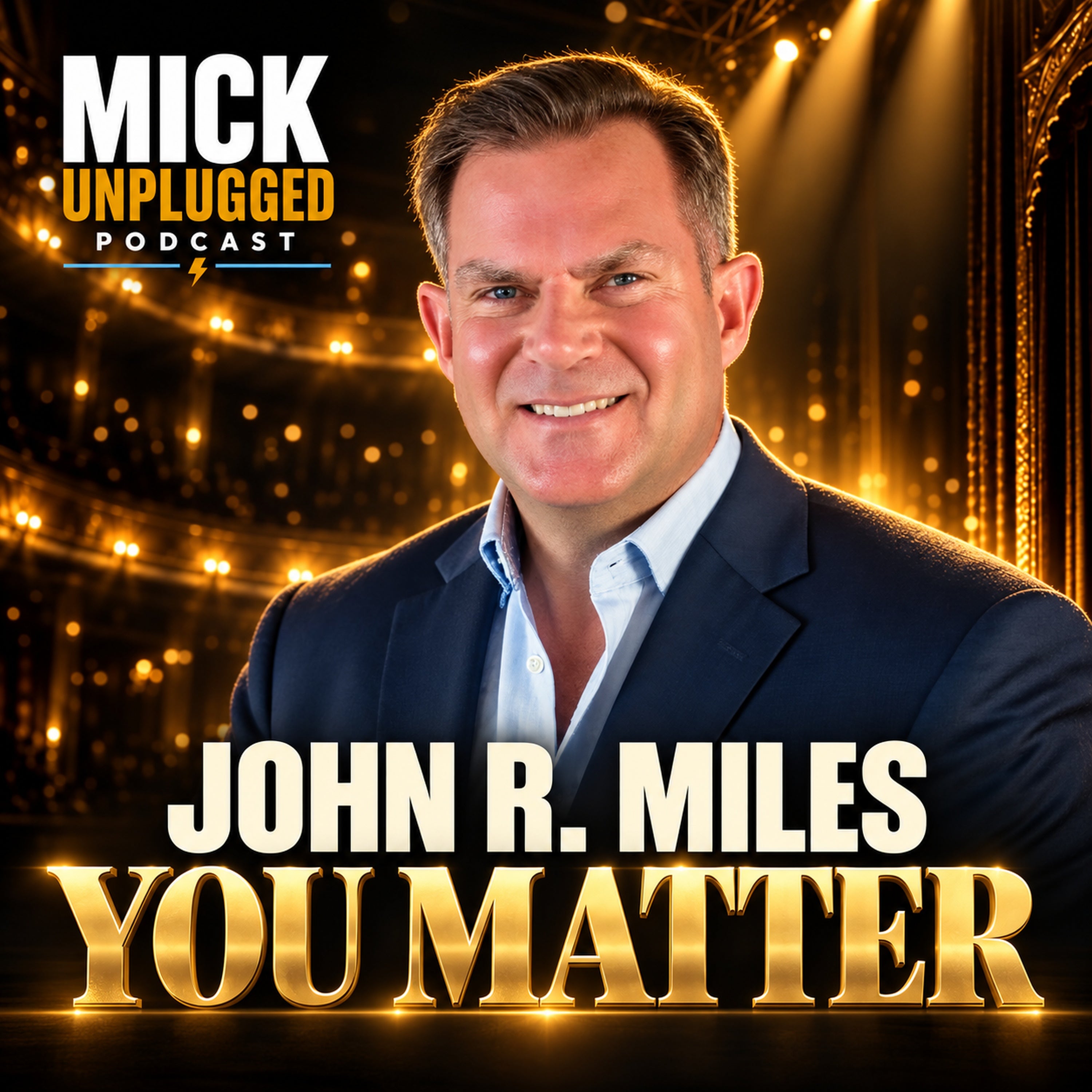
John R. Miles argues that people often confuse being needed with mattering. He frames modern loneliness, burnout, disengagement, and suicide risk as “systemic unmattering,” where institutions measure output but fail to reflect identity. He explains “quiet disorientation” (connected but unsure where you belong) and offers the “mattering needs pyramid” and “mattering compass” to rebuild belonging, psychological safety, and impact.
John R. Miles is a Navy veteran, corporate executive, and leadership/culture podcaster. He says he worked with Fortune 50 companies and teaches about culture, leadership, and emotional intelligence. He describes personal struggles including PTSD, a burglary during a divorce, and a friend’s suicide.
Mattering requires (1) mattering to yourself, (2) relational reflection (being seen beyond the role), (3) emotional resonance (being known, not just recognized), and (4) impact (leaving a mark). He introduces “great erasure” (loss of individuality in systems) and FIRO theory (inclusion, control, openness). He lists six recurring conditions: meaning, autonomy, trust/psychological safety, time, energy (return on energy), and reciprocity.
The “slow fade” he observed in veterans and first responders; the 4x4x48 Goggins challenge; Thoreau’s “quiet desperation”; his burglary and his friend’s suicide; Cornell professor Tom Gilovich’s statistic that 76% regret not becoming their ideal self.
Written by AI. May contain mistakes.
Discussion on the difference between being needed and truly mattering.
“Mick, I am just static to be on your podcast because I am a huge, huge, huge fan of Mick Unplugged.”
John shares his calling to serve those feeling lonely and disengaged.
“Years ago, it had to be around 2005, 2006, I was sitting in this discipleship class that I was taking at my church.”
John discusses how societal systems often overlook individual value.
“What if we're endlessly treating downstream symptoms while we're ignoring an upstream wound sitting underneath many or all of them?”
John recounts his personal experience with the 'slow fade' of identity.
“So, man, we're recording this on 9-11 and what a meaningful day for so many of us in America, but also around the world.”
Discussion on why being valued is crucial for employees beyond just being seen.
“Like, and I want to, because I know a lot of our viewers, a lot of our listeners are entrepreneurs and they're leaders.”
Explore how modern society has transitioned from quiet desperation to quiet disorientation, emphasizing the need for mattering in a connected world.
“And I think from a culture standpoint, it's the most important thing, but I'd love for you to elaborate, brother.”
John R. Miles breaks down the Mattering Needs Pyramid, detailing its four layers and their significance in personal and workplace settings.
“And I'll try to relate this both to the individual and to the work environment.”
Delve into the critical difference between being needed and truly mattering, highlighting the importance of personal impact in both professional and personal life.
“Because I think that second part is missing in so many people's lives.”
Learn about the concept of the mattering instinct and its implications in our lives.
“And the place that that is happening most, unfortunately, is in our homes.”
Explore why trust and psychological safety are crucial for self-expression.
“You just gave me like an amazing lesson, man.”
John shares a personal story of a traumatic experience that led to his transformation.
“And in this segment, I quickly call it the room.”
Discover the concept of the mattering loop and its impact on self-belief.
“Well, Mick, one of the things that I discovered while writing this book is that we've all heard that it's the tiny choices that matter.”
John reflects on his faith and the personal losses that shaped his resilience.
“And I have to tell you, I started this conversation talking about the Bible.”
John shares a poignant moment from his life after losing his friend and his cherished Bible.
“And my house got flooded two years ago, and the Bible that I had spent so many years writing in was destroyed.”
John discusses the importance of focusing on a meaningful mission through life's challenges.
“And you're let me guide your life to do something that will impact so many people.”
John emphasizes the significance of diversity of thought and culture in organizations.
“And you're going to get an amazing book, The Mattering Effect.”
John shares insights on personal development and balancing various aspects of life.
“the greatest companies are made because they have diversity of thought.”
John suggests impactful podcast episodes focusing on environment and leadership.
“Like when you start, those first pushes are going to feel so hard.”
John reflects on how belief shapes one's legacy and the mastery trap many fall into.
“When your memoir is written and we're on the last page and the last paragraph in that final sentence, what's one word you want to make sure is in that sentence to define your legacy?”
John and the host discuss the impact of John's book and share personal reflections.
“And there's always something that I can implement based on conversations that you have.”
John praises the host's community and reflects on the importance of collaboration.
“And, and man, I, I, I have to say there's some jealousy with some, some of the guests that you've had on the show, because we, although you and I have a lot of overlap, we, we each have some unique guests that we've had.”

Get the gist, explore an idea or ask about something said.
 Claude
On Mick Unplugged, what are the key points of this episode?
Searching your listeningAutomatic transcript. May contain errors.
0:00Mick: Before we get unplugged, a quick shout out to the sponsors helping us bring these conversations to you. Chime. Join the millions who are already banking fee free with America's number one choice for banking. Head to chime.com slash Mick. That is chime.com slash Mick. Sign up now. It only takes a few minutes. Hostinger. Your vision deserves a home online. Snag Hostinger services at their lowest prices before the sale ends. Create your website today for just$1.99. Go to Hostinger.com slash Mick and use code Mick for an additional 10 % off Black Friday and Cyber Monday pricing. And I am 8. Simplify your supplement routine.
0:41Mick: Go to im8health.com slash Mick right now or click on the link in the description and use code Mick for a free welcome kit, five free travel sachets, plus 10 % off your order. That's code Mick at im8health.com slash Mick. Code Mick at im8health.com slash Mick. These statements have not been evaluated by the Food and Drug Administration. This product is not intended to diagnose, treat, cure, or prevent any disease. Now, let's get into your because. This is Mick Unplugged. Mattering is a little bit different. It really says you're valuable to me and your presence makes a difference. Ladies and gentlemen, welcome to another exciting episode of Mick Unplugged.
1:31Mick: And today I have someone that I've actually looked up to from afar from a long time. He's a military Navy veteran. He is a guy who talks about culture and leadership. He's someone who we're going to talk about why you matter and why you matter more than you even know. Please join me in welcoming the brilliant, the amazing, the connected, Mr. John R. Mills. John, how are you doing today, brother? Mick, I am just static to be on your podcast because I am a huge, huge, huge fan of Mick Unplugged. So I'm such an even bigger fan of you. And I told you offline that I wanted to have this moment because I want to give you your flowers, dude.
2:17Mick: Like the respect that I have for our military and our veterans, what you have done and continue to do in the podcast space, what you've done career wise, what passion struck and that podcast is about just means so much to me, dude. I know you talked about like listening to my show, but honestly, I don't listen to a ton of podcast. yours is one of the few that not only do I listen to it's on repeat um it's one of the things that you know my Saturday mornings when I'm sitting out reflecting on the week that's come or that that's passed and things that I want to work on you're the first podcast that I listen to every Saturday morning dude and I truly mean that you are the show that I listen to and I've needed that So I wanted to thank you personally for that.
3:12Wow, man, that means a lot. That means a lot, brother. Thank you so much.
3:17Mick: You got it. There's so much I want to talk to you about, John. There's so many things that we have in common outside of just podcasting, right? You talk a lot about culture. You talk a lot about leadership, emotional intelligence. And those are all the things that are in my wheelhouse as well. And I'm so honored to have you on because I wanted to ask you, you know, I always ask my guests, what's their because? What's their purpose? Why do they continue to do the things that you do? And this amazing book that you have coming out has helped me connect with my because even more. So I'd love for you to tell us, like, what's your because?
3:54Mick: Why do you do the things that you do so well? Mick, because I was given a calling. Years ago, it had to be around 2005, 2006, I was sitting in this discipleship class that I was taking at my church. The course is called Discipleship One. And man, it's like signing up for a master's degree. It lasted 34 weeks. We met with our minister twice a week for two to three hours in the evening. And when I wasn't doing that, we had all these reading assignments from beginning to the end of the Bible. And during that time, out of nowhere, I was given this assignment, man, that completely altered the entire trajectory of my life.
4:54I felt called to serve the lonely, the broken, the beaten, the battered, the disengaged, and the burned out. And Mick, I have to tell you, I had no idea what hit me because all I saw was a bunch of separate epidemics. Loneliness was one crisis. Burnout was another that I was feeling myself at that time. Disengagement in all these companies was another. Rising despair, suicide rates, declining mental health were another. And for so many years, as I pounded my head against the wall, I thought about them individually. But the deeper I went into the human condition and into my podcast, the more a different question began to haunt me.
5:51What if we're endlessly treating downstream symptoms while we're ignoring an upstream wound sitting underneath many or all of them? And so that became the burning question. When you peel back the layers, whether it's someone burning out at work, an employee checking out, or someone quietly spiraling into isolation, you often encounter the same unspoken human question. Do I matter? And the more I began to realize that, I realized that billions of people are getting very little evidence that they do. And what it caused me to do, Mick, is I had to look beyond psychology and examine where neuroscience, contemplative wisdom and system design intersect, because the issue isn't just what's happening inside us.
6:53Man, it's happening around us, in our workplaces, our institutions, the algorithms we're using, our schools, consumer culture, even in our families. We've built systems all around us that are extraordinarily good at measuring what we produce, perform and deliver, but are far less capable of reflecting who we are. And I call that because systemic unmattering.
7:27Mick: bro i have chills right now like like knowing your story like knowing the things that you do but i've never heard it in that context i've never heard it said that way and hearing that passion that you have when you talk about that talking to me talking to our audience like it really gives me chills and I want to go a little bit deeper into that and those moments for you because for those that are watching for those that are listening for those that don't know John and you're weird if you don't know John go google John R. Miles but Navy veteran corporate executive on the outside john you you looked like you were the epitome of what everyone should strive to be right outside that was you but on the inside you were you've talked about that battle internally what was that really like for you to discover that within yourself Mick, I'm going to give you a little context and that for the audience.
8:41So, man, we're recording this on 9-11 and what a meaningful day for so many of us in America, but also around the world. And one thing that people don't know about 9-11 is 3 ,000 people unfortunately lost their life that day. 7 ,000 veterans lost their life fighting the war on terror. And it impacted countless thousands beyond that. But the statistic that doesn't get talked about enough is the over 150 ,000 veterans who have taken their life beyond those who lost it. And I went on this retreat three years ago, and there were a group of about 150 special operators there from every different community.
9:43and we did the 4x4x48 Goggins Challenge. And as I was talking to all these veterans, and it goes well beyond this to first responders, medical providers, so many people, like 99 % of the symptoms that we were all experiencing were exactly the same. And the symptoms we were experiencing is something that I call the slow fade. And a person will understand this as I talk about it, because this is what happened to me. Man, you're doing it all. You're functioning. You're giving. You're showing up. But what ends up happening is I gradually your own voice, your very identity, your needs, your sense of significance.
10:41man, it begins to recede. And the only way I can like talk about this is it's like this pair of glasses here. And it's like one day, a long time ago, they were completely clear. But every day, it's like more and more smudges are beginning to appear on these glasses, yet nothing you use wipes them away. And it's like your life just starts getting dimmer and dimmer and dimmer, and you feel less and less alive. And the more I started to see it in myself, I began to see it everywhere. You see it in the poor teacher who's working her heart out where you live in Atlanta, in the inner city, and she's pouring everything into her students.
11:37It's the first responder who's running toward everyone else's crisis. It's the CEOs who are listening to this, who are carrying the weight of the company and the board. It's the caregivers who are tending to loved ones, the nurses tending to sick patients, and the overachiever who's built and identity around constantly proving their worth like I was. Yeah. And what I found is they're needed, they're giving, they're contributing. But, Mick, who's seeing them? That's where the slow fade becomes so dangerous because you remain highly visible to the world while you're becoming increasingly invisible to yourself.
12:23And that, my friend, is exactly what was happening to me. Wow.
12:31Mick: Dude, the chills. The chills get even stronger, man. Like, this is so deep. Like, and I want to, because I know a lot of our viewers, a lot of our listeners are entrepreneurs and they're leaders. And they hear me, when you hear me speak, you hear me talk a lot about emotional intelligence. And I want to go to a segment that I call The Unplugged Truth. truth and I'm going to elaborate on some, or I want you to elaborate on something that I'm about to say, because I know that you talk about this and I know that there's a framework around this in the mattering effect, which by the way, will be a New York times bestseller by the way.
13:11Mick: And we'll, we'll talk about that book in a moment, but here's an unplugged truth. We've talked a lot in the last two to three years about making sure in the workplace people are seen. I think that's step one. Because hearing you and your story and understanding some of your frameworks, people don't just need to be seen, they also need to be valued, right? And I know that that is something that you talk about. So I would love for you to elaborate because for the people that are watching that are leaders, that are founders of companies, I'm going to say it's no longer good enough to just make your people feel seen.
13:56Mick: That's actually pretty easy now, right? But how do you make them feel valued? And I think from a culture standpoint, it's the most important thing, but I'd love for you to elaborate, brother.
14:10So I want to introduce Henry David Thoreau. And then I had this interview last year, and I've always said Henry David Thoreau, and I was interviewing the leading expert in the world on his name, and he goes, you're mispronouncing his name. It's Thoreau. So for anyone who's out there who, like me, has said it the wrong way, it's actually Henry David Thoreau.
14:35The man, practically two centuries ago, wrote the line, the mass of men lead lives of quiet desperation. And I think he was right. But Thoreau was looking at a world entering the Industrial Revolution, a world where work at that time had become increasingly organized around production, efficiency, specialization, and most importantly, the machine. And over the next century and a half, that logic has become so deeply embedded into every institution that we surround ourselves with, but especially our work environment. because, Mick, I'm not sure what you've experienced, but, man, what I experienced is that we increasingly have learned to measure people by what they produce, what they contribute, and so many people look at shareholder value and what economic value our employees can create.
15:42But I think something is happening now that is drastically different. Like not only are we living in a more global world, but with the advent of AI algorithms, digital networks and constant information, we're now having to respond not only to caring about the person down the street, we're having to care about billions of people around the world. And so our communities, our workplaces, our neighborhoods, even our own identities have become increasingly porous. So I don't think we're simply experiencing quiet desperation anymore. I think we're experiencing what I call quiet disorientation. Quiet desperation says, I know something is wrong, but I feel trapped inside these walls.
16:39Well, the issue is we don't have these walls anymore. And that's the difference between quiet desperation and quiet disorientation. We're connected to almost everything, but increasingly uncertain about where we belong in that connection.
16:58Mick: So, John, you're talking about the mattering effect, the mattering needs in the pyramid. Can you break down what that actual pyramid is from top to bottom? Mick, you were talking to me about that mattering has two components. The feeling that you're seen, but that you need to be giving as well. So it's adding value and receiving value. And so as I started to think about this in a broader terms, I was trying to figure out, like, what does that really mean beyond just those two conditions? And so this is this is where the mattering needs pyramid came about. So it has four different layers to it.
17:43And I'll try to relate this both to the individual and to the work environment. So the foundational element is before you can matter to anyone else, before you can feel seen, you have to matter to yourself. Do I possess enough internal sense of worth that doesn't rise and fall with approval, achievement, productivity or other people's opinions? and in a work environment are you giving the conditions that allow that that allow people to matter to themselves and it goes it obviously goes beyond the work environment but then this leads to the second foundational level which I call relational reflection am I seen does my existence register with someone else.
18:37And it's important for people to realize that this is more than just being surrounded by people. This is, you know, am I really seen? And in work environments, this is something that I have to tell you, sometimes as a leader, I didn't do as good a job as I should have, because oftentimes when we look at someone, we see them in the role that they're playing, but we don't see them in the roles that led up to that role. We also don't see them in their life outside of work, which we really need to spend a lot more time doing. And then that leads to the third layer, which is emotional resonance. And this really gets to, you can be seen, but are you known?
19:26And this gets into what I was just saying. Does someone understand who I really am beneath that role. And that happens in our family situations, in the role that we're playing. It happens in our work environments, happens in our church environments. You know, there's really a difference between someone knowing your name and someone knowing your heart. And I'm sure that resonates with you. And then lastly is impact. Do I feel I can make a difference? Does my presence change something out of me? Does my role at work influence the company culture? Does it influence the company's customers? Does it influence the company's strategy?
20:12because an employee and any of us want to know, does my life leave a mark? And those four layers together create a more resilient sense of mattering. It's like a living system.
20:28Mick: Amen to that. And I'm smiling because, again, it's like we're brothers from another mother because one of the things that I was challenged by from my mentor and my best friend, Robert Irvine, who I know is listening to this episode, is nothing really matters if you don't make impact, right? And he was talking both in my professional and personal life. It's like, your people want to make impact, right? And so ironically, or funny enough, John, I was actually going to talk to you about being seen and valued. And then most importantly, especially when we talk about this new aged employee, and I don't mean it by age, literally, I just mean by where we are in society.
21:23Mick: In a good way, people actually want to make impact, right? You're the people that you lead want to make impact. So I would definitely say being seen, being valued and having the ability to make impact, to me is a recipe of amazing culture. So I'd love to get your spot on that too. Yeah, well, I think it's important for people to understand the difference between being needed and mattering. Being needed basically says what you do is valuable to me. Mattering is a little bit different. It really says you're valuable to me and your presence makes a difference. And I think that that second part is huge.
22:11And that's why like my mission today, Mick, is I want to make the invisible visible and remind the people who spend their lives making other people matter that they matter to.
22:27Mick: Yeah. Because I think that second part is missing in so many people's lives. Totally agree. Totally agree. So I'm going to move to the hot takes on my show and I'm going to give the hottest take of 2026. The Mattering Effect by John R. Miles will be a New York Times bestseller because I know the man behind the book and I respect the man behind the book. Your business shouldn't look smaller online than it is in real life. As an AI consultant, I help businesses put technology to work. And when we're building websites for our clients, Hostinger is one of the tools that we always use. So this recommendation comes from real experience.
23:15Mick: Hostinger's AI tools can help you build a website in minutes without coding or hiring a designer. Your domain, website, email, and marketing all in one place. If you've been sitting on a business idea, give people somewhere to find it. Snag Hostinger services at their lowest prices before the sale ends. Create your website today for just$1.99. Go to Hostinger.com slash Mick and use code Mick for an additional 10 % off Black Friday and Cyber Monday pricing. Hostinger.com slash Mick. On Mick Unplugged, we talk about showing up with purpose. For me, that includes taking care of myself without overcomplicating my day.
24:01Mick: That's what I appreciate about IM8. One drink makes my daily routine simpler and easier to stick with. IM8's Daily Ultimate Essentials bring 16 supplements into one drink with 90 ingredients across 9 major organ systems for$2.61 a day. Co-founded by David Beckham, it was built by leading doctors and researchers. I use IM8. Give it a try. Go to im8health.com slash mick right now or click on the link in the description and use code mick for a free welcome kit, five free travel sachets, plus 10 % off your order. That's code mick at im8health.com slash mick. Code mick at im8health.com slash mick. These statements have not been evaluated by the Food and Drug Administration.
24:48Mick: This product is not intended to diagnose, treat, cure, or prevent any disease. So, John, I'd love for you. I'm going to open the floor on The Mattering Effect. What are people going to get out of this book? What what are some of the takeaways that is going to be unveiled to the person that reads it? Well, Mick, first of all, I want to say that I like for me, I never go into writing any of these books that I write to get on a bestseller list. And I think when you do, you're just setting yourself up for great disappointment. Like the biggest measure for me is when I when I hear from a leader or someone who's read the book and they tell me that the impact that it's it's had on them.
25:41That was the best part of writing Passion Struck. And the other thing that is huge for me is The Next Big Idea Club. And I found out last night that the book was picked up to be a must read in the October segment of The Next Big Idea Club. So that was a huge validation because people don't know about that. That book club is led by Malcolm Gladwell, Adam Grant, Susan Cain, and Dan Pink. And I can't think of four greater writers out there. So for people who are reading this, one of the big ideas that you will get is something that I call the great erasure. And the great erasure is what I think is happening and what is causing so many people to feel lonely, burned out, disengaged, etc.
26:38And that is the gradual loss of individuality as people become increasingly interchangeable parts inside the systems that organize their lives. This is the systemic unmattering that I'm talking about. And one of the most important things for people to understand is that healthy environments that we interact with require three ingredients. And as I was researching this book, I came across this theory I didn't even know existed. A lot of people have heard of self-determination theory, which really gets into intrinsic motivation. but I found this thing called FIRO theory, and it has three important components, inclusion, control, and openness.
27:32Inclusion really answers the question, do I belong here? Control answers the question, do I have a say in what happens in the environments I walk into? And openness might be the most important element. Can I be the real me in that environment? And when those three signals weaken, and that's what my book really gets into is following this signal, people don't rebel, they shrink. And the place that that is happening most, unfortunately, is in our homes. Because the thing that I realized, the more research I did on this, is that the mattering instinct starts the moment that we are born. It's the first thing we're searching for when we come out of our mother's wombs.
28:23And it's most loss in our home environments. And the second key concept that I think people really need to understand is something that I call the mattering market. Because the more you think about it, we are living in a mattering market. Like everything that we interact with, whether it's the consumers, the consumer websites, the major brands, the schools that we send our kids to, the schools that we go to, the work environment, the communities, they're all trying to extract something from us. And the more they're extracting, the more our individuality is taken away from us. So the other very important thing that comes out of this book, which I spend 75 % of the book talking about, is how do you build all this back?
29:21If I haven't made a case for this and why people are feeling this, then I've done a poor job. But I think it's important for people to understand the core framework in the book. As I interviewed over 400 people on the podcast for this book, and I'm talking Nobel Prize winners, professional athletes, ministers, priests, contemplative practitioners, psychologists, neuroscientists. I mean, you and I interview like the same groups of people. I found six recurring conditions that either make us matter or lead to systemic unmattering. And man, it just so happened that they spelled out the word matter.
30:07So the first one is meaning. Am I connected to something that makes my life feel significant? The second one, A, is autonomy. Do I have authorship over my own life? And in a work environment, do I have authorship over the ability to make a difference in the work environment that I'm existing in? T is trust. This really gets down to psychological safety. Do I feel safe enough to be fully myself in the environments that I enter into? And I was interviewing Dr. John Demartini. I'm not sure if you've had him on your show or not, Mick. But we spent a whole hour talking about this. So many of us never feel safe enough to be fully ourselves.
31:00And that's why so many people today are wearing masks. I did for like two decades in my career instead of being my full self. The third T or the second T is time. So do I have enough shared presence to actually experience my life in my relationship. And this is so important because we're so busy in our lives that we're not actually experiencing it. The E is for energy and it's specifically return on energy. Is my life replenishing me or is it simply extracting from me? And then the last one is a word that some people may not use very often, but is extremely important. Reciprocity. And when I say reciprocity, think about being on a seesaw.
31:53Is care, contribution, and significance moving in both directions or only one? Because if it's only moving in one, you're either on the bottom or at the top of that seesaw. And so then the last thing is you then have to apply that matter framework to the mattering needs pyramid. And when you do that, it becomes the mattering compass. And so you have to then take that matter framework and apply it through those four layers, which is personal mattering, relational mattering, emotional mattering, and impact mattering. And once you're able to build that back in yourself, that's when the mattering effect, that's when you achieve the mattering dividend.
32:45And that's when the mattering effect takes place. And that impact starts happening at home, in your relationships, in your work environments, in your community, man, and then eventually throughout society. Wow. You just gave me like an amazing lesson, man.
33:10Mick: Like, cause there are a couple of things in the acronym. You talk about trust. So important. Psychological safety. You know, I just did an entire keynote on that for a fortune 100 company and how you just eloquently put all of that together, dude. Like it's, it's what makes you who you are. It's why you are who you are. And it's why I'm going to say this. It's why you matter. And like, that's why John R. Miles matters, because that's you. That's all you. And it brings me to a question that I have. And in this segment, I quickly call it the room. And it's one of those things where it's like, was there was there ever a moment where there was a meeting, a dinner?
33:58a conversation you had with someone that sparked this in you?
34:03Mick: Like, I know internally, right, you decided to look at the man in the mirror. But was there a conversation? Was there a room? Was there a meeting that propelled you to an even higher level?
34:18Mick, there wasn't really a conversation. There was a gun.
34:30So, about nine years ago, I was in the middle of this just terrible divorce. And, man, things were as low as I thought low could possibly get. And my son at this point had gone off to college. And my daughter is in middle school. And I had just dropped her off at school. And at this point in time, I had this schedule that after I would drop her off, I would go by the gym. And it just so happened this day, the gym had some kind of electrical fire. So fire engines were there when I showed up. So instead of being able to go and work out, I had to drive home. And I should have known better from my time at the military that I was doing the same pattern too much.
35:24And unfortunately, at this point in time, a couple of people were watching my pattern and had picked that exact moment to rob me. So I walk into my home at the exact time a burglary is going on. And I saw the work shoes when I went into my house. But at the time, because I had I had given my my spouse about 90 percent of of everything that I had made. To close out the divorce. So I I didn't have enough money at this point in time to even buy a house. I was I was renting. and it turns out that the manager of the rental company was the person had been canvassing my house and he was the person robbing me.
36:18So I go up the stairs thinking he's, he or she, whoever this person is, who I, who I just figured was from the rental company, had their headphones in and couldn't hear me. And as I'm charging up the stairs, dude, I can, I can hear the accelerated breathing. And, um, I'm like, I had enough momentum that I couldn't stop myself. And I turned the corner and there he is at the top of the stairs, pointing my own handgun back at me. And man, it's like your life flashes before you. And unfortunately I had the military training. So I was able in that moment, I had a quick split second to decide, am I going to rush up the stairs and try to take him down?
37:08And he was a much bigger guy than me. Plus he was commanding the high ground or is I going to evade him? And I decided I was going to evade him, live to fight another day. So I successfully get out of the situation. And then, dude, three days later, the one person in my life, my best friend, the guy who I could call two o 'clock in the morning, 5 a.m. in the morning, and he would come there in a heartbeat, commit suicide. and at this point in time you know I had been given this because that I talked to you about and I had been resisting it with every strength that I had in my bones because it was so foreign to anything I had done before it and this was my wake-up call like John what are you waiting for and I have to say like after that point in time it like didn't come overnight it took me two years of figuring it out.
38:15And that's what led to me writing Passion Struck was like Passion Struck, if people haven't read it, are 12 principles that I used to build back my life by doing research on myself. But that was the start of it was those two events. And it really made me realize there's this professor at Cornell, Tom Gilovich, whose work on people in the third trimester of their life has found that 76 % of people he has examined have the same regret. And that is the regret for not allowing themselves to make the choice to become their ideal self, man. And that was the moment I made the choice that I was gonna live my life differently.
39:03And I was gonna solve that question and start helping people live their life differently. So if there's anything that I hope to do with the rest of the days that I have on earth, it's to help people not become the 76 % who go on their deathbed looking back and wondering what the heck did I do with my life?
39:30Mick: Bro, you've done nothing but give me chills this entire conversation, man. Like I knew the story of the burglary. I did not know the story of your best friend. And to know that that happened within 72 hours of each other, man, like the the self resiliency that you have, the self-awareness that you have. And you know this, right? Like we both talk about emotional intelligence. Ninety percent of the people would tell you that they're very self-aware, but only 10 percent really are. Right. Right. And you, again, take that a step further by talking about the self audit or the self research, which is not something I'm going to do.
40:14Mick: Like you've given me something to start this weekend because I'm sitting here listening to you say all this. And I'm like, doggone it. He's right. Like and while, yeah, I do think that my life has been very purposeful. I do feel like I have made and will continue to make impact. I still need to do that self-research on me because it could be something I'm leaving on the table. So, bro, like you gave me something to do, and I love that. Well, Mick, one of the things that I discovered while writing this book is that we've all heard that it's the tiny choices that matter. But what I discovered is that there's actually a mattering loop.
41:06And each, since you're talking about self, each self-honoring choice that you make strengthens the belief that your choices matter. And the more your choices matter, the more you believe in yourself, the more you're willing to take off the mask, the more you become willing to live by your values and your aspirations and your ambitions. And, man, to live what Marshall Goldsmith calls the earned life. It isn't that what it's all about. And I have to tell you, I started this conversation talking about the Bible. Man, my Bible was my prized possession. I had decades of notes in my Bible. It was like every time I heard a sermon that resonated with me, I would take notes from the pastor talking, and I would underline it.
42:07And my house got flooded two years ago, and the Bible that I had spent so many years writing in was destroyed. And I have to tell you, after my friend's suicide, I, man, I was just like on my knees one day, just in tears and in like agony. And I opened the Bible up. And Mick, the first thing I read was, was basically this line that said, I don't want you to worry. I've got you.
42:47Mick: Your business shouldn't look smaller online than it is in real life. As an AI consultant, I help businesses put technology to work. And when we're building websites for our clients, Hostinger is one of the tools that we always use. So this recommendation comes from real experience. Hostinger's AI tools can help you build a website in minutes without coding or hiring a designer. Your domain, website, email, and marketing all in one place. If you've been sitting on a business idea, give people somewhere to find it. Snag Hostinger services at their lowest prices before the sale ends. Create your website today for just$1.99.
43:31Mick: Go to Hostinger.com slash Mick and use code Mick for an additional 10 % off Black Friday and Cyber Monday pricing. Hostinger.com slash Mick. So let's be honest. Everyone hates bank fees, right? That's where Chime comes in. Chime is changing the way people bank. They're not like traditional old banks who charge fees and gatekeep perks and rewards. Chime offers the most rewarding, fee-free banking, all with no overdraft fees, no monthly fees, no minimum balance fees. You get 5 % cash back on ChimeCard in a category of choice, like gas or groceries, all while building credit through regular, everyday spending, with no credit check.
44:16Mick: You can also grow your money faster with a savings rate that's nine times the national average. And if you're ever in a pinch, SpotMe lets you overdraft up to$200 fee-free. Join the millions who are already banking fee-free with America's number one choice for banking. Head to chime.com slash mick. That is chime.com slash mick. Sign up now. It only takes a few minutes. And you're let me guide your life to do something that will impact so many people. And I just looked at that moment and said, I'm just going to devote my life to trusting in this moment. And that's what I've done through losing everything in floods and everything else that's happened.
45:05And I just keep focused on like, like this mission matters so much that that's what gives me the strength to keep going through the ups and downs that, you know, this entrepreneurial journey and this life journey brings us.
45:25Mick: Amen, brother. Amen. And here's what I want to do. Just because this this conversation is touching me so much. And those that listen and watch the show know that anytime that there is an amazing conversation, an amazing book, I like to make sure that I show my love back. So here's what I want to do, John. And I'm going to have John's social media links to his website. We're going to get to all that in a second, too. But I'm going to have all that in the show notes and descriptions. Here's what I want. the first 20 people that message me on LinkedIn or Instagram, but you have to tag John and I too.
46:09Mick: So you got to message me and you got to add John. I'm going to buy 40 copies of the book. Oh man. And I'm going to send the first 40 people. So I'm going to go the first 20 on LinkedIn, the first 20 on Instagram. Got to tag us. as you DM me, but I'm going to send you a copy of the book. And then I'm going to need you, the person on the other side, the listener, the viewer, the people that get this book, after you've read it, I need you to come back and tell us what you picked up, what you've implemented or the first thing you are going to implement is, because this is what I know about John. His book's going to give you a framework.
46:54Mick: His book's going to lay out a really good path. But John can't make you do it. Mick can't make you do it. You've got to take those first steps. But I promise you, John's going to lay out every step that you need to take, because if you know John, that's what he does, and he does it really, really well. So, John, I want to do that if you will allow me to do that. Man, Mick, that is huge. Thank you. Thank you for believing in me in the message. A thousand percent. So first 20 people message me. You matter. Got you covered. And you're going to get an amazing book, The Mattering Effect. John, you've been awesome.
47:35Mick: I'm going to get you out of here on my rapid fire unplugged five. Are you ready? I'm ready. All right. You are a Navy man and one of my closest friends in the world who actually lives right around the corner from you, Darren Vermost is an Army guy. Who's going to win the football game this year, Navy or Army? Well, I mean, both teams are going to be good. I was just at Navy this past weekend, and they're looking awful good this year. So my money's on Navy. So this is go Navy beat Army. Darren, you heard it. There you go. John, you do a lot of work. You work with a lot of Fortune 50 companies, what's one culture trait or characteristic that every great company gets right?
48:25Mick: What's one? I think it's when they stop stereotyping people in the organization. Because if you're going to build a culture of mattering, you do that by restoring the ambiguity about people's legitimacy, you reduce that ambiguity. And, you know, one of the things that's killing me right now is the greatest companies are made because they have diversity of thought. And diversity of thought is so important because when you have group think, that's when companies die. You need to have diversity of perspective and people to push back when you don't allow people to push back and you don't allow voices to be heard.
49:21Mattering gets destroyed and the culture loses its willingness to speak up and to tell the leadership when things are broken the need to be fixed. Love it.
49:38Mick: Love it. the self-research. If I'm someone who's going to start that, I really am, what's something that I need to make sure that I do in the self-research so that it goes the right way?
49:59So I am a big believer that we need mentors and we need our own coaches. And one of my own coaches a long time ago said to me, and I talk about this on my podcast, like when I was going through the slow fade, it was as if I was living on a stool that had one support underneath it. And that support was the constant grind. And he said, you need to start looking at the foundation that you're building. And he goes, you need to look at it through different dimensions. You need to think about your physical health, your emotional health, your mental health, your relationship health, your career health, etc.
50:48And you need to keep all of those in balance. And it goes hand in hand with kind of that matter framework. And I found that for me, the first step I needed to take was to figure out what was causing the most imbalance in my life. And that was the first point that I needed to work on. And for me, I had a whole bunch of PTSD that I wasn't dealing with because I thought that by going and seeking help, it made me weak as a man. when I broke down that barrier and I actually sought the help and I figured out what my stuck points were that were barriers in my life, man, when you start working on one area, almost like water, it starts permeating the other areas and you give yourself permission to expand.
51:51And that's exactly what happened to me. And it's the only way I can like help people think about this is like, imagine you're pushing a boulder up a huge hill. Like when you start, those first pushes are going to feel so hard. But the second you start getting momentum behind it, that momentum carries forward. And before you know it, one step happens and another step happens. And then like overnight, the boulder then is over a ridge and it's catching more momentum. That's kind of how self-development happens. But you have to pick one area and it's got to be one of the biggest areas that's holding you back if you want to change.
52:41Mick: I like that. I like that. Fourth question. If someone and everybody that's listening and watching, I want you to go to Passion's Truck now, wherever you listen or view podcasts, go there right now. John, what's one episode you want them to make sure they listen to first? well since we've been talking so much about the environments that we surround ourselves with one that comes right off the tip of my tongue would be the the episode i recently did with angela duckworth about her new book situated because we we talk a lot about this um another great episode that happened to happen in the same week um was with um um jared i i'm drawing a blank and I shouldn't.
53:32Jared is Pulitzer Prize winner. And he basically talks about the situations that leaders find themselves in. And like, as he was examining Harry Truman, like it was, he was like, at that point in time, there were 85 other senators beyond Harry Truman who were more qualified than Harry Truman to do that job. So was it the environment that Harry Truman was in or was it the fact that he had more courage? That's kind of what Jared gets into. And then the third one would be Greg McKeown. And he and I have this incredible conversation about the signals that govern our lives. And he's currently pursuing a Ph.D.
54:24at Oxford. And if you haven't read his books, man, he's a great author, too. But that would be another great discussion.
54:32Mick: I love it. All right, last question. I'm going to get you out of here, John. When your memoir is written and we're on the last page and the last paragraph in that final sentence, what's one word you want to make sure is in that sentence to define your legacy?
54:58Belief. belief. I love it. I think there are a number of ways we can look at belief, but the belief that I'm talking about is so many of us get caught in the mastery trap, the mastery trap. We believe life will finally become more meaningful once everything is under control. And the simple fact is it's never going to be under control. So the second you start believing in yourself now is the second your life is going to change. I love it.
55:36Mick: I love it. Dude, I'm completely humbled. I'm completely honored to spend this time with you. One of the best conversations I've had, You're someone, again, I've looked up to for a long time. I told you I listen to your podcast every Saturday. That's how I start my Saturday. Even during football season, the first thing I do is I'm popping on your podcast to catch up. And there's always something that I can implement based on conversations that you have. So, John, brother, thank you so much. Everybody that's watching, that's listening, the mattering effect. I don't care if you get it on Amazon. You can go to John's website.
56:19Mick: We'll have it plugged up for you in the show notes in the description. Your local bookstore, Barnes and Nobles. It doesn't matter. Books a million. Get this book. The first 40 people, remember 20 on LinkedIn, 20 on Instagram, tag myself and John. That's all. I'm going to hold myself accountable to make sure you get the book. You're going to get a copy. Bro, you mean the world to me. this conversation was much needed. You gave me some work that I'm going to start doing this weekend. So brother, from the bottom of my soul, thank you so much, John. Thank you. Thank you, for having me. It sucked. I mean, you have such an amazing community that's behind you.
56:58And, and man, I, I, I have to say there's some jealousy with some, some of the guests that you've had on the show, because we, although you and I have a lot of overlap, we, we each have some unique guests that we've had. And man, you do it right. Your episodes are top notch. So such a huge honor.
57:18Mick: It's because I have people like you that I can blueprint behind, man. You know, we never do anything on our own. I tell people this all the time. There's a whole bunch of room on the mountaintop. People just don't try to fight to get there. So they think it's this very little tip. The mountaintop is a huge space. And I'm honored to share that mountaintop with you. Thank you, Nick. Got it. And to all the viewers and listeners, remember your because is your superpower. Go Unleashed.
You can keep showing up, delivering results, and supporting everyone around you while losing touch with yourself. John R. Miles joins Mick to explore the difference between being needed and knowing that your presence matters.
John shares the calling behind his work, the experience he calls the slow fade, and the ideas discussed in The Mattering Effect. Together, they unpack how leaders can help people feel seen, known, valued, and able to make a difference, and why that work also has to begin within ourselves.
You'll Hear
• Why being useful to others can leave your own sense of significance unanswered.
• How John describes the slow fade in high performers and caregivers.
• Why a culture of mattering requires more than recognizing someone's job title.
• The mattering needs pyramid and John's MATTER framework: meaning, autonomy, trust, time, energy, and reciprocity.
• The turning points that led John toward a more intentional life.
• How small, self-honoring choices can help rebuild belief.
• The Unplugged 5: culture, personal growth, podcast conversations, and legacy.
Chapters
00:00 Your presence makes a difference
00:12 Welcome to Mick Unplugged
02:04 The Because: a calling to serve
07:24 Recognizing the slow fade
11:18 The Unplugged Truth: seen, known, and valued
15:45 The mattering needs pyramid
21:21 The Hot Takes: The Mattering Effect
26:43 Meaning, autonomy, trust, time, energy, reciprocity
29:52 The Room: the turning points behind the mission
37:53 The mattering loop and self-honoring choices
42:14 The Unplugged 5
50:32 Final reflections and your because
Connect & Discover John R. Miles:
Website: https://johnrmiles.com/
The Mattering Effect: https://thematteringeffect.com/
Passion Struck: https://passionstruck.com/
LinkedIn: https://www.linkedin.com/in/johnrmiles/
Instagram: https://www.instagram.com/john_r_miles/
Follow Mick
Mick Hunt Official: https://mickhuntofficial.com/
Instagram: https://www.instagram.com/mickunplugged/
TikTok: https://www.tiktok.com/@mickunplugged
YouTube: https://www.youtube.com/@MickUnpluggedPodcast
LinkedIn: https://www.linkedin.com/in/mickhunt/
Apple Podcasts: https://podcasts.apple.com/us/podcast/mick-unplugged/id1731755953
Spotify: https://open.spotify.com/show/2cUp7JRzkVqunYmD2ENe4g
Buy Mick's book, How to Be a Good Leader When You've Never Had One: https://www.amazon.com/Good-Leader-When-Youve-Never/dp/1394357958
Your because is your superpower. Go unleash it.
Content note: This conversation includes a home invasion, bereavement, suicide loss, and personal experiences with mental health.