
In short
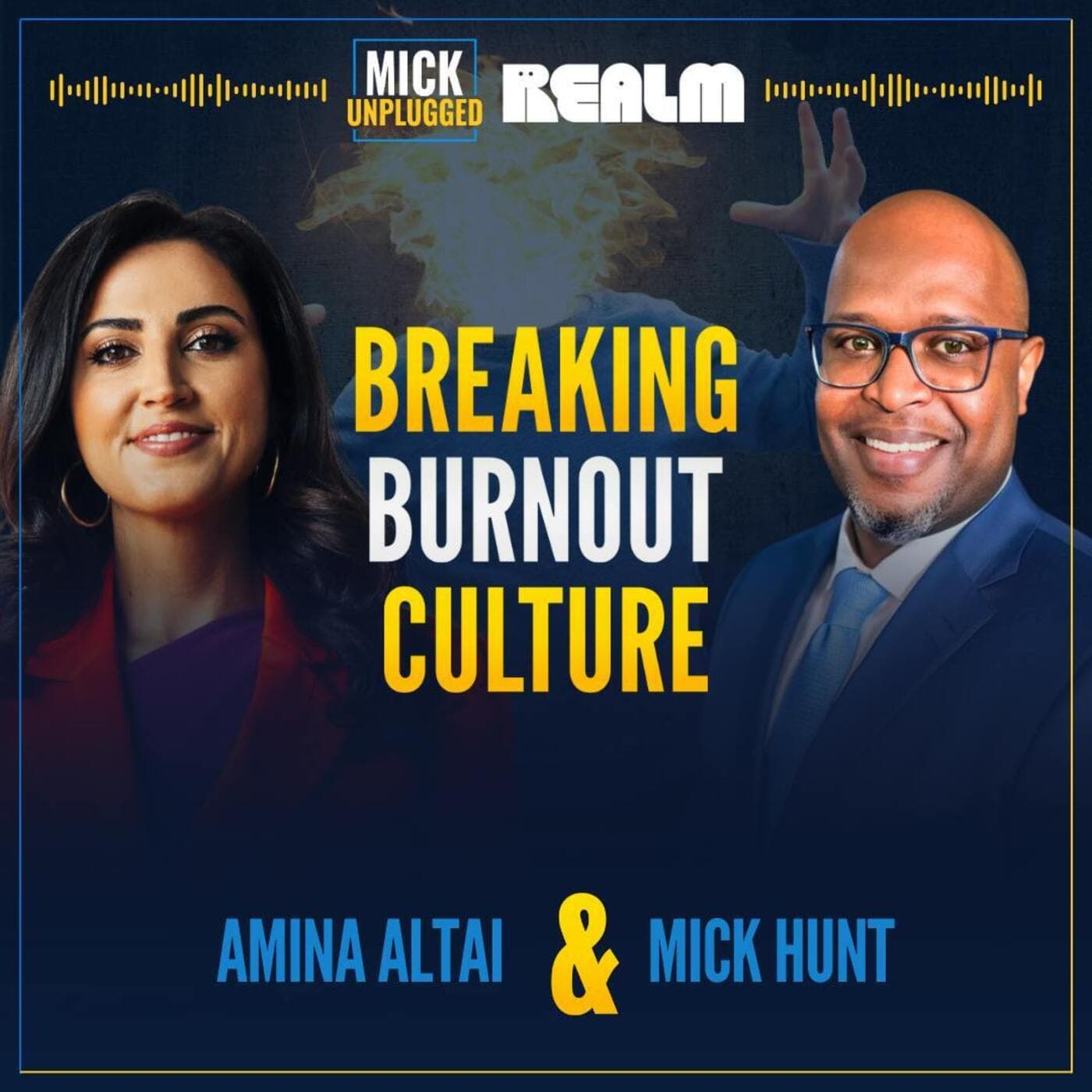
Podcast Episode Notes: Leveraging Your Zone of Genius with Amina AlTai
Podcast Overview Title: Mick Unplugged Host: Mick Hunt Description: "Mick Unplugged" is a podcast focusing on empowering leaders and individuals to find their core driving force, termed their 'Because,' and use it to create meaningful impacts. Each episode delves into modern leadership principles, providing practical advice and real-life stories.
---
Episode Details Episode Title: Leveraging Your Zone of Genius with Amina AlTai Guest: Amina AlTai Description: Amina AlTai is an executive coach, healer, and author whose work revolves around redefining success for mission-driven individuals. Her latest book, *The Ambition Trap*, addresses the relationship with ambition and promotes a purposeful approach to personal and professional success.
---
Key Concepts
- Purposeful vs. Painful Ambition
- Painful Ambition: Driven by core wounds (rejection, abandonment, humiliation, betrayal, injustice). It manifests as:
- Unsustainable urgency
- Winning at all costs, often harming oneself and others
- Purposeful Ambition: Rooted in truth and wholeness, focusing on:
- Collaboration
- Honoring one's needs
- Sustainable success
- Interconnection of Body, Mind, and Career
- Success is a holistic concept encompassing well-being, values, and work-life balance.
- Recognizes the importance of aligning mental and physical health with professional ambitions.
- Encourages individuals to cycle through periods of growth and rest.
- Zone of Genius
- Definition: A unique space where individual strengths and talents shine.
- Framework: Everyone has a zone of genius, which can be tapped into to enhance performance and reduce burnout.
- Amina emphasizes the need for individuals and organizations to foster environments where everyone's genius can flourish.
- Redefining Success
- Success should be personalized and may differ from traditional measures (e.g., wealth, power).
- For Amina, success includes wellness, a concept she believes should be a birthright for everyone.
---
Key Takeaways
- Ambition is Natural: It is defined as a desire for growth and is inherent in all living beings.
- Context Matters: Understanding the unique circumstances of individuals in the workforce is crucial to fostering a supportive environment.
- Collaboration is Key: Aligning individual strengths with organizational goals can prevent burnout and enhance productivity.
---
Memorable Quotes
- "Ambition is just a desire for growth or a wish for more life—and that’s inherent in every living thing on the planet."
- “Success should include your body being well…that should be each of our birthrights.”
- "There are times in our lives where we need new roots. So it feels like a burning down, but it’s actually a rebuilding."
---
Practical Strategies for Leaders
- Focus on Zones of Genius: Encourage employees to work in their unique strengths to improve overall productivity and satisfaction.
- Shift Away from Urgency Culture: Prioritize tasks to avoid a constant state of fire-fighting, allowing for more thoughtful decision-making.
---
Guest Connections
- Website: [aminaltai.com](https://www.aminaaltai.com/)
- Instagram: [@aminaaltai](https://www.instagram.com/aminaaltai/)
- LinkedIn: [@aminaaltai](https://www.linkedin.com/in/aminaaltai/)
- Podcast: [Amina Change Your Life](https://open.spotify.com/show/0bMJ2eeYPRqhGwLHLuF98X?si=5577b20da2f44505&nd=1&dlsi=bec785bb983d44ce)
- Book: [The Ambition Trap: How to Stop Chasing and Start Living](https://a.co/d/bt636tq)
---
Conclusion This episode of Mick Unplugged highlights the transformative potential of aligning ambition with purpose and well-being. By recognizing and leveraging individual zones of genius, both individuals and organizations can thrive, creating a more equitable and fulfilling workplace.
---
Remember: Your 'Because' is your superpower. Go unleash it!
Written by AI. May contain mistakes. Listen to the episode to check what was said.
Transcript
Automatic transcript. May contain errors.0:28We always recommend Shopify. What happens when ambition stops serving your purpose and starts draining your peace? And today on Mick Unplugged, I sit down with my really good friend, Amina Altai, an executive coach, author of The Ambition Trap, and one of the leading voices on purpose-first leadership. We impact the mindset shift that you need to go from painful ambition to purposeful ambition. We talk about the toll of success that doesn't serve you. and at the end in our quick five we talk about her favorite brand of peanut butter it might surprise you ladies and gentlemen i present my good friend this amina alton you're listening to mick unplugged hosted by the one and only mick hunt this is where purpose meets power and stories spark transformation mick takes you beyond the motivation and into meaning helping you discover your because and becoming unstoppable i'm rudy rush and trust me you're in the right place.
1:24Let's get unplugged. Mina, how are you doing today, dear? Oh my gosh, thank you so much for having me. I need to bring you everywhere with me. That was just the ultimate hype train. That was incredible. No, no, no. It's all true. It's all who you are. I mean, I've been a really big fan of yours. One of my favorite authors of all time, and we're going to talk about the books in a little bit, but I love starting the episode off by asking my guest, What's their because? That thing that's deeper than your why that really keeps you going. So far to say today, Amina, what's your because? Yeah, I love that you asked that question because it's so beautiful.
2:04But my because is I have this belief that those of us that are called to purpose-driven work are actually driving toward our version of Dr. King's beloved community. And so my because is I want to create my version of Dr. King's beloved community where we center justice, peace, and equity, and everybody gets to live into the fullness of their experience. Because imagine what kind of world we'd live in if we all had that. I love it. And I mean, I was so excited to get to ask you that question, right? Because a lot of my guests, a lot of my friends, a lot of my family, you know, are because centers around like our children or, you know, some of the things that we do, sometimes even our pets.
2:44But Amina, you're not the cat lady. You're the plant lady. Talk to us about your love of plants and all the really cool things that you do with your children. Oh, my gosh. Well, I have to tell you kind of like a sad story. So oftentimes people will see this plant in the background of my recordings. His name is Herm. I've had him for nine years. He was a giant Monstera. And when I first got him, I carried him home on the subway. That's how small he was. You could carry him in your arms. And then he grew to like seven feet tall. But over the course of the last year, he wasn't doing so well. So I thought, okay, let me replant him.
3:21He'd gotten so big. I thought maybe he needs a bigger container. And I replanted him. Well, I actually hired someone to replant him because he was too big for me to do it. And then after the person replants him, they're like, oh, I've never worked with this plant before. I hope it doesn't die. And I was like, what? What now? So fast forward, basically Herm doesn't do so well in the transplant, but now I'm propagating him. So I took nine cuttings and I'm actually propagating it into a new plant that I will put back together. But I do love my plant children and I just had a very, really hard experience.
3:52But I thought it was a metaphor. I was like, Herm outgrew the pot and he got too big and he needed new roots. And I feel like that's such an important metaphor for all of us. There are times in our lives where we need new roots. So it feels like a burning down, but it's actually a rebuilding. So that's the metaphor I'm running with this. I love it. I love it. I love it. I love it. I love learning different things about you. So it's kind of cool. It's kind of cool. I want to talk a little bit about the ambition trap, multiple time bestseller. Right. And for those that haven't written books, let me explain it to you.
4:26Like bestsellers are like the previous week's info, sales and data. So it's not like you write a book and it's a bestseller forever. So one, this is how dynamic the book is because it's a multi time bestseller, which is amazing, Amina, by the way. But let's talk about the reasoning and the logic behind wanting to put that book out. What was that? What was that concept like for you? Yes. So the book is called The Ambition Trap. And I'm somebody that has deeply studied ambition for basically my whole life. I am the child of immigrants and really watched my dad struggle to kind of find his place in the world.
5:06And, you know, I picked up a lot of that programming, too. I was told like keep your head down work really hard be the hardest working person in the room first one in last one out and that worked for me until it didn't work for me and I ended up getting very sick and getting two autoimmune diseases but it happened in this really dramatic fashion where my doctor called and was literally like if you don't change your ways you're days away from multiple organ failure you have to shift whatever you're doing so I knew this was like six years into my marketing career at the time I had to change my relationship to ambition and success and eventually a few years after that, I went on to become a coach, but I had this front row seat to other really ambitious people and most of my coaching practice are women and other historically excluded people.
5:50And so I noticed that we all had this really tenuous relationship with ambition because we're told to take up space. We're told to speak truth to power and then in the same breath, we're told not to. So there's this push-pull double bind, right? This not good enough to taking up too much space and I saw all of us really rumbling with that And so I wanted to deeply study and explore ambition. And I came up with this framework where I think ambition is neutral and natural. It's just a desire for growth or a wish for more life. And that's inherent in every living thing on the planet, from our human babies to our plant babies.
6:22But we make it right for some people and wrong for others. And there's two orientations of ambition. It can be painful, which is driven by our core wounds. And that's when we have this insatiable desire to chase because we're coming from a place of pain. And then my invitation in the book is to pivot into purposeful ambition that's connected to our truth that's coming from a place of wholeness. And so that was the impetus for the book and sort of the thesis of it. I love it. And I want to go into that because you do talk about painful and purposeful ambition. And so for those that are watching, those that are listening, we have the expert here.
6:57Amina, how do you distinguish between painful ambition and purposeful ambition? Yeah. So painful is driven by the core wounds. So there's five core wounds and a core wound is an initial injury of the psyche. It's sort of like an injury that happens in our formative years that shapes us. And so those wounds are rejection, abandonment, humiliation, betrayal, and injustice. And every single human has one. It's just a very human rite of passage. Even if you have the best parents on the planet, like you'll just emerge with one either from the playground or vicariously. And as a result of the wounds who are corresponding masks.
7:31So for example, if you have a rejection wound, the mask you wear as avoidance or withdrawal. If you have a betrayal wound, the mask you wear as control, where you try to control everything. If you have an injustice wound, the mask you can wear as rigidity or perfectionism. And when we build our ambition upon that, it's a bit of a house of cards. And so painful ambition is driven by those core wounds and it has a couple of signatures. So it can look like moving at unsustainable urgency, instrumentalizing our minds and bodies to get to the goal. This desire to win no matter the cost and no matter the cost being the key phrase there because winning is lovely, right?
8:05But it's like when we're willing to hurt ourselves and others to get there, it can look like black and white, either or thinking. And then purposeful ambition on the other hand is it's more contentment based versus that win no matter the cost. It's about being collaborative versus like hyper individualistic. It's about honoring our needs versus hurting our bodies. So sort of the opposite of the painful piece. That's brilliant. Like truly brilliant. And it captivated me when I started reading the book, you know, obviously the title got me the ambition trap. And I said, wait a second, am I not supposed to be ambitious?
8:39Like, hold on. And then going into the book, you're like, no, but you need to understand the purpose behind the ambition. But then you also talk about and highlight the interconnection of body, mind, and career. And it really, really stuck with me because, you know, as a serial entrepreneur, as I like to be, I drive hard, right? Like I drive really hard. I, my friends laugh because I know one speed and one speed only. And it's like, I'm never going to slow down. But the book did make me pause and it said, okay, I may never change how hard I run or how fast I run. Right. I may never do that, but I can talk about this interconnection that you brought up so brilliantly in the book.
9:21And so for those that are watching or listening, talk about that interconnection of body, mind and career. I don't think we can separate ourselves, right? I think so many of us are taught to, right? Where a lot of us live as if there's this invisible line, you know, below our neck connecting the mind and body, but they're one. And so the thoughts that we have impact our body, our nervous system impacts our thoughts, right? So all of these pieces are so intertwined. And if we live our lives in a dominantly sympathetic or fight or flight state, we're going to have fight or flight thoughts. It's also going to express as disease, right?
9:54So when we're thinking about ambition and our careers and hard charging and all these things, we have to bring our minds and our nervous systems on the journey. And it's exactly what you said. It doesn't mean that we can't hard charge, but it means we need to work harmoniously with these things. Let me give you an example. You know, I think how we're taught about ambition is we think it's more for more sake all the time, right? More money, more power, more achievements. but I actually think it's cyclical, right? So I think it goes in cycles. So we have these seasons of growth where we, you know, I want to write a book, I want a promotion, I want to launch a new company, right?
10:23And you nurture your inner and outer environment and you have this beautiful peak moment, right? Where if we're using the plant metaphor, it's like the petals come out, it's gorgeous. But then the seasons change and we wind down and we go back underground. And so I think it is perfectly fine to sprint in the growth periods, right? Like I cannot look you in the face and say that writing a book did not require me to sprint because it absolutely required me to sprint. And then, you know, after the push of the book coming out, I went back underground and I kind of nurtured myself again before I decided to rise and take aim again.
10:53And I think allowing that cycle, allowing ourselves to be in right relationship with our bodies as we are ambitious is so important and really important for burnout prevention. I needed that in the book because it was coming at the right time for me when I first read it. as you know, right, speaking that you do, writing a book, the appearances, and then, oh, by the way, you're also running businesses, right? You have clients that you have to meet the demand of. That's the part of the case. We run whole businesses while doing this too. Right. And I'm like, you know, Amina and I have so much in common that your book was right there for me.
11:34So how do you, as a coach, right, as a leader of people, how do you guide your clients and your peers to build careers that feel as good as they look? Because again, you go through this burnout. I shouldn't say burnout. You go through the sprinting stage, right? And then everybody posts what they're doing on social media and it looks great, but it should also feel good to you as well too. So how do you coach people through that? Yeah, I love this question. Well, first of all, we have to redefine success for ourselves, right? Because I think a lot of us are conditioned to believe it's something else.
12:09And anytime we're like, success should look this way, if we're using the language of should, we're usually in somebody else's belief system, right? It could be cultural, it could be familial. And I had all these ideas about what success should be based on my immigrant parents, and then realized, actually, I want something different for myself. Success for me includes my body being well. I think it should for all of us, right? I think that should be each of our birthrights. But so first of all, we have to reclaim success for ourselves and redefine it for ourselves. And second of all, we really have to collaborate with our bodies and our nervous systems.
12:40You know, I just had a birthday last week and every year on my birthday, thanks, I write myself a little note and I say, open it the next year on your birthday. And it's funny because I was reading last year's note that I wrote to myself. And one of the things that was at the top of the list was, you know, I want ease for you. And when I thought about, and I was like, ease has been on the top of my list for so long. And I thought about it and I I was like, you know what? I think I actually have achieved it. I was just thinking about it a little differently. You know, in the past I thought about ease as like, oh, you know, there's so much spaciousness and, you know, I was thinking about it as a spaciousness, I think.
13:14And when I tuned into it this year, I was like, oh, at the level of the nervous system, I do have ease, right? I'm still sprinting. I'm still putting out a book. I'm still running a business, all of these things. But the way that my nervous system experiences that is very different than the way that it used to. It's more rest and digest around it versus fight or flight. And I just had that moment about it recently. And so all of this is to say is we have to redefine success for ourselves. And I think also finding that harmony at the level of the nervous system. But inside the book, there's a five-part framework.
13:45And basically I talk about how purposeful work and purposeful ambition hinges upon five things. And it needs to leverage our space that where values aligned, that we're connected to the impact that we want to have, whether that's our family, community, or the greater good, that our needs are met, and that's a big one, and that we're cultivating a sense of contentment. And so when we've checked the box on all five of those things, we're usually flowing. Wow. That's why I'm glad I'm talking to you now. Again, like all the things that I had questions or that I would highlight in the book, like you're coming back and talking through them.
14:23Again, being a big fan of yours, I heard or saw an interview where you were talking about that zone of genius and how you'll work with people that are rock stars, superstars, athletes. And they're like, yeah, but I don't think I really have that genius zone. I just work hard. I'm going to work everybody. And then this thing happens. But talk to us about just that phenomenon a little bit that you're able to untap into people to help them understand, no, everybody has some type of genius and you help us get that out. I love when people ask me questions around the zone of genius because it is work that makes me so happy to talk about.
15:01So the zone of genius is a term that was coined by Gay Hendricks, who wrote the book, The Big Leap. I highly recommend it. It's one of my favorites. And so I built upon this concept. And I believe that all of us have a zone of genius. And I think a lot of us operate in spaces and work in organizations where we're usually in service to one person's genius. but that creates a lot of toxic dynamics. So in reality, everybody has a zone that they are off the charts brilliant at where we don't have to push force or effort. It's just innate. Our gifts kind of flow in that space. And I always use the example of a child who's a musical virtuoso, because they come to the planet with that gift kind of, right?
15:38But they have to keep honing it and getting better at it to really like live into the genius. And that's available for all of us. But I cannot tell you, I think it must happen in virtually every coaching session. I cannot tell you how many people I've sat across from and they are just incredible humans and they will look at me and say I do not have a zone of genius and i'm literally like looking at the gold medals in the background or like I see the 360 reviews that they get inside of their organization and it's so clear to me But you know the way that we've come to understand genius. I think it's part of the problem Right.
16:09We think that it's only high IQ scores. We think that it's only stem, right? And when I was researching for the book I traced the lineage of the word genius all the way back to ancient Rome. And it was often a hero and rarely a heroine. And there was a study that was done by 92nd Street Y, and they found that girls as young as six think that genius is a male trait. And so, so many of us have to reclaim that word for us because we have these perceptions and ideas of what it looks like. But what I love about each of us having a zone of genius is that it democratizes it, right? Then there's no above or below.
16:43There's no power over because we each have a zone. And when we come together in it, that's where we shift things. So how magical is that? It's like, no one's genius is better than anybody else's. And we're all in service to each other. I just think that's like the best part of it. So what's Amina's genius? Okay. So I think that it is seeing other people's genius. And that sometimes I think sounds like a cop-out, but the reason I can see other people's genius is because of the way that I hold a container is something happens in the first session with all my clients where I look over and I'm like, oh my God, I love this person because I see them fully, right?
17:19That's my gift is seeing other people fully. And then it's just so evident what their gift is from that place. But it's because I look through the lens of love, I think. Hmm, okay. I won't count that as a cop-out. I pick up what you're putting down. I pick up - I'm so glad. I do think it is a gift. And to clarify, right? All of our zones of genius can be different. Like sometimes they are more power skills. Sometimes they're more hard skills. It looks different for all of us. There's no right or wrong way to genius. Yeah, I agree. Can I ask what your zone of genius is? I think I have a unique ability to see the path forward to make a result happen.
17:59So I'm so results oriented and I think I'm not unique. I think there are a lot of results oriented people. what I think a zone of genius is for me is the path to make the result happen I can usually identify really quickly that's cool there's like a level of clarity and I really love this body of work called human design and human design they refer to it as the opportunist in the way that your brain can connect the dots faster than anybody else's to get to the path and it's like oh when people's brain works that way I'm just like that's amazing yeah yeah I'm able to quiet noise to see the path.
18:37So yeah, I think that's me. I also think you're an amazing listener. Oh, okay. I'll take that. I'll take that. I'll take that. So one of your other zones of genius is helping organizations break through, I'm going to call it burnout culture, right? And really putting the action behind it. Because I think a lot of times your top, not your top A, but your type A CEOs and C-suite leaders, right? Again, it's that if I can do it, you can do it. If I'm willing to work 12 hours a day, then everybody on the team should be willing to work 12 hours a day. Well, in 2025, 2026, that's not what the modern employee actually looks for.
19:24And modern leaders shouldn't want that either. Talk to us about just that, getting rid of the burnout culture. Number one, why is it important? And then I think the most important thing for the viewers and listeners, what's like the first or maybe top two changes that leaders need to make to avoid burnout culture? You know, I think context is so important, right? Because like when those CEOs are like, I work 12 hour days, I work 70 hour weeks, we're not thinking about the context of their life, right? Oftentimes they are making seven figures, multiple seven figures. Oftentimes they have vast support both at home and at work, right?
20:01And then we're speaking to people that make, let's say, less than six figures and don't have that level of support, right? So I think context is so important. And so I think it's, you know, really challenging to say to somebody that is in such a different and much more precarious situation than you to be like, be the hardest working person in the room like me, because you're not the same. I think that's super important to say. And then your second question was, how can we get rid of burnout? Yeah. What are the, what are the top two things or action items that leaders can do to, to start to break that cycle of a burnout culture?
20:35One of the things I think we can do that I think is a really positive thing to, both for the individual and the organization is focusing on the zone of genius, right? Because if we are working in that space that we are off the charts, brilliant at what we can contribute, usually far outpaces what others can contribute in that space and what we can contribute in other zones. And so it just requires less energy and effort on the body. And that in and of itself can shift burnout. And organizations like that, right? Because we're not saying like, hey, shift to only working five hours a day or three days a week.
21:07We're saying actually this pivot into your zone of genius will serve the individual and will serve the organization. So I find that that's a really positive change and a great way to language it. The other one that I have that, you know, I think sometimes is a tougher pill to swallow is the urgency culture. So much of the time we operate as if everything is urgent. And it's actually not true. Few things are urgent, right? And it's important for us to prioritize and address those things. But if we operate as if everything is urgent, and we're constantly sprinting, that has such an impact on the body.
21:38And so I think shifting urgency culture is another really big one. I agree with you, which is why, again, we have so much in common. You know, I'm a huge believer in the Eisenhower matrix, right? Like you get tasks or you get things and you have to quantify them. Is it, is this thing urgent and important? Is it, is it urgent, but not important? Is it neither urgent nor important? Right. And so that's what we do because for me, I think the best way to achieve life is to work on things that are important, but not urgent. Right. Like if we're constantly in a spot of putting out fires, then literally that's all we do.
22:14And then at some point you start just looking for fires to put out and that becomes. Right. And so one of the things that that I work with leaders on is how do you avoid that trap of. The person who's really good at putting out fires at some point is just going to start finding fires. And then to everybody else, they're not really fires. And so I'm a huge fan of what you just said, because I can relate in that sense for sure. That was so brilliantly said. And I think that I think I used to be that person. Like when I think about my marketing career, I was so trained to put out fires. Then I sought out the fires.
22:52Right. But then you become addicted to chaos. And then you also can't access your higher level of thinking because you're just always in the chaos. So I love how you language that. I appreciate that. I appreciate that. You know, and I can't I can't go a step further without also acknowledging something for you, because what you don't know, Amina, is that my sister, one of my aunts, a couple of my female cousins really look up to you in the work that you do. You are such a barrier breaker and you help women who are facing. And these are my words and my words only. So don't don't come at me with comments, but come at me because I'm a big boy and I can handle it.
23:39But but but you help people that are facing systemic issues or systemic expectations. I'd love for you to talk about that journey a little bit and that passion that you have, because you really are so valuable. You were so needed. And I just wanted to say thank you. Thank you so much for saying that. None of it is lost on me. And especially the part about like your cousins and sisters, all of it, like it's just so meaningful to me. And it's like, this is what gets me up every single day is I want to be in service and support of these people. And the reason that I do it is that I think just very early on, I realized like a lot of people realize, right.
24:24The starting line is not the same for everybody. And all of our experiences, particularly in the workplace are really different, right. It's not a meritocracy and we experienced a lot of harm as a result of it. And, you know, like that's something that I really want to shift in my lifetime. Like how can we support a lot of these? So most of my clients are the first, the few is the only is. So they are the first woman in leadership, the first person of color, the first queer person, the first man of color. Right. And they experience so much headwinds as a result of that. Right. They have their very own glass cliff experiences where maybe they make it through the glass ceiling, but then they get pushed off the proverbial cliff and they experience a lot of bias.
Read the full transcript
25:05and it just requires a very particular lens and level of care to support those folks, right? Because they are navigating systems that weren't designed for them to thrive. And I think it's important that we have honest conversations about that. And I think that we are making some headway, right? I don't think fast enough. We're making some headway though. And so it does give me hope, but we need more people that look like you, that look like me in these spaces, right? That are making decisions for the global majority. And so I just feel really impassioned about it. And, you know, as a woman of color who has invisible disability, right, who's had my own experiences like this, I just want things to feel different for folks because we spend more of our heartbeats at work than we do anywhere else.
25:45It should feel really good. And it just feels so broken for so many people. Again, can't thank you enough. Can't show you enough appreciation and adoration for just who you are. So thank you, Amina. Oh, my gosh. Thank you. And thank you for all of the amazing work that you do in the world. I think that you are killing it. I look up to you so much and just so grateful that you would share your platform with me. Stop all that. It's all good. It's all good. So I'm going to get you out of here on what I call my quick five. So five rapid fire questions for me to get to know Amina a little bit. Ready?
26:20All right. Your favorite comfort food is. Oh, I just had peanut butter. So that's top of mind. Oh, all right. So this is going to be a real deal breaking question right here. What's your favorite brand of peanut butter then? Oh, I always get the Whole Foods organic one. This conversation has just ended. You did not say Jif peanut butter, the greatest. I don't know what a Jif bro. I'm so sorry. I mean, our friendship just ended. What's your favorite vacation spot? Oh, I'm going to say my grandparents' house. They've passed on, but like I never felt more grounded at home than I did in their house.
26:57I love that. I love that. What's the biggest lesson that you've learned in the past year? That control is such an illusion and I learn it every year. I'm humbled by it every single time. I'm surprised by it every single time, even though I know that we can control maybe one thing. Right. But yeah, I'm always humbled and surprised by that lesson. I gotcha what has been a book or a phrase that has gotten you through the most I really do love Gay Hendrick's book the big leap especially about our zone of genius and our upper limits it just changed the game for me it changed how I understood myself so much and then this is not a book or phrase but I really love human design as a body of work as well because it highlights everything that is right with you where I feel like so many bodies of work tell us what's quote unquote wrong with us.
27:49Okay. Good stuff. Good stuff. All right. Get you out of here on this one. I know you do a lot of speaking. You've got to get really hyped up or even if it's going to the gym, you get really hyped up. What's playing in your ear? What's your hype song? Oh my God. I feel like it's so trite, but I love that song brave by Sarah Barry Ellis. Yeah. Yeah. I feel like that's everybody's walkout song. So I need to come up with a new one, but, but that I'm a little basic. And so that's, that's my answer. Good stuff. I mean, I totally enjoy spending time with you. A couple of things, where can people find and follow you?
28:24Thank you so much. You can find me on Instagram at minute altai. You can also find me on LinkedIn, same name. And my website is minute altai.com. And I'm sure the spelling will be in the show notes. And then you can get the book everywhere books are sold. They might not have it in person, so you can ask them to order it, but everywhere books are sold. The Ambition Trap. I will have links to all of that. Totally. I want everyone to do me a favor. Make sure you're getting a copy of the book. And when you get a copy of the book, message her. Tell her a couple of things you love. Ask her questions.
28:57I promise you she's that engaging. So make sure that you show her the love that you should. Dear, just so glad I could spend time with you today. I'm so, so grateful. You are such a real one. And thank you again for sharing your platform with me and for being endlessly inspiring and showing us all what is possible. Thank you. You got it. And for all the viewers and listeners, remember your because is your superpower. Go unleash it. That's another powerful conversation on Mick Unplugged. If this episode moved you, and I'm sure it did, follow the show wherever you listen, share it with someone who needs that spark and leave a review so more people can find their because I'm Rudy Rush.
29:39And until next time, stay driven, stay focused and stay unplugged.
From the publisher
Amina Altai is an acclaimed coach, healer, best-selling author, and purpose whisperer who has transformed burnout into brilliance and career chaos into conscious clarity. With clients ranging from executives at Google and Deloitte to leaders across industries, she’s redefining what success looks like for mission-driven individuals. Amina’s work centers on the intersection of body, mind, and career, and her latest book, The Ambition Trap, dives deep into healing our relationship with ambition and fostering purposeful success. Passionate about justice, equity, and helping others live into the fullness of their experience, she’s a powerful advocate for breaking systemic barriers and nurturing authentic careers.
Takeaways:
-
Purposeful vs. Painful Ambition: Ambition isn’t inherently bad—Amina distinguishes between painful ambition, driven by our core wounds, and purposeful ambition, which is rooted in our truth and wholeness.
-
Interconnection of Body, Mind, and Career: True success isn’t just career achievements—it’s about aligning your work, values, and well-being, allowing space for cycles of growth and restoration.
-
Zone of Genius is for Everyone: Every person has a zone of genius. When organizations and individuals tap into these innate strengths rather than focusing on relentless urgency, both burnout decreases and performance soars.
Sound Bites:
"Ambition is just a desire for growth or a wish for more life—and that’s inherent in every living thing on the planet, from our human babies to our plant babies."
“There are times in our lives where we need new roots. So it feels like a burning down, but it’s actually a rebuilding.”
“Success should include your body being well…that should be each of our birthrights.”
Connect & Discover Amina:
Website: aminaaltai.com
Instagram: @aminaaltai
LinkedIn: @aminaaltai
Podcast: Amina Change Your Life
TikTok: @theaminaaltai
Book: The Ambition Trap: How to Stop Chasing and Start Living
🔥 Ready to Unleash Your Inner Game-Changer? 🔥
Mick Hunt’s BEST SELLING book, How to Be a Good Leader When You’ve Never Had One: The Blueprint for Modern Leadership, is here to light a fire under your ambition and arm you with the real-talk strategies that only Mick delivers.
👉 Grab your copy now and level up your life → Amazon, Barnes & Noble, Books A Million
FOLLOW MICK ON:
Spotify: MickUnplugged
Instagram: @mickunplugged
Facebook: @mickunplugged
YouTube: @MickUnpluggedPodcast
LinkedIn: @mickhunt
Website: MickHuntOfficial.com
Apple: MickUnplugged
Learn more about your ad choices. Visit megaphone.fm/adchoices
See Privacy Policy at https://art19.com/privacy and California Privacy Notice at https://art19.com/privacy#do-not-sell-my-info.


