
In short
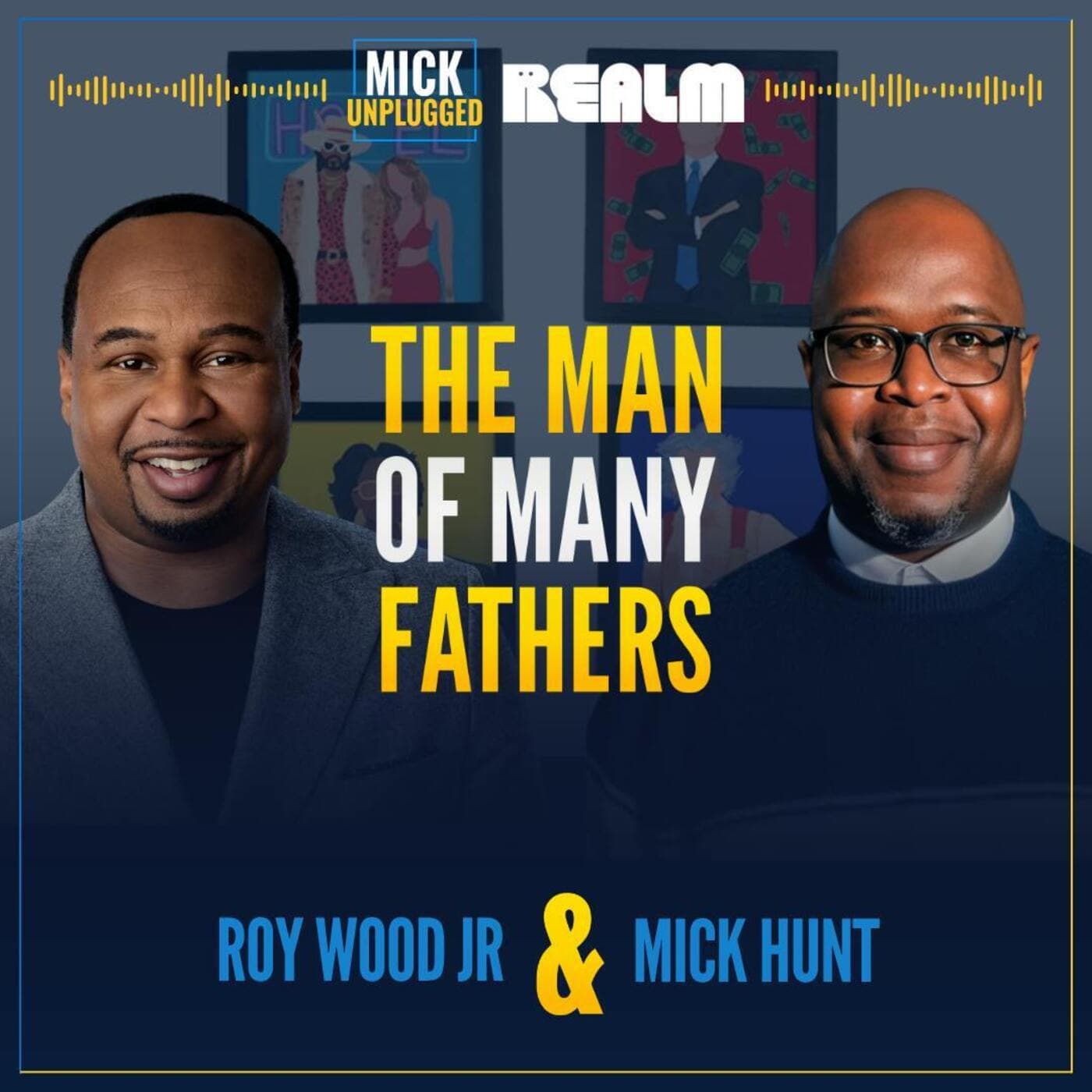
Podcast Episode Notes: Mick Unplugged - "The Heart Behind the Humor" with Roy Wood Jr.
Overview In this episode, Mick Hunt engages in a conversation with comedian Roy Wood Jr., who shares insights about his journey from Florida A&M University (FAMU) to becoming a national figure on *The Daily Show*. The discussion highlights the power of storytelling, the value of legacy, and the art of using comedy to confront serious societal issues.
Key Themes and Takeaways
- Legacy with Purpose
- Roy emphasizes that his comedy is not just for entertainment; it serves as a means to affirm Black experiences and address hard truths.
- His mission is to validate the feelings and perceptions of Black communities while also educating others about their realities.
- Key Quote: "I do what I do in an effort to better inform, to confirm to our people, to Black people, that they aren't crazy in what they're seeing and what they're feeling."
- Improvise and Adapt
- Roy's career trajectory showcases his adaptability; he created his own internship at Hot 105.7 when traditional paths were not available to him.
- His journey underscores the importance of seizing opportunities and learning from mentors and life experiences, particularly in challenging circumstances.
- The Power of Storytelling
- Roy discusses the importance of blending humor with deeper emotional narratives, highlighting how this approach can encourage reflection and empathy among audiences.
- His experiences with pain and sorrow have become valuable tools in his storytelling, allowing him to address emotional subjects while maintaining comedic elements.
- Key Quote: "Pain is a tool. Sorrow can also be woven into this fabric of what you're presenting...the written word will always have worth."
Roy Wood Jr.'s Journey
- Roy shares personal anecdotes from his time at FAMU, detailing how he created an internship after being placed on probation and the challenges he faced in gaining experience in the radio industry.
- He reflects on learning the craft of radio through hands-on experience, which eventually led to a successful career in comedy and broadcasting.
- His creative rise is attributed to both the mentors he learned from and the improvisation that came from unexpected situations.
Important Insights
- Importance of Mentorship: Roy emphasizes the influence of mentors in shaping his career and values, sharing how he sought guidance from various figures after losing his father at a young age.
- Impact of Comedy: The conversation illustrates how humor can be a powerful tool for addressing complex issues, bridging gaps between communities, and fostering understanding.
Promotion of Roy's Book *The Man of Many Fathers*
- Roy's upcoming book is described as a semi-memoir that explores the values and lessons he learned from various father figures in his life.
- The book aims to offer insights not only for Roy's son but also for a broader audience to reflect on their own experiences and learnings.
Conclusion
- The episode wraps up with encouragement from Mick for listeners to find their "because," a concept that resonates throughout the podcast, reinforcing the idea of pursuing meaningful goals and leaving a positive legacy.
- Final Note: Listeners are urged to connect with Roy through his social media platforms and to support his book upon its release.
Connect with Roy Wood Jr.
- Instagram: [@roywoodjr](https://www.instagram.com/roywoodjr/?hl=en)
- Website: [roywoodjr.com](https://www.roywoodjr.com/)
- X: [@roywoodjr](https://x.com/roywoodjr?lang=en)
- TikTok: [@roywoodjr](https://www.tiktok.com/@roywoodjr?lang=en)
- Facebook: [@roywoodjr](https://www.facebook.com/roywoodjr/)
- Book: [The Man of Many Fathers](https://a.co/d/h4xy1ML)
Additional Resources
- Mick Hunt's Book: *How to Be a Good Leader When You’ve Never Had One: The Blueprint for Modern Leadership* available on [Amazon](https://a.co/d/2wwLDE8), [Barnes & Noble](https://www.barnesandnoble.com/w/how-to-be-a-good-leader-when-youve-never-had-one-mick-hunt/1146931848?ean=9781394357956), and [Books A Million](https://www.booksamillion.com/p/How-Be-Good-Leader-Youve/Mick-Hunt/9781394357956).
Follow Mick
- Spotify: [MickUnplugged](https://open.spotify.com/show/2cUp7JRzkVqunYmD2ENe4g?si=786eadd702b14c01)
- Instagram: [@mickunplugged](https://www.instagram.com/mickunplugged/)
- YouTube: [@MickUnpluggedPodcast](https://www.youtube.com/@MickUnpluggedPodcast)
- Website: [MickHuntOfficial.com](http://mickhuntofficial.com/)
Closing Thoughts This episode with Roy Wood Jr. serves as a powerful reminder of the impact that storytelling, humor, and mentorship can have in shaping our lives and communities.
Written by AI. May contain mistakes. Listen to the episode to check what was said.
Transcript
Automatic transcript. May contain errors.0:28We always recommend Shopify. Roy Wood Jr. has made us laugh for many years, but in this conversation, he made us think. We go deep into the man behind the mic, his journey from FAMU to Birmingham to The Daily Show and to the lessons that shaped his comedy and his brand new book, The Man of Many Fathers. This episode isn't just funny, it's powerful, it's raw, and it's proof that laughter can lead to a legacy. Ladies and gentlemen, I present my good friend, Mr. Roy Wood Jr. Mr. Roy Wood Jr. How you doing? I appreciate you. I appreciate you. I appreciate you more, man. Good to see you. Like, we graduated high school the same year, college the same time.
1:10Like, you've always been that person that from afar, I've just appreciated because during the time that we were coming up, Roy, man, like you were doing it in the comedy entertainment game. I was trying to do it in the business and leadership game. Like we didn't have a lot of people. I'm just going to be blunt and honest that that looked like us that were blueprints to show other people how to do it. And I appreciated you because you were like you were like my generation's blueprint. And so like every move that you were making, I was trying to follow to see how you were doing it because it was pushing me to be like the best person, the best entrepreneur, the best leader that I could be because you kept changing your game.
1:51So I had to change mine. You kept elevating. I had to elevate. But for me, it's all because we're literally the same age, bro. I appreciate what you're saying, but I guarantee if you point out any part of my game, it was I got it from watching somebody else. My damn self. I think the drive in a gumption. You have to be a little crazy to bet on yourself. That's inherent. But I think that. the belief that, oh, I could do this. That didn't come from me. That came from Ricky Smiley. I saw Ricky Smiley on TV in the late 90s, and he was repping Alabama hard. He didn't just put Birmingham on his back.
2:37He put the whole state on his back. And nobody asked him to do that. He just did it. And when I saw that, I was like, oh, bet. He can be from the north side and get on TV? I can do it from the West side. And that was it. Like it wasn't even no big, like whatever debate or doubts I had about whether or not I belonged in entertainment gone. But that's what I mean, man. It's that drive. It's that thing that you've always had that inspired people like me, because yeah, you saw Ricky, but you still had to go do it though. It's not like, like there, there was, there was a thousand people that were like, Oh, yeah, I'm funny, too.
3:19I can go do this, too. Yeah. But you actually did it, bro. And that's why, again, you're my goat. I appreciate you, man. I appreciate you, man. Yes, sir. Yes, sir. So on the show, I like to ask all my guests, like, what's your because? That thing that's deeper than your why, right? Like, if I were to say, Roy, what's your why? You're going to tell me your son, right? But when I say why is your son your why? I call that your because. So if I were to say, Roy, man, what's your because? Why do you do the things that you do? Why do you have the legacy that you're trying to leave behind? I do what I do in an effort to better inform, to confirm to our people, to Black people, that they aren't crazy in what they're seeing and what they're feeling.
4:12Because so many people will gaslight us into thinking that what we see is not there. So, you know, if I can confirm to black folks what they're thinking and feeling while opening new eyes from non-black people on what we're going through, then mission accomplished, you know, because a lot of people don't know what's happening, you know, to our people. and it's fun to be able to do that through comedy. It's more difficult now to do it through comedy, but that's my weapon. That's the tools I got. I'm a hammer and a nail. I'm not a screwdriver. I'm not an Allen wrench. I don't know. I do none of that.
4:56I can't be precise and profound. I'm not Mark Lamont Hill. I don't have that. I just ain't got it. I can crack a joke. work yeah you know I could probably make that work yeah yeah and let's talk about your journey a little bit man like from intern the internship that you created right it wasn't like there was an internship you created the internship at fam you and then you parlayed that into tremendous radio success and then the stand-up legend that you become man like talk to the folks about that journey just a little bit from what inspired you to create this internship for yourself to begin with negro i had to graduate you know you mean like it wasn't like i was i'm gonna leave a path for the next intern i don't give a damn about nobody else there were a couple things that were in play at the time one i was i'd gotten suspended from school i was at famu and i stole some credit cards and I'd use one of them on campus amongst other stuff or whatever.
6:08And so you get caught for the crime and you're on probation for that. But in addition to the crime, also you use the credit card on campus, little Negro. So we don't need you to be on probation when you get back on campus as well. So I'm on a campus version of probation in addition to regular federal probation. so within the campus version of probation you can take your classes but when you leave when you're done with like essentially a family if you're on any type of behavior probation you can go to class you can go to the library take your ass home no football games no frat parties no hanging on the set if you need to go something buy something at the bookstore cool do that on the way to your car, but take your ass home and get off this campus.
6:59You're not welcome here other than for education. And so with that, with that pretext in mind, you needed, you were supposed to do an internship at the radio station, the campus radio station, as part of what my discipline for broadcast journalism was. And at the time I was not allowed to write for the campus paper for that semester. I eventually got an exemption, but at the time, in the timeframe we're talking about, it was, you got to go home. And I go, well, what if I'm writing for the paper and I got to talk to my editor? Well, if it's not for a class, well, no, it's not for a class, but it's for the experience so I can get the job when I, well, we don't know.
7:43We'll have to talk. So it was like, I was fresh off of, I was fresh off of suspension. So we're two months back into school, two weeks back into school. So we haven't thought that deep about our policy yet, Roy. So we don't have time to. So the more I thought about it and I needed a class in radio, I was taking radio news and you can do the internship with the radio station. I wasn't sure if I if I was in violation of the policy or not. I felt like I would win, but I was like, I don't know if I want to risk that. Thing two, the campus radio station, because I was going through all of this back and forth about whether or not I could take the class, and by the time they finally decided I could take the class, by the time they finally decided I could be on campus in radio, this is like a month into the semester now.
8:47We go back and forth. They go, you know what? Here's your exemption. You can do anything journalism related within the journalism department any time of day. Well, by the time they gave me the extension, all the shifts at the radio station have been signed up for. And the only shift left was like some Sunday morning gospel play the gospel tunes radio shift. And at that point, I was already on the road doing comedy regularly because during that suspension is when I started stand up. So I literally cannot do Sunday morning because I'm somewhere in the south on a Greyhound headed back to town. So either I give up comedy or I have to get a radio or I have to get an internship at an outside radio station.
9:41So most radio stations in Tallahassee, they didn't have. They just didn't have scheduling that was favorable. I was like, I need something to fit my schedule. I know beggars can't be choosers, but I can't come here in the middle of the day on a weekday. I got classes. I can't come at night because I'm working at Golden Corral. I'm gone. The only time I'm free is the ass crack of dawn. Right. That's the only time I can make this work. So it just so happened that there was a morning show that I used to listen to every morning when I was getting up and getting ready for school and, you know, whatever.
10:21And it was WVHT Hot 105.7, the breakfast buffet with Van Wilson and William Gilmore. And so I came up in radio news. My pops was a radio newsman. He did news on the fives for four hours straight on the black news station in town and then would do reports for the black music station as well on the tens. And so I knew what radio news was because I sat beside him in the control room every summer for hours listening to him just read news reports and take care. I listened to the breakfast buffet and I listened to Tom Joyner. Tom Joyner had news. The breakfast buffet didn't. so about a month into getting back into school I ride my bike over to Hot 105.7 and I rap with Van Wilson who ironically his father Roosevelt Wilson used to run with my pops back in the day in journalism circles and his pops Roosevelt was one of my journalism professors now I had flunked his class I was a terrible student but off the strength of my pops it was enough of a vouch where I felt confident going, step in the van.
11:37I go, yo, man, our pops used to know each other. I need an internship. I believe your morning show could use some hard news in the morning. If you don't mind, I would like to come to the station every day at 6 a.m. and do the news until 9 a.m. when I got my first class. And Van said, cool. He shook my hand. he said bring Starbucks Frappuccinos and a dozen Krispy Kremes every day and I'll see you at 515 sharp and that's how I got my first internship and the funniest part of that now when I look back on it in hindsight is that they made me bring these Starbucks Frappuccinos from the gas station or whatever because this was the beginning of iced coffee in the mid 90s and I don't know if like black men just thought it made you look gay if you bought one because you know you walk around oh i got a little iced coffee and you know homophobia so i ain't saying this is true i'm just telling you what i was thinking i just feel like a ton of like yeah go get me one of them gay coffees that i like that i don't drink in public little negro so i get the internship at hot 105 and i'm now the newsman and on the days that i can't come in studio, I'm recording news reports from the house and emailing them to them.
12:59The technology isn't what it is now, but it was garbled, but it was good enough for me to get the job done if I was absentee. And I would pick three national stories from USA Today, two local stories from the Tallahassee Democrat, and a kicker story from wherever I could find something, some little chuckle story or whatever. And I would write out my copy, bro. And I'd have my little word, Microsoft word document, all caps and rattle through them stories. And under 90 seconds, man, I was cold with it. Wow. My co-host, the co-host of the show was a comedian named William E. Gilmore. He's still my OG to this day.
13:41Gilmore was the comedian on the show, crack the jokes, do the skits, write the parody songs. and I just got to sit and watch them. I just watched them for two hours because I was only doing, this is the other thing, I was only doing news on the 10 and the 40. The rest of the time, I'm just shutting up. I'm just, I'm 19, I'm just quiet and I'm watching two grown men just hold court with the community. And so Gilmore, because he was a school teacher, first bail is 830. So 8.15, he out the door. So from 8.15 till 10 a.m., it's just Van hosting the show. And after a couple of months and Gilmore and I would start interacting in our news reports and knowing what I know now, it was him bringing me into the show.
14:33It was him bringing me into the fold because instead of just doing a straight news in the WVHT News Center, I'm Roy Wood Jr. here's the news today in Tallahassee. I would do a story and then Gilmore would be like, wait, wait, man, explain the story again. And Gilmore would have a joke. So now we're kind of interacting a little bit. So now this 90 second news break became two minutes, became two and a half, kind of became my own thing. So when Gilmore left and would go to school after I'd been established with the listenership and everything, Van would start doing what Gilmore did. So in the eight o 'clock and the nine o 'clock hour, I started kind of co-hosting the whole show with Van.
15:18And that night, that 8.30 to 10 a.m. timeframe, those air checks, which is for people don't know, that's like your audio resume when you work in television or any form of broadcasting, You send them an air check, which is just samples of you being on air, being good at your job. Yeah. That time from 830 to 10 a.m., those air checks is what I sent in. And that's what got me hired in Birmingham after Ricky Smiley left. Amazing. And so all of that, because I couldn't get the thing that I thought I was supposed to have, I ended up getting literally what I broke. I came in the news and then just watched cats do radio all day and then slowly got to step my toe into the water until I was knee deep, until I was waist deep, until I was scuba diving.
16:10And I also have to give a shout out to DJ Dapp at Hot 105.7 because DJ Dapp, Dapp was a cat who was the afternoon DJ. And he was piped in with all the rappers and the rappers would come in and do their interviews. I learned the art of interviews and taking calls and, you know, the act of just what song to play and when the DJs would come in and live mix and, you know, five o 'clock traffic jam mix or whatever. I would watch them. It was, man, it was on some Star Wars loop going to see Yoda in the Dagobah system type stuff, man. I really learned the craft of radio inside out from that, from that building, man.
16:57It's gone now. I think it's, but it was, that was a special place to me on the Appalachian Parkway, man. It really was. Man, I, I love that story. And, you know, all of my friends know, all of my listeners and viewers know this because I'm okay when it's my show telling people my opinion, right? I'm bold with it. I've always said Roy Wood Jr. is the greatest storyteller that we witnessed because of that. Like you bring people into that space and you take them on that journey and you're so good to give the important detail and walk them through step by step, even on your comedy shows. And that's why, again, you're my favorite comedian because of that.
17:48Like when I'm watching a Roy Wood Jr. set, I know he is going to make me feel like I'm his best friend and he's telling me this story. And there's going to be funny parts to it. There's going to be emotional parts to it. But you are in so control and you don't rush. And I think, you know, people hear comedic timing and they don't really understand what that truly means. But you perfected that skill of telling a story and bringing someone along that journey without rushing the pace. How did that become a skill set for you? So my third hour special, Imperfect Messenger, which I did in 2021, backside of COVID, when it was letting like 50 % capacity in rooms or whatever, that was the first time I really told a deeper, longer story on stage.
18:42And just as part of a bigger bit. And I was just trying to tell a joke. But then the moment, the more I started constructing the joke, I was like, damn, they really need to know this backstory. And it's not really funny, but it'll help this. And I was like, let's see if they go with me on it. And the audience went with me on it. And it was like a deeper, emotional, kind of painful thing to talk about. And without telling the whole joke, it's a story about how there was a murder that happened in Birmingham. and I know the victim and the convicted killer and the confliction you feel of knowing this person who did not pull the trigger but was there.
19:32And because you were there, you are a murderer in the eyes of the Alabama justice system, right? Right. But then also feeling the pain and pity of this man who was killed who literally helped my career in ways that like him and his son they ran a black owned music store and they carried my prank phone call albums on consignment the sales i ran through that is the only reason my album got into every major music outlet in the state was because of the numbers the sales numbers they reported yeah on my product which ultimately helped my growth helped my career so dang this person who helped me is dead dang this person who i know deep down made a mistake.
20:14It's good, but he's locked up for killing. Who do I feel sorrier for? So that's the baseline for a larger conversation and joke about criminal justice reform. That joke was the genesis point of me going, oh, pain is a tool. Sorrow can also be woven into this fabric of what you're presenting. I always thought sorrow and pain was for a one-man show and for something much deeper and confessional and black box theater. And it's like, no, you could probably do this and make it work. Then you start looking at what Ali Sadiq has been able to do and the fabric that he weaves on stage with storytelling.
21:03I'd still say Ali Sadiq is the best pound for pound joke for joke right now doing the craft. But it just gave that incident gave me confidence of, okay, when it makes sense to tell a story, tell a story. I don't think I'm a football storytelling comedian. Like I don't, I don't, I don't, I don't, there's something uncomfortable about dealing with emotion. It's very delicate because you're manipulating the audience in a way. So that part of it was, I'm hesitant at times, but I'd say that that third hour special is where it started. And then I told another story in my fourth special Lonely Flowers this year, which also was kind of a, you know, there's some depth to that one as well.
21:56So, you know, you look at that and, you know, the idea of writing this book now, The Man of Many Fathers, where there's a lot of stories in that book that are painful. There's a lot that are hilarious, but it's a few in that thing that's kind of painful, man. And having the confidence to sit with that, you know, it's been a good thing. Writing this book has been a great exercise in that. I love it. And I'm going to come to the book in two seconds, but there's two things I got to tell you and give you praise for that maybe you don't know. First thing is, so I've been a speaker for a long time, 10 plus years.
22:36But watching your specials, and I know you say you're not a storyteller. I'm giving it to you. I'm giving you your flowers, not the lonely ones. I'm giving you the big, beautiful flowers, right? But watching your specials helped me as a speaker just with pace, just with slowing down and let the story tell, like let the points that you're trying to hit, like tell, because I'm not a comedian. But again, I do inspirational speaking. I do leadership development. Same concept, right? To me, being on stage is stories and points. Les Brown taught me never tell a story without a point and never make a point without a story.
23:11And you do that really well. So watching you helped me bring that aspect of that to life. So I'm giving you kudos for that. Thank you. Number two, you're dorm room famous, bro. These, these Gen Z's and millennials are Roy Wood followers. And here's why my kids who are now 25, 23, 27, but when they were in school, when they were in college, you know, people stopped having CD players, you know, like for us, that was your, that was our Mac move, right? Like go look at my, My CD, look at my shelf system over there. But my kids always had a CD player only to play your prank call CD. And so their dorm rooms used to be part of the albums on like the 70s.
24:04Everybody crowd around the record player. Yes, sir. So you are dorm room famous. I just want you to know because it's a thing that people still carry CD players to listen to your prank call CDs. I pulled a lot of prank phone calls off offline. Number I pulled all the albums off of digital stuff. Like I think you can stream my stuff maybe, but most all of my pranks is underground now. Like matter of fact, I'm positive you can't purchase my albums anymore. Like that, But I went through a phase about 10 years ago. This is a year or two before I got Daily Show. And I'd done so many prank calls. I had three albums, so that's about 40, 50 pranks.
24:58And then there's another 80 or 90 that never got put on streaming, that were just on YouTube. I just didn't want to be known as the prank call dude. And I was having a fear that that was going to be my fate. Yeah. And a lot of people show love because of the pranks, but I also had a decade worth of standup appearances within that run. And so, right since 2002, bro, I've been on TV every year, minimum of one time, never less than five times since 2014. Yep. So I've had a regular presence across cable and still around 2013, 2014, a lot of people knew me for the pranks, which I respected and I loved.
25:46But I got to draw your focus to something else. So I have to make this harder to find because the money I'm making off these pranks, if I'm not careful, will be the only money I make because people won't even think of me in this these other regards. And I'm not just thinking about the fans. I'm thinking about producers and writers who think, oh, we should call Roy. He could do this thing. You won't even think to call me. You know, you got to be very careful about that. Much in the same way that these young sketch internet people, after five years or so, you have to evolve beyond what you were.
26:24Because if they only see you as that, then they attach you to a period of their life that they have matured from. and you're seen as something that you may as well be the hula hoop in their garage or something. Right. I love that the youngins have found them. I know people put them on TikTok now and they put videos with them. My prank calls, I just call it, that's open source code. That's open source comedy code for anybody that want. And as much stuff as I bootlegged and stole and needed. You know how many movies I never paid for in the years prior to me knowing better. I look at my prank calls just being decimated all over the place and monetized by these people.
27:15Get a game back. It's just a prank call. It wasn't nothing I wrote worked hard at. I called somebody at 620 in the morning. They cussed me out. I uploaded it as an MP3. You're welcome. If you make you feel good, have at it. I really do feel like that's just kind of my way of just giving back. You know, there's people who know my name and don't know my face. People from your children's generation. They still know me as the prank call dude. But now when you find out, oh, I've done all this other stuff. Well, now it's set up the way I want. Yes, sir. Yeah. Now let's talk about the man of many fathers.
27:56Man. One, I'm so proud of you for this book. I know, I know the purpose, the intent of the book, but I want to give you the floor, give you the mic to, to talk about why the book, why now, and, and the legacy that that's going to leave behind because it is about to be a bestseller. Just so you know, man, I appreciate it. We'll see, as they say, prayerfully, you know, I wrote the book because I wanted to kind of do a deep dive into who I am and why I am who I am. Where did I get my values from? What lessons instilled particular ideologies in me? And leave that, you know, for my son to have, you know, whenever he's old enough and ready and wants to flip through it.
28:39And hopefully in that, you find a little bit of yourself. My dad died when I was 16. So a lot of guidance and mentorship and connection with men, I innately sought out from any man that was around, be it a supervisor or a coach or an older comedian that I might've been opening for. Like those things all played a role for me in being a better man, like all of those people. So the book is just a series of stories of just values. It's a semi-memoir. I can't talk about my life. I can't tell you about people in my life without talking about my life to a degree, but it's not a memoir of every little incident and thing that happened in my life.
29:24But you know, one chapter might be, Hey, here's what I did learn from my dad. And then next chapter might be, here's what I learned from my coworker who was on cocaine. There's, there's lessons to be had on both sides. Yes, sir. Yes, sir. So has your son read any of it yet? Oh no, he's nine. This book got cussing. You ain't allowed. You ain't allowed. He can pick this book up. Like, I don't know, maybe high school graduation, something like that. You know, maybe someone that maybe 13, 40, better not cuss at me ever. But, you know, cuss at other folks. Do that whenever you want. But I'm your daddy.
30:12I still put hands on you. I'm also the man of many hands. oh okay that's book number two yeah i think like 13 14 is probably a pretty good crossroad for him to understand most of these lessons of what i was doing and what my world was like um but yeah having a child really did redefine and really changed my trajectory and the things that i hold important in terms of the things that i choose to talk about now. So I'm very excited for the book. I think it's, it's just fun. It's, it's concise. It's easy read, but yeah, I just think that if you're asking for the bare bones inspiration for what drove me to write it, I would say that.
31:00I love it. I love it. I also heard you say you couldn't leave your son an SD card, right? Like, like we can't, we can't have, what was it? The iTunes player, the iPhone, we can't leave that anymore. Right. So you had to put it in book for him. So no matter how technology changes over the next 30 years, everybody still will read a book. Yeah.
31:25No matter what, there will be a book. They put words on walls and caves. People still go read that. Yeah. The written word will always have worth. Sally's phone number is still on a bathroom stall at the airport. If you call it, I bet you Sally don't show up. I bet you'll be somebody else. I love it, man. I love it. Roy, I know how busy you are. I just want to thank you for the time that you gave us today. Also for you, the day after Thanksgiving, you're going to be in Charlotte. Yes. Yes, indeed. I'm going to be there. So I live in Greenville, South Carolina. So Charlotte's just up the road. I'm going to be there.
32:08I'm going to bring some people with me. We're going to buy tickets, so I don't want anything. I'm in Durham the day after. Ain't that closer? No, I'm in Greenville, South Carolina. Oh, South Carolina. I'm thinking Greenville, North of the ECU Pirates. Yeah, that's on the east side. No, okay. Yeah, you right there. Yeah, Greenville, Spartanburg. Okay, yeah. They ain't number 82 miles. Look at them knowing the exact miles. Yeah, I remember that, man. I know GSP. Okay. Yes. So I'm going to come up. I'm going to see you, man. Just excited to see you in person. again thank you for what you've meant to me in my life thank you for the inspiration thank you for the continual drive that you have everybody do me a huge favor i need you to go wherever you buy books the man of many fathers i need you to go get that i need you to read that if you're a father if you're a parent you definitely need to get two or three copies uh you need one for yourself one for your children whenever they're at cussable age.
Read the full transcript
33:04We'll make sure you get it to them there. And again, I don't care. Go support it at your local bookstore, Amazon, Books A Million, Barnes & Nobles, wherever you buy books, go get it. And here's what I'm going to do. Okay. The first 20 people that message me, and I don't care if it's Instagram, LinkedIn, wherever, that message me, many fathers, I'm going to buy the book for you, the first 20 people. Oh, wow. So hit me up wherever it is. Man, you're too kind. No, no, no. Because I believe I believe in the message of the book. I believe in you most importantly. And again, it's the least I can do to support you, brother.
33:43Man, I appreciate you, man. I really do, man. I look forward to seeing you down there in Charlotte, man. Get you backstage before that show, man. Because I know you're going to be drinking. They're going to kick you out. All right, fine. Because you told me to, I will. Because you told me to, I will. So ladies and gentlemen, this has been my good friend, Mr. Roy Wood Jr. Roy. Love you, man. Appreciate you. Thank you. Appreciate it. All right. To all the viewers and listeners, remember your because is your superpower. Go unleash. You've been plugged into Mick unplugged. Don't just listen. Take action.
34:17Rate and subscribe. Follow me on social and get the full experience at Mick Hunt official.com. Keep building, keep leading. and most importantly, keep dominating.
From the publisher
Roy Wood Jr. is a trailblazing comedian, writer, and broadcaster whose journey spans from FAMU to Birmingham, to the national stage on The Daily Show. Rooted in southern culture and steeped in the realities of Black America, Roy’s comedy mixes sharp insight with raw authenticity, making audiences laugh—and think—with every performance. He's the author of "The Man of Many Fathers," a deeply personal book exploring the values and mentorships that shaped his life after the loss of his own dad at 16. Both on stage and in print, Roy uses humor as his tool to challenge, inform, and uplift, leaving a lasting legacy for his son and his audience.
Takeaways:
-
Legacy with Purpose: Roy sees comedy not just as entertainment but as a way to affirm Black experiences and open eyes to hard truths—his mission is to inform, confirm, and bridge communities.
-
Improvise and Adapt: Roy's career started by necessity—he created his own internship at Hot 105.7 to fit his schedule and circumstances, teaching himself the craft of radio and standup by learning from real-life experiences and mentors.
-
The Power of Storytelling: His ability to blend humor with pain and depth, especially in his specials and book, showcases how storytelling can invite audiences into reflection, empathy, and growth.
Sound Bytes:
"I do what I do in an effort to...confirm to our people, to Black people, that they aren't crazy in what they're seeing and what they're feeling..."
"I got my first internship–I need an internship. I believe your morning show could use some hard news in the morning...Van said, bring Starbucks Frappuccinos and a dozen Krispy Kremes every day, and I'll see you at 5:15 sharp."
"Pain is a tool. Sorrow can also be woven into this fabric of what you're presenting...the written word will always have worth."
Connect & Discover Roy:
Instagram: @roywoodjr
Website: roywoodjr.com
X: @roywoodjr
TikTok: @roywoodjr
Facebook: @roywoodjr
Show: Have I Got News For You
Book: The Man of Many Fathers
🔥 Ready to Unleash Your Inner Game-Changer? 🔥
Mick Hunt’s BEST SELLING book, How to Be a Good Leader When You’ve Never Had One: The Blueprint for Modern Leadership, is here to light a fire under your ambition and arm you with the real-talk strategies that only Mick delivers.
👉 Grab your copy now and level up your life → Amazon, Barnes & Noble, Books A Million
FOLLOW MICK ON:
Spotify: MickUnplugged
Instagram: @mickunplugged
Facebook: @mickunplugged
YouTube: @MickUnpluggedPodcast
LinkedIn: @mickhunt
Website: MickHuntOfficial.com
Apple: MickUnplugged
Learn more about your ad choices. Visit megaphone.fm/adchoices
See Privacy Policy at https://art19.com/privacy and California Privacy Notice at https://art19.com/privacy#do-not-sell-my-info.


