
In short
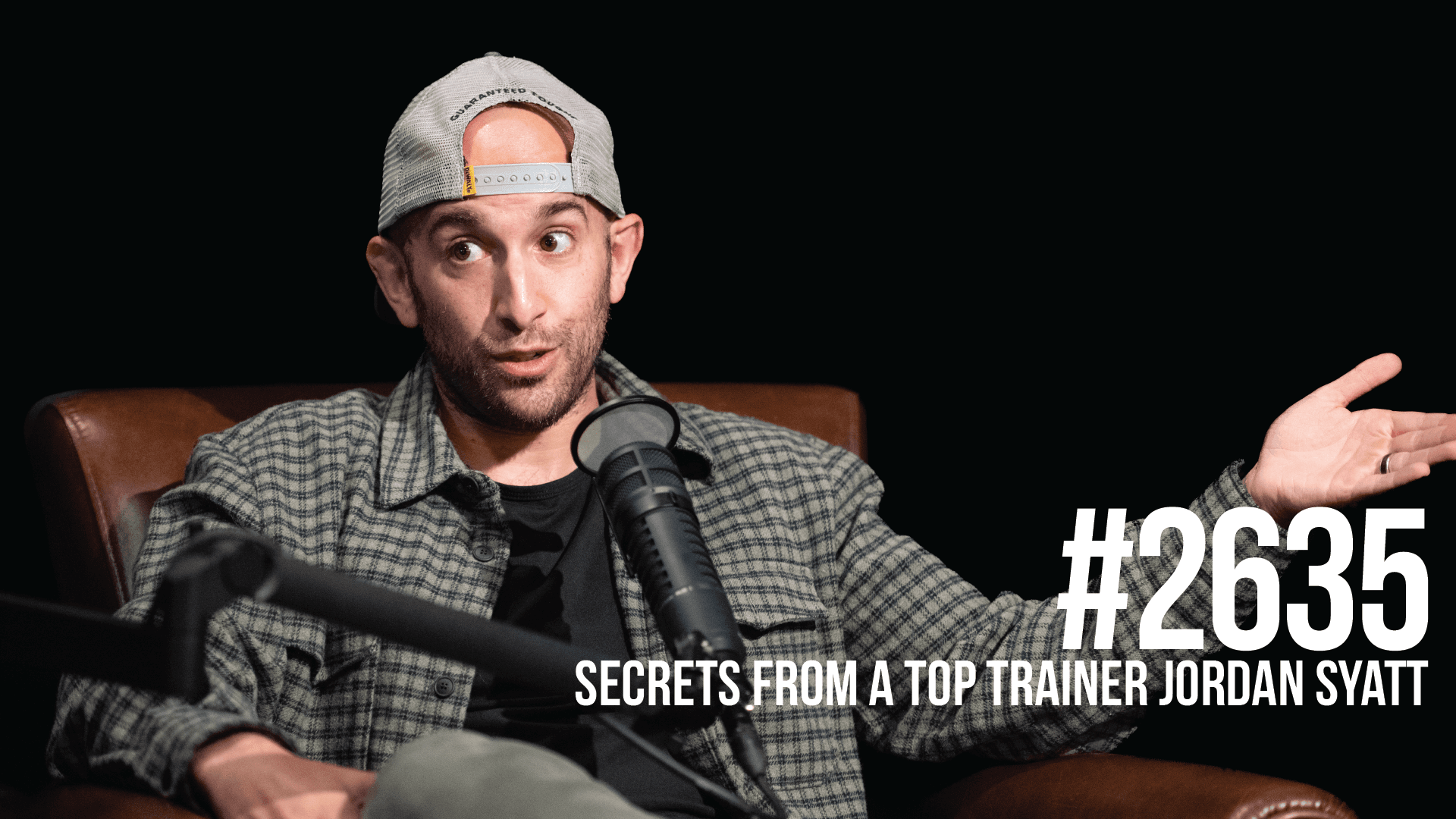
Jordan Syatt discusses how to build a legitimate fitness coaching business, why “get rich quick” coaching marketing is harmful, and how he created “Coach J” kids workouts (and why they unexpectedly attract adults). He also weighs public-health policy trends (RFK Jr., seed oils/food dyes) and the broader impact of GLP-1 drugs on fitness, coaching, and future training goals. He closes with his faith-driven purpose and parenting/nutrition habits.
Guest backgrounds
Jordan Syatt is a world-class personal trainer and online/in-person coach (Syatt Fitness on Instagram). He’s also a father and produces fitness content for children via his “Coach J” channel.
Key claims
Coaching success comes from helping people and building skills through in-person training first; online-only starts are “stupid.” Kids fitness content filled a “white space” because existing options were poor. GLP-1s may increase gym interest, but accelerated muscle-building drugs could raise injury risk due to immature tissue adaptation.
Notable examples
“Under the sea” and “dinosaur/safari” 10-minute kids workouts; parents DMing him videos of their kids; a 16-year-old autistic son loving the workouts; parents asking for personalized videos like Cameo.
Written by AI. May contain mistakes. Listen to the episode to check what was said.
Chapters
Tap a time to open that second in VOThe Evolution of Personal Training
0:00 to 0:45
Discussing the changes in the perception and business of personal training.
“In an effort to lower beef prices, 300 ,000 metric tons of foreign ground beef are entering the U.S.”
The Evolution of Personal Training
2:02 to 3:30
Discussing the changes in the perception and business of personal training.
“A bunch of new trainers, potential trainers.”
Challenges in Online Coaching
3:30 to 5:36
Jordan shares insights on the pitfalls of the online coaching industry.
“I mean, my whole family still, my mom is always - Still waiting for you to get a real job?”
Importance of In-Person Training
5:36 to 8:07
The value of in-person coaching and building genuine client relationships.
“And I, I've met this kid just like a few times when he was little, so I don't know him very well.”
Creating Fitness Content for Kids
8:07 to 10:17
Exploring the creation of engaging fitness videos for children.
“That is how you start off at the great, great personal training business, which then often the people who are in person will become your first online coaching clients.”
Testing New Ideas in Content Creation
10:17 to 13:32
Jordan discusses his approach to testing new content ideas for kids.
“Well, I have to, too, I have to have you tell, like, the unintended sort of person that's using that content as well.”
Learning Through Trial and Error
13:32 to 14:00
Jordan reflects on the lessons learned from creating kids' workout videos.
“What's the, now making content, because you've been making content for adults for a long time, getting their attention, communicating value, you know, giving them things that they can apply.”
Engaging Kids Through Creative Workouts
14:00 to 15:30
Learn how Jordan Syatt engages children with fun and interactive workout videos.
“And like I love my kids and like I'm pretty good with kids.”
Building a Community with Parents
15:30 to 17:40
Discover the importance of connecting with parents and building a supportive community.
“The trainer that complains about his engagement and this and that and then emoji thumbs up.”
The Role of Public Health in Children's Fitness
17:40 to 19:40
Explore the significance of focusing on children's health in public policy discussions.
“It's like parents are gonna be like, okay, then I'll do it with you.”
Show all 35 chapters
Critiquing Government Health Policies
19:40 to 22:20
Analyze the effectiveness and motivations behind current health policies and initiatives.
“that was really striving for unity to bridge the gap across the aisle because there's so much divisiveness politically in this country.”
Impact of GLP-1 Drugs on Food Industry
22:20 to 24:40
Understand how GLP-1 drugs are altering the landscape of the food industry and public health.
“One of my biggest hopes isn't, I mean, and this is just to go to how low the bar is.”
Future of Fitness Coaching Amid Medical Advances
24:40 to 28:00
Discuss the evolving role of trainers and coaches as medical interventions advance.
“We're in a weird time with all of this, which begs the question, are trainers and coaches going to be obsolete when you have medical interventions that, that are going to solve some of these issues?”
The Future of Fitness and Medical Interventions
28:00 to 30:12
Exploring how medical advancements could reshape fitness goals and enthusiasm.
“the only way you get that is that skill and the program for that thing.”
The Evolution of Athleticism in Aging
30:12 to 30:51
Discussing the potential for older generations to thrive as athletes.
The Joy of Long-Form Conversations
30:51 to 32:05
Understanding the value of long-form discussions in podcasts.
“The issue with the short form content is you have to deliberately craft it.”
Finding Purpose Through Faith and Family
32:05 to 34:11
How faith and family shape personal purpose and everyday actions.
“What's your greatest source of purpose now for you in your life?”
Parenting, Faith, and Personal Growth
34:11 to 37:18
Discussing the impact of parenthood on faith and personal beliefs.
“did that shape or form different after having the kids or has it changed at all for you?”
Instilling Fitness Values in Children
37:18 to 39:36
The importance of modeling fitness and health for children.
“I fully bought in more than ever before.”
Nutrition Strategies for Young Kids
39:36 to 42:00
How to approach nutrition for toddlers and set healthy habits.
“So how your wife stays at home and you work you run the business Yep.”
Healthy Eating Habits for Kids
42:00 to 44:30
Learn strategies to encourage children to choose healthy snacks.
“Like there's always strawberries and blueberries and blackberries and, uh, and red and green and yellow peppers.”
Balancing Work and Family Time
44:30 to 47:00
Discover how to maintain family connections while managing a busy work schedule.
“The main thing is like, I'm just going to take time off of work.”
Understanding Shabbat Observance
47:00 to 48:20
Gain insights into the significance and rules of Shabbat.
“So Shabbat, it's like, it's the Sabbath.”
Fatherhood and Bedtime Routines
48:20 to 50:10
Explore the challenges and joys of putting kids to bed as a father.
“But for me personally and historically, if I need to work, I'll sacrifice sleep in order to make it happen.”
Creative Storytelling for Kids
50:10 to 52:30
Learn the importance of storytelling in engaging with children.
“How about now training wise, you've been around, you've been doing this for a long time.”
New Approaches to Training and Mobility
52:30 to 55:40
Discover innovative training methods focusing on mobility and flexibility.
“And is it a lot of static stretching plus dynamic stretching?”
Strengthening Through Stretching
55:40 to 56:05
Understand how stretching can serve as a form of strengthening exercise.
Understanding Flexibility and Strength
56:05 to 58:10
Learn how strength training can enhance flexibility through central nervous system conditioning.
“So what you're doing by strengthening the muscle through those ranges of motion is telling the central nervous system, it's okay.”
Training for Front and Side Splits
58:10 to 59:38
Discover the techniques and training approaches for achieving front and side splits.
“your ability in this in this front splits i've got front splits i can show you a picture if you want Where did you start and how long did it take you before you could do it?”
The Benefits of Flexibility
59:38 to 1:02:09
Explore the unexpected benefits of flexibility training and how it impacts daily life.
“Strength and flexibility to the nth degree.”
The Evolution of Fitness Trends
1:02:09 to 1:05:09
Discuss the historical cycles of fitness trends and the potential rise of flexibility training.
“He's very, like, he's very methodical about everything that he does.”
Nutrition Tips for Better Health
1:05:09 to 1:08:56
Get practical nutrition advice for maintaining a healthy lifestyle without extreme measures.
“When was the last time you ate like an asshole?”
Dealing with Food Cravings
1:08:56 to 1:10:00
Understand the psychological aspects of food cravings and how to manage them effectively.
“It's like, it'll happen, but then it's over.”
Emotional Eating and Its Consequences
1:10:00 to 1:11:20
Explore the psychological effects of comfort food and emotional eating.
“I love when CBS people are concerned about your health.”
Trainer Insights and Praise
1:11:20 to 1:12:14
Jordan Syatt shares his experience and interactions with trainers.
“You're always a blast to have on the show.”
Transcript
Automatic transcript. May contain errors.0:00In an effort to lower beef prices, 300 ,000 metric tons of foreign ground beef are entering the U.S. market without the normal tariff. The craziest part? When that beef reaches grocery store shelves, you'll have no way of knowing it came from another country. And where your beef comes from matters. Because if there's no accountability in sourcing, there can't be transparency in quality. At Good Ranchers, we partner exclusively with local farms and ranches where quality is the standard, not the exception. Every cut of our beef, chicken, pork, and wild-caught seafood is 100 % American-born, raised, and harvested right here in the USA.
0:35And for a limited time, you can get$123 off when you start a plan. That's$41 off each of your first three orders, totaling in$123 off. Visit GoodRanchers.com to claim this offer today. GoodRanchers.com. American meat delivered. If you want to pump your body and expand your mind, There's only one place to go. Mind Pump. Mind Pump. With your hosts, Sal DiStefano, Adam Schaefer, and Justin Andrews.
1:05Adam Schafer:You just found the most downloaded fitness, health, and entertainment podcast. This is Mind Pump. Today, we have world-class trainer, one of the best personal trainers in the world, Jordan Syatt on the podcast. Great conversation about training clients, building your business. Trainers, you won't want to miss this. By the way, you can find him on Instagram, at Syatt Fitness. That's at S-Y-A-T-T-F-I-T-N-E-S-S. It's pretty awesome. This episode is brought to you by a sponsor, Element. This is an electrolyte powder you add to your water. It's got the right amount of sodium to make a difference, and there's no sugar, no artificial sweeteners.
1:41Adam Schafer:It's all natural. Go check them out. Go to drinklmnt.com forward slash mindpump. On that link, you'll get a free sample pack of their most popular flavors with any purchase. We also have a sale this month. MAPS split in the anabolic metabolism bundle of programs. All of that is 50 % off. Head over to MAPSFitnessProducts.com and then use the code JULY50 for the discount. Here comes the show. Jordan, welcome back to the show. Thanks for having me, boys. It was a great seminar. Yeah, good day.
2:08Sal Di Stefano:Oh, yeah.
2:09Adam Schafer:That was a good time, dude. Hanging out with trainers. A bunch of new trainers, potential trainers. I love talking to that group, you know? Yeah. And it looks like you do, too. Yeah, I think it's my favorite. Because I was there not long ago. and it's cool. Like, cause I remember sitting in crowds of other coaches and looking up at coaches who I admired and being like, one day I want to be there. So it's really cool to see that young hungry crowd of coaches. And like I was saying, you know, it's, there are, this is a very saturated industry with people who call themselves coaches, but it's very unsaturated in terms of people who want to be really good and great coaches.
2:44So for the people who make time out of their day or out of their weekend to spend time and money to come into a place like this, to get educated, it says a lot. and it's really great for our industry.
2:53Adam Schafer:You're one of the most successful, if not the most successful coach that I know. Coach both online and in person. I don't know if you do in person anymore, but I think it's mostly online now. And since we first met you now, it's been a little while. I think 2019. The growth of the online coaching industry. So these are people who teach coaches how to build their business. That's exploded. along with that has come a lot of you know funny business i'll just say that yeah how do you feel about that because i've never seen coaching or personal training being pitched as a fast way to make money until relatively recently now it's like this get quick yeah rich scheme which is interesting because it's fitness it's like there's way better ways to make a lot of money so what do you how do you feel about all that because a lot of the stuff they say just i mean it's like nails on a chalkboard for me yeah i mean it's very recently that being a personal trainer became like a lucrative, it could be a lucrative career.
3:50I mean, my whole family still, my mom is always -
3:53Sal Di Stefano:Still waiting for you to get a real job? 100%. My mom is still very much just like, you can always go back to school to be a doctor. Like just very Jewish mom, like be a doctor, be a lawyer. Actually, you know, the thing that actually made my family as a whole more like, oh, wow, maybe this is legit is when I published a book, publishing a book because they're doctors, there's lawyers, there's professors. And so a lot of them, So for them to have a published book, that's success in there. It's not like helping people and like having people who like you've improved their lives. It's like, oh, you've published a book.
4:27Okay, successful. It's like, motherfucker. I don't even push the book. It's like it's not even close to the most important thing. But listen, it's anytime there's a place for someone to make money, like the industry around selling coaches on how to get rich quick, you're getting a lot of horse shit. So we see people pushing passive income models and scaling your business and the easy way out. And so that's when people see other coaches who are presumably doing well, and they're like, oh, I could do that. I want to do that. And they get into the industry, not because they want to help people, but because they think it's easy to make money.
5:02And that's when we end up getting a really shit name in the industry. It's such a hard profession
5:10Sal Di Stefano:to expect to try and make a lot of money. I mean, you could make the argument that almost any profession is like that, But I feel like if you understand finances or day trading or things like that, you could get in there and start making money relatively quick if you did the work. But training is not like that. Like you have to train. You can have all the education. You can have all the national service. You can have all the degrees. But if you still haven't gotten in front of people, you're still not going to be a very good coach and trainer until you learn how to communicate and help everyday average people.
5:40Sal Di Stefano:And that just takes years. it takes a long time of failing and i do it so it's it's interesting that we are in this time where you there it is being sold to trainers that you can make all this money really quick it's like that was was not really quick for me i'll tell you what i'll tell you what happened to me i was
5:57Adam Schafer:easter had my whole family so extended family like a family room it's like 150 people and my cousin my generation her son who's 16 listens to the show so she's like my son wants to meet you. He's a huge fan. And I, I've met this kid just like a few times when he was little, so I don't know him very well. So he comes up, he's super nervous. He starts talking to me and he's like, I want to be an online coach. I'm like, Oh really? Well, how come? He goes, you can make a lot of money. I'm like, Oh my God, what happened? Yeah. And he's like, so how do I get started? I'm like, well, first of all, I said, you should probably train people in person first.
6:33Adam Schafer:I think that's a great idea. And he's like, well, I watched so-and-so and he says you could just go online and i know who he's talking about it's the guy that shows you know it's one of those guys that's like i'm gonna have a private jet and i got this new car i'm like no dude that's not that's not how it works how do you communicate that to coaches that you talk to because there is this impression that i like fitness so they're for me to become a virtual trainer without ever training anybody in person yeah i mean listen you just saw me speak to a group of people i try i'm pretty blunt i'm pretty blunt about it in the same way with my fitness content, like I don't see much value in beating around the bush.
7:09And I feel like you're going to get people who are more aligned with you and you just are honest and straightforward about it. So in the same way, when I'm working with someone in fitness, I'm not going to lie to them and be like, yeah, you'll never be hungry in a calorie deficit. I'm like, yeah, you'll get, it's, you're going to get hungry and like, this is normal and it's going to be difficult. Same thing with fitness coaches. I, you, you weed people out as soon as you say like, Hey, this is going to be tough. And, and by the way, I'll say from the very beginning, if your main goal is to make money.
7:33I don't want to work with you. If that's your main, like your main goal should be, I want to help people. That should be your main goal. And like making money is not a bad thing at all. And I think the more you help people, the more money you're probably going to make. But if your main goal is making money, odds are number one, you're not going to make it past the first year or two tops because like the first year or two, you're not going to make much money, if at all. And then you end up doing stupid shit that isn't actually going to help people, which then further secures that you're not going to do well.
8:02The best way to build a business is especially fitness business, in person, becoming a great coach, helping people, getting referrals. That is how you start off at the great, great personal training business, which then often the people who are in person will become your first online coaching clients. And then you know them, you better understand them. Their family members, their friends, their colleagues will become online coaching clients. But, and I think I've said this on the podcast before, and I know you guys agree, being an in-person coach will make you a better online coach but being an online coach will not make you better in person so it's uh listen it anytime someone tells me they just want to start off as an online coach because it's gonna make more money it's just like that's fucking stupid
8:42Adam Schafer:and i'll just tell them right right to their face what's what's uh motivated you recently you've created a lot of content for children yeah i know you're a dad is that what motivated you was just becoming a dad and you're like it was becoming a dad and then realizing there's not any good content for kids for work, like, because so I'm not the no screen family. I know there are some families who are like, my kids are never going to look at a screen. I'm like, well, eventually they're going to fucking look at a screen. So like I, there's, it's more just about moderation. Like we go outside, we go hiking, we play.
9:12And then occasionally you can use the screen. And when she was looking at the screen, my oldest daughter, I was like, you know, let's, I wanted to, it started cause I wanted to find dance classes for my daughter online. And they have like these, like there's this one woman who with her daughter, they do like ballet classes on YouTube. And I was shocked at how bad it was. The audio quality was terrible. The structure was terrible. And my daughter actually really enjoyed it though. I was like, so then I started, I wonder if there's fitness stuff. I started looking and there's not, there was just no good fitness stuff for kids.
9:47So I spoke to my videographer. I was like, we're going to do this now. I was like once a week, every week for six months. We're going to make a new kids video just to see how it goes. And it has gone super well. It's got like, yeah, it's gone great. I mean, there's a lot of room for growth, but like I'm getting video. It's my most shared content right now. Like coach J is my most shared content. Like when people are tagging you and stuff, that's the, what I'm getting tagged in most is my people showing their kids doing my kids workouts, which is just fucking awesome. That's so cool. Well, I have to, too, I have to have you tell, like, the unintended sort of person that's using that content as well.
10:24You told me that, you know, this is obviously geared towards kids. It's fun. It's engaging. It's entertaining. But then you found another demographic that actually was surprisingly using it. There are people in their 30s and 40s who have never worked out in their life who are like, I didn't know where to start and I don't have any equipment. So I started doing your kids workouts. which are by the way like like a dinosaur workout or safari workouts and they're literally dm me like and it's fun and like i get a laugh and a kick out of it but they're 10 minute workouts and so they'll do three or four in a row it's like they're doing 30 or 40 minutes of these work like by the time by the end of one i'm tired it's tough yeah but it's also foundational movements and it's teaching and so like these 30 or 40 year olds are getting legit workouts in And also another really cool benefit, because in my mind, I made them for between two and 12-year-olds, which is a pretty significant age range.
11:17But then I've gotten people like, hey, my son is 16. He's severely autistic, and he loves your workouts. It's been very cool to see different age groups, different demographics who otherwise aren't moving very much are now for almost an hour moving nonstop, which is really, really cool.
11:35Sal Di Stefano:Yeah. So step the audience through how you test a theory like this. Right. I think this is so valuable. A lot of people get like paralysis by analysis right there. I think they're going to start this kid's channel or an idea and they have this huge granite and they spend months trying to plan. It's like you came across. Oh, there's nothing out there for this. I want to make it. How did you test that hypothesis? What did that like that step by step? You realized it. And then the next day, were you shooting your next video? And what would it look like? and how did you like step me through what that process looked like?
12:08So I will say I have a videographer. If I didn't have a videographer, I still would have done it. I just would have shot it on my own camera and then I would have uploaded it and it wouldn't have been as well produced and as good, but it would have been fine. Like I still think it would have been, I mean, you guys saw my first YouTube videos today. They sucked and it's turned out fine. It builds up over time. And especially when you find something where there's white space where no one's done it, that's when you've got to go fast. And so I found this white space in which no one was making good workout videos for kids.
12:36I was like, great, like this is it. So I was like, I want to jump on it. I called my videographer and we already filmed every week anyway. And I was like, so now we're going to add this to it. And I was like, we're going to do it at least for six months every single week. Because you need time. Like you need time for it to build up. And usually I like to say a year, but right now I'm losing money hand over fist on this project. I'm spending thousands of dollars every month creating these videos and I'm not making any money directly from it. there are parents who are watching who will then join my inner circle as a result of it because the parents are getting involved in the workouts and they're seeing me more.
13:09So I'm becoming more of a household name, but in terms of like, I'm not doing any ads or sponsorships or they're not like going, there are a couple of videos have done like very well for a very small channel, but like they're not going viral or anything. It's I'm losing money hand over fist every single week with these. But it's one of those things. It's like, it's a longterm investment. It's like, I'm going to do this for a long time and hopefully within three to five years, they'll pick up.
13:31Sal Di Stefano:Yeah.
13:32Adam Schafer:What's the, now making content, because you've been making content for adults for a long time, getting their attention, communicating value, you know, giving them things that they can apply. All important skills you've learned over time, how to make a video effective. How big of a difference is it for kids' videos? Like that's got to be so different. Like, did you just watch other kids' videos and go, okay, I'm going to make fitness ones that look like this? Like, what was that like? No, because there were no kids videos for fitness that existed that were good at all. So I just made it up. And like I love my kids and like I'm pretty good with kids.
14:10So I just wanted to make it fun and exciting. So literally every video starts being like, what's up, kids? I'm Coach J. And today we're going to do an under the sea workout. So we're going to be doing shark fin slaps and whatever. And like that's how it starts. And we jump right into the workout. And I'll like be communicating with them throughout the whole time being like, what's your favorite fruit? Mine is kiwi. Tell me, let me know. And then I'll like, wait for a second and be like, Oh, that's a great fruit. And then like, as though that I could hear what they said, but it's, it's, it's just trial and error.
14:39And I can already, I've done, I don't know, maybe 20 plus videos already. What have you learned so far? Um, man, I've learned a lot, but I would say, um, it's for me, it's, it's just about keep, I'll tell you this, this is what I've learned. So the most common, aside from people tagging me within the videos that are kids doing it, a lot of parents, uh, ask me to send videos to their kid. And I do it every time. Oh, that's cool. They're like, I'll pay, you know, you don't need to pay me. That's almost
15:09Sal Di Stefano:like a, what's the, uh, cameo. Yeah. I've asked literally people like, Hey, do you do cameo? My kids want a video from coach J? No, no, no. I'm happy to do it. So oftentimes I'll screenshot them. I'll wait until I'm in my coach J dress up and I'll have the headband or the wristband hands-on or whatever. And then - That's how you build your cult following. Well, it's equivalent to what you were teaching the trainers out there, right? The trainer that complains about his engagement and this and that and then emoji thumbs up. It's just like, you actually have parents that want you to make videos for the kids because they love you that much.
15:40Sal Di Stefano:It's like, do it. You're interested. There'll come a time when you won't be able to. Just a fact, right? If that channel blows up to be, you know, Blippi size, you will not be able to do that. But while you can, like 100%, like you got to do that. So yeah, that's so cool. And it's great. I mean, these kids, they, they go nuts. Like,
15:58Adam Schafer:that's awesome. Well, I was just going to ask you, you have a, is a two and a half year old, eight month old. Correct. Yep.
16:03Sal Di Stefano:Just wait till like a little five-year-old says something mean to you. You suck. YouTube kids. You have big ears. Jordan. No comments on YouTube kids. Oh, there's no comments on YouTube kids. It's great. I post it. It's even better. Oh, that's good. Which is actually really great.
16:18Adam Schafer:Schoolyard. You're bald. how does that work in terms of like advertisement and all that if you're going through like the kids channel so i use my email list and i use my my main uh like instagram account every time i post it i'm like i'm sharing it i'm like hey go like please and i'm listen it would mean the world to me if you would share this it would help and like it's starting to reach people who don't follow me on my regular fitness page like people who are just finding it yeah it's really really cool it's but it's now it's over six months in and like it's now it's just starting and
16:49Sal Di Stefano:So are you more excited about more or less excited? Because you're also, you know, last time we talked, you've been really building, like us, to kind of the trainer side. Like you guys are mentor trainers. You have that. I would imagine those are two major focuses right now for you. Does one excite you more than the other? How do you feel about each one? I think it's pretty equal in terms – because you really get an opportunity to reach more than just the one person you're helping. So when you help coaches, it's great because then you essentially directly help every single client that they work with.
17:20For me, I love the kid stuff because especially right now, like in everything we're seeing with Maha, right? We're seeing a huge focus on public health. and there's a lot of resistance for from both like there's a lot of resistance and there's there's politics and da da da da da I love being able to directly impact the kids I love to directly get these kids getting them understanding how great it is to feel strong to eat more protein more fruits and vegetables like that for me is amazing because if we could talk all the politics that we want all the policy that we want it's like for me it starts with the kids and if the kids are focused on it and the parents are more like, if you have your kid being like, Hey, I want to do a coach J workout.
18:03It's like parents are gonna be like, okay, then I'll do it with you. And I, in the videos, I'm like, if you're, if your grownups are sitting there, get them to stand up and get them to do that. And especially if I'm doing like some type of a stretch or something like it for like, uh, like a, something for their low back, like a scorpion, I'll be like, your grownup needs this, get them on the ground right now with you. And so I'll speak to them throughout these videos to get the grownups involved as well. but I if we're really being honest about how we can improve public health I think it does start with the kids so that is something that I'm super excited about.
Read the full transcript
18:33Adam Schafer:How do you feel about because there is a lot of awareness more so than I can remember in terms of health with public policy and they are they are tackling things differently than we have in the past I'm never optimistic when it comes to government policy me either. However I'm more optimistic than I have been before just because of the focus? Like, what do you think about some of the stuff they're saying? I know some of the direction they're going is like, well, I don't know if that's gonna make a difference, but what do you think? There's a lot of nuance to it, right? On one hand, I love that health is at the forefront of the discussion.
19:05That's great. I love that. Like you were saying, I think that they're focusing on stuff that is like, so I think a lot of it is publicity and performative as opposed to like, hey, how much is this really gonna help? Like, for example, RFK Jr. going to the burger place and be like, now this is in beef tallow. Instead, I'm like, what the fuck are you doing? Like, really? So that to me seemed performative. And early on, like, I really was, the reason I was most hopeful about RFK Jr. because he was the only politician that I've heard that was really striving for unity to bridge the gap across the aisle because there's so much divisiveness politically in this country.
19:47And he was the only one who was really like, I don't want to talk shit about this side. I don't want to talk shit about that side. I just want us to come together as a country. And I was like, fuck yeah, like that's what I want. I'm tired of this just divisive rhetoric propaganda nonsense. And I don't agree with a lot of what he's doing in terms of like the order of events. Like realistically, I think if we're going to talk about what we need to do as a society and as from a policy perspective, incentives we can create for people to get exercising and focusing on their health more, seed oils would not be number one on that list at all.
20:22nor would food dyes. Now, am I mad that they're potentially getting rid of these things? No, I think it's very cool to talk about it. But imagine like a client comes to you.
20:31Sal Di Stefano:Yeah. And like, hey, I need to lose weight. I'm obese. Oh, get rid of your seed oils and your food dyes. Yeah, pre-diabetic. I'm like, how many food dyes are you eating? You know, it's like, come on. That's not what you do with your client. So on a larger scale, I don't think it makes sense as like anywhere near the first thing. And I think that they're realizing, okay, public opinion is really supporting this. So let's go after this rather than what does public health actually need? Do you think there's strategy to that, though, in terms of attacking some things that you can legally with big business and sort of steering, I guess, I guess big business first and then having that sort of affect the public as a result and then kind of working on the bigger things as he goes?
21:09Or do you think it's just like, yeah, what's popular right now in public opinion? I'm going to give you a really pessimistic answer, unfortunately. I don't think that anyone in very high level government is going to be necessarily going after the most important things unless it makes sense for their political party. I think political party, reelection, power is always going to be number one. And so public opinion will dictate their decisions, not necessarily this is what's best. I think this is both sides of the aisle. So the very – I don't trust government, period. Like, I just don't. And I think that's why he's not touching, I guess, the big rocks is because there's a lot of red tape there.
21:51I don't think that we should have career politicians. I think it's a major fucking problem. And when I'm looking at how the government operates and how like how lobbying works and how much money is behind the scenes, I think putting your trust in the government, regardless of the side, is a really fucking bad idea. And they're like, yeah. So, I mean, I don't think that they're putting public health first. I think they're putting what is popular right now to get us more votes. And so, yeah, that's unfortunate. My biggest hope. I don't disagree.
22:21Adam Schafer:One of my biggest hopes isn't, I mean, and this is just to go to how low the bar is. I think that the food industry with processed foods, I think that's a big part of the problem, just the way they've engineered the foods. And they make people overeat. And that's a big piece of the puzzle, I'd say. and I've never seen an effective way to tackle that because it's so big and powerful and it's like there's so many problems associated with trying to even tackle that until GLP won. And now for the first time in a long time we're seeing the sale of processed foods drop because the other evil giant now is competing with them.
23:00Adam Schafer:They're fighting each other. Because they're big pharma versus big food. Yes. This is crazy for me. You know what it reminds me of? I was a kid. kid, I was a fan of like those monster movies with like Godzilla versus like, yeah. And they're both like destroying the city, but I get to see the two monsters fight. So I'm like seeing GLP ones affect heavily processed food companies, but now heavily food processed there needs to be a meme like that. Yeah. Like what's happening between it's got an interest. It's kind of interesting, right? It's historic. And especially now with, with GLP ones becoming more and more mainstream and more people using them.
23:31And it's like, this is a wild time. And I like, this will be in history books and everything we're going through right now. I think it's going to be, I do think, I'm sure you've seen that the food companies are now trying to figure out ways to buy past GLP-1s. Like it's fucking crazy. What can you get? It's crazy what we're living through. It's really extraordinary.
23:52Adam Schafer:This is a cultural, I think there's a cultural moment. I think it's similar. It's akin to the birth control pill or the introduction of antibiotics. I think we're going to, we're going to, it's going to be pre and post GLP-1. Yeah.
24:03Sal Di Stefano:You know what, though, is crazy to your point about that, because I think that's so fascinating. I think, you know, it's even more crazy or fascinating to me about that point is that the public will be aware that these processed foods will come up with some sort of a chemical or something that is engineered that makes it bypass that GLP-1 and we will just eat it. Yep. Yeah. like knowingly that they're like hey we figured out how to hack this glp1 yeah and we're gonna put it in your ho-hos and you're gonna go eat those ho-hos still like that is why that again
24:36Adam Schafer:it is wild because we like the way they make i know but that's just we're gonna willingly do
24:42Sal Di Stefano:that like okay we found this great intervention that helps me not do that and then yet we will
24:47Adam Schafer:turn around and still do that's not that's that's nothing dude we talked to dr mike israel recently and he talked about this generation of drugs that are coming up because of the popularity of glp ones and this generation of drugs is designed to make you will help preserve muscle because one of the side effects of cutting your calories so low right by the way everybody it's not the glp one making you lose muscle it's not eating anything uh are these myostatin blocking and other types of drugs which will basically make anabolic steroids look like flintstone vitamins so we're gonna have a whole class of drugs that'll build muscle like we've never seen before come up as well.
25:21Crazy. Wild.
25:22Adam Schafer:We're in a weird time with all of this, which begs the question, are trainers and coaches going to be obsolete when you have medical interventions that, that are going to solve some of these issues? Man, before you said that part about drugs that like build and maintain muscle, I would have said absolutely not because now, and I was talking about this earlier today, it's like more people now are going to want to go to the gym. They're like a lot of people, one of the reasons people wouldn't go to the gym before is they were not confident in how they looked they were insecure and now people are losing weight on glp ones and i'm getting more and more people being like what do i do in the gym how do i want to get stronger the odds of someone going to glp one and wanting a coach is higher than someone not a hundred they're more likely to want to hire a trainer yes completely agree so that in from that perspective i think uh we have a massive opportunity the question is if now if there are going to be drugs that build muscle that well now you've got another fucking problem well let me ask you this because you're also, I mean, you're a great coach, also an exceptional athlete.
26:22Adam Schafer:Okay, cool. You built a lot of muscle. Can you move? Correct. Do you have a better function? Correct. Do you still have better mobility or are you just more muscular? Right. So I don't think, I think what's going to happen is you're going to get, I'll paint a scenario for you. Mrs. Johnson down the street, goes into a GFP1, myostatin inhibitor, loses weight, gets leaner, builds muscle. Then she hires a coach because she feels strong and feels good so she can move well. and be able to express all this new muscle. All I can think is the potential for injury. Yeah, dude. The accelerated amount of muscle that you can build.
26:56And then, you know, you don't have that kind of maturity in that muscle. But then you have drugs that could take away pain. So it's like, I might not move well, but I don't feel it. Sure, but pain is a good signal. It's a limiter and it's supposed to be there.
27:08Adam Schafer:Yeah, you know, let me ask you this too, Jordan. Although I do think that, I think trainers and coaches, the value of them is going to continue to grow even with more of these interventions. But let me ask you a question that you can communicate to our audience. Of all of the values that you've gotten through your own personal fitness journey, aside from being fit and healthy, are there any of the values you've gotten from the struggle and the challenge and the growth and the learning and the process and the discipline? I mean, I don't even know if there's a way to articulate it fully. Like, it's changed my life in so many ways.
27:42is what I would say, and sort of cutting back for a second, it's like, let's just say we have GLP-1s to help people lose weight. We have different things that'll help people build muscle. The most joy I've ever gotten out of training is when I have a specific goal. Like right now you're trying to get 315 push press, right? It's like, no matter how many GLP-1s, the only way you get that is that skill and the program for that thing. And then when you accomplish that thing, it's one of the most amazing feelings in the world. And so I do think that it would be great. and I having performance based goals and getting people to be like, I want to do that.
28:15Like I want to do whether a marathon or a Ninja warrior competition, or I want to deadlift X amount of body weight. Like I do think that that will be pushing people. Well,
28:24Sal Di Stefano:like the optimistic side of me says that like, okay, so we're, we have so far the conversations somewhat pessimistic on what's going to happen because they're going to be able to, but maybe making the building muscle and burning body fat part easy. or irrelevant, they now start to focus on movement and strength. It becomes fun. Yes. It's faster. It's like, God, I'm fine now. I'm like, I don't need to worry about body fat. I don't need to worry about muscle. That's easy. But hey, man, freeze you up to actually pursue it.
28:52Adam Schafer:You know what happens if we turn a bunch of everyday average people?
28:55Sal Di Stefano:It takes that burden off of the people that feel like, oh, my whole life I've struggled with weight. It's like, well, that's easy. Take this, take that.
29:01Adam Schafer:You know what it'll feel like for the average person to be able to burn body fat, build muscle through medical intervention? You know what they're going to want to do? Express it. they're going to want to go work out they're going to want to go hike they're going to want
29:12Sal Di Stefano:to go it's like what we see i mean uh we've seen this in our time too uh the upper like obviously silicon valley and tech like that exploded in our lifetime and that caused just millions of people to have desk jobs and sit around all day and what came of that uh your your obstacle course racing yeah you know it's like yeah you got going through hoops of fire yeah like that's one of the things paying paying to run through mud climb jump through fire swim in freezing cold water it's like there's there's a part of us like man camps where they've got dudes like crawling on gravel yeah it's like yelling at them it's yeah people pay for this it just shows you how much uh that we internally are are drawn to that and need that yeah and so even if we find a way to hack all this stuff we'll find our way back there we'll find our way back to the struggle back to the challenge back to the competition and so yeah i'm i'm probably uh more bullish than bearish on the glp ones and the medical interventions are more bullish i think fitness is going to blow up if that actually all happens yeah and it'd be cool to see a bunch of people in their 40s 50s 60s 70s 80s being athletes yeah right like being like i saw a video of this like 75 year old dude sprinting like doing sprints the other day and the whole comment section was like i wish i could be like this guy i wish i could be like that guy it's like i think we're gonna see more of that yeah and people are gonna be because right now when you get people in their 30s and 40s they're like oh back in my heyday back when i was in high school it's like you could still do that like you i think we're gonna get to a point where we're seeing more and more people actually improving their athleticism and their quality of life and their performance far beyond what they've ever
30:50Adam Schafer:done in history how's the podcast going how are you enjoying that i love it i this i love this stuff like this is my is that your favorite what's what's your favorite for okay so it's podcast Why is it because of long form and you like it into discussion or I like having conversations like it's when you get to actually know people. The issue with the short form content is you have to deliberately craft it. It's deliberately and there's an art to it and there's a science to it for this of a conversation. There's an argument to be made that there's an art and science to it, but it's much more just genuine.
31:22It's just this is real. You can't fake it. That's for sure. Yeah, that's exactly right. and I just like and I like that we can go off on tangents and we can there's not like hey this is what we need to say and this is what needs to happen in this 30 second video it's like I just like to chill and have a drink or a beer whatever it is I just want to have a conversation that's actually meaningful so that's I love podcasts
31:43Adam Schafer:you're definitely a person just hearing you talk today to our coaches and trainers and knowing you just through the years on the podcast you're you're very much driven by like a sense of kind of purpose yeah like okay I want to But like, I feel good about doing this. So that's the direction I'm going to move. Yeah. And let me figure out a way to make this work for my life and maybe become a business. But I like moving in this direction. Yeah. What's your greatest source of purpose now for you in your life? Is it your family? Is it still fitness? Are you looking in other directions? I know you do jujitsu.
32:15Adam Schafer:I know you do a lot of different things. I mean, the greatest source of purpose, I think, inherently is God. Okay. That I don't see another way around that. Yeah. In terms of like the source, right? Like it has to come from that, at least speaking for myself, it has to. And then from that, okay, so if God is the source of it, then from there it's like, okay, family, making sure. So in Judaism, a major theme in Judaism is bringing God's light to this earth, right? So a lot of people ask in Judaism, they'll say, well, do you believe in heaven and all that? And there is a concept of heaven in Judaism.
32:52It's called olam haba, like the world to come. But we don't talk about it as much. And it's not necessarily – the purpose of being here is not to live a certain way so we get there. The purpose of being here is to bring God's light, bring heaven to this earth. And so basically I do my best to pray every day. And listen, I'm not perfect at all. At all. Like I'm – You say that word. Sin, all that stuff. But like, for me, the source of purpose comes from what can I do every day to bring God's light to this world?
33:25Adam Schafer:Do you look at when you do things through that lens then? Like, okay, I'm going to do this podcast. How do I bring that to this podcast? Or I'm going to do this content where I'm going to help this person. Is that the lens through which? Always. In everything I do. And it's literally just a lesson. I was listening to a rabbi talk about this the other day. Like if you have a gift, whatever your gift is, and you're not, you're not using that gift to positively impact other people, you're sick. That's a huge sin. And so for me, like the, the reason, one of the reasons why I work so hard is because it's like, if I don't use this platform and this, this knowledge, it's like, there are people who will not benefit as a result of it.
34:07It's like, that's why you have to work with one of the, you have to.
34:11Sal Di Stefano:did that shape or form different after having the kids or has it changed at all for you? Like how you do that? Obviously the, the, the, you kind of explained the lens that which you look at it through, but did having the kids change anything for you? I think it just made it a much more deep connection and much more belief than ever before. Like when you have these beautiful little angels that you're like, this literal creation is so crazy. And then to see my wife go through pregnancy and childbirth and all that, like, and then to have these little kids. And then literally today, like after the seminar, I called really quick.
34:50I spoke to my oldest daughter. She's two and a half. And for the first time she was outside and she was like, what are you doing? I was like, I'm outside. And she doesn't have the concept of I'm in another state yet, but she said, where are you going? And for the, and it sounds so stupid when you say it, but like when you have kids and you watch them go from literally like nothing to you have this human asking you, where are you going? It's the craziest thing in the world. And so all it's done is just solidified and deepened my belief in God. And, um, and again, I feel like it sounds pretentious when I talk like that.
35:25I'm not trying to sound pretentious. I'm not trying to sound perfect at all, but it is, it's just, it's solidified my belief in, uh, uh, higher power, much greater than I could ever imagine.
35:34Adam Schafer:and uh do you practice more of your faith more as a father than you did before way more so it just totally brought have you seen the data on fathers and and faith no okay so i brought this up on the show that the odds that the whole family will follow a faith if the mother is the first person to become devout is 17 really the number is if the father becomes the first person 94 34%. Holy shit. That's crazy. It's a radical difference when the father does it. And, you know, in your faith and in mine, the men are told to lead spiritually. Did that strengthen you to see, okay, this is what I need to do as a father.
36:15Adam Schafer:This is very important for me. I mean, I was not aware of that data, which is crazy. It was more a thing of one. So I've always been Jewish, but not like I hadn't always been super religious. I'd gone through phases like when I would live in Israel. Ironically, when I lived in Israel, I was far less religious. I felt because it's almost like it's just part of life there. Whereas when I would leave and I was away from it, I wanted to find a way to be closer to it. Oh, that makes sense. So that would bring me closer to it through practicing. but then having kids and just feeling this overwhelming connection to God, um, that has brought me closer to it.
37:00But it's, it's one of those things where I guess when my wife and I are very serious about doing it, then the kids are going to be a part of it. And, um, it was, there wasn't really anything where I was like, Hey, I'm doing, I'm not doing this for my kids. I'm doing this because I think this is the right thing to do. And that's it. It's not like, Hey, I have kids now, so I should be doing this. It's more like I have kids. I fully bought in more than ever before. So this is what we're doing now type of a thing.
37:25Sal Di Stefano:What have been some of the challenges you've had with parenting as far as like things that maybe you think is more important and she thinks less or vice versa that you guys have come across so far? With my wife? Yeah.
37:40You know, we haven't really – listen, my kids are eight months and two and a half. So like we're not really having that crazy of a – it's still so early on. I mean the major things are – the main reason I wanted a gym in the house is so they could see us working out.
37:55Adam Schafer:Yeah. It's super important. Your wife pretty consistent with it as well? Like stupid consistent. Like my wife is ruthlessly consistent and she didn't – listen, everyone's birth and pregnancy is different. But they were like you don't work out for six weeks and she was like no. like after giving birth, she was in the gym almost immediately. And she worked out throughout her entire pregnancy and obviously adjusted intensity and volume. But like there was never a time that she just stopped working out. And so that was the main reason we wanted a gym in the house is so the girls could see us prioritizing fitness, put a rock wall in their playroom and had gotten my daughter in gymnastics when she was eight months old.
38:35And so like that, I think, and cause you and I think we were talking about yesterday about like one, if you do it as a kid, your ability to maintain, or at least always have access to this athleticism is so much easier for the rest of your life. You can always come back to it. And if I'm thinking like, what's the greatest gift I could give my children long after I'm gone outside of creating a relationship with God and a higher purpose is like the ability to use your body and the ability to stay healthy and to be confident in your ability to do it. and then if I also think about nostalgia I think is the most powerful human emotion in the world like when you create you have a nostalgic feeling about something I want my girls to be in the gym with us and have nostalgia around working out so that when they're older they can think I used to work out with my dad I used to work out with my mom I don't want them to look at it as a punishment I want them to look at it as like this is something that I used to do as a kid and I will always do it because every time I'm back in the gym I get to think about great times with my parents I think that's a really incredible gift you can give your kids
39:36Adam Schafer:So how your wife stays at home and you work you run the business Yep. How is that dynamic? How does she support you? How do you help her? So i'm assuming she runs the house obviously because you're doing the work you run the business What does that look like with that dynamic? um, I I was talking earlier about how There neither job is more or less important. Like I uh, you know who I love is dave ramsey. Yeah, I love dave ramsey Yeah, he's right. And there was someone called into his show one time and there was basically someone was talking about how their finances were separated. And Dave went off.
40:12I saw that one. Dave was like, what? When you get married, you're one. It's not you don't allow someone certain finances like everything is shared together. Nope. I didn't feel comfortable doing a prenup. I didn't like the idea of going into a marriage being like, hey, what was mine before? It's like, no, it's like, this is forever. And I feel like lately people have been trying to find ways to almost preemptively be like, if this doesn't work out, then we can end it and it's okay. It's like, that's not how you go into a marriage. Like, that's wild to me. So both jobs are equally important. Being a mother, being a father, being a business owner, being in charge of the house.
40:55Like, they're equally important. One is not more important than the other. There are some times when I have to sacrifice and I have to be like, like, I'll give you an example. I had a podcast scheduled on May 9th in the morning, but my daughter is performing at her school. And I'm like, there's no way I'm missing that. So I canceled the podcast. It's like, it's not like work comes before everything else. It's like, I think family has to come first. And we both have different roles that we've decided upon that equally contribute to the family. One is not better or more important. It's just, this is what we both have decided to do.
41:30Adam Schafer:So how do you guys tackle nutrition? I know the eight month olds, but the two year old, how do you tackle nutrition? It's crazy to me that when you look at food for toddlers, we just talked about processed foods. They're all processed foods for toddlers. It's insane. How do you guys tackle nutrition? A lot of it is based around what they see us eating. so like we do a really uh a concerted effort into making sure they're seeing us eat fruits vegetables proteins um very free like that's that's deliberately having family time and and meal time not just for the sake of the uh improvement of our family unit but also so that they can see you are what are you eating why are you eating like i'll have olives or i'll have like we just we always have a tray of like fruits and vegetables out so there's always like fruit like, and my wife does this and she's amazing.
42:21Like there's always strawberries and blueberries and blackberries and, uh, and red and green and yellow peppers. And they're all out, which by the way is an amazing hack in terms of if, but if you just have this stuff out, the kids are more likely to snack on. Whereas if you don't have it out, but then you put it out with other stuff, well, why would they have that if they could have like the pirate's booty or whatever? So just having it always out, they're more like, okay, I'll have the carrots. Okay. I'll have the pepper. So there's always something like that out. And then that's always our first option.
42:51We also have ice cream almost every night, but it's just, it's a little bit like almost every single night. We're like, Hey, you want some ice cream? You want some ice? Yeah, great. Sometimes she's like, no, which is awesome. Like she's like, no, I don't want it. I'm like, cool. You don't have to have it then. But it's like, it's, it's a lot of, uh, let's fill up on the good stuff. And if you like some of the other stuff after wonderful, but they see us prioritizing our health and fitness all
43:15Adam Schafer:the time. I think what you said about leaving the food out. So my wife does that. She has this, we have this mini fridge that is supposed to be a wine fridge, but she turned it into the kids fridge and they, they can reach it. And those are called anytime foods. So anytime they're hungry, they can go in there and grab whatever they want. And she'll sneak different foods in there just because she wants them to try them. So like something that's bitter or something, you know, whatever. And they'll do it. They'll go play with it and they'll try something and be like, yeah, I like it. That's genius.
43:42Adam Schafer:It's great. Especially if like, I want to eat something, they know they can go there, they open it up. It's right there. It's available. But if the options between that and M &M's, it's like, well, obviously I'm going to have the fucking M &M's. So will I. Yeah, exactly. So to have those fresh, healthy foods always available, it increases the likelihood that you're going to have them. And then they can learn on their own. Oh, I feel better when I eat this. Almost every time, not almost every time, that's an exaggeration. A fair amount of time, if my daughter has a little bit too much chocolate or something, she'll be like, oh, my tummy hurts.
44:12I'm like, why does your tummy hurt? and we'll go through it. We'll try and go through it. Like, well, what did you eat? Oh, okay. So you had, did you have more chocolate than we told you to? Yeah. Okay. So now she's, I don't shame her. I'm not like, you shouldn't do that again. I'm like, interesting. Okay, that's good to know. Now we know that for next time. Just like creating more self-awareness on what they're eating.
44:33Adam Schafer:You're a notoriously hard worker. What does that look like with kids? Because you put a lot of hours in. I love you telling the story of, you know, when you early days of training, yeah you didn't take a day off for like three years or something like that no yeah but when you have girls you love them so much your kids like what does your schedule look like now is it has it changed uh so it has changed but i still i still work very very hard the main thing is usually shabbat friday night saturday night no work so completely off completely off okay and it's all family time it's all family time no instagram no social media no publishing content explain shabbat so that means no work and no like what are the rules on that so uh the rules are pretty strict.
45:13I don't follow all the rules. The main thing is like, I'm just going to take time off of work. But there are like technically, depending on who you're talking to, electricity, you're not supposed to be using electricity, you're not supposed to be driving. I'm like, I'm doing that. But, I mean, for example, if you are in Israel or if you're in Jerusalem, for example, depending on where you are in Tel Aviv, it's not like this, but in Jerusalem, like everything is closed. That's Friday, Saturday. Yep. Friday night, Saturday night, and then on Saturday night, shops will start opening again after sundown.
45:45So Saturday night, like nothing is open or Saturday, all day, Saturday, nothing is open. And then at like 7 30 PM, all of a sudden shops start opening, which is great because it's built into the country.
45:54Adam Schafer:I was just going to say so much value on that culturally. Cause when you're in a culture like that, like you're kind of forced to like take time off and it's okay. It's not like everybody else is a known thing. Everybody agrees. I have a friend who's a lawyer and like, they will not get calls. Even if there's a, like everyone knows there's a high profile case. Something's gone. you are not legally allowed to call someone about work on Shabbat. See, that's interesting. Like, it is not allowed. So I think it's wonderful. I think there's some real value. Incredible value.
46:24Sal Di Stefano:Well, I mean, what's wild about that is that's been a tradition forever, right? For a very, very long time. And you think about the time we're in with tech.
46:36Adam Schafer:You get texts and emails 24-7.
46:38Sal Di Stefano:Yeah, I mean, I don't know if there was ever a period of time when that was probably more valuable than right now. Agreed. To practice that. So it's wild to think that's something that's a very, very bold.
46:50Adam Schafer:The origin of that, right, was to just rely on God. So like you don't work because you rely on him two days a week. So it comes from on the seventh day, God rested. That's it. Right? So that's, and seven is Sheba. So Shabbat, it's like, it's the Sabbath. It's the holiest day. And then on, uh, for Christianity, it's on Sunday and on, in Islam, it's on Friday. And so it's, uh, yeah. So you're off those two days and then the rest of the days you work a lot. Yeah, I work a lot. And, uh, basically I, I will never miss putting my girls down to sleep. That's a hard line. Do you put them down? Yeah. Oh, wow.
47:27I will never miss putting them to sleep. What's that look like?
47:30Adam Schafer:Cause that, that process can take a long time. It's World War III. It's wild. that you'll miss forever one day, right? Yeah, exactly. It's crazy. They don't want to go to sleep and you just got to make it happen. They don't want to go to sleep and my oldest is becoming very manipulative and figuring out ways to extend it. I'm thirsty. I'm hungry. I need a yogurt now. It's like, and then I'll bring the yogurt and then she'll pretend to eat it and she's not actually eating it. It's crazy, dude. And then I'm whipped. So I'll just be like, I'm happy to stay with you. But then I'll work until two in the morning.
48:02Or like lately my workouts are between 10 at night and two in the morning. And then I wake up early and then I start working before they're up. And so the thing I'm sacrificing is sleep. The thing I sacrifice right now is – and that's always been my – like the one thing I'll – is sleep. That's what – in order to do – and I'm not saying that's good or healthy. I'm not saying it's great. I'm not telling anyone else to do it. But for me personally and historically, if I need to work, I'll sacrifice sleep in order to make it happen. And so I'm not – I will – I literally stopped training jiu-jitsu for a while because I was training jiu-jitsu in the evening.
48:40I was like, I'm missing putting my daughters down. I was like, I'm not doing this anymore. So I literally stopped and now I'll train jiu-jitsu at a different time so that I don't miss putting my daughters to bed. Like I will not miss that.
48:51Adam Schafer:So is this a break for mom? Does she not do in the bedtime when you do it? No, she doesn't want to miss it either. So we both every night. Oh, that's wonderful. Yeah, we all do prayers at night and like we all hang out and we have dinner together. So basically from 4 p.m. until about 7.30 every day is family. Is there something that you do that is just your daughter's just something special that dad does? Like is it to play with them, rough house? Rough house, like yeah. That's the thing. Like we have a trampoline, take her outside, like go nuts and sprint. Yeah, it's a lot of rough housing. Go on the jujitsu mats and roll around.
49:25Like she just likes to hang from stuff. So like hanging in the gym, playing with, like, it's a lot of roughhousing.
49:30Adam Schafer:I find some of that stuff cool. Like my kids, I tell stories. They love the stories that I tell them. So, and I get so tired sometimes. Like tell me the story. And then they tell me all the elements of the story that they want. What are the stories? Oh God. It's like, can you tell me a story? What kind do you want? Of dinosaurs. And then my daughter, my little one's like bunny. Okay. Bunny's going to be in it too. And candy. Okay. Do you make it up? I just make them up on the spot. Oh, that's cool. Yeah. And they're, and they're fun. And I got to like, sometimes I'm too tired to like think of a story, but I'll do it.
49:57Adam Schafer:And then I like to use them to get at my wife sometimes because she's better at everything with them than I am. So I'm like, no, let mom tell the story. And my wife's like, she can't come up with a story on the spot. Oh yeah, that's what I do. They'll remember that forever. And they'll do that with their kids. They'll want to do story time. Yes, yes. Absolutely love it. How about now training wise, you've been around, you've been doing this for a long time. Some people don't even know that you trained with some of the best powerlifting coaches in the world. Very well versed. Is there anything new in the training horizon that you're excited about?
50:27Adam Schafer:Anything you like to either do or talk about or work with your coaches with? So, I mean, I've been obsessed with mobility lately. Okay. And going, circling back to what we were talking about, people not feeling good. And it's like, so I'm going to toot my own horn on this one. You know, fitness goes through phases. We had like the functional training phase many years ago. And then we had power lifting was really, really huge. And so I think, I don't know, tell me if you agree or disagree, probably around 2018, 2019, we started to see a huge surge towards hypertrophy training again. And I said, I was like, people are going to not be moving well.
51:05Because you know what happened with the hypertrophy phase or craze was everyone being like, you got to train to failure all the time. And I was like, yo, you guys do this for a few years. You're going to be fucked. And so I really started to get into mobility stuff. And so I've been just loving it. I really wanted to get the splits. I'm like very close with the side splits. My front splits I've got. Explain how you're going to do this because the application.
51:34Adam Schafer:Seeing videos is crazy. Training for flexibility and mobility are different than training for hypertrophy or speed or strength in terms of frequency and whatever. What does this look like? You know what's crazy? it's really not that different. Oh, so explain that. Yeah. So I do, I, it's funny when you hear about flexibility, everyone's first reaction is, all right, I'm going to do stretching every day. I'm like, why the fuck is that your first reaction? It's like, if you want to create an adaptation, you have to apply enough stress and enough, a high level, a high enough level of intensity in order for your body to adapt to that.
52:08It's like, if you're just doing like this overhead stretch, like half ass, imagine if people went to the gym and did a half ass bicep curl. They're not ever going to stress their muscles enough to cause an adaptation. Same thing with mobility and flexibility. I have one session a week for my front split and one session a week for my side split. And that's it. How long? Long. At least two hours.
52:29Adam Schafer:And this is all, wow. And is it a lot of static stretching plus dynamic stretching? So it's funny. When we say stretching, it's strength training in greater ranges of motion. Right. That's all it is. FRC stuff. A lot of FRC stuff. um but like um for example it could be like a i'll do a hip flexor stretch but load it so i'll load it with 30 pound dumbbells and i'll do like 10 pulses 10 reps and then i'll rest or then i'll do the other side and it's fucking brutal it's it's it's absolutely devastating i would rather do super heavy bulgarian split squats than i would do this it's fucking horrible but it's crazy and And it's just one a week, just one session a week.
53:12And then I have other sessions. My training schedule right now runs on a 10 to 12 day timeframe. So rather than it being seven days, it's about a 10 or 12 day cycle. And I'll have push pull legs within that 10 or 12 day cycle. I'll have two, I have one front split day, one side split day, and then I'll have a plyometric day and I'll have a couple zone two cardio days. So it's about a 10 or 12 day cycle. So I can fit everything into that timeframe. if I was trying to fit it all into seven days, it wouldn't all fit. So I just made my week longer.
53:42Sal Di Stefano:That's really cool. I don't think I've had somebody, you know, it's so funny that we get so locked in. I know we get locked into a seven day week in 24 hours. I can't fit it all. Yeah. The body doesn't work that way. It doesn't. Nothing says you can't have a plan that takes 10 to 12 days to accomplish. And then the freedom of that is like, okay, I got to get a push day in. I got to get a pull day and I got to lay day in. Okay. I got to get two mobility. So I got five days of work trying to fit that in seven days. I know I'm going to miss more than that. I'm going to stretch that over 12 or 15 days.
54:09Sal Di Stefano:And as long as I do that, a lot more leeway that way. And that way, like there's a lot more flexibility in terms of, for example, if there's one day where I'm like, I'm fucking exhausted. I can, I can only give 30 minutes to a light session, but I had like a two hour flexibility session planned. I'll just swap it. I'll be like, I'll do zone two cardio tonight for 30 minutes, go to bed. And then tomorrow I'll hit my flexibility session. And it's no harm done.
54:33Adam Schafer:It's funny what you say too, about mobility and flexibility. I remember first meeting my wife. She traveled with Cirque du Soleil for a while. Wow. And she wasn't on stage. She worked for them, but she ended up becoming very proficient at the silks. I mean, could sit in the splits, one foot on your side, spin and do all kinds of crazy stuff. And she never worked out before that. And I said, how did you get to be able to do that kind of stuff? She goes, well, I watched the Russians work out and I watched the coaches stretch them and I couldn't, I thought she was, she's like, I thought they were hurting these people.
55:08Adam Schafer:Like some of them are kids and they'll just grab their legs and they're wrenching on them and there's like intensity. And she's like, so I started to do that to myself and train with them. And it was brutal. She's like, but within a year I could do all this crazy stuff. So what you're saying is so true. They're doing loaded stretching because someone else is doing it. Yes. Yeah. And the data, by the way, on that for people who are like, I just want to build muscle. There's actually a hypertrophy effect. Yes, there is. There is a hypertrophy effect from doing that and combining it with strength training is actually pretty remarkable yeah well it's interesting too and i've learned and i'm watching a lot of your lower back like kind of fixed videos and all that which are great too like the hip flexor a lot of people um i mean they're not strong yeah and that's really like it's something that's been even more apparent to me because the first thought is like let's stretch this out and let's be in a passive stretch yeah you know figure that out but really i need to work on the strengthening yes that for me was a huge unlock in terms of my thoughts on stretching was it's just passive when you actually start to look at stretching as an opportunity to strengthen it yes and it i think when i first started i was like how could stretching strengthen it's like you haven't tried it like you have if you go through like do a program like learn how to actually use stretching in these longer positions using weights like you're using even an isometric hold for example like if you use a go in a long lunge keep your back leg straight you're essentially going into a hip flexor stretch but you isometrically hold that for 30 to 60 seconds good fucking luck like that's brutal well people don't so i think it's we have to understand the concept of or the reason why someone's tight in the first place i think what we conceptualize is like a tight muscle like a rubber band that's really tight that's not what's happening you tore the muscle off your body threw on the floor it would have maximum flexibility because there's nothing telling it to tighten up.
56:54Adam Schafer:Correct. It's all central nervous system. Correct. So what you're doing by strengthening the muscle through those ranges of motion is telling the central nervous system, it's okay. It's safe. It's okay to have this length. Yep. The reason why you're tight in the first place is not because the muscles are tight. It's because your central nervous system is saying, we got to keep you in this short range of motion because we don't feel safe moving. So strengthening is how you get more flexible. That's exactly right. if someone who thinks they're really tight dies, you can move them around. All of a sudden they're super flexible.
57:26All of a sudden they're flopping all over the place. You can put their leg behind their head because there's no central nervous system telling them that they're in a dangerous spot. Same thing if someone goes into a coma, all of a sudden, okay, like you can fucking move them around. It's no problem at all. But if you don't use it, you lose it. And it's true. If you don't use the range, then your body's going to be like, why the fuck do I need it?
57:47Adam Schafer:Have you ever heard those stories where they say like uh like i actually talked to a friend who got in an accident but they didn't get hurt because they were knocked out before the car started flipping their body was so loose yeah and i've heard of this before i think it has to do with the cns yep to where otherwise when you're awake and you're tight and then you start tearing stuff that's exactly right because of that that's exactly right yeah which is pretty wild yeah so how much progress have you made in your ability in this in this front splits i've got front splits i can show you a picture if you want Where did you start and how long did it take you before you could do it?
58:19Adam Schafer:Were you like Jean-Claude Van Damme levels? That's literally why I like – here. Because of him? That's my front split. Oh, yeah. Look at that. Oh, shit. Legit. Here, I'll show you where I started here. That's where I started. Oh, wow. Oh, wow. How long did it take? A year and a half. Wow. A year and a half, but it was, again, one session a week for my front split. That's it. That was it. It was about two hours. And it's just a lot of, for the front split, it's hip flexor, strengthen and lengthen. Hamstring, strengthen and lengthen. And then also a lot of compression strength. So like when you're, what I mean by that is like the front leg out here, right?
58:58The front leg, it's not just about having your hamstring be loose or mobile enough. It's also about being, having strength enough here to bring this up, right? To raise your leg. So that's compression strength. So you need to be strength that's shortened. So that's like pike holds, like pikes. You're strengthening your lower abs to lift this up in that lengthened position. So that's what you're really working on for a front split is those three things. And then a side split, obviously, adductor length and mobility and flexibility, but also the strength of them. And then your glute med getting strong enough to be able to lift out to the side.
59:36that's uh anytime i finish an uh side split session my glutes are lit the fuck up because it's not just about letting myself sink down it's about pulling you're like it's abducting so it's dude it's brutal any uh any secondary uh any secondary benefits that you didn't think we're
59:54Sal Di Stefano:gonna have that ended up having like oh shit my back feels fucking awesome my back feels like butter that's what i was like i can put my girls in their cribs no problem throw them up like and it's you know i'm only 33 but there's a lot of dudes my age who have kids who come over and like i'm the one carrying their kids running around the backyard you also have a history of heavy
1:00:12Adam Schafer:ass deadlifts yeah in the past it was your top deadlift at one point 530 530 at what body weight 132 that's ridiculous yeah so now you're saying your back feels even better dude better than it's felt since high school wow powerlifting didn't help my back like my back did not feel great when i was training at west side and pulling five like just not didn't feel good good cool points though yeah it gave me a lot of cool points but now i can do i can i can still dead the 405 pretty easily um like cold like if we get the bar out there i could do the 405 like probably on like my second or second attempt uh go 315 first no problem then 405 um but now i can also do that and then drop in the splits and then i can do a backflip and it's fine like for that for me is so you know who I really am just blown away by is Juju Mufu.
1:01:01Oh, I know. I love that guy. He's such an anomaly. Like, that's fucking awesome. Strength and flexibility to the nth degree. Just the most extraordinary athleticism. He almost doesn't make sense. It doesn't. And I'm just, I'm so enamored by that guy. He's so curious about everything, too. He just takes it all on. He approaches it in the best from curiosity and passion. Yeah. It's cool to watch. And there's never, I think he does aerial stuff where he's, it's like, that's what we, we all get so locked in. It's like, well, I'm an Olympic lifter. I'm a power lifter. I'm this. It's like, well, I think we should just learn it all.
1:01:33Have you ever,
1:01:33Sal Di Stefano:have you ever met John in person before? No. Oh, he's a cool cat. I would love to. Yeah. Yeah. He's really, we had him on a before he went who he was. Really? Yeah. So he, he was long before. I mean, he must've, I mean, he maybe had 60 ,000 followers back then. Chimera coffee. He had no sponsors. Chimera coffee was the very first sponsor to ever sponsored this show eight years ago. And they also had found him. So they were really good. These guys that had this coffee company were really good at finding, like, up-and-coming talent. They found us when no one had known who we were. We were still really small.
1:02:04Sal Di Stefano:They had found Juju when he was really small. And so they introduced us, and he came on the show when we were like. That's awesome. Yeah, and we met. He's like a super nerd. I believe it. Yeah, he's super, like, tech nerd guy. Oh, really? Oh, yeah. He's very, like, he's very methodical about everything that he does. So he comes off as kind of goofy. The spreadsheet guy. Yeah, just having fun. But he's, like, very. He's deliberate. Very deliberate. yeah yeah makes sense achieving that level of of proficiency in so many different things is in a body that it doesn't look like it should be able to do that you know you know it's funny
1:02:36Adam Schafer:you're talking about flexibility uh i i feel like because because muscle building has finally becoming mainstream yeah finally it took a long time but it's finally that the value and the importance of it and what it does for the for just longevity and health not just how you look it's finally starting to go mainstream. I think what you just did is called the next big trend, which is flexibility or mobility, like real flexibility and mobility. That's what I think is going to happen. It's because people are going to need it. It makes sense that it would follow. Yeah. And that's where, I think that's what happened.
1:03:11I think we've already seen the cycle. So we saw like bodybuilding was huge in like the 60s, 70s, 80s. And we see that like that natural bodybuilding era, then the functional training era came right after and i think that was partly because of that i think we're seeing the cycle
1:03:26Sal Di Stefano:repeat that's an interesting theory on that now because we came we came on the scene when the when the beginning of the functional stuff really kicked off stability balls and foam pads and balancing on everything everything on one leg yes that was like you know we talk about this a lot that um you know it just like anything in this space right it typically comes from a place of that we need to do, then it gets bastardized, right? And like, as the end all be all, it's the only thing, it's the truth, you know? Yes. And then everybody shits on it like, oh, those guys doing balanced stuff, right? It's like, well, there's some things in there that were probably pretty good.
1:03:59Sal Di Stefano:Don't throw everything out there. So I think that's a pretty good prediction. I think that, I don't think I would, I don't think I'd argue with you that there's a good chance that that's probably gonna come back around. We're due for it. That was 20 something years ago. Yeah. It was 20 something years ago when we were, when that was like a popular thing, when all that stuff came on. I think people have, thank God, gotten really into strength training and building muscle. And they're like, oh, this is really, really cool. And now they're going to start seeing like, okay, I was told that I shouldn't stretch because stretching is going to make me weaker.
1:04:30But that person, that person, and that person are doing like splits. Well, like Jujimufu is like holding splits and he's literally lifting a hundred pound dumbbell in the Jean-Claude Van Damme splits. That doesn't make sense because if what I was told was true, then that wouldn't be possible. And that person is doing it. And figure skaters are figure skating while holding someone overhead on the ice and smiling. Clearly, they're strong as shit, but also flexible enough to be able to do that. I think people are going to realize, oh, I could get strong in these longer positions and I can just get better and better and better and better.
1:05:05And what I've been told essentially has been a myth. It's been a lie. Like I could do it all.
1:05:08Adam Schafer:Yeah. Yeah. That's cool. nutrition wise if you have to give one I know you probably hate questions like this you gotta give one tip to the average person that's gonna make the biggest impact just one tip they want to get fit or more fit they want to lose some weight get a little healthier they can only do one thing what would you tell them? I'm gonna specify I'm only talking to the majority of America I'm not talking to the smaller percentage of people who have eating disorders or any of that to the vast majority of America don't eat like an asshole that's my line bro that's it that's my line that's it you guys are in the same cloth
1:05:45Sal Di Stefano:that's my line that's it okay i love it that's it i mean and we could add on and if and when you do eat like an asshole don't treat yourself like an asshole just like you accept it oh that's great then get back on it right i think i think the other part of that because i think that's i love that line i use that all the time because uh and personally myself it's like i know when i do that yeah like it like it have some self-awareness yeah you know i'm saying it's like you can get away with uh eating a lot of foods that are quote unquote bad for you so long as you don't eat like an asshole it's when i go back and i smash the whole point pint yep you know or i finish that and then i go have another serving or something else it's like and i know when i'm doing it you know i think what we try and do is we disassociate ourselves from those moments and then i don't know why I'm like this.
1:06:32Sal Di Stefano:You know, it's like, really? I know why. Yeah. I know why.
1:06:35Adam Schafer:Let's be honest with ourselves. When was the last time you ate like an asshole? Or does that never happen? No, of course it happens. I'm trying. I mean, recently, sometimes like when I'll eat ice cream, I'll eat it when I'm not hungry. And I'll just be like, well, I mean, I have this. I might as well just eat it. So probably within the last month, I ate like a whole pint when I shouldn't have. Yeah. But then I, I ate it and I felt like shit. But you didn't. That's the other thing.
1:06:58Sal Di Stefano:So that's the other step to this, right so i just did it last weekend it was my mother-in-law's 75th birthday and they made like my sister that's where you had all the cake yeah the cake yeah and i just like i mean i ate a lot of cake i know exactly and my and my my stomach hurts after i mean i hurt afterwards how much it was a lot like it's probably like a like a normal size cake for a birthday
1:07:22Sal Di Stefano:pretty close yeah pretty close i'm a big guy though i'm like 230 i'm a big guy and i'm the no i just i i i know i'm eating like an asshole in that moment like i know that like every normal sign in my body saying like you're good yeah like you were already full when you started this and then after the first big piece you were really yeah yeah dude it's like so i'm very aware of those moments you know and so there's probably a sadistic part for me like where i'm like i just need to make sure like oh yeah this is really bad you know let me make sure it still makes me feel awful and then sure shoot it does and I'm like yeah there it is so I don't know I think a lot of people are they just disassociate themselves yeah in those in those moments and it's like first become aware and then do your best to not do that a lot you know correct and so and then I think the next thing after that is like if you build a lot of muscle uh it does really support and help in those situations because the worst thing that I think people do is use running and just calorie cutting as their form of getting in shape.
1:08:21Sal Di Stefano:And then they eat like an asshole. It was very protective. And the combination of that is these crazy swings of weight gain where if you really just focus on strength training, try and get strong and build muscle, hopefully some of them extra calories get partitioned over to building some muscle and building the metabolism so that the next time that you have those moments, because we all do, it isn't as damaging to you. And then you're also aware. and you're awake in those moments. You go, okay.
1:08:48Adam Schafer:Your biceps got bigger for me.
1:08:49Sal Di Stefano:Yeah, yeah, yeah. Temporarily, I look good after that kick. You know what I'm saying? Yeah, temporarily I look good, but I don't feel good afterwards. I think it's just bloat. That's the thing though. It's like, it'll happen, but then it's over. That's right. That's it. And then the rest of like for a while, you're dialed and then occasionally it happens again. That's another great point is the next thing that the average client does is then they spiral out of that. It's like, the next day I get up and like I'm remembering how I felt and I'm like oh yeah clean eating from now on because I want to feel good which is the opposite of what most people do most people go like I fucked up last night well F it off now I'm eating pancakes and syrup this morning and now it's on right it's funny when I was in college people would handle their hangovers by going to get greasy food and it never made sense to me and I'd be like I'm going to make a blueberry strawberry smoothie biscuits and gravy bro that was ours afterwards it never made sense to me because I feel like shitting it you know what it is the psychological electrolytes homie
1:09:53Adam Schafer:the psychological phenomena of it is that these hyper palatable foods there's a bit of comfort that comes from eating them and I mean it's literally like a drug so I feel so shitty let me temporarily feel good eating a cheeseburger even though afterwards I'm gonna feel way worse it's like trying to fix a hangover with another beer yeah yeah temporarily i feel a little better the hair of the dog i thought there's some science to
1:10:19Sal Di Stefano:that and there's science yeah i was gonna say because your blood sugar crashes really hard and that's what causes the hangover part of it the alcohol brings it back up part of it is you
1:10:25Adam Schafer:just feel bad which is why shame doesn't work you feel really like shitty about yourself you're gonna temporarily you're more likely to temporarily uh medicate with food yeah and even though it makes you feel shittier yeah later on that's just human my client connie bakes us and like every quarter she'll send us and i remember what it was now she made us these like this like cinnamon toast crunch marshmallow cake oh god and i ate the whole thing oh my god you get diabetes that's like basically i we buy so much ice cream that when i go to walmart and check out the woman at behind the counter one time she she looked at me straight up she was like you're gonna get diabetes and then the next time i came in i wasn't buying ice cream i was just going in like pick diapers up or something, she was like, you got diabetes?
1:11:14Do you know who I am? I'm a traitor, man. I love when CBS people are concerned about your health. You're always a
1:11:25Adam Schafer:blast to have on the show. We appreciate you so much. We think of you as family, bro. For the audience, you came in and you spoke to a group of trainers and coaches that attended one of our courses. Lots of value. And I have to say, definitely one of the high points of the whole day. I can see just the questions they were asking. And you were giving them such good, practical information and honest, very good, honest information. So we appreciate you. You're definitely one of the good guys in the space. I love you guys. Thank you for having me out. It's a blessing to have you in my life. And you had an amazing event that you put on today.
1:11:59Hopefully next time, it triples, quadruples in size. It was really extraordinary. And the video about all the success stories you guys have had was really incredible to see. people saying thank you for all the stuff you've done for them. So it's a, thank you for having me. It truly is a blessing to be connected to you guys and to be here. You got it, Thanks. Thank you for listening to mind pump. If your goal is to build and shape your body, dramatically improve your health and energy and maximize your overall performance. Check out our discounted RGB super bundle at mind pump media.com. The RGB super bundle includes maps, anabolic maps performance and maps, aesthetic nine months of phased expert exercise programming designed by sal adam and justin to systematically transform the way your body looks feels and performs with detailed workout blueprints and over 200 videos the rgb super bundle is like having sal adam and justin as your own personal trainers but at a fraction of the price the rgb super bundle has a full 30-day money-back guarantee and you can get it now plus other valuable free resources at mindpumpmedia.com.
1:13:07If you enjoy this show, please share the love by leaving us a five-star rating and review on iTunes and by introducing Mind Pump to your friends and family. We thank you for your support and until next time, this is Mind Pump.
From the publisher
Secrets from a Top Trainer Jordan Syatt
-
If you're here to make money, you are in the wrong profession. (2:00)
-
What motivated his recent content for children? (7:51)
-
The nuance surrounding all the recent Government health policies. (17:40)
-
GLP-1s: A cultural moment. (21:28)
-
Will trainers be obsolete when we have medical interventions to solve these issues? (24:32)
-
The value of the struggle and challenge. (26:25)
-
His greatest source of purpose. (30:52)
-
Greatest challenges with parenting. (36:33)
-
Family comes first. (38:44)
-
Tackling nutrition with your kids. (40:39)
-
Work/life balance. (43:39)
-
The value of loaded stretching for longevity. (49:21)
-
The next big trend. (1:01:42)
-
Don't eat like an asshole. (1:04:17)
Related Links/Products Mentioned
-
Get your free Sample Pack with any "drink mix" purchase! Find your favorite LMNT flavor, or share it with a friend. Try LMNT totally risk-free. If you don't like it, give it away to a salty friend and we'll give you your money back, no questions asked! Visit DrinkLMNT.com/MindPump
-
July Special: MAPS Split or Anabolic Metabolism Bundle 50% off! ** Code JULY50 at checkout **
Featured Guest/People Mentioned
-
Jordan Syatt (@syattfitness) Instagram
-
Michael Israetel (@drmikeisraetel) Instagram
-
Dave Ramsey (@daveramsey) Instagram
-
Jon Call (@jujimufu) Instagram


