Ask ChatGPT

 Modern Wisdom
16 Nov 2026 · 1h 35m · 39 chapters
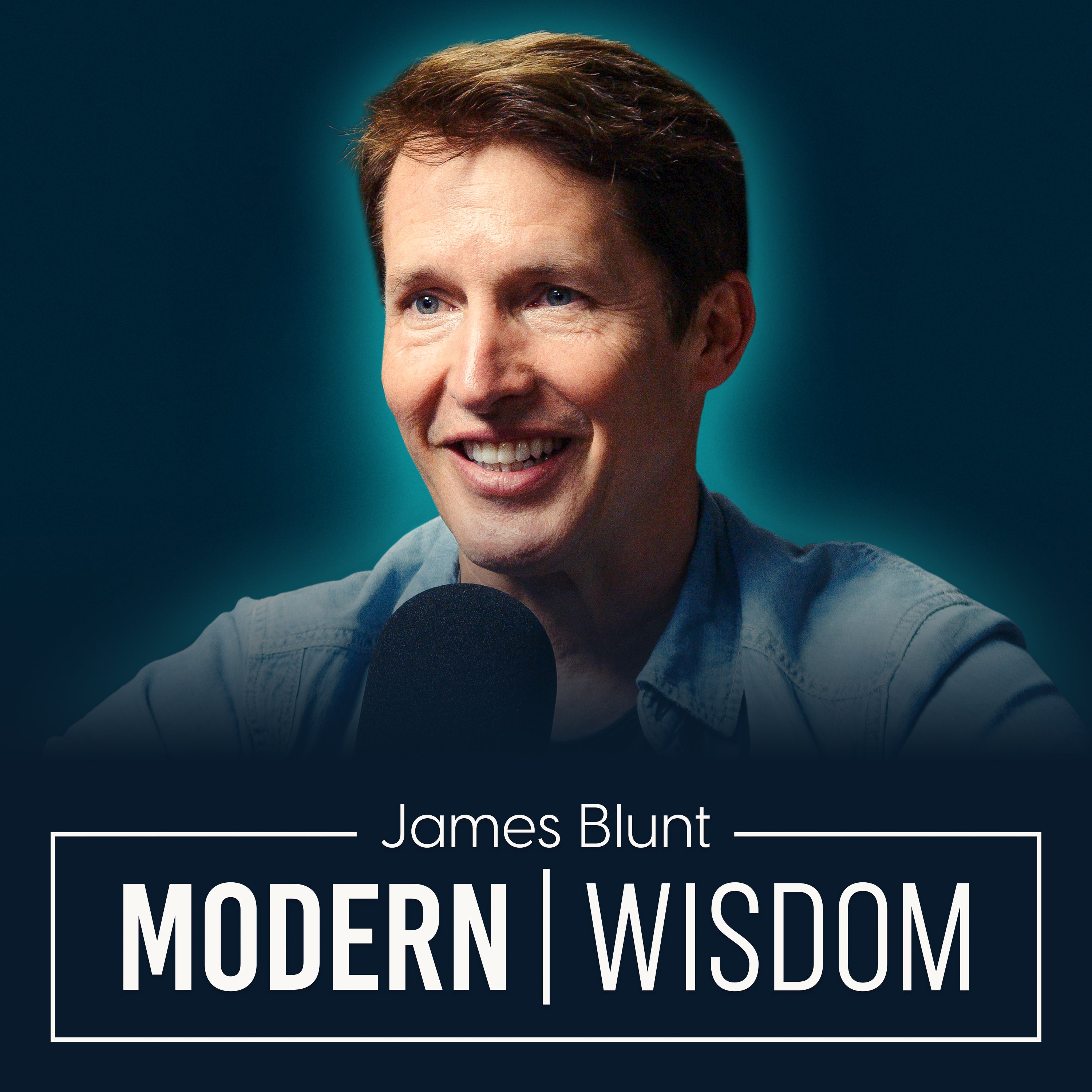
James Blunt discusses how his emotionally earnest songwriting and “sarcastic, self-deprecating” public persona collided with British “tall poppy syndrome,” leading to a media backlash after his breakout. He connects this to formative experiences: boarding school at age seven, a transient childhood from his army family, and later military service (Kosovo 1999). He argues that the UK often tolerates success only if the person seems embarrassed, unlike the US.
No other guests are identified in the transcript. The episode is a conversation with James Blunt (the guest).
British singer-songwriter; known for “You’re Beautiful” and the album Back to Bedlam; served in the British Army, including Kosovo in 1999; later became famous online for sarcasm and self-deprecation; lives between Switzerland and the UK.
Music is his catharsis and substitute for therapy; criticism hurt more than sales numbers because “not being liked” is visceral; social media helped him control his jokes and perspective; boarding school and army life shaped independence and discipline.
His “media-led takedown” after Back to Bedlam; feeling “exile” and writing the lonely second album All the Lost Souls; being signed by Custard Records after a tiny Austin, Texas-area gig where Linda Perry approached him; producer Tom Rothrock finding him via an online video.
Written by AI. May contain mistakes.
Explore the contrasting personas of James Blunt's music and online presence.
“Yeah, I tried to be very understated for you today.”
James discusses the emotional implications of his boarding school experience.
“That makes you fairly emotionally stunted.”
Discover how moving frequently shaped James' independence and friendships.
“And the notion of that painful word feelings, it's not something I've necessarily deal with on a day to day basis.”
James shares how his military service influenced his work ethic and life.
“Is there a single thread that ties that all together?”
Examine the challenges and expectations that come with sudden fame.
“You know, you're the behest of politicians when you're in the army, and you can only hope that they choose the right wars to send you in.”
Learn how media backlash affected James and shaped his perspective.
“I'd had this incredible success, a dream had come true.”
James explains how he copes with criticism and maintains perspective.
“You have this breakout song and album, and almost immediately after that, you have public criticism, mockery, stuff like that.”
James Blunt discusses how to cope with negative feedback and the importance of perspective.
“And the person on the phone, they don't know me.”
The conversation shifts to the contrasting attitudes towards success between the UK and America.
“So it's, so perspective was really what put it, um, you know, to bed.”
Blunt reflects on British class dynamics and how they affect perceptions of success.
“Like, that's my, I must pay my penance for having done this.”
James Blunt shares his journey from serving in the military to pursuing a music career.
“sort of army to music transition thing how do you develop a songwriting ability whilst serving in the military?”
Discussing his dual role as a ceremonial bodyguard and a musician in London.
Blunt discusses his early confidence in singing and his entry into the music industry.
“And that I was really, really very naive in.”
James Blunt shares a pivotal moment when he was approached to sign with a record label.
“And I thought I was going out to the South by Southwest Music Festival.”
Blunt discusses how he connected with producer Tom Rothrock and the creative process.
“She's overcome much more important ones in her own life.”
James reflects on the importance of being earnest and truthful in his songwriting.
“Do you feel like you're being sort of pulled through life by something, some degree of serendipity that is beyond just chance here?”
Blunt reveals his perspective on fame and the importance of staying grounded.
He discusses the challenges of being misrepresented by the media and feeling betrayed.
“i think is in america the closest equivalent is nickelback yeah i think it's chad kroger uh you You know, there was essentially a coordinated media pushback after they were everywhere.”
Blunt shares his experiences of loneliness during his rise to fame and its emotional toll.
“You're really deeply frustrating, definitely.”
James Blunt reflects on moments of doubt and loneliness during his career.
Discussion on how external success metrics often clash with internal emotional experiences.
“But when it actually comes down to it, the emotional experience of that is basically neutral.”
Blunt shares his journey through fame, self-discovery, and the impact on his music.
“You know, my third album didn't do especially well.”
Exploration of nostalgia and the bittersweet nature of past successes.
“I've got the word, cause I'm looking at a staircase behind you.”
James discusses the challenges of maintaining authenticity amidst public perception.
“and still playing venues of a sizable, of a decent size of the London O2.”
James Blunt shares insights on handling sudden fame and criticism.
“What would you tell a young man who manages to achieve sudden success and sudden scrutiny at the same time?”
Blunt discusses the importance of naivety and conviction in achieving dreams.
“Like your first gigs that you played at working men's clubs around wherever the fuck you were, Ipswich or something, like that is not available for me to see.”
Exploring the bravery in exposing oneself through art and performance.
“achieve their dreams, but don't necessarily have the disposition to be able to deal with what comes along with it.”
Blunt reflects on how family life has influenced his personal growth and artistry.
“he's the brave one who shows it all off.”
James Blunt discusses the evolving perception of his music over time and the impact of societal opinions.
“Yeah, you know, those are things that mean the most.”
Blunt explores the influence of social media on how new generations perceive his work.
“But that you have a perspective of your work, which is undetachable from that initial sphere.”
Blunt reflects on his experience in the show 'Celebrity Traitors' and the nature of deception.
“After Celebrity Traitors, what did you learn about how good people are at lying and how good or bad you are?”
He discusses the contrast between touring and time spent with family, highlighting the emotional toll of his career.
“What they didn't show you is I was constantly, constantly saying, guys, actually, I really don't care who we kill.”
Blunt shares his experiences in creating a new album that reflects his personal truths and artistic freedom.
“If your goal was to be able to get back home and wishing like, ah, it would be really nice for us back with the wife and kids.”
He recounts a revealing songwriting session in Nashville, illustrating the depth of his creative process.
James Blunt shares the emotional journey that led to writing a song.
“And I'd walked this hour and a half to his studio and I'd crossed over a freeway.”
Exploring how struggles can fuel artistic ambition and creativity.
“And it's just about the pressures in your life and the burden that you might feel, the stresses of being someone with responsibility.”
Discussing the challenges of maintaining confidence after initial success.
“Um, and, and I think that goes in many aspects of our life.”
James reflects on his past success and the importance of perspective on happiness.
“It's this orange book that you'll see in every airport around the world.”
Recognizing the importance of resilience in facing career challenges.
“I question myself as to how to overcome those all the time.”

Get the gist, explore an idea or ask about something said.
 Claude
On Modern Wisdom, what are the key points of this episode?
Searching your listeningAutomatic transcript. May contain errors.
0:00The next Modern Wisdom merch drop is now live and only for six days. You can get these designs never to be printed again. My favorite death metal design, this high country ranch thing with a beautiful horseshoe on front. This snake design, this awesome Wisdom Nation world tour. It's all available at mwmerch.com. Never to be printed again. So get yours before they sell out. mwmerch.com. I love your place, man. Your gaff is epic. Yeah, I tried to be very understated for you today. or make you fear that you're going to be hung upside down by your ankles at some point. Very much. Even the setup. Correct.
0:35Yes. Distance. Distance. I've brought a gun. It's a power move. It's pointing at you. It's a power move. You built a career on being very sincere, emotionally vulnerable songs, and then became famous online for being sarcastic and self-deprecating. Which one is the real James? They're both true, really. i use music as well you know it's a cathartic outlet um for emotion i don't see a therapist i see you um i don't you know i don't see a therapist i don't need a therapist i write songs about what's going on inside um and then for the rest of the time i'm an idiot but you know the two coexist quite happily are you the most emotionally sensitive man in britain or the least easily offended or the least yeah you know i went to boarding school when i was seven years old um my parents dropped me off in september at a school they didn't explain that i was going to boarding school at that stage they i knew something was up in fact because you know they're a little tight but they'd give me a present of a donkey kong game and watch you know there's nintendo game and watches and it wasn't my birthday nor was it christmas so i knew something was up and they dropped me off at the school and they said goodbye three days later i asked the matron you know when am i going to see my parents again they lived in germany they dropped me off in a school in Berkshire and Machen said, you know, they're coming back at Christmas.
1:54That makes you fairly emotionally stunted. And the notion of that painful word feelings, it's not something I've necessarily deal with on a day to day basis. But you know, we all as humans have the voice in our head that we have to deal with and the highs and lows that we have to deal with in life. And that's what I capture in song. I forget that people go to boarding school. It sounds like some archaic, the archers, Bridgerton thing. I mean, I'm amazed you'd keep children at home. Why would you do that? They're, you know, they're a nightmare. I mean, I think my second word I learned was boarding school.
2:35It's interesting that people still go and do that. And I had friends that I went to uni with at Newcastle that did. How unique with the perspective now of realizing that's not normal for everybody, how shaping and unique do you think that experience is? I mean, it makes you incredibly independent. First and foremost, you don't have parents there. You're guided by other pupils and you work for other pupils. I mean, at school, I had to work for someone in the top year. I ended up calling him God. I didn't know his real name. And would bring him, wake him up in the morning, bring him tea, coffee, open his curtains, do his sheets, do his laundry.
3:17And on the weekends, he'd get me booze and fags and get me out of trouble potentially with other people in the other years. So, you know. It sounds a little bit like education prison. Yeah. I think boarding school, you know, inmates are very good as real inmates in prison as well. So, yeah, it really gives you independence. is an amazing thing. And then, um, and I suppose, I think, you know, it's a different beast now. I don't think I'd necessarily do the same thing, certainly not with a child of seven, because as a parent, I think you miss out on the childhood of your own children. Yes, yes, yes.
3:53Yeah, it's an interesting change. So I guess you've got one of the most meandering life stories that I've heard of. Is there a single thread that ties that all together? What's the sort of unifying trend as you look back at this? Well, I guess because my dad was in the army, we were very transient. You know, we moved every two years. And, you know, I have memories of living in Cyprus, Germany, Hong Kong, somewhere as exotic as Yorkshire. And to make friends, I was literally sent out by my mother onto our army patch that we lived on, which is kind of like a, you know, they're sort of council houses in many ways, but supplied by the army that you'd be, you know, put into.
4:36And I'd go around that army patch and knock on doors and say, hi, do you have any children my age or my sister's age? You're a salesperson for yourself. Exactly. And if someone said yes, that person would then become your friend for two years and then you'd never see them again. So I've had a best friend every two years and then moved on. Then I joined the army myself and I've moved around a lot myself. And then I joined my tour bus. my touring life became a musician and went out on tour and again i just continually move and so even now i suppose i live between um you know in verbia which is in switzerland um up in the mountains i live in nebita um and and some time in the uk and i'm you know i get itchy feet i'm just constantly moving and that's from my childhood that lifestyle either was built for you or you were built for it maybe yeah and it's one that i love you know i've i've found i don't want to stick around in the same places you know we were discussing you can stick around in the UK during the winter for the rain or you can or you can move yeah how did military service change you um a great deal I had been at university before and I was very I was idle um the university is just an amazing place Newcastle is a great great fun place my sister and I went to Bristol uh studying aerospace manufacturing engineering which I couldn't spell um and sociology which actually turns out sociology you'd think is a useless degree but actually for writing songs it's it's fairly useful it's the only thing you can put it to use um but university is a great place where you spend your time waking up uh late not really doing much in the way of work i think we watch neighbors and home in a way twice a day um and then um and so i think idle was the word i would use for that time great great fun uh when you get into the army that has drilled out of you and i work very hard now i walk fast i work hard um i've worked long hours i'm very very organized my um my tour bus is a very tidy place a tidy bus is a happy bus um as is my home you know it's uh it's a military operation whether i'd be on the road or at home were you ever conflicted about your role uh in the armed forces being on deployment it's not as if you were just sort of sat back, never actually being involved in anything?
6:56No, I think I was lucky enough. You know, you're the behest of politicians when you're in the army, and you can only hope that they choose the right wars to send you in. The war that I was sent to was Kosovo in 1999. And that was where the Serbs were murdering en masse Kosovar Albanians. And then the Kosovar Albanians set up the Kosovar Liberation Army, and the two armed peoples were fighting. And I think, you know, it was a humanitarian exercise. We were peace enforcers as part of NATO, but peace needed to be enforced at that time. And it was the right war because, you know, two people are killing each other and we're getting in the middle and saying, enough.
7:37And that feels like the right war to be involved in. It feels like quite linear sort of steps through this. I'm aware that boarding school is a little bit of an aggressive left turn, but you step by step by step, you move through education, then you go to higher education, then you presumably went to Sandhurst, and then you go to do the army thing. And then, you know, it's all relatively steady away sort of linear stuff. And then on one of your first major public attempts with music, you have exponential growth doesn't even sort of just got like stripper pole growth. It's like just a vertical lineup.
8:13What are the problems of having breakout success as one of your first attempts? I don't see many problems with it um you know your first idea at least in my case my first idea is probably going to be my best idea if I were to set up a clothing brand the first season would probably be the best season um it's and particularly if you've had a lifetime dreaming about that and working for that and that's the case with many many musicians I think really um and and I suppose when you talk about breakout success i've been saying to people i was going to be a professional musician since i was 14 and i hit when i was 30 uh so there'd been there'd been a lot of build up towards that time um sure is there you know what are the negatives to that well of course you're chasing that afterwards and particularly with something quite so big as back to bedlam which did so many many millions of sales and with a huge hit like you're beautiful and it uh will it result in me always chasing that dream uh that commercial success and not necessarily achieving sure in many ways absolutely but um but i'm old enough and long enough in the tooth to know that there will be highs and lows in a career and and then you and you and you judge yourself in different ways my second album was probably a better album than my first musically and it was desperately painful one.
9:36I'd had this incredible success, a dream had come true. And that dream had also been ruined almost immediately. Within six months, the media-led backlash that the public then just followed was desperately disappointing and took me down in such a, you know, it's just a song. And yet taken down so hard by the British media that then it was almost a national pariah that men wouldn't talk to me that i then felt like i'm gonna have to be in exile um in a in a place called abetha which is not too bad a place to be in exile made me write a very very lonely second album called all the lost souls and that for me probably musically was my best album until the moment i'm about to flog you now um but it's you know but that journey to now has been full of ups and downs uh you know the the downs of trying to be in the music business and instead and not being in the music instead of a song that hits here and songs that don't.
10:37But as I say, I'm long enough in the tooth to know that some things you'll measure with commercial success and others you will measure with emotional success. That's lovely. What was the motivation for a media-led takedown? I think most people assume that this sort of stuff is bottom up, but it sounds like there's a little bit more going on. Yeah, I mean, the music industry is a pretty shallow space. and you know we talk a lot about what's cool and hot right now and I was never going to be cool you know cool I would hope under fire but not cool within the music business and then my song and my songs and that album was everywhere you could not escape it and there I was with my little guitar with my high-pitched voice singing you know a song which is deemed and songs which were deemed sensitive, earnest and oversensitive.
11:34And for me, that was the point of music. You know, music is supposed to have emotion in it. It's not supposed to be just, you know, paint on a wall. And so I think I was just an easy target. And maybe a tiny bit of my background was touched on in that as well. But we are a nation that likes to take down and demolish success. You know, we don't celebrate success. we are a nation that, you know, tall poppy syndrome is British syndrome. We're a nation that sometimes creates clubs to be exclusive. I'm in a club and I'm not involved in it. And we have this sometimes, as I say, successes. We don't celebrate in the same way that America does.
12:16What does that do to your sense of self? You have this breakout song and album, and almost immediately after that, you have public criticism, mockery, stuff like that. what how what does that feel like i was surprised by it um and um and disappointed really you know for me it's just a song and it's just music and if you don't like it just go and listen to someone else's maybe you couldn't listen to it because it was on the radio a lot uh but i didn't feel i didn't understand the rage you know for people to really say i hate visceral james blunt felt a little excessive you really haven't met me it seems it seems like uh yeah it seemed irrational um and i suppose also becomes more personal you know we've seen we've heard people say they hate coldplay um but that's the name of your band but unfortunately the name of my band is james blunt so it just immediately sounds much more personal um and so that definitely touched me in a way that But yeah, as I say, I'd had a dream all my life and it did spoil the dream.
13:21How did you, or what have you learned about how to deal with criticism? Well, that I was living two different lives at that stage. So it's a more complex question in many ways that I was living two different lives. You know, I went to Beath and I went clubbing and I had an amazing time. It was just glorious of what I remember of it. um i've had the time of my life and i was out on tour and playing to tens of thousands of people each night and again living the dream and having an amazing time and what was weird is that then whenever i was being asked any questions in interviews they were telling me how unpopular i was uh and and if you look online on my phone it was definitely easy to feel that way as well Yeah, it's very strange to think that what you feel in the real world and what people tell you that you should feel based on their interpretation from the outside of your world are two almost entirely opposing perspectives.
14:23and it took me a time to fully understand what that is and that's just a simple thing called perspective and sure you know i can look online and i can find one negative comment um and and i still do that to the day and it still will hurt but i need to look at myself in the mirror immediately and say you're an idiot because you just bypassed over a hundred positive things that people said or in the terms of music that one negative thing that was written about me and you've just played a concert to 10 ,000 people. And the person on the phone, they don't know me. They didn't spend the money on a ticket.
14:55They didn't travel any distance. They invested nothing in that offensive statement. And these other people who gave you something positive, they really invested money, effort, energy, time to come to your concert. And here I am, touched in some negative way by this anonymous number, you know, username and number, who, as I've joked before, is probably, they're probably still living at home. They're probably in their fifties, still living with their parents. They're probably upstairs in their bedroom still with their, you know, trousers around their ankles and their phone in one hand and something else in their other hand.
15:25And they're writing negative comments. And why am I being touched by that? So it's, so perspective was really what put it, um, you know, to bed. Do you think that that reaction would have happened in America if you'd be an American? Not nearly so much. No, I think the Americans, Americans do celebrate success. Um, they do cheer you on. You're allowed to say that you're proud of what you've done. You're allowed to stand up and say, it's a big deal to me. And that's a beautiful thing about America. And it's so funny as Brits, you know, we go out to America feeling a little snooty about the Americans generally.
16:05And I went to America and thought, wow, this is a fantastic place for that. And, you know, the American dream is to say to someone, come on, you can do it. You can be anything. And it goes back to the club scenario. We have clubs so that we can be exclusive and say, you can't be in my club. You know, I'm sorry, this is my clique and you're just not good enough to be in it. Whereas the Americans will form a club to say, hey, I'm forming a club and who wants to be in my club? Because it's going to be amazing. It's going to be great, great fun. And that's, yeah, and I think America is a wonderful place for that.
16:37Yeah, I talked about it a lot on tour, the tall poppy syndrome and the differences between the UK and US approach to success. and one of the things that came to me was that in Britain, you are allowed to be successful, but only if you seem horribly embarrassed that it happened. Yeah. Like, you have to apologize for your ambition or your life sort of turning out the way that you want it. It's like, oh, I'm terribly sorry. I appear to have developed myself and built a successful business. Like, please banish me to the Shetland Islands and publish my nudes in The Guardian. Like, that's my, I must pay my penance for having done this.
17:10And I'm still apologizing. But that's a remarkable thing, isn't it? And you talk about it with business you know in business we do want people who create generate success who are successful and we do need to celebrate them because they are the ones you know who we need to be who we all should be following yeah do you uh do you think britain hates posh people or just posh people that are successful because it does seem like there's a sort of a classist ness to britain that is increasingly coming out now? Well, no, I don't think so. I don't think so at ground level, at street level. And I think in some way it's exaggerated, I think, by media and particularly by social media as well.
17:54These things don't exist. You know, I was in the army and they were all experts in their field from all corners of the country. And we all worked together as a team. And as long as you look each other in the eye and respect each other and know what they bring to that, team and ask the right you know ask the questions to ask their opinion and ask for someone's input um just you know looking each other in the eye um and treating each other as equals um then i think on the ground no no i think we all treat each other um as equals as a result going back to the sort of army to music transition thing how do you develop a songwriting ability whilst serving in the military?
18:36What are you handling guns by day and working cords by night? Yeah. It's just which weapon you pick up and choose, a guitar or a rifle. There's a load of downtime in the army. You know, you always have the rush to wait is the main phrase of the army. You're going away on operations. You've got to take something with you. You can take a pack of cards or you can take a football with you or like me, you can be stupid enough to bring a guitar um and you know you're going to see things that are inspiring to write songs and we've seen in many wars you know great great poets and great poetry has come out of wars um and and for me those were those experiences were inspirational for songs as well and then when do you start playing gigs um i came back from kosovo which is in 1999 and i started in 2000 in London.
19:28They said, you know, choose which next job you want to do in the army. They didn't have Top Gun, but they did have London as the Queen's ceremonial bodyguard, the horse guards. And so I came out to London, spent four months learning how to ride a horse, which I'd never really done on army reject horses, which would butt and kick and bite and throw you off. And then basically qualified as the Queen's ceremonial bodyguard by day, riding down the mall beside her majesty with a million people either side of the street and flags waving and in armor you know miked up to the police um you've got a sword which you're not going to use that on anyone going for the queen because that would look look bad on camera but you know you've got your body and you've got the horse's body to protect her majesty um and uh but that was by day and by night i would go to play in small gigs and venues um and slowly formed a band as well who are um you know almost um my current band now still um again those that band members were like my soldiers in my troop from all corners of the country and you know and i know that they're experts in their own field and i asked their opinion and their advice and they um guide and carry me many many times um but those but it was an amazing thing of coming back to the barracks in the in the early hours of the morning getting dressed into this ridiculous gear um and by night sneaking out with the guitar and playing in bars and clubs it really is a batman bruce wayne it's slightly more british equivalent of that yeah it sounds very ceremonial i don't know how much use you would have been had there have been some sort of you can put the horse's body in the way but you're not no firearm no nothing else no no well it's and i think you know that uh actually if someone's firing a weapon at a specific human being um the best thing on in the target end the best thing to protect them is someone their size or bigger to get in the way um and so we would practice and do many many exercise in norfolk with a bunch of horses you know we have 200 horses there surrounding um the monarch um we have you know a friend who had volunteered to be the queen um and uh and and we practice protect them and you know in all forms be it with someone attacking with a weapon a bomb even protesters you know that's what the job was there for and you're miked up to the police who probably deal with the problem their end wow yeah it's a real sort of combination of what looks like uh medieval archaicness and sort of modern military tactics coming together totally yeah and it's an amazing job really it was you know fascinating to be part of i was lucky enough um when the queen mother died to be part of that um amazing historic uh tradition she lay in state for a week and I was one of the guys on the corner of the coffin who stood guard over her head bowed while the public filed past over a week and it was incredible you know these amazing bits that Britain has stooped steeped in this tradition a quick aside eight sleep just released the brand new pod six they've somehow managed to make the pod significantly better and more affordable at the same time the hub is now 50 smaller it heats and cools 20 faster there are nine times more sensors that are tracking your sleep, your recovery, your breathing rate, your HRV, and exactly how disappointing your Saturday night was.
22:46And it starts at$1 ,999, the lowest ever starting price that they have offered. Look, I've been away on tour for the last month and a half, and it is primitive. It feels medieval to be sleeping without a temperature-controlled mattress topper. And once you try it, I wish that I could say you won't be evangelizing the same way I am, but reliably, you probably will. They have a 30-day sleep trial, so you can buy it and sleep on it for 29 nights. If you don't love it, they'll give you your money back and they ship internationally and you can get up to$350 off the pod six by going to the link in the description below or heading to eightsleep.com slash modern wisdom and using the code modern wisdom at checkout.
23:21That's E-I-G-H-T sleep.com slash modern wisdom and modern wisdom at checkout. Where does the music playing, the songwriting, when does that start to show? Because you have this what feels like blind confidence precocious confidence from a young age were there any early signs that you weren't just totally delusional i knew i could sing some people might dispute that nowadays uh i knew i could sing um and and i knew i could also convey emotion um you know i knew that i could convey uh and be and have conviction um i could convince soldiers to follow me you know to be able to convince someone to up and follow you towards a machine gun um that is firing in your direction that means you know you've got to have real conviction to say urge them up off their stomachs to be able to do that and if i can you know convey that emotion in music as well um then i had something in there um what i didn't have is an understanding of the music business.
24:27And that I was really, really very naive in. So I have musical ideas, musical conviction, real drive, real ambition. Those things are, that's the crux of what you need. But if you want to get into the music business, you're going to need someone who knows the business. Whilst I was doing these gigs, approaching record labels, asking them if they'd give me a record deal, which is entirely the wrong thing to do. Someone came along and said, you're doing this all wrong you need to find a manager so i did a couple of gigs invited some managers along um and one of those was passed my cd this man called me up his name is todd he called me and said i've heard your cd and i'd love to meet and that was in 2002 and um that manager is still my manager today and just off camera there that's the same guy absolutely wow And so, you know, that immediately gives me the chance to do what I do, which is music, and him to guide me through the shark-infested waters of the music business.
25:26Crazy. And then how did that record come about? How did the first record come about? Well, under his guidance then, I went to see music publishers, which is about my songwriting, and I got a publishing deal, which gave me the chance of, you know, they gave me a small financial advance, which gave me time to write more songs, really. so you don't have to worry about your immediate bills that you can then spend the time to write the songs. Introduce me to other people in the music business who could help me write more songs and record those songs fundamentally into much better demos. And also if you've got then a manager and you've got a publisher behind you, then your chances of getting the golden ticket of the record deal, they're going to feel more assured that you have a team behind you and backers behind you, financial backers and the brainy backers of my own manager so then we approached all the record labels and that didn't go necessarily especially well uh i think having stepped out of the army i mean my speaking voice was absolutely ridiculous um that my accent was just well just as this very very naive posh boy who just and i'm just so out of place within the music business right right right stuck out long hair cool baggy jeans i just stuck out like a sore thumb um and and you could tell that you know there were songs there and there was there was something there but very hard to place within the british music scene and in fact the only record label that did offer me one was virgin records headed by a frenchman called philippe ascoli who'd signed bands like air um daft punk even i think he had signed and they called me in they said you know we're going to give you a record deal and i was this was so so very very exciting my manager came the senior manager from the management company i was came along as well it was a big big deal and they got me in and said you know you're going to be a star and and we're so excited and here's the paperwork and let's go and then the marketing manager did turn around and say you know we do have just one question and you can feel the silence now as they've prepared for this moment he said you know your speaking voice can you do another accent and i said you know well i mean i could i could probably try pakistani and at which stage my manager stood up and said let's get out of here um and uh and we realized you know that wasn't that wasn't going to be the place for us so anyway i went to austin texas played on the 20th floor of the ramada hotel to a very tiny audience of 20 people i hadn't really been told by my manager that it was probably last chance saloon for me the two musicians who flew out with me were probably realising that this gig wasn't going to be, you know, be one that they were going to be on for very long.
28:12And I thought I was going out to the South by Southwest Music Festival. But as it turned, the Ramada Hotel gig I was playing was on the fringes of the festival as well. I was really, you know, this was, it was not the dream that one had hoped. But I played my songs to these 20 people. And as I finished, a woman on platform boots with some kind of black top hat on and a tattoo of a tear here and more tattoos pushed her way through she's a short woman but a formidable character pushed her way through this crowd stormed up to me and said my name is linda perry which didn't mean anything to me but she's the lead singer of four non-blondes um she said i'm forming a new record label called custard records and i'd like you to be the first act i sign and um if you sign with me today i'll give you the money to make your album tomorrow and i said come on then where do we sign we went and got very very drunk that night and and then i really to her that's so cool what a beautiful uh sort of bit of serendipity to do that i guess as well uh going from the army and being surrounded by those people to someone in a top hat with a teardrop tattoo again sartorially a little bit of a whiplash there yeah absolutely and also i think you know, she's so very un-English, un-British, you know, her stature, her own background, you know, she just doesn't see the silly, tiny, little, minute prejudices that we all have against each other, judgmentalisms that we have in the UK.
29:45She's overcome much more important ones in her own life. And she just saw someone with, yeah, who wanted to, you know, I sing from the heart. I don't hide anything. That's what music is. It's real. It's truth. It's not cool or hip or hot. It's just true. And she could really sense that. And so it was amazing to be given that opportunity by her. What were you playing then? Was there anything that would eventually hit an album that other people would hear? Yeah, absolutely. I think we probably had three quarters of my first album, Back to Bedlam, already written by that stage. probably will have been singing to her you're beautiful and combine my lover and and you know cry but no bravery was about the war those are all you know so you've got a healthy chunk of the album ready to go and then we just need to work out how we record it um and that was then finding the right producer um a man called tom rothrock who bizarrely had been on he'd been online googling south by southwest and just to come across a dodgy video of this english guy with two musicians behind him singing um you're beautiful and you know and he was moved by that video that he'd found online and that day my manager called him saying hey my artist james would love to work with you um i'd heard other artists he'd work with specifically um he'd well well he'd had the list of people elliot smith was the one that really inspired me um badly drawn boy foo fighters beck amongst others um and this you know this producer i could knew that didn't he the producer didn't put himself on the records.
31:19He got out of you what it is that you wanted to get onto the record. And that was his genius. And this guy that you knew about and that your manager rang that same day had serendipitously stumbled across a video of... Absolutely. And so, you know, he was thought this is, you know, a mad coincidence. We should definitely meet. Yeah. Do you feel like you're being sort of pulled through life by something, some degree of serendipity that is beyond just chance here? I mean, I don't know. I think you have to be lucky, but I think you have to create your own luck at the same time. It's not about being in the right place at the right time.
31:53That would imply it just lands in your lap. I think you have to be in, you know, everywhere all the time, don't you? You have to make it. Definitely the James Blunt curse. Yeah. I'm interested in this earnestness thing, and it's something that I've thought a lot about over the last few years. My best definition of earnestness is the bravery to take your emotions seriously. And I think that British people have a particular
32:20allergy to that in some degree. We have this sort of standoffishness, a degree of cynicism, a distance that we sort of hold things at, right? Even if you look at the office, the UK versus the US office, even if you look at something that I think is a more interesting analogy. Do you ever watch The Thick of It by Armando Iannucci? Yeah, of course. My favorite comedy of all time. And then they did Veep in America. And Veep is still, I think, ranked as one of the top 10 series of all time. It's still amazing. Armando Iannucci is like a super genius. But even that, their side-eye, sardonic, sort of cutting, very witty humor, that they still poured it off with the same people, right?
32:57And then poured it over there, is nowhere near as sort of cutting or standoffish as it is in the UK. So that preparedness, the bravery to take your emotions seriously, what is the motivation to sort of go as transparently as you do or as you did with that? Well, I think particularly at the start, and I've only managed to find it again now, is that for me was the point of doing music in the first place. That's the point of doing music in the first place. It's, you know, I'm having a conversation with myself. I'm looking at them in the mirror and being honest with myself about what I'm genuinely afraid of.
33:45You know, we don't know what the purpose of life is in the first place. When you're younger, you don't know if you're going to meet the right person or anyone at all, if you have anyone to share your journey of life with, where you'll end up, where you'll live. Well, you know, these are frightening questions. And that journey to find the answers, it takes that lifetime. And along the way, you make mistakes, and you realize that you're not the hero in the story of life. And all of that can be tough to deal with. And so I write songs for me um to put that down and and explain that to myself and and in that cathartic means um and then i stand on stage and i sing those and that's what gave me an audience in the first place because people heard my honesty and they were touched by that because they felt something i assume they felt something in themselves at that time or they heard words that they wanted to hear from someone else from maybe you know it's from a man to a woman they wanted to hear a man say that or they wanted to feel that someone else felt the same way and i think that's why i built up an audience yes but at the same time it was also one of the things that gave me a kind of backlash as well because that that desperate desperate painful our honesty and sensitivity um it isn't as you say in the british way it's uh it's yeah it can be easily judged why do you think it is uh opposed what what is it that people are feeling when they see someone with earnest yeah you know and i don't think it's any bad thing necessarily i really don't think it's necessarily a bad thing um you know we uh once upon a time we had the very stiff upper lip um and and we you know we do need resilience we probably need more of it now and probably um probably uh to blame for a lot of weakness uh within an audience victimhood complex yes exactly we need to get a grip now um and show a bit of resilience and toughness uh and and those are the things that have given us strength um here in the past and i think you know that that's you know we'll give it that we'll give that as a reason there's a a line from a letter that sigmund freud once sent to carl young and he says one day in retrospect the years of struggle will strike you as the most beautiful and i wonder whether i i'm interested in the experience of going through this i've exposed myself to the world i've really like fucking shown you something as a person who self identifies as maybe a emotionally decapitated below the neck at least through childhood and young adulthood and like this is my dream and i've put a lot of myself into this existentially emotionally in terms of my time i've left this army thing behind and all the rest of it i don't know what your parents think about they're probably that you're insane and all of this stuff happens and then you are not met with the reaction presumably that you would have loved and then there's this moment where you have to realize fuck like maybe maybe through some curse of bad luck after a bunch of good luck maybe this is going to like derail the career and move forward absolutely what does self-belief look like at that moment um it definitely taken a knock but what is interesting i suppose is that years later i can look back on that fairly positively um you know speaking to me now i hope you are feel you're talking to someone whose feet are on the ground um you know in the in the public eye in the music business um called ridiculous things like a pop star um i wish i been a rock star but i didn't achieve that but uh but you know called these kind of things and given accolades and treated differently in many ways and yet i've got my feet on the ground because i know that it's you know it's a shallow old world and that it can turn on you at any point and and as a result yeah i'm not a pop star i'm just a guy with a lucky job do you know what the equivalent i think is in america the closest equivalent is nickelback yeah i think it's chad kroger uh you You know, there was essentially a coordinated media pushback after they were everywhere.
38:03Not too dissimilar time to you as well, I guess. Probably almost exactly the same time. And they were like super cringe for ages. And now between them and Creed and sort of this throwback to what in America is called Divorce Dad Rock, but you can give it other names. And now just absolutely ripping. Absolutely. And if you watch their documentary, one of them's wearing a James Blunt cap. You're kidding. Yeah. Wow, just in case they weren't making it hard enough for themselves already, they decided to throw the James Blunt cap in there as well. Most people massively overcomplicate nutrition. They're juggling different supplements, guessing what they're missing and still not covering their bases.
38:40That's why I've been drinking AG1 every morning for years now. It is the simplest way I've found to handle all of that in just one go. Just one scoop gives you 75 vitamins, minerals, probiotics and whole food ingredients in a single drink. and they've taken it one step further with AG1 NextGen that's got four clinical trials, helps gut bacteria even if you're healthy. Look, you've heard me harping on about it for so long because I use it every single day and if I ever found something better, I would switch, but I haven't, which is why I still use it every day and my mom uses it and my dad uses it and all of the people on the Modern Wisdom team as well.
39:13If you are still on the fence, they've got a 90-day money-back guarantee for those in the US so you can buy it and try it for three months and if you do not like it for any reason, they'll just give you your money back And for a limited time, you can get up to$107 worth of free gifts, including a bottle of vitamin D3, K2, and a flavor sampler, all with your first subscription, plus that 90-day money-back guarantee, all by going to the link in the description below or heading to drinkag1.com slash modernwisdom. That's drinkag1.com slash modernwisdom. When it came to the, I don't know whether it was ever a pivot, how much were you doing the self-deprecating thing prior to the exposure to the media was that part of your personality yeah I really was um I was still fairly earnest about my music and in interviews I was fairly earnest you know you want to be taken seriously um and and it's painful not to be taken seriously whilst I was earnest I was learning you know I'd always taken the mickey out of myself through the army you know everyone else was too that's how we that's how we get through hard times in the army uh and and i really was and i remember it clearly being betrayed by the media whilst i was delivering things that i felt were light-hearted so on the red carpet to the iva novellas um i was asked you know how how does it feel to have you know everyone hating your song and having everyone calling this really annoying song and um and you know how does it feel no that everyone hates your hates you and this song i was asked that on the red carpet um and i said hey well pretty me you know i'm the poor bastard has to sing the song every bloody day um and but the newspaper article then said you know james brunt calls all his critics bastards you know i'd use the word bastards but you've just totally changed and so i found every joke i said in every interview wasn't relayed against a joke they never put james jokes yes they put everything in and i felt really betrayed which is why when they invented twitter i was saved because i didn't have to go through journalist to make the joke and show the more warm, amused or less serious side, I had it in the palm of my hand.
41:21Yeah, that must feel incredibly unfair. You're really deeply frustrating, definitely. Yeah, because it's at various hurdles here. I've created some music. I think that it talks to the human experience in a deep way. I've decided to expose myself. There are criticisms about that that are kind of maybe a little bit outsized compared with me just talking about like what it feels like to be in love and i like this girl and isn't it strange to be alone and whoa being a human's hard and then the next thing is like i try to even play your game which is sort of what you want i'll do some self-deprecation i won't think too highly of myself despite the accent and the background and the boarding school and the office camp and blah blah blah and even that gets waylaid and misrepresented i don't know did you ever get despondent was there ever a moment where you thought for fucks like i actually don't know if i can square the circle of this equation and actually make it through as a a normal artist absolutely and i as i wrote that second album in abita um on my own um with fingerless gloves because someone has stolen my boiler at the time um in the in that lonely moments thinking you know i was in a you know sweet house that that that song that song and that album had bought me but i was thinking yeah i better have this because because you know it feels the dream has really been spoiled and i felt very very lonely in those times and were you were you uh dating at that time were you were you with your partner um not my wife no no i was going up the supermodel at the time let's move on from that shall we uh and um it was a lonely experience definitely and i yeah and i didn't quite know how to place where i was you know i still had a a record deal and music to to make but it really felt like no one would want it or it wouldn't be given the time of day in the uk and and so yeah i was i definitely found that the hardest time did you ever consider giving up well i was signed to a record label and they wanted music so and there's no obliged no i was obliged to um i didn't know where i i didn't know where i was really i didn't know where i was it was a little lost in lost in myself and you can really hear that in my second album it's it's you know it's it it talks about being sent to the grave really by the media what's interesting is all of the objective metrics that most people are chasing from the outside i want to be able to sell out arenas i want to have a number one song i want to be played on the radio i want to receive awards i want to be known i want people to want to take their photo with me and stuff like that.
44:02But when it actually comes down to it, the emotional experience of that is basically neutral. Like the emotional experience of the numbers, presumably, you wouldn't have felt bad if the numbers were able to compensate for the criticism because the numbers were so astronomical that there's basically no amount of criticism that could have compensated for them. And yet the criticism felt way more visceral. Does that make sense? Totally it does. And I suppose what you're touching on there is, you know, the numbers become meaningless you know what you just want to be liked you just want affirmation that's why social media works um we just want you know when we put a post for some number of people to give it likes um and for and to not be liked in my home country was um at me a little bit um and it's taken me a long time to put that to bed what did the transcending and including and alchemizing of that experience look like over time?
44:57Because, you know, we're talking about something that's 20-ish years ago now. What was the arc of working out what that meant to you and it not being something that defined you? Well, I mean, if you look at, you know, I've seen it because we did a documentary last year and we and obviously pulled out lots of footage and you can see a guy who is um you know who's riding a wave um uh and and i'm having great great fun but you can see a sadness in my eyes at the same time you know i'm i'm i'm out all the time and i'm having great fun and i'm literally living my life in nightclubs um and it was so much fun i can't you know i would highly recommend it as a way highly recommend it as a way of life and i know you have been to ibiza but i was doing that across the world and finding myself in the most amazing places in the world and having, I mean, I promise you, so much fun.
45:50But there is something in the back of your mind which is, yeah, which is thinking that, yeah, isn't it strange that there's so much positive and yet something so dark and negative back at home stuck in the mind. I think it took a journey. You know, my third album didn't do especially well. the songs weren't especially good potentially I mean you know I really do believe in some of them some of them are magical but I think you could sense that it wasn't cohesive it wasn't really for me I guess that's what's the weird thing I suppose talking about it is and I can think about some of those songs they're really good songs but you can tell there's something missing from them a belief a belief maybe a little bit of heart you know if you speak to Ed Sheeran at the beginning of his career he had just knows he's you know he's gonna make it because he just talks with such conviction and if you talk to me at the beginning of my career you knew that this guy was gonna make it because i just believed so much that it would work naively not arrogantly but just naively by my third album i couldn't sell you anything you know i was i was out of that game and i couldn't sell you a song and i couldn't sing it with conviction i was writing um with just with everyone else in mind, with the audience, with the negative reviews that I might get in mind, with everything swirling around my head.
47:14And so, yeah, you can see that the songs might be well-crafted and well-recorded, but there's something really genuinely missing, the honesty. Real, you know, it's not me singing or for me even. It's someone who's deeply lost at that stage. And it was a journey to find myself again. And I probably only found it completely now. but of course it started with being able to interact with the public through twitter a social media presence which revealed okay you know i take my music seriously but i don't take myself seriously a whole new persona there was the musician the honest musician but instead the online joker and that's taken you know a decade in the process and suddenly you go okay guys we know he had these songs and we can sort of forgive him because he's able to laugh at himself and and And then until, and I've had songs that have worked along the way, but I suppose it's, I feel really it's only until now that I can take myself out of the music business and say, I'm just back in the music again.
48:10I've got the word, cause I'm looking at a staircase behind you. Do you know the term le spirit de scalier? Do you know what that means in French? I can work it out. Staircase wit. Yes. And it's, you're at a party and, and you're having a back and forth with somebody and you think of the perfect verbal riposte, but you only think of it when you're walking out the door. Of course. Like I should have, if only could I have not done that. What I'm thinking about is a special kind of nostalgia or wistfulness that a lot of us feel for an experience that we went through that we feel was somehow tarnished at the time.
48:42And we still got to do the thing. It kind of went well or whatever, like objectively. But we know that sort of subjectively, maybe we weren't quite there in the same way that we wish that we were. and I think that's a unique kind of maybe resentment inducing or wistfulness sort of nostalgia like sadness thing because you go fuck like yeah it was great like look at all of the things that I did here's the photos of me on stage but if you were actually able to sort of transpose yourself back to that moment you and only you know the actual inner experience of you being there on stage or accepting the award or in front of the 10 ,000 people at your gig or the you know platinum album party or whatever it's like huh it's a bit tainted and how sad that is and that i think could lead people lead a lot of people to bitterness resentment drugs retribution like there's a lot of incredibly maladaptive ways that you can try to bring that into land definitely and then i think perspective um i'm i'm 20 years in to the gig and i'm still here and still on tour as of next year and still playing venues of a sizable, of a decent size of the London O2.
50:01And so, yeah, you know, it hurt, but it put me in my place. You know, to get a little bit of a kicking is probably a healthy thing. It was inspiring. You know, my second album was what it was because of that. And I'm proud of that second album. I understand what you mean, but to do the healthy thing sounds a little bit like Stockholm Syndrome. Personally, for me, with where I'm at in life at the moment, I would have loved the opportunity for you to have been more earnest in the press interviews, for you to have really gone sort of even deeper into what is the sentiment behind this. And like, oh, well, you know, it's very difficult, the sort of the tension of falling in love and of losing somebody.
50:41And like that to me would have been like, oh, fuck, like how compelling. Yeah. And instead you have to sort of play in the shallows. Well, what was really interesting, actually, my first album wasn't really about romance and love. There were only two songs that mentioned the girl in that album. The rest were about drugs and war. And, you know, so I was really thinking, hang on, I'm a totally independent artist singing about very cool things. And yet, I mean, tainted with this label of this romantic. And even You're Beautiful was just about a guy high on drugs stalking someone else's girlfriend in a public space.
51:09That's not romantic either. But My Love was a failed romance. So I was, you know, lost in this and the earnestness thing. yeah you're right um i now when i sell music i don't sell it with any earnestness at all this album is is is is heavy in many ways it's dark in many ways i wanted to call this album reason to die um james brunt reason to die that'll sell i thought that was gonna be an epic epic uh the irony of that i thought was fantastic but my record label laughed at me when i said that my manager said maybe it's the time we start working together if we've reached that moment and you know it's a really desperately dark heavy album in that way but I won't promote it with the same earnestness as I might have done on that first album because I know that doesn't work for me and I protect myself the earnestness is there it's on the songs you know when I tell you what those songs are about I will brush over their meaning I won't tell you their meaning even if the meaning is right in those words and it's fairly obvious if you look at those lyrics for me there's no point in doing that and so I'll sell it to you with humor.
52:18Such a shame dude it's such a shame and you know I wonder I'm grateful for the industry that I've elected to be in because hopefully uh the world of podcasting for many ills that it's got here's the appropriate British throat clearing thing that I need to fucking do before I say something that's remotely positive about anything that I've ever done but I do think that we have been able to give space for a conversation which allows complex earnestness to marinate sufficiently so that people can actually get full fucking context for what is meant by this thing and and to tell a story that's not just in a 30 second soundbite and to know that you're going in and this person's not an enemy that they're actually like earnest that genuinely seriously on the other side of this going, huh, what was that like?
53:08I want to learn about this thing from you and go, wow, like that 20 years ago, that was simply something that wasn't available. And what you were talking before about how album three for you has this almost sort of compensation in it, where you're sort of thinking, I understand what is going to happen when I try to make songs like this time in the same way as you might have cultivated or compensated with how you promote it even had started to infect the songwriting and the sort of construction of that too very much i was protecting myself um you know it's not no point in being quite so honest and open if you know you're going to be judged quite so harshly so you write a beautiful song but that by the same put in layers of protection into it there's a term from online content creation which you might be familiar with called audience capture.
54:01And Ethan Strauss has another idea, which is called criticism capture. And I think that you are a victim of both, interestingly enough. So audience capture, you start to produce something, the audience gives you feedback when they like something you do. And instead of continuing to do what you want to do, you feed the audience the red meat that you think that they want. And criticism capture, which Ethan says is even more warping than audience capture, and I agree with him, is compensating in advance for what you think the critics may say. So sometimes you don't take yourself so seriously, or you caveat in advance so that any criticisms may be sort of front run by you, or you become overly militant and very aggressive so that you're sort of a feared opponent so that people don't do the criticism thing.
54:47And when those two combine together, both criticism capture and audience capture, I want you to like me and I don't want you to hate me. That can be pretty deranging. I think maybe you are the therapist that I need after all. Yeah, I think so. You know, as I say, the criticism capture, I throw out, I critique myself before you can. That's what I do online. And with the audience capture, absolutely. I have done that where I'm unable to not have the audience in the room while I'm recording, while I'm writing and recording, they are already in the room the requilabour in the room and the audience and i've said it you know before it just doesn't work if you do that because you know that one of them wants it to be a shade of black and the other a shade of white and you just create gray in the middle um and please no one and and and neither so so yeah it's it's been a journey to to remove oneself from that i've spent the last month sleeping on a tour bus and hotel beds and i've taken one of these every single night.
55:45Nightly Sleep by Momentus have saved my sleep and they are now formulated even better and$50 cheaper than they were previously. Imagine that, better and significantly more affordable. Didn't know that you could still do that in 2026. The brand new triple action formula combines magnesium bisglycinate with apigenin and altheanine to help you wind down, fall asleep, and stay asleep. No melatonin, no sleep paralysis demons at the end of your bed. Plus, it's NSF certified, meaning that even Olympians can use it and it is screened for banned substances. Best of all, they've got a 30-day money-back guarantee so you can buy it completely risk-free and if you don't like it for any reason, they'll give you your money back.
56:21Plus, they ship internationally. Right now, you can get up to 35 % off your first subscription and that 30-day money-back guarantee by going to the link in the description below. You flinched? You flinched. Head to livemomentous.com slash modernwisdom and use the code modernwisdom at checkout for 35 % off your subscription. That's L-I-V-E-M-O-M-E-N-T-O-U-S dot com slash modern wisdom and modern wisdom. Check out the f*** you.
56:47You flinched. What would you tell a young man who manages to achieve sudden success and sudden scrutiny at the same time? Well, I mean, part of it I did really well, which is I really did enjoy. You know, half of it I really, really enjoyed. You know, I've watched the Elton biopic and it sort of looks like he didn't enjoy some of that. and you have and Robbie Williams you know his as well sounds like he didn't enjoy it and for me I've had the time of my life really I've had the time of my life um but there is something I learned from Elton which is he did call me up and say listen fuck him you know fuck him it doesn't matter um and and I probably should have taken that on board a little bit sooner and a little bit more to heart because you know you're the one on the you know you're the one riding the wave and they're not they're watching from the beach yeah i think that's that's certainly a little american trait that more british people could take on this sort of two reactions typically to criticism and one is to get mad and the other is to get sad it's like uh you're the problem or i'm the problem and the you're the problem thing is often like it's now called on the internet crashing out or like losing it right losing your cool which is very uncool right by design but it can if you can sort of garner some of that internally it can be pretty fucking potent fuel so now fuck you like i am going to keep doing this thing and yeah i am on stage and yeah i did sell all of those records yeah absolutely and which is why i think which is why i think again my second album really was was that you know it was a reaction to that um and of course i think that's why it goes on to another thing that you were talking about earlier which is you know the heaviest times in your life are the most inspiring you know you it is hard to write about things when you're when you're a having great great fun because you're just not going to write then because you're just too busy having fun or whether you're in your living you know in in great comfort um is you don't necessarily you don't grow when you're in great comfort um you're not necessarily inspired when you're in great comfort but when you're not when you're in great hardship and discomfort that's when you learn grow and are inspired i think about when someone is trying to sort of swim into a river and compared with if you were lazy rivering down it when you're laser rivering down it, everything is actually in stasis.
59:08Everything is moving along at the same pace. And if you were to think about the sensation that you have as being kind of the insights of life, whereas when you're brushing up against the grain of it, when you're really sort of pushing into that, stuff's coming at you and you're really feeling it. And I think that the reason that you pay so much more attention when things are difficult is that you're trying to unpick this problem like huh things aren't working therefore solution must be found therefore pay fucking attention it's supposed to be like everything's great the band's awesome health's fine kids are good yeah totally and i suppose in that same way if you if everything's going fine in something like the music business and maybe in yours too if you're coasting it's probably a uh you think it's coasting it's probably a slow decline um and if you you know you have to aspire to grow even just to keep it flat you know just and so and again I've been I've been lucky but to still be in this business for so long but it's taken hard work to keep it growing in some way that takes effort and work to still aspire and you know I'm lucky enough to be playing arenas all around the UK but I do say to myself you know I aspire to play the stadiums it may not happen but it's worth aspiring to pretty fucking cool uh i was thinking about that uh maybe i'll get a support gig at a stadium that'll do ed sheeran's looking for one um maybe the naivety thing of youth i'm very interested in that so a lot of people that are young want increasingly now success you'd start your bit if you're not hustling your side hustle by 18 years old you're falling behind etc etc um but i do think that there is a certain kind of competitive advantage that a lack of kicks to the nuts gives you that you can't have once the nuts have been kicked yes i think you're right um for me definitely that naivety was was a great thing um to just have the naive blind conviction of course i can make that you know sure i'll leave the army and i'll get a record deal and you know and then and sure enough i did and i ended up you know living in in beverly hills uh and that and then my album will go out around the world and even when my first label custard records when they signed over my album to a major record label that major record label crashed um and they and they and it merged with another and they got rid of the 77 acts on their label they got rid of 70 of them and they only kept seven and my manager said you know this is this hasn't gone smoothly and i said well you know i've just made my album of course it would be fine you know of course i'm gonna be one of the seven right and it just that naive belief that this is gonna work is is a glorious wonderful thing which is as you say i can never find myself back to to that place yeah uh it's something similar with dean who was sat there but is now wherever the fuck he is back there and he's been my video guy for over eight years now since i started basically since essentially the first episode and um we always had this insight that yeah we're like we're we're criminally undersubscribed and we should we should have like the conversations that are having we we definitely can we can make this work and it wasn't it's different to confidence it's different confidence it's definitely not arrogance it's just a naivety yeah and it's beautiful it's really cool and i wonder whether this speed running of scrutiny by the fact that people are so exposed now to the early work of anyone, right?
1:02:38Like your first gigs that you played at working men's clubs around wherever the fuck you were, Ipswich or something, like that is not available for me to see. It is not available for the whole world to criticize or for you to see how inflated or deflated your ego should be. and I think that an incubation period for stuff like that is really really cool definitely I think you're probably right in that way because as you say I mean I think you can still have knockbacks and you learn from those knockbacks but to have a constant pecking of negativity must take it out of you it slowly erodes what is uh what's something you were worried about at 30 that sort of seems completely ridiculous to you now at 30 yeah 30 years old I'm still 30 now.
1:03:27At 30, well, you know, I suppose 30, as you say, was when I started in the music business and you're heading out into a world that you don't necessarily know and understand and don't know if you can sustain. And it may all fall apart and then you may go and have to get a proper job and I wouldn't know what to do. The realme probably wouldn't have had me back. And so at that stage, it's just sustaining it is a thing. I think a lot about people who have the talent to achieve what they want within an industry, achieve their dreams, but don't necessarily have the disposition to be able to deal with what comes along with it.
1:04:05And I wrote this essay a couple of years ago, and it was inspired by watching the Lewis Capaldi documentary, which is just so beautiful. Every time I watch it, it gets better. It's so good. And he's a lovely human being. How I'm feeling now. I can't wait. At some point, we'll get him on the show. We've spoken to his people and he's keen to come on. He's just having a little bit of a distance from the press stuff at the moment, it seems like, and hopefully writing like some more awesome songs. But I was watching that documentary and what I saw was someone who has like beyond generational talent, like so fucking good at what he does, but a unique constitution that was almost in opposition to what his dreams were.
1:04:43The fear of scrutiny, the sensitivity that made his songs and makes your songs are like so rich and and deeply compelling to people was the same thing that was exposing him to the pressure absolutely he wasn't he was also the self-deprecation thing very interesting that he went about that i mean there was a period of time where he referred to himself as dressing like a lesbian like the the glasses like him in a diaper like the crazy sort of selfies in the in the mirror and stuff like that like so brilliantly british in that way i guess specifically scottish and i saw this world where there was someone who was like not even close to achieving their dream was like in the dream and not because of a lack of talent was potentially risking being ripped out of it because of just like the byproduct of the pressure that comes along with it yeah and i suppose what he was doing is exactly what you're talking about again you know the critique he was protecting himself from that by doing it first telling the joke first um and mocking himself before anyone else did um and then doesn't he do it so beautifully uh but you know but but you you know talking about an artist who sort of does something similar to me which is we stand up on our state on the stage and we effectively remove everything that protects us you know effectively remove our clothes and stand there naked to our soul and say this is the worst of me this is the worst of me i don't get up with a hype guy who's saying, isn't he great?
1:06:13We do something different. We stand up on our own on the whole and show it all. And everyone points and laughs. But still we can go out and say, this is how I feel. And the reward of that is amazing. I do have to say the reward of that is incredible. To stand on a stage and sing your little heart out about something that means so much and feel the excitement as a crowd. you know will feel that too to stand out and watch uh you know an audience cry with you um you know is an amazing when you've taken them on that emotional journey when you can touch their you know the most delicate parts of the soul that's why my you know some people play weddings but i try and get gigs at funerals they're just an easier audience um is is magic but it comes you know it's weird i suppose because you know isn't he lewis is the brave one isn't he he's the brave one who shows it all off.
1:07:08And I think there's a certain courage to stand up and say, rather than put on some kind of shell and brave face, to open yourself up to that criticism is kind of, there's a bravery to it. And it puts you up for criticism. But the reward is huge. I think it's the purest form of bravery. You know, I had a Navy SEAL on the podcast. He's been on a bunch of times. He's a friend, a guy called Jocko Willink. And he was talking to Sam Harris, a neuroscientist. It's a slightly odd pairing. it's a bit like batman and spider-man having a conversation it's a little bit strange and uh they were talking about how you can't fake bravery as an emotion that if you don't feel scared then committing the action isn't bravery because you weren't overcoming anything yeah absolutely without the fear without the exposure without the revealing of yourself you're kind of drifting through life and i get it like not every musical artist or podcast or or you know piece of fucking literature or media or whatever is supposed to transcend the so like some of it can be comedies some of it can just be like like kind of mindless comfort food right like that's one that's good and you should consume that stuff but for some reason i the opportunity for someone to really fucking bear themselves really really show like this is how i feel and this is a part like petty yeah shameful yeah and it becomes it's an exciting moment you know and i and i do it with you know i can just watch videos back i've seen of you know playing goodbye my lover and you can see you can hear the fear in my voice and you can hear the fragility in the voice and you can feel the electricity in the room because the people are watching a guy literally bearing his soul at that moment.
1:08:53And, you know, for me, that has always been the live performance adrenaline rush. Yeah, that's interesting. I suppose with like a DJ or like a sort of big rock band or something, it might be trying to maximize the sort of peak moment, like sort of loudness emotion. But then there's the other side as well, which is like, how deeply can this thing sort of pierced through and it's a very different kind of energy but yeah i mean it's a it's still a massive peak experience yeah absolutely um and i suppose that's why you know a live concert of mine that's what we try and do we try and have highs but so that you can suck people into those lows because you can't do that all the time yeah how have you been changed going from so much of yourself maybe all of yourself being invested into like i am recording artist i am singer songwriter a man.
1:09:47If you don't like me or my work, then I am not much. How healing, transcending has it been to do the wife, family, kids thing? What has that? Yeah, you know, those are things that mean the most. You know, those were the questions that I had as a young man of who I would meet, where I would live you know and who would give me peace apparently uh yeah but you know that uh those are the questions we all ask is who are we going to end up and share that journey with um that has meant much more absolutely and along that journey so you know and and i'm moving on for that because i just try and not speak too much about my family just because i'm always shy about that or keep or protective about it.
1:10:35But along the journey, whilst I've had those kind of negative responses to the first album, whilst still getting massive positive responses because millions of people bought it, eventually time heals everything. It really does. You know, now young kids come up to me and they love my first album because they were forced to listen to it by their parents. And so once upon a time, this guy was desperately uncool, but the kids don't know that. yeah they're able to see it with the purity yeah of it's uh like unbiased absolutely you know and and i feel like reminding me you don't know you do you know do you notice it's really uncool to like that and they've moved on so time and the full circle has moved on from that how fascinating that um people who missed the first wave of public opinion and a lot of people form their opinions just based on the opinions of others, which means that you have a few real thinkers and basically a couple of armies of people being marionetted by them.
1:11:37Exactly. But that you have a perspective of your work, which is undetachable from that initial sphere. And someone can come up and say that they see your work in a way that you wish that you could have done at the time, didn't at the time, don't now, but they do. Absolutely. And it's a really wonderful thing. And for me, that's come, as I say, because the music was one thing and then the social media presence became another thing. And then the young people only know the social media presence. And then because Spotify now creates, you can find music of any era. And so an older song, they just associate with the social media guy that they know.
1:12:18So they assume it must be something they can admit to listening to. A quick aside, running out of a product is a pretty good test of how much you actually like it. Do you order more or just get on with your life? I've kept coming back to Element for more than half a decade, and it's the first thing that I drink every single morning for good reason. Reduces muscle cramps and fatigue, helps to optimize brain health and regulate your appetite. But, mate, you can't hit me. I'm like f***ing Neo. I feel the difference when I take it versus when I don't. Of the two of us here, only one of us is fully hydrated, and that is because I've been taking Element.
1:12:50No sugar, no junk, no artificial ingredients, and that's why it's used by everyone. from Dr. Andrew Huberman to Olympic athletes and sniper teams, the good sniper teams, not the bad ones. And they have a no questions asked refund policy. So if you buy this and for any reason you don't like it, they'll just give you your money back. Plus they offer free shipping in the United States. Right now, get a free sample pack of elements, most popular flavors with your first purchase by going to the link in the description below or by heading to drinklmnt.com slash Modern Wisdom. That's drinklmnt.com slash fucking...
1:13:24Modern Wisdom. Good duck. Well played. After Celebrity Traitors, what did you learn about how good people are at lying and how good or bad you are? Well, it's a really interesting game. It's a social experiment, really. And we're mice in a trap. The idea is that an uninformed majority will on the whole lose to an informed minority. And that, you know, and case in point, really, it's a TV show too, which is a whole different conversation with the edits that go in to make it what it is. And I did feel like a mouse in a trap trying to get out. I was trying to commit game show suicide every day. It's also not really, it's not a detective show at all.
1:14:11It's a guessing game, really. And so, yeah, what you're talking about is lying and people's abilities to lie. And it's, you know, on the basics of an A, B lie, it's very easy, isn't it? Apart from for Richard E. Grant. How good do you think you would have been at deception for the duration of that? I don't know. No, what I do know is that if you accuse me of anything, whether I'm innocent or guilty, I will go bright red and I will want to kill you. And so we were playing a game where people are asking me if I were a traitor and I was not, but I would still go bright red and want to launch myself across the table for you.
1:14:57How dare you accuse me of something? And what was amazing about this social experiment is how easy we get sucked in to the game and lost in the game in many ways. And forget that it is a game too. Absolutely. You made it all the way to the final only to be banished by Ramesh and Bash. How does it feel to have survived an actual war but nearly been defeated by a group of comedians in a Scottish castle? Yeah, intriguing. It's a very different beast, definitely. You know, it was amusing. What they didn't show you is I was constantly, constantly saying, guys, actually, I really don't care who we kill.
1:15:34or banished. I just, as long as you're not the one being murdered, doesn't matter. And as long as I just apologize profusely when I get it wrong, for getting it wrong, we'll be fine in there. But yeah, it was, as I say, it was intriguing to be part of the social experiment. I felt, you know, I've described it as it was a marathon. It was pretty miserable, but great to have done. How long was filming? Just over three weeks, I think. And it did, you know i did walk away slightly affected by it um i realized that you know wow i tour the world all the time and i and i'm away from my family and here i am again volunteering volunteering to be away from them and for what for sort of you know i'm doing it presumably for self-promotion um and and yet the people who really matter to me are at home and i really need to you know i need to not do that because time with them is precious yeah that sounds maybe less glamorous more downtime more hurry up and wait which it's not quite the same on tour you know if you've got a three i just did i told you to around the uk and ireland and we did four shows in four days including one from edinburgh at portsmouth which is a 13 14 hour drive which is about as intense as you can get in the uk i'm aware america can get much more smelly than that but there is no by the time you've arrived somewhere you can maybe get a shower then you're sound checking, you get to eat ish.
1:17:00Like the gym is a long gone memory. And before you know it, you're like, oh, okay, well, it's time for me to the fucking queues outside. Can't leave the bus. Can't go outside of the dressing room. Can hear people filing in. I wonder whether, uh, the distance from what matters, but without the compensation of I'm doing what I love and there's like chaos and it's sort of distracting to me is a really fatal dose of contrast there. yeah absolutely i think in that environment um yeah you realize you're slightly you know you're a voluntary captive um and then and it makes you just it puts you in a position where you start asking questions just so why you would volunteer yeah there's a lot of time to reflect yeah i mean we we weren't at the hotel that much because obviously you know we're from 10 30 till up to 4 a.m you're in a castle um but it's but you know but they are setting up a show in which we don't get to see very very much you know the closing curtains and blinds that you can't really see what's going on outside so you're losing track of um time and control and so yeah it made me reflective as to my own part in it my choice to be there did you learn more about human nature from reflecting on the people that lied convincingly or the people that were confidently wrong um i don't know i don't know if i learned that much from the actual game itself you know it's simple you're just guessing as to who who claudia walked around and fingered in there on the first episode um and i suppose you just see different characters and how they'll do things um you know some people who know how to play a game when they're quiet and don't reveal themselves there are others who just want to get it all out and get it on with you know i'm impatient and i want to just get on with the game so i'm when i wander around and accuse people of lots of different things um and would rather do that and then be booted off the show rather than hang around we're You failed massively at that.
1:18:55If your goal was to be able to get back home and wishing like, ah, it would be really nice for us back with the wife and kids. I've got all this time off tour and I've got this new album coming out in a couple of months. And I was really trying to get out. Desperately unsuccessful, even unsuccessful at being unsuccessful. Absolutely. That was remarkable. And the only time I had, you know, an over emotional moment was I walked into the interview room and there was no envelope for me. Everyone else, when they saw the envelope, was like, damn. And I walked in, there was no envelope. And there's a voice from a little speaker that says, you know, good morning, come on in, let's sit down and say what you're thinking.
1:19:25And I had a moment saying, but where's my envelope? Really, those were my words, but where's my envelope? I was, yeah, I was a mouse and a trap desperate to get out at that stage. It sounds like inverse Harry Potter. You wanted to receive a letter telling you that you needed to leave Hogwarts. Exactly. Yeah. Talk to me about the new album. for me as i say it's been 20 years in the making um and i said to my family and i said to those around me i was no longer going to pursue the radio hits that i have um been chasing because you can listen to radio try and replicate what is you know what is um of the moment and you'll be nine months behind the curve and you'll sound like you're impersonating it and it's simply not me and and and instead i want to go into music again for what i do best which is to describe the darkest corners in my little heart and inside my mind um and i told my my my my wife don't be afraid by what you might hear um i'm perfectly happy but but i need to go and reach into these corners and and so i wrote an album of songs that were was me looking in the mirror talking to myself and and that's very very hard to do knowing i'll put it out as i say i don't want to explain the songs in any great depth because i just don't feel comfortable doing that but it was an amazing cathartic moment to be freed again um and you know and the joy i suppose as i say my my record label put out my greatest hits uh a couple of years ago so and you only put out the greatest hits when you're dead and so if i'm dead then this is a new life and there and i and i don't have to think about anything business-wise or I don't have to prove myself in any way.
1:21:10This is all gravy. And as a result of that, I'm back doing it for the music, not for the business. I think about this all the time from Peaky Blinders where Arthur Shelby and Tommy Shelby were at the Battle of the Somme and they were supposed to have died as they were the tunnel diggers and they didn't. And then they very fortunately managed to survive and they always have this tagline that they say to each other, which is everything after that was extra. everything after that was extra and it feels a little bit like this is the and i feel yeah and i feel that for me yeah everything but on here is gravy i understand why i'm still kind of i don't know whether i'm saddened i guess i would say i'm a little bit saddened by the um understandable distance that you put between yourself and the songs and sort of breaking those things down uh there is a a parallel universe there is a splinter universe somewhere from sort of 2000 2003 or whatever that broke off where uh i can sort of push and poke and like do the thing and pull it out not because of some desire to prostrate your personal pain but because i'm like i really really want to know what he thinks about that thing about that song about what keeps him up at night about whether he has a bad relationship with his phone totally well also what's amusing about that is i also go into a studio with a producer or maybe another songwriter and i'm writing these songs and and i'm having to write those songs with someone who might be either friend but they might be a complete stranger and i'm still writing songs that are right from the darkest parts of my soul the most fragile parts of my soul the bits that you know that um yeah that i'm that i protect the most because they're otherwise because they will be mistreated or laughed at as i say um so to be in a studio with someone and and finding those moments is tough highly exposing because you know i don't want to betray the relationships i'm in you know if i'm talking about my own family to them i don't want to betray that that's that trust that i have in my in my own life at home um so so that can be a thing in itself and i will find i find ways around that um you know i'll talk to you about one song and it's you know get ready for get ready for don't be don't be frightened don't be frightened but i went to nashville to write um with a guy called mickey echo and who wrote stay with rihanna i'd written with lots of other people in nashville record label sends you out to go write with these people you feel like in a part of a factory it's fairly meaningless and very hard to get involved but mickey i i have been a fan of and i love that song stay especially is is an incredible song and so i met him and i I said, Mickey, it's great to meet you.
1:23:45I've been saving. I've been saving it up for you. And he went, okay. Oh, shit. Here we go. And I said, you know, so, you know, I don't know what it is we're going to write today, but I know it's going to be from the heart. And I'd walked to you, you know, and no one else is walking in Nashville. It's baking hot. And I'd walked this hour and a half to his studio and I'd crossed over a freeway. And as I did, looking down at the freeway, the car's coming this way and car's going that way. and I said to Mickey, so what I was thinking as I was walking across is, if I were to jump, would I jump the side where the cars are coming towards you?
1:24:19Or would I jump the side where you can't see the cars? You know, if you can see the car, you can time it pretty well, Mickey. Hit the ground and you're done. And if you jump the other side, you won't know. And you can see him starting to go, okay, have we got a problem here? And I say, well, so actually I've had another thought, which is that if you jump that side, you might actually land on the car and then you might really damage their car, which would be bad or worse. So I think maybe we're not going to, if we were to consider doing that we shouldn't do it here we should do it somewhere like you know at home um but that would be bad because one's family could find you and i couldn't tell my you know my family and i certainly wouldn't want my father to find me he's looked after me you know what if i were to do anything bad to myself i'd call my brother-in-law because you know what you know he's always been tricky with me so this would be my way of being tricky with them and mickey He heard me and said, you know, where the hell have you got this?
1:25:10And he started getting, you know, I need a moment. And he stepped up and he called his manager. I could hear him calling his manager saying, I thought I was just going to write another You're Beautiful with this guy. And he walked in and I said, thank you. You've allowed me to do exactly what I needed to do. This is where the song is. I'm not looking for a bridge to jump from. I'm just looking for a hand to hold. And at that moment, we wrote a song. And it's just about the pressures in your life and the burden that you might feel, the stresses of being someone with responsibility. and the little family and the struggles and the strains.
1:25:40But I had to find something that would trigger it, some emotional thing, and I had to take him on a little emotional journey to get us there. And I'm a very happy human being. But to get yourself into that space takes you just, you need to go into a little dark corner and find it and then put it into paper. Presumably he called off the intervention that he thought was imminent. It was very funny because we finished the song, he just did, we had a bottle of tequila and said, I just need to ask you a question. Are you okay? And I said, Mickey, just trying to write a song. I wonder whether you mentioned before, I don't need therapy.
1:26:16I've got my songwriting to sort of do that for me. I wonder whether certain artists fear healing because it would drain some of the well that they extract the insights from, you know, if you manage to, I see this in business, that a lot of ambition is born out of pain and discordance and conflict and a chip on your shoulder and being doubted, a lack of validation, a need for recognition, wanting to be admired by people you admire. And as people heal, transcend whatever those sort of deeper, darker parts of themselves are, a lot of the time that ambition begins to dissipate. a little bit more it takes on a different flavor yeah and i wonder whether there is an equivalent for uh song singer songwriters that well you know like maybe maybe a small drug addiction would actually be creatively useful for the juice yeah i think it works probably in both ways i think to have incredible confidence probably uh can be helpful at different times you know if you're a sportsman, if you're a tennis player, um, uh, uh, to overcome, you know, you going a set down or two sets down in tennis, um, much of that is about the confidence to know you can.
1:27:41Um, and, and I think that goes in many aspects of our life. Confidence breeds more confidence and breeds success. Uh, but I think a struggle, um, and pain, uh, are probably inspirational things for someone who's creative in some way. The word confidence is an interesting one. Was there a moment where like confidence, self-belief got knocked too? Absolutely. And I would wish for that naivety that I had before.
1:28:17Is a sad thing to sort of say to you, I will never have as big a commercial success as I did with Back to Bedlam. Oh, and You're Beautiful. It's a sadness that I should say that. Because what I should be doing is being American about this, shouldn't I? And say this album is going to supersede those by a mass. I think that's what I meant by the question of what is the problem or what are the challenges of having such an outstanding first entry. I'm good friends with Mark Manson. And although technically, Manson, he wrote The Subtle Art of Not Giving a Fuck. It's this orange book that you'll see in every airport around the world.
1:29:01And Morgan Housel is the same, The Psychology of Money. Two people in basically the same situation. James Clear with Atomic Habits, a third franchise, again, the same. Mark knows that no matter what he does, the likelihood of him like catching lightning again like that is essentially zero it was already zero and then the chance of it happening catching lightning in a bottle twice like go fuck yourself dude and he has had to grapple with that and there is a kind of morgan maybe not but certainly with mark and with you as well there is a kind of like
1:29:40twinkle in the eye a kind of like dignity or probably something closer to like humility self-awareness uh with like a little bit of a grin that i think is it just has to be part of like oh fuck like i can't believe that that happened yeah and like yeah obviously i'm blessed and obviously it's not going to happen in that same way again it's kind of hilarious it is totally And you know what? One has to realize it doesn't matter. It doesn't matter. You know, if you've caught that lightning once, then you caught it. You caught it. And it was, you know, and then everything else is gravy. So, and I genuinely do feel that.
1:30:21I mean, as I say, when I describe myself and where I am, lucky is the word I continually use. Alive, lucky, and still thoroughly enjoying it. I have the best time. I have had an amazing time. It's very, very different now, but it's still absolutely just as exciting and just as fun. And I guess the question, you know, would you change it? Would you change it? Would I prefer to have a tiny first album and think, damn, missed it, and work on a second, and now be talking to you on my eighth album, and now would it be going? Now? No, because it would have been 20 years of struggle. I've just had the best time.
1:31:00Yeah, yeah. um i just you know it was yeah it's it's it's labeled sometimes as a bird a burden yeah to have that big one but no god it's been a blessing were there any inflection points around confidence was because it gets knocked and then objective metrics evidently can't be the salvation at least not for the foreseeable future was there a person a mentor was there any any moment where you go like oh fuck no and i still have you know uh issues with with certain aspects of confidence with music I can still find things nerve-wracking going onto a stage, singing a new song, a TV show where you never know, you're there for three and a half minutes and you may humiliate yourself in front of the nation.
1:31:41I feel that absolutely. I question myself as to how to overcome those all the time. And then, yeah, I haven't actually entirely dealt with that. But, you know, it'll be over in three minutes. We'll deal with the fallout. And yet here you are, you know, like as someone that maybe does have a degree of a nervous disposition around certain situations that could be a person that would take criticism to heart and like a two decade career. I don't know I find uh it's a very British like heroic story in that way you know you think about an American one which would be much more sort of hoorah it's like David Goggins like just fucking get over them dude it's you know it's the guy that said that gets mad that doesn't get sad but uh there's not enough role model conversations around that are built for people who don't have that like middle finger reaction muscle.
1:32:48Yeah. And I think that that's very reassuring because lots of people are a bit more nervous than they wish that they were when it comes to the thing they love. Totally. And you know what? And I guess what I'm lucky about is that, you know, with, again, with a little bit of age, you know that there will be highs and lows and you enjoy the highs and you pick yourself up from the lows. And I'm still on the same record label, Atlantic Records, my record label. And, you know, I've had lows and I've had highs and through the lows, they have forgiven me. My manager too. And I've looked at them occasionally thinking they copped certain things up, but we have worked as a team.
1:33:24And that is life. Life has its highs and its lows. And you just need to make sure that you learn from those lows and aren't so damaged by them that you don't pick yourself up and fight for another high and enjoy that high when it comes. Unreal. James Blunt, ladies and gentlemen. James, you're great. I appreciate you very much. What's coming up? where should people go to check out everything that's going on? I am flogging tickets for a tour, which starts in February on jamesblunt.com. And I have a new album out called Airplay Mode on Friday. Beautiful. Appreciate you, mate. Until next time. Thank you so much.
1:33:58Hey, a quick note. One thing that we've been told by a lot of our subscribers is that on Apple Podcasts, Spotify, and YouTube, they've been unsubscribed or unfollowed, even though they pressed it. So just do me a favor and check below if that has happened. It's happening to a lot of people. It means that you get to find out about episodes before anybody else, and it supports the show and makes me very happy indeed. Just give it a little check, give it a little tap. All will be well. I thank you. Now at McDonald's, the new frosted cranberry splash with Sprite. Because there's no better time of year for friends, family, Sprite, cold foam and sprinkles.
1:34:33Now at McDonald's.
James’ album AIRPLANE MODE is #1 this week in the UK Albums Chart. It’s his first #1 album since 2007.
James Blunt is a British singer-songwriter, musician, and former British Army officer.
Expect to learn how James went from serving in the army to a touring musician, why James was taken down by the British media, what the art of creating your own luck looks like, how to alchemise pain into something more powerful, advice for anyone who achieves success and gets scrutiny at the same time, lessons from being on Traitors, if artists need pain to create great art, and much more…
Sponsors:
See discounts for all the products I use and recommend: https://chriswillx.com/deals
Timestamps:
(00:00) Sincere or Self-Deprecating: Who Is James?
(02:15) How Boarding School Shapes Who You Are
(03:56) The Unifying Thread Behind James’ Life
(05:38) Was James Ever Conflicted About His Military Service?
(07:40) Is Breakout Success a Blessing or a Curse?
(10:46) The Cost of Breakout Success
(17:27) Does Britain Hate Posh People?
(18:27) How James Learned to Write Songs in the Army
(23:27) Is James Being Pulled Through Life by Serendipity?
(32:03) Why Britain Has a Problem With Earnestness
(39:43) Has James Always Been Self-Deprecating?
(44:48) How James Made Peace With His Success
(53:16) The Trap of Trying to Please Your Audience
(56:51) Is Naivety an Underrated Superpower?
(01:03:15) The Hidden Pressure of Natural Talent
(01:09:34) How Family Life Changed James
(01:13:30) What Celebrity Traitors Reveals About Human Nature
(01:19:44) What Can We Expect From James’ New Album?
(01:26:13) Does Healing Dampen Songwriting?
(01:31:10) Does James Ever Doubt Himself?
(01:33:39) Where to Find James
Extra Stuff:
Get my free reading list of 100 books to read before you die: https://chriswillx.com/books
Try my productivity energy drink Neutonic: https://neutonic.com/modernwisdom
Episodes You Might Enjoy:
#577 - David Goggins - This Is How To Master Your Life: lnkfi.re/SN-Goggins
#712 - Dr Jordan Peterson - How To Destroy Your Negative Beliefs: lnkfi.re/SN-Peterson
#700 - Dr Andrew Huberman - The Secret Tools To Hack Your Brain: lnkfi.re/SN-Huberman
-
Get In Touch:
Instagram: https://www.instagram.com/chriswillx
Twitter: https://www.twitter.com/chriswillx
YouTube: https://www.youtube.com/modernwisdompodcast
Email: https://chriswillx.com/contact
-
Learn more about your ad choices. Visit megaphone.fm/adchoices