In short
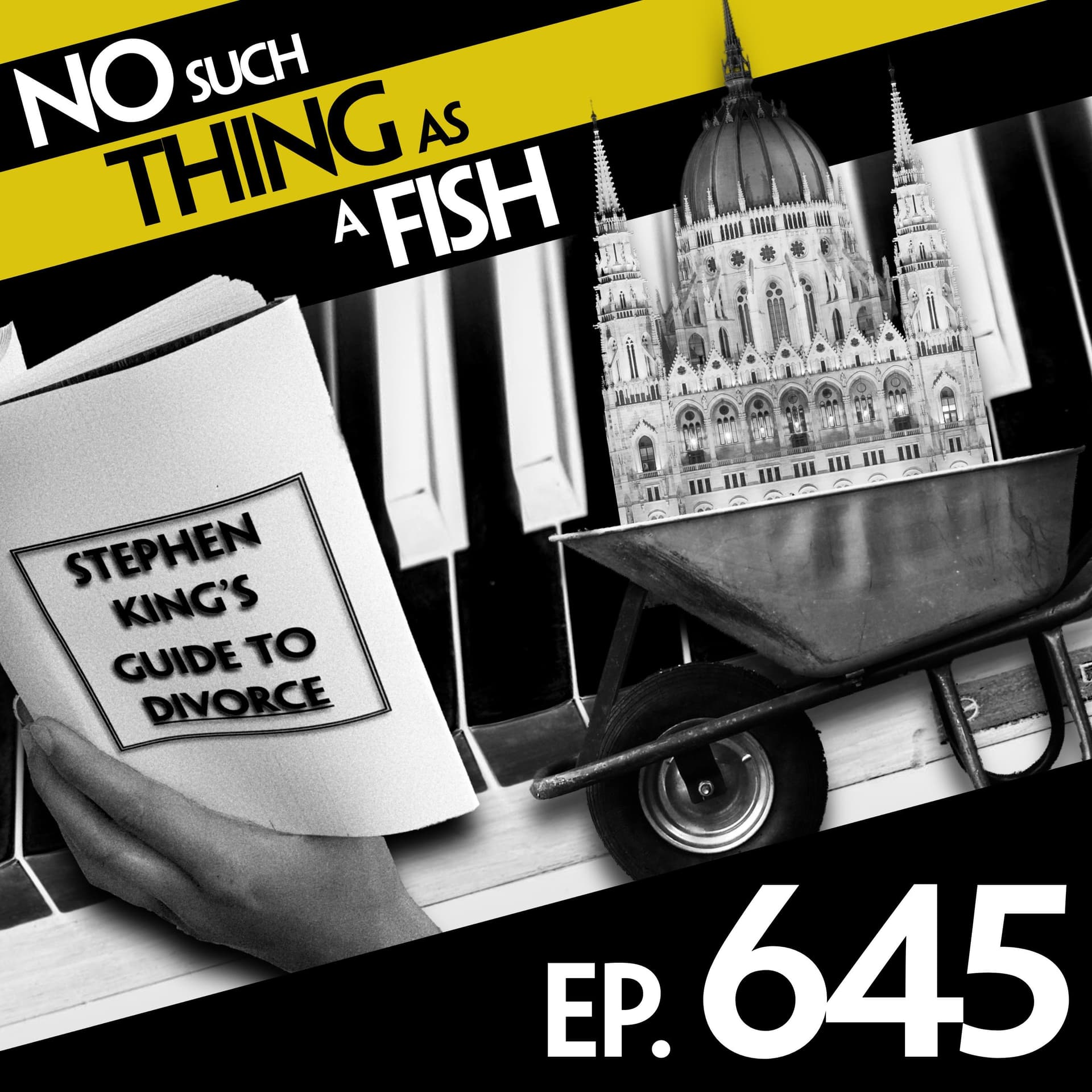
Episode topic: No Such Thing as a Fence Made of Sausage (QI): four “facts” plus a car-oil sponsor ad, covering historical stunts, piano history, language in Hungary, and Stephen King’s Mambo No. 5 obsession.
Guests (hosts)
Dan Schreiber, Andrew Hunter-Murray, Anna Tashinsky, James Harkin.
Guest backgrounds
They’re QI researchers/regular hosts (no specific prior-career details given in the transcript).
Key claims and notable examples
- 1886 Britain craze: wheelbarrow journeys across Britain; Bob Carlyle (circus clown; temperance promoter; inspired by Americans) pushed Land’s End to John o’ Groats; later resurgence. Mentions Rosa Simmons doing London–John o’ Groats–London seven times (1902–1907). John o’ Groats name linked to Jan de Groot; octagonal house with eight doors for family precedence.
- Piano keys: early 1700s Cristofori invention; black/white key color arrangement reportedly swapped historically; organ predates piano (Hydraulis, 3rd century BC).
- Hungary: Latin remained official into the mid-19th century; Maria Theresa’s policies; Casanova anecdote; Hungarian language modernization and invented vocabulary; “fence is not made of sausage” proverb.
- Stephen King: wife threatened divorce after he played “Mambo No. 5” repeatedly; discussion of Lou Bega/Perez Prado versions and name-based “release year” math.
Written by AI. May contain mistakes. Listen to the episode to check what was said.
Chapters
Tap a time to open that second in VOThe Craze of Pushing Wheelbarrows
1:02 to 1:25
Discussion begins with a historical fact about a wheelbarrow craze in 1886.
“Starting with fact number one, that is Andy.”
The Life of Bob Carlyle
1:25 to 2:47
Exploring Bob Carlyle's life, his circus career, and inspiration for the wheelbarrow craze.
“He'd lost his job for walking a tiger without a leash.”
The Resurgence of the Craze
2:47 to 4:30
How the wheelbarrow craze resurfaced and its impact on people.
“He used to, when he was in the circus, go to towns ahead of them arriving and he would build up the enthusiasm, the ticket sales, posters, PR.”
Rosa Simmons and Her Journey
4:30 to 6:27
The remarkable journeys of Rosa Simmons who walked to raise awareness.
“I think that's like episode two callback, basically.”
The Origins of John O'Groats
6:27 to 8:18
Discussion about the history and origin of the name John O'Groats.
“And it was him and seven other members of his family who had all their families there.”
The Architectural Oddities
8:18 to 10:15
Exploring the unique architecture associated with the family of John O'Groats.
“It was pronounced the most dismal place in Scotland by a magazine, Scottish magazine called Urban Realm.”
Geographical Misconceptions
10:15 to 11:08
Clarifying misconceptions about the most northerly and southerly points in the UK.
“and nor is Land's End the most southwesterly point.”
Current Records and Odd Challenges
11:08 to 14:01
Discussion on current records for penny farthing and shed journeys.
“Yeah right Which is how they did the wheelbarrows as well Yeah Alright Right, here's one.”
Community Engagement and Charity
14:01 to 14:43
Discussing a local charity effort by Chris Patel to improve lives in Bolton.
“I mean, if you fall off, you're in serious trouble.”
Piano History and Evolution
16:10 to 20:49
Exploring the history of the piano, its invention, and notable changes over time.
“And at the time, the keys were white and then the little in-between notes were black.”
Show all 25 chapters
Piano Mechanics and Composers
20:49 to 28:00
Discussing the mechanics of the piano and its impact on composers like Bach.
“And one of your favorite things, Andy, the burgeoning middle class decided they might need a status symbol, and so they brought in pianos to their...”
The Harmony of Nature
28:00 to 28:20
Discover how elephants contribute to tree growth through their natural behaviors.
“by elephants who poo out the fruits to get more trees so actually ebony and ivory come together they're in perfect harmony so that they all grow.”
Latin as Hungary's Official Language
28:20 to 29:40
Learn about Hungary's unique use of Latin as an official language until the 19th century.
“My fact this week is that until the mid-19th century, the official language of Hungary was Latin.”
Maria Theresa's Language Policies
29:40 to 31:10
Explore Maria Theresa's influence on language use in Hungary during her reign.
“He thought he'd go to Rome and obviously they'd all be speaking it in decent society.”
The Legacy of Maria Theresa
31:10 to 32:40
Delve into Maria Theresa's family and her significant impact on European politics.
“I think that's a good new business for a dentist, isn't it?”
Hungarian Phrases and Their Meanings
32:40 to 34:10
Discover some quirky Hungarian phrases and their literal translations.
Reviving Latin in Modern Europe
34:10 to 36:10
Examine contemporary efforts to revive the Latin language within the EU context.
“Presumably the film Terminator 2, I think includes that line where Arnold Schwarzenegger says, why do you cry to a little boy?”
The Invention of New Words in Hungarian
36:10 to 37:30
Learn about the significant vocabulary expansion in the Hungarian language.
“A guy called Ferenc Kaczynski was the leader of this, an academic.”
Fermi Paradox and Hungarian Genius
37:30 to 39:40
Explore the theory that genius Hungarians were seen as aliens due to their contributions.
“And there was this kind of group of really genius Hungarians that came across at the start of the 20th century that were just like transforming all of science and everything.”
Stephen King's Musical Obsession
39:40 to 42:01
Listen to the amusing story of Stephen King's wife's reaction to his music choice.
“Not that old, but it's a mid-20th century Mambo song.”
Creative Processes and Music
42:01 to 43:17
Exploring the influence of music on creativity and writing habits.
“I think, and, you know, I don't know if you guys have done it.”
Lou Bega and the Story Behind Mambo No. 5
43:18 to 45:29
A deep dive into Lou Bega's life and the creation of his hit song.
“And yeah, he was, I think he was German, wasn't he?”
Connections Between Mambo No. 5 and Literature
45:30 to 48:04
Examining the intriguing connections between the song and Stephen King's 'Carrie'.
“I mean, if Stephen King isn't turning this into a tedious novel right now, that'd be very nice.”
The Legacy of Perez Prado and Mambo Music
48:05 to 50:54
Discussing Perez Prado's contributions to Mambo music and its cultural significance.
“Whereas if Pamela was popular a century before It's probably not that one Because you're combining it with the Jessica As the writer said Mambo No.”
Danzone and Mambo's Evolution
50:55 to 53:48
Understanding the origins of Mambo music and its connection to the Danzone dance.
“5, but he did do a lot of different Mambos, Mambo number eight and so on.”
Transcript
Automatic transcript. May contain errors.0:00Dan Schreiber:102 miles ago, the oil light came on. 100 miles ago, you noticed.
0:06James Harkin:Now, it's time to head to Take 5. This oil change, fall in love with your car all over again. In just 10 minutes, your dream technician will check your tire pressure, top off fluids, change your oil, and verify with Carfax exactly what your car really needs. All while keeping you in the driver's seat. Take 5, the stay-in-your-car 10-minute oil change. Save up to 30 % on your next oil change to take 5. $15 value, valid to participating locations, terms and conditions apply.
0:43James Harkin:Hello and welcome to another episode of No Such Thing as a Fish, a weekly podcast coming to you from the QI offices in Hoburn. My name is Dan Schreiber. I am sitting here with Andrew Hunter-Murray, Anna Tashinsky, and James Harkin. And once again, we have gathered around the microphones with our four favourite facts from the last seven days. And in no particular order, here we go. Starting with fact number one, that is Andy.
1:08Anna Ptaszynski:My fact is, in 1886, there was a national craze for pushing a wheelbarrow the entire length of Britain. Fun. Didn't have TV. No TV. A problem that can be resolved by TV. Craze, craze is a big word That means a lot, a lot of people were doing that The roads were jammed The main guy was called Bob Carlyle He did this in 1879 He pushed a wheelbarrow from Land's End Which for internationalists is the very, very far South-west corner of the UK To John O 'Groats, which is the very, very Furthest north-east corner of the UK It's in, obviously, the furthest tip of Scotland It's what, a thousand miles?
1:45Anna Ptaszynski:As a crow flies It's 603 miles yeah so you wiggle around a bit and depending on your it's sort of it'll come to maybe 650 700 miles yeah there we go so he did this and it was kind of funny and it was a good stunt it got in the papers he he did exploits and and sort of fun stunts all the way through his life and then several years later there was a bit of a resurgence in popularity and lots of people started doing it again as stunts and really between the lines it seems to have been a bit of a not a charity thing But if you were broke and you wanted to raise lots of money for yourself, you know, this was a thing you could do.
2:25Anna Ptaszynski:I mean, it's grueling to do. Yeah. So he just lost his job. This Carlisle guy, right? He'd lost his job for walking a tiger without a leash. Right. And they said, right, you're not coming back to Woolworths after that. No, he worked in a circus.
2:39James Harkin:I think it was without a muzzle as opposed to a lead. Yes. Sorry. And he got kicked out of the circus and he thought, well, I don't have any money. but I've heard that in America a lot of people are walking around so maybe I'll copy what they're
2:52Dan Schreiber:doing over here and become famous yeah okay and add a wheelbarrow well there was also a couple of Americans who'd walked from the east coast to the west coast of America with wheelbarrows so we probably took the idea from them he was inspired by them yeah he was I mean he had an amazing
3:06James Harkin:career didn't he he was a clown he worked in the circus he was a sailor he was overseas a lot and he was a real promoter. He used to, when he was in the circus, go to towns ahead of them arriving and he would build up the enthusiasm, the ticket sales, posters, PR. And that's exactly what he did with this. He would make sure that when he was in a town and taking rest, that he would write to all the papers saying, this amazing guy is coming to your town next. Be ready, have everyone out to meet him. And he would then arrive in the town and give improvised speeches on the steps of the town hall, but not about the walk, just about, I was a clown who walked animals.
3:45James Harkin:I was overseas. I think he was talking about temperance a lot. Yeah, that was a big thing for him. He's a big temperance guy.
3:50Dan Schreiber:And then was it him who sort of reneged on that? Didn't he say that he was going to do the whole walk being teetotal? And then at the end when he was interviewed, he said, do you know what? Actually, I realised it was better for me to have a little bit to drink en route to make it a little bit more endurable. He basically said at the start, he was like, everyone shouldn't drink alcohol. And then by the end he went, you know what? Some people should drink alcohol. like people who have walked 800 miles. Those guys could probably do with a pint. Absolutely fair enough.
4:17Anna Ptaszynski:Yeah, yeah. It's a bit tragic because he did this. He got some attention and a little bit of money, I think, but not a huge amount. And then when the whole craze kicked off seven years later, he was in China. He missed it. Did he? Wow, was he looking for new types of wheelbarrow? That's a niche callback, isn't it?
4:34James Harkin:Oh my God, wonderful. I think that's like episode two callback, basically. Was it two again? It's a fact that I read a Paul Theroux book, which is he was talking to someone in China and they said all the things they invented, paper, dynamite, all this stuff, fireworks, wheelbarrows. And then he leans into Paul Theroux and says, we've even got wheelbarrows here in the East that you guys don't even know about. So he wasn't the first person to walk from John the Grotes to Land's End or vice versa, right? He was the first to do it with a wheelbarrow, I think. but there was a pair of brothers called Robert and John Naylor who first did it in 1871 and they wrote a book about it and so that became quite famous.
5:16The book was called, I don't know what the book was called. I've got it, it was called From John the Greatest to Land's End. Oh okay, great. But what they did, we've said it's about 800 miles but they walked 1 ,372 miles because they just kept going on little detours if there's something nice around the corner god that would
5:37Dan Schreiber:be so annoying was there one of them who was always saying oh go and look at this because i
5:41Anna Ptaszynski:hate don't you hate being on a walk with that person no i am that person yeah me too i think i could see an information board over there let's just let's just pop over and read it um yeah
5:49Dan Schreiber:people were doing it all over the shop after that weren't they it was very popular um and people did variations of it lots of dogs did it people with their owners it wasn't like a separate dog contest um there was a woman called rosa simmons should you guys read about her no no again it's pre-tv and pre-women having jobs days um so she between 1902 and 1907 she did it seven times but she didn't do the john o 'groats to land's end she did because she lived in london so she had to get to the start point and the end point so she did london to john o 'groats to land's end to london seven times two of the years she did it twice every summer so you know she did 25 days on the hoof doing that whole thing and then thought i'll do it again and she said that it really kind of cured her that and vegetarianism of what of being very sickly oh okay you hadn't
6:38James Harkin:mentioned that she was sickly a casual cure yeah i was reading about john of groats it seems to have been named after a 15th century dutchman called jan de groot or john of groat and uh he used to ply a ferry between the scottish mainland and orkney so he supposedly had a house there which has since been knocked down. There's a hotel sitting on it today. And it was him and seven other members of his family who had all their families there. And they used to have a dispute when they got together for big meals who sat at the head of the table. So what they ended up building is an octagon building with eight doors.
7:16James Harkin:Well, and then did MMA fights to decide who would get it.
7:19Dan Schreiber:Exactly.
7:20James Harkin:They had eight doors to the house.
7:23Dan Schreiber:Because I think, didn't they also have fights about who had precedence when you entered the house? before even sitting at the table. Exactly.
7:28James Harkin:It was a whole thing about I'm the major person in this family. I think this family's got problems that are beyond the structural. Are you sure, Andy? Because I thought at the start of that sentence you were going to say, I see a format. Okay. Now we're talking. And so what would happen is they would open the eight doors, the heads would walk in and there would be eight tables that were positioned facing each other, each of which had a head at the top. And so they could each sit at the head. Like an asterisk. Like an asterisk, exactly.
7:58Anna Ptaszynski:It's not just eight people coming in. No, no, and their families. Oh, okay. Yeah. I think eight doors is nuts. I'm sorry.
8:05James Harkin:No, I don't think I pitched that as a story of logic and why aren't we all doing that?
8:10Anna Ptaszynski:I would agree that was nuts. But yeah, John O 'Groats. It was very run down, John O 'Groats, for a long time. I think it's a fair bit nicer now. It was pronounced the most dismal place in Scotland by a magazine, Scottish magazine called Urban Realm. you had to pay a tenner to have your photo taken with the sign you know there's a famous sign saying this far to london this far to land's end yeah tenner yeah in those days as well in scotland that was until 2013 i think there is now a free sign that you can have your picture taken out but yeah that was because you know i guess the bloke had to go and get the sign out of the shed or
8:44Dan Schreiber:whatever it's just tough tough times put it in the ground mate i think the sign says like um Land's End, 874 miles or something. Because that's, if you go by road, that's how long it takes. I think that's what it says. But that is the old version, that it was 874 miles. And now it's 814 miles. So it's actually 60 miles shorter distance than it was when people were doing it 100 and odd years ago.
9:10Anna Ptaszynski:Are we riddling me this? We can do. Okay. Coastal erosion. Oh. Yes. Each coast has been eroded by 30 miles And that part of the country's disappeared Final answer, lock it in Chris
9:25James Harkin:Chris, when's the last time you watched He wants to be a millionaire Guy's been gone for like a decade Whoa, it's got to be Just highways, tunnels kind of thing It's bridges The Severn Bridge is a big one Because actually if you go from Lans End to John O 'Groats, you go through Wales For a little bit of it So you go over the Severn Bridge and then you're in Wales for a tiny bit and then you go up the west coast of England. But yeah, there's seven bridges. There's a few other bridges. The Kesset Bridge, Cromercy Bridge, the Dunnock Firth Bridge. They've all shortened the route that you have to take, whereas you used to have to go around these rivers.
9:59Hard to go around a river, isn't it? Yeah, you just have to wait until there's a ford that you can get over.
10:04Dan Schreiber:The fords, okay.
10:06Anna Ptaszynski:That's amazing that our country's got smaller on the inside due to infrastructure. I think that's really cool. Yeah, smaller by some measures.
10:12Dan Schreiber:One thing about John O 'Groats is that it's not actually the most northerly point and nor is Land's End the most southwesterly point. So none of it's true, is it? It's all rubbish. It's actually nearby Dunnett Head near John O 'Groats, which is the most northerly point, but I think it's just a bit less accessible. I think the guy who had that sign charged£12 a picture. And the longest journey possible in the UK isn't even that route. It's Land's End to Duncan's Behead because that's another place in Scotland, which is further away. and also what's Great Britain's westernmost point?
10:47Anna Ptaszynski:Well you want us to say something Cornish because it feels like I do want you to say something Cornish but it's probably that we're at an angle so it's somewhere in Scotland Yeah
10:55Dan Schreiber:it's in Scotland Ardnamerkan Point on the west coast of Scotland which is when you look at almost any map of Britain obviously Cornwall sticks projects massively but again our maps are screwed Britain's doing a wheelie
11:06Anna Ptaszynski:basically
11:07Dan Schreiber:Yes Yeah right Which is how they did the wheelbarrows as well Yeah Alright
11:11Anna Ptaszynski:Right, here's one. Which of these has taken less time? Okay. The record for the penny farthing journey.
11:19James Harkin:So that's on a giant wheel. It's like a weird looking bicycle, old school. Yeah. Yeah. Penny farthing. Or. Just so people might not know it. For overseas listeners, we actually, we all commute on those.
11:33Anna Ptaszynski:You can get an app and just hire a penny farthing. So penny farthing, the fastest shed record. or skipping with a skipping rope.
Read the full transcript
11:45Dan Schreiber:The fastest shed record, carrying a shed?
11:47James Harkin:No, that would be a motorised with wheels, I'm guessing, because we've done speed records for sheds before. For overseas listeners, those of us who can't afford to get a penny farthing app, we actually get a shed app. A few people get in those ways, but that's why it's a bit cheaper.
12:01Dan Schreiber:And you drill holes in the bottom, you put your legs through, and then everyone just runs, doesn't they? Like the Flintstones.
12:05James Harkin:Yeah. What was the third one? The shed and then... Skipping. Skipping. Skipping rope. as in, do we need to explain?
12:12Anna Ptaszynski:For those in overseas countries. As a rope. I feel like we're doing overseas listeners a disservice here.
12:20Dan Schreiber:So, sorry, Penny Farthing, Skipping Rope, Shed. Well, Skipping Rope famously, you just stay in one place, so they haven't got anywhere. Perfect. Probably Shed. Yeah, it's going to be Shed. Is it motorised?
12:30Anna Ptaszynski:Yeah, if it's motorised, you would think that would be the quickest. It's motorised, but the Penny Farthing got there faster. What? So the Penny Farthing record is four days and 12 hours. Is it like a normal penny farthing Or an e-penny farthing That's so dangerous No it's a normal penny farthing 4 days 12 hours which is very impressive I mean normally take cyclists about a fortnight I think there's a guy called Richard Thode Of Matlock in Derbyshire so congratulations Shed record 6 days They did take a little break Halfway through to try and break the world shed Speed record And I think they got it to 96.8 Miles an hour which is very impressive yeah
13:08Dan Schreiber:and again we're talking a shed on top of a flatbed truck it's a motorised shed it's a shed with wheels
13:12James Harkin:no they put wheels on them now it's yeah a caravan no Dan's being silly no to break the speed record
13:18Anna Ptaszynski:they do there's an engine it's a car is it a car or is it a shed
13:21Dan Schreiber:it sounds like a lorry
13:24Anna Ptaszynski:it's not it's more than that it's a shed okay I don't understand what a difference between a shed and just a car a car with planks on it yeah yeah if we're being really finicky it's sort of a car with flanks on it.
13:38James Harkin:Flanks arranged in a certain way, though. Who would have thought when you were mocking me for describing the penny farthing that here you'd be sitting moments later explaining a shed? You know the penny farthing guy? If you have a big enough difference between your big wheel and your little wheel, you only have to turn the wheel around a few times and you'll go really, really fast. Yeah, yeah. That's a good point. You have to have very strong legs. And you're very high up, aren't you,
14:02Dan Schreiber:sitting on top of that wheel? I mean, if you fall off, you're in serious trouble. You'll be able to see if there's a traffic jam in front of you. Really good point. I didn't answer because I know the skipping rope one because this guy's from Bolton, right? I think he's planning to do it.
14:14Anna Ptaszynski:Yeah, he's not done it yet. Yeah, he's doing it about a month after we record this. Very exciting. There's a guy called Chris Patel. He does a lot of charitable things and spreads the word and brings people together. I think they kind of pick someone every week who's in poverty or something and then improve their lives. Yeah. So he's planning to do it in 35 days. Nice. Nice. A month longer than it would take in a shed. Anything to get out of Bolton for a month.
14:42stop the podcast stop the podcast everyone we'd like to let you know that we are sponsored this
14:47Dan Schreiber:week by salie yes i don't know if any of you has ever been lost on a holiday abroad it happens to me pretty much every day i'm ever away and you desperately need at that point a local sim card so you can connect to the internet and find your way back to wherever it is you're going well salie is the answer because it is an eSIM that provides an internet connection wherever you travel and saves you money on roaming fees. Absolutely. I have used sailing myself, not so much for getting lost, but more for trying to keep up with football scores while I'm in a different country. I've definitely used it in loads of different countries.
15:21I've used it in China. I've used it in Kosovo, used it in Australia, in New Zealand. It is a really, really easy thing to use. You just basically get on your phone, click a few buttons and you're straight in there onto the internet for not an extortionate amount of money.
15:35Dan Schreiber:That's right. It covers even more countries than the ones James listed in his humble brag about how well-travelled he is. It actually has plans in over 200 destinations and all you need to do is download the app. Plans are compatible for iOS or Android. After doing that, you install the eSIM, follow the instructions. Easy as Pi, roam away. And not only is it easy as pie but it is as cheap as pie for listeners to this podcast because you can get an exclusive 15 discount on salee data plans use the code fish at checkout and download the salee app now or go to salee s-a-i-l-y dot com slash fish yes enjoy your travels and on with the show on with the podcast
16:23James Harkin:okay it is time for fact number two and that is my fact my fact this week is that 300 years ago the black keys on a piano were white and the white keys were black yeah so the piano was invented as we know it now in the 1700s we don't know the exact day but the beginning of the 1700s and it was by a guy called Bartolomeo Cristofori, Italian. Brilliant man. And at the time, the keys were white and then the little in-between notes were black. Then at some point, it swaps over and everyone starts playing with black keys that were white and white keys were black. But then they swap back to white keys that were white and black keys that are black.
17:04James Harkin:And Mozart would have composed on a piano where all the keys were mostly black. And yeah, there's many reasons why they changed it. but one was it's actually quite hard to see the keys when they're all black. Oh, right. I suppose so. It's much easier on the eye to have white keys as your main set with the black breaking them up.
17:24Dan Schreiber:Because the space in between is also black, isn't it? Because space is black.
17:27James Harkin:Space is black. There you go. There you go. The contrast. Yes, absolutely. I think also one thing was like Italian pianos tended to be as we know them today and the rest of Europe had the black keys. what i find amazing is that they were invented around 1700 and the organ had been around for 2000 years wow isn't that amazing yeah like we had organs for 2000 years and then people thought oh let's do a piano because you kind of think of it the other way around it feels like the piano is a simpler instrument yeah yeah with keys and everything organs with keys they were often done with water pressure or sometimes with like a leather bag that you would blow air through.
18:11Really? A bit like a bagpipe kind of thing. But yeah, an engineer called Ctesibus of Alexandra invented something called the Hydraulis in the 3rd century BC and that was the first organ. Wow.
18:23Dan Schreiber:Yeah. It definitely is one of those things that looks basic and isn't. If you thought that you could build a piano yourself at home using logic, which I've always thought.
18:32Anna Ptaszynski:Have you? Yeah.
18:32Dan Schreiber:Then you actually probably can't when you read about it. I think you could, Anna.
18:35Anna Ptaszynski:I don't think I could. No, I think that's fair enough. I didn't know that the main difference is, so there were lots of proto-pianos, weren't there? The harpsichord. The harpsichord, the virginal, the spinet, the spinetoni.
18:49Dan Schreiber:And that was a kind of pastor, actually. That was a kind of pastor, which was very nice.
18:53Anna Ptaszynski:But they couldn't vary the tone of an individual note. And the brilliant thing about a piano is that the amount, the strength with which you press the key is how soft or loud. how forte or how piano the note is. And that was the amazing innovation.
19:09Dan Schreiber:Yeah. Although I'd always thought that, for instance, Bach wouldn't have had dynamics because, you know, and all those old composers until about Beethoven wouldn't have had dynamics because they were all not. Dynamics is loud and soft. Because they're composing on harpsichords. So we all imagine like Bach, and that's why he didn't really include much forte and piano because it didn't exist. But I learned that there actually was the clavichord and this did have dynamics and you could make it louder and softer. and this was Bach's preferred instrument. He preferred it to the harpsichord. But the thing with the clavichord was that, so it worked in the same way as a piano, which is that it bangs the strings rather than plucking them.
19:43Dan Schreiber:So you can get dynamics. But because the technology for the piano hadn't been invented yet, it was only very, very, very quiet. So it was either very, very quiet or very, very, very, very quiet. It was softer than human conversation. So you could have little recitals where everyone would have to have their ears just leaning right in towards the keyboard while Bach played his latest piece. But he did prefer it because it was more expressive. So you could introduce some loud and soft. Is that Johann Sebastian Bach that you're talking about? Sorry, Johann Sebastian, yes. Because there's quite a few Bachs.
20:10Dan Schreiber:Yeah, and the other one was much more famous back then, yes. Well, there was a few. So C.P. Bach. C.P. Bach was the most famous thing. Johann Sebastian Bach. And there's also Johann Christian Bach, who was one of the first people to play an actual piano and actually made them really popular. Right. Yeah, so when it was invented in around 1700, people didn't really care about it because the harpsichord kind of did the job anyway. He didn't really need a piano. But then this guy called Johannes Zumpa came to London, started making pianos, and this guy, Johann Christian Bach, started playing Zumpa instruments.
20:45And Queen Charlotte really liked it, so that's why it became popular. And one of your favorite things, Andy, the burgeoning middle class decided they might need a status symbol, and so they brought in pianos to their...
20:58James Harkin:Friend of the podcast? Friend of the...
21:00Anna Ptaszynski:Get up on the t-shirt Plucking is always uniform right You can't pluck with modulation We should say on a piano you bang the strings And this is the thing What is a piano And I didn't know this debate Is it a car
21:18But is it
21:19Anna Ptaszynski:A string instrument Because it's all strings on the inside of that Or is it a percussion instrument Because you're banging the strings with a little hammer I was always taught it was percussion
21:30James Harkin:Yeah, it is a percussion in terms of what you'd read in a book. But I agree, it's a raging debate. Feels like the debate's been shut down on this show pretty quickly by Big Hammer. But yeah, it's pretty amazing, this guy, Cristofori, the inventor of the piano. We have three of his original pianos still in museums. And I find that just fascinating. I don't think there's many instruments where we could say, here are basically the inventor of a whole instrument. Here is what he built with his hands.
21:57Anna Ptaszynski:Because by the time it took off, he'd been dead for 40 years. It wasn't a huge success in his lifetime, for sure. If he was asked on his deathbed, he probably wouldn't have said they were his big invention.
22:06Dan Schreiber:What else did he invent? Socks that work both ways out? Idea for a shed that moves. He wouldn't have said that the piano was his favourite invention because he didn't call it a piano. What did he call it? He called it an apisembalo. Yeah. Which literally apparently means harp, harpsichord. Oh, because cembalo was harpsichord. And it was He used this term to describe his new invention And because that term Was not very common in his day We think probably that's what he wanted it to be called
22:38Anna Ptaszynski:Inventors are so bad at names Quite a lot of the time Do you remember the guy who invented tennis Wanted to call it Svairistica I like that And everyone said maybe tennis would be a better name What does that word mean? I think it's a Greek word I can't remember the etymology But I think we only like tennis more because we're used to it.
22:57Dan Schreiber:Yeah. I'd happily say sphyristicur if that was the accepted common way to say it. And I think piano is a bad term because until you actually read into it, you do spend a lot of time when you learn it thinking, why is this instrument named after the dynamic which instructs you to be quiet? Before you realise it's short for piano forte and it was named after the fact that it can be piano quiet and forte loud. Why is this called quiet? I think in a lot of other languages it's still called piano forte. In Russian it's called piano forte. We're busy. We're busy in England, aren't we? A lot to say.
23:25Anna Ptaszynski:One of these other instruments, the virginal, was a kind of proto-piano-keyboard-y instrument. Why is it called a virginal? Invented by Richard Bradson. That's right.
23:38James Harkin:I actually know the answer to this. They wanted to create an instrument that was presented as if it was for maidens to play and not seem rock and roll. It was like playing a cello. You would play a cello in between your legs, right? And women weren't allowed to do that because that was seen as quietly sexualised. So they invented a side saddle cello position that you would play. The virginal piano, similarly, was a piano that protected their virginity, as it were.
24:03Anna Ptaszynski:Interesting. There are a couple of other theories as well. So one is, as you say, played by young women. One is that it's named after the Virgin Mary, a common move back in the day. Or it's named after the Latin virga, meaning rod.
24:18Dan Schreiber:Okay, sort of the opposite of Virgin Mary in a way. Sort of the opposite, yes. Yeah, okay. why would it be rod? it's not very rod-like is it?
24:25Anna Ptaszynski:it involves rods I think at some point okay cool rods in it
24:27Dan Schreiber:yeah sure let's not overthink it oh I don't know how virginal works
24:35Dan Schreiber:there's no excuse
24:37James Harkin:I was reading a book about music by Dudley Moore who was a fantastic piano player and he was
24:46Dan Schreiber:no it's just so amazing every fact we have you find a way of linking it to one of your rotation of 10 favorite people.
24:54James Harkin:Well, anyway, it's called Musical Bumps. And he says... We're not going to explain for international listeners who the quite long-dead comedian Dudley Moore is. That's fine. That's a very good point. Yeah, he was in Arthur. He was in the movie 10 with Bo Derek. He was in Beyond the Fringe, which was a landmark moment in satire within this country. Yeah, okay. You sure? Yeah, yeah. I was having fun. He says that a lot of great piano players don't have white and black. keys they have yellow and black and it's because the heaviness of which they play it and slam their keys discolor it discolors it and so the white keys go yellow um is it sweat or do they all smoke or i think i think it has to just be a mixture of what they've eaten what they've like it's just it's wear and tear basically they all eat watsits but yeah he said to the point where anytime he saw the color yellow he associated it with loudness because it was usually on a piano player who would slam the keys that you would see yellow and when he died at his funeral he had a bouquet that was made into a big piano and it was black and yellow and i think that was in reference to yeah uh most remote piano in the world antarctica moth oh in the world no no answer i refuse to play your silly questions anymore oh yep gosh i remember they did take one to antarctica they did Antarctica Antarctica.
26:15That's a player piano, right?
26:18Anna Ptaszynski:I think it was. No, I think it was just a standard upright. But Captain Scott took one to the Antarctic. Yeah. And this is the very sad trip where they all died. But this is not the fault of the piano, which they did not take all the way to the South Pole. They left it at their base camp, which was sensible. And it was.
26:41Dan Schreiber:Some of them were still questioning whether they should have brought it in the first place.
26:45Anna Ptaszynski:But it's really interesting why they brought it in the first place, which was just that music was so important for morale. Morale, yeah. When you're there in the dark polar night, and it's just, it's so bloody cold, and you can't go outside, and you need morale. And so one of them said, we should have gone mad in the long winter nights if they hadn't had the piano with them. So it was used a lot. They would all stand around singing, and they practically had a full choir going around it. They would sing a lot together in the evenings. And it's still there to this day. Is it? Yeah. Playable? I think a tuna would probably Manage to improve it a little bit The white and black notes Are made of Ivory Ebony and ivory But you can't sell Ivory anymore So they don't make them Because of woke Because of dead elephants Or woke, whichever way you want to put it That's what I call it But also, did you know ebony is also endangered the wood yeah the ebony wood uh so it grows really really slowly it takes about 200 years to get dense enough that you can turn it into piano keys and so to save the trees there's real strict controls on the ebony trade wow and also um the ebony trees the fruit is eaten by elephants who poo out the fruits to get more trees so actually ebony and ivory come together they're in perfect harmony so that they all grow.
28:13Incredible. Beautiful.
28:19James Harkin:Okay, it is time for fact number three, and that is Anna.
28:23Dan Schreiber:My fact this week is that until the mid-19th century, the official language of Hungary was Latin. And this is amazing. This was just much longer than any other country continued to use Latin. So a lot of other European countries used it as a sort of legal and sometimes administrative language until the Reformation, Enlightenment period. But Hungary just kept it on and it continued to be used, first of all, in official circumstances like the law, state administration and things like that, but also everyday chat. And foreign travellers would go at the start of the 19th century to Hungary and say, this is absolutely bizarre, I just went into a pub and the innkeeper was chatting in Latin to me.
29:04Anna Ptaszynski:It's crazy. Imagine that today. It's almost like going to one of these old times places. We talked about that big French, you know, the big French. Puy de feu, that's it. You know, the sort of, you're back in time.
29:14Dan Schreiber:Yeah, Hungary was one big puy de feu. So bizarre. There was a record written actually by Casanova of sex fame, who did write about other things.
29:24Anna Ptaszynski:He would be delighted with that. Do you mean Casanova the librarian?
29:30Dan Schreiber:He met a Hungarian traveller at one point who said he'd been incredibly disappointed when he visited Rome because naturally he thought it was Hungarian who was speaking Latin every day to his kids. He thought he'd go to Rome and obviously they'd all be speaking it in decent society. And he said, I was greatly mistaken. Nobody can speak it, not even the priests who only pretend to write it.
29:49Anna Ptaszynski:That's so funny. Is it because Hungarian is so hard to learn?
29:53Dan Schreiber:There's various reasons, I think. I mean, it was a ruler called Maria Theresa who sort of stamped this in stone in the 1700s when people were thinking, shall we give up this whole dead language thing? Yeah, she was a Habsburg, right? Yeah. And then there was the War of Austrian Succession where someone had died. She was in charge. And all the other princes around Europe, because the Habsburg Empire was absolutely huge. All these princes decided, oh, well, we've got a chance here. We can set up our own countries. And so she decided to fight them and sort of knock them all down. And when she won that war, she decided to kind of bring a new enlightened state and get rid of Latin from all these countries.
30:32but in Hungary she couldn't really do it because it was so diverse was the aristocrats spoke French the gentry spoke Magyar the peasants were kind of Germanic so everyone spoke different languages but if we keep it in Latin then everyone can kind of stick together yeah right yeah she had a lot of kids
30:49James Harkin:by the way this is very interesting lady she had I believe it was 16 kids and the 15th kid during labor she had a tooth taken out while she was having her 15th kid because she hated time wasting and she thought, okay, if I'm going to be in pain anyway let's do this at the same time. That's a really good idea. Really smart, yeah. Yeah, do those things in the lead up to birth during labour while you're in agony as it is. Seems like an interesting thought. I think that's a good new business for a dentist, isn't it? During labour. Just turn up and go, would you like me to do anything while this is going on?
31:20James Harkin:Exactly. But she gave birth and she gave birth to a daughter called Antonia and Antonia went on to become Marie Antoinette.
31:28Dan Schreiber:yeah oh plot twist yeah she also had 50 i think it was 52 grandchildren 56 a lot of grandchildren that i mean that's a hell of a lot of grandchildren because her kids a couple of her kids went on to have 16 or 17 or 18 kids and if all if all the parents want you to do one day a week with one of the children that's a nightmare one more thing is that the hapsburg realm had a lot of Latin going on, which means that actually Croatia also had Latin as its main language until 1847. Again, because it was an old Habsburg. Yeah. And it was part of the Hungarian empire at this time, which is one of the reasons they didn't go Hungarian, because they didn't speak Hungarian.
32:09Dan Schreiber:Another thing about Maria Teresa, she couldn't be crowned, properly crowned because she was a woman and that was against the Hungarian rules at the start. But then she did impress the nobles by, you know trampling all over them in her first year so then they did say all right we can do it we will crown you empress queen no not queen because they didn't have a concept of it king so she was crowned king yes she was king maria theresa girl boss absolute girl boss rex hungaria yeah very cool couldn't come up with the feminine do you think latin's gonna come back yeah yeah uh there's a group called via nova who wants to revive latin in europe like in the eu for instance at the moment everyone kind of speaks english or french or their own languages but they think maybe if we bring latin back then there'll be no like cultural baggage that comes with saying oh we have to do this bit in serbo croat and we have to do this bit in italian and we have to do this how many people are asking for this well there's a small group but anyway there's a linguistic scholar called jennifer jenkins uh who says as far as i understand it the eu doesn't have any problem using english at the moment especially now that britain isn't in there anymore oh thank you jennifer and also there is no way that the chinese are gonna learn latin that's a fair point which i
33:28James Harkin:think is a good point uh hey i've got a quiz for you guys what do you think this term means in hungary his mouth is walking like the ass of a duck oh his mouth is walking like the ass of a duck is wobbling like um so maybe you're going
33:53James Harkin:he's just talking bollocks he talks a lot is basically this is what they say for someone he's talking about uh here's another one why are you giving drinks to the mice that's just literal it's just like if someone gives drinks to mice that's a perfectly normal thing to say because is a ridiculous thing to do. Is it a waste?
34:10Dan Schreiber:Giving drinks to the mice. You're wasting them. They won't enjoy them.
34:13James Harkin:It's why are you crying?
34:15Anna Ptaszynski:Why are you giving drinks to the mice? Presumably the film Terminator 2, I think includes that line where Arnold Schwarzenegger says, why do you cry to a little boy? Yeah. So when they translate it into Hungarian, I presume he said, why do you give drinks to the mice?
34:33James Harkin:Oh, we've got to watch that version there. Your dad was not a glassmaker.
34:37Anna Ptaszynski:Oh, your dad was not a glassmaker. So glassmakers, they work in hot conditions, don't they? In Venice. He was clumsy.
34:47Dan Schreiber:He's really clumsy. Your dad's really clumsy.
34:49James Harkin:You're blocking my view. Hey, your dad is not a glassmaker. You are not made of glass. Oh, you make a better door than a window. Yes. That's a proper way of saying it. Yeah. And the last one, the fence is not made of sausage.
35:00Anna Ptaszynski:The fence is not made of sausage. So stop chewing on it.
35:04Dan Schreiber:So cows, pigs make sausages and they need fences to keep them in. So you wouldn't make the fence out of the stuff that the pigs are going to be turned into.
35:12James Harkin:Yeah, yeah, yeah.
35:13Dan Schreiber:So it's like post-it-turned-gamekeeper stuff.
35:14James Harkin:No, it's not as good as you think, is what they would say for if they were saying it's not as good as you think. The fence is not made of sausage. I mean, it would be good, wouldn't it? Yeah, exactly.
35:22Anna Ptaszynski:Imagine coming home every day to your fence made of sausage.
35:24Dan Schreiber:I can see that it's your fantasy, Andy. For a farmer, I don't know. The mad thing about Hungarian, aside from these bizarre phrases that they have, when they did decide to go with Hungarian as the official language. It was quite out of date, they decided, and it didn't have words for things like, you know, a lathe, or more like mid-19th century, a plough. Train? A motor car, a train, yes, that's better. A motor car, no. And a lathe, I would have said, they probably had those for about two centuries. No, I think they didn't have it for a bit. A piano. Oh, good. Well, they were invented a century ago, so Hungary's probably got a word for them.
36:02Dan Schreiber:Can we just have a give or take here? So they had lots of stuff they didn't have words for.
36:06Anna Ptaszynski:Okay.
36:07Dan Schreiber:Charles Dickens. They didn't have a word for Charles Dickens.
36:09Anna Ptaszynski:The telegraph.
36:10Dan Schreiber:Very good. So they had to invent some new words. A guy called Ferenc Kaczynski was the leader of this, an academic. This is a lot like what Ataturk did in Turkey, right, when he was redoing Turkish. But guess how many words they invented? And if I tell you that in ordinary day-to-day language, the number of words that you probably know from your native language is between 15 ,000 and 20 ,000. And that's word family. So run, running, runs. That would all be one word. Okay.
36:38Anna Ptaszynski:So how many new words were created for the Hungarian language? A thousand, yeah. With family words as well? I think it is, yeah. Okay.
36:46Dan Schreiber:Well, this is the claim I haven't heard. And this is said in all books about it, histories of Hungary.
36:50Anna Ptaszynski:There's going to be a lot or a few. I think James has shot himself in the foot with guessing a thousand because that's quite a reasonable guess. The way that this works is the first person to say something gives a reasonable guess. Yeah. then the next two spoil the game. That's how this always works.
37:03James Harkin:And it's not fun for anyone. Six.
37:05Dan Schreiber:Love that. Thank you, Andy. And what do you want? A billion? Two million. Andy's closest. It was 10 ,000 words. Okay. Sorry, why did you say okay? That's two thirds of the total number of words that you would know in a native language. This is the language everyone's been speaking for thousands of years. And some bloke comes along and says, I've added 10 ,000 words. Here's your vocab list. memorize it by next week yeah that's yeah yeah unbelievable i know one word in hungarian which means cheers which tells you a lot what i did when i was in hungary um but do you know how we talked a bit about space earlier do you know how there's this idea of like if there are aliens where are they the therby paradox well leo slizzard uh who was a physicist said that the answer to the Fermi paradox is that the aliens are among us, but they call themselves Hungarians.
38:07Yes. And there was this kind of group of really genius Hungarians that came across at the start of the 20th century that were just like transforming all of science and everything. And they were known as the Martians because they were just like so far ahead of everyone else in the world.
38:23Dan Schreiber:Really? I don't know what that was about. Maybe it was because they'd learned Latin for so long. Well, Hungary was a very big country, like a very big, important country for so long. And then they lost a lot of, they kind of slightly got on the wrong side during the war. And then when the war finished, they lost all of their land.
38:40Anna Ptaszynski:Which war? First war? Both, actually. Because as we've ascertained recently, there was no wrong side to be on in the First World War. What I mean by the wrong side is the losing side. So their GDP would have been the same as Britain, if not more. And then suddenly it just all went wrong.
38:55Dan Schreiber:I think in 1946 after World War II, if you went to a restaurant in Hungary, which very few people could do, but if you went to a restaurant in Hungary, it was better to order your meal and then pay for it at the start of a meal. Because by the end of the meal, inflation was so high it would have gone up. Really? Yeah, it was mad. What was it? Their currency was like the Pengo or something, wasn't it? Yes. And you could like get five billion Pengo notes. Yeah. It was like, it was basically when you went to pay for a meal, it was like they were spoiling one of our guessing games. how much is this burger oh is it two billion pengos yes it is i can't believe we're sitting
39:31James Harkin:in the fact where we literally could have had the quiz question there with that
39:39James Harkin:okay it is time for our final fact of the show and that is james okay my fact this week is that stephen king's wife threatened to divorce him for playing mambo number five so often
39:56Anna Ptaszynski:i once is enough i think no judge would you be granted all the assets um so this was an interview that the horror author stephen king did with rolling stone and he said my wife threatened to divorce me i played that a lot i had the dance mix i loved those extended play things and i played both sides of it and one of them was just a total instrumental and i played that thing until my wife just said one more time and i'm gonna have to fucking leave you wow so it just seemed that he really liked it and i don't think i don't know because this is all the information i have on it but i don't think it's the lou bagger version because this is quite an old Mambo song, right?
40:45Not that old, but it's a mid-20th century Mambo song.
40:49Dan Schreiber:Was Stephen King listening after the Lou Baker version? He was.
40:52James Harkin:Yeah, yeah, yeah, for sure. He was working on a book. He thinks he was working on a book called 11-22-63, which was a time travel novel in which someone goes back to try and prevent the assassination of JFK. Of Lou Baker.
41:05James Harkin:Yeah, so who knows? You could be right, James. It could be a dance mix. I think so.
41:09Dan Schreiber:If he was listening to the words and then the instrumental, maybe he was doing Lou Baker and then the... Yeah, maybe. I see what you mean by that. But I went on Spotify and looked for all the different versions of Mambo No. 5 I could find, and most of the instrumental versions would not be the Lou Baker version.
41:24Anna Ptaszynski:That's interesting. So correct me if I'm wrong, this was an old Mambo song by a guy called Perez. Perez Perez Prado. Perez Prado. But that didn't have words? No, it's just like the background Mambo song. Yes, whereas the version I know and love is the one with a little bit of... Yeah, yeah, yeah. Okay, okay, okay. So he sounds like he was listening to both versions, maybe.
41:48Dan Schreiber:I think he must have been listening to both.
41:49Anna Ptaszynski:If he was listening to a word version, then that can only be Lou Baker. I do see that, yeah, yeah. It's Stephen King.
41:53Dan Schreiber:He's lowbrow, let's face it. He's gone Lou Baker. No offense.
41:57Anna Ptaszynski:Would you like me to hold your coat?
42:01James Harkin:I think that's right. I think, and, you know, I don't know if you guys have done it. I certainly do. if I'm writing something when I wrote my books and Andy when you write your books you don't want lyrics and you want something on repeat going over and over and it might be a horrible song but if it's chosen you as it were to help your creativity. I would never listen to something on repeat. I listen to J-pop because I can't understand the words right. I wouldn't listen to anything on repeat. Interesting. I wrote my school's dissertation to the Coors live version of Only When I Sleep over and over.
42:29James Harkin:I think I did it like a thousand times and that has lyrics but I think once it's just go and you forget interesting but yeah let's get let's get into number number yeah and we also
42:39Dan Schreiber:let's just say when dan says if it's a terrible song this is not a terrible song this is a brilliant song it's definitely one of my favorite manbows this is my five top members yeah um so lubaga named after his own surname because he was called david lubaga i think middle name maybe
42:58Anna Ptaszynski:David Lubega Balimezi? Yeah, David Lubega is what he goes by now. So he's recently written an autobiography called Mambo No. 1, which is under his name, David Lubega.
43:10Dan Schreiber:Who is reading how many copies of that autobiography being sold? Well, one to Monica, one to Rita. And yeah, he was, I think he was German, wasn't he? He is German. Born in West Germany.
43:25Anna Ptaszynski:I don't think of Lou Bega and the Cold War in the same space. But one of the first times this was ever played was, very, very sadly, his father died a few weeks before the song came out. But Lou Bega visited him in hospital with an early version of the song. And I think this was on his father's deathbed once he played him. Number five. Fantastic. His father apparently said, this will open doors. and kind of gave his blessing to the song and said, you've done a great, great thing there. Because I think he hadn't had a huge commercial success before that. This was definitely his biggest hit, you know.
44:01Anna Ptaszynski:But I just find the idea of having to go in to the bedside and then put on the disc. That is, it's not what we didn't expect.
44:07James Harkin:I wonder if he got confused at the line a little bit of Sandra in The Sun because Lou Bega's sister is called Sandra. No. And that might have sounded a bit odd to the dad on his deathbed.
44:18Dan Schreiber:There are so many other women's names with two syllables.
44:21James Harkin:I'll name one How have you had to resort to that? You'll never think of another one Oh Wow I was trying to see if there was anything deeper To the fact that Stephen King really latched on To this song So Mambo No. 5 was the debut song For Lou Bega Back in 1974 Carrie was the debut For Stephen King And so I had a look through Carrie And remarkably in the song you've got monica erica rita tina sandra mary and jessica rita tina sandra mary and jessica are all characters in carrie and then erica appears in carrie the movie and then monica in the sequel to the carrie movie which came out many years later so all of them appear as part of do you think maybe lou bagger was reading carrie when he was writing this it's it's possible it's possible i mean i think it goes deeper as well because stephen king this goes all the way to the top i think dad stephen king released carrie in 1974 as a hardback sold modestly but didn't do as well to make him who he is today it was 1975 when the paperback came out exploded sold millions that's why stephen king is who he is today that was released in april 1975 the same month and year that Lou Bega was born.
45:43James Harkin:So something is cooking. Something is cooking underneath that. I mean, if Stephen King isn't turning this into a tedious novel right now, that'd be very nice. Here's another slightly interesting thing. That is lovely. Don't oversell it. Mambo. What does Mambo mean? It's a female priestess in the... What do they do in Haiti? Yeah, voodoo. Voodoo? In the voodoo religion. Isn't it? That's one.
46:13Dan Schreiber:I think, wasn't it named after a thing that meant kind of conversation, chat, chat, chat, in sort of a Swahili? Although I always thought of it as meaning kind of shagging.
46:21James Harkin:Well, it is also a word that the Bantu languages use, and it translates as king. Is it? Stephen King. Stephen Mambo.
46:32Dan Schreiber:How many languages did you have to go deep into to find that?
46:35James Harkin:Well, what's more interesting is that there were... Even more interesting. There are six major Shona languages that use Mambo as the title king, one of which, one of the language dialects, is Monika. It's called Monika.
46:51Anna Ptaszynski:M-A-N-Y-I-K-A. I would love to see your string corkboard at home
46:57James Harkin:where you have been plotting this out. I'm just shocked I'm not getting a standing ovation right now. This is wild.
47:06Anna Ptaszynski:That's so good. I'm wild by the work It's just interesting Here is a fun mathematical thing about Mambo No. 5 I found a really nice essay By a writer called Damie Pack Which is based on these names So we've got Angela, Pamela, Sandra, Rita Monica, Erica, Tina, Mary, Jessica Here I am A little bit of you makes me a man Well Can you predict The song's date of release Based on the names of the women Oh I see when were they most popular for children and then presumably they're in their 20s when he's dating them. So is it Bayesian reasoning or the Bayes formula? Yeah, and you're measuring the distribution of the names and their popularity and you combine, you've got several different probabilities, right?
47:56Anna Ptaszynski:Because you've got all these different names so you can combine them and come up with a kind of, I'm sure I'm absolutely butchering this explanation, but some names like Jessica only really came in in the 60s and 70s. Whereas if Pamela was popular a century before It's probably not that one Because you're combining it with the Jessica As the writer said Mambo No. 5 was released in 1999 But the popular baby girl names of 1999 Would not automatically tell us the song was released that year Lou Baker wasn't meeting newborn infants But was most flirting with adult women So we need to look at the popularity of names From the 60s and 70s and 80s
48:30Dan Schreiber:I'm sure he's relieved we've clarified that
48:33Anna Ptaszynski:And lo and behold This formula comes up with 1999 as the date of release when you combine the names and you do the reasoning do you think that they because they knew what answer they were aiming for didn't they? I'm not mathematically qualified enough to say
48:47Dan Schreiber:James are you saying the kind of academics who would write a paper like this might be not being the most rigorous they possibly could be statistically I'm absolutely not getting on the Anna Tashinsky let's attack on academics bandwagon I forgot I did that I thought you were going to say that here's a mathematical thing about Mambo No. 5 isn't it weird that there's a song Mambo No. 5 and then that same original artist wrote a song Mambo No. 8 but there aren't any others
49:10James Harkin:well I think there were I couldn't find any I could find Mambo No.
49:14Dan Schreiber:7 but by a different artist but I couldn't find 1 to 4
49:17James Harkin:this is Perez Prado that we're talking about who was the original writer of Mambo No. 5 but he wrote so many songs with the name Mambo in it he didn't necessarily record all of them so it's quite possible that he had live versions Mambo 1, 2, 3, 4, 5 made it big yeah luke peres prado i have i as a child had one of his records in my record collection because he did the um theme for a guinness advert where there's like a guy dancing around a pint of guinness and that song became absolutely massive well he also wrote quite a few other songs that you'd recognize so one of them is called patricia which is the first um number one track in america that has an organ as the lead instrument and it's in loads of tarantino movies you definitely know it uh and he originally did cha-cha-cha music uh but then went on to mambo and then went on to loads of other stuff so he wrote a four movement tone poem that combined jazz and afro-cuban themes and then in 1967 che Guevara died and in Cuba they announced the they did the newscast but at At the start of the newscast, they played one of his songs, which was called the Exotic Suite of the Americas.
50:37And then whenever they had any commemoration of Che Guevara's death, they always played, I almost said a Lou Baker song, a Perez Prado song. Right. Oh, really? Imagine that.
50:51James Harkin:A little bit of Che in Bolivia. There's no lyrics in his original Mambo No. 5, but he did do a lot of different Mambos, Mambo number eight and so on. But apparently there's a really good way. Let's say you're sitting in a cafe and you hear what sounds like a Perez Parado song coming on over the speakers. How do you tell that it's him and not just a random Mambo song? There is apparently a little way, a little trick. Sort of an audio signature. Yeah, exactly. And you did it earlier when you were saying the lyrics to the song.
51:22Dan Schreiber:When Andy went,
51:24James Harkin:In all his songs, there's just a little...
51:27Dan Schreiber:Wait, no, but Lou Bega does that.
51:29James Harkin:Or does he? Probably Lou Bega does do that. We're back to the cool board. Lou Bega probably does do that, but he's doing it in tribute to Prado because that's what Prado did all the way in every song.
51:42Dan Schreiber:It definitely is him who does it. It's not the ghost of Prado suddenly coming on over the record. And the nose is sung so well. Yeah, he was known as Seal Face Perez Prado because of this thing that he did whenever he was playing. and it would make him look a bit like a seal. Yeah, I can see that.
52:01Anna Ptaszynski:It's good. I think we should fold in some kind of audio signature like that to our show. Yeah? Okay.
52:07Dan Schreiber:Any suggestions? Oh, just a suggestion to get us off the blocks. So everyone knows that it's us. Yes. When you're just in a cafe and a random podcast comes on and you hear, ooh, they're like, oh, I know this one. This is a thing. You know, just get... So Mambo came from Danzone, which is Cuba's national dance.
52:27Anna Ptaszynski:I'm sorry, the Danzone.
52:29Dan Schreiber:Oh, God. And we're just supposed to believe this means nothing.
52:36That was the worst part of the crystal maze, wasn't it, when you went to the Danzone. I'll go for another mystery game, fine.
52:45Anna Ptaszynski:No, no, no, you're in the Danzone now, and he's explaining to you about the time that Peter Sellers met the aunt of Barry Humphreys.
52:55Dan Schreiber:I don't want the money. I'm afraid Danzone is Cuba's national dance. Danzone. And so that is what Mambo grew out of. It was like building off that. Mambo just added an improvised section to the end. But Danzone is very interesting because it's a dance and it's split into two sections, the music. One section, one type of section you dance to, the other you don't dance to. And so there are these long sections of no dancing and the way to spot a novice who's in their first dance is that they don't know when the non-dance sections come. So there are subtle hints in the music, which mean stop dancing.
53:33Can I just say, what you're describing is musical statues. So is it halfway through a dance zone, like everyone stops and if someone moves, they're out.
53:44Dan Schreiber:It's exactly that. That's amazing. They invented the Cubans, invented musical statues.
53:52James Harkin:Okay, that's it. That is all of our facts. Thank you so much for listening. If you'd like to get in contact with any of us about the things that we've said over the course of this podcast, we can all be found online. I'm on at Schreiberland on Instagram. Andy. At Andrew Hunter M. James. No such thing as James Harkin. And Anna, if they want to get us as a group.
54:11Dan Schreiber:You can go to Instagram at nosuchthing or email podcast.qi.com.
54:15James Harkin:Yep, podcast at qi.com. That's the most important one of all because Andy receives all your emails and he cherry picks the best to bring to two new shows that we've been making over the last few months. There is Little Fish, our bonus Monday show where we put down our facts and we just say your best facts from the last seven days. So send them in there. Or if you do have things that you want to say about the stuff that we've mentioned, that all gets cherry picked and taken to our extra bonus hidden show, which is sitting in Clubfish called Drop Us A Line. Now, Clubfish is on Patreon, patreon.com slash clubfish.
54:47James Harkin:we have lots of rewards for different tiers you can get videos of some of the shows that we make there is extra long versions of the shows that you hear there's a bunch of stuff there check it out otherwise just come back here next week because we're going to be back thank you as ever to liang lee ethan ruparelia as well as the larger fish buster team for all their work and we'll see you again next week goodbye
55:17You
From the publisher
Dan, James, Anna and Andy discuss Lou Bega, the black keys, and the travelling wheelbarrows.
Visit nosuchthingasafish.com for news about live shows, merchandise and more episodes.
Join Club Fish for ad-free episodes and exclusive bonus content at apple.co/nosuchthingasafish or nosuchthingasafish.com/patreon
Edited by James Harkin
Produced by Leying Lee
Team includes Tara Dorrell, Joe Mayo and Ethan Ruparelia
Get an exclusive 15% discount on Saily data plans! Use code [fish] at checkout. Download Saily app or go to https://saily.com/fish