In short
The episode features Susie Dent (lexicographer) as a guest on No Such Thing as a Fish, discussing word origins and language facts, plus three “facts of the week” from the hosts: (1) rhyming slang “on your Todd Sloan” and Todd Sloan’s life, (2) research on intelligence and IQ misconceptions, and (3) the Great Vowel Shift (“tongues slightly higher”) and related pronunciation changes; it ends with Dickens-era “audiobook” listening practices.
Guests
Susie Dent is a UK lexicographical TV personality and author, known for Countdown (chief wordsmith), and for writing many slang/word books including Guilty by Definition and Death Writ Large (upcoming). She’s also touring the UK with word facts and anecdotes.
Key claims and examples
- Todd Sloan (jockey, 1930s Hollywood film subject) inspired the rhyming slang phrase “on your Todd Sloan” meaning “on your own”; his “monkey crouch” riding style was widely mocked then popularized.
- “Best friend’s mum” intelligence correlates with a child’s success (National Longitudinal Study of Adolescent Health), despite unknown reasons.
- People overestimate partners’ IQ by ~36–38 points; Marilyn vos Savant is cited for a very high IQ and for popularizing the Monty Hall problem.
- Great Vowel Shift: by ~1600 vowels were pronounced with tongues positioned higher than ~1400; spelling stayed fixed due to standardization (printing press).
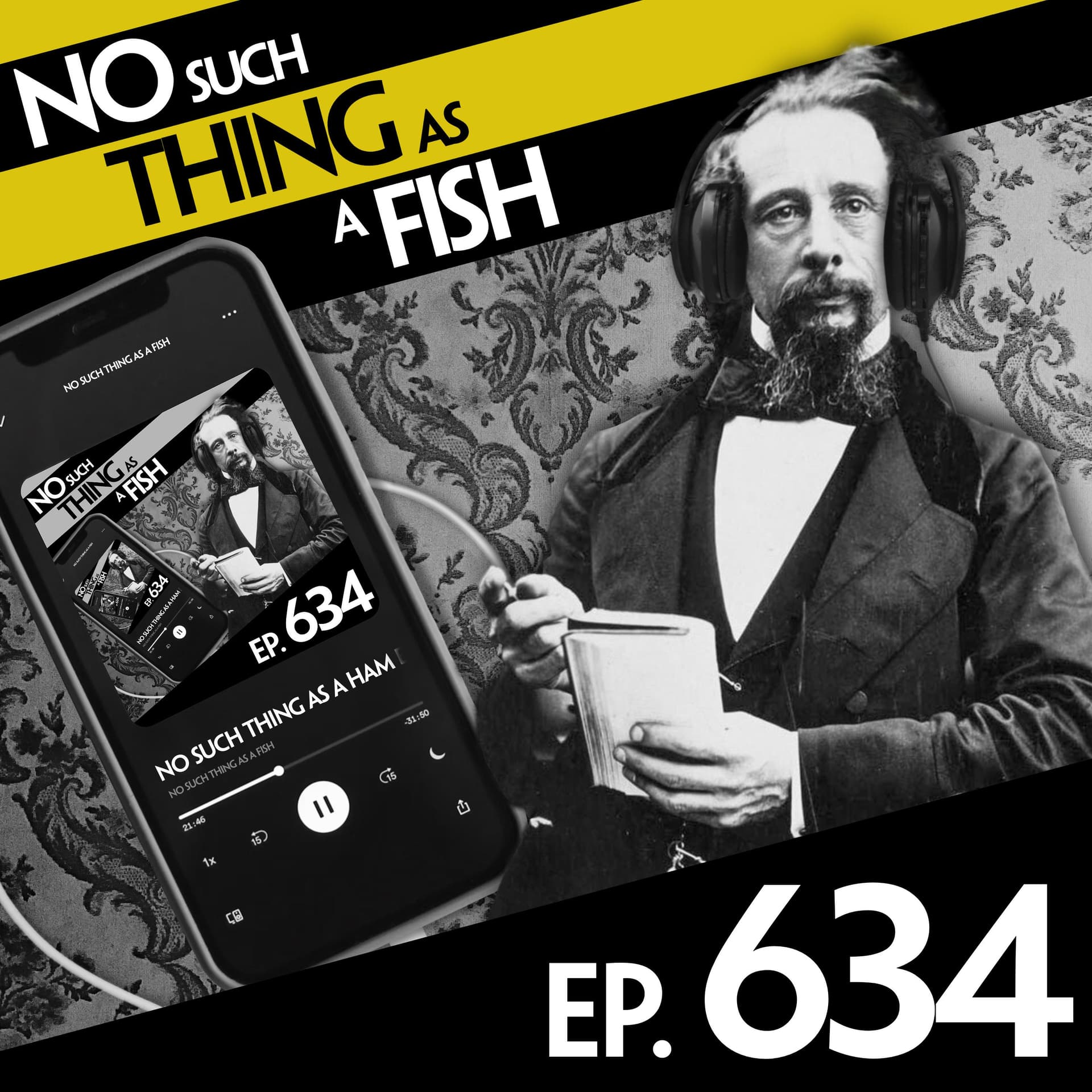
- Dickens readers used paid listeners (snuff shop readings) to get extracts read aloud; Dickens also had later recorded readings via Monica Dickens’ 1950 recording.
Written by AI. May contain mistakes. Listen to the episode to check what was said.
Chapters
Tap a time to open that second in VOWeekly Facts Introduction
2:32 to 2:50
Hosts introduce the format of sharing their favourite facts.
“podcast coming to you from the QI offices in Hoburn.”
The Story of Todd Sloan
2:50 to 4:44
Discussion about Todd Sloan, a famous jockey and his life story.
“Starting with fact number one, and that is Susie.”
Innovations in Jockeying
4:44 to 6:00
Exploration of Todd Sloan's contributions to horse racing techniques.
“I'm more interested in the horse racing side of it.”
Famous People and Their Names
6:00 to 7:10
Discussion of how certain phrases and names became popular in slang.
“So this was in the 1930s that he'd be making the movies.”
The Evolution of Slang
7:10 to 10:20
Exploration of how slang has evolved among different social groups.
“So Todd Sloan is an example of rhyming slang, right?”
Names with Interesting Origins
10:20 to 12:40
Discussion on words and names that have unexpected origins.
“I believe he sent Stanley out to find Livingston.”
Creating a New Word
12:40 to 14:01
Discussion about inventing a new term for words with humorous origins.
“But I would have thought hot dog was, because sausage dog.”
Eponyms and Lexicography
14:01 to 15:49
Discover the concept of eponyms and explore potential book titles.
“the Oberlin, Ohio, there's a place called the Carpool which is named after Robert Carr who's the president of the college Do you remember there was a time in America called Snowflake that was named after Mr.”
The Smarter Your Best Friend's Mum
17:23 to 19:32
Explore the correlation between a child's intelligence and their best friend's mother.
“it's beautiful on with the podcast okay it is time for fact number two and that is james okay my fact this week is that the smarter your best friend's mum is, the smarter you will be.”
Historical Views on Intelligence
19:32 to 21:46
Discuss the evolution of intelligence testing and its implications.
“Yeah, Alfred Binet, depending on your pronunciation.”
Show all 24 chapters
Perceptions of Partner Intelligence
21:46 to 24:01
Examine how people perceive the attractiveness and intelligence of their partners.
“And actually, it's very difficult to sort of have a hard and fast rule as to, you know, you fit this category and you fit this one.”
Marilyn Vos Savant and the Monty Hall Problem
24:01 to 27:37
Learn about Marilyn Vos Savant's contributions to IQ understanding and the Monty Hall problem.
“Much better to do that than underestimate, though, surely.”
Improving IQ Scores
27:37 to 28:01
Discover factors that may influence IQ test performance.
“And in fact, Paul Erdos, the mathematician, Hungarian mathematician, is kind of noted as one of the most prolific in the world.”
The Influence of Incentives on IQ Scores
28:01 to 29:24
Learn how incentives can impact IQ test performances and concentration.
“It's not something you're trying to cheat, though, is it?”
The Great Vowel Shift Explained
29:25 to 31:16
Discover the historical changes in English pronunciation known as the Great Vowel Shift.
“Okay, it is time for fact number three, and that is Andy.”
Regional Accents and Historical Pronunciation
31:17 to 34:28
Explore how regional accents and historical events shaped English pronunciation.
“You know, your wife was once your weave.”
Lost Pronouns and English Evolution
34:29 to 36:52
Understand the evolution of English pronouns and their significance in the language.
“If we'd only not developed the printing press or if we only had had the great vowel shift 200 years before, it would be easy to learn English now.”
Unique Speech Sounds Around the World
36:53 to 40:06
Learn about rare speech sounds and their occurrence in different languages.
“Yeah, I love that because we are Germanic at heart, but then we kind of, you know, as you say, so many influences.”
Victorian Audiobooks and Dickens' Performance
42:12 to 43:52
Explore how Charles Dickens' works were consumed in Victorian England and the impact of his performances.
“OK, it is time for our final fact of the show.”
Dickens' Tour and American Reception
43:53 to 46:52
Discuss the challenges Dickens faced during his tours in America and his views on copyright.
“Yeah, and his performance is that he was warned not to do it by his doctors.”
UK Red and Reading History
46:53 to 49:52
Discover the UK Red database and its documentation of reading history in Britain.
“And Dickens did sue over one, saying this is outrageous.”
Audiobooks vs. Paper Books
49:53 to 52:32
Evaluate the differences between audiobooks and reading physical books, including cognitive effects.
“he completely missed it oh no no offence but depending on the bit of Bleak House it's not always totally easy to completely lose yourself in that one above everything but is that amazing?”
Future of Audiobooks with AI
52:33 to 55:03
Discuss the potential future of audiobooks with AI voice technology and its implications.
“And it's quite funny when they're paired up with certain books.”
Engaging with Listeners: Email and Fact Sharing
56:03 to 56:38
Learn how listeners can contribute to the show by emailing facts.
Transcript
Automatic transcript. May contain errors.0:00Hi everyone, welcome to this week's episode of No Such Thing As A Fish, where we were joined by the lexicographical legend that is Susie Dent. Now, for people in the UK, Susie needs absolutely no introduction. She is a bona fide national treasure. she has been on my tv in my living room every tea time for as long as i can remember in her position as chief wordsmith on channel four's countdown as well of course as eight out of ten cats does countdown the comedy show with jimmy car she has done so much other stuff she's written loads and loads and loads of books they're all fantastic we have read most of them i would say in the QI office.
0:44The best thing you can do really about Susie's books is to just go to your book repository of choice and ask them for Susie Dent books because every single one of them is an absolute banger and you will find so many facts in there. She has also written some novels. She's written one called Guilty by Definition, which is out in the bookshops now. There is also another one upcoming called Death Writ Large, which I dare say you will be able to get on pre-order. Susie is also on tour right now She is going around the UK Telling people loads of facts And loads of amazing anecdotes About words They're going to be absolutely fantastic shows I'm certain about it So if you live in the UK anywhere Then just go to the internet And search for Susie Dentor You could go to nothird.co.uk N-O-T-H-I-R-D.co.uk But I've just tried it If you go to Google Search for Susie Dentor You will find information there one more thing to say of course is to remind you about club fish go to patreon.com slash club fish to find out more about that in the plenty more fish tier you can hear more from susie in our extra long episode but there's so much more stuff on there i'm not going to go into it all now we've said it enough times there is stuff for free there there is stuff for paid it's supporting the podcast we appreciate if you do it we understand if you don't don't worry about it the podcast as we always say will always be free and speaking of said free podcast it's time to get on with it so no more to say apart from on with the podcast
2:32James Harkin:hello and welcome to another episode of no such thing as a fish a weekly podcast coming to you from the QI offices in Hoburn. My name is Dan Schreiber. I'm sitting here with Andrew Hunter-Murray, James Harkin, and Susie Dent. And once again, we have gathered around the microphones with our four favourite facts from the last seven days. And in no particular order, here we go. Starting with fact number one, and that is Susie. My fact is that the original Todd in the phrase, on your Todd, died on his Todd. so this was james foreman sloan but todd hunter was his middle name and the todd bit was a bit of a cruel uh nickname that his father had given him because he was extremely small and he was originally called toad by his father and he was a jockey because of his small stature that was the one thing that he was hugely successful at.
3:30And he was the toast of society in the US. He was an incredibly successful jockey. And then he actually came over to England. He rode for the kings. He rode the king's horses. But then he was accused of insider betting.
3:44James Harkin:Yes. Which he was later exonerated of, actually. But he was effectively cancelled in today's terms. And he wrote a kind of autobiography, which talked about him basically being on his own. But he did very much died a sad death from cirrhosis of the liver. In fact, he was it wasn't just a celebrity jockey for the fact that he was great at his sport. He was quite a socialite as well, wasn't he? He sort of was all over at parties. He was hanging out with the rich and famous. He did a pretty special thing, which is that he opened a bar in France. It was called New York Bar. and he basically bought an existing bar that was in New York, put it in boxes, brought it over, and he opened it up in Paris and it became Harry's Bar, which is the famous bar which Hemingway used to go to.
4:36James Harkin:Ian Fleming has James Bond visit it in one of the novels. It's an iconic bar during World War I. Yeah, I mean, yeah, we all know Harry's Bar. So he was a great jockey. I'm more interested in the horse racing side of it. He said that his biggest trick in horse racing was that he would whisper in the ear of his horses and ask them to run faster. Is that the insider betting? It was rumored that he was giving his horse some substances that make them run faster. In the ear? Not in the ear. Sorry. Usually it happened up the boat. He was pretty close to them because he pioneered the monkey crouch position, didn't he?
5:12Yes, that's the amazing thing. So he would sort of crouch on his horse and ride it. And when he first came to Europe, everyone took the mickey out of him. they were like oh what are you doing this you look like an idiot what were you what were people doing before that sitting on the horse maybe sitting back like a oh like yeah and what's he
5:28James Harkin:doing he's doing it think of think of the classic position in jockey racing where they're leaning on the front of the horse they're sort of crouching forward they're on the neck yeah like imagine if you're cycling in the tour de france you might be crashed okay okay okay i'm on that pretty stunning to invent a new way of riding on a horse it's like yeah yeah i think humans have been doing for 8 ,000 years, but I think I can improve it. I think to be fair, I think he popularized it as opposed to being the very first person to do it. I think a few people were testing it out, but they didn't expect the Todd Sloan to suddenly be monkey crouching everywhere.
6:01James Harkin:He was in movies as well. Was he? Yeah, he was an early Hollywood star. When was he alive? So this was in the 1930s that he'd be making the movies. And he was in a movie called Painting the Town in which he plays a jockey called Todd Sloan. Ah, yeah. Then he was in a movie called Madison Square Garden in which he plays a jockey called Todd Sloan. Then he was in a movie called When Romance Rides. I'll give you a clue from the plot. Lucy Bostle, daughter of a Colorado ranch owner, is led by a dog to his master, Lynn Sloan. Now what do you think he was called in that movie? James. Holly. Yeah. I did not have the name.
6:40James Harkin:Abrageous. And he was in that movie with another actor called Frank Hayes. Does that name ring any bells with you guys yeah do you remember in 1923 there was a jockey who died died halfway through the race yeah and won the race while dead no no it's a different frank hayes but who also died in 1923 what is going on what is going on you two are murder mystery writers what's going on two frank hazes die this is bad plotting i'm gonna say it yeah implausible implausible so So Todd Sloan is an example of rhyming slang, right? Yes. I'm on my Todd Sloan. Oh, on your own. Yes. Sorry. I never put that together.
7:19Yes, that's what I should have said. Yeah, interesting. Because I'm very interested in it. Because you read about rhyming slang, and then it sounds like it's, people say, oh, it's thieves' language from the 19th century. But I don't understand how thieves would gain an advantage and, you know, to help them avoid the police or whatever. I don't understand how saying, use your loaf instead of, use your head, loaf of bread, It's not like he escaped up the apples and pears and the police are actually looking for the green grocers. He must be in here somewhere. Exactly. I don't really get it. It's quite murky.
7:49The best theory that I know is that actually it originated amongst the costamongers of London who sold costards, which were these sort of sour apples. So they're called costamongers. And they would want to talk about their deals in a coded shorthand that other people couldn't understand. But it was also banter. You know, it had this sort of playful element to it. Because actually these guys would be the worst possible people to use different words for apples and pears, wouldn't they? Exactly. Yes, you're right. They would want to use apples and pears. But quite a lot of them do draw on those kind of basic sort of foodstuffs that they sold at the market.
8:23I'm so sorry. We talked about butcher slang, which they still use, don't they? Yes, big Latin in a way. Yeah, and they say words backwards. Yes. Oh, in Australia. Rest Club. I spoke to a couple of butchers and they literally would be sent home to learn stuff for the next day. And they'd talk about their customers. they would um yeah it was it was i loved it it was a very deliberate shorthand we we talked about
8:44James Harkin:this on the show i don't think you were on that episode suzy and i think i got it from you because you wrote this extraordinary book which is all about the current day slang that's being used by every different kind of groupings all the shorthands yeah yeah who had the most um butchers were great um freemasons as you would expect um had quite a few birders had loads um parametric I mean, we all have them, only we're not tuning into other people's because we're so busy lobbing our own at others. I mean, cyclists. Honestly, it would be very hard to say who had the most, but it might well be butchers in terms of sort of keeping it going as a deliberate sort of tribal thing where you exclude others.
9:27And paramedics, I suppose it's useful if you're trying not to say this person's, your arms come off. They need to say to their colleague, this patient's arm has come off. but without alarming the patient. Yes, exactly. Lots of euphemisms. And they also, a group of paramedics told me, which you will have heard, but whenever they were being told off by their bosses, they would just say, yeah, there we are then. And there we are then is an acronym for exactly what they thought of the person telling them. I will be using that. There we are then. But it's interesting you're talking about Todd being a socialite because so was Gordon Bennett who was the son of a newspaper magnate and he was a huge socialite and that was why his name really stuck in the imagination.
10:15And plus it's a handy sidestep for, you know, Gore Blimey.
10:21James Harkin:I believe he sent Stanley out to find Livingston. It was Gordon Bennett. And so many people just don't know that name. They just think it's an exclamation. But there was a Gordon Bennett. There was a Jack the Lad. There was a smart Alec. We think that there was a Mickey Bliss who gave us taking the Mickey, taking the Mickey Blispis. Bob's your uncle? Bob's your uncle was Robert Balfour, who gave his nephew a job in government, even though he wasn't remotely suited for it. I was looking up Jimmy Riddle. I wondered where that came from. A Jimmy Riddle? Yeah. I haven't heard that as a phrase. A piddle.
10:56I'm going for a Jimmy Riddle. Yes. Okay. I don't know if this is the origins of it, but I looked in the newspaper archives for the earliest mention, and in 1866 there was an American song called Jimmy Riddle so it was communion men one and all and learn how to fiddle we'll vote all day and sing all night for god old Jimmy Riddle and it looks like it was related to James Buchanan the president because the rest of the song it's about Martin Van Buren and slavery and all this kind of stuff so it seems I think that it might be from this from James Buchanan but I'm not a lexicographer How do you prove that these are true or false?
11:36It's so hard. And often people think, particularly with the Oxford English Dictionary, that a word's journey is complete and it's locked in. But that's absolutely not the case. So we're always finding new evidence.
11:49James Harkin:Are you, as one of the leading UK people in this area, are you someone that if a new bit of info is found, they sort of come to you subtly before it gets released to the public? Do you get inside? Sometimes I do. But honestly, there are brilliant people out there who are doing the detective work. So there was one lovely discovery, it must have been maybe 10 years ago now, of hot dog and where that came from. And that was from students at Harvard who generally were eating from pretty dodgy vans and generally thought that they were eating dog. And so we were able to kind of date that. So it's things like that, which are wonderful.
12:27But when you say the leading, you know, let's call it, I'm the only one people know. Because of cat dogs. I always feel such an imposter. There are brilliant people. No, no, no. You're on your Todd. I'm on my Todd. I'm on my Todd. But I would have thought hot dog was, because sausage dog. Because you get a sausage dog and you're eating a sausage. Yes. How interesting. Yes. No, it was a poor joke at bad meat. I have a question, Susie. Yes. Is there a word for things? Do you also get people coming up to you saying, I've got some new words, Susie. No, no, no. Yes. Is there a word for things that you think are named the way they are for an ostensibly obvious reason, but actually they're named after a person who's got an amusingly apt name.
13:15So an example that you will know is sideburns, which was named after burn side, but you would think it was the side of the face, right? Yes. That's why it was flipped, because you've got the side. people thought these were your burns. I'm working on a short book of 1 ,000 of these. Wow. Okay. 1 ,001. 1 ,001. Really epic episode. He's got the one. So, for example, you guys haven't heard this one yet. Oh, yeah. I've been doing, I've been torturing these two with these for a really long time. A long time, Susie. Recently, I found out about a New Zealand coffee company, which is called All Press Espresso.
13:51it's named after the co-creator Michael All Press or French Park in Ireland which is named after the French family the Oberlin, Ohio, there's a place called the Carpool which is named after Robert Carr who's the president of the college Do you remember there was a time in America called Snowflake that was named after Mr. Snow and Mr. Flake? Exactly, yes It's that kind of thing There is a word for this I think you need to invent one and that can be the title of your book. Yeah, nice. Have you got a title? Well, at the moment it's called The Book of 1001 Things that you think can name the reason they are for an obvious reason, but actually they're named after someone with an interestingly apt name.
14:33But the editorial phase might whinnow that down a bit. So your books have excellent names, Susie, I have to say. How do you think that one stands up? I think it's novel.
14:44James Harkin:Yeah. It's actually non-fiction. I know, I know, I know. Do you think there's ever been a book that's had more words in the title than the book itself. Yes, does it form a neat acronym, that title? Wanker.
15:00Words are not... That would be autological then. If you could come up with something that fits, then it would be better. Is it an eponym that's named after a person? So they're like eponyms, but they are eponyms, but you don't think they're going to be eponyms. Yeah. Someone emailed the Fish Inbox with one of these, podcast.qr.com, and they suggested homonyms, like homonyms. I think that's not bad. That's quite nice. Yeah. Why are you laughing then? I just can't believe that we've got into this territory. We've got a lexicographer on. I'm not going to talk about my book. I'd like you to write the foreword, Susie, please.
15:34I know you did Brewer's Phrase and Fable. This is going to be as eminent. I'm just trying to think of other eponyms. Now I like it. Thank you. Very nice.
15:43James Harkin:Like it. There's the quote for the first. That's all we needed. Thanks for coming in, Susie. Yeah, yeah. front and center front page stop the podcast stop the podcast hey everyone this week's episode of fish is sponsored by squarespace yes squarespace is the place to go if you want to make a website and who doesn't want to make a website these days i've heard that this internet is a really up-and-coming place to be yes it's a it's an amazing place we're actually setting up a new website at the moment, which is Murray's Film Pitches. These are all of the cop dramas that Andy has been pitching on No Such Thing as a Fish over the years.
16:26James Harkin:And it's going to be amazing because Squarespace allows you to build extraordinary things within the body of your website. It gives you templates, it gives you fonts, it gives you images that you can use. It has a shop so you could buy one of Andy's pictures on paper and read it for yourself. You can donate. There can be funding. There are so many things that you can do. And if you're one of those people who just doesn't know how to make a website use the internet in that way this is the kind of place that just makes it as simple as anything absolutely so if you would like to make yourself another website perhaps it's not about a random word next to the word cop and turning that into a show then you can do so by going to squarespace.com for a free trial and when you're ready to launch if you go to squarespace.com slash fish you can save 10 % off your first purchase of website or domain that's right so save that 10 now go to squarespace.com slash fish and use the offer code fish when you make your purchase okay hear me out oh yeah website designer con it's beautiful on with the podcast
17:36James Harkin:okay it is time for fact number two and that is james okay my fact this week is that the smarter your best friend's mum is, the smarter you will be.
17:49Dan, your best friend's mum must have been a real thickie. I don't have any friends. How rude. I'm so sorry.
17:58James Harkin:I'm telling Debbie, and you will regret that. So this is research. Old research would say that the smarter your family are, the smarter you might be. Now, that might be genetics or it might be just because your family, you know, are richer, for instance, or lots of different reasons. But there have been some new researchers who have looked at something called the National Longitudinal Study of Adolescent Health, which followed students for more than a decade and asked them loads and loads of questions. They did loads of questionnaires. And in part of it, they were asked the name of their best friend.
18:37and so these people could look at the best friend and then look at their family and work out if there was any correlation and they found actually there was a real correlation between the success of the best friend's mum and the success of the child and they don't know why it is there's lots of reasons it could be but they actually they checked it against various different things like you know affluence and and all that kind of stuff and they still reckon that this works out really well and they don't know why it's crazy because your best friend then is modeling their mom so that you were yeah yeah surrounded that they either model them i did a bit of first time research on this oh yeah phoned up my best friend asked about his mom yep she's got two degrees oh
19:21James Harkin:okay yeah so you know there's always exceptions and that lies that is interesting but this is all about like how do you judge people's intelligence really yeah Yeah, Alfred Binet, depending on your pronunciation. He was the sort of proto IQ test creator. He was creating a test that were looking specifically at children to work out what schooling they would need. And they were trying to find less able children via these tests so that they could receive more help academically. Yes, exactly. But he never thought that it should be used in the way that we are currently using it in order to assess what intelligence is.
20:00James Harkin:that sort of just grew out through different evolutions by further scientists and psychologists down the line. He was French, wasn't he? Yeah. He coined the phrase erotic fetishism in 1887. I've never actually heard that phrase before. I've not really heard that as a phrase. It's not a day-to-day phrase that we all come across. You just see it because of the pop-up ads on your Google. And you can't escape it. But yeah, genius. one interesting thing is etymologically women can't have genius and that's because in ancient Rome it was a godlike soul that lay in the foreheads of men only and the female equivalence was called the Iuno so men would have genius and women would have Iunos oh really yeah right isn't that interesting yeah I've just worked on a on a series called Secret Genius yes where there were so many women who were geniuses sorry I'm not saying that women are not teenagers.
21:01I know. The phrase, etymologically speaking, was doing a lot of heavy lifting. No, it's really interesting. What kind of people did you find on your show? Well, primarily we wanted to find people who didn't know how brilliant they were. And all their friends knew that they had something special, but they hadn't been validated at school or they bunked off school because they knew they were different but felt embarrassed by it and that kind of thing. So it was actually really lovely. Were you tracking people via their children's best friends? Was that the method that you used? I think that would be the logical thing now.
21:33That should be one of our criteria when we research. Because there are so many different ways of cutting it. There are creative arts, there are scientific forms of genius, there are engineering forms of... There's so much. And actually, it's very difficult to sort of have a hard and fast rule as to, you know, you fit this category and you fit this one. And emotional intelligence now, I think, has also been really recognised, which is great. Yeah, I think that's interesting because there was a fact that did the rounds a few years ago that said 65 % of Americans thought they were above average in intelligence.
22:06Right. And everyone's like, oh, idiot Americans. But actually, if someone asks you, are you intelligent? And you say, well, yes, I am because I'm emotionally intelligent or because I'm good at puzzles or because I'm good at word games or whatever, which you naturally would think whatever your best thing is, you'd be like, yeah, I am great. Of course, 65 % of people think they are and they probably are. That's a really good point. Yeah. You guys, do you think that your Partners, your wives Are Attractive or intelligent I think Dan's are
22:40Fenella, yeah Absolutely she is
22:42James Harkin:Dan's, that was plural How do you know about my secret wife? Fenella's listening going, well I'm neither of those things So there must be at least two others Yeah, of course Of course you do You married them but um you tend to think you've attracted someone gorgeous like if you're if you're with someone you tend to think your partner's really attractive naturally um but so you we do know there's a there's an effect where people overrate how attractive they think their partners are i'm not saying your partner is overrated in the first few months or this is just this is i think this is in general okay i think you're just asking basically of course because you're with them you will say well i think that person's you know really gorgeous whereas maybe a neutral jury of their peers might say they're reasonably good looking.
Read the full transcript
23:26This is so dangerous. I know, I'm listening. I can hear listeners' marriages cracking up all over the place. The trick is not to ask the people at the wedding what they think. Absolutely. Our survey said. Well, the fascinating thing is that people also overestimate their partner's IQs
23:45James Harkin:by a thumping amount. Because surely you think, well, they're smart because they picked me. Right. Right. It's between 36 and 38 IQ points that people overrate their partner's intelligence. What it turns out is that your partner is a hideous moron. I'm so sorry. That's fascinating. Much better to do that than underestimate, though, surely. It'd be awful if you just were completely disrespectful. Yeah, absolutely. You know, you're with them. You love them. You think they're terrific. You think they're attractive and intelligent. I think that's really good. There's another test which is called Mega It's the Mega test which is like an IQ test That's Mega, Stoney and Grey together And There was someone who was a very high scorer on it And in fact there was a record In the Guinness World Records up until 1990 for the highest IQ That someone has ever got And it was a woman called Marilyn Vos Savant That is wonderful.
24:47Yeah. She's totally bearing out her name. I read about her. Yeah. She's stunning. She's stunning. God, I'm sorry. I'm smart. I'm so sorry. And you married her.
25:01She, in 1985, she was 10 years old and she was recorded as having answered every single question right on an adult test. Wow. Now, according to the way IQ is done, which is where it's basically your IQ is, it's like a version of mental age. I mean, there are all sorts of reasons But it's dependent on your actual age, isn't it? It's dependent on your actual age. So if you're, let me get this right, if you're 10, but you get the same as an average 15-year-old, supposedly you have an IQ of 150. Like it's, it's roughly like that. So if I'm 47 and I get the same as someone who's 70 years old, do I get 150 as well?
25:36I'm not sure when the baseline age is. That's a really good point. That's a really good point. But she was, at the age of 10, she did this test, which apparently gave her an IQ of 228. She became extremely famous. And for her work, she spent more than 20 years as an agony aunt. Gosh, oh. Answering people's dilemmas. Emotional intelligence, you see.
25:56James Harkin:Ask Marilyn, it was called. And there was a big moment in it where she popularised what is quite a famous mathematical problem now, which is the Monty Hall problem. Oh, really? Yeah, so the Monty Hall problem. James, you'll probably explain it better. But let's say you're on a game show, which I believe is why it's connected to it. Monty Hall was the host of the show. and you had three doors and you had to pick one that you think the treasure is behind or the prize that you're going to get and then behind the two other doors are say goats or something so you select your door and then monty opens one of the other two doors and shows a goat behind it it says okay there's only one two options now do you want to stick with your choice or do you want to change it the problem suggests that you should then change it because your odds are higher almost everyone says i should stick or they say it doesn't matter it's 50 50 now why are the odds higher sorry why are the odds higher then if you well one way of looking at it is if there's a hundred doors and you choose one and then he removes all of them apart from the last two so he's taken out 98 doors you now know that it's either in your door or the other one but most of the time when they removed 98 doors yours would have been one of them but in this case it wasn't So there's a decent chance that yours is empty.
27:10You're going from odds of one in three to odds of one in two, and you're re-choosing. You're now going into odds of two in three, actually. Oh, of course, of course. But it's very counterintuitive. It breaks everyone's brain, honestly.
27:24James Harkin:It's crazy. And it did at the time because she popularized this idea. I think she might, I want to say she came up with it, but I'm not 100%. I don't know. But 10 ,000 people wrote in saying, no, that's not the case, including a thousand, nearly a thousand, who had PhDs. And in fact, Paul Erdos, the mathematician, Hungarian mathematician, is kind of noted as one of the most prolific in the world. He refused to believe it and was only convinced when a computer simulation showed that her predictions were correct. Mystical almost, isn't it? Yeah. Do you know a quick way to score higher on your IQ test if you do one?
28:01James Harkin:It's not something you're trying to cheat, though, is it? But what's interesting is they have noticed that the same person doing an IQ test actually can get differing scores based on a certain thing. So it must be something physical you can do in the room to quickly improve the blood flow of your brain, for example. Like shaking your head really fast. That's okay. Run into the wall. Run into the wall and bang your head into the wall. Mr. Harkin and Mr. Murray were asked to leave the IQ seminar. Put pencils up your nose. Yeah. What is it? It's not that. No. Is it just practice? like because those puzzles i tend to be able to get a lot of those puzzles but i don't think it's because i'm smart i think it's because i've seen the puzzles before yeah no no it's not that and this is some research that was done by friend of the podcast angela duckworth who appeared on the 20 hour marathon that we did she was over in america they found so if i was let's say my oldest son wilf if he was about to do it if just before i said i'm going to pay you 20 dollars if you do well on this.
28:57Oh, incentivize.
28:58James Harkin:The money incentive will make him do better in the IQ test. It will change his concentration. Did you try this on your show, Suzy? We'll bug you 20 quid. We just offered them a hug. But you said before, I think, on this show that that's how you get your kids to do anything, like brush their teeth, you give them 20 quid. I'm really broke. Please subscribe to Clubfish on Patreon, everyone.
29:25James Harkin:Okay, it is time for fact number three, and that is Andy. My fact is, by the year 1600, everyone's tongues were slightly higher in their mouths than in the year 1400, and nobody knows why. I don't know what you mean. Not that high. Split the difference. Oh, so it's on that, because when you said this, I thought it was like in the palate, but it's not that. Well, okay, this is a thing that is one of the most bizarre elements of the English language, and it's really well established that it happened in our language. Other languages around the world may definitely have had it. But it's a thing that started in roughly the 15th century and lasted for roughly 200 years, where everyone started saying a particular kind of letter, long vowels.
30:11So that's things like the A in cake, rather than the O in hot. That's a short vowel. yeah but so if it sounds like the vowel a cake it's a long vowel yeah yeah which by the way is impossible to teach to kids like i'm teaching my daughter how to read right now and she keeps reading the words slightly wrong i'm like no that it is actually an i this is exactly if you're teaching anyone to read like a child you have to in english you have to keep saying no that's just one of these funny things because you can't talk about the great vowel shift which is what this is cool but basically middle english you would hold vowels for a long time and then people started moving their tongues slightly differently while saying these long vowels and it caught on and there is not a guaranteed explanation of why this happened there are lots of theories but it's why you have to say oh yes cough doesn't look at all like dough and and it's why chaucer doesn't rhyme to us if you read the canterbury tales you think this guy was a moron actually a hideous moron Actually He was probably Mrs Charles is like Well actually for me He was a beautiful genius And you know All of these words Have changed their pronunciations So you know Sheep What we would call a sheep They would call a shape And you know your wife I think this settles by the way The scone versus scone debate Because I think we should Just call them scones And that would be fine Absolutely It sounds like you're from Yorkshire Though when you say Yeah Scone It might Yeah Well probably regionally it's a bit different.
31:38You know, your wife was once your weave. But is this the same as the wife of Bath being the wife of Bath? Or is that a slightly different thing? I think that's different. Yes, that is more regional. And the wife weave, it just meant woman, by the way. It wasn't a wife.
31:55James Harkin:There's old spelling and new spelling. Does the old spelling reflect how it was being pronounced? As in, we obviously don't have recordings from the 1500s, so that's how we know it was being pronounced differently. This is the whole problem. spelling hasn't changed and the pronunciation did we're still speaking spelling and sound divorce centuries ago well we know because we can interpret from rhymes quite a lot and we literally are just sort of sifting through evidence to try and work out how they were pronounced at the time because as you say we didn't have audio but did no one at the time think to do a phonetic were there books that were teaching they were dying of plague down they were busy and that sounded ruder than i meant it to apologies to the middle ages um when dang goes back in time he's like come on guys you just need to think of a phonetic but even then they didn't have the international phonetic alphabet or anything so even then we wouldn't have been able to interpret they if they could have said you know cat as in cart or something yeah but we wouldn't know how cart was pronounced at this time so a phonetic glossary wouldn't wouldn't exist wouldn't know but poetry poetry is massive for it yeah okay what so you're telling me that right now the theory we've gone for is that our tongues were in a different bit of our mouth they were they were why well one theory is that the black death was just shuffling everyone around and people were migrating more towards london and londoners were uh more fashionable and more elite or that the french were more elite so we copied them i mean there are loads yeah there's um it could be the thing you can say in any history essay the growing middle class at any point in the last 2000 years because actually there was a burden in the middle class at the time and this changed how things were said you know, possible It could be due to speaking French or avoiding speaking French I've seen both of those theories which is basically either because the aristocracy were switching from French to English and the middle class were kind of speaking French a little bit but speaking it wrong, a bit like the guy from Aloo I kind of think Good mooning or that there was anti-French sentiment because we were at war with them quite a lot.
34:04And there was a lot of that going on. Yeah. And the printing press kind of came along mid-shift. So the printing press did more than anything to sort of solidify spelling, or not solidify it, but to standardise spelling, thanks to Caxton, because before that it was completely chaotic. But the sound changes kept happening. So we are still typing as they were in the 15th century, but we sound much later. Isn't that crazy? If we'd only not developed the printing press or if we only had had the great vowel shift 200 years before,
34:38James Harkin:it would be easy to learn English now. And there wouldn't be all these mad exceptions where you just say, I'm sorry, you're just going to have to remember that for the rest of your life, that it's a bit different, that one. It's so crazy. But now, because spelling has been pretty well pinned and isn't changing, I guess it's not changing as fast as it would have done, you know, a thousand years ago because things were sliding a little over the place, but we'll never spell handbag, handbag, which is what people say. Well, we might do. I hope so. Yeah. Bring your handbag. A handbag. A handbag? That was what the confusion was in the play.
35:16James Harkin:No one talks about that. So weirdly, by researching this fact, I've sort of developed a personal theory about my accent because I do have a weird accent. um i so i was born and raised in hong kong lived in australia and then moved here and i put r's i have a forced r in a lot of stuff so listeners of the show know that i say covent garden uh as opposed to covent garden covent covent i put an r right at the end born instead of hoban or chicago i put in there and what i realized was when i moved to australia i had a very american accent and when i got there you went to an international school in hong kong yeah that's right and in australia i went to a very um just down the line aussie school and i was worried about the accent but the first day a girl who i found very pretty called penny said love your accent and i thought oh okay cool i'm gonna keep this and i think i made an active effort to not lose my accent at a period where i would have been losing it and i think the forced r is what that was i think penny's fault yes yes it's the attractive r not the intrusive r well you think it's an attractive but yeah I think that's probably it maybe how accents develop as you're saying a reluctance to not be French or to sound cooler and sound like a Londoner how interesting on a little other element of middle English there's a brilliant piece on, I don't know why it was on BBC Future because it's about language a thousand years ago but anyway it's a brilliant piece about how a thousand years ago everyone had uh more pronouns than they do today because english had all these pronouns that we just have have naturally sanded off the language so uh there was wit which we have the word we meaning me and one person or more than one person we can be two people three people yeah yeah anyone wit is specifically we too okay so it's a word yeah and it's a you know there are poems where it's it's we too and it's sort of used as a romantic thing you know um we too we too exactly if you're with an owl
37:26um and if there's our as well but our can be multiple people or it can be two people and you would have anchor for mine and one other person's so there were all these pronouns that we used to have so in the old days if you asked someone what are your pronouns you'd be there a while because you know there's loads more um yeah just find that so interesting or git for you too oh like that that's so interesting because english i think used to have or like in a real real long time ago we had more cases right that we've just lost over the years yeah so like in german or russian you have all these different genitives and datives and all that and you can still see some of them especially in short words like the and they and yeah all that kind of stuff they've still kind of hung around a little bit.
38:11Yeah, I love that because we are Germanic at heart, but then we kind of, you know, as you say, so many influences.
38:17James Harkin:Do you speak more than one language, Susie? I speak German. Okay. So German was my first love and French and a tiny bit of Spanish, but don't test me. A tiny bit of Finnish because I was an au pair in Granville. Finnish ambassador for a while. I can talk about going to buy an ice cream, but that's about it. Finnish must be the most difficult language to learn, surely. I've heard that Is it kitosh in Finnish means thank you Thank you I was taught you basically say mosquitoes With a soft ending And then lose the moss and that's how you say it Right And if you have to learn that for every single word in the language It's going to take you a long time We did a fact quite a long time ago On the show which was I think it was either Icelandic or Finnish Where there was a translator of Agatha Christie novels Who spent over a decade trying to work out how to translate just two words in this one novel because it was the giveaway.
39:15James Harkin:It was the reveal. And just couldn't work out to do it. Yes, it took over a decade. You don't have butlers in Iceland.
39:24We talked about the phonetic alphabet earlier. The most recent consonant added to the international phonetic alphabet is the labial flap. Oh, crumbs. It looks like a V with a little tail at the top of it. I know what it looks like, James.
39:44Grow up. It's a very rare speech sound produced by quickly drawing the lower lip back behind the upper teeth and then releasing it forward. And it's found in some sub-Saharan languages. Wow. But the rarest one I could find, I think this is the rarest, I saw this on TikTok with someone called Human1011, and they talked about the voiceless labial vilar implosive, which is like pronouncing a K and a P at the same time, but instead of putting it out of your mouth, you suck it in. I couldn't do it. Well, he did. But it's in a single dialect of a single language of Igbo, which you get in Nigeria. Wow.
40:27But yeah, it's only used in that one tiny bit, but it's there. Cool. Very cool. Yeah. There must be more out there that we haven't discovered. I'll be honest, it was mostly about just saying labial flap. Absolutely.
40:43James Harkin:Stop the podcast. Stop the podcast. Hey, everyone. This week's episode of Phish is sponsored by NordVPN. Absolutely. VPNs, very important things in the 2026 world, especially for me as I have just been to China and they have the great Chinese firewall, which means it's very difficult to go on any website. If you want to go on the BBC and see how Premier League football results are going, it's impossible in China unless you have a VPN. And so I got myself a NordVPN when I traveled out there and I managed to see that West Ham and Spurs are really struggling. Hooray! That's amazing. I mean, this is the extraordinary thing.
41:25James Harkin:A VPN does allow you access into 137 countries that you can realign your VPN to so that your computer thinks you're in that country. And if you're on things like Netflix, for example, it means you can access all the movies that are blocked off from your country and now you can sit and watch them. So it's a really useful thing to get. And if you yourself want to get involved with that, we've got good news. We've got a little plan for you here. NordVPN are offering a two-year plan plus four months extra. And all you need to do is go to nordvpn.com slash fish. Absolutely. NordVPN, that's N-O-R-D-V-P-N dot com slash fish.
42:02And it's risk free because Nord give a 30 day money back guarantee on their VPN plans. So go there now. On with the podcast. On with the show.
42:20James Harkin:OK, it is time for our final fact of the show. And that is my fact. My fact this week is that many of Charles Dickens' readers in Victorian England consumed his works as audiobooks. This is a fun little detail from a book by Amy Cruz called The Victorians and Their Books. And there's an extract in it, an account from the time of when Charles Dickens was over in Paris and his son was sick and he was staying in the lodgings. And I believe that the boy's grandmother was looking after him. And so she said to the carer of the house, Mr. Dickens is coming. And the housekeeper was believed to have been illiterate, but said, oh, Mr.
42:59James Harkin:Dickens, I love his work. She thought, how do you read? And so she explained that there is a little snuff shop. And the man who works there would invite people in on the first Monday of every month. And he received a little payment. and in return they got some tea, but they also were read extracts from the latest bit of a Charles Dickens novel. So effectively, if you couldn't read, you might pay someone to be the audiobook for you and you get groups of people to do that. Even if you could read, I can imagine that would be quite nice. I'm just on reading your story. Yeah. It was a big thing, wasn't it?
43:35I mean, in the earlier 19th century, Jane Austen's time, reading to your family was one of the things that you do. It was the thing after dinner, wasn't it? Yeah, poetry. But Dickens was a huge performer of his own works, wasn't he? I mean, they said that it really damaged his health in the end. I suppose they killed him. Yeah. Did it? Yeah. He helped kill him. To Bill Sykes and things, he gave so much sort of of himself. Oh, wow. Yeah, and his performance is that he was warned not to do it by his doctors. How interesting.
44:01James Harkin:Because there was a train crash that occurred not long before he died where he got very ill. So he was still performing afterwards, was he? He wasn't hurt himself, I think, but it was incredibly shocking to be in a train crash. Yeah, I think psychologically. Yeah. we said before that like before his shows he would drink a lot of champagne yes oh really yes yeah so that might have had an effect we don't know you know maybe all the raw eggs he also had before yeah it could be um so this is interesting audiobooks didn't exist yeah but we have a recording of a christmas carol exactly as dickens would have read it and in fact read by dickens but dickens died with no recordings of his voice being made a i a i that's it say i yeah it's not is it that's the new robo dickens uh every household will have one in 10 years time it's really exciting uh no um is it uh is it a descendant who just looks very similar to dickens and it's that it's so annoying that dan's got it It was read by A.
45:04Dickens, but not Hugh Dickens. It was read by Monica Dickens, who was his great-granddaughter, herself a novelist. She was. She wrote 40 novels. Oh, my God, I picked up a book by her today. Yeah, yeah, they're really good. She had listened to her grandfather, i.e. Charles Dickens' son, reading A Christmas Carol lots. And he had a version of A Christmas Carol which had all of the original Dickens annotations in it, which words to stress, which words to leave out, which way to lean this and that. So it was properly annotated. And she, in 1950, recorded that version of A Christmas Carol. So weirdly, through three generations, we have, four generations, we have the Dickens-approved version of A Christmas Carol.
45:45How amazing. Have you seen The Great Christmas Feast, which is a brilliant performance that goes on every Christmas where they recreate Dickens reading A Christmas Feast to all of you who sit around in Dickensian clothes eating great Dickensian food. It's brilliant. Oh, I love that. experience um but he definitely would have a patreon wouldn't he he was a one-man podcaster really he really was not that there's anything wrong with having a patreon or being a podcaster
46:12James Harkin:yeah yeah yeah what are you trying to say well yeah he like did taur it a lot didn't he and he went to america even and taurred it around there and um apparently didn't really like it very much uh he complained to his friends that he could do nothing that he wanted to do go nowhere i want to go and see nothing that i want to see if i turn into the streets i am followed by a multitude because he was so famous we've been on tour though it's like that it's just like that you know oh yeah couldn't wander through times square without being mobbed but when he was in america he was there he did his show and stuff but he also wanted to put the idea of an international copyright forward because at the time everyone was copying his works in america and he wasn't getting any of the cash for it and so he went around saying okay i'm going to do my bit but then also you guys should pay me for your books it's not really fair and the press the american press really just did not like him and they said he was mercenary they said he was only coming to america for monetary gain all this kind of stuff and then in his next novel that he wrote martin chuzzlewit he martin chuzzlewit goes to america and says this place is a shit hole and they really he really fell out with the Americans wow it's really interesting it's really interesting the copying and the plagiarism I think we might have mentioned before that Dickens was pirated a lot because he released them bit by bit people could piggyback on that and then overtake him so people plagiarists would pump out works like Oliver Twist Martin Guzzlewit or whatever and there was one particular press baron called Edward Lloyd who hired 10 or 50 writers to just churn these things out, get them on the streets before Dickens has released his next chapter or whatever it is.
47:57And Dickens did sue over one, saying this is outrageous. But the judge in the case, I love this, who was called Sir Lancelot Shadwell. Yes, please. Yes, please. Said these are so bad that they don't meet the test of plagiarism or pirating. No one could possibly be fooled. Oh, really? By Nicholas Nickelberry or whatever. it is not good enough to be plagiarism yeah how interesting would that still work if I write a really awful version of Game of Thrones and I can get away with it? I think there are laws about parody and there are tests do you remember the moron in a hurry? oh the man on the omnibus or something yeah like if a moron in a hurry can still tell the difference between your work and the original then it's fine that's it but if they would be fooled then it might be a problem you leave my wife out of this sorry
48:47James Harkin:Do any of you know about UK Red? UK Red. You heard about this, Susie? This is an open access database housed at Open University, and it contains 30 ,000 easily searchable records documenting the history of reading in Britain from 1450 to 1945. And you can put in someone like Charles Dickens, and it will show you a track record in time of who has been reading, let's say in this case, Charles Dickens. I found this in an article by someone called Mary Hammond. So, for example, it shows Victorian professional criminals when they were reading books in prison. There's an example of the novelist in the 1850s, Elizabeth Gaskell, reading a little bit of Little Dorrit over the shoulder of a passenger on a bus and being frustrated that she had to get off before her companion turned the page.
49:36James Harkin:There was A.A. Milne, who read Oliver Twist at the age of nine and it gave him nightmares. a man called Newman Flower who in 1901 rose at 4am to watch the funeral procession of Queen Victoria pass by but wild away the hours reading Bleak House but got so engrossed in the book he completely missed it oh no no offence but depending on the bit of Bleak House it's not always totally easy to completely lose yourself in that one above everything but is that amazing? UK Red I'd highly recommend checking it out. That's so cool. I find it quite interesting because there is a sort of silent shame about audiobooks these days, isn't there?
50:17You just sort of said, I've read it technically. But it's a deep Victorian tradition. I think this is brilliant. I think we should be proud. Do you think if you read the audiobook, you get as much out of it than if you read the actual words? If you listen to the audiobook, book um sometimes i would say it depends it depends so much on the narrator doesn't i think science pretty much agrees with sometimes it depends yeah because i found a few studies there was one in 2016 where they played sections of a book to some people and then the other ones read it and then they did a quiz and actually everyone kind of took in the same amount of information and then there's one slightly more recent where they um did the same thing but this time they asked them trick questions um so it's like the kind of trick question is like how many of each animal did moses take on the ark and the answer is two moses it wasn't moses yeah so it's that kind of question so they asked the people that kind of question and they found that the people who had read the book were less likely to be tricked so it's almost like you still take it in but you don't process it quite as much that's what they said often you're listening to an audio book while doing something else whereas reading a paper book you you can't be driving a bus for example you know so i think that probably makes a bit of a difference in the real world yeah i wonder if the brain also provides a little bit of white noise when you're reading because you can sort of pause or whatever because there's also really interesting research that um involved two recordings being played to an audience one with all the white noise the ums the r's the fillers and things kept in and another one where it was entirely stripped out and the one where it was kept in was was remembered uh best because it gives you a bit of time to absorb as long as it's not over the top i tend to allow one uh per sentence really yeah that's probably enough we could double our numbers if you yeah there's a sweet spot i think yeah yeah you know like in love island just drives everyone mad isn't it so i think too many and then it the reverse is true
52:28James Harkin:but yeah interestingly anytime we read this is for most of us we are listening to the audiobook as we're doing it i think that's sub vocalization it's a thing that happens where most of us when we're reading the words in our head we can hear our voice yeah reading it and in many cases the muscles uh in the in your throat that would be moved to make sound are very subtly making those movements as well yeah some people mouth quite obviously people mouth and so apparently you also can only go at the speed at which you read um but you can read faster and slower yeah you can but you can't break any kind of you can't trick your brain into going faster yeah um how interesting and there was all this debate about whether people in in olden times had the capacity to read silently yeah because there was one guy wasn't there from like the ninth century and someone wrote amazingly he can read without talking yeah yeah and that was taken as evidence that actually no one could do that before but i'm not sure i don't know i think there's still debate going on about that or it's a bit it was a bit of a dubious one it's quite fun though i was um i was thinking about uh audible and how you get uh any kind of book you want now and you can put an actor's name in and you can get whatever they've read so there are some people who have quite iconic voices.
53:44James Harkin:And it's quite funny when they're paired up with certain books. So, for example, you can read a book called The Savior is Born, which is the story of the Nativity, from the voice of God, Morgan Freeman. Oh. Yeah. You can be read the Bible by Mufasa, which is James Earl Jones. Or arguably, Darth Vader's reading it to you. It's quite fun, these kind of iconic voices. But they strip out all the... Yeah. One per sentence. Yeah. But in the future, we'll be able to just pick a voice, pick a text and match them, won't we? Yes. Which is quite scary. James Earl Jones is a good example because he's given over the rights to his voice for any future Star Wars so they can now AI Darth Vader into...
54:26James Harkin:I mean, you could do it now. Not legally, I reckon. Like pretty much, you probably wouldn't take much to take Susie's voice and then do an audiobook just with AI, I reckon. Yeah. Melania Trump's memoir in 2024. I'm not doing that one. she announced that it would be the future of publishing because it was an AI voice that was doing her audio book. Everyone else refused. Well, one of the main companies in the field, Eleven Labs, said that the product lacked the nuanced emotional expression of an actual person. Sorry, are we talking about the book or the readings?
55:11James Harkin:Okay, that's it. That is all of our facts. Thank you so much for listening. If you'd like to get in contact with any of us about the things that we have said over the course of this podcast, we can all be found online. I'm on Instagram on at Shriverland. James? I'm on TikTok. Nurses thing is James Harkin. Andy? My Insta's Andrew Hunter M. Yep. And Susie, where do we find you? Instagram at Susie Dent. Nice. Cool. And yeah, Susie, you're on tour at the moment, right? Yes. This is called Word Perfect. And it is just a one-woman show where I just talk words. words uh we have a laugh i hope uh some silly videos sort of facts that you guys hopefully would love and uh i have a q a section which is my favorite bit so there's a sort of word surgery where people can ask me anything they want within reason and yeah do follow suzy on instagram and if you want to write about any of the stuff we've spoken about in this episode generally to us you can do that by emailing podcast at qi.com all the emails make their way to andy he cherry picks the best of them and he separates them into two groups the first group is the facts we love picking the facts out for our new monday show that we've been doing called little fish it's a bonus episode we put down our facts we pick up yours and we read the best of them out and then we also use the second pile as part of drop us a line which is our mailbag show and that's a sort of private secret members club uh that is on patreon it's called club fish there's lots of tears lots of rewards lots of interesting things that you can check out there if you're a fan of the show so do go there and go where Dan?
56:41James Harkin:Patreon.com slash clubfish I love it It's great It's great as a web domain and you should enjoy it too Anyway, you can otherwise just come back here because we're going to be back with another episode next week and we will see you then Goodbye
From the publisher
Susie Dent joins Dan, James and Andy to discuss mums, tongues, Tods and Boz.
Visit nosuchthingasafish.com for news about live shows, merchandise and more episodes.
Join Club Fish for ad-free episodes and exclusive bonus content at apple.co/nosuchthingasafish or nosuchthingasafish.com/patreon
Get NordVPN two-year plan + four months extra ➼ https://nordvpn.com/fish
It’s risk-free with Nord’s 30-day money-back guarantee.