In short
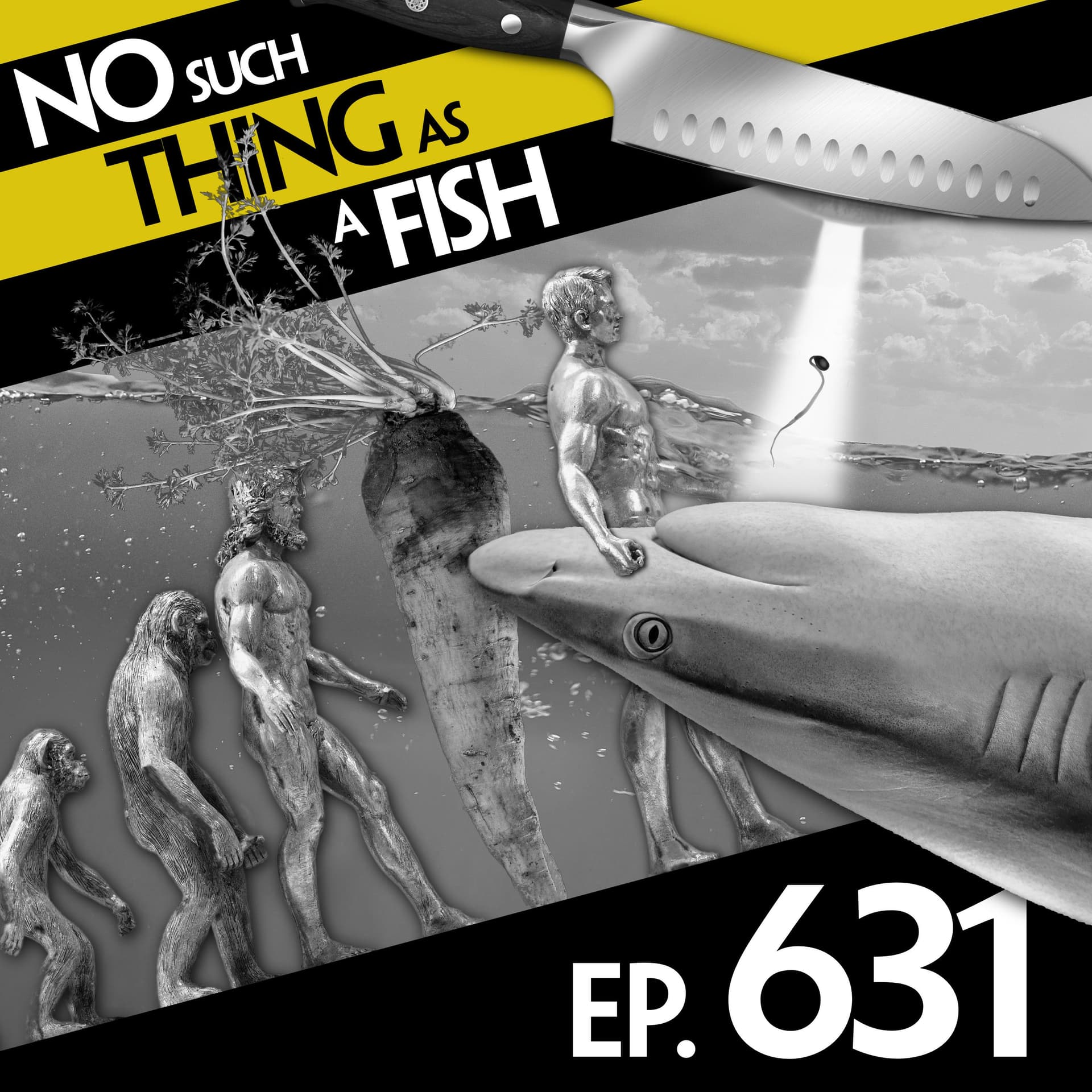
Humans’ endurance-running evolution; running techniques (breathing rhythms, “jeffing,” smiling/positive self-talk); ultramarathon effects (brain shrink/myelin, dehydration/urine color); barefoot vs shoe vs “naked” running; celebrity chef knife lore (Anthony Bourdain’s meteorite knife, artillery-shell knives, metal cutlery history); shark biology and field methods (tonic immobility for collecting leopard shark semen, shark senses, diving experiences, shark sperm storage, bonnethead shark diet); Eddie “the Eagle” Edwards and his helmet snapping off at the 1988 Olympics.
Guests
Zoe Lyons, comedian and runner; co-hosts Dan Schreiber, James Harkin, Andrew Hunter-Murray (No Such Thing as a Fish regulars).
Key claims
Endurance hunting drove long-distance running via sweating, long tendons/legs, and upright breathing independence; ultramarathons can cause brain changes and severe dehydration; shark tonic immobility can be induced by flipping sharks; Bourdain’s meteorite knife sold for $250k; Eddie the Eagle’s helmet was tied on with string and came off mid-jump.
Notable examples
London-to-Brighton 100km run; “cracking buttocks” anatomy joke; marathon urine samples; Camille Heron’s 560 miles/6 days and Wikipedia-editing scandal; Lululemon support loss; bonnethead shark seagrass “stomach lining” theory; oceanic white tip encounter in Egypt.
Written by AI. May contain mistakes. Listen to the episode to check what was said.
Chapters
Tap a time to open that second in VOFacts from the Last Week
2:34 to 2:56
The hosts share their favorite facts from the past week.
“I am sitting here with James Harkin, Andrew Hunter-Murray, and Zoe Lyons.”
Humans as Endurance Runners
2:56 to 5:10
Explore how humans have evolved to run long distances as hunters.
“And I've brought a lovely little fact along for you this week.”
Zoe's Running Journey
5:10 to 6:56
Zoe shares her experiences and challenges in long-distance running.
“We can just get it radiated and chuck it away.”
Consequences of Ultramarathons
6:56 to 8:55
Discuss the physical and mental effects of running ultramarathons.
“You try and breathe when you're stepping.”
Running Techniques and Tips
8:55 to 11:21
Learn about various running techniques including jeffing and breathing.
“And I told my brother this as we set off.”
The Power of Positive Thinking in Running
11:21 to 14:00
Find out how positive mental strategies can enhance your running.
“Speaking of bouncy, some people think that the obvious next step from barefoot running is completely naked running.”
Running Economics: Smiling While Jogging
14:00 to 16:49
Learn how smiling while running can impact your performance and mental state.
“I think I'm smiling, but I'm clearly not.”
The Mystery of Anthony Bourdain's Knife
16:50 to 19:11
Discover the fascinating story behind Anthony Bourdain's unique knife made from meteorite.
“My fact this week is that celebrity chef Anthony Bourdain used to chop his onions with a knife from outer space.”
The Intriguing Origins of Knives from Warfare
19:12 to 21:48
Explore how old artillery shells are transformed into high-quality knives in Kinmen.
“Like to your when you feel it, are you like, well, that doesn't feel very worldly.”
Aluminium Cutlery: A Historical Perspective
21:49 to 23:40
Understand the historical significance of aluminium cutlery and its value compared to gold.
“And Napoleon III, he gave his most honoured guests aluminium cutlery.”
Show all 24 chapters
The Culinary Legacy of Anthony Bourdain
23:41 to 26:19
Delve into the life and impact of Anthony Bourdain as a chef and author.
“but he was this sort of rock and roll chef.”
The Art of Carving: A Culinary Tradition
26:20 to 28:00
Learn about the ancient tradition of meat carving and how it has evolved over time.
“And basically, lots of houses used to have their own professional carvers.”
The Art of Carving Meat in Mid-Air
28:00 to 29:00
Learn about the historical technique of carving meat mid-air and its cultural significance.
“It's the sort of place where you can get all the meats, isn't it?”
Zoe's Culinary Adventures on MasterChef
29:00 to 30:40
Hear Zoe's entertaining experiences and mishaps from her time on MasterChef.
Shark Semen 101: The Tonic Immobility Technique
30:40 to 33:10
Discover the fascinating process of collecting shark semen and the science behind tonic immobility.
“Okay it is time for fact number three That is James Okay, my fact this week is that the steps to get semen from a shark are, number one, get the shark to lie on its back, and number two, remove the semen from the shark.”
Diving with Sharks: Personal Experiences and Insights
33:10 to 35:30
Zoe shares her thrilling experiences of diving with various shark species and what she learned from them.
“Because they've got so many sensors, haven't they, on the front of their noses.”
Unique Shark Facts and Myths
35:30 to 38:00
Explore intriguing facts about sharks, including their reproductive methods and dietary habits.
“Because going right behind us, obviously just looking at all of our backsides as we were facing the other way, it was an enormous tiger shark.”
Dangerous Encounters and Shark Safety Tips
38:00 to 42:00
Learn about the risks of encountering sharks and essential safety tips for divers.
“Well, it's named for the fact that it basically looks like a goblin.”
Eric Norrie's Wild Experiences
42:00 to 44:31
Learn about Eric Norrie's bizarre and dangerous encounters while traveling.
“And Eric Norrie says it is the scariest thing that you can go through.”
Semen Extraction from Sharks
44:31 to 47:18
Discover the unconventional methods of extracting shark semen.
“Okay, it is time for our final fact of the show, and that is Andy.”
Eddie the Eagle's Unlikely Journey
47:18 to 51:29
Explore the story of Eddie the Eagle's struggles and triumphs in ski jumping.
“Like New Zealand are in the Soccer World Cup and they're ranked 85 in the world.”
The Challenges of Ski Jumping
51:29 to 54:51
Learn about the risks and techniques involved in ski jumping.
“And I just thought, what an incredible, what an incredible achievement.”
Controversies in Ski Sports
54:51 to 56:03
Delve into recent scandals surrounding ski sports and performance enhancement.
“When was the last time you jumped 10 feet down?”
The Impact of Costume Design on Performance
56:03 to 56:54
Learn how minute adjustments in sports costumes can affect athlete performance.
“Some research has been done which concluded a single extra centimetre at the crotch could mean you got four metres further.”
Transcript
Automatic transcript. May contain errors.0:01James Harkin:Spring showers bring epic off-road adventures. So bring on the mud and bring on the spring at the Honda Spring Event. Honda vehicles are built for exploring. With the rugged Honda Pilot, Ridgeline, CR-V, and Passport, the road might stop, but you're not done. All from the 2025 Kelley Blue Book Best Value Brand. For great deals, visit your local Chicagoland and Northwest Indiana Honda dealer today. Based on 2025 Consumer Choice Awards from Kelley Blue Book, visit kbb.com for more information. hi everyone welcome to this week's episode of no such thing as a fish where we were joined by the incredibly funny and the absolutely charming zoe lions if you watch qi which i bet you do if you listen to this then you will know all about zoe she's always fantastic when she comes on our show she's also brilliant on all the other things she does uh mock the week is probably what i mostly associate her with but yeah she's a brilliant comedian she's so funny she's so nice and so quick i mean all these comedians are but zoe honestly she is so quick off the blocks it's unbelievable and actually what a nice segue she has a podcast out all about running her podcast is called the running joke it's with her and esther manito and they just talk all about running you don't have to be a fast runner to enjoy it it's for everyone really even if you just plod along at your own pace it's for you it's extremely accessible it's extremely funny as you would Expect everything to be that involves Zoe and highly recommend you get that.
1:30It's called The Running Joke and you get it wherever you get your podcasts. While I'm here, like always, I should remind you about Club Fish. Go to patreon.com slash clubfish. If you would like to get involved there, just sign up. You don't need to give us any money and you will get extra little bits every now and then, like a newsletter that we're currently doing, which has lots of behind the scenes stuff. Or you could give us a little bit of money every month, help support the podcast, and you can get ad-free episodes, you can get bonus content, you can get merch, you can even get a shout-out on our other show, Little Fish.
2:02There's all sorts there for everyone. Go to patreon.com slash clubfish to learn more about that. But in the meantime, please enjoy this show, which I'm absolutely certain you will, with the incredible Zoe Lyons. Okay, on with the podcast.
2:33James Harkin:Hello and welcome to another episode of No Such Thing as a Fish, a weekly podcast coming to you from the QI offices in Hoburn. My name is Dan Schreiber. I am sitting here with James Harkin, Andrew Hunter-Murray, and Zoe Lyons. And once again, we have gathered around the microphones with our four favorite facts from the last seven days. And in no particular order, here we go. Starting with fact number one, and that is Zoe. Thank you very much. And I've brought a lovely little fact along for you this week. Apparently, researchers have discovered that humans may have evolved to run long distances as a result of their endurance pursuit hunting skills.
3:16Okay. So the idea being that humans would pursue its prey for long, long periods of time to exhaust it. They'd use a technique of sort of running in the heat predominantly so that the animal would become completely exhausted and suffer from heat exhaustion. Eventually tire. We don't know how long it would take to tire, but I'm guessing quite a while if you're a dear. Because over one mile, almost every animal in the world beats us. Yeah. Or at least any mammal. Not insects don't, but a house cat would absolutely batter us over a mile. Really? But the further and further we get, the closer we get to them.
3:58And eventually, over a couple of days, we beat everyone. And is that because we've got things like energy buzz? No. And supportive shoes.
4:07James Harkin:It's largely Gatorade that has helped us become the dominant species. It's because we've got a good audio book going on. We don't want to stop. Whereas cats, silly things, don't listen to things like that. There are loads of different reasons, but it's all due to our anatomy, right? Yes, yes. So we've got longer legs. We've got a longer leg. But also we've got, I'm going to say, cracking buttocks. Do we? Yeah, we've got really good buttocks that help us well. Thank you for noticing. You're the first guest we've ever had who noticed that. Yeah, cracking buttocks. It's the only reason I'm on the podcast is to sit around with a selection of absolutely cracking buttocks.
4:43Cracking buttocks is a great name for a podcast. It is, isn't it? But we've got cracking buttocks, we've got long tendons and we've also got an incredible ability to sweat profusely, which... That has been mentioned. Yes, yes. Cracking a window in a minute. So it means that whereas a deer or another mammal might suffer with the heat over the long endurance runs, we are able to literally sweat it out. We can just get it radiated and chuck it away. Keep going. That's really good. I also read that the upright thing is really interesting because us being upright means that when we're running we can separate breathing in and out and our strides, right?
5:25If you're a quadruped and you're running with your legs going in and out you're sort of moving like an accordion, you know? Oh, yes. So you're sort of having to time your breathing. You're getting squeezed at various points. And this, of course, is why horses and dogs are famously bad runners I'll tell you what, when I do running, I sound a bit like an accordion when I'm wheezing That wheezing sound But we can breathe independently of our stride, which is helpful when you're running a very small distance Although, Zoe, you run a lot, right? Yeah, I've gone through phases of running a lot I am now getting back into it It really took off me during the pandemic when we could do nothing else So I started running and didn't really stop Like forest stuff.
6:07Yeah, sort of out of fear. And it culminated in my brother and I running from London to Brighton. Interesting. So we did that. What is that? How long is that? That's 100 kilometres. Wow. Which sounds more, it's 60 miles, but I always say 100 kilometres because I think that sounds more impressive. Triple figs, innit? Yeah, triple figs. Is there a big old hill right near the end? Right at the end. Very, very close to the end. Ditchling Beacon. It is Ditchling Beacon. It's an absolute bastard.
6:35James Harkin:Why has it been a nightmare for you, Andy? Well, I cycle London to Brighton Sun. Yes, everybody complains about that when they cycle it. It's a real pain. And it's quite a thing right at the end. Right. And we hit it, you know, it was like 2 o 'clock in the morning by the time we hit that. So did you do it in one go? We did it in one go, yeah. Oh, my goodness. Yeah, it took a very, very, very long time. The reason I asked you that, Zoe, is because when I was running, you tend to, you do breathe on your steps, don't you? It's like a rhythm. You try and breathe when you're stepping. Yeah. Is that right?
7:04Well, now that I'm getting back into my running, and I just did a half marathon a couple of weeks ago, I have a sort of meditative thing in my head where I asked a long-distance runner once. He used to run hundreds of miles. I said, what do you think about? And he said, I just go, one, two, three, one, two, three. And I went, really? Psychopath. Yeah. Sorry. Because he waltzing. He was just one, two, three. Skitball change, skitball change, one, two, three. And shuffle, shuffle, shuffle. Shuffle, shuffle, shuffle, shuffle. I mean, he did pretty well, but his partner did it backwards. Yeah, yeah, yeah, yeah, exactly.
7:37When they came to the lifts, it all fell apart. But I do that now when I'm running. I don't stop at three. I go to eight. And it really helps with the breathing. It's one, two, three, four, five, six, seven, eight. And it becomes so meditative. It becomes so meditative. And it sort of tunes into your way of thinking and the sort of flow of your brain and the flow of your breath.
7:57James Harkin:Do you know what might have happened to you during that one run between London and Brighton? at the end of it you would have been shorter yes you would have been about half an inch shorter yes because your spine gets so compressed as you're running that you literally lose height so that would have recovered about 20 to 48 hours afterwards but because of the length that you ran not only might you have been shorter but your brain might have been six percent smaller wow or up to six percent smaller really yeah well i mean i did question every moment of it after like there There was a bit where I was going, why on earth are we doing this?
8:33James Harkin:Well, it's what ultramarathon runners experience. And it's basically when your body has run out of things to burn or is running out of things to burn, there's a fatty substance in your brain that coats around nerve cells called myelin. And your brain just starts eating itself. Oh, my goodness. Yeah. And that takes like six months to recover from it. Are you serious? Yeah. So you might have been half an inch shorter and 6 % less intelligence. I was absolutely delirious by the end. Right. I was completely delirious by the end. It does awful things to your body. I hadn't trained running and eating.
9:02And I told my brother this as we set off. And he went, oh, my God, really? I said, yeah, I'll be fine. He went, you mean you've never run and eaten at the same time? I went, no, I'm sure it'll be absolutely fine. Anyway. Can't you stop? Well, I mean, yes, but it's your body can't quite digest it. Let me just say it was quite catastrophic. Okay. Oh. Yeah, yeah, it was. I finished the race, but not in the shorts I started in. Yeah.
9:29James Harkin:Yeah. That was a cracking butt. There's a definite cracking butt on that one. I was reading about this. So ultramarathons can induce consequences of all sorts through the body. We're all adults here. Come on, Andy. What do you mean? Okay. This is a piece on, I think it was Running World. If you've ever seen post-race urine samples, you will know that things can be bad. I have seen a few pea cups after hot, gruelling ultramarathons, and they could serve as the set location for my next big game show. Coca-Cola, tomato soup, or urine. Wow. It can be brown. It can have pulp, apparently. Pulp? It can have bits.
10:12Like orange juice. Oh, God. You don't want to know what that is, apparently. I mean, it gets... Oh, gosh. But, yeah, I guess if it... Wow. Like, I've had friends who've done, like, the Marathon de Sable in the Sahara, And that, you know, that is intense. Absolutely intense. And the level of dehydration must be just, yeah. Yeah, yeah. You'd be weeing out all sorts of it. Well, dust, I would imagine, by the end of that. Oh, dear. Yeah. So the idea that we've evolved to run is also the idea behind maybe barefoot running. Some people think it's healthier to run without shoes than it is to run with shoes.
10:49And I think the studies look at it and probably say that it's better to be barefoot than to just get a pair of trainers off the shelf. But if you get really specialist trainers, they're probably better still. They're so bouncy these days. I'm wearing basically two mattresses strapped to my feet. I've got a new pair of shoes and they are bouncy. Yeah, yeah, yeah. And they do help with the knees and everything. Because I'm getting older as well. So you've got to be careful of the joints and everything. So, yeah, two big bouncy pairs of shoes. Speaking of bouncy, some people think that the obvious next step from barefoot running is completely naked running.
11:27Oh. I'm going to disagree with that and just say chaffing. Chaffing is bad. I was thinking there would be less chaffing if there was less clothing. No, skin on skin is not good. It's not good. But there are some manufacturers that make something called naked shorts. They're about as naked as you can get, but they're still shorts. they still preserve your modesty. Right. But they're like, you can hardly feel that they're on there. I was talking to somebody about this the other day, about naked running, and the thing is, you know, with sort of high tech running gear, it's designed to sort of pull the moisture away from the skin.
12:02So you do, you stay drier. But if you've just got sweaty skin on sweaty skin, wherever that may be, whichever person's touching, which other, other bit, you will get problems. And it's things on a long distance run, little things that you don't think about, like a label in your shorts, can just over time, you know, take a leg off. And also once it gets in your head, that's the thing, isn't it? It's like you're running. And basically, if you're relatively fit, you can keep running. But your brain is always telling you to stop unless you're an athlete. Your brain's always saying, oh, I'll just get to that next lamppost and then I'll stop.
12:37And so if you feel anything, like a little label, your brain is just saying, I need to stop and sort that label out. That's a very interesting point. and I've only found out recently there's a technique of running called jeffing, which apparently is what these hunters used to do as well, which is a combination of run-walking. And it's after a guy called Jeff Galloway who was an American Olympian. And it's used by a lot of runners now where you do conserve energy going up slight inclines or to stop long-term fatigue, walk for a bit. So it's running and walking. It's a combination of both. and apparently people are doing really, really good times on long-distance runs by using that combination of running and jeffing it.
13:21That's interesting. I didn't realise I was actually a professional athlete by just walking for a bit. I was feeling pretty proud of myself. Can I ask a question of you, Zoe? Yes. As the champion runner around this table, do you smile? Oh, well, while I'm running? Yeah. Well, not according to the race photos that I just got through, which were, I'm going to say, alarming. Okay, okay, okay. In the latest one, I look weirdly like David Cameron. Do you? Yeah.
13:50James Harkin:Right. I'm just like bitterly disappointed and puffy in the face. Is there a race photo that's kind of like a rollercoaster photo? It's just, yeah, yeah. It's a spot that just takes everyone. Yeah, yeah, yeah. There's no way of photography. Oh, I do not look good in those photos. I think I'm smiling, but I'm clearly not. Okay. Because it could help. Right. Really? There have been lots of, obviously, so many people are interested in what helps and doesn't help when you're running. If you smile, it doesn't have to be a real smile. You just have to stick one on. It means you will use a bit less oxygen.
14:24You will run a bit more economically. And your internal perceived exertion is lower than people who are frowning while they're running. I get that. I do understand. It goes back to what you were saying about saying stop, stop. You must stop. Apparently if you change your internal monologue And this goes back Jeff Galloway apparently trained people to Think of positive words And his words, I've written them down It was really lovely It was relax, power, glide Fantastic So if you have those words going around in your head As you're running, that will help So I'm going to smile Well this is why I'm going to start shouting at joggers Cheer up, love Why don't you try relaxing Give us a smile Is it the old thing that you used to see on greetings cards, which is like it takes fewer muscles to smile than frown or whatever it was?
15:15Is it to do with that? It takes fewer muscles still to stuff that card up somebody's arsehole. So it's like, yeah. Shove that where the sun doesn't shine. Very funny. There is, of course, one animal that can outrun all humans. I know you said that almost every mammal is better. Really? Over long distances? Over long distances? Yeah. A heron Okay Heron But that is cheating If you're running with your wings In the air No, no, no This is Camille Heron Who is an ultramarathon runner From France And you all walked right into my little trap there Absolutely What a disgrace She's broken various records She's run at one point 560 miles in six days Oh my goodness Yeah But there's been a bit of a scandal about her She's lost her support from Lululemon Okay.
16:07Oh, so Lululemon is what? A clothing company. Clothing company. They do very, very expensive sports gear, don't they? And basically her husband was found to have been editing Wikipedia entries of other runners to remove various runs that they had done and various achievements that they've made. I think the implication is to make his wife look better.
16:25James Harkin:Yes. Oh, dear. Apparently she didn't know about it, but it's caused a bit of it. My wife does that with other podcasters on Wiki, and it's... I don't see what's wrong with it. Yes. You'll find no trace at all of off-menu on Wikipedia. It's a huge show. It should be there. That doesn't exist.
16:48James Harkin:Okay, it is time for fact number two, and that is my fact. My fact this week is that celebrity chef Anthony Bourdain used to chop his onions with a knife from outer space. Wow. Correct reaction. Yeah. Yeah. So I discovered this. This is an amazing photo on a blog of a photographer called David Scott Holloway, who has this beautiful shot of this knife that used to belong to Bourdain. And it was a knife that featured originally in a TV show that Bourdain had done, where he was meeting a lot of master craftsmen who were involved in the world of food. And one of the people was Bob Kramer. And Bob Kramer makes knives where he blends steel and meteorite together.
17:33James Harkin:And there's a huge waiting list of people who request them and largely they're bought at auction these days and bourdain said it was his favorite knife um and so now bourdain is dead and a lot of his stuff was auctioned so it went up for auction oh you didn't what did you i was i was outbid unfortunately um the uh i was outbid before it started because the opening price was 50 000 wow it went for 250 000 american american dollars yeah yeah yeah so and it wasn't signed so you weren't going to pay that much. Oh, I'm not interested in an unsigned space knife? Are you kidding me? Can you put it in the dishwasher?
18:08That's what I need to know. A quarter of a million dollars.
18:12James Harkin:Yeah, pretty wild, isn't it? Yes. Because actually all my knives cut onions perfectly well. Yes. So, you know, was this that much better that it's worth that, do you think? Well, this, I mean, this is Bourdain saying that it is, so we have to go by him, because obviously we haven't touched it. It's just cool, isn't it, that it's made of a meteorite? It is just cool. And does Kramer, does he still make them? Yeah, I believe so. Yeah, it's kind of his thing. So there are some of these meteorite knives out there. It's not a one-off. It's not a one-off, no. I think I have heard that every Toby Carvery in the UK has one meteorite samurai knife.
18:52James Harkin:Yeah, that's what they use. I think he gets his meteorite off eBay as well. There's so much meteorite on eBay. Where do you source your meteorite? Well, probably there's a little meat, you're right. Wow. I have some meteorite at home, which I just bought off eBay. Oh, yeah. Yeah, you can just buy it. They're not very expensive. Little bits of meteorite. How do you verify it's meteorite? Like to your when you feel it, are you like, well, that doesn't feel very worldly. It's in a tube. But it has a little thing next to it saying this is a meteorite. I was about to say, where does it come from? Outer space.
19:26I think it's from Morocco. That's so cool. How did you come by that? I just bought it for my wife for Christmas. Oh, very nice. That's a good Christmas present. It was very cheap. Was it? Well, cheaper than you'd think. I can't remember exactly how much. That's fascinating. Because then you can do a kind of follow yonder star thing, can't you? Well, you know, the Christmas story. You see the star in the sky. Well, I've captured that star and I've bought a bit of it. Stars aren't made of steel, though. Well, let's press on, too. Can I tell you my favourite knife? Yes. So, have you heard of Kinmen?
19:59Who? Kinmen is an island Tiny Taiwanese island Very close to the mainland of China Right So there was a spell of Weirdly China and Taiwan They used to not get along very well And there was a spell Before they became one country Exactly But it's like this goes out Time of recording and all that No they would bomb each other They would shell each other And I think they would do it On alternate days of the week So China got to bomb Kinmen On Mondays, Wednesdays and Fridays And then And Kinmen will bomb on Tuesdays, Thursdays, Saturdays I think it had Sundays off. Anyway, for years, China had this shelling campaign against kinmen.
20:35And, you know, there were just artillery shells hitting the island all the time. There are now knife makers who have these huge stocks of old artillery shells, which are made of really high quality steel. Because you do need, for artillery, you need good steel. And the blacksmiths all over the island produce these amazing knives. And you can buy them. That's a really wonderful form of recycling. It's really sorted in the plough sheds, isn't it? I mean, it's properly, you know. Have they started throwing the knives back at me? No, they haven't yet. Just for cooking, I believe. Yeah, but they've got a lot of it still left.
21:08They used to make them out of gold. Oh, nice. Oh, quite soft. Actually, quite soft, but quite heavy. Okay. And I was reading the Oxford Companions of Food, and they said that the only real danger comes from if you drop it on your foot, basically, a gold knife. silver cutlery silver spoon yes silver spoon in your mouth for instance silver is quite poisonous if it gets tarnished like if you cut eggs with it the sulfur sort of reacts with the silver
21:38James Harkin:and it can become mildly poisonous so if you crack your boiled eggs with a silver spoon it's the sulfur is inside the egg so it's not the shell which is made of calcium it's the inside of the egg but if you eat eggs with the silver spoon it will get tarnished and it's mildly poisonous wow And Napoleon III, he gave his most honoured guests aluminium cutlery. So everyone else used gold, but the really best ones used aluminium. Right. Why? Because at the time, aluminium was way, way, way more expensive than gold. This is in the 1880s. Actually, before the 1880s, it was very difficult to get aluminium.
22:15You'd get bauxite, you'd have to get it out of there. It took ages and ages to get this out, and you could only get tiny bits out. But then there's a thing called the whole hero process, which changed it so that in 1852, aluminium was$1 ,200 per kilo. And by the early 20th century, it was$1 per kilo. Oh, poor investment. I know. Cryptocurrency of the day.
22:42If I'd been at a banquet and somebody beside me was having gold cutlery and I was having aluminium cutlery, my nose would have been slightly out of place, I think. But perceptions. Yeah, perceptions. We've been doing it back then. The Washington Monument has a big load of aluminium on the top of it because at the time it was so expensive. But now you can just do that for 20 quid. I've got a question for you, Zoe. So you've been on MasterChef, right? On MasterChef, when you go and cook there, do they give you the absolute high-quality, amazing knives or is it like all other TV, they just give you the cheapest stuff they can find?
Read the full transcript
23:14Well, I did end up with a lot of blue plasters on my digits. so they were quite sharp knives. Oh, really? They were sharp knives, yeah. Interesting. So they were good. And the other thing that will absolutely lacerate you to pieces is those little graters, you know, that you'd use for nutmeg and garlic and ginger. I had no knuckles for a few months. Oh, that's right. Yeah.
23:37James Harkin:Can I just quickly qualify who this Anthony Bourdain guy is because a lot of people might not have heard of him, but he was this sort of rock and roll chef. He was a bit counterculture. A lot of people relate him to people like Hunter S. Thompson, Fear and Loathing in Las Vegas, because he had quite a debauched life and he did a lot of drugs. And even his origin story of becoming a chef, which he writes about in what became quite a cult, iconic book, Kitchen Confidential. He says that when he was 17, he was working as a dishwasher for a wedding reception. And later on in the evening, he saw the bride and the chef having sex by the garbage.
24:10James Harkin:And he thought, OK, that's the job for me. Yeah. and he he was a guy who made multiple different kinds of tv shows he went he makes that sound so much cooler in the book he really does you've read it haven't you i have read it yeah yeah he's got a very funny anecdote about his he's going up for this huge chefing job and the proprietor of the restaurant and the manager of the whole thing they're interviewing him and they're grilling him um and the owner says to him what do you know about me and and Anthony Bourdain doesn't know much about this proprietor at all he's going through in his head the whole chapter of the book he's thinking about how the ways he can answer this question shall I be honest shall I shall I say this shall I flatter shall I do a bit of you know criticism and eventually he decides to be honest he says next to nothing what do you know about me next to nothing and the interview goes incredibly badly from that boy Norwoods and he leaves and he doesn't get the job and four days later he's replaying it in his head like how did i get that so badly wrong and he realizes what he was being asked was what do you know about meat not what do you know about me and he says next to nothing it's just the worst answer unless it was a vegan restaurant exactly it wasn't a toby restaurant and he just yeah that's really funny i like how he became this big selling author because kistin's confidential i say a cult book at the time he was massive spent 44 weeks in the bestseller list in america translated into 22 languages it's still constantly in print reissued and it's all because while he was a chef he got drunk and he decided to write an article called don't eat before reading this and he sent it to the new yorker and he never intended it to be published he was just drunk and he sent it and they went this is amazing and they published it and it got such a response that publishers got in touch saying can you expand this into an entire book yeah i read that article yesterday and it's pretty i've worked in a kitchen and i would say it's pretty spot on really yeah yeah like for instance he says that all the new food comes in on a tuesday so whatever you do don't go to a restaurant on a monday yeah and also a lot of chefs take monday off so you probably don't have the best chef and you definitely don't have the best food this isn't in all restaurants but it's in quite a lot of them and he said that there was another thing called save for well done so if you find a piece of meat and uh it's like it's really not very nice or you drop it on the floor or it's just really awful you only give it to people who order it well done because they're such philistines that they wouldn't know the difference between good meat and bad meat that's great um have you heard of maybe my favorite um carver of all time just we're on slicing meat and all of this yeah a renaissance italian called Vincenzo Cervio.
26:58And basically, lots of houses used to have their own professional carvers. That was a sign that you were doing really well. Wow. I know. That was a sign you were doing really well. Yeah.
27:09That showed you were kind of Sir Billy Big Balls. It's like a 42-inch TV today. Yeah. Exactly, exactly. And they would just arrive, slice the meat, slice off certain cuts, and they'd do a really good job of it, and then your guests would help themselves. Oh, they didn't live with you.
27:23James Harkin:They were hired for an occasion. No, there's some. There are records of courtly carvers from the 15th century where they would live and that was their job, which is just incredible. You would hold the carvership. It's quite a big deal. And this is sort of why the idea of Toby Carvery does feel a bit ancient and medieval, despite not being special. Sorry to cast aspersions. I love that you sold it like that. Have you been to a Toby Carvery before? That's why they call it the carvery, isn't it? It sort of sounds like you're partaking in this ancient... I don't know what it... I haven't been to one.
27:55What is it? And he plays green sleeves on his loot whenever he goes. You get 10 % off if you bring B-Y-O-L. It's the sort of place where you can get all the meats, isn't it? It's very much all the meats. It's a big franchise. All the meats. Oh, it's a big chain across the country. Anyway, Chervio could carve a goose in mid-air. While he was playing. Him or the goose? He would arrive. You're all asking the right questions. He would arrive holding a goose on a big fork, right? holding it up so the goose is impaled on the fork he's holding it upright it's been cooked it's done um and he would gracefully carve it away with his free hand that was the italian way of carving oh okay like basically all italians did it like that and it was the germans who did it where you stick a fork on the table and cut it that way how interesting because this he wrote this book with 86 chapters about the carving of particular foods and the duties of a carver and he said that carving on a plate is just incredibly pathetic and basic and anyone who can't carve in midair so the meat lands hot hot and perfect on the plate yes doing it wrong he was like the salt
28:59James Harkin:bay of his uh of his time yeah um zoe you were on master chef is that because you were a good chef or did you just put in a good audition with my availability anything i've ever been on has usually been aligned with my availability but I do like food yeah I like food a lot but I have such a I've got a very scattergun approach to cooking sometimes it's excellent sometimes it's really not and it took me a long time to get out of that thing of well if one chilli in it is good five is going to be amazing and I'm very proud to say that I have cooked something that Greg Wallace just took one bite of and went I can't actually eat that and I was like I made his face go numb I put so much I made a medieval chicken pie I don't know what I was thinking I was panicking at this point And I put so much clove in it I numbed Greg Wallace's face I think that's why he left Faster Chef in the end I think that's when the wheels started to come off So much clove Clove I think dentists used to use clove Didn't they For toothache It has a numbing effect And I was like this is tasty So I just kept putting more and more and more and more in And basically I made an anaesthetic pie What's a medieval pie?
30:20James Harkin:I feel like that's got like pigeon in it I was using quite a lot of clove and herbs Okay Yeah Yeah Clove is a veggie option Feels quite medieval Yeah Spices The emperor has no cloves Yeah
30:40James Harkin:Okay it is time for fact number three That is James Okay, my fact this week is that the steps to get semen from a shark are, number one, get the shark to lie on its back, and number two, remove the semen from the shark. The first of these is by far the hardest. Welcome to Shark Semen Academy. It's a two-part course. So first of all, semen, I'm talking about ejaculatory fluid, not sailors. Great point. Just got to make that clear. but this is an article that I read on interestingengineering.com and it was about an Australian team who are collecting semen from wild male leopard sharks to boost the population and genetic diversity.
31:22It's called the Great Australian Stegostoma Semen Expedition. It's easy for you to say. And the way that they do it is that they turn the shark upside down because if you turn sharks upside down, they go into something called tonic immobility where they're like hypnotized. Yeah. There's a few different ways to do it, but that's the main way. It's crazy that various animals, because it's sharks and a few other things have this tonic immobility, isn't it? I've heard some theories that humans do it. Really? I don't think this is true for sure, but like sometimes if people get in very, very stressful situations, they just kind of shut down.
32:00It's that kind of thing. I just find it crazy that some animals have effectively a factory settings position. You put the shark upside down and it happens. Yes. What I loved about this story was it's not all sharks. Hashtag not all sharks. And I read somewhere it went, it's less successful with great whites. And you think, I wonder how they found that.
32:25James Harkin:Well, this is the big question because we know that, you know, the famous thing of saying who was the first person to have the idea to pull the udders of a cow to get milk, who's the first person to flip a shark and discover not only that it goes into this state but it lasts for about 15 minutes this i wonder how many lives were lost in the same process one thing is that there have been examples of animals doing this to sharks so there was a witness um in california who saw a female orca holding a shark upside down to uh kill it basically to suffocate it to death because it couldn't breathe so it's possible the humans saw that and then copied the other animals yes that will be the possible is there an evolutionary benefit to tonic immobility for leopard sharks i don't know what it is if there is yeah it could be like that uh thanatosis where you pretend to be dead other animals will leave you alone yeah but it feels like they can't get themselves out of it like they can't stop after 10 minutes no they have to just wait until it wears off it's so weird i don't know it could be It could be just like a quirk of like, you know, their brain.
33:30Their design. Because they've got so many sensors, haven't they, on the front of their noses. Yeah. And they're really hypersensitive to it. Yeah, they've got things called ampoules of Lorenzini, which pick up electrical signals. Yeah. So they can almost, the same way that you can taste an onion, they can taste electricity through these ampoules. They can, I think I'm right in saying a shark can pick up when an animal is in distress because of the change in. Because they're screaming, their legs come off. There's a shark. Well, like heightened heart rate and the electrical impulses. Oh, that's so creepy.
34:08Okay, so the reason we're talking about sharks is because you have swum with sharks. Yes. Did your heart rate go up, Zoe? Yeah, well, I was aware of that piece of information when I was in the water with sharks going, I must appear calm in case they pick up on my electrical impulses going through the fucking roof at this point. What sort of sharks? I've dived with various sharks Bull sharks Tigers Oceanic white tips Reef sharks Whale sharks Scallop hammerheads and giant hammers All at the same time No different dives It's like Pokemon it feels like Oh Threshers This was training for experiencing Greg Wallace That was it That was all training just to numb Greg Wallace's face where I just rubbed him on his nose and he flipped over on his back.
35:01Are you trying to swim with as many sharks as possible? It feels like this can't be an accident. I used to have what I would call probably a normal level of fear around sharks. The first time I saw a shark in the water, I really did feel my heart rate go through the roof. It was in Egypt, diving in Egypt, and the shark came out of nowhere. But then once that fear went down, I went, my God, they're beautiful. They're so beautiful. so since then we've sort of tried to tailor our diving in order to see specific species and I'm slightly obsessed with just the beauty and shape of hammerheads and I always wanted to see a hammerhead and the first time I saw her I turned around I was on a dive in Mexico and there was one behind me and I just burst into tears in my mask yeah what's the biggest shark well the biggest one that we had was it was quite funny we were we were on a dive it was at a cleaning station where there were sharks being cleaned by little fish and we were watching these sharks and we were like these are beautiful, I think they were Galapagos sharks and black tips and all of a sudden my friend turned around and if you've ever wondered whether it's possible to hear somebody scream underwater I can tell you it is.
36:09Because going right behind us, obviously just looking at all of our backsides as we were facing the other way, it was an enormous tiger shark. Cracking ass. Cracking ass. They are very scary. as then they do attack if they're hungry. Well, they are less fussy about what they eat, shall we say. Okay. Yeah, so they will be a little bit more opportunistic. Yeah, yeah. But it was just clearly going past all of our bums going, not that one, not that one. That's got a bit of meat on it.
36:37James Harkin:And you could do the snote rubbing on a tiger shark. That does work as well. It is how people have saved their lives in the past. Yeah, or save sharks. Yeah, right. Or indeed save sharks. So obviously there's lots of sharks in the ocean with hooks affecting them and they're strapped in their mouths and there have been divers that have learnt how to calm them down and remove the hooks. That's incredible. That's such a sort of, gosh, you think people who do bomb disposal underwater approach. Yeah, yeah, yeah. And they are. But that is... We're not taking anything away from those guys. Sorry. On cast.qi.com, write in.
37:10If you're listening to this while you're disposing a bomb underwater, I do think you're pretty cool, actually. That's a very casual approach. My favourite fact about sharks I learned in researching this fact Shark semen As we were on shark semen at the start of this It's extraordinary Shark semen can last for four years Really? After deployment A female shark can keep sperm Inside herself for four years And then say go The time is right We've just moved into a new place Whatever we're ready
37:43James Harkin:Is that more about her than the semen though? As in if a shark let the semen out just into the ocean and you collected it four years later floating i don't think sharks have super semen which can just survive on the tides for four years i think it's inside the feet so something looking for clarity it's where the females keeping it so there was an aquarium in california which had a female bamboo shark she laid an egg which grew into a happy healthy young shark she hadn't been with any males for 45 months yeah and it wasn't because some sharks can do a kind of virgin birth partner genesis where they clone themselves effectively they produce an egg which just turns into the mother but yeah this was her and a male shark producing a new shark just imagine that yeah it's really clever i'm going on a date with someone and it goes well and then five years later you don't say meet your son exactly or meet your yet to be born son exactly it's like that isn't it it's not like you've got a five-year-old it's like we're about to have a baby yes yeah crazy we mentioned before about some sharks not being that fussy about what they eat most of them only eat meat but there is one omnivorous shark that i found which is the bonnet head shark so it's kind of related to the hammerhead but it's just got a really kind of rubbish hammer it doesn't go very wide it's quite a narrow hammer uh but they found that it has seagrass in its stomach um which is very unusual it's a type of vegetable you get in the water and what they think is that it eats it to kind of line its stomach and then it eats these really sort of spiky crabs and it means that the spiky crabs don't injure its stomach when it eats it like gaviscon for sharks that's incredible yeah that's very clever though yeah isn't it that's stunning yeah i've never heard of a bonnethead shark no i'm not on the list there's There's some weird-looking sharks out there.
39:38Have you ever seen a goblin shark? Oh, yeah. Oh, that is a... Oh, that's... It looks good, is it? Oh, it's gone really wrong.
39:44James Harkin:Well, it's named for the fact that it basically looks like a goblin. In fact, I think it... No, because it's gobbling people. Yeah, yeah, it is sharks, a goblin shark, aren't they? The raggy-tooth shark? Brilliant. It's just got... Oh, it's all over the place. Have you seen that? In British waters. Free Invisalign, yeah. It's just... It's all teeth are all over the place. What's the dream shark, then, for you to see? Oh, well, it was the giant hammerheads, and I've seen them, and I've been very, very close. Yeah, yeah. I've had a hammerhead look me in the eye. Right. Yeah. I've never been in the water with a great white, and I am cautious about that.
40:18James Harkin:Yeah, it does sound rather dangerous. Yes. I was reading about what you should do if you do find yourself with an aggressive shark or a shark that is coming for you. The University of Florida's international shark file says that if you are going to swim with sharks to sort of help your chances. If it's coming for you, leave the water immediately. So that's one of the bits of advice. Very good advice. Oh, gosh. I would never have thought of that. Yeah, but this is a great one. Ideally, do it with someone else so you don't become a solitary target. Yeah, well. Which is the old changing your shoes for running shoes so you outrun the other.
40:54James Harkin:Yeah, yeah, yeah. I've sort of done that. Once on a dive trip in Egypt The Egyptian navy came and took our little dinghy away That we were using to get back and tooth to the boat It commandeered it to move some of their own stuff So it left us in the water With an oceanic white tip circling underneath us And the oceanic white tips are They're an interesting shark Because they're the ones that You know when you hear about pirates being eaten in shipwrecks Or planes going down and people being eaten by sharks It's usually oceanic white tips They're the sort of scavenger sharks in that respect. And it was circling underneath us and I was in the water with this German guy who I hadn't spoken to prior to that point and I just hung on to him because he was massive and I thought, well, if it does come for us, I'm hoping it'll prefer a German vorst.
41:51Rubbing clothes on yourself. Yeah, rubbing clothes. I'll just numb you. He's more yummy. I'm more nummy.
41:59James Harkin:I read an account of what it's like to be bitten by a shark by a man called Eric Norrie. And Eric Norrie says it is the scariest thing that you can go through. Even scarier, according to him, than some of the other things that have happened to him, which include having been struck by lightning, bitten by a rattlesnake, and nearly beaten to death by a series of monkeys. Wow. This ranks as the highest. He doesn't get travel insurance anymore, does he? Any prior claims? Hang on, what was the first one? Hit by lightning He got hit by lightning He was bitten by a rattlesnake And then he was beaten, punched up by monkeys two separate times And bitten by a shark And then bitten by a shark And that was the one His name is Japanese for seaweed, right?
42:44Nori So maybe he was just lining his stomach Yes, exactly
42:49James Harkin:Okay, I feel like we're avoiding it How do you get semen out of a shark? That sounds like the start of a joke. Very, very carefully. There are different methods. Some, it's because different sharks, you know, they're very. And sharks don't have penises in the classic human sense. All right, so you don't hammer the head. Oh, my God. Oh, my God. They've got these claspers, which are grooved organs used for delivery of sperm, which I have to say sound quite penisy to me. And they're inserted into the female's vent. Again, sounds a little bit penisy, doesn't it? And then they unfold in complicated ways.
43:22Aha! That's not what a penis does But you can Some of them you have to I believe Excite How do you do that? Dress up as a dolphin Cheeky little dolphin It's more of a manual thing I don't think there's a visual element to it Because they're knocked out at this point They're upside down But you can pop a stringent Or they'll just feel a little prick Or sometimes you can press on either side and out it pops. Oh, that sounds fun. Yeah, it does. It's quite the job though, isn't it? It is quite a job, isn't it? If that is your... I once met a bloke who took... He got venom from snakes in Australia for antidotes and that was his job.
44:11Like taipans and all sorts. I remember saying to him, that's quite a job. And he went, yeah, it's a bit of a dead-end career really.
44:20James Harkin:He's a stand-up comedian. Couldn't do what you do. God, what a fun alternative ending that would have been to Jaws. Richard Dreyfuss just flips the shark over and wanks him off at the end. We're going to need a bigger bottle.
44:40James Harkin:Okay, it is time for our final fact of the show, and that is Andy. My fact is, the British Olympic skier, Eddie the Eagle, once came second to his own helmet. Okay So Who's it for younger listeners? Eddie the Eagle Michael Edwards is his name And he represented Britain At the 1988 Winter Olympics He is an amazing sportsman And his story is incredible We'll get into it But the main thing to know for the fact Is that he was broke He did a lot of his training Completely broke He was sleeping in a caravan And he was eating out of bins Chefs having sex with a bride next to him I should have been a chef Yeah yeah Anyway So he had been training for a couple of years And he was so broke that his helmet was tied on with string And there was one moment where he finished a jump One of his early competitive jumps And his helmet just snapped off him Ping And it landed ahead of him I see So it's not like a ski race where it's top to the bottom quickest It's a jump where you have to go the furthest Exactly So I didn't know anything about ski jumping.
45:50He says, I may have been the first ever ski jumper beaten by his own gear. Very funny. And so, yeah, he was ski jumping. Britain didn't really have a tradition of ski jumping at all. He was the first person ever to represent Britain at the Winter Olympics. And he's just an incredible, he came dead last in the 1988 Olympics, but he won the nation's hearts. He won the world's hearts, didn't he? He was a global sensation. Yeah, yeah. There's been a film about him. And have you met him, sorry? Yes, I've skied with him. What? That's so true. Oh, my gosh. Yeah. He's such a lovely guy. He really is. So a few years I've done the Altitude Comedy Festival out in Austria.
46:30And on one of those years he was coming out and talking about the film that was just about to be released. So he was one of the guests on the festival talking about his film. And one day the producer went, do you want to go skiing with Eddie Deagle? And I went, do I? That's amazing. So, yeah. And the thing about him is we sort of concentrate on the fact that he was, You know, it came last in the ski jump. He's actually an incredible skier. Yes. He's a British skier. And I spoke to him and he was saying, you know, he wanted to be in the downhill, the British downhill team, but he wasn't good enough.
47:01So he thought, well, rather than give up completely, what's nobody doing? And they were like, ski jumping. So that's where he went. So he had the British record for ski jumping at the time. He was no, he wasn't like a complete slouch. He was ranked 55 in the world. He had a bad Olympics, I will say that. He came last by quite a long way. But he wasn't a bad ski jumper, really. Like New Zealand are in the Soccer World Cup and they're ranked 85 in the world. And he was 55 in the world at ski jumping. So that kind of goes to show that he wasn't. Exactly. And he was a brilliant downhill skier. Like you say, he was the ninth fastest amateur in the world.
47:37Like all the, I mean, he'd been training and he'd been a brilliant sportsman from a very young age. But he came up. The thing is, he didn't look like a sportsman, really. Like he had these round glasses, didn't he? Yes. That would mist up whenever he skied. So he couldn't see where he was going. Imagine doing a ski jump and you don't know. Where are you going? It's terrifying. He said one in three jumps. He couldn't really see where he was going. The thing about ski jumping is you go down this big ramp. You're going at about 60 miles an hour. There's a lift. You jump. And then you're trying to get as far down the slope before you hit the ground.
48:08So you're sort of moving down the slope like 10 or 15 feet above the ground. You're never like 100 feet in the air. But you're just trying to make yourself The ground drops away Have you ever stood beside a ski jump? No Oh my god I mean when you stand beside the ski jump It is terrifying It's utterly My dad lived in Norway for a while And there was one round the corner from him And when you see the structures You're like Wow the foot was standing at the top of that And just letting go I went to one of the big sort of finals of the year They do like the three I can't remember what it's called But it's like three jumps within a week of each other And one of them's at Garmisch Parking kirchen and i went to that mainly because the mountain is called the wank mountain oh this is why you went one of the best jumpers in the world was andreas wank wow um so i wanted to see andreas wank on the wank mountain yeah which i did and even it's in germany and even though he's german when he came on i was by far the loudest cheerer for him i think like i really got up and started cheering for him while the germans were a bit more quite a niche sports involvement there you tried to turn him upside down
49:17James Harkin:i really like uh the post career from the olympics of eddie because it's just a series of bumbling fun events it was things like he had a five-year sponsorship from eagle airlines and so he did adverts to them and so on but then people wrote songs for him in places like finland and he charted with them even though he didn't speak any finnish um he had one song which was called my name is eddie in the english version of it which it is called michael yeah yeah yeah but in fairness slim shady isn't evidence real good point good point and it was um it was written by a protest singer songwriter called erwin goodman and he was flown over to finland to sing it live on tv and when he got to the hotel room his phone rang and said unfortunately erwin the rider who was going to sing it with you has died um but we still need you to do it so he had to go on tv a few hours later singing a song that he didn't really know that he didn't do yeah phonetically learning yeah that's an easy language yeah exactly stunning but he got a hit with it uh there was another one called fly eddie fly which was written by mort schumann who wrote the song viva las vegas i think i remember that one because he was massive he was absolutely yeah yeah yeah the line about him which I really like is that he made it look difficult skiing which it is which it absolutely is and you know he'd been working as a plasterer he had been skiing from a very young age he had been training for a long time but the thing is there's also this story underpinning it which is about the snobby British skiing establishment so he actually had gotten into the English skiing squad right?
50:59Yeah but on day one he got into a row with one of the selectors at the club the skiing club they were at and he was sent home he said right you're not in the english ski squad anymore so he thought well i'm just going to skip that and get into the great british squad instead which he did which is amazing um and if he jumped if he jumped 70 meters he could qualify and so there's this constant undercurrent of like the british skiing establishment which is they would thought oh come on you're making us look a bit silly and he said when he did the actual olympic jumps uh the 90 meter event which was the biggie yeah he said everyone else uh competing in that event had done 30 to 50 ,000 jumps off that ramp in their lives i had done five so yeah yeah but he did host a four-hour press conference once because he was just such an entertaining voice he is the um
51:46James Harkin:the movie that you mentioned earlier that was made um great movie and it came about because matthew vaughn who made the film he was sitting down with his kids and watching cool runnings and his kids were crying with laughter i've had this experience recently because it was one of my favorite movies as a kid my boys were in floods of tears it was just the funniest thing they'd ever seen and he was like why don't we make movies like this anymore and as it turned out eddie the eagle was competing at the exact same calgary 1988 olympics that the cool runnings jamaican bobsled team were at so two stories where they tried their hardest but didn't have the tools to to win came out of that one olympics it's pretty amazing i love stories like that i was watching the most recent Paralympics, Winter Olympics, and there was a Haitian skier with one leg doing the downhill or the Super G.
52:36And I just thought, what an incredible, what an incredible achievement. Yeah. You know. Ralph Fethian, I think it's called. Yeah. One of the poorest countries in the world, if not the poorest, you know, and with one leg. And he got down the course. It was a really difficult course. The conditions were awful and not everybody made it and i just thought wow that is uh absolutely inspiring do you have an artificial leg for that event or you can you can but he didn't yeah yeah good grief that's amazing yeah incredible that's so cool so you if you're doing the altitude festival i'm guessing that you ski i ski yeah sort of and is that the downhill classic what i've been called
53:17James Harkin:i've broken the mold yeah it's like coming into brighton at the end of the marathon yeah yeah I love skiing I learnt to ski in Scotland and apparently if you learn to ski in Scotland you can ski anyway oh my god oh really yeah it's tough in Scotland in Glenshe over sheep and rivers why is it tough because the conditions are usually pretty grim yeah there will be when I was there as a kid there would be the odd sheep running about and and you do laugh but I have been blown up a mountain in Scotland not a euphemism I have literally been The wind and the conditions were so awful. Yeah, okay. That's what we mean by rough conditions.
53:56Whenever I've been, for instance, you just can only see like about two metres in front of me. Not for me. Having said all of that, and to give Glenshee and the other ski resorts in Scotland these dues, when the weather is good, it's fantastic and it's beautiful. You've never ski jumped, I assume? No. When I was younger, though, I would have given it a go. Do you think? I would have given it a go. The President of the International Ski Federation, Gianfranco Casper once said it's not appropriate for ladies from a medical point of view to ski jump because he thought their uterus might burst when they landed.
54:31Well, you know. And he said that in 2010. Oh, okay. That would have been the first ever Olympics. Can you believe it? 2010. Really? Wow, so must be correct, right? Yeah. Because the landings aren't very hard. That's the thing I didn't... Not if you do it right. Yeah. Because anyone can jump, you know, 10 feet down. That's fine. Like, you know what I mean? When was the last time you jumped 10 feet down? Okay, let's move on. But no, so I didn't know anything about ski jumping, right? I've never been skiing or anything like that. But the thing that's so cool looking at it is the way they make themselves more aerodynamic.
55:08And there have been all these techniques over the years of how to stay in the air. Because obviously a flying squirrel would be the perfect ski jump. Yeah, just like get those flaps out. Yeah. Come on Not if your uterus is going to fall out That's the thing about the sport Your costume has to be skin tight And these have been I'm sure you guys in the research found this recent scandal In the skiing world of the Norwegian Coaches And one former equipment manager Who were caught adding crotch stitching To make the surface area bigger And therefore Was there not a thing where people were putting injections In their penises or something So this is penis gate.
55:49And this, I think... That's an area of York, I think. Penis gate, I think, is still under investigation. Because basically, if you think it wouldn't have an effect just adding some extra stitching into the crotch, it doesn't sound like it would have much of an effect, right? Some research has been done which concluded a single extra centimetre at the crotch could mean you got four metres further. Wow. It's quite... Yeah, it's quite a lot. A lot further you can go with just a little extra fabric. which is why you're measured with a laser so that your costume is absolutely skin tight. Right. And some athletes have supposedly been injecting their penises with a kind of acid, sort of medical acid, to increase the circumference by a couple of centimetres.
56:31So it does give you more surface area. Which would give you more surface area and could lengthen your jumps. Not out in front.
56:40James Harkin:They're not coming second to their own helmets as well, right? Is what you're saying.
56:53James Harkin:Okay, that's it. That is all of our facts. Thank you so much for listening. If you'd like to get in contact with any of us about the things that we've said over the course of this show, we can all be found online. I'm on at Schreiberland on Instagram. James? Come join me on LinkedIn. Search my name. I'm on there. Offer me a job. Andy? I'm at Andrew Hunter M And Zoe, where are you? I'm at Zoe Lyons Comedy, I think Yes, I am, am I? Yes, thank you Thank you, Dad, yes And so, okay, you've got your pod which is very exciting and you discuss running and you have guests on all the time you had Alice Roberts on not too long ago Yeah, she's brilliant So give everyone a quick idea of what's here So the podcast is called The Running Joke I present it with my fellow comedian and fellow runner, Esther Minito and it's about all things running and we have lovely guests on talking about all aspects of running and taking the stigma out of running.
57:51So it's for anybody and everyone. And having read about Jeff Galloway's approach, I'll be Jeffing my way around a lot of runs.
58:00James Harkin:That's very cool. So available now where you get all your podcasts. If you want to write into us about any of the things that we've said over the course of this show, podcast at qi.com. Send us your best facts because we'll take those to Little Fish, the show that we do every Monday, or send us feedback about things and experiences you've had related to the show because Andy goes through the inbox, picks out the best, and that goes to Jewel, which is Drop Us A Line, our mailbag show, and that's a part of our secret club, which is called Club Fish. If you're not a member of Club Fish, go to patreon.com slash clubfish and check it out.
58:31James Harkin:There's multiple tiers, multiple things that you can do. Otherwise, just come back here next week because we're going to be back with another episode. We will see you then. Goodbye.
58:43Thank you.
From the publisher
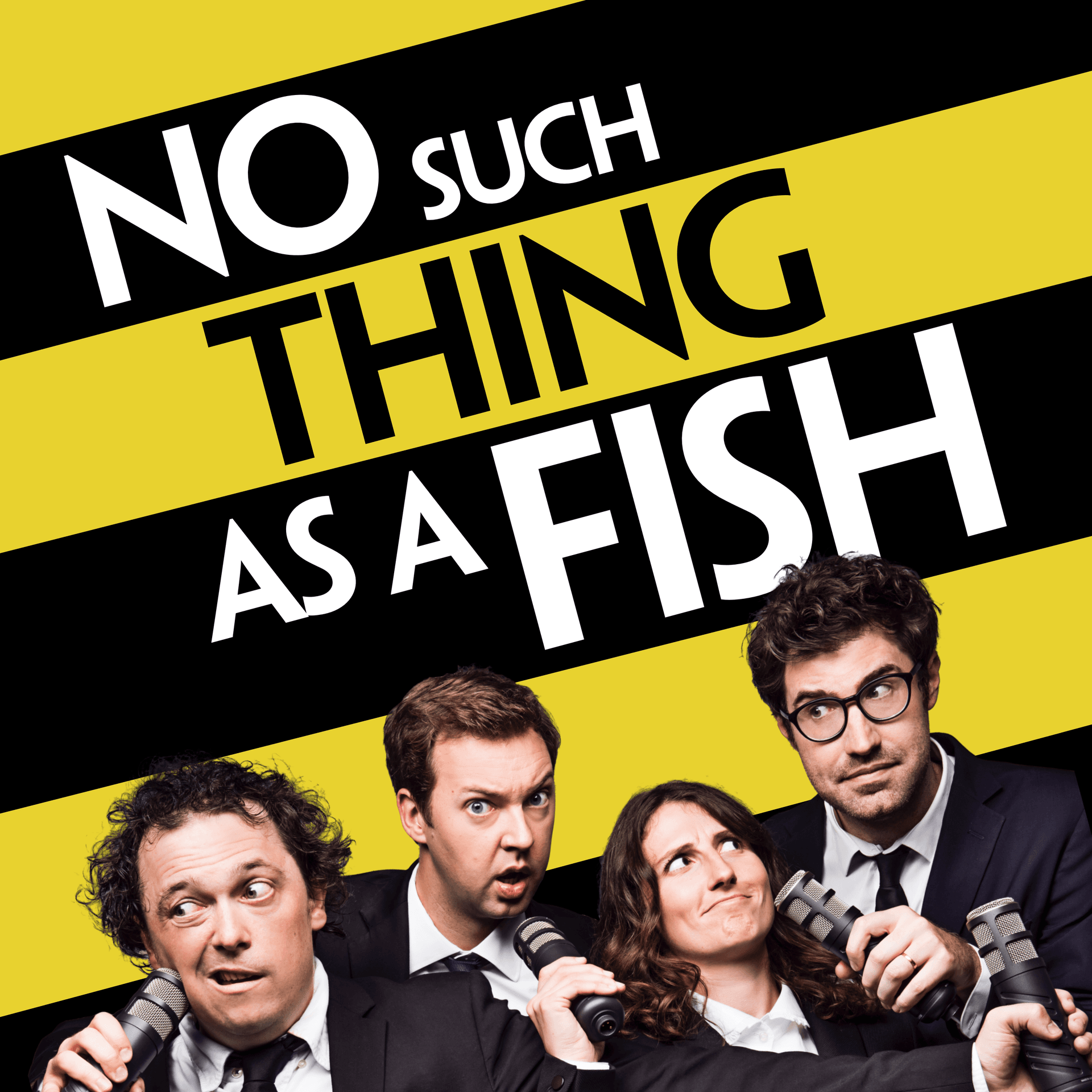
Zoe Lyons joins Dan, James and Andy to discuss road runners, sharks and Eddie the Eagle.
Visit nosuchthingasafish.com for news about live shows, merchandise and more episodes.
Join Club Fish for ad-free episodes and exclusive bonus content at apple.co/nosuchthingasafish or nosuchthingasafish.com/patreon