
In short
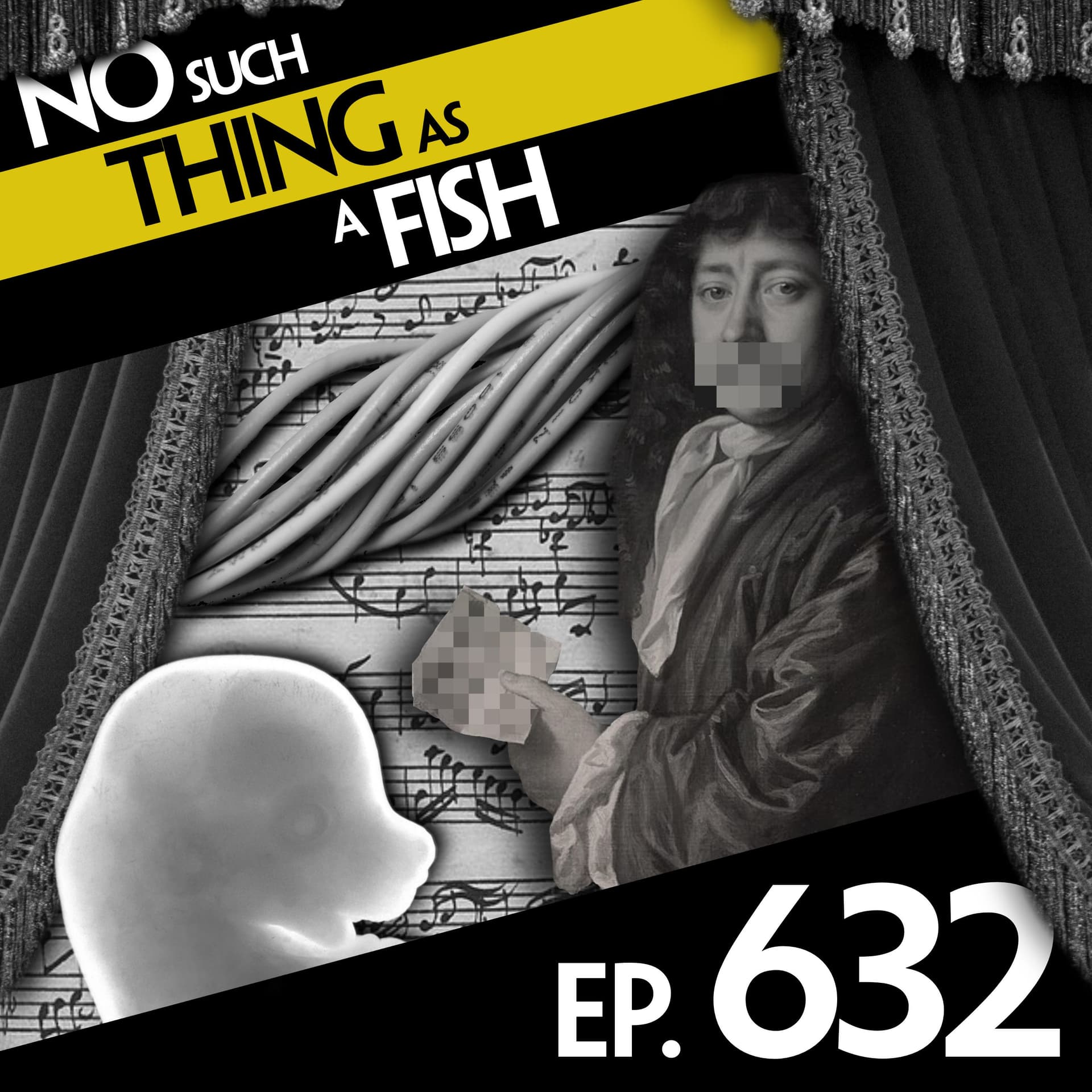
The episode mixes four “facts” with guest banter: (1) the history of censoring/swear-bleeping on live radio/TV, traced to Olga Petrova’s 1921 nursery-rhyme incident and later techniques; (2) Samuel Pepys’ diary—how it was translated from tachygraphy and how later editions “tidied” sexual content; (3) fiber-optic communications—how early London hydraulic-power tunnels were repurposed for fiber, plus the “sharks don’t eat cables” myth and wartime cable-cutting; (4) embryology—extra “lizard-like” muscles in fetuses that disappear before birth.
Guest backgrounds
Cariad Lloyd is a UK improv performer (Ostentatious), runs her own podcast, co-runs Weirdos Book Club with Sarah Pascoe, hosts Grief Cast, and wrote books including the kids’ book Where Did She Go?
Key claims
Olga Petrova’s rhyme implied birth control; censors initially used loud music then evolved to bleeps/muting. Pepys’ diary was translated in the 1820s and heavily edited; it contains extensive sexual material. Fiber optics were routed through former hydraulic tubes; sharks rarely bite cables. Fetuses temporarily develop extra hand/foot muscles.
Notable examples
BAFTAs Tourette’s controversy; “Arnold Wanker” (Mork & Mindy) censorship; Pepys kissing Queen Catherine’s coffin; transatlantic fiber cable recycling; embryos’ “cleavage” (cell division) and “primitive streak” development.
Written by AI. May contain mistakes. Listen to the episode to check what was said.
Chapters
Tap a time to open that second in VOKickoff to the Podcast
2:26 to 2:48
The hosts introduce themselves and set the stage for the episode's facts.
“I am sitting here with James Harkin, Andrew Hunter-Murray and Cariad Lloyd.”
The Origins of Censorship in Broadcasting
2:48 to 4:25
Explore the history of bleeping and censoring on live broadcasts.
“My fact this week is that the idea to bleep and censor words during live TV and radio broadcasts began over a hundred years ago and was all because of one woman and her nursery rhymes.”
Olga Petrova and the Nursery Rhyme Incident
4:25 to 7:18
Learn about Olga Petrova and the controversy surrounding her nursery rhyme reading.
“and Olga Petrova had come on to read this nursery rhyme, and the rhyme went something like this.”
Evolving Censorship Techniques
7:18 to 9:17
Discuss the changes in censorship methods in broadcasting over the years.
“So they were prepared for something controversial then?”
Robin Williams and Language Censorship
9:17 to 9:38
Explore how Robin Williams used language creatively to bypass censors.
“To be a polyglot, you know, what's Robin Williams been reading this week?”
Historical Swear Words and Their Origins
9:38 to 11:47
Dive into the history and evolution of various English swear words.
“So when that episode played in the UK, they did censor it, but it got away in America.”
Reforming Nursery Rhymes
11:47 to 13:16
Examine the efforts made to reform nursery rhymes and their implications on children.
“Can I tell you a thing about nursery rhymes?”
The Scandalous Life of Samuel Pepys
16:33 to 22:48
Discover the controversial aspects of Samuel Pepys' diaries and his life.
“Okay, it is time for fact number two and that is Cariad.”
The Complex Legacy of Pepys
22:48 to 28:00
Explore the complexities of Samuel Pepys' character and historical significance.
“Well, also, they say in the diary, it's very clear he wasn't writing it for posterity.”
Introduction to an Interesting Character
28:00 to 28:31
Learn about a historical figure who overcame adversity in his family background.
“He's number five, and he's the only one who survived the oldest into adulthood.”
Show all 26 chapters
The Evolution of Fiber Optic Networks
28:31 to 31:20
Discover how London’s hydraulic systems were repurposed for fiber optics.
“Okay it is time for fact number three and that is Andy.”
Record-Breaking Data Transmission
31:20 to 31:44
Did you know that 450 terabytes can be transmitted per second?
“Arnold Wanker would not believe how the world has changed.”
The Inventor of Fiber Optics
31:44 to 35:07
Learn about Narinder Singh Kapani and the history behind fiber optics.
“What that translates is roughly 50 million movies could be streamed simultaneously with this amount of data.”
Sharks and Fiber Optic Cables
35:07 to 35:54
Explore the myth surrounding sharks damaging underwater cables.
The Reality of Cable Damage in Warfare
35:54 to 38:01
Understand the actual threats to undersea cables in modern warfare.
“And it's basically sharks do not eat wires.”
The Recycling of Old Fiber Optic Cables
38:01 to 39:02
Learn about the first fiber optic cable being recycled after years of service.
“That is something that's currently happening in the Ukraine and Russia war, which is that soldiers always carry on them a pair of scissors because drones now use fiber optics.”
Understanding Fiber Optic Technology
39:02 to 42:00
Deep dive into how fiber optics convert and transmit data.
“So it's light bringing information, right?”
Muscles of Embryos: A Surprising Fact
42:00 to 42:30
Learn about the surprising muscle characteristics of human embryos.
Fetal Development and Evolutionary Hangovers
42:30 to 44:40
Discover how certain muscles in embryos relate to evolutionary traits from lizards.
“James was pointing at me for the listener at home.”
Developmental Atavisms: The Mystery of Lost Features
44:40 to 45:44
Explore the concept of developmental atavisms in human embryos.
“these muscles in their fins but they're not found in mammals and we have a little tail as well which sort of shows that's like between the fourth and six weeks Some of us still do.”
Understanding Cleavage and Initial Cell Division
45:44 to 47:46
Get insights into the early stages of human development after fertilization.
“When the single cell zygote, the fertilized cell, the first thing it does is it divides itself into two and then into four.”
The Functions of Cells During Early Development
47:46 to 50:45
Learn how cells differentiate and form structures in early embryonic development.
The Connection Between Mother and Fetus
50:45 to 52:36
Understand how a fetus can influence its mother's health and body during pregnancy.
“are the anus first is it all mammals i think so there can't be division with the mammals it's and the other one's called deuterophars or something yes that's right yeah yeah i know No.”
Exploring Blood Type Compatibility in Pregnancy
52:36 to 54:38
Find out the significance of blood type differences between mother and fetus.
“So it needs skin cells that still stem cells in the placenta from the baby that can come into your body and become part of that scar from the C-section.”
IVF Techniques: Testing Fertilized Eggs
54:38 to 56:00
Discover a method to test the viability of fertilized eggs in IVF.
“And those eggs which squeeze back, which push back a bit, you know, when pushed, are likelier to become, to produce healthier embryos, basically.”
Children's Books and Podcasting
56:00 to 56:42
Learn about a children's book that addresses grief and the host's other projects.
“So the Lydia Marmalade is a middle grade book set in Jane Austen times.”
Transcript
Automatic transcript. May contain errors.0:00Save big money on everything you need at Menards. Your roof is the first line of defense against the elements and it enhances the appearance of your home's exterior. Owens Corning shingles offer ultimate protection and impressive curb appeal. Choose from 26 colors of Owens Corning Duration shingles and transform your home today. Shop our selection of roofing products on Menards.com. Plus check out our weekly flyer and find plenty of great deals happening now. Save big money at Menards. Hi everyone, welcome to this week's episode of No Such Thing As A Fish, where we were joined by our very good friend, who we've known for many, many years, Cariad Lloyd.
0:39Now, before I remind you about Cariad, I want to tell you that she has a potty, potty mouth. We have bleeped out some things in this show, but if you want to hear everything that was said, it's a bit of a joke, I'll tell you that, then you have to go to patreon.com slash clubfish and join our Plenty More Fish tier where you get an XL episode of every single show. And in this one, it is the full, unbleeped, unedited version. So really hope you enjoy that. But either way, Carrie Adelaide, what can I say about her? She is in the improv group Ostentatious. She has got her own podcast. She's got the Weirdos Book Club with friend of the podcast, Sarah Pascoe.
1:22She also has the Grief Cast and she has written lots of books, including her most recent kids book. It is called Where Did She Go? Now, this is a book, very important. This will teach your kids about death in a nice way, in a friendly way, in a storybook way. But it's absolutely brilliant. It's such a clever book. It's so well done. It works brilliantly as a story. It works brilliant as a kid's book, but it has a message behind it. Highly recommend if you have children that you get that. We all have a copy. Cariad brought some in for us. So we're very, very blessed to have got those. But yeah, Cariad is an absolutely brilliant performer.
2:00You will have seen her on absolutely everything in the UK. And no wonder, because she is amazing. Really hope you enjoyed this week's show. No more to say apart from on with the podcast.
2:25James Harkin:Hello and welcome to another episode of No Such Thing as a Fish, a weekly podcast coming to you from the QI offices in Hoburn. My name is Dan Schreiber. I am sitting here with James Harkin, Andrew Hunter-Murray and Cariad Lloyd. And once again, we have gathered around the microphones with our four favorite facts from the last seven days. And in no particular order, here we go. Starting with fact number one, and that is my fact. My fact this week is that the idea to bleep and censor words during live TV and radio broadcasts began over a hundred years ago and was all because of one woman and her nursery rhymes.
3:03James Harkin:Yeah, so this is Olga Petrova. This was an actor who has a very interesting story, but why don't we talk about the censorship thing first? because that's a real hot topic these days. It's been in the news very recently, the BAFTAs. What about that? What happened? They had a guy with Tourette's. He did. He said something. Yes. John Davidson, who a movie was made on him. Things weren't bleeped, as I understand it. Exactly. They bleeped other things and they left that word in. Oh, lordy, lord. That was the controversy. It's a great movie, though. I swear, the movie. Oh, it's stunning. So good. It's really heart-wrenching.
3:40Yeah.
3:41James Harkin:And it was a complicated moment at the BAFTAs, but it shows that this is a thing that's constantly in the news because on live TV, how do you stop that? So when this woman read out these nursery rhymes in 1921, what was the word that was bleeped out? Was it... Or was it... I'm going to bleep those, yeah. I'm going to bleep those out. I don't want people hearing it. I've said those words on air. I think it was worse. I think it was... No. No. 1921? No. It was a fine word back then. I know you say s*** all the time, Dan, but we're not allowed to say s***. Not anymore. If you say s***, s***, s***, s***, s***, s***, s***, s***.
4:18James Harkin:Ah. That's a shocker. That's interesting. Well, anyway, so this was 1921. It was on Newark radio station, and Olga Petrova had come on to read this nursery rhyme, and the rhyme went something like this. It was an old lady who lived in a shoe. She had so many children because she didn't know what to do. Now, this was a very sneaky reference to birth control. She was very good friends with Margaret Sanger, who was the founder of the American Birth Control League. And they all freaked out when she said this because it was a sort of blink and you miss it moment. But they certainly got it. So the normal rhyme is there wasn't a woman who lived in a shoot.
4:52She had so many children. She didn't know what to do. But adding the word because really changed his opinion. Yeah, yeah, yeah. She had so many children because she didn't know what to do. Yeah.
5:02James Harkin:And so they freaked out because they thought if the networks heard this, they would shut down their radio station. Another thing is that they just had World War I and there'd be loads of restrictions about what you're allowed to say on radio. And they just lifted all the restrictions and said, OK, you're allowed to say **** and **** if you like. They shouldn't have called that sitcom ****. That was their first mistake. So they were really worried that if she said anything that was really dodgy, then they would just go back to the old ways. Yes, exactly. So I do love the story of Olga Petrava. Dan you mentioned briefly that Olga Petrova was actually a stage name and her original name was Muriel Muriel Harding she was from Hampshire she pretended she'd been born in Warsaw it's all complete rubbish and she also she did the accent her whole professional life she pretended to be she just put on an Eastern European accent wow yeah but pretty amazing that isn't it that she she did no one knew that it wasn't like she wasn't Dame Edna Everidge you know it wasn't a character that people knew about um she really claimed to be this and she was a big actor in her time both in the theater where she was also a playwright and in movies she was she actually starred in a movie that was directed by friend of the podcast a guy remember a guy alice guy who is the first female director ever um she did the tigress and which was a movie by a guy yeah um So a fascinating character who is responsible for all the bleeping, who then has this extraordinary background story.
6:36So just to go back to the original thing that happened, when she said she had so many children because she didn't know what to do, they didn't bleep that. What they did was they put some music on really loud so you couldn't hear her microphone anymore, basically. So like end of Oscars, like get off. They just swell the orchestra. Exactly like that. And then it was a bit later down the line that they came up with a bleep idea.
6:58James Harkin:And what I couldn't work out with radio was there was another engineer who was playing classical music. Now, 1921, is that recorded music or is that someone literally live on a violin just waiting? I think it would be someone playing a disc or like a recording. Yeah, like a wax disc. But no, they had classical music playing constantly on another line. And if someone said anything controversial, they'd just press the button and go to the other line. So they were prepared for something controversial then? They knew there's something you needed. They were constantly playing classical music on another.
7:26It's so weird. Actually, on Classic FM, they're just effing and jeffing all the time. Get to the tunes of swearing. Come on.
7:37James Harkin:It's so funny. So I think that was the innovation after this very first time. They thought, wait, we need a constant background. A safety net ready to go. Yeah, and then slowly that evolved to become the modern day bleep or how sometimes if you're just watching a broadcast, it will just go to silence because that's another version. They mute it now, don't they? or it's more common to mute it because a bleep is quite a funny sound and it also draws attention to what's just been said. If you weren't really paying attention, a bleep really draws your attention. So shows like Jerry Springer used it to great effect because they noticed that when they were getting lots of bleeps in a show, the ratings were higher and people enjoyed watching this.
8:16On QI, we've been told in the past we can't just bleep things. If they're offensive enough, you just can't put them out. Because people still know? People still know, really.
8:26James Harkin:I think the rules are a little bit like case by case. Yeah, it depends on the context. My favourite things about this whole territory, and we kind of touched on this when we had Michael Palin on ages ago talking about censorship because Monty Python had that a lot, was that comedy writers in particular actively tried to sneak stuff past the censors back in the day. And I was reading in America, this was a big thing on Mork and Mindy. What's that? Robin Williams? It's a Robin Williams sitcom. It's been off from Happy Days. Yeah, he's an alien who's arrived on Earth and it's a sitcom about him being on Earth.
8:56James Harkin:Did you never watch it? No. Oh, so good. Oh, it's wonderful, yeah. So he himself, this wasn't the story I was going to tell, but he himself used to sneak in foreign language swear words. Oh, yeah. And so they used to have a censor who had to have a grasp of multiple languages in order to understand what he was sneaking through, much like in tennis, you know, how the officials often have to learn those multiple languages. But the writing team... It's very hard, though. It's very hard. To be a polyglot, you know, what's Robin Williams been reading this week? Which obscene dictionary has he been reading?
9:23Yes, exactly.
9:25James Harkin:Well, that's the thing. They obviously didn't have too much of a grasp because the Mork and Mindy team actually managed to get a character onto the show. I think it was just for one episode, but he was called Arnold Wanker. And Arnold Wanker... What language is that rude in? So when that episode played in the UK, they did censor it, but it got away in America. That's so funny. Wow. What we've done before, there was an American sci-fi magazine called Servants of the Wank, wasn't there? Yes. That was with an H at the end. It was. it was really Servants of the Wanker what was the other one The Knobheads Planet of the Knobheads Planet of the Knobheads I know see the little meeting where they just didn't know they're just yeah oh I know the guy by the way who played Arnold Wanker was called Logan Ramsey and his dad was in the military and he's the man who sounded the alarm for the attack on Pearl Harbor just a random connection that's an incredible yeah he sent he sent a big bleep that he did it was a giant bleep yeah he was the one who wrote what apparently is the most famous messages from that signal saying, Air Raid, Pearl Harbour, this is no drill.
10:29James Harkin:That was from Arnold Wanker's dad. He didn't invent, this is not a drill though, did he? Not sure. That was René Magritte, wasn't it? Very, very nice. Just when you're talking about swear words, and because I am in ostentatious, as Andy used to be, would you like some Regency swear words? Oh yeah. I think the other thing that's funny about swear words, a lot of English ones have been around a long time some of them have gone um so if i give you adventurous what do you think an adventurous is i feel like that's somebody hunts for uh rich elderly men and hopes they die no it's just a euthamism for prostitute or a wild woman but adventurous is nice isn't it yeah oh don't go down that area there's a couple of adventurous yeah maggot pie oh my gosh maggot pie is that Part of the anatomy?
11:19No. Oh, good. Oh, it's not. Magpie? A turd? No, it's just lowest of the low. Yeah, maggot pie. Like you're a scum. You're a maggot pie. That's nice. I think magpies were once maggoty pies. Oh, maybe. Yeah, yeah, I think so. When do you think Kiss My Ass came in? Kiss My Ass. Kiss My Ass. 1980s. 1705. Wow. 1705. 1705 Kiss My Ass. Kiss My Ass. Wow. I think it's interesting that some of these have been around a very long time. Yeah. Because they do the job so well, they haven't changed. Yeah. Can I tell you a thing about nursery rhymes? Yeah. There was a lot of concern that nursery rhymes were too horrible for children.
11:56A lot of them are awful. Because lots of them are. Most of them. I'd say 90 % are. But there was an outfit that set up, I think, in various sources say it's either Victorian or 20th century. It was definitely trading in the 1940s. But it was the British Society for Nursery Rhyme Reform. They became reform. It starts with nursery rhymes. What's all this about a barbar black sheep? Not sure about that. Basically, the owl and the pussycat came to sea in a tiny boat. And it was set up by two Jeffreys, Geoffrey Hall and Geoffrey Handley Taylor. And I can only find two works that were written by them.
12:35New Rhymes for Old, which was basically a new version of nursery rhymes. Things like... They're the original woke brigade, is that what we're saying? They kind of were, yeah. Three kind mice was one of theirs. Oh, very good.
12:48James Harkin:I mean, that one is really bad. Is it? Yeah, three blind mice. I can't remember it. Three blind mice, three blind mice. They all... See how they run. See how they run. They all run after the farmer's wife. She cut off some cheese with a carbon knife. She cut their tails with a carbon knife. I think it's fine. Anyway, Geoffrey Hall was reported as saying about his work, I don't like children very much, you know. I really hate the nasty little brutes, but I've got to live with them when they grow up. so it was kind of reformed children so they didn't turn into little groups yeah interesting this carried on in the 20th century in america and in 1959 senator thomas c desmond found research that said 60 of young people thought that old people were too old-fashioned sick and slow to catch on to new ideas and he blamed this on nursery rhymes and he said like for instance the old woman who lived in the shoe at the end, she whips the children.
13:39And he thought that this mercy rhyme in particular and some of the others were making people think that old people were witches or evil or cut tails off blind mice or whatever. So it was demonising old people. There wasn't enough positive representation of old people. Exactly. Where is the positive? Yeah. Old King Cole was a merry old soul. I'll give you that.
13:58James Harkin:Yeah, that's true. Yeah, merry old soul was he. What a lazy nursery rhyme. Merry old soul, merry old soul was he. I'd send that back if I was the editor. so you've said you've said it already
14:13James Harkin:stop the podcast stop the podcast hey Andy hello Dan uh do you know what I'm gonna pull out from that full disclosure listeners that was just an incredibly spot-on impression of Andy but he's not here neither is James Harkin they are both overseas on holiday at the moment and as a result I'm left here in the office on my own to hold the fort and to let you know that this week Phish is sponsored by Salee. Now you all know Salee. It's the brilliant app with affordable eSIM data plans for over 200 destinations. So this means it's as simple as downloading the app and using that while you're there.
14:51James Harkin:In fact, the last thing that James Harkin did before he left the country for China was to download the Salee app. So he's been out there using it nonstop. And in fact, we are now going to, thanks to Salee, cut to China to Mr. James Harkin to tell us more about it. Ni hao, Dan. This is an exciting first for fish because we're making an advert with the very thing that is the thing that we're advertising in the advert. That's because I'm on holiday in Beijing using Salee. Now a few days before we left I downloaded my eSIM and I've been using it non-stop for navigation, for translation, for payment because everything here is done on apps and for of course streaming Unicorn Academy to keep my daughter occupied while we stand in enormous queues.
15:39I've saved money compared to my usual data plan I've had signal everywhere I've been And utilize the Saley features that protect my privacy And honestly it's so easy to use That I'm going to send this audio to you Using my Saley data plan Rather than even bothering to log on to my hotel wifi So Zaijian Dan and see you in a fortnight Well there you go
16:02James Harkin:Our first ever on the ground reporting of the product That we are advertising live So be like James Harkin and download the Saley app today. Go to salie.com slash fish and you're going to get an exclusive 15 % discount on the Saley data plan if you use the code fish at checkout. Okay, that's it for now. Say bye, Andy. Bye. And on with the podcast.
16:33James Harkin:Okay, it is time for fact number two and that is Cariad. Yes, contrary to what maybe you were taught at school or you know, Samuel Pepys' diary was ignored for hundreds of years and when they did finally translate it, it turned out to be extremely racy and problematic. Samuel Pepys, guys. Samuel Pepys. Can we just quickly say, for international listeners who may not know Samuel Pepys, so Big Deal in the 17th century helped run Britain's Navy administrator, but the main reason he's famous is that he kept this diary for just 10 years of his life, which covers a very eventful bit of English history which is the Great Plague, the Great Fire of London, War Against the Dutch, which was a big national hobby back then and the restoration of the monarchy because Britain was coming out of a civil war, executing the last king.
17:21James Harkin:So it's an amazingly interesting time in English history. And when you say translated, it's not that he was writing in a different language, he was writing in a coded... He was writing in a coded kind of shorthand. So if you've ever seen that, it's like a series of squiggles that stand in for letters or full words like that. So it was a very common language. And the Peeps wrote in a type of shorthand, which was called tachygraphy, which was quite common at the time for Cox. Tachy means fast, doesn't it? I wonder how linked it is to like 20th century shorthand, you know, but it looks very similar.
17:52So he wrote in a kind of shorthand. So for a long time, people didn't know what was in Peeps's diaries. They just sat. In 1818, another diary is published from a similar time, right? by this guy called John Evelyn and it's extremely boring. One of his quotes includes a rich gentleman visited me. That's the kind of diary this man was publishing but it was a huge sensation because people were obviously desperate for information about that time or how people were living and so the master of the library at that time is like ooh we've got Peeps's diary. So he lends a copy of it one copy to his uncle who lends it to another uncle who says basically we need to translate this.
18:30So they get this guy who's an undergraduate called John Smith and they pay him£200 to translate the complete everything in Peeps's library. Okay. Which is more words than Shakespeare. What era is this now? So now we are into around 1820, I think. This is what we're talking. And as he starts translating it, I said around 1820, he discovers that basically a lot of stuff in this diary is not I'm watching the Great Fire London. A lot of this stuff is about sex. There's loads of stuff about sex. when they first published it they keep some of the sex in they change the whores to mistresses so they say that he's has mistresses adventuresses indeed and they keep some of it but apparently there's constant edits on the book saying um obj objectionable so they were like worried about they knew they basically tried to they it's a cover-up it's a whitewash they wanted him to seem like a moral figure and when you're in primary school in this country you study the Great Fire of London and still to this day my kids have had to study Samuel Pepys like a very big thing because he wrote this diary he's famous for burying his wine and his parmesan in his garden
19:38James Harkin:so that's what my boys have said to me cheese barrier it's like an interesting fact and he's sold to you I would say as a kid in this country is like oh you know there's like Charles Dickens there's Jane Austen there's Shakespeare there's Samuel Pepys like Nelson he's like one of our figures you know really important um but yeah he has a lot of sex he assaults a lot of teenage girls his poor wife is having to cope with all this you know he married her i think she was about 15 14 which even at the time was young i know we sometimes forget like but at that time he was 22 she was 14 yeah yeah yeah um she finds out about his one of his affairs and refuses to wash or eat for quite a while which really pisses him off but his favorite thing to do is to sleep with um men in the Navy's wives.
20:24James Harkin:Oh, right. So the men are away. He's sent them away. He's in charge of naval administration. He knows where they are. He knows when they come in back. And then he sleeps with the wives. It's also a bit extortative sometimes. He's saying, I won't put your husband in the Navy. Your husband won't have to go with the press gang and be away for years if you sleep with me. So it's very horrible. And he does also have an entry where he talks about masturbating in church while thinking of his friend's daughter. God forgive me, he writes. I can't tell if Andy's disgusted or that's a we've all done it smile.
20:54We've all masturbated in church about our friend's daughter. In fairness, he is like saving time because he's in church already and he's asking forgiveness at the same time. That's true. Lessons to be learned there. And it's very problematic. Although other people argue this amazing new book called The Strange History of Samuel Pepys' Diary by Kate Loveman. She argues that the way he's writing about it is it's unclear how assault based it is. But obviously he's not. Because he didn't write in his diary how much consent was involved. Well, yeah, you know, obviously it's deeply difficult for us to put that on the past.
21:27James Harkin:All I'm saying is more like Samuel Creeps. Yep. Very nice. You've been waiting. That was worth it. I'll tell you one person he definitely didn't get consent from was the queen he kissed, which was Queen Catherine of France, unable to give consent because she died something like nearly 200 years before. So he was in Westminster Abbey on Shrove Tuesday in 1669. He's a right one, put it this way. Yeah. basically he was visiting her coffin was there and the lid had cracked and it became exposed and the top half of her body was there and he wrote in his diary and I did kiss her mouth reflecting upon it I did kiss a queen and this my birthday and I 36 year old and I did kiss a queen oh my god did he ask forgiveness for that as well no and it's the thing it's like the first said it comes in 1825 and you know they really tidied him up they wanted him to appear morally serious we don't get the full translation of all nine volumes till 1971 so people don't really know what he's been up to until the 20th century but he's again a bit like dickens who also you know has problematic behavior i find it weird that we teach children about this man i think it but if if you're not going to teach children about any problematic people from history there's going to be a short lesson as well let's speak to those short lessons james dancing and reading of nursery but not those nursery rhymes kind mice but you just have to teach both I mean to really young children but it's weird to do it at primary school I guess that's why I think that you could definitely say oh we have this diary there must be other things from the Great Fire of London he's so important in that section of primary school I think it's because the sourcing is you know we don't have as much and it's just yeah I think one thing that's interesting about him is the only thing we really know about him is this diary so he must be one of the only people in history where the entire understanding of his character comes from his own words.
23:17He could have made all that stuff up. Well, also, they say in the diary, it's very clear he wasn't writing it for posterity. It's not one of those diaries. He used to keep things in there that he couldn't keep in his household ledger. So it's like, who's bribing? Who owes him a dinner? So it's like, it's very personal record. He also ducks into other languages. Even within his shorthand, he will, if he's describing something especially outrageous, you know i did i did make her tenor mikosa in her mano right so that's hold thing and hand but it's not it's not a very sophisticated this is this is not the enigma code we're talking about yeah yeah he does he does change languages but he's also writing as said in a code anyway and then putting it in another code and he also writes in euphemisms quite a lot so um which of these do you think is about sexy stuff did do as much as was safe okay oh yeah toss and tumble and take a boat to greenwich with captain cox never take a boat to greenwich sir i would never do something captain cox of the three things that i said the last one is the only one that wasn't a euphemism oh really yeah tumble and what was did as much as was safe they also think he was infertile because he had he He actually had a huge gallbladder, gallstone removed, like, and survived that operation, which he kept it as the size of a tennis ball.
Read the full transcript
24:42And they think that maybe, because he worried about pregnancies, but he doesn't seem to have had any children. He died with his wife dead and no children.
24:49James Harkin:He used to throw a party every year. Every year. Yeah, to commemorate. Gallstone coming out. What a weird guy. Oh, it's the painful procedure. Lots of people died. They had to cut it out. It just sounds so, so unpleasant. His first entry is saying, I feel exultant. It is out. So that's when he starts writing. Oh, really? And he only stops because of his eyesight. That's the only reason he stops. Yes, and why was he worried about his eyesight? Too much time in church. The old Arnold wanker. His wife had one portrait done of her. It's a really nice portrait. I've seen it. She was Elizabeth, wasn't she?
25:23Yeah, Elizabeth Saint-Michel or something. Yeah. She was French. Yeah. And it was a really nice portrait. It was destroyed in 1830 by a Scottish nurse who thought it showed too much cleavage. Wow. I've seen it and it does not. I'm not saying how much is too much, but I'm just saying it is... For the 1830s. That's true. Do you know what though? I'm sorry. In the Regency period, there was a fashion to have tops that came down to the top of your nipples. Like that was quite a lady's fashion. Queen Elizabeth was sometimes wabs out at court. Yeah. For that to say even earlier. Yeah. I think we did...
25:57Regency was like top of nipples was a bit of a trend at one point.
25:59James Harkin:I think we did a fact on the show once about the fact that on a makeup table, a woman would have nipple makeup as well. Because it was such a thing that you would be seeing on a day to day occurrence. Yeah. Gosh. Interesting. The window to the soul. And then she found him indecently engaged with his maid. Yes. And I read the diary from that day when it happened. He says, my wife was struck mute and grew angry about two in the morning, waked me and cried and fell to tell me a great secret that she was a Roman Catholic and had received the Holy Sacrament. So it's actually her fault. Is that what's the implication?
26:37Apparently she was constantly threatening to return to Catholicism. So yeah, basically. And he was always stressed about it. It's like, you can't be, I'll get in trouble. But then the next two or three days, he's basically like, my wife's still upset. Yeah, my wife's still quite upset. and he only calls her my wife he's just referred to constantly he might never even name her in the diary I think it's a bit dubious I just think if you only ever refer to your wife as my wife that's not a very loving sign yes I agree especially if you do it in a Narva accent my wife you see that Northern and Borat are the two my wives you shouldn't do unless you're from the North is that the clue for you
27:12James Harkin:in a book where he sleeps with so many women per day he can't even remember I'm saying there are plenty there's a lot of red flags in his diary. At one point, I think he's described in a biography as prowling like an animal around Westminster to find girls to sleep with. All the animals I've seen prowling around Westminster are foxes. So is he going around bins as well? I think so, yeah. He kind of is. It is interesting. A lot of historians, despite all of this information, I read an article by Max Hastings, who sort of says a lot of people do read Peeps as a person of his time. This was largely happening.
27:46James Harkin:A lot of men were going away to war. people were sleeping with wives and so on. If there was a diary of Henry VIII, it would be very interesting to read it. Oh, gosh, yeah, it'd be fascinating, wouldn't it? And I also think what's interesting about Pepys is he didn't come from, you know, a great family situation. His mother was a laundry maid. He was one of 10 children. He's number five, and he's the only one who survived the oldest into adulthood. And he worked his way up through the system. So he's a very interesting character. I suppose I think what is so interesting is I was taught him so much at primary school.
28:17I feel like he might be a secondary school thing too but it came in handy in your career because you were in of course Peep Show
28:31James Harkin:Okay it is time for fact number three and that is Andy. My fact is one of the first fibre optic networks in London was built in tubes that used to do the safety curtains in London's theatres So you know the old iron curtain that goes down for the interval and up yeah yeah sure big heavy things yeah safety curtains to prevent fires in theaters yeah they were all operated by um hydraulics right right flash forward to the 1980s when where were we the first time oh we were uh the let's say the 1880s oh okay that's a hell of a flash yeah it was actually but that's okay thanks all right you don't need to tell us about that intervening 100 years no but basically in the 1980s fiber optic networks were all setting up shop right and there was bt which had their own network and they had all their own tunnels they had you know the old sort of post office tunnels and all their ducts under the city so if they wanted to put in telecommunications stuff they had their own network but other companies were being allowed in on the act and one of them was mercury which was setting up another network mercury communications right it was sort of privatized like just private firm they needed some network of channels under london that they could use and they didn't have any and then they had this realization there was this thing called the london hydraulic power company which had operated this massive network under london in the 19th and 20th centuries and it used huge amounts of hydraulic power to operate massive machinery so like cranes down at the docks all the safety curtains in theaters car hoists and garages all of it was operated by hydraulic power cool it's So cool.
30:08Weird, but amazing. Where's it come? Where's the power spit? They draw the water out of the river and they heat it up a bit and they use the water pressure to operate massive machines. And you can just plug in. You're like, I'm just going to use that. You can plug in. I'm on the hydraulic network. It's crazy. The hydraulics just means if I push some water here and there's a big old tube, then it'll push it at the end of the tube as well. It's just so weird. And basically this system had gone out of business in, it lasted a surprisingly long time, until like the 70s or something insane like that.
30:42But this network was available. And so they just shoved all the fiber optics through these hydraulics tubes. Crafty. And so these are not like the wires that send the fiber optic stuff. The wires go inside the tubes, I think. Yes. Because fiber optics are basically made of glass. They're like glass wires and the light sort of bounces off it. And like instead of in hydraulics where water goes through it, you've got light going through it. And then you fire pulses of light and then your computer can read the pulses. It's insane. Underground instead of the water power. Now the light is bouncing off the glass.
31:16It's mad, isn't it? It's insane. The whole world works on this basis now. Arnold Wanker would not believe how the world has changed.
31:25James Harkin:It's amazing. This technology, when you read into it, it seems so wizardly. Like it just doesn't seem real. And a new record, Speed Record, was recently set for data transmission using commercially installed fiber optic cables. They transferred 450 terabytes per second. What that translates is roughly 50 million movies could be streamed simultaneously with this amount of data. Now you see me too, 50 million times at the same time. But that's basically all the tabs that I've got open on my computer. Yeah, yeah, yeah. Yeah. One of the big names in this, because weirdly, you'd think that the inventor of fiber optics would be a household name, given how much this is changing the world.
32:10James Harkin:But Narinder Singh Kapani, born in 1926, he lived in an Indian city very near the Himalayas. And his science teacher, when he was a kid, told him that light only travels in straight lines. And he said, I don't think that's right. and he spent the rest of his life looking into that. Effectively, it was to get back at his teacher that he became interested in this territory. That's such a personal deep vendetta to take. And how we benefited from that kind of absolute stubbornness is wonderful. I think in fairness to him, unless you've got an enormous gravitational pull, light does go in a straight line.
32:47Yeah. In fairness to his teacher. Yeah, exactly.
32:49James Harkin:His teacher's in the corner weeping. It was true in context. What he became obsessed with, which is what is fibro-uptick, is, as you said, James, the bouncing of the light. And how do you manage to do that so that it doesn't stop, that it finds any angle that it can go at? You can bounce it around the corner, basically, can't you? Yeah, exactly. It's really cool. And you know who is a household name who was quite important in this? Alexander Graham Bell. He always turns up, doesn't he? It's communication. What did he do? Well, he invented something called the photophone, and that transmitted voice signals on a beam of light.
33:25So you would speak, and then your voice waves would hit a mirror. They would create vibrations, and then the light would vibrate, and then it would go to another place which would work out what the vibrations are and turn it back into sound again. And he thought it was the best invention of all his inventions. But that specifically didn't take off, right? No, because basically it would just be so garbled, you would hardly be able to hear anything. Like the amount of data you would lose from that signal is just way too much. It just really wouldn't work. That was the thing that had to be conquered, basically.
33:54So the problem was you had copper phone lines for communication, which didn't have nearly enough capacity. And then you had microwave towers. Like we talked about the BT tower ages ago. That's what kind of they used. And then they thought, wow, what about lasers? Could that work? And basically, what medium does the light travel through best? And someone suggested optical fibers. but you would lose 90 % of the power every 10 meters. It just wouldn't work. And then a scientist called Charles Cowell in the 60s, he was working at a really stodgy British research outfit called Standard Telecommunications Laboratories.
34:31And he and a colleague called George Hockham, they worked out how to reduce the light loss and make the glass purer. And suddenly you could transmit signals a long way along glass. And everyone else thought, no this isn't the future at the time and it and charles cowell insisted no fused silica is the way it is the way we're going to communicate and he was absolutely right and he won the nobel prize for it yes you know decades later okay he got his he got his flowers yeah yeah yeah he absolutely did like it you know it's and now we got these things underneath all the oceans yeah and that's how we can do zoom to america it's extraordinary yeah whatever they've just laid these cables all over the planet it's not right is it it doesn't feel right they're covered in kevlar as well oh i don't like it three blind boys killed by fiber optics no it just sounds it just it's one of those things that modern technology does all the time that you don't really understand it and when someone explains it to you your head explodes a bit of like oh shit that's what's happening but you're just like yeah yeah i'm zooming someone from san francisco yeah i don't know how that works i assume it's like a phone so you've got these cables under the water right what do you think damages them fish specifically large fish angry fish large angry fish I'll say sharks well that's what I would call a large angry fish as well a shark in actual fact it's always said that that's true but that is not true I literally felt if I said shark it was going to go we don't do that on this show thank god it's very when you're on QI next year look out for that one because it's not all bleeps This is an article in Wired by someone called Jane Ruffino.
36:13And it's basically sharks do not eat wires. I guess why would they? Yeah. But we thought like because there's electricity going through them maybe and they have electroreceptors, maybe they would do that. But not only does it not really happen, we know where the myth comes from. And it was someone about 40 years ago who had a new cable that was going between Canary Islands. They were testing it out and it wasn't really working. and they weren't sure what was causing the problem and this person this woman called Elaine Stafford had to go to Paris to do a presentation about it and she was like well what am I going to say about the stuff that doesn't really work and her boss said well we've noticed that there's some shark teeth marks on there so just say it sharks and she said it was sharks and then the myth took hold there but since then they've tested it they've literally got sharks and given them wires and said chew on this right excuse me my diet is actually very special they're just not interested in them like it turns out that sometimes sharks might bite them but it's just an accident sharks are such a full guy to the humans but if i saw a fiber optic cable advertised and i was in the market for like a 5 000 mile cable and i saw now shark proof i would absolutely go for it i would not consider that it might not need to well it
37:27James Harkin:kind of is pitched like that because they do put kevlar over it for reasons of being bitten or ripped apart under the ocean so the cables under the ocean have kevlar but they do that because of this myth yeah exactly yes so interesting so they don't really need to do that nope so is there a danger yeah i mean the biggest danger would be if you were trying to take down the western world right you would you would be the world then or the eastern world oh no i just don't like the western world i'm very happy with these as in like don't tell your plots on the show it's really obvious it's definitely a thing that in warfare people will try and snap each other's cables yes yeah That is something that's currently happening in the Ukraine and Russia war, which is that soldiers always carry on them a pair of scissors because drones now use fiber optics.
38:10James Harkin:So if they get a drone, they break into it and cut through the fiber optics in it so it can't send back messages and details of where it's being held. But they're not carrying sharks with them to do that job. These cables that are running all around the world under the sea, obviously there are a lot of them out there now and some of them are falling out of use. so this year the first ever fiber optic cable has been hauled back out of the ocean it entered service in 1988 within 18 months it was completely full to bursting with you know the capacity was used up crazy uh transatlantic telephone 8 is the name and there are now companies which are setting up shops saying well we're going to recycle this stuff it's got loads of copper in it really useful and there are i think three companies in the world which do subsea cable recovery but if you're one of those three companies there's loads of stuff out there that's not being used anymore it's sad that something born in 1988 now has to be taken out and put to sleep because it's not working and it's too it's too full i'm roughly ready for that i was like can i ask a question about the tech because uh and this is this is one of those that talk to me like i'm an idiot okay um i'll do my best never dan you have to tell them it's fine i've noticed They're really cool with it.
39:20They're really fine.
39:22James Harkin:It whizzes along. Yeah. So it's light bringing information, right? Yeah. The light converts the information into ones and zeros as it bounces along the tube. What we receive on the other side, are we receiving a reconstructed version of that image? We're getting zeros and ones. Yeah. Basically. And then your computer knows how to turn zeros and ones into everything else. it's extraordinary because basically that means everyone's got a unique version that's being recreated on their end so it's rebuilding on every single different device yes i mean that's pretty extraordinary it's crazy it's a unique creation there is a set of zeros and ones that equates to jesse eisenberg's face yeah yeah but what how's it getting through the wi-fi there you go that's the next bit because i've got fiber optic but it's not my computer's not plugged in plugged into it.
40:10So then it's sending waves through the air. From your router to the computer. Radio waves. Okay. And then those waves that go up and down, up and down. You know how this is like the fun, this is like your comedy podcast. I think like, I just felt my brain leave my body. Well, we specialize in that too. I think the good thing is that you don't have to understand it. Yeah, that's the great thing about the modern world. I just have a recurring anxiety
40:34James Harkin:that I will be the one that goes back in time and have to explain all this stuff to people of the past. Oh, you know that wonderful t-shirt of a modern guy surrounded by ancient people and they're saying, but how do these antibiotics work? And he's saying, I don't know. Exactly. Theatre invention. In the 5th century BC, Aeschylus comes along and makes an incredible invention of theatre. He introduces a second actor on stage. The producer's saying, we don't have the budget Isn't that amazing? Until then, you would only have one person rating the story. He brings a second actor on. 100 years later, Sophocles comes along and introduces the third actor.
41:18It'll never work! This Sophocles is crazy! It's just for two people max! I want to see a duologue! We call it a love line, not a love triangle. Was the third person a butler? The third person was a way that you could interact between two different people without one of them knowing everything may i ask a question where does the greek chorus come in uh sorry so you had the chorus and you would have one actor i see oh yeah and they would often the chorus would often talk to one actor yeah and they wouldn't talk to and the messenger would come and deliver a monologue about what's happened they wouldn't often deliver it to the person they'd be like i'm messenger i've just told so and so just told zeus this yeah yeah oh wow that's fantastic now that would be a fun time travel bring him back
42:02James Harkin:now to the future and he'd be like oh no this has got way out of hand what have i done just show him game of thrones who's that guy who's that guy we don't know we don't know you don't need to worry about it just forget it season six explains everything
42:24okay it is time for our final fact of the show and that is james okay my fact this week is that embryos are more muscly than you. Very funny. James was pointing at me for the listener at home. And I'll take on any embryo in a fight. They should put that on Netflix. I'd pay to watch that. One man against 100 embryos who will win. This is a fairly recent study from Howard University in Washington, D.C. And they made some 3D images of human fetuses and found that we get extra muscles in our hands and feet when we're embryos and when we're fetuses and they disappear before we're born. That's amazing.
43:06And they're kind of muscles that you get in other animals like lizards have them and chimpanzees have them in their feet, which makes them more... Flexible. Flexible, yeah, they can grab things. Oh, so as adult chimpanzees, they'll have these muscles. They absolutely do. I didn't realise because I thought it was a thing that no mammals had these. Maybe it's the hand ones that have completely passed out. Yeah. Because that's a famous fact, isn't it? You don't have muscles in your fingers. Like, that's a very old QI fact. Yeah, yeah. The muscles that move your fingers are in your wrist. Yes.
43:36James Harkin:But you used to have muscles in your fingers when you were in the womb. Absolutely. Yes, right. It's a shame that this doesn't come up on the first shots, you know, the ultrasounds that you get. Sort of these bodybuilder poses from your growing child. Is it a boy? And how much is he lifting? so unfortunately these are just muscles in your hands and your feet um it's not like big arm muscles and stuff biceps yeah um there are apparently a few adults that have this they found one or two people that still have them that they didn't actually but it doesn't really happen often and also it's quite a small sample size so we don't know for sure that it happens in all human embryos could have been these lizardy muscles were just found members of the royal family lovely I didn't see for the longest time where you were going but yeah it does seem likely that most if not all fetuses have these extra muscles so cool and it's the idea it's a hangover from when lizards were becoming mammals that is what they're saying because they're found in lizards they're found in fish as well these muscles in their fins but they're not found in mammals and we have a little tail as well which sort of shows that's like between the fourth and six weeks Some of us still do.
44:50Yeah. A little swishy thing there. Like little tadpoles when you look at a very early fetus. Does it get absorbed back in? I think it becomes your coccyx. Yeah, that's what I've always heard about, that tale, that it just kind of, yeah, becomes part of your spine. All these things are called developmental atavisms. So mysterious. It's weird that the body goes to the effort to make them and then merges them into something else, like rather than like, why waste your time, guys? It must be doing something. that it's there for that bit of time. Yeah, quite often with these things, it's different genes that make all the different stuff.
45:25So if you did turn that gene off, it might stop this from happening, but it might stop other stuff from growing at the same time. Yes. I was looking at what happens at the very earliest moments of you being you. So literally just after the fertilization of an egg. Sperm cell fertilizes an egg. One of the very first initial phases of your life is showing a bit of cleavage. Well, I'll take that. That sounds more like me than you. That's what the process is called. When the single cell zygote, the fertilized cell, the first thing it does is it divides itself into two and then into four. And that process is called cleavage.
45:59And who named it that? What male doctor said that looks like showing a bit of cleavage when it's actually, it's basically about to be an embryo. Look at our discovery. So cleavage just means cutting, right? Exactly. And so the way I usually use the word cleavage is in like stonework. I just didn't expect the end of that sentence to be that, James. If you get a piece of slate, the cleavage of it is how easily it cuts. And actually the cleavage in your... James, whatever turns you on, it's fine. No one is shaming you here. No kink shaming here. If it's slate, if it's clay, it's up to you. So the cleavage in your chest is a euphemism because people didn't want to use any other words for it.
46:42So they used the stonework word. word. Yes. It's way older, isn't it? Cleavage for stonework is way older. Much older, yeah. What about décolletage? Yeah, that feels like an oldie, but actually that might be a 40s one or something. It's the French word for it, isn't it? It's also a euphemism, like peeps did, using foreign words. Right, right, right. All the terms are so cool. I didn't understand plenty of them when I was reading these very detailed genetic descriptions of what individual cells are doing. but you know the primitive streak is something that shows that's a kind of great band they're really good yeah it's again you're a handful of cells at this point and the primitive streak is this structure that forms look a line up and down imagine a pear shape that's that's you at this stage and again you're a few cells and the primitive streak is this little line that goes up and down and it establishes bilateral symmetry so symmetry top to bottom that's what happens then Symmetry top to bottom was the first album I think Would you not say more symmetry side to side In a human body rather than top to bottom Otherwise that sounds like you've got a head at the top And a head at the bottom Some of us do It's the opposite It's left and right symmetry
47:55James Harkin:I like the term this is for a bit later in a pregnancy But the quickening It's a cool term The feeling around 16 weeks of pregnancy When you get the flutters of movement Of a baby They still call it that Do they? Yeah, midwives still say Oh yeah, it's a quickening It's a quickening Not all midwives But I have heard that phrase Having been pregnant twice But that used to be the way That you knew Because you wouldn't have Pregnancy tests Exactly And also you can miss periods And not be pregnant So yeah, you'd need to wait For your quickening to know But you do You're feeling rough Well before that Well not everyone does Oh no, I suppose not Yeah, so some people have no It's called morning sickness But let me tell you It's 24 hour sickness Some people don't have it at all so you could and that's how some people don't know they're pregnant some people have no symptoms well the best magazine article ever written was headlined My Dodgy Kebab Was a Baby and I read that in Love It magazine many years ago and it stayed with me and he later became Luke Littler the dance player
48:55it's funny the pieces of prose that stay with you isn't it it's weird everyone's head has this stuff in it we all knew Andy so well and I want to read out one of his favourite pieces i thought it was a kebab but it was a baby from love it i must say the um i was blown away by
49:14James Harkin:fiber optics and i'm i think even more blown away by the lifespan of an embryo and the fact that they can be frozen yeah and the fact that there was a the child born in 2020 who was born from an embryo that was frozen in 1992 a 27 year distance between the two and it's and it's really remarkable and you can have multiple embryos uh from the same person which means that you 27 years later can have siblings yeah born by using the embryos that are connected that's a comedy that's a buddy comedy sorry that's a buddy they're siblings they're siblings but they're 30 years apart and they're also cops but yeah i know not a funny coincidence i have friends who've had ivf and the eggs were fertilized at the same time but the there's an age gap between the siblings but really they were born at the they were created at the same time but quite often they talk about themselves as twins despite the fact that one's got a three-year head start on them yeah yeah and they were there together at the same like so they were there yeah in the same thing can i just say that obviously you start off uh with a blaster paw which becomes your anus and your anus tunnels its way through the rest of you to become your mouth i i would argue blaster paw is a better name for an anus certainly certainly in my experience on some nights that was a kebab that night wasn't it i'm sorry it tunnels its way through you yeah because you're making it sound very sentient like it's like come on guys let's go go go go go go but some animals start with the mouth and it tunnels backwards to become the anus seems like the civilized way to do it well we unfortunately are the anus first is it all mammals i think so there can't be division with the mammals it's and the other one's called deuterophars or something yes that's right yeah yeah i know No.
50:56And part of you, again, when the one cell, then two cells, then four cells, at the four cell stage is the last point where we are all the same and all the cells are identical. Even at that point, like the next cell division to eight cells, the cells have worked out, worked out, I'm being, you know, I'm anthropomorphizing there, but like they've, I suppose they are humans. But they've, the cells. This is what a one person dialogue is like. When is the chorus coming out? I'd suck the chorus to give myself more stage time, I'm afraid. So even after those two divisions, the cells have their genetic signatures sorted out and they know whether they're going to be likely to become part of the fetus or part of the placenta.
51:44So half of those cells go off to be placenta cells. Wow, that's amazing. It's wild. It's wild. It is wild. And then fetuses can send stuff through the placenta that can become part of the mother, right? That was one of the most amazing things I learned when we had kids. Say that again. So the embryo is a part of you. There is a part of that baby in you. And this is used a lot when you talk about miscarriage or baby loss. So a lot of women feel like when they have a baby loss, they feel like that baby is still with them. That's kind of a euthamistic way. And then they now have discovered there literally is a part that embryo would have gone into the bloodstream and remained with the mother.
52:20The fetus can send stem cells through the placenta into the mother. So let's say you get an injury, the baby can send stem cells into your body that can then turn into any part of tissue and then can make you feel better. And if you have a C-section, then your body needs to repair itself. Right. So it needs skin cells that still stem cells in the placenta from the baby that can come into your body and become part of that scar from the C-section. So it's like they're still, which is why we use phrases like it feels like you're with me. It feels like your heart's been ripped out. Also, if you have rhesus negative blood, O negative blood, and your embryo doesn't have that, the first time you have a baby, that's fine.
53:00But their blood goes into your blood. Your body goes, that's a foreign type of blood and it starts attacking it. Wow. So this is what they used to cause. Someone would have a healthy pregnancy and then they'd have lots of miscarriages afterwards and they would never understand why. And it's because the mother had O negative blood. The baby's blood wasn't O negative. so every time they got pregnant again the body her body would start attacking it going this is like bad we should get rid of it and now if you're a recent negative like i am you have to have two special injections you have injection while you're pregnant and injection afterwards if your baby is not the same blood type otherwise your next pregnancy your body will literally go attack it because they don't know what it is extraordinary whereas if your baby is the same blood type you're sharing the blood type it's fine both my kids do not have the same blood type as me so i had to this huge it's called anti-d injection and let me tell you it's a fucking huge needle gas
53:49James Harkin:that's insane that you created a thing that different blood different like that's wild yeah i know that's probably just basic science but it does sound wild when you when you spell it out it's wild it's also annoying yes yeah yeah you know the best way of testing an egg for what soft or hard boiled you put it in water and if it floats yeah yeah you need four minutes Spoiling and then 30 seconds in cold, I think. So this is if you're doing IVF and you want a way of testing a fertilised egg. You've got the eggs fertilised and you want to see how viable they might be. The best method or a really useful method is to just give it a squeeze.
54:26With your fingers? They're too small to squeeze. They're too small to squeeze with your fingers. But I think you have special... Andy learnt the hard way. Special little pincers. It just has to be just right, basically. Not too firm, not too soft. Wow. Like an avocado. Like an avocado. And those eggs which squeeze back, which push back a bit, you know, when pushed, are likelier to become, to produce healthier embryos, basically. So that's only been known for about 10 years, that method. Wow. One more developmental atavism. You have things called pharyngeal arches in your face, and they kind of help you to chew and help you to smile, the little sort of muscles or kind of swellings of tissue in your face.
55:04They originally were the gills. What the hell? When we were all fishes, we used them to breathe and we don't need them anymore. So they've turned into things that help you express yourself with your face. A smile. Wow. So did gills do that for fish? Like other fish looking going, oh, he looks sad. I wonder if they're expressing themselves in a way we don't recognize. And they're like, God, Dan's a bit grumpy. Look at his gills. Down in the gills.
55:35James Harkin:Okay, that's it. That is all of our facts. Thank you so much for listening. If you'd like to get in contact with any of us about the things that we have said over the course of this podcast, we can all be found online. I'm on at Schreiberland on Instagram. Andy. At Andrew Hunter M. James. My Instagram is no such thing as James Harkin. And Cariad. At Cariad Lloyd. Yeah, Cariad's got a new book out at the moment. Very exciting. It is a kid's book. It's called Where Did She Go? It's illustrated. It's really beautiful. You've got a few kids books out. So the Lydia Marmalade is a middle grade book set in Jane Austen times.
56:06this is a kid's picture book to talk to children about grief and death so it's like a way of having a story that helps you explain to a child perhaps what happens and this one's called where did she go and it's illustrated by tom percival i'm also on tour with ostentatious and you can listen to my weirdos book podcast with friend of the show sarah pascoe yes yeah huge back catalog online
56:26James Harkin:go check that out now uh but yeah also if you want to get through to us as a group podcast at qi.com is our email. You can send us your favorite facts. If you send those to that email, we will cherry pick the best of them and bring them to our Monday bonus show, which is called Little Fish. So you could hear your own fact read out on the show. Or if you just want to send us general feedback about things that we've said, little adventures you've had related to the topics that we've discussed, you can send them in and they'll be used on Jewel. Drop us a line, which is our mailbag episode. And that's a sort of secret private members episode.
57:00James Harkin:It's part of Clubfish. Clubfish lives on Patreon. Patreon.com slash Clubfish. Go check it out because there's lots of really fun things there. There's an Excel version of the episode that you've just heard. There is a video version of Jewel on various different tiers. We got online quizzes. Go check it out. It's all lots of fun. But otherwise, just come back here next week because we're going to be back with another episode. A quick thank you as ever to the larger Fish Busters team. That's Leeing Lee and Ethan Ruparelia as well as the other gang that are involved in making this show. And we'll see you again next week.
57:31James Harkin:Goodbye.
From the publisher
Cariad Lloyd joins Dan, James and Andy to discuss beeps, Pepys, embryos and streaming shows.
Visit nosuchthingasafish.com for news about live shows, merchandise and more episodes.
Join Club Fish for ad-free episodes and exclusive bonus content at apple.co/nosuchthingasafish or nosuchthingasafish.com/patreon
Get an exclusive 15% discount on Saily data plans! Use code [fish] at checkout. Download Saily app or go to https://saily.com/fish