In short
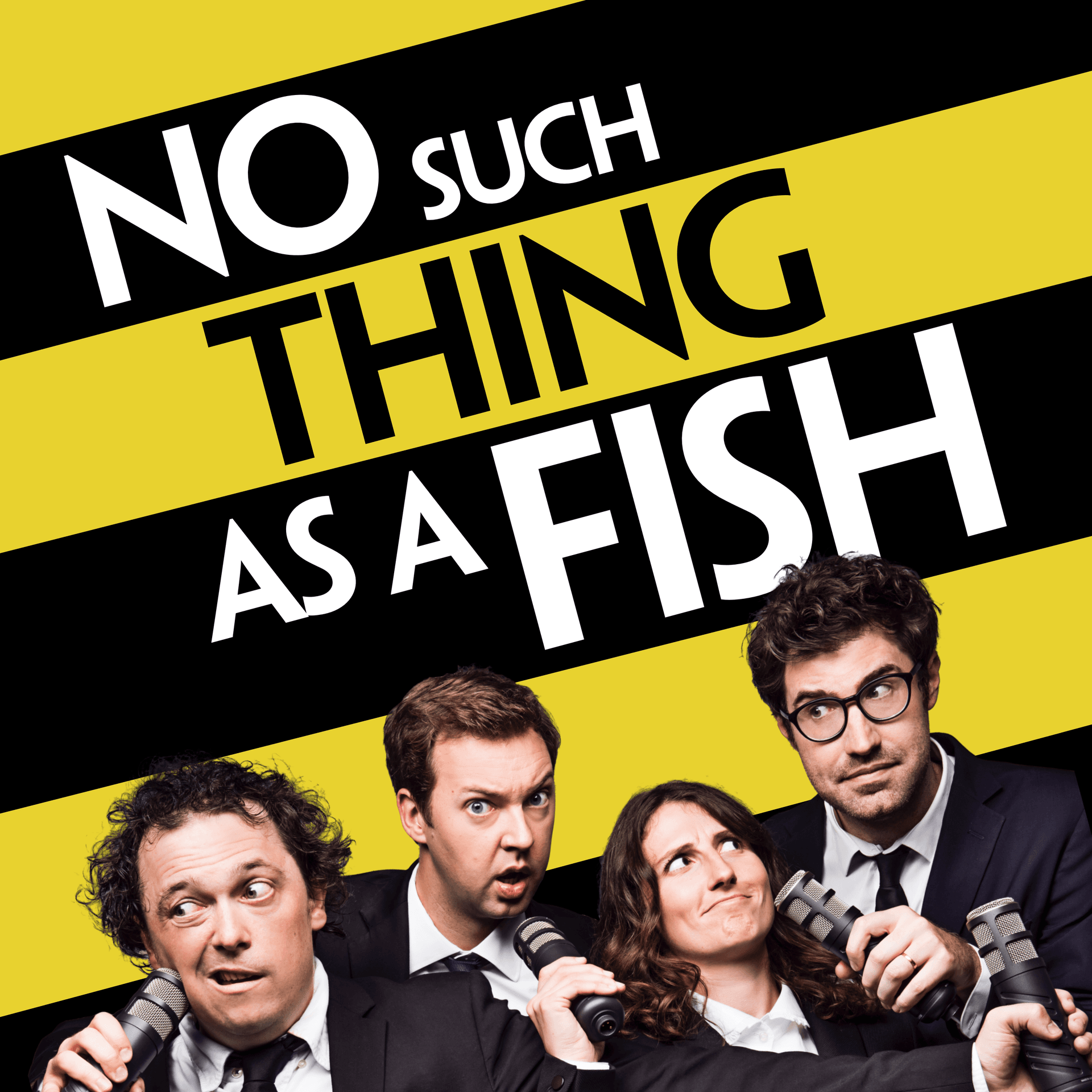
This episode of No Such Thing As A Fish mixes parenting science, vacuum physics, and volcano chemistry, plus a final “eye yoga” fact. The guests are Greg Foote, a UK science communicator and fact-checker known for BBC Radio 4’s Sliced Bread, and the regular hosts Andrew Hunter-Murray, James Harkin, and Anna Tazzynski.
Key claims and examples
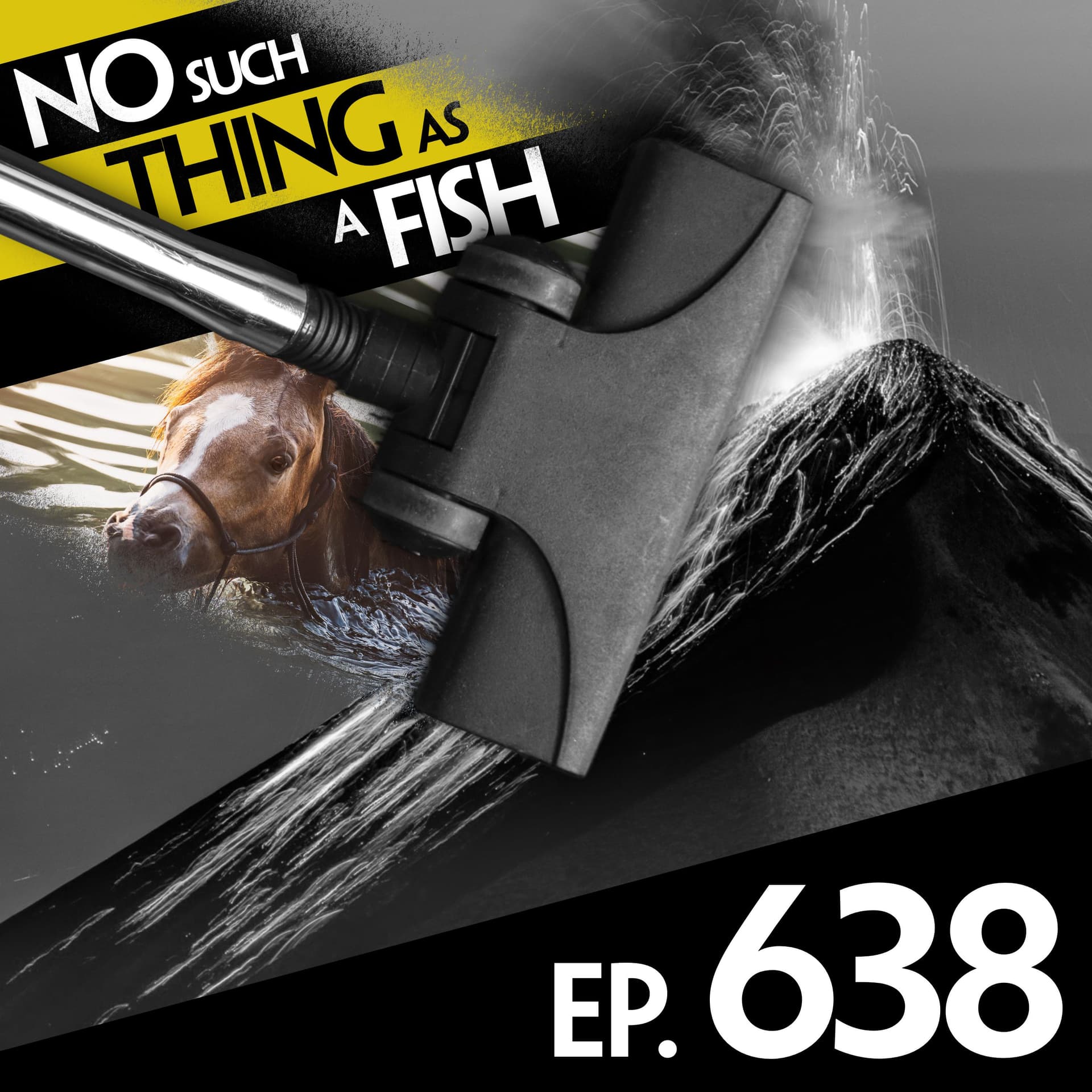
Volvo 240 vibrations were reported (via infant-crying academics) to calm crying babies; white noise may help mask household sounds but sleep experts warn it could affect babies’ arousal needs. The episode debunks Dunstan Baby Language (cry-type decoding) and notes evidence on “best parenting” is limited. It explains Magdeburg hemispheres (1654): 15 horses vs a vacuum/void, showing atmospheric pressure holds the halves together; it also discusses animal survival times in vacuums and CERN’s extreme vacuum systems. Volcanoes: Tonga’s 2022 eruption may have accelerated methane breakdown via chlorine chemistry, potentially “scrubbing” some methane. Final fact: Paul McCartney practices “iYoga,” focusing eye movements; evidence for eye-health benefits is limited.
Written by AI. May contain mistakes. Listen to the episode to check what was said.
Chapters
Tap a time to open that second in VOLive Shows Announcement
2:48 to 3:08
Hosts announce their upcoming live shows at the Royal Institution.
Introduction to the Podcast Format
3:08 to 3:22
Hosts gather to share their favorite facts from the past week.
“coming to you from the QI offices in Hoban.”
Fact 1: The Calming Volvo 240
3:22 to 4:25
Discussion about the calming effects of the Volvo 240 for babies.
“Starting with fact number one, that is Greg.”
The Origins of White Noise
4:25 to 6:20
Exploration of the history and effects of white noise on sleep.
“Because they're driving around in these massive old Volvos.”
Debate on Deep Sleep for Babies
6:20 to 7:27
Experts discuss whether babies should sleep more deeply or stay alert.
“Well, they do look like babies, don't they, most Popes?”
Historical Parenting Practices
7:27 to 9:06
Discussion on historical practices of giving alcohol to babies.
“On the other hand, if the baby's asleep, you can sleep.”
Understanding Crying Babies
9:06 to 11:20
Examination of how babies cry and why they can cry for long periods.
“I'm going to assume mothers evolutionarily.”
Cultural Differences in Baby Communication
11:20 to 13:20
Comparison of Italian and American babies' communication styles.
“I mean, I think that is the truth is that babies cry and you just basically try everything that's worked in the past.”
The Universal Cry Curve
13:20 to 14:00
Discussion on the universal patterns of crying among babies.
“Now, Italian babies were found to say fewer words than American babies of the same age.”
The Crying Patterns of Babies Across Cultures
14:00 to 16:35
Explore the similarities and differences in crying patterns of babies from various cultures and what influences these behaviors.
“And we don't really know why the Danish children don't cry as much.”
Show all 24 chapters
The Crying Patterns of Babies Across Cultures
16:38 to 18:58
Explore the similarities and differences in crying patterns of babies from various cultures and what influences these behaviors.
“Now VPN means virtual private network It's a tool that creates an encrypted tunnel for your data.”
The Crying Patterns of Babies Across Cultures
19:01 to 19:18
Explore the similarities and differences in crying patterns of babies from various cultures and what influences these behaviors.
The History and Science of Vacuums
19:18 to 28:00
Delve into the fascinating history and scientific principles behind vacuums and their experiments.
“On with the podcast On with the show Alright Time for fact number two And that is my fact My fact this week is, in 1654, a public competition was held between a team of 30 horses and a vacuum.”
Understanding Torricelli's Trumpet and Vacuums
28:00 to 29:50
Explore the paradox of Torricelli's trumpet and how vacuums function in physics.
“So one place which has one of the biggest vacuums, I think in the whole world, is CERN.”
CERN's Vacuum Systems Explained
29:50 to 32:32
Learn about the immense vacuum systems at CERN and their significance in particle physics.
Volcanoes and Their Environmental Impact
32:32 to 36:00
Discover how volcanoes can both contribute to and mitigate methane emissions.
“So what am I saying when I go into A &E and I have it attached to my toilet?”
Experiences with Erupting Volcanoes
36:00 to 39:05
Hear personal accounts of witnessing volcanic eruptions and their dramatic effects.
“But the reason that I brought volcanoes is because I saw a video of you, Greg, that you went to see some volcanoes in Japan.”
Volcanic Discoveries beyond Earth
39:05 to 42:06
Learn about volcanic activity discovered on other celestial bodies, including moons.
“It just feels like, I don't think you sink in lava, do you?”
Exploring Volcanoes on Other Worlds
42:06 to 44:32
Learn about the discovery of volcanoes on moons and Mars, and the lives of volcanologists.
“It's like from the bottom to the top, it's like the size of France or something.”
Paul McCartney's Eye Yoga
45:55 to 48:09
Uncover the concept of eye yoga as practiced by Paul McCartney and its supposed benefits.
“Okay, it's time for the final fact of the show now, and that is Anna.”
The History and Evolution of Yoga
48:10 to 51:06
Delve into the origins of modern yoga and its connections to historical practices.
“But it's like the eye test as well Because I wear contact lenses So when you have an eye test, you have to look in every direction Oh, do you?”
The Science of Eye Yoga
51:07 to 56:00
Explore the scientific perspective on eye yoga and its actual effects on vision.
“and 1930s things that are even after him.”
Exploring Eye Yoga: Myth or Reality?
56:00 to 57:02
Learn about the concept of eye yoga and its supposed benefits on eye muscles.
“So maybe this eye yoga can teach some of these internal muscles to relax your lens easier and focus up, close easier.”
The Smallest Muscle: Fun Facts
57:02 to 58:16
Discover the smallest muscle in the human body and its significance.
“I mean, it's not the maddest thing because they are muscles, the eyes.”
Transcript
Automatic transcript. May contain errors.0:00Save big on your landscaping project now at Menards. Whether you're installing a patio or a new retaining wall, Menards has the blocks you need to get the job done right. We carry the largest in-stock selection ready to take home today. Stop in and get our 12-inch smooth patio block on sale now. Save big on concrete landscape blocks at Menards. Plus, check out our weekly flyer on Menards.com for all the great deals happening now. Save big money at Menards. Hi everyone, welcome to this week's episode of No Such Thing As A Fish, where we were joined by the absolutely brilliant science communicator, Greg Futt.
0:38Now, I have known Greg for many, many years. He is really, I would say, one of the UK's premier fact checkers. If you listen to BBC Radio 4, you might know him from the show Sliced Bread, where he looks at different products and claims and sees whether the science backs them up or not. but he has a brand new podcast it's very exciting it's called the baby fact check and it is something that i really wish i had about three years ago when i had a very young baby because greg is a new father himself congratulations to him and his partner and they have realized that there is so much information out there so many claims from companies from the internet and greg has decided to use his many, many skills to work out which of these claims are true and which of them are false.
1:27It's such a great idea, and he has done it absolutely brilliantly. So if you want to listen to that, then go to The Baby Fact Check, wherever you get your podcasts. And in fact, at The Baby Fact Check is the place to go on Instagram to learn more. And if you want to know more about Greg in general, then go to gregfoot.com, and everything will be on there. On with the podcast.
1:51Anna Ptaszynski:no not on with the podcast hi James hi Andy we have more news one more exciting announcement we are doing a little run of live shows this summer we're going to the Royal Institution venerable home of science and now us temporarily we're going to be in the lecture theatre it's amazing it's an amazing thing we did a show last year there and it was so much fun it's such an amazing historic wonderful venue it's where the Royal Institution Christmas lectures are and we are going to be there on the 21st, 22nd, 23rd and 25th of July. They're all at 7.30pm. The one on the 21st is going to be live streamed and available on catch up for two weeks.
2:32Anna Ptaszynski:So please come on down, come and see us. Ruin the home of science and its reputation with our stupid jokes. If you want to get tickets, you can go to nosuchthingasafish.com slash RISummer. Okay. Come and see the show. Come and see us. Can I do On With The Podcast now? Yeah, yeah. On With The Podcast!
3:07Anna Ptaszynski:Hello and welcome to another episode of No Such Thing As A Fish, coming to you from the QI offices in Hoban. My name's Andrew Hunter-Murray and I'm here with James Harkin, Anna Tazzynski and Greg Foote. Hello. And once again, we've gathered around the microphones with our four favourite facts from the last seven days. So in no particular order, here we go. Starting with fact number one, that is Greg. Tests have shown that a Volvo 240 used to be the best car with the right vibrations to calm down a crying baby. Wow. I was told this by one of the UK's leading infant crying academics, by the way.
3:41Oh, wow. Leading infant crying academics. He goes to all the annual crying conferences, he was telling me. I was going to say Wale of a time But that feels too soon For us Oh lovely You've come to the right place For jokes like that That is amazing I think Remembering back Where I was Three or four years ago When my baby was very young If I heard this I'd be straight onto Auto car And find myself A Volvo 240 Except you said Used to Have babies changed Or have Volvos changed Well I was picturing The Volvos That big old boxy car Isn't it From the late 70s Early 90s I think cars have got quieter.
4:18I think they probably dampen their vibrations a little bit. That's true. As well. So, yeah. So James needs to go second hand.
4:24Anna Ptaszynski:Do babies have a bigger carbon footprint than the rest of us? Because they're driving around in these massive old Volvos. Babies do have a big carbon footprint, don't they? And household pets as well. They say that those are two big changes you can make in your life that's going to massively increase your carbon footprint. Feed the dog to the baby. I'm glad you went that way around. So I didn't know about Volvos in particular, but I knew that Vibrations help babies stop crying And Honda announced in 2022 A big Japanese car giant They had developed a car specifically To stop babies crying But it was a small plush Toy car Which recreates The sound of the womb I think that's what it comes down to I was reading some science papers about it Firstly, they call this rhythmic vestibular stimulation which i think is what got us into this problem in the first place but it's all about the motion and the sound supposedly being similar to what's in the womb maybe there's kind of the sound acting as white noise as well and kind of calm the baby down white noise is really interesting um i read about the first ever white noise machine i don't know if you guys found this no is it just static on a wireless it's older it's older do you want to guess oh ancient egyptians Oh, for God's sake.
5:42Anna Ptaszynski:You always shouldn't have done that. Pre-Sumerian lineage. God damn it. It's definitely earlier than you might think. It's from 1667. And the first person to ever use a white noise machine was Pope Clement IX. And he suffered from bad insomnia. And so he commissioned an architect called Gian Lorenzo Bernini to come up with some way of helping him sleep. And it was well known at the time that flowing water could help you sleep. And so Benigni came up with this machine which had a rotating wheel, collected some paper, and it would just make this white noise. And it worked. And the Pope sleeps like a baby.
6:22Well, they do look like babies, don't they, most Popes? So maybe that's why.
6:27Anna Ptaszynski:Being the Pope used to be the absolute sweetest gig in the whole world, didn't it? Yeah. If the modern Pope commissioned an architect to build him a machine to help him sleep, everyone would say you've lost touch with the people. I mean he does live in an enormous gold palace which is decorated by the greatest artists of all time yeah but he didn't commission it's a hand-me-down he got it invented so I've also been chatting to various sleep experts recently and one I spoke to about white noise and they said look white noise can help mask noises in the house like dogs barking, doorbells going, that sort of thing a bit of advice if you are going to use white noise around your baby don't make it too loud, don't put it too close to the baby's cot.
7:10But then I had this really interesting chat with Professor Helen Ball, who's the director of the Durham University Sleep Lab. And she was saying, should we really be encouraging babies to sleep more deeply and for longer? Because actually you need them to stay aroused and you don't want to blunt that arousal with something like white noise. On the other hand, if the baby's asleep, you can sleep. Yeah, that is exactly it. This is a huge problem I have with all parenting advice. is it's very baby focused.
7:41Especially with babies waking up, you know, so many people online are like, oh, teaching a baby to sleep through the night, it's actually quite unnatural. It's quite normal. And don't worry, it's healthy for your baby to be waking up every hour. I don't give a shit. It's not healthy for me. And actually for the whole family, it's less healthy if the parents aren't fresh, right? Yeah. I mean, there's definitely a catch there. So what baby needs and what you need. Well, I've shown you what side I'm on. well you know there was some advice for babies that would have worked for you as well Anna because it does seem like in the medieval times a lot of babies would drink wine and in quite decent quantities as well so there was a physician called Bartholomeus Scherenmuller who was asked what should you do if you can't get your baby to stop drinking wine and he said if you cannot get the child off wine referring to red wine uh then give it white wine uh well diluted and that will wean it off the red wine and doesn't stain their teeth as well they don't have teeth
8:44Anna Ptaszynski:um so was it so it was diluted but i mean still probably not best practice well i i think so now no no yeah i mean colic drops they used to be alcoholic what was that colic drops used to be alcoholic so colic is basically just a catch-all term for uncontrollable crying lots of crying yeah yeah and you used to get these drops that would help them and they would have alcohol but also opium sometimes i think yeah it does the days um there was something called mrs winslow's soothing syrup which was basically morphine but in the ebus papyrus which is one of the oldest papyrus from ancient Egypt that we have about medicine and stuff they do say that you should prevent the excessive crying of children by giving them opium wow all of this would have been extremely effective you can't deny it and definitely not saying we should do it but it would have worked it's a bad idea yeah it would have worked yeah um who do you think is better at distinct this is going to be a biased sample but distinguishing their own baby's cries from other babies out of mothers and fathers.
9:46I'm going to assume mothers evolutionarily. Yeah I think it is it is quite notable when you hear even like as older children when they're all playing a load of them and your child cries you can kind of notice it can't you? Well there you go and you're not a mother are you? No. Well there you go so that's two theories exploded in James's last point so it's not mothers particularly it's just that mothers have always historically in studies been better at distinguish their babies crying and much better because they've always spent more time with their babies. But if you do controlled studies, then it's just about how much time you spend with a kid.
10:21And so that's changing a lot. And actually, it doesn't even have to be your child. They ran a study where non-parents would train to identify a specific baby's cry, you know, hear it a few times and then had to pick it out of a bunch of other cries that weren't that baby. And they were as good as the parents at doing it. Talking baby cries, have you heard that whole thing about how you can tell from the cry what is up with the baby like this is called the dunstan baby language and the idea is that there are particular cries for hunger i'm sleepy i'm gassy lower gas or upper gas different cry and it was a big thing i came across this because of social media it was a clip from oprah many years ago and this lady was was on there explaining these cries and i watched it and i was like that's totally it my baby's doing that i've totally got it and i I became this like baby cry detective for the next week, trying to figure it out.
11:10And then I spoke to the experts and the expert was like, nope. Oh, great. Thanks so much. It just doesn't work. Unless the parents have contextual information, it's not a thing. I mean, I think that is the truth is that babies cry and you just basically try everything that's worked in the past. You try all those things until one of them works again. Yeah. And to save possible parents a lot of time, there is almost no reliable evidence on the best way to raise children at that age because the studies have not been done. So there are good studies that say, don't neglect or abuse your children if they have a bad time.
11:41But there aren't good studies that say, if you hold and stroke your child for eight hours a day, as opposed to 10 hours a day, they will grow up to be really independent.
11:50Anna Ptaszynski:Because it's just so hard to get any evidence with that level of detail. Exactly. With enough of a sample size. Exactly, and across enough time. Because there are a million variables. Not particularly ethical either. Just leave that one crying. But look after that one and let's see what happens. How babies keep crying is insane Because babies can cry for hours and hours, right? And if any one of us were to scream for several hours We would be in pain Oh my god, how do they do it? Have you got the answer? Have they got circular breathing? Should we get them on the bagpipes? All babies are either Scottish or Australian And they're really good But yeah, no one could You know, you'd get, what is it called?
12:25Anna Ptaszynski:Nodules I mean, you'd really Yeah, no, it would have serious injuries Like, for instance, a lot of metal singers they do it for a little while and then they have terrible they have to have operations. But basically their vocal cords baby's vocal cords are physically just very different to adult vocal cords. They don't have stiffening ligaments and they're full of hyaluronic acid. So what that means, the effect is that they're way more elastic and they absorb way more shock which allows the baby to cry for hour after hour after hour. And it's part of the reason it's not the whole reason, it's part of the reason they can't speak It's all too floppy.
13:01Anna Ptaszynski:It's all too floppy yeah yeah it's not the only reason they can't speak they don't know anything yet i've known a lot of people who speak very well who don't know anything and dan will be back next no no no it's not fair it's not fair um yeah anyway that's why they can scream for a long time i'm so happy i know that because i always felt quite sorry for certain babies if they're left for prolonged periods crying because i think that must be really hurting them at this point but now i know they don't care no they're fine one of the favorite facts that I came across recently in the Baby Fact Check podcast that I've been making is that there's this really interesting bit of research looking at Italian babies and American babies.
13:39Now, Italian babies were found to say fewer words than American babies of the same age. However, when researchers actually looked into this, they saw that Italian babies use gestures way more than American babies. They say for words like eat and telephone and big and hot and good. and when they added up the number of spoken words and gestures from the Italian babies it was the same number of spoken words from American babies no way how awesome is that
14:08Anna Ptaszynski:Italian American babies are a different thing as well don't mess don't mess with them if you're trying to sort of reduce the amount that your baby cries in the early days don't bother because they've done one of the few reliable studies they have done is look to all societies including hunter-gatherer societies to see which babies cry more or less and it's basically exactly the same in terms of frequency that a baby under three months will cry i think three months maybe under two months so they cry for less long often in hunter-gatherer societies largely i think because hunter-gatherers tend to pick them up whereas often in our western societies we leave them there there is a cry curve that is universal um on average i think babies increase their crying around week five to six until week eight when it starts to reduce and researchers looked at 8 600 babies and their cry levels and they found that there were babies even at the peak that only cried 30 to 40 minutes in 24 hours super babies whereas others cried for seven hours out of every 24 hours spectrum yeah and it's is it just literally good luck or bad luck most of the time like it seems to me like the number of people i know who have more than one child and one of them has been a perfect angel and the other one has cried non-stop yeah it's just it seems to be yeah it's nothing you can do i did read like you said that pretty much all societies are the same but i did read one study that said that danish babies cry less than other this is later on so yes you're absolutely right this was just in the early days and then when the babies get older than six weeks or so then there is a big variation isn't there Yes, the Danes don't seem to cry.
15:47And we don't really know why the Danish children don't cry as much. Some people think that it's like because Danish parents hold their children more. Maybe it's genetics. Some people think it's because they have such good health care and long parental leave that the parents aren't stressed. And it means that the parental stress isn't sort of impacting on the child.
16:06Anna Ptaszynski:I've heard breastfeeding. Have you? I've heard breastfeeding. Andy, we're in the middle of something. Oh, I'm sorry. Were you saying a fact? I'm sorry. You've got super hearing But you can hear it from the other side of London Can't you? I must go A woman is breastfeeding but not being observed by a weird stranger
16:31Stop the podcast Stop the podcast Everyone we'd like to let you know that this week
16:35Anna Ptaszynski:We're sponsored by NordVPN That is right Now VPN means virtual private network It's a tool that creates an encrypted tunnel for your data. A secure tunnel. It protects your online identity, it hides your IP address, and it allows you to enjoy increased security wherever you are in cyberspace. Absolutely. Wherever you are in actual space, you can be in your own secret tunnel in cyberspace. It does sound like the future. It sounds like the future, and in the future I'm going on holiday. I will be in Montenegro next, in a couple of weeks. While I'm there, I will download Nord VPN so that I can get access to anything in the UK while I'm in Montenegro.
17:14So let's say the World Cup is on and I want to hear from the pundits on British television,
17:21Anna Ptaszynski:I'll be able to do it. Interesting. Well, the good news, James, is everyone in your family will be able to do that too because you can protect your whole household with one NordVPN account, and that includes shared gadgets. If you would like to get involved with NordVPN, then you must go to NordVPN, that's N-O-R-D-V-P-N dot com slash fish. And if you do that, You can get a two-year plan with four months extra. It's risk-free with Nord's 30-day money-back guarantee. That's right. NordVPN.com slash fish. Do it now. Stop the podcast. Stop the podcast. Hi, everybody. Just to let you know, we are sponsored this week by Squarespace.
17:59Andy, have you set up your website for the things that are not named after what you think they're going to be named after, but are actually named after a person with a strangely opposite name dot com yet?
18:09Anna Ptaszynski:Well, funny you ask, James, because I've been having problems finding a designer willing to work on that. Have you? I've had the advert out for ages and no one seems to think it's a good idea. Well, the way that you need to go is Squarespace because Squarespace is the place to go if you want to build a website. They have all sorts of amazing things. There are search engine optimization tools so that when people want to Google things that are named not after the obvious seeming reason, but for someone with the strangely opposite name, anyone Googling that phrase will be served my website first.
18:44Anna Ptaszynski:I'll be able to sell things on that. There's just so much that Squarespace offers and they make it simple and easy. Absolutely. So if you would like to build your own website, then make sure you go to Squarespace and take advantage of this offer. If you go to squarespace.com slash fish You will get a free trial And when you're ready to launch Use the offer code fish To save 10 % off your first purchase Of a website or domain That's right Did you know James the website was named after Sir Adrian website Who created the first website in 1782 Someone please help me On with the podcast On with the show
19:24Anna Ptaszynski:Alright Time for fact number two And that is my fact My fact this week is, in 1654, a public competition was held between a team of 30 horses and a vacuum. And the winner was? The vacuum. Yeah. Was the competition who can suck up the most bits of dust from the carpet? Henry won. So this is an amazing thing. So when I said vacuum, I'm being trickstery. It was a vacuum not in the sense of a vacuum cleaner. It was just in the sense of a void in space. like a vacuum with nothing in it, you know? That's all right. You didn't say the word cleaner. No, true. We'll accept it. Thank you, Anna. So this is a thing that's called the Magdeburg Hemispheres.
20:06Anna Ptaszynski:Die Magdeburger Halbkugel. Magdeburg City in Germany. I don't know what a hemisphere is. It's a hemisphere. But it's... Half a sphere. Half a sphere. It's the brainchild of this guy called Otto von Goeriger, who was crazy, and maybe we'll come on to him. But he was interested in the idea of the concept of a vacuum because people didn't really know what a vacuum was. And you know, it all comes back to barometers. As it always does with you, Andy. So you've got a glass tube full of mercury, right? And when the pressure drops because the weather's about to turn bad, the mercury drops in the tube, right?
20:42Anna Ptaszynski:But what goes in that gap? What is at the top? It can't be air because there's no way for air to get through the mercury. What is in there? And various people thought it was something called ether or all sorts of theories. And von Gericke thought he'd experiment to find out. And in 1654, he created one of the first ever vacuums. He made these two iron hemispheres, sealed them neatly together, didn't attach them at all apart from pumping the air out. And once he'd done that really effectively and closed the valve, nothing could pull these hemispheres apart. And he did this big public demonstration in front of the emperor, I think, where two teams of 15 horses were attached to each one of these hemispheres and they tried their absolute hardest.
21:25Anna Ptaszynski:This was entertainment. Have you ever come across these things, Greg? I don't have any horses, but Andy, I did bring you a present. Look at this! It goes, oh my God! I brought you some mini Magdeburg spheres. I'm so excited. I have a lot of science props at home and I thought I must have some of these. So here you go, there's one half past you. And now the seal that you can see inside, actually known as a mating rim. Oh, well, right. I've lubed up your mating rim and my mating rim. Let's put them together. Shall we leave? No, please stay. So hang on. Okay. Let's close them together. Okay. Let me just attach this.
22:00This is the fiddly bit. Okay. I've got a rudimentary, not vacuum pump, but a way to remove some of the air. So just put that on the end. Here we go. Okay. So Greg's kind of pulling on a trigger of like, it's like a gun shaped rubber thing. And he is presumably removing all the air. Remove the air. Okay. Close the valve. Okay. Okay, so now we've pulled out quite a lot of the air that's inside the spheres.
22:26Anna Ptaszynski:I'm so excited. You bring your best 15 horsepower. I'll bring my best 15 horses. Okay, you ready? Yeah. Three, two, one, pull. Oh my God. That's not going to happen. Not even twist it. No. Wow. Oh my goodness. Once I open this and the air comes out. Oh my God. Love it. Although if Andy had just asked his wife to do it, it would have been fine. She's very good on the jars. That is stunning. That's so cool. That is so cool, Greg. I love it. Isn't it great? Look at that. Magdeburg hemispheres. You're welcome. I guess we should say what causes them to stick is basically that the air pressure on the outside is pushing in so hard because there's nothing on the inside.
23:01There's nothing to push out. Right, exactly. And so that's why it's served. Yeah, you're essentially pushing against atmosphere, aren't you? Yeah.
Read the full transcript
23:07Anna Ptaszynski:It was controversial. Well, not controversial, but you know, no one thought he was right about this until he demonstrated it. Well, they thought that vacuums couldn't exist for most of history. Yeah. One of the ancients said, nature appalls a vacuum. and the idea was if one ever came in nature, somehow something would fill it. Yeah. Makes sense. Yeah, it does make sense, but it's not true. As we have seen right now, we can make them. But yeah, this guy, this guy, how do you say his name, Andy? Otto von Gierke. Von Gierke. He did this in Magdeburg and Magdeburg had very, very recently been the victim of the worst atrocity in the 30 Years' War where the population went down from 20 ,000 to 4 ,000 due to an enormous massacre.
23:52God. And this public competition was almost like, look, we're back, guys. Like having the Olympics or something. A little bit like that, yeah. It was like, you know, we've had a terrible time, but von Goerke was now the mayor or kind of the mayor. And he was saying, well, look, we can put on these big events of horses pulling things apart. Yeah. Isn't that weird? I was reading about, this was 15 horses versus 15 horses. Someone tried it with 16. Someone tried it with 17 over the coming years. Really? Didn't help. I wonder how many horses would be able to pull that apart. There must be a limit, right?
24:25Yeah. Well, I don't know. I mean, I was looking at the maths. And apparently, if he could achieve a full vacuum inside the hemispheres, it would have been held together with a force of around 20 ,000 newtons, which is the equivalent to lifting, people say, a car or a small elephant. Okay. It depends on the type of elephant, if we want to be pedantic, which I know you lot very much love to be. And the car.
24:48Anna Ptaszynski:If it's a small plush car made by Honda, maybe not. Cozy goop. There's a monument to him or to the spheres in Magdeburg now. It's beautiful. It's one of the sets of hemispheres and one horse at either end and they're straining away and it's not coming apart. And this guy, Von Gerke, he was like, I'm really surprised that his name doesn't come up more. Like it seems like he was absolutely massively important In loads and loads of physics But just never got anything named after him Yeah It's a hard word to spell Is that a university? Oh there's a university named after him Oh that's cool But it's not like Pascal after whom the pressure is named after or He did write this up in his book Which was only published in English in 1994 What?
25:32Anna Ptaszynski:Bloody publishers Great news we've got a translation deal What? You've been dead for 350 years guys what do you think would happen if you got into a vacuum die yeah explode not necessarily well not immediately you would die very soon but not as quickly as you might think in the 1960s when it was more okay to do this kind of thing they put various animals in vacuums to see what happened because you know it was the age of space travel they were thinking what will happen to humans if they end up accidentally and so in 1965 they put dogs in a vacuum and they found that dogs in a vacuum for 90 seconds always survived, always.
26:11Now, they had a bad time. They would immediately fall unconscious. The gas evacuating from their whole bodies, because once you're in a vacuum, the gas wants to leave your body, caused simultaneous defecation, projectile vomiting, and urination, and they swelled up to resemble a massive balloon. But, good news, once we pressurised, they're fine after 10 minutes. What? They were blind for a little bit longer. Jesus. But they did the same with chimps in 1964, and they found that chimps could last 3.5 minutes. No way. And then within 72 minutes after recompression, they're fine. Again, they swelled up like a huge balloon and then they were okay.
26:46So that's good to know. If you do fall into a vacuum, you've got maybe 3 to 3.5 minutes. Well, we think we're closer to chimps in maybe three and a half minutes. Okay. The first vacuum you were talking about was made like with barometers. Oh yeah. I was just bringing it back to barometers. Thank you. It was by a guy called Torricelli and Torricelli was also the first person to explain that wind is caused by changes in air temperature. So he's quite good. People before that thought that wind was caused by dampness coming from the earth and causing stuff to blow around. But he also invented something called Torricelli's trumpet, right?
27:22So this is, it's a cone, and the cone gets thinner as it goes along, and it gets thinner and thinner and thinner and thinner, but it goes on for infinity. So it's infinitely long. Did someone build this? It cannot be built. It's a theoretical cone. But the really interesting thing about it is...
27:42Anna Ptaszynski:He's in the back row of the orchestra. He's also in the front row of the orchestra. He's also 200 miles away. The really interesting thing about it is that the surface area of the cone is infinite because it goes on forever. Okay. But you can show by maths that the volume is finite. You can work out what the actual volume is. and so that means that if you fill it with paint you can have a finite amount of paint which covers an infinite amount of area what no way no no no hang on how's it a logical paradigm it's going on forever how can the volume be finite because the thing is going on yeah does it eventually get tighter than an atom of paint it's basically just a trick of um infinities okay okay okay and it's mathematical thing it's theoretical it can't exist right that's amazing and it's because basically you work out the the surface area by adding a load of things together until you get to infinity and you work out the volume by adding a load of things before you get to infinity and they're slightly different things and one of them ends up equaling infinity and the other one ends up equaling a finite number it's a good prank as well for someone on their first day can you just go out and get some paint no we've got stripy paint i need enough paint to paint the inside of what was this trumpet?
28:57Anna Ptaszynski:Torricelli. Torricelli's trumpet. Yeah. Just get down to being cute. On vacuums. Yeah. So one place which has one of the biggest vacuums, I think in the whole world, is CERN. So a large hadron collider, a particle accelerator, very, very big and exciting physics happening. And what they have to do, they have to have these enormous vacuum systems to clear the tubes so that the particles they're I'm simplifying but it's I'm at my maximum level but I'm also I know I'm simplifying drastically so the particles don't smash into the wrong things they're trying to smash particles together so apparently it's about they say that it's the nave of a cathedral in volume that they have to completely empty out because it's a massive great ring you know but the volume is thousands and thousands of cubic metres you get different sized cathedrals of course This wasn't like a small plushy cathedral No it wasn't No what a good point More of St Paul's Yeah yeah yeah Like let's say a medium cathedral Alright let's begin the cathedral thing alright They have to empty Just the nave not the chancel
30:14Anna Ptaszynski:It could probably be the whole of a Tiny cathedral They have to suck out a volume Of air Thank you Greg Am I concentrating on the wrong thing here Andy? But basically So they pump in this extremely cold gas It takes two weeks of pumping To get the gases that are inside the ring To condense And then adhere to the walls of the pipe By adsorption So not absorption Adsorption The sort of chemical attachment And even after this huge amount of work they've done The air inside the space they're trying to clear Still contains about 3 million molecules Per cubic centimetre so even after all that work and that's just because there are more molecules everywhere than you think you just can't get your head around you can't get your head around it no it's it's this is where you have to say avogadro oh yeah remember that from chemistry avogadro is constant yeah something times 10 to the 23 yeah and it's you always have to add it to your equations to get the number of molecules in things oh right how you calculate how big a cathedral has to be okay thank you yeah yeah and basically it's the equivalent of being several 100 miles above the earth because the you know the atmosphere there is so much so much less up there so many fewer molecules but it's still not completely empty well this is because what would you guys say is the definition of a vacuum well completely empty i would say completely empty is there never a real vacuum no well basically never and almost everything that we call a vacuum isn't even close you know when you like vacuum packed or um vacuum sealed or vacuum cleaner vacuum cleaner all of that stuff is like you just have to basically the definition of a vacuum is actually the air pressure on one side is lower than atmospheric air pressure that's it it doesn't mean empty okay so just usually if you've taken out about 70 to 90 percent of the air then that creates the vacuum and so nothing it's all got air in it hasn't it interesting a vacuum cleaner doesn't suck it blows so there's a fan inside that blows air out of the machine and as you've just said that lowers the air pressure inside so there's a pressure differential between the inside and the outside, the surrounding air then rushes in and it brings any little bits of dust and crud and whatever and toast on your kitchen floor into the vacuum cleaner.
32:25Clever. That's why you shouldn't use them backwards because it just flies dust out. That's really cool. That is really interesting. So what am I saying when I go into A &E and I have it attached to my toilet? That it blew my penis into it?
32:45That's it.
32:51Anna Ptaszynski:okay it's time for fact number three and that is james okay my fact this week is that volcanoes sometimes clean up after themselves good house guests yeah yeah are we talking lava going back up amazingly they suck they don't blow um no so this is something that they found out from the hunger Tonga Hunga Harper submarine volcano which erupted in 2022 and basically blew up a lot of Tonga it was an enormous volcano it's one of the biggest we've had for many many many years and scientists managed to do some studies about it and recently they found that it fired out all of this methane okay which would be very bad for global warming because it's a greenhouse gas but at the same time as with firing it out it fired out some other stuff which destroyed methane as well okay so it fires out seawater mixed with ash and that can mix with sunlight to produce reactive chlorine atoms i'm going on very much the edge of my understandings here and that helps to accelerate the decomposition of methane which means the methane loses its hydrogen atoms gets chlorine instead turns into formaldehyde which then turns into co2 and water now the problem is that it does this on a huge scale but not nearly as huge as the scale it does of blowing the stuff off so it releases overall about the annual emissions of methane of about two million cows what this eruption did yeah um but it kind of cleans up around three hundredth of that per day and it does it for about 10 days and then it stops so there's still plenty of methane being sent but it does do some cleaning and the interesting thing as far as the researchers are concerned is it's possible now that we've seen this happens in nature it could be a way of us scrubbing methane out of the sky.
34:56Yeah, wow. By using something similar.
34:58Anna Ptaszynski:Because methane is one of the really bad greenhouse gases, isn't it? But it's shorter lived. Yeah, exactly. So, you know, if you act on methane quickly, that's a really good way of dealing with a chunk of the problem. Yeah, exactly. If you manage to shove a load of chlorine up there as well, which does also feel like it might have its own issues. What's the hole in the ozone layer? CFC, isn't that chlorofluorocarbons? So that, I presume it's at a different height or at a different size. Chemistry is by far the weakest of all of my sciences. Yeah, let's not pretend we all know the difference between chlorine and chlorofluorocarbons and the effect they would have.
35:31But someone should do something about it. Someone should start firing volcanoes at the atmosphere, is what you're saying. I just like the idea of them cleaning up after themselves. Well, sort of, to the extent that if you ask a teenage boy to clean up after himself, you know, he does a little bit of a token. He does one tenth of the work. They did find a lot of the methane underneath the bed. I was thinking, does that mean you put a little volcano in a field full of cows? Oh, that's a good idea. Or a load of cows into a volcano. Oh, lovely. It's barbecue night. But the reason that I brought volcanoes is because I saw a video of you, Greg, that you went to see some volcanoes in Japan.
36:06Is that right? Yeah, I did. This was a few years back now. So I was traveling the world meeting scientists whose work was investigating the science of risk. and there was a scientist who was looking at the risk of volcanic ash affecting jet engines for airplanes and he was doing a lot of work out in japan so i went to see the sakurajima volcano which is the the most active volcano in japan and we got there and we thought oh okay we've got we've got three days to try to get this on camera that's fine loads of time for me to chat to the scientist and we'll get a lot of you know gvs lovely loads of shots of it within an hour of getting there the thing erupted.
36:44Wow. And then it basically didn't stop. Every like two hours it would erupt again. Ah. Wow. So I can say I've had sushi under an active volcano where we just sat there going, oh, it's going again. Wow. And what did it look like? Was it just lots of black smoke? Actually, a lot of white smoke. Yeah.
37:00Anna Ptaszynski:So that is a new pipe. Or actually slightly blue smoke. This was quite interesting because of the sulfur dioxide that's coming out. Again, chemistry. And I could hear it burping on the way as we were kind of driving up towards this volcano. So these like, these whooshes, which was it venting. It was like building up the pressure and like burping out of it in the pressure again. So it was a phenomenal experience. You'd see these absolutely massive lumps be thrown out from this volcano. And I remember Dr. Cimarelli was his name. It was like, oh, yeah, that one's as big as a bus. I'm like, what? You can't get your head around that.
37:36Yeah, it's incredible. Burping sulfur and methane sounds like sort of being around an alcoholic in the middle of the age.
37:45I've been to see I've seen two erupting volcanoes And didn't have nearly as good an experience as you did I went to one in Reunion Where it was kind of a really tiny eruption That was happening on the side of a mountain And you could just see a little bit of red And a little bit of smoke It wasn't like a big one that you see in a cartoon or something And then I went to Iafiathljogl in Iceland Well pronounced Remember when that happened So I was there then and I took a bus Up to the fields where it was happening And I got loads of videos of just Grey ash Literally you can't see anything At all it's just complete ash I didn't know you were there for that No I'd forgotten that as well Did you see any lightning?
38:28No but I have heard about this Yeah the electrification of the ash can produce thunder and lightning In the cloud that comes out of a volcano And that is one of the theories for How life started on the planet Lightning in a volcano that is cool it's a frankenstein moment isn't it that is amazing yeah this one in tonga that happened in 2022 apparently there were over 200 000 flashes of lightning which was about 2600 flashes per minute at its peak wow it's like basically the most lightning that we've ever seen in one place at one time oh my god do you guys know about robert landsberg nope i don't think we've talked about him before he was a photographer and he lived quite near mountaint helens in um washington state and he in 1980 uh it looked like it was having a little eruption as they do something's a little belch um and so he went to take some photos and video of it and he'd been a lot before and done that and when he got there well we don't we don't have his first hand account for reasons you'll realize but um when he got there it's my little alert
39:32Anna Ptaszynski:jackal's volcano
39:38he clearly realized at some point that it was going to be a huge eruption as it was and that he was probably too close to get away but what he did was what we know he did was he took the photos and then he put the shutter back over the lens he rewound the whole film into its protective canister he put it back in his bag and then he lay on top of his bag to protect the photos that he'd had so his body was found a few days later would that work it did work we've got the photos to be honest they're only okay but did they come back with a little sticker on them saying maybe stay further away from the volcano in the future goodness me sacrifice what was his name uh he's It's called Robert Landsberg.
40:23Wow. Dedication to the job. It just feels like, I don't think you sink in lava, do you? Because your body is lighter than it. Yeah, I think it was more the ash. Oh, it was the ash, I see. Or like the extreme heat sort of pulverized him, but saved his... It wasn't like a big sort of lava flow came and it went over the top of it. No, no. I see. We only just found out what the largest volcano on Earth is. I think it was... Where is it? Five years ago. Chimborazo? it's no it's a shield volcano so these are the really um like gently sloping massive ones they're not as exciting they're not the cartoon volcanoes um called shield volcanoes because they look like a shield if it's lying down because they slightly come off the ground and then they've got a little nipple in the middle which is where the uh that is where the lava comes out anyway um scientists were doing a survey uh surveying the ocean floor in 2020 we thought it was mona loa and they found volcano that is twice as big oh is that an underwater one underwater one yeah cheating a bit i know that's right on the lower is the one in hawaii which is if you go from the bottom of the ocean to the top of it is taller than everest yes exactly but it perks up above the ocean but
41:31Anna Ptaszynski:it starts underneath is that right yeah okay okay nice very but anyway it's can't even claim that it's puha honu if anyone asks uh which which means turtle surfacing for breath um and uh it's big yeah how many cathedrals abogadro people are still it's amazing people are still finding volcanoes but not always under the water or on earth there was someone called linda a marabito who was the first person to find volcanic activity in space on io a moon of jupiter um she was working for the jet propulsion laboratory and she saw some images and thought that could only come from a volcano and then since then people have found all sorts of volcanoes on various different moons rosalie lopez found 71 volcanoes on io and what i like about her is she was an astronomer but during the last three weeks of her course mount etna exploded near where she was working and she thought you know what i should also go into volcanoes and she completely changed the direction of her studying and went into space volcanoes instead and then became one of the best people who have found some of the most volcanoes in space out of anyone are they bigger that feels like the ones on iron must be bigger yeah but they're a long way away andy no no i know quite hard to see them i'm not saying she's had i'm not saying she's taken the easy way out i wasn't even close to that no i know you weren't um yeah like i think the largest one we know of is on Mars, isn't it?
43:04Anna Ptaszynski:Oh, I'm sure you're right. Yeah, yeah, yeah. And again, it's like very, very wide. It's like from the bottom to the top, it's like the size of France or something. It's like very, very, if you walked up it, you'd barely even notice you were walking up a hill. But by the time you got to the top of it, you were higher than anywhere else that we know about. Katia Morris Craft, you read about them in the course of your research? They are fantastic. A French pair of volcanologists who really lived their life. You know, they had a honeymoon at Stromboli, a volcano. They were often the first people to get to a volcano.
43:39Anna Ptaszynski:And they shot a lot of footage. When was this? 70s and 80s. Oh, right. So lots of the classic footage that I remember seeing as a child. You need to have a video about volcanoes. And it was exciting. That was, you know, I'm sure lots of it was shot by them because they just, they took so much amazing footage. And they did it, you know, they rushed. As soon as they heard a volcano was going off, they'd rush there. and tragically they died as well. They rushed to Mount Unzen in Japan and they were killed by it. Isn't that tragically when they would genuinely say they died doing what they loved? They did.
44:11Anna Ptaszynski:In fact, Morris said he wanted to die at the edge of a volcano. I mean... Would it be tragic if a microphone fell on your head and you died doing what you loved? If people laughed, then I'm doing what I loved. Well, actually, if there's an awkward silence then we move on. That's my true gift.
44:33stop the podcast stop the podcast everyone we'd like to let you know that this week we are
44:37Anna Ptaszynski:sponsored by salie yes salie is an e-sim service app basically if you travel and you would like data in more than 200 destinations then you should get salie yes it is a very easy thing to use you You download it once, you attach it to your phone and you have data wherever you go. It's affordable. They have plans for all over the world. Just so simple. You just do it yourself. It's eSIM, PSIM. That's really good. I should work in advertising. You absolutely should. I used Saley recently, genuinely. Did you? I went to Germany for a couple of days and on the runway, I remembered, oh, data. Oh, I haven't sorted out the data.
45:18Anna Ptaszynski:And between getting onto the plane and sitting down and then starting to taxi, it was maybe three minutes. I had sorted. Ah, great. Saley, here's how much data I need. Here's how long I'm going to need it for. Tick, tick, tick. It was sorted. Well, if you are interested in Saley, you can get an exclusive 15 % discount on Saley data plans by using the offer code FISH at checkout. So download the Saley app or go to Saley.com slash FISH. That's right. Saley.com slash FISH and get that 15 % discount. On with the show. On with the podcast.
45:55Anna Ptaszynski:Okay, it's time for the final fact of the show now, and that is Anna. My fact this week is that Paul McCartney does iYoga. So we've done quite difficult chemistry and physics so far. And you're keeping us highbrow, Anna? Yeah, exactly. I'm keeping us rooted in what the people want to hear about. And that's iYoga, because it's becoming a bit of a thing. Paul McCartney was introduced to it on a trip to India in the late 2000s, I think. And he was asked what his iYoga entailed. so he said you keep your head still and then you look up as far as you can for two to three seconds then as far down as you can then diagonally so you make a union jack as he described it with your eyes and next you cross your eyes for two to three seconds um and then you look great by the way guys and then you finish by focusing on a distant object and the idea is that you're exercising your eye muscles because how distant like a volcano on the moon if you can get there then you're doing very well and what is the idea that this makes his eyes healthier or helps his just general vibe or what he i would say to give him credit flippantly comments that he does still doesn't need glasses and that's probably why but that it makes your eyes healthier because you're exercising the muscles i mean there's no evidence to support that at all um the only thing that there's evidence for is that if you do um sometimes take a break from looking at the screen and focus on something distant, that's good for, you know, stop you getting headaches.
47:18But a lot of people do this eye yoga and yeah, it's a thing. And it comes from Buddhist practices, candle gazing it used to be where you're just supposed to stare at a candle without blinking until your eyes water and that purifies your body. Oh, you can have a blind spot every time you blink for the rest of the day. Yeah. Yeah.
47:38Anna Ptaszynski:Do take a break from the candle every 20 minutes. If you're doing a lot of focus candle work, just take 20 minutes looking at something else. Ideally, look at a phone briefly. I was trying to come up with Beatles related When I saw her standing there Oh That's great I am sore Yeah Because you're stopping your eyes Being sore But then I would say Like we sent each other These facts about a week ago And it's quite easy To go onto Wikipedia And look at a list Of all Beatles songs Yeah And that was the best You came up with Yeah Okay I missed I missed that crucial step I just thought Oh that's what it'll do It made it so into my notes And I haven't bothered to I should have gone back for a second bite of the cherry Yeah, yeah Well, the inbox is podcasting No, I'm not even actually Please don't write in with all Beatles songs with the word I in them Because we don't I don't have the bandwidth I'm sorry, I wish I did Yeah, no, eye yoga is just looking at stuff It's just looking at stuff, isn't it?
48:34Anna Ptaszynski:But it's like the eye test as well Because I wear contact lenses So when you have an eye test, you have to look in every direction Oh, do you? do you? Yeah, they're trying to see the inside of the back of your eye and so just to get a good view of everything to make sure it's all I don't think someone's peering in Paul McCartney's eye though every time he's doing it going, retina looks good mate you're alright same time tomorrow Although he did say he likes people looking at him when he does his actual yoga so he's a yoga practitioner and he says he regularly practices yoga with a group of friends who are called the Yoga Boys which includes Alec Baldwin very cool, well done but he finishes his yoga workout out every morning with a five minute headstand and he says he basically sort of does it to show off because he says if i'm in the gym the big guys have got their weights and they're looking really beefy and cool and they're suddenly really impressed by his five minute headstand they come up to him afterwards and presumably say you're fucking paul mccartney you're like paul mccartney like a lot of these yoga poses are relatively new right they're from the 19th and 20th century Yeah, almost all of them, in fact.
49:41Yeah, I think they all, yeah. Because like the old historical yoga practices, they would basically meditate. They weren't do a downward dog. No. Or this kind of stuff. And all this kind of stuff came in the late 19th, early 20th century. And it's a mixture between old Indian practices and Western, especially Scandinavian, exercise routines that people did. Yeah.
50:05Anna Ptaszynski:Stretching is good. Yeah, not to say there's nothing wrong with being a modern. Absolutely not. But did you read about Bernard, who invented modern yoga? Bernard? Yeah, Bernard. Guy called Pierre Bernard from Des Moines. There had been a few monks who'd come over to the West, right, and done a bit of yogic practice, but it wasn't the developed... It wasn't lots of the exercises we know today. And Pierre Bernard, he founded this thing called the Tantric Order of America and started teaching yoga in 1905. And he claimed he'd learned it from a guru who was either Indian, Persian, Syrian, French, or Bengali.
50:38Anna Ptaszynski:okay French was not legit lots I know that is a curveball it is a curveball the others are all quite somewhere from the east the thing is lots of his followers were massive white supremacists this is an ironic thing who claimed that an Aryan i.e. white race had created yoga no way before moving to India in the first place none of this is true but don't tell the yogis that it's white supremacists who got it popular yeah well I think some of his followers were not all of them by any means but lots of those things as James says downward dog and sun salutations and 1930s things that are even after him.
51:10There were like some kind of things that you did that were poses, but they were mostly just sit comfortably while you're doing your meditation. But they did have different names and they were mostly based on animals. So there is a 13th century kind of yogic manuscript that says you might sit like a curlew or a camel. I feel like I don't see curlews sit. I picture them standing. Yeah, I think you sit like a curlew stands. maybe these manuscripts there's some old ones that say that there are 8.4 million asanas and the asana is their pose but each of the poses represents one of the species of animals on earth okay now 8.4 million asanas in 2011 marine ecologist camilo mora and his team estimated that there are approximately 8.7 million species on earth and this is if you go on google and search how many species there are on Earth that's the figure that normally comes up.
52:10So in the 13th century we had 8.4 million and now we think 8.7 million. That's pretty good. It's a rounding error isn't it basically. Yeah. So you should be able to come up with any species and there'll be a pose for it. Yeah. But a lot of these
52:24Anna Ptaszynski:will be minuscule wasps and things like that. How different are the poses going to be? The parasitic wasp pose you have to get inside the catapult. Are you into this stuff Greg? Into yoga. Yeah. No Okay But you're into fitness And wellness and stuff right Into fitness for sure Yeah wellness is a very loaded word Isn't it Someone says wellness to me And by the time it's reached my ears I'm hearing bollocks Okay fitness Fitness Yeah so I also have a podcast Called Slice Bread And that's all about Looking at products That are making claims Big bold claims To make you happier Healthier or greener And looking for the facts Behind them And analysing those marketing claims to find out if they are marketing bs or the best thing since sliced bread and we do a lot of wellness related products as part of that so do they have wellness people often not meet the mark would you say or is it not fair to say often it's there's something in it but then it's massively exaggerated or applied in a dose or in a manner that you're just not going to get in say a supplement or something like that okay are there some brilliant products that you've tested that have come up short?
53:34All along. We've looked at something like 150 different Wonder products now. I think some of the favourites in terms of most played, air fryers back in 2022, we were looking at whether cooking with an air fryer or save you money. Petrol that was one of the favourites, premium versus regular. Face creams was a big episode. Are you going to tell us? No, I mean, it's all a hook, isn't it? It's easy to go and have a listen. Dishwashers versus hand washing. Oh, which one's better for the environment? which one uses more or less water. Oh, so not just wellness, just what's the best? We look at a whole bunch of different products, yeah.
54:05We recently did the infrared saunas. I found that one quite interesting. Oh, okay. I was tempted, thanks to social media, of whether I wanted to buy an infrared sauna. Is that you can find the criminals in the sauna? You can see if anyone's ejaculated in the sauna. Oh, dear. Didn't come up in the research, so to speak. And is the infrared, sorry, just quickly, the infrared sauna, What actually is that? So it runs at a lower temperature than the traditional kind of dry finish. It's a room with infrared panels. And the expert said it essentially heats you from the inside out. Like a microwave. That's it.
54:44Kind of like a microwave, yeah. But after one and a half minutes, you have to come out and jump around and then go back.
54:51Anna Ptaszynski:I looked up different kinds of yoga. Oh, yeah. There are various sort of silly kinds of yoga. You know, there's Broga, Yoga for Bros. toga toga with your toes yuck um doga bring a dog uh what does a dog do downward dog i don't know i think the dog is just allowed to be there downward human there's a yogi and there's a dogey you know all of that um goat yoga face yoga horse yoga you're on a horse uh but basically i opened a bunch of tabs about this you know often i will open a load of tabs and then i'll read through them at my leisure but that sometimes backfires because on a reasonably busy train this morning i just opened a tab and found how to get better stronger erections using yoga i was reasonably observed at the time
55:48yeah yeah and and it's simple yeah paul mccartney does it
55:56Anna Ptaszynski:I'm not trying to find Beatles plans about No I won't A hard day's night Come on get back and a hard day's night Dan is turning in his I don't like the Beatles what can I say A very hard day's night Do you know you have a sphincter In your eye To pick yourself So I was looking into Paul McCartney's eye yoga And whether any of this actually Stands up to scrutiny or not and essentially there are these various pairs of external eye muscles that some people say when you're doing this eye yoga you're working on them but eye doctors are saying it's not going to do anything for your sight perhaps focusing close on your nose which I believe is one of the moves that's it yeah it is going cross eyes apparently that could potentially do something for your internal muscles and one of those internal muscles is the iris sphincter its partner in crime is the iris dilator or opening close your iris.
56:52So maybe this eye yoga can teach some of these internal muscles to relax your lens easier and focus up, close easier. But there are better things to do that, like focusing on a pen that's really close to your eyes. I mean, it's not the maddest thing because they are muscles, the eyes. So Paul McCartney, I think it was said that the guy who taught him how to do this said, well, you don't have muscles in your ears, so you can't exercise your ears and improve your hearing, but you can exercise your eyes. Andy is moving his ears right now. You are moving your ears. That's more the, it's not the eardrum, is it?
57:21You're also moving your forehead.
57:23Anna Ptaszynski:Yeah, I can only move my whole head when I do it. The rest of his face is locked in concentration. But what you can do, which is quite cool, is if you put your hands on the back of your skull at the bottom, either side of your spine, and then you close your eyes, and if you look up and down with your eyeballs, it took me a while to find the right spot on the back of your skull, but if you just look up and down with your eyeballs, you can feel the muscles moving, which is quite cool. They're not the muscles that are moving your eyes. They are, they're connected to the muscle that move your eyes.
57:50So they go all the way back to the back of your neck. Isn't that cool?
57:53Anna Ptaszynski:That's amazing. I was trying to think of the smallest, what's the smallest muscle in the human body? Because if something is a muscle, surely... You have muscles that kind of make your hairs erect. Yeah, and those you can't consciously control, of course. As in, I wonder what the smallest muscle is that you can actually train. So I think I, yoga, you know, you're exercising those muscles, even if you're not improving your sight, because that's something slightly different. The smallest muscle is the stapedius Which stabilises the stirrup bone In your middle ear And it's one millimetre long When you went to that bodybuilding exhibition You said, okay, you guys look good But look what I can do with my stapedius And you went
58:35Anna Ptaszynski:Mine is two millimetres long That's actually much more impressive
58:46Anna Ptaszynski:Okay, that's it. That's all of our facts. Thank you so much for listening. If you'd like to hear any more about the things that we've said, we can all be found on our social media accounts. I'm on Instagram at AndrewHunterM. James? My Instagram is no such thing as James Harkin. Anna? You can email podcast.qi.com or get us on Instagram at no such thing. Greg? Instagram at Greg Foot. And you have a couple of podcasts. You mentioned sliced bread, but there's another one. Yes. So the new one is called The Baby Fact Check. It is a new parenting podcast where trusted experts fact check All the baby advice That is filling your social media feeds Fantastic That's at the baby fact check On Instagram for clips Or you can watch it On Spotify Apple Podcasts And YouTube Terrific If you want to email us As Anna says It's podcast.qi.com If you want to email us Facts that we'll use In Little Fish Our Monday show We love receiving them If you want to email us With corrections Clarifications Beatles puns And more Stories about how fish Has affected your life all of that stuff then we wrap all of that stuff up and it goes in Drop Us A Line which is our fortnightly bonus show that is part of Club Fish which is our members club you can find it on patreon.com slash clubfish and there's all sorts of bonus stuff there there is extra material that James puts together there is Drop Us A Line and at the upper tiers there are things like merch and getting your own fact dedicated to you patreon.com slash clubfish it's really fun but for now that's it from us We'll be back next week with another one.
1:00:15Anna Ptaszynski:Thanks to the Fishbusters team of Lee and Lee, Ethan Ripperalia, and everyone else in Team Fish. And we'll see you next time. Goodbye.
1:00:27Norwegian word. Norwegian word. Oh, so good. Yeah, really good.
From the publisher
Greg Foot joins James, Anna and Andy to discuss vision, vacuums, volcanoes and Volvos.
Head to nosuchthingasafish.com/Risummer for tickets to our July shows at the Royal Institution!
Visit nosuchthingasafish.com for news about live shows, merchandise and more episodes.
Join Club Fish for ad-free episodes and exclusive bonus content at apple.co/nosuchthingasafish or nosuchthingasafish.com/patreon
Get NordVPN two-year plan + four months extra ➼ https://nordvpn.com/fish
It’s risk-free with Nord’s 30-day money-back guarantee.
Get an exclusive 15% discount on Saily data plans! Use code [fish] at checkout. Download Saily app or go to https://saily.com/fish