

 Ask ChatGPT

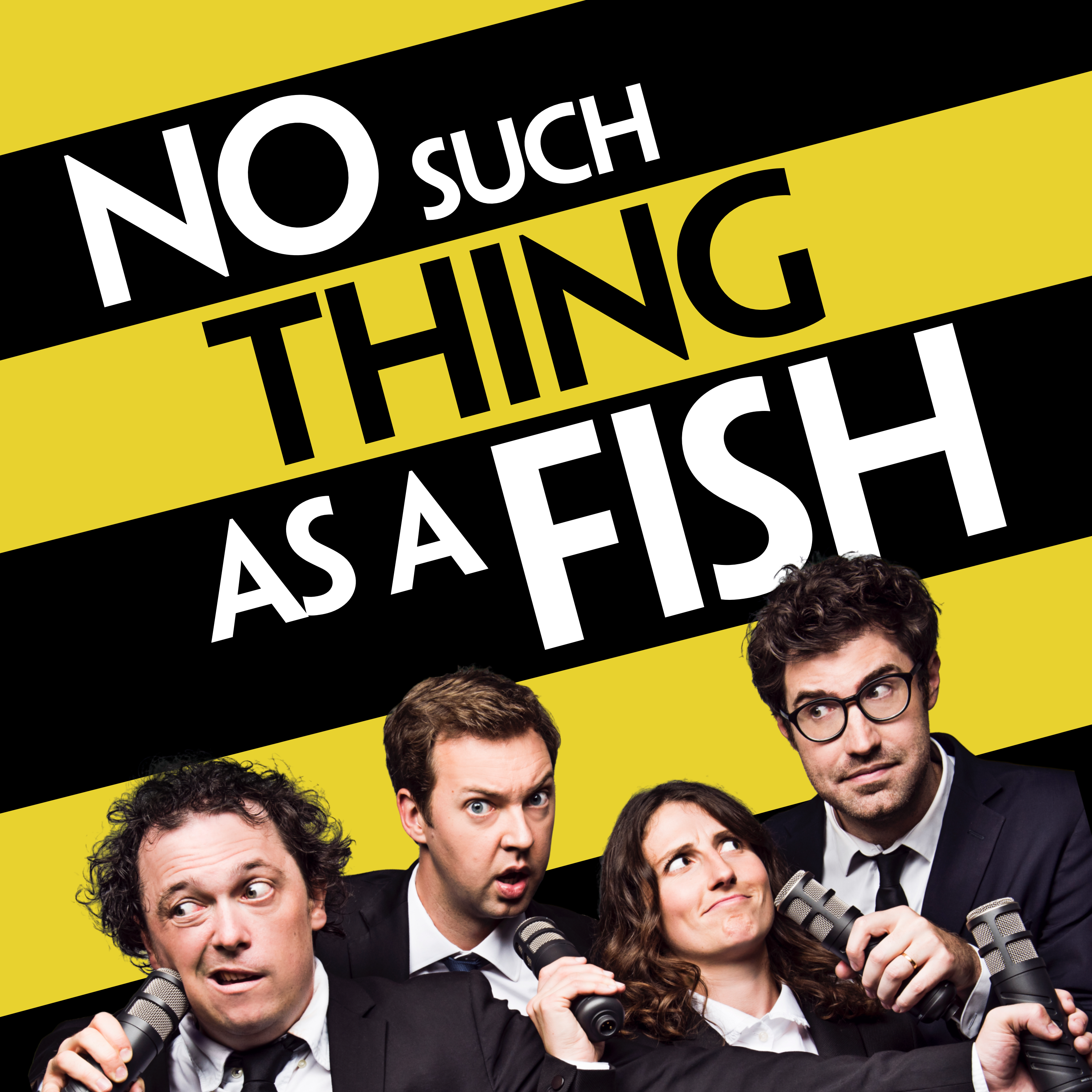

This episode of No Such Thing as a Fish centers on four “facts” from the past week, plus a guest fill-in. Topic 1: “Night Witches” (Soviet female night bomber regiment) flew very slow wooden biplanes (Po-2) at ~90 mph, turning engines off to approach silently; they were called “witches” by Germans. Key claims include that Marina Raskova recruited 1,000+ women and persuaded Stalin, but they received leftover planes; Raskova later became a national hero after a parachute jump and 10 days lost (with a rescue mission in which 16 men died).
Raskova’s ashes placed in the Kremlin wall; other female pilots like Dolores Moggridge (83 plane types) and ATA pilot Stella Edwards; comparisons to legless heroes (Alexei Maresyev, Hans-Ulrich Rudel). Topic 2: Lost-wallet return rates—Tokyo vs New York; Japan’s lost-property system (kobans) and “unowned” land issues. Topic 3: A New Zealand anecdote about an elderly woman flagging a train to get change for a £1 note; NZ rail gauge history. Topic 4: A 1936 “Mechanical Man” robot at the San Diego Fair that allegedly shot its inventor.
Rhys Darby (replacing Dan Schreiber; actor known for Flight of the Conchords, Jumanji, and Our Flag Means Death). Main hosts present: Anna Tashinsky, Andrew Hunter-Murray, James Harkin.
Written by AI. May contain mistakes.
The team introduces the format and begins sharing their favorite facts.
“Hello and welcome to another episode of No Such Thing as a Fish, a weekly podcast coming to you from the QI offices in Hoburn.”
Discussion about the Soviet night bomber regiment, known as the Night Witches.
“The most highly decorated Soviet air unit of World War II didn't take part in the victory parade because their planes were too slow.”
The story of Marina Raskova and her contribution to the war effort.
“She had to really campaign to get it all happening.”
Exploration of various female pilots' roles during WWII, including their training and achievements.
“And it would test them at the same time?”
Discusses the fascinating stories of pilots who fought despite losing their legs.
“So there was a guy called Alexei Mariseev, who was a Russian guy, and he was in a crash.”
Explores the statistics and cultural attitudes towards returning lost wallets in Tokyo versus New York.
“My fact this week is that if you drop a wallet containing cash in Tokyo, you're three times more likely to get it back than if you drop it in New York.”
Delves into Japan's remarkable lost property system and the challenges of unowned land.
“I think it then got claimed because I was at the police station every day for the next six months.”
Discusses the psychology behind returning lost items and the implications of money involved.
“In 2016, they processed 3.67 billion yen of cash, and 74 % of it was retrieved.”
Examines how cultural backgrounds influence self-identification and relational perspectives.
“I'm going to give you three words and I want to tell you which two words go together instinctively for you.”
Discussion on how different cultures navigate spaces in public settings.
“Nibble by name They'll be thinking, that's Rhys Starby.”
Learn about an amusing historical anecdote regarding trains in New Zealand.
“an elderly lady flagged one down by standing on the tracks to see if anyone could give her change for a£1 note.”
Understand the challenges and decisions that shaped New Zealand's rail system.
“But apparently if you ride on modern railways, even it's like riding the Piccadilly line in London, which is very sort of jerky.”
Discover the role of Julius Vogel in New Zealand's women's suffrage movement.
“and they don't do it anymore in Waitrose.”
A light-hearted discussion on potential names for New Zealand's currency.
Discussion about the humor and history behind Air Force logos, particularly the Kiwi, and the use of horses in British Rail.
“something face spirit when it's naming stuff by public vote you seem to be lacking that Let's call something a really stupid name for the hell of it.”
Exploration of a historical robot that shot its inventor and its implications in early robotics.
“And it was a six foot giant steel robot that could stand up, sit down, smoke cigarettes, fire a gun and answer questions.”
Insight into the San Diego Fair's quirky attractions, including a nudist colony and the rise of celebrity robots.
“Well, maybe they weren't suggesting that it was operated properly robotically, but it seemed like a lot of them were people, which does suggest it was just a guy with a vendetta against the maker inside.”
Discussion on autonomous cars, personal experiences with them, and the future of robotics.
“Cigarette smoking seemed to be the main thing people wanted from their robots in those days.”
Exploration of whether robots should resemble humans and the development of a robo horse by Kawasaki.
“The celebrity robot in 1939 went on to star in a film called Sex Kittens Go to College, which I just wondered if any of you guys have seen.”
Discussion on the impact of AI on creativity and the future of humanity in light of robotics.
“And, you know, when you go out, you sort of go a little bit too far out into the road.”
A light-hearted exploration of unusual deaths and historical figures related to inventions.
“I'm touring here in the UK, and my show is about the demise of humanity because of AI and robotics, and how can we stop it?”
Learn about the mysterious disappearance of a famous lighthouse and its builder.
“And, you know, a very wild bit of coast.”
Find out how to connect with the hosts and where to see their performances.
“If you want to get in touch with any of us, we can be found in various bits of the, you know, internet universe.”
Explore ways to engage with the podcast and join their exclusive club for bonus content.
“If you want to get in touch with Rhys, apparently you just have to go to one of his shows and shout whatever questions you've got from the audience.”

Get the gist, explore an idea or ask about something said.
 Claude
On No Such Thing As A Fish, what are the key points of this episode?
Searching your listeningAutomatic transcript. May contain errors.
0:00Mr. Monopoly here. Miss me? Monopoly is back at McDonald's with millions of prizes. A 2027 cheap charity, a carnival cruise vacation, gift cards from DoorDash, and Best Buy. Peel then play in the McDonald's app. Get your bag! No purchase necessary. 50 U.S. and D.C. age 18+. See play at mcd.com for rules and play at mcd.com slash A-M-O-E for info and playing without purchase by mail by November 2nd. Chance card game ends November 8th. Game ends November 22nd, 2026. See rules for prize details. Monopoly is a registered trademark of Hasbro. Saving money on your next project now at Menards. From smoke and carbon monoxide alarms to fire extinguishers and more, Kitta Home Safety Products will help keep your family protected in case of emergencies.
0:42It's Fire Safety Month and the perfect time for upgrading to a new Kitta smoke alarm for reliable protection and peace of mind. Plus, don't forget to check out our weekly flyer on Menards.com for all the great deals happening this week. Save big money at Menards. Hello everyone and welcome to this week's episode of No Such Thing as a Fish. Now, why am I talking to you before the show starts? Well, of course it is because one of us is away this week and it is Dan Schreiber. so in his place we have gotten the most dan schreiber person we can in fact the most dan schreiber person in the entirety of the world arguably more dan schreiber than dan schreiber himself it is the wonderful incredible you'll know him from flight of the concords jumanji our flag means death of course it is reese darby now we always love to see reese when he's in town and we are so lucky that he is currently on tour in the uk and that means that as well as enjoying him on our podcast you can go and see his show so if you are listening to this on the day it goes out then quick go to the internet and get tickets to his show at the shepherd's bush empire in london and if you live in brighton sheffieldst albans lead swindon exeter bristol newcastle glasgow manchester or edinburgh then you are also in luck because he is yet to do your cities If you want to get tickets for that, you must go to reisdarby.com.
2:09That's R-H-Y-S-D-A-R-B-Y.com. All of the information, all of the tickets are available on there. But for now, please enjoy the fabulous Tour de Force that is Reis Darby. Okay, on with the podcast.
2:37Hello and welcome to another episode of No Such Thing as a Fish, a weekly podcast coming to you from the QI offices in Hoburn. My name is Anna Tashinsky and I'm sitting here with Andrew Hunter-Murray, James Harkin and the inimitable Rhys Darby, who has joined us in place of Dan Schreiber today. So without further ado, we've gathered around the microphones with our four favourite facts from the last seven days in no particular order. Here we go. Rhys, what's your facts? Well, and thank you for having me. Hi, everyone. How are you? Good. The most highly decorated Soviet air unit of World War II didn't take part in the victory parade because their planes were too slow.
3:25Wow. Can you tell us more? Why would a slow plane be useful in a war anyway? Well, funny you should ask. Do I now dive into the... Dive in.
3:43A mosquito. Yes. But what type? The plane. The plane, the mosquito. No, no, no. It was, in fact, a South Pacific mosquito. And that was its last flight before I killed it. Right, but back to the... Cool. So basically, this is the story of a unit that was in Russia during World War II, the night bomber regiment, entirely made up of females, with ground crew and the air crew, and they flew very old biplanes called the Polikropov, or the Po-2, very old planes made of wood. Wow. And they were super slow. They were slow, I think, because they were old planes. They were old like crop dusters, weren't they?
4:27Yes, that's right. They were amazingly slow, like top speed 90 miles an hour. Yeah. That is slow. I drove faster than that on my way to nursery today. Okay. It is a 20 mile an hour zone. Yeah. But the idea was because they were so old and made of wood, they were really quiet. And so they could kind of get under the radar a little bit and do lots of bombing raids one after the other. And they were known as the witches, right? Yes. And do we know why they were called the witches? Night witches. They were witches. It was no two ways about it. We've got some great pictures here of them. Yeah, pointy hearts.
5:06They had spells and all sorts of stuff. So it was quite amazing. But, yeah, because they turned their engines off from their planes and they did this so that they would come in silently. And so just to give you an impression of that one coming in.
5:31Yes
5:37My pretties Drop the bombs Drop the bombs And then they would literally just drop bombs And I don't know when they started their planes up again Like I guess once they've passed the bombing zone
5:53You know, and then sort of back they fly. So, yeah, so just to reiterate, I think the Germans felt that they sounded like witches on broomsticks coming in and just, you know, dropping bombs. Swishing away. And let's not forget Marina... Ruskova. Ruskova, the lead person in this group. She had to really campaign to get it all happening. Obviously, it was mainly men involved in the battles back then. And, you know, this is when Operation Barbarossa was on. So this was the entire German army literally trying to take over Russia. A very bold move, as we all know. How did it play out? It didn't quite work, but it did look good at the beginning.
6:39So there was like over three million German troops. They had, I think, three brigades. They had so many armored divisions. and there was really no opposition for a while. They really were making a lot of ground. And then it was a massive call-up for the Russians to defend their land. And the women as well were like, well, we want to help. You know, we're strong. Let's grab guns. Let's go. It was the whole family, all family in, you know. And then so this particular woman, Marina Raskova, she ended up really sort of... She recruited, didn't she? She recruited, I think, over a thousand women and did the training and, you know, sort of formulated the groups.
7:21But she also persuaded Stalin in an element that's often smoothed over, I feel, in the great stories of how heroic they were, which they were. It's the fact that she was quite good mates with Stalin, which is how she managed to make it happen. But it's okay. We didn't know a lot of what we do now. It's the foot in the door. You've got to get your foot in the door, right? She knew Stalin because she was one of the most famous women in Russia. Yeah. She was an aviatrix and she and her team had the world record for the longest continuous flight. and she was like a hero of the whole country. And so when she came to say, I want my women to take part in the war, Stalin was not going to say no to her because she was so big.
7:53But did say no to the equipment. Like you're not having our planes. These modern vehicles are not for you guys, ladies. So this is how it all sort of came together is that they got the planes that were left that no one wanted. Biplanes? Yeah. It's crazy. I didn't think biplanes flew in the second world. I mean, certainly not in combat. But just can we quickly say about her earlier flight where she was the navigator for this cross Soviet Union journey, right? And it was 4 ,000 miles. And as they were getting towards the end, there are two versions of the story. One is that the plane was icing up and they threw everything out to try and maintain height.
8:31And then she decided it's not going to be enough. I'm going to have to throw myself out of the plane. Wow. That's the final straw. The two pilots and her, the navigator. Surely her clothing first. These hippie boots have got to go But I don't think she was naked when she jumped out She wasn't naked because it was so cold So she wanted a bit of protection But they'd thrown everything else out Up to and including the compass I think She thought my navigating job is done So we're very nearly there So that's one version The other story is that they couldn't find the airfield And the navigator's cockpit had no protection Either way she did jump out of the plane Shortly before the end And she had no food or water for 10 days Eventually a hunter discovered her And that sort of cemented her Can we just go back a little bit to her jumping out of the plane?
9:14Did she have a parachute? Yes, she did. She parachuted, yes. Because actually the witches, the night witches, didn't have parachutes, did they? No, they didn't. No. Just on this, another thing. Sorry, I'm telling the oft-reported negative spin of the night witches, which you don't get very often, but you know in that thing where these three women crash-landed, basically? So they were all lost. She was lost for 10 days. The other two were lost for a couple of days. I think she had a bar and a half of chocolate to survive on for 10 days, which I really want to know what happened to the other half.
9:45Well, also, if you've ever had Soviet chocolate, it is utterly disgusting. Maybe it was better in the 1940s. I suspect not. All I'm saying is you don't scoff it in the first moment. Like if it was a Mars bar, you'd be like, oh, delicious. But no, you wouldn't. I see. Maybe that's part of the ploy. The opposite of savouring it. but there was a rescue mission sent out to save these three women and 16 men died yeah but there were huge celebrations afterwards because they'd broken this record and i think sullen thought you know what it's going to dampen the vibe if we mention the fact that 16 men have been can i just also say it wasn't like one man would go and look for them he would die and then another person would go out they all died in the plane crash yeah it wasn't like a scream should i go see what he's doing back there?
10:32Someone's knocking them all off. I'm not going to go and have a look. You're next. Well, yeah, and then Raskova, she got the first ever state funeral, I think, in any country in World War II. Definitely the first one in Moscow. There'd be none in Britain, none in Germany, none in America, obviously, at that stage. But yeah, when she died, her ashes were placed in the Kremlin walls, and they're still there today. Whoa. Cool. That's cool. It's mad thinking about these incredibly old, slow planes that were being flown into combat, because they had to go at night, not because they were loud, because they were slow, that's it.
11:04But the advantage was, I think, if the Luftwaffe were chasing them or trying to shoot them down, if the Luftwaffe flew at 90 miles an hour, they would stall. Because their planes were too good to catch. So in a sense, they had an unfair advantage the night, which is all I'm saying. And they did it at night because that was the time to do the bombing. So there was no rest for the Germans because during the night, they would fix their stuff and they'd be being bombed, so they couldn't. So it was relentless. They weren't the only female pilots in the war, though, because I think in Britain there was the ATA, the Air Transport Auxiliary, and that was mostly male pilots, but there was a sizable chunk of them who were women.
11:42And their job was to get planes from factories to airfields and things like that. Right. By flying them. By flying them, exactly. And it would test them at the same time? Well, they had to know so many different kinds of plane, basically. I think these women were amazing. So, for example, Dolores Moggridge, an incredible name of the kind I think you don't really get anymore, she flew 83 different types of plane during the war. Wow. And she was once the subject of a complaint by a male RAF officer. He complained, it was dreadful weather, and I can't believe not only was a woman flying me here, but she was reading a book.
12:16Wow. And she said, I wasn't reading a novel, those are my notes, I hadn't flown this type of plane before. And he nearly threw up when he realised. Amazing. Just lovely. The other thing they had to do was, as well as flying planes too, the airfield from which they'd fly into combat, they had to fly the planes back when they were damaged. So they'd have an attack plane, no undercarriage, wing missing, and then the men would be... Fly their back, will you love it? It's got no wings. You'll be right. You'll figure it out. That's amazing. Yeah, they're so cool. The last of them only died in 2022. Really?
12:49A lot of them lived really long lives. Yeah, Stella Edwards, I think, was the last surviving ATA girl, as they got called. Well, you know, the night witches are all still alive. Of course. Even the one who had a state funeral. She was the first to come back to life. Do you know the country which has the highest proportion of female pilots? Russia. No. Oh, I'm not talking about the... No, sorry. As in these days, commercial pilots. I don't think it's very guessable. Oh, okay. I'm going to have a go. Rwanda. It's not Rwanda? Ireland. It's not Ireland. That's close, though. Oh. Northern Ireland No, India Sorry, when I say close I mean close alphabetically That's very close alphabetically, isn't it?
13:34Yeah That's almost bullseye out of a world time Thank you very much That's my bad for not thinking alphabetically too Silly me I remember when we flew to Australia And we'd only be going for an hour or so And I said, are we close? And you said, yeah, we're over Austria You've got railing to go India That's amazing 13 % of pilots are women in India. That's interesting. Global average is about 5%. You know Douglas Bader, Bader? Oh, yeah. No legs. Pilot. But dreamy guy. Dreamy trying. Flying ace. Oh, yes. He's famous because he had no legs. Yeah. So there was a guy called Alexei Mariseev, who was a Russian guy, and he was in a crash.
14:15And like this woman, Raskova, he had to walk around Siberia living on a handful of ants and half a lizard, he said. It's still better than this Soviet chocolate bar. Yeah, when they found him, he had 10 chocolate bars in his pocket. Desperately hunting for another ant. But he had really bad frostbitten legs and he had to have them chopped off. He then went on and carried on fighting in dogfights and became a national hero. So Russia had its own Douglas Bader. And Germany, Hans Ulrich Rudel, he was a German pilot. He was one of the most decorated pilots of the war. and he got shot, wounded in one of his legs, had to lose his leg, and then carried on and shot down 26 more.
14:5826? With only one leg. He's still up one, to be fair. Got one leg, but that would be on the throttle. So, you know, he's got the advantage there. He was faster to get away. He couldn't slam the brakes on. No brakes. Did they have to modify the planes or anything? Because I think Douglas Bader's plane was somehow rigged up so he could keep flying with no legs. I think that's true. but don't you think it's interesting that all three of those countries had their own sort of legless heroes? That's really interesting. That's kind of amazing. We could move on. Yeah. You were in the Kiwi army, weren't you?
15:30Yes, that's right. Did you do any flying? No, that'd be the Air Force. Got it. Guys, you're a thicker snake. Which one do you fancy today? The boats, the planes or the on foot? Just get in the garage and have fun, guys.
15:49This episode is sponsored by Good Ranchers. Most people don't realize this, but over 85 % of the grass-fed beef sold in the U.S. is actually imported from overseas. It's a system that often pushes out American farmers and ranchers. That's why it matters to be intentional about where you buy your meat. That's why I choose Good Ranchers. Good Ranchers connects you directly with local American farms and ranches. 100 % American meat, pasture raised, no antibiotics, no added hormones. Delivered straight to your door. Make the switch to better meat. Go to GoodRanchers.com to start your plan and get premium American meat delivered right to your door.
16:30That's GoodRanchers.com. American meat delivered.
16:37Okay, it is time for fact number two. That is my fact. My fact this week is that if you drop a wallet containing cash in Tokyo, you're three times more likely to get it back than if you drop it in New York. I was furious when I first read about this in a BBC article, which reported that 88 % of phones that were lost deliberately by a researcher during this study in Tokyo were returned, but only 6 % of those lost in New York were returned. Actually, it turned out that wasn't true. I looked at the study and 95 % were returned in Tokyo but 88 % were returned to the police and only 7 % were returned to the person whose phone number was on the phone.
17:20So he deliberately left contact details like, you know, call me if you find my stuff. And the Japanese are like, no, I'm not going to ring you. Official channels only, right? Official channels only. Whereas in New York, like 75 % or something gave them back. Who writes their phone number on their phone? It's quite weird, isn't it? I'm thinking about doing that now. Yeah. It's quite a genius idea. I don't know if it is. But how would you, when you pick it up, you go, how am I going to call it? Yeah. Yeah. I think you've got to write your best friend's phone number on it, maybe, or your mum's number, your house phone.
17:47But basically, Japanese culture is such that they're so set up for lost property. Japan is basically a large lost property office masquerading as a country. As in, people in Japan are so culturally wired in to hand in lost things. It's just, it's just absolutely the rules. It's just what you do. So last year, people in Japan handed in four and a half billion yen in cash. It's still a very cash-based society. Yeah, but we don't know whether that was just a lot of 100 yen coins or whether it was just one huge suitcase. Well, they have a thing where you can hand in a coin and if you hand it into the authorities, they will then give you that coin back as a gift.
18:23It's an honour thing. That's very cool. So, yeah, it's about kind of, rather than the old, if you see a penny, pick it up and all day long you'll have good luck. That classic one. They don't have that. if they find something I'm speaking for all Japanese people right now I have been there and I remember having a conversation with one chap about it and he said make sure you talk about this on a podcast down the line I was like alright I will but anyway long story short they give it back to you and it's a gift so therefore you have received the coin that you've found as a gift and then honourably you can then hold on to it I have actually done this in London as in I found a wallet with some money in it handed it in to the police.
19:06You did skim a bit off the top though, didn't you? Hey. Hey. Well, this was the thing about... I think it had cash in and I didn't... I think it then got claimed because I was at the police station every day for the next six months. Anyone turn up to claim that cash yet? But I think in the UK, genuinely in the UK if it's been three months or some period of time and the money is not claimed, you can go in and as the finder claim it. I did mean to say, yeah, did you take the money out? Because in New York one of the interesting things about... Well, yeah, whatever, you would say that, wouldn't you?
19:34It wasn't that one day that you bought a round in when we went to the pub, was it? I remember that so clearly that day. You're waving a 20 quid note. It was 2014, wasn't it? Yeah, it was great days. Very proud of that, wasn't it? Just to say, before Andy is too proud of himself for handing this in, most people in pretty much any country will hand it in. This is the thing that you don't get reported on much. So even in New York, you know, 80 % of people are handing in wallets. but of the wallets in New York the researcher dropped them with$20 in each which is the amount you legally have to return if you find it in New York and eight of the wallets were returned but only six still have the money in so I'm counting that in my percentages as returning six How high were the drops too?
20:16Were they Skyscrapers Were they? Yeah People died actually People died Concussions The wallet dropped! Returning the wallet is just embedded in the head of someone who was standing under the Empire State Building. Yeah, that's really interesting. Do you think the person who takes the money is in their head, they're thinking, find us fee? Maybe, maybe. Or was it a different person who took the money and then a new person found the empty wallet? If I was going to take the money, I might just take the money because it's not as identifiable. But you don't want to take someone's driving license. That's a huge faff for them.
20:48Yeah. So in Tokyo, they have these things called korbans and they're tiny police stations and a city like Tokyo will have dozens of them. but in the countryside there'll be just one or two in each village and the idea is you hand your stuff in there and it's kept there for about a month and that's in case someone sort of retraces their steps and goes back to the area where they were they find the nearest Koban and they say it's my 50p there or whatever and then after a certain amount of time they're given to the big sort of lost and found in the middle of Tokyo or wherever yeah okay here's the thing that's lost in Japan, this is nuts, a big chunk of Japan has been lost.
21:2620 % of Japan, a big chunk, has no easily contactable owner and the property law is crazy there, as in it's very difficult. Property is distributed among heirs sometimes if there's no will, so it's kind of divvied up equally. There was a case where the government, they wanted to build a road, like really big road going into slash out of Tokyo, so important project for them. They had to track down 148 heirs of one patch of land. They sent 200 letters out. A lot of people had emigrated. Some of them had died. Just nightmare situation. The unowned bit of Japan is bigger than which country? I'd like you all to guess.
22:01Is it close to Japan? No. Not alphabetically. Not Jamaica then. I'm going to go with Russia. Yeah. Okay. 20 % of Japan. I'm going to say Wales. Not far off. Belgium. Not far off. Denmark. Very close to Belgium. The unowned bit of Japan, or the bit where they just have no idea who owns it and it's a nightmare legally, is bigger than Denmark. Wow. Isn't that crazy? That is bad. It's just demographics. You don't have to register when you own land. It's not compulsory. You know this big building in Tokyo where all the lost and found stuff goes? Oh, the huge lost property office. Yeah, yeah. In 2016, they processed 3.67 billion yen of cash, and 74 % of it was retrieved.
22:46But then compared to that, the percentage of umbrellas that were returned was 90 times less. Yeah, this is the thing umbrellas never give them back. Because you wouldn't, would you? You wouldn't go and claim your umbrella. You'd drop it on the tube. Because there's sort of a few quid to buy. You just buy another one. Yeah, and they all look the same. Apparently they've got like a see-through. Oh, yeah. Oh, they have that self-defense. Yeah, yeah, yeah. And really, it's an open game for umbrellas. If you lose it and you find one, you don't have to hand that in. You're not going to get a special gift.
23:14Oh, is that right? It's like The Purge. That film. Yeah, it's very similar to The Purge. Yeah, yeah. Like all umbrella crime is legal. And I don't know if they have the opening up of the umbrella inside being bad luck as well. I'm not sure where that came from. Oh, interesting. You guys heard of that one? Yeah, of course. It must have gone through these suspicions. Do you know where that came from? No. So we've been told by the big umbrella shop in London that the reason that it's bad luck is it was invented by umbrella salesmen and they didn't want people opening their umbrellas inside so that they would get all rotted and horrible and people would have to buy new umbrellas.
23:51That's what we were told. That makes total sense. When you buy an umbrella from that shop, it's because it's in the centre. It's only about a 10-minute walk from here. It's amazing as well. It's like the oldest umbrella shop in the world. They're so classy, the umbrellas in there. I bought one from there once as a real treat to myself. It was just after you found that money in the street, wasn't it? I've lost it now and I'm so gutted because it was this beautiful thing. but they give you a tutorial on how to open and close it. Like they get special. It's a bit embarrassing to go through it. And does that umbrella shop have lots of little umbrella shops throughout the world?
24:22I think it's one of a kind. Oh, so it's not an umbrella organisation. Oh, gosh. Oh, gosh. Wah, wah, wah. You hacked to wonder where he was going with the question. I just love the way he walks straight into that. Well, these guys are being dicks as usual, but I'm glad Rhys is interested in umbrella shop logistics. Guys, if you found a wallet on the street, then would you be more likely to hand it in if it had money in? If it's got other forms of ID, I hope I would just hand it in anyway. Regardless. Even if it had a million pounds in it. How big is this wallet? What denomination and currency are we talking about?
25:01Is it in crypto? What are you talking about? No, I think I would hand it in no matter what, actually. Yeah, I'm sure we're all honest people. Ruth, you haven't piped up, but we're just going to assume. Well, look, it depends on your circumstances, doesn't it? We're all sitting here in a nice building where we've got money. But I think if you didn't have anything, I think, you know, got to pick a pocket or two. Very good point. You've shamed us all into having a bit of perspective. But the truth is that if you drop a wallet with money in it, that's better than dropping one without because you're more likely to get it back.
25:36And this really surprised people. This was a study in 2019 which planted 17 ,303 wallets around the world. It was quite a big study. Did they need to do it? 17 ,000, did they need to do the last three? We're doing 17 ,300. I don't think that's a good sample size. Maybe there was three researchers, they dropped the 17 ,000 and they realised they'd accidentally dropped their own wallets as well. I think that was it. You're not going to believe this, I lost my own. Just grab one from the collection. Yeah, where the hell do they get them? Anyway, they dropped them in 355 cities all over the world.
26:09So this is completely cross-cultural. And half of them had no money in them. Half of them had$13.45 in them. And 40 % were returned when they had no cash, but 51 % were returned when they had cash. And they thought, that's about weird, isn't it? So they did a follow-up study where they put another load with$94 in. And the ones with$94, 72 % were returned compared to only 60 for the$13. Because I guess the thinking being that someone might really need it. It feels a bit more like stealing if you've stolen$90 compared to$13. Mo' money, mo' guilt. Exactly. Yeah. Very wise. Can I do one test on you guys?
26:50Yeah, go on. I'm going to give you three words and I want to tell you which two words go together instinctively for you. This is related to this fact. So the three words are train, bus, track. Okay, train and track alphabetically very close together. Well he's ruined the game What's the challenge? Train, track and bus Yeah well trains go on tracks Do we pick two words? Which two go together for you? Train, track, bus Well I normally track my wife As she travels around on the bus every day So I'd say bus and track Okay That's not thinking seriously either Rhys any further Any serious response to that?
27:26Well like when I joined the army With the aptitude tests Just a lucky dip for me Train and bus thank you for no good reason you give me the answer i wanted farms of transport yeah so this is a difference between eastern and western cultures and this is so part of this thing about um japanese people handing stuff in like very different culturally collective cultures dominate the east individualist cultures dominate the west quite broadly and there are these huge differences and one of them is that given those three words most westerners say train and bus because we think of things in categories, but most people from China or Japan or Korea will say train and track because everything is relational.
28:06So for instance, if you ask someone to describe themselves in the West, they'll say, oh, I'm a QI researcher. Tall and handsome. We also lie a lot in our culture, don't we? We do. And which culture do people say bust and track in, please? I've had to rule myself out of East and West. Have you heard of the Andaman Islands? Oh, yeah. Uncontacted tribes. They're my people. This is slightly different. Forget the buses and the tracks. If you're Japanese or Chinese, you would more likely say, I'm so-and-so's sister. I'm so-and-so's daughter. I'm employed by so-and-so. I'm the friend of so-and-so. It's all about in relations.
28:44Anyway, we thought that this is a difference between spiritual cultures and collectivism and things like that. And then there was this amazing study done in the border of China and Russia, which looked at rice farming versus grain farming, and it's completely split on those grounds. And people with these more communal, collective responses to things are rice farmers, whereas grain farmers are more individualist. And we think now it's just because rice farming involves way more cooperation. That's really interesting. I read another study, which I think is related to this, which is if you're in Starbucks, because I think it was done in Starbucks, and you need to get from one place to another, so from your seat to the place where you buy your coffee, If there's chairs in the way Western people will sort of dodge around the chairs And get to the place where they're supposed to go Whereas Eastern people will move the chairs out of the way And put them where they're supposed to be So that the next person can get there as well That's nice Wait, are there people on the chairs?
29:38No And Andy, of course, turns all the chairs upside down And pours coffee on them What's your Starbucks coffee name? Oh, I use my actual name Oh, really? Yeah What do you use, Rhys? Chris Nibble Do you actually? I always say the nibble Yeah You tell them to definitely say the nibble If you say Chris you don't respond Yeah They need to say Chris nibble And then one time I got something that was edible And I was in the corner And I was just having really tiny nibbles on it For about half an hour And I left most of it behind And I wonder whether they thought Oh yeah that'll be him Nibble by name Nibble by name They'll be thinking, that's Rhys Starby.
30:27It's also a test to see whether they know who I am or not. And then as I leave, I knew you didn't know who I am. As if I was Chris Nibble. And you can keep the rest of this panini.
30:48OK, time for fact number three, and that is Andy. My fact is that when trains were new in New Zealand, an elderly lady flagged one down by standing on the tracks to see if anyone could give her change for a£1 note. Oh, that's nice. This is a story of something that really happened. Wow. And it's related in a book called Our Iron Roads by F.S. Williams. And I'm doing a little bit of prop comedy here because I've brought in a copy. Oh, look at that. It is stunning. This was printed in 1883. Sorry, you said prop comedy? It's a very bland hardback book. Wait for the comedy. I'm happy that New Zealand is mentioned in one of these old books.
31:30Yeah, because trains were not very late in New Zealand, not much after the rest of the world. But it's quite a hard country to navigate around, isn't it? By train, just because a lot of valleys and canyons and things. Yes. Yeah, I imagine. But there's this anecdote. It's paid 402 if you're reading along at home. The eccentricities of English travellers, however, if dangerous, are not so odd as some in foreign parts. That's in quotes. It is said, so big tongs there, that not long ago, an engine driver in New Zealand noticed a lady energetically waving her hand at a siding where he was not time to stop.
32:00On pulling up his train, she was asked if she wished to come on board. also in quotes, when she stated that her object in stopping the train was to ascertain whether any passenger could give her change for a£1 note. There you go. She wanted change. She just flagged it down like presumably there was a coin operator machine that she was standing next to. Did they give the year there? No, not long ago. And this was printed in 1883. Okay. Well, I think the first trains were what? In the 1870s. In the UK, 1830s. Sorry, in New Zealand. How were they? I believe so. Oh, that is quite late. 1860s, 1870s.
32:37That's really late. I think so. And the first ones were in various different cities, and it was usually to get from the port to the city. So in Invercargill, there was loads of swamps you had to get past, so they put a railway line there. In Dunedin, you had to go over some difficult land to get there. In Christchurch, you had to go over some hills. And so they all put these different railways in, but they all used different gauges. Oh, God. And so when they decided to put the whole country together, So the gauge is the width of the railway line. So when they decided to put the whole country together, they were like, okay, this is going to be a problem.
33:09And in the end, they went for this thing, which is three foot six inch gauge, which was kind of the smallest. That's a narrow gauge. It's really narrow. And the reason was because it was kind of cheaper. Typical Kiwis. Oh, that's such a false economy. Just go with the cheap gauge. Go with the cheap one. But apparently if you ride on modern railways, even it's like riding the Piccadilly line in London, which is very sort of jerky. Rickety. Rickety. Oh really? Because of that gauge? Yeah. Okay. Because the gauge that I've always been entertained by the most is the option. And everyone's got one.
33:42People got them. Save it for your spin-off podcast, Anna. My favourite gauge with Anna De Gintze. Every week we ask a global megastar what their favourite gauge is. This week, Tom Cruise. Next week, Chris Nibble. Guys, it's going to run and run I'm telling you. You can keep the rest of that panini. My favourite gauge is the Australian gauge system, which I'm sure you're all very familiar with, which is mad. So they basically did what New Zealand did, but then they never put their country together properly train wise. So it's also a joke involving an Irishman, a Scotsman and an Englishman. Because basically we're in the 1850s.
34:19There was an Irish guy, Francis Shields. He's in charge of a rail company in New South Wales. He likes a broad gauge, the Irish gauge. Then Scottish James Wallace came along, took over shortly afterwards, converted New South Wales and some of South Australia to a standard gauge. And then an English bloke came along, rocked up in Western Australia and Tasmania and Queensland and made them all do the cheap, cheap-ass narrow gauge. And then some other bloke said, let's do a completely different gauge to transport sugarcane. Four different gauges, never fixed. Still to this day, if you go on forums about it, the kind of forums that I like to go on sometimes late at night, there are quite a lot of Australians going, What's wrong with our rail system?
34:56Are there bits where everyone has to get off and get on a train with a different gauge? Yes. So you can be transporting freight across the country and you'll have to transfer your goods to new trains four different times. Oh, God. But it really explains where that saying comes from with New Zealand and Australia. And that's the saying, it's difficult to gauge. That's what it is. It comes from where I live. See, isn't that satisfying now you know that? Yeah.
35:21Are you auditioning for a part in a children's transport show? or something. Always. Rhys, have you ever been on the New Zealand love train? The love train? Yeah. Not since the 80s. Okay. Well, it's been going, I think, since then. Okay. This is, have you heard of a town on the South Island called Middlemarch? It's small. Vaguely. Population 186. It's small, right? But every two years, the population absolutely blooms for one night, which is when they have the Middlemarch ball. Oh. And it's a singles ball because often, you know, if you're on the apps and the nearest match is 100 miles away, this is a problem.
35:58So every two years they have a night where everyone gets the train down to Middlemarch and there is a special love train put on full of, you know, excited young people wanting to find love or certainly get off with someone that night, basically. And it's really, it sounds lovely, actually. And then the day after the ball, there's a shame train to take people home who didn't get the train home the night before. I want to see this movie. It sounds charming. Can I just write, the Guardian did a lovely report about it So this is the actual ball itself On the dance floor, heels are cast aside As the heady crowd grind against one another Jesus Andy Sliced hot meats and buttered bread Are served in the makeshift kitchen And two worn sofas placed beside The Bain Marie, grown under the weight Of courting lovers Oh my goodness So disgusting as well as being innocent It's really charming I think It is, although I think we all thought when you said Sliced hot meats and buttered breads That was their euphemisms for the men and the women.
36:53I was thinking of sexual things there, but I thought it was just me. But no, it wasn't. That's amazing. Please write in to tell us if you've ever met the love of your life. Or if you've had an embarrassing failure to meet the love of your life. Better yet. So the main railway in New Zealand was built thanks to Julius Vogel, who is Prime Minister. Oh, yes. I know the bread. Do you? It's delicious. Vogel's bread. I'd never heard of that. Oh, my goodness. It's the best bread. and they don't do it anymore in Waitrose. Anyway, we'll talk after the podcast, but it's gone off the market here. Can you still get it in New Zealand?
37:27I was going to move back here too. Is it named after this Kiwi prime minister? Must be. One can only assume. Well, he also, as well as his bred reputation, he has a reputation as being the first New Zealander to write a science fiction novel. Really? Yeah, it was called Anno Domini 2000 or Women's Destiny and it was published in 1889 and it anticipated a utopian world where women held many positions of authority. Well, that is New Zealand. Yeah, because he also introduced the first women's suffrage bill to the New Zealand Parliament. I was going to say, they were the first country in the world, weren't they?
37:58No, he introduced a bill and the bill didn't pass. And then he left Parliament and then it passed a few years later. So he kind of started the ball rolling. That is cool. And had he written the sci-fi as a means of political change, saying this would be a good society to build? He introduced the bill in 1887. the science fiction novel was published in 1889 and suffrage was granted in 1893 so it's all happening around the next time So it's like he tried the political method and that had failed so he thought right what other tool do I have? Sci-fi Sounds like he introduced the bill as a publicity stunt to sell more books that he knew he was going to write Very clever And that's the story of the first ever women's suffrage Some bloke trying to flog some books That is really cool The reason trains were needed in New Zealand was transport logs around and it was mostly these kauri trees, which are, is that how you say it?
38:49Kauri. Kauri. Kauri. Yeah, kauri. Kauri. Yeah. It's hard to roll my ass, but if you can, you can. Yeah. I have difficulty with it. Well, it was for kauri. Blah, blah, blah, blah. Thanks. I felt like I was back in the march for a second. All aboard! It's like sliced meat. Oh, God.
39:17logging industry was huge the curry trees used to cover basically all of new zealand now they cover almost none because they chop them all down very sad um but they did this amazing thing that their way of transporting them before they got all the trains up and running were these things called curry dams so normally you dump logs in a river and they could float downstream they can't when they're these tiny little weak streams and so we've got a lot of weak streams in New Zealand. We do. It's a shame. Okay, yeah. They would build dams and they'd leave the dams for a year or more, a year, two years, and they'd just pile logs up behind the dam and then one day they'd come back and they could have up to 30 ,000 logs behind this dam and they'd whip up this drawbridge and suddenly 30 ,000 logs would descend from the mountains in this giant waterfall to the beach.
40:09Isn't that amazing? And there are pictures Because the beach has just transformed. Suddenly you've gone for a day out on the beach. Oh, my God. You're frantically flogging the donkey you're riding. Faster. He's very old. He goes slowly. Get the ice cream. The Punch and Judy man is frantically rolling the canvas tight. That is amazing. Wow. It's really cool. That is stunning. Yeah. Your fact, Andy, was about someone getting changed for a£1 note. Yes. This is in New Zealand where the currency is the dollar. Right. Not in those days. Well, yes, exactly. So it's interesting that they did have the pound until the dollar came in relatively recently, I think.
40:51That was one of the moments, I think, when they went, right, well, we're going to have our own currency. We'll still have the queen on it. So when they decided to go for the dollar, it wasn't obvious that they would call it a New Zealand dollar. They could call it anything because they're getting their own currency, right? They didn't want to be a pound anymore And so they sent it to the public basically And had a public discussion of what should we call our coin A lot of people thought they'd call it the Kiwi Brilliant The Zeal as in New Zealand Nice I like the Zeal The NZ, E-N-Z-E-D They almost called it the NZ I like that as well The Moa, the Zac, the Tui These were all ideas to call it And then because I think Australia had just gone to the dollar relatively recently they decided oh yeah we should probably do the same so typical you could have had the tui is that a bird as well didn't you do this with your flag as well a few years ago you had a flag referendum yes we did so we tend to do these things and it costs a lot of money and then everyone goes oh no I'll just keep with what would what would drop hey I think that's good I think it's good to experiment sometimes I think we could do with more of that here although where's New Zealand's something something face spirit when it's naming stuff by public vote you seem to be lacking that Let's call something a really stupid name for the hell of it.
42:07Yeah, I think you're right. You actually get a lot of shit, I think, for your Air Force logo as well. In fact, to go back to Air Forces. Well, you were in the Air Force, weren't you, Reese? Well, for a little bit, yes. Until I put a different outfit on. You know what your Air Force logo is. Yes, the Kiwi. This is the Kiwi. And everyone finds it very funny. It's a flightless bird. But they worked hard over that. And they actually abandoned. It was a fern leaf before that, I think, in the 50s and 60s, which people then pointed out was just a white fern leaf that looks like a white feather, which is basically a symbol for surrendering, which is quite a funny idea with your war planes.
42:44We just can't get it right. Can I tell you a really quick thing about rail and railways? When did the last horse work on British Rail? Wait. So how did they work? They've just been moving trains from one line to another. They're shunting, basically, shunting jobs. They were agile, they're cheap, obviously. They're good for these small jobs, not for massive great locomotives. So they'd walk along the treks? Pretty much, yeah, yeah. And there were shunting horses, and that's what they were now. Okay, I'm going to say there is currently a horse working, and it sort of nibbles the plants at the edge of the trek.
43:18I wish. That would be so good. No, they're not still in action. When was it? Okay, 1750. Thank you. 1967. Nice. So Charlie, the last British rail shunting horse, could have heard Sergeant Pepper while in work. Yeah. What's a weird connection there is that Ringo Starr, of course, is the voice of Thomas the Tank Engine. And what's Thomas the Tank Engine's job? A shunting engine. Thomas put the horses out of business. Wow. Lovely. That's a superb connection. There was debate in the early days about whether horses or trains would be better. Do you remember the Rainhill trials With this huge competition at Rainhill Where Stevenson's Rocket won But there were about five contenders There was Stevenson's Rocket There were a few other actual trains And then there was Cycloped Owned by a guy called Thomas Brandreth Which was a horse walking on a treadmill On top of a train And it was withdrawn The horse got the thing to five miles an hour And then the horse fell through the belt And it just didn't work But it could have gone another way It became sliced meat Oh God Oh God
44:31Okay it is time for our final fact And that is James Okay my fact this week is that in 1936 A robot in California Shot its inventor in the head Rhys what would that have sounded like?
44:49Oh no
44:54Very good Californian accent there That's the robot That's the robot repenting what it's done So I was looking for something else In the newspaper archives And I just saw this as a tiny little Article in the Buffalo News Of the 15th of February 1936 Amazing And I had no idea what it was about But then I've since done some more research And it was something called The Mechanical Man And it was at San Diego Fair in 1936, which was a big exposition. And there was a guy called Henry C. May, who was a British inventor. And he toured it around America. And it was a six foot giant steel robot that could stand up, sit down, smoke cigarettes, fire a gun and answer questions.
45:39And I'll be honest, I've seen some pictures and I think it was a man in tinfoil. Really? Really? Was it really? I can't really tell, but it looks like a Doctor Who buddy. Right, okay. But I've seen this in a television show. I think it might be Penny Dreadful or one of those type of shows. So there was a link to it. And yeah, there really was this mechanical man made many, many years ago. It's incredible. But I think there was a lot of cheating, wasn't there? Well, maybe they weren't suggesting that it was operated properly robotically, but it seemed like a lot of them were people, which does suggest it was just a guy with a vendetta against the maker inside.
46:18Apparently, because he could answer questions, someone asked the robot if he loved his wife, and he replied, I have a heart of steel, I don't love nobody, and nobody loves me. That's a guy in a suit. That's a single guy in a suit. But when did The Wizard of Oz come out? Oh, 30s. 39s? Yeah. That's a good point. Because it could be the Tin Man. Yes. You know? The world's first robot. I love nobody and nobody loves me. He's looking for a heart. Yeah. Absolutely. It's all coming together. It's actually a documentary, turns out. Can I check, James, did the inventor who was shot in the head, was he all right?
46:53He was fine, yeah. So there was an article in the New York Times, again, a very small article. It said the robot showed more aptitude than Henry C. May expected and he shot him in the head, but then it says he will recover. And then there's no more mention of him in any of the newspapers, But I assume he must have recovered, otherwise it would have been in there. They underplayed news in those days, didn't they? But this was a big exposition in San Diego Fair. Other things they had there was the Gold Gulch, which was like one of the first frontier villages, like a fake Wild West village. Oh, cool.
47:27They had the Zorro Garden nudist colony, which is basically a load of naked women and a few naked men, which you could pay 25 cents to look at. I thought an exposition was for scientific stuff. I thought it was like we've got a new kind of toaster And you're telling me there's just a nudist village Which I could pay a quarter and go and look at The nudist one Honestly the nudist one was really bad Because basically actual local nudists Were really upset They were the ones who were the most upset Because they were like you've got showgirls in Instead of getting actual nudists there And that would have been paid top dollar too And there was complaints to the council From the San Diego Council of Catholic Women The Women's Civic Centre And the San Diego Braille Club I can't find any reason About the nudism Is that because you weren't allowed to touch them And so it's sort of discriminating against blind people I need to know that they're nude I'm coming through now I'm blind But I've Let me have a feel Oh that's not a proper nudist And you can keep the rest of this panini It's not a panini Get your hands off So anyway That's the story of the San Diego Fair That's terrific Out of 1936 I think there was a sequel to this who became this big celebrity robot because there was a few years later, there was the World's Fair in 1939 in New York and the Westinghouse Electric Corporation paraded Electro, who again was a talking cigarette smoking robot.
48:51Cigarette smoking seemed to be the main thing people wanted from their robots in those days. Back in the day it was the main hobby, wasn't it? It was, yeah. And he again seemed to be operated by people behind a curtain. But all robots are. Even today. Today, when you think of Musk and what he's trying to do and what have you, there's always someone hidden behind the curtain with a radio control device. Is that with every self-driving car? Musk has employed a person with a remote control somewhere. There's a teenager in the boot. You can have a look. They get paid a lot of money. They've got the T-shirt on.
49:25They've got little tiny controls. They like being in small dark rooms. The celebrity robot in 1939 went on to star in a film called Sex Kittens Go to College, which I just wondered if any of you guys have seen. Oh, I love that one. I thought it might be you because his career sort of ended after 1939 and we did a little bit of a world tour Was everything going on in 1939 which might have made it less important to see a cigarette smoking robot? I saw the sequel, Sex Kittens Go to the Front Line
49:55D-mob, Sex Kittens Struggle to Adjust to Post-War Life Very sad, very sad one there I don't knock it until you've watched it it sounds really good So this is 1960. Suddenly this robot became a celebrity again, starred in a film, Sex Kittens Go to College, where he advises a college to hire this genius as a science professor who turns out to be a stripper. And then there's lots of stripping scenes. But that's just the great career of the world's first ever celebrity robot. Rhys, do you ever drive in autonomous cars? Have you got an autonomous cab anywhere? I've seen a lot of them. I was almost hit by one.
50:31Okay. Really? Yeah, I was pulling out of the car park in my car. And, you know, when you go out, you sort of go a little bit too far out into the road. And there's oncoming traffic. You think, I better pull back in a bit. And with the oncoming traffic was the Waymo. And so I put it into reverse and go back a little bit because my nose was sticking out. And then just as I did it, the Waymo straight past me. It didn't alter its path at all. So if it was a human, you would have actually altered your path. Yeah, you just nudge a bit. Yeah, so a bit of shove and a bit of give or whatever. But this one, as soon as I reversed back, it went, and I thought to myself, well, if I hadn't have pulled my nose in a little bit there, would it have hit me?
51:13That's weird, because that is like a legit way to get out of a junction, isn't it? You just edge a little bit and hopefully someone will notice you and they'll stop for you. Yeah, you peep and creep. Yeah. Yeah. Sorry? That's what I'm doing on the love train.
51:28I'm up in the luggage compartment.
51:33No, but this is Because that's one area where there's loads of progress Isn't there? Or certainly people have I mean, I know Elon Musk has been predicting full self-driving For like 15 years, he said we'll have it next year Yeah, he's raving on about them, they are on the way I just mentioned this, because Kawasaki At the moment, there are lots of, like, should robots Look like humans, is a big debate Is a bipedal humanoid figure The most efficient use for a robot Normally no, obviously But Kawasaki are working on a robo horse Oh, I've seen this too It sounds so good. It's a motorbike with legs, basically.
52:03Yes. It's called Corleo. Really? Which I think is weird, because Corleos is the first letters of Corleone, which is the family of the Godfather, which does feature a horse, right? Head of one. Head of one, yeah. But they're developing senses, so hopefully it'll respond to you just like a horse does. As in, you're moving your body around, you know, you're digging in with your heels, or you're bouncing up and down, or you're squeezing your thighs. I don't ride horses, but whatever. Clearly. But that would be pretty cool. I think a robotic horse would be awesome. Yes, and I've seen videos of these.
52:36So there must be a prototype out there. And terrain-wise, they can do the same things that an animal could. Better than wheels. And I think that's where we're getting with. But do they look like they're walking properly? Because we've tried to make humanoid robots look like they walk properly, and they still don't. They're getting pretty close now. I've seen the one that claims to be closest, and I still think it looks. It now looks like a very elderly, shuffling person. I met the first robot that could run. Oh, yeah. Bipedal One. You remember that? It wasn't programmed to run, but it saw you coming, didn't it?
53:10Stop offering a Russian chocolate. What was it called? It was the Honda One. Asimo. Asimo. Yeah, he was a guest on QI. He was a guest on QI, and I danced with him. I remember. And he did look like the most human one there, actually. But yeah, then he ran. And that was like at the time, which can only have been 15 years ago. Yeah, 12 years ago. That was the biggest thing in robotics. But now it's crazy. But now I don't think that has been left behind that much. And again, doing basic tasks like Google DeepMind did a big brag last year about how it's got a robot to tie a shoelace for the first time ever.
53:45And it's two massive arms, incredibly ungainly and incredibly slowly, only doing the bow bit. Anna, Anna. As soon as they can tie our shoelaces together, that's where they could take over the world. Exactly. Then they'll be able to make nooses. And do you know what they're going to use those for, Anna? Us. Rhys, do you think we're all doomed? Yes. When robots are ready to go, and this is what my show is actually about. I'm touring here in the UK, and my show is about the demise of humanity because of AI and robotics, and how can we stop it? And why does AI have to be in the creative world? Can we please not have it?
54:21Because once it takes all of our creative jobs away from us, what are we doing? And that was written by ChatGPT, that show, was it? No, I've had a couple of goes with ChatGPT and we just don't get on. Who doesn't like whom, though? Oh, I don't think it likes me. Do you know my favourite AI, if we can call it AI? Sure. It was invented by the AI pioneer who sounds awesome, Marvin Minsky. And he was around in the 1950s. He went to MIT and actually his boss said when he joined MIT, don't work on anything that's going to take less than 30 years. We're playing the long game here, which is a dreamy thing for robots to say.
55:00So he had to have something to entertain and little projects on the side. So he invented this thing called the useless machine. And it was a robot capable of doing one thing, which was that if you turned it on, it ejected its hand out and turned itself off again. Wow. Isn't that so great? I love that. What happens if it stops working? You usually have to turn it off and turn it back on again. Yeah, I don't know. Just while we're on this fact Robot in California shooting its inventor There's a Wikipedia page of Unusual deaths in the 20th century And it's stunning It's so good Okay, R. Stanton Walker, right?
55:37There's a guy called R. Stanton Walker In 1902, he was watching a baseball game with friends And a ball, a foul ball Hit him in the hand Unfortunately, he's halfway through passing his friend a knife A large and sharp one Which then is driven into his chest And he dies within a few minutes This is final destination, isn't it? It sort of is, isn't it? Yeah. The designer and builder of the first ever offshore lighthouse, Henry Winstanley. Oh, this is a little longer ago, so comedy is more acceptable about it. 1698, he builds it. It's offshore in Devon, right? And, you know, a very wild bit of coast.
56:07The Eddystone rocks. He says it's going to survive the greatest storm that could ever be. Five years later, he is inside it for the great storm of 1703. He is never found. Neither is the lighthouse. It just disappears into the sea. I know. Tragic. Do they have Robbie Williams in there? Because I'm pretty sure Robbie Williams is the name of the first person to be killed by a robot. I didn't find him. I mean, it's a long old list. This is from memory, but I think he was working in a factory that had robotics there. Yeah, in the 70s. Something tragic happens. It was like something that builds cars, that kind of thing.
56:41It was the arm of a machine that whipped him. But he was called Robbie Williams. Now he's loving angels instead.
56:53That is all of our facts for this week. Thank you so much for listening. If you want to get in touch with any of us, we can be found in various bits of the, you know, internet universe. Andy, where are you? I'm on Instagram at Andrew Hunter M. James? My Instagram is no such thing as James Harkin. Rhys, do you have any kind of presence? Yes, Rhys Darby present. And I'm also in your theatres for the next few weeks. So please, if you're listening in the UK, come and see my show. It's Rhys Darby, The Legend Returns. And where do you get tickets? Online, reesederby.com. It's all listed there. There you go.
57:27Do it. So there you go. If you want to get in touch with Rhys, apparently you just have to go to one of his shows and shout whatever questions you've got from the audience. Hi, Chris Nibble. I've got a coffee for you. Audience full of Starbucks employees. Oh, my God. And if you want to get in touch with us as a group, you can email podcast.qi.com or go to at nosuchthing on Twitter or at nosuchthingsafish on Instagram. or if you go to nosuchthingasafish.com you can get all of our old episodes you can go to the live bit which gives you links to various live shows we've got coming up we're very excited we're going to be playing at the Crossed Wires Festival in a month go there to get your tickets now and if you want to join our super secret exclusive club that we publicise all the time and isn't secret at all then please join up to Club Fish where we post loads of nice bonus content ad-free episodes us just jollying around We read out emails from listeners, which are better than anything we've got to say.
58:22So get there. That's club fish. And if you don't do any of that rubbish, then just come back again next week where we'll be back again with another four facts. We'll see you then. Goodbye.

