In short
Episode topic: Synesthesia (especially grapheme-color, ordinal linguistic personification, misophonia/misokinesia, and mirror touch) plus three other “facts”: Elizabeth I’s court and the “only man permitted to touch the Queen” (Master of the Horse Richard Drake), Formula One licensing/penalties and pre-season testing, and 16th-century “purging ale” on tap.
Guests
Angela Barnes is a stand-up comedian and fact-heavy performer. She’s touring with her own show “Angst” and with The Archers; she also has Andy’s The Naked Week live dates. She’s part of a Sussex University study on synesthesia.
Key claims
Synesthesia is linked to extra brain connections (not just memory), is hereditary (X chromosome), and can be consistent or change over time. Ordinal linguistic personification gives numbers/letters personalities (e.g., number five is “aggressive” for her). Mirror touch synesthesia can cause intense pain/tingling when watching others.
Notable examples
Case studies of a massage therapist (Carolyn) feeling a dog’s broken-leg pain and a doctor (Joel Salinas) feeling a cardiac arrest. Richard Drake (master of the Queen’s horse) was the only permitted toucher in 1577. F1: “super licences,” points leading to race bans, and “overtake button” energy boosts; pre-season testing disguises changes. Purging ale: Dr William Butler’s medicinal beer on tap, including the “cow” cure story.
Written by AI. May contain mistakes. Listen to the episode to check what was said.
Chapters
Tap a time to open that second in VOIntroduction to Facts
1:50 to 2:24
Hosts introduce the format and beginning of the fact-sharing segment.
“I am sitting here with James Harkin, Andrew Hunter-Murray and Angela Barnes.”
Angela's Synesthesia
2:24 to 4:42
Angela discusses her experience with synesthesia and its implications.
“I don't have children, so I don't know what you're talking about there.”
Understanding Aphantasia
4:42 to 6:00
Discussion on aphantasia and its relationship to synesthesia.
“It feels a bit greedy, really, I'll be honest.”
Personality of Numbers and Letters
6:00 to 7:20
Exploration of ordinal linguistic personification in synesthesia.
“What I'm trying to say is it triggers a specific, like a specific sensation triggers a really specific memory.”
Variations of Synesthesia
7:20 to 9:21
Angela describes different types of synesthesia and examples of case studies.
“What about people putting their feet on the seats on the train?”
Colors and Consistency in Synesthesia
9:21 to 11:22
Discussion about the consistency of colors in synesthesia and its study.
“I didn't know about all these varieties.”
Implications of Synesthesia
11:22 to 14:00
Angela shares how synesthesia affects daily experiences and perceptions.
“And then when I told my mum, she said, oh, that explains why you used to get so angry at the magnetic letters when you were a kid.”
The Arrogance of Letters
14:00 to 15:00
A humorous exploration of letters and their perceived personalities in language.
“I don't know if you know the spelling bee on New York Times.”
Synesthesia and Famous Figures
15:00 to 17:40
A discussion on various types of synesthesia and notable figures who experienced them.
“And so some of these might have just made it through anecdotally, but aren't necessarily true.”
Queen Elizabeth I and Her Uniqueness
17:40 to 19:20
Insights into the life of Queen Elizabeth I and her significance in history.
“and I think he was a cousin of Francis Drake I was going to say was he related to Francis Drake?”
Show all 28 chapters
The Court of Elizabeth I
19:20 to 21:40
A dive into the court dynamics during Elizabeth I's reign, including key figures.
“and then Anne Boleyn was the second wife.”
The Role of the Master of the Horse
21:40 to 23:30
Understanding the importance of the Master of the Horse in royal history.
“We still have, you call them equerries that look after the horses in the royal household.”
Queen Elizabeth II's Passion for Horses
23:30 to 27:20
Discussion about Queen Elizabeth II's love for horses and royal equestrian traditions.
“So this was 15 years ago, so I was a brand new comedian and I didn't know to say no to something like that.”
Royal Interactions and Experiences
27:20 to 28:00
Personal anecdotes and historical insights about interacting with royals.
“Or just the route that she was going, not all of Hackney, obviously.”
Royal Encounters and Curtsies
28:00 to 30:00
The hosts share humorous anecdotes about royal encounters and curtsies.
“were so beautiful and stuff because wherever she went, they just built them.”
Formula One Drivers and Licenses
30:00 to 30:20
Discussion on a Formula One driver who can't drive regular cars and the licensing process.
The Evolution of Formula One
30:20 to 39:00
Exploring the history, rules, and evolution of Formula One racing.
“My fact this week is that the 10th best Formula One driver in the world can't drive.”
Physical Demands on Formula One Drivers
39:00 to 42:00
Discussing the physical training and challenges faced by Formula One drivers.
“And there's been a complete rule change now.”
The Challenges of Racing in Heat
42:00 to 43:19
Learn about the physical demands on race drivers, especially in hot conditions.
“for a psychiatric experiment, but with a thick rubber cord coming off it.”
The Underrepresentation of Female Drivers
43:20 to 44:40
Discover the history and current state of female drivers in Formula 1.
“And during the race, there were fatalities, unfortunately.”
Historical Laxatives and Pub Culture
44:41 to 45:58
Explore the unusual history of laxatives sold in pubs during Elizabethan times.
“because you have different types, you know, some people get their seats in Formula One on merit purely and some get their seats in Formula 1 because they also bring money.”
Dr. William Butler and His Unconventional Medicine
45:59 to 47:28
Learn about Dr. Butler's bizarre medical practices in 16th century London.
The Cow Incident: A Peculiar Cure
47:29 to 48:47
Hear about the bizarre method Dr. Butler used to cure a clergyman using a cow.
“And we see basically nothing of him throughout the whole of history from his birth until this moment.”
Butler's Eccentric Medical Treatments
48:48 to 50:42
Delve into the strange treatments that Dr. Butler employed, showcasing historical medical practices.
“Because if the clergyman had died, I don't think you can recover from that.”
The Rise of Pub Culture After the Black Death
50:43 to 52:56
Understand how the Black Death influenced the establishment of alehouses and pub culture.
“So that is where, you know, coins are made of gold.”
Drunkenness in British History
52:57 to 54:52
Investigate the historical perception of drunkenness in British culture and its evolution over time.
“I've got something about, because I was really fascinated by the fact it was laxative ale.”
The Role of Beer in Society
54:53 to 56:01
Discover how beer has historically been integrated into daily life and health practices.
“It's really this idea of the whole binge Britain thing I find quite interesting because we've always been known as a nation of drinkers.”
The Importance of Beer and Water Distribution
56:01 to 56:52
Discover how beer distributors play a crucial role in water access in Pennsylvania.
“Safer than just drinking straight out of the river.”
Transcript
Automatic transcript. May contain errors.0:01Hi everyone, welcome to this week's episode of No Such Thing Is A Fish, where we are joined by the fantastic Angela Barnes.
0:08James Harkin:Yeah, she's absolutely amazing. She's been on Fish before. I didn't get to be on the show with her, so I was very excited to sit down with her. She's full of facts, she's full of jokes, and she's full of tour. She's on tour now. She's on tour twice, in fact. She is doing her own tour, which is called Angst, and she's also touring with a British iconic series. That's right, The Archers. Anyone who listens to Radio 4 will know that show and no other show. And Andy's The Naked Week is available as well. And she's doing a live version of that. So if you go online, put in The Archers tour, you'll find dates for that.
0:45James Harkin:But go see Angst. She's a brilliant stand-up. She's on tour right now. So on the 11th of April, she's going to be in Chesham. And then there's places like Hastings and Hamill Hampstead and Ivy Bridge, Hereford. A lot of these shows are nearly sold out. So get your tickets now. A Hemel Hampstead is where all the hamsters live that used to live in Hemel Hampstead, isn't it? Oh, yes, that's an interesting fact. We should do that on the show. Or we should pronounce places properly. Anyway, if you want to go get those tickets, go to AngelaBarnesComedy.co.uk and go see her live now. One more thing, do join Clubfish.
1:19Go to Patreon.com slash Clubfish if you want to get involved with that community. Loads of extra stuff, merch, bonus material. You know all about it. If you don't know about it, go to patreon.com slash clubfish and you will find out more there. Okay, on with the podcast. On with the show.
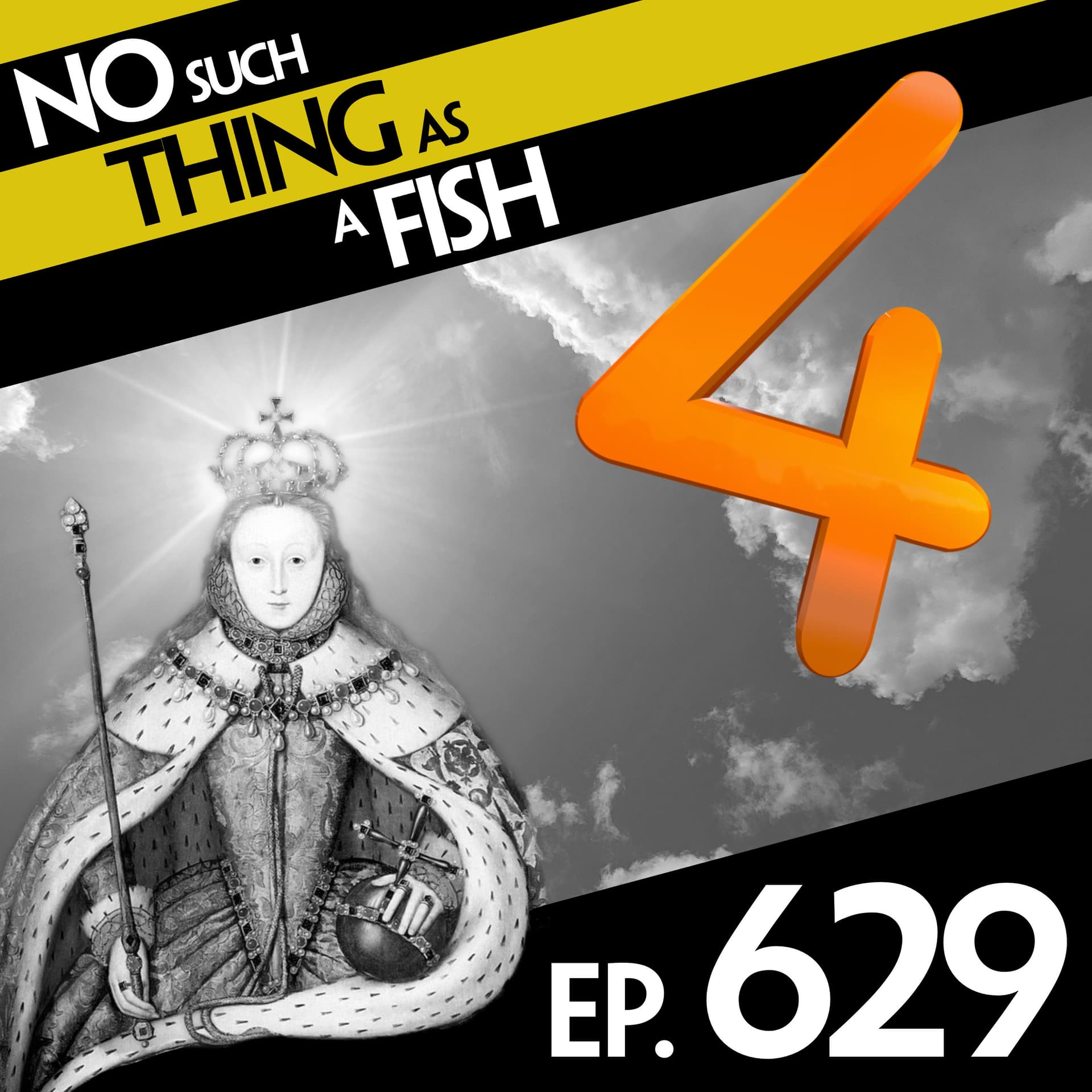
1:50James Harkin:Hello and welcome to another episode of No Such Thing as a Fish, a weekly podcast coming to you from the QI offices in Hoburn. My name is Dan Schreiber. I am sitting here with James Harkin, Andrew Hunter-Murray and Angela Barnes. And once again, we have gathered around the microphones with our four favourite facts from the last seven days. And in a particular order, here we go. Starting with fact number one, and that is Angela. Okay, so my fact is that the number four is orange and a lot kinder than number five, which has an attitude problem. Wow, are we talking about number blocks? Yes, we are.
2:27I don't have children, so I don't know what you're talking about there. but I'm assuming that's a CBB preference. Four is orange and it's kind. Four is orange and it's kind, but number five is quite aggressive and has an attitude problem. Okay, so what are you talking about? Should I tell you what we're talking about? Okay, I'm talking about synesthesia. Oh, yeah. So you may have heard of synesthesia. I'm a synesthete, so I was diagnosed with synesthesia when I was 19 at university and I've got several types, but the main one is graphene colour synesthesia. So that means that numbers, letters, days of the week any abstract concepts have a color okay and i always say it doesn't mean i see auras i know i'm from brighton but i'm not that person it's just it's hard to explain when you are a synesthete because the reason i didn't know i had it till i was 19 is because we all just sort of assume everyone's brain works broadly the same as ours yeah and so i don't know i don't understand how you don't have colors can i ask a question you may you have a sheet of paper in front of you it's black and white yes when you look at that is it like the colored in the letters or is it more so some people have a sort of synesthesia which is projected they call it so they do exactly that it sort of changes color when they look at it for me it's very internal so it's in my mind's eye if you like want of a better word yes so i'm currently part of a study at sussex university there's professor julia simner at sussex uni and she specializes in perception and synesthesia and i I wrote to her a couple of years ago because when I think every thought I have is in a physical location from the real world.
3:59So when I think about the number four, it's always in the sky, but it's orange. So it's all floating orange in the sky. And so I contacted her to say, is this a form of synesthesia? And she said, well, I've never heard of it, but let's do a study. And so they found a handful of people that seem to experience the same thing. And so she's studying it. She's calling it conception, location, synesthesia is what she's calling it. But also, have you heard of Adam Zeman? So he's the man who came up with the word aphantasia for people who have no internal images. Like me. Oh, do you have aphantasia? So Julia's very interested in that as well.
4:35James Harkin:What a sandwich I'm sitting in here. In between synesthesia and aphantasia. I've got all the images that you don't have in my brain, basically. It feels a bit greedy, really, I'll be honest. Well, there was a massive coincidence. So it's about two years ago, I contacted Julia. And around the same time, Adam Zeman contacted her and said, I've had someone get in touch to describe this phenomenon about location when they're thinking. And she said, oh, that must be Angela. She contacted me as well. And he said, no, it's someone else entirely. And it just happened to be within the same two weeks. So they're now both doing studies on telekinesis.
5:10It's morphic resonance, I think. Yeah, actually. Thank you. He's actually calling it, he's calling it topophantasia, which makes sense. So there is a thing of, I mean, I'm not synesthesiatical. A synesthe. Synesthesiatical. And I don't have a fantasia. But I do have the, I'm sure lots of people have the location specific, a sensory thing triggers a spatial memory. So if I smell green chilies roasting, I'm in New Mexico and it's autumn. Yes. So that's very linked to memory. So that's really common that when we smell something, the thing with synesthesia is there isn't a link.
5:48James Harkin:You've just described memory, Andy. No, no, no. Angela's politely saying. That is a really common thing. So for me, it's if I smell baked beans cooking, I'm in my school canteen. Like that's kind of. You're really common, Andy. That's not what I meant. What I'm trying to say is it triggers a specific, like a specific sensation triggers a really specific memory. Proustian. Yeah. So what they think is with people with synesthesia is there's lots of theories and they don't know exactly what causes synesthesia. They have worked out that it's hereditary and that it's to do with the X chromosome. But what they think happens is that when you're a child, before you acquire language, you obviously have to interpret the world around you in a different way without words.
6:27And so you have this extra white matter, extra connections in your brain to different parts of your brain. And in most people, they sort of get pruned away as you don't need them anymore. right and then but with people with synesthesia those connections don't get pruned they stay and so what it means is that you get a sort of an odd reaction to a stimulus and by odds i just mean one that isn't typical so for someone with synesthesia a part of my brain gets triggered when i see a certain letter or i hear something or whatever that wouldn't normally be triggered in that situation yeah and so it's just a it's a hyper connected brain yeah what they call it and So there's lots of things that go with it, like misophonia, misokinesia, all these things people with synesthesia tend to have.
7:12So you hate it when people are chewing next to you? I hate it when people are chewing next to you. I have really strong misophonia. I am synesthesiatical. You can have misophonia. Yeah, it's really. What about people putting their feet on the seats on the train? Is that a special power that I have to find that annoying? I think you're just a bit old man. I don't think it could be that bad because I'm very young.
7:35James Harkin:I think you should be. Everyone should be angry with people getting their feet. I think that's perfect. But misocinesia is something that, again, I only recently, I had a meeting with Julia a couple of months ago just to sort of see how the study was going and stuff. So I'm hoping to write a book about it. And she told me about misocinesia, which really made me go, oh, yes, I have that. My husband is what I'd call a jiggler. One of those people, he just doesn't stop moving constantly. If I can see a part of his body moving out the corner of my eye, it drives me insane. If I can just see a movement, and they call it misokinesia.
8:07And she told me, which made me feel better about it. It might make you feel better about your misophonia is that apparently it's the salience network in your brain, which is activated when you have misophonia. And it is the same reaction. Basically, she described it to me as if a bear had walked in the room. So it's sort of that ancient part of your brain being triggered. I'm really interested, Angela. Okay, so that's the colours we talked about a little bit. But what is this about them having personality? so that is something which is called um ordinal linguistic personification okay so um some letters and numbers have personalities to people with synesthesia so most of the numbers i find quite
8:48James Harkin:friendly apart from number five sorry quick question um if there were a room of say 20 people who all had this particular type of synesthesia would you all agree the colors you've all got Your own separate. All got our own separate. Okay. I think there are some trends, if you like, to some colours are picked more often, but they don't really know why. Yeah. Interesting. So, for example, the days of the week have very fixed colours for me. Most people, if you ask them what colour is Monday, will say blue. Blue, yeah. Because of the Blue Monday association. So, you can predict quite often what people will say.
9:19Yeah. But in synesthetes, they're random. There's another, which I find amazing. I didn't know about all these varieties. Oh, there's over 150 types of synesthesia that they know of now. So the one I love most is mirror touch synesthesia, which is where you feel what someone else feels if you see it happening to them. And there are a couple of amazing case studies. There's a woman called Carolyn. She's a massage therapist, and she remembers very clearly being three years old, seeing, I think, a dog break its leg, and she immediately felt blinding pain in, I guess, one of her rear or front legs.
9:54One of her legs. One of her legs. And she felt enormous pain. So she can't watch action movies because she just feels so much what's going on. But she's a massage therapist, so her job is terrific because it feels like she's constantly being rubbed. That's amazing. Really, she's massaging herself as she does. It feels so nice to her. I hope she doesn't make the noises. That would be awkward. And there's one other guy, a doctor called Joel Salinas, and he's a doctor. And this is a big problem in his line of work because if you see... Oh, God, he's not a surgeon. He saw someone having a cardiac arrest and he felt very, you know, obviously you don't feel exactly what they do, but you feel very strongly.
10:31The patient died and he did not. So clearly there is a. There's a. Yeah. There's a. I know people with mirror synesthesia get like just a tingling sensation. So if they see someone hurt their arm, they'll get like a tingling in their arm or. So it's not always a complete mirror, but still in the same area. I think I have the opposite of that because I took my daughter to nursery this morning and she fell off a scooter and got a little scrape on her knee. and I was like, come on, it doesn't hurt. I think that's called being an 80s dad.
11:01James Harkin:But we do, I think we all experience, like if you want to picture the experience of it, if you ever see someone kicked really hard in the genitals, that involuntary walk you do yourself, that must be what it feels like for people all the time. More so, yeah. The only way I found out I had it is I was doing linguistics at Sussex University and there was a lecturer Larry Trask who's sadly no longer with us but he um did a lecture about language acquisition in children and they were talking about this theory that well I said earlier you know the connections die out and then these people can and I remember sitting in that lecture going but everyone has colors for what you're talking about and then I came home and I told my dad first and he said well surely everyone has I was like okay well now I can see there's a Hereditary line.
11:49And then when I told my mum, she said, oh, that explains why you used to get so angry at the magnetic letters when you were a kid. Because they were the wrong colour. There was a study in 2013 that looked at people in America with synesthesia and found that a lot of them associated the same colours with letters as those magnetic letters. Right. And a lot of people kind of pointed at that as saying, well, this is just made up, isn't it? It's just like the only reason you think A is red is because you have these magnets and you thought it is red. So James Wannerton at the UK Synesthesia Association is quite annoyed by it.
12:26And he says it's really annoying that people try and explain it away. But actually, it is interesting because these colours, are they always the same? Like you say, they're different for everyone. But for you in particular, are your colours always, have they been the same your whole life? Because they do change for some people. So this is a really interesting point because up until recently, consistency was a way of sort of confirming whether someone had synesthesia so what you would do you would do the test and then six months later you do it again and then you do it again but the main reason they did that was because there have been periods in time when being a synesthete has been fashionable and so because lots of people self-identified as synesthetes who weren't synesthetes it was very difficult to do studies on synesthetes so the way they did it was to use this consistency idea but it doesn't necessarily mean that if it's not consistent you're not a synesthete.
13:17It just means if it is inconsistent then you definitely are. Yeah, I read a study of a woman just known as AB who sees colours when she hears music. It's a different tone that has different colours, right? But then the paper said to say she had a series of unfortunate events would be an understatement. As a teenager she sustained several concussions had migraines contracted viral meningitis and was struck by lightning. Oh my God! She's born on a Friday the 30th? Bad luck, isn't it? But every time one of these things happened, like the colours changed. But by the end, they all came back. So it would like change and then it would come back and then it would change and then come back.
13:54So I find, I do a lot of crosswords. I love cryptic crosswords and word puzzles and things. And particularly, I don't know if you know the spelling bee on New York Times. Some days I can't do it because the letter is so arrogant in the middle that I just go, I can't do it. That's my excuse when I don't manage to do a crossword as well.
14:11James Harkin:I'm sorry. Please don't review any of our books, Angela. What is the most arrogant letter? I've got three. A-H-M. But what is yours? Wow. It took me a minute, but I got those letters. No, the most arrogant letter is probably X. Yeah. It's very, yeah, snobby. Interesting. You know, it thinks it's special. Keeps it up for himself. Yeah. Well, so you've got grapheme colour, which is your type of synesthesia. So other people who supposedly had it was Richard Feynman, the great physicist, who used to see the equations in various different colors as he was writing them. Vladimir Nabokov also had that.
14:50James Harkin:And then there's another one which is called Chromaesthesia, which is where you pair color with sound. And a lot of musicians have this. So supposedly, I mean, you get these lists online. And so some of these might have just made it through anecdotally, but aren't necessarily true. But Stevie Wonder supposedly has it. So he sees color when he's writing songs. Beyonce has it. Charlie XCX. Jimmy Hanjacks. Very arrogant. Charlie X. And Jimi Hendrix had it and apparently there was a chord which is known as the Hendrix chord but it's also the purple chord because he would see purple when he wrote it and the song Purple Haze is the haze and that chord is used a lot in that song.
15:29James Harkin:Very nice. This is one I find most fascinating that I don't experience. Lexical gustatory where people hear words and taste certain tastes. So they might hear a trigger word and they suddenly can taste licorice or strawberry. So the guy, who is it? Was it you, James, who mentioned James Wannerton, the president of the UK Synesthesia Association? He has this and he visited every tube, overground and Docklands Light Railway station to find out what they tasted like. He sounds like one of us. Tottenham Cock Road, sausage and egg, King's Cross, rich fruitcake. And he produced a tube map with the flavours.
16:05It's really good. That's really good. That's sort of the one I wish I had. That's the cool one. There are sexual synesthetes Well I will say I don't mind saying this on air Orgasms have colours So depending on intensity And it's usually through the red spectrum So it's usually red or orange So I always say my husband knows it's been a good night If he says how was it for you And I say burnt umber Wow That's very Pharaoh and Ball as well Elephant's breath
16:35James Harkin:Very boutique Wow Wow
16:44Okay, it is time for fact number two, and that is Andy. My fact is, in 1577, there was only one man in England permitted to touch the Queen. The King? Yeah, it wasn't one then. No King of the time. We're on Queen Elizabeth I, who for international listeners, kind of a big deal. Virgin Queen. The Virgin Queen. Did she ever see Burn Tumba? We don't know. We don't know. We don't know The hair was quite burnt on That was Yeah So I went to I went to a gallery recently Which was It's in South London It's in Greenwich And they have a thing called The Queen's Gallery there It's amazing Lots of amazing artworks And there was one Portrait of a Courtier From the 16th century Who was called Richard Drake And the little You know Information panel said This guy was the only person Permitted to touch the Queen And it's because He was the master Of the Queen's horse So helping her mount onto her horse that kind of thing and I think he was a cousin of Francis Drake I was going to say was he related to Francis Drake?
17:44Yeah He was quite a posh family and had all sorts of connections and you know built all sorts of How did he did he sort of like go on all fours so she could walk on his back? That was it that was exactly it Really? No he would throw her on it was amazing Swing around by the Do you do the hand thing where you stand on a hand? Yeah the leg up It must be that That's the classic Yeah I think that is the classic When did we get I could absolutely imagine it being him on all fours she steps on his back. That's true.
18:09James Harkin:Yeah, yeah, yeah. Or piggyback. Shoulder ride, I think. Shoulder ride. Shoulder ride over to the horse and then, yeah. Like she's at a gig. Yeah. It's only me who, whenever they think of Elizabeth I, only has Miranda Richie on her head. Yeah. It's all I can. Weenie. Absolutely. Yeah. But we've never really spoken about her before and she was the most interesting woman and monarch and just crazy. The last Tudor. That's interesting. You know, end of the house because she died without hairs. So obviously the whole royal system changes after her. And, you know, we get James I of Scotland in as king next.
18:47Daughter of Henry VIII. Daughter of Henry VIII. Not expected to become queen at all because she was the daughter of Anne Boleyn. Yeah. Her dad beheaded her mum. I mean, this is... That's some therapy sessions there, isn't it? And also she was never legitimised, was she, in law. Like Henry VIII changed the succession laws so that she could succeed. But he never officially changed it. He sort of declared it. So there was, I think, throughout her reign, there were questions on her legitimacy. Wow. How interesting. Because then, so her father, Henry VIII, obviously lots of wives, and then Anne Boleyn was the second wife.
19:21And with his third wife, Jane Seymour, he had Edward VI, who was a son, so became heir. But then Edward VI died after only a few years on the throne. Then there was some Mary. uh queen mary catholic all the religious stuff but this so her childhood was crazy because she grew up in very very rich circumstances and then when her mother was executed when she was under three years old it all changed and it was all taken away and supposedly after amberlyn was beheaded her mother she the young elizabeth asked her governor why governor how happened yesterday Lady Princess and today but Lady Elizabeth.
20:01Supposedly this is when she was two years and eight months. That's like those people on Facebook, isn't it? You'll never guess what little Tommy said this morning. No, he didn't. Exactly. Interesting. I was looking at some other people in Queen Elizabeth's cot. So there was one of her favourites was a woman called Lettuce Nollies. and lettuce lettuce was in queen elizabeth's court for 15 to 20 years which is 150 times longer than liz trust was prime minister but she was like one of her absolute favorites and then she married robert dudley in secret and robert dudley was the bloke who queen elizabeth really fancied and when she married this guy she was out queen elizabeth said i don't want to see you anymore But he was also, I think, the master of the horse just before Richard Drake.
20:59James Harkin:He served a term. So he would have, I don't know if he had the same privileges of being the only man to be able to touch her. He must have been. He certainly touched her emotionally, Dan. Did Lettuce, was she, he wasn't executed or anything? She wasn't executed. We didn't end up with a head of Lettuce.
21:16Okay. Oh, I can't believe I walked straight into that one.
21:19James Harkin:I had to really force march my way into that. Oh my gosh. We actually know a descendant of Lettuce. Do we? I think the four of us must know this descendant of Lettuce because we happen to know the 13 times great grandson of Lettuce. Do you know who it is? It's not Whittacombe, is it? It's Josh Whittacombe. Yeah. Is it? Comedian Josh Whittacombe. Was that from his... Who do you think you are? Oh, yeah. Yeah. That's great. Yeah. Exactly. We still have, you call them equerries that look after the horses in the royal household. And the senior equerry to Queen Camilla is called Major Rob Treasure, which I don't think you should have them in the royal family.
22:04It's a bit on the nose, isn't it? Something's gone missing for the Tower of London. Okay, bring in Rob Treasure. It's either going to be Paul Burrell or Rob Treasure.
22:14James Harkin:And it was a big role, the Master of the Horses back then. If you think about, oh, you're in charge of the horses, these days just in charge of this sort of rich bit of your life right but back then that was that's like looking after the cars that was looking after the the transport to war that was looking after your main line of soldier for so many things yes yes and that's what he should have been called yeah yeah yeah master of the horses yeah um yeah like so back then that was an incredibly important role you were breeding you were buying you were purchasing it was type of army wasn't it it was a whole bit of the army yeah so um these days less so now it's about maintenance but still horses very big within the world of the royals at least up until queen elizabeth ii who you know she used to make sure that she was at all the all the horse races oh yeah she she owned so many horses she was obsessed with how her horses were being bred I feel like she won the Grand National or something I think she might I think didn't she have a massive horse treadmill as well she had a treadmill where 18 horses could exercise at the same time something impressive like that I once did an after dinner at the guards polo club a spectacular piece of miss booking it's the only way I can describe that it was one of the worst did they book you because your name is Barnes Maybe.
23:48Was Andrew Stable not available? I got there. This is a true story. So this was 15 years ago, so I was a brand new comedian and I didn't know to say no to something like that. And I turned up and for a start, I went and I thought, I'm not going to wear to this thing. It was black tie at Duke of Edinburgh's polo club. Right. And so I went and bought a dress from Debenhams, which I thought was good enough. And then I got there and went, oh, this doesn't cut it at all. and anyway I did the gig and it was you know as expected hard work and then as I was leaving a woman stopped me in the doorway and she literally said to me I knew when I saw you arrive you must be the entertainment wow I knew you could have been married to a polo player not with that hair and I walked off it was awful but with the money I made from that gig I went on holiday to Cuba so Who got the last laugh?
Read the full transcript
24:46Very nice
24:49James Harkin:What a bunch of c***s They were It was funny because I also did the thing that I now know You don't do after dinners or corporates But I was very green at the time And I sat and had dinner with them When you say you were green It was Tuesday
25:06James Harkin:I was going to say It is an elite to sing I slightly give the Queen a pass because it is the Queen I feel like that's part of the job having lots of horses. And I do like what a nerd she was about it because she properly was. She would even have CCTV cameras installed at Sandringham Stud Farm so that she could see the birth of horses. She'd get an alert. She was really invested in it. And also the names are so geeky. So the families of various horses that she had. So there was one called Hypotenuse who had foals that were called Geometrist, Equal Sum, Longside, Pythagorean. There was Wink of an Eye who was the son of momentary and her mother was fleeting memory so she had all these names but anyway they're all being sold off because i think charles is not as into it um and the guardian has estimated that if all the horses are sold it's going to be roughly 27 million that they'll make off the back wow yeah yeah he still keeps horses like ceremonial horses doesn't he but he just doesn't do the horse race yeah so uh he in 2024 he appointed captain cat anderson as the first female equerry to a sovereign in history wow progress progress one step at a time something about not touching royals yeah i read a newspaper article from the early 20th century and it said that in 1894 there was a footman of the king of spain who was in the palace and young Prince Alfonso was walking across and then fell down some stairs and this footman caught him and was immediately fired for touching a member of the royal family.
26:47Oh, really? Let them die. That's the moral. Just let them go. Apparently the Queen Mother then rewarded him with a generous private pension, but he didn't get his job back because the rules were you're just not allowed to touch them. Gosh.
26:59James Harkin:How many royals have you guys touched? Not one. I've met one, but I've not... You didn't touch? I didn't touch her. but I met the Queen. Oh. Well, I say I met the Queen. I was a student nurse and I was working at the Homson Hospital in Hackney and she came to open a new bit of the, it was a stroke rehab unit I worked on. Right. And she, it was mad because that day Hackney got tidied up. I've never seen anything like it. There were street sweepers out. That's a job and a half, isn't it? That's right. Right? Or just the route that she was going, not all of Hackney, obviously. Oh, these buildings are on.
27:37murder miles looking very pretty this morning all this artwork appeared in the hospital the day before yeah all went again the day oh i really yeah wherever wherever she went that art went yeah it's weird everywhere i go has the same paintings it was like was it catherine the great who had the potemkin villages that she thought wherever she went the like the villages of russia were so beautiful and stuff because wherever she went, they just built them. That was a sort of courtier called Potemkin, right? His name was Potemkin and he built these like... But I wonder if the queen thought that as well and the king thinks that.
28:11It's just like, oh, London's lovely. East London is gorgeous. The old joke is that everywhere she goes smells of fresh paint. So she thinks that's what the world smells like. Yes, exactly. There was a man came round from the palace like the week before she came to teach us how to curtsy if we wanted to curtsy. We didn't have to, but if you wanted to, you could. and to teach us that it was man rhyme with ham, not mom. But none of us were allowed to take annual leave that day. So we all had to sort of line up. And she did the classic. She stopped in front of, there's me in my uniform and a physiotherapist next to me.
28:43And she stopped and looked at me and did the, what do you do? It's like, I'm first. Not with that hair. Oh, the entertainment's around. Dan, you wouldn't have asked the question if you hadn't touched a memory. I was counting in my head.
29:00James Harkin:I'm on four. I'm on four. You've touched four royal? Yeah. It was when you were on the island, wasn't it?
29:08James Harkin:Sorry, I've been touched by four.
29:14James Harkin:Let me point to the bits they touched. No, the queen. I've touched the queen. I thought you weren't. No, you're not allowed to touch the queen. You can't touch her. It used to be royal equerry. We shook hands. That's touching. Are you allowed to shake her hand? That's very rare What? That's very rare No Well Yeah Okay Well that's I mean She must have liked you Yeah she must have taken to me She only usually does fist bumps Doesn't she? Since Covid it's been ever Yeah yeah So I shook hands with the Queen Gave Philip a high five I had a thumb wall with Edward Yeah And the old full body with Prince Andrew Yeah
30:00James Harkin:how much of that is true any of it well no i shook the queen's hand i shook philip's hand i shook edward's hand and then i shook the former princess of denmark's hand uh but when i was a kid she was um weirdly our neighbor in hong kong before before she was james you're gonna say You're going to say truth or lie.
30:23James Harkin:Okay, it is time for fact number three. And that is my fact. My fact this week is that the 10th best Formula One driver in the world can't drive. When I say drive, I mean regular cars. He can't drive regular cars. Now, this was Arvid Lindblad. And he is a very young Formula One driver. He's 18 and he was talking to Max Verstappen, who also started very young. In fact, will be forever the youngest Formula One driver because rules have changed and you have to now be 18 and older. And he was 17 when he was driving. And they were having a chat and he said something about you driving. He said, no, I don't have a license.
31:04James Harkin:And so he can sit behind the wheel of a Formula One car, but he can't drive on a regular road. So do you get a different license? A super license. Super license. Yeah, so the FIA, the Fédération Internationale d 'Automobile, the FIA, they issue super licences for Formula One racing. And so Arvid Lindblad and Kimi Antonelli, who drives for Mercedes, he was issued an early super licence as well in 2024. What's the point? No one's stopping you in the middle of a race and saying, excuse me, sir. Do you know how fast you were going back there? But you can get points on your super licence. Can you? And you can have it reversed.
31:44Absolutely. Really? So it's a rolling 12 months. So there was a point where, oh, who was it? There was a driver who almost got, because you get a race ban. It might have been Max Verstappen, actually, who had almost 12 points within a 12-month period. And if you get that, you get a race ban. And what is it for? So it can be if you do something really dangerous, essentially. So if it's something where, because there's normal penalties during racing. You've got stop-go penalties. You've got five-second penalties, 10-second penalties, grid place penalties. So you start the next race five grid places back from where you qualify and things like that.
32:21But if you do something really bad, you get points on your license.
32:24James Harkin:You also get fined for swearing. You do get fined for swearing. Even in the car. There's so many weird... Inside the car. On the radio. Because the radio messages are all broadcast. So they're really... And it's been because of Mohamed bin Suliam, who's the head of the F1. He is from a Muslim country, etc. So he's been really hot on... And the drivers really had a backlash against him because they're like, well, you try crashing at 200 miles an hour and not swearing. It feels like swearing is one thing, but if you're going, fuck! I think you turn a blind eye to that. I think you mean, flip! but they they um so they brought sorry they broadcast these you can hear them talking to their radio and they actually now have a show you can watch after the broadcast where they play all the oh just like the best of the radio something even drier than formula one it's not dry it's great a formula one isn't dry but b the radio messages are so funny but they're fighting back so the they have like a driver's association and the driver association are saying you know if we swear but it's to make a point as opposed to insulting someone then that should be fine so max verstappen who we've mentioned he was fined for saying his car was fucked during a press conference his car was fucked but there you go during a press conference come on yeah one thing i like about this super license is that you have to do a theory test to get it as well just like a normal license so yeah there's a knowledge test uh which is on the international sporting code and f1 sporting regulations and then on top of that the team has to show that you've driven at a certain speed for a certain number of kilometers in a one-seater car right in order for you to get that and you need to quite often you need to have done well in other races that are not formula one i see i mean it all makes sense doesn't it is that would i guess would there be a hazard perception test there's an elderly lady crossing the road five miles ahead of you but you're gonna be on We're in three seconds.
34:29So what are you going to do? So this is an interesting thing about the age. So this guy is very young that we're talking about. Yes. The first guy. But there are also, there are very young and there are very old drivers at the moment. Is that right? Somewhere in their 40s. Fernando Alonso. He's 45, I think. Absolutely. Absolutely. Luis Hamilton's 41 now, I think. Yeah. But it's a really big range within the sport. and I think the oldest ever Formula One champion was Juan Manuel Fangio of Argentina. And so he was, ages ago he was racing, it was in the 50s. And he did his last one in 1957, aged 46 years old, was I think his last victory.
35:08And when he started, I just love, I mean, because obviously Formula One is so technical, it's amazingly complicated. There are incredibly clever teams working on, you know, how to make the cars more aerodynamic and all of this. When he was doing his racing, helmets were made of cloth until 1952. Oh, yeah. And helmets were made compulsory that year. And they were made of papier-mâché, I read. Oh. I know, pie-shaped helmets. You would get covered in soot inside your car because the cars are much more basic and you weren't protected. And, of course, people died by the dozen every single year. Yeah.
35:43I love looking at the photographs from, like, 1950s race, because it's not 1950, so it's 75 years of Formula One last year. and there was a great exhibition I went to and you look at the photos of the drivers from the 50s and they're fat. And since, you know, in modern Formula 1 cars with a monocoque chassis and feet, they're tiny drivers. You don't get big F1 drivers. They're like jockeys. Are they? Because it's a tiny space they have to sit in and you want them light because obviously you don't want them to weigh down the car. You've got a weight limit for the car. And it's just these fat blokes with beer bellies and fags.
36:18You just don't see that in Formula 1 now. It's brilliant when you look at those old pictures. I found a list of all the people who have ever raced in Formula 1. Paddy Driver participated in two races, scoring no points. Scott Speed was the first American driver to race in Formula 1 since Michael Andretti. That was in 2006. Hans Stuck was a German guy. He was really interesting because he was friends with Hitler. And then after the war, if you were German, you weren't allowed to be in Formula One. And that's because you needed to be a member of a society. And after the war, you weren't allowed new clubs in Germany.
37:04No one was allowed to join a club. And Formula One club, which you would need to join your international authority, you weren't allowed to have them. So he then went to Austria and said, oh, no, I'm Austrian. So I'm going to buy for them instead. That's very interesting.
37:19James Harkin:One thing I was reading about, because I do find it quite exciting to watch Formula One. But one thing I think I'd be more excited to watch is the pre-season testing of Formula One. Because this is where the cars are making, in some cases, their debut with new mechanics and new things. But they try and hide what that is before the actual start of the Formula One. Sunbagging. yeah yeah and so there's all these different methods that they use so for example you remember those ships that were supposedly um black and white and all those the dazzle the dazzle ships they do that with formula one cars so that you can't quite spot where they might have rearranged certain positions or they'll change all the stickers so you think the exhaust is in one spot but actually it's in another um they try as much as they can to disguise it just so you don't get what they've done to their new cars but on top of that if they've signed a new rookie or if someone's trying to make a comeback what they'll often do is they'll have one of their existing drivers lend their helmet and so they'll walk out oh i thought you're gonna say oh i thought you're gonna say mission impossible style rubber masks that's a shame well they might be wearing full might be under the helmet but a bit just in case no but they'll go out in the helmet of another driver so that they think oh it's just him doing his test but actually it's someone louis hampton the six inches shorter this year that's weird you would have to find someone whose head was the same size though right I don't know, once you're in a monocoque though, I suppose, or they just do the design.
38:45That's the sort of what you're sat in, the bit around you. But the pre-season testing was really interesting this year because there's been a big rule change in Formula One this year. So from 2022 up until 2025, they had ground effect cars. So with really high downforce, low floors. And there's been a complete rule change now. So basically, the reason engine manufacturers put lots of money into Formula One is because it is a way of sort of testing things for road cars and to advertise their road cars and everything in the future. So there's always Formula One car development has to sort of mirror in some ways what's happening on the road.
39:23Right. And like proper Formula One fans don't really want that because we want big old stinking V8 engines that, you know, make that lovely noise that make your ears pop. You don't want the cars to have to plug in every 45 minutes. Exactly. I mean, I don't know if you've watched Formula E, but it's really tedious. But this year's rule change... Andy, calm down. Calm down, Andy. Some of us enjoy watching fast chargers doing their thing, okay? So the cars now have this sort of energy recovery system, so it's all about they can harvest energy when they're braking and then employ it on straight. They've all got batteries as well.
40:04They've all got badges. So the hybrid era has been since 2014 or so. So they had, before that, from 2009, you had the KERS system, which was a kinetic energy recovery system. And then that sort of evolved. Because the thing is, if you make the car too efficient, you don't get overtakes, and that's boring. I see. Overtakes are the things you want. So they're constantly changing the rules to try and get more overtakes. There is a button now that they can press called the overtake button, which just means they can use that energy they've harvested to boost an overtake. so when they use that function like a nitro button is it basically yeah like it's like mario
40:38James Harkin:kart like your bullet in mario kart yeah and it looks like that it just when they press it and it just overtakes it looks like they're completely different formulas like they're just oh okay have they considered adding like shells and bananas more people would watch i think even andy would watch the cursing that you mentioned obviously that or not obviously but that's now in all electric cars basically so the reason one of the reasons you get so far on your in your electric car without charging is because it can regain energy from the braking system and that began in formula one yes the formula one drivers they do all the you know they do lots of training obviously because it's much more physical than it used to be i didn't know this what's the most important thing for a formula one driver to practice their neck muscles it's neck day so when you're driving this car and you're going around the corners and you're whizzing along and all of that supposedly your head weighs five times what it normally does partly the helmet and partly the gravitational force is acting on you and so often they can't buy normal clothes because they've got this whacking great neck basically look to form like yeah formula one they're small with these they're all neck and headbangers people who love metal music headbangers would make great formula one drivers because they're doing all this training so and the images of them training their necks are so funny because they'll release shots sometimes of them wearing this mad brace, like one of those helmets you'd wear for a psychiatric experiment, but with a thick rubber cord coming off it.
42:05And at the other end of the rubber cord is a trainer who is just hauling their neck over in one direction, and they're trying to resist it. That I get mirror touch synesthesia. When I look at that, that makes my neck hurt. They're so strong and fit now. And they sweat so much. They lose so much weight during a race. And particularly in the really like Singapore or places where they're it's really hot and they're so they have water to drink in the car they have a water system but what I think people don't realize is the water is right by the engine and so it's after a couple of laps it's basically like tea it's like hot water they have to drink Damon Hill did once have tea in his famously and another great Damon Hill fact if you want it played a guitar solo on a Def Leppard track so I grew up at Brown's Hatch basically I was there every week both my parents worked there and that's why I love motorsport particularly Formula 1 and I can remember going the Kentagon is the name of the pub at Brown's Hatch so it's a pentagon and it's in Kent and I can remember after races going in there and him and his band playing really amazing what's Def Leppard again a band no no
43:18James Harkin:as in what genre oh like sort of hair rock really yeah probably some good headbanging oh yeah maybe that's why yeah and there's also I'm quite interested in female Formula 1 drivers oh yeah there have been female drivers in Formula 1 there's only ever been one female driver score points in a Formula 1 race and that was Lella Lombardi she was an Italian driver and it was in 1975 and she scored half a point and that was because if a race is less than 60 % complete, you only get half the points. And during the race, there were fatalities, unfortunately. There was a German driver who crashed into a spectator pit and there was a fireman and a couple of journalists and a spectator were killed.
44:05So it was pretty. But she scored half a point. So she's the only person to ever score points. But yeah, there's loads of really, there's a little shout out to Alicia Pomosky at the moment who's a Red Bull driver. She's got her first poll last week in the F1 Academy. So there's lots of women drivers coming through now. So hopefully in the next 10 years, we'll see another. Yeah, very exciting. Because also you think like smaller in general, average. So like you get lots of female jockeys, for instance. Yeah. I think part of the problem is, which is always part of the problem with Formula One is money because you have different types, you know, some people get their seats in Formula One on merit purely and some get their seats in Formula 1 because they also bring money.
44:49So Lance Stroll, for example, who drives to Aston Martin, a pretty terrible Formula 1 driver and there's lots of people much more deserving of that seat but his dad owns the team. What are you going to do? He basically bought the team for his son to have a seat in Formula 1. The thing is, you want a nice egalitarian sport like Polo. Exactly, that's what you need.
45:13James Harkin:okay it is time for our final fact of the show and that is james okay my fact this week is that in 16th century london there was a chain of pubs that sold laxatives on tap
45:30any questions so many so 16th so this is queen elizabeth could have gone to one of these Oh, yeah. Well, in fact, this person who made them, Dr. William Butler, he was a physician to James I. Oh, really? So only just after her, in fact. Wow. And he was definitely around at that time. I'm not sure how often Queen Elizabeth went to the pub. Probably not much. Not that much. Yeah, yeah. But he was a physician and he became famous for various reasons we might go into. but one of the things he did was make this thing called purging ale which had aniseed caraway licorice and beer and if you went to quite a lot of pubs in london you would be able to get it on tap and it was good for you because you would purge your body it was medicinal let's say in a beer it was it was it was like beer but with all this stuff in it imagine um a nice cask pale ale that you would get today but with a few what's the opposite of a modium he's like a he's like a original hipster brewery yeah kind of character isn't he um now i'd rather that than syrup of figs i think it sounds quite nice yeah yeah uh and actually there's still a pub in london called old dr butler's head in moorgate uh which claims to be associated with him and that he sold his beer in that pub right now the actual truth is we're not even certain if he made the beer himself it was definitely named after him and he was definitely a physician but it could be that he was just so famous that they called it his beer yeah so we're not sure about that some pubs had his portrait hung up but again it might have been just associated with a famous doctor sort of license his name yeah yeah kind of yeah yeah he's a really interesting chap this guy so he went to Clare College, Cambridge and did an arts degree and then for some reason managed to get a physician's license and it's not certain how he got it they seem to have just given it to him and he just worked at an apothecary shop for ages in Cambridge and then one day a local clergyman had fallen into an opium induced coma and been given up for dead and Butler killed a cow Put the priest inside the cow And the priest was cured And from that moment he became famous It's going to wake you up Being put in a cow isn't it Or it's going to make the opium Induced trip even wilder What's it Cut the cow open Is it the revenant Where he kind of lives inside a bear Yes it does It's a bit like that My dog on the beach once She was running towards something She's a little cockapoo I'm like, what's she running?
48:18And she climbed inside a seal carcass. The smell, I can still smell it now. And I think, oh, my God. That's a bath. Yeah, yeah, absolutely. She was so proud of herself, you know. That's amazing.
48:31James Harkin:A real career defining moment, I think. The placing a patient inside a cow. He was 68 at that stage. And we see basically nothing of him throughout the whole of history from his birth until this moment. And then suddenly at the age of 68, he becomes nationally famous. And so much so that King James I had a hunting injury. And he said, get me the cow guy. Because if the clergyman had died, I don't think you can recover from that. But what's he got to lose? It sounds like he's not made a big success of his career so far. He's doing fine. If he died, would you just take him out of the cow and pretend you never did it?
49:11I think you'd have to. It was like that when I got here. i read somewhere they they called him an empiric physician oh yeah which meant he based his treatments not on any theory but purely on reasoning and experience yeah you want them to have read some books i guess so yeah um he had a few weird things if someone came to him with epilepsy he would shoot a couple of firearms close to their heads to scare the condition out of them yep it's like getting rid of the hiccups isn't it if someone had ague which i guess is what is ague it's like malaria kind of thing yeah um but he would push them into the thames because like cold water therapy i mean you still do cold water therapy today rim hoff method he was butler was there before them all i did read i read one thing he did where there was a patient who had catarrh, severe catarrh.
50:06What's that? Flat nose. Heavy sort of matter on the lungs. A sniffle. A sniffle.
50:13James Harkin:No, it's more, it's sort of a heavy, chesty, a really chesty condition, right? And Butler said, right, you've got to smoke an ounce of tobacco, which is a lot. And it took the patient 25 pipes of tobacco, one after the other. Very much like a parent catching you smoking one cigarette and making you... But apparently that completely cured the patient. I mean some citation needed I think Didn't come back for 17 years Didn't it? He died of lung disease Didn't have a cold anymore That was the most important thing This is the 1500s I mean we are It's probably in line with what A lot of doctors were practicing Or trying or testing at the time I got this new method with the cow Oh great He was a spicy fellow when you disagreed with him He was quite something about it So he got involved in A gold clipping affair Yeah.
51:02So that is where, you know, coins are made of gold. And if you clip off a little bit of the edge, you've suddenly got this. You've still got the coin, but you've got the gold as well. Fantastic. You know, if you do that, you can you can make it big. And that's why we have the edges on a pound coin. Isaac Newton supposedly put those up. Exactly. Yeah. To stop people from clipping them. Exactly. So someone from he was in Cambridge. He was practicing in Cambridge. And someone from Trinity College, Cambridge, a senior called Paul Thompson, was sentenced to death for this crime because it was incredibly serious at the time, interfering with the currency, big no-no.
51:35Butler wrote to him, I just love this. Okay, this is the quote he sent to him. He just wrote to him saying, oh, you've been sentenced to death and you've been caught doing this. Well, I've got a letter from Butler. Maybe that'll cheer me up. Butler wrote, your giddy-headed, fantastic, fiddling fingers and scribbling pen, directed by the motion of your quicksilver brain without penitency, pretending piety, practicing policy, will bring you to a violent end. As you have always lived a conceited wizard, so now you will die a Ninnyhammer fool.
52:04James Harkin:Oh, wow. Yes. It's the next Hamilton. Burn. Yeah. A Ninnyhammer fool. Ninnyhammer. I love that there was lots of plosives at the top. Oh, yeah. It's very good for tossing a mic. Absolutely. It's quite nice that there's a pub still named after him because the connection, it seems, is that you could buy this laxative on tap there. But actually, he was known to basically be in the pub all the time getting pissed. And he had an assistant called Nell. And Nell did a few things. But Nell's chief job was to go and collect him at the end of the night, drunk from the pub, and sort of wheel him home in a wheelbarrow or carry him or whatever method he needed.
52:47James Harkin:How many pints of laxative ale have you had? Not many. Well, haven't you? The trousers tell a different story.
52:55Oh, dear. I've got something about, because I was really fascinated by the fact it was laxative ale. Oh, yeah. And the whole sort of brewing, because, you know, it was women who first brewed beer, so you had your ale wife's wood. And there's something called groaning ale. I don't know if you've heard of this. No, what's that? Groaning ale. So when a woman was pregnant, a local ale wife, so one of these local brewing women, would brew a batch of really strong ale for when she went into labour. and when she went into labour both her and the midwife would drink the really strong ale to help the whole process.
53:30Wow. I think that's something they should bring. Yeah, that's really cool. Not the midwife though, I'm not sure about that. That's true. Well, this was the thing, so beer at the time, and we're talking like ages ago now, I mean sort of medieval, was homebrewed and you might put a pole above your door just saying you've got ale. I like that. You've Got Ale. Ale, oh my God, that's it. That's a rom-com we need to make. That's really good. That's really good. Angela Barnes stars in You've Got Ale. I'm game, somebody write that up. And so there were bride ales as well as the groaning ales. An ale was almost an event as well as an actual drink itself.
54:15And then the Black Death happened and a third of the population died. I mean, just absolutely devastating for everybody. but it led to this big labor shortage. Peasants suddenly got much better pay because they were so much scarcer. You needed someone to work on your farm but everyone was dead. So in union terms and labor terms it was a brilliant thing, the Black Death.
54:42Standards of living went up and that led to more permanent ale houses because there was a bit more surplus supply and that led to better food and better drink and more leisure. And that was kind of the beginning of pub culture. It's really this idea of the whole binge Britain thing I find quite interesting because we've always been known as a nation of drinkers. Yes. So in the 8th century, St Boniface, a missionary from Devon, travelled Europe and he wrote to the Archbishop of Canterbury, Cuthbert, and he says, in your diocese the vice of drunkenness is too frequent. this is an evil peculiar to pagans and to our race neither the franks nor the gauls nor the lombards nor the romans nor the greeks commit it so we've always been how more the greeks right i love it and the and i read some really good like in i can't remember when this was now i should have written it but it wasst bartholomew's hospital their records show that at one point sick children averaged three pints of beer a day.
55:47James Harkin:Wow. For the sick children. How similar is beer now as it was then? So it was weaker at the time, right? It would have been weaker. And it changed when hops came along. Yeah. So that was a bit later. I think it was the idea that it had been through a brewing process and it was safer. Safer than just drinking straight out of the river. Yeah. Yeah. That's the idea. There's a good reason behind it, basically. Small beer, they call it, don't they? Small beer. That's it. Yeah. In 2020, Pennsylvania designated beer distributors as a life-sustaining service. I could care. And their idea is that because the people who take the beer around also often provide water, soda, and some food slash snacks.
56:31So in some areas of the state, according to communications director Casey Smith, in some areas of the state, there might be the only place where you can move water around is by moving beer at the same time. Pork scratchings are actually one of the four food groups. It's very important. Does anyone else really want a beer? Yeah. Let's do it.
56:52James Harkin:Well, let's wrap up and grab a beer.
56:59James Harkin:Okay, that's it. That is all of our facts. Thank you so much for listening. If you'd like to get in contact with any of us about the things that we've said over the course of this podcast, we can all be found online. I'm on at Schreiberland on Instagram. James? My Instagram is no such thing as James Harkin. Andy? At Andrew Hunter M. Angela, where can you find you? Angela underscore Barnsey on Instagram. Nice. And you're on tour now, not with one show, but two. Two shows. So I'm finishing off my tour, Angst, which finishes at the end of May. And then from June to the end of the year, I'm hosting The Archers live at 75, which I'm so excited about.
57:32I'm such an Archers nerd.
57:34James Harkin:That's a radio show in the UK for international listeners. And it's brilliant. Yeah. If you want to get through to us as a group, podcast at qi.com, send all of your emails there. If you want to send us your favorite facts, Andy will go through the inbox, cherry pick the best and bring them to our bonus episode, which goes out every Monday called Little Fish. So send them in there. But if you've got general feedback that you want us to know about, also send that because Andy picks the best of those for our behind the scenes mailbag episode, which is called Drop Us a Line. and that's part of Clubfish, which is our private members club.
58:05James Harkin:You'll find it on Patreon. So just head to patreon.com slash clubfish and there's multiple tiers there of things that you can do. So you can join the Drop Us Align as an audio. There's also a higher tier where you can get it as a video. And then at the highest tier, you become custodian of one of our headline facts from the last 12 years of fish. So much stuff there. Check it all out. We've also got a quiz coming up. That's April the 14th. And if you become a member of the highest tier of Clubfish, you can get access to that too. And just a reminder, that's patreon.com slash clubfish. Otherwise, hey, come back next week because we're going to be back with another episode and we will see you then.
58:42James Harkin:Goodbye.
From the publisher
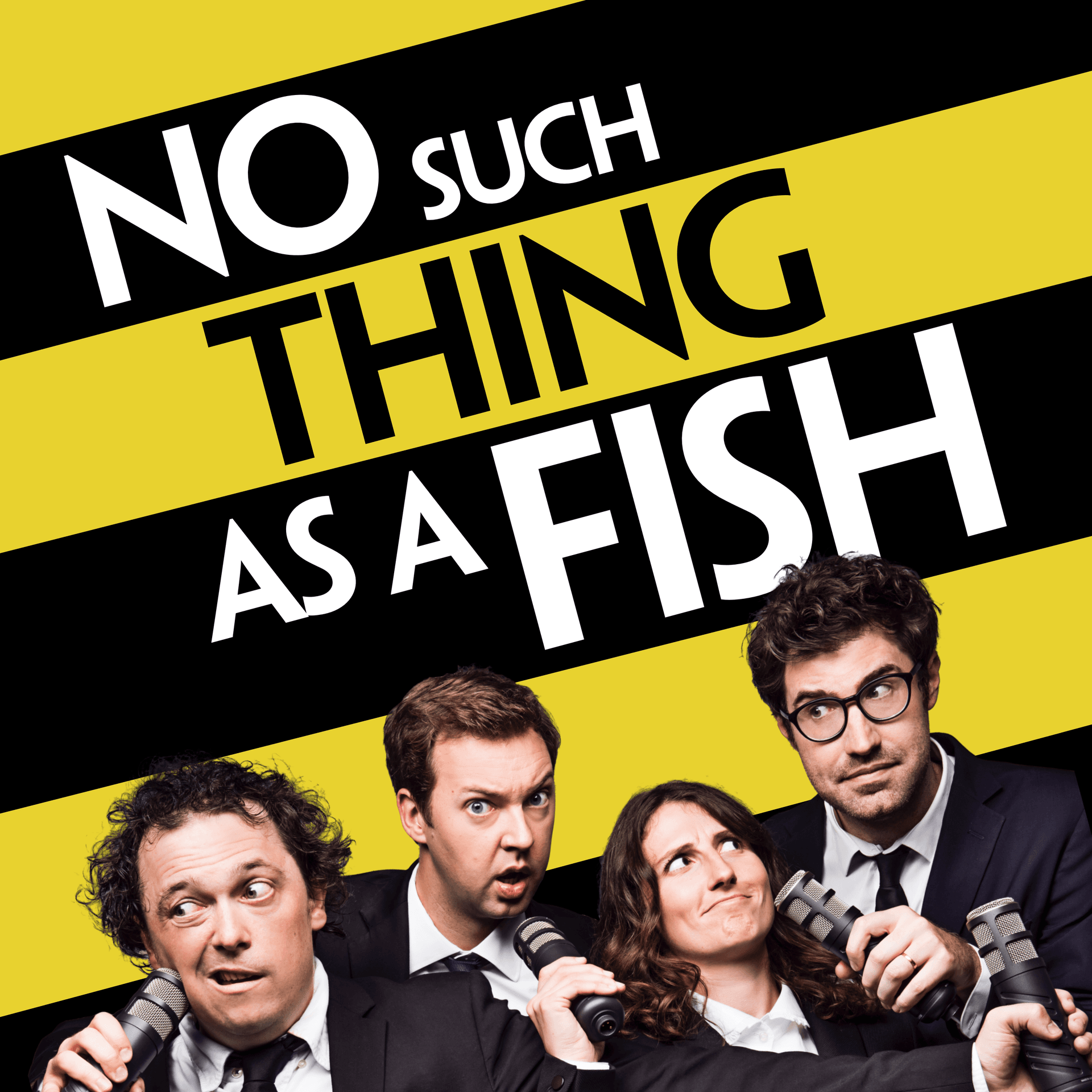
Angela Barnes joins Dan, James and Andy to discuss the cars, the horses and the runs.
Visit nosuchthingasafish.com for news about live shows, merchandise and more episodes.
Join Club Fish for ad-free episodes and exclusive bonus content at apple.co/nosuchthingasafish or nosuchthingasafish.com/patreon