In short
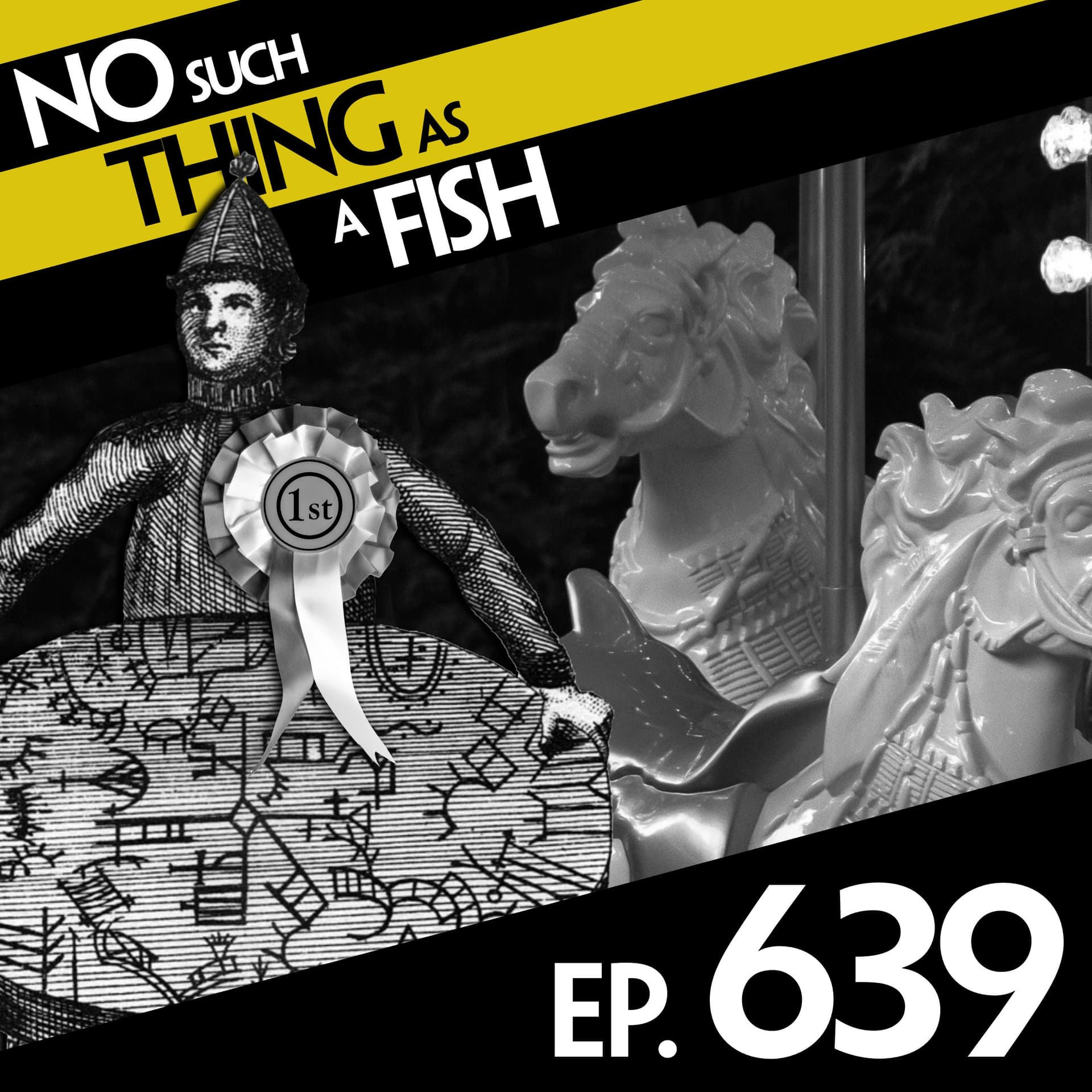
The episode of No Such Thing as a Fish is a mix of trivia and discussion, with three main segments. First, the hosts explain 17th-century Sami shamanism: Sami noaidi used magical drums for trance and divination, with drums confiscated and destroyed by Christian missionaries; one British Museum drum remains. They also discuss Sami-related words and practices (including reindeer herding, urine-based guidance myths, and missionaries’ objections), plus “drum languages” in West Africa that can transmit messages over long distances.
Second, they cover the “Lerbner Prize” (1990–2018) tied to the Turing Test: chatbots competed to fool judges, and humans were also judged for how convincingly human they sounded. They debate whether preparing to “be human” undermines the test, and share examples like Robert Epstein falling for an AI bot.
Third, they critique Puy du Fou theme park: it’s known for historical reenactments and political controversy, yet the “only ride” is a two-euro carousel.
Guests
The episode includes no external guests; it features the regular hosts (Dan Schreiber, Anna Tashinsky, Andrew Hunter-Murray, James Harkin) plus a promotional mention of audiobook reader Phil Dunster (former guest) for Andrew Hunter-Murray’s book Bad Deeds.
Written by AI. May contain mistakes. Listen to the episode to check what was said.
Chapters
Tap a time to open that second in VOBook Release: Bad Deeds
0:04 to 1:10
Hear about Andrew Hunter-Murray's new thriller, Bad Deeds.
“Their products are trusted in Michelin-starred restaurants worldwide and designed to perform just as well in your kitchen.”
Book Release: Bad Deeds
1:58 to 3:07
Hear about Andrew Hunter-Murray's new thriller, Bad Deeds.
“Doesn't matter if you haven't read it, it is also a brilliant standalone book.”
Sami Shamans and Their Drums
3:44 to 5:01
Explore the secret practices of Sami shamans and their drumming rituals.
“They are a group of people who live in Norway, Sweden, Finland and northern Russia and they still live there today.”
The Impact of Christian Missionaries
5:01 to 7:48
Discuss the historical persecution of Sami shamans by missionaries.
“There's not many of them left, but there is one in the British Museum, which is where I read about this whole story.”
The Unique Communication of Drumming Languages
7:48 to 11:47
Learn about the fascinating drumming languages in West Africa.
“I mean, where does the Bible say don't piss into a bag and then spill it on the floor when your reindeer runs away?”
The Reputation of Drummers
11:47 to 14:00
Delve into the stereotypes and realities of being a drummer.
“Are you telling me no one had ever thought of, like, I can use my other hand for this as well?”
Drumming Metaphors and Humor
14:00 to 16:21
Explore how drummers communicate with humor and metaphors
“is you drum a phrase or a song or something that everyone knows what it means and everyone knows the context of it rather than just doing individual words.”
Drumming Metaphors and Humor
16:52 to 18:11
Explore how drummers communicate with humor and metaphors
“We want to find out the best way to get the most up-to-date vocabulary using the best tools available to get that stuff in our brains.”
The Most Human Human Prize
18:13 to 21:04
Delve into the Lerbner Prize and its implications for AI
“I mean, certainly the theory of everything else.”
Human vs. AI: Understanding Authenticity
21:05 to 23:11
Examine the challenges of distinguishing humans from AI
“If you've got very specific loves and so on as a person and you bring them to the exam, you might lose.”
Show all 25 chapters
Eccentricity of AI Prize Founder
23:12 to 25:07
Learn about the quirky life and ideas of the Lerbner Prize founder
“because he was, I don't know if you read into him, he was very eccentric.”
AI's Role in Online Dating
25:08 to 28:02
Discuss a case of falling in love with an AI chatbot
“In 2006, he was looking online for love and he found and fell in love with a Russian woman.”
The Challenges of AI and Trivia
28:02 to 29:26
Discussing AI's performance in trivia and lateral thinking puzzles.
“Is this sometimes why when I get to the end of page 18 on a Google search for Moth, let's say, it says, come on, are you a human?”
Roald Dahl's Dietary Habits and AI Misinterpretations
29:26 to 31:46
Exploring Roald Dahl's alleged vegetarianism and AI's humorous responses.
“Obviously, the carbon footprint of chicken is a lot better than beef.”
Exploring a Unique Theme Park Experience
31:46 to 33:38
Introduction to France's Puy de Fou theme park and its historical reenactments.
“Okay, it is time for fact number three, and that is Anna.”
Critiques and Controversies of Historical Reenactments
33:38 to 36:44
Debating the political undertones of Puy de Fou and its historical presentations.
“And this I suppose is less like you reenact it as you watch other people.”
The Logistics of Theme Parks and Visitor Dynamics
36:44 to 39:46
Discussion on the operational aspects of theme parks, including visitor demographics.
“And the fact that it was founded by quite an extreme right-wing politician is neither here nor there, I don't think.”
Reenactments and Their Cultural Significance
39:46 to 42:01
Examining the cultural impact and legal issues surrounding reenactments.
“I just think people won't know that there's a Wetherspoons newspaper.”
Civil War Reenactments and Their Quirks
42:01 to 45:28
Explore the surprising details and history behind Civil War reenactments.
“Why are they digging holes as part of Civil War reenactments?”
Civil War Reenactments and Their Quirks
45:32 to 46:01
Explore the surprising details and history behind Civil War reenactments.
“to create professional quality cookware, knives, and kitchen tools.”
John Williams and Film Music Insights
46:01 to 50:46
Dive into the contradictions of John Williams' views on film music.
“Okay, it's time for our final fact of the show.”
The Evolution of Film Scores
50:46 to 56:00
Learn about the historical context and impact of film scores on cinema.
“Real estate Superman sounds just like one of Andy's ideas for a cop show.”
The Story Behind 'Walking in the Air'
56:00 to 58:30
Learn about the inspiration and creation of the iconic song from 'The Snowman'.
“I don't know if it's famous around the whole world but it's a really iconic beautiful story about a boy who makes a snowman.”
Envelopes and Creativity
58:30 to 59:05
Discover the idea of a book focused on creations jotted down on envelopes.
Publishing Mysteries
59:05 to 59:52
Explore the challenges and mysteries of publishing creative ideas.
Transcript
Automatic transcript. May contain errors.0:00James Harkin:This podcast is sponsored by Made In Cookware. Made In partners with multi-generational artisans and some of the world's best chefs to create professional quality cookware, knives and kitchen tools. Their products are trusted in Michelin-starred restaurants worldwide and designed to perform just as well in your kitchen. From five-ply stainless clad to carbon steel, every piece is built to last and made to actually make you a better cook. Discover award-winning cookware at MadeInCookware.com. I feel like I'm getting robbed when I bet the Stanley Cup on a sportsbook. Dude, delete that app. You need to be using Polymarket.
0:40James Harkin:Polymarket? Polymarket is a prediction market, not a sportsbook. You trade against other fans, not the house. That means more money for you and less for greedy sportsbooks. Even during the Stanley Cup? Especially during the Stanley Cup. Polymarket is an official prediction market of the NHL. No way. What's the catch? No catch. and it's available in all 50 states. Polymarket is so confident you'll never go back. They're giving you$50 free on your first trade. I'm deleting my Sportsbook app. How do I get started? Download Polymarket now and use promo code GRIT for$50 free for your first trade. Stop letting Sportsbook steal from you.
1:17James Harkin:Download Polymarket and use promo code GRIT for$50 free on your first trade. Use promo code GRIT.
1:25Dan Schreiber:Trading not available in all jurisdictions. Check local regulations before trading. Restrictions and eligibility requirements apply.
1:57Dan Schreiber:you might have read, Breaking and Entering. Doesn't matter if you haven't read it, it is also a brilliant standalone book. And it's an absolute page turner, thrilling stuff, obviously with a lot of the trademark Andrew Hunter Murray wit. I feel like I was watching an action film for parts of it. It's amazing. Get it now. And now pretend I never said anything. Andy, you can open your ears again. Hello. Hi, I was just having a private chat, but you've got a book out.
2:20Anna Ptaszynski:Yes, it's called Bad Deeds. It's out today. We're recording this on the day of publication. It's a thriller set between London's dodgy property market and the wilds of rural Scotland. There's all sorts of skullduggery and mayhem and bad deeds. And the only other thing I'll say is, if you're an audiobook sort of person, you might like to know that the person who reads the audiobook is friend of the parish and former guest on this show. It's Phil Dunster. And he does an absolutely terrific job. So if you like audiobooks, maybe give that a go.
2:46Dan Schreiber:And where can people buy it? Grocery stores?
2:48Anna Ptaszynski:Well, I would say your local independent bookshop. But I will accept any sale is terrific. Thank you very much. So whether you're buying it offline or on. But no, do pop down to your local bookshop and ask them for 10 to 12 copies is a good start.
3:02Dan Schreiber:There you go. 10 to 12 copies of bad deeds. Seriously, do it now. You will not regret it. Okay, on with the show. On with the podcast.
3:24James Harkin:Hello and welcome to another episode of No Such Thing as a Fish, a weekly podcast coming to you from the QI offices in Hoburn. My name is Dan Schreiber, I'm sitting here with Anna Tashinsky, Andrew Hunter-Murray, and James Harkin, and once again we have gathered around the microphones with our four favorite facts from the last seven days and in no particular order here we go starting with fact number one and that is james okay my fact this week is that in 17th century sweden sammy shamans had to work in secret unfortunately most of their work involved constant drumming sammy shamans sounds like an end of the pier kind of magician yeah that's true Hi, it's Sammy Shamans and here is my magical drum because they did have magical drums, the Sammy.
4:13They are a group of people who live in Norway, Sweden, Finland and northern Russia and they still live there today. But they started off as hunter-gatherers, went into reindeer herding and they move around with the reindeer. But one of the most important people in the community was the shaman who is known as a noaidi. and the Noadi would communicate between the worlds by using this drum. And he would kind of bang, bang, bang and get into such a rhythm that he would get into some kind of weird sort of trance. And I say he because it was always a he. And they felt like they could transform into other creatures, transform into the wind, all this kind of stuff.
4:51And they were persecuted by Christian missionaries and the Christian missionaries just basically said, we're having that drum. And they took the drums off them. Confiscated them. Confiscated them, destroyed most of them. There's not many of them left, but there is one in the British Museum, which is where I read about this whole story.
5:07Anna Ptaszynski:They are engraved or painted with pictures. And I think there's a way you can do divination, as in the Sammy Shaman would strike the drum with a hammer that is made of an engraved reindeer antler. Because reindeer is a very big deal. And then that makes a little brass ring that you've got dance across the surface of the drum. And how far it goes or what it lands on tells you or tells him, because it is always a him. Woke hasn't yet come for the Sami Shaman world, basically. And that tells you the future, you know.
5:39Dan Schreiber:Or I did read an account from 1674, which I think is the earliest account we have of more southern people by a guy called John Sheffer, who said they also sometimes use the drums to decide what animal to sacrifice to their gods. So he said each drum would be covered in lots of pictures of animals and birds and fish and stuff. And then there was a kind of a pole attached to the drums and at the top of it, a little brass frog. and you bang the drum and when the brass frog fell off, whatever animal it landed on, whatever animal the frog chose was the one that you had to kill. It's like a Wheel of Fortune kind of thing, isn't it?
6:13Yes.
6:13Anna Ptaszynski:You're not proposing taking this ancient sacred ritual and putting it on ITV or primetime. I'm afraid I am. Which of these celebrities will we sacrifice? These images that you said, Andy, the Sammy sort of would, once they started getting persecuted by the missionaries, they would like say oh this isn't a reindeer this is a cross and they would slightly sort of change all the drawings to make them more christian in the hope that they wouldn't get taken but they did all pretty much all get taken there's not that many of them left i mean i heard much of
6:45James Harkin:the sami but i realized a kind of classic fact uh is to do with the sami which is the word poron kusema which is the distance a reindeer can travel before it needs to stop and urinate that's kind of a classic thing that you see online susie dent tweets about that word quite often it's a...
7:00Anna Ptaszynski:But as a reindeer ages that distance will shrink you know. Yes. Yeah yeah yeah. Many of your middle-aged male reindeer will stop just in case. It's nice to have stopped when you can. Also like your reindeer will walk for a long time and then once they break the seal then that's going to be a moose. Exactly. And when I say breaking the seal I don't mean like with a club or anything. The missionaries really didn't like the way the Siberians used their own urine to guide the reindeer because what they would do is they would urinate into a seal skin, carry it around with them, and then if the reindeer wandered off, you would pour a bit of your urine on the floor and then the reindeer would come back because they like the salt and the minerals and stuff like that.
7:41And so, yeah, the fact that they were doing this uriny stuff, the missionaries were like, ah, that's not really in our book.
7:48Dan Schreiber:I mean, where does the Bible say don't piss into a bag and then spill it on the floor when your reindeer runs away? I don't think it says anywhere. It's in Leviticus. The one I haven't read So the radio do eat the yellows now? Yeah they do They like to lick the As do a lot of animals
8:06James Harkin:It'd be a good way to attract the old man in the coat Have you heard of him?
8:11Dan Schreiber:No
8:12James Harkin:Is it you? It sounds like Dan with his With his creepy coat I'm pushing my new business Do you need a kid's birthday party? Absolutely ruined Well you need the old man in the coat All you need to do is piss out the front of your house and I'll come and lick it. Isn't that what they know you as in Hamster Teeth? Yes. It's what they call polar bears. The Sammy. Or God's Dog is the other name. Is it because it's a taboo? It's a taboo. They don't want to give it its real name. So it's got a code name. God's Dog is very good. God's Dog is wonderful. Yeah.
8:44Dan Schreiber:Yeah, there's definitely a belief that polar bears can speak English, but not very well, kind of as well as a toddler. So the belief is that they don't understand metaphors. So when you're talking about how you're going to hunt a bear, that's why you have to use metaphors like the fur clad one. Do you also say, oh, it looks like over there they're selling I-C-E-C-R-E-A. I was reading just another thing on how the Christian missionaries dealt with them. In this early account from 1674, John Sheffer, he was Christian. So he had lots of comments about the Sami and how they weren't very good at being Christians.
9:17Dan Schreiber:And he said, they stick at several points of Christianity, namely the resurrection of the dead and the immortality of the soul. And I just like that immediately afterwards he said, and they worship the sun chiefly for its light and its heat, believing all things are made by its means. Oh, idiots. Such a brilliant tone of patronizing disdain. I don't know why they can't get the whole resurrection of the dead thing. Also, they think the sun's really important. That's really funny. So Linnaeus was a big fan Of the Sammy Linnaeus the guy who named all the animals Basically He used to say God creates And Linnaeus puts into categories But he went to visit them And they had a big effect on him So after that he decided to just walk around In Sammy clothing all the time Even when he was back home Yeah yeah He loved it didn't he Like it obviously was a different time but if I have just been to China and then I come back dressed like a Chinese person it's not going to work is it I think to be fair he basically thought this whole reindeer coat for coats works and wore a lot of reindeer head to toe didn't he and he did carry the drum which to be fair would seem a bit appropriatory
10:31Anna Ptaszynski:I think we all know somebody who's had a gap year and got a bit too into it why are you looking at me like that I've never had a gap year I just have a gap two weeks every year
10:42James Harkin:You're the guy dressed in a kimono today, Andrew. Dan, by the way, that Papua New Guinea gorge that you're wearing. Thank you. I know it's hidden by that big coat. But yeah, Linnaeus, one thing that he really liked about them is that the men would carry around a sweet smelling fungus to attract women. Just in the same way that I might spray Lynx Africa on myself. They would do this with a fungus. And he said, in other parts of the world, you must be wooed with coffee and chocolate, preserves and sweets, wines and dainties, jewels and pearls. Here you are satisfied with a little withered fungus.
11:23Anna Ptaszynski:Well, it is very cold.
11:29Anna Ptaszynski:Just to think about drumming and drums, as we're on the Sammy and their drums. I found this absolutely wild. Drums are many thousands of years old, right? I mean, we found ancient, ancient drums from civilizations all over the world. But the drum kit wasn't invented until the 20th century.
11:47Dan Schreiber:Are you telling me no one had ever thought of, like, I can use my other hand for this as well?
11:53Anna Ptaszynski:When are the first drum solos that you can think of? They're all quite recent.
11:58Dan Schreiber:I just think maybe people did them and didn't manage to record them onto cassette tape back in the day. Maybe, maybe. It's interesting. It's wild, isn't it? Yeah, maybe. I think the jury's out on that one, I would say. That's crazy. You can speak in drum if you're a certain type of person from a certain type of place with a certain type of language. In West Africa, drum languages were quite common, probably less so now. But this is in languages specifically in which they're very tonal. So you can make a drum that can play lots of different tones. And so I think the Bulu dialect of the Bantu language is a very good example of this, where they'd have a drum where if you bang it at a different place along it, it makes a different tone.
12:40Dan Schreiber:And therefore you can transmit messages up to 20 miles, apparently. And everyone would have a drum name. So you'd give someone their drum name. You'd bang on the drum their drum name so you know they're talking to you. But it's like having a special knock on the door. Like I always knock on the door the same like... Yeah. I mean, it's not like a lot of people would do a similar thing. But if you heard that knock, there's a good chance it's going to be really interesting.
13:05Anna Ptaszynski:And if you don't hear a knock at all, that's Dan in his big coat outside the front.
13:11Dan Schreiber:But you're then knocking to yourself. If I were a Bantu person, I'd use that knock for you then. That would be my way of saying, Oi, James. If we were on University Challenge, I would buzz in and they'd go, and they'd know it was me to answer then. Yes, exactly. Harkin' fish. Why have we never done University Challenge as a team? We've just never been asked, Andy. And also they don't do podcast teams. We're not a university.
13:34James Harkin:University teams. Yeah, but what the hell? And we'd be very bad.
13:37Anna Ptaszynski:There's a broader truth that I think we're missing,
13:39James Harkin:which is that it would be so much fun for us. And our insistence on being addressed by our drum names, I think, is also... Podcast challenge, on the other hand, seems like a good idea.
13:48Anna Ptaszynski:Edit this out of the podcast. We're going to do podiversity challenge. University pod challenge. We're going to do it. We'll think of a name. Yeah.
13:55Dan Schreiber:Don't edit this out. I don't want to do that. Keep it in so someone else steals the idea. One thing I read about these drumming languages in Africa is you drum a phrase or a song or something that everyone knows what it means and everyone knows the context of it rather than just doing individual words. Yeah, I mean, it's very weird because it already seems difficult to convey stuff via drum rather than words. And the fact that they've overcomplicated it by then saying you can use these metaphorical phrases, but it does seem to work. For instance, like, let's say I wanted a cake. I could go da, da, da, da, da, da.
Read the full transcript
14:28And you would know, like.
14:30Dan Schreiber:Maybe it's simpler. Okay.
14:32James Harkin:Or you'd be like, oh, the local comics here. Like that would be a good drum name for a local comedian. Here comes Sammy Shaman.
14:42Anna Ptaszynski:One of my close friends is a drummer professionally. One of the big things about drummers is that they have a bad reputation. Not a bad reputation, but just a reputation maybe for being not the brightest member of the band. I'm not saying they are. I'm saying that's what their reputation is. Right. And besides, they won't be listening to this podcast. It's way too high, bro.
15:05Anna Ptaszynski:So I asked him for some drummer jokes. Oh, yeah. I just thought you might like some of them. Yeah, go on then. What do you call someone who hangs around musicians? A drummer. A drummer. How can you tell if the stage is level? The drummer is dribbling out of both sides of his mouth. How do you know when there's a drummer at the door? I don't know. The knock gets faster and they don't know when to come in. what's the difference between a drummer and a savings bond I don't know one of them will mature and make money I think what this needs is a badum tish I feel like I'm getting robbed when I bet the Stanley Cup
15:46James Harkin:on a sports book dude delete that app you need to be using Polymarket Polymarket? Polymarket is a prediction market not a sports book you trade against other fans not the house That means more money for you and less for greedy sportsbooks. Even during the Stanley Cup? Especially during the Stanley Cup. Polymarket is an official prediction market of the NHL. No way. What's the catch? No catch. And it's available in all 50 states. Polymarket is so confident you'll never go back, they're giving you$50 free on your first trade. I'm deleting my sportsbook app. How do I get started? Download Polymarket now and use promo code GRIT for$50 free for your first trade.
16:26James Harkin:Stop letting sportsbooks steal from you. Download Polymarket and use promo code GRIT for$50 free on your first trade. Use promo code GRIT.
16:36Dan Schreiber:Trading not available in all jurisdictions. Check local regulations before trading. Restrictions and eligibility requirements apply.
16:44Stop the podcast. Stop the podcast. Hi, everyone. We'd like to let you know that this week we are sponsored by Babbel.
16:51James Harkin:Yeah, Babbel. You know Babbel. We all use Babbel. We're learning languages. We want to find out the best way to get the most up-to-date vocabulary using the best tools available to get that stuff in our brains. Babbel's worked it out for you. Absolutely. They let you practice real-life conversation step-by-step with no stress. And it just gives you confidence. Like, I've been learning my language of choice, which is Russian, for many, many years. But just doing Babbel, it just really helps you get up-to-date. If you've not done it for a little while, you go into Babbel, you do it for a little while, and suddenly you're an expert again.
17:24James Harkin:Exactly. And it's not like the old school day of just buying a book and having to deal with it that way. They've worked out many different ways in which you can consume all of these language learning exercises. There's podcasts, there's interactive dialogues, and it's all curated by more than 200 language experts worldwide. So this really is the place to learn your language. Yeah, don't buy a book like a big old nerd. Go to Babbel. And here is a special limited time deal for our listeners. Right now, you can get 60 % off your Babbel subscription at babbel.com forward slash fish. That's B-A-B-B-E-L.com forward slash fish.
17:59James Harkin:60%. No book's going to give you 60 % off its sale price, is it? So do exactly what James says, babbel.com slash fish, and you'll get 60 % off. Rules and restrictions may apply. And there are some quite good books out there. Oh, yeah. I mean, certainly the theory of everything else. Anyway, on with the podcast.
18:23James Harkin:Okay, it is time for fact number two, and that is Andy.
18:26Anna Ptaszynski:My fact is, from 1990 to 2018, there was an award given out every year for the most human human.
18:35James Harkin:You sounded so robotic.
18:37Anna Ptaszynski:This was a prize that was given out. It was a subsection of a bigger prize, right? And it's all to do with the Turing test. so for anyone who hasn't heard of that before that's the idea that alan alan turing a brilliant computer scientist proposed in the 50s that the way you would be able to tell when we had artificial intelligence is if a human is conversing with someone who's unseen and they are unable to tell whether they're talking to a person or a computer that's when we'll have true artificial intelligence which i would say is now right oh yeah people are falling in love with ais left right and center So we've way passed the Turing test.
19:13Anna Ptaszynski:So by that metric, we've done it. Certainly when we started this podcast, it wasn't true. Absolutely. Absolutely. Yeah. So that's the idea of the Turing test. And there was an annual prize during those years, starting in 1990, called the Lerbner Prize, where people would bring along their own chatbots and they would be training them and improving them every year. And if your chatbot managed to fool a human judge, you would win a prize. There would be several thousand dollars for the most human computer. but as part of that you obviously had to have some humans being on behind the screen chatting back for the judges to have any sense of like are you talking to a computer or a human sometimes you'd be talking to one sometimes the other and as a separate prize the judges would pick the the human chatter who was most convincingly human and give them a hundred dollars or some small small prize i think this is a problem with the experiment because if the human is then changing their attitude and the way that they respond because they're trying to get a prize yeah then that
20:12James Harkin:changes the experiment right and that is what happened right brian christian who won the most human human prize he wrote a whole book about it and part of the book was telling how he prepared to be human as part of the test and so he did study to be human to win it that feels like it's
20:27Dan Schreiber:kind of cheating isn't the whole point that you've got to be yourself revising for an exam is not
20:31Anna Ptaszynski:cheating and if the exam is are you a human it's completely reasonable to prep testing the computers right? Yeah. If the whole point of the exam is to test the marking system and you change your answers to make them completely wrong or completely right then that's not a very good way of testing the marking system. I think he was just practicing being himself and being authentic in conversation and being truly human. How would you do it? I prep several hours a day for all of my conversations.
20:57Dan Schreiber:You use the same person as Keir Starmer don't you do this? If you wanted to pretend to be human what would you do? Because I feel like you would just do something really dumb, right? Yeah, that's a great question, James.
21:08Anna Ptaszynski:I'm so glad you asked me. But what do you think?
21:12James Harkin:Here's the issue, though. If you've got very specific loves and so on as a person and you bring them to the exam, you might lose. So one person was outed as a robot when they were a human because they knew far too much about Shakespeare. They said no human could possibly know this much about Shakespeare. It just so happens it was a Shakespeare expert on the other
21:30Dan Schreiber:side who was a human really the way to do it um now and this is my optimistic theory about where the world's going the only way to convince people you're human is to actually see them because the only place that robots haven't managed to achieve anything like human resemblance is in the physical world right they still can barely move i mean i know there's all sorts of claims every year i mean they play football and they fold laundry and whatever but if you watch them trying to even run marathons they still don't look for a human but they just won the marathon i know but they didn't look like humans when they did.
21:58Dan Schreiber:So I would say...
21:59Anna Ptaszynski:Pop a big coat on that guy who ran the marathon. People will think Dan's achieved a wreck at that time. I would say if you put that robot, because it was all over the news when I was in China, it was the top story in the news that day. If you put that robot next to Phoebe from Friends running, you would not be able to distinguish the two of them.
22:16Dan Schreiber:It's a real slam on Phoebe. But this is the thing about robot technology, right, is that they've managed to mimic our brains unbelievably well. But physically, actually it turns out that it's very very difficult still and so i think people are going to be driven off their computers back into the real world it's a nice optimistic idea hopefully not by driverless cars because there's a situation in atlanta earlier this year where 50 waymo driverless taxis drove through the same area between six and seven o 'clock because someone had put a children at play sign in the road which wasn't supposed to be there and they would drive into the road and then they try and get out and then they see that side and they'd go back in the other direction again and they'd just be driving in circles and circles and circles.
23:01Anna Ptaszynski:So it kind of worked as in they can see a children at play sign and know that that's something they should... Yeah but it's like you can kind of hack it to kind of make them drive around in circles and get lost because they're not thinking. Can I tell you just a quick thing about this guy Lerbner who set up the prize? because he was, I don't know if you read into him, he was very eccentric. So it was treated like serious AI people said, this is just a stunt. You know, he gave out a medal with Alan Turing on one side and him on the other. You know, he was, there was this amazing, he sadly died about 10 years ago now, but he was a very interesting cookie.
23:33Anna Ptaszynski:So there was this piece about him in 2011. He had made his living in portable crowd control fencing and roll up disco dance floors. That was his main line of work. I know, cool, right? That is, yeah. And he wanted to sponsor the prize because his idea was true artificial intelligence will free the world from work. You know, very optimistic that there won't be any work anymore. But his other speech after the competition was all about his plans to revolutionize public transport using roller coasters. He says a roller coaster is the ideal transport system. It could work and it would solve many of society's problems, whether it could be implemented as another matter.
24:08Anna Ptaszynski:I agree. What's a driverless car except a kind of slightly shit roller coaster? What's a tube? What's the underground apart from a roller coaster? Exactly. Yeah, the key difference
24:16Dan Schreiber:with a roller coaster is that you always end up where you started. That feels like the tube is a bit better than a roller coaster. Well, the circle line functions. Imagine if like every time you came into work you could buy a photo of yourself on the way to work. That would be great. Worth it. Yeah. I interviewed Lerbner.
24:34James Harkin:I met him. Did you? Yeah, it was online. I met him. Are you sure it was him? Yeah, it could very well have been a chatbot It was him who I interviewed alongside Mitsuku, who was the chatbot that had won the Lormner Prize or got first place in the Lormner Prize five times and is the final champion because it stopped in 2019, I think. But yeah, very eccentric character even to look at, you know, like a Dali-esque mustache. And he had two big passions. It was roller coasters And it was making prostitution Seen as something As a normal day-to-day thing That you would just go Within your marriage And go I'm just going to go To the brothel You must be this tall To go on this ride
25:17Anna Ptaszynski:Don't take a photo Of me halfway through
25:21Dan Schreiber:I know we're focusing On the prostitution You may get wet
25:23Anna Ptaszynski:Scream if you want To go faster I know you want To carry on Ale But we've got a few more Of these Oh not good I was sick twice and my hat fell off you must keep your arms inside at all times
25:41James Harkin:just let them get it out of their systems
25:46James Harkin:here's an interesting thing i shouldn't have had that hot dog just before
25:54James Harkin:here's an interesting thing we're talking about love and talking about ai there was a guy called Robert Epstein. In 2006, he was looking online for love and he found and fell in love with a Russian woman. They exchanged love letters and so on. And for about four months, it was going back and forth until he finally realized, hang on, is this a real person? And it wasn't. It was an AI bot. And he was an expert in the field of... He is the co-founder of the Lurbner Prize, Robert Epstein. This is a good 16 years after this prize had been set up. He fell in love with an AI bot online. Oh my God.
26:28Anna Ptaszynski:Basically, almost anyone's susceptible to it, I think.
26:31Dan Schreiber:Yeah. On telling the difference between humans and robots, how good are you at proving you're a human online with the recaptures? Oh, you mean like, which of these is a boat kind of thing? Exactly. How many traffic lights in this? Click the traffic lights. You know what I think? I reckon I've got it wrong before and it's let me pass. That's because robots are better at it. Really? Yeah. The constant problem they have is trying to get ahead of the AI because AI works out how to hack it over and over again. And basically, by 2014, 99 % of bots could solve the distorted letter ones where they said, you know, type the letters you see.
27:06Dan Schreiber:And in 2023, there was a study that found that bots are better than people at the picture one by some degree. So when you're showing the image, 78 % of the time, people got it right. 100 % of the time, the bots got it right. But I thought the point was that they'd get you to do this. But while you're doing it, they're checking your browser history to make sure you've not been going on the same website 500 ,000 times? Oh, really? That's what I thought it was. Sometimes, usually the reason you get a capture is because your browser history isn't human enough. So the only way to get around it now, really, is to allow cookies, browse the internet for five minutes, and then go onto the website that you want to go on because then they see that you've browsed the internet like someone.
27:43Dan Schreiber:Because it used to be that they could tell if you were too slow clicking the mouse, you're a human. I'd deliberately wobble my mouse a little bit so it looks more human. None of that works anymore. The robots have learned to act like an idiot, like a human. I thought we were just training it.
27:56James Harkin:I mean, I know that that was the idea. I thought we were working for them. The idea was we were teaching the AI what traffic lights look like in every single... We are as well. So that's still happening? We're still training them? Right, okay.
28:05Anna Ptaszynski:Is this sometimes why when I get to the end of page 18 on a Google search for Moth, let's say, it says, come on, are you a human? Do you ever get that? You get to the end of... Oh, really? Because nobody clicks through 18 pages of Moth's results.
28:18James Harkin:I think that will be why, yes. Remember, there was the big thing where Watson, the IBM AI computer, went on Jeopardy. And there was a whole thing about Jeopardy. There was a big complaint from the makers of Watson who said they rewrote the questions so that it didn't allow for it to do it. So, for example, an example given is, in 2002, Eminem signed this rapper to a seven-figure deal, obviously worth a lot more than his name implies. 50 Cent. 50 Cent. What's his 50 Cent? Damn it! and Watson would be able to figure that out but they rewrote it to lose 2002 and Eminem in there so it relied on you to make a connection of a pun I see surely the quiz question is basically do you know that 50 Cent is one of Eminem's stable of rappers isn't it?
29:05Anna Ptaszynski:no I think name any musician with money in their name a low denomination in their name because I didn't know that about the stable of rappers but I did know that 50 Cent is a thing the thing is with those questions is they give you two different ways of getting to the answer right yes yeah with the pun or with the knowledge yeah and that's why
29:22James Harkin:they complained but it's it's interesting i put it into chat gpt uh this morning just to see what it would give if i gave the question without 2002 and eminem and it you know of course immediately came up probably 50 cent a seven-figure deal is worth far more than 50 cents was its logical answer
29:36Anna Ptaszynski:yeah so it can do that so it over explains the jokes yes oh dear maybe i too have an ai
29:45Dan Schreiber:I gave AI a lateral thinking puzzle And it couldn't crack it So that was satisfying This was triggered by the fact that I was wondering if Roald Dahl was a vegetarian Because I just read Book of Fizz It was very anti-hunting So I said is Roald Dahl a vegetarian And Google AI said There are many clues in his book To suggest he's a vegetarian For instance Fantastic Mr Fox is vegetarian And obviously I thought Well the whole plot of Fantastic Mr Fox Is about him eating meat So I don't think he is
30:10Anna Ptaszynski:There's a bit where he breaks into a bar And just kills two chickens instantly I'm a flexitone. Chicken, basically. It's not real meat, is it? Obviously, the carbon footprint of chicken is a lot better than beef.
30:23Dan Schreiber:That's faulty. So I tried Claude, the anthropocent AI, on this riddle, which I always just love. And you have to write it down, but imagine you have one, three, and five in a row, and then directly beneath it, write two, four.
30:38Anna Ptaszynski:The words?
30:39Dan Schreiber:No, the numbers. It has to be numerical. Two and four. And then a question mark directly beneath the five. Okay. Yeah. And it's like, what's the question mark? Six. So you'd think it's six. So obviously that's what AI says to me first. But you can see, Claude tells you it's working. So it's like, it says, sussing out lateral thinking options. No, is it six? And you say, no, it's not six. I think it's five again. I gave it so many clues. Still didn't get it. I'll give you guys a clue. It's not a number and it's related to cars. And this is kind of an example of something that AI does. It's an R for reverse.
31:13It's an R. Oh, come on.
31:15Dan Schreiber:And that's because robots don't drive cars. But they don't drive manuals. In fairness, I think six is a legitimate answer to that question. Completely, but it's when you tell it, it's not six. And the thing about AI is it's overconfident. So at one point it said, I've got it. It's F. Right. You know when AI is really, I've done it now. Sorry, AI is overconfident. Maybe I too am an AI. Isn't Dahl a vegetarian curry? Oh, yes.
31:42James Harkin:Yeah, so Roald Dahl, if not a vegetarian at least, is a vegetarian curry.
31:46Anna Ptaszynski:Very good. And AI can't make proper jokes. Maybe you too, Deb, are an AI.
31:59James Harkin:Okay, it is time for fact number three, and that is Anna.
32:02Dan Schreiber:My fact this week is that the only ride at France's second most popular theme park is a two euro carousel. Yeah. I have just taken my daughter to Disneyland in Shanghai. 10 hour flight, however much money it costs. Trains, all that stuff. And all she wanted to do was go on the carousel. Oh, really? We went on the carousel four times. Right, now back on the plane. So this sounds perfect. Yeah. There you go. It would have been a slightly cheaper carousel than the one you went to. Well done. And that's all it is. So why is this such a shit theme park? it's Puy de Fou and it's the second best after Disneyland Paris obviously which trumps everything but this is a theme park that was set up in the 1970s it gets over three million visitors a year it's the eighth most popular in Europe and it's basically a place where they do historical reenactments and it began in the 70s when this guy Philippe de Villiers who I'm sure we'll come to talk about, found a ruined castle, as you do stumble upon a lot in France.
33:10Dan Schreiber:And he thought, I'm going to stage a reenactment of this thing called the Vendée Rebellion, which was a counter-revolutionary rebellion round about the French, well, at the time of the French Revolution. So he staged a reenactment. It got bigger and bigger. And now it's 60 shows that act out historical events from all across history and all across geography. It's got these four period villages. So when you stay there, you stay in a period village.
33:34Anna Ptaszynski:It sounds amazing
33:35Dan Schreiber:It sounds absolutely incredible I'm desperate to go
33:38Anna Ptaszynski:I went to stay somewhere recently that didn't have any of this But it was faintly medievally themed And the restaurants were things like The Night's Tafaran
33:45Dan Schreiber:And that whet your appetite did it
33:48Anna Ptaszynski:I'm saying I could see myself This sounds better is what you're saying I'm saying this sounds better There is plenty available for people like you In the UK right now If you want to get involved in the medieval scene There's all sorts of re-enactments going on Really? I'll put you in touch with something. Thank you.
34:05Dan Schreiber:But none of them are this level though. And this I suppose is less like you reenact it as you watch other people.
34:10James Harkin:So there's shows that are put on. You were just watching. Did anyone else watch an hour long YouTube video of someone going from each of the reenactments? No. Okay, I did. And to begin with. I like the way you're reenacting the reenactments by watching them on YouTube. I thought you would get a bit fatigued with the amount of reenactment that you're watching. If you decided. Come on. Yeah, I think it loses. About 35 minutes in, I sort of regretted my decision to watch the full hour.
34:38Dan Schreiber:But that's what the carousel is for. Yes. It's like a palate cleanser.
34:42Anna Ptaszynski:Surely live is more exciting. And, you know, you're caught up in the sweep of French history. Kind of. Kind of. I think so.
34:49James Harkin:You're quite far away. So it's sort of like watching a very well-produced panto at a distance. I mean, it's epic. Three million people a year can't be wrong, Dan. Well, have you read the TripAdvisor reviews? They're very strong. They're very strong. They're going to build one in the UK. They are. Oxfordshire. In Bicester. In Bicester. And we're going to have hotels, three hotels, each themed around different periods in British history. Just wondering if you had any favourites. Ooh. I was thinking COVID era. Yeah. No toilet paper. I'll say General Strike.
35:24Anna Ptaszynski:General Strike. That'll be one of my favourites. Just three days for the price of five. Lovely. I mean, there'll be a two to one, won't there? because it's British it's English history British history
35:32Dan Schreiber:so weird that people are obsessed with the Tudors when the revolution happened the next century and we it's Argo revolution yeah yeah everyone shaved their heads which revolution do you mean the the round head one Civil War yeah so half of the people shaved their heads sorry yeah if it's everyone there's no war is there everyone just agreeing all the time
35:50James Harkin:swinging 60s I think oh yeah I think that'd be a cool one I bet they would do that wouldn't they like have a little Soho yeah vibe I would say
35:59Anna Ptaszynski:outrageously the French one Puy de Fou has the King Arthur stuff I have no idea how they've managed to swing getting the rights to King Arthur He's not very litigious The estate must be trading surely I just think what
36:13James Harkin:is there an estate for King Arthur? No I'm joking It feels like there could be It feels like there could be I can't tell I think like there was quite a bit of Frenchy stuff going on in those Arthurian tales Yeah
36:28Anna Ptaszynski:And the Mort d 'Arthur is written half in French and all of this. Yeah, yeah, yeah. Okay, yeah, yeah.
36:33Dan Schreiber:And it's famously ahistorical, this place, to be fair. The makers tend to say we're just trying to entertain. But are they trying to entertain? Well, there's the big question. It's quite controversial. Are they trying to sneak in right-wing propaganda to families? Because that's what some people say. It's what some people claim. And the fact that it was founded by quite an extreme right-wing politician is neither here nor there, I don't think. Well, he's not there anymore. because it's run by another guy, his son, I think, called Nikola, who described Vladimir Putin as having sweet eyes and sweet words.
37:05Anna Ptaszynski:Oh. Cool, cool, cool, cool. I saw, by coincidence, because we've been planning to do this for a week or two, there was an article in Harper's Magazine this week where author Nat Segnit went to this place, and he said it was a bit like hanging out with an exceptionally charismatic and entertaining friend whose opinions only strike you as objectionable in retrospect. That's very funny. So what is the idea? Is it that it's presenting a particular slant on history? It's very pro-Catholic. It's very pro-French monarchy. It's very sort of like looking back at the past and wasn't France great in the past and shouldn't we go back to France being great again?
37:45Yeah.
37:45Dan Schreiber:It's very into old school France. But fun. And that's how the right wing get you. They make it fun.
37:51James Harkin:The craziest thing about this theme park, in my opinion, is when you get there, you get a little booklet, you know, the free booklet that tells you the map of everywhere that you're going to go. And it's in multiple languages. And at the top of each one of them has the date of the day that you're going on, which means they print them every single day for the day that you're visiting the theme park. To you, that's the craziest thing about this insane place which has deep, weird, like, political... How much ink are we wasting here? how many trees have been chopped down so that we can go
38:21Anna Ptaszynski:yeah but they probably are quite good at knowing how many people have booked in for that day so they just don't know how many to press on the printer that for you is the weirdest thing also surely they can print all of them and then just print the date separately I think it's like an additional stamp there could be a little man in a booth who just stamps on the date
38:38James Harkin:it looks very printed on
38:40Dan Schreiber:I don't think it's that Dan this implies you think whenever you scrunch up a brochure and throw it away you think someone's going around all the bins taking them all out ironing them and reusing them the next day.
38:49James Harkin:No, I'm thinking they've got a big batch in the warehouse. They don't have to go, where's the guy with the printing for today? We've got 10 ,000 people in today. How many guys should we print, do you think? Should we do about 10 ,000? Yes. Oh yeah, let's print 10 ,000 every day.
39:02Dan Schreiber:Because Dan, this is the amazing thing about time. They know which date is coming. So if today is the ninth, someone's there to go.
39:09James Harkin:What if there's huge cancellations because it's raining too much or something? What if COVID happened and they've got suddenly 365 days worth? For 2026, do they put 2026 or just 26? Because if it's just 26, they can reuse it in 100 years. See? Okay, now we're talking. Okay, maybe it's not so weird. By which time, the great French government will have risen
39:30Anna Ptaszynski:and taken over the world again. The Bourbon monarchy will be restored again. I mean, yeah, it's very interesting and strange. And I think the reason that it's not very well known about, certainly in the UK, is that 85 % of the visitors are French. you know loads of french people holiday within france and it's uh and obviously it's so about france that it's it's naturally appealing to the french people so yeah yeah i think so and i think there is one in spain as well isn't there yes there is so they've done one in spain they've done one in france they're going to do one in the uk yes i think it's apparently the spanish one is quite politically conservative on just how good a thing the colonization of the americas was oh it depicts it depicts the um the europeans saying well we'll only go ahead and colonize if you guys really wants us to and as long as we're going to treat you really really nicely that's sort of
40:17James Harkin:written into the really show yeah it's like the weatherspoons of theme parks they're all you know you get your cheap ruttles but you've got a political agenda you've got to well this sift
40:27Anna Ptaszynski:through when i can't believe it i can't believe it but the weatherspoons often they they dish out magazines yeah have the proprietor's views in them yeah which is very quite rare for a pub you know you don't normally get like a strongly angled magazine yeah wait wasn't that your point Yeah, I'm over explaining. I just think people won't know that there's a Wetherspoons newspaper. Sorry, got it, yes. International listeners. No, international listeners may not. By now everyone internationally knows about Wetherspoons.
40:50James Harkin:Sorry to keep talking about it, but... You know what they don't do? They don't stamp the date on every single newspaper, because they're not nutcases. Do you know who does? Newspapers, Dad. It's a weekly newspaper. It's not a daily newspaper.
41:09James Harkin:Crazy.
41:09Dan Schreiber:I'm just quickly on the one in the UK, which should be fine because we don't have an awkward colonial history. So I doubt there'll be anything controversial in that. But it's planned for Bucknell, which is near Bicester. And there are obviously residents who are very against it and residents who are very pro it. And I just like the fact that it is in Oxfordshire. And the residents are led on the pro side by a woman called Caroline Chipperfield Twiddy. And on the anti side by Flo Van Diemen Van Thor. which shows how really Oxfordshire Oxfordshire gets
41:41Anna Ptaszynski:yeah that's very interesting on reenactments in 2014 there was a World War II reenactment they were going to do in Barnsley in Yorkshire but it had to get cancelled because people would be wearing Nazi insignia and so the council stopped it but said that they would be able to reschedule if they did a World War II reenactment with no Nazi elements whatsoever that's very funny that's very good
42:09James Harkin:I think reenactments really interesting like for example Civil War reenactments quite often that as they're sort of digging holes in the ground they'll actually find the bones of a fallen soldier from the Civil War this is in America and that will then be brought back to a museum and so on and so they're digging up artifacts as they are doing reenactments of the Civil War.
42:29Dan Schreiber:Why are they digging holes as part of Civil War reenactments? Was there a lot
42:33James Harkin:of tunneling in the civil war i'm not sure some of them maybe just dig a hole maybe to poo in i don't know you know i don't know what the outdoor latrine situation is not using that portaloos they
42:43Anna Ptaszynski:did not have that in the civil war oh my god i have a fact about portaloos in war reenactments yeah you know how in the american civil war and in fact in loads of wars some women have donned men's clothes and they've gone into oh yeah you know that's a that's a thing that happens and some women in the american silver war dressed as men and fought in battles right in 1989 there There was an American woman called Lauren Cook Burgess, and she had to fight a discrimination lawsuit because she had been banned from taking part in a US Civil War reenactment. She had dressed as a male soldier to try and sneak into the reenactment of the war, and then she was caught coming out of a women's loo and was told off and told to go and put a dress on because there were no female soldiers in the war.
43:25Anna Ptaszynski:She said, yes, there were female soldiers dressed as men in the war. I'm doing that. And she had to fight a four-year court battle and won the case. She eventually won and was allowed officially to be on the pitch. It is a bit mad that they're saying you can only do it if it's really true to what happened in the past. But she is coming out of a portal. I know. Exactly. Yeah, I know.
43:48Dan Schreiber:Civil War enactments are obviously a big deal. But there's one particularly moving one I read about, which was in 1913, an early one. This is in a Ken Burns documentary. and two armies restaged the Pickett Charge, which was when Confederates tried to break through Union ranks. The Unionists descended on them and defeated them. Anyway, it was reenacted by veterans from the Civil War. What year? 1913.
44:16Anna Ptaszynski:So that's 50 years? 50th anniversary.
44:19Dan Schreiber:And they came and it was an amazing moment. So they all knew how to do it. There was no arguments about accuracy.
44:25Anna Ptaszynski:So it was veterans from both sides?
44:26Dan Schreiber:Veterans from both sides. and the ones who were on the Union side were there waiting behind trees and stuff, ready to ambush, and the ones on the Confederate side charged through the fields and were descended upon. But as they descended, when they met, rather than killing each other, they all hugged each other and burst into tears. Oh. Was it much of a charge? How old were these men? It was a limp and limp and limp. 50 years later, yeah. Yeah, it wasn't as fast as they had once been. Yeah. Gosh. That's cool, though. Amazing, though. That's a very amazing moment.
44:56James Harkin:unless you were there on the sidelines to watch the reenactment that would have sucked what just was this mushy shit you're not watching an hour of that are you on youtube imagine 57 minutes into your youtube video you're like finally they're gonna kill each this is woke on mad the first 57 minutes is the charge here we go
45:28James Harkin:This podcast is sponsored by Made In Cookware. Made In partners with multi-generational artisans and some of the world's best chefs to create professional quality cookware, knives, and kitchen tools. Their products are trusted in Michelin-starred restaurants worldwide and designed to perform just as well in your kitchen. From five-ply stainless clad to carbon steel, every piece is built to last and made to actually make you a better cook. Discover award-winning cookware at madeincookware.com.
46:01James Harkin:Okay, it's time for our final fact of the show. And that is my fact. My fact this week is that John Williams, the composer of soundtracks like Jaws, Star Wars, and Indiana Jones, doesn't actually like film music. Oh. Doesn't like it. This is probably the finest, certainly the most decorated person in the world of Hollywood soundtracking. and he says I never liked film music very much. He said it can be good, but it usually isn't, other than maybe an eight-minute stretch here and there. I think that the music just isn't there, that what we think of as this precious gift film music is, we're remembering it in some kind of nostalgic way.
46:40Well, he's like a proper composer of non-film music as well as film music, right? Yeah. Is that right?
46:47Anna Ptaszynski:His main hobby from the day job of the film music is composing concertos and symphonies. And I think he sees the film music as just a job, but the concertos is the main thing that he likes to do. He does see it as just a job, yeah.
47:00James Harkin:But he's very good at his job. He's had 54 Oscar nominations. That's more than any other living person. I think he's only won five, though. So that's a lot of losses, isn't it? Not that good, Josh. So the only other person who's had more is Walt Disney, who had 59. Right. But Walt Disney, a lot of them are for cartoons. and they were all like, for instance, in 1938, he was nominated four times in the same best cartoon category. So like he boosted up his numbers basically by just being the only person who is making good cartoons.
47:33Anna Ptaszynski:Did they cut to like four different shots on the screen of Walt Disney from different angles and when it's announced, three of them look really pissed off and one of them looked thrilled. In that 1938, there were only five nominations for best cartoon and he got four of them and the only one he didn't make was Paramount's Hunky and Spunky Right.
47:51Dan Schreiber:That's my favourite. He is right, John Williams, isn't he? It's always so annoying when Classic FM, if anyone who works there is listening, does Classic FM at the movies. Because the point is, film music is only good when you're watching the film. Because it's meant to be background to the thing that's happening. I'm not sure everyone agrees with you, Anna. Oh, really? I disagree.
48:13Anna Ptaszynski:I will sometimes pop on the score of Mission Impossible 6. Can I just say, I agree with you. But I think a lot of our listeners might not. And listener, if you're hearing this and you don't agree with Anna, a lot of people are like you, you don't need to write them.
48:27Dan Schreiber:Write to Andy, feel free.
48:28Anna Ptaszynski:It's a growing thing. Lots of concerts are put on of exclusively film music. And I mean, the ones John Williams has come up with, when you think of the theme tune of Jaws or Jurassic Park, they're so memorable and they're so easily called to mind. And people like music that they've heard lots of times. A lot of people do. It's some kind of effect, isn't it? Like the exposure effect. The more you hear something, the more you like it. And so if people hear a lot of film A lot of times they're going to like them Yeah he doesn't even like films Very much John Williams he says I was never a movie buff or movie fan Then as now He says he's never sat through any of the Star Wars Films Sat through In fairness to him he says In the interview I read he said he's not Watched them but I'm not particularly Proud of that I have to say so he's not Like one of these people's like oh I'm just too Smart to watch Star Wars I've never seen Star Wars.
49:19Yeah, because there are a lot of people like that, right? But he's like, well, you know, I feel a bit embarrassed that I haven't watched it, which I think is quite a nice stance.
49:25James Harkin:Yeah, I think it's more common as well than we realise that directors and people who have to watch the footage so much, because he does compose to the footage, he's watched it probably more than anyone else, just not in the final package, right? Yes. He was a session musician, by the way, before he properly got into composing his own stuff. And there's one iconic song that I just didn't know he played a part in. he was the piano on the song Peter Gunn by Henry Mancini. That's him on the piano. I don't know what that is.
49:51Dan Schreiber:No, neither do I, I'm afraid. Even with your amazing rendition.
49:55Anna Ptaszynski:It's used as the theme tune or the kind of motif in the film The Blues Brothers. It crops up again and again and again in that. So that's... Oh, that's interesting.
50:03James Harkin:Well, maybe it's my singing of it, but it's, yeah, it's used in a lot of adverts. To be honest, it sounded like one of those drum names. Yes. somewhere out there a sammy person just went yes who said that um his son joseph is the lead singer in the band toto
50:24Dan Schreiber:oh cool although not when they did the only song that toto is known for that's really he wasn't there when they released africa uh but he was the singing voice of simba in the lion king and he has also scored some films like his father so he scored Embrace the Vampire The Legend of Gator Force Soccer Dog Real Estate Superman and Fat Beach which is considered one of the best hip hop beach movies of all time according to Wikipedia Dan's nodding Dan's thinking why aren't we talking about this guy he's the real legend
51:05James Harkin:Finally, real estate Superman is getting some air on our podcast. Real estate Superman sounds just like one of Andy's ideas for a cop show.
51:15Anna Ptaszynski:No, hear me out, guys. He goes into a modest two-better-with-potential and he comes out as Superman and spins around. The first person to produce a record from a film score was someone called Anne Ronell with a film called Ladies in Retirement. and we have slightly come across her before almost because she wrote additional lyrics to the song who's afraid of the big bad wolf um but arguably the first female person who did a score of a movie was friend of the podcast oh oh oh uh alice guy a guy a guy yeah so a guy she made some sound films and hers were more like soundscapes than the music um but she would like there's one that she did called canned harmony where a guy comes in and tries to persuade the father of a girl that he wants to marry that he should be allowed to marry her and he pretends to play the violin while someone underneath the table is actually playing the violin and that was a guy who came up with that so good was that really early days was that really early days well she was the first female director yes i think you talked about her last time i was away but i remember yeah she
52:31Dan Schreiber:was like almost the first director wasn't she yeah she was she's come up on the podcast a few times
52:36James Harkin:yeah she um so let's if we're talking early film there is a theory that goes that the reason soundtracks happened at all was to distract the audience from getting annoyed by the amazing amount of ruckus being caused by the projector so it gave you something to focus your attention away and cover up that noise it's a theory that other people say that no it was it's also you're
52:57Anna Ptaszynski:trying to reflect what the world is like in a film yeah yeah that's the other theory it's quite
53:02James Harkin:cool that original soundtracks were sheet music that was handed to the local the in-house musician who would just play the tune would they have the data they tended not to play it right so it was
53:15Dan Schreiber:always women this is in the old nickelodeons and they'd be given sheet music and generally they ignored it and they would improvise so you got to see the film and improvise along so you didn't know what kind of a film you were getting one day you might get a horror the next day it might be a comedy because basically the genre of a film is almost dictated by the music isn't it if you put funny music over a horror film it's no longer a horror film and the lady at the piano in the
53:40Anna Ptaszynski:Nickelodeon could just she's got the power that's really cool the power yeah um I've got a fact
53:45James Harkin:about another very big uh soundtrack film guy uh Vangelis big name within the world he did Blade Runner Chariots of Fire stuff like that his music's very sought out like he's just loved as a musician did a lot of stuff separate to a soundtracking but there's one piece that he did which was roughly 12 hours long that fans have been trying to find uh because it's quite scarce and it was when he He did a straight to VHS thing. It was three VHSs that the music was spread over called Microneurosurgery with Videotapes, Spinal Space Occupying Lesions by Dr. Sturgios Tegos Medical Publications. And it was a friend of his who was a spinal surgeon who wanted to show all of his techniques.
54:27James Harkin:And so he got Vangelis to make a soundtrack. Score it. Yeah, because it's incredibly boring watching him just do it. That's what he figured. and so this has only ever been released on these VHS's but obviously it wasn't a big print run of the videos but have you managed to buy one? eBay is, I'm going to have to finish soon because the auction's about to end that Chariots of Fire theme tune even as a sceptic of movie soundtracks Anna, that is pretty, it's a top one isn't it? hold on, give it to me it starts with the
55:05Dan Schreiber:So I think the problem, just to circle back around to the start, the problem with this is that everyone knows the little hook, right? So everyone knows the bit they like. And I agree, that bit's fun to hear. But the rest of the tune is often a bit crap background. And you have to listen to all of it when they do classic FM at the music.
55:21Anna Ptaszynski:But all the great composers have one bit of the hour-long symphonies. They think, I've really nailed that bit. If you've ever been to the opera, everyone sits there through four hours of the fucking thing. And then they get to the bit that goes, and then everyone in the crowd just sits up because they've got to a bit that they recognize and then just leave after this podcast is like that it's an hour long there'll be one bit where dan's explaining something okay and you're saying that was the highlight i'm saying that that's what people are tuning in for that's when they set up yeah um can i tell you one of my favorite scoring stories.
56:01Anna Ptaszynski:So we all know the snowman. Of course. Walking in the air. Beautiful. Thank you. Totally totally beloved in the UK. I don't know if it's famous around the whole world but it's a really iconic beautiful story about a boy who makes a snowman. The snowman comes to life and they go walking in the air. They fly through the air. It was scored by a guy called Howard Blake and he came up with the idea because he had been seriously overworked, right? He was composing so much and working so hard. He went down to Cornwall and he lived for three months in a single hut with just a bed and a one bar fire. Living a really rustic, much slower pace of life.
56:46Anna Ptaszynski:And one of the last jobs he was offered before it, before he decided to do this, was a comedy called Percy about a man with a 14 inch penis. And he just thought, maybe I need a break from work.
57:00James Harkin:Was Alan Jones also in that one? I think that was written by Michael Palin and Terry Jones. Was it? I think. Oh, wow. Pulling from knowledge. Python knowledge. Yeah, incredible. Amazing knowledge. I mean, who knows that much about Python? You must be AI.
57:19Anna Ptaszynski:Ironically, massive Python. And he wrote it. He literally was walking along the beach when he thought of walking in the air and he jotted it down on an envelope. Really? Because not many snowmen Even in winter in Cornwall No, no, no But I was thinking You know, we talked a little while ago About the Bailey Bridge That kind of bridge called the Bailey Bridge It might have been on a little fish Because the guy who came up with that It was an amazing prefab bridge That was incredible in the Second World War He jotted his design down On the back of an envelope Oh yeah So my pitch is It's maybe a museum of all the envelopes Oh no, it's a book of the envelopes Right Right?
57:56Anna Ptaszynski:Like all the things that have been drawn on an envelope You get those envelopes together Specifically envelopes? What about napkins? People are drawing on napkins loads of things That's a rival museum Five packets? Yeah, I think it's got to be I think back of an envelope
58:08James Harkin:Because remember the Wellcome Institute We saw the paper of which The first DNA sequence The drawing of how that would look The DNA strands That was just on the back of a discarded bit of paper But not an envelope
58:21Anna Ptaszynski:I'm sorry, that's not allowed Yeah, fair enough Why do you do this to yourself? make it a little bit broader and it'll make it so much easier to write it just won't be the same book because the title is back of an envelope you know yeah and the guy the gag is like call it back of a dot dot dot and then that kind of encapsulates them all i don't think it works because i came up with the idea for the book and then wrote it down on the back of an envelope right so i know you wrote it on your notes here we saw you do it so anyway that's yeah what was the fact i forgot now how we got here the guy howard blake who came up with walking from the snowman wrote it down on the back of an envelope was he walking down to the post office to post the envelope why is he walking with an envelope yeah like that's weird good question so many questions no one carries even in the 80s now it's just walking around with envelopes no you might have a receipt in your pocket or like a bit of paper or something i think that's what's gonna make my book so special yes the mystery of it all yeah why who's got these envelopes why is it all these envelopes what's going on but it never is that's why you can't fill the book because that's a problem well that's that's a second order problem first order is meeting publishers i think there's a photo of you in every publishing house in london saying do not let this man in
59:52James Harkin:Okay, that's it. That is all of our facts. Thank you so much for listening. If you'd like to get in contact with any of us about the things that we've said over the course of this podcast, we can all be found online. I'm on Schreiberland on Instagram. James? No such thing as James Harkin on Instagram. Andy? At Andrew Hunter M. And you can get to us as a group. Anna, how?
1:00:10Dan Schreiber:You can email podcast.qy.com or we're on at no such thing as a fish on Instagram.
1:00:15James Harkin:Yep, that's right. So yeah, if you want to take part in one of our other shows, for example, Little Fish, podcasts at QI.com, as Anna says, is the place to send your best facts that you found out. Or perhaps you have feedback about things that we've said, experiences related to the podcast. Do write in to us because we will bring those emails to drop us a line, which is our special bonus episode that sits within Club Fish, our private members club. And you can find out all about Club Fish by going to patreon.com slash club fish. check it out now. Otherwise, just come back next week because we will be back with another episode and we'll see you then.
1:00:51James Harkin:Goodbye.
From the publisher
Dan, James, Anna and Andy discuss shamans, humans, theme parks and theme tunes.
Visit nosuchthingasafish.com for news about live shows, merchandise and more episodes.
Join Club Fish for ad-free episodes and exclusive bonus content at apple.co/nosuchthingasafish or nosuchthingasafish.com/patreon
Edited by James Harkin
Produced by Leying Lee
Team includes Jack Chambers, Tara Dorrell, Joe Mayo and Ethan Ruparelia