In short
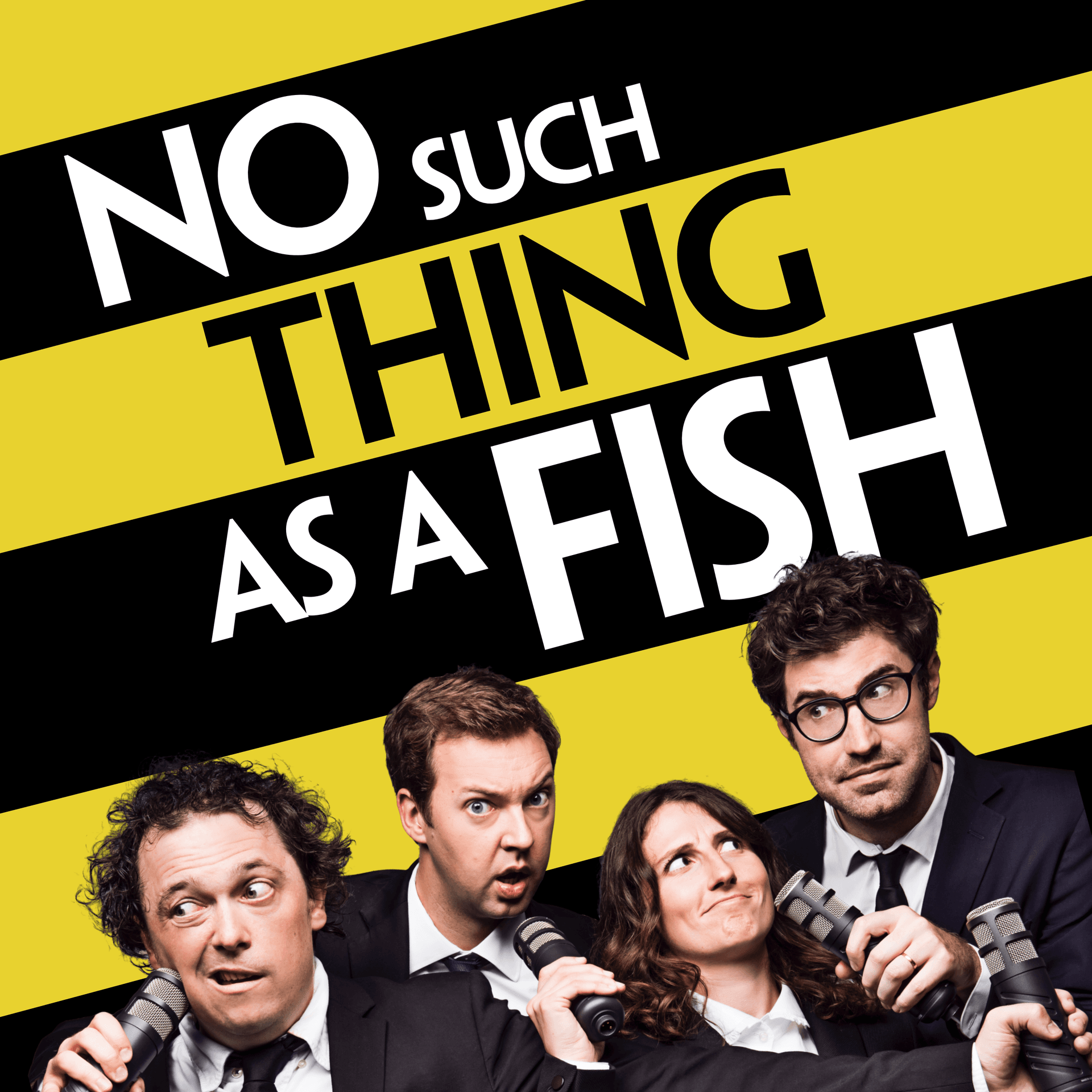
Podcast Summary: No Such Thing As A Fish - Episode: No Such Thing As Pudsey's Passport
Episode Overview In this episode, recorded live at the Royal Institution, hosts Dan Schreiber, James Harkin, Andrew Hunter Murray, and special guest Professor Alice Roberts dive into a variety of fascinating facts linking science with pop culture phenomena, including Pokémon, Superman, and Tintin.
Key Themes & Topics
Introduction to the Episode
- Hosts: Dan Schreiber, James Harkin, Andrew Hunter Murray, and guest Professor Alice Roberts.
- Setting: The Royal Institution, a historic venue for scientific discovery.
- Guest Spotlight: Professor Alice Roberts discusses her new book, "Domination," which covers the fall of the Roman Empire and the rise of Christianity.
Fact Highlights
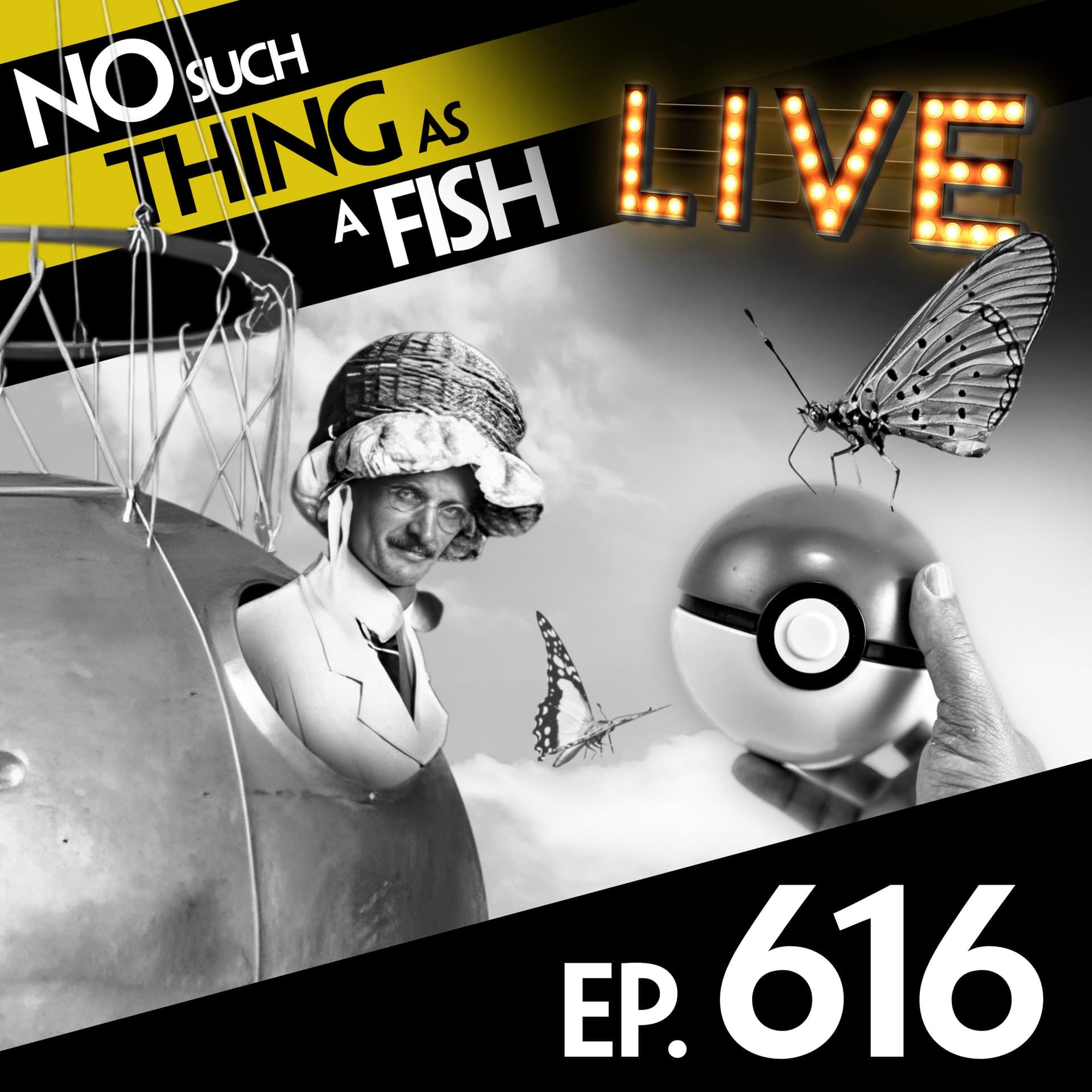
- Auguste Picard's Stratospheric Journey
- Fact: The first person to travel into the stratosphere, Auguste Picard, did so with a pillow on his head.
- Details:
- Picard's ascent sought to study cosmic rays.
- Faced numerous challenges, including a malfunctioning gondola and extreme temperature changes.
- They landed on a glacier after their journey and collected valuable data despite the chaos.
- Misconceptions About Arteries
- Fact: Historically, arteries were believed to carry air, not blood.
- Details:
- The term "artery" comes from the Greek word for "air carrier."
- Errors in understanding body functions stemmed from Aristotle and persisted for centuries until William Harvey demonstrated the circulatory system's true nature.
- Kryptonite and Electric Vehicle Technology
- Fact: Electric cars could theoretically run on a mineral called jadarite, akin to Superman's kryptonite.
- Details:
- Jadarite discovered in Serbia could produce a significant percentage of Europe's lithium requirements for electric vehicle batteries.
- Parallel drawn with the creation of kryptonite in the Superman franchise; both concepts arose around the same time, albeit independently.
- Pokemon's Insect-Collecting Roots
- Fact: Pokémon was inspired by the childhood hobby of insect collecting.
- Details:
- Satoshi Tajiri, inspired by his experiences collecting insects in nature, created Pokémon to encourage similar joy in children.
- The decline in insect collecting correlates with a rise in video game popularity, potentially impacting conservation efforts.
Discussion Points
- Importance of Collecting and Science: The episode highlights how collecting—whether insects or data from experiments—can lead to significant scientific breakthroughs and insights.
- Cultural Impact of Science: The humorous interplay between scientific facts and pop culture references emphasizes the importance of science communication in engaging wider audiences.
- Historical Misunderstandings in Science: Many scientific advancements were hindered by historical misconceptions, showcasing the evolution of knowledge over time.
Conclusion The episode wraps up with reflections on the joy of discovery and the importance of remaining curious about science, while also thanking Professor Alice Roberts for her insights. The blend of humor, knowledge, and cultural references makes this episode a delightful listen for fans of science and trivia alike.
Additional Resources
- Professor Alice Roberts' Book: "Domination"
- For more episodes and live show information: [No Such Thing As A Fish](http://nosuchthingasafish.com)
- Join Club Fish for exclusive content: [Club Fish on Apple](http://apple.co/nosuchthingasafish) | [Club Fish on Patreon](http://nosuchthingasafish.com/patreon)
Written by AI. May contain mistakes. Listen to the episode to check what was said.
Chapters
Tap a time to open that second in VOIntroduction of Guests
1:53 to 2:15
Hosts introduce themselves and the guest for the episode.
“Hello and welcome to another episode of No Such Thing as a Fish, a weekly podcast this week coming to you live from the Royal Institution.”
Fact Number One: Stratospheric Travels
2:15 to 2:30
James shares a fact about the first person to travel into the stratosphere.
“Alice Roberts and once again we have gathered around the microphones with our four favorite facts from the last seven days and in no particular order here we go starting with fact number one and that is James.”
The Journey of Auguste Picard
2:30 to 5:05
Discussion about Auguste Picard's journey and the challenges faced.
“to travel into the stratosphere did so with a pillow on his head.”
The Perils of Stratospheric Research
5:05 to 10:41
Exploring the difficulties and dangers faced during Picard's ascent.
“So Picard, who everyone, if you want to picture what he looks like at home, picture Professor Calculus from the Tintin books, because that's who it was based on.”
Safety Instructions and Humor
10:41 to 12:39
Humorous take on safety instructions related to everyday items.
“And they weren't out of the woods even when they landed, you know.”
Final Thoughts and Strange Facts
12:39 to 14:00
Discussion on various odd facts leading to a humorous conclusion.
“And these are some real bits of safety advice.”
Pet Ants and Apollo 11
14:00 to 15:18
Discover amusing thoughts on unconventional pets and historical NASA trivia.
“I know you've asked for a pet for Christmas for years now.”
Misconceptions About Blood
16:55 to 21:10
Explore historic misconceptions regarding blood circulation and anatomy.
“Okay, it is time for fact number two, and that is Alice.”
William Harvey's Discoveries
21:11 to 23:09
Understand William Harvey's contributions to the understanding of blood circulation.
“William Harvey was friends with Charles I.”
Innovations in Cardiology
23:10 to 28:00
Learn about groundbreaking advancements in heart study and catheterization.
“So we often kind of put Harvey up there, but he's standing on the shoulders of giants.”
Show all 26 chapters
The Nobel Prize Story
28:00 to 29:27
Learn about a German doctor's unexpected Nobel Prize and his contributions to modern medicine.
“And any time we talk about the phone call, this is like the body of science excellence.”
Galen and His Inventions
29:27 to 31:08
Discover Galen's fascinating contributions to medicine and his humorous hangover cure.
“He was a doctor as well, as you mentioned before.”
Electric Cars and Kryptonite
31:08 to 33:19
Explore the surprising discovery of jadarite and its potential for electric car batteries.
“There's a mine in Serbia, and a chemical was discovered in there called jadarite.”
Fire Risks in Electric Vehicles
33:19 to 35:42
Understand the fire safety concerns related to electric vehicles compared to petrol cars.
“And also in Superman Returns, it's the first Superman movie since the fourth Superman movie.”
Innovations in Mining and Regenerative Energy
35:42 to 38:19
Learn about an Australian mining company's electric train that conserves energy while transporting.
“Do you reckon they set on fire more or less than normal petrol cars?”
Hovercraft Adventures and Personal Stories
38:19 to 42:00
Hear about personal hovercraft experiences and a dramatic family story on a hovercraft.
“And the laws of physics don't have anything to say about it, Alice, I promise.”
The Escaped Patient's Journey
42:00 to 42:50
Learn about a surprising adventure of an escaped patient and his determination to see his wife.
“So he went to go back inside and the door was locked.”
The Origins of Pokémon
42:50 to 44:10
Discover how Pokémon was inspired by a childhood passion for insect collecting.
“That's an origin story that Superman could be proud of.”
Impact of Insect Collecting on Conservation
44:10 to 45:50
Discuss the decline in insect collecting and its implications for conservation efforts.
“Yeah, because actually the number of people collecting insects has plunged since the 1990s.”
Evolution and Video Games
45:50 to 47:30
Explore the connection between nature, video game creation, and cultural impacts.
“And the thing is, well, I've been asking my son about it because he was madly into Pokemon.”
Insects and Scientific Discovery
47:30 to 49:10
Learn about recent fascinating discoveries in the world of insect collecting.
“There is a cancer gene called Pokemon or as there was it was called P-O-K erythroid myeloid ontogenic gene so it's P-O-K-E-M-O-N but then Pokemon USA threatened a lawsuit and they had to rename it Against who?”
Maria Sibylla Merian's Contribution
49:10 to 50:50
Understand how Maria Sibylla Merian contributed to our knowledge of metamorphosis.
“I'm sorry, I'm really lost Some of them evolve evil?”
Embryology and Transformations
50:50 to 53:20
Delve into the fascinating processes of embryology and development.
“He looked to the tree on his right and found the new species of spider mite, which is what he was studying.”
Exciting Discoveries in Archaeology
53:20 to 55:00
Hear about groundbreaking archaeological finds and their significance.
“You get to do the coolest job in the world, by the way, which is you get to go and see things that have been in the ground that no one has seen for sometimes hundreds of thousands of years, millions of years.”
Exciting Archaeological Discoveries
56:00 to 56:42
Learn about a groundbreaking Iron Age find that could change our understanding of ancient music.
The Fragile Carnix Discovery
56:43 to 57:08
Discover the process of uncovering a rare complete Iron Age trumpet and its significance.
Transcript
Automatic transcript. May contain errors.0:03Hi everyone, welcome to this episode of No Such Thing as a Fish, which we recorded live at the Royal Institution in London. the venerable venerable place where so many great scientists have been over the years and now us although there was a great scientist there with us we had a guest and that was professor alice roberts now if you follow science in britain if you follow science communication if you follow science on tv you'll know all about alice roberts as she's absolutely brilliant we had such a good time doing the show with her and she does have a new book out actually it's called domination and And it is all about the fall of the Roman Empire and the growth of Christianity.
0:43Absolutely brilliant book, as all of Alice's books are. And if you want to learn more about her, then you can go to alice-roberts.co.uk and everything about her will be there. I should just quickly add that we do have a special secret members club called Club Fish, where there's lots of extra stuff. If you feel like you haven't got your fix of Fish at the moment, loads of extra stuff on tiers there. There's an Excel version of this show and every show. If you think that I do a terrible job editing the show and I need to be making it much, much longer, then there is the place to go for that. But yeah, there's loads of stuff there.
1:19So go to patreon.com slash no such thing as a fish if you would like to join. But really hope you enjoy this. We had such a great time at the Royal Institution. I can't tell you how exciting it was to be there. I think it does come through in the show itself. Anyway, Happy New Year and on with the podcast.
1:53Hello and welcome to another episode of No Such Thing as a Fish, a weekly podcast this week coming to you live from the Royal Institution.
2:05my name is Dan Schreiber I am sitting here with James Tarkin Andrew Hunter Murray and Professor Alice Roberts and once again we have gathered around the microphones with our four favorite facts from the last seven days and in no particular order here we go starting with fact number one and that is James. Okay, my fact this week is that the first person to travel into the stratosphere did so with a pillow on his head. Yeah. So for people at home who can't see the image, this is two gentlemen and they have like a basket, a wicker basket and underneath is the pillow. And this was a trip by Auguste Picard and he wanted to work out some things about cosmic rays which we might go into later.
2:59But the Germans, where he was setting off from, didn't want him to go up there. They tried to ban his ascent. But he was Swiss, so he managed to get someone in Switzerland to say, no, you're allowed to do it. But the Germans wouldn't have it. And they said, well, OK, you can go up, but you must wear helmets. They didn't have any helmets to hand, so they cobbled some together.
3:22It's important to wear a helmet. Oh, yeah. Completely. but also he was going eight or nine miles up and if it didn't work out a helmet is not going to be the thing that does or doesn't make the difference. No, I would think not. Again, if there are any astronauts listening do keep your helmet on. Take my word for it, you know. It's not like he wasn't wearing a helmet with like an oxygen mask in there or anything like that, right? It was literally just to cover his bonds. Yeah. Did he have a parachute? I do not think they did. That might have been more useful. Yeah, no, absolutely. When did we invent the parachute?
3:55Was it invented in 1931? The guy who invented the modern parachute, because Leonardo da Vinci had pictures of parachutes in his drawings, right? Yeah. But the modern parachute was invented in 1913 by a guy called Everard Calthrop. And he offered it to the Royal Flying Corps, because this was during the war, or was it during the war? Just before the war. So in 1915, he offered it to the Flying Corps, and they said they didn't want to give them to their pilots, because it might impair the fighting spirit of the pilots. I think that's fair. And they thought if they've got parachutes, then they'll just jump out and they won't fight till the death.
4:34Yes. I always say if I'm going to be a racer, just get rid of the brakes. That will only encourage me to slow down my motor car. Do you know this has to be the most accident Mr. Bean prone experiment I think I've ever read about. It's remarkable, isn't it? It is. Have you ever heard about this trip, this first trip to the stratosphere, Alice, with Auguste Picard? No, what happened? Well, basically, we'll get into what they were kind of trying to do, which is they were trying to help Albert Einstein prove the theory of relativity. And they thought we can do that by heading up to the highest spot on Earth.
5:06So Picard, who everyone, if you want to picture what he looks like at home, picture Professor Calculus from the Tintin books, because that's who it was based on. Calculus was based on Auguste Picard. He was this eccentric but brilliant scientist. and he's actually taller than calculus is in the Tintin books. He's six foot six and Hergé had to make him smaller so he'd fit in the frames. Come on. Yeah. He could have just drawn him further away. Yeah. He's wonderful. Yeah. Picard. I just, everything about him sounds wonderful. He never went anywhere without a slide rule and two wristwatches. He decorated his home with prisms.
5:48Why did he wear two watches? Well, one for, well I don't need to you know I mean one for you know one for the time here and one for the time up there you know what the reason I asked you is because I knew the answer and I thought you might do as well no absolutely not but the reason he did is because he knew that if they didn't match then at least one of them was wrong
6:13clever very clever but this trip they made up a couple of people had tried to get into the stratosphere it before i think in planes and how high do you have to go i think it's about it's at least seven and a half miles okay so the air is pretty thin and pretty cold and a couple of people had tried in planes and not done terribly well picard's innovation was a sealed what he called a sealed gondola with walls of aluminium that were i think three and a half millimeters thick so it's quite fragile this thing carrying them up and above him and his his assistant uh kipfer paul kipfer i believe uh a huge balloon filled with hydrogen and that expands uh and it carries him up and it expands in the light of the sun and it carried them up and up and up and up and up and as you said dan one thing after another started going wrong well nightmare but even before the mission started it started going wrong so kipfer said he knew that the whole thing had got off to a rough start when they were doing their final checks and he looked out the window and he saw chimneys passing them from the top of houses.
7:21Oh, yeah, yeah, yeah. They're like, oh, so we've left. Like they just didn't even know. They had no idea that they'd taken off. So immediately that was an issue. Yep. And they had this sort of half an hour crisis of there was a hole in the side of the gondola which had to be pasted shut. And they were very ingenious in the way they did it. Oh, yeah. The other thing, it might get extremely hot up there because you've got less protection against the sun's rays. So they had this little propeller on the side of the gondola, their capsule. So what that meant was one side of the capsule was painted white and one was painted black.
7:54And they thought, well, look, if we can turn it, if we can turn the white side towards the sun, that'll reflect the sun's light, keep us nice and cool. And that's ingenious. Unfortunately, the propeller broke. and so they were then unable to control the temperature. It got up to 40 degrees Celsius in there, 104 Fahrenheit. The water evaporated. They had to lick the walls for moisture. It's just a matter of... How long were they up there? They were for hours and the problem was they couldn't... A full day. Yeah, they couldn't come down because the machine that was going to allow them to come down froze.
8:26So they were like, well, we're just here now and we just have to wait for it to take us back down. Nightfall, when the sun goes down, hydrogen cools and shrinks and allows them to descend. Yeah. They didn't pop the balloon. No, they didn't pop it. I don't think they had a way of getting to the balloon. No, they couldn't because they were closed inside. Meanwhile, the barometer explodes, the mercury within it falls to the ground and because the material is made of this metal, it starts eating the actual thing that they're in on the floor. I mean, can you imagine? You're in this, just two of you, one's six foot six.
8:58Looks like Professor Calculus. Doesn't know what time it is. No.
9:05The press said that they died, didn't they? Yeah. They'd been up for so long. They were expected to come back quicker than that. So in the newspapers that afternoon, they said, yeah, they've gone. That's it. So like, I've never been in a hot air balloon. I think you have. Have you done that before? I have been up a couple of times in a hot air balloon. Is it petrifying? It's really lovely until you land. Right. Why? No, I love it. I mean, I love that kind of taking off and it's so quiet when you're up and you can just hear dogs barking. See, that's what I find scary. Yeah. Is how quiet it is. It's amazing, yeah.
9:36Because every other way you might go in the air, like in a plane or a helicopter, it's noisy as hell, isn't it? But it's just so peaceful. But the thing is, you just can't steer them, can you? No. You go where the wind takes you. Yeah, you're kind of just relying on that and then trying to find somewhere to land that doesn't involve a lot of cows, usually. Right. Why were you doing it, by the way, for the show? Was that like a BBC budget thing, or were you...? No, I don't think I've done it for television. Oh, you've not? I think I've just done it for fun. Right, okay. And it was fun until we landed.
10:06Okay. There isn't a thing in the BBC budget that says, we haven't spent all of this year's money yet. Get Roberts in a hot air balloon now. Do you know, there was an experiment that we tried to do years and years ago when I did Coast back in 2005, when they were trying to work out how many weather balloons they'd have to attach to me to lift me off the ground. And then it became obvious that actually it was too windy to do it and I was likely to be kind of dragged off this quay, which we were doing. honestly the whole thing and there's this picture of me standing there looking utterly terrified and i think i've got about 14 where the balloons attached to me and i'm just my toes are just starting to lift off but we never actually but you let them at that point you went no no i think actually this is a bad idea you got scared at 14 balloons being attached how would they how would they have got you back down well this is a question isn't it i don't think i've thought that far so when they put these 14 on did you start to feel a little bit wait yeah definitely wow yeah Yeah, they landed, Picard and Kipfer, they landed on a glacier.
11:04And they weren't out of the woods even when they landed, you know. Yes, they were. They were on a glacier. Sorry. I love the tree line. I love the tree line, yeah. But they had to, I think, hike down the glacier. This was 1931, we should say. Did they get their data, though? Sorry? They were up there to get some data. They got the data. I think they did get the data. They were studying cosmic rays because they were trying to support Einstein's theories of relativity. Yeah, they did. I think by accident, because they largely were just trying to survive, because from the get-go, they should have died.
11:36And they didn't. Like, the mercury, there was a statement that Picard just said out loud. He was like, if only I had a vacuum cleaner. And they realized that the hole of the actual ship, if we can call it, the gondola, he called it, was, there was a hole in it where they opened it and it acted like a vacuum and sucked all the mercury out. And then they stuffed some clothes into it. and then it's Apollo 13. It's the original Apollo 13, basically. Yeah, it is. Yeah, yeah. It sounds like there were a lot of risks that they hadn't thought. I would have liked to have seen a risk assessment. It sounds like there's a lot of things they hadn't thought about, but they had thought about the possibility of things falling on their head.
12:10I know. While all this has happened, they're like, and we've got these baskets on our head. We're going to be found dead looking like idiots. This is... So in the vein of risk assessments and thinking about what you might need to go up into the stratosphere, you would have thought that there needed to be a better set of instructions for getting in that thing and going up there and not smashing your mercury and that kind of thing. Not making holes in the vessel that you're in. So I had a look at some safety instructions for various more everyday items. And these are some real bits of safety advice.
12:48So one is on a buggy where it says remove child before folding.
12:56These are real. There's one on a hairdryer that said, do not use while sleeping. On items of clothing, do not iron clothes whilst wearing them. Now, hang on a second, Alice, because... Is everybody pointing it down? Yeah. Have you done it? All the time. Oh, no. No. I'll notice a crease, and I'll lay down on the bit of the iron board, and I'll just separate it from where I need to be. Dan, you're not the same shape as an ironing board, but you are the same shape as your own body. So it's much better to do it on yourself. You can't encourage people to do that. Chainsaws don't hold the wrong end.
13:36And a microwave, and this was apparently following a very sad experiment where this had happened, and then after that they had to put the label on because there was some litigation which said you should have had the label on there to begin with, and then this woman would have known not to do it. Do not dry your pets in the microwave. Wow. Is it true that there are some animals that are small enough that they can dodge the microwaves though? If you have a pet ant. If you have a pet ant. Listen to this guy. Really? Your poor kid. I know you want a pet. I know you've asked for a pet for Christmas for years now.
14:10Well, great news. I've finally decided. It's got more legs than a cat. Yeah, I think in a microwave, the microwaves go in a certain pattern. and the wavelength is long enough that if you put an ant in there, it'll find a bit that isn't going to cook it. I think you have to take this. Yeah, otherwise it's like Tekashi's Castle. They're just going around. It's just one extra level of unfair on the ant. I will say as well, don't try that at home either. Don't try it at home, yeah. Okay, hey guys, we need to move on very soon. Oh, when Apollo 11 took off, NASA worked out that if the rocket exploded, it would fire shrapnel three miles away.
14:52So they sat all the VIPs 3.5 miles away to watch the... Very nice. That's amazing. But you're relying on their maths, aren't you? Yeah. Although I suppose... Was it just the VIPs? They allowed other people to go games. Yeah, everyone else is... Great news. We've got you front row seats.
15:16Stop the podcast. Stop the podcast. Hey everyone, this week's episode of Fish is sponsored by Frive That's right Now, Dan, I don't know about you, but I'm busy I know you're busy Too busy Way too busy All of us, now we're here in 2026, feel like there are a lot of demands on our time Whether you're trying to go to the gym, spend time with your family To take up carpentry as a hobby Okay Don't smirk Don't laugh I've wanted to do this for about 20 years There just isn't the time There isn't the time Well, it's the start of a new year It's time to change that And one of the ways you can get changing that is to use Thrive.
15:51Yes, Thrive deliver delicious, nutritious meals to your door. They are ready to heat and eat in minutes. And that will give me time back to begin whittling or whatever it may be. They're really good meals. We've been trying them recently. They use 100 % natural ingredients. The food is prepared fresh and in-house by chefs. I had a delicious Asian sea bass the other night. Amazing. Yes, please. Yeah. There are, I think, 100 meals to choose from each month, so you will never run out. Yeah, it's a wonderful option. Andy and I have been doing it. And if you want to get involved, go to Frive, that's F-R-I-V-E, dot co dot UK slash fish, and you're going to get 40 % off your first box.
16:35That is right. All you need to do is make sure the promo code FISH is entered at the summary page. You'll get 40 % off your first week and 20 % off the following two weeks. This is so much percent off. It has been a lifesaver on a few separate occasions recently, where suddenly you gain back this chunk of time that's very pleasing indeed. Okay, on with the show. On with the podcast.
17:01Okay, it is time for fact number two, and that is Alice. Thank you very much. So my fact is basically an X fact. so it is that people used to think that arteries carried air not blood and that the airways themselves were full of fluid so for a very very long time people thought that actually blood vessels were full of just air and in fact that's what artery means so artery means air carrier it comes from air terrain in in greek and i find this just astonishing as an anatomist because you don't have to do much digging around in the body to work out that there's blood in the blood vessels and air in the airways um but this just went on and on and on do we know why do we know why people thought it i think because sometimes if you are if you're dissecting a body and you've waited a while to dissect it then maybe the arteries could be empty but i mean it just seems really really odd that they didn't realize and and obviously it took a long time to work out that um the heart was pumping blood around the body and that it was circulating so it's kind of um there's just misunderstanding upon misunderstanding.
18:09And what's interesting is that it's still in the words. So the fact that artery means air carrier. And then they're confused about the airways as well. So they call the trachea, the original word is actually arteria trachea. So they're calling it an artery, but in order to differentiate it from other, what they think are air carrying vessels, they call it the rough artery. So arteria trachea. so we still call it trachea we just miss the artery bit of it but they were totally confused about the whole thing i mean a lot of it goes back to aristotle he did he did a lot of great work and he knew quite a bit about how bodies were put together and then he kind of made it up so he said he reckoned that the heart was making blood um and they could see that blood was moving through some vessels and going to the periphery but then they thought that the body was just consuming it so they thought blood was constantly being made and consumed by the body and then as far as he was concerned the lungs were just to cool the heart down so the heart's working so hard it's getting really hot so it needs the lungs to cool it down also the brain is another radiator to help cool the blood cool the heart as well right and that's all the brain is doing it's just a cooling mechanism yeah um and you're thinking from your heart too so your heart is the seat of your emotions and your and your intellect yes doing a lot it's doing a lot yeah if if today i went to see a doctor who still believed this how how much of a difference would that make on my survival like because they knew there was still blood in there yeah actually like it was william harvey who found out that the heart was pumping blood around the body and a lot of people didn't really like that idea a lot of physicians because their theory kind of worked like it worked for them do you know what i mean so him coming up with this new way that the heart works they kind of resisted it quite a lot of the time and he put it in his book um which is in latin so i'm not going to read it but it was he put it right i've seen it recently i've i went into the royal college of physicians and they got out the first edition of de moto cordis on the on the the motion of the heart and and the way that the blood is moved around the body and it's just incredible and what he's worked out that nobody else has worked out before is that veins carried blood back to the heart so that so that he was going right yes blood is being pushed out but it's also coming back again and he said look there's a closed loop actually but he still didn't know why he still didn't know why blood was being pumped off to the lungs and then coming back to the heart again they could see some connections between arteries and veins in the in the gut so they could see that happening at some levels but they couldn't see capillaries and then it was a cornish doctor called john mayo who's a who's a hero of mine i think he's fantastic and he basically went well i think something's going on in the lungs i think the blood's getting something out of the air i think tiny particles are coming out of the air into the blood in the lungs and that's what's going on.
21:00And that was 100 years before anybody knew. And then in the end, it is air going through, but it's just inside the blood. Yeah. Count one for Aristotle, I think. Well, he knew what he was talking about. He put it in shorthand, but you know. William Harvey was friends with Charles I. And Charles I used to get him deer to use in his experiments. Very nice. Because obviously kings have lots of deer at their disposal. Yeah. And Harvey was there when Charles was people had this thing called scrofula and it was thought that the king could touch you and it would make you better. And William Harvey was one of the people who was there sort of like with a notepad going, yep, they got better, they got better, they got better.
21:42And also, Charles... Wait, what? Did he? Definitely did that. And also, Charles I sent him to Burnley in Lancashire because there was a report of some witches there and he had to go to Burnley and count their nipples. Now was he volunteering for this job Or was he just a send? The king asked him to do it Because actually Charles wasn't massively into Burning witches and killing witches Like his predecessors had been So he wanted to do an actual Check it out whether it was happening Harvey went over and said These people are all completely normal We shouldn't be killing them And they all got pardoned by Charles I Why would they have had more nipples?
22:23like with a supernumerary nipples was the idea if you were a witch you needed extra nipples to feed your like black cat and the devil I'm afraid there's a known fact that witches do have a nipple on their tailbone which is where the devil feeds I'm sorry it's a bit well it's just science guys it's worse than Aristotle you'd be a bit grown up about it no no that was the belief in the 17th century was it was all a bit it's all a bit sort of like fruity stuff you know basically they'll find something if they think you're a witch they'll find something especially if you go to burnley i just hear the ghost of faraday in this room going what's happened to my institution so when when was it at what point did we realize blood was where it is who was that who was that person it's just it's gradual it's a really gradual process um so galen saw that arteries did contain blood so he was a physician in the first century he was physician to marcus aurelius and he was a surgeon for the gladiators as well um so he worked out yeah he worked out that these arteries didn't have air in them but they had they had blood in them but he still didn't understand the circulation so and that comes along much later then there's a there's an arabic uh physician called ibn al-nafis in the 13th century who works out that there's a pulmonary loop but he doesn't link it up with the rest of the circulation so it's it's gradually in the Yeah, absolutely.
23:52So it's just gradual steps. So we often kind of put Harvey up there, but he's standing on the shoulders of giants. I mean, you always are in science, aren't you? Yes. Like gradual increments. There was a thing, wasn't there, where people thought the blood went out. Let's say the blood goes out to my hand and then back to the heart and the same blood goes out to my hand and then back to the heart. It's kind of like a big hokey-cokey action of, like all the blood is going out and then back in. Well, yeah, I mean, this is one of the things that, so in Harvey's time, there was this idea that the blood was being made constantly and not that it was coming back actually but it was being made in the heart and then pushed out and he was working out the volume of blood that was being pushed out by the heart and one of his arguments is actually there's too much blood being pushed out for the body to actually potentially you know possibly absorb this much so it must be coming back it can't be that it's all being pushed out and then other people thought that the liver made it they thought because if you if you kind of look at what the liver's doing it it's it's uh receiving all these nutrients from the gut you know and that is what it does so it receives all the nutrients come from the um the veins from the gut go to the liver and then it does a lot of processing of that and then the idea was that that then goes to the heart gets turned into blood somehow and then it's all about nutrients so they just had no idea about oxygen and that being you know one of the primary reasons of blood circulating obviously it does take nutrients around as well but the oxygen is pretty important well yeah but also like there was steps but people made mistakes as well and when they realized that there was nutrients as well as oxygen going around the body there was a guy called richard lower from cornwall who thought that he could inject soup into the veins of dogs and that would nourish them interesting yeah what flavor not recorded but i'm afraid it wouldn't matter either way and it doesn't work so again do not try that at home bad for yeah bad for you bad for the dog yeah yeah soup in the microwave pets out of the microwave yeah that's but that would have been before soup was differentiated into flavors that was there was only there was just like some soup and then Gruul.
26:02Just gruel. It was the 18... Oh, I want to say 1860s when we got the first... I feel like you're fixating on the wrong part of this stuff. Can I... Just while we're on heart, sort of innovations around the heart as well, can I tell you... Have you guys heard of Werner Forsman? No. Such an interesting scientist. So he was a young German doctor who... He theorized that you could study the heart by inserting a catheter into either an artery or a vein and pushing it towards the heart and then taking an x-ray of yourself and sort of seeing the heart in more detail basically. That was his premise and he was a very young doctor.
26:42He was about 25 when he came up with this idea. He asked his bosses, can I do this to a patient? No, no you can't. So he says, well can I do it to myself? His bosses say no. So at this point he goes a bit rogue and he just asks a nurse working in this hospital, I need to do this to you. So to put a catheter in and all the way to the heart, right? He tells her he's going to do it to her. She's sort of strapped to a trolley. But this is the thing. He's not going to do it to her. He only needs the nurse because he is so junior as a doctor. He doesn't have access to catheters. So she has opened the catheter cabinet for him.
27:22He sort of straps it to the table. And then while she's strapped to the table, she looks over and he's doing it to himself. he's pushed a catheter all the way into touching his own heart wow stunning he's done it in completely the wrong room to take a picture of so they he then has to unstrap her and she has to help him carry all of his clobber and all the attached stuff like down two flights of stairs everyone's furious everyone's shouting at him what are you doing wow like sorry what year is this 20s I think roughly the 20s 1920s so we're still on those old it was last week and like as a colleague is trying to wrestle this thing out of him saying no you can't do this this is insane he goes ta-da and there it is photo is taken x-ray image of his own heart amazing it doesn't really go anywhere his career doesn't go especially well he's a German doctor he goes through World War 2 as a German army doctor nothing he thinks has really come of his sort of idea all those years ago and then he gets these weird phone calls in 1956 from foreign accented people saying and yeah he's won a Nobel Prize he's won a Nobel Prize for this because it turns out other doctors carried on his innovations and went further with it I'm sorry for caricature I'm just laughing about the fact that we have mentioned the Nobel Prize recently in a couple of episodes.
28:53And any time we talk about the phone call, this is like the body of science excellence. And every time one of the three of us go, So rude.
Read the full transcript
29:08It's terrible. The Swedish chef from the Muppets. So he won the Nobel Prize. He won a Nobel Prize for it. That is amazing. I didn't know that story and I've just been making a series on the history of Bart's Hospital and looking at all the history there because it's 900 years old just over 900 years old but look also looking at it as a modern hospital and it's obviously a big cardiac centre here in London and and it is there's so much of what's done with people's hearts now is using catheters so advancing catheters through arteries sticking little stents into into coronary arteries to open them up again um if people are you know people have got angina and they're not getting a good enough blood supply to their hearts so he did the groundwork for that you know his that was that was you know his bravery sticking that catheter into a into a blood vessel and working out that you could actually get that all the way to the heart amazing it's saving people's lives today yeah yeah we should move on in a second i just want to give a quick shout out we mentioned galen what an incredible character he is the writer of his period right like that's virtually the only medical writing that has survived to our day.
30:14He was a doctor as well, as you mentioned before. But he also had these amazing inventions, talking about the basket hat earlier that we were talking about with Picard. He invented the helmet hangover cure. So it was, he said, if you had a hangover, just put cabbage on your head and wear the cabbage on your head and that would cure your hangover. And he didn't get the Nobel Prize. He was overlooked. Unbelievable. That was to call it down, I guess. Yeah. Because I think Babe Ruth always wore a cabbage leaf underneath his hat to cool his head down. Did he? He'd been reading Galen. I mean, it's amazing, isn't it?
30:47Yeah.
30:53It is time for fact number three, and that is Andy. My fact is that theoretically electric cars could run on kryptonite. So this is a very exciting discovery of this century. The 20s? The early 2000s. There's a mine in Serbia, and a chemical was discovered in there called jadarite. And its scientific name is sodium lithium boron silicate hydroxide with fluorine. And a scientist, Dr. Chris Stanley, he's a mineralogist, he looked on the web for that formula after this huge deposit of this stuff was found. He could only find that formula in one other place, and it's in Superman Returns. And Lex Luthor steals a case of it from a museum to try and beat Superman, whatever.
31:46But basically this stuff, Jadarite, is a building block of lithium. You can refine lithium from it. And this quantity of it in this mine in Serbia is so big that it could produce, I think, 90 % of the entirety of Europe's target of electric car batteries. Right. It's a huge quantity. And yet the really weird thing is this stuff, Jadarite, is only found in this one mine in Serbia. it's never been found anywhere else in the world and it's basically the chemical recipe to produce it is very precise it's absolutely crazy so you need to find an alkaline rich terminal lake and some lithium rich volcanic glass and while those two things are together they have to transform clay materials into very specific rare crystalline structures I don't understand any of that but this has been found out quite recently I think this year actually by two scientists It's called Chris Stanley and Mike Rumsey.
32:40But what that means, now that they've worked that out, we don't necessarily have to go to Yadar in Serbia to get it. We can make it ourselves. So Superman Returns, don't know if you've seen it. Oh, here you go. What's remarkable is that is where kryptonite was given the chemical description. The makers of the film brought someone in to come up with what it would be made up of. And that happened and was released only, I think, a few months before then, And the people who released what Jardinite was made up of released it. So it was like when Deep Impact and Armageddon came out at the same time.
33:15It was like no one had planned that. That's amazing. Yeah, it's pretty crazy. And also in Superman Returns, it's the first Superman movie since the fourth Superman movie. And the final words in Superman 4 are, I'll see you in 20. And then Superman Returns was made 20 years later and not on purpose. Alice, you're giving me a look like you're saying, keep talking about Superman Returns, Dan. It's got to be on purpose, surely. You would think, right? But no, apparently it was... It's so nice to see you on home territory. Finally, Dan. And none of this has anything to do with Krypton, which is a completely innocuous noble gas.
33:55Which is an actual gas. That's an actual element. And that was found in 1898. It's very unreactive with almost everything. but you do occasionally get it between the glass in double-paned windows. Do you? Yeah, that's a use for Krypton. I mean, don't rush home. Just a warning, Alice, if you ever have a dinner at Andy's house, this is the kind of chat you get. He takes you to his windows. You know, there's a bit of Krypton in my... Yes, what's in here? It's really interesting how it was found. It's so cool. So William Ramsey and Morris Travers, Ramsey found Argon. Then he went on a bit of a streak.
34:31identified helium and krypton and neon and xenon and radon. Just working with me down. The whole family of noble gases he found. That only feels like he's learned how to do one thing, though. Oh. You know, like in the Olympics, when someone's really good at swimming and they win, like, ten gold medals. And it's like, you're only good at swimming.
34:54This is why James was fired from the commentating job for the... Another medal. What was it for? Oh, swimming again. swimming in a slightly different way brilliant well done well done so apparently batman keeps a bit of kryptonite in his belt at all times get out yep in case superman goes evil again in case he goes evil again now there are theories that superman gave him the kryptonite as a sort of insurance policy to say you can trust me i'm you okay alice
35:29I've never made a guest look like they want to leave the show as much as you in 11 years of doing this Quick, someone else Electric vehicles Thank you Yeah, go on then Do you reckon they set on fire more or less than normal petrol cars? Catch fire? Yeah Oh, well, they catch fire every 15 minutes, I think I have read that, you know Yeah, well, actually, like, if you look in the news is always like another car set on fire, electric car. But there was a study done this year that found they set on fire much less. It's about 20 times less than a petrol car they set on fire. But the problem is that the fires are much more spectacular when they go up because lithium batteries burn very, very, very hot.
36:14And also once you put them out, they can just set on fire again later. Really? Let's say they go into some water as well, like the water and lithium reacts very badly together. and so what they do is when you if your car has been on fire in some departments in america they'll submerge them in fresh water for 24 hours before they're certain that they definitely won't catch fire again i am always a bit worried about this because um at home we've got an electric car and we've also got little rc cars as well what are they sorry little radio control cars um and uh they've got these batteries that you have to charge in a metal box so when i'm charging out the batteries for my radio control car, it's in a metal box.
36:55When I'm charging up my other car, the actual car, I just plug it in. Oh, yeah. I don't put it in a metal box. The microwave? I think that's fine. Get all those ants out of there. Can I tell you my favourite electric vehicle of the year? Okay. All right, he's going for the Top Gear job. It's a really cool one. Okay, no, it's really cool. There's a big Australian mining company called Fortescue, and they're on a huge sort of net zero drive at the moment, because, you know, mining is pretty bad for the environment in general, a lot of big vehicles burning lots of diesel, blah, blah, blah. Fortescue are testing out loads of electric stuff at the moment and trying to get it all into their fleet.
37:33One of the things they're testing is an infinite train. Is it the circle line? Is it just... It's the circle line. It's a battery-powered electric train, right? It loads up with a load of iron ore, I think, whatever they're getting out of the ground, right? It carries it to where it needs to be next, you know, loaded onto the next bit of the journey, right? But it's on a slight downhill gradient because it's come to the sort of the top of a big open cast mine. So it goes downhill. It brakes and it does regenerative braking to recharge the battery as it descends. And then by the time it's got to the bottom and unloaded all the stuff it was carrying, it has gained enough charge to go all the way back around to the top and get filled up again.
38:19can you explain entropy to Andrew please at some point you're going to lose some energy in terms of friction oh you'll top it up no no no but it's because it's so much heavier on the way down the regenerative breaking on the way down it does charge the battery up more than maybe not more than enough you'll need to charge it occasionally I guess the laws of physics aka Alice are giving me a bit of a look and that's fine and I respect those laws What a cool alias for you, Alice The laws of physics The laws of physics It's still pretty good We need to move on to our final point I haven't even told you about my second favourite electric car of the year It's a car that can Thank you, guys Scattered Scattered, but I'll take it McMurtry Spearling Pure This is a car, it is an electric car as well That's kind of incidental to why it's so cool It can go upside down Okay It genuinely can.
39:18And the laws of physics don't have anything to say about it, Alice, I promise. I think all cars can go upside down. If you drive them particularly badly. Great point. Don't they say that about F1 cars as well? That when they're in tunnels they go so fast that you can in theory drive off? This is part of the thing. So really good cars, and especially Formula 1 cars, they have a lot of downforce, right? And the reason that's good is more grip on the road. This particular one is a fan car, right? It sucks air out from beneath it It's basically got a skirt all the way around it, but a very very efficient skirt.
39:51It's a hovercraft It's a hover-caft It's a hot yeah Yes So the the car weighs a thousand kilos and it can generate two thousand kilos of downforce And I've watched the training the sort of video where they tested out earlier this year It drives onto this platform. The platform just revolves upside down. Right. And the car stays. Okay, and what is the use?
40:20Well, double capacity on the Blackwall Tunnel. Easy. Yes. I drove a hovercraft once as well. This was on Coasty, so they found all these kind of weird experiments for me to do. So there was the one where they attached all the balloons to me and tried to flake me into the air. And then there was another one where they gave me a hovercraft to drive myself. and I was just on my own in this hovercraft and it was fantastic. Wow. And I was driving it and obviously the nice thing about hovercraft is that you don't have to be on the ground, you can be on the water. So I was on a beach, obviously, it was the coast, it was everything had to be at the seaside and I just went off the beach and went over the waves and went out to sea and then realised I didn't know how to turn around.
40:59Oh no. And I was just disappearing off into the distance as they filmed me. It's the August Picard of BBC2. They thought it was quite amusing and then there was a bit of a panic. What happened in the end? Well, eventually I did realise, I did work it out, but it took me a while and I had to kind of overcome that moment of panic and go, right, I must actually be able to do this. You didn't just go right around the world and come back at the other side. How small did Hovercraft get? I thought they were only gigantic things with, you know, like car fessies. One person Hovercraft. You got one person Hovercraft.
41:29Yeah. Amazing. We used to, in Hong Kong, where I grew up, to get from Kowloon side and various other islands, you'd go by Hovercraft. and when I was born my dad went back to Discovery Bay which is where we lived and he went to get back stuff that we needed because it was a sort of emergency birth and so he went back home and he was so tired that he had an hour sleep got his stuff and came back to Hong Kong Island sitting on the hovercraft he suddenly was really ill because he was so tired so he said can I just step outside and they said yes so he went outside the back and he was breathing and he noticed that the hovercraft lifted and started slowly moving.
42:05So he went to go back inside and the door was locked. And he traveled the journey of Discovery Bay to Hong Kong, which is about 20, 30 minutes, on the back of a hovercraft holding on. Oh my God. No one knew to let him back in. The person forgot that they let him out. He did the entire journey on the back of the hovercraft. And then when he landed there, he fell down onto the dock. An ambulance was called. They were bringing him to a local hospital. He said, take me to Adventist. That's where my wife is. We've just had a baby. Took him there. He got into the room because he was like, I know which room I'm going to.
42:40So suddenly they're looking for an escaped patient because he just wandered off. Went into the room, kicked my mum out of the bed and fell asleep.
42:50That's an origin story that Superman could be proud of. Don't stop.
42:59It is time for our final fact of the show, and that is my fact. My fact this week is that Pokemon was invented so that others could experience the joy of insect hunting. This is really cool. So, Pokemon was created by a man called Satoshi Tajiri, and as a kid, he was an insect collector. He was known as Dr. Bug, and all the students would look at his collections, and they would trade bugs. Anyone else who was an entomologist, an amateur entomologist, they would trade bugs with each other. And he then was also very much into video games. He found a mentor who was the man who created Mario and created the Legends of Zelda.
43:39So like, what a team. This guy then goes, do you know what? I would love, because all the areas that he grew up in as a kid in Japan were being paved over. All the bits where you could find insects were now no longer with any nature around them. And he thought, I want to teach that experience of what it's like to be a collector, to understand the joy. And so that was Pokemon. It was him trying to teach kids the joy of collecting. Pretty cool. I love that. That is amazing. Yeah. Very cool. When was that, Dan, do you say? It was, I think, 96. 96 it came out. 96, right. Yeah, because actually the number of people collecting insects has plunged since the 1990s.
44:18Really? And the articles I've read about it don't mention that people are doing Pokemon instead. But I guess it's possible. But the problem is that people are collecting... I mean, maybe it's not great to go around collecting insects. I'm not judging on that. But the decline of collecting insects as a hobby is making conservation much more difficult because entomologists, they used to be given hundreds of butterflies by people when they died. They're like, what are we going to do with this? We'll give them to the Natural History Museum or whatever. But now they're having fewer and fewer collections given to them.
44:50Right. And it's citizen science as well. that's probably useful records and things like that. I think, because I think there was another co-founder of Pokemon, Yunichi Masuda, also spent much of his time as a child collecting insects. Yeah. So both of them did. Yeah. And so clearly in, what was that, 1970s Osaka and Tokyo, it was just a huge hobby. Yeah, but like Miyamoto, who was the guy who invented Mario and Zelda, Zelda basically came about because he used to go, he loved finding caves and going into caves, and that gave him the idea of a fantasy adventure. So, weirdly, nature has informed the biggest video games there.
45:25And I'm pretty sure I'm right in saying that Pokemon is the biggest entertainment franchise of all time. Nothing comes close. Is it really? Yeah. Avengers and that whole Marvel franchise doesn't come close. Mario doesn't even come close. It's Pokemon. Superman Returns? Not. Insect collecting has given us a lot. It has. Given us a great deal. The idea of daylight saving. this was first coined by a young boy called George Hudson who was an avid uh Kiwi insect collector and he worked in the post office and there wasn't much time in his day to collect insects because he had a job and he hated it and so he wrote to the Wellington Philosophical Society this is in the 1880s I believe hey during summer why don't we just shift the clocks back two hours so we've all got we've all got more time to go out and collect insects which we all love doing right and I don't think it took off sadly but I think he was the first to propose it as a notion and specifically I'm interested in this kind of insect collection thing and the fact that that's dropped off because if that means killing insects that's probably a good idea I wonder if more people are photographing them because obviously we've got these amazing apps now where you can photograph insects and they'll identify them for you so I wonder if there's been a kind of rise in that and that's a better way of collecting yes it's like bird spotting isn't it It's just seeing it and writing down and trusting that that's a true account of what you're saying.
46:50I think that's probably right. Yeah, I really like Pokemon. And the thing is, well, I've been asking my son about it because he was madly into Pokemon. But he said, I'm not allowed to mention that now because he's almost a teenager and it's not cool anymore. But the other cool thing that he is into is no such thing as a fish. He's an enormous fan of no such thing as a fish. Yeah. But he told me that there were 1 ,025 species. and I did know this actually because I didn't know how many species there were but I did know that they evolved and I thought that was really cool about it as well. I didn't know it was inspired by biology and insect collecting but I really liked the fact it had this kind of biological idea woven into it that over time those species could change into other different forms.
47:31There is a cancer gene called Pokemon or as there was it was called P-O-K erythroid myeloid ontogenic gene so it's P-O-K-E-M-O-N but then Pokemon USA threatened a lawsuit and they had to rename it Against who? Against the cancer gene? No, against I guess against the scientists? There's a trend for doing this though isn't there? There's a trend for naming genes after games that you're playing Yeah, like Sonic the Hedgehog Sonic Hedgehog genes Yeah But Pokemon USA were not happy about this and so it's now called ZBTB7 Aww Boring In Japan you can sign legal document with your favorite Pokemon. What do you mean?
48:15So they have this thing where you can sign your name or you can have a thing called a Hanko, which is a personal seal. So it's like, what would you call that? Wax seal? Not a wax seal, but like an ink blot kind of thing. Oh yeah. Like a stamp? A stamp. That was the word I was looking for. So yeah, an ink stamp. They're called Hanko and they have only certain ones that you're allowed to use. You can't just use any old thing. But very recently, in the last 10 years, they changed it so Pokemon's allowed as well. So if you have a favorite Pokemon and you have one of these stamps, you can sign your, probably if I was playing Pokemon too much, my divorce papers.
48:54Right. With a handco. You know that if you depol your name to something else, but then you get a criminal record, you have to stick with that name. Oh, yeah. If you get a criminal record, are you not allowed to evolve in your Pokemon with your stamp? You stuck as Charmander your whole time? Are they criminals? I'm sorry, I'm really lost Some of them evolve evil? No I don't know what's going on It's okay It's okay sometimes to not know I'm going to have some questions afterwards Alice's son, if that's alright There was a woman recently Who changed her name to Pudsey Bear Sorry, we're just on name changes now She's been turned down for a passport And she's really annoyed about it Yeah, but you're not allowed to have something covering your face like an eye patch.
49:46Lovely. On insect collecting, I was reading about someone called Liz Fowler. In 2016, she went to St Helena to look for something called Basilevsky's crane fly. And they weren't sure if it was extinct or not. No one had seen one for 45 years. And while she was driving down the highway, one of them flew through the window and landed on her hand. so cool and in 2014 there was a guy called Javier oh I just he was called Javier he was called Javier his surname was Juanca now in BC that is that's how you say it oh that's that's pronounced Juanca no doubt it's there's a there's a group of people in Peru called the Juanca people and there's a football team called Deportivo Juanca named after the same bunch of white.
50:41Anyway. Again, we're fixated on the wrong point of this fact, which is that while Javier was waiting for a bus. Hands in his pockets.
50:54He looked to the tree on his right and found the new species of spider mite, which is what he was studying. So he was literally just waiting for a bus and there it was. So I think that's one of the cool things about insect collecting is sometimes they just literally land in your lap. Yeah, it is amazing. But fortune favors the prepared mind. If he hadn't been studying spider mites, there's no way he would. So what I find very interesting about insect discovery, it's another of these things kind of related to your fact, Alice, about what we knew when and the misconceptions. So there's a very cool early entomologist.
51:26Her name was Maria Sibylla Merian. She was born in Frankfurt in 1647. And she's the woman who absolutely nailed the evidence that butterflies used to be caterpillars and vice versa. Ah, right. Yeah. Before that, I think it was quite open to debate because... Because it's mental. Because it's mental. The idea that there's a caterpillar and then it goes in a little cocoon and then it mushes its whole body up and comes out like a beautiful butterfly. It's crazy. It is crazy because they didn't have Pokemon to sort of explain that science to them at the time. But again, it's one of those things that is a bit...
52:00It seems crazy, but also it seems really, really easy to work it out. I mean, it's like the whole thing about arteries carrying air. you just go well you know you can just keep it in a box and then one day there's a butterfly but that's what she did she did it for several generations in a row i don't know why several generations in a row you think as you say you think one would do it but no no butterflies from egg to adult again yeah does it else does it blow your mind in the way that i think it blows ours and possibly everyone else that that can happen with a butterfly that it can go from this one state to this kind of soupy goop and then become the other thing or does that just make It is amazing.
52:34But I also think, I mean, I'm absolutely obsessed with embryology. And I've written books about embryology. I teach embryology. And just this idea that we've gone, each of us have gone from being a single cell, you know, that we're all sitting here being trillions of cells. It's not metamorphosis. It's not the same as insects. But we've gone through this amazing transformation where you turn into something which looks like a ball of cells. And then it looks like a fluid filled ball of cells. And it looks a bit like a sausage. and then it grows these little stumpy arms and legs and then its heart starts beating.
53:04And it's just amazing. It's this incredible transformation. And it involves a lot of origami-like folding and cells moving around, so migration of cells inside the body as well. It's just incredible. Yeah, it blows my mind. Cool. I mean, you could have just said that. But that...
53:27Is this how you treat all your guests? Such a dick. Such a dick. Oh, my God.
53:36Do you know what? You get to do the coolest job in the world, by the way, which is you get to go and see things that have been in the ground that no one has seen for sometimes hundreds of thousands of years, millions of years. I mean, it's an astonishing thing. Finding fossils, finding old bones. I know you've written a bunch of books about that. There was one, because you probably can't collect them in the way that insect collectors keep them because they belong to the country, right? And they have to go to a museum and so on. Again, it's the experiences and the photographs. And I came across a photograph myself the other day holding LB1, the skull of Homo phrasiensis from Lurangbura Cave in Indonesia.
54:15And, you know, things like that. It's incredible. I remember doing that. I was filming Incredible Human Journey for the BBC back in 2008 and turned up in Jakarta and was talking to the curators of the museum there. And they said, you know, who are you? What do you do? And I said, well, I'm a biological anthropologist. And they said, okay, here's the cupboard with LB1 in. You can lay out the fossils. And it was just incredible. Yeah, real privilege. I read, there's a thing that's in your latest book. It's in the prologue and it's just so cool. This is 20 years ago. You were hanging on the side of a cliff and it's because this cliff kept dropping bones down onto the beach below because it was a cemetery built on the edge of a cliff and the cliff has been eroding.
55:00So as it erodes, the bones slowly emerge and drop down. And you were, I mean, I just love where the extra stories to where collections are being made from. That would be a collection of, you know, cliff drop bones. And it was an unnamed cemetery and that all relied on just ordinary people, you know, walking on the beach and, you know, noticing that among the seaweed and bits of sea glass and whatever else, there were the occasional human bone. Good grief. Would you get like half a coffin poking out? And it was kind of a sort of... Yeah, it was weird. It was a very ancient cemetery. It was kind of 7th century.
55:32So it wasn't... There weren't coffins. It was a type of grave called a kissed grave where you almost build the coffin in the ground. So you dig the shaft down and then you put slabs of stone in and then you lay the body in. So what we saw when we cleared all the undergrowth or overgrowth over the cliff edge away were these kind of perpendicular slabs of rock sticking out of a sandy rock face so it was kind of like red sandstone so they shouldn't have been there well they weren't naturally there they were part of these kiss graves yeah so we rescued the bits of bone that were just dropping out and then left it there but we did usefully map the extent of the cemetery above ground as well using geophysical equipment to scan the ground yeah very cool this is amazing and we've just made another series of digging for britain and and you know that's just such a joy because it's current archaeology and it's what's just come out of the ground and there are some oh my god i don't think i'm allowed to talk about it yet maybe i can there's this absolutely amazing um find which is an iron age find and it is a type of trumpet from the iron age uh where nobody's ever found a complete one and we have a complete one from britain and it is utterly astonishing honestly it's amazing amazing that's very cool and the archaeologists when they started excavating were like oh we think we've got a bit of this thing called a Carnix and then they were excavating a bit more going we think maybe there's a bit more of it and they lifted it in a block because it's very fragile really fragile ancient bronze work and they took it to your hospital to x-ray it and then MRI scan it and of course you know that was an incredibly exciting day because they're putting it through this MRI scanner and suddenly they realized they've got the whole thing in that block it's just amazing
57:18Okay, that's it. That is all of our facts. Thank you so much for listening. We're going to be back again next week with another episode, but thank you to the Royal Institution. Thank you so much to Alice Roberts. Alice, Domination is out now. It's out in paperback. Yes, very exciting. So go online or into bookshops, get her book. And otherwise, just come back next week because we're going to be back with another episode. We'll see you all. Thank you, everyone here so much. Goodbye.
57:46Thank you.
From the publisher
Visit nosuchthingasafish.com for news about live shows, merchandise and more episodes.
Join Club Fish for ad-free episodes and exclusive bonus content at apple.co/nosuchthingasafish or nosuchthingasafish.com/patreon