In short
The episode is a QI-style roundup of four “facts” from the past week, ranging from unusual smoking substitutes and long maritime blockages to health effects of traffic and how/why sunscreen rules differ.
Guests
Dan Schreiber (host), Anna Tyshynski, Andrew Hunter-Murray, James Harkin (all QI staff/regulars).
Key claims and notable examples
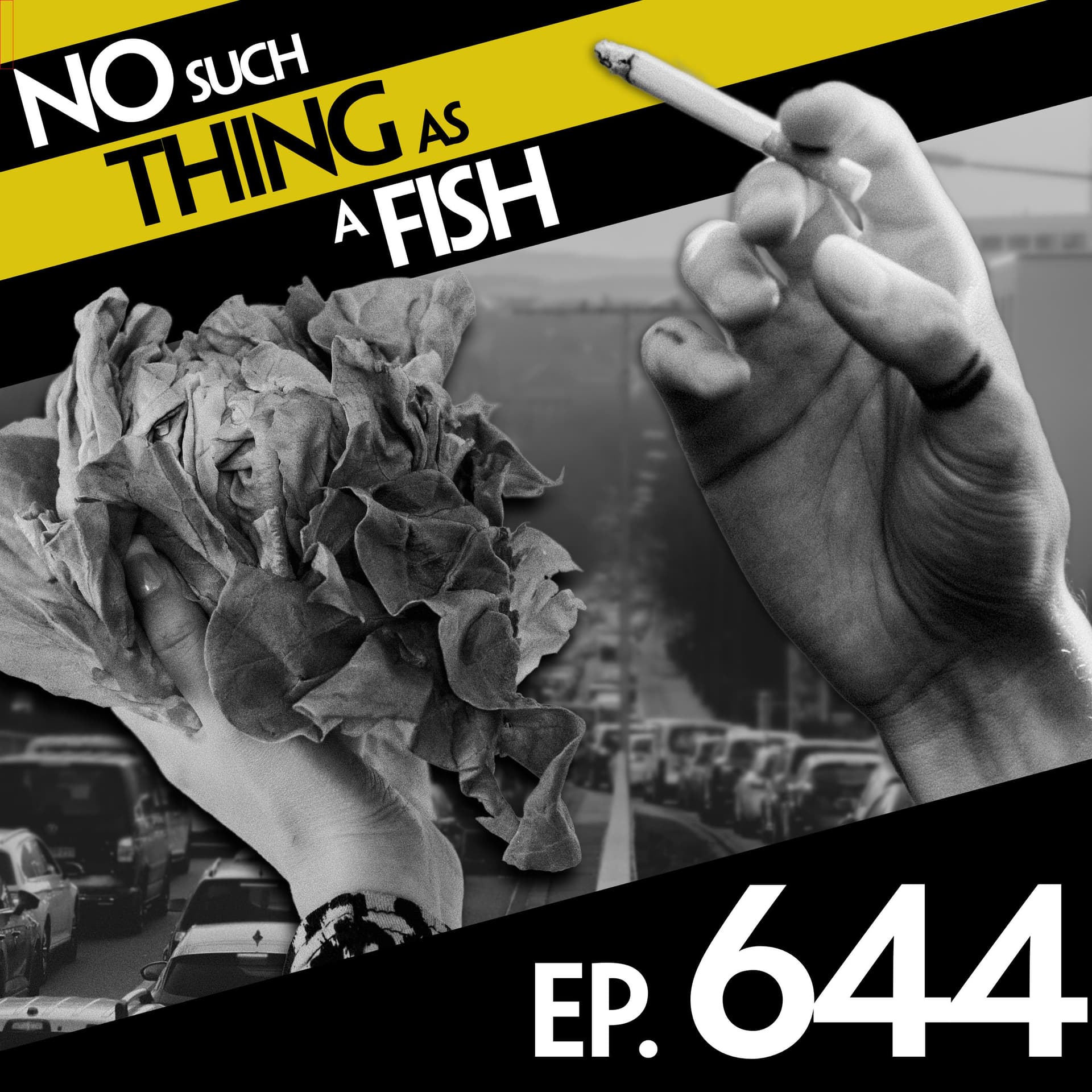
- 1965: “Bravo” cigarettes made from dried, cured lettuce (no nicotine/tar). Inventor Poussant Torijian (Hackensack, NJ) chose lettuce from his fridge; later versions used enzyme-treated lettuce. They never became mainstream; Torijian aimed to help people quit smoking.
- 1967: The “Great Bitter Lake” in the Suez Canal trapped ships for eight years after the Six Day War; crews formed a barter/social system (e.g., trading food cargo like pears and eggs).
- 1953: Neversink (NY) was sunk to create a reservoir; cemeteries and bodies were relocated.
- Sunscreen testing: EU bans animal testing for cosmetics/sunscreen (with complex regulatory grey areas); US rules treat sunscreen as an OTC drug with different testing expectations.
Written by AI. May contain mistakes. Listen to the episode to check what was said.
Chapters
Tap a time to open that second in VOLettuce Cigarettes: A Unique Fact
1:02 to 2:35
Discussion about a cigarette made from lettuce known as Bravo.
“Starting with fact number one, and that is James.”
The Life and Struggles of Bravo
2:35 to 4:52
Exploration of the marketing and challenges faced by Bravo cigarettes.
“His idea was that you would get the physical and the psychological satisfactions that you would get from smoking.”
Smoking Alternatives and Their Impact
4:52 to 8:01
Conversation on smoking alternatives, e-cigarettes, and quitting methods.
“So they went out of business in the late 60s.”
Creative Smoking Cessation Techniques
8:01 to 11:08
Discussion about various unconventional methods to quit smoking.
“So he's constantly having to test them, isn't he?”
Creative Smoking Cessation Techniques
13:40 to 15:05
Discussion about various unconventional methods to quit smoking.
“If you need a VPN in your life, and you probably do, for all sorts of different reasons, then Nord is the one to use.”
The Longest Traffic Jam in History
15:07 to 17:04
Discover the astonishing story of a traffic jam that lasted eight years.
“OK, it is time for fact number two, and that is Andy.”
Life in a Stuck Ship
17:05 to 18:50
Explore how crews adapted to life during an eight-year traffic jam.
“to reopen an endlessly closed street, okay?”
Barter Economy on Stuck Ships
18:51 to 20:22
Learn about the barter economy that developed among trapped ship crews.
“It's like the outbreak of civilization in a way, isn't it?”
Historical Insights of the Suez Canal
20:23 to 21:57
Uncover the historical significance of the Suez Canal and its early construction.
“So when that happened, basically all the historians went, oh, this has happened before, guys.”
The Naming of the Strait of Hormuz
21:58 to 24:26
Learn about the origins of the name Hormuz and its historical context.
“And it was, we're not sure exactly when it was first cut, but it was probably by Necho II around 600 BC.”
Show all 22 chapters
Traffic Jams and Health Effects
24:27 to 26:39
Discover how traffic jams impact health and stress levels.
“And in fact, he was so young that he became king before he'd been born.”
Neversink: The Town That Was Sunk
26:40 to 28:00
Learn about the town of Neversink and its transformation into a reservoir.
“So that is quite a geopolitically fraught place.”
The Mystery of Bittersweet and Dry Fly Fishing
28:00 to 29:11
Learn about the origins of Bittersweet and the intriguing world of dry fly fishing.
“And also, it wasn't the only place that was flooded.”
Digging Reservoirs and Relocating Graves
29:11 to 30:26
Discover the process of relocating graveyards for reservoir construction and its implications.
“Dry fly fishing is an angling technique where you have an artificial fly which floats on the surface of the water and doesn't sink.”
Cemeteries and Contamination
30:26 to 32:51
Explore the challenges of maintaining water quality while relocating cemeteries.
“And they needed to expand and have more runway.”
Ghost Towns and Abandoned Villages
32:51 to 35:08
Learn about various ghost towns and the stories of their disappearance beneath water.
“The nearest one of these to where I grew up is Ladybower Reservoir in the Peak District.”
Evicting Communities for Water Supply
35:08 to 37:29
Understand the impact of flooding towns for water supply and community responses.
“All the people who are working to kick you out of your village and flood your home.”
The Legalities of Sunscreen Testing
42:25 to 46:05
Exploring the differences in sunscreen testing regulations between Europe and the US.
“OK, it is time for our final fact of the show and that is Anna.”
The History of Sunscreen
46:05 to 49:46
A look into the origins of sunscreen and its historical development.
“Eventually you'll be pooing it out right?”
Cultural Myths About Tanning
49:46 to 52:25
Discussing various myths and practices around tanning, including unusual methods.
“But people probably looked very, very wrinkly when they were younger because there was a lot more sun intensity.”
Safety Concerns with Spray Sunscreen
52:25 to 56:01
Examining the risks and safety issues associated with spray sunscreen products.
“It's like gravy granules during the war.”
Closing Thoughts on Facts
56:01 to 56:11
The hosts conclude their discussion with final thoughts on the episode's facts.
“comes out in your farts, not in your poo.”
Transcript
Automatic transcript. May contain errors.0:00Andy McH:Save big on your landscaping project now at Menards. We make it easy for you to enhance your outdoor living space with the largest in-stock selection of concrete landscape block. Ready to take home today. Build a fire pit or retaining wall with our tumbled Belgian wall blocks. On sale now. Save big on your landscaping project at Menards. Plus check out our weekly flyer on Menards.com for all the great deals happening now.
0:26Dan Schreiber:Save big money at Menards.
0:42James Harkin:Hello and welcome to another episode of No Such Thing as a Fish, a weekly podcast coming to you from the QI offices in Hoburn. My name is Dan Schreiber. I am sitting here with Anna Tyshynski, Andrew Hunter-Murray, and James Harkin. And once again, we have gathered around the microphones with our four favorite facts from the last seven days. And in no particular order, here we go. Starting with fact number one, and that is James.
1:07Andy McH:Okay, my fact this week is that in 1965, you could try to quit smoking by swapping normal cigarettes for ones made of lettuce. Did you look as cool? You're not smoking a whole lettuce, I'm guessing.
1:23Anna Ptaszynski:Yeah. That would look cool.
1:24Andy McH:I think they looked more or less like cigarettes. So this is a fact I read on the blog Boing Boing. It's a lovely blog which sort of collects fun things off the internet. They found it from Atlas Obscura. And it is all about a guy called Puzant Torijian, who's from Hackensack, New Jersey. And he created a brand of cigarettes called Bravo. Bravo cigarettes contain nothing but lettuce, which was dried and cured and made to look like tobacco. and they were marketed as tasting, well, pretty close, like a cigarette. But they didn't have any of the nicotine or tobacco tar in. And this guy, Terrigian, he thought that they were going to be the next big thing.
2:03Andy McH:And for a couple of years in the 60s, and then again later, which we might come to, they became very slightly popular.
2:12Anna Ptaszynski:I wonder how many lives this guy saved cumulatively. Yeah. How many packets were sold? How many people smoked them? how many people didn't get addicted because they were really quite... Not that cigarettes taste nice, but you know what I mean? These tasted even not nice in a different way.
2:26Andy McH:I think people who smoke cigarettes quite like the taste of it sometimes. Oh, really? Yeah. But like in this particular case, I don't think they ever really caught on. They never caught fire. Put it that way. His idea was that you would get the physical and the psychological satisfactions that you would get from smoking. So you open the packet, you take off the little bit of plastic, you take the cigarette out you light it you put it in your mouth and then that kind of is quite a lot of the stuff that people like it's the habit yeah definitely but they were not very popular one researcher said that they were like smoking a potato and another said if i had a choice of a punch in the head or one of these cigarettes i would take the punch in the head wow what a weird
3:08James Harkin:thing to say about cabbage it's like smoking a potato it's like no you've literally got the thing you can compare it to there it's like smoking a cabbage actually well lettuce yeah
3:17Andy McH:well i suppose lettuce is more like cabbage than it is like potato but i think they probably resent
3:22Dan Schreiber:being confused with it constantly i would if i were lettuce um did you see why he chose lettuce
3:27Andy McH:no so this guy was working for a cigarette company and someone said why don't you come up with a new kind of cigarette that people won't get addicted to and he said that he chose lettuce because it was the first thing he found in his fridge when he opened it that's quite impulsive
3:41James Harkin:because the name Bravo, that came up immediately as well because he told his wife, who was Italian, about the idea. And she said, oh, Poussant, bravo, bravo. And he went, yes, and that's what we'll call it. That could have all happened in one trip to the fridge, I'm guessing.
3:56Andy McH:He could have invented a type of cigarettes that had eggs in them and they were called, what a fucking stupid idea.
4:04Anna Ptaszynski:Poussant. He did try a load of different things though. He filed a patent to turn any leafy green into a cigarette. and it's mostly to do with drying the leaves
4:12Andy McH:and all of that. There is a leafy green that people do like to turn into cigarettes.
4:17Anna Ptaszynski:Isn't there? No, Andy? Not familiar with it. He tried so many. He tried carrot tops, the leaves at the top of a carrot. Tomato tops. Can't get much out of that, I guess. He tried cabbage. He tried grape leaves, rhododendrons. Apparently most were awful and made him feel quite sick.
4:34Andy McH:Rhododendrons would make you feel really sick. They're poisonous, aren't they? Oh, yeah. They could make you, Romans, all the Greeks, made rhododendron honey, which would make you go crazy. Yes, of course.
4:44Dan Schreiber:Mad honey. Yeah. Right. Maybe it's a different bit. Or maybe no one ever tried enough of these to make it at all dangerous. I think so. Broncos lasted until 2010.
4:53Anna Ptaszynski:Stunning.
4:53Andy McH:Yeah. So they went out of business, actually. So they went out of business in the late 60s. Okay. And there was like, he borrowed, this guy had borrowed some money from a company called General Nutrition. and there was quite a big acrimonious lawsuit because they said, well, you owe us all this money, you've got to give it us back now. And he said, no way, I'll give it back when I can. And they said, well, we'll give us a patent then. And he said, no way. And in the end, everything just closed down because they kind of got stuck. But then he relaunched them in 1997 using enzyme-treated lettuce.
5:25Andy McH:And it was these ones that carried on until the 21st century.
5:30Dan Schreiber:Carried on limping, presumably, into the 21st century.
5:33James Harkin:But his motives, I think, were really nice because he wasn't trying to become a multi-millionaire of his new cigarette empire. He wanted people to get off cigarettes and then stop smoking Bravo as well. He had no interest in them because he wasn't quite sure if that had long-term effects, you know, of inhaling lettuce that we don't yet know. That might come down the line.
5:54Dan Schreiber:Well, anything that creates smoke, you're inhaling the bad, you know, things like tar and stuff like that. So it is going to be bad for you, isn't it?
5:59Andy McH:It's going to give you a cough to start off with, but that's just the tip of the iceberg.
6:03Dan Schreiber:It took longer than I thought, actually. It's true. But it happened.
6:07James Harkin:Still caught me by surprise. He lived till 99. Did he? So clearly he was doing something right.
6:14Andy McH:The age of or the year of?
6:16James Harkin:Yes. He died age 36 in 1999. Yeah, yeah. Yeah, age of. 2021 he made it to. Did he? Good. Very good.
6:25Andy McH:One other thing about him is I read a newspaper interview with him and they asked him, you know, what is this like? and he said, oh, it tastes just as good as normal cigarettes. And to prove it, he broke one in half and ate it.
6:39James Harkin:I love that. They did recommend that you smoke an entire carton before you decide you don't like it. That was part of its publicity. It's like, just give it a chance. Give it 20 full bags.
6:52Andy McH:We should do that for our podcast, shouldn't we? Yes. Listen to 640 episodes before you stop, guys.
6:58Dan Schreiber:It only gets good at about 600. I mean, people say that about quitting smoking. I think the most common advice I read online about people who've successfully quit smoking is them saying, just smoke as many cigarettes as you possibly can one after the other for hours and hours until you regret it. And that seems to be the only way that reliably works because you feel so sick and revolted by yourself.
7:17James Harkin:Interesting advice. Yeah.
7:18Dan Schreiber:But you won't go on forever. That's the thing. You'll stop after a couple of hours. And I'm not necessarily advising this. Take it up with people who've read it.
7:25Anna Ptaszynski:Well, e-cigarettes were invented slightly as a way to help people as a kind of bridge off smoking. Obviously, there's now an enormous vaping industry, which might have some effects that we don't know about yet. But, you know, certainly they seem to be not as bad for you as cigarette cigarettes. But the man who invented the modern e-cigarette is a guy from China called Hon Lick. And he invented it to quit smoking, only to find that he was then both vaping and smoking at the same time.
7:50Andy McH:I read an interview with him and he said he claimed that the only reason he smokes is so that he can taste the cigarettes and that when he's making new e-cigarettes, he can compare and contrast them. Yeah. That's what he said.
8:04Dan Schreiber:So he's constantly having to test them, isn't he? Every day I have to check. I forget what it tastes like.
Read the full transcript
8:10Andy McH:But I think a lot of people are not that happy with him because he sold the patent to like a big tobacco company, didn't he? Oh, really? And the idea is that the big tobacco companies are quite happy with vaping because it keeps people doing something. Yeah, people are still hooked.
8:25Dan Schreiber:I'm with him and I'm fine with that. I'm just putting my cards on the table. Big tobacco companies have their infrastructure, don't they, to suddenly market in all the places they used to market before. Whatever gets people off smoking feels like a good thing. Okay. That's just my opinion. And it's certainly more effective than the advice. I kept reading researching this. When you type in online, vegetables, cigarettes, quit smoking. you get this constant AI advice saying, it is a common method to try and quit smoking to replace a cigarette with raw vegetables like carrots or cucumbers because it replaces the cigarette in your hand and you can munch on them.
8:58Dan Schreiber:And I just want to imagine suggesting to a real addict that they try replacing their cigarette with a raw carrot.
9:04Anna Ptaszynski:Yeah, it was about 20 cucumbers a day at the moment. Bugs Bunny was actually, he was just desperately trying to quit, you know.
9:10James Harkin:Yeah.
9:11Anna Ptaszynski:Can I tell you one, my favourite method to quit smoking? Oh, yeah. Ali, you'll hate this because you're a shill for big tobacco, clearly. But this was an invention in 1972. It was patented by a guy called Lewis Topple. He patented not a kind of cigarette to help people stop smoking, but a cigarette case. But it had a mini record player inside it. And whenever you moved the case to open a cigarette, it plays the sound of someone coughing desperately. And it's to remind you that these are really bad for you.
9:41James Harkin:Wow.
9:42Anna Ptaszynski:I don't think he ever produced it. He had the idea and patented it.
9:45James Harkin:It's the audio version of the pictures you now get on cigarettes.
9:48Dan Schreiber:It feels like someone definitely saw that and went, do you know what might be easier than this? Might be, topple, is actually if we drew something. And then when you opened the case,
9:56Andy McH:did like a load of horrible phlegm suck.
10:01Dan Schreiber:It's like that 4D cinema experience. Yeah, I found that there's been some very creative methods
10:09James Harkin:to get people to quit smoking. This is a nice one that was developed by a Turkish man called Ibrahim Yussel, which is every day he would wake up and put a big cage around his head, lock it up and give the keys to his wife and daughter. So he was only ever allowed the cageless head at meals when they would unlock the cage and he would sit there under their supervision. And then once the meal was done, they put this big cage back over his head. And that was his day. Kind of looks like an astronaut's helmet, but it's a wiry cage. So you can see like a, cage in fact. What about those
10:43Andy McH:really long cigarette holders that flappers would have in the 20s? You think you could insert it between the bars?
10:50Dan Schreiber:Yeah, exactly. So the determined mind
10:54Anna Ptaszynski:is possible to get out.
10:55Dan Schreiber:Oh, that's great. I don't know. I think his wife and daughter left him and the only consolation is that he formed the band Daft Punk and so at least made something out of it.
11:07Anna Ptaszynski:Alright, how about an ad campaign to stop people smoking? Have you heard about Nick Oteen?
11:11Andy McH:Nick Oteen I feel like I have heard of him was it in Britain? yeah it was yeah this campaign in the 90s maybe?
11:19Anna Ptaszynski:1980s it was Nick Oteen was the arch enemy of Superman and there was a campaign to stop children getting into smoking oh yeah saying Nick Oteen is trying to recruit children to his army of smokers unclear what this army is going to do well they might march
11:36Andy McH:for a while
11:36Anna Ptaszynski:but they're going to need quite a lot of breaks I think
11:41Anna Ptaszynski:basically the children were asked to sign an anti-smoking pledge and you get some badges and you get some a poster and that kind of i wouldn't be surprised if i did that that's also well you might have been one of the 800 000 children in britain who requested one of these packs yeah it's quite impressive i don't think it affected smoking rates long run though
11:58Dan Schreiber:unfortunately no because every single child age 10 says smoking is disgusting i hate that my parents so I'll never do it. At age 14, they're smoking. Sadly.
12:07Andy McH:I don't think that's quite true anymore. No, definitely not. Smoking is much less common than it used to be. And I wonder if that's a legacy of Nicotine. Legacy of Nicotine. It's a long term thing.
12:19Anna Ptaszynski:And it explains, why does Superman not smoke? You can get this. This is gettable. This is how the campaign explained
12:24Andy McH:why Superman would never touch cigarettes. He has super breath, so if he breathes in really quick, the cigarette will fire through his skull backwards. Got it in one No No
12:35James Harkin:It's boring playing these games with James
12:36Andy McH:He always just gets it right No there is a famous thing Because you can't smoke when you're flying famously
12:43Anna Ptaszynski:This was the 80s You could do anything while flying No there's a thing What has Superman got that would deter him from smoking? Lois Lane didn't like it
12:53Dan Schreiber:The ability to get changed really quickly He needs both hands for that
12:57Andy McH:He's got underpants on the outside of his A dog? Powers A dog Is a dog one of his powers? No, I was saying that as you said that.
13:06James Harkin:He can fly. He can fly. He can see through things. Thank you. Oh my God. See the lungs. He can see the adverts.
13:15Andy McH:The lungs.
13:16Anna Ptaszynski:I mean, see the lungs. My God. That was the longest minute of my life.
13:20James Harkin:And he's got super hearing. So presumably when he opens up his vinyl cigarette case, it's blasting into him.
13:32Dan Schreiber:Stop the podcast. Stop the podcast. Hello, everybody. This week, we wanted to tell you we're sponsored by NordVPN.
13:40Andy McH:Yes, NordVPN. If you need a VPN in your life, and you probably do, for all sorts of different reasons, then Nord is the one to use. I always use VPNs when I go abroad, for instance. It really helps me to access a lot of things that I wouldn't normally be able to get in that country, but normally could only get in the UK. I pretend to be in the UK, and there I am.
14:01Dan Schreiber:That's right. Or you can be in the UK and pretend to be in another country. The reason I do it is because I often work in cafes. But when you're in a cafe using public Wi-Fi, it can encrypt your connection to make that network much safer to use. It shields all of your online activities from your internet service provider or maybe hackers, creates this private tunnel in which you can work in peace.
14:22Andy McH:Absolutely. It's easy to use. You connect with one click and it can attach you to 9 ,300 plus servers across 149 countries. It's really fast. You can use it on up to 10 devices and it's supported by every major platform. So Anna, do we have any kind of deal for our listeners today?
14:42Dan Schreiber:I reckon we can give you something. Yeah. How about you go to NordVPN, N-O-R-D, VPN.com slash fish using the code fish and you'll get your NordVPN two-year plan plus four months extra. That's with nordvpn.com slash fish.
15:00Andy McH:It's risk-free with Nord's 30-day money-back guarantee. OK, on with the podcast.
15:06Dan Schreiber:On with the show.
15:12James Harkin:OK, it is time for fact number two, and that is Andy.
15:16Anna Ptaszynski:My fact is that the longest traffic jam in history lasted eight years.
15:22James Harkin:Yeah, that's a biggie. how much longer than the second place traffic jam?
15:28Anna Ptaszynski:I think about seven years.
15:30James Harkin:Seven and a half years.
15:33Andy McH:So I've known traffic jams so bad where people just get out of their cars and then go home and then come back a few days later and have to pick up their cars. And that makes the traffic jam worse. So is that what happened here? It's about something that happened in 1967.
15:49Anna Ptaszynski:There was a very brief but very lively war between Israel and Egypt called the Six Day War. and when the war broke out, Egypt's first move was to close off the Suez Canal, right? So running top to the bottom from the Med to the Red. That's how you can remember where the Suez Canal is. It goes from the Mediterranean to the Red Sea, right? And it's a canal. And there's a bit in the Suez Canal which is called the Great Bitter Lake, which is basically like, you know when you're driving along a very narrow country road and there's one of those passing places? It's like that, but it's 100 square miles.
16:20Anna Ptaszynski:And then basically, so the war broke out and all the ships that were sailing or halfway through, they got stuck in the Great Bitter Lake about, I think it's 14 or 15 ships and there were like hundreds of thousands of explosive devices in the water and there were bits of bridge and there were sunken ships there was no way through so these ships were just stuck there for, you know, weeks, months and then eventually eight years and it was only after another war in 1975 and a load of demining and all of this and, you know, like, peace breaking out, that finally they got to go home. By the time they got out, only two of them could actually sail anymore.
17:00Anna Ptaszynski:All the rest had to be just tugged to be broken up for scrap and things.
17:04Dan Schreiber:Please let's not advertise that it takes another war to reopen an endlessly closed street, okay? I'm sure there are other methods.
17:10Anna Ptaszynski:It's the second bonk on the head. That's what it restores your memory to you.
17:13Andy McH:I can just imagine the meetings. It's like, have we tried another war, guys?
17:19Dan Schreiber:it is amazing it feels like um the mood really um took some peaks and troughs didn't it along the way because all these crews just trapped there and the first month it was described as a little bit like a holiday suddenly these people are you know you don't have to get to work anymore you're stuck um and then the second month it was really really bad third month was terrible and then all the crews of the ships i think kind of started getting together and they realized that with teamwork they could do things like create their own social events have card games together have their own mini olympics it's really fun again it was it was eight different nations as well these
17:53James Harkin:boats it's not like it was one fleet you had the uk you had west germany sweden france the united states poland bulgaria there was more and um they became the great bitter lake association they had a swimming pool on one of the boats that they'd go and do races on there
18:07Andy McH:it sounds the idea is that all these boats were carrying different cargo and so they were like okay we're hungry which of the ships has got the sandwiches and they're like okay well we'll give you some of our sandwiches and you can have some of our hula hoops and then the other one's like well we've got some orange cordial here and then between them they could all have everything they
18:27Anna Ptaszynski:needed one of the ships had a refrigerated bit because it was transporting food it was transporting 300 tons of pears and 8 million eggs right and you don't want to be devouring them on the eighth
18:38Dan Schreiber:year, do you?
18:40Anna Ptaszynski:Just check the day. It's fine. It's fine. Can I stop being a fuss for? No, one of the sailors said after a few weeks, I can't bear to see another pair. I think they just ate pairs for several weeks. Oh my god.
18:51James Harkin:We've run out of cigarettes. It's okay. West Germany's got 20 tons of lettuce.
18:57Anna Ptaszynski:It's like the outbreak of civilization in a way, isn't it?
19:00Andy McH:Is it?
19:00Anna Ptaszynski:The barter economy, they've developed their own stamps and they've developed their own postal system and all this. These stamps were drawn by
19:08James Harkin:by the crew. So cool. And they were used as legit stamps, as if they were from a country, which is really cool. I went on eBay and... Of course you did. And there were some stamps from the collection of one of the guys who was on the boat. How much? 30 quid a stamp. 30 quid a stamp? 30 quid? Yeah, I couldn't tell if it was a collection of four or a singular stamp. Well, you'll find out when they arrive. Yeah, exactly.
19:30Dan Schreiber:So they sent letters out with the stamps on. Did the envelopes contain letters saying, also, please get us the fuck out of here?
19:36Anna Ptaszynski:So they started rotating after the first difficult bit where they were all started. It wasn't like the same crews were eight years old at the end. They were able to circulate in and out. So you'd go and do like however many months on board ship and then thankfully you'd get a break.
19:49Andy McH:And then slowly there will be fewer and fewer people because they realized, actually, we don't need the guy who looks after the eggs anymore because they're just going to go. And like there was many hundreds of people to start. Oh, there was hundreds of people to start off with. And by the end, there was like a few dozen people.
20:03Dan Schreiber:I mean, why do you need people to be there in large numbers at all to guard the ship? After a while, when it becomes apparent that the ship is going to fall apart, is it in the hope that you'll be able to maintain the ship?
20:13Anna Ptaszynski:I think there's some maintenance, you know, because it is a hostile environment with all the sand and all the heat and all of that.
20:18Andy McH:Definitely guarding as well, because people will strip those ships. Yeah. I remember I read about this when that big ship got lodged in the Suez Canal a few years ago. The Ever Given, was it called? The Ever Given, yeah.
20:29Dan Schreiber:Such a bad name for a ship.
20:30Andy McH:So when that happened, basically all the historians went, oh, this has happened before, guys. We can do our little thing.
20:37Dan Schreiber:Yes, maybe that's when I read about it.
20:38Andy McH:Yeah, I'm sure that's when I did. But I was reading back about the Ever Given. 10 % of the world's trade was blocked. Thank God that never happened again with any straits in the Middle East. And people went onto the internet because, you know, you can follow all the ships. Like you can do it with airplanes as well and see where all the different ones are going in the world. well they followed they looked at where the ship had been and the week before it had gotten stuck it had drawn the image of a penis in the red sea amazing like it had done a few sort of like turns back and forward to kind of work out which way it was going to go oh it wasn't deliberate it wasn't deliberate a lot of people thought well these guys are taking the mickey they like they draw a penis
21:21Dan Schreiber:then they deliberately get stuck i am always upset on behalf of pilots who draw penises in the sky sometimes on training exercises that they always get in real trouble. There's a real sense of humour failing, I think, in the RAF and the Navy over stuff like this.
21:34Andy McH:I think unless you're actually firing smoke out of the back of your airplane to make an actual penis in the sky, you should be allowed to do what you want. Yeah. Do you know when the Suez Canal was built? Ooh. Approximately. Early 20th century? Yeah, you're close. I would say 7th century BC. Okay. Okay. Okay. So this is the canal of the pharaohs, also called the ancient Suez Canal. And it was, we're not sure exactly when it was first cut, but it was probably by Necho II around 600 BC. And then it was re-dug or maybe completed by Darius the Great in around 500 BC. All the way? It went all the way.
22:16Andy McH:So you could, that was navigable by smaller boats, obviously. Like the Suez Canal could send big tankers through, but this one was just like little boats. That's amazing. Yeah, that is. 1869 the actual big Suez Canal and it was built mostly by the French who were having a lot of time in North Africa around then and the idea was this is quite a famous story again but everyone was ready to go through it was this opening of the Suez Canal someone was going to cut the ribbon and all the ships were going to go through but because it's a canal you can only really get one ship at a time so there's a French yacht called L 'Egl which means the eagle which is right at the front and at dawn that's going to go but at the same time there was a british commander george nares who was in command of hms newport who wasn't very happy about being at the back of the queue so when it went dark at night he kind of sneaked his boat right down to the front put it in front of this french yacht and then everyone's like sacre bleu what is gonna happen here but because he's in the front and it's a canal no one can overtake him so he managed to go through first and he got an official reprimand by the British Navy, but then was secretly celebrated and promoted to captain.
23:32Andy McH:For cue jumping? That's a hanging offence in Britain.
23:36James Harkin:I'm shocked.
23:38Anna Ptaszynski:That's amazing.
23:39James Harkin:Can that happen in any other sport? The Formula One, could the guy at the back just very slowly, hey, creep to the floor.
23:48Andy McH:Wow. Traffic? Traffic. Sorry, before we go into traffic, can I just say one thing about the Strait of Hormuz? Ooh Which is kind of similar to this in many ways And there's a very strategic bit of water and it's sometimes closed We don't know where the name Hormuz comes from It might have come from a Persian word meaning place of dates Or it might come from the name of a Zoroastrian god who was called Hormuz But another theory is it was named after Ifrah Hormuz who was the mother of King Shapur II of Persia, who ruled between 309 and 379 AD. She was famous as like a regent. So the king was very, very young.
24:31Andy McH:And in fact, he was so young that he became king before he'd been born. So his father, let's say, or brother or whatever had died. They needed the next king. They knew he was hopefully going to be born at some stage. Assumed they were guessing it was going to be a he, because in those days you weren't sure if it was going to be a he or a she. And in order to crown him, the crown was placed on Ifra's belly. Lovely. Wow. So they had a proper crowning ceremony where she got her tummy out and they put the crown on top of her.
25:00Anna Ptaszynski:And then when he was born, they probably said, the baby's crowning. Like, we know.
25:04Andy McH:Very good.
25:05Anna Ptaszynski:Because crowning is the thing when the head comes out. Absolutely. Yeah. Nice.
25:10Andy McH:Guys, that's technically a very good... Technically, it had all of it there, yeah. Technically, it had the setup, the punchline and the explanation. It had everything that a perfect joke should have. Okay, sorry.
25:22Dan Schreiber:Traffic. Do you know how bad it is for you being in a traffic jam?
25:26Anna Ptaszynski:Probably fine. Well, it's bad. Oh, no. It is bad for you.
25:30Dan Schreiber:Your blood pressure goes up so much, more than I expected it to. So there was a study in Beirut that measured the blood pressure of drivers who were pulling into a service station in traffic jams and then those who were pulling into service stations when there wasn't any traffic. The ones in traffic jams had an average blood pressure of 142 over 87. The ones not in traffic jams were 123 over 78. Oh, that's quite different. It's a big difference. And also, do you think it'd be worse or better if you were running late at the same time?
25:57Anna Ptaszynski:I would think worse.
25:59Dan Schreiber:It's not. Makes no difference. Oh, okay. So it doesn't matter if you're late or not in a traffic jam. Your blood pressure is still rocketing, which rings true. The number of times I'm sitting in traffic being so stressed. And then don't you finally have to go, hold on, I don't need to be anywhere.
26:12James Harkin:But if you were going to miss your plane, that surely is more...
26:15Anna Ptaszynski:Does the same... When are you ever driving anywhere with no time constraints unless you're on holiday? You know, there's always something you're trying to get to. That's why you're in the bloody car in the first place, isn't it?
26:22Dan Schreiber:Oh, Andy, your life sounds so stressful.
26:24Anna Ptaszynski:What, you guys are just going for drives all the time?
26:26Andy McH:You all sound very relaxing. If I'm a bit too relaxing. What, if you're going to go to the shops? You have to be at the shop at exactly 12.49. Well, you've got a very stringent shopkeeper, haven't you?
26:37Anna Ptaszynski:It's 9.58. I need to get to the shops. It's about to close, please. But you said this is Beirut. So that is quite a geopolitically fraught place. I imagine lots of blood pressure is quite high in Beirut.
26:46Andy McH:I also think like in different countries, like I don't know if you guys have driven in different countries, but some of them you get much more stress than others. Driving is conscious. I've never driven in Beirut, but I can imagine it might be similar to other places where I've driven where it has been quite stressful. Do they have Magic FM in Beirut?
27:02Anna Ptaszynski:Because that would calm things right down. That's smooth. Maybe that's what they need.
27:07James Harkin:Just have a cigarette. That would be great for anxiety.
27:14James Harkin:Okay, it is time for fact number three. And that is my fact. My fact this week is that in 1953, a town called Neversink was sunk. This is an amazing little place, Neversink, because it's very important for New York City in particular. It's a reservoir, but it wasn't a reservoir prior to 1953. Prior to that, it was a town and it had a population of about 300 and it had businesses and it had houses, but they needed somewhere to create a reservoir and NeverSink was picked. And so all the residents had to move out. They had to move NeverSink down the road. They had to reset up their lives. Do we know why it was originally called NeverSink?
27:55Andy McH:I tried to find out.
27:56James Harkin:I couldn't find it. No, we don't. There's a few possibilities.
27:59Andy McH:Named after George NeverSink.
28:04James Harkin:No, I'm not quite sure. And also, it wasn't the only place that was flooded. The other place that was flooded at the same time was a place called Bittersweet. And Bittersweet, we do have a slight idea of how that could have been named. It was a plant that grew in abundance. Yeah, Bittersweet's a type of plant. Yeah.
28:21Anna Ptaszynski:And so they think it might be that, but we don't know. There is a Never Sink River.
28:25Andy McH:Ah, okay.
28:26Anna Ptaszynski:So the town was, of course, named after the river. I don't know why the river got its name. But I did read on Wikipedia that it's considered by many to be the birthplace of American dry fly fishing. Dry fly fishing.
28:36Dan Schreiber:I bet you got so excited about that. Have you subscribed to a magazine or something?
28:42Andy McH:What is that? I don't know. Oh, Dad, you can't see that phrase and not Google what it is. I became so bored. Is it fishing with a dry fly? No. It's got to be. No. Or is it fly fishing where there's no water?
28:56James Harkin:Oh, maybe you're catching flying fish. So you're just there with a net. Rather than catch them as they leap out.
29:02Andy McH:Or is it like fly fishing where you don't drink alcohol? Oh, my God. I've got to look it up.
29:06Anna Ptaszynski:All right.
29:07Dan Schreiber:Or when no one's allowed to make jokes throughout the day of fishing.
29:09Anna Ptaszynski:Not a problem for me.
29:12Dan Schreiber:All fishing with Andy is dry fishing.
29:17Anna Ptaszynski:Right. Here you are, you monsters. You're really looking it up. Dry fly fishing is an angling technique where you have an artificial fly which floats on the surface of the water and doesn't sink. Oh. Okay. so okay
29:29Dan Schreiber:so we're all glad we are aren't we thank god
29:32Andy McH:we couldn't leave that hanging no we couldn't
29:34Dan Schreiber:that's a really good point much like the fishing rods in dry fly fishing so a little fly
29:40Anna Ptaszynski:it's as easy as it looks Anna I know I know
29:42James Harkin:it's tough isn't it because you've got to
29:44Dan Schreiber:reel them in okay go on Dan
29:46James Harkin:sorry I'm just trying to get my head around it you put a fake fly on the surface of the water and the fish comes to eat it yes
29:51Dan Schreiber:yeah it's like fly fishing I just didn't know they eat flies
29:53Andy McH:they do eat flies fish do they but also your fly It's called a fly, but it might not necessarily look like a fly. It might look like a little fish. Now it makes sense.
30:03Dan Schreiber:New York reservoirs is what we were talking about. Absolutely. So that's my link. And I don't know if this was the same reservoir, the Ashokan, and I might have mispronounced that, Ashokan. That'll be it. There we go. But this is the reservoir which supplies about 40 % of the drinking water in New York that was dug between 1909 and 1914. and one of the interesting things about digging reservoirs and you know sinking all these towns is you also sink the cemeteries in the graveyards and you have to relocate all the bodies oh yeah and i was just i just looked this up so i was like what do they do with all the bodies and you do have to dig them up partly out of respect but also because if you can guess drinking water you're drinking the water so you just don't want it full of corpses and aqua ghosts
30:52Anna Ptaszynski:terrifying swimming ghosts yeah wait hang on but you're so you're having to dig up the bodies
30:57Dan Schreiber:yeah so they dig up all the bodies so there's a cemetery in new york called bushkill cemetery which is the cemetery which has 2720 bodies from the 32 graveyards that had to be dug up to make way for ashokan reservoir and they just tossed all the bodies in a new one but surely i'm
31:12Anna Ptaszynski:showing my ignorance here but surely if you'd done the burial properly these people are six feet down the water's not going to be indirecting like water goes through all sorts of coblers before it gets to our town and it gets treated I think a lot of it is going to be
31:26Andy McH:in America these are not going to be like 12th century burial grounds like you might get in England are they? They'll be recent people They'll be relatively recent people Yeah People might want to visit those graves
31:36Anna Ptaszynski:Oh for sure For sure Yeah yeah yeah No that makes complete the cultural thing absolutely makes sense But it is contaminated
31:41Dan Schreiber:Yeah yeah I agree maybe some coffins are more leaky than others
31:45Andy McH:Also do you remember my sister had a house where she lived next to a graveyard and my other sister wouldn't eat the potatoes that she grew in her garden because she thought there might be dead bodies in there yeah i think people are a bit icky about that kind of thing because when you're making a reservoir you can't put a tarpaulin down
32:03Anna Ptaszynski:can you because it's such a huge area it would not be practical they don't sell them anyway not that
32:08James Harkin:big yeah yeah i'm mentioning moving graveyards there's a fantastic airport savannah airport which is in Georgia. And they needed to expand and have more runway. But it ran into the farmland and family house of a family called the Dotsons. And the Dotsons had graveyards of some of the family members that were buried there. And so they did a deal where they sold it, but they kept two of the Dotsons still buried there. Oh, yeah. And so there's a runway where, as you're going over, it's runway 10 in Savannah Airport. There's not a bump on the ground. There aren't two lumps on the ground. I think there are, aren't there?
32:41James Harkin:There's two tombstones laid flat down that you go over as you're the lake to the rise of the plane. That feels like a hazard. I've done the safety stuff, guys. Of course they have.
32:51Dan Schreiber:It's for clickbait. Don't worry about the planes.
32:56Andy McH:The nearest one of these to where I grew up is Ladybower Reservoir in the Peak District. And there was a village called Derwent Village, and I've driven past this a million times. And apparently when you go past it, sometimes you can hear the sound of the church bells ringing from the former.
33:17Dan Schreiber:Because it was sunk under the reservoir. I love all this stuff. It's so metal.
33:22James Harkin:It's so cool. I wrote about this one time, this church specifically that you're talking about. When they got rid of all of the town there, one of the things that they left was the tall turret of the church. So a mutual friend of ours, David Bramwell, also lived very close to that And he remembers that when there was a drought, the water goes down and the church spired You can see it, right? And he remembers seeing it as a kid And then he started researching it And it turned out that in 1947 it was blown up And that doesn't exist anymore What? And so many people have a memory of seeing it Including Hillary Mantel talks about her family reporting seeing it as well
34:03Andy McH:Yeah, I thought you could see that And if you'd have asked me, have you seen that as a kid, I would have said yes.
34:08Dan Schreiber:What's that called? It's got a name.
34:10Andy McH:Mandela effect.
34:11Dan Schreiber:Thank you. Yeah. It's a Mandela effect. The ghost church.
34:13James Harkin:What are you guys talking about? Ghost church.
34:16Dan Schreiber:On Lady Bower, which is a very cool thing. First of all, it's a very cool reservoir because it's got these giant plug holes that are quite, I mean, just Google them. They're amazing. They create these massive whirlpools. So you get people who row across the reservoir and almost get sucked into it. But also when they were building the reservoirs in that area, there are three reservoirs in that Derwent Valley area. I hadn't realised that they build an entire town for all the construction workers who were working on the reservoir. So there's a town called Birchenley, which housed about a thousand construction workers and all their families.
34:47Dan Schreiber:This is in the early 1900s. And it's called Tin Town. And everything in it is made of John Lloyd, our boss's favourite material. It's all corrugated iron and it's amazing. And they had a pub, they had shops, a post office, a police station, they had bath houses.
35:02Andy McH:If you're one of the original village and you get kicked out because they're going to put something there and another village gets made right next to it, you must think they're taking the piss.
35:11Anna Ptaszynski:All the people who are working to kick you out of your village and flood your home. Yeah. No, it doesn't. I don't understand what they're building, though, because I presume you just need a bowl of water or a bowl of land. Oh, Andy.
35:22Andy McH:To build a reservoir, you think all you have to do is just dig a bowl of water? Well, you find a bowl and fill it up. What do you do?
35:29Dan Schreiber:Building a dam, I think. Not a dam, a reservoir. No, no, they're made by building dams.
35:33Anna Ptaszynski:Usually.
35:34Dan Schreiber:So you build the dam and you wait for it to fill up.
35:37Anna Ptaszynski:I thought you just had to find a bowl and fill it. Okay.
35:40Dan Schreiber:What, with a hose?
35:41Anna Ptaszynski:Like, what's your... Just the rain will do it eventually, will it?
35:43Dan Schreiber:I mean, that is how they work, which I think is quite interesting with reservoirs, is that you build the dam and then you wait sometimes a couple of years for it to get full up. Oh, really?
35:51Anna Ptaszynski:Sorry, building the dam, okay. But yeah, they're building the dam,
35:53Dan Schreiber:so it does take a while. The Tin Town was there for six years, and then when it's finished, the whole town just disappears. But there's one left if you want to visit Tin Town, there's one corrugated iron hut that has been reassembled in the nearby village of hope which
36:06James Harkin:is a hairdresser's it's it if you want that's so cool um there's a great example of it going slightly wrong in america which is a town called old jefferson which was in tennessee so they had this exact same thing they had a lake that they wanted to expand so they could act as a water supply and this little town was sitting on the edge of the lake so they all had to get out of there and then the whole town was bulldozed down they allowed for it to flood but what they didn't realize was that there was a lot of underground caves in the area and the water simply disappeared into that lovely lovely and the town just stayed the same just bulldozed and nothing there that's
36:42Anna Ptaszynski:very fair yeah it doesn't this happens sometimes so um there was a spanish town called granadilla and it was evacuated in the 1960s because the government was going to flood the town and it took 10 years to move everyone out you know they were given lots of notice and all 1 000 people living there moved out it's amazingly beautiful town it's from the ninth century so it was a big decision to flood that because you know it's very old and all that and the water was finally allowed into this massive new flood plain and it just came up to make this town a lovely little island with one road in and out right so there was no need to have evicted anyone and did they all go back or nope they weren't allowed it's so often it happens yeah just not allowed but you know i think they're still trying to get back in aren't they
37:22Dan Schreiber:the descendants of the people who live there are still saying can we please get back into our town
37:27Anna Ptaszynski:I think they're allowed to visit once or twice a year. Yes. But I don't think they're allowed to go and stay.
37:31Andy McH:There's a famous one similar to this called Minith Eppent, which is in Wales. And they kicked out everyone from this little village because they wanted to make a military training area during World War II. And still now you'll occasionally see people spray paint on the walls, remember Eppent, because it was such a big deal in Welsh history. And the really sad thing about this is that they thought it was going to be temporary. These people left the keys in the door because they thought they would come back one day. They continued to plough the fields because they thought they'd be able to come back, but they never were.
38:07Andy McH:And then there was one guy called Thomas Morgan who returned to his house every single day to light his fire as sort of a symbol of, we will be back one day. And so the army blew his house up. Oh. And said, you're not coming back. Oh my goodness.
38:21Dan Schreiber:Can I ask a quick question about that?
38:23Andy McH:Yeah.
38:24Dan Schreiber:I return to my house every day, but I don't leave the keys in the door. I take the keys with me.
38:30Anna Ptaszynski:Yeah, but you live in a less trusting environment.
38:32Dan Schreiber:I see, of course. If I lived in Wales, that's what they all do when they know they're coming back somewhere. You don't have to leave the keys in the door.
38:38Anna Ptaszynski:What's the point of a key except to open the door so you might as well keep them together?
38:42Andy McH:How often do you lose your keys?
38:44Dan Schreiber:It's a lot.
38:45Andy McH:I should start leaving them in the door. Now imagine you've left your house, you've gone away for like five years and then they go, okay, you can come back now. Oh, fuck, where's the keys? Such a good point. if you've left them in the door fine you always know
38:59Anna Ptaszynski:I mean the best thing to do is to leave the keys in the door and then just build a small metal cage around the keys which you can then open with a lock you know for safety yeah yeah but this happens a lot Tynum in Dorset was requisitioned for military training and that was a war thing and the last person left a notice on the church door saying please treat the church and houses with care we shall return one day and the army have just bombed bombed the heck out of it since then
39:22James Harkin:well in Wales there's another one that was called Kapelkellen and Kapelkellen was Kapelkellen Kapelkellen
39:29Dan Schreiber:I think it's Kapelkellen
39:31James Harkin:Kapelkellen and this was a town just Indian people embarrassing you pronounce it like Donald Trump pronouncing any foreign word I'll give it another one Kapelkellen there was there was a great town superb town there's a town in Wales called Kapelkellen and Kapelkellen was a town that was flooded and the people who live there only found this out five days before christmas they are slow to pick up on things it has been very wet lately but this is insane this is ridiculous um they found out five days before christmas while reading the liverpool daily post it was in a newspaper that their town was going to be flooded and it was flooded so that they could provide water for liverpool so it was a cross-border reason and they were fuming and this became a huge huge thing and there were huge protests and they would go to liverpool but liverpool felt like they'd bailed this uh area of wales out quite a lot and so they were really aggressive towards the welsh people who were over there look this is a controversial point to make
40:36Anna Ptaszynski:but i think we should drown loads more places oh yeah well where if the government would like my place at a reasonable rate to have it i don't care um we'll need it we'll need more water you know there are going to be more periods where there's much less rain you need better water supply and britain hasn't built a reservoir since 1992 it's insane yeah people keep trying
40:56Andy McH:but they just do a bowl of water and just nothing happens
41:05Andy McH:stop the podcast stop the podcast hi everyone we'd like to let you know that this week we are
41:10Dan Schreiber:sponsored by babble that is right jindobri james yakshimash great oh yes where james and i have gone wrong is we are learning different languages to one another on Babbel. But Babbel is the place where you can learn a new language. It's such a brilliant tool to use. It makes it so much easier than anywhere else you're going to go to learn languages. It recognises that lots of people learn languages in lots of different ways, so you can fit it to your preferences.
41:36Andy McH:Absolutely. And from the sound of what we said earlier, Adam seems to be learning Polish and I seem to be learning English. So we'll see how that goes over the months. But no, we all use Babbel And it is really good to get involved with a bit of self-improvement. Maybe you're going to travel. Maybe you want to develop professionally by learning a new language. It's useful in all those different ways. They have 25 million subscribers worldwide. And they are science-backed. So it actually does work. You can make fast-lasting progress. And right now, we have a special limited-time deal for our listeners.
42:10Andy McH:You can get 60 % off your Babbel subscription at babbel.com forward slash fish.
42:16Dan Schreiber:Go to babbel.com, B-A-B-B-E-L dot com slash fish and get 60 % off your subscription. Rules and restrictions may apply. OK, on with the show. On with the podcast.
42:32James Harkin:OK, it is time for our final fact of the show and that is Anna.
42:36Dan Schreiber:My fact this week is that in Europe, it is illegal for sunscreen to be tested on animals. In America, it is illegal for it not to be tested on animals.
42:46Andy McH:What? Okay. Does that mean that any sunscreen that's sold in Europe can't be sold in America and vice versa? Or is this just when you're creating it?
42:54Dan Schreiber:I think it can't be sold there. Certainly under European law, it couldn't be sold there. It's like any sunscreen or any ingredients in sunscreen or any fully made sunscreen cannot be made or sold there if it's been tested on animals. And in the US regulations say sunscreen, sun cream, as we call it, is an over the counter drug. So it counts as a drug there. So the rules are much more stringent. Drugs usually need to be tested on animals, not always. But basically, I was reading the FDA site, Food and Drugs Administration site, and it does specify. is trying to basically say we don't do that much testing on animals.
43:29Dan Schreiber:So it says we don't require sun cream to be tested on large animal species like dogs or primates. And we try to minimize testing on rodents. And what's left?
43:39Anna Ptaszynski:Are you going to rub it on a fly?
43:40Dan Schreiber:Well, they specifically say they minimize testing in rodents. They don't stop it testing in rodents. They just say we don't demand six month toxicity studies, which I think probably means that they don't rub it on rodents and then leave them for six months and then test if it's caused damage. So they still tested on, basically the website was a very long winded way of saying we test these on rodents and we have to. Whereas in the EU in 2013, the sale and marketing of all cosmetics, sunscreen included, and their ingredients was banned. Now there's lots of grey areas. There's this bizarre thing.
44:08Dan Schreiber:Lots of pink areas.
44:14Dan Schreiber:There are grey areas in the EU. So there's basically the European Chemicals Agency, which says you have to test chemicals on animals if people are going to be working with them. but then the animal testing cosmetics law that says you're not allowed to test these on animals and they say totally contradictory things and no one understands the European law really. So sometimes sun cream is tested on animals even though it's illegal because European law is a mess.
44:38Andy McH:What about Brexit? Will we finally be able to slather sun cream on flies? I did have a look. I think you can do that outside of the lab anyway.
44:49Dan Schreiber:Because that's why I voted for it. there have been worse reasons I was sat there in the
44:58Andy McH:voting booth with my pet fly in my hand going one day Jeremy one day you will be subjected to this terrible UV rays
45:07Dan Schreiber:poor red Jeremy UK is basically in line with EU law on this I'm afraid James so it was all for nothing for you
45:17Andy McH:great wow the first ever sun cream i think was tested on animals okay um so during world war ii there was a guy called benjamin green he was an airman and a pharmacist and he was in the south pacific and he saw that a lot of the other soldiers were getting sunburnt and he decided that they needed protection and so he gave them something called red vet pet a cream that you used when let's say your dog got a little cut on it or something the vets would put this on to stop any infection from getting in there and what he thought was well i can put this on my soldiers and it will stop them from getting sunburn so it wasn't commercially available that came a year or two afterwards but
46:00Anna Ptaszynski:but he founded a firm called copper tone didn't he yeah which was which was the commercial version of it so this is what i found really interesting is that i guess because it's petroleum is blocking rays yeah and this is there are two main ways by which sun cream works is uv filters ultraviolet light filters which either uh reflect uv rays so literally just reflecting the light so it doesn't do damage or absorbing them but either way it means that fewer actually get into your skin yeah and i was trying to work out what happens when it goes in because i was thinking of the amount of sun cream i've put on my body in my life yeah has it all gone in you wash it off but some of of it I think little bits end up in your bloodstream like only tiny bits and this is not a reason not to this is not a reason that it might be bad for you there's no evidence that it's bad for you at all but I think the amount you put on you enough will go in you.
46:52James Harkin:I think this is why Superman never used sunscreen because he could see how much of it was in your body
46:57Dan Schreiber:three weeks after you put sun cream on if you get a blood test you can tell that you've put sun cream on isn't that amazing?
47:03Anna Ptaszynski:Eventually you'll be pooing it out right? Sure. All I'm saying is that I think it's interesting that the sun cream that goes into your body eventually comes out of you through your bottom. Oh, I see.
47:13Dan Schreiber:That's what you're saying. Okay. Well, there you go.
47:17Anna Ptaszynski:Are you saying we can use it for, we can reapply it? No, I'm not saying, in a pinch on the beach, you can't say. I had loads a few weeks ago, so I just turn over and I'll get your back.
47:35Dan Schreiber:The old Robson sun cream on me, darling, is a much less romantic prospect, isn't it? or more romantic depending what you're into so piss on it if you've been stung by a jellyfish
47:45James Harkin:and shit on it if you're out of sun cream don't mix them up kids this so this guy this was in world war ii as you said james but in 1938 there was another big moment in modern sunscreen history which was a man called franz greiter who was climbing a mountain in the alps and he got sunburn while he was up there. And he thought, why can't we put something on to stop this burning? And he built a business out of it. So the mountain is called Pits Buin, and Pits Buin is the name of the company. It's the trading name of the company. So the inspiration was so great. It's all around that time, isn't it?
48:21James Harkin:Yeah, it's exactly that time.
48:22Anna Ptaszynski:Everyone's kind of doing it at the same time.
48:24Dan Schreiber:I guess chemistry has sort of just been invented, hasn't it? It's true.
48:27Anna Ptaszynski:We're having a lot of petroleum derivatives. So I was looking at why, as in it can't be that everyone was sunburned until the end of the 1930s. That's not practical, right? So why didn't ancient humans need sun cream?
48:40James Harkin:Our skin was darker.
48:41Anna Ptaszynski:Well, you shelter at night. You mostly...
48:44Andy McH:Well, it's also not sunny at night.
48:49Anna Ptaszynski:Half the problem is already solved.
48:52Dan Schreiber:Andy's nighttime sun cream company has never taken off.
48:57Anna Ptaszynski:So no, no, I'm saying that's fine. I'm saying that's fine.
49:00James Harkin:Get up, kids. It's 2 a.m., Dad. Yep, we're off to the beach. Let's go.
49:06Anna Ptaszynski:so as you say ten you know the more sun you get the more melanin your skin produces so your skin gets darker you know and but also the other thing is that people didn't move around much in their life right right you were wherever you lived your skin would acclimatize to roughly the sun intensity i see and it would and it would get become the color that can cope with that so you wouldn't
49:25Andy McH:get people whose genetics is related to northern europe moving to australia exactly a big problem
49:31Anna Ptaszynski:Exactly. And that is the basic problem is just people are much more mobile now and you can easily get, you know, in a couple of hours, you can get to a place which has a completely different sun profile for the skin that you have have had and that you're where your ancestors have been living for 100 ,000 years. Also, everyone died at the age of 20. So it wasn't a problem. But people probably looked very, very wrinkly when they were younger because there was a lot more sun intensity. You know what?
49:53Andy McH:I did read a study which suggests that sun cream might have been what made humans survive when Neanderthals didn't. Right. For instance. Wow. Because around 41 ,000 years ago, the magnetic field of the earth reduced quite a lot, which meant that a lot more of the sun's rays could get onto the earth. And this is a similar time to when the Neanderthals died out and humans could create technologies such as tailored clothing. we began to start sewing things uh we started wearing more ochre which is like a plant-based thing that you can rub on yourself we know for sure that happened because we have that leftover and i also read strategic cave use but he didn't say at night vindication but yeah the neanderthals might not have been able to do those things according to this theory and i'm sure if ella al-shmahi was here she'd be telling me i'm talking bollocks but um yeah that is one theory of it was the sun cream that did it can we test if they all died of skin cancer
50:54Dan Schreiber:basically and if they did i think we're on to something well it could be that you could just spend more time outside generally yeah okay yeah you mentioned ochre coca cola is often used as as a tanning lotion yeah this is really stupid but it's true i thought this is probably one of these things the media's made up as a thing internet it's like two people have done it in
51:18Anna Ptaszynski:one country and then it becomes a thing globally yeah that's what i thought because coke have on
51:22Dan Schreiber:their website a thing they have an faq section and one of the faqs is um can i tan myself nicely by rubbing coke all over myself and so they have to say um they don't have to say anything it's too obvious for words they choose to say as much as we love coca-cola we wouldn't recommend using it this way there's no sun protection factor at all it's a drink protect you but would it stain you so that's why it's caught on i believe is because of its brown color and um people think therefore it does make you browner and peter andre used to cover himself in coke and way to the beach and i did go on some social media sites and i just can't tell if everyone's being ironic but i don't seem like they're being ironic people are just pouring cans of coke over themselves would hp sauce work um i think that would be even more effective wouldn't it really that's the northerner's
52:11James Harkin:I think I have memories of seeing friends do that in Australia.
52:15Dan Schreiber:It's been going on for decades. It's a myth that's lasted so long.
52:18James Harkin:It is sticky, but then you wash yourself afterwards.
52:20Anna Ptaszynski:What's the point? Then it comes off. No, no. What? Oh, you're saying you've tanned and you intervene. Is this to help yourself get a tan? Yeah. It's not to block a tan? No, it's to get a tan. Right, right.
52:30Andy McH:It's like gravy granules during the war. People did that, didn't they? Yep. They would rub gravy granules on themselves.
52:37Anna Ptaszynski:And then you just draw a seam to be the seam on your stocking or your tight, you know, on the back of your leg.
52:43Dan Schreiber:Oh, yes, that's right.
52:44Anna Ptaszynski:With a pencil or something. You draw all your clothes on, go around naked, no one notices.
52:48Dan Schreiber:Clothes weren't invented until 1950. Turns out, which is why it's Neanderthal theory, it's really bollocks.
52:53Anna Ptaszynski:There is a big idea out there, and I think it's a little bit unclear in the real world whether this is true or not, that sun cream is very, very bad for coral, right?
53:03James Harkin:Oh, yeah. And that you see this a lot.
53:05Anna Ptaszynski:And some beaches have even said, no, you're not allowed to go in if you've got sun cream on.
53:08James Harkin:Hawaii, I think, banned at one point. Thailand for sure.
53:11Anna Ptaszynski:There are various places. And actually, I think it is a bit unclear whether in the real world, the amount of sun cream that actually enters the water, considering how big and diluted it will be in the ocean, whether it's genuinely bad for coral. But there is a sun cream that has been developed at the University of Derby, which is actively good for coral, which is nice. so it's like sort of basically coral steroids in there and do you rub it on coral? no you rub it on you and then you swim near the coral I think oh really? you don't rub it on the coral
53:42Dan Schreiber:ok fine
53:43Andy McH:have they tested it on coral? which are animals?
53:46Anna Ptaszynski:what?
53:48Andy McH:no oh god I have no idea do you think sun cream is better for you if it's more expensive or cheaper? more expensive of course yeah which the consumer group did a report in 2022 where they looked at some SPF 30 sun creams some of them were really really posh expensive ones and some of them were from supermarkets so Morrison's super drug and Asda and they found that the claimed protection was way more often correct from the supermarket ones than it was from the super posh ones was it sometimes incorrect because I did read that a lot of the SPF is sort of really faulty they found that these expensive ones were very very commonly incorrect but the cheaper brands usually and of course there will be different ones and I'm not saying that you should all go out buy the cheapest one you can find um but yeah the cheaper ones
54:45Dan Schreiber:tended to be more or less correct you can um so you get spray sun cream obviously um yeah sometimes and usually that protects you from burning but it can cause you to burn really badly oh no why Interesting.
54:59James Harkin:You don't put it on as carefully if you're spraying it? You miss bits? Well, yeah. Some people don't rub it in properly. They just allow it to absorb.
55:06Dan Schreiber:No, no. So aerosols, you need something like alcohol or something to make it turn into spray. And that's incredibly flammable. So if the spray isn't controlled well enough to make sure that as soon as the alcohol in it or whatever the flammable substance is lands on your skin, it evaporates, then it will be extremely flammable. You catch fire. You catch fire. So banana boat sun cream had to recall a bunch of sun creams a few years ago.
55:28Anna Ptaszynski:This is exactly what we didn't want to have on our sun cream. Sorry.
55:32Dan Schreiber:Five people burst into flames. Did they really? Yeah, they did. They did. I'm sorry.
55:36Anna Ptaszynski:People caught fire.
55:37Dan Schreiber:It was generally if they were doing barbecues or lighting a cigarette or something. So you spray the sun cream on. And if you are too quick to go and toss those sausages on the barbie, you know what it's like using an aerosol spray. Like hairspray, I guess, right? Like hairspray. So usually it means that the valves must have let out a bit too much of the spray and been faulty to allow it to catch fire.
55:58Andy McH:But do be careful. The spray stuff, interestingly, comes out in your farts, not in your poo.
56:10James Harkin:Okay, that's it. That is all of our facts. Thank you very much for listening. If you'd like to get in contact with any of us about the things that we've said over the course of this podcast, we can all be found on our online accounts. I'm on at Schreiberland on Instagram. James? My Instagram is no such thing as James Harkin Andy Mine is at Andrew Hunter M Yep, and if you want to get to us generally as a group Anna
56:32Dan Schreiber:Instagram is at no such thing or you can email podcast at qi.com
56:36James Harkin:Yeah, podcast at qi.com Remember that email address because if you have any facts that you would love us to talk about you can send them in there and we will cherry pick the best of those and bring them to our bonus Monday show which is called Little Fish or if you did hear something on this show or any other show that you thought hey, I know something more about that or I've had any other one of our shows. Oh, yeah, yeah, yeah. It has to be specifically a no such thing as a fish show. We will accept a few others off menu. We will talk about them. We really love talking about my dad wrote a porno.
57:09James Harkin:Send those in as well. But largely, if it could be about us, that would be great. And you will go through the emails. He will pick them out for Drop Us a Line, our secret bonus show, which hides in the world of Club Fish. That is a place that you will find on patreon.com slash clubfish. There are so many fun things there. We have video versions of Drop Us a Line. We have extra long episodes of the things that you've just heard. There's tons to check out. There's three different tiers. Have a look now. But otherwise, come back next week. Thanks as ever, of course, to the wider fish team, Leeing Lee, Ethan Rupert, and the other great fish busters who helped make this show exist.
57:46James Harkin:And we will be back again. We'll see you then. Goodbye. Thank you.
From the publisher
Dan, James, Anna and Andy discuss smoking, sinking, sailing and sunscreen.
Visit nosuchthingasafish.com for news about live shows, merchandise and more episodes.
Join Club Fish for ad-free episodes and exclusive bonus content at apple.co/nosuchthingasafish or nosuchthingasafish.com/patreon
Edited by James Harkin
Produced by Leying Lee
Team includes Tara Dorrell, Joe Mayo and Ethan Ruparelia
Get NordVPN two-year plan + four months extra ➼ https://nordvpn.com/fish
It’s risk-free with Nord’s 30-day money-back guarantee.