In short
Podcast Notes: No Such Thing As A Fish - Episode: No Such Thing As Supercritical Hot Rock Music
Episode Overview
- Host(s): Dan Schreiber, Andrew Hunter Murray, James Harkin, and Maddie Moate
- Guest: Maddie Moate
- Topics Discussed: Bees, cereal toys, galaxies, geothermal energy, and environmental rights of bees.
Key Segments and Facts
- Introduction to Maddie Moate
- Maddie Moate is known for children's science communication on the BBC.
- Encouraged the audience to check out her YouTube channel focusing on curiosity, animals, plants, and technology.
- Fact 1: Kellogg's Cereal Toys
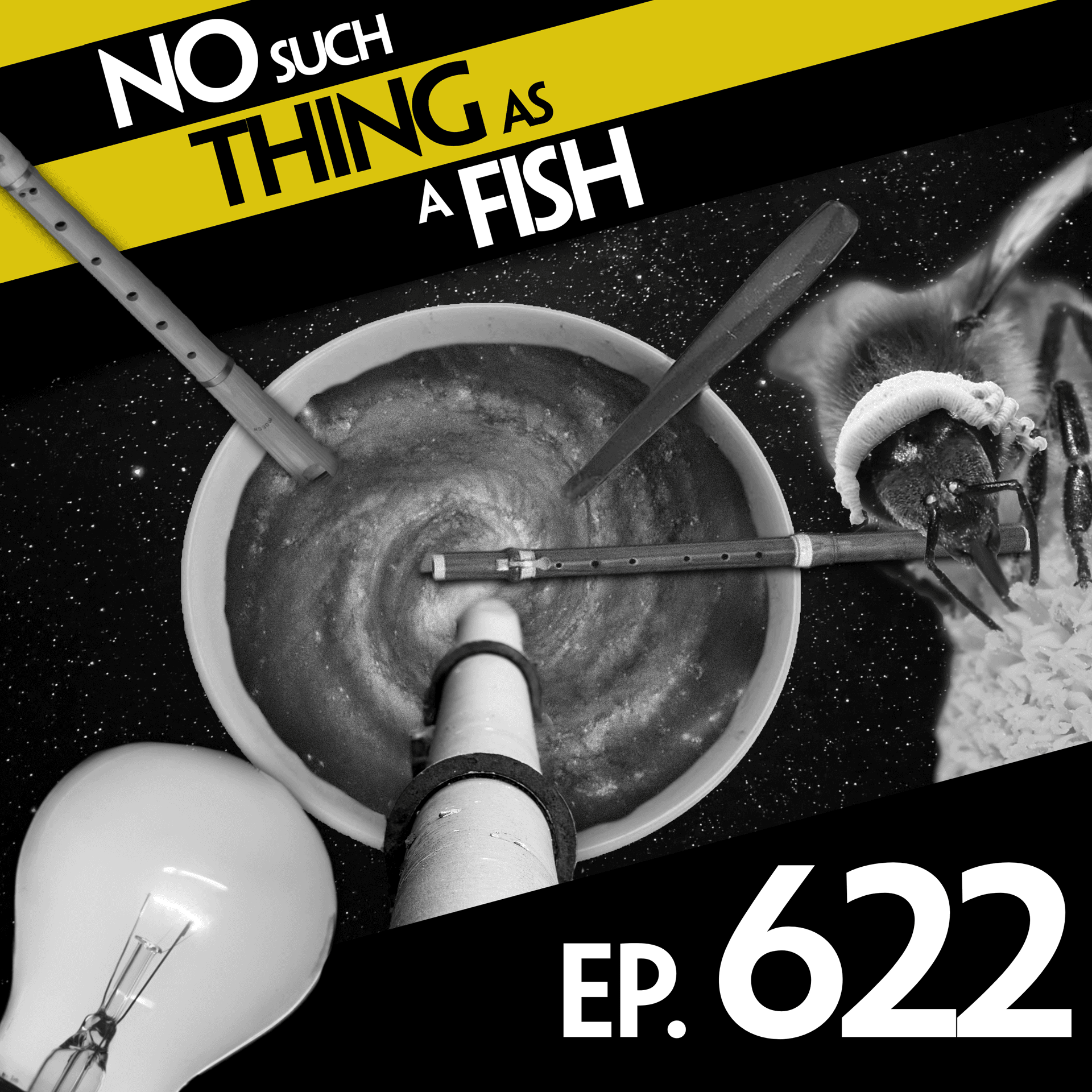
- Fact: In 1988, Kellogg's recalled 30 million "cool flutes" due to safety hazards (choking risk).
- Discussion:
- The nostalgia surrounding cereal box toys.
- The evolution of cereal toys and their impact on marketing.
- Children eagerly anticipating toys from cereal boxes as a significant part of breakfast culture.
- Mention of the Brazil nut effect in reference to the toy distribution in cereal boxes.
- Fact 2: Harlow Shapley and the Universe
- Fact: Harvard astronomer Harlow Shapley initially claimed the Milky Way was the only galaxy. He later realized his error and mapped 76,000 galaxies.
- Discussion:
- The evolution of astronomical understanding and the significance of Edwin Hubble's contributions.
- The Great Debate between Shapley and Curtis about the nature of galaxies and the universe.
- The metaphorical "letter that destroyed Shapley’s universe."
- Fact 3: Geothermal Energy
- Fact: The first geothermal power station powered five light bulbs in 1904 in Tuscany.
- Discussion:
- Explanation of how geothermal energy harnesses heat from the Earth.
- The historical and modern significance of geothermal energy.
- Comparisons to other energy sources and discussions on its potential benefits over fossil fuels.
- Mention of enhanced geothermal systems and the use of AI to locate geothermal resources.
- Fact 4: Environmental Rights of Bees
- Fact: In parts of Peru, stingless bees have legal rights and can be represented in court.
- Discussion:
- The impact of environmental degradation on bee populations and indigenous rights.
- The practice of suing on behalf of bees to protect their habitats.
- Interesting facts about stingless bees, including their ability to bite and the uniqueness of their honey storage.
- Additional Notes and Fun Facts
- Mention of various humorous anecdotes related to cereal promotions and unusual facts about space.
- Discussion of quirky inventions like the Johnson Thermoelectric Energy Converter, highlighting the intersection of science and innovation.
Key Takeaways
- The podcast blends humor and information, making complex topics accessible and engaging.
- It highlights the importance of curiosity, environmental awareness, and scientific advancement.
- Each fact serves as a springboard for deeper discussions about history, culture, and technology.
Conclusion
- The episode showcases the charm and wit of the hosts while educating listeners on a variety of diverse topics.
- Encouragement to explore further through the guests' suggested platforms and engage with the podcast community.
Links
- [No Such Thing As A Fish Website](http://nosuchthingasafish.com)
- [Support on Patreon](http://nosuchthingasafish.com/patreon)
- Maddie Moate's YouTube Channel: [Maddie Moate](http://youtube.com/maddiemoate)
---
This structured summary encapsulates the episode's content, ensuring that readers can grasp the essence of the discussion while being encouraged to dive deeper into the topics covered.
Written by AI. May contain mistakes. Listen to the episode to check what was said.
Chapters
Tap a time to open that second in VOThe 30 Million Flute Recall
2:03 to 4:21
Discussion about the 1988 recall of 30 million flutes by Kellogg's and related collectibles.
“Hello and welcome to another episode of No Such Thing as a Fish, a weekly podcast coming to you from the QI offices in Hoburn.”
Cereal Box Toys and Their History
4:21 to 6:45
Exploring the history and types of collectible toys found in cereal boxes.
“You know what they could have done with those flutes?”
Radioactive Toys in Cereal Boxes
6:45 to 9:21
Revelation about radioactive toys included in cereal boxes during the atomic age.
“Well, so I remember a colour-changing spoon that I got in Cocoa Pops.”
Changes in Cereal Promotions
9:21 to 13:20
Discussion on the decline of cereal box toys and new types of promotions.
“I read this about this on Snopes, the website, and they said that there wasn't enough in it to do you any harm.”
Voice Actors Behind Cereal Characters
13:20 to 14:01
Maddie shares insights about voice actors for iconic cereal characters.
“Can I tell you guys something about a friend of the podcast?”
Voices of Iconic Characters
14:01 to 15:44
Exploration of the world of famous voice actors and their characters.
“So there could have been a world where we all had on our counter.”
Harlow Shapley's Revelation
17:01 to 18:38
Discussion about Harlow Shapley's realization of multiple galaxies and its impact.
“Okay, it is time for fact number two, and that is my fact.”
Science and Debate
18:38 to 22:45
The great debate in astronomy between Shapley and Curtis regarding the universe.
“The centre of our galaxy is within the Sagittarius constellation.”
Shapley’s Impact and Legacy
22:45 to 27:20
Exploring Harlow Shapley's contributions to science and his humanitarian efforts.
“And they reckon he saved at least a thousand families.”
The Expanding Universe
27:20 to 28:00
How discoveries in astronomy expanded our understanding of the universe.
“We should acknowledge as well a quick shout out to Henrietta Swan-Levitt, who was known as the human computer and at one point also worked at Harvard University's observatory many, many years before Shapley got there.”
Show all 24 chapters
The Misunderstood Pulsar Stars
28:00 to 28:50
Explore the challenges of measuring distances in space and the implications for life around pulsar stars.
“I've got a room at the moment with a bulb, which is dodgy, and you can't be in that room.”
Expanding Our Universe Understanding
28:51 to 30:19
Learn how historical figures like Ptolemy, Newton, and Hubble reshaped our understanding of the universe's size.
“So we start with Ptolemy all the way back in ancient times.”
James Webb's Universe Breakers
30:20 to 31:03
Discover the surprising findings of the James Webb Space Telescope and its implications for galaxy formation.
“We just don't know how it's going to be.”
The Birth of Geothermal Energy
31:21 to 32:58
Understand how the first geothermal power station operated and its ongoing relevance today.
“Some sources say four, but I prefer to, I'm backing it.”
Geothermal Developments in Italy
32:59 to 34:39
Explore the geothermal potential in Italy and its historical context with reference to volcanic activity.
“factory that is producing yeah geothermal energy that devil's valley was the landscape that inspired Dante to make hell in Divine Comedy.”
The Romans and Underfloor Heating
34:40 to 36:49
Learn about the history of underfloor heating and its origins in Ancient Rome.
“They also have the, they grow more bananas in glass houses in Iceland than they do anywhere else.”
Modern Geothermal Challenges
36:50 to 39:40
Discuss the current challenges and advantages of geothermal energy use, including new technologies.
“You can afford it Andy It's such a pain in the bum to put in Why didn't they put it into my home Whenever they were building it What's going on?”
Innovations in Geothermal Energy
39:41 to 42:01
Explore cutting-edge technologies in geothermal energy, including the use of hydrogen and solid-state devices.
“unless it's like industrial heat for a factory is actually pretty low.”
Geothermal Energy and the Super Soaker
42:01 to 42:50
Learn about innovative applications of geothermal energy and its inventor's unexpected connection to the Super Soaker.
“The difference in those two inventions is like the equivalent of Einstein doing E equals MC squared.”
Suing Bees in Peru
42:51 to 43:54
Discover the unique legal rights of stingless bees in Peru and what it means for environmental protection.
“Okay, my fact this week is that in Peru, you can be sued by a bee.”
Understanding Stingless Bees
43:55 to 45:54
Explore the fascinating characteristics and behavior of stingless bees, including their surprising stinging abilities.
“But also, can you sue a single bee or does it have to be the colony?”
Beekeeping Tales and Honey Harvesting
45:55 to 49:08
Delve into the world of beekeeping, honey harvesting methods, and the differences between stingless and European bees.
“So less at the moment because it's January.”
The Social Structure of Bees
49:09 to 50:38
Learn about the roles of male and female bees within a hive and the lifecycle dynamics that influence their society.
“they use it for that, like we would with honey, I suppose.”
Animal Rights and Legal Cases
50:39 to 53:06
Examine notable legal cases involving animals and the peculiarities of animal rights in various contexts.
“It's their responsibility to take out the dead.”
Transcript
Automatic transcript. May contain errors.0:02Maddie Moate:Hi everyone, welcome to this week's episode of No Such Thing As A Fish, where we were joined by the brilliant Maddie Moate. Now, if you have children of a certain age, then you will know exactly who Maddie is. She is often seen on the BBC doing various kids shows, especially ones related to science communication. but if you want to know more about her having heard her today on this show and i'm absolutely certain you will then the best thing to do is to go to her youtube channel so maddie's youtube channel is all about curiosity it's all about animals about plants it's about travel it's about technology she is really right up our street she loves everything about knowledge and her videos are absolutely fantastic and if you want to find them then go to youtube.com slash maddie moat That's M-A-D-I-E-M-O-A-T-E or just search for Maddie's name on the internet.
0:56Maddie Moate:If you'd like to learn more about us and what we're up to at the moment and in the future, then the best place probably at the moment is to go to Patreon. So if you go to patreon.com slash no such thing as a fish, you can sign up there. You don't have to pay anything if you sign up. It is a place to get little free bits of pieces here and there and learn about what's going on. And then, of course, on top of that, we do have our various tiers if you want to support the podcast financially. And in return for doing so, you will get all sorts of amazing things from ad-free episodes on our lowest tier all the way up to live internet quizzes and merch at our very top tier.
1:33Maddie Moate:Anyway, there's loads to see there, so just go to patreon.com slash notionsthingsafish to find out more. But in the meantime, really hope you enjoy this show with the fantastic Maddie Moat. On with the podcast.
2:03James Harkin:Hello and welcome to another episode of No Such Thing as a Fish, a weekly podcast coming to you from the QI offices in Hoburn. My name is Dan Schreiber. I'm sitting here with Andrew Hunter Murray, James Harkin, and Maddie Moat. And once again, we have gathered around the microphones with our four favorite facts from the last seven days. And in no particular order, here we go. Starting with fact number one, and that is Maddie.
2:27Andy Murray:Okay, so I thought I could pose this fact as a question, sort of a bit of a guessing game. So the fact is, in 1988, one particular company had to recall 30 million flutes. That is obviously... It's a lot of instruments. Yeah. So the question is, who is this company? Flute makers. Flute makers. Obviously.
2:53Maddie Moate:Flute makers. They didn't put all the holes in.
2:56Andy Murray:They didn't? Okay.
2:57James Harkin:Oh, good call. It's a holeless flute. It's just a stick, really.
3:00Dan Schreiber:I was thinking too many holes. Can you have too many holes in a flute? Definitely. Can you? Absolutely. I think so. I think it becomes a different instrument. It's only a better flute up to a point. Yeah, yeah, yeah. I think so. You need to put your hands over the holes, don't you?
3:16James Harkin:Yeah, yeah, yeah.
3:17Andy Murray:You'd run out of fingers.
3:18James Harkin:Oh, but if you had a spare set of hands, like a pantomime flute, you know, there's someone running the lower bit of the flute. A double flute.
3:25Andy Murray:Is that not a flute that go in both directions?
3:28James Harkin:Like Darth Maul's lightsaber.
3:32James Harkin:I feel we've stepped away from this question here.
3:34Andy Murray:To help you out, these flutes were actually branded cool flutes. So I don't know if that has anything to do with how many... For kids? For kids, yeah. Yeah, well, for younger people. And actually, it wasn't just flutes that were recalled, but also binoculars that were little cardboard boxes with plastic lenses. They were recalled at the same time.
3:51James Harkin:Okay. McDonald's.
3:52Andy Murray:I think you're on the right track.
3:53James Harkin:Okay.
3:54Dan Schreiber:Burger King.
3:57Andy Murray:Sorry.
3:58Dan Schreiber:You used to get toys and cereal.
4:00Andy Murray:Absolutely. So there you go. Bingo. So these cool flutes, they were actually found in boxes of corn pops and they were recalled by Kellogg's cereal. So it turns out these cool flutes, they were made up of two little tubes that sort of went into a mouthpiece and these tubes, they could fall out and they were a choking hazard. So they had to recall 30 million of them.
4:22Maddie Moate:You know what they could have done with those flutes? More holes.
4:25Andy Murray:So the reason I was looking at this in the first place is because I've been, I guess, fairly interested in just this whole world of collectible toys recently because it feels like we're getting a bit of a resurgence. The idea of blind boxes, toy collectibles is coming back. And I was thinking, so, you know, what was my equivalent when I was younger? and that for me was cereal box toys. But then I sort of decided looking at the history of cereal box toys and the toys were kind of fascinating. Like, do you remember ever, do you remember any particular toys?
4:54Maddie Moate:I think maybe my earliest ever memory is getting some Ghostbusters stickers from out of a cereal. Yeah. When the film came out. Wow.
5:03James Harkin:It was like early 80s, right?
5:04Dan Schreiber:Yeah. I don't think I was allowed to get the kind of cereals which came with toys in them. No, they didn't have them in Old Brand, did they? Yeah. they just give you a little leaflet about your mortgage. And that's the fun for you to read.
5:18James Harkin:You start with like Weetabix.
5:20Andy Murray:What about you, Dan? Do you remember getting any?
5:22James Harkin:I remember the whole enjoyment and excitement of getting them. And right now I'm drawing a blank on the exact toys.
5:28Dan Schreiber:But I do remember like quite often they were within the pack itself. You had to open up the plastic and you had to go through the fruit loops.
5:35James Harkin:And a lot of families had a policy that you had to wait till it fell out during a pour. As opposed to just getting right in and grabbing it.
5:42Andy Murray:Totally. It was whoever poured it into their bowl. That was the unwritten rule.
5:46Maddie Moate:Because Andy, you're an only child, aren't you? So you wouldn't have had this issue. But obviously, if you've got three or four kids and you've only got one toy in a pack. Yeah. Right.
5:56Dan Schreiber:Yeah, but I think that's fair enough, the pouring out thing. You're not allowed to plunge your hand into the Christmas pudding to pull out the six bits, are you? That's not allowed.
6:04Maddie Moate:Again, more insights into Andy's childhood. like one really interesting thing is the people who made them had to make them a certain weight and that is because of something called the brazil nut effect that if you get lots of things that different sizes and different weights and you jiggle them around eventually the bigger things will end up at the top and the smaller things will end up at the bottom okay and this is something that's you see this in all sorts of places even like in avalanches like the big bits of snow will at the top and the small bits at the bottom. But they had this specific size and weight of these toys so that they knew that if they were jiggled around in transport, the toy would always be kind of in the middle.
6:41Maddie Moate:Oh, that is incredible.
6:44Andy Murray:I didn't know that.
6:45James Harkin:Yes. What was yours? You haven't given us yours.
Read the full transcript
6:47Andy Murray:Well, so I remember a colour-changing spoon that I got in Cocoa Pops. Did you? Your favourite. Yeah, so when it would go into the cold milk, it would change colour. Oh, my God. But actually, one of those, looking at the various toys there have been over the years, It very much started out as China cereal bowls that you would have to send off by collecting tokens on the back of boxes. Then Kellogg's sort of saw that they were doing this with Quaker Oats and Kellogg's were like, we can get on the back of this. So they started making these farmyard storybooks with various flaps that you could make funny animals out of.
7:19Andy Murray:And then that sort of like started the spiral of, OK, well, what else? What toys can we put inside the packets? and actually this was sort of I guess it became extremely popular after the second world war so we're sort of looking at the atomic age so a lot of early cereal box toys are radioactive? Literally yes. No. What? Genuinely
7:40Dan Schreiber:but genuinely radioactive
7:43Andy Murray:toys were placed inside cereal boxes.
7:46Dan Schreiber:Well then you know where it is in the packet because you can see the glow.
7:49Maddie Moate:When I was a kid there was adverts if you went readybreck you would always have a glow around your whole body. I didn't realise it was a radioactive glow.
7:57Andy Murray:I remember if you had too much sunny delight, you sort of glowed orange, but that was a completely different thing. We're all showing our age here. Yeah, yeah, totally. But this toy, it was called the Lone Ranger Atomic Bomb Ring, genuinely, and you would get this inside Kix cereal, which you could get for 15 cents. This is in the US. Wow. It was a gold adjustable ring. There was a little removable cap at the back, a little red cap that you could take off, and that's where you could hide secret messages. but then it contained something called, now I think I'm saying this right, but a spintheroscope.
8:28Andy Murray:I don't know if anyone's heard of that before. It's basically a little device that would contain a small amount of radioactive material. So in this case, it's something called polonium-210.
8:37Dan Schreiber:I've heard of polonium. There we go, polonium. Yeah, normally polonium's been deployed on the streets of London, not free polonium in your city. What?
8:45Andy Murray:So this was radioactive material discovered by Marie Curie. Tiny small amounts of it were placed inside this ring And then you would look into the atomic bomb through a little sort of lens that contains zinc sulfide. And as the polonium was decaying, obviously you've got alpha particles that are shedding. They're hitting the zinc sulfide screen, creating little flashes. So the idea is your child could look inside the ring and actually see the scintillations of this radioactive material.
9:12James Harkin:Yet it's the flute we recall.
9:14Andy Murray:Because it had choking pieces, yet this ring could be sort of taken apart with small caps and things. And apparently that's fine. That's extraordinary.
9:22Maddie Moate:I read this about this on Snopes, the website, and they said that there wasn't enough in it to do you any harm. Right.
9:29Dan Schreiber:Can I tell you guys my favorite cereal promotion ever? Please do. Oh, yeah, we all have one. It's done by Quaker Oats. Okay. It's 1954. They bought 19 acres of land in Yukon, in the Yukon Territory, Gold Rush Country in Canada, and they divided up these 19 acres into 21 million square inches. Right. And they printed 21 million property deeds, each one for one square inch. And if you sent in a box top, you would be sent a square inch of the Yukon. Wow. What?
10:05James Harkin:How interesting. When was this, Sandy?
10:07Dan Schreiber:1954. Okay. It was not legally binding. Oh, really? What does that mean?
10:12Andy Murray:Could you go along and dig in that tiny little patch? Yeah.
10:16Dan Schreiber:It's gold.
10:17Andy Murray:With like a tin with your teaspoon. that you got in a cereal box. Yeah.
10:21Dan Schreiber:One boy who got one sent in four toothpicks and some string and he said, can you fence my inch off, please?
10:26James Harkin:Oh, no. That's amazing.
10:29Maddie Moate:That's really cute. People do collect these toys still, don't they? I went onto eBay to see what kind of things I could buy from cereal packets. Yeah, I did too. Okay, what have we found? Maddie, what have you found?
10:41Andy Murray:Well, actually, it was the ring, the atomic bomb ring. I found with the box was going for$645. The box makes a difference, doesn't it? Huge difference.
10:51Maddie Moate:And it's not like, you know, if you buy like a Marvel superhero figurine or something, it has to be inside the box. You just have the box next to it flattened with the toy next to it. Oh, is that still okay? So it doesn't have to be inside the box or anything.
11:04Dan Schreiber:Oh, God.
11:04Maddie Moate:I found one which was some cause monsters from Frankenberry cereal in America, and they were£1 ,700. Wow. Wow.
11:15Andy Murray:I didn't see anything that value. It feels like a lot.
11:18Maddie Moate:Frankenberry Do you know Frankenberry Have you come across them Was it the 90s I think In America they had them And they were a bit like What are those cereals That have little marshmallows in That have like got leprechauns Lucky charms Yeah yeah So it was like that But it was monsters And the marshmallows Were like pink and purple and stuff And the kids were eating it And this dye would go Straight through them And come out of the toilet And it looked like You know I've had this When my daughter eats beetroot And I'm like To my wife Polina, Polina, we need to go to a wedding. No, she had beetroot yesterday.
11:50Maddie Moate:But like it would come out and they had a thing called Frankenberry Stool that was in like medical papers saying that this is, it looked like people had blood in their poo.
11:59Dan Schreiber:Was this one of the cereals that was basically 95 % of sugar? Yes. With some like...
12:06Maddie Moate:I don't want to say because I think they might still be extant,
12:08Dan Schreiber:but yeah, I think there was a lot of sugar in them. Yeah.
12:11Maddie Moate:But the interesting thing about that is, so cereals, Kellogg's, Like the Kellogg's brothers, they had a sanitarium in North America somewhere. Battle Creek. Battle Creek, that's it. And there were two brothers. And one of the brothers decided we're going to start putting sugar in it in order to attract younger people to eat it and not just be a health food. And they really fell out over that. And they properly fell out.
12:33Andy Murray:But ultimately, it was the fact that these were sugary cereals, which is why we stopped getting cereal box toys. There were many factors, but one of them was the fact that these were slightly less nutritious foods. I think there was a pledge, it was a voluntary pledge, which included the likes of General Mills and Kellogg's. They got together and they said, hey, you know what? It's not right for us to push less nutritious foods at children, which is why they started taking toys away. Although at first they removed toys for children, but that's when they started putting in things like pedometers and reflective bike stickers.
13:09Andy Murray:So they didn't sort of remove them. And he's in.
13:12Dan Schreiber:Tell me more.
13:16Andy Murray:But yeah, so that was kind of their attempt to be like, okay, we're not putting toys in them, but we can put sports-related gifts in.
13:23Dan Schreiber:Can I tell you guys something about a friend of the podcast? Yes. So Henry Perky, you guys might remember. Yeah. Inventor of shredded wheat. Oh, yeah. And father of the man who then invented round shredded wheat.
13:35Andy Murray:Okay.
13:36Dan Schreiber:Very much a Nipo cereal, wasn't it? Absolutely.
13:39Andy Murray:I thought it was knitted by grannies. I can't believe it.
13:43Dan Schreiber:Myth busted. But his initial intention was not making shredded wheats to sell them to people. He wanted everyone to buy shredded wheat making machines. This was his big thing. He created a machine which shredded wheat. And then people just said, can we have some more of the shredded wheat, please? He said, don't you want the machine that makes it? So there could have been a world where we all had on our counter. Like a soda stream.
14:06Maddie Moate:Yeah, exactly.
14:07James Harkin:Or an air fryer. I have a slightly random question for you, Maddie. So when I first moved to Australia when I was 12, I became starstruck when I met the voice of the Australian Cocoa Pop monkey.
14:18Andy Murray:I know the British one.
14:20James Harkin:Well, this is what I was going to ask. You must know all of these people because of what you do. The world of voices for these iconic characters.
14:28Andy Murray:This is so bizarre that you've asked me this, because genuinely one of my best friends is the voice of the Cocoa Pops monkey. No, I'm not even kidding. Oh my gosh. Genuinely, yeah. Wow. Yeah, he does really well from it. But, you know, the Coco Pops monkey doesn't talk so much anymore. So as far as I'm aware, you know, every couple of years they'll say, hey, can you come to the recording booth? And he'll just have to record a giggle.
14:51Maddie Moate:Yeah, I was going to say, I don't think I would recognise his voice anymore.
14:54Dan Schreiber:No, Tony the Tiger is the one I would think of. I would recognise, if he was in the room next door,
14:58Maddie Moate:if I was in a restaurant and Tony the Tiger was at the next table.
15:01Dan Schreiber:You'd ask to be moved.
15:02Maddie Moate:No, I would recognise it was him. You know what I mean?
15:06Dan Schreiber:Guy, he thinks everything's great. My soup is not great.
15:13Dan Schreiber:But yeah.
15:14Andy Murray:As far as I know, in his many years of being the voice of the Coco Pops monkey, Coco, I don't think the monkey talks much. Chocolaty goodness, something about 10 to the milk, chocolatey. Was that it?
15:26James Harkin:I think that was kind of the catchphrase.
15:28Dan Schreiber:That was a song when they briefly and ill-fatedly changed their name to Choco Crispies and then realised too late it didn't scan. I'd rather have a bowl of Choco Crispies.
15:43Maddie Moate:stop the podcast stop the podcast hola and the buenos dias because this week we are sponsored
15:51Dan Schreiber:by babble seve ray seve ray we are sponsored by babble the language learning app it is a fantastic way of learning a language in a way that suits you it makes it fun it gives you real results
16:04Maddie Moate:yeah they have bite-sized lessons you can fit them easily into your daily routine and it's just 10 minutes a day really and you start getting real results i've just come back from spain and honestly i was chewing the ear off those spaniards james you were golfing in spain yes do you have any golf lingo well i just want to say that as i walked in you asked me did i get a hole in juan yeah which was a very good joke thank you thank you i was mostly teeing myself up for that. Anyway. Well, here is a special limited time deal for our listeners. Right now, you can get up to 60 % of your Babbel subscription at babbel.com forward slash fish.
16:47Dan Schreiber:That is right. Babbel.com forward slash fish. Get 60 % off. However you like learning, you can make fast lasting progress with Babbel. It's terrific. And they've got lots of languages is to choose from.
16:59Maddie Moate:Rules and restrictions may apply. On with the podcast. On with the show.
17:07James Harkin:Okay, it is time for fact number two, and that is my fact. My fact this week is that after years of publicly arguing that the Milky Way is the only galaxy in the universe, one of Harvard University's head astronomers realised that actually he was wrong, and then went on to map 76 ,000 galaxies.
17:25Maddie Moate:This is so awkward. Who was he?
17:29James Harkin:His name was Harlow Shapley. He lived 1885 to 1972, American astronomer, and he served as the head of the Harvard College Observatory. Now, what's amazing is up until the 1920s, most astronomers believed that our galaxy was the single galaxy in the universe. And that was it. If we were expanding, it would have been into that. You know, that was the idea of the time. So suddenly a few scientists started coming up saying actually I think it might be a bit bigger One of whom was Edwin Hubble And Shapley really thought that this was junk science He took part in a debate with a man called Curtis where they both presented their findings to say whether or not It was the case and he and he stuck with it And so it wasn't until Hubble eventually showed him proof by sending him a letter of something that he discovered that he then said, this has completely destroyed my universe and accepted it, which is the wonderful thing about science.
18:22James Harkin:It's not opinion. If the facts are in front of you, you can go on to map 76 ,000 galaxies. That's quite nice.
18:29Andy Murray:That is such a good quote as well. This is the letter that destroyed my universe, quite literally and in many, many ways. I love that.
18:36Maddie Moate:Yeah. It's really cool. This debate they had is known as the great debate between Shapley and Curtis. and basically curtis thought that there was extra galaxies and shapley thought that there was only one galaxy but that we weren't in the middle of it we were kind of on the side of it and curtis thought that we were in the middle of our galaxy and it turned out they were both wrong but both right at the same time which again is quite good about science it's like you might be right you might be wrong or more likely you might be kind of right in some ways and wrong in some ways yeah
19:06Dan Schreiber:Because we're not in the middle of our galaxy, we're on an arm, right? We're on an outer tentacle.
19:12James Harkin:Of the giant great octopus.
19:16Andy Murray:The centre of our galaxy is within the Sagittarius constellation. And actually, it's the part of the Sagittarius constellation, I think it's the five brightest stars, that make up the shape of a teapot. So actually, the centre of our galaxy, the Milky Way, is just above the spout of a teapot. I know, a little teapot.
19:34James Harkin:Giant British flag at the center of the galaxy.
19:37Andy Murray:He's very British. So it was Edwin Hubble that basically proved Shapley that he was wrong. But this isn't the first time that Edwin Hubble has proved somebody wrong. Oh, really? In fact, he also proved Einstein wrong at one point as well. Back then, Albert Einstein was looking at his calculations of space and going, this doesn't really quite make sense because if gravity is such a big, important thing, then surely everything should be coming towards each other. Surely the galaxy should be shrinking. So to make sense of the maths, he introduced this thing called a constant, a cosmological constant, which is just from now on, space is static.
20:13Andy Murray:I say it's still because that's what makes sense. And then Hubble came along and was like, oh, really sorry. But actually, look at this. Here's my proof. We now know about looking at the way light moves and looking at redshift. I can tell you that the universe is, in fact, expanding. So I'm sorry, you're wrong. and Einstein said yeah that was probably my greatest blunder. Hubble knocks him down doesn't he?
20:35Dan Schreiber:Yeah. Hubble didn't have a funeral. His wife wouldn't tell anyone what had happened to him. I just find this mysterious.
20:43James Harkin:But we know how he died right? Like it wasn't a mysterious death and she was just like
20:48Dan Schreiber:I don't but I know that he died. I think yeah
20:49James Harkin:I think probably he died normally and then she just didn't tell us the location.
20:54Maddie Moate:What Dan's saying is we're not saying there's anything nefarious going on with his wife.
20:58James Harkin:Yeah. I'm not saying there isn't though. Are you? Oh Well I'm just not
21:01Maddie Moate:Reopening this cold case
21:02Dan Schreiber:I'm saying we don't know And that's That's actually the scientific method To just say we don't know And then hope someone else Does the work No he didn't have a funeral And his wife refused to say Either where he was buried Or whether his ashes Had been scattered Or where Or anything like that It was just an intensely And he was making
21:17Maddie Moate:He was making lots of enemies Of scientists By proving them wrong every day Exactly Yeah Exactly There's nowhere to visit
21:23Andy Murray:But I guess he does have A fairly big telescope Or you know Like an observatory up there Now that we can all Remember him by
21:29James Harkin:That's true Yes, you're right.
21:30Dan Schreiber:He didn't start out as a scientist. He started out thanks to family pressure studying law. Because his family told him, there's no future in this science thing. And then he spent a year teaching high school physics, which I love. Imagine if Mr. Hubble was your physics teacher. It was pretty cool. And basketball as well. He was very nifty on the basketball court. Not just nifty.
21:51James Harkin:He was a major basketball player for his college. And a lot of people said he could have become a professional in a couple of different sports. So he had that little decision to make. One of those guys. Good at everything. Shapley also had an interesting beginning because he was an incredibly clever kid. He advanced in his school years. You know, those kids that you hear that graduate, you know, their high school when they're like nine. He was that kind of kid. And he didn't know what he wanted to study. And he decided, I'm going to just study and do in life what I see first on the list, the alphabetical list of subjects for college.
22:26James Harkin:So he became an acrobat Yeah but only because Aardvark studies were full
22:31Maddie Moate:Yeah he said
22:34James Harkin:He rejected archaeology Because he couldn't pronounce it properly So he picked astronomy It's probably a nice mythology he's created for himself
22:41Maddie Moate:But that's his claim In the 40s He rescued lots of his colleagues From the Nazis So lots of scientists in Germany Especially Jewish ones were being Victimised and he got them out of there and brought them over to America and sort of signed, said, oh, they're going to be really important for our universities, so I'm going to get them out here. And they reckon he saved at least a thousand families. That was Shapley? That was Shapley. And he said that the stars will not be of much good to us if we do not preserve the minds with which to comprehend them. And then after that, he was accused of being a communist.
23:21Maddie Moate:And that's because in those days, you could be accused of being a premature anti-fascist uh if you if you like you were allowed to not like this never happens i swear so the idea is like you if you didn't like the fascists in 1945 that was fine but if you didn't like them in the 30s that was dodgy in america because they were still
23:45Dan Schreiber:the idea was that hitler was the one who saved germany from communism generally speaking in
23:49Maddie Moate:america people were not massively anti the nazis until the war yeah and so if you could be seen to be anti them before the war people thought you're a communist oh isn't that amazing so you had a
24:00Dan Schreiber:narrow window to say you know what i'm not sure about these guys i hear about this
24:07Maddie Moate:but yeah he appeared before the un-american activities committee the mccarthy committee
24:13James Harkin:gosh but yeah really interesting guy yeah that's fascinating so the the star that uh was spotted by hubble is arguably the second most important star in the universe so is this the one that proved that yeah right yeah it's called v1 and it's located in the andromeda nebula it's 2.2 million light years away and it has one one hundredth of the brightness of the faintest star that is visible to our naked eye. Right. And I've read that it's often used as a marker for when you're judging other galaxies now because you need a marker point to go where is further and where is not.
24:51Andy Murray:So because it's a little bit dimmer, they can go, that is definitely really far away. Way, way further away than anything that could be within our galaxy.
24:59James Harkin:Exactly. Yeah. It's pretty amazing.
25:01Maddie Moate:Kind of just about see the Andromeda galaxy with a naked eye. If you really, really, really look, it just looks like a smudge if it's really dark. Right. They thought it was a star for a long time, and then it was only, of course, when they got these really good telescopes, you could tell that it was a group of stars.
25:14Dan Schreiber:That's quite a close galaxy, I presume. Closest, I think, is it?
25:18Maddie Moate:Not sure. Maybe. It's one of our closest. I think one day the Andromeda is going to crash into ours. You don't need to worry about it, because it'll be like in millions and millions and millions of years.
25:27James Harkin:Yeah, but I've also read that if two galaxies are going to crash into each other, the size of galaxies would mean that you would just pass through each other and not notice. What? Oh, that's cool. Yeah, the space in between each place in a galaxy is so great. It's possible.
25:40Andy Murray:Surely there'd be some collisions with all just the stuff floating about.
25:43Maddie Moate:What's more likely, I think, is that the gravity would pull them kind of together and they would join the mass of the stars.
25:50Dan Schreiber:There'll be some dents in the fender, I'm sure, at the end of the process.
25:53Maddie Moate:Yes. 50 billion of the stars in our galaxy now, they arrived here 8 billion years ago when our galaxy collided with another galaxy called the Sausage Galaxy. Amazing I don't even know whether to believe you
26:10Andy Murray:It's true It's true
26:12Maddie Moate:It's sometimes Some spoil spots Sometimes call it the Gaia Enceladus galaxy But definitely in some places It's called the Sausage Galaxy And it collided with ours And we got a lot of stars from it Sausage and tea pod
26:24Dan Schreiber:Is basically what we're talking about It's an English breakfast
26:27James Harkin:Is this one giant full English That we're living in
26:32Andy Murray:But on the sausage front I do think some astronauts have reported just generally space to smell a little bit like barbecue. Oh, really? Yeah, because when they've come back in after a spacewalk, they've noticed the scent of barbecue on their spacesuits. Wow. But also in terms of what does space smell like, if we actually look at the Milky Way, so our galaxy, there is an area within the Milky Way. Got this giant cloud of gas and dust. It's a star-forming region. And they discovered there it was packed full of this chemical known as ethyl formate, which is responsible for giving both raspberries and rum their flavor.
27:09Andy Murray:So not only do we have the teapot and sausages, we also have rum and raspberry as well. And milk.
27:15James Harkin:And milk for the tea, the milky way. Of course. How exciting. We should acknowledge as well a quick shout out to Henrietta Swan-Levitt, who was known as the human computer and at one point also worked at Harvard University's observatory many, many years before Shapley got there. She's the person who worked out a thing about the rate of pulses coming out of a star, which was then used by Hubble. Oh, I see.
27:44Andy Murray:So she kind of like came up with the standard of this is how you can work out how far away a star is by measuring the luminosity of its pulses.
27:51Maddie Moate:Now you measure luminosity in crabs, I think, which is the crab nebula has a certain luminosity and it's like is it brighter or less bright than the crab nebula so something seven crabs it's seven times brighter than the crab nebula is
28:08Andy Murray:this just a big like bar and grill restaurant outer space yeah i don't mind it we should start a themed restaurant because the menu is looking really really good i guess i mean i don't know But with these pulsars, with these stars and a pulsing, the Sefford stars that we're able to measure distance with, I'm assuming that they're very, very unlikely to have life around them because the light they're emitting is so unreliable.
28:32Dan Schreiber:I've got a room at the moment with a bulb, which is dodgy, and you can't be in that room. It's on one of the old dimmer switches, and we've put a new dimmer bulb in, and it's just an absolute nightmare to be in. I hate it. Yeah, yeah. So that makes sense to me. It's just frustrating.
28:47Andy Murray:Oh, that's really hot.
28:48Dan Schreiber:Oh, that's cold. Thank you, Professor.
28:50Maddie Moate:What I really like about this thing about Shapley and Hubble is they suddenly increased the size of the universe that we knew, right? So we start with Ptolemy all the way back in ancient times. And he thought that the entire universe was 20 ,000 times the Earth's radius.
29:08James Harkin:20 ,000. Okay.
29:09Maddie Moate:And he worked that out by saying, okay, well, the Earth is here in the middle. Everything goes around us. And then there's Mercury and Venus and the Sun and Mars and Jupiter. And then there's something else and something else. and eventually you get to the stars. And he had this nice little sort of nesting tables where everything goes and he worked that out. And then Newton comes along and says, okay, well, the stars don't seem to move much according to each other. So they don't have parallax, which is parallax is like if you put your thumb in front of your face and then close one eye and close the other, it seems to move.
29:43Maddie Moate:But if you do it with something far away, it moves much less. So he worked out with the stars, they're not doing that. so they must be really far away so that got the universe much much bigger and then a guy called Friedrich Bessel he managed to work out the parallax so there is slight parallax and worked out that the now the universe is light years in size and then we got this great debate we worked out that though there's more than one galaxy and then they found background radiation which meant that suddenly the universe is we don't know how big it is but the observable universe is as far as light could get to us from when the universe started.
30:19Maddie Moate:Yes.
30:19Dan Schreiber:And I've heard about... I just love how it kind of expands. It's really cool.
30:23Maddie Moate:How much further can it go? At some stage, it'll get bigger still. We just don't know how it's going to be. We don't know how, yeah. So cool.
30:28Dan Schreiber:Well, this is a thing. You know the new James Webb Space Telescope? Yeah. Very, very, very big telescope. Yeah. Launched into orbit for better views and things like that. And it has found six enormous ancient galaxies, which have been nicknamed the Universe Breakers. Cool. And I love this. And they shouldn't exist. right? Wow. There should only be from the point of where they are you know we know how long the light has taken to travel to us we know the rough age they are they should not have had time to form because they date to 500 million years after the Big Bang there should only be tiny baby galaxies there but they're very well developed.
31:03Maddie Moate:And please tell me they look like a hash brown.
31:07Andy Murray:We need it on the menu. Okay.
31:15Dan Schreiber:It is time for fact number three, and that is Andy. My fact is, the first ever geothermal power station powered five light bulbs.
31:25Maddie Moate:Wow. Amazing.
31:26Dan Schreiber:Some sources say four, but I prefer to, I'm backing it. I think it powers five. That's the source I found, yeah.
31:33Maddie Moate:The fifth one, it was a light bulb, but it kept going on and off, and it was really annoying.
31:38Dan Schreiber:I just have to turn it off after a while. Work in the dark. This was in 1904, and we're in Tuscany. Oh, lovely. Lovely. I love it when Andy paints a picture. Absolutely. Well, just hear those Tuscan local animals and flora and fauna. Glass of Montepulciano. Beautiful.
31:55Maddie Moate:Overlooking the Tower of Pisa. Probably.
31:59Andy Murray:There we are.
32:00Dan Schreiber:A lot of tourists kind of pretending to hold it up. And this is in an area called the Devil's Valley. So not the Tower of Pisa. But I suppose it's appropriate there was the Devil's Valley Because we're going underground into the warm. And this was where a guy called Prince Piero Gignori Conti lit up the first ever geothermal power station. So that is taking heat from underground, bringing it above ground. And there are various different ways you can harness the power. One of them is by directly using steam from underground to turn a turbine, which then spins up and generates electricity. There are lots of different methods of doing it, which I'm sure we'll get into.
32:43Dan Schreiber:but this first little experiment did four or five light bulbs it was just so tiny yeah but it's the cradle of geothermal which is now being talked of as a a big solution to lots of power shortages and a much much cleaner way of powering the world than fossils so there's a lot of renewed excitement
32:58James Harkin:about it and it's still going isn't it over 100 years later that exact spot they have a huge factory that is producing yeah geothermal energy that devil's valley was the landscape that inspired
33:08Maddie Moate:Dante to make hell in Divine Comedy. Really? So when he writes about hell, he's talking about that place. Oh my goodness. That's cool.
33:16Andy Murray:So not the picture I've seen or the painting for us at all. Not from. The opposite.
33:22Maddie Moate:But yeah, really amazing, this guy. Was he a prince? I read he was Prince of Trevignano. I think he was. I couldn't get to the bottom of that either.
33:29James Harkin:In some places it didn't mention it, and then other places suddenly Prince was attached to his name.
33:33Dan Schreiber:I think he was Naras de Kret. He was, I'm afraid, second mention for the fascists in this show He was mates with Mussolini
33:42Maddie Moate:Before or after it all went wrong
33:44Dan Schreiber:He was friends when it was fashionable in Italy To be friends with Mussolini I don't know what happened after the war
33:50Maddie Moate:Well I know what happened to Mussolini No I know But he was processing boric acid Yes Which sounds great Boric acid
34:00Andy Murray:From this particular area Yeah, exactly
34:02Maddie Moate:And then he realized that he could make electricity from it and then started this geothermal company afterwards, didn't he? Right.
34:10Andy Murray:I'm surprised this first happened in Tuscany, actually, because when I think of areas of geothermal activity, I immediately think of Iceland. That's kind of where I immediately go.
34:20Dan Schreiber:I think Italy is like a relatively big user of geothermal, despite like it's a tiny, tiny percentage of its power.
34:27Maddie Moate:They do have a few volcanoes there, don't they?
34:29Dan Schreiber:Oh, yeah. I suppose. yeah and basically that's the thing traditional geothermal relies on very specific conditions which is it's tectonic things lots of heat close to the surface so you don't need to drill down for miles and miles and miles so iceland is brilliant for it because it's got exactly that kenya is very good for it um iceland has installed underfloor heating outdoors nice outdoors like
34:52Andy Murray:under the roads yeah under the roads and pavements everything freezing over yeah it's got so much warm water just so close to the surface.
34:59Dan Schreiber:They just have, they're stunning.
35:00Andy Murray:That's very clever. They also have the, they grow more bananas in glass houses in Iceland than they do anywhere else. I know they don't, so they aren't growing bananas commercially to sell because they don't actually have enough light to sort of for the turnover of bananas to be good enough. But they do have a lot of geothermally heated greenhouses. So I think they can get enough heat going. I think the The greenhouses have to be around 20 degrees permanently to get the bananas to grow. But then to also be using the geothermal energy to provide enough light that the bananas would also need. It's just not commercially viable.
35:38Dan Schreiber:So there are like dark bananas that you can harvest in the eight month night or whatever.
35:45Andy Murray:They'll put a bit of light on, but I just don't think it's enough because they need so much light. But also tomatoes, various tropical fruits, algae. they've grown a lot of algae now using geothermal algae in Iceland scrape it off to get your spirulina superfood
36:01Dan Schreiber:in case you haven't picked it up already I've got a reputation as the guy on the show who likes the boring stuff
36:08Maddie Moate:which is slightly unfair
36:10Dan Schreiber:because we all like the boring stuff I really get excited don't I
36:15Maddie Moate:underfloor heating
36:16Dan Schreiber:invented by the Romans
36:18Maddie Moate:they had like your house or your villa would be maybe a few metres above the ground or a metre above the ground and then people would set fires or boil water underneath and that would get you warm. But they put geothermal underfloor heating in Bath, in the city of Bath in the UK. Because down there, there's quite a lot of hot springs and stuff. They could actually have, there's a few villas in Bath where you would get the geothermal stuff. It's amazing.
36:45Dan Schreiber:Isn't it incredible that ancient Rome, 2 ,000 years ago, has underfloor heating and yet I don't?
36:50James Harkin:Do you know what I mean? You can afford it Andy
36:54Dan Schreiber:It's such a pain in the bum to put in Why didn't they put it into my home Whenever they were building it What's going on?
37:01Maddie Moate:I think in the UK we don't necessarily need it that much Because we don't really get very hot Or very cold days
37:07James Harkin:I had it in my home in south east London When I lived there In our bathroom But as the builder was putting the final tile down He accidentally shredded one of the wires and it was too expensive to do anything about it. What do you mean? He drops it in one of those shredded wheat machines. Basically, he said that he did something to one of the wires and so it never worked. You're joking. So it's all there. It's all there. Just it never worked. So we technically had it.
37:37Dan Schreiber:And we would always think about it as we walked in. That must have been a big consolation as you walked in onto the freezing cold floor in the winter morning.
37:43James Harkin:We would tell people who visited, when we got under the floor heating, it doesn't work, but we have it. did you still pay him? yeah, I mean he was he's done the work he's done the work
37:53Andy Murray:he's a scary tradesman
37:55James Harkin:it's not his fault wires break wow
37:58Andy Murray:it does make me think though you know like if if someone in the past had made a slightly different decision would we be using geothermal energy more across the world because obviously there are some places where it makes sense to use it because it's easier to access but I guess if you if you drill down deep enough eventually you are going to tap into yeah yeah so why is it we're not using it more because it does make an awful lot of sense it's
38:22Dan Schreiber:just a pain to get down it's just a pain to drill it's an initial pain that's the problem it's very
38:26Maddie Moate:expensive to set up exactly and if you do it the old way where you're looking for quite a hot magma field yeah because like you say if you go deep enough anywhere you're going to get hot yeah what
38:37Andy Murray:they want to do is find somewhere that's not that deep sure and dig down and those places are really
38:41Maddie Moate:hard to find it's not like you know it's obvious because these trees grow there so it's going to be there yeah you just you basically have to keep digging until you find the right place yeah right and like there's recently they've used ai in nevada to find these zones where you can dig into and they don't really know how the ais found it they basically put in all the information of all the different zones around the world where you can get this easy geothermal energy and the ai models have just found the signal out of the noise it's just like they've worked out where it is even though they're not quite sure how they did it but it does work wow it's one good use of yeah and now they've got enough energy from the geothermal to pay for one ai question
39:26Dan Schreiber:as we said it's tricky to do everywhere because digging down is expensive and it's it's more economical if there's lots of heat close to the surface which is only true in a few places so there are lots of things being tried to get around this now one of them is just most heat you need unless it's like industrial heat for a factory is actually pretty low. And so that's these boreholes, the ground source heat pump thing. Like China's going gangbusters on that. And there are other kind of wacky versions of geothermal. There's enhanced, there's advanced, and there's super critical hot rock. Okay. I'm going to choose the last one.
40:00Dan Schreiber:That's a cool kind of rock music. That should be a genre.
40:04Andy Murray:Yeah, it should be.
40:06Dan Schreiber:So here's an idea that's being experimented with. you drill a couple of holes um you drill down a mile or two right uh two separate shafts right you then drill sideways between the shafts okay so you've joined them up you've made a sort of like a u-shape like a u-shape yeah exactly um then you pump water down hole one and you're pumping it towards hole number two yeah and you're sort of cracking the rocks along the way and the water is taking all the heat out of these rather hot rocks yeah and then the water is pumped out of a second well and it's at 200 degrees celsius how can it be at 200 degrees water
40:45Maddie Moate:boils at 100 degrees must be high pressure it's high pressure it's really high pressure
40:51Dan Schreiber:and you get this thing you get um super heated sort of super critical steam which can drive a turbine extremely well or you just use that heat to actually heat up other water which then drives the turbine like there are different methods of doing it um it's very very cool it's actually
41:07Maddie Moate:quite similar to fracking isn't it it is it's basically fracking so they use the technology that fracking did to get oil out but instead of doing that they put water in and heated it up exactly which is another reason why a lot of people aren't that happy about it because fracking can cause earthquakes yes right um so yeah but is it a better way to use fracking technology potentially undoubtedly yeah because you're getting it's a lot greener yeah it's much greener another way you can do it is instead of using water you might be able to use hydrogen and this is something called the johnson thermoelectric energy converter and the best thing about it is it's solid state so you put it into the water and it's just one object you put it in and then it gets electricity out of it and it was invented by a guy called lonnie johnson who also invented the super soaker isn't that amazing i thought i recognized that name yeah somewhere yeah it's very very at the moment they're not using it but it might be used in the future and it's this guy is um wants to use it in la where they have a lot of uh like old oil wells so they've already got the holes down there so you can just put stuff down there at the moment the temperature in those oil wells is too low and you can't really get much geothermal out but because this is so efficient you might be able to use it that's interesting yeah but anyway he invented the super soaker so I love that.
42:28James Harkin:The difference in those two inventions is like the equivalent of Einstein doing E equals MC squared. It's like, what's he going to do for his next equation? Viva's six afraid of seven.
42:39Andy Murray:Seven, eight, nine.
42:41James Harkin:That's that similarity. That's amazing.
42:48James Harkin:Okay, it's time for our final fact of the show, and that is James.
42:52Maddie Moate:Okay, my fact this week is that in Peru, you can be sued by a bee.
43:00Dan Schreiber:and he's got 20 million witnesses
43:06Maddie Moate:any type of bee uh not really no it's it has to be a stingless bee okay it has to be in um one of two parts of peru the town of sapito or the loretto department but they're both in the amazon and it turns out that these areas have stingless bees uh that are very very important to indigenous communities and they've been hurt by you know pollution climate change habitat loss all that kind of stuff and so these two areas of peru have given them rights and while the bee can't fill out the paperwork um a human can act on their behalf and so if like let's say a tree felling company comes into the amazon cuts down the load of habitat of these bees yeah then um a environmental company can go over and sue them right on behalf of the bees can i can i sue a bee
44:01James Harkin:yeah if they have rights in just those two places yeah why can't sting you they're stingless so i think the best they could do is give you a little nibble they can bite those bees can bite why are you gonna sue them i'm just trying to work out what this new right has given them as a flip side for money.
44:17Dan Schreiber:Dan's doing it for the payout.
44:20James Harkin:Sorry to cut through Dan.
44:22Andy Murray:Classic hive chaser. But also, can you sue a single bee or does it have to be the colony? I wonder if you can take up a personal grievance with A, B.
44:36Dan Schreiber:I think Rowan Atkinson's just made a very successful series about this, hasn't he? Oh, yes. Man vs. B. They don't cover series two of Man vs. B, which is just the legal battle afterwards.
44:45Andy Murray:Set in the Amazon.
44:47Dan Schreiber:They do sound cool, these bees They're amazing There's one big lie about stingless bees They do have stings
44:54Andy Murray:Yes, they do
44:56Dan Schreiber:I didn't know this I mean, I didn't know the stingless bee was a thing until this week Imagine a rollercoaster that you've been on
45:02Maddie Moate:Oh my god, there's a thing called a stingless bee Oh my god, they have stings
45:06Dan Schreiber:I know, I did I thought, oh, they're harmless So the stings are called degenerate stings Because they're so small and ineffective That they don't count I know But they do, as you said Dan They bite like the devil They'll do suicidal biting Which is a biological term Which is where they bite and bite and bite and bite You Just you
45:30Andy Murray:Going after the bees They're coming for you Dan
45:37Dan Schreiber:And basically they will keep biting And if you try and pull them away They will suffer fatal damage to their body Rather than stop biting They'll rip their heads off Yeah exactly
45:48Andy Murray:So they will just clamp down their jaws With so much vigour That they just will not let go Like a dangerous dog You know they always say
45:58Maddie Moate:The dogs will clamp onto you And they won't let go unless you put your finger up the button That is true And I don't suppose you could do that with a bee There's a useless sting in the way
46:12Andy Murray:But those sort of suicidal tendencies we see that in bees with stings as well it's just when you so the bees that we have in the in here in europe in uk athus mellifera they will sting you but sadly when they sting you their sting will the barbs will get stuck in your skin and this essentially rips out their abdomen right um so i guess we're seeing the same behavior in the stingless bee it's just that they are physically choosing to not let go when they could so that instinct to protect is so intense that yeah
46:40James Harkin:You're a beekeeper, aren't you?
46:41Andy Murray:I am. Yeah.
46:42James Harkin:How many have you got?
46:44Andy Murray:70 ,000. It's always easy. And their names are... 70 ,000? Yeah, I'd say about a cow. How many hives is that? Two. So less at the moment because it's January. So the hives, they significantly decrease in numbers over the winter. But yeah, I would say in the height of the summer, around 70, 80 ,000. So cool.
47:04Maddie Moate:Gals. Have you been stung?
47:06Andy Murray:Many times. Have you? Many times. Yeah, yeah, yeah. So certainly do have stings.
47:11James Harkin:Where's the most painful spot?
47:13Andy Murray:Oh, painful. The most annoying was on my forehead. I sort of look like a Star Trek character for quite some time. That took a long time to go down. I do have to be careful, though, because every time I get stung, I think I'm reacting a little bit more every single time. So I do need to be cautious. That's very cool.
47:30James Harkin:And do you use the honey for yourself? Do you sell it in local shops and farm markets?
47:35Andy Murray:No, no. I would say only just about get enough honey to sort of maybe get me through a few months. For me, extracting the honey is something that has been developed over hundreds and thousands of years. The bees, they will store their honey in honeycomb. We encourage them to store that honey in frames that can be easily removed from the hive. But stingless bees, you can also harvest their honey. it's just much harder because stingless bees don't make honeycomb. Instead, they store their honey in little sort of tiny honey pots that are about the size of grapes. And they're all sort of... Yeah, so they're all sort of...
48:16Andy Murray:Like a little Winnie the Pooh honey pot. Yeah, they're all clustered together. What's it made of?
48:19James Harkin:What's the pot?
48:20Andy Murray:So it's similar to a sort of a sticky substance that European bees make, which is called propolis, which is a combination of wax, but you also get various tree saps and resins as well in the mix. So it kind of makes a bee polyfiller material. But if you want to harvest the honey, to not destroy the hive, you would have to go in with a pipette or a syringe and individually sort of go into these little honey pots and take the honey out. That's amazing. You can harvest it, just a lot more time consuming.
48:51Maddie Moate:And I think that people buy it and it's very, very expensive, right? Yeah.
48:56Andy Murray:I would assume so because it's so labour-intensive.
48:58Maddie Moate:I think there's bee honey. Yeah, and it's been used for medicine by indigenous people for hundreds of years, I'm sure. They use it for, what do they use it for? They use it for if you've got a cough, if you've got some phlegm on your chest, they use it for that, like we would with honey, I suppose. But also for infertility, rheumatism, anemia, and arthritis. And they make alcohol out of it. Right. And if you want to go and harvest it, according to locals, if on a full moon night you grab a queen bee squeeze her abdomen and smear the liquid that comes out of her onto your eyelids then you'll be able to temporarily see every bee's nest in the forest in the dark great night vision if you're ever in the Amazon that's pretty cool
49:46Dan Schreiber:I'm not sure it's entirely true I'm sure I love it though sounds legit and your bees are all gals did you say yeah I mean because you've got a queen and then...
49:55Andy Murray:All the girls.
49:57Dan Schreiber:Are they the drones? Workers? Worker bees.
49:59Andy Murray:Yeah, so all the worker bees are female and then she'll keep a couple of lads around, but really their only purpose is to go off and mate with a queen from another hive. So, to be honest, the boys don't do anything. They are really very useless. Have you met the boys? You can see them. They're much larger. They're quite clumsy. They kind of just dodder about not really doing anything, getting in the way.
50:20Dan Schreiber:They're the bees, Maddie, the bees. Come on.
50:26Andy Murray:So, yeah, there aren't many. And actually, the girls will kick them out come September. Is that so? Yeah, get them out. They're not useful anymore. Where do they go? They die. They're on the floor.
50:36James Harkin:Oh, dear.
50:37Andy Murray:Yeah, so it's actually, it's the cleaner bees or the undertaker bees. In fact, they get called. It's their responsibility to take out the dead. So quite often, sort of as you're approaching the winter months, you'll just see just a graveyard of bees in front of the hives where they've all been taken out just to make sure things are clean for the winter.
50:54Dan Schreiber:Yeah.
50:54James Harkin:Wow
50:55Dan Schreiber:I've got a case of a goat suing a pig here Oh yeah 2014 The pig is Peppa Pig And the goat is Gabriella Capra
51:06Maddie Moate:Oh yes
51:08Dan Schreiber:Whose name in Italian means Gabriella Goat There's a character in Peppa Pig called Gabriella Goat And in the Italian Peppa Pig she's Gabriella Capra And she said She needed 100 ,000 euros to compensate her Because she was annoyed Because they used her name
51:22Maddie Moate:Because they used her name Oh right
51:24Dan Schreiber:It doesn't look like she got it The case goes very very quiet After a blizzard of publicity Yeah But in 2022 The owners of Peppa Pig Themselves sued a Vietnamese firm Which had made a very very very similar looking And feeling franchise Called Wolfoo So that's Three little pigs Suing a wolf
51:43Andy Murray:Oh That's good isn't it Yeah
51:45James Harkin:Oh it's a family of four in Peppa Pig But yeah that's Yeah I don't think the younger kids Someone seen a little Peppa Pig
51:51Dan Schreiber:I was trying to, sorry, but pepper is.
51:55Andy Murray:Oh my God.
51:56Dan Schreiber:You try and do something. You try and do something.
51:59Andy Murray:I started looking at just generally the rights of other animals. Um, and I couldn't find many examples where animals had been given the equivalent to human rights. There certainly are some that exist, but I was able to find quite a few examples where animals are being protected from humans doing stupid things in Alaska to protect these hibernating bears. The US have enacted a law saying it's completely illegal to wake a bear for a photo. But it is okay to hunt them.
52:30Maddie Moate:Okay. That feels like it's protecting the photographer.
52:34Dan Schreiber:Yeah. Yeah, of course, of course. You can't be allowed to shoot a hibernating bear.
52:39Andy Murray:You would hope so. You would hope that a hibernating bear is protected.
52:42Dan Schreiber:If you're out there right now listening as you take aim. don't do it from two feet away grow up mate
52:49James Harkin:but they said it's okay to take a photo a selfie with a completely awake bear yeah fine all right actively encouraged yeah
52:57Andy Murray:but also in Alaska not just thinking about the bears here we're also protecting moose you are not allowed to push one out of an aeroplane just in case you ever considered it yeah fun police are at it again
53:10James Harkin:yeah
53:12Andy Murray:yeah
53:17James Harkin:Okay, that's it. That is all of our facts. Thank you so much for listening. If you'd like to get in contact with any of us about the things we've said over the course of this podcast, we can all be found online. I'm on at Schreiberland on Instagram. James? My Instagram is no such thing as James Harkin. Andy? I'm at Andrew Hunter M. Yep, and Maddie?
53:33Andy Murray:You can find me at Maddie Mote on Instagram and YouTube.
53:36James Harkin:Yes, get to the YouTube channel. It's incredible. If you've got kids in your life, honestly, it's the place. ago. So yeah, you can get to us, by the way, as a group on podcast at qi.com. That's our email. All those emails go to Andy. We read out the best on Drop Us a Line, aka Jewel. And that is part of Club Fish, which is our Patreon secret members club. So if you want to check that out, go to patreon.com slash no such thing as a fish. Lots of fun things going on there. Otherwise, just come back next week because we're going to have another episode for you. Thank you as ever to the fish team, Leeing Lee and Ethan Ruparelia, as well as the larger fish busters in the office here.
54:16James Harkin:And we'll see you again next week. Goodbye.
From the publisher
Maddie Moate joins Dan, James and Andy to discuss bees, bulbs, cereal and stars.
Visit nosuchthingasafish.com for news about live shows, merchandise and more episodes.
Join Club Fish for ad-free episodes and exclusive bonus content at apple.co/nosuchthingasafish or nosuchthingasafish.com/patreon