In short
Podcast Episode Notes: No Such Thing As The Gordon Ramsay Songbook
Podcast Overview Podcast Title: No Such Thing As A Fish Hosts: Dan Schreiber, James Harkin, Andrew Hunter Murray, Anna Ptaszynski Guest: Michael Palin Episode Description: Michael Palin joins the hosts to discuss various fascinating facts, including roadworks, unique ice cream flavors, and peculiar animals. The episode features humorous banter and interesting anecdotes.
---
Key Highlights
Introduction
- Welcoming Michael Palin, a celebrated figure in comedy and television.
- Discussion about his new book titled "Michael Palin in Venezuela," praised by Dan for its engaging content.
Facts Shared During the Episode
- Venezuela's Unique Ice Cream Parlor:
- Merida: Home to the tallest cable car and the ice cream parlor "El Aladero Coromoto," which boasts 860 flavors, including unusual options like avocado and trout.
- Michael reflects on his experiences in Merida, discussing traditional foods and flavors.
- The Merida Cable Car:
- Described as an extraordinary journey that reaches nearly half the height of Everest.
- Insight into the geographical and environmental diversity observed during the ride.
- Endangered Species and Unique Creatures:
- Discussion about the Merida cable car frog and the oil bird, both endemic to the region.
- Michael shares anecdotes about a prehistoric giant guinea pig that once existed in Venezuela.
- The Franklin Expedition and Rescue Attempts:
- The expedition aimed to find a trade route through the Arctic but ended tragically.
- Discussed innovative but unsuccessful rescue attempts, including putting collars on Arctic foxes.
- Censorship in Comedy:
- Michael recalls experiences with censorship during the Monty Python era, including the ban on jokes about masturbation.
- Mention of the BBC's Green Book, a guideline for avoiding certain comedic topics.
- Cultural Observations:
- Michael shares insights about aging and the concept of the umarol, a grumpy pensioner stereotype in Bologna who critiques roadworks.
- The humor in the observation and its cultural significance are analyzed.
---
Key Takeaways
- Culinary Diversity: The episode highlights the fascinating blend of food culture in Venezuela, showcasing the region's unique ice cream varieties and traditional dishes.
- Environmental Awareness: Insights into the impact of climate change as discussed through the lens of the Merida cable car journey and the loss of natural landscapes in Venezuela.
- Historical Anecdotes: The Franklin Expedition serves as a reminder of the historical challenges faced by explorers and the importance of collaboration with local cultures for survival and success.
- Comedy and Censorship: A humorous exploration of how comedy has been shaped by societal norms and censorship, reflecting on the evolution of humor over time.
- Cultural Significance of Aging: Discussion about societal perceptions of aging, underscoring the need for active engagement and the value of elderly perspectives in contemporary culture.
---
Conclusion The episode is rich with humor, information, and personal anecdotes from Michael Palin, making it a delightful listen for fans of comedy and trivia. The discussions provide a blend of cultural observations, historical facts, and light-hearted banter, encapsulating the essence of the podcast.
---
For more information about the podcast or to join Club Fish for exclusive content, visit [No Such Thing As A Fish](http://nosuchthingasafish.com).
Written by AI. May contain mistakes. Listen to the episode to check what was said.
Transcript
Automatic transcript. May contain errors.0:01Hi everyone, welcome to this week's episode of No Such Things A Fish, where we decided that we would help a new up and coming comedian who is our guest today. Andy, can you remember their name? I can't quite recall. Is he called Michael Paulin? Michael Paulin. Yeah, that's what I'm reading here. Oh, I'm sorry. Oh, it's Michael Palin. It's Michael Palin. It's only bloody Michael Palin. From everything from Monty Python onwards, we are so excited to have Michael on the show. We hope you'll enjoy this one. We certainly did recording as you're about to hear. He's amazing. It was such a fun episode.
0:35He has a new book out. A lot of the facts that you hear at the start of this podcast will be recounted in that book. But there is so much more besides. And that book is called simply Michael Palin in Venezuela. Michael Palin in Venezuela. It does exactly what it says on the tin. It's a brilliant book. Dan has read it from cover to cover multiple times. And he tells us that it's an incredible book. So you should definitely go out and get that. And if you want to know anything more about Michael, then go to his website. It's michaelpalin.com. And there's so much on there. like you just can't you'll be on there for weeks absolutely and we have Clubfish which is our super secret private exclusive extraordinary members club you can get ad free episodes of Fish you can get bonus bits of Fish there is a longer version of the episode with Michael Palin as with every other one you can get Fish XL there's so much other stuff and goodies on there go and check it out it's at patreon.com slash no such thing as a fish but in the meantime please do enjoy this episode of No Such Thing As A Fish with Michael Palin.
1:40And why not check out some of the other stuff he's done? I've heard it's quite good. I think so. I think so. On with the podcast. On with the show.
2:03Hello and welcome to another episode of No Such Thing As A Fish, a weekly podcast coming to you from the QI offices in Hoburn. My name is Dan Schreiber. I am sitting here with Andrew Hunter-Murray, James Harkin, and Michael Palin. And once again, we have gathered around the microphones with our four favorite facts from the last seven days. And in no particular order, here we go. Starting with fact number one, and that is Michael. In the Venezuelan Andes, there's a town called Merida, and it has two entries in the Guinness Book of Records. One is the tallest cable car in the world And the other is the Eladaria Kolomoto Which is an ice cream parlor Which has the record number of ice cream varieties on sale 860 Including avocado, garlic and trout Can you imagine that?
2:56A trout ice cream please? Trout ice cream Oh daddy can I have a trout ice cream parlor? Mushroom and wine, gherkin, chilli yeah shellfishes of some time do you went to venezuela you have you been to this town and to this specific ice cream parlor well i haven't been to the ice cream parlor um we were doing various other things i haven't been up on the amazing cable car which takes you right up into the mountains but um i know where it was the the aladera coromoto and it's obviously fallen on hard times i think it may have been superseded now by some other probably in china there's another place It's got more.
3:33I really like the sound of, is it, I'm going to pronounce it wrong, pabellon crillo, which is a traditional food, but it's five different kinds of ice cream, beef, rice, plantain, cheese, and black beans. So five little scoops with a scoop of chili on top. Well, on the flip side, they've got Viagra Hope, which is blue like the pills. So maybe those two are tied in. Does it have any sort of natural ingredients, perhaps? It's only got honey and something else natural they don't use. We know that everything is an aphrodisiac, really, isn't it? That's why they claim honey's an aphrodisiac for sure.
4:06Kippers are the only thing I know that aren't an aphrodisiac. Are they not? Right. I don't think so. I've had a lot of kippers in my time. You know, my legs remain crossed. I think you're right, Michael, that it's now not selling 800 flavours anymore. This was the glory days, but when the original owner was still trading. I think, and it's also been overtaken, not by somewhere in China, it's actually MIG and MUTZ craft creamery in Colorado. Really? Gosh. Well, how many do they do, and do they do garlic? I think it's something, they must have more than 860, so I can't imagine garlic isn't in there.
4:45Imagine if you walked in and you said, do you have Raspberry Ripple, and they go, oh, damn it! Yes, exactly. Chocolate, ooh! But you did do the cable car. Yeah. Which sounds, I mean, it looks, I mean, I don't really like cable cars where you're floating over a big world. It looks terrifying. I don't really. And they're big gondolers. And they take about 40 people. So not only are you hanging from these very slim cables, you've got 40 very large Venezuelans also traveling with you. But the thing is, it's not a continuous ride. You have to stop at various places and get into another one. And so there are four stages.
5:23But it is, I mean, it's amazing. if you imagine if you were some geography teacher take a class up there and they could see all the different environments from the river valley with all its agriculture and all that and the city itself to the very top where it's all completely bleak and there's a you you end up alongside the highest peak in the venezuela and andes it's pretty amazing i was i read that chapter in your i read your book but in that chapter you talk about it and you say that it's an hour journey basically to get to the top but in that time you're traveling basically half the height of everest yeah so when you get to the top the oxygen level has changed vastly and you're all giddy and there's all these signs in the gondola that are sort of talking about you know yeah how you feeling you know how's the how's the old ticker doing is it feeling okay yeah i mean it's quite extraordinary that people get in downtown you know you you it seems like getting on a bus or something and it's quite warm in merida and you see these some people like party goers and tiny little girls and slim dresses you know with sleeveless dresses and all that and short skirts and they're going up to half the height of everest i read that it was there because originally there was a ski track there oh yeah ski slopes because there was a big old glacier there which you could see from the city but now it's gone the dassey is gone in the last two years wow and they thought well it may return But it's now gone for good.
6:47So a lot of things in the cable car saying this is how the planet is changing everywhere you go. And Venezuela has no snow anymore. Michael, did you see, because I was reading about some of the amazing creatures that live. I mean, it's a huge country. It's equatorial. It's got a lot of amazing wild spaces. So there is the Merida cable car frog, which you might have seen. What? What? Lives in the cable car. He takes your tickets. Yes. Hello. Are you going to be frog, please? It just lives very near the stations of the cable car, and it's been found nowhere else. So it's now called... That's very interesting.
7:28Sorry to say, is it found at the top and the bottom? So you can imagine that, like, it travels from one place to the other to mate, maybe, or to migrate. That's it. 15 ,000 feet to mate. You've got to really love somebody. They've all got their kippers ready. Honestly, the Assenborough, the great migration of the cable car frog. They're just all of them in one gondola. Just hanging up. Okay. The oil bird. Oh, I don't know if you saw this. Yes. Actually, I did hear about the oil birds. I hope it's not because in the olden days, they used to take oily birds and then use them as candles. I hope it's not that.
8:04Yeah. I'm really sorry to say it, James. It is. They did use them as. Yeah. They had a very high fat content, and I'm afraid it's especially the baby oil birds. Oh, no. And they basically were burnt down to make oil. But they're an amazing animal. They're the only bird, or one of very, very few birds, which uses echolocation. Yeah. So we're used to that in bats, but they make a stream of high-pitched calls to navigate because they live in very dark caves, and that's how they get around. Another animal they had in Venezuela was a guinea pig the size of a Fiat 500. Just one? Did you see that when you were there, Michael?
8:40I saw lots of Fiat 500s. None of them looked like a gibby bird. Did you check for whiskers? Yeah, they didn't have fur all over them at all. I'm afraid it was many hundreds of thousands of years ago. We only know about them because of their teeth, and we've extrapolated the size. Wow. But they were ten times the mass of the largest living rodent today. God. Which is the largest living rodent also in Venezuela is the capybara, which is apparently the largest living rodent. Have you seen one? Yeah, yes. You don't look very impressed. No, they're a bit sort of sad, really. Like they were supposed to be a model for another kind of creature, but they didn't get the fitting.
9:19So it's just very basic. Four legs and a sort of back and a nose. But there's nothing very distinguished about them. When you went to Peru, did you eat guinea pig? Because that's like a big delicacy over there. In every market, they sell guinea pig and stuff. Yeah, not knowingly. No, I mean, seriously, you never know half the time what you're eating Are you one when you go to all these different countries that you like to try different foods that they have and stuff Or are you not really, you'd rather have your kidneys? No, I like to, because it's part of getting to know people and meeting people Is, you know, hospitality offered has to be taken Otherwise people get a bit offended And also there's this feeling, oh, you know, you're going abroad with the food
10:05and yet the people in these countries don't want to poison themselves they're not making bad food um and we're wishing there we had mcdonald's or something like that they make strange strange ingredients sometimes but always very very well well cooked yeah i so wish you were the opposite that you would go to the ice cream shop and just go uh vanilla please yes yeah yeah i think i might I might have said this before on this show. One of my favourite Beatles facts is that when the Beatles went to India for their great spiritual awakening and all of this, Ringo Starr took a suitcase of baked beans with him, full chock-a-block, just so he didn't run out of baked beans.
10:44I love that. When we did Around the World in 80 Days, I remember that. The sound man, Ron, he didn't like foreign food, and we'd got all these tins of canned food. We end up on a dhow, you know, which is very basic. There's no cabins or anything like that. You all sleep on deck together. It's a boat, sorry, a dhow. A boat, yes, a dhow. So it's a big, the old sailing boat they use around the African coast and on the Persian Gulf and all that. So we got on the thing, and, you know, it comes to the evening, and the guys are all fishermen from India, very, you know, not wealthy at all. And so we get our food out, and they get their food out.
11:23and the first thing that gets out is a tuna from Sainsbury's. And it sort of comes out of the can like a sort of oily mass that goes boing-oing onto the plate and sort of wobbles there a bit. And it's sweating slightly. I said, right, we're going to have that. And these guys, these wonderful guys, the fishermen, said, you know, please, I could see that some of us didn't really like this. We're making a curry. We'll share it with you. And they did. and from then on we always ate what they ate. The tins were put to one side. Did Ron stay with the tins? Yeah, Ron, we threw him overboard with the tins strapped to him and he sank immediately.
12:10I noticed, Michael, in your book that Venezuela is your 100th country that you have visited. Yeah, yeah. More or less, or you think that's... No, I think that's right. I'm a bit of a list nerd and I kept a list. So you've kept it up because that's what I was going to ask. You can now do a top 100 of countries of the world that you visited. Yeah. So where does Venezuela just off the top of your head, where does that rank? I was thinking about 93 really. I'm full of positive thoughts about Venezuela at the moment. Oh, sorry. I see what you mean. Sorry. Yeah. No, sorry. Three. Three? Wow. Wow. Okay.
12:46Yeah. Sorry. Maths is not my strong point. Yeah, so there was an interesting point about the airport when you arrived, which is, I wondered if you were aware of this. This might have stopped now, but you were paying tax in the airport. And one of the taxes that you would pay were for the air you were literally breathing. Because they tax the air. It's a ventilation system that they have, and they say we're providing clean air. Wow, just for foreigners, I guess. Yeah, I'm guessing so. Must be. Just in the airport. It's not the whole country. No, just in the airport. And you go, breathe in. And don't breathe out for three weeks, OK?
13:19You save a lot of money. Because they did have the world record for the lowest petrol price in 2016. Wow. I was trying to look at some other records that Venezuela have had. It was one cent per litre. And at the time, the price in the UK was 110.7 pence per litre. I was trying to work out if I could do some kind of business where, you know, it offset the price of the flight. It feels like you're going to run into some legal difficulties, I think. You can try and bring it back in hand luggage or whatever. Well, they've got a lot of oil. We need to brush this episode out basically before America invades.
13:56So one of the things that Venezuela has is a lot of oil. But it's not really. It used to supply a lot more to the global market. I think it provides less now due to sanctions and politics. Also, oil price sort of fell. So other countries were producing a lot more oil. But I mean there is more oil still in the ground in Venezuela than any other country They're not just ringing out oil birds The oil birds are very pleased They're not needed I found a couple of records that are held as well in Venezuela This is Guinness World Records The living person with the largest feet Oh really? Yes The right foot measures at 40.55cm And the left foot at 40.47cm Now Dan did you google bigfoot venezuela are these their own feet it's not someone just has two extraordinarily large feet that he's managed it yeah no it's one person with one foot i read an interview with this guy yeah he said that he realized he had big feet when he and his friends would often compare their foot sizes and he would come out on top each time it's like what are his mates doing surely it's always going to be him the winner unless they're clowns and they're just naturally in oversized shoes that's you can't tell but does he do something for a living that's foot i don't know what advantage yeah what is it what would you do if you've got very very large feet i suppose real life monty python opening credits yeah yeah that's true
15:33okay it is now time for fact number two and that is my fact my fact this week is that in 1949 the BBC issued a company-wide ban on making any rude jokes about solicitors, chambermaids, and one very specific Irishman called Mr. McGillicuddy. Wow. This one guy. What was so funny about him? There was people who continued to make jokes about this man, Ross McGillicuddy, of the Reeks. Of the Reeks, yes. McGillicuddy's Reeks. I've heard of that. Well, there you go. And I imagine that was fun to be had. It is quite a funny name, isn't it? You can't even be a comedian. So what had happened was there was a comic called Leonard Henry, not Lenny Henry, Leonard Henry, and he'd found the name of McGillicuddy of the Reeks in an atlas and thought it was a place and then turned it into a comedy person.
16:22And then this person who really existed said, well, I never gave you permission to use my name, and the BBC had to apologise. Yeah. And there's still a McGillicuddy of the Reeks to this day. Yeah. There's a title, and the Reeks is, I think, a range of, it's an ancestral territory in County Kerry. So there's a range of mountains, which is called the Reeks. And the last evidence I have found of the current McGillicuddy of the Reeks is him writing to the Daily Telegraph in 2017 about the price of stamps. He's about 85 now, and I believe he looks after the Earnham herd of cattle. That's the latest news on McGillicuddy of the Reeks.
17:00How could you ever laugh at someone like that? He's a serious man. Does he have any administrative powers? I mean, is he like a sheriff or something like that? He might do, because it's sort of... Honorary. It's an honorary thing. You're sort of a chief of family. Chief of the name is the term that gets used. And this senior McGillicuddy of the 1930s and 40s was a big deal. You know, he was an officer of the British Army. He was an Irish senator. He was, you know, all sorts of serious. And he just objected very strongly to being joked about. And he did try. He complained. The BBC said, come on, it's an overplace joke.
17:34Come on. It's a joke. Just reeks of envy for me. But then he said that he'd never appeared or contemplated appearing before the public for their amusement. So you must apologize immediately. The BBC caved. They did. And they produced this thing called The Green Book, unofficially called The Green Book. It was a pamphlet that was sent internally. And it was largely sent to people kind of like Spike Milligan and comedians of that ilk who were writing topical, not topical shows necessarily, but shows that were going out live weekly. And so it came with a long list of things, jokes about lavatories, immorality of any kind.
18:10You couldn't make any suggestive references to honeymoon couples, fig leaves, ladies' underwear, baskets, because baskets could be used as innuendo in sexual relation. A nicely placed basket in a sentence could suggest sex. Yeah, it was used as a replacement word, let's say. I'm sure Shakespeare used baskets in a vagina. he must have seen you. Sainsbury's must have been a hotbed.
18:38Did you ever come across the censors yourselves, Michael? Yeah, we had some censorship on Python. What did they object to? Were they objected to the word masturbation? Oh, yeah. I'll give you the context. You can just come out and say, we love the latest sketch, Michael. We're not sure it's... It was cut out of the parrot sketch. I'm not interested in masturbation. No, the context was we did a sort of northern quiz show, an on-stage thing where people came on stage. And it was a very nice item. People had to sum up Proust. It was officially called the All England Summarise Proust Competition. Summarise Proust Competition.
19:23So they had 15 seconds to summarise Proust. Anyway, the ones who comes up and they get a little bit cheery, Wilfred Pickles said, hello, how are you? What are your hobbies? And this man's hobbies are strangling animals, golf and masturbating. It was a huge laugh. And anyway, very quickly, the sketch itself is one of my favourite bits because, all right, you've got 15 seconds now. Summarise Proust in his masterwork. And all the various volumes of Proust were on a sort of thermometer. So he goes, oh, yeah, oh, ah, did it, that ob-m-burb. Swan, Swan. Swan. Swan comes along, and bing. But the BBC said you can't, they reviewed the tape and said you can't say masturbating, and so you'll have to cut it out.
20:15And in those days, we recorded on tape, so you had to physically cut the tape. So our director said he cut the thing out, the word masturbating, but he left the gap, which is brilliant. So you hear, what are your hobbies? Strangling animals Golf Huge laugh Never was golf but a laugh Absolutely colossal laugh And that's a good summary of the life of Proust From what I remember He was in his bedroom for a lot of time Very true With oil birds possibly I think he was putting pins in mice or something Wasn't he when he was a kid? I think so I've never heard of him playing golf and I would know if Bruce played golf, I would know that.
20:59That's a shame. I love that there's a great story in your diaries, the Python years, the first diaries, which is that you had obviously the most famous story of censorship and banning in comedy history, Life of Brian, and all the things that you guys had to do in order to say that this wasn't an attack on religion. It was, you know, Jesus is not being mocked and it was the big thing, right? And you got banned in places like Norway And in the diary, you point out that in Sweden, the posters read, so funny, it was banned in Norway. Yes. I just think that's fantastic. Yeah. And you, because it was a great moment, because it did get banned in a lot of places from cinema altogether.
21:41And one of those places was in Wales. And that was overturned by the mayor, Sue Jones Davies, who happened to be in the life of Brian. She was Brian's girlfriend, skipping around naked. Oh, yeah. She was the revolutionary leader. Yeah, yeah, yeah. So she suddenly becomes mayor of Aberystwyth. And for one night, she says, I'm going to overturn the ban. That's so funny. And Terry and myself and her went to the local Odeon in Aberystwyth with arms linked, like, you know, we were on the sort of Thelma March or something like that. And we saw one night of Life of Brian. I think it was banned the night after that.
22:16Yeah. I was looking at a few songs that maybe should have been banned because the BBC had a lot of rules about songs as well. Yeah. So they banned things like My Generation by The Who. Really? 60s classic. That was banned, not because of any profanity. It was banned because it has a stammer in it. I was, ah. Very interesting. People put, you know, instead of just fade away. Yeah, and that was just like people with a stammer will find that offensive. Space Oddity by David Bowie was banned because it was, I think it was banned until Neil Armstrong had safely got back to Earth. Oh, really? At Al, Armstrong and Collins, because they thought, Oh, it's a bit sensationalist.
22:54Oh, okay. Lyrically, he's stuck in a tin can, of course. Yeah, yeah. Yeah, that makes sense. But there's this whole genre of songs called Dirty Blues from the 20s and 30s, which are all sort of, they're all black singers, many women, but the lyrics and the song titles are so extraordinarily rude that I can't believe the songs are released, basically. So I just want to give you a few of them. Go for it. Please warm my wiener. I mean they're single entendres basically they were really popular but get them from the peanut man hot nuts Lil Johnson was one of the women singing these let me roll your lemon just about a double entendre my stove is in good condition any news of her basket anybody want to buy my cabbage that's not rude well the way she sings it You sound like sort of Gordon Ramsay songbook, really.
23:55Margaret Carter. There were actually loads of cooking ones. So Margaret Carter had, I want plenty grease in my frying pan. Yeah. And Memphis Mini had, I'm selling my pork chops, but I'm giving my gravy away. Oh, right. Which has lost me completely. Is that like my milkshake brings other boys to the yard? I think it is, but with more pork. I think it's sort of, yeah. More sex took place in the kitchen than anywhere else. It sounds like it. Yeah, yeah, yeah. Do you know whose was the first song banned from the BBC? It's someone you've all heard of. So, okay. 1933. 1930. Adolf Hitler. With his...
24:30With his seventh. Chancellor's Waltz. 33. Someone we've all heard of. Someone you've all heard of. Someone from my part of the world. George Foreman. I was about to say George Foreman. George Foreman. George Foreman, yeah. Yeah, yeah. His song, With My Little Ukulele Hand, was banned. But he was a real double entendre merchant, wasn't he? Like one of his songs, My Little Stick of Blackpool Rock, goes, it may be sticky, but I never complain. It's nice to have a nibble on it now and again. Oh, is that? Again, it's sort of, yeah. They're all double entendres all the way through. Very interesting.
25:05There was a number one hit in the UK, which was a very famous song, Je T 'aime. Oh, yeah. Serge Gainsbourg, Jamie Birkin. That was banned as well. I read this in the Monkey Diaries, Jane Birkin's diaries. Other diaries are available. And the problem that they had was it got too popular. It got so popular that it made it to number one. And so in order to be able to play it within the charts, they had to get an orchestral version of it and just play it completely without any voice at all. Because it wasn't even the lyrics, it was the moaning. That was the big problem of the song. It was the breathing, wasn't it?
25:42Yeah. And all these, my generation, all this, this is why Radio Caroline became a big thing. Was that pirate? Offshore pirate radio, because no one was playing any of these songs. Yeah. I've got one last one, which I find pretty amazing, which is King Charles. I didn't realize he was part of the reviews in Cambridge when he was there. He did Footlight Smokers, and he was part of them. What does that mean, sorry? So people... You get up on stage and you do sort of funny things, don't you? Yeah, exactly. Okay, so like comedy stuff. It's comedy stuff. It's comedy, yeah. It's a smoking room. You and Terry Jones were in Oxford, but Eric Idle and John Cleese and Graham Chapman would have been part of the Cambridge Footlights, you know, Beyond the Fringe, all that.
26:25And so he was part of the Cambridge Footlights. And there's a story that goes that they were not allowed to make fun of him or his family while he was part of the Footlights, which is pretty amazing. And he did a few reviews. He was on stage quite a lot. He was in the Magic Circle as well, wasn't he? Was he? When he was Prince Charles. Yeah. Were you guys with me when I did a tour of the Magic Circle? I can't remember who was there. No, we weren't allowed. Well, we went there and they told us about when, because you have to do a trick to get into the Magic Circle, and he did the balls trick, like the cups and balls.
27:00Apparently not the best person who's ever done it, but they decided that it was good enough for him to join them. It was the edge of the throne. So you don't say, sorry, come again next week. Yeah, yeah. I can make your head disappear, actually. So he took part in two reviews. One was called Revolution, with a U instead of the O in the middle, and Quietly Flows the Don. And so you weren't allowed to make any jokes about him or royalty, but also the first play got in a bit of trouble in 1969 because they were putting it on a Sunday, and the Lord's Day Observance Society got in touch and said, absolutely not.
27:38So it's basically a society looking out for anything going on on a Sunday that shouldn't be. And the ironic thing about them is they can only work on Sundays. Can't do anything on a Saturday, right? Yes, exactly. But yeah, apparently it was quite odd because when he was on stage, they would sell tickets to the smokers, as they were called, the performances that you could go to. And they were fielding calls from Japan saying, how many tickets are available? We have a full plane load of tourists who are ready to fly over to see the Prince in performance. Well, there we are. He's still performing, isn't he, really?
Read the full transcript
28:10He is. What he learned from the footlights, probably very useful for public life. And the magic circle, he made Prince Andrew disappear. Yes.
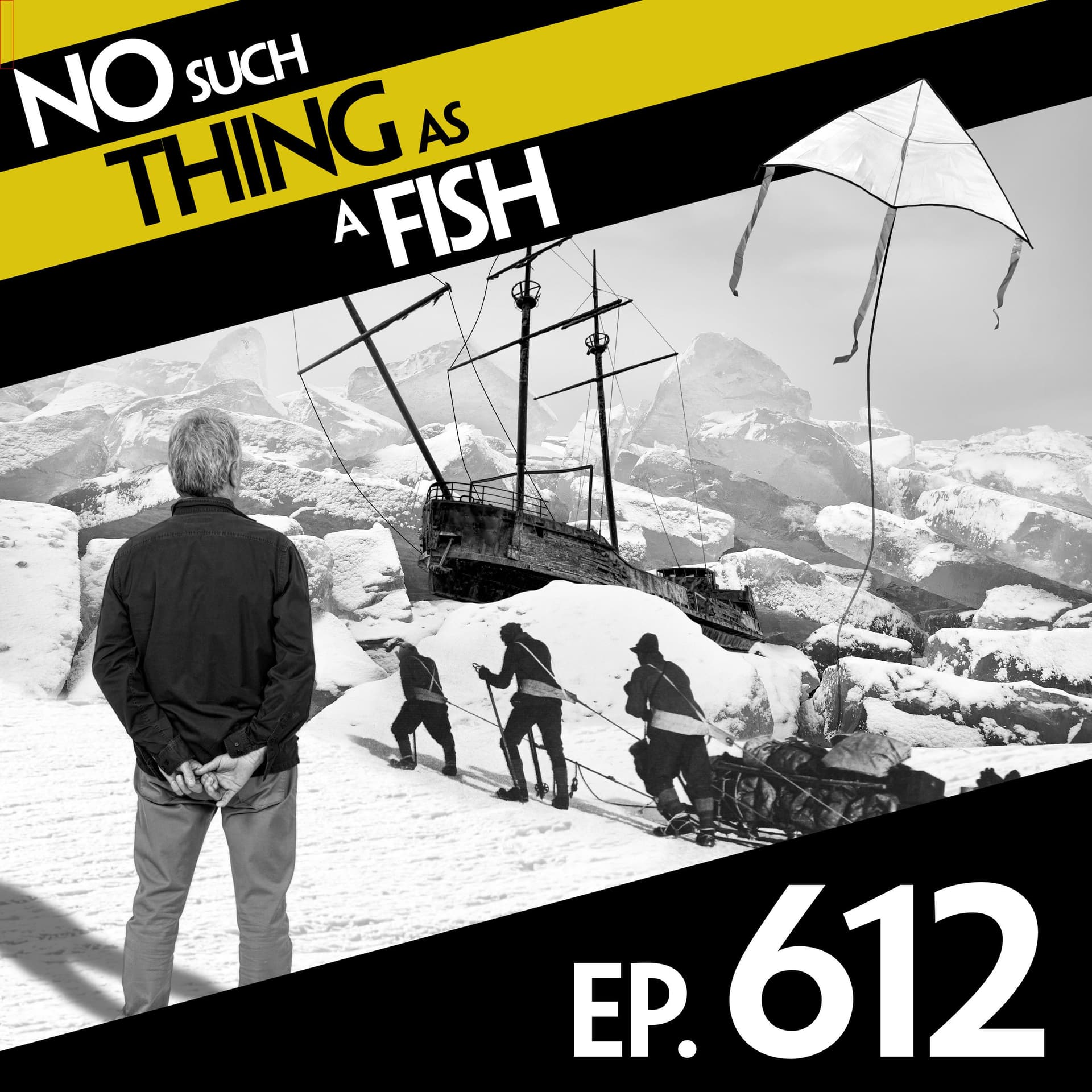
28:26OK, it is time for fact number three, and that is Andy. My fact is, the rescue team who tried to find the Lost Franklin Expedition did so with rockets, kites, flashing lights, gunshots, horns, drums, and by putting collars on Arctic foxes. Wow. It didn't work, we should say, sadly. Were the collars... Was this before they had radio equipment? I mean, you just put the collars on. There was no recording device. Yeah, 100%. So what they did... This is in the 1840s and 50s. This expedition, which you've written about, Michael, went north over Canada. They were trying to find a shorter route through the Arctic because that would be amazing for shipping.
29:07this fabled thing called the Northwest Passage. And it would cut thousands of miles off. So this is before the Panama Canal, right? Yes, it is. So they previously had to go all the way down South America. Exactly. And it's just a very, very long route to sail from Europe to Asia, basically. So if you could find the Northwest Passage, it would be a huge boon to mankind. And this expedition went out, the Franklin Expedition, two ships, Terra and Erebus, they went missing. And a lot of search parties went out for them. Some sources estimate more than 30 search missions went out. Mostly financed by his wife.
29:41Yes, absolutely. She was absolutely determined that she could find him. And everyone was saying, no, it's too late now. He's dead. Yeah, yeah, yeah. Anyway. And one of them decided to put collars on foxes, Arctic foxes, wild fox cubs, which had the coordinates of where they were, saying, we are looking for you. This is where we are based. Oh, that's clever. And they just released the foxes into the wilds. And it was clever. It didn't work. I mean, the foxes, I imagine, just ate the survivors. Nobody there to read them. No, exactly. They were all Inuits. They wouldn't say, you know, what does this mean?
30:16Yeah, yeah. So it simply did not work. That's a fascinating fact, though, because they did some very strange things at that time. There was a kind of hysteria to try and find him and a refusal to admit that they might be dead because they basically completely got it wrong. The whole expedition was given enormous amounts of money. They had lots of wine on board and libraries and all that sort of thing. And they just took a wrong turn and got stuck down a sort of fairly narrow stretch of water where it was quite an extreme winter then. And that froze and they were stuck. So they drank all the wine.
30:53So when the spring comes, it'll melt and we'll go off. The spring didn't melt. There was two or three years of the worst and coldest winters up in the Northwest Passage. So basically, we just stuck there for about two years, ran out of food, went out trying to get the trade with the Inuit. But they didn't do that very well because no one had actually done the research and saying, well, how do we speak to Inuit, the people who live there? So when it came to wanting to be helped by those people, they couldn't do it. Whereas later, Ammonson or someone like that was very much a sort of, you know, know the ground you're on sort of traveler.
31:32He always knew to ask the local people. Right. So it was a bit arrogant, really. Yeah. But were they a bit unlucky with the weather? Like if they'd have gone a few years later? I mean, I think it was these two very, very cold winters. But they'd also, you know, they'd gone a slightly different route and not gone down. they took like a shortcut and then it got trapped and the ice is obviously stronger when you've got confined space so if they've gone a bit further ahead where there's more open water they might have got through the absolute disappointment of the ice not melting that spring must have been yeah yeah it must be nearly spring now yeah yeah so you wrote a brilliant book about Erebus and you went and visited a lot of these places as well I mean it's pretty fascinating that it was lost for so long only found in 2014.
32:21Yeah. I mean, that's remarkable. The Inuit at the time in the late 19th century, people went out there, said they had seen a ship, the mast of a ship. They knew exactly where it was. But because they only had an oral tradition, didn't write things down, people thought, well, they're just saying that. And they didn't follow it up. And in the end, Erebus was found almost exactly where they had said 100 years before. Ask the local residents. What is going on? I'm afraid so, yes. It's a real sort of imperial sort of attitude you have. No, no, you don't know this. You've just lived here for 500 years.
32:59We know. I think we, the 31st Expedition, we just wanted to find them without any help from you guys. Thank you. Collared wolves, off you go! I should say where I saw the I've seen one of these collars in the flesh. It's so exciting. Oh, wow. With words on it. Yeah, and the coordinates. And it's behind the scenes at the Royal Geographical Society, which I believe you have been president? I was president for three years. Yeah. And they have, in the back rooms, they have these amazing collections of extraordinary stuff, you know, because it was founded in 1830 and basically contributed to founding geography as a discipline.
33:34Geography is a much newer area of study than many others. So it's an incredible place. And they've got these collars there. It's amazing to see. Very cool. The thing is, which is quite interesting, I think, that one of the many attempts to sort of find out where they were was a ship called HMS Resolution. That was about five years after they left. And the desk from the captain's cabin, HMS Resolution, is the desk in the White House. Oh, in the office. In all the White House offices. I have heard it called the Resolution desk. That came from the search for Franklin. Isn't Trump just trying to turn that into a solid gold desk?
34:08He'll be guilting that right now. I read that they took 8 ,000 tins of food for the voyage. Sound like Ron. He sounded like you're Ron. yeah and no bloody tin opener oh come on we could ask the locals no no and 7 ,088 pounds of tobacco which according to my calculation in today's money would be enough for three million cigarettes but um yeah i think a lot of people thought that the tins were the problem right so the men sort of a lot of the men went away from the ship maybe to try and find a way off somewhere but they walked away with a load of stuff they wouldn't really need like button polish and curtain rods and a writing desk and stuff yeah exactly and people thought well maybe they went mad and i think now we do think that there was some lead poisoning and for a long time they thought it was the tins of food because they were soldered with lead yeah now i think we're not quite so sure it might have been because the pipes in the boat had lead in them yeah because the levels of lead were so high that it couldn't just be leached from the tins how interesting was Was it about 150 men in total?
35:19129, I believe. Okay, right. Like all hands on both ships. Not one of them survived. Yeah. Is this right, Michael? I read this and it sounded too wild to be true to me. But is it the case that when you went out looking and writing the book, that there's bits where in the snow, their footprints are sort of fossilized, that you can see them in the ground? I don't know. I mean, you can see their graves, the first people who died. Right. I'm not sure about the fossilized. Okay, yeah, it felt weird. I've been surprised if I fuck you. Unless it was that Venezuelan guy with a massive foot. Yes, he had known that 24 yards across.
36:00Died of large feet. Unable to cut his toenails. Probably needed some lumberjacks to get in there. But they did find a lot of very well-preserved bodies, I believe. And I don't know if they are. I think they must have been dug up. but bodies were found in 1984 incredibly well preserved and you could see they had blue eyes. So there was a crew member called John Torrington who was found 138 years after he died but he was put on People Magazine's list of the most intriguing people of 1984. Really? Yeah, yeah. Wow. Bit of posthumous recognition which I suppose is nice. But you are on ice. You know, that's what they say about places like Everest.
36:39It's a cryogenic sort of situation. Like when they found Mallory's body. Mallory's body was just still Mallory's body who was there. They didn't get that many. Not many, that many were brought back, actually. We should say Lady Franklin as well. Yeah. So John Franklin was the commander of the whole mission, wasn't he? Yes, exactly, yeah. And I think there were questions about whether he was suitable, whether he was the best man for the job. Absolutely. For a start, Franklin wasn't the first person they wanted to lead it. They wanted James Clark Ross to lead it because he had extraordinary success in Antarctica in 1841.
37:13and stood on places that no human being had ever been before. But he didn't want to do it, quite rightly. And so they got Franklin because he was quite old at the time. He was nearly 60, but everyone liked him. He was all right. He was very ineffectual, nice bloke, knew everybody. Yeah, come on, do it. And his wife, who was very dynamic, must have pushed him forward. Yeah, right. And said, my husband's available. And here he is. John, come in. On the other hand, I read that James Ross, one of the reasons he declined is because he promised his wife that he wouldn't go to any more polar expeditions.
37:47So we're blaming the wives for the whole thing. That's such a great detail. No, I promised my wife no more Arctic. If he's just done four years going to the Antarctic, it's reasonable. Where are you going? Just to the Antarctic. Lady Franklin was very smitten with James Clark Ross because he was a sort of dashing character. Really? Torn. yeah yeah that's why the wife didn't want him yeah actually it doesn't say that it was his wife who didn't want him to go wow that's really interesting so james clark ross led one of the expeditions and that was the one that put the collars on the foxes really that was the yeah yeah and lady franklin did all the lobbying didn't she she said we must send out search parties it's quite moving She wrote him letters for eight years after he departed.
38:41And, you know, the large majority of that time he would have died. No one knew for sure. What would happen to those letters? Would they just be kept in her house? Or would she post them and send them to Canada maybe? She would have had them indexed and looked after. Well, yeah, she had an assistant, a woman who worked with her, and they organized the whole sort of rescue business down to the last detail. So the letters, I'm sure, and everything that she'd written would be kept. That's the other thing, right? Where they were going, there was no postbox, right? They didn't take a postbox with them.
39:17They should have done, in the true imperial spirit. We're going to put the first postbox at the North Pole. I can imagine a postman coming to collect those, definitely wearing shorts. Yes, that's right. No collection on Sundays. Oh, the Lord's Day Observance Society have been in touch.
39:40okay it's time for our final fact of the show and that is james okay my fact this week is that in bologna there is a word umarol which describes a grumpy pensioner who stands with his hands behind his back complaining about roadworks yeah the dream the dream for me dream life we'll all end up there eventually handy you a lot earlier than others i'm sure and he's there um so this is a term that was coined in 2005 by a writer called danilo massotti and he had noticed that there was a lot of people doing this in bologna and they've decided that it's going to be a thing and they've really embraced it and now if you go to bologna and they do roadworks the the people who are doing the work will talk to the umarals uh when they finish some works they'll put a sign up saying where they're going have been next week so that the omaroles can go and see them and there was a very good way of institutionalizing grumpiness good way of dealing with it and there was a burger king advert in 2016 about these guys and in 2021 the word entered the official italian dictionary incredible so this is a real proper thing now isn't it omarole sounds really nice and well it sounds a bit like a laxative to be honest no it's a very glamorous term for grumpy old men yeah but also it doesn't sound very italian i think um i think yeah that's the way you pronounce yeah oh yeah but he's uh it comes from a bolognian like regional dialect word meaning little guy so is it are they annoying to the builders are they looking through the fence and they're saying i wouldn't put it there if i I wouldn't put that RSJ there if I were you.
41:29I think it all depends on the attitude of the builders. Okay. I think some of the builders embrace it and like them, and it's someone to chat to, and they use the knowledge of people who have maybe done this job before or know about it, and then there are other builders who go, get off my building site. A lot of these guys will be retired. I love all that. Yeah, no, no, don't put it through to Houston. Oh, all right. We've made the tunnels. Well, you should have asked us. I just think a lot of these guys are going to be retired solicitors or people who are not builders. It's a lovely thought that they kind of stand with their arms behind their backs.
42:08So that's their costume. In Villa Santa, which is near Monza in the north of Italy, they have officially used these omaroles and the local government have spoken to them and said, right, you can stand next to this bit of roadworks and let us know if anything's wrong. so they're like professional umaroles helping the government yeah the snitches as well basically yeah that's true but i found online you can get a 3d printed model of an umarole uh for your desk and the idea is you just pop him here and he will look there at work you're doing yeah and brilliant ideas you'll get a lot more done because you're so frightened that he's going to complain it's It's lovely.
42:50It's so sweet. I feel like I would very happily, even because I don't speak the language, just listen to a live stream of just the old men. Yeah, and I think the theory is a lot of these guys, well, they're all retired. And I think part of the theory is their wives do not want them around the house all day. So very much like Lady Franklin, they've said, why don't you pop out and discover the Northwest Passage? And quite often what they'll do is they'll go in the morning, have their cappuccino, sit around, chat about the football scores or whatever, but then once it comes to mid-morning, what do you do then?
43:23Right? And there's a lot of roadworks happening, so you go and tut. They sort of sound a bit like superannuated Trainspotters, really. Yeah? A rather more glamorous in Italian way, you know. They wouldn't be nerdy. Trainspotters in Italian would sort of, they'd have seen all the Fellini movies. I do really hope that, just mentioning Franklin, that there were a group of Inuit old men just standing around the Erebus. I wouldn't go down that. I wouldn't go down that. What, are you going down that body of water? Sorry, mate. Back up. Michael, you're doing a live show at the moment, and one of the themes is aging disgracefully, right?
44:05As part of a... Yeah, yeah. That sort of, yes. Does that appeal, the idea of Umaral? Yeah, I mean, I'd like to be a bit more active. But I think you just keep going. And there's two ways of approaching age. One is to sit in a chair and the other is to become fanatically busy and just say, I've just got to have things to do all the time. So I can't, you know, otherwise it's completely boring. But some people choose one, some people choose the other. There's another term that I really like, the windowside tribe they're known as in Japan. and it means an employee who at work is quite old and they can't really get them to do what they used to do.
44:45So they sort of sideline them. They just give them a desk by the window and they don't really do anything anymore. So it's apparently the other dream. It's quite big in Japan. They just, rather than firing or retiring someone, they just take away all their responsibilities, put them by the window and just say, all right, just keep going. That's called executive producer, isn't it? You beat yourself. But it's true that most other countries have a more enlightened attitude to aging. They think it's valuable that people get older. I mean, most tribal societies, you're the top man. The longer you live, the more you know, the more experience you can pass on to others.
45:22So the idea of care homes here, it's quite sad, really. Yeah, I quite like getting involved in a heist, for example, in your older years. The fascinating story from a few years ago that the greatest, largest burglary in English history was committed by people in their 70s. The oldest guy was 76. The Hatton Garden one. It was the Hatton Garden one, which is just pretty astonishing. They went down an elevator shaft. They drilled through. They stole millions of pounds worth of stuff. I didn't know they were that old. They had a combined age of 500. They're just old blokes from the pub, you know. Let's go out and do it for real.
45:59Yeah, and they had a history of having done quite a few heists in the past over a long career. Were they being scripted by Richard Osman? It just feels like quite a... One of them got to the heist on a bus using his pensioner's pass. Ironically, his freedom pass. Yes. But then what do you do with the money, really? Well, we never got to find out. You haven't got less of your life to, you know, a few years to spend it. Some of it's still missing, isn't it? It is quite a lot of it, yeah. Really? And they're all going to come out at some stage. We need to look for a care home that has installed, you know, gold taps, Vegas style fountains.
46:40It's called the Trump home. Yeah, exactly. Well, there's one mystery man still missing who's called Basil. And there's a 20 ,000 pound reward on his head.
46:52Did you find in the course of this the word Gongusla? No. It's basically the British umaral. It's someone who stands and watches activity on a canal. quite specifically. Is this voyeuristic or just... Yeah, the canal activities that happen near me is basically graffiti, taking drugs. Oh, really? Are they hotbeds of vice? I didn't know that. I think so. Oh, well, I'm used to the genteel southern Kennet and Avon canals and places like that where it's just simply watching the locks. Well, the Leeds-Liverpool, I can tell you. Drug-free canal. Yeah. And loads of joyriders on the Leeds-Liverpool canal going up four miles an hour.
47:31I was reading a little bit about Britain's self-styled dullest man because this is about standing around. Anyway, I'm very proud to have been nominated. I'm thrilled, actually. No, I think he's called Kev. And he was featured in The Guardian a couple of years ago because he's the man behind Roundabouts of Redditch. Oh, OK. The calendar, which did enormously well about 20 years ago and has led to a number of other works. you know roundabouts of great britain car parks of britain um well he's blown it hasn't he you can't be dull if you've been in the guardian and you've got 12 books out yeah i know he's thought he sort of has he founded the car park appreciation society claims to be the only member but i did have a look and tried to join and i don't i think it's a closed shop really i don't i'm not sure he's admitting and he said my three ex-wives found me dull not in the bedroom but in every other part the house oh dear hey apparently um the there's been a study done by a professor in brighton who says the people that you shouldn't listen to about longevity if there's one group of people you shouldn't listen to oh uh i would guess centenarians yeah people age 100 and more why their advice is just terrible they're like i ate one boiled egg and nothing else for 70 years it's always detail that has no relevance what they have is probably very good genes um and they've managed to survive despite the vices uh that they've taken in despite and the cocaine that goes with it sorry i forgot to add i always find that the idea that people you know 107 and they have three whiskeys every night uh you know i think that's great is this really true so I mean, is there anything that's kept me drinking whiskey?
49:21And I've got to 82. Oh!
49:27All right, well, time to wrap up. Michael's died.
49:35Okay, that is it. That is all of our facts. Thank you so much for listening. If you'd like to get in contact with any of us about the things that we've said over the course of this podcast, we can all be found on our online social media accounts. I'm on at Schreiberland on Instagram. James. My Instagram is no such thing as James Harkin. Andy. Mine is at Andrew Hunter M. Michael, do you have one? Social media accounts of any kind? You've got a great website. I don't have a social media account, I don't think. What would it be? Probably Michael Palin. Yeah. Dull man. Dull man seeks work. Dot org.
50:11Yeah, no, but Michael Palin dot com, I believe it is. If you go to your website. Venezuela is out now in hardback as a book it's also a TV series that you can find that was on channel 5 and if you want to get through to any of us on the show podcast.qi.com that's our email address send us a message there tell us extra facts about Venezuela about ice creams you've tasted all that stuff and some of those messages are going to make their way to our bonus episode drop us a line which is where we read out all of your facts and emails you can find that as part of Club Fish that's our secret members club so just go to nosuchthingasafish.com you'll find all the details there and come back again next week because we'll be back with another episode.
50:47We will see you then. Goodbye.
From the publisher
Visit nosuchthingasafish.com for news about live shows, merchandise and more episodes.
Join Club Fish for ad-free episodes and exclusive bonus content at apple.co/nosuchthingasafish or nosuchthingasafish.com/patreon