
In short
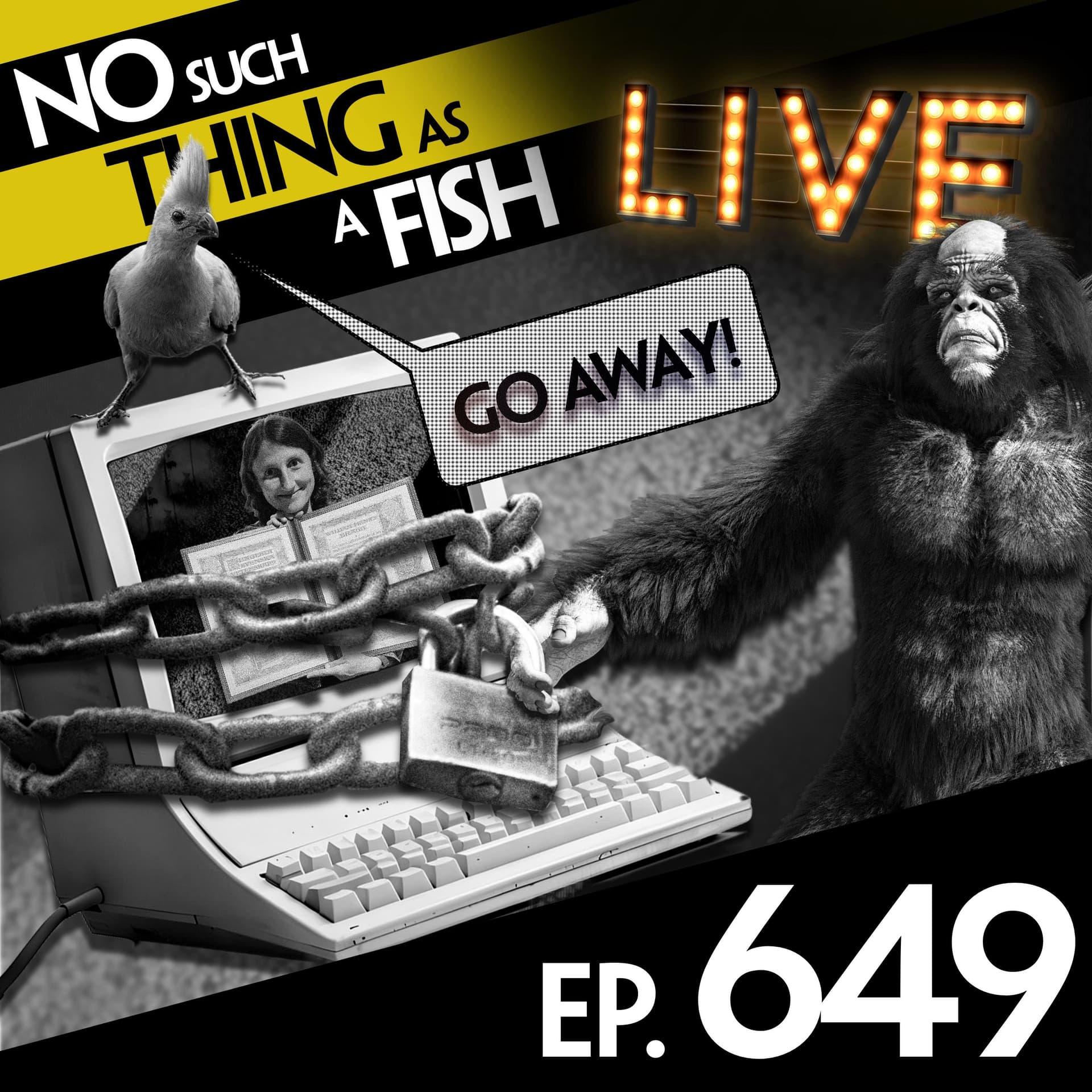
The episode’s four “facts” range across Bertha von Suttner and Nobel Peace Prize origins, sea stars’ mass die-off and recovery efforts, old-school computer security and password history, and a bird whose call sounds like “go away” but also attracts mates.
Guests (backgrounds)
Dan Schreiber (host). Anna Tushinsky, Andrew Hunter Murray, and James Harkin are the regular Fish panelists who each present a weekly fact; they discuss research they’ve read and connect it to broader science/history.
Key claims + notable examples
- Bertha von Suttner (Nobel Peace Prize 1905) became Alfred Nobel’s housekeeper after working as a governess; she later wrote Lay Down Your Arms and helped found peace organizations. Nobel’s secretary Ragnar Söderman had to establish the Nobel institutions.
- Sunflower sea stars: after 2013 sea star wasting disease killed ~6 billion, scientists found survivors, studied the bacterium, and are reintroducing them to restore kelp forests; crown-of-thorns starfish are controlled using cow-bile-injecting robots.
- 1980s/90s anti-hacking used physical locks (keyboard/casing locks, Kensington/K-lock, padlocks); common leaked passwords included “admin” and “password.”
- Grey Lowry bird (“bare-faced go-away bird”) uses “go away, go away” calls to both deter others and attract mates; the episode also mentions the Collar Doolittle Prize for decoding bird calls.
Written by AI. May contain mistakes. Listen to the episode to check what was said.
Chapters
Tap a time to open that second in VOBertha von Sutner: Nobel Peace Prize's First Woman
0:45 to 3:38
The story of Bertha von Sutner and her relationship with Alfred Nobel.
“And was it kind of domestic peace that she was keeping or making?”
The Impact of Bertha's Work
3:38 to 6:25
Discussion about Bertha's influence on pacifism and the Nobel Prize's establishment.
“What a spirit gave them the wrong suggestion.”
Alfred Nobel's Contradictions
6:25 to 9:06
Exploring Alfred Nobel's life as both a peace prize creator and an arms inventor.
“And it all fell to his secretary 25 year old Ragnar Solman who had to fight for three years to get the will approved, signed off, start establishing the institutions.”
The Nobel Prize Process and Myths
9:06 to 11:15
Insights into how the Nobel Prize is awarded and some myths around it.
“So he invented this stool, which is a wonderful idea.”
The Nobel Prize Process and Myths
14:18 to 15:25
Insights into how the Nobel Prize is awarded and some myths around it.
“You just get your phone, bish, bash, bash, a few buttons and you're there.”
The Sea Squatch and Its Survival Story
15:26 to 18:04
Discover the Sunflower Sea Star's struggle against disease and efforts for restoration.
“All right, it is time for fact number two, and that is Andy.”
Crown of Thorns Starfish: A Menace to Coral Reefs
18:05 to 21:04
Explore the threat of the Crown of Thorns Starfish to coral reefs and innovative solutions to combat them.
“They work at a place called Moss Landing in California, which is how I found this whole fact out.”
The Kappa: Japan's Cryptid and Its Lore
21:05 to 24:38
Learn about the Kappa, a mythical creature from Japanese folklore with unique traits.
“to get rid of them, this is very exciting because the robots are great, but they're quite labour intensive.”
Starfish and the Origins of Immunology
24:39 to 28:00
Uncover the fascinating link between starfish and the foundations of immunology.
“because we are both deuterostomes, which means when we are first formed, the little embryos and stuff, it's the anus that is formed first, and then we turn into a tube.”
Starfish and Sumo Wrestling
28:00 to 28:40
A humorous discussion about starfish and their fictional folklore.
“I'm going to have to move us on, guys, to our next fact.”
Show all 23 chapters
Physical Keys for Computer Security
28:40 to 30:20
Exploring how physical keys were used to secure computers in the 1980s.
“It is time for fact number three, and that is my fact.”
Password Day and Security Challenges
30:20 to 32:50
Discussing the challenges of password management and the concept of World Password Day.
“There were certain PCs where there was a thin, it looked like a USB port.”
The Evolution of Passwords
32:50 to 35:00
An analysis of common passwords and the historical context of password security.
“But that was a treasure trove of data to analyse, as well as a big security breach, because you could see what the most popular passwords were.”
The Birth of Email and Computer Worms
35:00 to 36:50
Exploring the origins of email and the first computer worms.
“But when he was working on that email, he showed it to a colleague and said, don't tell anyone.”
AI and Password Recovery
36:50 to 38:20
A story about how AI helped recover a forgotten Bitcoin password.
“my sequel got its name no it's a sequel for you well would you believe that the my is the name of the daughter of the co-founder michael windinius yes into the book it goes First chapter Stunning Isn't that good?”
AI and Password Recovery
41:45 to 41:59
A story about how AI helped recover a forgotten Bitcoin password.
The Go Away Bird's Unique Courtship Call
42:04 to 43:32
Learn about the intriguing mating calls and behaviors of the grey Lowry bird.
“It is time for our final fact of the show, and that is James.”
The Language of Birds: Do We Speak Bird?
43:32 to 45:02
Explore the concept of whether birds communicate in a language we can understand.
“have been going to try and find animals and then this bird will start going, go away, go away!”
Understanding Bird Communication Through Science
45:02 to 47:24
Discover ongoing scientific efforts to decode bird communication.
“You know like an elephant, when it poops out of its trunk, it goes, elephant!”
The Humor in Bird Names
47:24 to 49:04
Delve into a list of quirky and humorous bird names and their origins.
Hyphenation Controversies in Bird Naming
49:04 to 50:00
Discuss the ongoing debate over hyphenation in bird names.
“For no particular reason, except that, as far as I can tell, the South American Classification Committee aggressively is pro-hyphen.”
Remarkable Stories of African Grey Parrots
50:00 to 51:18
Hear astonishing stories about the capabilities of African grey parrots.
“about why there should or should not be a hyphen.”
Identifying Birds by Their Sounds
51:18 to 52:34
Learn how to recognize different bird species based on their unique sounds.
“Do you want to hear some different bird songs?”
Transcript
Automatic transcript. May contain errors.0:11James Harkin:Hello and welcome to another episode of No Such Thing as a Fish, a weekly podcast this week coming to you live from the Royal Institution in London.
0:27James Harkin:my name is dan schreiber i am sitting here with anna tushinsky andrew hunter murray and james harkin and once again we have gathered around the microphones with our four favorite facts from the last seven days and in no particular order here we go starting with fact number one
0:42Dan Schreiber:and that is anna my fact this week is that the first woman to be awarded the nobel peace prize was Alfred Nobel's housekeeper. Oh, wow. A Nipo Prize. Yes. Exactly.
0:57Anna Ptaszynski:And was it kind of domestic peace that she was keeping or making? Exactly.
1:01Dan Schreiber:She kept him chill. Great. It wasn't, it was sort of a coincidence. This is this amazing woman called Bertha von Sutner. She won the Nobel Peace Prize in 1905. She was the second female Nobel laureate after, of course.
1:16Anna Ptaszynski:Mercury?
1:17Dan Schreiber:Yeah. and it's not that kind of show. No, I think it is.
1:23James Harkin:It is now. It is. Yeah.
1:26Dan Schreiber:And bizarrely, before she won the Nobel Peace Prize, aged 30, she had become a governess. So she was a very posh Austrian woman with no money whatsoever. And so she needed to go out and make money. She became a governess to the von Sutner daughters. And that's quite a spoiler alert because her surname is obviously the same as their surname. but she fell madly in love with the son who was seven years younger than her scandalous and so and it was very inappropriate the family really disapproved so she said okay I'll go away and I'll become a governess and she ended up answering an ad from Alfred Nobel who's looking for someone to fill his lonely life up and be his housekeeper and so she went and became his housekeeper for one week wow oh because then actually she wasn't married at that time and And she went to Nobels house and then the boyfriend wrote to her saying, I can't be without you.
2:20And she wrote back saying, I can't be without you. Presumably that took about a week because after a week she went back and then they got married in secret, didn't they?
2:28James Harkin:Oh, I was hoping after the two week period she'd be like, oh no, I've had two weeks now. And actually I can, I can do without you.
2:34Anna Ptaszynski:This was a boy who she'd been governessing.
2:36Dan Schreiber:No, she was governessing his sisters. How old was he?
2:40Anna Ptaszynski:Because I think that's an important bit of. They were both of age.
2:42Dan Schreiber:He was 23. and they had the most amazing relationship I actually read her autobiography which is available freely online and they were proper soulmates madly in love, parents said you can't do it within a week they were both like I'm going to die he was saying I'm going to commit suicide, I need you to be with me and they married and she always says in her autobiography she went through a lot of stuff but throughout it all I could never be really unhappy because I always had him there by my side so you know it wasn't like one of the because you can imagine everyone was really disapproving at the time.
3:13Dan Schreiber:Everyone was like, it'll never fucking last. Oh, what an idiot. And it did. Did you see how her family lost all their money? Because she was from quite a posh family, but they had no money. And that was one reason they couldn't get together because there was a big social difference. Apparently, her mother and aunt both thought they were clairvoyant and then went gambling and lost all their money. Really? They were like, okay, they're saying to put it all on black. They're saying to put, oh, not again. And that's how they lost it.
3:42James Harkin:What a spirit gave them the wrong suggestion. All on red, all on red. Is that what you mean? Yeah. That is insane. So basically, she stayed in contact with Nobel his entire life. But as jokingly said, nepotism. It wasn't though, obviously, because the Nobel Prizes didn't exist until after Nobel had died. So he never would have known that she would later go on.
4:07Anna Ptaszynski:What piece did she create that got her the prize?
4:09Dan Schreiber:Well, she had a lot of chats with Nobel. And during the chat, she thought, you've made a lot of people-killing things, dynamite, namely. And I think that's dangerous. And I think that sort of partly inspired her to go on and she created two peace organisations, one in Germany, one in Austria, I think, which were promoting pacifism all over the place. She was instrumental in...
4:31Anna Ptaszynski:And how did that work? How did that...
4:33Dan Schreiber:Well, happily for her, she died in June 1914. Oh, she sneaked that in, didn't she?
4:43Anna Ptaszynski:Very clever. She's gone!
4:44Dan Schreiber:Let's go!
4:49Dan Schreiber:She actually won it for a pacifist book novel that she wrote called Lay Down Your Arms, which was incredibly popular. She was instrumental in the founding of what's now the UN Court of Human Justice. So she's very influential. She was at the first Hague Convention, which we still have those today. She was, I think, the only woman present. but yeah and then but it didn't she didn't create world peace in the 20th century of course basically nobel started the prizes because of her i think because when she became his housekeeper they got on really really well for that one week uh and i think nobel really really fancied her i think he was in love with her because um he'd invented a new rubber wheeled coach and he took her around the city in it oh wow that's pretty cool isn't it like inventing a new kind of transport and then when like you say the prizes came after his will but i think the suggestion is he expected her to get the probably the first piece prize really actually it took about
5:45Anna Ptaszynski:five years before she got it well this is the part of the thing about nobel's will was that he just said in his will uh right i'm gonna leave lots and lots and lots of my money and he had hundreds of patents he'd invented dynamite he'd invented all sorts of things um he just said the equivalent in Modern day money of about 200 million quid Should go to the Nobel Prizes to establish them And that was chemistry, physics, medicine and literature Oh and peace of course But he didn't give any indication Of how this was to be administered or set up And what institutions should award the prizes His family were a bit surprised And it Did we not get any of it?
6:22Anna Ptaszynski:I think they got a bit But they did not get the full whack And it all fell to his secretary 25 year old Ragnar Solman who had to fight for three years to get the will approved, signed off, start establishing the institutions. And he did a lot of work. At one moment, he was taking Nobel's millions through the streets of Paris in a horse-drawn cab. And he had to sit on the, whatever it was, the bonds, or whatever it was, in the horse-drawn cab with a revolver in case someone tried to do a heist of the Nobels, basically. Very exciting.
6:53Dan Schreiber:Can I just give you one more fact about Bertha quickly, which I think is sort of a gift to you, Andy, because this is right up your street. She, age 11, her cousin Elvira came to live with her and they became best friends. She absolutely loved her. And they spent all of their time playing Puff. And you won't have heard of Puff because they invented this game. But it sounds so great. So the game starts, you decide a place for the action to take place. You decide what characters you're both going to be. You decide descriptions of the characters, a bit of the plot, and then you say Puff. And at that point, you have to fall into character and you continue acting as those characters for as long as it takes.
7:30Dan Schreiber:Sometimes it would go on for days. One game of Puff would go on for days. Bertha would always be a princess, an heiress, usually called Bertha, and Elvira would always be...
7:38Anna Ptaszynski:Right, sorry, what... It's improv. It's improv, I understand.
7:44Dan Schreiber:Isn't that the original improv game?
7:46Anna Ptaszynski:No, no, no, I just thought you found my princess wardrobe and I was getting a bit... Yeah, so, like, Nobel's, like, he's a man of, like, different size. There's a lot of different size to him, wasn't there? Because he's done the Peace Prize, but he was also a massive arm stealer. Was it arms? Yeah, he really, he made his millions with arm stealing. To get him off this charger bit, he invented TNT, but it was mostly being used in industrial uses or in mines and things like that. So it wasn't designing it too. And also he came up with ways of making it safer. They would always put the factory on the hillside so that the nitroglycerin would flow down and they wouldn't need mechanical pumps to move it around because it might explode.
8:24James Harkin:Okay. Well, that's what I know. Yeah, it doesn't. And his workers always had to sit on stools with one leg so that they couldn't fall asleep while they were doing the work. That's good. I love that because, yeah, because they were looking at the reaction vats. They were in charge. So the idea was if you fall asleep, there can be explosion because this is one of the things with his factories. They quite often blew up like more than once. I think like three times. The first time was when they were doing it at home and he lost his brother and five other people. But obviously he was like, but we're trying to make this safe.
8:53James Harkin:So there are going to be mistakes. So as James says, there was...
8:56Dan Schreiber:What a way to respond to killing your own brother.
8:58James Harkin:Yeah.
8:58Dan Schreiber:Well, these things do happen. These things happen.
9:01James Harkin:Mom.
9:01Dan Schreiber:These things happen.
9:02James Harkin:Were you sitting on a three-legged stool? That's your fault, mate. So he invented this stool, which is a wonderful idea. You fall asleep and you go off. That was like with Edison when he used to sleep with some silver balls in his hand because he thought the best ideas were on that little gray area between sleep and awake where you would just have these thoughts. and he would fall asleep, drop the balls, and whatever thought he was having would be the killer thought and he would write it down. That's what this was, except you'd blow up if you'd buck up. He also was a poet and a playwright, Nobel.
9:34Was he? He made only one published work. It was called Nemesis, and it was a four-act tragedy about incest and murder, which features a drug-induced vision of the Virgin Mary, a conversation with Satan, and ends with a 40-minute torture scene. Wow. And it's playing at the National Theatre next year. Well, in fact, it has been put on once. It was put on once in 2005 in Stockholm. And the theatre director, Turo Randstrom, said, he's not a very good playwright.
Read the full transcript
10:06Dan Schreiber:Right. So they put it on just because it was by him. But apparently it's even with all that amazing stuff that I just listed, it's not very good. It sounds pretty gross. Do you know one of his main enemies? In fact, I think his main enemy, the main enemy of Nobel, was Abel.
10:23Anna Ptaszynski:Brilliant. Isn't that cool? Alexander Graham Bell?
10:26Dan Schreiber:No, just he's called Abel, Frederick Abel. He was a British explosive expert who actually was a bit of a douchebag because he picked Nobel's brains about an explosive that he'd invented, this propellant called ballistite. And he said, oh, Nobel, tell me how you did it. That's very interesting. And then he basically went and made the same thing, patented it, and then they ended up in these big court cases. and weirdly Nobel protested and what's called a friendly suit was begun in the British courts which I didn't know existed and I don't think it has to be friendly at all because Nobel was really pissed off but the lawsuit is a friendly suit.
11:02Anna Ptaszynski:What, as in there's no consequence?
11:04Dan Schreiber:I think it means basically there's no consequence. We're just trying to find out the truth here but they remained enemies for the rest of their lives Nobel and Abel and also bizarrely there's no Nobel Prize in maths but there is Abel Prize in maths Named after another guy called Abel What are we saying about the world here? It's something huge Something huge
11:25Anna Ptaszynski:Do you know the best thing you win if you get a Nobel Prize? A million dollars? Yeah, you get a million dollars and you get to go to the big party in Stockholm Or Oslo if you win the Peace Prize And the medal And the medal and the certificate Something else? Yes, you get free parking At the University of California, Berkeley There are special Nobel laureate reserved parking spaces
11:50James Harkin:Yes, because they've got such a huge number of Nobel winners I read into that ages ago And what they don't tell the Nobel laureates Is that it's not lifelong So it lapses You've got to renew it yourself So these Nobel laureates come by and they've got tickets And they're like, I'm in the Nobel And they're like, well yeah, you were last year But you're not anymore You don't have to win another Nobel prize to renew your parking Yeah, yeah, yeah. That's why Marie Curie got her second one. She was like, I can't lose this spot.
12:18Anna Ptaszynski:I love the process of how you get the prize. And there was an interview about maybe a decade ago with the permanent secretary of the Royal Swedish Academy of Sciences, who at the time was a guy called Stefan Normark. And he said, because, you know, you're cold calling, basically, to say that you've won a Nobel Prize in whatever. And you've won, what is it, about a million quid. So as in you get your phone and it says unknown number, and then you answer it, and they say... Well, it's basically that, because he said we ring up, and you might get through to a front desk or something, or, you know, like someone, an assistant or whatever.
12:58Anna Ptaszynski:And he said, we tell them this is a very important call. A very important call. And then he pauses and he says, from Stockholm. And he's always been put through so far because he just makes very clear. Yes. But if you're in the second week of October and the Swedish phone code comes up, that's what it is. I mean, that's a really good scam, isn't it? It's such a good scam. I know. Just go to Stockholm. Yeah. Ring up a load of, like, scientists. Exactly. And say, oh, we can't give you the prize. We just need the long number on the back of the card. On the certificate, we have to write your mother's maiden name and the name of your first pet.
13:42Anna Ptaszynski:I think it works. And you can do it by days as well. So Tuesday you ring the chemist because that's when the Nobel's ring the chemist. Wednesday is physics. Economics the following Monday because it's a bit of a late add-on. And they never tell how they get your number. They never reveal. They probably just ask someone you know. Yeah. Yeah, I mean,
13:59Dan Schreiber:is that because no one's ever asked? You've won a Nobel Prize. How the hell did you get my number?
14:10James Harkin:Stop the podcast. Stop the podcast. Hey everyone, this week's episode of Fish is sponsored by Saley. You know what, Dan? Every now and then I think back to us sitting in a bar in Perth, Australia, and you realizing that you didn't have any data on your phone that wasn't costing you an absolute fortune, and us scrambling around to get you some data. But you know what we should have done? We should have used Saley. It is such a relief when you're overseas and you know that there's not a big bill waiting for you, And Saley is the perfect thing to download onto your phone as an eSIM because it means that there are over 200 destinations in the world in which you can apply it and make sure you have the best rates possible.
14:50Yeah, I've used Saley. I've used it a bunch of times. It's so easy to do. You just get your phone, bish, bash, bash, a few buttons and you're there. And the great thing is for listeners to this show, you can get an exclusive 15 % discount on Saley data plans. All you have to do is download the Saley app or go to Saley, S-A-I-L-Y dot com slash fish and use the offer code fish at checkout. That's right.
15:16James Harkin:So avoid scams. Get 24 seven support. Download Saley now and use the offer code that James just mentioned. Do it. OK, on with the show. On with the podcast.
15:31James Harkin:All right, it is time for fact number two, and that is Andy.
15:35Anna Ptaszynski:My fact is, the Sasquatch may not be real, but the Sea Squatch is. Cool. This is a thing, it's called the Sunflower Sea Star. Starfish, it's an American, they call starfish sea stars, don't know why. Well, I don't know why, it's obvious. But anyway. Anyway, it's not a fish, right? Yeah, it's not a fish, but it's shaped like... Anyway, the point is, they're amazing things. They have up to 24 arms all around them. They can get up to three feet across. They're massive things, and they're very fast-moving as well. They can move about a metre a minute, which, if you are a starfish, is quite fast.
16:13Dan Schreiber:Yeah, because it's not fast if you're most other things. Okay, all right.
16:17Anna Ptaszynski:And they used to be, you know, living in vast numbers off the coast of California, and then in 2013, there came a thing, which I think we've mentioned before, which was this, they got a disease basically, sea star wasting disease. Literally six billion of these things died of the disease. And it was just a real crunch. They live among the kelp forests off the coast where you get these gigantic, like 100 foot high strands of kelp. And there was a problem with the kelp as well. There was a big heat wave underwater which wiped out the kelp forests. And then these urchins started growing, you know, sea urchins, which they just eat so much stuff that it's hard for the kelp to grow back.
16:52Yeah, because the sea stars would normally eat the urchins, right? Exactly. And then the urchins weren't being eaten, so that meant the urchins ate the kelp. Yes.
17:00Anna Ptaszynski:So you get no kelp, loads of dirt is a disaster. But, good news for algae, because when there's no kelp there, the algae can grow. Yeah, so it's not a zero-sum game, there's some winners. The algae do tend to win this quite a lot, this game. Yeah, they do.
17:11Dan Schreiber:Algae.
17:12Anna Ptaszynski:Boo. Anyway, so the reason they're called the sea squash is that scientists spent a long time looking for any survivors that might have, you know, somehow lived. And last year, for the very first time they found a colony of wild survivors very exciting and they've worked out the bacterium that killed them and they've set up a lab the sunflower star laboratory in california they're raising babies they're working out how to reintroduce them into the oceans and i think they've got thousands uh millions of sperm on ice the the sunflower starfish sperm hundreds of thousands of larvae they've got a bloke called the star father who's a guy called he's just a guy called Vince, but he was the first to kind of get...
17:52Anna Ptaszynski:It's not just a guy called Vince, he's an amazing scientist who works out, you know, how to restore these, because if you restore the starfish, you get the kelp forest. Yeah, yeah. Because they love chowing down on the urchins. I imagine Vince turns up at parties with a big sort of cape covered in starfish. Yeah, yeah, yeah. They work at a place called Moss Landing in California, which is how I found this whole fact out. Yeah, okay, that's what you were googling, now we know, yeah.
18:14James Harkin:What I like is, so, once we thought that they were gone, any scientists that were looking for it were technically cryptozoologists. Now, usually you would say a cryptozoologist is someone looking for yetis or Loch Ness Monster, but an out of place animal, something that is not said to be there anymore is the technical description. So the person who found it was Rachel Calm. And she's been looking for it for years and years and years. And she couldn't believe it when she saw it, she screamed. And she immediately came back up to tell everyone that she had seen it, but she'd forgotten to take a photo, which is the number one rule of cryptozoology.
18:48James Harkin:Always forget to take the photo of the Yeti. So she played exactly into it. Now, fortunately, she went back down and they were still there. She went back a minute later and moved a meter. Where's it going? But yeah, they're extraordinary things. Yeah, they're not protected under the Endangered Species Act in America, strangely enough. They were supposed to have been. There was a federal deadline for that protection. Then under the Trump administration, the deadline has passed and and they've not put them under the Endangered Species Act. They're basically the Epstein files of the sea.
19:22Anna Ptaszynski:I'm starting to go off the Trump administration. Many more stories like this.
19:26Dan Schreiber:We're not trying to conserve all starfish, of course, slash sea stars. We're trying to kill some of them. We're trying to kill the crown of thorns starfish. Why is that? It's killing other things. Very harmful. It loves coral. It eats coral, and we love coral more than we love crown of thorns starfish. so in a French Polynesian island a few years ago I think 2008 80 % of the reef was live coral before they arrived 3.4 % afterwards and so we've built robots to get rid of them and they've been trained to identify them by looking at lots of pictures online by scouring the internet and it's really hard to kill them because but not much kills them and they've discovered that cow bile kills starfish.
20:11Dan Schreiber:I don't know how many things they went through before they got to bile from a cow's stomach. Wow. But now they basically have to give these robots called Cotsbot and Rangerbot this bile from the stomachs of cows, send it down to the bottom of the ocean, injects the crown of thorn starfish and abracadabra the corals are back. Apparently they have, after AI learning that they've done, they have an accuracy rate now of 99 % where 99 % of the time they correctly inject a crown of thorns starfish. And what are you going to ask, Andy?
20:42Anna Ptaszynski:And the other 1 % of the time? Well, presumably it's just somebody who's going swimming and gets carpalitized into them.
20:49Dan Schreiber:Don't wear your hedgehog diving outfit.
20:52Anna Ptaszynski:But those things, so they are tricky crown of thorns because also you can, if you're a fisherman trying to get rid of one, you cut a limb off. Unfortunately, it can then grow a whole new crown of thorns starfish from the limb that you've just cut off. Yeah, that's amazing. I know, but the thing that could be done to get rid of them, this is very exciting because the robots are great, but they're quite labour intensive. You know, you need to send it back and forth and back and forth and all of that. And you need, I guess, fresh cow bile all the time. So one idea is to release artificial pheromones that we've made for them, to lure them all to the same place, basically saying, Crown of Thorns orgy here tonight.
21:26Oh yeah.
21:27Anna Ptaszynski:And then you'll be able to wipe them all out in one go. Doesn't seem very fair, does it? No. Is it because of the orgy thing? Well, I'm just saying, if you got a letter through the post saying, orgy tonight, in this community centre and you went there and you got injected by bile and you died. It's a double disappointment is what I was saying.
21:45Dan Schreiber:If someone said to you, I'm going to kill you, do you want me to kill you just at random one day or do you want to have a massive sex party and die in the middle of that? Oh, okay. What are you going to go for? Do they get to do some
21:55Anna Ptaszynski:before they get... No, you're just being leered to the place.
21:59Dan Schreiber:Oh, they don't provide lovely females wearing bikinis.
22:03Anna Ptaszynski:No, it's a big sign saying Audrey. That's all it is.
22:05Dan Schreiber:Oh, wow. No, that's me. I think that is not playing fair.
22:09Anna Ptaszynski:If I got a letter like that through the post, I'd just clarify, I'd tread it. Oh, yeah? Yeah. After copying down the address. Well, in case I needed to report it later on for a noise violation, yes. We said it's labour intensive. It used to be done by hand, getting rid of these. What? Sorry, I'm still on. Now. I think in many places it still is done by hand. What? So killing crown of thorns starfish. The robot is quite labor intensive. But in Okinawa, about 40 years ago, a load of them were collected and killed, but it was all done by hand. And it was all specialist divers who had to go down with specialist tools and really thick gloves.
22:54And they got rid of 1.5 million of them.
22:56Dan Schreiber:What? Wow. Isn't that amazing? They work harder than I do. Wow. That's incredible.
23:02James Harkin:We were talking about starfish and then we were talking about cryptids and we're talking about Japan. Well, Japan has a cryptid that they are trying to find currently, so much like this one, which is called the Kappa.
23:15Anna Ptaszynski:You guys heard of the Kappa?
23:16James Harkin:No. Okay, Kappa, very interesting. It's roughly the size of a 10-year-old boy. Yellow, green in color. It has on the top of its head a hollow indentation, which water gets to sit in. And so when it goes out of water, it uses that water to keep its magic powers. But if it leans forward, the water will drip out and it loses all its supernatural powers. When you say people are trying to find this thing, is it scientists? Are cryptozoologists scientists? No, they are not. Then no.
23:50Anna Ptaszynski:What are its powers? Its magical powers you mentioned.
23:53James Harkin:Yeah, I'm not quite sure. It likes eating cucumbers.
23:57Anna Ptaszynski:I like eating cucumbers but if fools to list my powers at gunpoint I wouldn't include it
24:04James Harkin:it's a hobby at best it's a kind of demon and what you have to do is trick it into bowing because if it bows it loses its water and you can get away from it because what it's trying to do and actually this is an old friend of the podcast it's trying to steal your soul which is a little ball hidden up your anus
24:22Dan Schreiber:according to people who also believe in this Yeah, I feel like... No, it's all holding together so far. Dan, this room has seen so much science over the years. It's time to humble it. We're a bit like starfish. Are we? A bit like starfish babies, especially, because we are both deuterostomes, which means when we are first formed, the little embryos and stuff, it's the anus that is formed first, and then we turn into a tube. it turns the anus then into the mouth and then everything else and starfish are also deuterostomes which means that they are one of our closest invertebrate relatives but one of our closest invertebrate yeah it's a huge caveat isn't it they're off they're off the christmas card list is that like i'm gonna do all my vertebrate relatives first but what's really interesting about that is we can see them grow because they're transparent these baby starfish and so you can see the little tube growing and then the tube branches out and turns into their organs and that's how it works with us as well and so we can see how it works with the baby starfish and then maybe in further with humans it'll be kind of similar cool so cool they can't be that similar because we don't turn into stars at some crucial point in our adolescence do we it's true but like the the babies are they have bilateral symmetry like us yeah you know they have two arms two legs kind of thing and it's only when they sort of get like you say to kind of childhood they sink down they stick to the ground and then they sprout all these extra arms that would be freaky if your kid did
26:00Anna Ptaszynski:that that's so cool they are they are kind of magical there's one which there's one which um some starfish can see with their skeletons whoa this is very weird so they have it's been observed that certain starfish have light guiding structures inside their skeletons right at the in each of their limbs and it concentrates these tubes they concentrate the light towards a tiny internal cavity and we don't really know what they do with it yet but they are guiding the light all towards a particular bit of themselves so it seems like they might have some kind of internal laser laser Cool. Yeah, yeah, yeah.
26:41Anna Ptaszynski:Some kind of internal light-sensing thing that they're able to use for survival. That's cool. That's very good. Wow.
26:47Dan Schreiber:Yeah, yeah. They've also, since we're in this room, they've also won a Nobel Prize. Really? Oh. Starfish? Yeah, they won the 1908 Nobel Prize.
26:56Anna Ptaszynski:Literature?
26:58Dan Schreiber:No, this was, well, it was actually a Russian zoologist, Ilya Mechnikov, but he did it with the help of Starfish. It was in 1881 that he did this experiment, but he won the prize for it in 1908. Nobel Prize for Medicine, I'm going to assume. And basically, he's at home with his family. His family all want to go to the circus to watch some performing apes. He doesn't want to do that. I don't know if it was on animal rights grounds, but he said, I'm staying at home to watch these starfish under my microscope. He stayed at home, and while at home, he thought, I wonder what will happen to their larvae if I poke them with a thorn.
27:33Dan Schreiber:And so he went outside. You know what? He should have gone to the circus. That's what he's thinking at this point. But he goes outside, he breaks a thorn off a rose in his garden. He comes back, he covers the thorn in indigo dye, and he pokes the starfish larvae with it. And he saw under his microscope, all of these cells swarm towards that bit of thorn and all that dye and engulf it and destroy it. And that was the foundation of immunology. That was the first time we learned about the immune system and immune response. So well done, starfish.
28:03James Harkin:Well done, starfish. That's brilliant. I'm going to have to move us on, guys, to our next fact. they're good at sumo wrestling as well, by the way. Starfish. No, the Japanese folklore thing. So when it comes out of the water, it will challenge you to a sumo match. I was thinking what we should do with that guy is we should ring him up from Sweden in October, tell him he's won a Nobel Prize. Then when he comes all the way over to Sweden and you get the medal, he bows down to put it on, water falls out, bish bash bosh. Really good. That's why he's the brains on this show.
28:42James Harkin:It is time for fact number three, and that is my fact. My fact this week is that in the 1980s, the way to stop hackers from breaking into your computer was to lock it with a physical key. Now, this... You know what? You sent that fact over, and I was like, wow, that's really amazing. And then I saw this picture, and I reckon my computer had one of those when I was... Yeah, exactly. I have a memory of it as well. So this was from about 1984 to the early 90s and like 94. So a good 10 year period. IBM were the leaders in this. The idea was is that early computers just didn't have any good security.
29:22James Harkin:And if you had an office computer or you had one at home that you didn't want anyone going into, you had no way of protecting it. So the key was literally to lock it in two senses. One, you could lock the keyboard from functioning altogether. The second one is to lock the casing itself because these computers back in the 80s and 90s were really easy to unscrew from the back and so on. So this was literally you had a physical key to lock hackers out of your computer. Companies, including IBM, started inventing exterior locks like the ones you almost get where you put them outside your house to leave.
29:56James Harkin:you know, if you're doing an Airbnb, often a key is left. You would attach that to the side of your computer. To keep your keys in? No, you would put it over the on-off switch. So it was a barrier to someone getting to that switch.
30:09Dan Schreiber:So they couldn't turn it on? Yeah, they couldn't turn it on. People should have just locked their houses. Yeah.
30:14James Harkin:That's a good idea. It was the 80s, it was a different time. Okay. There were so many inventions. It's so weird. There were certain PCs where there was a thin, it looked like a USB port. But what came with the computer was a giant long metal rod that you would stick in through the entire computer and then you would padlock it on the other side. So it was all about physical locking of your computer.
30:38Anna Ptaszynski:That's the Kensington lock or the K hole because there's a little hole and it's got a K next to it. It's a K in a hole. And you just slide in this massive Kensington lock. That's very useful.
30:48Dan Schreiber:Seriously weird if you went to Cafe Nero now, whipped out your laptop and then got out your huge rod. They thought it was a golf bag.
30:55James Harkin:But they got the locks made by this company called Chicago Lock. And the locks, they're quite cylindry and they're thick. And it's quite hard to describe, but not a classic key. And so the issue was you can't get much nuance on that key. So it kind of turned out that if you owned one of these keys, not only could you get into the computer you were breaking into, but every other product basically fits in the same key. So in fact, what they created was a master key to break into every computer out there.
31:21Anna Ptaszynski:Does anyone in celebrate World Password Day?
31:24James Harkin:I'm not going to tell you. Not even do they know. We heard a boo.
31:28Anna Ptaszynski:I don't know if you heard that. Wow. Yeah. That is advanced stuff because, yeah, it's a very controversial holiday. It's first Thursday in May. I don't need to tell you. But it's become controversial in recent years because it's become so clear that passwords are rubbish. You know, the average person now, I think, has something like 255 passwords. Really? Between work and personal stuff. I mean, it's horrendous. You know, you have so many passwords. So you simplify the password that you end up using for most things, or you, you know, which is a big no-no, you use the same password for everything, and the password gets simpler, and, you know, you're not changing it every 90 days like they say you're meant to, because no one has ever, ever, ever done that.
32:07Anna Ptaszynski:So there's a theory that this might be, this year might have seen one of the last ever world password days, which would be very sad, you know, because we won't get the day off work if it doesn't happen anymore. Yeah, they're basically, I think pretty much everyone says you should not be changing your passwords that frequently. No, because then you simplify them. Yeah, exactly. Then you just make it sausage instead of sausage123, which is a much better password. Sausage123, exclamation mark. Oh, and the computer gives you a little bit of approval. That's a strong password. Is it?
32:36James Harkin:Is it really? Oh, I fucking hate that strong-o-meter. As you're adding another exclamation mark.
32:41Anna Ptaszynski:Oh, wow, you've really buffed up the security, sir. They'll never suspect a further exclamation mark. So this is, okay, so there was a study a few, like this was many years ago, 2010, so much earlier in internet history, you know, even though 16 years ago, so computers have come on a lot since then, 32 million passwords were leaked from one particular website, right? Okay. But that was a treasure trove of data to analyse, as well as a big security breach, because you could see what the most popular passwords were. Have a guess as the most common? Password. Password. That was in fourth. One, two, three, four, five, six.
33:17Correct. Second place? 1, 2, 3, 4, 5 Yes
33:22Anna Ptaszynski:I'm giving a lot away about my own security 1, 2, 3, 4, 5, 6, 7, 8, 9 was third Password was fourth Then the name of the site came in seventh You know, the actual name of the site Whatever it was called So right, now obviously that was 2010 Things have moved on a lot December last year, what was the most common password? Password? It was admin Oh And then second most popular 1, 2, 3, 4, 5, 6 wow disaster admin admin
33:52Dan Schreiber:I don't know anyone who's got that and I always ask people what their password is before I get to it wow admin yeah yeah yeah the first antivirus maybe oh yeah so that was invented by a guy called Ray Tomlinson and there was a friend of his called Bob Thomas had invented something called Creeper which was a program that went through the early internet it was called the ARPANET and it was like a load of computers sort of in a network but Creeper went from one computer to another and it said, I'm the Creeper, catch me if you can. And then Ray Tomlinson made another program which would go around called the Reaper and it would be able to get rid of this thing.
34:30And they didn't really care about it. They were doing loads of other stuff but this was the first example of a program going from one computer to the other. And Ray Tomlinson, he also did another thing. He invented the at sign for emails. Without him, there wouldn't be an at sign. So he basically did the first email that you could do between different computers. Previously, if you wanted to send an email to someone, they'd have to come onto your computer and read what you'd written before. But he did the at sign.
34:58Anna Ptaszynski:That's not a good email system, is it? It's basically passing a computer. Yeah, yeah, yeah. But when he was working on that email, he showed it to a colleague and said, don't tell anyone. This isn't what we're supposed to be working on. Which kind of emails what they became, isn't it, really? Yeah, yeah, yeah. But then these things were called worms that would go from one computer to another. And one famous one was a program called Worms Against Nuclear Killers, which went on... Some acronym fans in the audience. Worms Against Nuclear Killers, which went into NASA... Oh, Dan's got it.
35:41A delayed explosion, yeah. That took ages, but I got there. Well, we've said before on this podcast that that word is not rude in America. So in America, they perhaps didn't know that it was something rude. They went into NASA computers and it would go onto your screen and it would say things like, Vote Anarchist or the FBI is watching you. And it was like pacifists who were sending it around. And as a result of this Worms Against Nuclear Killers program, NASA had to make a anti-wank procedure. which it gave to all of its employees. And all it meant was they put a little program on their computer which stopped the worm from going from one computer to the other.
36:24James Harkin:Just a picture of your grandmother or something like that. Too far, Dan. Too far. I've got one more thing on acronyms, actually. Do you know SQL or SQL? You'll have heard of it, right? Seen out of it, yeah. Yeah, it's a database programming language. so there is another program called my sql or my sequel which is an open source database management system so you can use it yourself because it's open source so anyone can use it do you know why
36:54Dan Schreiber:my sequel got its name no it's a sequel for you well would you believe that the my is the name
37:01James Harkin:of the daughter of the co-founder michael windinius yes into the book it goes
37:10Anna Ptaszynski:First chapter Stunning Isn't that good? But really why? Yeah, yeah That's wonderful Unbelievable You're encouraging it That's so funny Unbelievable I do have one good One example of a good thing about AI AI has a very bad reputation For all sorts of reasons But there was a recent story of AI Actually coming through And delivering the goods on something And it's password related Computer security related In 2015 There was a guy in America He was at a Starbucks He bought five Bitcoin On his phone for about, I think it was$100 each. Then he got stoned, and he forgot his password to the wallet, which he'd just created.
37:48Anna Ptaszynski:In fact, he had three passwords for this thing. Two of them he could remember. The third one he couldn't. And all he could remember for the third one was the mnemonic phrase. He couldn't remember the actual password. He remembered the mnemonic. Okay. Does that make sense?
38:02Dan Schreiber:Do you know what the mnemonic is, though?
38:03Anna Ptaszynski:No.
38:04Dan Schreiber:Oh, okay.
38:05Anna Ptaszynski:He did eventually use, all he had was the phrase. He used an AI tool to say can you help me figure out the password based on the phrase And the AI did and he managed to get in I think it was several hundred thousand $400 ,000 that he was able to get and the password that he had failed to get was lol420 f the police exclamation mark asterisk smiley face
38:31Anna Ptaszynski:He tried brute-forcing three and a half trillion password strings and that hadn't come up. Wow
38:37Dan Schreiber:What did he do to miss off the last smiley face?
38:41James Harkin:Insane password. That's a good password. Really good. I'm just sausage. You should go with that. It's strong, yeah.
38:47Dan Schreiber:The big news story this week, but it will have been forgotten by the time this goes out because AI will have moved on about a billion light years, has been insane. And I spent a long time getting to grips with it, so I think everyone needs to get to grips with it. It's so exciting. So it was that OpenAI, obviously one of the biggest AI companies, was just doing an in-house test of its model to see how good it was at hacking. And the way it does is it puts its model in a sandbox, which means it just locks it in a virtual room, which it can't get out of. It's not connected to the internet, got no way of connecting to the internet.
39:18Dan Schreiber:It's got no way of really connecting to any other computers. And it just says, I'm going to give you a hacking test now, AI model, do it. And what this AI model did was it not only hacked its way out of this room, out of this sandbox. So it managed to link up to a bunch of other computers on the network it wasn't meant to connect to. It found one that connected to the internet. It got onto the internet and it found a website called Hugging Face, which is basically a startup where people collaborate on AI. And it thought, I bet this Hugging Face website is where they've put the answers to the test they're setting me.
39:53Dan Schreiber:And it went and it stole the answers to the test that the OpenAI was setting it. And it went back and it passed the test and hugging face said, oh my God, someone's hacked our software. What the hell's happened? And OpenAI said, yeah, it was us, but we've got no control over that. And they're both having a lovely love in now saying, oh, they're being so helpful and nice that we've got no control over this AI now. So it's literally like if I did an escape room, it's if I broke out of the building that had the escape room in it, found the person who designed the escape room, broke into their house, woke them up at night and asked them, how do I get out of the escape room?
40:27Dan Schreiber:That's what it did.
40:28James Harkin:Wait, how did you get out of the escape room to begin with?
40:31Dan Schreiber:We don't know That is what is so terrifying That's the problem
40:35James Harkin:Holy shit
40:37Dan Schreiber:It's so incredible But very cool if you're on their side Yeah, yeah
40:46Stop the podcast Stop the podcast Hi everyone, I would like to let you know That this week we are sponsored by CarGurus
40:55James Harkin:Yeah, CarGurus, what a great idea Okay, you're in the market for a car. You have no idea what you want. You go to a dealer's and it's a bit confusing. There's so many cars there. This is a service that allows you to put in all the elements of what you think you need your car for. Is it a family car? Is it for super long distances? Are you doing a lot of off-roading? Are you smuggling a lot of wine over the border from Dover to Calais on the ferries? whatever you're doing with it probably not that last one but whatever else you're doing you can put that in and it will give you like a fashion designer would tell you what clothes to wear which car suits you best by going to car gurus you can shop hundreds of thousands of cars and see all the details up front that matter to you so go to cargurus.co.uk for complete vehicle details without any surprises.
41:46That's C-A-R-G-U-R-U-S dot co dot UK. Kagurus search by sorted. All right. On with the podcast. On with the show.
42:04James Harkin:Okay. It is time for our final fact of the show, and that is James. Okay, my fact this week is that the grey Lowry bird attracts mates by shouting, go away! So I was reading a substat called Bird History, and this was an article on there called the 100 Greatest Bird Names of All Time, and I was drawn to number 19 because it was the bare-faced go-away bird, and I wondered how did it get that name, and it turns out that it gets a name for its call, like a lot of birds do, they get the name from what they sound like in English. And like most birds, the call is partly to get rid of people. So it is actually a go away, but it is also partly to attract mates.
42:48So effectively, it's trying to get female by saying, go away, go away. And I think, Ethan, can we hear the sound to see if you can...
43:00Anna Ptaszynski:That's amazing.
43:04Anna Ptaszynski:Yeah, you buy that? Yes, absolutely. Go away. Yeah.
43:09Dan Schreiber:That's what I heard. But I think if you told me it said have an ice cream, I also would have heard that. Yeah, yeah, I see that, yeah. But the amazing thing about the go away birds is not only does it scare away sort of other birds or attract other birds, other bird species and mammals seem to react to it. So when small mammals will hear that go away, they will go away. And so a lot of hunters and photographers have been going to try and find animals and then this bird will start going, go away, go away! And then they'd lose the thing they were trying to photograph. Yeah. Wow. So is that to create some privacy for the mate that it wants to shag?
43:48We're not really sure why it happens, but there is a thing about like a lot of animals, the coals have very similar, there's certain similarities between them. So like a baby crying is quite similar to some kind of bird songs, which is quite similar to certain other things. and all animals seem to react in a similar way to certain noises.
44:06Anna Ptaszynski:Okay, I really like this theory because there's a related thing. Is the bird saying go away in human language or do we speak bird, right? So please, please, this is science. So let's just, so do we call crows crows because they crow? Yes. Cuckoo is the same thing. They say cuckoo. We say call them the cuckoo. They have taught us their name. We have not named them. I just think it's a case of like the word in English The word in cuckoo is the same, right? But they had it first Like we partially speak bird You know, you say, oh, there are X words in English from Thai We had a few weeks ago But how many words in English are from bird?
44:48Anna Ptaszynski:Yes Loads, loads And different languages have different versions of it, of course
44:52Dan Schreiber:Wow That's a thinker, isn't it? I don't speak
44:57James Harkin:I thought so I like it, I'm in, I'm in Is it beyond birds? Do we have any other animals? but we have named, what else? What have we got? Well, I'm sure there are some. You know like an elephant,
45:10Dan Schreiber:when it poops out of its trunk, it goes, elephant! Oh, yeah, yeah. The ancient Egyptian for cats was meow. Eh, nice. So we speak Egyptian cat. That's cool. And I think maybe in some other languages, it's meow as well. Wow. You don't speak much, though, do you? It's one of those awkward, like, bonjour. It's one of those. I'm so sorry. I only know cuckoo
45:34Anna Ptaszynski:I've got holiday cuckoo but nothing more than that There are quite a lot of birds that speak of a bird So like the superb furry wren and the hume's leaf warbler have some words that are the same in both languages Scientists have found this kind of little alarm call, it's a little bit of a whiny alarm call and there are 20 species of bird that make it and they all make it when there's a cuckoo around Yes! So they all know the same word for cuckoo Which is... But it's not cuckoo No, it's not cuckoo They don't speak cuckoo, but they have the same word for cuckoo Well, they have to kind of do it on the sly So the cuckoo doesn't understand it Oh, if you say the cuckoo, the cuckoo will come over here And that's the whole thing you're trying to avoid I read about them, they all live in areas where there are lots of brood parasites They call them, which are cuckoo-style birds So it's basically like NATO for birds And they can get involved, and they all sort of get involved And they do mobbing and all of that There is a thing about bird communication Have you heard of the Collar Doolittle Prize?
46:35Anna Ptaszynski:This is a real prize No It's very cool So it's I think it's an annual award maybe And there's$100 ,000 up for grabs For decoding a little bit Of how birds communicate Okay So it's set up by a British billionaire And vegan activist Called Jeremy Collar Who just This is his special interest And he's established this prize There is a grand prize If you crack the whole thing Of bird communication you get 10 million dollars so this is worth doing and that doesn't seem enough to sort of cross the species barrier of language do you not think so well if you got in there and going i know the word for cuckoo do i maybe get 10 grand for that i'll get a coffee and a handshake yeah yeah but he says he thinks it's inevitable that we'll soon be able to communicate back and forth with animals because different bits of it are being cracked so this year's prize went to dr judy ely because she worked out the 11 main zebra finch calls so she's yeah she's got that nailed
47:30Dan Schreiber:wait and what does she get she doesn't get the full 10 mil for that no she gets 100 grand
47:35Anna Ptaszynski:but it's bit by bit very cool this list that you mentioned the 100 greatest bird names it was by this guy robert francis bird writer so he's got this sub stack bird history as james says and for the as preparation for it he read all 11 000 bird names by hero and he said it was just a nightmare job to pick 100 and he had 100 and then he had a supplementary list of bonus ones beneath it which were just too good to leave out but i thought maybe a few of just a few of his yeah picks um so you've got the middle american leaf tosser um the handsome fruit eater very nice nice uh the bananal ant bird a lot going on there the oleaginous hemisphingus
48:19James Harkin:an incantation Andy did you find the predicted ant wren that's my favorite there was a man who was studying birds out in an area who went I bet this bird exists and it did as predicted hence
48:32Anna Ptaszynski:its name so it was either sort of noticed the ecological niche right there was a niche there's
48:37James Harkin:two stories one that is there's a niche so he thought it the ant wren must exist here but the other one was that he heard the call and he spent years trying to identify it and he predicted that it would be an ant wren so that's how it has its name the predicted ant wren yeah there are a few that sound a little bit rude on there the mouse colored penduline tit that's named because the tits make pendulous hanging nests um the hoary puff leg and mrs morose wobbler which definitely
49:05Dan Schreiber:feels like a euphemism for something i think yeah can i ask are these all these humorous bird names are they hyphenated or are they not hyphenated not many i don't think any of them are hyphenated Okay, because that's a very controversial issue And bird naming, of course So if they were hyphenated, I'd have to storm out
49:20Anna Ptaszynski:I'm so sorry, Anna You might stand up now The fluffy-backed tit babbler Is doubly hyphenated That is bullshit Why? The mouse-coloured pendulum tit
49:32Dan Schreiber:Oh my god Well, the International Ornithological Congress Is going mad It has ruled that past enthusiasms for hyphens Was excessive and unnecessary And no bird name should be hyphenated How would you spell mouse-coloured, though? Mouse-coloured has a hyphen in it. Sorry, it's mouse-space-coloured. For no particular reason, except that, as far as I can tell, the South American Classification Committee aggressively is pro-hyphen. And they seem to have beef with each other, and they've published various articles and papers about why there should or should not be a hyphen. The latest one was the 3 ,000-word pro-hyphen rebuttal of the anti-hyphen IOC's ruling, which was titled, hyphenated bird names, a response to the American Ornithologist Union's rejection of the IOC Congress guidelines.
50:19Dan Schreiber:So be very careful who you're with when you're writing down certain bird names.
50:24James Harkin:I'm really into the African grey parrots. I think they give the best stories. They're talking ones. They're talking parrots and they can mimic so many. I believe that the lead singer of the metal band Hatebeak, who's called Waldo, is an African grey parrot. Okay. We all know this, the metal band that has a parrot as its lead singer. They've got multiple albums. They've got Birdseeds of Vengeance, The Things That Should Not Beak, Roost in Peace. It's death metal with a bird just going over the top of it. But then I read another amazing story about a Californian-based African gray parrot that was called Nigel.
51:00James Harkin:And Nigel went missing for four years, but Nigel was microchipped. So eventually he was handed in. And when he came back, he no longer spoke with a British accent when he said words. He spoke Spanish and he could hum the opening lines of the good, the bad and the ugly. That's amazing. They can just suddenly change language.
51:20Dan Schreiber:Spanish speaking Nigel. That's the rare thing about that. Do you want to hear some different bird songs? Oh, yeah. I've got a book by a guy called John Beavis, which is all the different sounds that all the different birds make. and then they're written in sort of English so you can read them. So if something's shouting Frank, then that's probably a great blue heron. If they're shouting Peter, it's an olive warbler. And if they're shouting Rick, it's a snowy owl. If they're shouting Git, it's a warbling vireo. Sure it is, James. If they're shouting Poo Poo, it's a least bitten. And if it's a wee wee, it's a Clark's grebe.
52:03And wank, wank, wank, wank Is a black-billed magpie Nice There you go That's very good If you hear a bird and it goes oink Then that is a Virginia rail
52:15Anna Ptaszynski:Or old MacDonald has been up to his experiments again If it goes pew, pew, pew It's a tufted titmouse And if it goes waka waka It's a Virginia rail or Shakira Or Fozzie Bear I suppose yeah
52:39James Harkin:yeah that is it that is all of our facts thank you so much for listening if you want to get in contact with us we're all online on Instagram and you can find us there or you can email podcast at qi.com do that because Andy gets all the emails and he picks out the best for our Little Fish show as well as drop us a line but otherwise we will be back again next week with another show we'll see you then McDonough Why?
From the publisher
Live from the Royal Institution, Dan, James, Anna and Andy discuss bird songs, big starfish, basic security and Bertha Suttner.
Grey lourie bird media used with permission from @StoriesOfTheKruger | www.storiesofthekruger.com
Visit nosuchthingasafish.com for news about live shows, merchandise and more episodes.
Join Club Fish for ad-free episodes and exclusive bonus content at apple.co/nosuchthingasafish or nosuchthingasafish.com/patreon
Edited by James Harkin
Produced by Leying Lee
Team includes Tara Dorrell, Joe Mayo and Ethan Ruparelia
Get an exclusive 15% discount on Saily data plans! Use code [fish] at checkout. Download Saily app or go to https://saily.com/fish