In short
A QI-style “four facts” episode featuring Nish Kumar, linking film history, stand-up origins, music industry gatekeeping, and Scandinavian politics/party names.
Guests
Nish Kumar (UK comedian/TV presenter/stand-up; known from UK TV and tours via nishkumar.co.uk). Host Anna (Anna Tyshinsky) plus James Harkin and Andrew Hunter-Murray (QI staff/regulars).
Key claims + notable examples
- James Cameron’s “Piranha 2” chaos allegedly led him to break into the edit suite at night to improve the film after being fired; the producer Ovidio Asinaitis wanted to be the director but brought Cameron in.
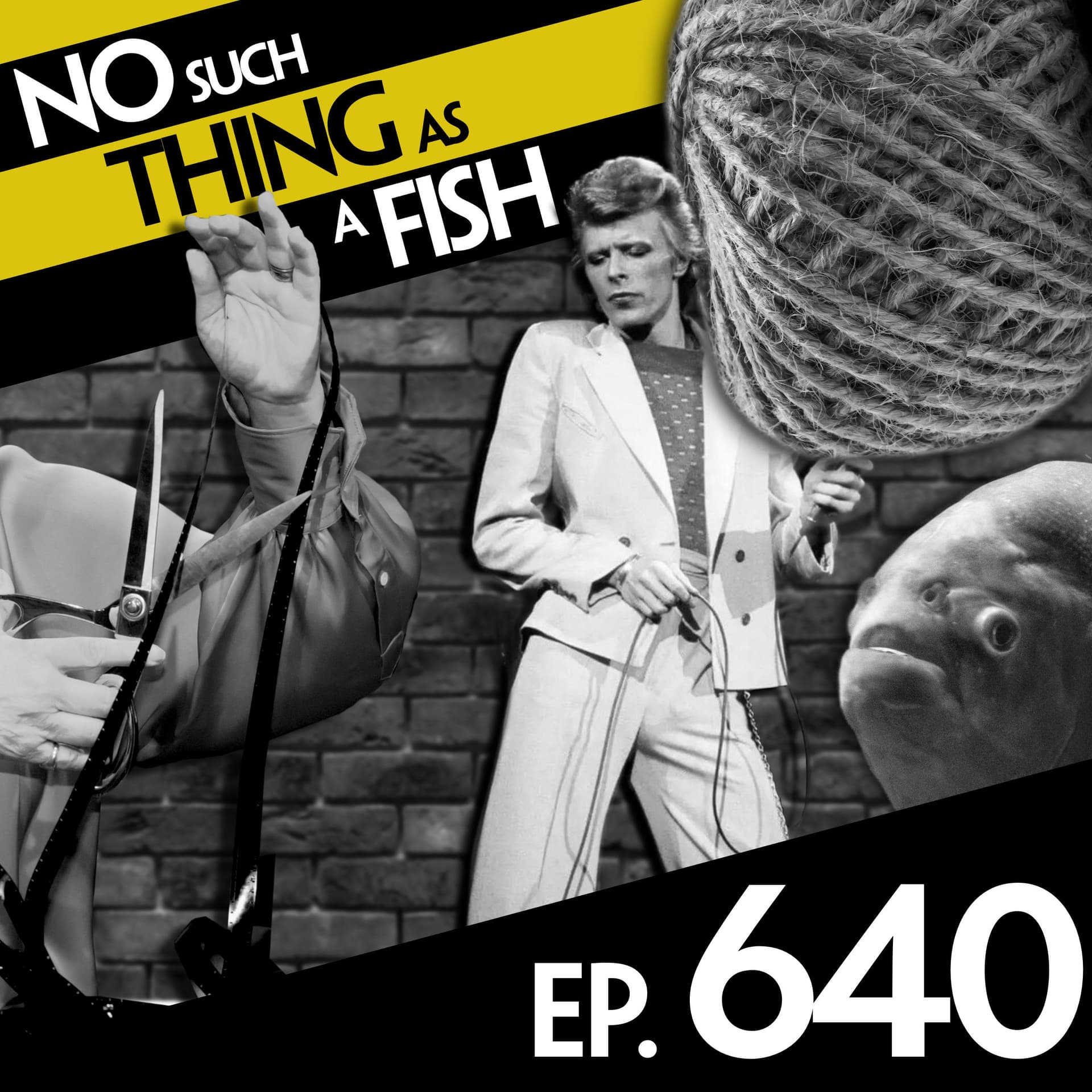
- Stand-up comedy’s “inventor” is claimed to be Charlie Case (late-19th century), nicknamed “the man who talks with string” because he always carried/fiddled with a lucky string; he performed joke-telling as “front of curtain” entertainment.
- BBC’s Talent Selection Group rejected a young David Bowie in 1965 as lacking personality/entertainment; Bowie’s band was “David Bowie and the Lower Third,” with songs including “Chim Chim Cher-ee.”
- The Swedish “Center Party” and Danish “Left” are described as right-wing due to political realignment/Overton-window shifts; Denmark’s Rasmus Paludan is cited for anti-Muslim provocations, with jazz used as counter-protest.
Written by AI. May contain mistakes. Listen to the episode to check what was said.
Chapters
Tap a time to open that second in VOQI Podcast Introduction
1:34 to 1:54
The hosts introduce themselves and outline the format of the episode.
Nish's Favorite Fact About James Cameron
1:54 to 3:17
Discussion about James Cameron's dedication after being fired from Piranha 2.
“Hello and welcome to another episode of No Such Thing As A Fish, a weekly podcast coming to you from the QI offices in Hoban.”
The Making of Piranha 2
3:17 to 4:52
Insights into the production challenges faced during Piranha 2's filming.
“And then I think it'll have to be like Police Academy.”
Cameron's Vision for Terminator
4:52 to 6:28
Exploration of how the Piranha 2 experience influenced Cameron's Terminator vision.
“But because he was half Italian and half Egyptian, the American movie industry wouldn't let him be director.”
Anna's Connection to Terminator
6:28 to 7:51
Anna shares her personal history with the Terminator films and their impact.
“And they said, really brilliant And I said, oh great, can I watch it?”
Cameron's Unique Directing Style
7:51 to 9:15
Discussion on Cameron's directing style and the crew's reactions during filming.
“Metal bloke is actually sort of perfect description of Terminator.”
Cameron's Legacy and Film Poster Design
9:15 to 10:37
Exploration of Cameron's early work and his influence on film marketing.
“Oh, it doesn't look like a giraffe anymore.”
The Influence of Jaws on Terminator
10:37 to 12:04
Connecting the evolution of cinema from Jaws to Terminator.
“have the kind of same experience which is an American director doing a science fiction film that a British crew of, you know, pretty hardened union guys cannot have any respect for whatsoever.”
Cultural Impact of Cinema
12:04 to 14:01
Hosts reflect on the interconnectedness of films and their cultural significance.
“It's kind of a bit of a Vietnam analogy.”
Casual Conversation
14:01 to 14:12
An informal exchange between the hosts about their age and experiences.
Show all 28 chapters
The Inventor of Stand-Up Comedy
14:12 to 15:56
Discussion about Charlie Case, the first stand-up comedian known for his string.
“My fact this week is that the inventor of stand-up comedy was known as the man who talks with string because he was never, well, I will tell you what, because he was never seen anywhere without his lucky string.”
Vaudeville and Front of Curtain Entertainers
15:56 to 17:46
Exploration of the vaudeville tradition and the role of front of curtain entertainers.
“everyone was like, he had a black parent.”
David Bowie’s Early Audition
17:46 to 20:03
Discussion about David Bowie's first audition at the BBC and its harsh critique.
“Oh, listen, I'd have really struggled in the vaudeville years.”
Superstitions Among Performers
20:03 to 25:31
Hosts share various superstitions and rituals of famous entertainers.
“But apparently this is quite a common thing, or it certainly was in the mid-20th century.”
David Bowie's Early Career Challenges
25:31 to 28:01
Further insights into David Bowie's struggles and milestones in his early career.
“That's nicer than what we all thought, which was that just someone had a horrific death.”
David Bowie's Early Career Struggles
28:01 to 28:40
Explore the formative years of David Bowie's career and his early struggles with success.
Influences and Musical Evolution
28:41 to 29:38
Learn about Bowie's influential mime teacher and his musical evolution during the late 1960s.
The Mime Act Experience
29:39 to 30:34
Discover the challenges Bowie faced performing as a mime act before gaining fame.
Bowie's Childhood and Personal Life
30:35 to 32:18
Examine Bowie's childhood experiences and how they shaped his identity and creativity.
The Eye Injury Incident
32:19 to 33:58
Delve into the story of how Bowie’s eye injury influenced his appearance and personal relationships.
“And this has actually put me off him a bit and I messaged Dan Schreiber, cruel we're doing a podcast about David Bowie, who Dan Schreiber absolutely loves, but saying, I don't really like him.”
Bowie's Spiritual Exploration
33:59 to 34:39
Discuss Bowie’s flirtation with Buddhism and its impact on his life and work.
“Because they remain very close friends That's cool That's good You said that he almost gave up to be a mime He also almost gave up to be a Buddhist monk Didn't he?”
Bowie's Dark Days and Drug Use
34:40 to 36:28
Insight into Bowie's struggles with drug addiction and its influence on his art.
“Fifi Greywhiskers But the point is That a lot of the Buddhist Sort of things that was happening at the time And everyone getting into Buddhism Was down to this guy's book And he was completely That's amazing Mrs.”
Concert Memories and Personal Grudges
36:29 to 38:44
Hear a personal anecdote about attending a Bowie concert and the lasting impact of a small grudge.
“Can I just say, reading lots of books about Hitler and the Nazis is not actually a sign of anything.”
Political Discussions in Scandinavian Context
38:45 to 42:02
Analyze the complexities of Scandinavian political parties and their shifting ideologies.
“Bear in mind, I'm at this gig on my own.”
Jazz as Soft Power: The CIA's Musical Influence
42:02 to 44:21
Explore how jazz musicians were used in American soft power operations during the Cold War.
“at least we've been a few bucks at the bottom Yeah, there's still some consensus around some economic principles.”
Political Oddities in Meghalaya, India
44:21 to 46:31
Discover the unusual political names and history in the Indian state of Meghalaya.
“It is really, really brilliant and sinister.”
The Evolution of Political Parties
46:31 to 49:43
Learn about the origins and evolution of political parties in Britain and their impact.
“We really could have done with the clarification of some cover art there.”
Frivolous Political Parties and Their Impact
49:43 to 52:27
Delve into the humorous side of politics with examples of frivolous parties worldwide.
“But in 1994, he was elected, how God was elected, unexpectedly, really didn't expect to be, got 23 ,000 votes and it was a hung parliament.”
Transcript
Automatic transcript. May contain errors.0:00Hi everyone, welcome to this week's episode of No Such Thing as a Fish, where we are joined by the legendary, by the superstar, by the all-round top guy, who is Nish Kumar. And now anyone in the UK will know all about Nish. He is very often seen on our televisions and now he is on our podcast. If you are not from the UK and you're not familiar with Nish's work, then after listening to this episode, you will surely want to go to YouTube. if you search for Nish Kumar you will find a full recording of one of his shows and it's definitely worth checking out his stand-up because it is brilliant if you are in the UK or in Ireland then maybe you want to go and see Nish live you can go to nishkumar.co.uk and you will find all the dates of his tour there he is doing a work in progress at the Edinburgh Festival and then he is going on the road in September and he is very likely to be at a town near you if you'd like to know more about us then go to patreon patreon.com slash clubfish is a place to go you can sign up there for free and get lots of little bits and pieces or you can sign up to one of our tiers and get even more in fact if you go to the plenty more fish tier this week you will get an extra long episode of this show in fact you always get one of those but this show is about 20 minutes longer than the actual episode and that is because nish kumar is so knowledgeable about so many different things especially the subjects we talked about today and so there are so many extra bits extra facts extra jokes extra anecdotes and it is all in there but if you don't want to do that do not worry just sit down and listen to this week's episode with nish kumar on with the podcast
1:54Hello and welcome to another episode of No Such Thing As A Fish, a weekly podcast coming to you from the QI offices in Hoban. My name is Anna Tyshinsky and I'm sitting here with James Harkin, Andrew Hunter-Murray and Nish Kumar. And we have gathered here today with our four favourite facts from the last seven days. In no particular order, here we go, starting with you, Nish. My favourite fact that I've gathered in the last seven days is after James Cameron was fired from the film Piranha 2, he broke into the studios multiple times in the dead of night to improve the edit. What a hero. Yeah, he cares that much about the craft.
2:33It's so funny to think of the word craft associated with the film Piranha 2. It's not Bong Joon-ho saying to me, this is cinema. It doesn't quite feel like that. To give him his due, I think that is part of the reason why he is, I think he occupies, I think about maybe four or five of the 20 most profitable films of all, maybe not profitable, but most financially successful films of all time. Because the sort of common thread of all of his movies is this sort of almost operatic grandeur being applied to very sort of mainstream conventional films. They get elevated by his sociopathic commitment.
3:16So hang on
3:17Anna Ptaszynski:Is Piranha 2 In the top 20 grossing films Of all time Because I haven't It's one of the Cameron Oeuvre That I haven't seen Yeah right I don't think it's In the top two Of the Piranha films I think all of the Avatars are floating Around in there Oh yeah Yeah yeah yeah And Titanic I think it's cheating When your sequels count Which people do it With Avatar They count Avatar And its sequel It's like lump them together Because yeah If you know this one's Grossed a lot Then the next one's probably But then it'll just be Avatar Marvel. And then I think it'll have to be like Police Academy. Police Academy.
3:51I think that's it. What I found mad about reading about Piranha 2 is how, like you say, it's surprising that James Cameron cared enough to break into the edit suite, but how seriously they all took it. Because you think, surely, if you're working on these films in any role, you know you're making a joke, don't you? No, Piranha 1 was huge, right? It was a big movie that did really well.
4:11Anna Ptaszynski:It was Joe Dante of Gremlins fame, I believe. and then Piranha 2, Cameron had been hired to work on it and we should say it's his first ever film he'd worked on as a director and he was hired to work on it by the producer and it sounds like it was a nightmare to work on and he was fired quite quickly they filmed in Jamaica the outdoor Piranha bits and then they actually moved to Rome for the indoor bits and he was fired at the end of the Jamaica bit so that's why he was breaking in he was breaking in because he'd been fired from the project but his name was still on it And he thought, this is so bad.
4:45Anna Ptaszynski:I can't let it go out like it is. The thing was, there was this guy called Ovidio Asinaitis. Yeah. It's like to video. It's almost his first name. He really wanted to be the director. But because he was half Italian and half Egyptian, the American movie industry wouldn't let him be director. So he had to bring someone in. And his idea was, we'll bring a new person in. They won't do anything, but I'll be the real director. Yeah. But then he brought James Cameron in. who kind of took it a bit seriously. So unlucky. One of the most dementedly single-minded people in cinema. Because as far as he knew, he was a 28-year-old nobody, right?
5:23He was like, good, I'm getting an intern on. And he was obsessive. Was he like, is he a Roger Corman guy? I think he comes out of that sort of, Cameron comes out of that stable where they were just sort of all being trained to do everything in film and then sort of thrown out into the wider world. A couple of years ago, I went to the Academy Museum in L.A., where they sort of have various bits of film ephemera. And they have his concept sketches for the Terminator. And when you look at the concept sketch of the Terminator, you go, that looks exactly like the film. It's exactly like the film. And so the thing that my main takeaway from looking at those sketches was this is a guy with a vision.
6:06And this is a man who I imagine will walk through and over anything he has to. He does come across as that. He's the Terminator. Yeah, he is the Terminator. I bet he thought he was the hero of that, but he was the villain. He was telling you about Terminator 2, but that's another matter. I watched those movies so many hundreds of times When I was palpably too young to be watching them Because my parents didn't My parents would stop us from watching things like I remember my parents saw Pulp Fiction And it's kind of the worst thing they could possibly have said to me Because I said, how was it?
6:41And they said, really brilliant And I said, oh great, can I watch it? They went, no Well why would you say that the movie was good? I was like 10 years old I was like, why would you say the film is good? But they saw the Terminator box because they thought, yeah, it's robots and lasers, who cares? And then, you know, meanwhile, they walk in the room and a guy's using a fountain pen to dig his eye out. I do think my mum at that point was like, oh, okay, I think we might have misread the situation here. I mean, some people still aren't really sure what Terminator's about. Look, I was impressed by what I learned.
7:12Anna Ptaszynski:I'm just going to get a message out on my phone that we received from Anna. What's embarrassing about this is my first serious relationship was with a guy, it was for three years, and he was obsessed with the Terminator films. Anna, please, we need to read out the evidence before we have your response to it. Anna Tijinsky. The concept of Terminator is absolutely mental. I just thought it was about a metal bloke killing people. Which, at the most basic level, it is. Nothing you've said there is incorrect. I suppose it had more layers than I expected. Yeah, you've not disproved your initial assumption.
7:51No. Metal bloke is actually sort of perfect description of Terminator. There was a real, like between Terminator and Robocop, my childhood was defined by metal bloke. Yes.
8:03Anna Ptaszynski:We have Piranha 2 to thank for Terminator. I didn't know about this. So basically, Piranha 2 happens and it's a disaster. He develops a high fever. He's in Rome. Yes. So at this stage, he's not being paid anymore. Is that right? No, he's off the clock. Yeah, this is the story. This is the crazy inception of Terminator. He goes into, he's hospitalized with this really high fever. But while he's in hospital, probably because of the Piranha 2 stressful, and sacking and all that, he has this vision of a skeleton robot coming out of a fire. A metal bloke. A metal bloke. And crawling. That's the only bit of Terminator I've seen, is that scene where he's crawling at the top of him.
8:41I don't know what's happened to the bottom, but he's crawling towards that woman. I couldn't look at how excited I was on. So in the Piranha 2 debacle, Asinitis, sounded like a bit of a douchebag as well, the producer. but I mean he did talk about James Cameron and like he is obviously a massive control freak and he said so Asonitis I don't know if I'm pronouncing his name right but Asonitis that's better and that was much better what in the name of Super Mario Brothers was that
9:07he did say Cameron was very arrogant and he said at one point he just came out of his office and he saw his crew the entire crew and sat way out in the distance out to sea on a bunch of boats when they were meant to be on the beach filming and the first assistant director was fully clothed swimming towards the shore and he got to the shore and he pulled himself up onto the beach and he shouted at Asinaitis that guy is a maniac as in James Cameron's a maniac I'm out of here and James can Asinaitis is like what's he done why are you all out at sea he was like James Cameron saw the perfect shaped cloud and he knew we had to film it so the entire crew and set is now on a series of boats out at sea chasing a cloud
9:45Anna Ptaszynski:just following chasing after it The whole thing with clouds is like, oh, that one looks like a giraffe. Oh, it doesn't look like a giraffe anymore. They change shapes. Good point. That's so weird. And listen, maybe this is, you know, and I say this as a huge fan of his work, and maybe this is a bit of snobber on my part, but when you hear stories like that about Kubrick or Kurosawa, you're like, yeah, of course you have to get the perfect thing. What you're making is this kind of, this is a sort of work of art. When you hear about Piranha 2, you think, have you lost your fucking mind? the other thing that I always like to bring to this this is actually something that James Acaster introduced me to and it's a real obsession of his so in the book The Futurist The Life and Films of James Cameron by Rebecca Keegan she narrates a story about the shoot of Aliens and Aliens shot at Pinewood and I think Star Wars shot at Elstree and both of those films have the kind of same experience which is an American director doing a science fiction film that a British crew of, you know, pretty hardened union guys cannot have any respect for whatsoever.
10:57And like they used to call, when they were shooting Star Wars, they used to just refer to the Chewbacca costume as the dog. And so on the final day of shooting Aliens, so this, according to Rebecca King's book, this is what James Cameron says to the crew. This has been a long and difficult shoot, fraught by many problems. But the one thing that kept me going through it all was the certain knowledge that one day I would drive out of the gates of Pinewood and never come back here and that you sorry bastards would all still be here. That's his like rousing end of shoot speech.
11:27Anna Ptaszynski:That's what Dan Schreiber says to us every episode of the show. Before he goes on holiday. I thought there were huge problems with tea breaks. Star Wars and aliens alike. Basically the crew know very clearly when they get a tea break. Yeah, you get a union tea break. And Cameron is there being an auteur And saying but we need to film for 28 hours To get this perfect shot in this perfect way And they're saying well we can't We're going for our tea break I love it I read that he made movie posters Cameron Before he got into directing Did he? And that he basically didn't watch the films Because they're all terrible So he just got the name of it And he would just make something that he thought looked cool And then send it in But it meant that he was really a control freak With the posters for his movies and so with aliens some guy showed him what he thought the poster should be for aliens and he said honestly if I have the choice between that piece of shit and an all black frame I'll go with the all black frame and this guy obviously wasn't really listening and he then went to his designers and went he wants an all black frame and then we have the iconic sort of he just says the word aliens right yeah I think the strapline is this time it's war because the idea is in the first film there's one alien and in the second film there are thousands.
12:46Anna Ptaszynski:It's kind of a bit of a Vietnam analogy. Disastrous, overconfident American marines heading into a war that runs out of control. But I think supposedly he invented the this time it's blah. Really? Well, maybe. Was that before this time it's personal? I know that was Jaws, wasn't it? Jaws 2. Was Jaws 2 this time it's personal? Was that not first Jaws? First Jaws is business. third Jaws this time it's pleasure about the shark and Brody going on a lads holiday do you know what we have Jaws to thank for the Terminator because we have Piranha 2 to thank for Terminator Piranha 1 to thank for Piranha 2 and Piranha 1 only existed because it was like a rip off of Jaws and Steven Spielberg went to watch it and they were going to sue and say you can't make this and Steven Spielberg enjoyed it so much he was like oh don't sue them this is really great and is that why because then he Joe Dante then yeah exactly Spielberg produced Gremlins yeah so then they worked together afterwards wow that's amazing that's really cool we have so many things I haven't seen to thank for so many other things I haven't seen I'm really grateful today what were you doing we're the same age what were you doing I didn't know what were you doing I was going out yeah
14:12We shall move on to fact number two. That's my fact. My fact this week is that the inventor of stand-up comedy was known as the man who talks with string because he was never, well, I will tell you what, because he was never seen anywhere without his lucky string. Consider yourself admonished. That's what. I thought I said what. As if you weren't going to clarify. That was just going to be the end of the discussion. Moving on, fight number three. The inventor of sound of comedy was known as the man of string. Okay, anyway, who's got a fact about Roger Corman? I just also want to clarify, he's not a man of string, he's not made of string, he just carries string.
14:52So we've got metal men, we've got string men.
14:54Anna Ptaszynski:Metal men, sure. So he talks with string, as in he talks but he's holding string? Exactly, yes. This is a guy called Charlie Case. He tends to be referred to as the person who invented stand-up comedy, although obviously there's a lot of facets to stand-up, so lots of rivals in that claim. But he was born in 1858, so it was late 19th century. and this is in a book called The Legacy of the Wisecrack which I mentioned because it had some other interesting bits in it and he was basically the first person who took to the stage as it says with the explicit purpose of telling jokes to make people laugh no props no well no costume they say although at the time almost everyone did blackface on stage and he did do that so but I read he was he was mixed race right well it's very unclear it's not sure yeah the records are a bit His obituaries say they think he was mixed race, but black people and white people at the time would go in blackface.
15:44Anna Ptaszynski:Yes, and black performers blacked up sort of his way into the industry because of the white performers. Is that it? Yeah, very strange. And we really don't know with him. I think he probably was, but people didn't mention it in his life. And then in his obituaries, everyone was like, he had a black parent. And he had this string that he always carried on stage and he fiddled with it constantly. Couldn't be without it. A couple of times he forgot it. And if no replacement could be found, he just fully you know broke down he said i might as well be without my hand and he explained it he said when he first went into business he wore a pair of black gloves and he would fiddle with them and toy with one of them pick at the fingers and eventually a bit like when you give a baby a rag and then after five years you realize it's just a string he'd picked it his gloves so much oh really like a blanket rather than a rag usually why are you giving your baby a rag give your baby a rag no you know what it is we need to start toughening up the younger generation they're too woke give them a rag but there you go so he needed that and he you know he really did he couldn't be without it that's amazing and I guess like it's to do something with your hands right I think so yeah yeah exactly I've never heard this man's name in my life before no he is not famous it makes sense that it's in that period because he is sometimes we're still referred to as the turn And I never really understood why that was.
17:05And it's because in vaudeville shows, when they were turning the set from, you know, the acrobat to the sort of marching band, they would put the curtain down and somebody would come out and tell jokes to stop the audience from getting bored. So they were turning the set behind the curtain. So the person telling the jokes is still sometimes referred to as the turn or front of curtain entertainers. And it's because I love that. Yeah, it's like, it's, you know, particularly like a lot of the like old school guys who do lots of gigs at like Blackpool or sort of Butlins will call us front of the curtain.
17:38And we were basically just there to stop the audience getting bored. Sometimes obviously had the opposite effect. It really depends on who you employ. Oh, listen, I'd have really struggled in the vaudeville years. I'd have been a real struggle. Half the audience have left and they are asking for their money back. They thought they were going to see elephants And instead they've seen a man yelling David Lloyd George He was really sticking it to Gladstone Nish we need to clear the stage At the end of the show So if you could come on then Clear the auditorium So this guy was he British Was he British?
18:13Oh my gosh Charlie Case I think he was American I think he was American They had the same sort of tradition of Bordeville When you do stand up in a Matcham theatre Like the Victorians, say what you will about them, they knew two things, colonising my ancestors and building theatres. And when you do stuff in a match and theatre, you understand, oh, this is what this is built for. Because the acoustics are so unbelievably good. A thousand seat room has the same sonic dynamics as a 300 seat basement. Yeah. It's pretty extraordinary. It's unbelievable. You know, I'm thinking of something like Hackney Empire has loads of stand-up They have a pantomime every year And then Robin just did a gig there Like when her last album came out I think she did like a special sort of small gig And so you're like There's very few places where you can put like Robin, a pantomime and me Can I just ask Andy which Robin you thought?
19:10Initially I did think Batman and I thought Robin Ince Was it neither of those? No, it was
19:17Anna Ptaszynski:It was Robin R-O-B-Y-N Isn't there also Robin Thickey Robin Thickey is A popular musician Opposite end innovation wise Possibly considered a D innovator She threw pop music forward five years And then he actually was a useful corrective To set it back An innovator He's sort of the equivalent Of the barbarian horde smashing up rope But I thought isn't it on first name terms With Robin Thickey Is this likely? Can't be Ince makes more sense Because I am on first lifetime With Robin Ince That's what I thought Yeah yeah yeah Vicky and I I'm going to amaze you here We've never crossed paths I was looking at some Superstitious comedians So I looked at Hilda Baker Who was a Bolton comedian From the 1950s And she considered The colour green To be so bad luck That you weren't allowed No one was allowed to wear green in the whole theatre.
20:20But apparently this is quite a common thing, or it certainly was in the mid-20th century. And the reason is that Moliere, who died on stage during the hypochondriac, was apparently wearing green when he died on stage. I've never heard this before. That's also why, because Tommy Cooper, of course, died on stage wearing that square red hat with the black castle. And no one wears that anymore. I didn't know Moliere Tommy Cooper. That's incredible. They didn't call it that back then. In the hypochondriac as well So he was like Was he playing the title? Oh my god So people thought it was part of the
20:57Anna Ptaszynski:And would he be coming off You know in between scenes Saying I'm really not feeling well And they're saying I know of course He's Daniel Day-Lewis-ing it Of course we don't call it that now But that was the thing with Tommy Cooper right He collapsed and people thought it was a bit Yeah Are you superstitious Nish About any aspect of a show? I'm trying to think about sort of pre-show rituals the most important thing that I always do is I always piss before I go on, like I'm obsessed, even if I don't need it I'll try and force one out and I think part of it is because I read this thing apparently David Cameron used to give speeches on a slightly full bladder there's some idea that That's an episode of Friends as well Joey gets a role where he really needs it.
21:46Anna Ptaszynski:And they're just so impressed by his urgency. His urgency, yeah, because he needs to pee. And then he starts doing it for every role. Apparently having to pee makes me a really good actor. Yeah. So Cameron, David Cameron is the same. But then I also read that he got that, that Hitler used to do that as well. And I think, I don't know whether any of that's correct, but when I read that, I thought, well, I want to be like Hitler or Cameron. I'm going to make sure I speak with the emptiest bladder possible in front of an audience. You know what? I always have a wee before I go on stage as well. But I also, I do the Wii and I sit down when I'm doing the Wii And then I sit down for another 20 seconds And then usually a little bit more comes out And I got that tip from Sandy Toksvig Who got it apparently from Princess Anne What?
22:26And I thought, I want to be like Sandy Toksvig in Princess Anne So what do you mean there's always more pee? According to Princess Anne Just holding back Princess Anne, you've got a UTI, girl
22:43that's fascinating i'm just i'm so disappointed that when you said i was people going on stage because david cameron i was just desperate for it to be that david cameron once went on stage like a star is born just a really dark tory party conference or just after the eu referendum after after he walked out of dowding street and that was the result and quit he just immediately pissed himself he was wearing dark trousers so nobody knows that conference where they all stood really legs apart yeah that's why he was shaking it out um on a comedian's uh superstitions carol burnett um first woman ever to host a variety show i think she at the end of every show her whole life tugged her like did a little um ear tug she's 93 so i shouldn't know what she said um little ear tug at the end of every show do you know why she did that Why?
23:33She, when she went to do her first show, which was the Paul Winchell and Jerry Mahoney show in December 1955, she was 22 years old. She was playing the girlfriend of a puppet. And she told her grandma, her nanny, she was like, I'm going to be on telly. And her nanny said, oh, say hello to me, will you? And she said, I can't really do that on TV, but I'll give you a little sign, this. Oh. And forevermore. And she said it just means, she said at first it meant, nanny, I'm here and I love you. And then later it meant, nanny, I'm here and I love you and your check's in the mail. Oh that's so nice
24:04Anna Ptaszynski:That's really nice Pavarotti Funny Really good comedian It's a shame because it's on the undercard of his career But he was a funny dude He was very superstitious And he wanted to find a bent nail Before a performance Backstage And he believed that if he found one That's really good luck And it's a theatre So there's carpentry going on There's often a nail around the stage but his iron would frequently just leave nails strewn around so that Pavarotti would find one before a gig and therefore have a great show. I think that's probably the kind of stuff my tour manager does without me really fully understanding it.
24:43I think there's a lot of unseen work being done by people around me to sort of get me on stage. Harold Lloyd. Oh, yeah. Very superstitious. He had a nice big house near Hollywood and there was an ornamental fountain outside of it and he thought it was extremely bad luck to drive around the fountain. Oh, wow. So he never did it at any time in his life. And the only time he ever did it was the hearse on the way to the funeral. Okay. Wait, his own funeral? Yes, exactly. And the interesting thing about this is his house after he died became like a filming location. And in The Godfather, Westworld, Beverly Hills Cop and Commando, someone drives around that fountain and then later in the movie suffers a horrible, horrific death.
25:28No. Have they written it in? That's it, they've written it in. Oh, wow. That's very nice. Oh, that's so cool. Yeah, isn't that good? That's nicer than what we all thought, which was that just someone had a horrific death. Yeah, yeah, yeah.
25:46Okay, it's time for fact number three, and that's Andy.
25:49Anna Ptaszynski:My fact is, when David Bowie auditioned for the BBC in 1965, The judges ruled that he was a singer devoid of personality, that his band was not particularly exciting, and that there is no entertainment in anything they do. There is no entertainment in anything they do. It's unambiguous. This guy's going nowhere. It's not your shit, is it? It's really cutting. Yeah, it's much more scientific. So this was a thing that existed. It was called the Talent Selection Group. And it was a BBC institution that pulled together various radio producers to just assess everyone who wanted, you know, to be played on BBC radio.
Read the full transcript
26:33Anna Ptaszynski:Right, yeah. How old was he in 65? Very young, very young. He was 69 when he died in 2016. And I can't, I'm now struggling to do the basic mathematics. So he would have been 18, 17 or 18. Wow. So he was very young and playing with a band. And the band was called David Bowie and the Lower Third. and it doesn't sound like it was a good audition. I mean, you know, I don't think it's too... I mean, when you're 18. Exactly. I can see the picture of him. He must have been playing the sax and singing, I think, possibly. Well, they did three songs because that's what you brought to the talent selection group.
27:07Anna Ptaszynski:One of them was by Bowie himself. One of them was by James Brown. The third one was Chim Chimery from Mary Poppins, which is a rogue choice. That makes 100 % sense to me. Like, if you think about his music, It is music that exists at the intersection between James Brown and Mary Poppins. Like, actually think about it. If you really think about it, there is like this interesting combination of black American music and English whimsy. And actually there is something of both of those in Ziggy Stardust. Well, if you've been on the talent selection group, maybe it would have gone differently. Another verdict.
27:45Anna Ptaszynski:I don't think the group will get better with more rehearsals. Just devastating. One of the most withering things I've ever They give them all the time in the world They're not going to change Terrible That was terrible and you've peaked It's a bit like Simon Cowell isn't it Would you say It's that kind of slightly withering Yeah yeah yeah And I don't think it was big dogs I just think it was random producers from across the beam Who were pulled in to assess And they assessed a load of different acts They came up with various quite ropey judgements On acts who went on to be huge but it's an audition it's at the very start of your career they don't all go well you know and he took ages to get successful I hadn't realised I think by 1969 so before he was at all famous he'd already been in seven bands many of which he founded then 1969 Space Oddity was rushed out to coincide with the moon landings and was like the theme tune for that and was huge but then he disappeared again and I don't think he had another hit for about four years yeah no he didn't disappear he was just simply he was living in Bromley oh yes which is essentially the same Sorry, he was in Beckett at that point But yeah, he was sort of That period of his life after he turns 18 He kind of gets very fixated on this Mime teacher Who is like a really, really Influential person in his life But also, it's worth seeking out Some of the kind of first album Which I think is self-titled Or maybe it's called Space Oddity It is, David Bowie It's worth checking out that era of it Because it is not I say this as a very, very big fan of his you've hidden you've hidden it well sorry no problem well of course beckerman is in bromley so yeah yeah yeah it was it's bad oh wow but it's sort of bowie at this point is he sort of goes through so many different iterations and yeah he falls in with he's he he goes studies at mime school then he the first album is sort of very like flower powery like tail end of summer of love hippie stuff but then the shift between that and the man who sold the world is extraordinary right it is an incredible transition he basically really gets into the velvet underground and that is the thing that kind of unlocks he's just trying all sorts of he's trying so much out yeah can i just say one thing on the mime thing because i found out a little about this this is insane so he falls in With this mime artist Called Lindsay Kemp Right And becomes so Entranced That Bowie nearly Abandons music For interpretive dance Yeah When he was Again Not very famous yet He opened For T-Rex He supported them On You know Tour As a one man Mime act Depicting China's Invasion of Tibet Brilliant And that is a challenge Like that's a challenge Right As a one man Yeah It's my favourite It's hard enough If there are a few of you You've got to think Outside the tiny Invisible box
30:43Anna Ptaszynski:Basically the T-Rex audience hated it For two reasons One, come on, we're here to see T-Rex And secondly, a lot of them were communists And very thrown out So this was a few months before Space Oddity came out He later wrote to John Peel Who'd seen this You decided the problem was that I was doing mime You didn't like mime And until I came here to America, I never realised that you were right Nobody in the world likes mime it is an insane period and listen thank god that doesn't exist because i imagine it doesn't now look higher it looks like mickey rooney and breakfast at tiffany's i imagine i imagine but the but weirdly that's you know lindsey kent was a huge influence on him creatively and they were lovers at the time when you look at things like ziggy when you look at the video for ashes to ashes even though that was sort of because he was also falling in with the new romantics in the early 80s you still see the influence of theatre and mine oh yeah definitely yeah it was it was I mean we loved him anyway but also it was really exciting because I went to school in Orpington down the road from the school he went to but he lived in Beckham and they tried to get him to come back like in the early 2000s he was like absolutely not when he went to America in interviews he would refer to things as being so Croydon if they were bad but he was that's why you know like the Buddha of Suburbia the whole novel is really about growing up in Beckham and Bromley and feeling depressed until you realise David Bowie lived there like how that like unlocks the protagonist's creativity and sexuality I was the same with Hilda Baker the Bolton comedian from the 1950s oh yeah I think everyone from Bolton you've only just started wearing green now one of the formative moments of his life came from that time in Beckenham slash Bromley where he's, so he's famously, his eyes sort of look like the different colours, don't they?
32:40And this has actually put me off him a bit and I messaged Dan Schreiber, cruel we're doing a podcast about David Bowie, who Dan Schreiber absolutely loves, but saying, I don't really like him. And I think it came from this. When he was 15, he had best friend George. They both fancy the same girl and George got a date with her and Bowie called George and said, listen, I've spoken to her and she doesn't want to go out with you actually, but she didn't want to say to your face. So George doesn't show up, then finds out Bowie's tricked him and then goes into school next day and Bowie's boasting about how he's now going out with this girl.
33:12So George, quite right, goes and clocks him in the face, in the playground, damages his eyeball. Said he really didn't mean to hurt him. But what meant to hurt him a bit?
33:23Anna Ptaszynski:Funny way of going about it. I meant to hurt him emotionally when I punched him in the face, yeah. Didn't mean to cause him permanent damage. But it gave him this condition called anisocoria, where one pupil is larger than the other. So his eyes aren't different colours. It's just one pupil's small, so it looks like his eyes are light coloured. And I really like this from an interview with a magazine. I think someone had written into the magazine with questions for Bowie. And one of the people said, hey, what would you say to that kid at school who punched you in the eye in case he's reading? And Bowie said, I'd probably say something along the lines of, it was great seeing you last week, George.
33:58Did I leave my lighter in your car? Because they remain very close friends That's cool That's good You said that he almost gave up to be a mime He also almost gave up to be a Buddhist monk Didn't he? Did he? Yeah And that's because he got in with some Buddhist monks In London But also he read a book The Ramper Story by Tuesday Lobsang Ramper Who Andy remembers as a friend of the podcast He's a big deal He is a big deal Because he was not a Buddhist monk He was in no way a Buddhist monk He was a plumber from Devon Who pretended to be a Buddhist monk And wrote about his life as a Tibetan monk Until people kind of came to his shows And said can you read this thing that's in Tibetan He said I can't really read Tibetan And I've never been to Tibet And he said oh it's not my fault I was possessed by the spirit of a monk When I fell out of a tree trying to photograph an owl That's right And then they said Yeah that's not true is it either And he went oh no no fine Actually it was all dictated to me By a Siamese cat called Mrs.
35:09Fifi Greywhiskers But the point is That a lot of the Buddhist Sort of things that was happening at the time And everyone getting into Buddhism Was down to this guy's book And he was completely That's amazing
35:22Anna Ptaszynski:Mrs. Fifi Greywhiskers the cat later wrote I think two of her own books Through Tuesday Lobstack Rampers and one of them is called Living with the Llama yeah yeah yeah that's true it's hard when a cat writes a book called Living with the Llama because I think you do have to clarify in brackets afterwards that you mean the llama as in religious llama you can do a lot with the cover art
35:45I'm afraid you are not getting away with a James Cameron black square on that one that it's essential that we clarify with the cover art
35:53Anna Ptaszynski:that's so funny I didn't know there was a Bowie Ramper kind of way of understanding that's amazing So what you Bowie fans, big Bowie fans, what's the view on the whole thin white duke, quite intense flirtation with fascism, Nazism, that kind of stuff? One word for the Nazi stuff. Your friend of mine, cocaine. If you watch the Alan Yentob documentary Cracked Actor, which is his US tour, I think in 76, 75, 76. You can't believe he didn't immediately drop dead. Yeah He was In a bad way The rumour is at the time That he was subsisting exclusively On a diet of cocaine and milk But he is in He is in a psych He's coped himself into a psychosis Yeah There's a bit in it Where he just starts going They're following me They're following me And he is Oh wow He is truly in A kind of psychosis Yeah I think people want To intellectualise it And say well He had this fascination With the United It's not any of that He did read a lot of books He did read a lot of books About the Nazis But he I think people want to talk about it as a kind of intellectual Like an extension of his interesting character And performance He was gapped out of his mind And I don't mean your friend Who's standing too close to you at a party And asking if everyone hates him I mean he was seeing things He was Like David Bowie was such an extreme party animal That he had to go to Berlin To clean up He had to go to Berlin To get drugs out of his system That's how many drugs he had in his system at that point.
37:28Anna Ptaszynski:Can I just say, reading lots of books about Hitler and the Nazis is not actually a sign of anything. That's just a sign of being a middle-aged man, all right? I'm currently ploughing through the last days of Hitler, and it's terrific. That's it, really. No spoilers, please. I saw him on the last tour he did in 2004, and he had something like a kind of heart valve problem about two months later and then he never toured again. And he sort of would make like these intermittent public appearances. But I went on my own. This was in a period where I was going on my own to see a lot of gigs. And I saw him and James Brown in kind of quite quick succession.
38:10Anna Ptaszynski:Oh, and Mary Poppins, I hope. And Mary Poppins. And the David Bowie gig is the only time someone asked me if I was lost and needed help. Oh, wow. Oh, wow. The only time. Are you okay? Are you lost? And I was like, no, I'm here to see David Bowie. And I've always carried resentment towards a man who was sat two rows in front of me wearing a Lou Reed Transformer t-shirt. And I, at the time, I remain a big Lou Reed fan, but I was really a big fan of the Lou Reed album Transformer at the time. And Bowie said, we're going to do a song by the Velvet Underground. And I cheered. Bear in mind, I'm at this gig on my own.
38:46And I assumed the man in the Lou Reed t-shirt would also cheer, and he didn't. and I was like, you're a fan of only Lou Reed's solo output? You've got no time for white light, white heat? Maybe he's just not a cheerer, you know? Well, he really made me look like an absolute twerp.
39:02Anna Ptaszynski:That is, I would say, the smallest grudge I've ever heard. Carried for the longest time. Because of how long you've kept something... It's 22 years. I still think about that guy and I'm like, that's the guy in the Lou Reed t-shirt.
39:22we should move on to our final fact of the show and that is james's fact okay my fact this week is that the swedish political party called the center party and the danish political party called left are both right wing are they trying to just nab sneaky votes no not really so i was reading an article on electoralreform.org.uk and it was a list of badly named parties and basically these parties all started off kind of left of center 100 150 years ago and things change like the democrats and republicans have swapped over a couple of times i think of what they believe right and also the the what's that window called overton the overton window move so people who were a bit left-wing or a bit right-wing and now more centrist or whatever and that's what's happened with these two parties which is the swedish center party and venstra which is the danish for left and the danish one is the main rice of center party and has been for 25 years and the center party it depends on their leaders because they are a little bit centrist but at the moment they're
40:30Anna Ptaszynski:more right-wing but you can't change the name it's easier to change your opinions i guess because everyone knows what the party is everyone knows the name really tricking anyone because everyone Everyone in Denmark knows this party. I like that you say it's easier to change your opinions. You're suggesting rather than change their names, they should just become left wing. I wasn't really suggesting anything. I hadn't finished that thought. It is a bit like if Krispy Kreme Donuts were like, we're plumbers now, but we've got a really strong brand identity. You're like, well, you could just change it.
41:00No, no, Krispy Kreme it is. Listen, I will say, in terms of tailoring this podcast episode to your guest. This could not be more clearly my internet searches. Electoralreform.org, James Cameron's Wikipedia page and a video of David Bowie talking about the internet. Denmark also has the radical left party, Radicale Vonstra.
41:22Anna Ptaszynski:Where are they? Where are they at? They're on the left, but they're the least radical of all the left-wing parties. Really? Something with radical in its name. It's centrist. It's so good. It is a problem. And listen, I am painting with a broad brush here and I understand there is more nuance to these things but it is sort of the problem of talking about Scandinavian politics because you're like, these guys are really right wing, they only believe in partially comprehensive state cover for I think the thing that distinguishes them is there are parties that there are basically parties that are like, that are socialist socialists and there are parties that are nationalist socialists When you say nationalist socialists that has at least we've been a few bucks at the bottom Yeah, there's still some consensus around some economic principles.
42:11I think there's some more divergence around.
42:13Anna Ptaszynski:So we believe that everyone gets a year's maternity or paternity leave, but we do also believe in invading power. Yeah, exactly. Is that it? I believe there's an element of that. There's a lot of anti-Muslim sentiment among certain parts of Scandinavia. So there's a guy called Rasmus Paladan, who's a former member of Venstre. He's probably the most famous right-wing politician in Denmark. and he's like burned Korans and stuff like that. But there's a group called Free Jazz Against Paladin that follows him around the country and plays jazz very loudly and very badly at all of his events. Is jazz the right...
42:48Anna Ptaszynski:I'm not saying they're doing it badly, but is jazz the right genre of music to... I suppose it's quite surprising, you know, it goes in new directions, which is quite useful. Famously anti-communist jazz, wasn't it? It was pushed by America to kind of stop communists from liking communism. Was that? Well, and also the musicians themselves were not aware sometimes, genuinely not aware. Nina Simone died without ever knowing that she - She was a CIA asset. Yeah, that an African tour of hers. Oh, God. What? Guys, you've got to watch a movie called Soundtrack to a Coup d 'Etat. Soundtrack to a Coup d 'Etat is an incredible film about these American state funded operations to send jazz musicians as kind of soft power missions around the world.
43:33It's one of the best documentaries I've ever seen. And they didn't know that they were being, they were pawns. Yeah, they didn't know where the money was coming from. But also, you know, a lot of the...
43:45Anna Ptaszynski:We've had another$300 million in the account. No one likes jazz. Sorry, what's the reasoning that the CIA stopped people liking communism? Specifically in the African continent, sometimes there were cover operations for the sort of traveling State Department delegations that would go out with them. But also a lot of these musicians did not have rights in their own country. And there's some really heartbreaking stuff in the documentary about Louis Armstrong and the kind of disgust that he feels. Because he does understand that he's being used as propaganda for a white government that is not giving him rights in his own country.
44:22It is really, really brilliant and sinister. And what was done to Lumumba in that country by Western governments in service of the mining companies, because they might have liberated these countries, but they did not take the huge mining companies out of those countries. And the cobalt in bones still comes from the Democratic Republic of Congo. And there are still Western countries that might not have colonized them in the conventional sense. but the large corporations that are exploiting these countries for their mineral resources are effectively financially colonizing them. And now this podcast has really taken the full Kumar turn.
44:59That's an exciting ride. But in the Soviet Union, the idea was that they had certain approved musicians and approved literature and approved all this kind of stuff. So if you shove in some jazz singers, some surrealist art, stuff like that, then people will start thinking in a non-communist way. That sort of freedom. Freedom.
45:21Anna Ptaszynski:Jackson Pollock, was he? Yeah, he was. They just wanted to get rid of him. That was very interesting. Some more weird names in politics. Have you guys heard or have we ever talked about the tiny Indian state of Meghalaya? Meghalaya? Meghalaya. This place is extraordinary. So there's a weird trend for weird names there. Like loads of people there call their kids weird names. No one really knows where it came from, just like people from this Indian state call their kids strange names. which means that people who run for political office often have weird names. So people who've run for political office there include Frankenstein Momin, Field Marshal Maupiang, as in first name Field, second name Marshal.
45:58Great. That's good. Billy Kidd Sangmar. And someone who's gained office there is Adolf Lou Hitler Rangsak Marak, who's an Indian politician of the National Congress Party. He was a minister in their government. He was asked if he felt awkward about it. and he said, I am aware at one point in time, Adolf Hitler was the most hated person on earth, but my father added Lou in between the Adolf and the Hitler, so that's why I am different. Andy, you were very disappointed when you got his biography, weren't you?
46:28Anna Ptaszynski:A lot more regional Indian politics than I had really bargained for. And the cover was just a black square. We really could have done with the clarification of some cover art there. I think it's interesting how political parties arose in the first place. I think they were invented in Britain. Certainly in Britain, it was the Whigs and the Tories. And that was the end of the 17th century. And it was all to do with the question of Catholic succession, which was a big deal for a long time. And it was very controversial. And the Whigs wanted that. It was about the Duke of York, actually. Should the Duke of York be in the line of succession?
47:01Anna Ptaszynski:And what do we think now? It's a debate that rages on. The Whigs are coming back going, I told you!
47:12Anna Ptaszynski:Yeah, Wiggs wanted him out and Tories were much more arch traditionalists and they wanted to preserve the succession. So what they were trying to conserve was the Catholic line of succession. Yes, yeah, yeah, yeah. I mean, it's maybe a bit upside down from what we think today. Were they called the Tories? They were called the Tories and not the Conservatives at that time. Tories was originally an insult. It's a kind of Irish bandit. And I think Wiggs is also a kind of insult. Every party name starts off as an insult and then devolves into actual name. A stupid douchebag poop party. Yeah, exactly.
47:43you've got to be careful the insults you embrace and the insults you cast aside but yeah and actually because we were talking about swedish politics um sweden was dominated by the hats and the caps for about 100 years they were the two parties and the caps were it was an insult so the hats were meant to be the like strong militaristic they were named after the big tricorn hats that like proper posh people had members of government military and then they said are you cat unite caps and they were referring to the you know this floppy like We really want to keep nightcaps. Really? And did they wear them?
48:14Like, did they embrace it and wear them on the campaign trail? I don't think they actually went into the trouble of sourcing nightcaps and embracing them. But they embraced their names, the caps, and they were like, they were the wigs and the Tories.
48:23Anna Ptaszynski:Are they still worn, would you say, nightcaps? You obviously do wear one. Well, I've got one, yeah, yeah. But I just want to know if anyone, I would be curious if anyone wears a nightcap. People wear bonnets to help manage curly hair. Yes, that's true. Bonnets are still used. Are they called nightcaps? I don't know. They're normally known as bonnets. Were they used to keep your head warm? Is that the point of them? I assume so, yeah. Because it's so much colder back in the day. I would assume that it is. The little ice age. If you still wear a nightcap to bed, podcast.qi.com. Absolutely. Send Andy a picture.
48:56If anyone's still wearing a nightcap, with love, they are listening to this one. Let's be honest. A big Ebenezer Scrooge number. That's one I want. That's one I want.
49:07Anna Ptaszynski:Do you want to come on upstairs for a nightcap? just two people sat in hats one of them looking confused and disappointed I'll get the warming pan I do like a frivolous party oh yeah I'm a big fan of the occasional protest parties one of them I mean the Wikipedia of frivolous political parties is terrific if you just want to read through so many places that have frivolous parties it's beer related very interesting as the Friends of Beer Czech Belarus Beer Lovers Party austria beer party australia lower excise fuel and beer party i just goes on germany norway poland romania ukraine they've all got a beer lovers party or a beer party there was definitely a light beer versus dark beer uh political rivalry as well i think in the late 19th century yeah um but i like in in denmark the union of conscientiously work shy elements which i don't think we've actually mentioned before founded by jacob howard in 1979 and so he they were demanding lots of mad stuff and it was a complete joke like better Christmas presents for everyone, Nutella for all army field rations, better weather, tailwinds on all bike cars.
50:14Better weather. It's Denmark. More Renaissance furniture in Ikea. Oh, yeah. Yeah, of course, you'd back it, Andy. But in 1994, he was elected, how God was elected, unexpectedly, really didn't expect to be, got 23 ,000 votes and it was a hung parliament. So suddenly he was in this extraordinary position of having the deciding vote in a lot of situations. So when the Lib Dems came in and did a coalition with the Tories, they said, well, we will do it if we can have one of our policies, which is proportional representation. Yeah. Which one did he go for? They genuinely did introduce Nartella into army elections for a while.
50:56Very good. That's amazing. I think it doesn't exist anymore. The Lib Dems didn't get PR over the line yet. So these guys are still technically one up on the Lib Dems. did they have a referendum about the Nutella it's an easier one to win isn't it he did say in a moment of foresight he made a portrait of him he got a portrait done of him and had it hung in parliament and he said he commissioned it to warn people that any crazy populist moron could get elected and this was in the early 90s
51:25Anna Ptaszynski:we learned a lesson we learned it too late there was a survey this year of places in the North Caucasus. And they asked for people who you think would be a good person who your leader espouses their views. And a lot of people went for Stalin. In fact, I think Stalin might have been the top respondent. But 4 % of people said that they wanted their leader to be like T-800 from the Terminator movie. And we're back. Wow. And we're back. And he, is that the baddie? Or is this the second Terminator? Well, this is the thing. He's the baddie in the first one and the goodie in the second one. He gets reprogrammed and he goes from being a baddie to a goodie.
52:08He's like Nick Clegg. I see, but the reverse. It's the old reverse Clegg. It's the old reverse Clegg. In the first one, he's trying to get people to go into the metaverse and in the second one, he's promising to get rid of student debt.
52:26The old reverse Cleggie.
52:33okay we should wrap up on that thank you so much for listening uh we have been no such thing as a fish and thank you to my co-podcasters james harkin andrew hunter murray and nish kumar nish kumar if people want to contact you where can they do it you can uh find me at nishkumar.co.uk and i'm mr nish kumar on instagram and some other platforms i think but um you can watch me doing 97 minutes of stand-up if that's something that you'd be interested in on YouTube or you can buy tickets for my tour or you can do both. No such thing as a niche. Thank you. Lovely stuff. And Andy and James, you also have social media profiles which we've mentioned lots of times before so I'm sure you all know them and you can contact the podcast by emailing podcast at qi.com or go to at nosuchthing on Instagram and if you want access to our secret special club which has lots of extra content we release our duel which is our listener feedback episodes on there and other exciting things as they come along just go to patreon.com slash clubfish to find out more about that but for now we will see you again next week goodbye
From the publisher
Nish Kumar joins James, Anna and Andy to discuss The Man Who Talks With String; The Man Who Sold The World; and the man you don't want directing your B-movie.
Head to nosuchthingasafish.com/Risummer for tickets to our July shows at the Royal Institution!
Visit nosuchthingasafish.com for news about live shows, merchandise and more episodes.
Join Club Fish for ad-free episodes and exclusive bonus content at apple.co/nosuchthingasafish or nosuchthingasafish.com/patreon
Edited by James Harkin
Produced by Leying Lee
Team includes Jack Chambers, Tara Dorrell, Joe Mayo and Ethan Ruparelia