
 Ask ChatGPT

The episode is a “No Such Thing as a Fish” round-up of odd facts, mostly about swimwear, death/afterlife practices, translation, Shakespeare, and “naughty” calendars.
Dan Schreiber (host), Anna Tashinsky, Andrew Hunter-Murray, James Harkin.
Written by AI. May contain mistakes.
Exploring the bizarre trend of wooden bathing suits from the 1920s.
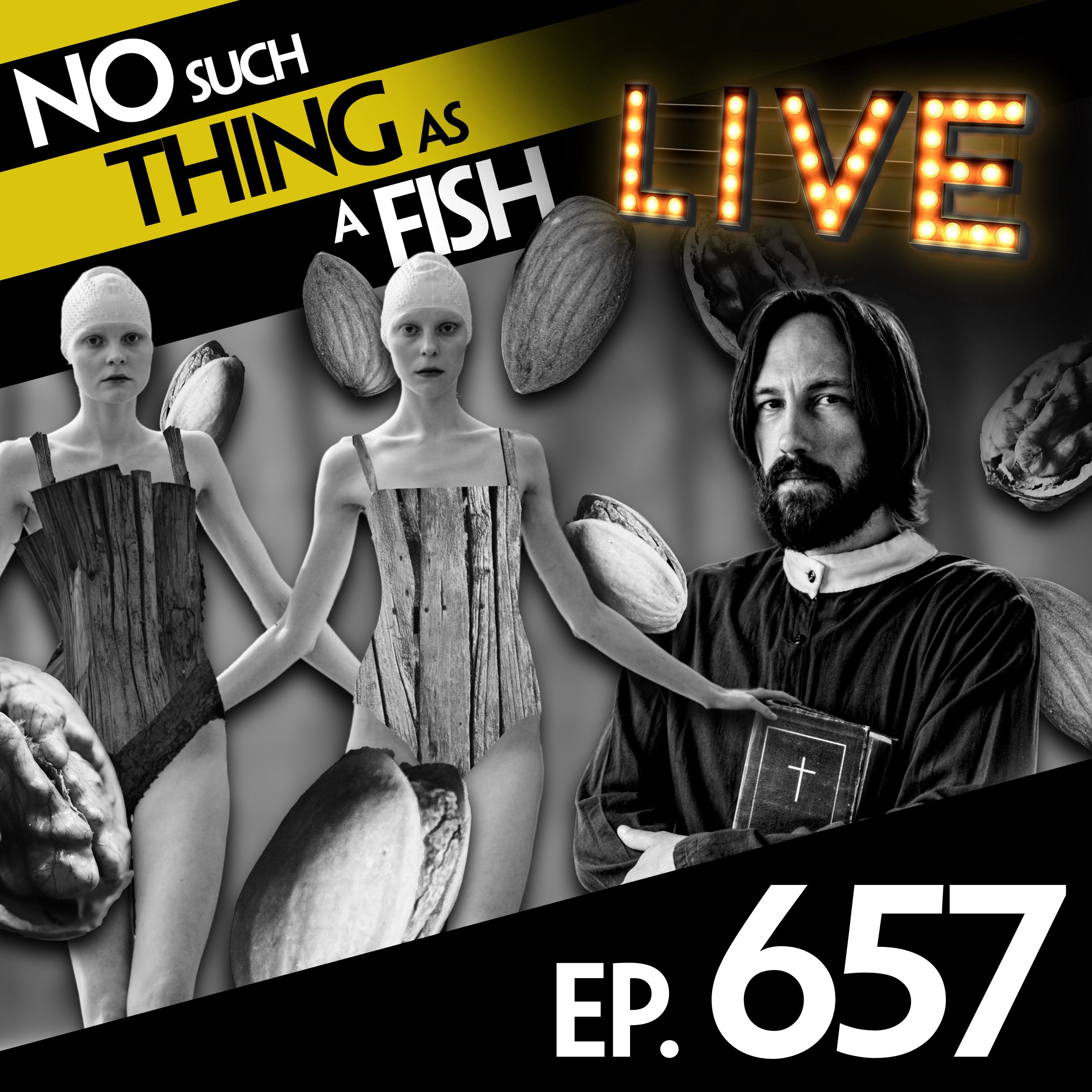
“Okay, my fact this week is that in the 1920s you could buy bathing suits made of wood.”
Discussing various controversial swimwear items including the bikini and its origins.
“It wasn't a day where you could just offer people five thousand dollars to I've seen a very old swimming suit from 1767, and it is Martha Washington's wife of George Washington.”
How technological advancements like ultrasonic welding have changed competitive swimwear.
“and because it was like a cool, trendy thing at the time that, you know, it was quite controversial, obviously.”
Exploring techniques and peculiarities in speed swimming, including competition strategies.
“It's weird because they are LZR, which sounds like it's loser.”
Learn about Rudy Gernreich's controversial fashion innovations and their impact.
“Sorry it was too sorry it was a pair of pants and then you just had straps going around your neck because you didn't have any boob covering.”
Explore the unusual ritual of actress Rachel Sterling before her performances.
“Okay, it is time for fact number two, and that is my fact.”
Discuss the surprising practice of consuming ashes and its historical context.
“It's this one specific Bond girl, Diana Rigg, right?”
Learn about creative options for handling human remains after death.
“There was an archaeologist called Juan Angulo who was looking in a crypt that had been uncovered in southern Mexico and found 400 urns in there containing ashes, coal, rubber, and plant roots.”
Discover how bodies are recycled and the charitable work that follows.
“I just thought the word cremulator was quite fun.”
Hear the story of friends using their deceased friend's ashes for fishing.
“That's what the mob do to you, isn't it?”
Learn about David Tennant's use of a real skull in a Shakespearean play.
“Because it's a Siamese carp, so it's actually two carp but joined at the hip.”
Explore the translation and cultural significance of Shakespeare's works.
“It is time for fact number three, and that is Anna.”
Explore the euphemisms used in Shakespeare's works and their meanings.
“So nothing in those days sounded a bit like noting, which meant eavesdropping on someone.”
Learn about the difficulties translators face when dealing with Shakespeare's puns and cultural references.
“She just couldn't work out how you would translate.”
Discuss theories surrounding the true authorship of Shakespeare's plays.
“I think that's why he's called that, yeah.”
Discover how collaborative writing influenced some of Shakespeare's plays.
“that's not exactly what it's called, but it's the main Shakespearean collection done by Oxford University, Henry VI parts one, two, and three were written by Christopher Marlowe and William Shakespeare.”
Examine a powerful speech by Shakespeare that addresses themes of migration and humanity.
“It's known as The Stranger's Case Speech.”
Learn about the superstitions surrounding performances of Macbeth and their origins.
“So it's a different plot to the modern one.”
Delve into the quirky story of the Roman Beefcake Calendar and its subjects.
“All right, let's get to our final fact of the show, and that is Andy.”
Discover the backstory and reactions surrounding the hot priest calendar and its cultural implications.
“Well, I've been lied to, and I'll be getting a refund.”
Explore various naughty calendars and their societal effects, including the reactions from nudity advocates.
“And they said that basically when you get a comical depiction of a woman from the WI sort of like leaning over to put some toast in the toaster.”
Learn about the interesting origins of the page-a-day desk calendar and its inventor.
“Oh, actually, speaking of skeletons, do you know the Linda calendar in Poland?”

Get the gist, explore an idea or ask about something said.
 Claude
On No Such Thing As A Fish, what are the key points of this episode?
Searching your listeningAutomatic transcript. May contain errors.
0:00James Harkin: Hey, it's Ryan Seacrest for Jewel Osco. It's stock up sale time, which means you can save big by stocking up on all your personal care favorites. Now through November 3rd, shop in store and online and save$10 when you spend$25 or more on participating products like Dove shampoo and antiperspirant. Skintimate razors, L 'Oreal conditioner, Q-tips cotton swabs, TraceMA hairspray, and Juergens moisturizer. Offer ends November 3rd. Restrictions apply. Offers may vary. Visit JewelOsco.com for more details.
0:40James Harkin: Hello and welcome to another episode of No Such Thing as a Fish, a weekly podcast this week coming to you live from the London Podcast Festival. My name is Dan Schreiber. I am sitting here with Anna Tashinsky, Andrew Hunter-Murray and James Harkin. and once again we have gathered round the microphones with our four favourite facts from the last seven days and in no particular order here we go. Starting with fact number one and that is James. Okay, my fact this week is that in the 1920s you could buy bathing suits made of wood. Oh. There they are. For people at home there is a picture on the screen and they look like they're in barrels, don't they?
1:24Anna Ptaszynski: Quite kind of cinched in barrels. Pinched in barrels?
1:28Dan Schreiber: I would say that's about as comfortable as you can make wearing wood look. Yeah, I can imagine the splinters were probably not very nice. I guess it was rot. It's a very confusing substance to make stuff that you get wet a lot out of. But then on the other hand, when there's a big sort of shipwreck, what do you get? Floating bits of driftwood. Exactly. Yeah. And that actually was one of the things. They advertised it as the fact that the wood floats, and so it made swimming much easier. Okay. I see.
1:54James Harkin: But if there was a shipwreck, wouldn't the other passengers use you as the thing to lay on top of? As the door. As the door. Kate, and there was Leo, and then there was just this random person. I go, God, this is so awkward. There is enough space for him, actually. There is. So I saw this on a website called thevintagenews.com where they find old news articles, and these were spruce veneer bathing suits, and they were described as simple, cheap, and easy to make, but fashionable and modern. I think one part of it was they would bathe in the part of America where they had a wood industry. You know, people were chopping down trees, making spruce panels, and they thought we can advertise it slightly by having them wear these swimsuits.
2:39Wow. And they were also once used to encourage people to vote in the election. So they said that someone was going to be coming down to the sea in a wooden bathing suit and people should come down. They announced that in the newspapers and sure enough when people did come down They handed them like little cards saying if you want to lift to their voting booth then ring this number
3:01Dan Schreiber: Wait, they thought a wooden bathing suit would be that much of a pool. They'd get enough people to the polling booth Yeah, it was the 20s.
3:08Anna Ptaszynski: It was a happier and simpler time It wasn't a day where you could just offer people five thousand dollars to
3:18James Harkin: I've seen a very old swimming suit from 1767, and it is Martha Washington's wife of George Washington. They have her swimming suit, and she had a swimming suit that came from a time where they sewed weights into them so that when the women were in the water, it wouldn't flow it up and make them lose their modesty. So someone thought, let's put weights into the swimsuit.
3:42Dan Schreiber: And to be fair, none of them are going to swim, presumably, so they're just paddling. Surely, surely Martha Washington's not swimming, is she? I think in those days there was a lot of paddling going on. So much paddling. The Daytona Beach News Journal, I saw an article about these bathing suits and they said you should avoid wearing them in a forest lake where woodpeckers are known to live. Yes. Controversial swimming costumes? Yeah, go for it. Name one. The one in the Olympics that made people swim faster. That's good. But that's not the one I'm thinking of. The Annette Kellerman we've mentioned before.
4:15Dan Schreiber: Because any women's swimsuit back then was very controversial, wasn't it? That wasn't a full head-to-toe covering. No, you're right.
4:21Anna Ptaszynski: That's another really good one.
4:22James Harkin: People were arrested initially if they went in a swimsuit.
4:25Anna Ptaszynski: I should have said my fact, but I've got a lot of good stuff out of you guys now, which is also good. The bikini. Oh, yeah. It was controversial at first. Partly because in the place where the Bikini Atoll, after which it's named, it was seen as being immodest, but not for the reason you would think. Okay. So the Marshall Islanders, the people local to that area, and they have a tradition where women go topless, but they do cover up their thighs with a muumuu. And so the big... With a muumuu here and a muumuu there. I would have thought a muumuu is like it's something that covers your whole body.
5:10Anna Ptaszynski: Yes, I think there are different versions of the muumuu and the Marshall Islanders one is a leg thing. But they called it a muumuu? Yes, it's waist and below. It's a muu. Just a muu. And the reason the bikini was controversial there is because it reveals the thighs.
5:27James Harkin: Yes, okay.
5:28Dan Schreiber: Not because it was skimpy. Ironic because you'd think it would be about the udders if you know what I mean.
5:34Anna Ptaszynski: Wow. Is that a muumuu joke? Yes! Very nice. And I think we should just quickly say that the bikini, it was named after the Bikini Atoll in the Marshall Islands because they were doing nuclear tests there and because it was like a cool, trendy thing at the time that, you know, it was quite controversial, obviously.
5:55Dan Schreiber: Well, this is, he insists not. So there's this very famous contest between these two guys and Louis Réa was the guy who invented the bikini that was called the bikini. He says that he called it the bikini because at that time, everyone spoke of this island, Bikini, in the Pacific, and it was an enchanted, tiny little paradise. Now, it was the case that he invented it four days after the well-publicized massive nuclear tests on Bikini Atoll, but he insists either that passed him by or he's now lying and saying, I didn't name it sort of insensitively after something that led to 50 years of very awkward almost war.
6:31James Harkin: He couldn't get anyone to model it, by the way. It was seen so controversial. so he went to all the classic models. They all said no and all their agents said no. So he eventually went to a former nude model. Her name is Micheline Bernardini and she did it. And she's still alive. Is she? Definitely.
6:49Dan Schreiber: I was trying to track her down. Wikipedia doesn't list a date of death.
6:53James Harkin: I can't find an obituary for her and everything is referred to her in the present. And so she was born December 1st, 1927. So she's 98 going 99. Wow.
7:04Dan Schreiber: Still looking hot in that bikini.
7:06James Harkin: Yeah.
7:07Dan Schreiber: She did actually model it again in the 80s, didn't she? For someone in about 1986, I think it was. Age 58. And she did look different to how she looked age 20, modeling it. No offense, we all will. Or do. So that was just an unnecessary slam on Michelle. Yeah.
7:26James Harkin: This poor 98-year-old woman. You've been mentioned on the show. I thought she was dead. Looked shit at 58. All I'm saying is don't model it now, hon.
7:37Dan Schreiber: Oh, God.
7:38Anna Ptaszynski: So the other thing about the bikini is that it was associated for years with sort of Miss whatever competitions like Miss World or Miss, you know, countries and things like this. And this led to a really surprising controversy. So it was in the, I think, in the 50s. What year did the Frenchman invent it? Was it the late 40s or was it 46? I think 46. Okay, so this is 1951. The reason that we have the Miss Universe contest that we all know and love today is because of an argument over swimwear. So there was Miss America, which was sponsored by a particular company called Catalina, right? I think they made Cossets.
8:16Anna Ptaszynski: And the winner was a woman called Yolande Betbezi, and she was told when she won Miss America, you're going to have to go on the tour and you're going to have to wear a swimsuit, a bikini on the tour. And she just refused. she said, I'm not going to wear a swimsuit in public unless I'm going swimming. I just don't, that's, you know, that's ridiculous. She didn't really like all these promotional appearances she was asked to do. So the firm Catalina flounced off and created Miss Universe instead. So the reason it came out of it was her kind of principled stand about not just turning up in a bikini in places.
8:53She was being a prude.
8:56Anna Ptaszynski: She was... Have you guys heard of Miss Gary Cigarette? No, no.
9:02Dan Schreiber: Is that when Miss Universe refused to wear just a cigarette over her crotch? It's kind of related to that. So it was a beauty contest held in Gary, Indiana in 1944. So Gary is a city in Indiana or a town. And you voted for who you thought was the best looking person. And when you voted, you had to pay five cents and all the money was used to send cigarettes to American soldiers. But the reason I would bring it up is the winner was Irene Kuchter, and she had to then go on a promotional tour wearing a bathing suit made of cigarettes.
9:38Anna Ptaszynski: Oh, really? Can I say a thing about science trunks? Okay. So swimming outfits that are designed to help you go faster. Yeah. So for the Olympics, this is a big thing. Yeah. You may have heard of LZR. This was a huge thing in the noughties. They were invented by, is it Speedo? Speedos, laser ones, yeah. And I just can't believe how good... Because I naively thought it's only a bit of your body that's covered. But of course you do get full of... And they were like based on shark skin or something, weren't they, I think? All of this. The fabric was bonded together using ultrasonic welding. Like how sharks work.
10:16Anna Ptaszynski: Like how sharks... So that was so they had no seams. So no seams means no drag. They had an internal core stabiliser. So you couldn't flop about in the water very much. they sort of held you in place so you would use less oxygen when you were wearing it because it just made it easier the only downside is it takes 20 minutes to put it on
10:39Dan Schreiber: and everyone knows in swimming races you're timed from when you start getting changed aren't you? you're actually timed from when you're trying to find a pound for the locker were they banned after that? they were banned yeah I'm pretty sure but basically every world record They beat every world record one year. It's weird because they are LZR, which sounds like it's loser. What do you think, let's say, for instance, you were on a water shoot, water flume, and you wanted to get down as quickly as you can. What swimsuit do you think would be the best? Oh, I can tell you what it's not.
11:17James Harkin: It's not the one that I recently wore in Croatia. Oh, dear. Where I had kids waiting for five minutes as I shimmied down what was a 10-foot-tall water slide. Wait, what are you saying? I'm saying I had the most embarrassing 10 minutes of my life having to literally, like a dog wiping its ass on the ground, shimmy down this thing. But are you saying that gravity didn't do the job? Gravity left the slide. Just whatever my shorts were, I need to send them back. So is it that?
11:51Anna Ptaszynski: Everyone was looking over. I think like Dan said, that's not it. Right, yeah. Well, I'm imagining something smooth and slippy, something coated with a substance. Yeah, so this is something called speed shooting, which does appear to possibly be a thing. I've seen reports on an online magazine called Outside Magazine and nowhere else on the internet, but it does appear to exist. It seems to be a German thing, and you try and go down the water chute as quickly as you can. And they've tried all sorts of things, like different swimsuits, soaps, oils, waxes, gels, types of cream, like you say, Andy.
12:25But the truth is that the quickest you can go down is basically no swimsuit at all. Uh-oh. But the rules don't allow you to do that. Then you really are going down after that. Well, what you have to do is you have a small, very small swimsuit, but you cross your legs and then you put your heel on the chute and your two shoulder blades on the chute and the rest of your body is planked as much as possible. so you only have three bits of contact onto the chute and that apparently helps you go down. If you'd have done that in Croatia, Dan, you'd have been a kid. I can't believe I can think of that.
13:05Dan Schreiber: And what are you supposed to do if you want to really emergency slow down halfway because you're really scared? Well, one thing that they do say is like, it's these very, very fit men who are very good at it because they can clench all of their muscles and get really tight. and then but it's them and it's always them up against what they call the cannonballs which is a really really fat guys who just fly down and use momentum to get down to the bottom as quickly as possible that's great clenching bullshit just eat a lot of pies uh we've got to
13:37James Harkin: move on guys we're we're running us i bet we've all got so much more stuff the monokini heard of the monokini it was it was invented so the the bikini is bikini two parts monokini was just the bottom bit kind of like what you were talking about with the muumuu earlier. Oh yeah yeah. And you had two straps that went across but it was for bare naked women on the top to go out and it was it caused huge controversy but it also kind of
14:00Dan Schreiber: Sorry it was too sorry it was a pair of pants and then you just had straps going around your neck because you didn't have any boob covering.
14:05James Harkin: Kind of like suspenders exactly but they didn't do anything to cover the breasts and this was invented by a man who's called Rudy. No kidding. This was invented by a pervert called is Rudy Gernreich and he's a very famous name in the world of fashion because in 1964 when he did this he sort of started a lot of the sexual revolution of the 60s and he invented multiple different things and near the end of his life he invented the pubic bikini which is a normal bikini but where the bottom bit of the bikini is there's a little kind of see-through window where your pubic hair is for you to sort of just show people as part of a
14:46Anna Ptaszynski: pervert. We don't need to go further into it.
14:49James Harkin: Fair enough. All right, let's move on. Hey, it's Ryan Seacrest for Jewel Osco. It's stock up sale time, which means you can save big by stocking up on all your personal care favorites. Now through November 3rd, shop in-store and online and save$10 when you spend$25 or more on participating products like Dove shampoo and antiperspirant, Skintimate razors, L 'Oreal conditioner, Q-tips cotton swabs, Trace-A-Mail hairspray, and Juergen's Moisturizer. Offer ends November 3rd. Restrictions apply. Offers may vary. Visit JuleOsco.com for more details. Okay, it is time for fact number two, and that is my fact.
15:29James Harkin: My fact this week is that before she goes on stage for the opening night of a play, West End actress Rachel Sterling will always make sure to eat the ashes of a Bond girl. That was a great reaction by whoever went, What? What? Very confusing, absolutely. But let's unpack it. This is Rachel Sterling. If you're a fan of shows like The Detectorists, she's in that. So Mackenzie Crook's girlfriend turned wife is Rachel Sterling. She also happens to be the daughter of Diana Rigg, who is a very famous actress who passed away a few years ago. She was in a James Bond movie and multiple other things, the New Avengers, all that sort of stuff.
16:11James Harkin: And she passed away. She was cremated and they gave her ashes to some people her friends one of them flew it over a field in a biplane and let it drop and so on and Rachel Sterling noticed that not all of the ashes left this little vial There's like dregs that are just kind of sitting in there and she was very nervous on opening night for the first time she had to go back on stage after her mother's death and She had it on her and she thought I need some Dutch courage and I want to bring her on stage with me So she put her finger in, she took a big old swipe of the ashes, and she ate it, and that's now become her lucky thing.
16:45James Harkin: So any time she does opening night, she'll eat a bit of her own mum. Okay, so you said she will always be sure to eat the ashes of a Bond girl. Yeah. It's this one specific Bond girl, Diana Rigg, right? Yes. Because presumably she's going to run out of those ashes at some stage. And they're not then going to look for Ursula Andress's ashes at all.
17:05Anna Ptaszynski: She'll start murdering other Bond girls. oh my god that's a good plot
17:08James Harkin: it is a good plot but she did say she's mentioned it to other actors and they say oh I do that too oh come on with her mum no other mums are used sorry this is a normal thing
17:24Dan Schreiber: in the thespian community eating your mother's ashes
17:27James Harkin: no but more than one person does it is what she's saying it's not unheard of for you to read in the news that a rock star or a celebrity has famously Tupac's friends after his funeral when he was cremated. They rolled him up into a joint and they all smoked him. And his mum was there as part of that. Keith Richards snorted his dad.
17:52Anna Ptaszynski: He claims...
17:53James Harkin: No, no, it was claimed that he did it with cocaine and he wrote in his book... It was not cocaine.
17:58Anna Ptaszynski: It was my late father's...
18:00James Harkin: No, no, he mixed it in with cocaine was the idea. I'm sorry, I thought... He later said, I didn't use cocaine, I just snorted it outright. And he scattered it in his garden, and the trees growing in his garden now are in the spots where his dad's ashes were. So it's not uncommon. It is uncommon.
18:19James Harkin: If it wasn't uncommon, all these people in this room wouldn't be looking at you as if to say, what the fuck are you talking about, Dad? But it's not uncommon when you say a lot of examples really closely.
18:29Anna Ptaszynski: All right, here's the thing that you can have done with yourself after you die. and just see if you would like this. Would you like to become a mug? There was, a few years ago, there was a New Mexico artist who put you into a glaze, mixed a bit of your own ash into a glaze after you die and then that's made into a mug for your relatives. I quite like that. Dishwasher safe or... Hand wash only, I think. Why take the risk? You can get turned into a bit of a coral reef. I love this. Being turned into an artificial reef.
19:01Dan Schreiber: I'm not big enough to be an artificial reef.
19:03Anna Ptaszynski: You will be part of it. It's mostly concrete, I'm going to tell you the truth. But there is this thing where instead of being cremated, you can be aquamated, which is a new method that all the cool kids are doing. And it's lower in carbon emissions, and the temperatures are lower, and you're just kind of chemically chuggled down. And they put it under water and coal grows on it. Yeah, it gets mixed into a sort of artificial reef block, and that's really good for fish, obviously. Or how about this? This is my pitch. There was an archaeologist called Juan Angulo who was looking in a crypt that had been uncovered in southern Mexico and found 400 urns in there containing ashes, coal, rubber, and plant roots.
19:45Anna Ptaszynski: And the Mayan people at the time had the game. You might remember they had a ball game.
19:50Dan Schreiber: Yeah.
19:50Anna Ptaszynski: Where you played a big rubber ball, and it might have been a religious thing. It might have been something else. The theory is that the ancient Mayan kings were turned into balls for the ball game. their ashes were turned into
20:02Dan Schreiber: Wait, because in their graves they found
20:05Anna Ptaszynski: these urns containing all the ingredients for a ball and the ash
20:09Dan Schreiber: So they just hadn't got round to making the ball This is like the ingredients the pantry I see, wow You would feel a lot of pressure not to accidentally kick that ball onto the roof, wouldn't you? I think it sounds to me like you can put ashes into anything that's made out of concrete Right? It seems like it
20:28Anna Ptaszynski: Well, it's a very, very unromantic way of... What I'm thinking is, like, those big stanchions that hold up water flumes, Dan, maybe, when you die, you can put it into that one and then just make it slightly steeper so people don't have your issue. Here's Dan Schreiber still stuck on this water flume. Yes. For eternity. Yes.
20:48Dan Schreiber: That's so nice. I couldn't save myself, but I will save future generations. Love it. In China, they're doing a big push for these sea burials, I think. um a sea burials and tree burials is the big thing in chinese government pushes at the moment because there's not enough room left for full body burials and so they're mainly doing a really big push for cremations and i think to make it sound jazzy they're saying what about a tree burial which is not sadly where you get left up a tree which would be cool and really terrify the kids who tried to climb it it's it's where like they bury your ashes at the bottom of a tree and then a tree grows or a potential tree we keep saying that ashes it's not ashes that you get in those urns and that people sprinkle around okay really because what happens is when the body goes through the crematorium the heat is so so high that any part of your body really just turns into vapor and what's left is your bones and they are processed to resemble ashes right so it's not like the ashes at the end of a fire it's basically burnt bones that are crushed down by something called a cremulator and it pulverizes the bones down and that's what you get in the end.
21:58Anna Ptaszynski: You've said that in such a cheerful and positive way. I just thought the word cremulator was quite fun. No, it's again, they've made it as fun as they can.
22:10James Harkin: It sounds like it should be an offshoot movie series of Terminator. Cremulator.
22:16Anna Ptaszynski: Wow. What about crecycling, guys? Which is what happens if you have, a lot of us have metal in our body, like your fillings or any part of it, it might be pacemakers or something like that. Well, what do you do? You can't really put those through the, you can't put a pacemaker through the crematorium for sure. They have to be removed. That's like metal in the microwave, isn't it? It's bad and it breaks the thing. It is, basically. Wouldn't want to damage the cremulator. But there's a company called Orthometals, which will recycle any metals out of the body, and then they give the money to charities, and more than£24 million in about 20 years were given to charities of the UK through metals that were saved from bodies.
23:02James Harkin: And they often recycle those metals into things that go into, like, airplanes and buses and stuff. So you might be on a flight one day, and without knowing it, grandma's with you, because the metal from her hip replacement was reused and turned into a tiny little...
23:16Anna Ptaszynski: That is actually very nice.
23:18James Harkin: Yeah. Yeah. You can also be turned into fish bait, which is something that...
23:27Anna Ptaszynski: That's what the mob do to you, isn't it? I think I've heard of this.
23:31James Harkin: Yeah. Well, no, what it was is this was a very specific case. It was two friends who were meant to be going on a fishing trip with their third friend called Ron, but Ron passed away, and they thought, well, let's not cancel the trip. Let's still go on it, and we'll bring a bit of Ron with us. So they had his ashes, or his ground bones, into a fishbowl, and they went fishing with it, and they called it the Purple Ronnie, and they threw it into the lake where they were at. Anyway, this shouldn't be a notable story, except for the fact that that bit of bait caught a Siamese carp that is the biggest ever caught on record.
24:08James Harkin: 180 pounds. The current record, as it stands in the books, is 134 pounds. and to be fair, they have just stopped counting. So it could be that people have caught much larger ones, but that's technically the record. So they're in the papers because their dead mate, Ronnie, was the bait for the biggest carp ever caught. Wow. Yeah.
24:26Dan Schreiber: Is it a cheek? Because it's a Siamese carp, so it's actually two carp but joined at the hip. I know that. We call them conjoined carp these days. Sorry. Just on actors and dead bodies.
24:36James Harkin: Okay.
24:37Dan Schreiber: There's a very famous actor who has held a dead body on stage. Many of you might have seen him do it And that's David Tennant And he's in tonight We're all fans But this was actually the skull Of a Polish composer and pianist Called Andrzej Tchaikovsky No relation But Andrzej Tchaikovsky, famous composer But always wanted to be an actor
25:01Anna Ptaszynski: Genuinely, no relation
25:02Dan Schreiber: No relation, I think it's quite a common name Common enough in Russia He died in 1982 he was 46, very sad he died he left his body to science but he said I'm going to leave my head to the theatre I'm going to offer my skull to the Royal Shakespeare Company for use in theatrical performance. I actually don't think he specified what use but I think everyone assumed well you've got to be the Alas Paul Yorick Hamlet scene where famously a skull is held up. Anyway he did this in 1982 and all actors wussed out of it from then onwards and people kept saying so does anyone want to use Andres' skull? And they said I'll just use the prop please um and then in 2008 david tennant played hamlet and said yes i will use it and then they needed to do like jump through lots of hoops so he couldn't use it until the first night because they needed government clearance from the human tissue authority because who regulate tissues and organs um and then he had it in it was in stratford every night he would hold up this real skull and then he moved to the west end doing it and the paper said they're not using the skull anymore it's too distracting the audience keep all kind of pointing and weeping and go alright Andre and then when are you any relation
26:16Anna Ptaszynski: to the you know the Russian guy yeah there's two composers with the name Tchaikovsky it just seems like there would have been
26:24Dan Schreiber: exactly some connections
26:25Anna Ptaszynski: right people saying that kind of thing did they stop using it no
26:29Dan Schreiber: they just said they did brilliant and then I really end of the round they said in your face puncture West End audiences
26:36James Harkin: What did they do, like put a fake mustache on it?
26:44James Harkin: It is time for fact number three, and that is Anna.
26:49Dan Schreiber: My fact this week is that in Spanish, much ado about nothing is translated as a lot of noise, not many nuts.
27:01I would watch that play, wouldn't you? Yeah.
27:04Dan Schreiber: They should rename it here, yes. to any Spanish-speaking people. I think this will be quite a familiar term. It literally just means much ado about nothing or it figuratively means much ado about nothing. Mucho, we do y pocas noices.
27:16Anna Ptaszynski: It's their version of the same phrase.
27:19Dan Schreiber: Exactly. It's like, so it's basically this tree's making lots and lots of noise but I'm not getting many walnuts. It's specifically walnuts.
27:26Anna Ptaszynski: But hang on, much ado about nothing, I presume that wasn't a phrase before Shakespeare made it into a phrase or was it? Was it a phrase in existence? I suppose we never
27:33Dan Schreiber: sort of know but I assume, no, I mean not to us, no. No, I imagine it wasn't.
27:37Anna Ptaszynski: But that's interesting because they have a phrase. So there it's more like they've called it a mountain out of a molehill.
27:43Dan Schreiber: Yeah.
27:43Anna Ptaszynski: And if Shakespeare had called it that after the phrase a mountain out of a molehill had existed. Yeah. But we don't know whether a much ado about nothing was a phrase already.
27:50Dan Schreiber: No, no. And we never will. But the thing about the much ado about nothing is it's got jokes in it, isn't it? That we don't understand because we're not from Elizabethan England. So nothing in those days sounded a bit like noting, which meant eavesdropping on someone. And there's quite a lot of that in the play. Yes. And also nothing was a euphemism for the vagina. Wasn't everything in Shakespeare's time. Well, no, everything was a euphemism for the penis. Usually something, actually. So something would be the penis and nothing would be the vagina. Really? Yeah, much ado about nothing. has got all sorts of layers that only English teachers understand now.
28:35So they're actually
28:35Dan Schreiber: reintroducing those layers by saying not many nuts, aren't they? They're adding a little more euphemism than we have. Very strong. It's a bit like all talk and no trousers, I would say, is our equivalent. All fur coats and no knickers, I would say. All fur coats and no knickers. Which I have never understood as a phrase. Really?
28:51Anna Ptaszynski: Why? What's not to like? What's the... What's the downside? That's two good things.
29:03maybe it's the fur coat is the bad thing because we don't wear fur anymore that'll be it yeah yeah
29:08James Harkin: yeah yeah yeah anna so you you got this fact from a book that was called if this be magic by daniel han and it's an amazing book because he basically looks at the world of translation and he talks to multiple people who were translators globally and how do you do it if you're translating him you know how do you do the puns for example and unanimously it seems they all come back to say We have to just write new jokes because we can't translate the puns in Maori when he spoke to the Translator that the one thing she really got stuck on was the question. Are you a man? She just couldn't work out how you would translate.
29:41James Harkin: Are you a man? This is lady my birth
29:43Dan Schreiber: Yeah, it's a Macbeth. Are you a man?
29:46James Harkin: Yeah, and something the got me nuts I guess would be the That was basically it the question had to become if you got balls That was it, because she couldn't find the right way to do it that would make sense in the language.
30:00Anna Ptaszynski: It's actually an advantage sometimes listening to Shakespeare in another language, supposedly. I mean, not that I ever have done. But the point is that so much Shakespeare is so well-known in English. There was a Shakespeare scholar, Dennis Kennedy, who was interviewed, I think, in context of this book, who said, in English, Hamlet is a series of well-known quotations. In Chinese, it is a new play. you know so you don't have you don't have all the freight of all the you know you don't have the audience going oh this is a good bit you know or whatever yeah they're just they're engrossed in
30:29Dan Schreiber: the story that's exactly in fact i happened to be messaging my mother last night about a fact i learned in this and she said the problem with shakespeare is it's so full of cliches which is exactly that point isn't it there are some other quite fun translations in foreign languages where they've adapted them i really like taming of the shrew in finnish which is how a temper bag is tamed. And I just like the fact that akapusi in Finnish is a temper bag. Stop being such a temper bag, you akapusi. That's a good word. Like Chris Akapusi. I think that's why he's called that, yeah. There's In Japan in 1885, the merchant of Venice was cherry blossom time, a world of money.
31:16Wow.
31:17Dan Schreiber: Which is odd. And then the Chinese seem to be incredibly literal. So they just literally just describe the basics of the plot. And this is the early Chinese translations in Shakespeare.
31:27James Harkin: Too long.
31:27Dan Schreiber: So they called Merchant of Venice was borrowing money by cutting flesh.
31:34James Harkin: Ah, okay.
31:36Dan Schreiber: Which is a spoiler. And King Lear was, I think this is probably more catchy in Chinese, but lip service filial piety and heart filial piety. It's no load of old nuts, is it? Here's a question that everyone really wants your opinion on. Who really wrote Shakespeare? Like, who really wrote Henry the sixth parts one, two, and three? Well, there's lots of theories, isn't there? There's lots of theories. Yeah. But do you agree with them?
32:08Anna Ptaszynski: No, I don't. I think it was a guy called William Shakespeare. Well, the... But not the same William Shakespeare that you're thinking of. Billy Shakespeare. Was it the first person to get the COVID vaccine? That's right, yeah. Well, according to the Oxford Book of Shakespeare, that's not exactly what it's called, but it's the main Shakespearean collection done by Oxford University, Henry VI parts one, two, and three were written by Christopher Marlowe and William Shakespeare. And actually they found recently that quite a lot of his works have been collaborative. And the way that they've done it is they look at things called Shakespeare plus words and Shakespeare minus words.
32:50so there are certain words that Shakespeare uses way more than any other writer so gentle answer beseech spoke tonight Shakespeare used tonight way more than any other I don't know what the others say when it's something that's happening that evening but then there are also Shakespeare minus words that are less likely to be used by him and Marlowe wrote lots of plays and stories with the words familiar spirit, forsake me, droopeth to, miscreant, change my shape, enchantress. And Shakespeare didn't really use those that much. And so they used that kind of analysis. It's like mathematical analysis to say, actually, we think that this was written by two people in various parts.
33:30That's great.
33:30Anna Ptaszynski: I do buy that, because people have such distinctive ways of speaking and writing.
33:34Dan Schreiber: Do you know something Shakespeare did write? We're pretty sure. And collaboratively, like you said, James, this was a thing, was part of the play Sir Thomas More. So this is a play that was mostly written by a couple of other playwrights. But Shakespeare is the only handwritten playwriting we have from him. He wrote three pages. It's known as The Stranger's Case Speech. The whole play was banned at the time because it was about the people of England being very anti-migration and anti-refugees. And it was thought to be too controversial a topic at the time. But because it's not now, I thought I would just quote some of it because it is truly fantastic.
34:11Dan Schreiber: So it's a speech Shakespeare wrote in his own hand. Thomas More goes to quell these rioters who are rioting against refugees in England. And Thomas More basically says, is this really how you think human beings should behave towards each other, as if anyone has any more right to this land than anyone else? And, you know, he says, if you were in their position, would you be pleased to find a nation of such barbarous temper that breaking out in hideous violence would not afford you an abode on earth? Would you spurn them like dogs? this is the stranger's case and this is your mountainish inhumanity and i just thought wow in the week and i'm not making a point because we're not political podcast but it's very strange to read about protests in portsmouth uh and elsewhere whilst reading this 400 years ago yeah thinking well we haven't come before have we um can i tell you something about the the
35:01Anna Ptaszynski: theories yeah go for it so obviously hamlet has been done in klingon obviously obviously There was an outfit called the Klingon Shakespeare Restoration Project. It was all a thing to do with some people who were very into Star Trek, obviously, and that is obvious. There's a line in one of the films, a character says, you have not experienced Shakespeare until you've read him in the original Klingon. The argument runs, there's just no way Shakespeare can have been human. These plays are so good. Yeah, right. Which is basically taking the mickey out of the Earl of Oxford. Yeah, yeah. You know, there's no way a sort of middle-class guy from Warwickshire can have done this.
35:44Anna Ptaszynski: Yes. I just love it. That's very fun. Can I tell you a fact about Shakespeare in Love as well? The movie. Well. Well. What a quick mind you have, Dan, because no. Quick and wrong. Quick and wrong. Quick and wrong. You're wrong faster than anyone else. Yeah.
36:03James Harkin: It's great.
36:03Anna Ptaszynski: So this is just so interesting. I like it so much so Shakespeare in Love we know as a film starring the other Fiennes brother Joseph who I'm sure is more successful than we'll ever be but it's just fun isn't it it's just a bit of fun Joseph if you're listening and he's got nothing else to do he happens to be
36:26James Harkin: at the house of the 98 year old bikini lady apparently we're both mentioned in this week's episode let's just give it a quick go
36:35Anna Ptaszynski: basically I just like the fact that there is a play called Shakespeare in Love which is 200 years old so Shakespeare Amore is a play that was written in 1804 for Napoleon's birthday bizarrely by a playwright called Alexandre Duval and Shakespeare falls for an actress who is playing Richard III and I just think that's kind of bizarre that that's a 200-year-old. So it's a different plot to the modern one.
37:05Dan Schreiber: Wow. Sounds pretty similar.
37:08Anna Ptaszynski: So she falls in love with the actress in the film? I haven't seen the film.
37:11James Harkin: They sneak Gwyneth Paltrow in under the guides of being a man and they fall in love as it's going along. It's the same plot. Oh, it's the same plot. Same thing. Same idea. Probably out of copyright if it's 200 years. They're probably fine. They can't sue.
37:25Dan Schreiber: You know Henry V?
37:27James Harkin: Yeah, man.
37:28Dan Schreiber: Just going back to translations, actually, for a moment. Hal, he was Prince Hal when he was younger, is what he's called. And Hal means fish in Hungarian. And so in Hungarian, they had to change Prince Hal's name to Ricky all the way through. Ricky! And they say it, Ricky! All the way through. And that, of course, is in the play...
37:51Anna Ptaszynski: Henry V?
37:52Dan Schreiber: Nope. Obviously, it's not in Henry V, Andy. He's called Hal in Henry IV, part one and two, isn't he? Yes. He's just called Henry in Henry V. So that was just like if, you know, if I were Jeremy Paxman, that's where I could make you feel stupid by asking that question.
38:07Anna Ptaszynski: You really shut the door on my head, though. I did. I did. Hey, what about Macbeth? We talked about superstitions earlier, didn't we? Yeah. You're not really supposed to say Macbeth on stage. Macbeth is a very bad thing to say on stage. And in fact, if you say Macbeth on stage, then something could go terribly wrong. You're looking at me all the time when you say it. Well, the idea of this ancient curse of Macbeth, we think it was invented by a theatre critic called Max Beerbohm, who we've mentioned on the show before, actually. And he really didn't enjoy Shakespeare that much, and he was reviewing Macbeth, and he was a little bit bored by it and thought, oh, he'll just make up this story of a guy called Hal Berridge, who died over in the first performance in 1606, but we don't think that actually happened.
38:54But then, of course, once he gets a reputation as being unlucky, as soon as anything dodgy happens, like if this light falls on my head now everyone's gonna be like it's because he said Macbeth yeah um but it was probably because one of you guys did it earlier yeah yeah well you were so committed to the bit you rigged it yourself and then the other thing is because Macbeth is such like a banker of a play like it's the one you go to if you really need a play that's going to do really well uh so often theatres are already going downhill and they think what are we going to do oh let's put Macbeth on and so Macbeth ends up being like the last thing that plays or is being played in the theatre where all the people who do all the work have already been fired and so things go wrong so that seems to be why Macbeth is now seen to be unlucky
39:40Anna Ptaszynski: I think that makes sense, no theatre in its right mind that's on the skid says let's do the Merry Wives of Windsor shall we?
39:48James Harkin: Hey it's Ryan Seacrest for Jewel Osco it's stock up sale time which means you can save big by stocking up on all your personal care favourites Now through November 3rd, shop in-store and online and save$10 when you spend$25 or more on participating products like Schick Razor, Head & Shoulders Anti-Dandruff Shampoo, Hello Deodorant, Just For Men hair color, Listerine mouthwash, Gold Bond hand cream, and Irish spring body wash. Offer ends November 3rd. Restrictions apply. Offers may vary. Visit Jewelosco.com for more details. All right, let's get to our final fact of the show, and that is Andy.
40:24Anna Ptaszynski: Andy. My fact is, Rome's hot priest calendar was busted this year because it turned out the men in it were neither Roman nor priests. But were they hot? They were so hot. They were so hot. This is a great thing that I hadn't heard of called the Calendario Romano, also known as the Roman Beefcake Calendar. And it features a lot of unbelievably handsome young men in dog collars. That kind of dog collar, not the other kind of dog collar um it's been going about 20 years and the weird thing is that this came up in the news this year they have actually been busted once or twice before have they yeah do you mean police kick their doors down that's right a lot of people doing jail time now um no the guy behind it is a photographer called piero pazzi and he would he's actually a cat photographer mostly but he he's opened cat museums in two separate cities which is quite extraordinary um but he would go to Rome and Seville and he'd snap fit young men and you know he would say look can you can you can you sort of look a bit priesty and you know they're not all priests one of them was a Spanish estate agent but it sells in huge numbers this calendar it sells I mean I've read between 8 ,000 and 75 ,000 copies a year all the little kind of news agents tobacconists that kind of thing in Rome.
41:48Yeah I think if you're in the Vatican and you go just outside the Vatican there's loads of little sort of souvenir shops and stuff, right?
41:53Anna Ptaszynski: They all sell it. And an individual shop will sell hundreds of these in a year. Yeah, yeah, yeah. Yeah, yeah. Because what? There's nothing wrong with it. No.
42:00Dan Schreiber: Well, I've been lied to, and I'll be getting a refund. Yeah. And there's nothing wrong with it. They're all going to hell.
42:07Anna Ptaszynski: And there was a big interview this year with one of the cover priests, actually, for many editions, a guy called Giovanni Galizia, who is now a Viennese flight attendant. Oh, yeah. And he did this great interview because he's never seen any royalties from it. He was maybe 20 or 18 when the shot was taken. And he does look quite priesty in it. I think he's just wearing all black. But this guy has seen multiple theories about himself online because it's been 20 years since the photo was taken. So he's seen a rumor that he was a priest, but he gave up the habit for love. And another says he's now 80 and living a quiet, retired life.
42:43Anna Ptaszynski: He's 39 in that way.
42:46James Harkin: One says he wrote Shakespeare's work. yeah these there's a few of them they do tend to make the news and get in trouble when they're connected to a religion so there was one that was in the news a while back uh which was a similar hot mormons calendar um the men on a mission calendar did not go down well with the community and uh and these were all former mormons who had left why do they call it missionary position
43:10Dan Schreiber: that's the stupidest i've actually found this the worst fact we've ever had to research publicly in a cafe, researching naughty, sexy calendars and looking for facts about them. I looked over my shoulder every half minute. Did you guys find that?
43:25Anna Ptaszynski: I was researching it on a train and it was bad. So many boobs.
43:29James Harkin: Too many boobs. What was the one that you were most embarrassed to do?
43:33Dan Schreiber: I was most embarrassed that people thought I was genuinely Googling the film Calendar Girls out of curiosity because, come on. Well, they were kind of the ones that started the modern sort of idea of people doing a charity calendar right the real calendar girls it was the women's institute yeah and then eventually got turned oh quite soon afterwards actually it got turned into the movie calendar girls but it wasn't actually a women's institute calendar it was done outside of the women's institute because it's illegal for one charity to raise money for another charity and the money was going to leukemia research so they had to do it kind of outside of the rules a little bit just on calendar girls the movie oh yeah i was reading an interview with the director and it sounds like so much fun to make helen mirren yeah helen mirren julie walters um like all the great women of that were female actors of that age celia imri i think it was made in the early 2000s because the real wi people who they were based on was 1999 but the director just said they loved being naked these women once so they were they were quite nervous at first but then he said they like Helen Mirren, Celia Emery, Julie Walters, they all insisted on being naked at all times filming the calendar scenes, even when they didn't need to be.
44:46Dan Schreiber: And I don't mean in scenes where they had to be wearing clothes. They didn't have to Photoshop clothes.
44:50James Harkin: It's the first use of CGI, isn't it? To put a top on Helen Mirren.
44:54Anna Ptaszynski: I'm sorry, you speak truer than you know. What? The director, Nigel Cole, said, even after we'd finished and cut the film, there were things popping out that shouldn't have been. And a young man from digital remastering had to spend four weeks removing all the private parts. So when this calendar girls thing all kicked off, it was around 2004. And I read an article in the Sunday Telegraph from November the 28th that year. And it was naturists complaining that naked calendars were giving nudity a bad name.
45:25Dan Schreiber: Interesting. And they said that basically when you get a comical depiction of a woman from the WI sort of like leaning over to put some toast in the toaster. And a cat jumps in front of her and tastefully covers her breasts. then what you're saying is that nudity is something that we should be ashamed of and the commercial manager of british naturism andrew welch said the whole market has been flooded with nude calendars and really they are not nude they still cover themselves with cider presses or whatever quite right such a specific cider presses or or or whatever whatever you know They were really annoyed about it.
46:06And can I just read a quote from this article? So this is from The Telegraph in 2004. There are now approximately 100 naked calendars published every year. Recent examples include a calendar celebrating Scotland's first gay-friendly rugby club and an Embrace Men in Wellies calendar, sponsored by a Wellington boot manufacturer that features Alan Duncan, the Labour MP for Rutland and Melton, dressed as Father Christmas, preserving his modesty with a cutout of Margaret Thatcher. That sentence just goes where you absolutely have no idea where it's going to go.
46:42Anna Ptaszynski: Was the Wellies one called Wellie Wanging? No, it's called Embrace Men in Wellies. Oh, sorry. But it should have been. Was the rugby one called Tackle Out? I think you have a job just naming these. I missed a call in, haven't I? Well, the weird thing was that there was this period in British life and it was from Calendar Girls coming out until I'd say 2012 or 13 when austerity put an end to it. Basically, almost like half the National Life seems to have been producing and starring in nude calendars and they all had to be for charity. That was a very strict rule. But you couldn't just say I am an exhibitionist and I desperately want to get my kiss off and be in a calendar.
47:23Anna Ptaszynski: So the saucy Cumbrian young farmers calendar where they're posing in a silage clamp. There was a lot of farming, wasn't there? A lot of farming. Riot Air, of course, their cabin crew stunners led to 8 ,000 complaints, which is impressive. The Greggs, the Greggs need calendar. Really? Yeah. And you're covered by a sausage roll. There were casualties, we should say, of this movement. What do you mean? Well, in 2011, Doncaster Rovers sacked their mascot, Tracy Chandler, a.k.a. Donnie Dog, after she stripped off for a tasteful photo shoot. And it was especially cruel because Doncaster Rovers had just done their own charity calendar where all the players were stripping off.
48:06Anna Ptaszynski: And they sacked the mascot.
48:07Dan Schreiber: Why?
48:08Anna Ptaszynski: For taking off her dog costume. Did she still have the big fluffy head on? I don't know.
48:13Dan Schreiber: Was it in her contract she had to keep the dog costume on all year round?
48:17James Harkin: I don't think that's how it works. Never be seen without. I think I read about the most naked, naked calendar that's been produced. So this was a Japanese company and they did it purely to promote a new bit of tech they wanted to get out there. So they got a bunch of female models. They got naked except for high heels and they took x-ray shots of them. And so every shot is a naked model, but so naked that you can only see her bones and high heels. And the photos look amazing. Do they? Yeah. We're going into very strange territory, aren't we? You can see all the creminators. Look at those bones.
48:54James Harkin: No, it's very cool. I recommend looking at images in my mind.
48:57Dan Schreiber: It does feel like it's going to be a letdown if you say, darling, do you want to see me the most naked you've ever seen me? And what, you get someone's skeleton. Yeah. Works for some people. Oh, actually, speaking of skeletons, do you know the Linda calendar in Poland? No. A lot of these naughty calendars are kind of promotional things by random companies, you know, a tire company, an insurance company. At the end of the year, they'll put out a calendar. And this is put out by a family-owned Polish coffin and casket manufacturing company and it's a calendar of naked people lying in coffins. It's good to know what you'll look like in the coffin if they forget to put clothes on you.
49:36Dan Schreiber: No, the Catholic Church says it's not appropriate. Don't say I agree with the Catholic Church.
49:42Anna Ptaszynski: And they don't like the hot priest calendar just to bring us back to that either. Do they not? Because they're not priests. And also because even if they were priests they wouldn't be approving a hot priest calendar. There is apparently a gym over the road from the Vatican where you do get actual hot priests working out. The gym owner said, we had one American bishop who was more muscular than a bodybuilder. Now, correct if I'm wrong, the current pope was at some point an American bishop, right? Right. Oh, he was, yeah, Robert Prevost. Right, so he's an American pope. So you reckon he's the ripped one?
50:11Anna Ptaszynski: I'm not saying he's definitely the ripped one, but we could have our first shredded pope, and we might not know. Wait a minute, wasn't Francis was a bouncer in Buenos Aires? Yes, he was. He must be pretty buff. Yeah, that's true. That's true. So it's possible there have been two shredded pipes.
50:28James Harkin: How do you get more muscly than a bodybuilder?
50:31Anna Ptaszynski: Isn't that exciting? There's another layer above bodybuilder. It's like a muscle halo that's over you. Just a ring of biceps around your head. Yeah. Can I tell you a brief thing about the calendar? Just to get us off all the naughty stuff.
50:48James Harkin: Okay. Okay.
50:49Anna Ptaszynski: This is really exciting. This is about the invention of the page-a-day desk calendar. Oh, yeah. This is really exciting, you said at the start of that sentence. Just to remind you. Yep.
51:02Anna Ptaszynski: Strap in, guys. It was invented by a guy of Paul... Sorry. I've got so excited, I've laughed at.
51:18It was... You could hear... I feel like if we got one word a day of this fact we might get there a bit quicker
51:28Anna Ptaszynski: now I'm crying so thanks a lot for context I'll start again the page a day desk calendar was invented by a guy called Paul Hanson who worked at a company called Workman Publishing in 1979 you know the cool thing about it? the company Workman Publishing was run and owned by a man called Peter Workman. So that's something, isn't it?
51:56James Harkin: He knew where it was going. Well, I think the entire fucking room knew where that was going.
52:06James Harkin: Okay, that is it. That is all of our facts. Thank you so much for listening. If you'd like to get in contact with any of us about the things that we've said over the course of this podcast, we're all online. If you want to send us any facts, podcast at qi.com send it there because we're going to pick out the best facts and take it to little fish our monday show which is really fun or if you've got little bits of feedback experiences we'll take them put it on drop us a line which is our secret behind the scenes club fish episode that you get if you're a member of that that's patreon.com slash club fish check it out otherwise come back here next week because we're gonna be back with another episode but for now thank you everyone around the world watching us thank you everyone here in the room with us at London Podcast Festival, and we'll see you again.
52:47James Harkin: Goodbye!
52:53James Harkin: Hey, it's Ryan Seacrest for Jewel Osco. It's stock up sale time, which means you can save big by stocking up on all your personal care favorites. Now through November 3rd, shop in-store and online and save$10 when you spend$25 or more on participating products like Schick Razor, Head & Shoulders Anti-Dandruff Shampoo, Hello Deodorant, Just For Men Hair Color, Listerine Mouthwash, Gold Bond Hand Cream, and Irish Spring Body Wash. Offer ends November 3rd. Restrictions apply. Offers may vary. Visit Jewelosco.com for more details.
Live from the London Podcast Festival, Dan, James, Anna and Andy discuss wet wood, Catholic calendars and nutless noise.
Visit nosuchthingasafish.com for news about live shows, merchandise and more episodes.
Join Club Fish for ad-free episodes and exclusive bonus content at apple.co/nosuchthingasafish or nosuchthingasafish.com/patreon
Edited by James Harkin
Produced by Leying Lee
Team includes Tara Dorrell, Joe Mayo and Ethan Ruparelia

