
 Ask ChatGPT


Human dignity in public life, focusing on the proposed U.S. live-streaming of an execution of Army Major Nidal Hasan, and how religious leaders should respond to normalization of violence through language and policy.
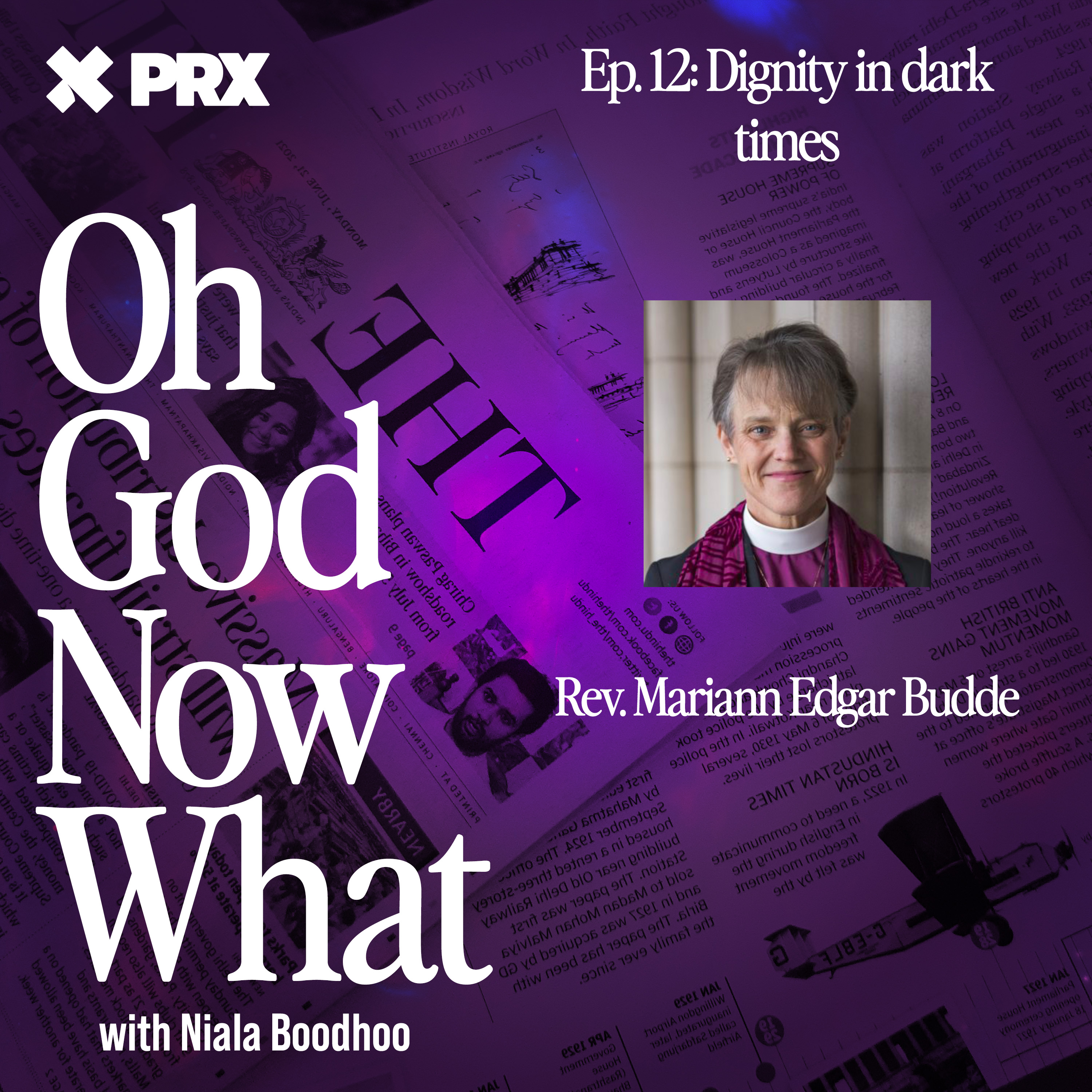
Bishop Marion Edgar-Budde, Episcopal Diocese of Washington (D.C. and parts of Maryland), first woman elected bishop (serving since 2011). Author of How We Learn to Be Brave and Decisive Moments in Life and Faith; also wrote I Can Learn to Be Brave (adapted for young readers).
Live-streaming would debase dignity and encourage violence; leaders must practice restraint in speech and action. Courage means staying close to vulnerable communities and engaging across disagreement safely. The death penalty is opposed by the Episcopal Church; she argues it fails deterrence, is costly/complex, and is administered with racial overtones.
President Trump’s Bible walk and inaugural prayer service; an open letter from military members opposing live-streaming; references to Krista Pike’s death-penalty case; Bryan Stevenson’s “more than the worst thing”; Pope Leo’s emphasis on inherent dignity; “Dignity Index” concept; “eye for an eye” as restraint in ancient law.
Written by AI. May contain mistakes.
Discussion on the concept of human dignity in various contexts.
“True dignity feels like it's in short supply these days, especially since we came pretty close to having a public execution by the U.S.”
Guest introduction: Bishop Budde and her background.
“This is something that a great deal of religious leaders weighed in publicly about, including my guest today.”
Bishop Budde discusses her activism and responses to political events.
“Bishop Marion Edgar Budde serves as a spiritual leader for the Episcopal Diocese of Washington that includes D.C.”
Bishop Budde talks about the need for bravery in advocacy.
“First, you have never been shy about speaking out as your faith drives you to.”
Conversation about the planned public execution of Major Hasan.
“So to stay proximate to the people who are most directly impacted by policies and decisions that are just turning lives upside down and sometimes taking life.”
Bishop Budde shares concerns over language that normalizes violence.
“There was a conversation about that being live-streamed.”
Discussion on military leaders' responses to the execution proposal.
“and to have that something that our children could see, that other traumatized people could see, that, of course, could be used by extremists to simply reinforce their worst assumptions about who we are.”
Bishop Budde emphasizes the importance of respectful dialogue.
“But I'm also dismayed that we had to go there for as long as we did, that we had to have that conversation for as long as we did.”
Bishop Budde talks about managing political discussions in her church.
“We do it all the time and we don't even realize it.”
“How do you do that in your church, right?”
Explore the relationship between courage and facing daunting tasks.
“How do you think that relates to bravery?”

Get the gist, explore an idea or ask about something said.
 Claude
On Oh God Now What, what are the key points of this episode?
Searching your listeningAutomatic transcript. May contain errors.
0:02You're used to hearing my voice on The World bringing you interviews from around the globe. And you hear me reporting environment and climate news. I'm Carolyn Buehler. And I'm Marco Werman. We're now with you hosting The World Together. More global journalism with a fresh new sound. Listen to The World on your local public radio station and wherever you find your podcasts.
0:31Welcome to Oh God, Now What? I'm Nyla Boodoo. True dignity feels like it's in short supply these days, especially since we came pretty close to having a public execution by the U.S. military here in the U.S. We've talked about the idea of human dignity quite a bit on Oh God, Now What? as it relates to war, artificial intelligence, our immigration system. But what about in our public discourse? What does it say about us as a society that this was discussed and that President Trump heard that discussion, including by many members of the military, and acknowledged that in the president's words, many very good and well-meaning people thought we should not live stream an execution.
1:12This is something that a great deal of religious leaders weighed in publicly about, including my guest today. Bishop Marion Edgar Budde serves as a spiritual leader for the Episcopal Diocese of Washington that includes D.C. and many counties in Maryland. She was the first woman elected to this role and has served since 2011. And she recently announced her decision to step away from this post, but that won't happen for a few years. She's also the author of several books, including How We Learn to Be Brave, Decisive Moments in Life and Faith, which has also been adopted into a book for young adults and children, I Can Learn to Be Brave.
1:54Bishop Buddy, welcome to Oh God, Not What. Thank you. I'm so happy you're here. First, you have never been shy about speaking out as your faith drives you to. And I think there have been two times in particular where I feel like you've been very much in the national spotlight during the first Trump administration, during the Black Lives Matter movement, when President Trump took a Bible and carried it in front of the Episcopal Church across from the White House. And then during the inaugural prayer service after the inauguration, when you asked President Trump, when you urged him to have mercy, you've written about being brave.
2:32What are you finding you need to be brave about right now? Right now? What a great question. First of all, let me say about those two events. On both occasions, the president was kind of in my lane, if you will. He crossed over after— I mean, literally, in the case of St. John. I mean, after having the park forcibly cleared before curfew, violently so, right, so that he could walk over and hold a Bible in front of the church, take a picture, and then leave without saying anything, right? So that wasn't like I wasn't gunning for a conflict with the president, but I felt like I needed to say something about that.
3:13And also with the inaugural prayer service, which is a time-honored tradition, when the president is invited into the cathedral and the country prays for healing and peace, that those are two occasions when bringing the best of our gospel values are highly appropriate. And so I'm not, I think there's a perception that I'm just out there all the time protesting or speaking publicly when actually it's not as often as you think. And it's pretty specific in ways that directly impact the people that I serve or the ways that our values are reflected in the public arena. And so what I find now that I need to be most brave about is to stand alongside the people in the congregations I serve and by extension across the country who are in the most vulnerable positions, right?
4:07That's the first thing. So to stay proximate to the people who are most directly impacted by policies and decisions that are just turning lives upside down and sometimes taking life. And then the other thing is to stay steady in a context that is constantly encouraging us to live in intensified states of anger and contempt for those with whom we disagree. And so to stay engaged, not to shy away from difficult conversations, but to have them in such a way that the person who holds the exact opposite view from something that I might be espousing, feels safe in conversation with me, and also feels that I respect their position.
4:54I respect their ability to have a position, and I am willing to listen to them, even if, in the end, we will not agree on our interpretation of Scripture or our view of the direction of the country. And so those are things where I feel like we all have to learn how to do that. I'm no different from anyone in that. And the easiest thing to do is to stay in our little circles of agreement. We all see the world the same way, when in fact the courageous thing to do is to engage with each other and to learn to do so in a way that honors the dignity of everyone and actually moves us toward the problems we can solve when we work together.
5:37Which brings me to what I wanted to ask you about particularly that's been in the news, which is the planned public execution of Army Major Nadal Hassan, who was convicted of killing 13 people during a mass shooting rampage at Fort Hood in 2009. He is scheduled to die by execution by the U.S. military in early December. There was a conversation about that being live-streamed. Pete Hegseth said, we would like to live stream this. And then there was a bipartisan and very loud outcry from a lot of religious leaders, but also from both members of the party, both parties saying, we don't think this is a good idea.
6:19I should point out that right now, public executions only happen in Iran and Saudi Arabia. If the U.S. had done that, we would have been in that company, which obviously not great human rights records in those countries, right? And before we get into, I'm not talking about the death penalty and the morality of that. We can get into that later. But first, I just want to ask you about the language around this and the idea of live streaming a public execution. What was your reaction when you first heard that this was being discussed? My heart sank. And it was one of those occasions where I wasn't sure if Secretary Hegseth was pushing to an extreme, and he wasn't serious.
7:08You know, sometimes people make outrageous statements, and you just don't know if you need to take them seriously, or if he was really intent that the Pentagon was going to make it possible for all of us to watch someone being shot by a firing squad, right, and the impact of that. And so it was, for me, another occasion when And Secretary Hegseth made statements with little thought to the consequences of both the actions and the rhetoric of his language. And that has been a consistent theme. So I was—and I was not one of the first ones to sort of jump into that arena. I was listening and I was watching and I was not ready to engage because I was thinking about it on so many different levels at the same time.
7:59And what finally prompted me, and I started thinking about my response before the president changed his mind, and then I was so grateful that he had, where he pulled back. And I would say that the issue for me was the stunning lack of restraint, both in language and in actions, from military leaders, not just in this country, but around the world. And so when you have leaders, and I was so moved by the statements made by the woman who is the head of the International Red Cross Committee, who must go into war zones all around the world trying to negotiate peace and to bring out hostages. And what she was saying was that this lack of restraint in language and in action, what it does is it gives everybody with a gun permission or whatever weapon to use those weapons because they hear it spoken of so cavalierly in public speech.
8:55So I was thinking about all those things and then realizing that, you know, it's in our history too. We used to have public executions. We used to have public lynchings. We used to have people who, these were spectacles that people would come out by the thousands to watch and they were ultimately stopped because they didn't bring out the best in us, right? When violence becomes spectacle and when it's sanctioned by the government, nothing good could come from that. And so I'm grateful. While, you know, there's still the discussion about the death penalty, which is like over here, at least as a society, we said this is a line we are not willing to have our leaders cross.
9:40And so enough people spoke up so that the president was persuaded to pull back from the Pentagon's decision. I should add, including many members of the military, there was an open letter where they said, and I just want to read from this letter, that this type of exploitative broadcasting that debases human dignity will taint the honor of the military that employs it and a nation that allows it. So beautifully said. And, you know, I think we forget sometimes that the members of the military are some of the strongest advocates for restraint and peace because they see the horrors of war and they see, in this instance, I mean, I've been in enough gun violence prevention conversations to know something about what bullets do to a human body.
10:26and to have that something that our children could see, that other traumatized people could see, that, of course, could be used by extremists to simply reinforce their worst assumptions about who we are. I mean, there was nothing wise about that decision. And again, I'm grateful that it was. But I'm also dismayed that we had to go there for as long as we did, that we had to have that conversation for as long as we did. But at least we had it, and the outcome was somewhat—I mean, it's not exactly a moral victory, but it is a sense of we're not going to go as far as we could have as a country. And Bishop, I've heard a conversation about the fact that even though there was a reversal, some people feel like there's a normalization element of introducing this idea that the U.S.
11:14government will go back a century and start having public executions again. And in fact, Charlie Kirk talked about the idea of bringing back public executions and even having companies sponsor it. I don't know how much of that was hyperbole, but I just wonder about, as you started to talk about just the idea of language and it having the tangible effect that it has on us spiritually or just psychically. So much of Scripture, actually, and the wisdom traditions of many faiths, but I'm speaking of my own, warn against the power of our tongues. You know, they use that language very specifically, guarding speech, guarding language.
11:56And it's an ancient insight that how we speak to and about one another creates a circle of possibilities. And so if we lean into the direction of dignity and respect and kindness and forgiveness, that circle grows wider. if we follow the tendencies we all have within us towards anger and rage and retribution and violence, that that will increase the possibilities that we will treat each other in that way. And so that's simply an ancient spiritual insight. It also coarsens us in ways we don't. One of the reasons why I'm such a fan of what's called the Dignity Index, which is this scale in which we can monitor and to assess our speech according to statements moving in the direction of dignity or statements moving in the direction of contempt is that it reveals to all of us how much we have already been conditioned to speak about one another, particularly those with whom we disagree in language of contempt.
13:03We do it all the time and we don't even realize it. And so when we have it, we don't see it, we don't hear it until we're confronted by it. And then once we're confronted by it, it's hard not to hear it. And so using the word hate, for example, to just describe how we feel about things. Do we really hate these things? Do we really hate these people? My colleague in this work, I'm proud to call him a colleague, Tim Shriver, often will ask in a crowd of people that he's speaking to, how many of you would agree with this statement? And he raises hands, I hate hateful people. And we all raise our hand, And it takes us a second to notice the irony of that, that we are becoming what we say we hate.
13:47I don't understand these people. I don't understand them. Well, why don't we understand them? What does that mean? How can people believe such things? All of those we-they statements turn us into adversaries at a point where we could actually have very helpful conversations across difference. How do you do that? How do you do that in your church, right? I mean, you're at the National Cathedral in Washington, D.C., where, I mean, we live in a town where everything is politicized. Certainly, there are pastors who say you should check your politics at the door before you come into a church. how do you determine where that line is knowing you have 38 ,000 people that you are bishop of?
14:37Right. Well, I think that, you know, check your politics at the door statement position is one of integrity, particularly when you have a congregation where politics and the political arena is where most people do their work, right? You know, they'd like to come to church and they'd like to be able to pray, and they're happy to pray alongside people who see the world differently. And that creation of sacred space, I think, is really important. I would caution that if we can't talk about anything that's in the public discourse because it's quote-unquote political, that just shrinks the realm of what we are able to reflect on theologically and spiritually when we're in community together.
15:15So I try to balance those things out, and I don't do this perfectly, but I attempt to be very careful when I enter into a discourse on any of the topics where even just one word might shut someone down listening to me because it... What words are those? Oh, well, let's see. I'm talking about genocide. Oh, just using that word. Just using that word or even gun control. So there are words that you just don't necessarily want to lean into. So what I try to do whenever I speak on an issue that is loaded with that kind of anxiety is to find a way in rooted in the scriptural mandates of the gospel or of the larger Judeo-Christian tradition.
16:04And then use stories or example that reflect a way that we could find common ground. So using the inaugural speech as an example, if you don't mind, I was trying to humanize people who had been the object of such dehumanization during the political discourse of the campaign. People whose very humanity or their assumptions about their violent natures were being called into question. And I knew for a fact that the majority of people, even in that cathedral, predominantly supportive of the president, I knew for a fact that they knew and I knew that the vast majority of immigrants in this country are not criminals.
16:40That's just not true. It's just categorically not true. And so I was trying to humanize them, humanize people who had been painted with a broad cloth, right, and just say, we know this is not true, and we know that people are afraid. So that was one. And the other around human sexuality. You know in any group of people, no matter what their political persuasion, their part of the country, you know that they have family members who have identified as gay, lesbian, bisexual, or transgender. You just know that. So, like, let's just remember that these are human beings we're talking about. Even if we disagree on policies that would impact their lives, we can agree that these are human beings and that we have a responsibility to treat one another with empathy and concern.
17:27And that's the way I try to go about it is to say let's find some common ground from which to begin. And if I'm going to say something controversial, I'll usually warn people. I'll say, you know, I'm about to say something that you may not agree with, and that's fine, but let me tell you kind of where I am. And that way, it introduces the ability for conversation.
18:08Hannah Rosen. Like Oh God, Now What? Hutzpah is all about using religious tradition and wisdom to make sense of modern life. Rabbi Shira and Hannah answer listener questions through a Jewish lens. Recent episodes have explored how rabbis use AI, what Judaism says about the existence of aliens, and why Jewish geography is so popular but potentially problematic. You can find them on your favorite podcast platform. That's Hutzpah. Real life lived better. The Episcopal Church's opposition to the death penalty, I believe was first formally adopted back in 1958, right? Yeah, could be. Can you explain why the church has taken this position and the thinking behind that?
18:49Sure. But also let me remind you that just because the church's official position is opposed to the death penalty, it doesn't mean that every member of the Episcopal Church is not in favor of the death penalty. In fact, the statistics are pretty consistent. The number of people supporting the death penalty has gone down in this country dramatically in the last, I think, 10 years or so. However, it's still a slight majority of people who support in some form the death penalty. So even if the church takes that position, that doesn't mean that everyone in our church agrees with that. So that's first of all.
19:22I talk about the death penalty rarely. It's not an issue that I speak out on often. I am not persuaded that the death penalty accomplishes the goals based on what I know and what I have heard and studied, the deterrent argument is not persuasive. And the cost and the complexity, and frankly, the way the death penalty has been administered in this country, is the more you learn about it, the hard— Which we all just saw with Krista Pike in Tennessee. Well, that's it. Right. I mean, and that's just one example of how the death penalty has been administered over the course of our history. And then when you overlay the racial overtones of the death penalty, it gets worse.
20:03And so there's not a lot, in my view, there's not a lot to support the death penalty in a way that I would have a lot of confidence or I could stay grounded in as a Christian or, frankly, as an American. Having said that, I haven't spent a lot of time publicly speaking out on it. There are only so many things that one can speak out on and still be heard. So I have left that to other great social activists in our tradition. But when thinking about the death penalty and speaking of it, I find Pope Leo and the Catholic Church so clear, and I lean on them a lot, because they have as consistently as anyone, and our church has done the same, to honor the inherent dignity of a human being, even if they have done something heinously wrong.
20:56And that there is, while justice must be served and the society must be protected, there is still the human person. And there is still the opportunity for repentance and amendment of life. And that our justice system would be better off if we focused on public safety and restitution rather than this long and extensive, difficult process of execution. That's how I see it. Others disagree. I mean, we disagree on this. And people pull scriptural texts to support their views. And I, you know, I engage with that. Yeah, how do you engage with that when people are presenting? Because I was going to ask you, like, what's your scriptural basis?
21:40But then I'm sure you've heard other people say, this is my scriptural basis. Absolutely. For why I support the death penalty. How, as we're talking about the idea of our language, the way that we treat people, how we can have this conversation in a civil way, how have you done that in the past? The strongest scriptural touchstones for supporting the death penalty come from the Jewish scriptures. when there was a clear eye for an eye reciprocity in the legal system, which actually was an expression of restraint, as I understand it, in those ancient years, because an eye for an eye, right? You know, not more.
22:19I'm not advocating it. I'm just saying it's an interesting context to think about. And then also the number of times in the scriptural tradition where God seems to be responsible for the death of many people, right? There are a lot of stories that begin or end with God smiting lots and lots of people. So there seems to be that sense of, well, it's in Scripture, it's God-sanctioned, that kind of thing. Which, to me, isn't as persuasive because I understand Scripture as an evolving tradition of many voices over many centuries. and that as the witness of Scripture evolves in the Jewish tradition as well as the Christian writings, the sanctity of life and God as one who does not condone death and murder and violence seems to rise to the fore.
23:13And keep in mind that, you know, Jesus was executed. He was executed as a criminal. He was executed as someone inciting insurrection. And he was executed as a young man by the hands of the state in one of the most horrific ways that a person could die. And it was public, right? And so why would we want to align ourselves with an image of death that mirrors the crucifixion of the living God for a Christian? And it seems to fly in the face of his witness, his overall witness of unconditional love and an ability for people to find a path forward, even from the worst things that we have done. As Bryan Stevenson says, you know, we are more than the worst thing that we have ever done.
24:01So as you talk about that, I cannot help but think of other clergy members. and particularly I'm thinking of the conservative pastor Joel Webin. My RNS colleagues call him a Theobro pastor. He said on social media that Israeli ambassador Mike Huckabee should also have been executed publicly alongside Nadal Hassan. He later took down that post on social media. I wonder what you think the antidote is to this sort of normalization of violence in our language and in our culture when there are ministers that are saying this? From where I sit, I've never been persuaded that the antidote would be to have a bigger microphone and yell louder.
24:53And unfortunately, we, in the denomination I serve, we don't have a very big microphone right now. We're just not that, you know, we just don't have that much political power, influence, or capacity. So we have to come at it from a different way. we have to embody a different way of living our faith. We're known by our fruits rather than the volume of our speech. And so I personally don't spend a lot of airtime arguing that line of theological discourse because it just seems to give it more oxygen. Now, that may not be the wisest thing. Maybe there really does need to be something stronger. But I feel that that language and that worldview needs to be self-regulated within the evangelical circles that have given birth to that tradition.
25:42And there are voices there that are doing that. And so I feel as if that that's where that needs to happen. And I am grateful for the voices that both publicly and more importantly, privately, who are trying to reign that in. Having said that, there is far more fuel going into the flames of Christian nationalism than I would have ever, at least, I mean, in my lifetime, I've not seen. We've seen it in other periods in our history, but I've not seen it in my lifetime. And I am feeling like those of us who are dismayed by that as Christians need to simply stand firm and to offer a different witness.
26:20And when the opportunities arise to speak, but to do so in such a way that we actually sound different than what we are speaking against. You know, as we're talking about all of this before we head into the midterm elections. I just wonder what thoughts you want to leave people with as we think about heading to the vote based on everything that we've talked about. Well, keep in mind, early voting has already started. So people are moving toward their votes. In much the same way, I believe that voting is a sacred responsibility as an American and as a person of faith, that we have an opportunity to, just a rare opportunity to give voice to our values and to our hopes for the country.
27:02It also is an exercise in imperfection because there's no one party, one candidate who's going to solve all our problems. It's actually our way of saying, I'm showing up to do my part. Voting is one way to do that. Hopefully it's part of a larger expression of how we show up in civic life. This election seems to have a lot of energy behind it. And I would simply say that those of us who don't have millions and millions of dollars to invest in this election. We have something even more powerful, which is our human connection and the ways that we stand together for the country that we want to protect and we want to see thrive in the future.
27:41So let's all go vote. Let's all go vote. I wanted to end by asking you something I heard you say recently, actually on Father Martin's podcast, where you said that you most often encounter God in the gap. Yeah. Between what you're called to do and what you are doing. Yeah. How do you think that relates to bravery? Well, to quote one of my heroes, Eleanor Roosevelt, it's when you're called to do the very thing you think you cannot do. Or when the need before you is far greater than your capacity to meet it. When the task ahead requires more than you feel you have to give. when the situation seems so dire that what good would it do?
28:30You know, what good would my little offering do? And I think courage, bravery, faithfulness, there are a lot of virtues that move you into this direction is to say, first of all, forget, don't remember. Remember, it's not all about you, right? You're doing your part, but it's not as if you are God. And yet God has chosen to work in and through human beings. And so showing up to do one's part and also recognizing that I won't always get it right, you know, so I'm going to learn things, but I won't learn them if I simply stay on the sides and bemoan or passively resign myself to something or think I can't do anything.
29:09So I feel like that's what it does. It moves me and others into spaces where we know we feel inadequate, but we're there because we feel we need to be. And then we try to learn what we can learn and get better at what we're called to do, but recognize that, as the Apostle Paul writes, you know, that there is—we are clay jars, and the power that is moving through us, in fact, belongs to God and does not come from us. And I live that. I live that almost every day. Bishop Marion Edgar-Buddy, thank you for being with me. I appreciate it. Thank you. Thank you very much for your work as well. It means a lot to all of us.
29:50Thank you.
30:00Thanks for listening. I'm Nyla Boodoo. If you like what you've been hearing, please make sure to rate and review in your podcast app. That helps us get more eyes and more ears to the show. Oh God, Now What is a co-production of PRX Productions. Glad you're here and Rhyme Media. Our production team is Robin Lin, Nick Mainoni, Genevieve Sponsler, Sandra Lopez-Monsalve, and Edwin Ochoa. The executive producer at Rhyme Media is Dan Bobcoff. And at PRX Productions, it's Jocelyn Gonzalez. Our theme music is by Hans Dale Shi. Oh God, Now What? is made possible by the John Templeton Foundation.
Bishop Mariann Edgar Budde is the spiritual leader for the Diocese of Washington, so she’s used to navigating political issues with care and intention. But even this surprised her: the recent talk about public executions. She and Niala use this as the backdrop for a conversation on bringing dignity back to how we talk about our fellow humans.
Subscribe on Substack
Subscribe to our YouTube channel: @ognwprx
Follow Niala on Instagram: @nialab