 Ask ChatGPT



Aging and “longevity science” as a rebrand; how to face mortality with courage, anger held for love/truth/justice, and continued engagement (“enough,” generativity).
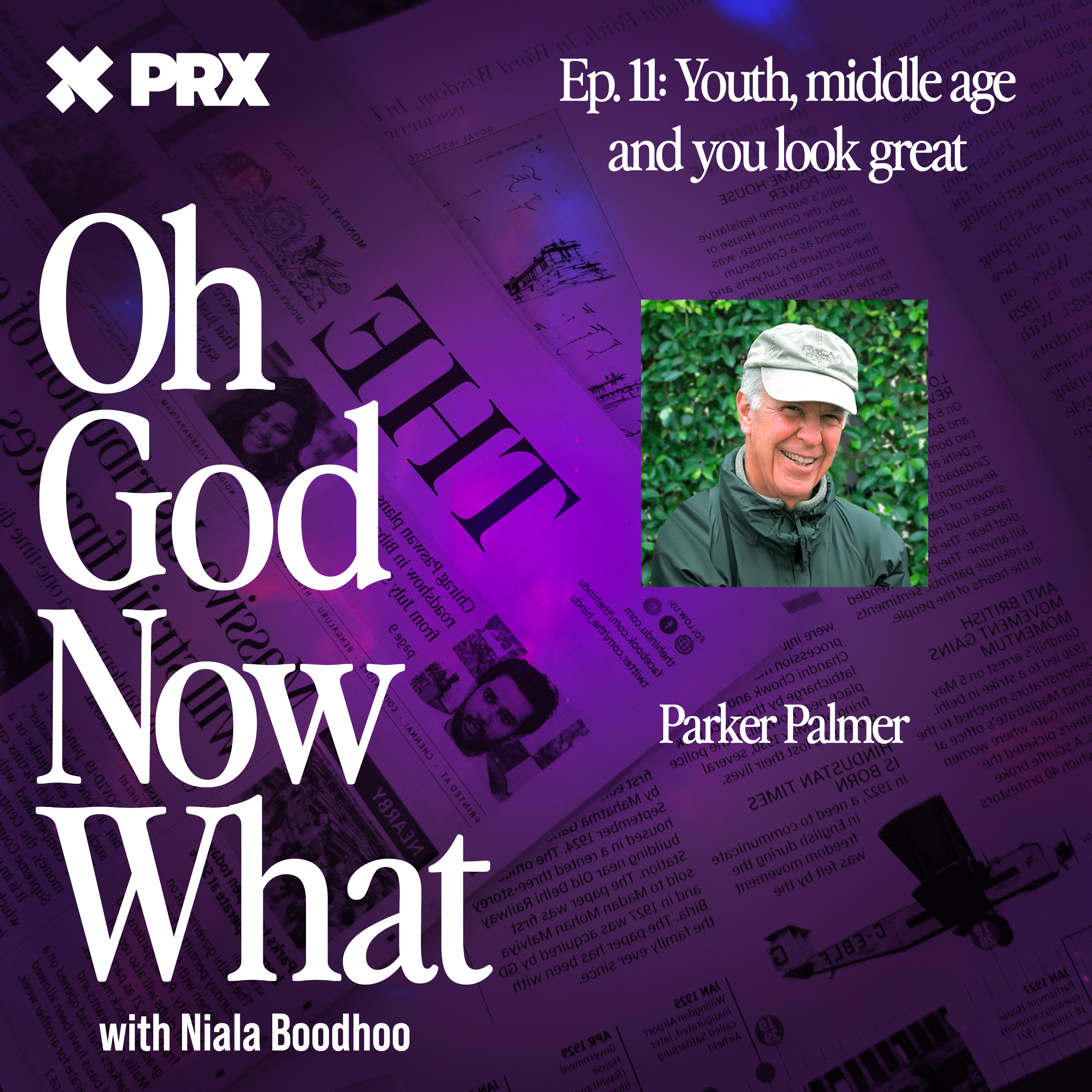
Parker J. Palmer, Quaker educator/writer/activist; founder and senior partner emeritus of the Center for Courage and Renewal; taught at Georgetown; longtime community organizer; wrote On the Brink of Everything (updated edition; he’s 87).
Old age begins when your body wears (around 80) and you keep saying “Oh God, now what?” Longevity industry is driven by billionaires and fantasy that ignores nature’s cycles. Democracy is “never over,” so despair is an excuse to opt out. Keeping death “daily before one’s eyes” increases appreciation for small gifts.
caregiving for aging parents (Alzheimer’s) mentioned by host; Quaker nonviolence as “right activity”; political backsliding compared to Vietnam and fascism patterns; nature seasons (autumn composting leading to spring) and his poem “Everything Falls Away.”
Written by AI. May contain mistakes.
Nyla shares her personal experiences with aging and caregiving.
“Today, we're going to talk about aging, which despite all the efforts you might see online, is actually an inevitable part of life.”
Parker Palmer discusses his background as a Quaker and his teachings.
“So I have so much that I want to talk to you about, but I thought we should start with, before we get into it, we have not had the pleasure of welcoming a Quaker to the podcast yet.”
Parker discusses the quest for truth and authority in today's world.
“Well, one thing I want them to know is that it's a dwindling tradition because I think there's a huge quest in our day for external authority, which I believe to be understandable and yet often misguided.”
Discussion on managing anger and the essence of nonviolence in Quakerism.
“And I cherish and relish the great variety of people that American democracy has welcomed over time and the liberation that we've been able to achieve for people who were brought here against their will.”
Parker reflects on the importance of authenticity in old age.
“in the service of love, truth, and justice, in the service of something that's life-giving rather than something that's death-dealing.”
Parker shares insights on historical events and their implications today.
“I believe that we are all created in God's image.”
Discusses the importance of continued engagement in democracy despite challenges.
“to destroy the greatness of this land, and then promise the populace that if he or she gets elected, he or she will eliminate those people.”
Critiques the focus on youth preservation and the natural order of life.
“In my case, that's not how I feel because I never imagined the thing called democracy would be one and done for all time.”
Explores the lessons nature teaches us about life cycles and aging.
“It's pursued by billionaires who obviously like the comfort of their nests.”
Discusses navigating the realities of aging and mortality in life.
“And I feel like the past year I've been going to so many family funerals, including my favorite aunt who was like my grandmother who passed away this spring at 92.”
Examines how contemplating death enhances appreciation for life's small moments.
“And you talk about keeping death daily before one's eyes, which I think for a lot of people might sound very alarming and make them very uncomfortable.”
Explore how aging and experiences like depression shape mental health.
“I was going to ask you about that because you've written so eloquently about this in some of your other books.”
Discuss the humor and perspective gained through the aging process.
“You joke that you're finally old enough to write about getting old.”
Listen to a poignant poem that reflects on life and connection.
“All you younger people, you're looking at me.”

Get the gist, explore an idea or ask about something said.
 Claude
On Oh God Now What, what are the key points of this episode?
Searching your listeningAutomatic transcript. May contain errors.
0:02You're used to hearing my voice on the world bringing you interviews from around the globe. And you hear me reporting environment and climate news. I'm Carolyn Buehler. And I'm Marco Werman. We're now with you hosting The World Together. More global journalism with a fresh new sound. Listen to The World on your local public radio station and wherever you find your podcasts.
0:38Welcome to Oh God, Now What? I'm Nyla Boodoo. Today, we're going to talk about aging, which despite all the efforts you might see online, is actually an inevitable part of life. Maybe you're so young that this doesn't feel top of mind to you, but we are all getting older. And it's such a big movement that it's been rebranded from anti-aging to being called longevity science, which by the way, is a big business. If you're not considering about yourself aging yet, chances are you are caring for an aged loved one or caring for both aging parents and young children. Caregiving for my older parents, especially my dad who has Alzheimer's, is a big part of my life.
1:22I feel like I spend so much time at their retirement community in Florida that I am an honorary member there. Shout out to Penny Farms. Which brings us to today's conversation. I have loved reading the Quaker educator, writer, and activist Parker Palmer for most of my life. His writings on vocation, like the book, Let Your Life Speak, were such an affirmation to me of my chosen profession as a journalist. And I had the privilege in 2018 of interviewing Parker Palmer when his book about aging came out. It's called On the Brink of Everything, Grace, Gravity, and Getting Old. Parker Palmer is the founder and senior partner emeritus of the Center for Courage and Renewal.
2:02Before that, he taught at Georgetown and he's been a longtime community organizer. He wrote On the Brink of Everything while he was in his late 70s. Now that he's 87, he's updated it and a new edition is out next week. Parker, welcome to Oh God, Now What? Well, thank you so much, Nyla. Delighted to be with you again. So I have so much that I want to talk to you about, but I thought we should start with, before we get into it, we have not had the pleasure of welcoming a Quaker to the podcast yet. I love your line that everyone thinks you're responsible for oatmeal, and that's about it. Can you indulge us and just tell people what we need to know about your background as a Quaker?
2:44Well, we don't make the oatmeal for starters, even though people think we do. If we did, we wouldn't be the sponsor of the National Football League, which is true of Quaker Oats. So we can get that out of the way immediately. I came to Quakerism at about age 35, having spent a number of years looking for a spiritual tradition in which I could feel deeply at home. And I found myself at home in the Quaker community. I actually lived in an intentional Quaker community for 11 years. So I got a pretty deep formation in the tradition. But I found myself at home there for two reasons. One was the Quaker emphasis on the inner light or the inner teacher, the idea that we don't have to turn to an expert or an authority for guidance, that everyone has direct access to the spirit, and that it's always speaking within us in one way or another, despite the noise around us and the noise within us.
3:48And it's a special form of community where nobody tells you what to do, but they engage in processes of discernment that I've found very helpful in my life, as was the fact that Quakers have long been engaged in social change, in the works of love, truth, and justice. And having come to them after five years of community organizing in Washington, D.C., this was very attractive to me. And I've learned a lot since age 35. That's 52 years ago. Is there anything else you want people to know about modern Quakerism that maybe people don't know? Well, one thing I want them to know is that it's a dwindling tradition because I think there's a huge quest in our day for external authority, which I believe to be understandable and yet often misguided.
4:50And we are often misled by somebody claiming authority over right and wrong or true and false. today's political movement, the one known as MAGA, Make America Great Again, sort of began with the proposition that there aren't any such thing as facts anymore, that truth is whatever a person thinks it is, especially if that person holds political power and occupies the White House. And so I think for a decade and more now, we've been in deep trouble in terms of love, truth, and justice, because the whims of a certain class of people have replaced our quest for truth. And I do continue to believe that if people could quiet down and center in and have a community of discernment around them, and had a fair shake educationally to understand what these complex issues look like, that we could find our way back to solid ground.
5:57Do you still have your t-shirt that says, what do you mean, Quaker? I sure do. Yeah. I aspire, as a Quaker, to nonviolence. It's one of Quakerism's core testimonies. Nonviolence doesn't mean inactivity. It means what Buddhists would call right activity, activity that's grounded, activity that points toward a North Star. And again, the words love, truth, and justice are good North Star words for me. I aspire to nonviolence, but I get very angry when I see people in power, people with great wealth, abusing folks who are on the margins, abusing the people that they think of as other, put that in quotes, because in my mind, there is no other.
6:51We are all in this together. We are all human beings. And I cherish and relish the great variety of people that American democracy has welcomed over time and the liberation that we've been able to achieve for people who were brought here against their will. And it really angers me to see history being rewritten in favor of the winners. It angers me to see tens of thousands of non-criminals being brutally detained, kidnapped, really, and deported without due process. All kinds of things anger me. The marginalization of the LGBTQ plus community. vulnerable people who are struggling to establish an identity and integrity amid the forces that I've just described.
7:50And so the question becomes, how do I hold my anger? Anger is an energy. There's nothing right or wrong about it in and of itself, just as there isn't with any feeling. The question about feelings that contain energy is, how do I harness them in the service of love, truth, and justice, in the service of something that's life-giving rather than something that's death-dealing. I'm still working on that one at age 87. You know, you write about the importance of saying enough and standing up for things. And do you think that's easier? Do you find that comes easier to you as you age? Absolutely. Absolutely.
8:35I have to tell you this, now that we're on to the aging topic at age 87, the title of your show, Oh God, Now What?, is perfect for an old man. Because every morning... Why is that? Oh, tell me why. Well, every morning I wake up and feel something in some part of my body and think, Oh God, Now What? It's hard to put on my shoes. Oh God, Now What? And it's not so much a prayer, really, as a curse. It can also be a lament. As I said, I was like, there's no punctuation in the show because we want to leave it open for interpretation. I like the lament option. Thank you. I'll use that henceforth in the great tradition of lamentation.
9:23So I think that in old age, you start to realize, and I wrote this in the book On the Brink of everything, grace, gravity, and getting old, you start to realize that old is just another word for nothing left to lose. And therefore, why not go for it? Why not really show up with what you believe and what you value, what has integrity for you, with a full expression of your identity in the world? One of the things that older people reflect on a lot is their own mortality, their own death. And while I can imagine and have been close to people who died in painful ways, I can't imagine a spiritually or psychologically more painful way to die than realizing as you took your last breath that you had never really shown up in this world as your true self, And you've never taken risks on behalf of all that.
10:27I can't imagine a sadder way to check out than thinking, I wasted all these years. I'm a Christian. I'm a Quaker Christian. I believe that we are all created in God's image. And I believe that we express that image in quite diverse, richly, beautifully, colorfully diverse ways. And that what we owe the world for the gift of life is showing up here as who we are, with our own truth intact. act. I have tried to do that all of my life, but I know that in my younger years that I made compromises from time to time. But the older I've gotten, the less sense compromising has made to me for reasons that I just tried to explain.
11:23The stakes are too high, and I've seen too much, too much social change, too much progress reverted or cranked backwards to imagine that my work is over. I really think that older Americans who are huge in numbers right now have a special mission in this world to build on our experience and deliver the goods for a world that's in deep trouble. Can I ask you about that? So I interviewed you when this book first came out, the first edition of this in 2018. I was obviously also quite a bit younger then. I will say I've often thought about and found true what you wrote then, that the perspective, you call it the full panorama that you get from aging.
12:14And I want to talk about that. But first, I want to ask you about the full panorama of history that you have lived through, I have the past two years often thought about what it would have been like to live through, for example, the late 1960s. And I wonder from your perspective of someone who lived through World War II and the 60s and the 70s, how do you think about now, given the full panorama of history that you have experienced as American? Well, it's a great question. And there are many ways, of course, to answer it. I mean, one answer that comes quickly to mind, which is just about a piece of the puzzle, is here we are with a president who says he might just decide to annihilate Iran.
13:03Have we learned nothing from Vietnam? Have we learned nothing from all the military adventures and losses we've suffered since the great victory over fascism in World War II, because fascism always begins with somebody who wants power and wealth more and more than he or she already has, deciding that the way forward is first of all to identify a problem that Americans have, let us say economic insecurity. then blame that problem not on the people who really cause it, the billionaires and all that feeds into the wealth gap, but blame the problem on some despised other, in quotes, such as people from Mexico, all of whom we are told are thieves and rapists and robbers and out to destroy the greatness of this land, and then promise the populace that if he or she gets elected, he or she will eliminate those people.
14:13So have we learned nothing is one way to approach this question. Now, if you're my age, and a lot of people are somewhere in my neighborhood, age-wise. One of the tough things is looking back if you happen to be a person who has invested in one way or another in positive social change, let's say civil rights or voting rights for African Americans. You look back on those days, I participated in those days myself, and the temptation is to throw up your hands and say, I wasted my time, it was never worth the effort, you can become a cynic and say, why did I ever do that? I'll just retire to my own garden and drink beer or whatever, watch football.
15:05In my case, that's not how I feel because I never imagined the thing called democracy would be one and done for all time. So that's why you don't have despair right now about what's happening? Correct. That's one of the reasons. I think hope is a complicated subject, but one of the reasons is that back in the day when I was walking away from academic life to become a community organizer working on race relations, I never imagined that whatever battles we won would be the last battle we'd have. I mean, democracy is never over. There were a lot of things the founders missed or blew, but they got one thing right, which is that democracy is a lab which we can blow up if we're careless and thoughtless, but in which we can also continue the experiment called all people are created equal and everybody has a right to a voice in a democratic society.
16:14To me, these backslidings, these systematic efforts to reverse history are a call to my next round of engagement. So no despair. Despair, to me, despair, and I don't mean here despair of the clinical sort. I understand clinical depression. I've been there several times in my life, and I've written about those episodes. But despair, decision to kind of opt out of things is a cheap way out. It simply provides a handy excuse for doing nothing that I can't allow myself. Or I die in real despair, having realized that I didn't show up with everything I had to address issues of love, truth, and justice.
17:09As you talk about despair, I do think part of a trend nowadays is to avoid conversations around aging, or that is to say, like the whole longevity industry and the idea of preserving your youth and living forever, maximizing all the data about yourself to improve the quality of life. And it seems like basically, so I won't age. I'm curious your thoughts about that. Well, I don't know if I can say this, but I think the longevity industry sucks is what I think. It's pursued by billionaires who obviously like the comfort of their nests. I'm very comfortable with the fact that we're all embedded in the natural world.
17:58and the natural world has a very long history of determining these things, this thing we call life and death. So, you know, we ought to pay close attention to the rhythms of the natural world and the way death is always necessary. It's happening right now. It's beginning to happen in the fall of the year. The seasons are so instructive. Always necessary to prepare the ground for the birth of something new. That's what the natural world does. That's the cycle of life, as long as there has been life on earth. And the idea that I or anyone else would want to escape that as if we knew more than nature and we're smarter than nature, that's what I mean when I say the longevity industry sucks.
18:51It just doesn't make any sense. And it's the kind of mindlessness that great wealth can create, and also absolute fantasy thinking can create. Fantasy that takes us out of our bodies, out of our rootedness in the earth, out of relationship to one another, out of relationship to the natural world. And I won't give the whole sermon here, But think of how many of our current problems can be traced to the pathologies I just named. Climate change, ecological collapse, on and on it goes. Can I go back to what you were talking about, the autumn of your life? Because you just, on Substack, re-shared an essay about aging, and you said you were in the autumn of your life.
19:43And I just want to ask you about that and about how nature can help us kind of get us out of these patterns that you're talking about. Yeah, that's, you know, I'm a great fan of poetry. I read a lot of poetry. People like Mary Oliver and Wendell Berry, poets of nature who have a very realistic understanding of what nature is about because they've lived in it and have been immersed in it for most of their lives. Both of them sadly now gone, but we have their words to live by. and these poets remind me of my rootage in nature and of this cycle of the seasons where in autumn all this stuff falls to the ground.
20:34It's beautiful for a little while. The leaves of the trees in my part of the world, the upper Midwest, the leaves of the trees turn glorious colors, but eventually the leaves fall. They compost on the ground. The trees go bare. There will be, soon to come, a lot of zero-weather winter days when the trees have nothing on them except their skeletons up against a wintry gray sky. Some days full of sun and bright blue sky, but those are the colder days because when there's cloud cover, it helps warm things up a little bit. And it's tempting to see winter as a time of despair. But if you get to know what nature is doing in winter, you begin to understand that all of that composting is helping with underground preparations that will give rise eventually to the glories of spring.
21:43And there is no spring without winter. And the seasons matter, and they take us through that cycle of life. And once again, in spring, life springs up in a way that creates the abundance of summer, where eventually we harvest that which feeds us, that which we need for sustenance, And then takes us back to that fall where everything falls away again. And so to me, that's a description of a reliable cycle of life that for eons has proven to be central to the continued emergence of this thing called life. Wendell Berry has a great line where he says, we and our political leaders keep forgetting that nature has more votes than we do and we'll make the final decision.
22:43And he's bang on right about that.
22:50Hey, it's Naila. Thanks for listening to Oh God, Now What? And I wanted to share another show that I think you'll enjoy. It's a fellow PRX program called Chutzpah. It's hosted by Rabbi Shira Stuttman, who you've heard on Oh God Now What, and Radio Atlantic host Hannah Rosen. Like Oh God Now What, Hutzpah is all about using religious tradition and wisdom to make sense of modern life. Rabbi Shira and Hannah answer listener questions through a Jewish lens. Recent episodes have explored how rabbis use AI, what Judaism says about the existence of aliens, and why Jewish geography is so popular but potentially problematic.
23:24You can find them on your favorite podcast platform. That's Hoodspot. Real life lived better. I feel like I'm in the generation now where I'm helping care for aging parents. And I feel like the past year I've been going to so many family funerals, including my favorite aunt who was like my grandmother who passed away this spring at 92. But I imagine you might also be at an age where you're probably going to a lot of funerals. And I wonder your advice for people who are confronting mortality so regularly as is a season of life I'm in right now, it seems like, at least, and I think many people are.
24:02Yeah, it's been interesting to me in recent years. I mean, yes, I'm in a season where I'm watching a lot of friends, family members, either fall into dementia and no longer able to live what we all thought of as normal life, or watching friends and family die. And it's interesting to me that these days, more and more people of different ages will say, that's where I am too. And this sandwich generation that you're in, that you just described, of course, has a special urgency around being in the middle of all of that, because it's diverting their life course in significant ways. For everyone who's feeling that way, it's a wake-up call that we're all headed toward the brink of everything.
25:01And the question is, are we going to receive that with despair, and especially with the kind of despair that comes from ever imagining it would be otherwise? Or are we going to receive that as a wake-up call to reinvest ourselves in life and in generativity, in all the things that make us of service to the world and to each other? And if that service is to aging parents who need your help, God bless you for giving that help. And please take care of yourself in the process as very best you can. You have a chapter in your book called Over the Edge about pondering what happens next after death. And you talk about keeping death daily before one's eyes, which I think for a lot of people might sound very alarming and make them very uncomfortable.
26:06Yeah, I know it does for sure. It's like, what? Say what? I'll confess right here that I've been doing that since my mid-20s. And I'm glad that I have. I think at first, when I read that in the rule of St. Benedict, the rule written in the fourth century for Benedictine monks, daily keep your death before your eyes, I received it as kind of morbid, I think, but it didn't take much time until I began to realize that by doing that, I had deeper and deeper appreciation for the gift of life, that the anticipation of mortality, the anticipation of the unthinkable fact that someday I won't be here, really increased my appreciation for the daily gifts, small and large, and especially the small gifts, which were so quick to pass by in our busyness to, quote, live.
27:13The small gifts like saying, oh, God, now what? Yeah, at least having a God to turn to in those moments, even if you don't really mean it. Yeah, small gifts like a child's laughter up on the playground where my wife and I go sit in the park or a sunrise that comes through the trees, whether they have leaves on them or not. These small gifts, your appreciation is enhanced, and it just helps. It helps big time. I also, as I alluded to earlier three times in my life, I've taken a deep dive into clinical depression. So I have my own experience of a kind of death in life, which is a really hard experience for months at a time being unable.
28:03I was going to ask you about that because you've written so eloquently about this in some of your other books. I'm curious how you have seen aging affect your mental health. Yeah. Well, I can tell you this. The experience of depression, which is a mental disease, affected my mental health by helping me understand the warning signs that I'm going down a path that's going to end in calamity. And to get ahead of the train wreck by noticing those warning signs and proactively doing things or making decisions about my life that will keep me from going down that path. There's some very interesting work in the field of evolutionary biology, which suggests that over long periods of time, depression may have developed in human beings as a way of keeping them from going down paths that were going to end in ruin by the simple fact that depression robs you of the energy to take another step down that path.
29:19And if you can work that through, if you can find your way through that absolute stuck feeling, and I don't think there's any tricks or tips or techniques about how to do that, the willingness to be there and to just feed on whatever little scraps of life and possibility you can find. If you're willing to do that, you will eventually come out with some energy and the sense, I have got to back up and take another path in life. And this translates into making bad decisions about jobs or about relationships or about dealing with the multiple issues of life in a way that doesn't really feed you or support and sustain you.
30:09We talked about anger earlier. There's a way to hold your anger that can lead straight into depression because you're stifling an energy in yourself that wants to express itself creatively on behalf of life. There's another way to hold your anger that leads to life. So back up. Find another path. And I think in that way, my experience of depression, which is a mental illness, helped me achieve more mental illness. I got some help from therapists, from reading, from my own inner guidance about how to turn all of this in a life-giving direction. Into mental health. Into mental health. And since 65, I really have not felt on the edge of serious depression for a moment.
31:04Wow. Well, that's wonderful to hear. Parker, your book has a new postscript. You joke that you're finally old enough to write about getting old. And I remember when the book first came out, you had a 100-year-old who kind of laughed at you for your perspective of writing this book eight years ago. So I'm curious to know when you think old age begins and what you think now about getting old in terms of the perspective that you have from writing this eight years on. Yeah. Well, you know, I'm tempted to turn to a cliche and say, well, old age is a state of mind. But no, I think old age begins when you find yourself saying for the fifth time in a week, oh God, now what?
31:49It's a medical fact for the most part, as I understand it. that at age 80, bodily systems start to show signs of wear. And I've met more medical specialists since I turned 80 than I had ever met in my life before. Prior to that, I was blessed with reasonably good health. And I'm glad for these medical specialists. I've had some very interesting conversations with them. But I'm also glad to be in a passage of life right now where I don't have to keep seeing them or waiting for the latest test results where things seem to have stabilized some. And so I don't know when old age begins. What I do know is that wherever I am on the continuum, I want to continue to invest myself in life in any way I can.
32:46And you love being 87. I do love being, yeah, I absolutely love being 87. I love being a grumpy old man when I need to be a grumpy old man. What's your favorite part about being a grumpy old man? John. Just let it fly, Parker. What have you got to lose? I suppose it's the equivalent of what I wish I had done a time or two when I was younger, which is to say, take this job and shove it. Or again, that great word, enough, which actually came from a poem I wrote that helped me find my way out of depression. But I'm also grinning because I gave a talk recently at the reunion, the mass reunion of my college class of 1961.
33:36So we had our 65th reunion. And all of the classes that ended in one or six had their reunions last year. So there are a couple thousand people there. And when I stood up to talk to a subset of that group, I think probably 300 people in the room when I gave my talk. I said, I want to give you a pro tip about negotiating our interactions over this weekend, because we'll be passing by people we think we might know, but not sure we know, and we don't know what to say, especially younger people don't know what to say to older people. So I said, I want you to know about a recent scientific discovery, that there are three distinct stages to a human life.
34:26There's youth, there's middle age, and there's you look great. So let's practice right now. All you younger people, you're looking at me. I'm standing up here at age 87. Please say in unison, you look great. And they did. and I said, thank you. That means a lot to me. Let me now proceed with my talk. So yeah, as you may have picked up, a sense of humor is very important to me, not only about aging, but about everything else in life. One of the things I always appreciate about your writing is that I am often laughing out loud. So I do really appreciate that. Because you love poetry so much, and I wanted to share a little bit of that with our audience.
35:18I wonder if you would mind reading for us the poem that you have at the end? Oh, sure. Yeah, this, as you said, this is the poem with which I end the postlude to the revised, updated edition of On the Break of Everything. So it's called Everything Falls Away, and it begins with a little two-line epigraph from a poem by William Stafford. So I'll read that first.
36:16with the night. The friends, the people you loved who loved you, those who might have wished you ill, none of this is forever. All of it is soon to go, or going, or long gone. Everything falls away except the thread you followed unknowing all along. The thread that strings together all you've been and done, the thread you didn't know you were tracking until toward the end, you see that the thread is what stays as everything else falls away. Follow that thread as far as you can, and you'll find that it does not end, but weaves into the unimaginable vastness of life. Your life never was the solo turn it seemed to be.
37:10It was always part of the great weave of nature and humanity, an immensity we come to know only as we follow our own small threads to the place where they merge with the boundless whole. Each of our threads runs its course then joins in life together, this magnificent tapestry, this masterpiece in which we live forever. Parker Palmer, thank you. Thank you so much for joining us, for sharing your poetry and your wisdom. We appreciate it. Thank you, Nyland. I'm grateful for the opportunity.
37:59Thanks for listening. I'm Nyla Boodoo. If you like what you've been hearing, please make sure to rate and review in your podcast app that helps us get more eyes and more ears to the show. Oh God, Now What is a co-production of PRX Productions. Glad you're here in Rhyme Media. Our production team is Robin Lin, Nick Mainoni, Genevieve Sponsler, Sandra Lopez-Monsalve, and Edwin Ochoa. The executive producer at Rhyme Media is Dan Bobkoff and at PRX Productions, it's Jocelyn Gonzalez Our theme music is by Hans Dale Shi Oh God, Now What? is made possible by the John Templeton Foundation
There’s so much in the news recently about the desire to live to 150. But let’s face it -- none of us will make it that far. And as we age ourselves, many of us are caring for elderly parents. Our guest, Parker Palmer, wrote “On The Brink of Everything: Grace, Gravity & Getting Old” in his 70s. Now, at 87, for the book’s re-release, he shares his spiritual wisdom for facing the autumn of life.
Subscribe on Substack
Subscribe to our YouTube channel: @ognwprx
Follow Niala on Instagram: @nialab