
 Ask ChatGPT

- Podcasts
- On Purpose with Jay Shetty
- Matt Gallant & Wade Lightheart: How to Hack Your Sleep and Digestion to Live an Optimized Life
On Purpose with Jay Shetty11 Nov 2026 · 1h 22m · 31 chapters
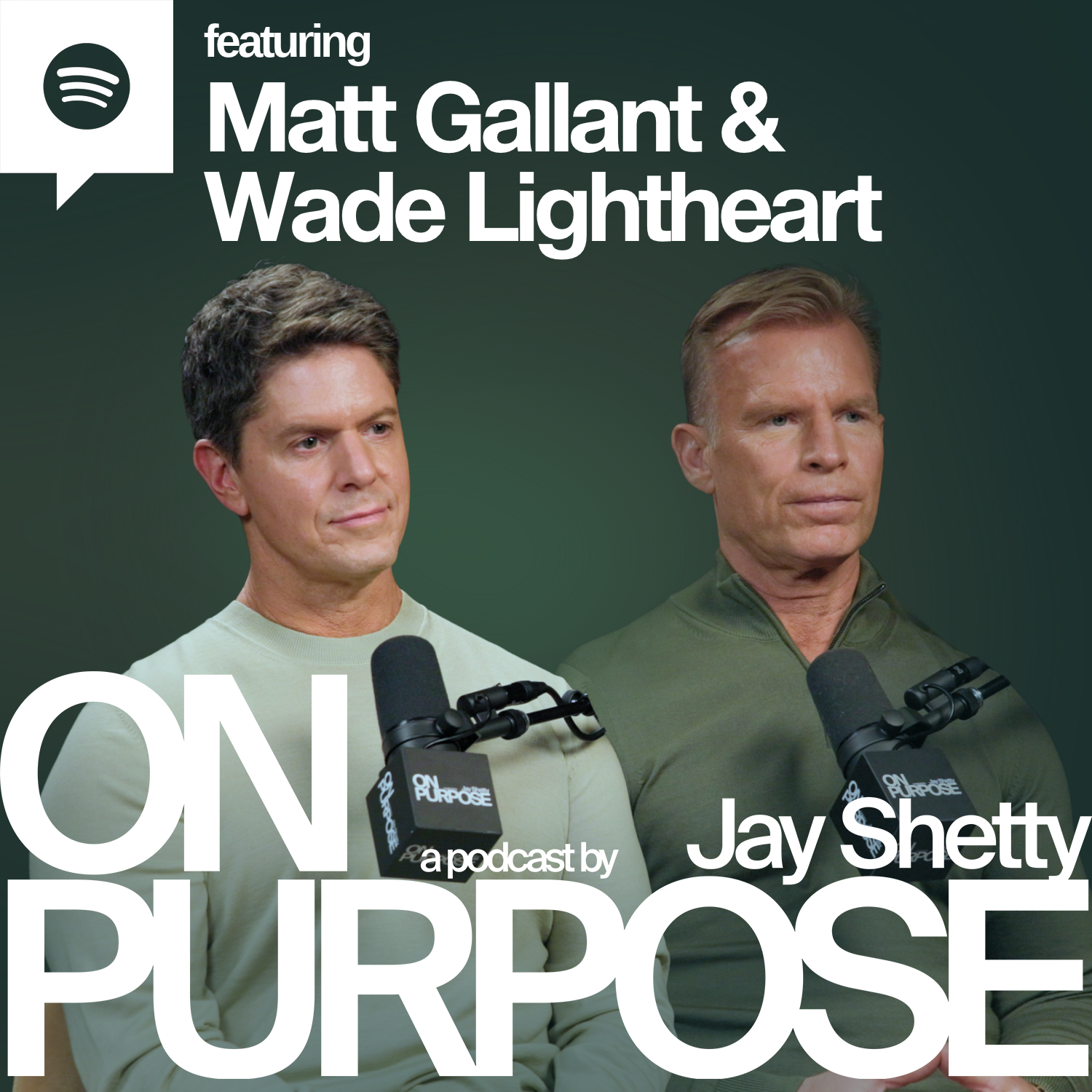
Matt Gallant & Wade Lightheart: How to Hack Your Sleep and Digestion to Live an Optimized Life
In short
Matt Gallant and Wade Lightheart (co-founders of BioOptimizers) discuss “hacking” sleep and digestion to improve energy, metabolic health, hormones, and longevity. They argue most Americans are metabolically unhealthy due to modern food design (hyperpalatable, low-satiety, additive-heavy) plus sedentary lifestyles that hijack appetite and the nervous system. They present sleep as the foundation of health and claim inconsistent sleep disrupts metabolism and increases risk.
Guest backgrounds
Matt Gallant and Wade Lightheart are former competitive bodybuilders and personal trainers. They co-founded BioOptimizers and have spent 20+ years building it. They describe personal experimentation with sleep gear and nutrient dosing, and bodybuilding/plant-based vs ketogenic dietary approaches.
Key claims
Sleep quality depends on circadian timing (morning sunlight), darkness and cool temperature at night, consistent bedtimes, and magnesium for melatonin/GABA pathways. Caffeine masks tiredness and harms sleep if used too late. Digestion determines outcomes: “it’s not what you eat, it’s what you digest, absorb, and utilize.” Modern cooking/pasteurization reduces enzymes, so they promote full-spectrum enzymes (Masszymes) plus probiotics/enzymes and timing (about 30 minutes before meals; avoid heavy meals 2–3 hours before bed).
Notable examples
Matt reports burnout with near-zero deep sleep, then improved deep sleep after major sleep investments. They cite a “bucket theory” of nutrient reserves and describe a bodybuilding case where restrictive dieting led to rapid fat/water regain after digestive disruption. They also describe holiday overeating causing post-meal lethargy and rebound hunger due to enzyme demands.
Written by AI. May contain mistakes.
Chapters
2:12
Introducing Matt Gallant and Wade Lightheart
Hosts introduce their guests and set the context for the discussion.
“I don't know what your day's been like, but I was just thinking about you for a minute.”
3:21
Understanding Metabolic Health
Exploring the rise in metabolic unhealthiness in America.
“I've been so grateful and lucky to get to know you both behind the scenes, to be involved in the business.”
7:29
The K-Shaped Shift in Health
Discussing the divide in health outcomes among Americans.
“Today, Americans spend around$2 trillion on health and wellness a year.”
8:31
Quality of Life vs. Longevity
The discussion shifts to the importance of quality of life as we age.
“My great-grandmother lived to 104, or had some multiple grandparents in their mid-90s.”
10:36
The Importance of Supplements
Discussing the necessity of supplements for optimal health.
“What's happened is we made all these advances in the 60s.”
12:23
Nutritional Needs and Optimal Doses
Exploring the concept of optimal nutrient dosing versus minimal.
“That mission that you have, a stronger life, a longer life, I think that's what we all want.”
14:00
The Bucket Theory of Nutrition
Learn how to optimize your nutrition with the bucket theory approach.
“I mean, we got to about four grams a day was my peak and it changed how I felt.”
18:00
Understanding Sleep and Its Importance
Discover the significance of achieving deep sleep for overall health.
“the mind and I was somewhat neglectful of the body.”
23:20
Tips for Better Sleep Quality
Get practical tips on improving sleep quality through lifestyle changes.
“I mean, the growth hormone is a very powerful fat burner.”
28:00
The Connection Between Sleep and Health
Explore how sleep influences metabolic health and overall well-being.
“So magnesium is involved in the GABA production process.”
Show all 31 chapters
31:49
Sleep Genetics and Personal Insights
Discussing the role of genetics in sleep needs and personal experiences.
“What's it like to buy a car from Carvana 100 % online and get it delivered to your door?”
32:36
Dietary Practices and Weight Loss
Comparing different dietary approaches and their effectiveness.
“I tried to be him and I just couldn't pull it off.”
34:34
Understanding Digestion and Nutrient Absorption
The importance of digestion in nutrient uptake and diet effectiveness.
“We were both getting great results with our clients.”
36:12
The Role of Enzymes in Digestion
Exploring how enzymes impact the digestive process and health.
“You know, I was dieting basically for two years, really on my macros, doing all that macro-based bodybuilding style diet.”
38:02
The Impact of Food Processing on Health
Examining how food preparation affects nutrient availability and health.
“So he introduced us to the concept of enzymes, hydrochloric acid, and probiotics.”
42:00
The Importance of Enzymes in Digestion
Learn how cooking affects food enzymes and digestion efficiency.
“The ability to store, preserve, and cook their food.”
43:50
The Impact of Diet on Energy Levels
Discover how enzyme intake can affect energy after meals.
“And what's shocking to me is that almost none of the experts out there today are talking about how potent a really good full spectrum enzyme is.”
46:28
Timing and Enzymes for Optimal Digestion
Understand the best practices for taking enzymes around meals.
“And to go back to circle around to, if there's two things people got to figure out for health and longevity, it's rest and digest.”
48:22
The Rise of Protein Consumption and Its Challenges
Explore the growing focus on protein intake and absorption issues.
“Drink a banana shake and you'll see the spike.”
50:34
Understanding Bloating and Digestive Health
Identify causes of bloating and how to improve digestive health.
“NA member FDIC, subject to credit approval, terms apply.”
56:00
Optimizing Digestion and Sleep for Better Health
Learn how optimizing digestion and sleep can enhance dietary flexibility and overall health.
“tested it on 11 patients, and it reduced their zonulin over 90%, which means that we're sealing the gut and those food particles are not getting in and you're not getting that inflammatory response.”
58:09
Historical Perspectives on Dieting Practices
Explore historical dieting practices and their evolution over the decades.
“without becoming part of the dietary tribalism.”
59:49
The Pitfalls of Popular Health Hacks
Discuss the potential downsides of trending health hacks like cold plunging and peptides.
“You know, so that's really, to me, that's the barometer of if something is working or not.”
1:01:46
The Importance of Experimentation in Nutrition
Understand the role of experimentation and research in developing effective nutrition products.
“And that changes everything in your house and how you're going to go, your routine, your sleep routine, your work routine, all that sort of stuff.”
1:03:22
Creating a Health Game Plan for All Ages
Learn how to tailor health strategies for men and women in their 20s and 30s.
“And I increased the conversion rates on my website 30%, which blew my mind.”
1:07:07
Understanding Hormones and Health Risks
Examine the impact of hormones on health and the risks of neglecting hormonal balance.
“That is the prime years to build muscle that'll serve you your whole life, which is what Wade and I did.”
1:10:00
The Importance of Exercise and Routine
Learn how cultivating a consistent exercise habit early in life can prevent health issues later on.
“The other thing is, is cultivating the habit of exercise.”
1:13:10
Health Strategies for Middle-Aged Individuals
Discover essential health tips, including muscle building and biometric testing for those in their 40s and 50s.
“You need to get out there and hit the gym.”
1:15:42
Navigating Health Challenges for Women
Understand the unique health needs of women in their 40s and 50s, including the importance of support and hormone balance.
“You need to get a trusted authority in your life.”
1:19:04
Reflecting on Insights and Growth
Explore how past challenges can be transformed into strengths and the importance of trust in healthcare advice.
“And now that's becoming the vogue of the new doctor because that's part of the medical training.”
1:24:00
Recommendations for Health Products
Discover two highly recommended health products and their benefits.
“in their daily lives so that they can be happier, healthier, and more healed.”

Ask about this episode
Get the gist, explore an idea or ask about something said.
 Claude
On On Purpose with Jay Shetty, what are the key points of this episode?
Searching your listeningTranscript
Automatic transcript. May contain errors.
0:00Jay Shetty: This episode is brought to you by Google Pixel. We've talked a lot on this show about the importance of being present, but it's not always easy. Sometimes all it takes is one little thing on your phone to pull you out of the moment. That's where my Google Pixel 11 Pro comes in, with innovative features like Rambler helping me get things done quickly without losing the moment. Just talk naturally. Even if you stumble, change your mind, or bounce between languages, Rambler turns your speech into clear text, cleaning it up along the way. Plus, you can easily edit the message with your voice or even add emojis.
0:33Jay Shetty: Learn more about what the Google Pixel 11 Pro can do at googlestore.com. Available on Gboard for select countries and languages to users 18+. Feature availability varies and some require subscription for higher usage. Check responses, results may vary. This episode is brought to you by Whole Foods Market. Whole Foods Market has everything you need for the ultimate Thanksgiving. Think seasonal favorites from the bakery, easy weeknight meals for before the big day, and sales on body care and candles for last minute gifts. And with more than 300 banned food ingredients storewide, it's quality you can trust.
1:11Jay Shetty: Shop Thanksgiving favorites with higher standards at Whole Foods Market. Prime members shop at wfm.com and get your first order over$25 delivered free. Terms apply. This episode is brought to you by Bioptimizers. People often ask how I keep up with my busy schedule. It all starts with getting good sleep. That's why my doctor recommended magnesium breakthrough from Bioptimizers. Magnesium is responsible for over 300 essential functions in the body. And most supplements only give you one or two forms of it. This one has seven, including glycinate, the go-to form for sleep, plus malate and taurate tied to energy production and heart function.
1:53Jay Shetty: If you want to try it yourself, go to bioptimizers.com forward slash Jay Shetty and use code Jay Shetty for 15 % off your first order. That's B-I-O-P-T-I-M-I-Z-E-R-S. This is Breakthrough Science I Trust. Hey, it's Jay. I don't know what your day's been like, but I was just thinking about you for a minute. And I hope you're being a little patient with yourself because you deserve it. And yeah, I'll talk to you soon.
2:34Jay Shetty: Just a note for listeners, I'm an equity partner and global brand ambassador of BioOptimizers. Hey everyone, welcome back to On Purpose, the place you come to become happier, healthier, and more healed. Today, I'm sitting down with Matt Gallant and Wade Lightheart, former competitive bodybuilders, personal trainers, and co-founders of BioOptimizers, a company that they've spent over 20 years building. As an equity partner and global brand ambassador myself, I'm so excited to have them join me to discuss everything they've learned along their journey. From digestion and hormone health to aging and sleeping, we'll dive into how you can live a healthier, better, optimized life.
3:16Jay Shetty: Matt and Wade, welcome to On Purpose. Excited to be here. Thanks for having us. This is so fun to do this with both of you. I've been so grateful and lucky to get to know you both behind the scenes, to be involved in the business. So excited that we get to share your journey, your story, your insights with my audience today. and I wanted to start off with something that I really think makes me stop in my tracks and reflect. And it's that we live in what some would call the most medically advanced time period on planet earth. Yet 80 % of Americans are metabolically unhealthy. And that blows my mind.
3:55Why is that? Wade and I wrote basically a compendium, a book called The Ultimate Nutrition Bible. And, you know, as we were diving into the research, and we've always been involved in fat loss, muscle building, recomping. And a big part of it is the readily available supply of hyperpalatable foods. And hyperpalatable foods is food that's saturated with flavor. It resets in your brain what is tasty and what's not. My son's just turned two years old. He's never had any processed food. He's never had any chemicals, any additives, any sugar, anything like that. Because there's a great book by Eric Schlosser called Fast Food Nation.
4:42And what happened in the food chain in the 1970s was that the big companies had basically all the advertising and marketing, which is your biggest cost. They were just trading clients. clients. And so what they said is we need to sell more product to our clients. So they hired food chemists to start creating these hyper palatable foods and using chemicals that mimicked nutrients that your body says, I need to eat this food for the nutrient, but it's actually a chemical compound. And when you get it in, you want more. The other thing was reducing the satiety of food of how much a food makes you feel.
5:21Like it's very easy for me to completely annihilate a bag of chips in 10 minutes mindlessly. But if I sat with a big salad, you know, I go to Whole Foods all the time and it takes me, you know, 30 minutes, 35 minutes to eat that salad that I have. And that's way less calories than I'm getting here. And the sooner that we get introduced, like none of our parents or families knew about this stuff back in the seventies. So we all got addicted to sugar, addicted to these chemicals, addicted to these things because that's what they were designed to do that so we would consume more. You combine that with sedentary lifestyles because everything, you know, I remember we had to get up and change the channel and pound on the TV to stop it rolling.
6:02Well, now it's like, you know, it's all with your thumbs. The instification of society has made grace and ease. And that's, you know, the biology is always looking for the most efficient pathway to preserve energy. And And food abundance is a relatively new concept. We were mostly struggling for food throughout the world. And there's still a lot of parts of the world that are suffering from that today. But at the end of the day, all of those things, our biology has been turned against us. And one of the things that Matt and I learned when we were personal trainers is, you know, because we had all kinds of people from every age and category would come in, all suffering from the symptoms of civilization.
6:44and so it was about starting to peel that back step by step and you know building a framework and a set of things that actually worked in reality because you know everybody knows you're supposed to eat less everybody knows you're supposed to exercise regularly well why doesn't everybody do it or follow that process well there's a bunch of addictive behaviors that have been designed in other words your your nervous system has been hijacked and step by step you can reclaim that. And that's kind of what we've talked about in our books. It's been a big vision in our company of what we've been doing.
7:18Jay Shetty: Yeah, it's so interesting to hear from both of you as to how we got here. Because what I hear is, it wasn't really our choice. So much of it was being decided for us by the products we were being fed, the lack of information we had, the lack of insight we had of what was going on around us, the way marketing was changing, the way food was being processed and made, the habits of consumers were changing, and all of this is happening through systems that are bigger than all of us, quite frankly. Today, Americans spend around$2 trillion on health and wellness a year. Do you think we're getting sicker or are we getting better at diagnosing ourselves?
7:55I think it's kind of like a K-shaped shift where those of us that are on the path are getting healthier and then those that aren't are getting sicker. So I think there's that bifurcation, but an interesting side point. I asked multiple LLMs, if everyone did the basics, great sleep, good nutrition, exercise, nothing crazy, no biohacking, what would be the average lifespan? And they both said 95. No. Which, you know, one of our goals as a company is to help the world's lifespan, healthspan get to 100 and beyond. My great-grandmother lived to 104, or had some multiple grandparents in their mid-90s.
8:35And the value I got interacting with my great grandparents as a kid was profound and deep. And I think there's so much more quality of life available that most people are just missing out on. So we're very driven to change that.
8:52Jay Shetty: This episode of On Purpose is presented by Amazon. You might not know this about me, but I'm a huge Christmas person, huge.
9:19Jay Shetty: The idea of living till 100 doesn't still feel real to most people yet. You know what scares people, though? When we talk to people about that, a lot of them, their first response is, I don't want to be decrepit. So we're talking about rocking and rolling until you're 100, right? Not fading away your last 10, 20 years. Yeah, there was some, back, I believe it was during the Bush administration, there was a professor, Olshansky, that released some very stark comments research. And it was the first time that the life expectancy of children was going to be younger than their parents in American history.
10:03That was like in around 2003. And that had a profound impact when I read that. But what was worse is they called the disability adjusted lifespan, which was around 60 years old. One of the biggest fears as people get older is they don't want to be a burden to their family. They want to be able to still do the things. And I've had the good fortune or some people would say misfortune of being around a lot of people at that later stage in life. And a lot of them are very fearful of the diminished quality of life. They'd rather check out. What's happened is we made all these advances in the 60s. So in the mid-1960s, average life expectancy was 67.
10:45That's why, you know, socialized benefits came in at 65, because you have two years of benefits. Early detection and surgeries dramatically improved the outcomes of health. So the science and medical, to answer your part, really did a great job of getting surgery. Like one of my friends, Dr. Horst Filtz, put the first stent in the body with Harvard. You know, he's like, when they used to do heart surgeries, when he started in the 50s, they'd open you up. They'd have a scar from one end or the other. It'd be six months to get out the hospital. Now, a few years ago, when my dad had a quintuple bypass, he was out in 48 hours after the surgery.
11:27And today you can hardly see the scars. Like that was the difference in that. And so that evolution has made life expectancy much higher. But this quality of life, I think, is the point that we want to focus on. You know, none of us know when our last day is. you know you pass that anniversary every single year and you don't know it but that will be the day that'll be your last day i think most people are are confident they'd say i want to have a great quality of life and you know one of our focuses as a mission is we want to be a stronger life a longer life and we equate that to be a better life and the natural immersion if you're feeling good about life and you're living your best life and you're really motivated you're on purpose, you know, you're doing what you are designed to be, that creates an energy and a life force inside you as well.
12:16And I do believe that is a factor of extending it, but you've got to start by working the inside out and feeling good to begin with.
12:23Jay Shetty: That mission that you have, a stronger life, a longer life, I think that's what we all want. And I was looking at the research that said eight out of 10 Americans take supplements. And I was thinking if someone's new to supplements or they know their friends take them. You founded Bioptimizers, the product that I use to go to sleep, the magnesium every night. It's something that I've used when I'm traveling. It's something that I've used when I'm on the go. It's a daily part of my habit. And what I found really fascinating is a lot of people say to me, well, Jay, why do you need supplements? Don't you do everything right?
12:57Jay Shetty: And I'm like, I do do most things right. I try my best. I sleep on time. I eat well. I work out. But actually, these supplements help enhance that experience and make sure that I'm taking care of the things that I may not be able to get into my diet. What are the reasons you believe that people need supplements in their life? Why is it that they help us live a stronger, longer life? Well, first of all, there's a lot of nutrients that's very difficult, if not impossible, to get from just food. Even if you spend$300 a day at Erwan, they're not there. They're not in the soil. So if the minerals are not in the soil, they're not going to be in the plant.
13:31If they're not in the plant, they're not going to be in your body. And magnesium, for an example, is one of those minerals that's very difficult to get enough from food. And one of the things that we've learned along the way is that there's the RDA dose, which is basically the minimum viable dose so that you don't get sick. But then there's the optimal dose of things. And with magnesium, when Wade and I were both burnt out and we did this experiment to see where the ceiling is on magnesium. I mean, we got to about four grams a day was my peak and it changed how I felt. I was Zen all the time, no matter what was going on.
14:10So with a lot of different supplements, and this is where you need to get educated, don't just take a bunch of pills, but sometimes more is better. Not always, you know, this is not a rule. I got into orthomolecular nutrition. And some of the founders was Dr. Abramhoff or Dr. David Hawkins, who wrote Power Versus Force, which is one of a fascinating book. And two-time Nobel Prize winner, Dr. Linus Pauling, who became famous for vitamin C treatments. Now they wrote a book in the 1970s called Orthomolecular Psychiatry. Very controversial book, turned the entire medical establishment upside because they started treating mental disorders, serious psychiatric conditions with super dosing nutrition.
14:55Today, it's a lot easier because with genetic testing and epigenetics, you can actually see if, for example, if Matt and I, who we have different genetics, the dosage that he might need on a particular nutrient is different because the way that we methylate and absorb it is differently. Anyways, they got famous for these vitamin C treatments to take mercury out of the body and things like that. And so they would increase the dose on a daily level until literally they got the runs, right? And then you tap back from that, you know, whatever the dosage was, you take it back. If you're taking five capsules, you take it down to four, take it to three.
15:31So you start with one, go to two, go to three, go to four. What I coined it as is the bucket theory of nutrition. So it's great to imagine all the nutrients that you have in your body is in a bucket. And your lifestyle is a hole in the bucket that is burning. Now, if you are really running and gunning or you're doing, you know, things that are bad for you or accelerating on the nervous system, that hole opens up a little bit and you exhaust that. I mean, anyone can look at that. If you see people who have fallen into drug addiction and you see how quickly they age, for example, people in dire conditions or people without, you can see the aging and degenerative process accelerates based on their genetics.
16:09Now, the opposite can be true as well. If you're filling up that bucket with the right amount of nutrients, so your diet is always the base. And then you're looking at, well, I don't metabolize this particular product very well. I don't absorb this well. Or my diet has some limitations that I need to supplement with this, that, and the other thing. And so now you can get targeted to maybe three to five supplements that are really going to make a difference in your life. And I always say, take one at a time. So maybe it was magnesium, for example. Start at a cap. you know, feel good, get the next cap to two caps, maybe to three caps.
16:43Some people will go more than that. Most people, two caps a day before bed is just great, but there are outliers on that thing. Some people only need one. Your body weight, your size, your lifestyle, and your genetics are all going to play a role. And so you can systematically fill up your bucket. Now, once your bucket is full, the great thing is, number one, you have a reserve. So if you miss a day or two, you're okay. But number two is you only need the amount of nutrients that you're burning at that point, but you're operating from a full bucket all the time. And that's like having a big bank account.
17:20You know what? You're not worried if the car breaks down today because you're not worried about when the rents do. You're not worried about those little things in life that come up that disrupt you and send you into a nervous system. It's the same thing from your health physiology. It's like a bank account. your health bank account I would argue is more of a quality of life factor than your bank account and when you fill this up I think you come into the world to your career to your job to your life in a much more balanced place and I've been on both sides of that equation and I know the difference
17:55Jay Shetty: and our clients know the difference yeah I can agree I spent so much of my life trying to master the mind and I was somewhat neglectful of the body. And so if you were bodybuilders, I was a mind builder and I spent all my time on that inner world and it was so powerful. And I was able to experience some quite incredible things, but I realized that my body was holding me back from being able to do that even better. And then I meet people on the other side who feel like they've really worked on their body and they need to work on their mind. And I found that with supplements, it was helping me for both.
18:26Jay Shetty: I think one of the biggest needs in the world today to have that incredible personal, professional life is more energy. And a lot of people today are reliant on coffee for energy. What's your take on what we should be looking to for energy? I should master sleep. First of all, I have bad genetics for sleep. I did genetic tests that showed up. I kind of knew it because my dad - What does it mean to be having bad genetics for sleep? It means that it's more difficult to get deep sleep. And then I kind of knew it because my dad struggled, since I've known him obviously, with sleep. But yeah, sleep's been an obsession of mine for a long time.
19:04So I burnt out in my mid-20s. I was working like 100 plus hours a week. And then I got down to four hours of sleep. And I was trying to do, I'm like, maybe my body will adapt to four hours. It didn't adapt. It just crashed and went the other way. But then I started measuring my sleep. I was basically getting zero deep sleep. Wow. So I was getting zero to 15 minutes of deep sleep a night. And then it just hit me. I'm like, you know, this is the number one thing I need to fix. You know, if you fix your sleep, whatever your weakest point is, whether it's sleep, nutrition, or movement, your life will get better.
19:40You know, that's our core philosophy. But I started investing. I bought a custom-made mattress. I tried every sleep molecule you can name and some you've probably never heard of. Tried PMF devices for sleep, sleeping in a Faraday cage. I spent about$45 ,000 on sleep gear, equipment, whatever you name it. And I was able to get to about 90 minutes of deep sleep and usually three hours-ish of REM. But I think when you get great sleep, you will have amazing energy. Now, to go deeper, I want to give people practical tips. You know, really sleep begins in the morning. You know, we have all these circadian clocks in the body.
20:22And if you can go out and go in the sunlight, get 20, 30 minutes of sunlight into your eyes, that resets the clock. After about three, four days of that, you will notice you're going to be tired earlier and you're going to sleep better. Let's start with caffeine. So caffeine basically wipes out adenosine from the receptors, which make you feel tired. So now you feel less tired. But basically, if you need caffeine, that means you were tired. That means you are not recovered. you're not rested and you know there's the adrenaline the dopamine you get from the coffee as well which a lot of people like but ideally if you're a slow caffeine metabolizer stop at noon so i'm a slow caffeine metabolizer i'll have one coffee usually in the morning and then that's it if you're a fast caffeine metabolizer you can probably have four or five six coffees a day i know i have friends that do that but what that means if you're slow is that it's still going to your system and it will impact your sleep.
21:20Even though you're falling asleep, there's a difference between sleeping and quality sleep back to when I was sleeping eight, nine hours a night, getting 15 minutes of deep sleep. I didn't wake up, feel rusted. I woke up feeling exhausted, feeling tired. So two hours before bed, start dimming the lights. You can wear blue light blocking glasses. and what that does, it tells your brain that it's time to start producing melatonin. We're not typical fans of using melatonin. I think it's better to get your body to produce it. How do we get our body to produce melatonin? Well, magnesium is a co-factor.
21:58Magnesium will help build serotonin as serotonin converts into melatonin. We've done a clinical trial with the magnesium breakthrough. We haven't published the results, but a lot of people got a 250 % boost in natural melatonin levels. so that'll help you fall asleep but melatonin by itself is not a great sleep enhancer other than helping you fall asleep but the magnesium really helps calm your nervous system it helps produce GABA so it's hitting multiple sleep pathways and we also have another product called sleep breakthrough which hits multiple pathways everything from l-theanine which helps increase alpha brain waves a lot of people can't fall asleep because their brain's hyperactive right in which meditation before bed is great because you'll slow down your brain waves from beta down to alpha.
22:46And to fall asleep, you need to slow down to theta so that you can go all the way down to delta, which is deep sleep. And that first wave of deep sleep is where you produce your growth hormone. So it's really critical. And when you start yawning, you're watching your favorite show or whatever, and you're yawning, you got to go to bed shortly within that window. Otherwise, your body's going to produce cortisol and that deep sleep window is gone. You're not going to get the growth hormone. And that's one of the things that helps people lose or gain weight depending how much deep sleep they're getting.
23:21I mean, the growth hormone is a very powerful fat burner. You know, a lot of people inject it and use peptides and things like that to increase growth hormone because it works. But to get it naturally, you need that first window. now pitch black room cold room is critical especially your head needs to be about one degree cooler than your body i i love the eight sleep i'm a big fan i think you know when i travel my biggest pain point like last night stayed in a nice hotel and i woke up three times because it was overheating you know i'm used to having that eight sleep so it's a big it's a big challenge but ideally cold room, eight sleep, good mattress.
24:04Those are the keys. Now, there's a new, what they call a new driver of aging they just found that increases all risk mortality by over 50%. They tested, they tracked 89 ,000 people in the UK and it's inconsistent sleep time, which is different than sleep quality and is different than sleep duration. So going to bed at the same time, It goes back to all these clocks that we have in our body. If you start going to bed one night at 2, the other one at 10, you're basically disrupting all these clocks and your body's just not functioning properly. And that's why that light in the morning is very powerful to start synchronizing all these clocks and you'll start feeling a lot better and having a lot more energy.
24:51Jay Shetty: Does it matter if I get eight hours of sleep and sleep at 10 p.m. or sleep after midnight? Does it make any difference to me? Again, you want to try to be as consistent as possible. I'd say within an hour-ish. I mean, if you go to bed, there's the old saying, one hour before midnight is worth two. From a hormonal perspective, back to growth hormone, that's accurate because you're getting that burst of growth hormone in that first window of deep sleep. And if you go to bed past midnight, usually your cortisol is elevated. And I have for sure genetics to stay up. I can stay awake a long time. So for me, I've got to manage light.
25:33I've got to manage my nervous system and all these things. And I think those are all critical elements to getting great sleep.
25:39Jay Shetty: That makes sense. So we've got the dark room, we've got the temperature, we've got the ability to switch off from all the lights early on, two hours before, ideally eating three hours before. Yeah, for sure, if you're eating any sort of heavy meal. But there's a hack, which is called Mass Signs, which is one of our products. And a lot of people used to email us or give us reviews and say, I sleep better. And we didn't really understand the mechanism. I mean, now we do, because it's just helping digest the food and then the body can cool down and get better sleep. What about the person who just has an overactive mind, someone who is stressing about the day, they're stressing about tomorrow, they are overthinking.
26:22Jay Shetty: What does that person do? There's a great exercise that I learned from one of my marketing mentors, John Reese, and he called it brain dumping. And you just grab a book, piece of paper and a pen, and you just keep writing till there's nothing left. And I don't know if you've ever done that. It's very powerful because you just keep going and you're going to go from business to personal stuff to dreaming to, you know, it's just going to keep going. And usually after five, 10 minutes, you're pretty much run dry. That's one way. Obviously, meditation, neural feedback are very powerful. But yeah, just any which way to calm down the mind, slow down the brainwaves is going to work.
27:02It's going to help.
27:03Jay Shetty: What would you say to someone who feels they're getting enough sleep, but is always waking up exhausted? They're not getting good sleep. So again, the three elements of sleep is the duration, which if you look at the longitudinal studies on lifespan, man, seven hours lives the longest. So I think when people start oversleeping, they're probably just not that healthy. When they're under sleeping, then, you know, obviously things can start going awry as well. So seven hours, seven to eight, again, just their individual differences, the consistency of the sleep time, and then the quality, getting enough REM, getting enough deep, you know, for men, REM is crucial.
27:41That's when we produce testosterone, that REM window before we wake up, that's the testosterone window. So again, if you're not getting enough REM, you're probably just, you know, it's going to impact your hormones. And what's magnesium doing to support that? Well, magnesium, again, is going to help produce GABA. GABA, back to calming down the brain, GABA is the calming neurotransmitter. So magnesium is involved in the GABA production process. The magnesium, again, will help produce that melatonin and also magnesium will calm down the nervous system. I mean, if you do enough magnesium, you'll feel that
28:18Jay Shetty: deep chill that is incredible. It's so fascinating to me how many of our health problems would transform if we slept better. And I also find when I sleep better, I eat better and I move better. It seems to be the foundational part of all of that. Back to the original question you started the show with, it's about a 52 % boost in metabolic dysfunction when people are even sleeping inconsistently. I mean, it's the same thing with not getting enough sleep. Your insulin, your blood sugar is going to be elevated, even with the same diet. Like you can have the perfect diet, eat the same thing. And then one night you have horrible sleep, track your blood sugar the next day and see what the difference.
28:57Jay Shetty: This episode is brought to you by Wayfair. I love the holiday season because that means I'm constantly bringing friends and family together. Wayfair makes spending quality time with the people I love incredibly easy. I can order extra dining chairs for a last-minute get-together that fit perfectly into the space, so I never have to worry about my guests being comfortable or feeling at home. I can find beautiful pieces to decorate my table that bring warmth to the space and make everyone feel welcome. For all things hosting, Wayfair delivers high-quality, customer-trusted products for your home so you can host and celebrate without the stress.
29:31Jay Shetty: When choosing something for my home, I want to know it's built to handle everyday life, especially when I'm hosting. That's why Wayfair Verified is so useful. Their products are hand vetted by specialists using a 10-point quality inspection, so I have more confidence in what I bring home. When refreshing your home this holiday season, Wayfair delivers exactly what you need. Head to Wayfair.com to shop all things home. That's W-A-Y-F-A-I-R.com. This episode is brought to you by Indeed. This podcast is only as great as it is because of all the different people working on it and the different skills they bring.
30:07Jay Shetty: When you need to find the right people for your team, that's a job for Indeed Sponsored Jobs. It helps make the hiring process less daunting while boosting your job post, so it reaches the quality talent you're looking for faster, and you only pay for results. Join the 3.3 million employers worldwide that use Indeed to connect with quality talent that fits their needs. Listeners of this show will get a$75 sponsored job credit at indeed.com forward slash podcast. That's indeed.com forward slash podcast and support our show by saying you heard about Indeed here. Terms and conditions apply. Need the right hire fast?
30:47Jay Shetty: Then this is a job for Indeed sponsored jobs. This episode is brought to you by Nutrafol. Consider this your sign to make hair health a part of your routine. Nutrafol is the number one dermatologist recommended hair growth supplement brand and it's the number one hair growth supplement brand personally used by dermatologists. Nutrafol Women has been upgraded to its most advanced version yet. The formula is now 100 % vegan, biotin free and comes in a smaller capsule size to make your daily routine easier. Whether you're just starting your hair health journey or you've been taking Nutrafol for years, this update means you can now get their most advanced support yet.
31:28Jay Shetty: And right now, our listeners can get$15 off their first month subscription, plus free shipping at Nutrafol.com with promo code ONPURPOSE. That's Nutrafol.com spelled N-U-T-R-A-F-O-L.com, promo code ONPURPOSE for$15 off. And remember, using the code supports the show. Shaq here. What's it like to buy a car from Carvana 100 % online and get it delivered to your door? Let me tell you. Your car is here, Mr. Shaq. Thank you, Mr. Carvana guy. Can't wait to take it for a spin. Only the best for you, Mr. Shaq. Hey, have you always been so big, tall, and handsome? Not always. I was 6 '10 once. Seven days to love it or return it, Mr.
32:10Jay Shetty: Shaq. Not that I would. You never do. No, I never do. So buy your car today on Carvana. Delivery fees may apply. See our seven-day return policy at Carvana.com. differences. It's very significant. And so if we're to start on one part of our health, sleep is probably a great place to start. My opinion, that's the foundation. I mean, some people have great sleep genetics and they can somehow get away with four or five hours, it seems, and function. I've definitely met those people and I hate them. Oh no. I tried to be him and I just couldn't pull it off. I know, same. I had one of my monk teachers who's just phenomenal at sleeping four hours a night, and he has for the last like 30 years, but he's alert, focused, present, seems to just not affect him.
32:52Jay Shetty: Now I know that it's not his meditation, it's the genetics. Yeah, they can basically like almost every minute they sleep is deep sleep or ramen. I feel like there's so many trends and fads when it comes to supplements, health trends. There's something that will make you age slower, beautiful, skinnier, you know, lose weight, build muscle, whatever it may be. How do we as consumers get better at knowing what's good for us? Well, in our book, The Ultimate Nutrition Bible, we answered that and we created a pyramid. And that pyramid was just the baseline elements. At the end of the day, all of those supplements are wonderful if they're taken with a proper base, your foundational aspects.
33:39Again, looking at your individual requirements, what might work like matt and i are great examples you couldn't get two people that are more polar opposite in many ways you know the way his sleep goes digest and stuff our dietary practices are completely different and we run a health and wellness company tell us about some of the differences i started my first ketogenic diet when i was 15 so i'm 49 so it's been a while and Wade. I went plant-based. He was plant-based. I went plant-based 2001 as a bodybuilder. And everybody said that wasn't possible. And we became friends around that time. So we used to argue, there's two things we used to argue about, you know, keto versus plant-based and God versus no God.
34:25He won that one, fortunately. He's not become a vegetarian and I haven't become a eater. So that one's still, we're still squabbling over that one. We were both getting great results with our clients. I helped my best friend lose 191 pounds in 18 months and helped another client lose 150 pounds and weighed amazing results with his client. So we realize if we strip away the dogma of nutrition, which is, you know, I think a lot of people get lost in that, you know, it becomes a tribal dynamic and people start arguing versus looking at, if we strip away the dogma, we have calories, we have macronutrients, protein, carbs, and fats.
35:05We have micronutrients, the minerals, the vitamins, et cetera. Some foods have, and I would classify these as superfoods where they have additional molecules that almost act like a supplement. If you take ginger for an example, right? Gingerol, very powerful anti-inflammatory molecule. So that aside, If you strip away the dogma and you just look at food from that perspective, calories, macronutrients, micronutrients, it really simplifies things. And as long as Wade is consuming enough protein and is in a calorie deficit, he's going to get shredded and ripped and he's proven it multiple times. That's why he's won multiple national natural bodybuilding championships.
35:49And it's the same thing with building muscle. I mean, the fundamentals are don't overeat, make sure you're getting enough protein, enough fiber, and then your micronutrients matter. I mean, that's why that's where supplements come in in a big way. There's one thing I want to interject here, which I think is really critical, which I unfortunately discovered on my first trip to the Mr. Universe in 2003. You know, I was dieting basically for two years, really on my macros, doing all that macro-based bodybuilding style diet. I looked great, felt like crap, and my meditation practice and my discipline was able to make me push through the physicality.
36:27After that contest, I gained 42 pounds of fat and water in just 11 weeks. My body went into a recovery cycle, and people that have come off of GLP-1s have experienced this. People that come off of restrictive diets do this because they disrupt their complete digestive process. us. And when people are talking macros, there's a fundamental assumption. And I made this assumption back then is that you are getting what you eat. It's not what you eat. It's what you digest, absorb, and utilize. And so we had the great fortune of meeting this. Well, he looked like a cast off of Cocoon, that movie of the senior citizens that were all these vibrant people.
37:06And I met him right after this. I mean, it was devastating. Here I'm supposed to be at the pinnacle of cosmetic development, your physique, and you look great the pictures and everything. There was no Instagram back there, but you'd be an Instagram model or something like that. And here I was, now I look like the Stay Puft Marshmallow man. It's like, I went from Mr. Universe to Mr. Marshmallow in 11 weeks. I was like, what did I do wrong? I've been training my whole life. I've had this, you know, I've got all these people relying on me. And he introduced me to a concept that changed my life, both of us.
37:37And that was that your digestive system gets disrupted with the modern food supply. And what you might absorb and what I might absorb is very different. And your dietary practice should be tailored to what foods work best for you. But at the end of the day, you can be successful almost any diet if you get your digestive system in perfect operation. So he introduced us to the concept of enzymes, hydrochloric acid, and probiotics. Now, nobody was talking about probiotics 25 years ago, or enzymes. These are radical concepts. We took them on, you know, I'm always a big believer in the mentorship. Go test it, try it out, see what it is, follow that to the discipline, do it for three, four months.
38:2490 days is usually enough time to really give something a real good go, like one season of the year. And so we did it. We took all these enzymes, all these probiotics, and we felt amazing. And literally within six months, I had recaptured my physical form again, but better yet, I felt amazing. Felt like the lights came on in the brain. Yeah, I was like, this is transformational. And Matt and I, we had one thing that really defined us as people and as a company and who we were. We fell in love with transforming people's lives. I mean, the juice that you would get, the love that you'd feel, the connection that you feel when you see someone that's struggled with their sleep, struggled with their diets, struggle.
39:11You know, so many people have so much fear about how they look or how clothes fit on them or going out places. And it's just devastating for people's social life, which is a big factor in longevity. We fell in love with that. and when we introduced this into our lives, suddenly it started to obliterate a lot of the dietary tribalism that we say. They said, oh, one of the biggest problems is digestion. You're not digesting your foods. We had that conversation last night about, you know, as plant-based guys, this is a lot harder to get the amount of protein, but it's not how much protein you get is, can you digest, absorb, and turn that into the amino acids that your body are going to use?
39:52You don't need the protein, you need the amino acids. And that digestive process is a really critical component. So we broke it down to there's five stages of digestion, right? There's the taste, touch, smell the food, which starts to prepare the body, the nervous system. That's why, you know, you walk by your favorite donut shop and go, oh my God, right? Or, you know, your grandma's apple pie. And that creates a historical recollection too. Memory and sense is a big factor. You masticate your food, fancy name for chewing it. It goes down the esophagus and into your stomach. Now the first 30 to 60 minutes, the food stays in what's called the upper cardiac portion of the stomach.
40:32This is where the enzymes present in the food start to activate under those conditions. Then hydrochloric acid will come in and that changes the pH and some enzymes become deactivated, some become activated. After that, your body releases alkaline minerals, things like magnesium, et cetera, calcium, things like that. That neutralizes that acid and it goes into the intestinal tract. Now, this is where the microbiome, you might hear that word, but it's basically the good and bad bacteria compete for the nutrients. Now, if you have a lot of bad bacteria, that's going to give you smelly number twos.
41:12It's going to also create a lot of gas, a lot of friction. So if you have that, your microbiome is probably off. If you're getting acid reflux, right, or heartburn or things like that, oftentimes it's a hydrochloric acid issue. And then of course, the one great leap that nobody thought of in the modern world, and that is every animal species on the planet eats its food in a raw, natural state. Now, why is that important? And I experimented with a raw diet for two years under that principle. And it was awesome. Socially a disaster. It's weird enough to be the plant-based guy. It's total disaster if you're the raw food guy.
41:56But anyways, I did it for two years as an experiment. Humans have done something remarkable to other species. The ability to store, preserve, and cook their food. That allows us to have an abundance of food in storage. the problem with that is is all cooking uh irradiation like pasteurization so which protects us from a lot of bacteria and stuff guess what it annihilates all the enzymes and without those enzymes our body then has to take the enzymes produced in our liver and to it there are you know our gallbladder or things like that in order to drop it into our digestive system in order to break down this food when we discovered this we realized oh wow this is the hugest thing ever.
42:40And I was going from just over 200 grams of protein a day that I was consuming for the Mr. Universe. It took us about four years to figure this out. We developed a product. It's a state-of-the-art full-spectrum enzyme called masszymes. It's enzymes for the masses. It basically covers every dietary element. And there's nobody more polar than him and I on our diets. So we had to make something that worked.
43:04Jay Shetty: I take it too, and I'm plant-based, so that works. Yeah. Well, I think it's even more essential for plant-based folks because they don't get enough protein oftentimes and really converting those amino acids is critical. So we introduced that to our diets. And then 2007, I went back to the world championships again, competing at the Olympia in Greece. This is the natural contest, natural Olympia. I did it on 85 grams of protein a day, all plant-based, all raw food. So I put the most difficult constraints. Now, I didn't win the contest. I got the genetics to get to the world championships. It's another level of top tier guys.
43:42It's the difference between a guy that makes the NFL and someone who's a hall of famer and they're light years ahead, anybody that's been in sports. but enzymes became the deciding factor that allowed me to get more amino acids out of 85 grams than I was getting from 225. And what's shocking to me is that almost none of the experts out there today are talking about how potent a really good full spectrum enzyme is. Now, I think there's two reasons. One, they don't know the research and haven't forgot it. And they say, well, your body makes that. But there's a metabolic cost going back to your thing.
44:19Why are these metabolites? Because we are producing most of our enzymes, which could be used for healing the body, running your brain, all these sort of things, are going to digestion. And I'll give you an example of this. Everybody's going to gather for the holidays soon, Thanksgiving dinner, Christmas holidays. And everybody has had this experience. They go in, they have the multiple helpings of grandma's apple pie, the extra thing, a cranberry, some turkey, whatever it happens to be. And then what happens? It's a mad dash for the living room. Who's going to get the couch? Who passes out in the chair?
44:47Who's drooling on the ground? If you've just eaten all of this food, probably like two or three times the amount of calories you need for the day, you'd think you'd have a lot of energy. But how come people get so de-energized from eating this much food? Well, it's because all of the enzymes that their body has to produce, that's running your brain, running your organs, running your liver, running your kidneys, running your muscles, all that stuff, are all diverted to break down this food that you've just had. And that takes a period of time and you come back. And as soon as you wake up, what do you do?
45:18Oh, I'm hungry. I need another piece of pie. Because you haven't broken down the protein properly. That sets a chain in your intestinal tract that triggers hunger again and you eat more. So you get into this cycle of starving and eating over and over. And then of course that feeds the bad bacteria, which produces all sorts of neurochemicals that make people feel lower, less than. So the next day you go, oh my God, I shouldn't eat that much. I feel so gross. How did I do that? You know, and we start beating ourselves up because we literally changed our neurochemistry. Now that's a condensed element that I'm showing, but this is happening in people's lives day after day.
45:54They go on a diet series. Then they go out on Friday night. They're going to be good. They have one of the chips handed out or one of the appetizers. And the next thing you know, it's, you know, you go crazy and you're eating so much because your body's actually starving for nutrients. So enzymes, like mass enzymes that we created, it really changes the game that allows you to be successful with your diet, to absorb, to digest, to utilize your foods. And I think when people introduce it into their lives, it really makes a difference. And to go back to circle around to, if there's two things people got to figure out for health and longevity, it's rest and digest.
46:34And if there's one thing that I want to add on the sleep conversation is one of the biggest disruptors of sleep is eating before you go to bed. It just blows out all your sleep scores. Take two, three hours before you go to bed. And if you do eat in that range, make sure you take your enzymes before you eat, because that will help speed up the breakdown process, deliver the nutrients, and then you're not taking all that blood and putting it into the digestive system. Those enzymes have been freed up. Now you're running your brain. Now you're recovering your muscles. Now you're regenerating your nervous system.
47:11So those are the two things that we've seen across the board that has made the biggest difference is making sure you get great sleep and making sure that you get great digestion. And we have a whole suite of products of the other and we won't get into all that. But more importantly, addressing those two issues, I think that'll make the biggest difference in people's lives.
47:31Jay Shetty: How much before eating do you want to take the enzymes? I take them right before. Does it make a difference whether you had them a couple of hours before, if you had them in the morning, in the afternoon? In a perfect world, you would probably take them 30 minutes before. That's just not realistic. Because your body, when it takes in food, it'll recognize what that food is, and then it starts manufacturing because it knows in 30 to 60 minutes, it's going to have to start working on it. So that's enough time for your body to go through that first stage and the hydrochloric acid to come in, and then it's going to put it to your pancreas, put it to your gallbladder or whatever.
48:06Your body is so amazing. It starts pre that first sense, even the scent of food. And when you first put it in your mouth, that sends signals to your digestive system. Bang. And it starts manufacturing. Your liver switches over. Your whole body switches systems. The one product we have, which we definitely recommend you take maybe 30 minutes before you eat is berberine breakthrough because you want the molecules that help support healthy blood sugar in your system before the blood sugar because blood sugar is so fast, right? Drink a banana shake and you'll see the spike. It's quick, right? So you want to have that in your system beforehand.
48:45One comment on protein, I mean, in 2026, protein has never been hotter, right? We were driving around LA last night. I'm seeing convenience stores, protein is just everywhere. And one of the advices that a lot of medical professionals state is as you get older, you need to increase your protein intake because you're absorbing less protein. And back to Wade's comment, I think they're really not aware or not understanding that what's really happening is people's ability to break down the protein to get the amino acids. At the end of the day, we are these incredible protein generation machines inside of our bodies.
49:29We don't even know. Some of the estimates are our bodies produce 120 ,000 different types of proteins, back to neurotransmitters for the brain, muscle repair, all of these things. So in order to build these proteins, we need the amino acids. In order to get the amino acids, we need the protein digesting enzymes, and of course, with some proteins. So I think Masszymes is a phenomenal, healthy aging product, let me put it that way.
50:20Jay Shetty: guests, and a$500 credit for the edit to use towards a collection of the world's best hotels. Learn more at chase.com forward slash sapphire reserve. Cards issued by JP Morgan Chase Bank, NA member FDIC, subject to credit approval, terms apply. One thing you mentioned, Wade, that I really wanted to dive into was the most common experience people are having today is that they're feeling bloated. What's going on and how do you change that? It goes down to those, the three critical elements. Like I said, there's five things. I forgot to say the final stage is just removing it out of the system. And one of my favorite testimonials is people who had digestive issues, bloating, constipation.
51:01They start using our digestive products and all of a sudden they're going to the bathroom regulating. It's like, hallelujah, I feel great. This is awesome. Um, generally what's happening is one, there might be, um, elements that you are allergic to off the bat or some preservative or dye or something, some chemical agent that could be disrupting you. That's why a lot of people find success on elimination diets. Second, you don't have the enzymes present in the body in order to manufacture it. And I did a lot of experiments when I was working in a health clinic on this to give you an example on the power of enzymes.
51:38So bloating and digestive discomfort, that's the first stage of a deeper condition. Okay. And so one of the fastest rising disease states is gastrointestinal issues, right? It's huge. About 12 % of the hospital visits are gastrointestinal and they're going up increasingly every year. And I think it's because of the plethora of foods and our inability to digest it. Okay, so if you don't have the right enzymes present, that's number one. And based on your genetics, going back to those genetic projects, for example, Matt does really well on a ketogenic diet because he metabolizes fats really well.
52:21And the enzyme to metabolize fats is lipase, right? And so some people in my family is a history of gallbladder conditions. What does gallbladder hold? Gallbladder releases the lipases that break down the fats. when I would experiment early on in our relationship before I was plant-based and I would try the high fat diets, I'd get to a certain part and I was dumping fat in my stools. It was not, it was, it was, it was not working for us. I just feel terrible. He feels amazing. Conversely, as a plant-based guy, I have a high carbohydrate diet. I do really well on carbohydrates. I just metabolize them.
52:57Well, I do really good on them. No issues. My blood sugar stays very, very stable. You do a continuous glucose monitor. I manage sugar very well. Don't manage fats well. But people who don't manage sugar well, oftentimes we'll see amylase. That is the enzyme that breaks down carbohydrates. And then there's proteases and there's categories of proteases that break down different proteins at different levels at the different pH levels. When I talked about it, most people are going to have problems with breaking down their protein. Some people with fats, some people with carbohydrates. So that's why we wrote the book to know which way that you're going to go, which is right for you.
53:33There's no one diet for everyone. Second thing, hydrochloric acid. That's a critical aspect. Now, hydrochloric acid serves two purposes in the body, right? Number one, it disinfects your food. It kills off the parasites, the viruses, the bacterias, insects, whatever was on that food. That's what hydrochloric acid it was designed for. The other thing is it changes the pH because it comes in 30 to 60 minutes after changes the pH that activates some enzymes, deactivates other enzymes. So very important how it, how that works. And then the third stage that people can cause the bloating elements from is a dysbiosis or a dysfunctional microbiome.
54:16In other words, there's 10 % good guys, 10 % bad guys, 80 % opportunists, depending on what you eat. And what you want to do is you want to be feeding the good guys and starving off the bad guys. And the bad guys, interestingly enough, primarily eat undigested proteins. And as I said, that creates a whole bunch of elements. So we had a complete suite of products that, you know, a probiotic that breaks down protein, very unusual probiotic breakthrough. It's an amazing thing for people that you're hearing, you know, gut disorders, leaky gut. And you know that that feeling is you eat the wrong foods, you go out, have some alcohol at night, whatever it happens to be.
54:59And the next morning people wake up and they're going, oh, I got this burning sensation in my body. I don't feel good. That's probably because undigested food particles are leaking into the system and you're getting an immune system response. Previously, people would go on elimination diets or get in a special thing. And we've tried, I don't know how many diets between us. I mean, we've gone through all of those things. What did and what? I mean, they all kind of work short-term. And then you start hitting deficiencies or psychologically you just can't tolerate it. But just to go back to leaky gut, because I think it is a big deal.
55:32What's happening with leaky gut is food particles are basically crossing the intestinal barrier, getting into your bloodstream. And as Wade said, your immune system kind of freaks out. one of the ways you can measure that, it's a proxy marker, but it's called zonulin. So if you get blood work, you can ask for zonulin. And if it's elevated, very likely, you've got leaky gut. Now, there's a doctor, we sent him some microbiome breakthrough, tested it on 11 patients, and it reduced their zonulin over 90%, which means that we're sealing the gut and those food particles are not getting in and you're not getting that inflammatory response.
56:14Like for a while, I thought A1 protein was an issue because my feet would kind of get swollen a bit and I could feel in my joints. So I switched to A2 protein. But now it doesn't matter because I've sealed my gut and I can drink normal milk and not get that inflammatory response. Yeah. And I think that's a really critical component. Once you've optimized your digestion and optimized your sleep, you increase the variability in your diet. So as you get healthier, it's kind of most people can refer to when they were young. I used to be able to eat anything and felt great. Now I eat those things and I feel terrible.
56:50Well, what happened? Your sleep got shot and your digestion got worse. And of course, part of the aging and degeneration process, and Matt alluded to this, is not being able to absorb enough nutrients from the diet. And then people tend to eat less and they literally start to starve themselves and their body starts to consume their muscles. And you see this happening with the abuse of GLP-1s. You know, you see the drawn faces and it starts eating up the muscle. So people have to be very mindful of if they're using those drugs to use them appropriately under the right supervision and also making sure that they're getting their protein up, that all their other elements are on point.
57:30And when they come off it, they're doing something to manage their blood sugar, like a berberine breakthrough or that sort of thing, because you can start get the fluctuations. Because when you switch to a new diet, you get the benefits that you didn't have in your previous diet. So if you had nutrient deficiencies, you get all those benefits fed. But then the benefits start to run out and the liabilities of that diet. And it's why we wrote the Ultimate Nutrition Bible is because we wanted to give people the closest unbiased look at all the different dietary strategies and how to select the right one, to approach it the right way, and to be able to switch into another one without becoming part of the dietary tribalism.
58:12I mean, Matt and I, we've been in this industry our whole lives, and we've seen the rise and fall of the different dietary elements. And the keto diet started out in the 70s, I think, right? Actually, before that. Before that, we used to use it for seizures because basically when kids had seizures and they found that on people, there'd be a ketogenic diet it would help solve. Vince Garanda, of course, the famous trainer up here in Hollywood back in the 30s and 40s and 50s, he was basically a ketogenic guy. He would cycle. And then he would cycle to a plant-based diet to alkalize the body. So we'd put him 21 days on a ketogenic diet, and then he'd go seven days on all plant-based, all green vegetables to re-alkalize and go back in.
59:01Very sophisticated dietary guy. He got all the Hollywood people in shape back in the day.
59:05Jay Shetty: What would you say are the health hacks today that are making people less healthy? I think cold plunging is a little bit overrated. First of all, incredible for increasing dopamine, epinephrine. It's going to wake you up. It's better than any cup of coffee, right? If you got a lot of inflammation, sure. Besides those benefits, which are real, it's not producing any sort of significant health improvement that we're aware of. You're going to make people feel a lot better about themselves right now. Yeah. You know. I love cold plenty personally. I like it too. I mean, it works. I mean, you just, you get a lot of energy, right?
59:44But again, we're just, we're talking, is it improving your health markers? No. You know, so that's really, to me, that's the barometer of if something is working or not. The abuse of peptides. I mean, every time you turn on Instagram, there's someone, you know, raving about the latest, and it's always some like GR1247, you know, I don't know why they can't name these normal names, but I think there's, you take a good thing and you abuse it. Like someone does too many saunas, like saunas can be great for you. They take so many saunas, they blow out their electrolyte balance. You know, someone gets in the cold plunge and they got to go longer and longer and they're holding their breath and they're having, you know, issues on that.
1:00:27Like, I think extremism and it, which is ironic because Matt and I have been kind of extreme guys by our nature. We're naturally extreme. So, so I'm, now that I'm older, I can see, you know, just the dumb things I did to maximize or minimize something, but really the sweet spot is to optimize. And that's why we called our company by optimizers, because like, that's a moving target. One needs to be able to develop a lifestyle and a dietary practice that is rigid enough or consistent enough that you're getting the benefits and results. But it's not too rigid that you can selectively integrate new things step-by-step.
1:01:16So what I would say, get your foundations okay. get your right diet going on, get your exercise program that you like, get your rest sorted out, get your digestion sorted out. That's going to get you 90 % of the way. The last 10%, and of course, we love that zone, okay? These are going to be those specific things that are right for you, your genetics, your lifestyle, your burn rate. But that's a dynamic thing. You know, now I have a two-year-old son, right? Right. And that changes everything in your house and how you're going to go, your routine, your sleep routine, your work routine, all that sort of stuff.
1:01:57You have to make those adjustments and you want to be able to be flexible enough to be able to integrate the new things and let go some of the things that you're really, you know, holding on to. And I'm one of those guys that, you know, Matt's really good at trying new things. I'm like, I don't know about that. Right. I've got to have a lot of proof before I'm going to try one new thing. and I'm going to try that one thing because I got to figure out how I'm going to integrate it. So we go back and forth so much and it's been a great element because the tension between our genetics and our lifestyles and the way we think and everything creates a dynamism that expands us to select product services and messaging to probably the widest audience possible.
1:02:42Jay Shetty: You've been doing this for 20 years now in terms of bio-optimizers. You've been in the health and wellness industry your whole lives, as you said, your whole careers. What I know about you both offline, and we can see that today, you're both human guinea pigs, you experiment, you're really in the weeds on a personal level of how this affects both your different genetics, you're both your different diets. You're looking at this from such a personalized view. Talk to me about the steps you've taken at BioOptimizers to get the research right. Because you're both experimenters. Talk to me about how seriously you take research for.
1:03:14It started for me with split testing. For those of you that don't know what split testing, You can test different things on a website. And I remember it was 2002. And I increased the conversion rates on my website 30%, which blew my mind. And I instantly became addicted to testing, right? So I've done about 22 ,000 and counting marketing experiments. And what I learned through that process was you learn things even from failures. You know, like for an example, I could take 10 images of you and there's going to be two that might do really, really well and two that do really, really poorly. And if you look at the ones that did poorly and ask, well, why is that?
1:03:55Maybe it's the pose. Maybe it's your facial expression. There's always stuff to learn, right? With the supplement side, I knew that if we had a lab and we did experiments, we could go to another level of effectiveness. So I went to a university in Sarajevo in Bosnia called IBU. And we struck a partnership where we basically supplied the lab with over a million dollars in equipment. And we've hired, we have 10 PhDs now in the lab. And we've run over 81 ,000 experiments and counting since 2019. So for an example, like our new Magnesium Breakthrough Advance, it took 5 ,500 experiments, by the way.
1:04:36and we were able to double what's called bioaccessibility, which means how much magnesium gets through the intestinal tract and into your bloodstream. And back to what Wade said, this is one of the most important frameworks for supplements as well as food, which is, okay, you need to ingest it, you need to get it into your bloodstream, and then you need to metabolize it. Those are the three steps with food and with supplements. So a lot of times we'll run experiments and we do batteries of tests, like probiotics, probably the thing we've tested the most. We'll test survivability tests. Does it survive stomach acid?
1:05:14Does it survive, you know, we'll set up fights like UFC fights with different probiotics. And sometimes they'll kill each other. And a lot of times you're buying a bottle of probiotics, as we like to say, it's a mishmash of maybes in a bottle. People just throw stuff in because it sounds good. But we want to make sure that when we sell a product that it's the absolute best so not only are we testing our stuff we'll buy all the competitors we'll see who's good who's bad and then who's spiking their stuff with things which happens doing the scientific experiment process with the products has allowed us to take even things like mass signs we're up to the this is like our fourth version of it.
1:05:58We've rebuilt it over and over again using the scientific process to build better versions of things. Because there's only so far you can go with theories, no matter how smart you are, no matter how educated you are, I will out-compete these people through enough experiments every single time. Our Fast Company gave us the best place to work for Innovators award for companies of our size. Yeah. That one felt great because I used to read Fast Company, you know. Congrats. That's incredible. You know, intuition is a part of the process. Like Berberine Breakthrough, I built that product and I was diving into a ton of research and all these ingredients.
1:06:47And sometimes you get an intuition and, you know, that product is, it works. It works really well.
1:06:53Jay Shetty: What I want you to help us do is create a game plan for men and women listening or watching right now in the different age generations. So if you're a man in your 20s and 30s, what should you be measuring? And how do you know if you're healthy? You should build muscle. That is the prime years to build muscle that'll serve you your whole life, which is what Wade and I did. I mean, we both got obsessed with bodybuilding as teenagers. Wade went way further than I ever did. But that muscle, now we know, is critical for longevity. and once you built it, it's very easy to maintain. You can maintain it with about a third of the volume and it takes work to build it, but it is good news that literally with three, maybe 30 minute full body workouts, you can maintain a very good amount of muscle mass.
1:07:41Jay Shetty: Wade, can you talk to me about what women need to focus on in their 20s and 30s? You know, bodybuilders, I always say, are the original biohackers. You know, they were figuring stuff out long before it became vogue. I think, and this goes for both men and women, muscle building is critical. There's one in a thousand people that naturally build muscle easily. I was not one of them, right? So it takes a lot of work and a lot of effort. And your first six months, you're going to probably build the most amount of muscle that you will in your entire life. And after that, it gets much more difficult to add muscle.
1:08:15But that six to 12 months, that can change your life. Because if you look at all the research, which muscle is the longevity organ. The other thing I think is really critical is start getting hormone tests early. There are so many hormone disruptors out there right now. If we look at the average 20-year-old today has the testosterone levels of a 70-year-old in the 70s. Why? How? A lot of it is plastics. A lot of hormone disruptors, estrogenization elements that have slipped into the bloodstream. I think poor sleep, going back to being on blue lights. Matt, you want to add a couple of things? But the number one is body fat.
1:08:55Yeah. There's a direct correlation between body fats. And you can see this from a group level, also individual levels. Like if a man lowers his body fat and there's a point where it'll invert when you get too shredded. But if a man say 35 % body fat drops down to 15, usually their testosterone is going to go up quite a bit. We cover this actually in the Ultimate Nutrition Bible. Get a genetic test. Track your hormones. A continuous blood sugar monitor can be just money because some people will get a spike from a coffee with no calories. They'll see an insulin spike. And it differs significantly from person to person.
1:09:38So you'll know which diet is right for you or what foods are just something that you can't manage. So setting those tests early. Like the genetics will say, hey, you've got these elements. This is where you need to focus your life on so that you're not, you know, trying a whole bunch of things. I got lucky that I found the right stuff early on in life. But that's not the case of most of the clients that we dealt with. The other thing is, is cultivating the habit of exercise. And there's a lot of different forms of exercise. I mean, I'm also very partial to muscle building. But you want to do an exercise that you love and that's easy to do, that's fun to do.
1:10:15and you've got to build it into your routine, lock it in early on. Unfortunately, the most hormonally gifted people early in life in their 20s and 30s and stuff that have really good hormones often get away with the most stuff. And we all have one of those friends. They drink on the weekends, they eat garbage all week. And they look amazing and they're ripped. And you're like, what's interesting is now that I'm in my 50s, many of those people in their 40s and 50s have developed serious illnesses, cancers, even, you know, died prematurely because their hormones kept them going for so long. And then when they hit their, you know, 40s and 50s, and it's certainly a little bit more pronounced for women than it is for men, men just kind of get a little bit fatter and more depressed and a little crustier as their hormones drop.
1:11:05For women, that change is dramatic and the loss of bone mass and muscle mass, which are very critical. And by the way, weightlifting increases bone mass when they get that age. And so the best, you know, an ounce of prevention is worth a pound of cure, a stitch in nine saves nine, all these old sayings. Getting ahead of that early. And I think today for our youth, look, you live in an environment that was very different than, you know, the screens, the chemical foods, the lack of exercise, the anxiety provoking stimulants. Leverage the good parts of technology today, the things I outline, get that done first and then start building.
1:11:45You can get coaching really easy nowadays. Coaching cuts the time and cuts the anxiety that you have. And we started out as coaches because you want to get someone who's been there and done that, that knows the roads, knows the pitfalls and cuts the amount of time it's going to take. So you say, well, it's going to cost me a little bit of money for a coach. If I sit there and watch my feed, I am going to get nonstop conflicting information from people that look like they're doing right. So start a coach, do 90 days of that coach. Are you making progress? No, get rid of him. Get the next coach.
1:12:23You're going to go through maximum three coaches till you figure it out. So that's nine months out of your life, right? It's going to take you another 12 to 18 months to really lock that in. So it's part of you. And I always found that it takes about a year to get where you want to go for most people, but it takes 18 months to lock in the habits. And once you lock in the habits early and you've achieved a level of excellence for yourself that you can feel, you look different, you feel different. Then what happens is you'll always go back to that. Cause even if you deviate off, it's like, nah, man, you got that little voice in yourself.
1:13:02Your best self now becomes in your head and saying, you know, you got to get back to that, right? Wade, come on, come on, man. You need to get back to that condition. You need to get back on your bike. You need to get out there and hit the gym. You need to go out and do your swimming. And you want to leverage your best self as both your coach and someone to kind of crack the stick on you. So if you can get that early, I think that's very helpful.
1:13:27Jay Shetty: If you're a man in your forties and fifties, what should you be focused on when it comes to your health? Here's what's amazing. I remember I did a little research paper in university about this. doesn't matter how old you are. The research paper was on people that were in their 90s. You can build muscle mass. So if you haven't done it, the advice is still the same. Go to the gym. And here's the thing. Start easy. All you need is three full body weight lifting workouts a week, and you will make great progress. You know, get a trainer. I mean, Wade and I saw so many people come to the gym and never get results.
1:14:05And you're watching them trained. They don't really know how to train. They don't know what to do. So invest in a trainer, even for just for a few sessions, just to teach you how to do the exercises properly. That is such a great investment. But three full body weight lifting workouts will completely transform someone's body. So I would say if you haven't done anything, do that. And to piggyback off what Wade said, testing has never been cheaper. The cost of doing full body biomarker panels is dropping like 70, 80%, what used to cost like a thousand now, a hundred, 150. So it's never been cheaper to get insights.
1:14:47And I think as you get older, the odds that something is off is growing. So you really need to start investing in good data. Genetics is part of it. Your minerals, do full body blood panels, look at your lipids, look at your liver enzymes, look at your PSA if you're a man. I mean, you want to start diving deeper, obviously, ideally with a good functional doctor, good integrative doctor, so that you catch stuff. Because a lot of times, so many people are suffering or even dying because they didn't course correct 20 years ago, 10 years ago, 5 years ago, and they lived with something that was easily fixable.
1:15:32Yeah. Right? Yeah. So I think today, the tools are out there. They're cheap. They're readily available. And I think that applies to both men and women.
1:15:41Jay Shetty: What should women in their 40s and 50s be focused on in order to live healthy lives? You need to get a trusted authority in your life. I think what happens is you sit around with your peers or your group or you get the social media feeds and you get the sense that you're somehow uniquely different and uniquely messed up. or you start doing the trend thing or something that worked for your friend and it doesn't work for you and you're like, why me? And I think that can really create a spiral downwards and just understand that if you're feeling any of those things and you're struggling with any of those things, that's normal and it is correctable, but you are going to need help, guidance and assistance to take you through that lull and take you to the next level.
1:16:32You know, for some reason, I'm on 80 % of my podcasts now are dealing with middle-aged women who are going through, you know, perimenopause, premenopause, menopause, and postmenopause, all that, the whole nine yards. And it's a lovely group of people, and they're really motivated, and they're really trying hard to get the results they want. And I have so much empathy for that age group. So really getting a good group, a good authority, getting your testing down and going back to the basics. Muscle building, really good for that age group. Lifting weights. And there is some remarkable transformations that I've seen.
1:17:12I had one lady who started working out with me in her 40s. and within two years, everyone was coming up to her. Young girls were coming, like, how did you get those abs? How did you get those arms? Like she got this whole bunch of attention and she didn't get that attention the rest of her life. And for her, it was dramatic that she was now an authority. I had other ladies that I started with, they became advisors and trainers themselves. They developed a whole new career in fitness and a whole new identity in that second half of life. So figuring yourself out, I always say that your biggest obstacle today might be your greatest gift tomorrow, because we found something out a long time ago is like the challenges that we faced then gave us experience that we could pass on to someone else to save them time, to make it easier, to overcome a challenge that seemed so crushing.
1:18:06And of course, once you do the basics, I would say, you know, you really want to, you know, get a good person who runs hormones. You know, some of the hormone therapies are fantastic, but I don't think it's a good idea to start with that first. HRT, hormone replacement therapy, is very complicated. It's like a teeter totter system. You increase testosterone, estrogen will start rising to match it. You've got prolactin to look at. You've got to look at your liver enzymes. Are they getting elevated? You know, There's a lot of things that men and women, and it's a different puzzle, you absolutely need to work with an expert.
1:18:45Because you can go online right now and get TRT. That's not the challenge. The challenge is the expertise and the continual tasks, especially when you're getting started. So having a good functional medicine doctor that really understands those nuances and is also personable to you. you got to pick a doctor that you trust you feel good about the way of communicating with you is right they might have the expertise but they might not be able to to make you feel confident in what's going on or feel good about it or they're berating you or whatever some people like that right some people want someone like hardcore beating on them and tell them you can't do that you can't like okay i'm happy with that so understanding your own psychology and your own needs around that coaching with a functional medicine doctor.
1:19:31And now that's becoming the vogue of the new doctor because that's part of the medical training. So there is this wonderful youth movement that's coming out. And for the middle-aged ladies, I would get someone that's going through the same things. I think that relatability is a very powerful component to make you feel connected and trust what advice that you're getting.
1:19:53Jay Shetty: Way to Matt. Thank you so much for all your incredible insights today. I feel like I've learned so many things. And more importantly, I feel like there's been so many needle moving insights in this conversation for people. We all know we need to get enough protein, but do we have the enzymes? Do we really know if we're absorbing what we need? We all know we need to get better sleep. Are we really able to know how deep that sleep is? What's the quality of that sleep? It's not just the length. I think there have been really great insights today and habits that you guys have shared that I think will make big, big changes for people who've been listening and watching.
1:20:23Jay Shetty: We end every episode of On Purpose with a final five. These questions have to be answered in one sentence maximum. The final five today is brought to you by State Farm. It's important to have the right people in your corner to help you live your best life. State Farm and their agents suggest to call or click away to help you choose the right coverage for you. Question number one, what is the best advice you've ever heard or received? The path is straight and narrow. Agreed. Oh, wow. That was Dr. David Hawkins, who we got to see before he left the body. He was the author of Power Versus Force. Probably made the biggest transformation for us, yeah.
1:20:58Straight and narrow is the path, waste no time.
1:21:00Jay Shetty: Question number two, what is the worst advice you ever heard or received? Up the dosage. I think it was my own advice. Stop believing in God was probably my worst advice. Question number three, what's something you used to believe was true about health, but you don't agree with anymore? I used to believe that saturated fats were the thing, and they were incredible. And I remember consuming coconut oil with everything. And then I got my triglycerides, my fat smidger. They were wrecked. And then one of my health advisors that was working was like, yeah, you got to cut down the coconut oil, cut down on animal saturated fats.
1:21:43And I did that. And then it fixed itself. But again, it goes back to genetics and it goes back to, you know, it's very dangerous. We people do podcasts. When you get a health expert on the show, whether it's us or whoever, they're going to say things that sound like truths and they're really just generalities and people need to, again, goes back to testing and becoming aware of what things, but that's one that I fixed maybe like three years ago. You had to eat a raw food diet.
1:22:12Jay Shetty: Question number four, what's your vision and aspirations for BioOptimizers? Become the greatest health brand, greatest health company that's ever lived. have existed, which the measurement for that will be healthspan, lifespan on earth will be 100 plus. To build a company that's based around service to its clients and that they feel that we care about their lives, their goals, their dreams, their connection, and that we're here to help. Fifth and final question that we ask to every guest who's ever been on the show, if you could create one law that everyone in the world had to follow, what would it be?
1:22:54No cream cheese in the sushi. That's a good answer. That we are all one and that what you see is a reflection of an aspect of yourself. And so that there are no coincidences. They are, there's only truth.
1:23:13Jay Shetty: Today's final five was brought to you by State Farm. Having people in your corner for life's biggest milestones makes all the difference. With a State Farm agent, someone is there to help you along the way. You can also talk to one of their 19 ,000 local agents in person over the phone through their easily accessible app or at statefarm.com, whatever works for you. Like a good neighbor, State Farm is there. Wait a minute, Matt. I feel so grateful and excited to be a partner with you and by Optimizers. I think not only do you both have a wealth of wisdom, the fact that you are constantly iterating, trying to make products that are better for us.
1:23:47Jay Shetty: It's helped me sleep better, refuel better, recover better. I feel really excited and honored that we get to share this conversation today with my audience, with my community. And I really, really, of course, hope that they'll try the products and find the ones that work for them and find the versions of it that suit them in their daily lives so that they can be happier, healthier, and more healed. So thank you so much. It's been a pleasure. And for the people listening, if there's two products we'd recommend, And it would be mass zymes and magnesium breakthrough. Those are top two sellers for a reason.
1:24:20People love them and people keep using them. Absolutely.
1:24:23Jay Shetty: Thank you. Thank you for having us. Thank you both. This is great. Abercrombie is and always has been the destination for holiday dressing. Think soft sweaters for those cozy nights in and classic matching sets for unforgettable nights out with friends. Complete the look with our wool blend A &F carry trench and you're all set. Make this season all about the moments you turn into traditions. Have a very Abercrombie holiday. Shop in the app, online, and in stores.
From the publisher
Co-founders of the supplement brand BiOptimizers, Matt Gallant and Wade Lightheart, join Jay to talk about why so many people feel worse in a world with more health information than ever. They dive into how processed foods hijack our hunger signals, why sleep is the body’s ultimate foundation, and what optimized digestion really looks like beyond what you eat. The two of them reveal how to fix your sleep and gut, weigh in on overrated wellness hacks, and share the health priorities that matter most for different decades of your life.
With Love and Gratitude,
Jay Shetty
Learn More. At https://chase.com/sapphirereserve
Disclosure: Jay Shetty is a Global Brand Ambassador for BIOptimizers and an equity partner in the company.
This episode is for informational and entertainment purposes only and is not medical advice. No product discussed is intended to diagnose, treat, cure, or prevent any disease. Consult a qualified healthcare professional before starting any treatment or changing your health regimen.
JAY'S DAILY WISDOM DELIVERED STRAIGHT TO YOUR INBOX
Join 900,000+ readers discovering how small daily shifts create big life change with my free newsletter. Subscribe here: https://news.jayshetty.me/subscribe
Check out our Apple subscription to unlock bonus content of On Purpose! https://lnk.to/JayShettyPodcast
What We Discuss:
00:00 Introduction
01:23 Are We Facing a Health Crisis?
06:10 The Truth About Longevity and Healthspan
10:45 Why Supplements Really Matter
16:45 Advanced Sleep Hygiene and Circadian Clocks
24:37 Calming an Overactive Mind
28:09 Individual Nutritional Needs
31:12 Wade's Wake-Up Call
34:30 The Five Stages of Digestion and Enzymes
46:13 Fixing Bloating, Gut Dysbiosis, and Leaky Gut
52:30 Can Changing Your Diet Slow Aging?
54:53 Debunking Overrated Health Hacks
58:34 What Really Goes Into Creating Supplements
01:02:41 Health Game Plan for Your 20s and 30s
01:09:21 Health Priorities for Men in Their 40s and 50s
01:11:32 Women’s Health in Their 40s and 50s
01:16:48 Matt & Wade on Final Five
Resources:
Website | https://bioptimizers.com/
Instagram | https://www.instagram.com/bioptimizers/
Facebook | https://www.facebook.com/BiOptimizers/
TikTok | https://www.tiktok.com/@bioptimizers
YouTube | https://www.youtube.com/bioptimizers
X | https://x.com/bioptimizers
Learn more about your ad choices. Visit podcastchoices.com/adchoices
More from On Purpose with Jay Shetty
All episodes
We use cookies.They keep VO running smoothly and help us improve it. Privacy policy