

 Ask ChatGPT

- Podcasts
- On with Kara Swisher
- High Stakes with HRC: The Affordability Episode
In short
High Stakes is a politics-and-affordability episode focused on the 2022 midterms, arguing that voters are primarily driven by cost of living and that Republican messaging and massive outside spending may not overcome that reality. It also covers Trump’s moves on Russia/energy, the backlash to live-streaming an execution, and how Democrats should frame and deliver affordability legislation.
Guests (backgrounds)
Hillary Clinton (former U.S. Secretary of State; former First Lady; longtime Democratic leader and 2016 presidential candidate) and Kara Swisher (host/interviewer; tech/media journalist).
Key claims
Trump is violating sanctions/law by easing Russia sanctions for diesel, but it’s likely ineffective and mainly “performance.” Live-streaming a Fort Hood execution is “barbaric,” un-American, and could aid extremist recruitment. Massive spending by Elon Musk and GOP groups may only matter in tight races by turning out a shrinking Trump base.
Notable examples
Musk’s reported $276M GOP spending; Michigan and Maine Senate debates centered on gas and health care; Ukraine drone attacks on Russian data centers (Yandex).
Written by AI. May contain mistakes.
Chapters
0:20
Pet Healthcare Trends
Discussion on the rising costs of pet medical care compared to human healthcare.
“How much have you spent on your pet's medical care this year?”
1:51
Tattoo Talk with Hillary Clinton
Hillary discusses a tattoo of her face that comedian Pete Davidson has.
“Madam Secretary, I really wanted to—wait, first, what should I call you?”
3:11
Hillary's Thoughts on Tattoos
Hillary shares her views on tattoos and her personal history with them.
“And we've seen each other off and on over the years.”
4:32
The Stakes of the Upcoming Election
Hillary emphasizes the importance of the upcoming election and discusses political issues.
“Well, maybe by the end of this, you can have my face tattooed on you.”
7:18
Money’s Role in Elections
Kara and Hillary discuss the influence of money in politics and upcoming elections.
“Because, again, you were worried before.”
9:08
Media Portrayal and Health in Politics
Hillary reflects on media portrayal of political figures and personal health incidents.
“I'm not going to give advice to them because I think they are ruining our country.”
11:49
Hillary’s Public Persona
Hillary discusses her public image and the challenges of being a public figure.
“They said James Tallarico was in Ohio at a mental health facility.”
14:01
Embracing Authenticity
Discussion on being true to oneself in the political arena.
“But I've been on the scene long enough and I have a long enough public record.”
15:17
Backlash to Trump's Policies
Analysis of Trump's announcement regarding diesel sanctions and its implications.
“Anyway, let's get to some of today's top stories, including the growing backlash to President Trump's announcement.”
17:51
Ukraine's Strategic Actions
Exploration of Ukraine's recent attacks on Russian data infrastructure.
“And as you said, both Republicans and Democrats are pushing back on it.”
Show all 24 chapters
19:00
The Ethics of Execution Livestreams
Debate on the morality and implications of live-streaming executions.
“That country is rotten at the core from an economic perspective.”
21:28
Historical Context of Terrorism and Martyrdom
Discussion on past decisions regarding the handling of terrorist bodies and their symbolism.
“And I will just add that, you know, when we did the bin Laden operation, one of the issues we had to deal with is what to do with bin Laden's body.”
22:45
Potential Consequences of Spectacle in Politics
Examination of how Trump's spectacle-driven politics could backfire.
“They covered the bunker versus letting it become a place of worship by Nazis.”
24:59
Elon Musk's Political Donations
Analysis of Elon Musk's significant financial contributions to Republican campaigns.
“And I think that this could backfire spectacularly on him.”
28:01
Political Canvassing Ideas
Discussion on engaging in political canvassing and outreach.
“Hillary Clinton, you should become a canvasser.”
29:11
Democratic Wave and State Control
Analysis of the upcoming midterm elections and state legislature control.
“Usually I'm telling stories about other people.”
29:42
The Cost of Living Concerns
Discussion about the rising cost of living and its impact on voters.
“But here's something that matters just as much.”
30:49
Health Care Affordability Strategies
Exploration of strategies to address health care affordability and access.
“Here's the number that should scare every politician on the ballot.”
33:42
Debate Insights on Gas Prices
Analysis of a debate regarding gas prices and political messaging.
“If you're for Medicare for all, which is absolutely, you know, a legitimate position, write the legislation, do the costing, create the coalition.”
35:40
Maine Senate Race Discussion
Examination of the Maine Senate race and candidates' positions on affordability.
“Let's first listen to what El-Sayed said.”
42:00
Political Identity and Voter Dynamics
Explore how political identity and voter turnout impact elections in Maine and Michigan.
“And walking that line means largely supporting the Republican power structure, except on, you know, a few outlier issues.”
44:40
The Affordability Agenda
Discussion on the importance of affordability for families and potential legislative actions.
“Now, if Democrats do win the House and perhaps the Senate, what's the first bill that actually helps lower people's bills?”
47:50
Addressing Economic Challenges
Analyzing economic issues like health premiums, grocery prices, and tariffs.
“This is where we take advantage of your expertise and experience.”
50:29
Focus Groups and Political Strategy
Reviewing the effectiveness of political communications and grassroots organizing.
“And somebody shows up and says, I'm here.”

Ask about this episode
Get the gist, explore an idea or ask about something said.
 Claude
On On with Kara Swisher, what are the key points of this episode?
Searching your listeningTranscript
Automatic transcript. May contain errors.
0:00Megan Rapinoe here. This week on Why Are You Like This, I am talking with shrinkings and ugly betties Michael Urie. We dig into his Plano, Texas upbringing and how Vanessa Williams had a huge impact on his career. I'm also weighing in on the Indiana Fever GM Amber Cox's comments on their fan base. Check out the latest episode of Why Are You Like This wherever you get your podcasts and on YouTube.
0:27How much have you spent on your pet's medical care this year? Maybe more than your own? 25 years ago, it was very rare to hear of a pet having an MRI. Now it's kind of standard if a pet presents with an issue. Big corporations and private equity have seen all of this and have rushed into the sector. Why your vet bill is so high. That's this week on Explain It To Me. Listen to new episodes, Sundays, wherever you get your podcasts.
1:02Hey guys, Cassidy Hubbeth here. This week on Anne Mom, beloved reporter and beauty queen, Allie LaForce, opens up about IVF and an incurable genetic disorder, the stress and shame of miscarriage, and the one thing that would have helped her with her transition into motherhood. Check out the latest episode of Ann Mom wherever you get your podcasts. I got to tell you, before you start, I've gotten so many texts from people who are your fans. Yes. And the texts all go like, oh, wow, you're going to be with Kara Swisher. What am I, top liver? Yes. Holy moly. She's going to be with me. We're going to be together.
1:42All right. Ready? Ready. You're born ready. Anyway. Okay. Hi, everyone. I'm Kara Swisher. And I'm Hillary Clinton. Welcome to High Stakes, our new series from New York Magazine and the Vox Media Podcast Network. Madam Secretary, I really wanted to—wait, first, what should I call you? I call you Hills. You can call me Hillary. You can call me Madam Secretary. Secretary. You can call me Your Excellency. Your Excellency. Do you have a preference? Sandra, whatever you want to call me. I'll call you Barbara. No. Is there a title you like or not? I'm just curious that you prefer. I answer to nearly anything.
2:17So, you know, have at it. All right. Hey, lady. That's good. I really wanted to talk more about politics as we head into the midterms, as you know. And I thought, who better to help me out? But first, before we get into it, I have to ask you a question that's on everybody's mind. I read a headline that comedian Pete Davidson is having a lot of tattoos removed, but he's keeping the one he has of your face. Any thoughts? Well, I am deeply honored. I seriously am. You know, I know Pete. I met Pete when I appeared on SNL, I don't know, 10 or so years ago. And as people who follow him know, he lost his father, a firefighter, on 9-11.
2:56And I had done a lot of work as senator working to help the firefighters and others who responded to that horrible, tragic attack. And I just really liked him and kind of, you know, connected. And we've seen each other off and on over the years. And when I learned he had a tattoo of my face on his leg, I frankly was I was pretty flattered, to be honest. Yeah. Yeah. And so it could have been other places. But it could have been other places or it could have been left off completely. You know, then I would have never had the opportunity to thank him for including me in his extensive tattoo collection.
3:38Do you have a tattoo, do you? I do not. I have six. You have six? I have six tattoos. Six tattoos. When did you start getting them? As soon as I could. I love them so much. I love them. Do you really? Yes, I do. I know. It's really bad. I have one on my leg that is a ginkgo leaf that everyone thinks is a shamrock, which upsets me because why would I put a shamrock on my leg? But you can now put my face on your leg, too. I am not putting your face in my next tattoo. My son might after listening to this. And I have my kids and I have all manner of things. I love them. They're my favorite thing. Anyway, you wouldn't get one.
4:12If you got one, what would it be? You know, I just cannot even imagine getting one. You couldn't get one? No, I mean, it's not anything that has ever appealed to me. I think it's fine for anybody who wants them to have them. But, you know, sitting there and having somebody stick a needle in my body is just not on my list of what I want to do in my life. Well, maybe by the end of this, you can have my face tattooed on you. Anyway, it could be. I mean, this is a high stakes podcast and that would be a high stakes tattoo. too. High stakes kind of thing. Yeah. So let's talk about that, about why we're calling it high stakes and why you wanted to do this.
4:50Well, first of all, I really think that this election is one of the most critical. People say that all the time, and I know I roll. I get it. But we are at a point in our history that if we don't reverse the disastrous policies of this administration and everything from cost of living to war and peace, we're going to have a hard time recovering no matter what happens at the presidential election. So to me, this is a really high stakes election. And, you know, I've done a lot of events, raising money for people, speaking on behalf of candidates, doing what I can to support Democrats running in the House and the Senate races.
5:33But I also think that lots of times the coverage of elections is very focused on the horse race. Who's up? Who's down? What do the polls say? And in fact, this is an election that really turns on a lot of substance. You know, what's happening to people when they see the cost of everything ballooning? You know, what is going on in the world that we are losing our leadership and our leverage that will keep us safer and give us a, you know, better future. All of these issues are really important. And I think talking about it, trying to engage in a conversation with voters is the best way to highlight what's at stake.
6:11How are you feeling about the midterms right now? I'm feeling pretty good, Kara. I, you know, look, nothing is... Because last time we talked, when you were guest hosting on Pivot, you were like worried. You were more worried than I was. Well, I was worried because, you know, I was waiting for the huge money to drop and it has now dropped. The amount of money that is going into these races from Republican supporters. Mostly Elon Musk, which is incredible. Well, Elon Musk is, I don't know, is he like at 300 million or some huge, huge number. And so I was a little worried. I was because, you know, money can distort what's at stake and it can convince people to vote against their own interests.
6:51It can convince people to vote for people who could care less about them. All of that we know. And now that I've seen the effect of this huge money drop. I'm less worried because I think it hasn't changed the underlying reality of what's going on in the country and how people are feeling about their lives and, you know, their families and what's at stake. So I'm feeling, you know, increasingly hopeful and even positive as long as people turn out and vote. Did you see something of that? Because, again, you were worried before. Is it money? To me, money doesn't always matter. Like Elon spent$25 million in Wisconsin last year.
7:27It didn't work for lots of different reasons. He's mostly repellent to voters on his own. But when does money count and not count in your experience? That's a really good question. And I think money counts when it is effectively deployed. And what is happening in this election is that the Republicans are really in a box of their own making. They can't figure out how to effectively deploy it because the guy who is the cult leader of their party refuses to admit that, you know, the cost of things are going up and he is largely responsible. And so they can't figure out how to attack their Democratic opponents because the Democrats are basically just saying, here are the problems, here's what we're going to do about them.
8:13And they have to dance around, you know, Trump and his fantasy world. And that puts them in a tight spot about how to spend this huge amount of money that they've got. So I think that when it's effectively deployed and they've used, you know, for years now, the culture issues, you know, back when, you know, gay marriage, before it was decided, you know, they tried to and successfully fought an election in 2004 over it, you know, trans issues, any abortion, obviously. But this time they have done a few faints back toward all of this cultural warfare. But at the end of the day, I think more and more voters are saying, what does that have to do with the cost of gas or the cost of beef at the supermarket or my health care, you know, premium?
9:01So I think they have a real problem effectively deploying the huge amount of money that they have at their disposal. What would you do if you were them? Well, I don't want to tell them. I'm not going to give advice to them because I think they are ruining our country. They know how to tear people down. That's their, you know, expertise. So if they, you know, go after people hard enough and find some kind of sweet spot that can really undermine a candidate's story. But look, they just tried that with James Tallarico. They made up this crazy bananas story about him being in Ohio instead of what actually happened is that he had the flu and he was really, really sick.
9:43And he's now back on the campaign trail. And look, as somebody who had pneumonia in 2016 and they, you know, painted me like I was on death's door. And, you know, it is an argument. But in the reality of what's going on in our world today, it's not as salient. And so I think can I just press press a button on that? Because when that happened to you, they had you falling over. You were fainting. As I recall, all manner of things. And of course, Donald Trump is quantumly sicker right now. Look, and they hide it. Right. How did you, how do you even react to that? Well, what happened is that it was the, I think, Friday before September 11th back in 2016.
10:27And I had been sniffling and, you know, know, feeling bad. And I finally went to the doctor, which, you know, is hard to do when you're on the campaign trail. And they tested me and they said, oh, you've got pneumonia. You need to take like five or six days off. I said, I can't do that. And my doctor said, well, that's what you should do. And I thought, well, yeah, that's what I should do. But I got to keep campaigning and I have to show up on 9-11 because it means a lot to me since, as you know, I was a senator. So I kept going, which was a mistake. But they did have the, video of me struggling to get to the car to be able to, you know, take some breaths and recover myself.
11:05From my perspective, it worked because it was, you know, just papering social media, papering, you know, the initial media. I was dying. I was lying about my health. This is from a guy who has never given us an honest medical report ever, ever. So it can be effective, right? It can And be effective. But it's one of those things now that, you know, first of all, it has to be true. And look, I admit, it was true that I was having a time, you know, I was having a struggle getting to the car so I could get somewhere and cool off and recover. But it was totally untrue. And I'm fine. And here I am all these years later and I'm, you know, really healthy.
11:46So they learned the wrong lesson. You know what? They said James Tallarico was in Ohio at a mental health facility. Totally untrue. So easily disproven. Yeah, it's really interesting in how they continue to push on the same things. So let's get into some of the topics, because over the next couple of weeks, they said we're going to talk about top political headlines as well as issues that matter most to voters. And the reason I wanted to do this with you is I think we talked about it in this New York Times story is we were at a dinner and you were so sharp and fresh on a lot of the things. And one of the one of the tropes about you is that people don't really know you.
12:19And I think that's actually true. Like there's sort of the in the room, Hillary, if you knew her in the room. Do you push back against that? I feel like I'm a walking Rorschach test and people kind of see what they want to see in me, what they're capable of seeing in me or what is familiar to them. And so I understand that my presence, my arrival on the public scene in such a dramatic way when, you know, Bill was elected president, then when I ran the Senate. So, first of all, I was the first lady. I wore pants. I tried to reform health care. I mean, it was very confusing. The baking thing. Yeah.
12:55Very confusing to people. And I get that. But, you know, I made the choices that I thought were right for me and that I was trying to, you know, help serve my country and all the rest of it. So when I ran for the Senate, it was like, oh, my gosh, I don't know what to think about her. I don't know. And so trying to create a kind of 360 degree holistic picture of me has been very hard because I came into people's consciousness at a time when, you know, tropes and caricatures and stereotypes about women in politics and first ladies and all of that were pretty, you know, accepted. And you took a lot of the arrows, right?
13:34There was actually a vast right wing conspiracy. You know what? I feel like I have been in the forefront of so many of the changes in women's lives about women's choices, who we are, you know, what kind of opportunities and rights we're supposed to have. And that's controversial. So I don't I don't fault anybody for trying to figure out. I get it. I get it. But I've been on the scene long enough and I have a long enough public record. People can judge me. Yeah. You don't seem to care anymore. I don't care. But I also know that I have always been true to myself. I've always been who I am and cared about the things that I care about.
14:21And so people can either accept it or not. But it is not any longer something that, you know, I'm going to spend any time worrying about. No, not at all. And please don't. I won't. I won't. And one of the things that's really important is not to be on. You're not running for anything but your mouth. Right. Essentially. So you don't have to be on talking points. You have to be careful. Well, you know, my my approval rating is always sky high when I'm not running for something. You know, that that is always one of the ironies. Like as long as I am in service to either a man like my husband or President Obama, or I am serving the people of New York once I finally broke through and got elected twice, I am very popular.
15:02And then once I say, well, you know what? I think I could do a really good job, like, I don't know, being president. Then, oh, my goodness, that's very scary. So, yeah, I get all of that. I mean, you're really scary. You're not even in the top 10 scaring people I know. Anyway, let's get to some of today's top stories, including the growing backlash to President Trump's announcement. Let's show this off, that he's easing sanctions on Russia so it can dump hundreds of thousands of tons of diesel onto the global market with more than a million more tons on the way. Lawmakers on both sides of the aisle are pushing back.
15:35Diesel is averaging about$630 a gallon, up more than 70 percent for the year. Regular gas is close to$440. Trump is clearly betting cheaper fuel matters to voters more than punishing Putin. Is he right? Talk a little bit about this. I think he is so wrong in every way, and here's why. Number one, let's assume that there was not a law against doing what he's doing, because actually there is a bipartisan law that was passed because we're not supposed to be encouraging and supporting Vladimir Putin in his, you know, aggressive, terrible war against Ukraine. There's also sanctions that are in effect.
16:14So he clearly is violating the law, violating even sanctions that his own administration put on. But it also is too late. It's not going to have any effect. And even more significantly, based on everything I've been trying to read to understand, I'm not sure it's real. You know, we have a lot of information about the global oil market, both gas and diesel. And it's not like there aren't gas lines in Russia. It's not like there hasn't been a steady stream of attacks by Ukraine on Russian energy infrastructure. So I don't know where these tons of diesel are going to come from. But let's assume that somewhere Vladimir Putin has some huge reserve that for Donald Trump paying him billions of dollars, some of which I'm sure goes into his pocket or their pockets.
17:09I'm not positive about that. You know, he's going to start shipping it. Well, it's not going to affect the midterm elections, in my opinion. So why do it? It's the announcement. It's the drama. It's the performance. He's hoping people will not pay attention to the details, Kara. He's hoping that his announcing it makes it so. That's really how he governs. You know, he announces something. He signs an executive order. It doesn't matter what the laws are. It doesn't matter what the reality is. He has a view that if he tells this to the American people, particularly the people that have voted for him, who have believed him in the past, that they will just take it on his word.
17:50And that's kind of running out of steam. And as you said, both Republicans and Democrats are pushing back on it. So did Zelensky, you know, and Putin kept bombing Ukraine during this. That's right. He said there was an energy. But there's one other thing I want to mention, because clearly, you know, the diesel announcement has been in the news and the energy infrastructure attacks have been in the news. But Ukraine has just done something really significant by attacking a huge data server farms in Russia and taking a lot of, you know, the Russian capacity online offline. Going after the energy infrastructure, but also going after the Internet structure, I thought was really smart.
18:36So people don't know this. Ukrainian drones have been knocking out these data centers, including service at Yandex, which is Russia's Google, essentially. That's right. But symbolically, Zelensky used it like we're bringing attention to that idea, which I think is widespread. Bots are a real problem. But it's really an interesting idea that this matters as much as diesel. It could matter as much as diesel. And this is what Putin has been using, given he's rotten. That country is rotten at the core from an economic perspective. that why not hit us online, which I think they've been doing effectively in that regard, from your perspective.
19:12I agree. So in another thing online speaking, Trump said he's still deciding whether to allow a live stream of the execution to go ahead. And the Pentagon announced he plans to live stream a Fort Hood shooter, Nadal Hassan's firing squad execution on December 3rd at Fort Hood. The backlash is coming from all sides. The head of the Catholic bishops called it barbaric. J.D. Vance says he won't watch. Talk a little bit about this, because, you know, it's it's to me, it's heinous. It's completely heinous to do something like this. You're 100 percent right. I mean, it's barbaric. It is, in my view, un-American.
19:48And there are reasons besides just the revulsion that I think decent people have toward this prospect and the very strong reaction from everybody, from the Pope to Republican officeholders. You know, I think that when we saw the executions 10, 12 years ago by ISIS of beheading American and European and other hostages, I think we all just recoiled at the barbarism of videoing the execution, the shooting in the head of people who were, you know, taken hostage by these terrorist groups. And it was used to stir up radicals and extremists. But it was also in a way backfiring on them because I think the spectacle of it was so disgusting.
20:54Now, here we have the United States government saying they want to do the same. It's not only that it's, in my view, immoral, wrong, every other condemnatory word we can come up with. I think it could become a recruiting tool. It could become, in a funny way, a message to radical jihadist extremists that you can die a martyr's death. If you go kill Americans, you will be immortalized. In this execution squad, essentially. Exactly. And I will just add that, you know, when we did the bin Laden operation, one of the issues we had to deal with is what to do with bin Laden's body. And obviously the body, you know, the Navy SEALs took it from Abbottabad, Pakistan, across the border to Afghanistan to confirm the identity.
21:46We believed we knew, but we needed DNA and all the rest of it. Confirm the identity. What do we do with the body? And we had a really long and thoughtful discussion about that and brought in experts, people who understand the psychology of terrorist thinking and radicalization online. Because this is a god to them, correct? Yeah, because if we had published pictures of his body and the wounds that he had suffered in the firefight that took place inside that compound, we would have martyred him in a very visually dramatic way. And we didn't do that. And we also didn't bury him somewhere that could become a pilgrimage place for extremists.
22:35He was buried appropriately under Islamic law at sea. And so what Trump and Haig said, because they don't know history, they don't know psychology. Can I interject for one sec? They did that with Hitler, too. They covered the bunker versus letting it become a place of worship by Nazis. If you want to go ahead and give a green light to extremists, go ahead with this execution that you're going to live stream. It will have exactly the opposite effect of what you think it would have. Can I ask you, when you were in those discussions, did anyone think they should publish the pictures? Yes. Some people did.
23:14Because why? Because I think some people said we want to prove it, you know, because we could also have a problem with, you know, the fantasists online saying it wasn't them. It didn't really happen. You know how they lie about everything. And so maybe we need to make sure that nobody can claim that it wasn't him. It didn't happen that he's somewhere now back hiding in the mountains of Afghanistan again. But that was, you know, after a really thoughtful discussion, that was, you know, not viewed as the smartest way to proceed. So, yes, we had a full and vigorous conversation, which, you know, someday maybe we'll talk about how I saw that as a really good example of smart presidential decision making from the moment we were all gathered in the situation room until we made our recommendations to President Obama.
24:02Right. Now, in this case, what do you think he's going to do here? He is now he was all for it and now he isn't. I mean, he does love spectacle, right? This is a man who loves spectacle. But he's allowing Hegseth, who seems moronic, to take the lead here. Yes. Why? Well, I think that, you know, this this is really, I think, part and parcel of who Pete Hegseth is. He's not competent. He doesn't know what he's doing. but he's a, you know, a TV personality who looks apart and Trump entrusted him with our military, which, you know, has turned out to be a terrible decision. And I think if Trump comes to his senses, this could backfire on him politically, as well as what I worry about, which is the recruitment of, you know, zealots and extremists, because even the most conservative Christian or any religious person who has supported Trump has to have qualms about this.
25:04And I think that this could backfire spectacularly on him. So maybe he's beginning to get that message because he's been apparently receiving it from a lot of sources. And when his own vice president says, I wouldn't watch that. You know, that says something, too. Yeah. The last public execution led to the backlash that they never showed them again. Right. That people really were. I have a feeling he's not going to let it happen. I would like to think that that's what he where he ends up for all the right reasons. Well, we'll see. I'm going to you mentioned earlier Elon Musk. He has poured two hundred and seventy six million dollars in a Republican group since July by making him by far the biggest donor to the midterms, the biggest chunk, one hundred and fifty eight million.
25:49went to the GOP's main Senate super PAC. That's one of the largest political checks ever written. And it beats what the Democratic side raised from everybody combined in the last quarter. Another$76 million is paying for door-knocking Army. Nearly 3 ,000 canvassers in Texas is getting the most attention. The money showed up right before Republicans started spending big for Ken Paxton, who was apparently partying in the Gulf states with people on the run. And with the polls forecasting, I want you to drill down just a little bit more on this. Are you worried about this money in certain places versus other places?
26:24Well, in the really tight districts, the so-called purple districts or even the red districts that we think we have a chance of flipping, you know, let's remember people are used to voting for Republicans more often than not. And so if enough money is used to really turn out the hardcore Trump base, which is down to about 30 percent of the electorate, so that they actually get out and vote, which right now I think is kind of in question because, you know, they're feeling a little disillusioned themselves from what I'm seeing in research, then, yeah, on the margins, it could make a difference. And what I'm, you know, thinking about as to why Elon Musk is spending all this money with the super PAC, spending all this money with getting, you know, canvassers.
27:08What's their message? You know, if you're knocking on somebody's door in Texas and you're in a red district that is at threat of being flipped, what are you telling those people at the doors? What is your message? I would love to know what the canvassers Musk is paying for are given in terms of a script, because are they saying you got to stick with Trump? Are they saying that, you know, Texas is doing so well that you got to stick with the Republican establishment, even the corrupt, you know, Paxton and the inept Abbott who can't seem to protect, you know, the citizens from either, you know, storms or data centers.
27:48I mean, what is it you're telling voters? So without knowing that message, frankly, I'm not sure it's going to have much impact, even though it's a huge, huge amount of money. What would be the message? Would be, I don't know. Democrats should be scary. Hillary Clinton, you should become a canvasser. You should become a canvasser. You know, we should probably go out and knock on some doors, Cara. We could pop in a hot gas on somebody's porch. They would lose their minds if they saw you on a torch. Anyway, let's go on a quick break. When we come back, a deep dive into the big issue, affordability.
28:27What if we told you there was one thing you could eat to reduce your risk of death by about a quarter? Interested? And what if we added that this magical substance can dramatically lower your cholesterol, improve your mood, and keep your weight stable? No, it's not protein. It's actually fiber, the least sexy, most overlooked nutrient of all. But what is fiber? How could one nutrient do all those amazing things? And how can you get enough? Is a powder you stir into some water going to do it for you? All that plus the strange tale of the gorilla poop-obsessed father of cornflakes in the latest episode of Gastropod.
29:04Find Gastropod and subscribe wherever you get your podcasts. I'm Phoebe Judge, host of the podcast Criminal. Usually I'm telling stories about other people. But this fall, I'm headed out on the road with a brand new show. Stories about me and the people I love. It's called Don't Worry. I hope you'll come out and see it. We'll be in cities like Boston, Chicago, Philadelphia, New York, and lots more. Get your tickets at thisiscriminal.com slash live.
29:39Everyone's talking about the prospect of a Democratic wave in the midterm elections. But here's something that matters just as much. The battle to control state legislatures. That's the most important thing we should be focusing on right now. The GOP has a trifecta in 23 states, which means they control the governor seat, plus the statehouse and the state senate. For Democrats, it's 16 states. Meaning that the opportunity to pass the policies that the majority of our state supports, things like increasing minimum wage, legalizing marijuana, codifying abortion. If Democrats flip just a handful of state legislatures, the majority of Americans will now live in a state under full Democratic control, which could have big policy implications.
30:26That's all on the table with the Democratic trifecta. This week on America Actually, we're in Wisconsin, and we talked to Francesca Hong. We have an opportunity through Wisconsin to actually start improving the brand for Democrats. Catch us every Saturday on YouTube or wherever you get your podcasts.
30:47Madam Secretary, we're back. Here's the number that should scare every politician on the ballot. Almost half of registered voters say the cost of living is the single most important factor in how they'll vote this November. That's not an unknown thing. Economy has always been the most important thing. It was critical dozens of years ago and everything else. So talk a little bit about this in general. Well, look, I think everybody knows that people are worried about paying for groceries, for rent, for gas and diesel, for the electric bill, for health care. I mean, it's really the whole challenge of the cost of living right now.
31:24And three out of four voters say their own costs are heading in the wrong direction. So that's what I think we need to focus on today, affordability. What do you and I think would be, you know, good ways of actually dealing with this real problem? So, Kara, you're going to vote. Your family members are going to vote. What do they want to hear from candidates? Well, you know, it's interesting because I don't have a real vote because I live in the District of Columbia. So I'm just voting into the ether. But my son in Michigan, he talks about universal health care almost all the time. The Republicans are focusing on scary person of color, essentially.
32:01He's focused on like affordability or more on affordability things, whether it's health care, whether it's minimum wage. And all his friends are focusing on that. But it is on the minds of young people constantly that they can't buy houses. They can't live the lives we've lived, essentially. And so it's interesting to hear from all his friends. And then regular people, when I travel, all the time they're talking about the price of everything. And, you know, you just have to look up and look at when you're filling your tank. I have one electric car, one non-electric car. And I'm like, what? Like, it's sort of like kind of a especially just going to a restaurant.
32:41Everything is much more expensive. Right. Well, since, you know, politicians are actually campaigning on affordability, let's talk about what they can do, because you mentioned health care. And I think there are several things that can be done immediately. But then I think the larger issue is how do we get to universal quality, affordable health care? But in the short term, I think that that's what will happen if the Democrats take back the Congress. They will, you know, undo the changes in Medicaid so that people will have, you know, that continuing support for their health care needs. They will certainly protect CHIP, the Children's Health Insurance Program that I helped to pass back in the late 90s.
33:22And they will restore the subsidies for the Affordable Care Act, which is huge because millions and millions of Americans are losing their health insurance under the Affordable Care Act. But then, as I've said to everybody that I talk to at every event that I go to for Democrats from, you know, people on the center left to the far left, let's do the work. If you're for Medicare for all, which is absolutely, you know, a legitimate position, write the legislation, do the costing, create the coalition. You know, let's begin to do the hard work of producing results. Can we get it done while Trump is president?
34:01Maybe not. But the effort to actually look at what is possible and begin to build the momentum behind it and pass it through at least the house sets us up in a strong position. We also need to look at what are the big price drivers, you know, because when people think about, I'll just give you an example, insurance company costs. One of the most controversial things I recommended years ago was having a common coding system. So whether you're in Medicare, the VA, Medicaid, one of the private insurance companies, self-insured, whatever it is, you will have a standardized system that can be compared.
34:47So it's not apples to oranges to bananas. It's apples to apples. If I have a knee replacement or I go in for a broken arm, it is standard and the coding is standard and we can begin to understand how much extra cost is put in. Well, you would have thought I'd ask for the firstborn. I mean, I faced such a huge backlash. Right. That simple change would make the system more transparent and it's necessary if we ever do move toward universal health care coverage. So I think we've got a lot to think about to do with health care. Let me get your thoughts on messaging. I'm going to place you some soundbites from the very tight Michigan Senate race debate last week.
35:27Democratic candidate Abdul El-Sayed and Republican candidate Mike Rogers are both making affordability a cornerstone of their campaigns. I want to highlight a moment from their debate where they're both talking about a federal gas tax holiday. Let's first listen to what El-Sayed said. Yes, I would support pausing the federal gas tax. But there is one thing that is actually causing this. It's the war in Iran, a war that has been cheerlead by my opponents since the beginning. Called it a win, win, win. I don't know about you, but when I go to the gas tank, I don't feel like I'm winning. I don't feel like our country is winning.
35:59Seven months on, eight months on. How long is this going to last? We can do so much better. But here's the problem. If we don't stop this war, we don't stop it now, we're going to continue to watch as the Iranian regime chokeholds, the Strait of Hormuz, making our energy prices higher. And you're going to pay for it, both at the gas tank and at the grocery store. And so we've got to end that war above and beyond pausing the gas tax. We also have to hold the oil and gas corporations who are using this moment to profiteer us, who have bought off my opponent, accountable for what they're doing to raise our prices.
36:32So let me play, to be fair, Mike Rogers' response. I've been pretty aggressive about saying we need a pause, both on the state level and the federal level. Remember when that 50 cents a gallon, which will help commuters, went through the democratically controlled state Senate? They said no. Republicans tried to say give drivers a break. I think that's really important. The other thing we did in talking with farmers is we need some diesel help and some diesel aggregarian diesel help for us. So I called for a diesel rebate, number one, and a pause on exports of diesel to give a temporary break. We can resume that once the war comes to an end.
37:14I do believe it's going to come to an end. We need it to come to an end. Now, that's just a fraction of the debate. Talk about who's messaging better on this issue. You've been in a million debates. How do you look at these two responses? I think that El Saad's response is more comprehensive and actually puts the finger on the real problem. We've got to end the war in Iran. Now, you know, we have to get oil, gas, fertilizer, everything moving through the Strait of Hormuz again. We've got to get global markets moving again. It's also true about Ukraine. I mean, if Trump really wanted to lower gas prices, he'd actually help Ukraine fight, you know, Russian aggression in a way that would actually lead to a ceasefire as opposed to helping Russia keep its economy afloat.
38:00So the gas tax idea, when McCain and I were proposing it, it was much earlier in the election cycle. You know, coming out about doing it in, you know, two weeks before an election, it's not going to have an effect. It's not even going to be possibly done because, you know, neither the Congress nor state legislatures are even in session. So I think it's a bigger issue than just the gas tax issue. But I do think that, you know, when we talk about getting the price of gas and diesel down, we need to look at the war. But then when the Congress comes back and hopefully under a Democratic leadership, there might be some ways of having a temporary pause or some kind of rebate to help people get back their heads above water.
38:46Because a lot of the farmers, a lot of the truckers, a lot of the industries that rely on gas and diesel, as well as consumers like everybody in the country, they're going to need some relief. And so how do we do that? I think we need to look at it temporarily. Temporarily. Yeah, only temporarily. Yep. But the real problem is this war. So the taxpayer is going to pay no matter what, correct? Especially if there's a rebate here. Let's look at another tight race, the Maine Senate race between Susan Collins and Troy Jackson in Maine. CBS has them polling at 50-50. Other ones are different with Troy Jackson ahead, most of them.
39:23In their first debate, Collins kind of scored an own goal on affordability. Let's listen. Well, I mean, Senator Collins has been a governor employee her entire life. She's always had health care. She's always had, you know, a steady income coming in. That's not the way it is for most of us. I mean, health care is a real challenge. And she's made it worse by advancing the big, beautiful bill. First of all, I have not been insured my whole life. I spent a year when I was running for governor in 1994. where I could not afford health insurance. So, Troy, you're just out now drawing on that. Wow. That was really...
40:09Okay, Susan. Not very convincing, no. No, a whole year of uncertainty when I'm a young person. It must have been terrible when you never get sick. So talk about this race, because a lot of people feel that she will still win, that the Mainers still go with her despite all her flip-floppery. And, you know, I am concerned and because she votes with Trump 90 percent of the time or something like that. She does. She sometimes takes votes to distinguish herself, but rarely when it would count. So they give her cover. They give her cover. I am pulling for, you know, Troy Jackson because I think that we need a change in Maine.
40:52but I'm well aware of how deeply rooted she is in the state. And people appreciate her often because she does deliver. She's on the Appropriations Committee. I think she may be chairing it right now. I mean, she's got a lot of seniority and power. And here's what I would say to Maine voters, which is, yeah, that was in the past when you didn't have a dangerous president and you didn't have a president who was making decisions that cost you so much more. So for every dollar that she may have helped to bring to the state of Maine, often under Democratic presidents and in a Democratic Congress. Look at where we are today.
41:31Look at how much it costs to live in Maine because of the disastrous policies of the president that she largely supports. You worked with her. I did. Why does she behave like this? I mean, seriously. I think, you know, I think she's a traditional Republican, but she's also somebody who knows that if she's going to get ahead and, in her mind, produce for her state, she has to walk a fine line. And walking that line means largely supporting the Republican power structure, except on, you know, a few outlier issues. And it's worked for her. So it's not like she just came to this system of, you know, speaking one way, voting another way, taking credit for, you know, bringing money to Maine while voting for policies that hurt, you know, the citizens of Maine.
42:27This has been her real political identity. And a lot of Maine voters, which has a long history of Republicans. I mean, one of my favorite Republican senators that Maine sent to Washington many years ago was Margaret Chase Smith, who had the guts to stand up against Joseph McCarthy. And so I know that the tradition of Republican officeholders goes deep in Maine. And so for me, what she has done may have made her successful electorally in Maine in the past. But now supporting Trump as much as she has really hurts the very people who have voted repeatedly to send her to Washington. Right, right. How do you look at that, those two races right now?
43:18You know, I think that they're both very, very close, both in Michigan and in Maine. And I think it's going to, it's a simplistic thing to say, depend upon turnout. You know, if we get a really good Democratic independent Republican turnout in both Michigan and Maine, we can elect both Democrats. But that's what it comes down to. And that's where all this late breaking money comes in. You know, one of the things that was, you know, effective against me and has been effective against other candidates is trying to suppress the vote. You know, basically running social media, running radio and TV ads that tell voters, you know, that their vote doesn't count, that it doesn't matter or it's not going to make a difference in their lives.
44:09And so I don't know where all of this huge money is being spent and who it's being targeted at. But that's clearly their two-pronged policy in trying to influence voters, trying to scare them about the Democrat and then discourage them for showing up and voting. Suppress and scare. Yeah. So then the one sentence every Democrat should be saying between now and November is what? Very short. Our first priority is making life affordable again for you and your family. And that should be the message. Now, if Democrats do win the House and perhaps the Senate, what's the first bill that actually helps lower people's bills?
44:50You need to deliver that if you're going to say that. You do. And I think whether it's all in one bill or a series of bills, the very first bills should be on the affordability agenda. We talked about health care. That should be, you know, fix Medicaid, fix the Affordable Care Act subsidies, you know, figure out how you're going to keep people from losing their insurance, take on some of the price gouging and the unfair competition in the health care industry. I think you also have to see if there are short-term fixes, temporary short-term fixes on gas and diesel that could have a much more meaty effect because we can't in the Congress force Trump to end the war in Iran.
45:28So I don't know how much longer he's going to wage it or what more he might do to it. And then we now have the new problem with the Houthis and, you know, they're quite unfortunate reach that they can go bomb the Saudi airport in Riyadh and other things. So we we can't stop a lot of that, but we can try to get some respite on gas, some relief. Yeah. Gas and diesel. Now, he could veto it, too. He could veto it. And then it's all on him. Right. But he won't. So part of what the Democrats have to do is like literally never stop talking about affordability. here's our bill. Here's what's in it. Here's what it means to you and your family.
46:07Here's our voting on it. Here are all the Democrats who voted for it. Here are the Republicans who didn't vote for it. Now it's going to Trump. I mean, people have to keep the narrative going and make it a very clear contrast. You know, sometimes people, when they get elected, they think, OK, now I'm just going to go do the work and, you know, make a difference and all that. No, you have to keep telling the story over and over again. And you have to make sure that voters know you're fighting for them and you're trying to make life better for them against, you know, the opposition of the other party and the White House.
46:39All right, Madam Secretary, let's go on a quick break. We'll be right back.
46:49I'm Seth Matlins and on this week's episode of Create or Destroy, Reimagining Marketing, I'm talking with streetwear legend Jeff Staple, who in 2005 designed a Nike collab, which was the pigeon dunk that caused a riot, resells for thousands of dollars 21 years later, and gets the credit, or blame, for bringing sneaker culture to the masses. In our conversation, we talk about why you can't buy your way into culture no matter how big your check, why 40 hours of meetings a week with none of them talking about what the customer actually wants is the most common way he sees businesses destroy value, and why, when I asked him what he'd destroy with all the power in the world, Jeff said likes and comments, because if likes and comments existed when he started, he never would have made the next thing.
47:33Create or destroy. It's a business show, a marketing show, and the show that argues they've always been the same thing. From the Wisdom is Company and the Vox Media Podcast Network.
47:50Madam Secretary, we're back. This is where we take advantage of your expertise and experience. And yes, very quick, what would you do? Gas, groceries, rent, health premiums, you get to fix one first. Which one and why that one? And quick. Well, I think the easiest one for the Congress to fix right away is health. But that doesn't mean they shouldn't also include fixing the others. Fixing the others. So health premiums. And you could see movement on that by next summer. Yes. All right. You need to bring prices down in the grocery store. Stat. So tariffs, meat packers, supply. What's your lever?
48:21You got to end the tariffs that are causing increases in food prices. You have to figure out how you're going to stimulate the production of food, including livestock like beef again in our country so that we're supplying ourselves. And I do think that it's important to link the tariffs and the war in Iran to the increasing costs because actually it's a fair argument to make. So tariffs. What did Democrats get wrong about prices the last time they were in the White House? I think there was an unfortunate belief in the White House last time that they were doing all of this good stuff. And they really did.
49:00When you look at what they got passed through the Congress under difficult circumstances, it was pretty impressive. But they didn't acknowledge we had the long tail of inflation from COVID and all the supply chain disruptions. They didn't acknowledge that everything they had passed was going to take a long time to implement and to affect people's lives. So they didn't meet people where they were living. And where they were living was with higher prices, higher inflation. And they just didn't do enough either to acknowledge the problem and relate to it with people or take very visible steps to try to bring it down.
49:35Saying it was OK, saying it was better than you think. Like, it's going to get better. Don't worry. It's going to get better. No, that's not an argument when you can't afford what you buy at the grocery store. Right. Absolutely. And last one, you've had a lot of experience working in health care, and we'll talk about that more in a future episode. But now, what's the smallest thing that would help the people fastest? Restoring the Affordable Care Act subsidies. Subsidies. OK. So that more families who used to be on health insurance will be on health insurance again. And then we've got to fix the system.
50:02And what I would love to see is everybody in the Democratic Party having a good old-fashioned debate about the best way to do it, producing legislation, voting on it. Doing stuff? Daring Trump to veto it. Daring Trump to veto it. Yeah, I think that would be interesting. Because remember, Kara, for 10 years, he's been promising his own health care plan. Oh, I know. It was two weeks from now. Yeah, exactly. Two weeks from now. Always two weeks from now. I don't think he's working on it. It's like that sign in the bar, free beer tomorrow. And somebody shows up and says, I'm here. And they say, yeah, well, it says tomorrow.
50:32So that's always the way. Is that the bars you hang out in? Well, it's in neon light somewhere. I see. I see. All right, Madam Secretary. We'll be back after one more quick break. We come back with the results of our own personal, completely unscientific focus group.
51:00We're back for a segment I like to call focus groups, which is an excuse to be judgy. I want to focus on Katie Zachariah, Trump's new press secretary, who in her first briefing confused her husband and the president. She said her family will be moving to Washington, D.C. and added the idea of not spending evenings with my kids is completely unacceptable. So my president, excuse me, my husband. Someone just said that she makes all the previous ones seem like Winston Churchill. What is what is you know, you've been in the White House. This the communications are important. What is happening here with these?
51:34I kind of wish for Scott Jennings at this point because at least he's intelligent. Oh, please, please don't do that. Don't do that. Look, I think they have a certain look in mind, a certain type, and that's how they choose. It doesn't really matter to them that they can the job or whether they can answer questions as long as they have a certain look. And I hate saying that because it's, you know, really unfortunate that that's where we are, because the this recent choice, She was, as I recall, a big Pizzagate proponent, and she would be disqualified in any other administration, Republican, Democrat, Libertarian, Green, working family, you name it.
52:16Nobody else would hire somebody with that kind of set of views that are disqualifying. So I don't know. We'll see how this one plays out. Why is this weird relationship? Why does he keep picking these people? Because he likes the way they look. I mean, he's pretty obvious about that. I mean, wasn't it just the other night he was talking about some male candidate's anatomy, shall we say? Yeah. Yes. Yes. He has an obsession with how people look, and he wants everybody—that's why they all go get plastic surgery, women and men alike. That's why they wear the shoes that he gives them, even though they don't fit their feet.
52:56I mean, it's a crazy cult, Kara. This is not I can't really compare it to any other administration. I can't answer the question because I don't know of any other administration literally in American history. That's been this weird. Yeah. Yeah. That is weird and runs like that. But they've gotten rid of Kimberly Guilfoyle. I don't know if you know that. I just heard they asked her to resign. Well, I mean, yeah. Wow. What a tangled web that was. Yeah. Yeah. Of course, this is their line. This is their line. She crimed a little bit more than they wanted. I mean, they needed to cry themselves. Do you have anyone this week that you'd like to clap back or praise who think did a great job this week?
53:32Well, I have to say, you know, I was recently in Omaha, Nebraska with the Democratic Party there. And I want to give the Nebraska Democratic Party a shout out because they've gone back to old-fashioned organizing. They have block captains. I think in the last, you know, seven, eight years, they have doubled the number of elected Democrats in Nebraska. They've got a really good chance in the Omaha Congressional District, the so-called blue dot in, you know, flipping that. And it was just hard work. And people who got up every day and believed that if they did the work, not, you know, wringing their hands and shouting slogans, but actually connecting with voters, reaching out, making the case, they could, you know, begin to turn the tide.
54:20And I was, you know, really happy to see that. And they have a chance of turning it, not the entire state. No, not the entire state. That, you know, that I hope is in the future, but certainly in one, possibly two congressional districts, but certainly in one. In Omaha. OK. All right. Thanks for listening to High Stakes from New York Magazine and the Vox Media Podcast Network. In upcoming episodes, we'll be talking about health care, big tech, money in politics and more, including a special post-election day analysis. You can also find this show on YouTube on the On with Kara Swisher channel. It's really important to talk about actual issues rather than anything else from an experienced point of view.
55:01And I think that's what we're going for here. Kind of wonky and yet sometimes entertaining in some fashion. We'll try to keep it slightly entertaining over the wonkiness, but the wonkiness actually will determine what kind of economy we'll have and what kind of, you know, democracy we'll have. You really are a wonk. We do want to talk about that. You are really long from the get-go, I would say. I'm afraid that may be true. From the beginning of your life. Did you have a little briefcase when you were a young woman, like when you were like four? I see you with a briefcase coming into kindergarten.
55:35I don't think we had children's briefcases that long ago, if I recall. But I had a big book bag. Oh, my gosh. I think that's why my shoulders are so slopey, you know, because I put a lot of weight on them. Yeah, you ran kindergarten, didn't you? Did you? I know it's true. Look, yeah, I liked school. I like, you know, I plead guilty to that. Remember in the first debate, you know, Trump accused me of preparing for the debate. And I said, yeah. And something else I prepared for was to be president. Yeah, I kind of think preparation is a good idea. Yeah. Yeah. Who knows? That's maybe too novel these days.
56:08Yes. It's too novel. Anyway, you all can find this show on YouTube and on with Kara Swisher channel. That's where we're putting it. We're going to be here for the next four or five weeks, essentially talking about these issues because we care very much for this country. Amen. Thank you so much, Kara. Today's show is produced by Lara Neiman and Madeline LaPlante-Duby. Our editors are Mose Bergman and Brandon McFarlane. Rosemary Ho provided fact-checking. Nick Merrill was in charge of oat milk lattes. Thanks also to Renee Vetterson and Anna Casey. Nishat Kerwa is Vox Media's executive producer of podcasts.
56:42Make sure to follow on your favorite podcast platform. Thanks for listening to High Stakes from Vox Media. We'll be back next week.
From the publisher
The midterms are approaching, and the stakes couldn’t be higher. Welcome to High Stakes, a limited series from Kara Swisher and the former Secretary of State herself: Hillary Clinton. For the next six weeks, the two are here to break down this year’s most consequential races, highlight the biggest issues on the ballot, and prepare you for the midterms elections… and what comes next.
First up, it’s the affordability episode. From Elon Musk’s massive political spending to rising costs for gas, groceries, and health care, Kara and Hillary weigh in on whether money can sway voters—and how Democrats can focus on making everyday life more affordable. They also break down key Senate races in Michigan and Maine, the one message Democrats need to hammer home into November, and the dangers of turning government into a spectacle.
Plus, Hillary reflects on her own experience with political attacks, and the lessons Pete Hegseth could learn from Osama Bin Laden’s death.
Questions? Comments? Email us at [email protected] or find us on YouTube, Instagram, TikTok, Threads, and Bluesky @onwithkaraswisher. New HIGH STAKES episodes drop Wednesdays.
Learn more about your ad choices. Visit podcastchoices.com/adchoices
More from On with Kara Swisher
All episodes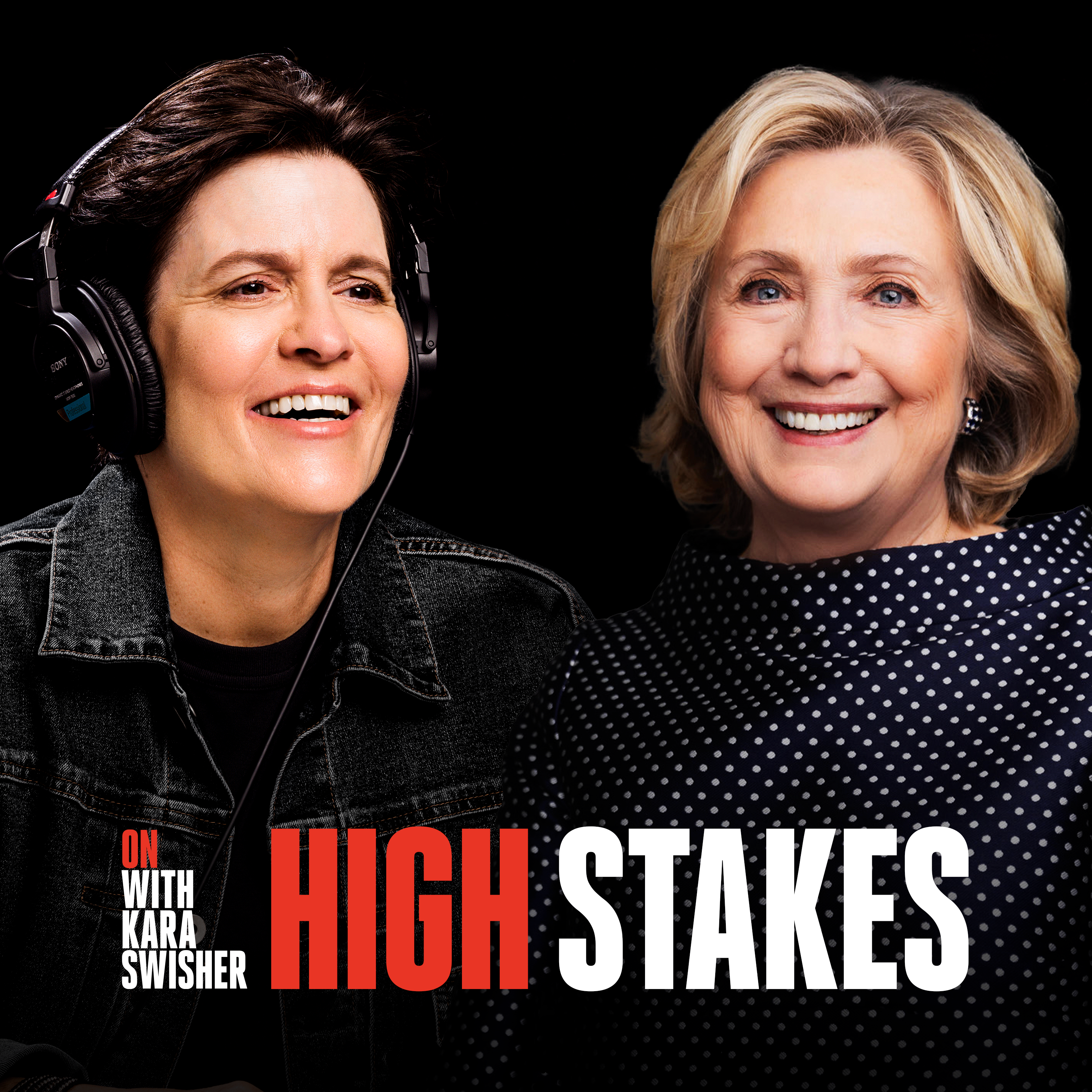
We use cookies.They keep VO running smoothly and help us improve it. Privacy policy