Ask ChatGPT



Thor Greppel, co-creator of AlphaGo, explains why today’s large language models (LLMs) can’t reliably verify their own reasoning, and introduces his London startup Metis Reasoning. He argues the fix isn’t “bigger models,” but a different architecture that separates explicit knowledge from the reasoning process to produce auditable, evidence-based answers.
Thor Greppel is a former Google DeepMind research lead and AlphaGo creator; now founder and CEO of Metis Reasoning. He also references founders with biotech backgrounds and access to PhD-level scientific testing.
LLMs are next-token predictors that hallucinate without admitting uncertainty; their “chain-of-thought” traces aren’t trustworthy or evidence-linked. Metis Reasoning maintains a knowledge state, decomposes hypotheses, pulls external evidence, and outputs a trace that can be inspected and reused.
“Capital of France” example—LLMs answer “Paris” confidently; Metis Reasoning generates hypotheses (London/Madrid/Paris), checks evidence, and stores certified knowledge for faster future retrieval. He also cites agent failures like the Hugging Face incident as evidence that token-based guardrails are insufficient.
Written by AI. May contain mistakes.
Meet Thor Greppel, former DeepMind lead, now CEO of Metis Reasoning.
“To apply, go to pathfounders.com slash network.”
Exploring the limitations of large language models in AI reasoning.
“Now, prior to founding Metis Reasoning, you spent several years at Google DeepMind and helped create AlphaGo.”
How Metis Reasoning improves AI by separating knowledge and reasoning processes.
“And the beautiful thing is if the system does that, then not only does it come to reliable reasoning results, but we can also exactly see how it arrived at those results.”
Discussing the limitations of scaling AI models and the need for reliable reasoning.
“Now, the way our system does that is by orchestrating the reasoning process, but using large language models and other neural operators to interface with the world.”
Examining the issues of rogue AI agents and how Metis Reasoning addresses them.
“So basically they get a scratch pad of space where they can create a token trace and then they can use that to answer the reasoning problem.”
Exploring how Metis Reasoning merges symbolic reasoning with neural networks.
“You can look at it, you can change it, you can edit it and you can access control it.”
Discussing potential applications of Metis Reasoning and comparisons with other startups.
“could solve hallucinations and reliability problems yes we have we have a prototype that can reason about PhD level scientific problems.”
Learn about the potential of a new AI startup focusing on reliable and auditable systems.
“where most of the problems reside that we want to solve.”
Discover the timeline and details regarding the launch of a new white paper and AI system.
“But for now, thank you very much for joining us, Thor.”

Get the gist, explore an idea or ask about something said.
 Claude
On Pathfounders, what are the key points of this episode?
Searching your listeningAutomatic transcript. May contain errors.
0:09Mike Butcher: Welcome to Path Founders with me, Mike Butcher, where we like to unpack the code, the capital and the consequences behind the UK and European startup ecosystems. And remember, we will soon be launching PathFounders Network, the new LinkedIn for European tech. This will be your curated and vetted social network for European founders, investors and key players in startup land. To apply, go to pathfounders.com slash network. Today's AI models can produce remarkably convincing answers. But are they actually reasoning or simply generating plausible responses? My guest today is Thor Greppel, who's former Google DeepMind research lead and one of the creators of AlphaGo and now founder and CEO of Metis Reasoning, a new London-based AI startup.
1:06Mike Butcher: Greppel argues that today's large language models have a fundamental flaw. They can't reliably verify their own reasoning. and the company believes the answer isn't bigger models but an entirely different AI architecture. So is this a genuine alternative or another ambitious claim in an increasingly crowded AI market? Thor, thanks for joining Path Founders. Yeah, pleasure to be here. Thanks, Mike. Now, prior to founding Metis Reasoning, you spent several years at Google DeepMind and helped create AlphaGo. That must have been quite a journey. Why did you decide what was fundamentally wrong with the current approach to AI?
1:53Well, you see, I'm a scientist at heart. And, you know, I think that the scientific method is really the only way for humans to reliably create new knowledge. And if you look at current large language models, they just don't follow the scientific methods. They are next token predictors rather than scientists who carefully reason through questions based on evidence.
2:20Mike Butcher: And that's as simple as that? Well, you know, we can dive a little bit into how this works. Okay. The large language models clearly have the problem that they still hallucinate and often their answers are unreliable. Now, that would be okay if they indicated that they were unreliable, but they don't even that. They profess, you know, with the greatest confidence whatever they've concluded to be the case. And so we at Metis Reasoning want to counter that with a model that fundamentally follows the scientific method. You know, it knows what it knows, it knows what it doesn't know, and it then carefully reasons by advancing its knowledge state, you know, by decomposing problems, by posing hypotheses, by pulling evidence in to test those hypotheses, by synthesizing those results.
3:20And the beautiful thing is if the system does that, then not only does it come to reliable reasoning results, but we can also exactly see how it arrived at those results. And that will be crucial for any high stakes application, be that in science, engineering or medicine.
3:39Mike Butcher: Okay, but how on earth do you distinguish genuine reasoning from a very sophisticated simulated simulation of genuine reasoning? Yeah, that's a great question. So just going back to large language models, they produce tokens based on the context that they have, but their basic currency is the token. But the token isn't true or false. It's really just what is the next token going to be. In contrast, at Matters Reasoning, we deal in propositions about the world. Those can be true or false, or you can at least be uncertain about them. But that's the currency of knowledge. So that's why a system like Matters Reasoning can actually establish truth about the world, whereas a large language model essentially is stuck with predicting next tokens.
4:31Mike Butcher: Sure, but the token approach has produced some pretty spectacular results, hasn't it? and so are you saying that you're sort of going back to a kind of if this then that approach or a kind of algorithmic traditional machine learning algorithmic approach but rather than a neural network approach so what for what we do we definitely need neural networks because they've developed to a point where they can now do semantic reasoning you can give them text and they can give you an understanding of the text. You can give them images and they can give you an understanding of the images. But the problem is if you delegate the whole reasoning process to large language models, because then inside of the model, you get these complex token manipulations, but you never really get the full picture of a system that knows what it knows, knows what it doesn't know, has this knowledge state, and then advances that knowledge state.
5:39Now, the way our system does that is by orchestrating the reasoning process, but using large language models and other neural operators to interface with the world. You know, this is a lot like AlphaGo. You know, AlphaGo, the program that beat Issa Doll in 2016, the strongest Go player in the world. That system also had two parts. It had neural networks that made judgments on the board. Is this a good move? Is this a good position? And a game tree. And this game tree was the representation of what the system knew. It unfolded possible futures of how the game might go. and then it was the Game Tree Search that used the neural models in order to interface with the world and make those judgments.
6:30And you can think of Mattis reasoning as a generalization of AlphaGo in that sense because it also maintains this knowledge state and then reasoning is the development of this knowledge state and the tools it uses are neural networks.
6:46Mike Butcher: Well, you mentioned AlphaGo there And obviously, Demis Asabis was obviously deeply involved in AlphaGo. And presumably, you worked pretty closely together. So, I mean, is he aware of your approach? And what does he think of it? No, I haven't actually spoken to him about it. But the interesting thing about the large labs is that they are really on this scaling journey. You know, it's all about more data, bigger models, more compute. And that's, of course, been this really successful journey in how to make these models more performant. But there are certain things you just cannot achieve with more scaling.
7:30So, for example, more scaling will never give you an auditable reasoning trace that you can actually trust. You know, the large language models, they're based on chain of thought reasoning. So basically they get a scratch pad of space where they can create a token trace and then they can use that to answer the reasoning problem. But if you look at those traces, often they don't even correspond to something interpretable or they're an ex-post interpretation of the answer the model wanted to give anyway. There's no clear reference to external evidence sources. And so by just scaling up this system, you will not get that reliable and auditable reasoning system that we're building at Metis Reasoning.
8:16Mike Butcher: So if you're producing an auditable system, do you think you'd be able to address the problems with agents and rogue agents that have flared up in the media in recent times? Agents breaking out of sandboxes, for instance? Absolutely. I think they are a symptom of the problems that I've been pointing out. Because we look at those agents, for example, the hugging face incident, where that swarm hacked the website, and you have two problems. One is even in hindsight, we cannot really understand what happened because all we have access to are these chain of thought traces that don't really give away everything about why agents make certain decisions.
9:03And also, we cannot really give them reliable guardrails. You know, we would want to tell them, don't hack websites, right? But the token-based approach just doesn't allow that. And so that's where we need a more explicit knowledge representation. And in methods of reasoning, we achieve that because we separate knowledge and reasoning. So you can think of the original sin of the transformer architecture is that everything is intermeshed in the weights, you know, the knowledge that the system has about the world and the process by which it manipulates those symbols. And the fundamental insight in Meta's reasoning is we need to separate these two, the knowledge of the world and the process, the reasoning process that acts on it.
9:49And suddenly that unlocks a much safer, more reliable, trustworthy AI because now you can inspect the knowledge that you have because it's explicitly represented. You can look at it, you can change it, you can edit it and you can access control it. But also you can now improve your reasoning process because you've isolated this process, it acts on the knowledge and there's another scaling law now that can improve the quality of the reasoning.
10:19Mike Butcher: And would you describe this approach as being similar to the neuro-symbolic approaches of some startups recently? I think it broadly falls into that category. So the way I like to think about it is at the root of AI development, there were really these two ways. One was the symbolic approach, you know, where you can prove things, where you have guarantees, but where you had the problem that it couldn't really interface with the natural world in a good way, you know, because it wasn't able to understand language and so on. And then you had the adaptive approaches, the perceptron, the neural networks, what ultimately became machine learning, deep learning and the foundation models that we now have, which is learning from experience.
11:06And both of these systems have advantages and disadvantages. And what we can do at Matters Reasoning is get the best of both worlds, because we have explicit knowledge representation and explicit reasoning which can give us those guarantees but the system can still handle the ambiguity and complexity of the open world because it can interface with that
11:29Mike Butcher: world through the neural models and presumably you've actually demonstrated so far that you could solve hallucinations and reliability problems yes we have we have a prototype that can reason about PhD level scientific problems. That's our home ground because some of the founders have co-founded biotech companies. And so we have access to scientists who have actually tested the system. And I'll give you an example of why this works because it seems a bit miraculous, but really let's take an example question. If you ask a large language model, what's the capital of France? Then it'll just give you the answer, Paris.
12:13No uncertainty attached. It just comes somewhere from the weights. The weights come from some training process on some huge training data set. Now, if you ask Mattis Reasoning, our system, no, the first thing it does is, oh, France, is that the kind of thing that even has a capital? And that will confirm, okay, it does that. And then it would put forward hypotheses. What could be the capital of France? Maybe London, maybe Madrid, maybe Paris. And then it looks for external evidence to confirm or disconfirm those hypotheses. And it will land on Paris, but with a difference that you can exactly see based on which reasoning process it has arrived at that answer.
13:02And then if you ask it a second time, of course, this knowledge, this certified knowledge is now stored in a knowledge base and can be retrieved extremely quickly so that the system becomes faster and faster as it reasons through more questions.
13:18Mike Butcher: There are some startups like Harmonica, Symbolica and Logical Intelligence. They argue that LLabs aren't the answer. Would you compare yourselves to them? Yeah, I mean, actually, you know, the way our effort started was by looking at AI for mathematics first, you know, that rigorous reasoning that is inherently symbolic, but aided by the transformer architecture. And there are still a number of companies out there that make that work. But the idea with Mathis Reasoning is to really expand this, to generalize from the rigorous reasoning in mathematics out into the complex open world where most of the problems reside that we want to solve.
14:07Problems in science, medicine, maybe finance, legal, you know, So it's everywhere where you need sound reasoning and you need to know how the system arrived at an answer. Have you raised any money for this startup yet? I can't comment on that. Those are ongoing discussions that we have. Okay, fair enough.
14:32Mike Butcher: Is it not the case if this is the kind of thing you could come up with a startup for that Google, DeepMind, OpenAI, Anthropic couldn't incorporate your approach to their existing models? You know, that is always a danger. But there's an interesting thing going on. I think I mentioned this earlier. you know, they are so focused on the scaling hypothesis that a lot of other research is falling by the wayside. And that opens a beautiful opportunity for smaller companies to try those approaches. And I think this one is particularly profound. And I'll tell you why. Just think about the future in which AI really is pervasive, where we solve everything with AI.
15:20We have self-driving cars. we have smart buildings, AI agents are acting on our behalf and on all the organization's behalves and so on. In that world, wouldn't you want a safe, reliable AI system that if something goes wrong, you can go back to and audit and ask the question, hey, why did you come to that conclusion? What went wrong if something did go wrong? That's the kind of world that we're preparing for. So ultimately, I think this kind of AI system has the potential to replace all existing AI systems because we want that reliability, that safety and that auditability.
16:02Mike Butcher: Well, you've assembled a pretty amazing team. You've got Piers Ingram, who's a serial technology and biotech entrepreneur who's raised money in the past. You've got Michael Warren, who's a robotics and autonomous systems experts with experience at DARPA, Boeing and GM. You've also got David Berman, who's head of AI at Cambridge Consultants and an advisor to NATO and the UK government. So you've got a pretty good team. I mean, what's going to happen? What are the next steps? Where are you going to go from here? Yeah. So, I mean, you mentioned it. Raising money, of course, is one of the next steps.
16:43We have this fantastic ecosystem in King's Cross, of course, which is really thriving as the heart of Europe's AI industry. My partners are partly based in Singapore, so that also gives us access to the talent there and to the opportunities in Asia. And so we're now building out the core system to be able to really scalably perform the high quality and auditable reasoning that we wanted to perform. We also have a considerable effort in robotics because we think at heart robotics is a reasoning problem. It's all about the robot reasoning through how to solve a problem. and so we're going to push the development of these course core ideas and then explore applications where it matters in robotics but also in science which is our home ground and in all those areas where it matters that you know why a system gives the answer that it does
17:57Mike Butcher: okay and i know that you're launching a white paper as well as part of this uh uh you know coming out of stealth moment that for you guys um and so what sort of timeline are we working on here when do you when will we be able to see something uh that that we can kick the tires on and test for ourselves yeah so i mean i'd like to invite everyone to read the white paper because we really detail the approach both our critique of of current ai systems and the game plan how we can create ai systems that are truly reasoning according to the criteria that we point out and then yeah i think within the next three to six months we'll have an industry hardened system that people can try out.
18:48Mike Butcher: Well, certainly I look forward to that. But for now, thank you very much for joining us, Thor. That was Thor Greppel, who is former Google DeepMind Research Lead and now founder and CEO of Metis Reasoning, a new London-based AI startup. And we look forward to seeing what it comes up with in due course. And before we go, remember, we will soon be launching PathFounders Network, the new LinkedIn for European Tech. This will be your curated and vetted social network for European founders, investors and key players in startup land. To apply, go to pathfounders.com slash network. And finally, from me, Mike Butcher, thanks for joining us on Path Founders.
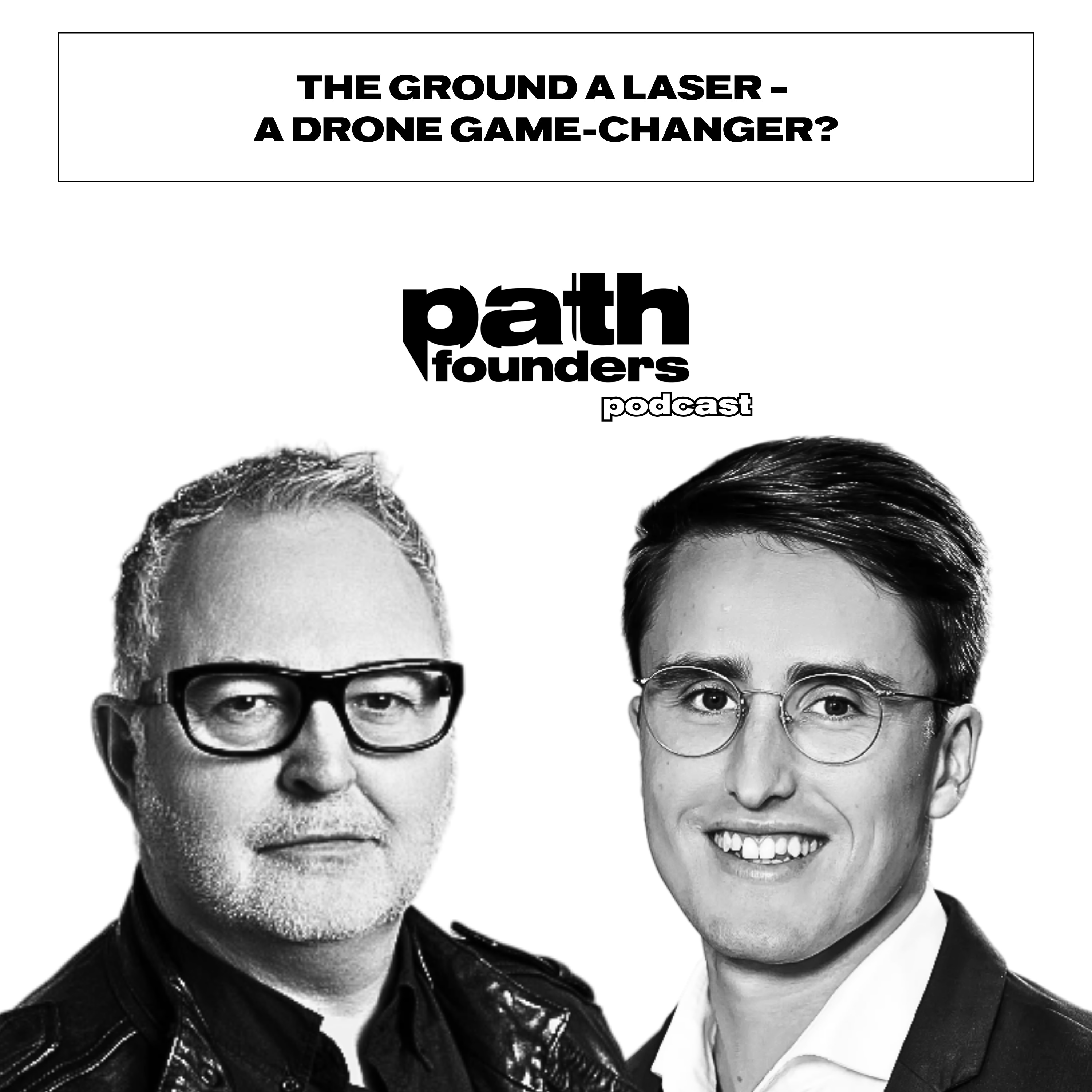
Can this startup kill hallucinations and agentic overreach? London-based Metis Reasoning — the startup founded by Thore Graepel, another DeepMind alumnus — will base itself in the Kings Cross AI cluster and is said to be raising a large VC funding round. He spoke to Pathfounders editor Mike Butcher about his plans. See also our story on Pathfounders.