
 Piers Morgan Uncensored
21 Oct 2026 · 58m


 Add vo to ChatGPT or Claude to ask about everything you hear
vo listened to this episode to put together the overview and transcript, so there may be the odd mistake.
Debate over US/Trump diplomacy in the Ukraine war and Iran conflict, including claims that Trump is effectively siding with Vladimir Putin, plus discussion of Alastair Campbell’s book on “persevillance” (perseverance + resilience + learning).
Trump’s envoy Steve Witkoff’s “humanitarian” framing of Putin is “bootlicking” and signals a future deal with Russia; a Ukraine “freeze” could freeze aggression and require referendums for territorial surrender; US/Israeli actions around Iran are disastrous and may be driven by hubris and domestic politics; diesel prices and energy policy are central to US public support and to blame-shifting between Ukraine and Iran.
Witkoff’s Moscow meeting; Trump’s approval rating drop and midterms in 13 days; Netanyahu praising Trump on Iran; Zelensky’s Fox interview endorsing a ceasefire/freeze without accepting Ukrainian territory as Russian.
Alastair Campbell (former UK PM’s communications chief, Blair-era adviser; author). Panel: Trita Parsi (Quincy Institute exec VP). Jim Anson (Middle East Forum chief strategist). Will Chamberlain (Counterweight host). Also: General Keith Kellogg (former US special envoy for Russia/Ukraine).
0:00You are a humanitarian also, sir. That's not serious diplomacy. That is just bootlicking of the worst possible kind. I am beyond despair in trying to work out what his motivation is. I hate conspiracy theories, but maybe Putin does have something on it. By any metric, this war has been absolutely disastrous. Rita has been a mouthpiece for the Islamic Republic of Iran for decades. If you have an argument, please make it. I'm sorry that it offends you when I point out that you were a tool of the Iranian regime. That's just a fact. You're just embarrassing yourself. Shut your mouth.
0:31Piers Morgan: President Trump's approval rating is now lower than at any point in either of his two presidencies. Barely 31 % of Americans think he's doing a good job. In fact, he's less popular today than he was in the aftermath of January 6th, when most of the world accused him of inciting an insurrection. With the midterm elections in just 13 days, Trump is betting on war to avoid a wipeout. His envoy, Steve Witkoff, is in Moscow today to fix a face-to-face meeting between Putin and Ukraine's Zelensky. He opened with a grovelling address to the dictator, who seemed to embarrass even the Kremlin commissars watching behind him.
1:04You talk so much about my president and President Trump being a humanitarian. You are a humanitarian also, sir, and I salute that.
1:15Piers Morgan: Well, last night, the US president again made clear where his blame lies for the failure to end a war he said he'd solve in a day. It's not with the man who started it. Ukraine has to want to settle this war. Zelensky has to want to settle this war. And if he doesn't, I think it's going to be a very bad thing. Look, we have given tremendous amounts to Ukraine. We've got nothing back other than high diesel. We have given probably, possibly more money to Ukraine than almost anybody over the years. Hundreds of billions of dollars. We've got nothing back. and the American taxpayers are tired of it, we want Zelensky to make a deal.
2:01Piers Morgan: Well, the glaring problem here, besides rewarding an aggressor who's wanted for crimes against humanity, is that Zelensky's position is shared by the vast majority of Ukrainians. A ceasefire deal might freeze the conflict where it is, but surrendering territory in a permanent agreement would need a referendum. And if Putin's bombs and drones do pause for long enough to let it happen, the answer would be no. What Trump does get right is that American voters are sick of it all. They're sick of high gas prices too. And to be clear, the main reason for both is not Ukraine, but Iran. And every indication is now that attacks on Tehran will resume as soon as the elections are done.
2:35Piers Morgan: Israeli Prime Minister Benjamin Netanyahu, facing an existential election of his own next week, shared this phone call with Trump. I'm so grateful for this incredible endorsement. You've been an incredible leader of the free world of America. By far the greatest friend Israel has ever had or will have in the White House. and all of civilization is emboldened by your boldness. Donald, we have a job to finish. You said it and we'll finish it together. We'll finish it and no one else will do it. Actually, I actually crafted that one myself. That wasn't one that was put out by some guy writing something that was crafted by me.
3:14You're a warrior. You've been treated unfairly by me. And we will prove that. We will prove that very soon. I think you're terrific people.
3:21Piers Morgan: We have a job to finish and we will finish it soon, he said, shortly after an unannounced visit by US War Secretary Pete Hegseth. One way or another, the Ukraine war may soon reach a fragile end. The least popular war in US history, however, is only just beginning. We have an exceptional panel waiting in the wings to debate all this. We'll begin with a man who's uniquely qualified to opine about illegal Middle Eastern wars based on disputed claims of serious weapons technology. Alistair Campbell. Hello, Piers. How are you? Not interviewed you for a long time. Beautiful segue. For our American viewers, we used to lock horns when I was editor of Daily Mirror and you were the communications chief for Tony Blair.
3:59Piers Morgan: For seven years, we probably spoke most days, shouted at each other quite regularly. But we both, I think, in our careers, we both were mirror men at some stage, we both in our careers, I think, displayed the qualities which are the basis for your new books. And before we get to Wars, your specialist subject, Persevillance is the word you've come up with for this new book. There it is. What is persevillance? Persevillance, this is the definition I want to see in the dictionary within a year. Noun, the ability of an individual, group or organisation to turn any situation, setback or meaningful experience into a positive opportunity to grow, to advance and secure their core interests and beliefs.
4:47There you go, that's what it is. So it's basically... You've got to have perseverance and you've got to have resilience. What's the difference between the two things? I think perseverance and resilience are negative concepts. You would never say, I was watching this great film and I persevere to the end. Yes, I would.
5:03Piers Morgan: OK. I think it is a positive, actually. OK. I think perseverance is the... It's the Rocky Balboa thing, right? I read the speech a lot to my kids, which is when he has it out with his son and he says, life's tough, it will beat you down if you let it. And the way to win at life is not how hard you can hit, it's how hard you can get it, get back up and keep moving forward. Now, that is perseverance and that is resilience. So I think they're both positives. OK, there was a very, very good review of this book in a Ukrainian paper, The Lviv Herald. God, you've been scouring. I know. Scouring around.
5:35It's on the thing. It just popped up. And, in fact, the review was always as long as the book, I've got to tell you that. But it said... His definition of what he thought I was saying was that perseverance says you just keep going. Resilience is about recovery. Percivilience is about learning from both to take yourself to the next stage in a better, more positive way. That's how I see it. So, I mean, I hate to say this, Piers, because, as you say, we've had quite a few bust-ups over our... And good times.
6:02Piers Morgan: And very good times. I always respected you as a very good operator. Yeah. We fell out big time over Iraq. We did, we did. Well, no, I don't think we fell out. Well, unlike a lot of people, I never thought you lied about Iraq. No. I didn't, and I didn't say that. I felt that we disagreed about whether we should have gone to the war, and you were wrong about it. I mean, the weapons of mass destruction never turned up. That was my central point of contention about it all. But unlike a lot of people that like to constantly say you deliberately lied, I don't think you did. I just think you got it wrong.
6:32And also, the other thing I'll say in your defence is that I knew that at the time. So you could have that very, very strong argument, whereas there were people in the media, some of them have mentioned in this book, who basically wanted to try to destroy me, which makes you per civilian. Anyway, Piers, look, you see that? That's the title of the book, Perseviliants. Yeah. Here's a little present for you. Go on. Because you are such a self-obsessed sort of narcissist... Coming from you, Jesus Christ. I've written a book where one letter changed... Oh, look! Piers of Williams. But, Piers, let me tell you something, let me tell you.
7:07Your guys have just pointed out to me, but it says Piers Evil. I hadn't noticed that. Of course you hadn't.
7:12Piers Morgan: Of course you hadn't. Anyway, that is the only copy. I love it. That's yours. It's probably going to sell more than the other one. Let's take the premise of this and apply it to what's going on now. Because, actually, Donald Trump, I would say... I always say this about him, because I've known him very, very well. I've known him 20 years. Whether you like him or not, agree with him or not, have a pathological hatred of him or not, the things you probably can't disagree with are that he has, as a human being, remarkable powers of perseverance and resilience. 100%. I mean, indisputably. Totally.
7:46I mean, the way he's come back from being prosecuted, being shot...
7:52Piers Morgan: Losing an election. Losing elections, all these things. You know, you've been in that position. But for any leader to come back, especially as president of America, hardly any ever come back and win again, right, after they've lost. So how is it that he can be the personification of your book? And yet, if I asked you personally what you think of him, I presume you'd say you hate him. Yeah, well, I've got no time for him at all. I think he's doing massive damage to the world. And I think he's got terrible values. But, and I say in the book, that Percivillians can be bad people too. And that's why I think for me, to make it a positive word, there has to be values and integrity attached to it.
8:32And I say, when I watch that, I know we're going to talk about it later, but when I see Steve Witkoff with that thing today, it just makes me feel sick. Well, calling Putin a humanitarian is repulsive. So I accept he's got extraordinary powers of resilience and perseverance. But I'll tell you where I think perseverance comes in. So let's just bring it closer to hope. You mentioned Tony Blair, and I know that, you know, whatever differences you had, you thought Tony Blair was an exceptional prime minister, certainly an exceptional politician. Why did Tony last 10 years and Keir Starmer lasted too?
9:01It's not just because he was a better communicator. I think Tony instinctively got this sense of, if bad stuff happens, how do I use this to get good? How do I use it to get even stronger? Whereas Keir, he's got resilience, which is a different thing. Resilience will just get you so far.
9:16Piers Morgan: It gets you through the crisis. I don't think he even had resilience. Personally, I quite like Keir Starmer. We got on well. We're both Arsenal fans and so on. I think with Tony Blair, the difference between him and Starmer is that Tony Blair hit the ground running with a plan. Yeah. In 1997, the new Labour felt like a revolution. And you guys hit the ground and did bang, bang, bang, bang, bang, and they were very popular policies. And actually, that first term in particular was incredibly successful, right? The turmoil began, actually, with the Iraq war. But even after the Iraq war, you won again, right?
9:48Piers Morgan: Which I think that was resilience. But to start with, you've got to have a plan. If you're a leader, and Trump, you know, the interesting thing for me is I spoke to Trump the morning after he won, literally a few hours after he'd been declared winner. And we had maybe a five, ten-minute chat. And I said, what's going to be different this time? He said that he's going to have people around him who are going to be loyal, because the first time he felt the cabinet was full of disloyal people who then caused him a lot of damage. He's definitely shown he's done that. But he was going to hit the ground running.
10:17Piers Morgan: He'd had four years to wait for this, and he had a plan. And he came out with a blizzard of executive orders, largely very popular, attacking all the woke stuff, shutting the border to all the illegal... As you said at the top there, he's now got the lowest ratings ever. No, no, I'm going to come to... Because the values piece has never been there. Well, it's not that. It's just he bet the bank on things which I think have turned out to be disastrous. notably the Iran war. Now, again, I'm not being facetious when I say you guys bet the bank in a way, in a similar way, by invading Iraq in 2003.
10:51Piers Morgan: Do you see parallels here? And is the reality that when you go to war, you can have all the plans in the world, but reality takes charge and then things can spiral beyond any leader's control? Well, I think that if you go through our whole entire term in office, I do think there's a possibility that because Sierra Leone went well, because Kosovo went relatively well, that once 9-11 happened and it was clear that the Americans were going to do Afghanistan and possibly going to do Iraq after that, I recognise that we maybe got pulled into that in a way that, looking back, you know, wasn't necessarily the right thing for us.
11:32But at the same time, as you and I argued at the time, I remember Tony Blair always saying, if we're going to disassociate ourselves from our closest ally, because it wasn't like it is now, we were like that in so many ways, over a fundamental policy of strategic importance to them, it's got to be over something where we're 100 % clear...
11:50Piers Morgan: But the interesting thing, see, you touch on suggesting a little bit of hubris was involved, which I think it was, because military conflicts had gone well. No, so I'm saying... Exactly. So that's your point. My point about Trump is I think the same sequence of events happened here. Venezuela? Well, the 12-day war last year with Iran was very clinical, very successful, hardly any kickback from the Iranians, which made him... And then you have Maduro being kidnapped and taken out in the middle of the night with no loss of American lives. So I think Netanyahu hit him at the perfect time psychologically to say, look, they did nothing last year after the 12-day war of any significance.
12:27Piers Morgan: They're there for the taking, and if we take them now, you know, this will be the moment. The regime will fall, people will rise up. We saw them try in January. I think all this was hubris, playing into Trump's sense that this is going to be... What you saw with that clip you just saw there of Netanyahu on the phone, Putin plays Trump like a fiddle and Bibi plays Trump like a fiddle. And I think what happened was that Netanyahu wanted to do this for his own purposes. He persuaded Trump this was the time to do it. Trump, who famously doesn't really listen to advice, there's a reason why previous presidents have not done what he did in Iran.
13:00It's because they worried that they would close the Strait of Hormuz. as an immediate reaction. And he was warned that. And he says, well, I'm different. I can do this in a different way. So I think whether it's Ukraine, which, as you said in your opener, going to sort it in 24 hours, or this, I think it's more than hubris with him. And don't forget, I know that, you know, fair play to you. You've never accused us of bad faith. Going back to Iraq, Tony Blair was convinced that Saddam Hussein was a bigger threat. That was not fair argument.
13:30Piers Morgan: I remember Colin Powell, who was one of the people I've interviewed who I most respected. I remember him on television. At the UN. Yeah, saying he's got weapons of mass destruction and he's going to use it. And we said the same. Now, we did, contrary to the way it was presented afterwards, there were caveats in the documents that we put out there. And also, it was not the only reason why we went to war. But I completely understand... But if you had your time again... Yeah. I mean, the same way that I think if Trump could go back to the middle of February, there's no chance, knowing what he knows now, he would do what he did.
14:01Piers Morgan: if you had your time again, I imagine neither you nor Tony Blair would make that same decision again. I would hope you wouldn't. Knowing that he had no weapons of mass destruction. Oh, if you knew that. Knowing what you know now, I don't think you would have invaded, right? Well, I think if you'd have known beyond any doubt... Yeah, which we do now. No, but if you'd known then... I'm talking about knowing now. Yeah, but you're asking me to say... Why are you hesitating? Because you're asking me to totally reframe the basis on which the decision was made. Not really. The pretext for the... It wasn't the only pretext, though.
14:34Piers Morgan: No, but the main pretext for going to war was that Saddam Hussein had weapons of mass destruction. Knowing now, today, many years later, so we're 23 years on, knowing now that he didn't, you wouldn't have taken that decision. If we had known, without any doubt at all, that there were no weapons there, I don't think that war would have happened. Right. Now, and as I said earlier, it wasn't the only reason. There was this part of the idea... But that's why the intelligence part of all this is, to me, so crucial. Because governments and prime ministers and presidents take decisions based on information flow, which, if it turns out to be flawed, becomes incredibly problematic and a lot of people die.
15:11Yeah, it does, and that's what happened. But I do think the Iran thing is different because I think, actually, what Trump was doing in this circumstance, he was ignoring the intelligent flows. My sense is, actually, the intelligence people would probably say, no, this isn't the way you want to go. But he decided for his own reasons. And I think this is what's so difficult. I mean, I know you know him, I don't know him, but my sense of watching it is that it's almost impossible to work out the rationale behind a lot of the decisions that he makes. I honestly... I am beyond despair in trying to work out what his motivation is in relation to Ukraine.
15:44And I hate conspiracy theories, but I'm even moving to that sort of sense, maybe Putin does have something on him. Or certainly, this is in the end about big business... Before we bring the panel in, because it's really interesting territory
15:55Piers Morgan: for you to be part of a panel about all this. But the enormity of leadership when you're running a country, when you take decisions, the biggest decision must be whether they go to war, ultimately. Given your acknowledgement that if you knew what you knew today, we wouldn't have gone to war against Iraq, which I'm sure would have to be the case, how do you feel on a human level about the enormous consequences of what happened? A million people being killed in that Iraq war, for example. The rise of ISIS out of the embers of it all and the mayhem they cause and so on. On a human level, how do you, Tony Blair and others, how do you feel about the consequence of those kind of actions?
16:39I think Tony is in a different position. I think if you had him here now, he'd actually be pretty much saying, you know, we did the right thing. And I can say we did the right thing in the context of what we were being told at the time. and I will always defend Tony on that basis who gets accused of so much else besides. But I'll be honest, I mean, often I feel, you know, I still dream about it. I spoke to you on the day that David Kelly, his body was found, the civil servant who took his own life. I said I felt I'd been hit by a two-ton truck. I do know families of people whose sons lost their lives.
17:19So how I feel about it is deep down, you'd wish it had never happened.
17:23Piers Morgan: The worst thing for Moore was, like, my brother, as you know, went to war in Iraq. And the disillusionment which came over him when he realised there were no weapons of mass destruction was really palpable. For me, I felt very angry for him. Yeah, I get that. But one of the worst moments of my entire time was when somebody from the security services came to see me after Saddam had fallen. By the way, the world is a better place without him in charge, so let's just put that out there. And said, how difficult would it be for you guys and for Tony Blair if it turns out that we don't find these weapons?
18:02And I said, very, very difficult. So I was always aware of that. But how I feel about it is... I mean, you know, I do the podcast with Rory Stewart, and we did a two-hour special a couple of years ago on one of the anniversaries, and I try to be nuanced about it because the fact is, politics is so much done in black and white, And, you know, I know it's a big part of my life and a big part of my reputation. And I have regrets about what didn't happen. In other words, I have regrets about the fact that we didn't have the aftermath planned as well as we should have done because we were trusting the Americans too much.
18:43Maybe we should have learned at that time you can't necessarily trust them the way that you want to. And likewise, I also think, just from the political perspective, I think I've, not least through Percivalian's kind of... I think I've got a strong reputation, which has withstood all that got thrown at me over that, but I'm also aware that Tony, who I like and who's still a good friend and I think a great Prime Minister, that his reputation has taken a deep scar because of it as well.
19:10Piers Morgan: Yeah. And you've just got to live with that. Let's bring in the panel. Joining Alistair is Trida Parsi, Executive Vice President of the Quincy Institute, Jim Anson, the Chief Strategist of the Middle East Forum, and Will Chamberlain, host of Counterweight. Well, welcome to all of you. To tee it up, I mean, Alistair, you were in Oslo this week when Zelensky was over there with Steve Wyckoff and the Norwegian Prime Minister. You know, here we have Vladimir Putin illegally invading Ukraine nearly five years ago now. Where do you think we are with this war? I just don't know, because I've lost... I've lost my capacity to judge what's going on in this.
19:53Watching that clip at the top of your show, Witkoff, it strikes me where I think we are is that Donald Trump has basically several times said to Vladimir Putin, I'm going to help you win this war. I am basically on your side. It feels like he's on Putin's side. In the last few days, with the satellite getting shut off, the sanctions relief, the diesel deal and all this stuff, it feels to me like he's more on his side than ever. and the way they treat and talk about Zelensky as though he's some kind of rogue actor when he is the victim in this war and Putin is the aggressor. So I've reached the conclusion, and I hate to say this because I want to be able to respect the United States president, I've reached the conclusion that Trump and Putin have got some sort of future deal carving out this whole thing.
20:39They both believe that they, as powerful regional leaders, should be in far greater control than they are of the entire region. And that's why, for now, Europe has really, really, really got to get real about this. I don't think we can look at the Americans right now as an ally in this. And that's terrifying.
20:55Piers Morgan: Well, Will Chamberlain, you'd be grimacing there. What's your response to that? Well, I think that's ridiculous for two reasons. First off, President Trump has been extremely supportive of the Ukrainian government, sanctioning Rosneft and Luke oil for the first time in a long time. He put a 25 % tariff on India for buying Russian oil. Meanwhile, the British government is still buying Russian diesel. They're doing so. It's being shipped down to India and Turkey, but they're still buying it the same way America is buying it. Moreover, a big part of the problem here is that we have this huge increase in diesel prices that isn't helped by the fact that the net zero policies that Alistair has been a primary advocate of are responsible for the UK seeing its refineries go down from 18 to 4.
21:36And for your own domestic energy production to be anemic when it could be very much more bountiful. So I think that it's kind of ridiculous to say that this is like the Americans' fault and Trump's now on Putin's side when he's taken a slew of much more aggressive actions than Obama did, for example, while also, you know, advocating for the very policies that make the UK dependent on imports for all its energy.
21:55Piers Morgan: Well, Will, when you see Steve Wyckoff representing the United States of America, your country, looking across the table to Vladimir Putin and calling him a great humanitarian, do you not share the same vomiting view of that that I did? I mean, I don't vomit about it. It's just diplomacy, right? We have to do diplomacy with the Russians. Trump is trying to manage the war in Iran, the war in Ukraine, and domestic political environment. Do you think Putin's a humanitarian? No, of course not. What do you think he is? Very simply, no, I don't. What do you think he is? No, I don't think he's a humanitarian.
22:26Do you think he's a dictator?
22:28Piers Morgan: Is he a dictator? Of course. OK, so why is America sucking up to a dictator? Well, because unfortunately, diesel prices are six bucks a gallon. I mean, the same reason that you're talking about what a mistake it was for America to go into Iran, despite the fact that I don't think you have any defense of the Iranian regime, Piers. But, you know, we have to, essentially, we're managing a number of different crises and world oil prices. And, I mean, you're saying we've got to withdraw. The Iran war is a huge mistake. I mean, the other incoherent part about Alistair's position, if I may briefly, is Alistair says the big mistake they made in Iraq was the fact they were wrong about weapons and mass destruction.
23:02If they were right, then the war would have been justified. Well, guess what? But Iran had a massive nuclear enrichment program. I don't think anybody denies that. And so if the idea is you would have been right, Alistair, to go into Iraq if you were right about weapons of mass destruction, how can you then say we are wrong when, in addition, our own war has cost far less in blood and treasure?
23:22Piers Morgan: Well, I mean, my response to that would be that after the 12-day war last summer, we were assured by the President of the United States that the Iranian nuclear program had been put back, quote, decades. It turned out it wasn't even eight months, right? So I think there's been a lot of bullshit spewed about all this. Can I also say, Pierce, I do also think that the JCPOA, which I think was a very, very good piece of diplomacy, I think when you look at the work that went into that and set it against what Kushner and Wyckoff have done in the various wars that Trump has deputed them to settle, I think you'd have to say that nobody wants these wars to go on.
23:58Trump was elected on no more forever wars, and I think that was a sensible position to take. And now we're into this war that he started with Netanyahu and now seems unable to stop. And I think then to try to blame Zelensky for the effect on gas prices in the US as a result of that is just... It's a form of madness. You talk about serious diplomacy, saying Putin is... That he's a humanitarian. That's not serious diplomacy. That is just bootlicking of the worst possible kind. And Trump... And Putin's laughing at them. Putin's laughing at that. Well, I mean, we gave weapons to Zelensky with explicit instructions not to use them on Russian oil because, you know, I think we're in a position to do that.
24:37We've been, I mean, the primary funder of the Ukraine war for a very long time. We've been a huge supporter of it. We've given... We've done a lot to Russia, I guess I said, more than other countries have before. And so when Zelensky just ignores our instructions... Well, what about Putin ignoring all the instructions too
24:51Piers Morgan: and bombing away at Ukraine's refineries? What's the difference? Well, that's why we put sanctions on him in the first place. That's why we've been aiding the Ukrainians. but for American aid, obviously, Ukraine would have faced far, far more serious consequences. We haven't been on Russia's side in this war, and the suggestion that we are is absurd. I don't think it's absurd at all. I think it's sounding more and more like your administration is on Putin's side to try and end it. Trump is. Whether the administration is, I don't know. Well, yeah, but, you know, silence is cowardice if you don't agree with it.
25:18Piers Morgan: And let's bring in Trita Parsi. Trita, welcome to Uncensored. There's a lot going on here. You've got the Ukraine war raging way longer than anyone, least of all Putin, anticipated it would rage. A lot of that down to the very her civilians, which Alistair talks about in his book. They've been remarkably resilient, I think, the Ukrainians, and deserve great credit for doing that. But you have the Iran war also raging much longer than Donald Trump thought it was going to be lasting. We talked about two to three weeks and it would be all over. It seemed naive at the time. It seems preposterous now.
25:52Piers Morgan: When you look at it in totality, how big a hole has Trump got himself into And are we going to see at the midterm elections the kickback from the American public by him losing both the House and the Senate? By any metric, this war has been absolutely disastrous for the United States, the strategic position for the stability in the region. And I think for the longer term American deterrence on a global scale, if you compare this war with the Iraq war, it's important to note that in the Iraq war, the United States won the war militarily within three weeks. It also achieved its political objective by getting rid of Saddam Hussein.
26:31In this war, none of the objectives, whether military or political, have been achieved. It's now also clear that the United States has huge difficulties sustaining a war with a country at Iran's technological level that can shoot a lot of missiles for more than 40 days. What does that do then to the U.S.'s ability to be able to instill confidence in allies elsewhere, such as in Taiwan, that the U.S. actually can protect them? So I think this has created such massive problems for the U.S. in a strategic level that goes beyond just what happens in the war itself with Iran. And I think this is going to have obviously consequences in the midterm elections.
27:07Already we're seeing where the polls are. But I think there's also a scenario in which if the Republicans do not lose the Senate, the conclusion will be, well, actually, this wasn't so bad because the House was likely going to be lost anyways. And as a result, the political cost of having started this disastrous war actually will not be felt particularly strongly. It may actually reinforce the administration's belief that they are on the right track, even though all other pieces of evidence shows that they're not.
27:35Piers Morgan: Let's bring Jim Hansen in. Jim, welcome back to Uncensored. Amid all this, we've also got Elon Musk and what he has been or has not been doing with his Starlink technology. You know, the Wall Street Journal this morning, a pretty bombshell report saying that contrary to all the public denials, Elon was behind the restrictions to Ukraine's access to Starlink. And it says that he discussed it with Donald Trump and they agreed to slow down the technology so that it made Ukraine less capable of defending itself against Russian missile attacks. and the Russians immediately bombarded them and were able to get through very quickly and easily as a result.
28:18Piers Morgan: You know, if that is true, that is something we should all condemn, isn't it? It's just contemptible to leave Ukraine in that position deliberately by turning down the speed of a system designed to help them. I think what technology the United States and our partners use to help Ukraine is up to us and how that plays out is a decision made for U.S. strategic interests, not Ukrainian. I'd like to just answer quickly Trita Parsi's claim that the United States has achieved none of our objectives militarily or otherwise. The lack of an Iranian nuclear program, the destruction of their military, the destruction of their industrial complex designed to build more military components begs to differ.
29:04And at this point, they're still CLINGING TO POWER, YOU KNOW, THE REGIME IS, AND THAT'S TO THE ADVANTAGE. SHRITA HAS BEEN A MOUTHPIECE FOR THE ISLAMIC REPUBLIC OF IRAN FOR DECADES, AND SO WE WILL DEFINITELY GET THE ANTI-AMERICAN, PRO-IRANIAN VIEW FROM HIM, AND I THINK THAT'S KIND OF SAD GIVEN THAT HE RUNS AN INSTITUTE IN THE UNITED STATES, THE QUINCEY INSTITUTE, STARTED BY GEORGE SOROS AND THE COKIN YOU COULDN'T EVEN ANSWER A QUESTION FOR MORE THAN 30 SECONDS. I 'LL ANSWER HIS QUESTION. I'm talking. I didn't interrupt you. Go ahead and let me finish. If you have an argument, please make it. But if you're going to make personal attacks, please understand that you're actually undermining your own position.
29:43Good God. All right. Look, I'm sorry that it offends you when I point out that you were a tool of the Iranian regime. That's just a fact. The U.S. has done much better than you would. Would you let me talk? If you don't, you're just embarrassing yourself. Seriously, if you have a factual argument, please make it. I'm eager to hear it. Are you scared of the truth? I'm eager to hear what you have to say. Shut your mouth and let me speak. The point is, you're telling the Iranian position, as you always have, you're undermining U.S. foreign interests. And I find that offensive for someone who sits in the United States, slithered away from Farah violations you should have been caught by, and now acts as if you're giving advice the world should listen to.
30:20No one should listen to you. Pierce, let me, I'm done with him for a second. Me bringing forward analysis, are you advocating for a border that has so dramatically weakened the U.S. position?
30:29Piers Morgan: Hang on, guys. Don't talk over each other. Jim, to be clear, you have launched a pretty savage personal attack at him. I think we should, out of respect for another panelist, let him at least respond to what you've said. He did while I was talking, which was a bit disrespectful. You went personal and savage pretty quickly, so I think he's entitled to feel a bit aggrieved. Trina, respond to what Jim has said about you personally. These are just completely preposterous accusations that people are making because they don't actually have any real arguments to make. I mean, I joined this debate because I thought...
30:59not supported the Iranian position. Would actually be able to put forward some proper arguments as to why this war apparently is achieving tremendous results. I think all facts begs to differ. Now, let's debate the facts in that case. You're pointing out that there are destructions of Iran's military facilities, et cetera. That is absolutely correct. Those are tactical achievements. We're talking about strategic achievements, things that actually lead to a different situation in the region, a different capacity for the Iranians to be able to achieve their objectives. None of that has been achieved.
31:32Doesn't matter how many time the Pentagon says that 90 % of Iran's launchers have been destroyed. They clearly have not. And had they, this would need to be a stepping stone towards achieving something else. But we haven't seen any of that taking place. And as a result, it is the strategic level results that we're debating right now. And those are simply not there.
31:53Piers Morgan: Okay, Jim, my problem with what you said about putting back the Iranian nuclear program is that this could all have the complete reverse effect in the sense that we knew how much enriched uranium they had. It was being controlled under the agreements that Obama put through, which were widely condemned by Republicans. Okay, but I would argue America's in a worse position now in terms of controlling Iran's nuclear aspirations. We're now reading that there are members of this new Iranian regime who actually think the big lesson from all this is they need to have a nuclear deterrent. And so you could end up with them advancing now towards something that maybe they didn't plan to do in the first place.
32:34Piers Morgan: And as we sit here, Jim, we've gone from last summer after the 12-day war that the nuclear program being put back decades, we're now told it was so imminent in February, it was two weeks away from apparently having nuclear bomb, that there had to be attacked and invaded. And now we see here, they've still got every tiny bit of their enriched uranium. They're talking openly about whether they should develop a nuclear weapon. It's hard to see the win here. And where's the win? I will explain that, first of all, if we were still operating under the JCPOA, Iran would have no limits at this point on the number of centrifuges they could run, which Treda lobbied for and Alistair lobbied for.
33:15Both of them were making certain that there was a path to a fully legitimate nuclear program for Iran with the JCPOA. So President Trump threw that out the window because that was an absurd thing to allow. Now, what we've done now is destroyed the bulk of the Iranian nuclear program, the bulk of the Iranian military industrial conflict. How do you know? Because it's visible from space. Why should we believe that? Jim,
33:40Piers Morgan: why should we believe that claim now when we were told this had all happened last summer and it turned out to be bullshit. There has been enough destruction to set them back, decade at least. Now, here we go again. So now it's decades again. But how do you know that? I don't see any evidence of that. I was told that we were told, in fact, Trump was told by Netanyahu in the White House Situation Room right before the war started, look, they're there for the taking. You saw what happened last summer. They've got no way of responding. We can take out the Ayatollah now. And when you do, with our help, then the regime will collapse, ILGC will collapse, people will rise up, and they'll all be too distracted to think about the Strait of Hormuz.
34:21Piers Morgan: None of that happened other than the Ayatollah got taken out and replaced by his even more hardline son. That would have been ideal. It didn't happen. Fact. You don't get to take the outcome of the war before you start it. Now, what did happen is the region is now united. Iran is no longer the hegemon with their axis of resistance and all of their proxies pushing things their direction. All of their proxies are more or less destroyed. Their ability to project power is minimal. Well, hang on. Just to be clear. Sorry, the Houthis are a proxy of Iran. They're not looking very destroyed to me. It looks to me like they're attacking Saudi Arabia with impunity and they're controlling the state of Bab al-Mandeb.
35:02They're fighting the Saudis and the Saudis and Israelis who are providing them intelligence. And now potentially Turkey might be joining that conflict against the Houthis. President Trump asked the people who live in the region, the Gulf states, Israel, Turkey, and others, to go ahead and take care of their own region. He said, I'll take down Iran a few notches. Would have been nice if it was all the way down. Didn't happen. But he took them down a few notches for sure. They are no longer capable. Their country's broke. They've got zero revenue coming in.
35:33Piers Morgan: And yet, astonishingly, the regime remains completely in charge. There have been zero uprisings from the public. They control indisputably the Strait of Hormuz, whatever Trump says about that. They do not. The Wall Street Journal reported to me the amount of oil coming out of the region is the same as before. And try and pretend to me that you've got control of it. You haven't. They've got more, as much oil coming out now as there was between the strait and between the pipelines and other ways out of the Gulf than there was at the start of the war. The Wall Street Journal reported that yesterday.
36:04So the strait is not under Iranian control. the US changed the entire balance of power, and now the other people in the region, whose neighbourhood it is, are taking action and are united against Iraq.
36:17Piers Morgan: Actually, I would say they're all feeling extremely vulnerable. I mean, Alistair, to bring you back here on the geopolitical aspect of all this, if you talk to anybody at any higher level in Saudi Arabia, in Qatar, in the UAE, in Kuwait, in Bahrain, Jordan, any of them, they're all very, very twitchy about what's happening here, because the Iranian strategy of attacking the Gulf states, attacking their refineries, you know, helping the Houthis and Saudi and so on, all these things are having a really serious material effect on the business model of the Gulf states moving out of oil to safety, sunshine, tourism, sport, entertainment.
36:53Piers Morgan: All that right now is dead in the water. This has enormous implications for the whole region. And they're all responding in different ways. And a bit like us in Europe, they're all having to respond to a changing relationship with the United States. So you mentioned that the Houthis there and the Saudis thought that the Americans would immediately come to their aid on the back of that and Trump said no because we're too busy with what we're doing in relation to Iran. And what I find, I'd really like to ask Jim this, and, you know, I like the way he sort of lumped you there with treaty there, but let me just ask you this.
37:28Genuinely, do you... Can you honestly, hand on heart, say that the reason for the rise in oil prices that is affecting your midterm elections, that is sort of really making things hard on the affordability front for American people, that that is more to do with Ukraine than Iran. Because I just find it incredible that Trump is now moving the goalposts on this so far and in a way that I think is what's pushing him towards, frankly, whatever's been said before, I think throwing Zelensky under a bus, basically saying to Zelensky, you're now on your own, You cannot depend on us. And I also, most from a European perspective, hit back at this notion that the Americans have given so much.
38:09Since Trump came in for the second term, the big funders of Ukraine's defence have been the Europeans. I think that should at least be recognised.
38:16Piers Morgan: Will, on this, look, I want to play a clip. This is from Zelensky when he sat in this studio with me last week. And he talked about this demand for him to go, which Trump made and Elon Musk made. And he said this... moving me and but but it decision of course of our people yes no Trump no Musk no anybody in the world can can choose the president or elect in other countries but this is not the problem of the president I mean this moving me and I'm sure the new man or woman will defend our country because we are I mean is where it's our, as I said, it's our home. Now, he's taught, Will, today on Fox News about agreeing with the principle of having a freeze in the war on the current lines.
39:10Piers Morgan: It's been misinterpreted by some people as meaning he'd give that away. He's not talking about giving anything away. He's talking about having a ceasefire and a freeze where the war currently is because it's basically hardly moved now for many months and the death toll is absolutely horrific. In fact, let's just play, just to be clear, HE SAID TO FOX. WOULD YOU ACCEPT A PEACE DEAL THAT FREEZES EVERYTHING THE WAY IT IS RIGHT NOW WHERE YOU STILL KEEP 75 % OR MORE OF YOUR COUNTRY REGARDLESS OF HOW IT STARTED WOULD YOU ACCEPT WHERE IT IS RIGHT NOW? YES. RIGHT NOW WE HAVE TO FREEZE. AND I THINK THIS IS REAL WAY TO END THIS WAR.
39:52Piers Morgan: WE CALL IT CASE OR STOP KILLING like President Trump called it, freeze and stop. And, of course, this is minimum what we need from Russia today. Then, of course, we'll go to the president and to Europeans and we'll ask security guarantees. The most important is peace and also security peace. Now, just to go with that, I'll play another clip from my interview with him where he clarifies what he meant about giving up any territory. Is your position, just to push you on this, Is your position as the president of Ukraine that in those negotiations you would never agree to any territory being given to the Russians?
40:35Piers Morgan: Or is your position that it's negotiable? In other words, obviously you don't want to give the whole Donbass. But is there a deal to be done that would involve potentially some Ukrainian land being given to Russia? I think in your question, yes, there is an answer why some big guys want to change me. Because I will never accept Ukrainian land as Russian land. Yes, I am a realist. And I understand that people are more important than one kilometer or two kilometers. It's not about kilometers. I mean, it's about land and homes. So, Will, you know, I think it's pretty clear what Zelensky's saying here.
41:24Piers Morgan: He wants the killing to stop, to freeze things where they are, and then get into proper negotiation. But he's damned if he should give up an inch of Ukraine territory. And frankly, why should he? You wouldn't expect America to give up any territory if they'd been invaded, right? Yeah, I think that's perfectly reasonable. And I think that's why ultimately the United States has been broadly supportive of Ukraine in this war, why we've provided them so much financial, military, intelligence support for many years now. That said, I think if everybody's making a big deal out of this diesel deal and saying it's a betrayal of Ukraine, I expect people like Alistair to start actually backing real policies for their own energy independence.
42:02Like, is Alistair going to say that it's time for Britain to get rid of its carbon tax, and its 78 % tax on oil production, and its ban on oil exploration, and its ban on fracking so that it can pull its own weight in terms of energy? And if not, then I feel like this is all just green virtue signaling on the one hand and whining about the fact that President Trump is both concerned with supporting Ukraine and concerned with global oil prices. And just like you're not willing to do anything about oil prices by changing your own ridiculous green virtue signaling, we are going to try and deal with oil prices.
42:33And the Ukraine war is not our only policy concern.
42:36Piers Morgan: OK, well, I quite like the idea of leaving it hanging that Alistair may be a green virtue signaler. So we'll leave it there. Alistair, thanks for coming in. Thank you, pleasure. The book, just to give it another plug. Yeah, another little plug. There you are, guys. Per civilians. Zelensky's got it. The world, the world needs now. The world, the world needs now. Yeah, yours has got a question mark in the end of it. Yeah. I think, actually, that if you called it peer civilians, you'd probably sell more copies. Thank you to all my panel, and thank you to you, Alistair. Thank you. Well, don't forget, this week we're proudly launching the Uncensored Club.
43:06Piers Morgan: Ad-free episodes, extra content, early access, Q &As and everything else you've asked for. There's a massive founding members discount unavailable now, as is this interview with our sensitive favorite Dave Smith, which our members will get first. I'm not voting for a socialist. I'm not voting for a woke Democrat, and I'm not voting for a neocon. If there was a ballot and on the ballot is Joseph Stalin and Mao Zedong, at a certain point, I don't want to get into an argument about which one is worse than the other. I want to just, I want to reject the entire system. Don't launch a war of choice sold on lies on behalf of a foreign country and then lose the war.
43:45Now, I'm not defending anything Putin or Assad did.
43:47Piers Morgan: They were both very bad guys. But... If you had to be trapped on a desert island for a calendar year with one of the following, who would you choose? Adam Sosnick, Douglas Murray or Natasha Hausdorff? Jeez, dude, that's such a... Well, General Keith Kellogg, the former US Special Envoy for Russia and Ukraine, joins me now. General, thank you very much indeed for joining me. on Uncensored. Where do you think this war in Ukraine, first of all, currently is? Because you've got Putin claiming he's making great advances and you've got Zelensky telling me, no, they've got it pretty well frozen now, the front line, and they've been putting up a hell of a fight and they're not going to give an inch.
44:30Yeah, Pierce, thanks for having me. It's great to be with you this morning. Look, I think you played just a minute ago the take from Zelensky this morning on Fox News when he talked about the fight ongoing in Ukraine. And when you look at what's happening there, the Russians really are not winning. What they got at the initial invasion, which is about so much of the land, which is Lujan, Donetsk province, Saipurisia, and Khrushan, and discounting Crimea, they've only gained about 1 % of the land, and Ukrainians have counterattacked in that. So they've got so much of Lujan, so much of Donetsk. They want the rest of Donetsk of the Donbass area, and then they'll call it a day.
45:08Zelensky isn't willing to give that up, and I understand why. I have physically been on that ground. That is the last defensible terrain before Kharkiv and Kyiv, and he doesn't want to give it up because he's got the three fortified cities there. So from a military perspective, I understand what he's doing, and they're not losing ground. And I believe when President Trump, he kind of says, THE RUSSIANS ARE INVINCED THEY ARE GOING TO GO FORWARD. THEY HAVE MASSIVE AMOUNTS OF MANPOWER. YOU KNOW, I'M A BIG BELIEVER IN HISTORY. I LOOK AT 1415 WITH AGEONCORT, WHAT THE BRITISH DID AGAINST THE FRENCH, TOTALLY OUTNUMBERED.
45:46I SEE WHAT THE GREEFES DID AT THERMOPOLY WHEN THEY WERE OUTNUMBERED EVEN THOUGH THEY LOST. THERE'S A FAMOUS STORY ABOUT THE 300 SPARTANS. LOOK, I WAS PHYSICALLY IN THE FIRST GULF WAR, PIERCE, WHEN WE WENT THERE WITH 4000 TROOPS AND WE WERE FACING 300 ,000 AND FOUR Republican Guard divisions. And you can't just count numbers. As Bonaparte once said, morale is three is to one and the fighting heart of the Ukrainians. And I think what Zelenskyy is saying right now, let's freeze in place. I think that's a good approach. We should tell the Russians this is what we'll accept it. Now, we've got to, basically, we call it the Wells Declaration in the United States, where we never admit that a country that takes land, an adversary that takes THE LAND IS ON THE LAND.
46:33THE FACT IS THEY ARE ON IT PHYSICALLY. FOR EXAMPLE, IN WORLD WAR II, WE NEVER RECOGNIZED THE SOVIET UNION TOOK LITUANIA AND WAS GOING TO KEEP IT. WE SAID YOU OWN IT BECAUSE YOU ARE PHYSICALLY ON THE LAND. LEGALLY, YOU DON'T. YOU HAVE TO BE VERY CLEAR ABOUT WHAT THIS MEANS ABOUT THE LAND AND WHAT ZELENSKYY IS SAYING. I UNDERSTAND WHAT HE IS SAYING. WE WILL NEVER LEGALLY GIVE THAT LAND UP. And he can't because that's up to the Rada. But we'll acknowledge the fact that they're de facto. And I think what he's saying, let's have a ceasefire in place. Putin declare victory. Go home. And I don't know what was said currently in Finland and what Whitkoff took into Moscow with him.
47:16But I hope that was a proposal and we'll just say, let's call it a day and finish this war and stop the killing, which is you mentioned in your last panel, which has been horrific. When you're talking about casualties of 1.2 to 1.5 million by Russian soldiers, that is astounding in that number. It's almost impossible to comprehend. Let me give you a data point. The Soviet Union in Afghanistan spent 10 years. They lost 18 ,000 and went home. Now they've lost 1.2 to 1.4 million dead or wounded, and that's almost a conservative number. I think somebody's got to tell Putin, this is a done deal. Just declare victory.
47:55Go home. Call it a day. You hear a lot of people talking about that as well. I recently talked to people in Pakistan when I was there just recently. They kind of said the same thing. Just call it a day.
48:06Piers Morgan: But in that arrangement, what you're saying is that they would keep the territory they've taken, but it wouldn't be officially declared Russian territory. Correct. You de facto, you physically are on the ground. Got it. I understand that. But by de jure, by law, we're not going to say you now own this terrain. It's now Russian territory. Just call it a day, call it a ceasefire. And do you think the Ukrainians, do you think notwithstanding their very strong positioning about all this, do you think if it came to it, Zelensky would agree to that kind of deal if he got the safety security guarantees he needs for the rest of the country?
48:42I do. I think he's very serious. And being in Ukraine and talking to leaders there, they're very serious about stopping the killing, as President Trump said, in a ceasefire in place. I really do believe that. Look, they're tired of war. They've been at this for five years. So I think the people are willing to have a ceasefire in place, understand what the condition will be on the fact that they de facto own the land. They're not going to push it back. Just stop it right now where it's at.
49:12Piers Morgan: Well, the Kremlin, as we've been talking, the Kremlin's announced is ready to resume trilateral peace talks between Russia, the US and Ukraine in mid-November. Putin said this to Steve Witkoff. How did you feel about Witkoff looking at Putin and calling him a great humanitarian? Well, look, Steve Witkoff speaks for himself, and he speaks how he feels it is with him, one-on-one with Putin. But he's speaking for America, really, if he's on camera, isn't he? Well, but a lot of times, you know, let's be honest about it, people say things based on what they feel, and sometimes they don't really account for how it impacts everything globally.
49:51And I'll leave Steve to answer the comments he makes for himself. I'm not going to make any comments like that at all.
49:56Piers Morgan: Just quickly on Iran, you know, I look at... I try and be objective about this. I've looked at it from day one and thought it was an ill-conceived war to start. And I feel that even more strongly now. Do you think if President Trump had a do-over knowing how things were going to play out, not least on the domestic prices of cost of living in America, Do you think he would have agreed to go to war with the Israelis against Iran? Well, look, that's a lot to unpack. Look, there is... Nobody can doubt what the Iranians were heading to on the enrichment of uranium. Under the original Joint Comprehensive Plan of Action, the Jikpoa, they were authorised to enrich uranium at 3.67%.
50:38They were enriching at least at 60, maybe to 80 % of uranium. You have to ask yourself a question. Why are you doing that? What's the purpose of enriching uranium to 60 to 80 percent? And I think the president was right. If we had thought this before, like with North Korea, we could have probably had stopped having another nuclear state. So I think the president is right on this. We cannot let Iran get a nuclear weapon. Look, we shouldn't let any more countries have a nuclear weapon. And I think when you get a nuclear weapon, if you develop one, then you don't know what the outcome is going to be.
51:11And you treat, Pierce, you treat a nuclear state significantly different than a non-nuclear state. Because if they get nuclear weapons, that impacts the United States globally and the world globally. And here's the thing you have to ask yourself. If Iran did get a nuclear weapon, does that mean the Saudis will not get one? We know the Israelis have one. Are the Emiratis going to get one? They're not going to sit quietly with Iran having a nuclear weapon. And so they were, you know, along the developmental stages to get a nuclear weapon. And for what reason are they going to get a nuclear weapon?
51:46And I think just the enriching of uranium was at such a level, you have to ask yourself a question, why were you going there? And, you know, the United States presidents have talked, the last several presidents, about Iran not having a nuclear weapon. President Trump is the first one who took actions to ensure or try to ensure that they're not going to get a nuclear weapon with his bombing of the sites at Fordow or S-VAN and other places as well. Now, I think, you know, you made an earlier comment to your panel, which I think is really accurate. How do you really know? Well, I think that's important as part of the process of getting to a peace process.
52:24WE GUARANTEE OR THEY GUARANTEE THAT THE IAEA WILL GET ON THE GROUND AND PHYSICALLY LOOK AT THEIR NUCLEAR SITES BASICALLY WITHOUT SAYING IT WILL TAKE 24 HOURS OR 48 HOURS, PUT SOMEBODY PHYSICALLY ON THE GROUND THAT CAN LOOK AT THEIR SITES AND HAVE A GOOD UNDERSTANDING OF THEIR SITES. I'M KIND OF LIKE YOU ARE. I DON'T BELIEVE ANYTHING TO I THINK I'M GOING TO BE PUTTING MY EYES ON IT AND MAKE SURE THAT THOSE SIDES ARE CLEAR AND ALSO CUT DOWN ON THE CENTRIFUGES THAT THEY 'VE GOT AS WELL. I THINK THAT OUGHT TO BE PART OF ANY PEACE DEAL YOU COME UP WITH. I AGREE RIGHT NOW WITH WHAT'S HAPPENING WITH IRAN IN THE SENSE THAT IT'S VERY HARD TO DEAL WITH A THEOCRATIC GOVERNMENT, WHICH YOU ARE.
53:06WE DON'T KNOW IF THE SUPREME LEADER IS REALLY STILL ALIVE. WE HEAR THAT, THE SUPREME THE UNITED STATEMENTS, WE HAVEN'T SEEN HIM. HE HASN'T GIVEN US PROOF OF LIFE AT ALL. WE DON'T KNOW THAT. YOU HAVE PEOPLE THAT ARE REALLY HARD ABOUT IT, LIKE PASESHKI AND WHEN HE MADE THE COMMENTS, WHICH WERE REALLY HARD, YOU LOOK AT ARACCHI, THE FOREIGN MINISTER WHO IS HARD CORE, HE SAID THIS IS HOW YOU NEGOTIATE WITH AMERICA HE WAS A PART OF THE GOVERNMENT OR ANYBODY ELSE WHEN HE WROTE THE PRINCIPALS OF NEGOTIATION FOR IRAN. THE QUESTION IS AS LONG AS YOU HAVE A THEOCRATIC GOVERNMENT IN PLACE, DO YOU REALLY TRUST IT?
53:39I DON'T. I THINK THE PRESIDENT IS AT LEAST TAKING STEPS RIGHTLY OR WRONGLY TO GET TO A POINT OF MAKING SURE THEY DON'T HAVE A POTENTIAL FOR A NUCLEAR WEAPON. I APPLAUD HIM FOR THAT. when you look at the end state, would I have done it differently? Sure, I would have. Look, I'm a hardcore guy, and I understand that. In the sense that when you go to war, you go to war. You basically try to finish the job and finish the job. And I would take it to extreme to give you leverage what you'd want to do. I have said repeatedly on American TV that, look, take something like Cargill Island. Why? 90 % of their exports come out of that.
54:14It's defensible. It's 16 miles offshore. Are you getting shot at? Of course you do. But now I own something. that you're not going to get back, that basically is economically important to you, and I own it. It's like owning your house. You're paying rent on it, and I understand that. Now, does that mean we're going to put boots on the ground in Iran? No, it doesn't mean in Iran proper, but it means certain select targets you go after, and you close them off much more than the blockade, because now I control it.
54:42Piers Morgan: I understand the rationale, but the problem, it seems to me, is what the Iranians would almost certainly do is they would then target refineries in the Gulf states. That is the problem. They'd been waging this asymmetric war where if America did do that, I think they would go and do some big hits on the Gulf states on their refineries. And, you know, if they hit a desalination plant or something, the consequences could be catastrophic. So I think that I'm sure that is weighing on Trump's mind. General, we've got to leave you there. Fascinating to talk to you. Great to have you on Uncensored. Thank you very much.
55:20Piers Morgan: uncensored without making our small team work 24 hours a day instead of the current 23. And with that lofty goal in mind, we are thrilled to announce the Uncensored Club. It's the new home of extra content which only you get to see. You might have tried. What in the hairy depths of Harry Hell is going on? He was not intrinsically nasty. Can he put a curse on you? I can't put curse on my brother. He's a very good man. Plus app-free episodes and exclusive insights, as well as priority access to AMAs, live events and big interviews. Without me. You can support the show that you love most or get the hold on.
55:57Piers Morgan: We know that you watch and listen to all of our shows for all sorts of different reasons, and we've made sure there is something here for everybody. The Onset's mission has always been to inform, educate, irritate and entertain by giving you every side of every story. Real, honest opinions you might not find anywhere else. You may disagree with my views. Some of our guests and our hosts do too. But that's the point. We're independent and nobody tells us what to say. If that sounds like you, well join the club.
Donald Trump’s approval rating has fallen to its lowest point of either presidency, with barely 31 per cent of Americans believing he is doing a good job. With the US midterm elections just 13 days away, the president is facing mounting political pressure as wars in Ukraine and Iran threaten to define his administration.
Sign up to our newsletter and watch ad free: https://piersmorgan.tv
Sign up to watch our first bonus episode for subscribers with Dave Smith: https://piersmorgan.tv/piers-morgan
Trump’s envoy Steve Witkoff is in Moscow seeking to arrange a face-to-face meeting between Vladimir Putin and Ukrainian President Volodymyr Zelensky. But his diplomatic mission has raised eyebrows after Witkoff publicly praised Putin as a humanitarian, while Trump has once again placed the burden of ending the Ukraine war on Zelensky rather than the Russian leader who launched it.
Meanwhile, Trump is blaming Ukraine for the cost of American support, as voters grow increasingly frustrated with high fuel prices and continued conflict. Yet the pressure on energy prices is also tied to the war involving Iran, where renewed US attacks on Tehran could follow the midterm elections.
Israeli Prime Minister Benjamin Netanyahu has praised Trump’s leadership and declared that the two countries have a job to finish, fuelling concerns that the conflict could soon escalate again.
As Trump attempts to contain the political fallout from two major wars, a fragile end to the fighting in Ukraine may be approaching.
But the conflict with Iran could be entering a far more dangerous phase.
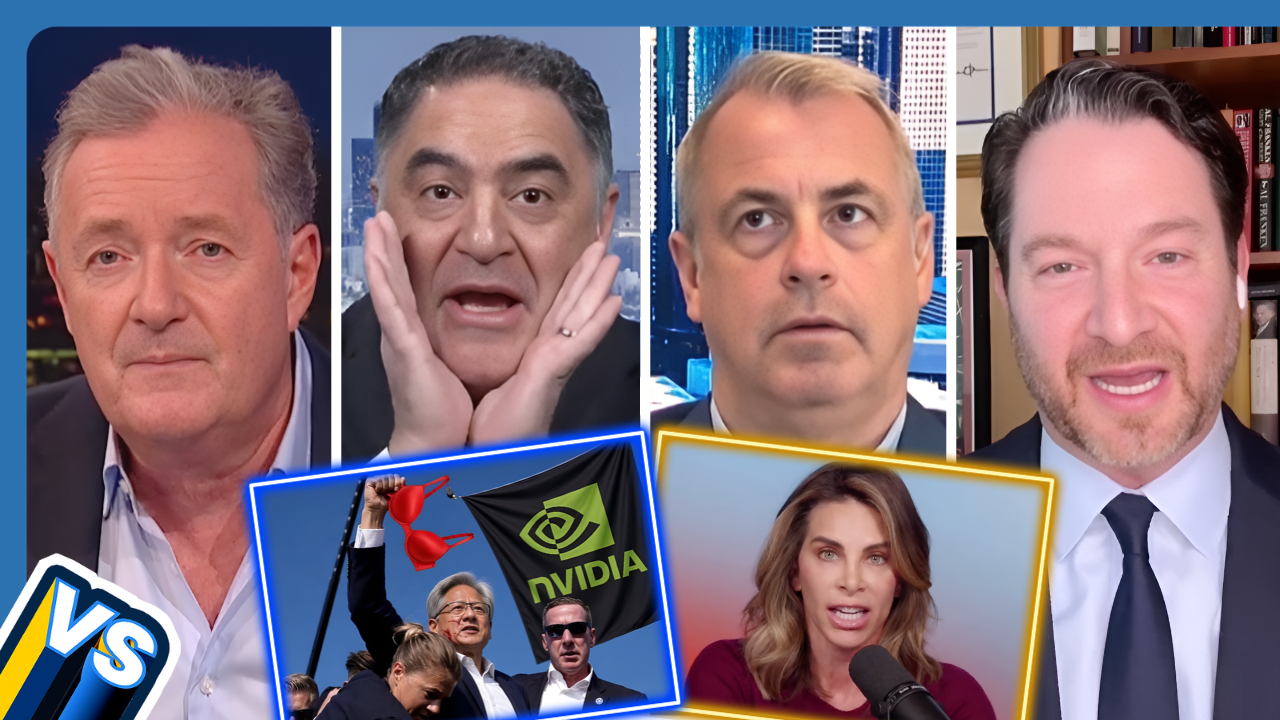
Piers Morgan is joined by Alastair Campbell plus Trita Parsi, executive vice president of the Quincy Institute; Jim Hanson, chief strategist at the Middle East Forum; and Will Chamberlain, host of Counterweight. Plus, General Keith Kellogg, former US special envoy for Russia and Ukraine, joins the show to discuss the prospects for peace in Ukraine and the growing threat of renewed conflict with Iran.
(00:00:00) Introduction
(00:03:00) Alastair Campbell
(00:21:02) Will Chamberlain responds
(00:26:00) Trita Parsi on the consequences of the Iran War
(00:28:30) Elon Musk’s role in weakening Ukraine’s defences
(00:33:03) Will the U.S. win in the Iran War?
(00:37:00) Ukraine war and Zelensky’s changing relationship with the U.S.
(00:44:05) General Keith Kellogg on Ukraine War
(00:50:24) General Kellogg on the Iran War
Learn more about your ad choices. Visit podcastchoices.com/adchoices

Scan the code with your iPhone camera
Listen in the app.