
In short
Pod Save America - Episode 1088: What’s the Story We’re Telling? + Sen. Ruben Gallego (Crooked Con)
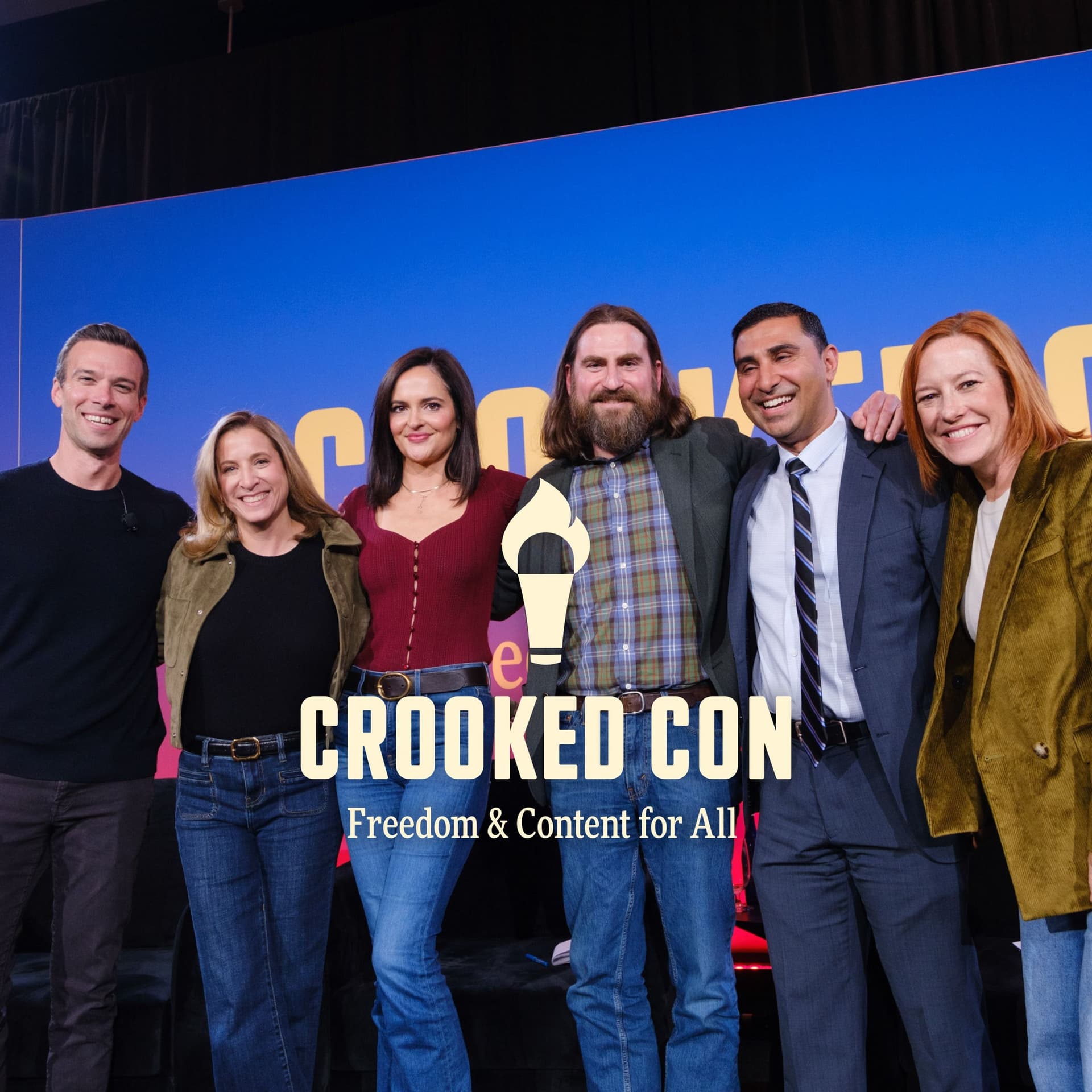
Episode Overview In this live episode from Crooked Con, Jon Favreau speaks with a panel of prominent Democratic strategists and activists about the narrative the Democratic Party needs to present. The discussion centers on the importance of framing the conversation not just around why Trump and the MAGA movement are problematic, but also articulating a positive vision for what Democrats stand for. Additionally, Senator Ruben Gallego joins Jon Lovett to discuss strategies for winning on immigration and local races.
Key Themes and Discussions
The Importance of Narrative
- Cohesive Storytelling: Favreau emphasizes the need for a well-structured narrative that connects various Democratic messages, policies, and slogans.
- Focus on Affordability: Successful Democratic candidates from recent elections highlighted affordability as a central theme, suggesting that future campaigns should adopt similar messaging tailored to local constituencies.
Diverse Democratic Success
- Big Tent Party: The panel stresses the necessity for the Democratic Party to embrace diverse candidates who can authentically connect with their specific voter bases.
- Unity Amidst Diversity: It’s vital for Democrats to showcase a united front despite differing ideologies within the party.
Combatting Republican Messaging
- Acknowledgment of Republican Strategy: The discussion acknowledges that Republicans often shift the narrative to fit their agenda, such as focusing on crime or immigration, which Democrats must counter effectively.
- Strong Leadership: The panel suggests that Democrats need leaders who are willing to take bold stances and fight back against Republican narratives.
The Role of Empathy
- Connecting with Voters: Emphasizing empathy and understanding the real struggles of everyday Americans is crucial in regaining trust, especially among Latino voters who feel abandoned.
- Focusing on Concrete Policies: Democrats should advocate for policies that improve daily life, such as affordable healthcare, to demonstrate their effectiveness.
Strategies for Winning Elections
- Abolishing Fear of Failure: Senator Gallego argues that Democrats must be willing to take risks and not shy away from bold proposals that could resonate with voters.
- Sustaining Momentum: Emphasizing the need to maintain energy and excitement within the party rather than allowing indecision or fear to stifle progress.
Vision for the Future
- Affirmative Democrat Messaging: The panel discusses the need for an affirmative vision that encompasses addressing economic inequality, promoting community well-being, and ensuring democracy and rights for all.
- Building a Coalition: Gallego highlights the importance of forming coalitions that reflect the diverse makeup of the electorate and standing firm on key issues like healthcare and immigration.
Key Takeaways
- Articulate a Positive Vision: Democrats should focus on what they can achieve for Americans, rather than merely opposing Republicans.
- Build and Maintain Momentum: Keeping the party’s energy high is essential for sustaining voter engagement.
- Emphasize Authenticity and Relatability: Candidates should present their true selves to connect with voters on a personal level, fostering trust.
- Be Willing to Fight: A strong and proactive approach in standing up for Democratic values against Republican challenges is crucial.
Conclusion The episode culminates in a call to action for Democrats to unify under a common narrative that emphasizes empathy, community, and action. As they prepare for future elections, the party must focus on their strengths, acknowledge past mistakes, and strive to create a compelling vision for American society.
Written by AI. May contain mistakes. Listen to the episode to check what was said.
Transcript
Automatic transcript. May contain errors.0:00Lis Smith:This episode is brought to you by MS Now. We the people in order to form a more perfect union. These words are more than just the opening of the Constitution. They're a reminder of who this country belongs to and what we can be at our best. They're also the cornerstone of MS Now. Whether it's breaking news, exclusive reporting, election coverage or in-depth analysis, MS Now keeps the people at the heart of everything they do. home to the Rachel Maddow show morning Joe the briefing with Jen Psaki and more voices you know and trust MS Now is your source for news opinion and the world their name is new but you'll find the same commitment to justice progress and the truth you've relied on for decades we'll continue to cover the day's news ask the tough questions and explain how it impacts you same mission new name MS Now learn more at MS.now
1:14Lis Smith:I'm Jon Favreau. We are live at Crooked Con.
1:20Lis Smith:So, this is a panel about the story that Democrats choose to tell voters about what we believe, where we want to take the country, and how we'll get there. I'm biased as a former speechwriter, but I think figuring that out is one of the more important tasks for the party and one that is under-discussed. We talk a lot about issues, policy positions, slogans, specific messages. I think we don't talk enough about how they all fit together in a cohesive, persuasive narrative. And so I am very lucky to be joined by some of the most brilliant strategists and storytellers in our party to talk to me about this.
2:01Lis Smith:My friends, Jen Psaki of MS Now.
2:07Lis Smith:I did it. I remember it. It's not MS.
2:09Ruben Gallego:It's fine. It can be either one.
2:11Lis Smith:It's just rolled up. It was great.
2:13Ruben Gallego:Happy to be here.
2:14Lis Smith:Faz Shakir of More Perfect Union.
2:20And veteran Democratic strategist Rebecca Katz, Liz Smith, and Adam
2:29Lis Smith:Jentleson.
2:33Lis Smith:All right, let's talk about the story coming out of Tuesday night. A good story, for once. So the rosiest take on the results is that whether you're Zoran Mamdani or Abigail Spanberger or anyone anywhere else, Democrats who won focused on affordability, unlike Donald Trump, who campaigned on affordability and is now building himself a gold palace. So if you're a candidate running in 2026, you focus almost exclusively on affordability with the message tailored to the voters you're running to represent in the place that you're running. Some will sound more like Mamdani. Some will sound more like Mikey Sherrill or Abigail Spanberger.
3:19Lis Smith:Some will sound completely different. But that's okay because we're a Big Ten party, and as long as your campaign is focused on affordability, we're good. Is that story sufficient to help Democrats take back the House and potentially the Senate in 2026? Rebecca?
3:39Rebecca Katz:Well, I think a good message coming out of Tuesday is that a lot of different kind of Democrats won. And that's good, right? Like, it is good. I mean, we should be saluting all of our Democratic candidates up and down the ticket. We had a great night. And there's this feeling of wanting to divide us a little bit. Like, well, this is the way that you have to win or this is the way. But if we're going to be a party that wins big, we have to have a big tent. and we need candidates who can authentically speak to the constituencies they're running to represent and voters can smell bullshit right and we we have to know that when you're talking about it you you have to have first-person experience you can't just say like now i'm going to focus on costs you have to it has to be grounded in
4:22Jon Favreau:something that you know yeah um and i agree with rebecca and you know what's crazy is i have worked against everyone on the stage in primaries in my life, except for Jen, because, you know, she has good taste. But,
4:40Jon Favreau:you know, four years ago, had we all been up here, we probably would have been, you know, getting a little saucy. I don't know. We'll see what happens here. But today, it really does feel more like we're starting to understand that we're all in this together. There's no one way to be a Democrat. For Democrats to become a majority party, let alone a durable majority party, we've got to let people run in a way that fits the communities they're trying to represent. So, for instance, Azorin Mamdani makes a lot of sense in New York City. Probably not going to win statewide in Virginia. Abigail Spanberger makes a lot of sense in Virginia.
5:17Jon Favreau:Probably not going to get through a Democratic primary in New York City. And you know what? That's okay. And I think that so much of the fight right now that we need to think about as a Democratic party, and to your point about what more of the story is beyond affordability is we've got to take on the status quo and we've got to take on the establishment shit that is not helping our party and you know I think you guys know exactly what I'm talking about but and I can see a coalition growing of next generation Democrats people maybe more in Rebecca's wing some people more in my wing getting together and saying let's make life cheaper for people and let's stop all the shit that isn't working, and let's fight the status quo that is very, very broken for most Americans.
6:07Lis Smith:Fez, do you think Mamdani's message could win in places that aren't as blue?
6:14Jon Lovett:Yeah, of course, and how you tailor it. The challenge that we're in, I'll try to introduce some degree of friction into this. Because we all agree on a lot of things. What goal are we trying to solve for. I want us to win elections. Let me state that fully here. I want us to hold power. I want us to hold power to do things to address people's suffering in the world. And in order to do that, in a world of greater wealth and income inequality, we're swimming in a sea of corruption, the political economy is completely broken. You want people who come in with a mandate of I am going to do something.
6:55Jon Lovett:Now, if I polled this audience and I said, in the first hundred days of the Mamdani administration, what do you suspect he will do? Most of you will be able to give me an answer. You know, you're going to highlight, and I could say, freeze the, you know, universal. Right. There you go. Thank you. Proven point. Now, if I ask you, And again, I'm so excited that they won. Now, what are Governor Spanberger and Governor Sherrill going to do in the first 100 days? They'll figure out. They'll be competent administrators and I think will do things to improve people's lives. I don't quite yet know what they are.
7:33Jon Lovett:Maybe some of you could argue to me that you know better and I'm not going to debate you and doubt you. What I'm going to debate you and doubt you on is that the mandate of this election didn't tell the people of New Jersey and Virginia what is next going to happen for their lives. And in the interest of trying to change the Democratic Party brand, I want people running with the sense that we're going to win this election, not on the backs of people hating Donald Trump and the corruption that he stands for. Yes, that and when we get into office, there are two, three, four things that we are going to do to address affordability.
8:08Jon Lovett:And here's why and here's how. And on that score, we got some work to do. That's how I answered the Mamdani question. More people thinking about their concrete authorities, matching those authorities with how I'm going to get affordability done and telling voters that you can hold me accountable for this when you put me into office.
8:27Ruben Gallego:Don't we think Faj should run for office? I've thought this all the time. And I am announcing.
8:34Faiz Shakir:We're in the suit too.
8:35Ruben Gallego:I thought I moderated the DNC debate and I was like, he should run for office. Okay, I just put him on the spot. Go ahead.
8:41Faiz Shakir:This is your form. Well, can I, I mean, I will sort of agree, you know, with the idea, maybe not giving you the friction you were seeking there, FAS, but that's sort of how we roll. You know, I think, but I think about when I worked in the Senate in 2010 for Harry Reid with FAS, you know, there were 60 Democratic senators in that chamber. and we had seats, Democrats held at least one seat in 36 states, right? Today we hold seats in 25. Just to, you know, drive the point home, we had both seats in Arkansas. We had both seats in West Virginia. We had a seat in Louisiana, in Nebraska, in Indiana.
9:28Faiz Shakir:We had seats everywhere. And what that allowed us to do was to pass a lot of stuff. That Congress in 2009, 2010, when Barack Obama was president, those first two years were the most productive Congress. We did more, we helped more people with concrete improvements in their lives than any Congress since the Great Society under President Obama's leadership. And you need to win big. You know, winning by 50, getting just 50 votes in the Senate is not enough because you might lose a Democrat here, you might lose a Democrat there. Someone might have an health issue. You need to go big. And so we need to be able to win everywhere.
10:07Faiz Shakir:And to do that, you have to think about what are policies that appeal to a broad swath of people. So in 2008, Barack Obama was against the Iraq war and he wanted to bring universal health care and he wanted to clean up the swamp in Washington, D.C., right? Those are three things that were incredibly impactful, that affected millions of lives, but that got him to a victory of 365 electoral votes, right? So Democrats need to win. We need to bring concrete improvements to people's lives, but we also need to win everywhere.
10:38Lis Smith:Jen, I want to ask about the governing aspect of this, because not like we're getting ahead of ourselves. It'd be nice if we had another big majority in Congress and in the presidency. But I do think one of the challenges we face, and you have faced this both when we were in the Obama White House and then when you were in the Biden White House is you get into office, the president does focus on passing legislation, ideally, that is going to make life better for people, that is going to bring down costs, in our case, health care in 2009. Then, of course, 2010 comes around, and many of the Democrats got voted out who improved, who voted for health care to improve people's lives.
11:19Lis Smith:The question is, you want to run on a message of affordability You want to run on a message that you're going to improve people's lives. But then can you talk about the challenges of once you're in government and do that, communicating with people that you are actually doing stuff to improve their lives when you know that it has not fixed all the problems and that people are still wrestling with high costs, even though you pass universal health care, the stimulus, whatever it may be?
11:50Ruben Gallego:Yeah. I mean, first of all, one of the geniuses of the Mom Donnie campaign, And I would argue also Mikey Sherrill ran on putting in place an energy emergency. There were specific things in each of these races that I think people really bit into in the states is that it was digestible and it wasn't an opportunity agenda. Because what the hell is an opportunity agenda, right? It needs to be things that people understand, that you don't need to read a 50-page booklet. Okay, I'm getting to your question. I think the thing about governing is that you run and you talk about a lot of things because you're in debates, because you're doing interviews, because you are having town hall meetings.
12:27Ruben Gallego:And that's a really important part of the process. But when you get into the process of governing, you have to pick your priorities and you have to pick usually one or two things to start with. It doesn't mean those are the only things that you can do. but so for mayor-elect mom Donnie is he going to start with universal child care I mean what you know what is the first thing because you want to have something you can say you've done now with the Affordable Care Act you and I lived through this and I don't mean to be bring back post-traumatic stress disorder for all of us but uh and we all lived through it actually in different ways I think at the time we still felt like and to be fair we didn't determine the messaging I don't thing.
13:08Ruben Gallego:Where's Dan? Should we bring him out? I'm just kidding. Dan is brilliant. But one of the things that was decided collectively by the team we were on is that we were going to talk about it as bending the cost curve. Does anybody here know what that means? Okay. In the out years. In the out years. Sorry. There was like a thousand, you remember this. I remember, yeah. A thousand pages. Of course, I mean, it was a complicated bill. And we talked about bending the cost curve and how the bill was going to do that. That was a terrible message because nobody understood what it was. And the Affordable Care Act, which I think President Obama, who I understand was here last night, that's very cool.
13:46Good.
13:48Ruben Gallego:He, you know, he, when he first, when he finally started talking about it as individual incremental things, then it started to become more popular. And I think this is a lesson for how you talk about things on campaigns, but also how you talk about things when you're governing, which is not like I'm going to wow people with my opportunity agenda or my thousand page bill. You're like, I'm going to wow people with my, I'm going to cover people under the age of 25, or I'm going to cover people with preexisting conditions. And I'm going to tell real people stories about how it's impacting them and benefiting them.
14:21Ruben Gallego:Would that have meant that we would have won in 2010, the midterms? I think I remember at a certain point, we were getting so beaten. I like went home from the White House because it was like tomorrow will be hard. Probably not because there are cyclical things, but I do think that there are lessons about messaging that can be taken away from how we didn't do it effectively the first round.
14:41Rebecca Katz:Just to jump in there, one of the biggest problems we have with governing is weak Democrats, right? We have a lot of people who are up there, they get power, and they don't do anything with their power. And I think one of the things we saw from Mayor-elect Mamdani on Tuesday night is he grabbed that microphone and he said, let me tell you what we're going to do. I have 104 ,000 canvassers that we just went to elect me. Now we've got to get this done. And he used the power of the microphone to get people excited, and we're going to go on to our next big challenge. And I think so many Democrats, when they have won, their first thing is going to be like, okay, how do we compromise?
15:20Rebecca Katz:Instead of saying, how do we get some big shit done? Because right now we have a lot of stuff that we need, And it's about time that we get Democrats who actually stand for something and then run and win and then achieve it. So let me ask, because I sort of worry about this heading into the midterms, because I think I've heard various people on this stage and everyone else say, Democrats don't just need, we can't just run against Trump, we need an affirmative vision.
15:48Lis Smith:Yes. Yes, I agree with that. also, if we win the House and win the Senate, all the things that we promise the affirmative vision will not happen if we take back Congress, because Donald Trump will still be president for two more years and will veto any legislation that we passed. And so I wonder how you guys think about the story of the party that we're telling heading into the midterms, where you do want to lay out an affirmative vision if you're running for Senate or running for House, but at the same time, you don't want to get into this trap where you overpromise things to voters that the Democrats will not be able to deliver on once they get into Congress.
16:25Faiz Shakir:Well, can I actually, you know, this reminds me a lot of 2006, right? When Democrats, against the odds, they took back the House, and against the odds, they took back the Senate. So they had control of both chambers of Congress under President George W. Bush. That's actually not a bad situation, because the Republican is in power. They're the president. You can pass a lot of stuff with your Democratic majorities, send it over to the White House and let the White House, the Republican president of the White House, block it. Right. So the key thing is to is to get those majorities to stay on message and then to start passing things and show people like this is like show, don't tell, show people what they could have if Democrats were in power.
Read the full transcript
17:07Faiz Shakir:We just the last piece of the puzzle is we need to get this Republican out of the White House.
17:10Lis Smith:But this is this. Yeah, this goes back to my my opening question, which is like the rosy scenario where and, you know, it's the first week after the election. We're all feeling good. Everyone's coming together. But there's a lot of like every Democrat can run their own race depending on where they are. But if in victory, when we're all in Congress, they're going to have to come together and figure out what legislation were passing together as a party. And so there is going to have to be some kind of agreement whether you ran in a red state and won or whether you ran in a more progressive campaign in a deep blue state and won.
17:46Jon Favreau:Right, and that's why costs makes a lot of sense. It's common ground. And, you know, Democrats don't have control of anything in Washington right now. But there sure is how winning a fight over health care costs, and they're winning it because they picked a smart fight. They picked a fight. Finally. Yeah, finally, right? They picked a smart fight. They've been remarkably disciplined about it. And it's just one issue that everyone can understand. If we do not extend these subsidies, people's health care premiums will double. And so I think we just need to keep things simple. And I understand over-promising.
18:22Jon Favreau:People are very skeptical of politicians. But I think more than anything, what voters want right now to hear from Democrats is that they feel their pain, that they understand the most existential issue in their life is affording to live every day. And in 2024, a lot of voters did not hear that message from us. We were going out there saying, Bidenomics, everything with the economy is so great that we're going to slap our White House name on it. And a lot of voters were hearing us talk about abortion, about democracy, about climate as these existential issues, when the thing that keeps them up at night is whether they can pay their credit card bills, pay their mortgage, afford their child's childcare.
19:06Jon Favreau:And I think until we meet voters where they are on that, and that's the most important thing we can do, I am sort of less concerned about overpromising. I just want to see more Democrats going out and meeting voters where they are on those critical issues. In 2005, led into 2006,
19:26Jon Lovett:Speaker Pelosi, she's not Speaker Pelosi, Harry Reid and Nancy Pelosi, respective leaders of the House and the Senate, decided that while George W. Bush was privatizing Social Security, that they were not just going to go into the next election cycle, this 2006 election cycle, with George Bush's bed. So they came together and they said, hey, six for 06. We're going to come up with six specific agenda items. And on that list, and I urge you guys to go back and look at it, One of those said, we will pass an Affordable Health Care Act. Now, to John's point, it actually didn't end up passing in 2006.
20:00Jon Lovett:You know what it did pass? It led to a 2008 election. And the framework of what those candidates campaigned on came out of six for 06. I'll tell you another story. In that number six items was raise the minimum wage. To raise the minimum wage from$5.15 an hour higher. They come into Congress, Speaker Pelosi, Senate Majority Leader Harry Reid. They get a minimum wage increase, demand it of Bush. He agrees and puts it in, changes it from$5.15 an hour to$7.25 an hour. My friends, that is the last time we ever raise the minimum wage. My point to John here and all of us is that having the demands meant something, meant something for changing people's lives.
20:48Jon Lovett:And then the next question that John was asking is, well, now you're governing. How do people know about it? And I want to credit all the people on stage, but particularly Crooked, for building a media empire. Because part of the problem, and I'm trying to do it ourselves, is you get into power and you have to tell stories about what the hell are we doing. And part of the reason why Trump is still, he isn't at 5 % as he should be, but he's probably at something where 40, because he's got a right-wing media ecosystem that is telling them every single day that our hero is doing all these amazing things while the rest of the majority of this country realizes what the hell is going on.
21:24Jon Lovett:My point being that we need this kind of ecosystem such that when we're governing all of us who are doing media, John, myself, others, we have to be talking to the people in power, brought along in the journeys of what are you trying to do, why are you trying to do it, and help them animate the stories about their accomplishments.
21:42Ruben Gallego:Can I add one more OSEX parallel? We're like all going to get out our canes and wheelchair talk about the 2006 cycle. I was at the Democratic Congressional Campaign Committee that cycle.
21:51Lis Smith:I was Jen's volunteer at the end.
21:53Ruben Gallego:Oh, thank you. The other reason, and this is tied to today, the other reason Democrats won back the House in 06 is because of the culture of corruption of Republicans. I was just going to go there. And that's important because we used to have a crony of the week. We would put out a crony of the week. Don Sherwood, he was quite a crony. Anyway, my point about this is that it's important to tie your proactive agenda, what you're going to do. You're going to fight for working people. You're going to fight for childcare. You're going to fight for cheaper transportation. You're going to fight against energy prices going up with what the other guy or gal is not doing.
22:31Ruben Gallego:Because they don't care about you. They care about themselves. They care about putting money in their pockets and money in billionaires' pockets as well. There's so much culture of corruption stuff right now with the Trump administration and the people around him. It is about having a proactive agenda. And I think this is something that Democrats should have learned the lesson from the last couple cycles about. But it's also about tying it to why you're a better choice and why your candidacy is a better choice than the other person and who they do not care about, which is working people. And that was very similar to 06.
23:01Rebecca Katz:And just going back there, we have to be able to name an enemy, right? Like they're coming at us. You need a crony. Exactly. I mean, one of the things Senator Gallego was saying was about how as we're dealing with health care costs going up, and that's why we're fighting for premiums to not explode, everything's happening with food stamps. And what they're doing is they're pitting the middle class against the working class. They're getting everyone mad at each other when you still have the bosses taking millions and millions of dollars. And I think we have to clearly communicate those kind of messages and show who the enemy is.
23:37Rebecca Katz:And it's not the working people. We have to show that we're fighting for the working people. And Democrats have not, I mean, we're getting better at it. But I think last cycle, a lot of Democrats didn't show that. And that's why we lost.
23:49Jon Favreau:And, you know, right now, for instance, we get a great example. I'm sure you all saw the chaos on the news about what's going on at the airports with all the canceled flights. I think 10 % of all commercial flights today canceled. Meanwhile, you know what they're not canceling? Private jet flights. And that shows exactly where the priorities are. And I think there's some very low-hanging fruit for us in 2026, which is something like the Stock Act, right? And frankly, this is an issue where not everyone in the Democratic Party's hands are clean. But I was talking with a candidate yesterday who was running against a Republican who has quadrupled her net worth in Congress solely through stock trades.
24:33Jon Favreau:And while we're cutting food stamps and all that, while they're doing all that stuff, they are quadrupling their own personal wealth. And so to Rebecca's point, I think we need to name these villains. To your point, we need to call Ashley Hinson a crony of the week sometime soon. All right.
24:52Ruben Gallego:Yeah, let's go. Ashley, congratulations. Congratulations.
24:56Jon Lovett:Free policy idea. Tax private jet travel. Tax yachts. Tax. That's good. And tax the rich.
25:05Lis Smith:Here we go. I like that.
25:25Lis Smith:slippers, and basically everything to get you there. There's something wildly therapeutic about fresh socks, and the sock scientists at Bombas have found a way to channel that energy into everything, from slippers with sink and cushioning to the perfect-fitting ankle sock. And that feeling doesn't stop after one wear. It keeps going. They've got answers for all your gifting questions, too, like, what do I get my son's new marathon training girlfriend? Obviously, Bombas running socks have sweat-wicking and impact cushioning.
25:51Jen Psaki:I just got new Bombas. I got uh uh the no-show bombas because i i had actually i've said i've i've said virtually all my socks are bombas and that is true i had some non-bombas no-show socks guess what worn right through the things replace them all with beautiful well-made bombas i have bomba socks but i i need some no shows oh i'm gonna get get on that millennial no-show bombas they got new shapes new styles
26:13Lis Smith:fluffy things suede things little something for every foot and if there's one thing bombas knows its feet.
26:19Jen Psaki:It's there. Yeah, they're real freaks for the feet. Real Quentin Tarantinos over there at the at Bombas HQ.
26:25Lis Smith:And we haven't even gotten to the best part yet. For every pair of Bombas you purchase, Bombas donates one on your behalf to someone facing homelessness. So anytime you get something cozy, someone else does too. Head over to bombas.com slash crooked and use code crooked for 20 % off your first purchase. That's B-O-M-B-A-S dot com slash crooked code crooked at checkout. This episode is brought to you by Landman on Paramount Plus. Now streaming on Paramount Plus, it's the return of Landman, TV's biggest phenomenon. From Taylor Sheridan, co-creator of Yellowstone, Academy Award winner Billy Bob Thornton is back as Tommy Norris and managing higher stakes than ever before, featuring an all-star cast, including Academy Award nominees Demi Moore, Andy Garcia, and Sam Elliott.
27:05Lis Smith:In the wake of his former boss's passing, tensions come to a head as Tommy and Demi Moore's Cammie Miller struggle to maintain control of EmTech's oil. And with his father, played by Sam Elliott, coming back into his life, Tommy must juggle both his roles as an oil man and a family man as pressure builds and his worlds collide. Don't miss the hit series everyone's talking about. Landman, new season now streaming only on Paramount+.
27:30Lis Smith:So the party can't just develop the message and execute on a message in a vacuum. The Republican Party gets a say, Donald Trump gets a say in what is covered and what we talk about and what the national debate is. they clearly are not going to want to talk about affordability. They have to say that now, obviously.
27:52Ruben Gallego:Did you see Trump called it the affordability?
27:54Lis Smith:The affordability. And he said, I don't want to hear about the affordability anymore, which kind of signals to you where this is going. And so as they usually do, they will want to turn the debate next year towards the issue terrain that they believe is more favorable to them, crime, immigration, whatever the culture war of the moment is. It changes every year. And now they can also back up that talk with real action, militarized cities, ice raids, trampling on people's constitutional rights. I very much get that voters, most voters, especially voters who haven't had their rights taken away or their freedoms trampled on, do not care as much about these issues as they do about the cost of living.
28:45Lis Smith:And yet, I wonder if it is practical or realistic for Democrats to think that we can just run in 2026 on affordability and cost of living and not talk about what is happening all around us.
29:00Rebecca Katz:You know what voters hate? Chaos. They don't like chaos. Like, they want things normal and good. They want, so I think it's a little bit of both. You know, I didn't mean to interrupt, but I just, it's not one thing, and there's not like one magic bullet, but you have to show that, like, I always say that people take from the Bill Clinton years, triangulation, and all the, like, centrist stuff, when really they should have been taking, like, I feel your pain. We kind of missed that spot. So I do think we have to have some empathy. We have to connect with voters, and then we have to show them that we're going to fight for something, and we're going to protect them.
29:32Faiz Shakir:And it's defense and offense, right? I mean, in any strategy, you have your defense and you have your offense. And I think Democrats found a really good lesson on immigration the last six months or so, where there were some folks saying, don't talk about this issue. When Trump was, you know, sending mass men on the street to grab people and kidnap them. And, you know, and people said, this is not a favorable issue for Democrats, so don't talk about it at all. But it was an issue that was in the news all the time. And you had to you had to talk about it. And so but what Democrats did was they talked about it in a smart way to Rebecca's point about voters not liking chaos.
30:03Faiz Shakir:us. They said this is about law and order. These are violations of law and order. And they found a message that resonated broadly. And they brought Trump's numbers on immigration down, right? They showed that Democrats can win even on these issues that don't start out as favorable to them. So then, you know, you do that, you have your sort of defensive play, then you pivot to your offense. But you can, we don't have to abandon these issues that don't start out as good issues for us. Democrats can lean into those and they can win on them too.
30:27Jon Favreau:But I absolutely think Democrats can win the immigration argument. And I say this, I worked on Tom Swasey's special election in 2024, and it was staked on the issue of immigration. People thought he was dead in the water because it was such a top issue. And what he did is this, and how Democrats are going to be able to win this issue means you can't just decry the lawless ice raids. You've got to start by just saying something common sense. We need a secure border. We are a sovereign nation, and that is part of being a sovereign nation. And because most voters, even as they're souring on Trump, they are not going to listen to the other stuff we have to say on immigration until we lead with something common sense like that.
31:09Jon Favreau:Now, I think on immigration, we can also go on the offense, and we've started to see some people, especially mayors, doing this effectively by saying that what these ICE raids do, they don't make us safer. They actually make us all less safe. Why? Because immigrant communities, if they're being raided, they're not going to go and want to work with law enforcement. They're not going to report crimes to the police. They're not going to testify against criminals in court. And that makes us all less safe. And I think we've got to be comfortable feeling like we can go on offense and take back the public safety conversation from the Republicans.
31:47Lis Smith:Yeah, this is... This is something that I feel like the party has to figure out, especially as we head into national elections in 2026 and especially 2028, which is like, what is the story for the party on immigration? Like, what do we stand for? And there's been there has been a couple of choices. And I'm using immigration as an example, but I think it's probably the most salient one right now because of what we're living through. there's a couple choices, which is we either moderate on the issue to take it off the table, acknowledge that we need a secure border, and then that's it. We don't talk about it at all and just try to, like, economic populism, costs, affordability, and try to, like, bring the debate that way.
32:30Lis Smith:Or we, and I think we did this in 2019 and 2020, especially during the last round of presidential primary debates in 2020, we sort of take the backlash against Trump's immigration policy as permission to go further left on immigration.
32:47Rebecca Katz:I mean, I was in Arizona last cycle, and one of the biggest challenges we saw was that voters didn't believe Democrats anymore, because every cycle Democrats said were for comprehensive immigration reform, and every cycle were like, this is why it didn't happen. And at a certain point, we were just promising and promising and they they just didn't give democrats any credit so we just had to start with okay first we need a secure border and then we can talk about how to you know pathway for dreamers and all that but it just it was tricky dem like the biden administration did not do a good job on immigration and it was felt all the way down and we have to be smarter going
33:24Jon Lovett:forward yeah that that and there was an actual migrant crisis that the pot there was a policy failure it was a struggle that a lot of towns and communities had to deal with and i would go upstream on this question. It's not just immigration policy. It's a matter of, are Democrats comfortable being enforcers? Enforcers. And when you own executive power and authority, you know, you own the police department too. You own the military as well. And some of the challenges, I think, of the Democrats are that understood that they're scared of the people who hold the guns, or they don't want to wield power and authority, and give them direction.
33:58Jon Lovett:Because the problem is on the other side, they give them the direction. Yeah, go round everybody up, build this damn wall, go, you know, raid Los Angeles. We have to have a vision of enforcement that's not just law enforcement, by the way, government enforcement. Would we be seen as a side that kills a government program that isn't working? And too often, would we fire somebody? Would we fire somebody? These were honest and legitimate critiques of Biden, that you didn't fire anybody. you know you don't hold the government agencies accountable when they do bad things so that you could you could empathize and hopefully should empathize with you know some of this most musk doge thing maybe they'll come in and get this squared away no they did not fast flash forward but there's a desire for a show me democrats who are comfortable wielding power with authority not understanding enforcement is part of the job one of the reasons why i think i love you know where's lena i don't know if lena khan is still here but she owned that in the economic realm.
34:57Jon Lovett:We're enforcers. We can bring lawsuits. We use the government sticks to do and accomplish things with friction and own that I am not afraid of that friction. I have a vision of using enforcement to do good for America. That's what they expect of us, the greater good for the greater number.
35:13Ruben Gallego:I would just add that if you look back on Tuesday, one of the reasons I I think Mikey Sherrill and Abigail Spanberger won in those states is because they won partially on their biographies, which were national security, which were strong. I live in Virginia. There were so many ads run. My son is seven, and he was deeply engaged in what the outcome of the attorney general's race was going to be because it was like the ads were so constant. And I don't think, I think sometimes Democrats as a party, I don't even know who I'm referring to, run away from that as an important part of a background. I mean, Abigail Spanberger ran with like people from law enforcement in her ads.
35:58Ruben Gallego:That was very powerful. That worked in Virginia. I'd also say, I know you're deeper in polling, so you can check me here. Trump has lost support. He's lost ground in polling on things like deportations, right? And illegal actions and overreach. there's different ways it's measured. I think he's still near 50%, if not, I don't know where he is, but right near 50 % on securing the border or something like that. So this point about what you say first, Democrats need to be proud of being strong on securing the border, on being a party that keeps communities safe. ICE raids don't keep communities safe.
36:37Ruben Gallego:Neither does National Guard, who are not trained to be in communities. That does not keep communities safe. You know what else? It hurts the National Guard. These are people who signed up to serve their country and they're being sent into communities to do jobs that they shouldn't be doing. I'm saying all this because I think sometimes there's a shying away from a national security or a security background as being valuable or important. And it is important. And I think it is a way to combat some of this. That's right.
37:04Faiz Shakir:People want to be...
37:08Ruben Gallego:not for it and that's we're debating here you're right they want to be safe they want a secure
37:13Faiz Shakir:border you know that's things that they sort of agree with both parties on then there are things they agree with us on when it comes to immigration they believe we're a nation of immigrants yeah they they believe in a path to citizenship yep they believe in treating people with decency and respect and even when you know there's enforcement that has to happen that it be done in an orderly way and not grabbing people off the street but in order to get people to you know to For the parts of immigration policy where people agree with us to break through, we do have to talk about a secure border. And once we do that, then we can open that conversation and say, we believe in fairness, we believe in a nation of immigrants, and we believe in treating people.
37:48Ruben Gallego:And morality and humanity, which is an important part of it, too. Can I just add one thing that I feel like, because we've given people lots of assignments. I feel like we could take things off their plates. because this just reminds me of I am out of the business of working in campaigns unless FAS runs and then, you know, maybe he'll want me and maybe he won't. I'm just kidding. But I feel like there's no reason people need to fill out questionnaires. Questionnaires are like the devil. And I'm sorry for people who work for groups, but I just think that they are boxing candidates into things that are unnecessary.
38:22Ruben Gallego:Everyone's not going to agree with me. We can debate this question. The other thing I would say is spending time with editorial boards of national newspapers is not a good use of time. Spending days or weeks prepping for debates does not feel to me like a good use of time. You guys can all disagree with me. I was going to go into the questionnaire. So I'm saying all these things because I think we're talking a lot about what people need to do. And I think the way that politics has evolved and running for office has evolved means there, I mean, if there are talking points coming from a national organization, rip them up, burn them in your files.
39:00Ruben Gallego:I mean, there are some things that I think candidates can take off their list, is my point, and the immigration conversation might even be.
39:06Faiz Shakir:I support a question. The question should be, can you beat the republic?
39:09Jon Favreau:Right. And can I just say one thing, right, is when Jen's, to put it more in like layman's terms, right, when you're talking about questionnaires, think of the ad that got the most attention from 2024. Kamala's for they, them. You know, Donald Trump is for you, for me, whatever it was for us. Yes. You know where that ad came from? It came from an ACLU questionnaire where all the candidates were asked, do you support gender reassignment surgeries for, I think, undocumented immigrants in detention or people in prison? And can you tell me, can anyone guess how many times when I was working for mayor pete he was asked about that on the campaign trail zero so why the heck and maybe you could answer this because you're at the aclu like why did the aclu ask candidates to take positions on issues that literally no voter would have even come up with and cooked up in
40:09Jon Lovett:their mind i was there so i'll answer that that's not too hard so uh you know the aclu's job is to advocate for civil rights and civil liberties in America. They bring lawsuits on behalf of people who face serious issues. Their job is to educate politicians. I worked for them prior to this, but I certainly appreciate the notions. And then we get questionnaires, like Jen said, you stand on your own two feet as a politician. You tear that up, you not respond to it. But if I get a questionnaire from Bernie from a Medicare for All organization, I'm responding to it. I'm letting you know this is something I care deeply about.
40:42Jon Lovett:I want to let you know. Also, I solicit knowledge. I solicit information. I'm not just running to defeat the Republicans. Sure, I'm also trying to learn something about the economy. I'm trying to learn something about this nation. I want to represent people's pain and suffering. Right now, one of my challenges with our current modern Democratic Party is it is not sufficiently grassroots enough. The inputs into our party are not coming enough from regular people. This is a role that I wanted from the Democratic National Committee. I want it from all of us to feel like we are connected to the people who are suffering.
41:14Jon Lovett:Now, if you're running for office, you want to hear the pain, right? You want it to come up to you. It is your job to stand on your own two feet and say, that's not what I believe. So if ACLU says, oh, that you should say this, I say, with all due respect, no, I disagree with you. Thank you for your position. I put more of the onus on a Kamala Harris than I do ACLU making an advocacy position that they believe in. A hundred percent.
41:38Rebecca Katz:Blaming the groups is a cop out. If we're going to win, we want people to feel engaged. And right now, there's lots of different kinds of groups. They stand for lots of different things. It's important. You don't have to say yes to everything, but you should show that you can open your ears and listen and be curious about other viewpoints. And what we're doing is we're taking a lot of cheap shots, and we're not paying attention to what voters want and what they need to win. And that will include all of us. And when we say your views don't matter and your views don't matter, we're turning off voters.
42:09Rebecca Katz:And I think what we saw, you saw it on Tuesday, is we need to bring more people in. We need to make more people feel like they're a part of this.
42:16Lis Smith:So, Adam, I want to ask you this. I don't think it's kind of of anybody's view.
42:18Faiz Shakir:Yeah, yeah. So it's one thing, you know, like if you groups want to send questionnaires, and, you know, I agree, actually, that Democrats should take more agency and, you know, have the stones to say what they believe and not, you know, try to cater to the groups. But it's one thing to ask the question. It's another, because then in a Democratic primary, the groups will spend millions and millions of dollars beating up the people who don't take the positions that they want them to take. So it's not this benign, oh, we're going to ask you your views and then you do you, we'll do us. They come after you hard.
42:50Faiz Shakir:And in a Democratic primary, that really matters. And I think over the last 10 years or so...
42:55Rebecca Katz:I mean, the biggest groups that went after Democrats were AIPAC and crypto.
43:00Faiz Shakir:Well, that's... I mean... It's not the lefties.
43:05Rebecca Katz:They don't have money. A group is a group.
43:08Faiz Shakir:But that's not... In 2020, the ACLU had a lot of money, and they spent a shit ton against Democrats who didn't agree with them on the questionnaires. They planted people in town halls to ask the questions in the most provocative way possible. And I think what happened there is that we lost sight of the fact that vulnerable communities suffer when Republicans win elections. Period. Right? And every Democrat on the 2020 debate stage would have been better for trans people, for every vulnerable community in America if they had won, right? And we collectively need to pull back a little bit and keep that big picture in mind.
43:45Faiz Shakir:When Republicans win, vulnerable people suffer.
43:56Lis Smith:This episode is brought to you by PDS Debt. Debt from credit cards isn't an accident. It's a system built to keep Americans down. The banks profit, the creditors win, and families lose. Every call, every fee, every high interest trap is another reminder. The game is rigged. But there's another side to the story. PDS Debt has already helped hundreds of thousands fight back, cutting debt, ending the calls and putting money back where it belongs in Americans pockets, not the banks. Whether you're struggling with credit cards, personal loans, or medical bills, PDS Debt has custom options to help you get out of debt.
44:25Lis Smith:They go beyond the numbers to understand your unique financial situation and craft a personalized plan designed just for you. There's no minimum credit score required. They're here to help you save more, pay off your debt faster, and start putting money back where it belongs in your pocket. PDS Debt is A-plus rated by the Better Business Bureau, boasts thousands of five-star reviews on Google, and holds a five-star rating on Trustpilot. Why? Because PDS has helped hundreds of thousands of people get out of debt. PDS has helped just so many people climb out of debt. And so if you're looking to ease some of your financial burden, you know, give PDS debt a try because it can help you get out of debt.
44:59Lis Smith:It's your money. It's your future. Don't let the system decide for you. You're 30 seconds away from being debt free. Get your free assessment and find the best option for you right now at pdsdebt.com slash crooked. That's pdsdebt.com slash crooked, pdsdebt.com slash crooked. This episode is brought to you by Walmart. At Walmart, more than 75 % of managers began as hourly associates. Walmart's$1 billion investment in career-driven training programs gives associates access to the tools and support they need to grow. Whether you're new to the workforce or ready for your next step, Walmart offers real opportunities with or without a degree.
45:36Lis Smith:With great benefits and room to advance, it's more than just a job. Learn more at walmart.com slash spark. That's walmart.com slash spark.
45:50Lis Smith:I do want to say, because I'm thinking about the 2028 primary here, right, and how this is going to play out. And I think everyone on the stage, sort of like, you know, various ideological corners of the parties. And it seems like there is agreement that if a group pushes you to take position as a politician, stand on your own two feet, say no. But the way this comes up in a debate is the reason that everyone except Michael Bennett raised their hand on do you want to decriminalize border crossings is because Julian Castro proposed decriminalizing border crossings. And so what happens is these, it's not just the groups, and it's not just the group spending money, and it's not the questionnaires, it's the candidates who then decide in a primary, this is how we have to differentiate ourselves from each other.
46:38Lis Smith:And you can imagine, as we head into 2028, there will be a candidate or two who says, yes, ICE has been out of control and maybe we need a secure border, but we should abolish ICE. And I think we all know, we've all seen, I know, but we've all seen the polling. And we know that that is wildly unpopular, even though ICE is very unpopular right now, more so than it's been in a long, long time. but we know that people want immigration enforcement. This is only to say that, like, I do wonder as we head into 2028 if we have, do you guys think that we have learned the lessons of the 2020 primary or do you think that we are?
47:16Rebecca Katz:I think we need to abolish the word abolish because everything after it people are very against.
47:23Ruben Gallego:Yeah, look, maybe this is a naive thing to say, but I feel like part of what we don't see people who may aspire to run for president do is sit down with their advisors and actually decide what they think and what they believe. And if somebody actually believes that they want to limit ICE or get rid of ICE or reduce the funding for ICE, and all of those things are quite reasonable, frankly, they just got a huge amount of funding that's unnecessary, then they should talk about that with their advisors or with themselves or with their family or whomever, and then stand by it. And I don't think that happens enough.
48:01Ruben Gallego:I think people rest on the laurels of their personal stories, of their great charisma, of their ability to win in states. And then they don't talk about the tough issues and the tricky questions they're going to get asked about when they get on the debate stage. So it's like, what do you believe? Start from there. Don't look at the polling. Maybe that's naive, but that's, I guess, where I would start from right now.
48:23Rebecca Katz:Not just the debate stage, the attack ads, you have to know what you stand for or why you're running. I mean, I'm so glad that Governor Schell ran, but the attack ads against her were really brutal. And it was just again and again asking, why are you doing this? Why are you running? And I think we need to show that we're running for a reason. And we have to have thoughtful candidates who actually know what they stand for.
48:50Jon Favreau:Well, I would say, but let's be fair to Mikey. I mean, she won by 13.6 percentage points. It was pretty clear to voters what she was running on, which was, and I disagree with you on that one, Fez, was affordability. And it was the utility costs there are skyrocketing in New Jersey. And she said, day one, I will declare a state of emergency on electricity costs. And we're going to see electricity costs keep going up everywhere because of all this AI stuff, data centers, everything. And this is, we're going to have to figure out how to come back with that. But I did, I think it's important to say with Mikey, she had a clear message that Ad was tough, but it's not like the rest of the campaign she wasn't able to articulate what she stood for.
49:33Lis Smith:So to Rebecca's point and Jen's point about just sitting down and thinking what you believe and what you believe about the country, where you want to take the country. So 1992, Bill Clinton wins by focusing on the economy, but he also makes community and responsibility central to his message. 2008, Barack Obama wins focusing on the economy. He also makes changing and reforming politics, as usual, central to his message. Joe Biden focuses on the economy in 2020, also talks about democracy, fight for the soul of the nation. the next crop of 2028 candidates. What do you think after a decade of dealing with Donald Trump and the damage he's done to this country, in addition to economic cost of living concerns, what are the other sort of big picture, affirmative vision kind of stuff that you'd want to hear from other topics and other areas that you'd want to hear from Democrats?
50:30Faiz Shakir:I'd like to see a Democrat say, look, in America collectively, we believe that if you work hard and play by the rules, you should not fall into poverty. You shouldn't go hungry. You should have everything you need to make ends meet. And let's think about what we need to do to make that happen. You know, that's something that brings us all together as Democrats. It's a core value for us as a country. We have a big shift coming in our economy with AI where there are going to be shocks that are economic. There are going to be shocks that are social. There are going to be a lot of people out of work with a lot of time on their hands.
51:01Faiz Shakir:What can we do collectively to make sure that that time is put to productive ends and that people don't fall into poverty. But I think we've lost sight of big causes like that, of ending poverty in the richest nation in the world. That's going to... And that's going to take a lot of ideas from all factions of the party, but I'd like to see somebody put forward a big idea like that and make it happen.
51:25Ruben Gallego:I think one of the interesting things, given how fucked up everything is right now, is that I don't think people running, including people running in 2028, have an obligation to defend. They need to defend rule of law, I would like to see, right? They need to defend people's rights, but I don't think they need to defend the existing institutions exactly as they exist. And so I think it's a moment where having big, bold ideas is important, and they can take many forms. The other piece, which may sound contradictory, but I think is important, is what Trump has left us is going to leave us with may he leave the White House is a completely chaotic and destroyed government system that isn't doing necessarily what it's supposed to do for people so there's an element of like bold competence I don't know what the exact thing is but that I think I would like to see but and maybe this is more of a 2026 thing which is kind of there's no institutions are not popular the party is not popular um so to me some of what i'd like to see from candidates is free themselves from feeling like they're obligated to defend everybody in power and everybody who has a position of power in every institution out there even if they're
52:40Jon Lovett:defending values that's maybe i will surprise you with a non-policy answer a little bit on this which is, I'll tell you just my personal reflection on where I feel we're at, which is society around us is in a period in this greatest country on earth in cultural decay. Cultural decay because we see so much selfishness and greed and exploitation in every damn corner of this economy and in politics. And what it does for us and our children makes us feel we are not connected to one another. No sense that we are in an experiment together, that we're humans, we give a damn about each other. I care about your life, you care about my life.
53:20Jon Lovett:No. Only get rich off the back of somebody else. Only get power over pushing somebody else down. What we got to think about is something that addresses the sense that as AI comes, there's a growing wealth and income inequality gap. There's also a sense of a huge power gap. And the people who are being left behind are saying, who cares about me? Who thinks about me? And a Democrat who comes in saying, I have a vision of a couple of things, a sense of calling you into service, that government used to do this thing. We urge people to sign up for the military. We urge them to climate corps. We give you mission and purpose that is for the greater good.
53:58Jon Lovett:Give you jobs and opportunities that don't just mean you have to go work at Google or Amazon and toil away at Uber. I'm going to give you a purposeful mission to save our society and save our humanity together. And it's your government's job to give you a sense of that and provide opportunities. And alongside of that is to say, we've got different ownership in the society. Right now, the ownership is all from the elites. In order to have ownership, different ownership design, workers on boards, co-ops, tenant unions, we've got to rethink the model. We need democracy in an economic sense. We've got authoritarians who rule in the economy.
54:33Jon Lovett:We've got authoritarianism in politics. We're going to bring that power down and people are going to have it in our economy. And that's what Zoran is suggesting, too, that we're going to use our power and we're going to have it reside with us. That's a vision I think people would get behind.
54:48Jon Favreau:Amen. Great.
54:53Jon Favreau:And I was about to say, I think I'm going to surprise people more by saying I agree with Fez. Love it. And I actually think that what Jen said and Adam said fits very neatly in with what Fez said. Part of the reason why we see this cultural decay is people do not feel in control of their economic destiny anymore. Part of the reason why we see this cultural decay is we see this leader in the White House modeling the worst possible human and moral behavior. So we're going to need to fix our government. We're going to need to fix our economy. and we, I think, really need to tap into that spiritual longing.
55:31I think that a lot of Americans have from good moral leadership again
55:36Jon Favreau:and a sense of community and belonging.
55:39Rebecca Katz:But we're going to need candidates who are ready to get to work, right? And I think when you're looking at the candidates who are up right now, you have to be able to pick some fighters. You know, like there's going to be some tough primaries out there and I think we need to know like who's gonna who's gonna go to Washington next cycle and be able to to just fight for our rights and because if they don't we're fucked so I want to get back to the
56:04Lis Smith:fighter thing but first like FAS offered a vision that is that like has anyone and you and it was grounded in the economy and what we've been talking about but it was beyond that I mean Liz you mentioned like there's a spiritual longing there's a cultural decay that Baz is talking about have you guys heard any uh potential 2028ers put everything together like that yet
56:33Ruben Gallego:I mean I'm just wondering I mean no one everyone pretends like no one's running right they're like they're not running we don't even have to name names it's just I'm wondering I'm wondering if you you guys have heard this I have not seen a kind of a total layout of it and I think though
56:49Lis Smith:So now Fazz has to run.
56:50Ruben Gallego:So Fazz.
56:53Lis Smith:Sorry, I just had to jump in. What did this panel turn into? I've been like waiting for, I'm waiting for a candidate to sort of put all that together. Because I do think that we get into this like, all right, polls are saying affordability now. Great. We're going out there. We're talking about affordability. We're talking about costs. We know it works. We have immigration. We know how to deal with that. Secure border, but also we don't like ice. We check off all the boxes. and we're sort of missing the fact that like we have now been through hell for the last 10 years with Donald Trump a lot is broken a lot of people are broken we've been through a pandemic we don't talk about the pandemic we still all have like PTSD from that and what it's done to people and I think to lead us out of that you need someone who is not just going to have like a great agenda a great plan a lot of promises going to go get stuff done but as someone who can try to start healing the country in a way?
57:49Ruben Gallego:I mean, one of the things, and as I was listening to Faz, I was like, his answer is so much better than mine and it's fine. But one of the things I heard from him that I feel like it starts, it's like you want people to creak the door open and want to hear more from somebody, right? I don't think we need to start or our expectation should not be that somebody's first speech is they're laying out their first hundred day agenda. To me, one of the things that was so joyful about Tuesday was actually watching these candidates with their families, you know, and like their daughters and their husbands were crying and the new wife.
58:23Ruben Gallego:I mean, it was just, and I was like, these people are normal, beautiful human beings who care about doing something for the people they're going to represent. And that to me, it's just like the return of empathy and caring about why you want to be in office and why you want to govern. that to me is the starting point it's very I'm saying something very obvious it is extremely hard to be elected president and I always would say this last summer when people were like well if there was a primary somebody would emerge and they would definitely beat Trump you're like it is extremely hard to get in there but that's the first to me that's sort of the first thing who do you want to creak the door open to who are you looking for who they're on a pod like you want to hear more?
59:05Ruben Gallego:Who do you want to hear more from? And I don't know.
59:09Rebecca Katz:I'm just, I'm going to name some names. Like, I don't know what he's going to do. But if you looked at what Senator Ruben Gallego said on your stage today, I mean, that man knows what he wants to do. He's a former Marine. He's lived through it, working class, got himself into Harvard, and he is ready for this fight. And if he wanted to do it, I mean, that's somebody who knows what the argument is.
59:30Ruben Gallego:I think there's a lot of good people. Like, I think there's, it's like a very exciting time in the Democratic Party right now. Like, Wes Moore is exciting. J.B. Pritzker is exciting. Gavin Newsom's exciting. Gretchen Whitmer's exciting. Bashir's exciting. They're all exciting and different. I haven't named a thousand people who I know are going to run. Keep going.
59:50Faiz Shakir:I think you're, I mean, I think you're, we actually are, you know, if our democracy survives, we're at a great point if, you know, that's one small detail. but we have an incredible bench we've got incredible Democrats an incredible pool of talent but I do think you know I think it was George W Bush who who complained about you know that he was like people are asking me about this the vision thing you know and he couldn't do it right it was like he's like what is that and I think that that we as a party have fallen into that a little bit and that's why your average Democratic stump speech sounds like a laundry list right and so if I were a 2028er, I would just sit down with a blank sheet of paper and I would say, why am I running?
1:00:35Faiz Shakir:What's my vision? What motivates me to be in this job and where do I want to take America? And that's what I would say.
1:00:43Lis Smith:You mentioned fighter. We need a fighter. Everyone's in agreement. We all like fighters. What kind of fighter? Are we fighting the Republicans? Are we fighting Trump? Are we fighting on behalf of people? Are we fighting the oligarchy.
1:00:57Jon Favreau:All of the above.
1:00:59Lis Smith:All right. All right. We're fighting everyone.
1:01:00Jon Favreau:All of the above, but it's just, it's not just fighting for fighting sake. You know, sometimes I hear people just going out to give these speeches that go viral, but it doesn't actually amount to anything. Yeah. And so I want to see like productive fighting, not just performative fighting. And I think we've seen, actually, I can't believe I'm like praising the house and Senate Dems right now, but like, that's been productive fighting with over the healthcare.
1:01:23Rebecca Katz:But after a lot of pushing, Oh, sure. Remember, they folded at the beginning of this year, and then everybody got mad, and now they're finally— I'm not on their side. I'm not their defender, okay? But I think people—voters want to see a backbone. They want leaders who believe in something. I mean, we were talking a lot about 2005 and 2006. I was working for Harry Reid also back then, and we had lost everything. We lost the presidency, the Senate, the House, and he just stood there, and he said, we're going to fight. And people weren't used to Democrats being strong. And we've looked so weak for so long that if we just give people a reason to stand up to say we're gonna Here are the things we're gonna get done for you.
1:01:59Rebecca Katz:They're gonna turn out they turned out on Tuesday Let's turn out a year from now And let's make sure we have a democracy in three years that we can actually get a new president and get some shit done
1:02:09Lis Smith:All right, we're gonna leave it there perfect place to leave it Rebecca Liz faz Jen Adam Thank you so much. Thank you guys all for being here great
1:02:23Thank you.
1:02:29Jen Psaki:Hi, everybody. Welcome to Crooked Con. My guest served in the Marine Corps in the House of Representatives and is now Senator saying hi to friends. Senator from the great state of Arizona. Please welcome Senator Ruben Gallego.
1:02:51Jen Psaki:Man, I am so glad that we are doing this after a great election day, as opposed to, you know, sometimes our job is to buck people up. Sometimes it's to temper their enthusiasm. And boy, it's more fun to be in that camp.
1:03:05Adam Jentleson:Winning is good. Yeah. Like Democrats have forgotten that. Winning is a good thing. We should enjoy it too when it happens. What was your overall takeaway from what happened on Tuesday? So my takeaway, like get all poli-sci wonky on y 'all, is that what you saw, the winning coalition that we've had for years came back together. Right. And what does that mean? We had working class voters joined with Latinos, with African-Americans and swing suburban women and men. And they all came out and they said, we're pissed at this administration and Republicans. And especially when it comes to Latinos, the two reasons I think you saw this big switchback was, number one, affordability had not changed.
1:03:49Adam Jentleson:And it's actually gotten worse for these working class Latino families. And you've got to remember the way Latinos, unfortunately, in this country, they build their wealth by how many hours they put together. And they tend to have kids. I have three kids. Groceries are really expensive. They're only getting worse. And so everything they heard that was going to happen if Trump won has not happened. And then now you're racially profiling and going after abuelitas. You're going after people in the community that are not criminals. So those two combinations got that community to move back. And you saw other stuff happen.
1:04:24Adam Jentleson:You saw the Indo community swing heavily back towards Democrats. So again, I think the coalition came together. And it came together largely because of the total inaction from the Republican Congress. And this president just being a total asshole.
1:04:40Jen Psaki:so i'm glad you brought that up i wanted to ask you about uh latino voters because you've had you've talked about exactly what happened in 2024 and i'm curious how you update it for what we just watched which is the erosion didn't happen early in the biden administration people gave him some space but when the stimulus that had come through covid had started to lapse when prices didn't come down, that's when you started to see Latino voters shift toward Trump. Then you had a bunch of Republicans do a bunch of gerrymandering based on what happened in 2024. If you were a Republican House member in Texas who's just been drawn into a district based on certain expectations about the Latino vote, how nervous would you be?
1:05:28Adam Jentleson:So I would be very nervous. Now, when they draw these districts, you know, and I've been involved, I was the past chairman of BoldPAC, which is a congressional Hispanic caucus pack, and we ran a lot of people and were successful in the past. The way that they do them in Texas, they actually draw like these heavy Latino low turnout districts next to these really rural white Republican high turnout districts. So it looks like, you know, the district is, you know, Latino, but sometimes turnout is lower. So now the danger that they have is that not only are Latinos going to come and vote Democratic, that there's going to be higher turnout.
1:06:04Adam Jentleson:Because from my experience in Arizona, a lot of what I started around was fighting SB 1070, Churchill, Arpaio. When you start doing these types of things, you start doing roundups, you start doing racial profiling, you start doing, you know, dragging people out of their cars. The people that actually respond first are younger voters. And they're going to come out and vote fairly heavily, I think, in an off-year election, and they're going to vote Democratic. And that's going to end up, I think, you know, fucking these guys are expecting like a very sleepy and right leaning Latino voter. And I just don't think that's going to happen.
1:06:39Jen Psaki:So you're somebody who also I think has been grappling with what Democrats are getting wrong in trying to reach a diverse coalition of working people. And part of that is is Democrats rightly. I mean, right now we're in a fight about health care. We've been trying to stop Republicans from eviscerating the safety net. But on the other hand, we don't talk enough about the good life, not just making sure people can survive, but actually have a fun, great time in America building wealth and going on vacations and stuff. Yes. I mean, like, if you think about it, you know, the original labor movement, right?
1:07:23Adam Jentleson:Like when our labor movement started, what they wanted was not just for the, you know, that man or woman to just get enough money to get by. They literally talked about the freedom and the power to have time to raise your children, to go on vacation, to live and be involved in your community. If you look at what they were talking about, that is literally part and parcel of what we're missing now as Democrats. Because we talk about, for example, let's raise the minimum wage. You're like, well, why are we thinking about the minimum? What concept can we bring as Democrats to talk to that middle-of-the-road worker who maybe they are making enough money, but they don't feel comfortable?
1:08:04Adam Jentleson:right and the other thing is that a lot of these voters had parents that did get to live that life right so you know if you're like a 45-ish year old person like me you remember your parents being able to buy a home you remember your parents having a car you remember your parents taking you on vacation and you and now you're looking at yourself you're like i have no car i'm still living with my parents i have no home and the job i get doesn't even give me any type of really fun relaxation or assurances of a better life. And so when Democrats are talking about, you know, to voters, and this is the thing that I did a little different from other people last cycles, I talked to them about really living a good, fulfilling life and that the Democrats are going to fight for you to have the good, fulfilling life.
1:08:51Adam Jentleson:So that way you can spend time with your kids. You can take a vacation. You can relax. You can breathe a little easier. I had a whole campaign commercial about doing things to make you just breathe a little easier, I had people coming up to me like, thank God someone's talking to me about that. And we got a little too, we became too economically wonkish versus actually talking to people about what the real needs they want, which is stability, a future, an idea that things are going to get better. And I think when we think about things that way, and actually when we design policies that way, that's when we start getting those voters to come back to us.
1:09:32Jen Psaki:What are some policy areas that you think would help us tell a story that, yes, we are about making sure that everybody can get by, people can get enough food to eat, that we're going to fight for SNAP benefits, we're going to fight for Medicare, but we're also going to fight for an economy where people can really be prosperous?
1:09:51Adam Jentleson:Well, I think, first of all, fighting is, don't detract the idea of fighting, because one of the problems that I think Democrats have had is that a lot of people don't think we're willing to fight. And a lot of think that we're basically these passionless ghouls that just aren't willing to go to the mat. And there is a voter out there that will decide between a Democrat and a Republican based on who they think is, quote-unquote, willing to fight for me and or tougher. And a lot of times we find ourselves, when voters look at us, They don't think that this person's willing to go to the map for me, right?
1:10:28Adam Jentleson:So fighting, number one, matters. Number two, picking the right opposition and not being afraid of doing that, right? Whether it is the big corporations. Like, for example, on my campaign, there's two grocery stores that were trying to merge. And from day one, I went right to town on it. Every day I could, I'd talk about stopping this merger, stopping this merger because it was going to increase grocery prices. and you know these are very big employers in Arizona and so people were telling me like you're going to tick off a lot of people because you're going after these two groceries like yeah but the person that's going to get hurt is a person that can't afford groceries because it's only one grocery store in all of Arizona and so picking that fight matters and then lastly I do think that when we do anything any type of policy the concrete is always going to be more important than the atmosphere that it creates.
1:11:23Adam Jentleson:What does that mean? Like I've been like toying around with, you know, what should we do about the minimum wage, right? First of all, we should stop calling the minimum wage. I think that's, you know, nobody wants to ever have a minimum, right? You never want to work for anything minimum. But number two, like even when you're talking to a worker, you know, I think it's easier for us to say, you know, hey, we want to pay you, not 16, 17, let's pay you the amount of money you need to survive, right? Is that 20 bucks an hour? Then fine, 20 bucks an hour. but let's be like proud of the fact that I'm going to give you a wage that you're going to be able to actually live and thrive under live and thrive and don't be afraid to say it like you know what you're going to get 20 bucks an hour and that's going to make sure that that gives you 800 a week that's 3200 a month that's almost 40 000 a year family of two that's almost 100 all these things that we just kind of miss because I think a lot of us nerds don't understand that these working people are really effing busy.
1:12:24Adam Jentleson:So we need to make sure that we can get our message to them concretely, quickly, and not having to actually go into a real deep policy statement about how we're going to make their life better.
1:12:38Jen Psaki:So in a recent interview with the Times, you said, We can't be afraid of failing. I think the biggest mistake I've seen Democrats make, we're always afraid of failing, so we don't take risks. We just went through this election. The government is still shut down. That is going to be hurting more and more people. Are Democrats going to hang together? And what is the kind of daring and risk-taking you want to see that we don't have right now?
1:13:09Adam Jentleson:Well, so the statement is both on a political side as well as a policy side. So like, you know, during the campaign, you know, you say Chuck Roach over there was one of my consultants. We tested a lot of things. And I don't know if you guys follow the race, but for almost 18 months, I actually did not have the support of the Democratic establishment because I was running against a supposed Democrat, Kyrsten Sinema. And But one of the benefits of that is that we didn't have a lot of D.C. consultants trying to constrain us. And so I, me and Chuck and a couple of us, Rebecca, I don't know if Rebecca Katz is here today, but we just ran wild.
1:13:49Adam Jentleson:We're like, let's just try anything. Right. So I did these boxing matches. I did we put a rodeos together. You know, I went to like lowrider shows. I think I did. We put a lowrider show together. We put a lowrider show together for there's you guys, a lot of white people here. Lowriders are like these artists in cars that are really valued in our Latino communities and largely by working class Latino men.
1:14:15Jen Psaki:Can I tell you something as someone who's not part of that community? No, I cannot tell. But sees lowriders around L.A. I come from a community of anxious Jewish people. and whenever I see these cars I'm like, these streets cannot handle these low riders. They're going to be You're going to turn into a fucking parking lot and we're going to scrape the whole bottom of the car.
1:14:41Adam Jentleson:Those cars are worth hundreds of thousands of dollars. They know exactly what they're doing. But this is where it's important though. Here's where it's important. You as a very nervous Jewish person should not be afraid to go to a low rider show and shake hands. And like And I did, I mean, I went to every festival I could find. You know, the Asian community is a growing community in Arizona. And there are, you know, through my education now, there are multiple Asian New Year's. So the Loatian New Year is different from, like, I think the Cambodian New Year. Like, they have different, so I would go to different New Year celebrations and try all their food, right?
1:15:20Adam Jentleson:And then, like, suburban people. I like suburban like swing voters largely white voters like I'm like okay we need to get out there like how do we get out there I'm like you know what we do pickleball I don't even play pickleball I don't play pickleball at all but I know my mother-in-law always talked about pickleball I'm like you know what let's do pickleball so we did a pickleball tournament I went out there I put my headband on and I and I had a Gallego branded pickleball and we did pickleball right but I needed to get out there I was and guess what I don't know if it was gonna be successful or not so you can't be afraid.
1:15:51Adam Jentleson:We are not the popular party anymore. We actually need to understand that. We need to work to get votes. We can't just expect the votes to come to us. Same with policy. You know, don't boo me. Give credit to Donald Trump. That's before you go. Do you think they actually sat down and said, you know what, let's figure out the economic implications of no tax on tips and no tax on overtime. Do you think they actually sat down with the economists and said, let's figure out how this is going to work. Let's talk to the department of labor. No, you know what they did? They said, man, we really need to win Nevada.
1:16:30Adam Jentleson:How can we win Nevada right now in a world where the economy is not doing great? And, you know, I need to be identified as someone who's pro-working class. I'm going to take this position on no tax on tips. And they did it. And they figured out how to get it done later. And they won, right? So we need to kind of be thinking about that big picture and not necessarily get like down into the weeds on something. And I will give you actually a really good example that happened last cycle with this last administration. And look, I don't want to go back and blame everything on that, but this is a good example of what things happened.
1:17:06Adam Jentleson:So almost seems like a zillion years ago, I'm in an Uber and I'm driving, not driving the Uber, but now there's anything wrong with that. Talking to the Uber driver in Spanish, he doesn't know I'm a member of Congress at this point, but gas is through the roof. And I ask him, like, well, you should be fine because the reimbursement catches up. And he tells me in Spanish, absolutely not. The gas is so expensive, it's now blown, you know, blown any kind of savings I get. So I get back to here, Washington, D.C., talk to my staff, like, I have a really good idea. Right now that prices are so effing expensive, why don't we just raise the mileage reimbursement for drivers, right?
1:17:38Adam Jentleson:And that's a lot of people, small business owners everywhere. My staff comes back to me a couple days later, like, guess what? You don't have to do that. The IRS can just do it on their own. And I swear to God, I thought I just saved the Biden campaign because I call up on my man. I got a great idea for you guys. You guys could just do this overnight. I'm not going to tell you who I talked to over there, but someone very high up like, oh, wow. Oh, wait, no, that's the IRS. I'm like, yeah, like, well, the IRS is under the executive. You guys are the executive. You literally can change this. And I said, like, look, just add 25 cents, like 25 cents right now.
1:18:13Adam Jentleson:You're like, you will literally get, you know, hundreds of thousands, millions of workers are going to be so happy. And now they will know Biden raised my monetary reimbursement. That's like people's money. I heard nothing for months. I'm so mad. For months. I'm mad now. When I finally heard back, it did move. And I can't remember how much, but it wasn't that much. And I asked, why did that? You guys choose that amount. and they said, well, we talked to some economists, and they said that it likely wouldn't actually bring down the price of gas, and it would actually create a bigger deficit. Like, but you're going to lose the election.
1:18:49Adam Jentleson:Why do you care what that's going to do? And that's it. Now, think about what Trump would have done in that scenario. He would have done a dollar, probably. He would have increased it a dollar. It would have been bigly. and then he would have gone to every swing state in front of every gas station and said like i did this right and said we ended up putting it through like a six sigma process to figure out whether we should do it or not and then we still lose elections that is what i'm talking about like don't be afraid to make a mistake be bold so i want to come back to what's happening in dc right
1:19:26Jen Psaki:now i was you know i knew we were going to be talking and i was reading some of your past comments. And I happened to see it when I saw that the Senate Democratic leader was asked who he was voting for in New York. And he said, I'm voting. Boy, am I voting. Adios. And it was very revealing to me because here is somebody that is supposed to be the leader of the Democratic Party. He is afraid to tell the left he voted for Cuomo, if that's what he did. He's afraid to tell, he's afraid to give Republicans an issue if he says he voted for Mom Donnie. And then where do we end up with? A person who literally is saying, I don't stand for anything in this moment.
1:20:07Jen Psaki:And you were asked about Mom Donnie, and you said what I think is not that hard to string together. We don't agree on everything, but he's part of our coalition, something to that effect. Why can't Chuck Schumer say that?
1:20:22Adam Jentleson:Look, I don't know. And I'll be honest, I don't. So, when we say we're part of a big tent, we have to mean we're part of a big tent. And that big tent goes everywhere. And I say this to people on the far left. Like, you know what? That means we have to accept people that are, you know, for example, Jerry Golden, who just decided not to run, right? I don't know how we're going to win that seat, right? But that also means that we have to accept people on the left, like the new mayor, right? And again, we don't have to agree on everything. We are a big tent, big policy party. and that's how we went.
1:20:59Adam Jentleson:You don't see the Republicans doing this type of internal pearl clutching. When they have some crazy wacko that wins whatever portion of the country, it's not weaponized for a couple reasons. Number one, the press just has a double standard about it. But number two, even if you did go to a Republican leader and be like, oh boy, that person that just won and read part of the country and said crazy things is a Republican. Do you support them? They're going to say, yeah. And then the story's done. And so I can't tell you what Chuck and a lot of these other New York Democrats are thinking, but I would have said one way or the other from day one where I was, and then after that, move on.
1:21:39Adam Jentleson:You made it a story by avoiding, trying to avoid the story. And I think it's just, you just ended up giving yourself, hurting yourself more.
1:21:47Jen Psaki:And I think it speaks to something like a deeper problem that I think you are trying to figure out, which is it is easier to be buffeted by events when people don't know what you stand for. Now, you are from one of the redder states of, at this point, any Democrat in the Senate, but you are still believing very strongly in the need to fight this shutdown to the end and make sure we get health insurance for people and extend Obamacare. And yet some people inside of the caucus seem to be wavering a bit. What is your message to your fellow Democratic senators who are worried or wavering about why it is so important that we not give in.
1:22:29Adam Jentleson:And so, you know, and I have actually, what I've said is what I've, what I'm telling you guys is what I've said in caucus. There's nothing like, you know, the one thing I told him is that a shutdown is hurts, but it does eventually end and federal workers get reimbursed, you know, SNAP benefits will go back out. What doesn't get reimbursed is people losing health insurance. What people are going to really feel pain is their health insurance premiums doubling. So for some people, thousands of dollars. And things are so hard right now out there. Like, you know, I'm very lucky. I don't know if there's any Phoenicians here.
1:23:08Adam Jentleson:I live in South Phoenix. It's a really working class Latino and African-American area. If you go to the grocery store, I am still seeing people take stuff out of their cart, right? I'm still seeing people not fully pumping, filling up their tank. If the Democrats are known as the people that allowed health insurance rate premiums to double without a serious fight, you're going to have those people that really want us to be in that fight not believe in us. And I do have a big take on what happened last year, like why did Latino men and Latinos in general swing so far against Democrats? Because they always knew and thought of Democrats as the people that fight for me and fight for working class people.
1:23:52Adam Jentleson:And they were going through the hardest situation ever. You know, for the mentality of a Latino man is that they could always work hard to get themselves out of any problem. Like they'll take on an extra job, they'll cut here, they'll do whatever it takes. For the first time ever, while I was out there, these men were telling me that they felt that they weren't going to make it. And I knew something was really bad. And what they felt was betrayal from the Democrats. Because we were supposed to be the ones that are looking out for them. They didn't expect anything from the Republicans because the Republicans have always been assholes to them.
1:24:28Adam Jentleson:But they did expect us to take care of them at the biggest point of need, which is this sense of failure that they weren't able to provide for their family. And our response wasn't even like, oh man, I'm so sorry, I'm an emotional response, things are bad. It was kind of like denial, like there was even a problem. And when that happened, these guys just either didn't vote or just went out on a revenge vote. And I bring this up because I think the same thing is going to happen if we don't land this plane on health insurance. This is what we're known for. like I you know in 2006 there's a guy named Harry Mitchell member of Congress from Arizona he represented one of the most Republican districts uh in the state I think it was like an R plus uh no country but like it was like R plus 20 he won in a wave year in 2006.
1:25:17Adam Jentleson:2010 rolls around and we it's the uh uh Affordable Health Care Act it's down to one or two votes and I was on his veteran advisory committee and we're talking about it. I'm like, what are you going to do here? He's like, this is what I'm supposed to do. Like, I'm a Democrat. Like, if I'm not here for this, if I'm not here to make sure people get health insurance, then what else am I doing here? And he knew what he was doing. He voted for the Affordable Health Care Act and he lost the next election, right? If we aren't here to give, provide, and protect affordable health insurance, What is our cause?
1:25:54Adam Jentleson:What are we going to say to the voter about why you should elect us? Because they don't understand CRs. They don't understand open government. They don't understand appropriations. They understand Democrats help me have affordable health insurance. What is our cause if we don't have that at that point? That's what I'm saying. You brought up that tough House vote.
1:26:17Jen Psaki:I was working for President Obama at that time. And I remember the really just the incredible work and strategy and legislating that went into getting Obamacare through because I will say this very briefly. It had passed the House. It had been on the cusp of coming out of the Senate. Senator Ted Kennedy passes away. Nancy Pelosi manages to get the House to vote for the Senate bill, even though it was never meant, it was meant to be revised. It had all kinds of like typos and stuff to get that done. What lessons do you think Democrats need to take right now from the way Nancy Pelosi got not just the health care bill through, she got a climate bill through, she got a bunch of hard stuff through that caucus at a time when vulnerable Democrats were worried?
1:27:12Jen Psaki:I'm curious just because this is the week she announced she's stepping down. Well, I mean, there'll never be another leader like Pelosi.
1:27:23Adam Jentleson:And I hope, you know, all leadership can move to be as strong as she is. And I definitely wish that for us Democrats.
1:27:36Adam Jentleson:so from my experience like working with her she had a very grounded understanding of success and she you know guided us to it she said i we this is the bill this is the policy we're going to move in this direction you know what are your issues let's work out those issues but we're we're going to keep moving right and what i've seen happen a lot of times with democrats is we lose momentum all the time. And we lose momentum. And when we lose momentum, we lose the will to fight. We start second-guessing ourselves. We, you know, start getting into internal fights. And what we need to be learning from the successes that she had is always keep momentum.
1:28:17Adam Jentleson:And, you know, we're, my much younger days, I was a Marine. The one thing they teach you in war is keep your momentum, right? Momentum wins the day. Indecisive kills, or gets you killed. The same thing I've seen in politics. It's like the party, the politician, the group that has momentum and is moving is always going to be more successful than the person that's standing still, trying to figure out everything, making sure everything's exactly perfect before they move. Because usually what I've seen so far, when we do that as Democrats, we almost never even get moving. And so Pelosi's approach of leadership in motion is extremely important and something that we need to remember.
1:28:59Adam Jentleson:And I think hopefully leaders going forward are going to have the same opportunity.
1:29:04Jen Psaki:So you talked about your service in the Marines. We've seen Trump deploy National Guard to cities. We've seen him threaten to invoke the Insurrection Act. We've also seen an abuse of military power in these lawless killings.
1:29:25Jen Psaki:What is your response to that as somebody who was in the Marines? And it's got to be tough for somebody who's currently serving, who joined for patriotic reasons or for personal reasons to get an education and to gain skills and build a different kind of life, to feel as though they're being used in this way while at the same time wanting to do their duty and fulfill their service.
1:29:48Adam Jentleson:Yeah, no, I mean, I know the exact feeling because I was in the Iraq war and I joined out of sense of duty to my country even before 9-11. You know, I'm the son of immigrants. Like, my dad's a convicted drug dealer. Like, there is no way I should have been able to go to college. Or like, I just wanted to repay my country. So I joined the Marine Corps reserves. So I wasn't trying to be G.I. Joe, Rambo, or anything like that. I literally, and this is prior to 9-11, I thought I was just going to conserve my time. Maybe I'll get activated or anything. It ended up, unfortunately, being one of the hardest combat tours ever for the Marines.
1:30:23Adam Jentleson:And number two, I got called up not for Afghanistan, which I think I would have been fine with, especially at that point, but for the Iraq War, which I was entirely against. I knew it was a legal war. but I could not not go for two reasons. Number one, I was infantry. I was trained infantry. I was getting sent with some guys that were not infantry. And I felt a certain responsibility that if I don't go, like these guys are going to potentially die. And this is during the height of the insurgency. Number two, I thought it would be weird if I didn't go that someone's going to have to take my spot and what happens if something happens to that person?
1:30:57Adam Jentleson:I'd have to live with that for the rest of my life. um but even during the war you know the whole time i hated there i hated everything that was happening there but i had to do my job my duty keep my men alive keep my honor and keep myself alive but i was mad i was really really mad i can't imagine what these young men and women are going to feel but i tell you what's going to happen if they politicize the military if you turn the military against U.S. citizens, number one, first of all, the U.S. military is going to lose, but number two, the U.S. military is going to lose its stature within this country of being an apolitical force for good.
1:31:39You're going to have less and less people joining, and you're going to
1:31:44Adam Jentleson:have a less, less amount of people that will ever really think about the military in a positive light and will think about more as an enemy versus people that are here to protect us. And the other thing is, you know, this is the problem with Donald Trump. He's never served. And he doesn't understand that whatever he thinks he's going to be able to do with the military, it's not going to happen. It's just not. It's, you know, leading, you know, in being in war with like 18, 19-year-old boys, when people are actually trying to kill you, it's hard, right? You know, I remember grabbing a guy after they tried to hit us with an IED and pushing him out of a track and into a I literally had to grab this young man by the collar to get him moving.
1:32:31Adam Jentleson:So if they think that these young 18, 19-year-old boys are going to be able to do that against their fellow Americans, it's just not going to happen. And also because he's so dumb when it comes to the military. He thinks sending 1 ,000 military personnel to a city of like 2.7 million is going to do anything, right? Or like the amount of people that he sends to like Los Angeles. It just doesn't work that way. But what he will end up doing is making us weaker because it's just going to internally divide us as a country. It's going to divide and create more hatred. This is why he's trying to send National Guardsmen from Texas into Illinois, because he wants that division.
1:33:07Adam Jentleson:He gets more power the more angry we are at each other and not able to train our actual anger on him and trying to stop him.
1:33:18Jen Psaki:One last question. It's been great to talk to you. We have the momentum behind us coming out of Tuesday. What do you think is the most important thing for us to keep in mind as we try to win this fight over the shutdown and then head into these consequential midterm campaigns? We just won.
1:33:37Adam Jentleson:How did we win? Look at that victory and figure out how do we keep doing it? It's not that hard. This is not rocket science. We put a coalition together of people that were mad about the overreach of this president when it comes to their rates or racial profiling, and they're pissed about things being more expensive. That is not going to go away going into 2026. So just keep the focus, right? That is what you should be focused on. That is a coalition you need. Let's put it together and keep going. Keep it simple. Like, we get way too complicated sometimes, right? The way we win is that we have to be liked more than the other people.
1:34:19Adam Jentleson:Let's try that. I don't know. Take some popular positions and hold those popular positions and talk about those popular positions. It's worked in the past. Just throwing that out there. If we're more liked than the other side, we're going to win. If we're more trusted than the other side, we're going to win. So what should we do? We should do things that make people like us and do things that make people trust us. That's all you got. Like, simplest thing in the world. Any – like, I should be a political consultant. I can make millions of dollars doing this. Oh, if you're a candidate, if you do that, and as long as you're in a really, really, really red district, you're going to win.
1:35:04Adam Jentleson:Do things that are popular and that people support. Be likable. I definitely have to say this. Be likable.
1:35:12Jen Psaki:And there's a politician taking it. Okay, be likable. How do I do that? I have a terrible personality. I've been running for office since I was 13 years old. Fuck.
1:35:22Adam Jentleson:But even if you are that person that has been running since you're 13 years old, at least be honest and earnest about it, right? The worst thing is whenever you meet a politician who's a nerd but is trying not to be a nerd, just be the nerd, dude. It's okay. Nerds win all the time. Actually, nerds win most of the time. If you're like a little, you know, weirdo like me, then go that route. It's just authentic, but be likable. And the way you most likely are more likely to be likable is if you are who your authentic self is. Senator Ruben Gallego. That was great.
1:35:56Jen Psaki:Thank you so much. Thanks, everybody.
1:36:00Lis Smith:If you want to listen to Pod Save America ad-free and get access to exclusive podcasts, go to crooked.com slash friends to subscribe on Supercast, Substack, YouTube, or Apple Podcasts. Also, please consider leaving us a review that helps boost this episode and everything we do here at Crooked.
1:36:39Lis Smith:our executive assistant. Thanks to our digital team, Elijah Cohn, Haley Jones, Ben Hefcoat, Mia Kelman, Carol Pellaviv, David Tolles, and Ryan Young. Our production staff is proudly unionized with the Writers Guild of America East.
From the publisher
Live from Crooked Con, Jon Favreau talks to Jen Psaki, Faiz Shakir, Lis Smith, Rebecca Katz, and Adam Jentleson about the narrative we’re pitching—not just about why Trump and the MAGA loons are bad, but why Democrats are good. Then, Sen. Ruben Gallego joins Jon Lovett to talk about how Democrats can win on immigration and how to run a localized race when all politics feels national.
For a closed-captioned version of this episode, click here. For a transcript of this episode, please email transcripts@crooked.com and include the name of the podcast.