
In short
Pod Save America - Episode 1109: What It Would Take to Rein in ICE
Episode Overview In this episode, the hosts, led by Alex Wagner, discuss the tragic shooting of Renee Nicole Good by an ICE officer and the subsequent fallout. They explore the implications of the incident, including the response from federal officials and the legal avenues available to hold ICE accountable. Joined by Leah Litman, a law professor and host of Strict Scrutiny, they delve into the broader questions of law enforcement, civil rights, and government accountability.
Key Themes & Discussions
- The Incident and Immediate Reactions
- Shooting of Renee Nicole Good: Renee Good, a poet and mother, was shot by an ICE officer. The incident sparked national outrage.
- Federal Response:
- DHS Secretary Kristi Noem labeled Good a "domestic terrorist."
- Vice President J.D. Vance claimed ICE agents should have "absolute immunity."
- The Justice Department began investigating Rebecca Good, Renee's widow, instead of the officer involved.
- Public Outcry and Protests
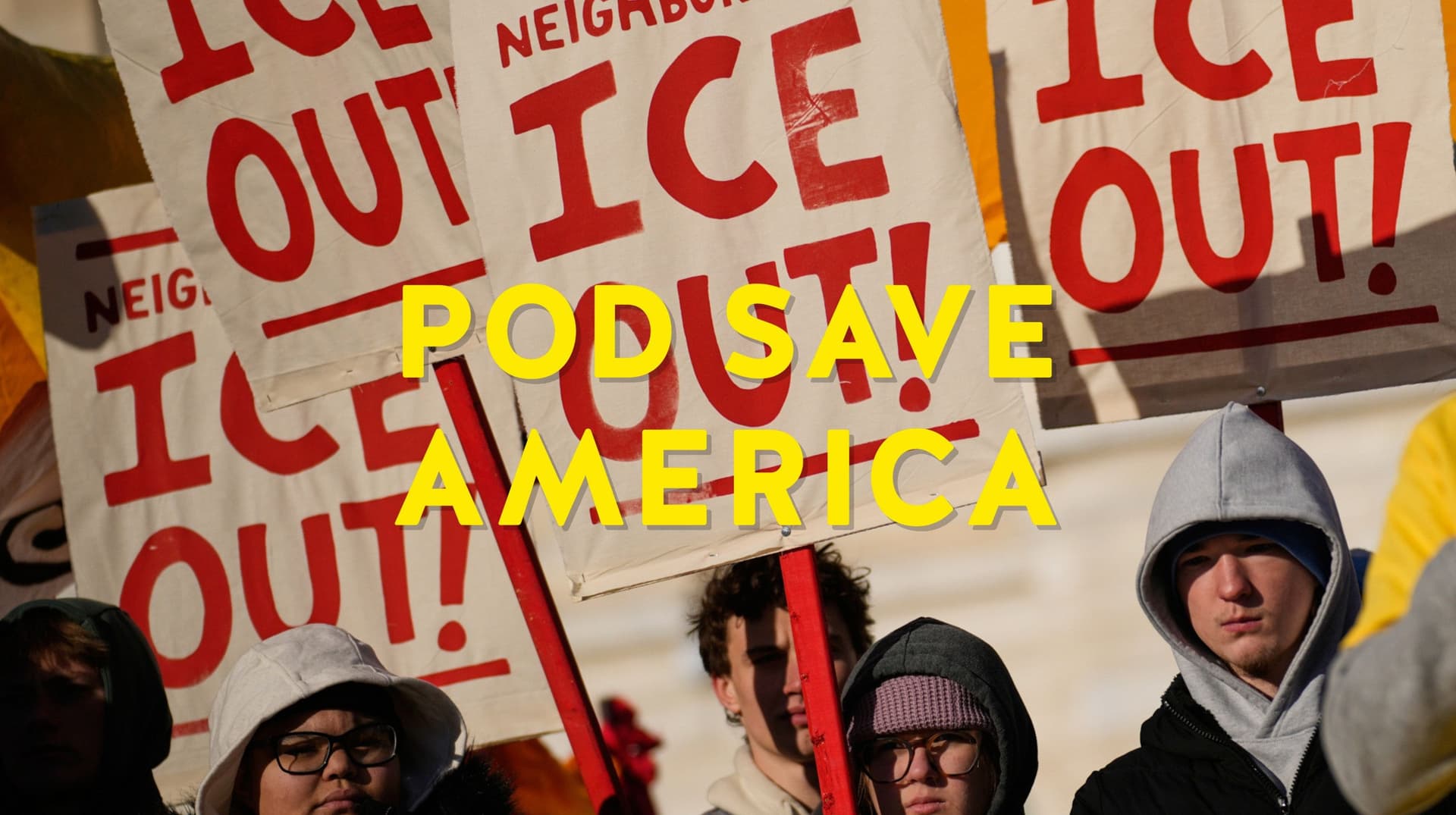
- Community Response: Protests erupted in Minnesota against the actions of ICE, with demonstrators facing violent crackdowns from federal agents.
- Public Sentiment: Polls indicate that a significant majority of Americans viewed the shooting as inappropriate and rejected the labeling of Renee Good as a terrorist.
- Legal Accountability for ICE
- Discussion on the Insurrection Act:
- Alex Wagner and Leah Litman discuss the potential invocation of the Insurrection Act by former President Trump and its legal implications.
- The Insurrection Act allows federal military deployment in situations of civil unrest, which raises concerns about its misuse.
- Federal Versus State Law Enforcement:
- The conversation highlights the challenge of holding federal agents accountable, especially when they claim to be acting within the scope of their duties.
- The difficulty of prosecuting ICE officers under state law due to federal supremacy is emphasized.
- The Role of the Courts and Legislative Action
- Bivens Actions: Leah Litman explains the challenges of suing federal officers for constitutional violations, particularly the limitations imposed by the Supreme Court.
- Call for Legislative Fix: The need for Congress to pass a law similar to Section 1983 (which allows lawsuits against state officials) for federal officers is highlighted. This is referred to as the "Renee Good Civil Rights Act."
- Community Support and Grassroots Actions
- Empowering Local Communities: The need for community solidarity and support, such as neighborhood patrols and mutual aid initiatives, is emphasized as means to counteract the fear and trauma inflicted by ICE.
- Public Shaming and Advocacy: Engaging representatives and using public shaming against ICE agents are discussed as potential strategies for accountability.
Key Takeaways
- The tragic death of Renee Nicole Good has highlighted systemic issues in law enforcement, particularly concerning federal agencies like ICE and their treatment of marginalized communities.
- Legal avenues for accountability are fraught with challenges, necessitating both grassroots advocacy and legislative reform.
- The conversation emphasizes the importance of community action, public awareness, and persistent pressure on government representatives to address these injustices.
Conclusion The episode underscores the intersection of law, politics, and civil rights in the context of immigration enforcement in the U.S. The hosts and their guest emphasize the importance of vigilance, community solidarity, and active engagement in the political process to bring about meaningful change.
Written by AI. May contain mistakes. Listen to the episode to check what was said.
Chapters
Tap a time to open that second in VOContext of the Incident
2:16 to 3:04
Exploring the public and governmental reactions to Renee Good's death.
“attorney's office in the state, including the acting U.S.”
Escalation of Tensions in Minnesota
3:04 to 4:04
Discussion on protests against ICE actions and federal responses in Minnesota.
“In one case, a protester was shot in the leg.”
Legal Responses to Federal Actions
4:04 to 4:56
Leah Littman discusses potential legal avenues to challenge ICE's actions.
“who is host of Strict Scrutiny, a professor of law at the University of Michigan Law School, and author of the book Lawless.”
Understanding the Insurrection Act
4:56 to 6:20
An in-depth explanation of the Insurrection Act and its implications.
“breakdown on what it actually means to invoke the Insurrection Act and what powers that actually confers.”
Potential Lawsuits and Standing
6:20 to 8:31
Exploring who has the legal standing to challenge the Insurrection Act's invocation.
“Like, is that, is Congress anywhere involved in any of this?”
Historical Context of the Insurrection Act
8:31 to 10:04
Reviewing the historical application of the Insurrection Act in the U.S.
“Who would have standing to sort of sue to stop the president from invoking the Insurrection Act?”
Public Accountability and Community Support
10:04 to 11:30
Discussing how communities can hold ICE accountable and support vulnerable individuals.
“I mean, the last time I believe an American president invoked the Insurrection Act was George H.W.”
Concerns About ICE Tactics
11:30 to 14:02
Addressing reports of ICE using banned tactics and their implications.
“earlier this week who said, if you see ICE agents, hit record, which is something people are doing and props to them because that's not without some potential peril.”
Community Support Against ICE
14:02 to 18:26
Learn about community strategies to support vulnerable individuals against ICE.
“And then beyond that, this isn't really holding people accountable.”
Conditions in ICE Detention Centers
21:16 to 24:57
Understand the alarming conditions reported in ICE detention facilities.
“and use the code CROOKED to get 10 % off.”
Show all 27 chapters
Legal Accountability for ICE Actions
24:57 to 28:00
Examine the challenges and legal recourse regarding ICE's actions and oversight.
“And, you know, if and when they get a majority, you know, they attempt to provide some oversight and then also some accountability, you know, and actually allowing potential litigation against ICE officers to go forward.”
The Dehumanization of Victims
28:00 to 29:00
Discussing the troubling actions of authorities towards victims and their families.
“I mean, I cannot imagine being a person who was willing to move forward with an investigation into the widow of the shooting victim rather than the person that shot her.”
The Horrors of the Trump Administration
29:00 to 31:30
Examining the grotesque policies of the Trump administration and their implications.
“That was one of the more horrifying, I think, things that has come out about this administration and an administration that finds new horrors every hour of every day.”
Impact of Prosecutor Resignations
31:30 to 34:29
Analyzing the potential ramifications of the resignation of federal prosecutors on the case.
“And so it's quite possible that any attempt they might make at actually doing a prosecution or securing an indictment wouldn't fly because it stumbles on their inability to dot their I's, cross their T's and read.”
FBI Investigation Dynamics
38:51 to 41:39
Exploring the unusual dynamics of the FBI investigation and its implications.
“You know, independent of who they're interviewing and who they're harassing, whether it's Renee Good's widow or her child or any of the other people who are family members of the victim here.”
Challenges of High-Profile Investigations
41:39 to 42:06
Discussing the complexities and potential delays in high-profile investigations.
“I mean, with high-profile cases like this, what kind of month turnaround are we looking at?”
Challenges in Seeking Justice for Victims
42:06 to 43:59
Explore the obstacles faced by families seeking justice from federal agencies like ICE.
“So it's a little bit hard to know exactly what it might take.”
Bivens and Federal Accountability
44:06 to 46:15
Understand the implications of the Bivens case on holding federal officers accountable.
“Well, back in the good old days, you know, the Supreme Court stepped into the breach in a case Bivens versus six unnamed agents of the FBI.”
The Supreme Court's Evolving Role
46:19 to 51:11
Analyze the changing role of the Supreme Court in protecting constitutional rights.
“And then, honestly, kind of like the lead up to the Supreme Court overruling Roe versus Wade, people failed to appreciate the direction that the court was headed in, right?”
Legal Battles Over Trans Rights
53:41 to 56:10
Discuss ongoing litigation regarding trans athletes and their rights in sports.
“I just want to get your thoughts since I have you here as our legal eagle on some really high profile cases that are making their way through the courts.”
War on Trans Rights and Migrants
56:10 to 56:40
Discussion on the targeting of marginalized groups and the implications for society.
“That's those are this is sort of a parallel situation.”
Administration's Aggressive Tactics
56:40 to 57:10
Exploration of the administration's brutal tactics against marginalized communities.
Dehumanization and State Violence
57:10 to 58:05
Analysis of how dehumanization leads to state-sanctioned violence and its effects.
“I mean, that actually really worries me that they see what they can do in a place like Minneapolis.”
Polarization and Law Enforcement
58:05 to 58:50
Examination of the polarization in society regarding law enforcement actions.
“the full force of the federal government, right?”
Future Accountability and Legal Consequences
58:50 to 1:00:05
Discussion on accountability for the administration's actions and potential legal ramifications.
“a video and you didn't tell them, right, who the officer was and who the target was, everybody would say, we don't do that here.”
Public Response and Citizen Engagement
1:00:05 to 1:01:55
Insight into how public engagement can influence political accountability and change.
“But there is going to come a time for accountability and there is going to be come a time for the legal and judicial system to hold you responsible for for the crimes that have been committed in the country's name.”
Legal Understanding and Future Actions
1:01:55 to 1:02:56
The importance of understanding legal frameworks and advocating for reform.
“are not normally out there with camera phones following a line of ICE officers as they inflict terror upon communities.”
Transcript
Automatic transcript. May contain errors.0:00Pod Save America is brought to you by SimpliSafe Home Security, which, unlike our politics, is built to see trouble coming and shut it down. SimpliSafe is proactive home security. Their active guard outdoor monitoring uses smart cameras and real agents watching outside your home. So when something looks off, they can step in, talk through the camera, sound alarms, call for help before anyone gets inside. SimpliSafe stops crimes before they start. And it's not just the front porch. You get protection inside and out of your house. Outdoor monitoring plus 24-7 indoor sensors and monitoring for your whole home.
0:28As you guys know, John Lovett had a SimpliSafe system. He set it up himself. He had said it was easy to set up. It was top of the line technology. that gave him peace of mind when he was away. It was reliable, it was easy to turn it on and off using just the app. There was no long-term contracts. The response from the service was really fast when you needed it. So excellent system, highly recommended. SimpliSafe has been protecting over 5 million Americans for more than 20 years, and US News and World Report has named them the best home security system five years running. No long-term contracts, no hidden fees, just really good protection.
0:59Get 50 % off any new system at simplisafe.com. That's simplisafe.com. slash crooked. There's no safe like simply safe.
1:28Welcome to Pod Save America. I'm Alex Wagner. As most of the country now knows, Last week, an ICE officer shot and killed Renee Nicole Good, prize-winning poet, hobby guitarist, wife, and mother of three. Fallout has been massive. People across the country are stunned by what happened in Minneapolis and what continues to unfold in the state. They have been perhaps equally shocked by the reaction from the White House. DHS Secretary Kristi Noem declared that Good was a domestic terrorist. Vice President J.D. Vance said ICE agents should have absolute immunity. And the Justice Department is now pushing to investigate Good's widow, Rebecca Good, instead of the ICE officer who killed Renee Nicole Good, a decision that's resulted in the resignation of six career prosecutors from the U.S.
2:16attorney's office in the state, including the acting U.S. attorney from Minnesota himself, Joseph Thompson, who, by the way, was a Trump appointee. The problem with the administration's attempt to offer its own politically convenient reality here is that Renee Good's killing was caught on video. It has now been seen by millions of people, and their verdict seems pretty clear. Most Americans reject the idea that Good was a domestic terrorist. A CNN poll found that registered voters called the incident inappropriate by a two-to-one margin, 56 % to just 26%. Meanwhile, people in Minnesota have taken to the streets to protest what is literally a 3 ,000-agent ICE invasion into their state.
3:01That response has only escalated tensions. Federal agents have been filming protesters and pulling them from their cars and slamming them to the ground. In one case, a protester was shot in the leg. It is pretty clear that ICE, with the support of this White House, is using extraordinary and extreme force here, all while allegedly pursuing criminals and the, quote, worst of the worst. But if protesters are getting arrested and shot and killed, what tools are left to stop a masked and seemingly lawless federal force? Are there legal avenues available to anyone to push back against ICE? How do you stop mercenaries if the guy they're working for is the president of the United States?
3:47And what happens when that guy threatens to invoke the Insurrection Act? And when and how will Renee Good's family ever get justice? Joining me today to help answer those questions and so many more is Crooked's very own Leah Littman, who is host of Strict Scrutiny, a professor of law at the University of Michigan Law School, and author of the book Lawless. Leah, it is always so great to talk with you, but especially after this week, I have so many legal questions. First of all, how the fuck is this happening in the United States of America? But that's more than just a legal question. That's an everything question.
4:25But let's start first where the place where I think a lot of people found themselves perhaps most alarmed, which is the thing that's I get. Oh, Grant, always worry some when Trump says it, but especially right now. And that was his threat this week on Truth Social to invoke the Insurrection Act if, quote, Minnesota officials don't act to stop the professional agitators. Just as a side note, there are no professional agitators. Can you give us a kind of legal breakdown on what it actually means to invoke the Insurrection Act and what powers that actually confers. Yes. So the significant upshot of the Insurrection Act is it provides an exception to what's known as the Posse Comitatus Act.
5:12That is the law that generally forbids the federal military from engaging in ordinary law enforcement. Basically, it prevents the federal government from deploying troops to arrest people for a violating federal law or, you know, an immigration offense or you name it. So right now, you know, we have already seen the disastrous effects of these surges of deployments of ICE officers, CBP officers, HSI officers. And the concern is, what if you then add on or replace them with the federal military, which isn't, you know, trained to do ordinary law enforcement? They're not necessarily trained in how to de-escalate situations.
5:57And so that is, I think, the practical on the ground effect of invoking the Insurrection Act. It allows the president to use the military in ways that he has thus far not and basically been prohibited from doing. I have to ask, because when he says he's going to invoke it, what does that mean? Like, is that, is Congress anywhere involved in any of this? So the Insurrection Act is an act. It's a law. And as a law, it lays out the circumstances and conditions under which the president can invoke the Insurrection Act. There's really an open question about whether courts can review the president's determination that the prerequisites for invoking the Insurrection Act are indeed satisfied.
6:49There's also the related question of if they can review that determination, will they give the president deference? That is the benefit of the doubt and all of those kind of related questions. And historically, you know, the Insurrection Act is so rarely used. The most significant precedent we have on it actually comes from an opinion of the executive branch, the Department of Justice, you know, back from the civil rights era. And what that memo concluded is the Insurrection Act is really designed to allow the president to deploy the military when state and local officers are affirmatively engaged in or facilitating the private violence that the president is concerned with.
7:37So think about, for example, the segregationists of the Jim Crow era who attempted to block, together with private mobs, students from going to integrated schools. Those are the circumstances in which presidents are historically invoking the Insurrection Act and as a legal matter are thought to have the authority to invoke the Insurrection Act. And there are precisely zero circumstances on the ground that suggest Minnesota is anywhere near approaching that situation. Instead, all of the evidence is state and local law enforcement are trying to de-escalate the situation. Yeah. Right. Allow federal law enforcement to do their job, but also enforce state law in the process.
8:24And there's just no indication that they aren't capable of doing so either. I guess one of the things you mentioned that, you know, it's a law and therefore may be subject to judicial oversight. Who would have standing to sort of sue to stop the president from invoking the Insurrection Act? The state of Minnesota? So I think a bunch of different entities. One would be the state of Minnesota, because we have already seen the injuries to the state from the mass deployment and surge of ICE officers. Businesses in Minnesota have shut down. Hospitals are limited. State public services are feeling the strain.
9:04It is more difficult for the state to enforce state law, given the violations that the federal officers themselves, you know, are engaged in. So it's clear that this surge and deployment, you know, injures the state. So the state is one possible entity. It is also possible, you know, that individual citizens or religious organizations or other groups that are being harmed by, you know, the targeting of different communities and the obstruction of public services in the state could also sue. So those are two different categories. We sit here, we're recording on Friday, the 16th of January, and Minneapolis and St.
9:43Paul Public Schools are offering virtual learning, I think until mid-February, because there's so many children and parents who are terrified of going to school. And one would assume that they would have standing to say, hey, this, you know, whatever, ramping this up, if you do invoke the Insurrection Act, is causing great harm to our children's education. Exactly. And nobody hates a school closure more than the right wing. So that would be an interesting moral conundrum for them. I mean, the last time I believe an American president invoked the Insurrection Act was George H.W. Bush during the L.A.
10:12riots, right? Yes. How did that happen? It was actually at the request of state officials. So he had their consent. So this is an instance where the state is basically saying, we don't have this. Can you help us out? And that is consistent with the tradition that the Insurrection Act reflects, which is not using the federal military to overpower state law enforcement when they can handle it. Oh, imagine that. The invitation of the state back when invites were. When consent mattered. Yeah, exactly. But prior to that, it was kind of I was looking at a timeline. Thank you, USA Today, of when it was most invoked.
10:46And it looked like the 1870s was kind of the high watermark for the invocation of the Insurrection Act. Exactly. What's going on in the 1870s? What's going on? It's literally the aftermath of the Civil War. The Civil War, exactly. And, you know, the continued rebellion of the former Confederate states. So, yes, the Insurrection Act is used at that time. Unbelievable. I mean, as I said, we're recording this. It's important to timestamp the recording because the situation is so kinetic. And new videos emerge, it feels like, every day. I mean, just a few days ago, there's a video of federal agents seen on video dragging a woman from her car, doing a protest and throwing her to the ground.
11:24as they try and clear the streets. And I'm reminded as these videos come across the transom of the words of the governor of Minnesota earlier this week who said, if you see ICE agents, hit record, which is something people are doing and props to them because that's not without some potential peril. But I wonder, you know, if you're a lay person and you're living in one of these neighborhoods or even if you're not, what levers exist for people outside of government to hold ICE accountable beyond their camera phones? I mean, I guess I just want to emphasize the power of the camera phone because in the short term, you know, it is possible that those cameras could provide evidence in state criminal cases, you know, against officers or in civil litigation against them.
12:10But even if that doesn't happen in the short term, I hold out hope that they would be useful in some sort of accounting for what is going on once we make it through this. And whether that is, you know, some equivalent of a truth and reconciliation commission, you know, where we acknowledge, you know, what the Trump administration was doing and the harms, you know, that cause different communities and in the future times when he's exactly power and we kind of wake up from the fever dream. Ooh, Leah, keep talking about that. I'm manifesting. It's one of my New Year's resolutions. Right. So, you know, I don't want people to feel like, oh, I just have my camera, my camera phone.
12:48Like, is it even worth it? You know, I do think that that is important. Like, you should do that. You know, beyond that, I think it's tough. You know, public shaming sometimes works. We've also seen the videos, right, of the Minnesota NICE approach, which is calling ICE officers now fucking Nazis and telling them to get the fuck out of here. You know, I'd have to think that if you go to work every day and people are screaming at you, you stink, get out of here. Maybe that's a deterrent, right, to continuing with that job. Now, of course, they are being way overcompensated and, you know, they're allowing anyone in.
13:30So it's unclear, you know, what effect that will have. But, you know, public shaming, you know, that sometimes works. I think another thing is calling state, local, and federal representatives because they are in a position to potentially bring litigation in the event that Democrats retake Congress to hold hearings, to pass laws that actually would limit the ICE practices that we are seeing. So I think continuing to express to political representatives that this is an issue that matters and that there are things you can do about it, that's important. And then beyond that, this isn't really holding people accountable.
14:05But I do think there are ways that we as a community can support one another and protect the people who are most vulnerable, whether that is neighborhood patrols, whether that is churches delivering food, whether that is agreeing to help someone take their kid to school or run errands for them. There are many different ways that like we can all step in and provide some sort of safety net. Right. It's not just it's not just trying to minimize the power and terror of ICE. It's also trying to strengthen the resolve and resilience of the community itself. Yeah. You mentioned they're not trained. And that, I think, is like something that is quite clearly it's obvious when you look at these videos.
14:44Yes. ProPublica has some essential, really urgent reporting this week about ICE agents using banned chokeholds on American citizens. Yep. And I would assume that, you know, because it is explicitly banned in the DHS policy guidebook or whatever it's officially called, does that then make it easier for those families and those victims to take their case against ICE to court? I know we're going to get into the difficulty of civil suits with federal agents in a second, but just using explicitly banned maneuvers seems like it opens up a portal that maybe doesn't always exist. Yes, that's certainly going to be helpful, persuasive evidence in the event you can actually get a court to hear the merits of your claim.
15:33That is also potentially helpful in defeating a defense of qualified immunity, which, you know, are oftentimes very strong and, you know, whittle out a bunch of meritorious suits. But showing that the officers are in violation of a policy, you know, that they are supposed to follow can be helpful in overcoming that defense. So, yes, it's helpful. It's just not the full solution to all of the obstacles to that kind of litigation. Yeah, I mean, we're going to get to J.D. Vance's assertion that ICE has absolute immunity. But I do, you know, like I do wonder when you see these people being abducted and detained and arrested and violently thrown to the ground in establishments like the one I'm talking about, the chokeholds video that is part of the ProPublica reporting happens in a restaurant supply store.
16:25A lot of this stuff happens right around or actually inside businesses. And I wonder from a legal standpoint whether business owners have more agency in preventing ICE from acting so aggressively or maybe stopping the raid entirely. I mean, how would that – how does – what can happen in that space? Sure. So, you know, a business owner can restrict entry onto their premises. So some businesses post signs. You know, ICE officers aren't allowed in with an administrative warrant rather than a judicial warrant. You know, we have also seen ICE just frankly overpower, you know, individuals and barge in, you know, without warrants and whatnot.
17:01But that's not to say, you know, business owners can't at least, you know, say this is the policy, you know, we're not allowing you in without some sort of judicial warrant. You know, another thing that they can do. And just to stop you for one second, often ICE doesn't have warrants, right? They're just randomly picking out places where it feels like there might be undocumented residents hanging out looking for work or actually working, right? So that's not nothing that business owners can say you can't come in here without a warrant because that slows the process down at the very least, right?
17:30Exactly. And slowing it down is hugely helpful. And then they can also refuse service to ICE officers, right? No cookies for you. You know, that also, you know, is going to minimize traffic in the store. And so that, you know, it's something else that they can do. Well, that's that's meaningful also, because last night there was a report that ICE officers arrested workers at a Mexican restaurant after the ICE officers had just eaten at the Mexican restaurant as kind of like they wanted like, I don't know, tacos and like went in, had the tacos and were like, you know what? Why don't we grab some migrants here as long as we're done with our barbacoa?
18:06Yes. So that too, right, isn't, you know, meaningless, you know, just saying like. To make their lives more unpleasant. Exactly. Exactly. No cookies for you. Slowing it down.
18:25Pod Save America is brought to you by Dose. Can we talk about the most underrated organ in your body, Tommy? Your liver. The liver. That's what we knew it was. Yeah, the liver is. It's doing 500 plus functions every single day, filtering unwanted elements, supporting digestion and helping with energy. But we never think about it until something's wrong. What if we actually supported it before problems started? Dose for your liver is a clinically backed liver health supplement. This isn't just another capsule or powder. Dose is a liquid supplement. It's taken in a daily two-ounce shot and it tastes like fresh squeezed orange juice.
18:57Who doesn't like that? Dose cleanses the liver of unwanted stressors that's slowing your liver down. It promotes daily liver function so your liver can do its job. Zero sugar, zero junk, zero calories. You might be asking, what does the liver even do? It's your body's filter, Tommy. The liver helps with energy production, digestion, fat metabolism, vitamin storage. Helps make all these processes happen every day. And when it's overworked, you feel it. Dose is going to help you reduce sluggishness, get rid of those midday crashes, support your metabolism, even aid your daily digestion. Ready to give your liver the support it deserves?
19:29Head to dosedaily.co slash crooked or enter crooked to get 35 % off your first subscription. Your body does so much for you. Let's do something for it. That's D-O-S-E-D-A-I-L-Y dot C-O slash crooked for 35 % off your first month subscription. This episode of Pots of America is brought to you by Graza. Everyone knows I like to cook. I like to cook with my family. I like to cook with my friends. And lately, what's taken my food to the next level is Graza. Graza is my olive oil of choice. It's delicious. It's easy to use. Extra virgin olive oil at an affordable everyday price. It is always fresh.
20:04They pick, press, and bottle their olives in the same season. You can even see the harvest date on the bottle. Grodd says not one, but two extra virgin olive oils to stock your kitchen. You can choose between the squeeze bottle or the glass bottles. I like the squeeze bottles. There's sizzle. They're everyday cooking oil that's perfect for roasting, sauteing, and anything you want to cook. They also have drizzle, a super punchy, flavorful finishing oil that's great for dipping bread, whipping up a salad, dressing, or even drizzling over ice cream. I've actually been a Grazze user way before they were a sponsor on this show.
20:35I don't know. It's really good. It tastes great. I really like the squeeze bottle. It makes it easy to use. It makes it easy to cook with. It's healthier than a lot of the other oils you might have in the kitchen or butter or anything else. And, you know, new year, new you. Maybe time to prioritize a little healthier eating and picking a great olive oil is one way to do it. When you order it, you will get 10 % off your first order of any olive oil on their site, but I wholeheartedly recommend the Graza Duo. You'll receive two bottles of extra virgin olive oil, sizzle for the cooking, and drizzle for finishing in an extra kick of bold flavor.
21:06So head to graza.co and use the code crooked to get 10 % off and get cooking on your next chef quality meal. That's g-r-a-z-a.co and use the code CROOKED to get 10 % off.
21:21You know, as we talk about sort of what's happening on the streets, there's also the reality of what's unfolding behind closed doors. And I think if you have been disturbed by the treatment of both American citizens and non-citizens alike on the streets of Minneapolis or another major American city, there is reporting out this week about what's going on in ICE detention centers. that is very alarming. 2025 was the deadliest year for ICE in two decades. There were 32 deaths in ICE custody. There have been several just this year alone, and we're on the 16th day of January. What checks are supposed to be in place as far as detention?
22:04And I would assume this is all subject to congressional oversight. Yes. So congressional oversight is supposed to be one check. That's why we've seen representatives show up to ICE detention facilities, right, and demand to inspect them. That's also why this administration is pushing back on that, because they don't actually want any oversight. They don't want it to come out, you know, what is happening in these detention facilities and detention centers. But congressional oversight, congressional hearings, you know, if Congress sees something going on, they can yank back ISIS funding and say, look, okay, we are not going to give you this money unless you offer, you know, following protections for people who you are arresting, detaining, and stopping.
22:46So congressional oversight and Congress actually exercising oversight powers, whether that is limiting funding, conducting hearings, and whatnot, those are all possibilities. But if you're in Congress, can you not go to an ICE detention center in demand to get let in? So that is what the law says. That is part of an appropriations rider. And yet, yet, the The administration has refused entry and indeed is prosecuting, you know, one of the Democratic representatives, LaMonica MacIver, who showed up to an ICE facility and attempted to engage in some oversight. You know, she was initially refused entry.
23:24There was a skirmish involving, you know, Newark Mayor Roz Baraka. She was subsequently let in. And then afterwards, you know, they are charging her with assaulting an ICE agent. Which is like up is down, down is up. We are officially through the looking glass. When you talk about the tactics, I mean, we were talking about Congress's role in all this and the fact that they're not trained. And I just feel like that's another subject for Congress, right? Like if we want ICE agents to receive proper training and I don't know, not use ban chokeholds and like use the most extraordinary and extreme measures to detain people who are largely peaceful.
24:01Like what what does that look like? Like, it does just have to be, you know, House Republicans and Senate Republicans agreeing that this is un-American and this shouldn't happen and doing something legislatively about it? Or what? Well, hopefully, you know, after January 2027, you know, it doesn't look like that. And, you know, a Democratic-controlled House and Democratic-controlled Senate, you know, could pass funding restrictions on ICE, you know, so long as ICE doesn't institute training and certain protections. Now, the president is likely to veto it, but I still think it is important to press the case for, look, we are just trying to ensure that basic principles of due process are being followed and that we are not housing people in these grotesque conditions.
24:45You know, there was a report, a medical examiner concluded that one of the people in ICE detention, he ruled his death a homicide. So, you know, that has to be the sort of thing that politicians, you know, find worth fighting for. And they are willing to continue to appear at these facilities. And, you know, if and when they get a majority, you know, they attempt to provide some oversight and then also some accountability, you know, and actually allowing potential litigation against ICE officers to go forward. And yet we still I mean, the person who was reportedly killed was, I believe, strangled to death, but also had a sort of violent criminal record, which makes it not OK to kill him in jail under federal custody.
Read the full transcript
25:24But it does make it politically more complicated for Democrats to rush to his defense, I think, or anyone to rush to his defense. Not that that is warranted necessarily, but it makes the casualists a little bit more complicated. I mean, big picture here, like as we look at the state of Minnesota, right? I mean, what legal recourse does the state actually have here? And let me just drill down on that a little bit more and say, could in theory, because this is something that's been floated in multiple interviews I've heard with the mayor, Jacob Fry, if not the police chief, can the local police in Minneapolis go after ICE agents?
25:59Yes. Federal officers are not allowed to violate state and local criminal law. Now, prosecuting those officers is difficult because what happens is they argue as a defense that they were merely carrying out their federal duties. And when state law, a state criminal statute, conflicts with a federal statute authorizing an ICE officer to do A, B, or C, the federal law is going to win out. But that just means those cases come down to, was the ICE officer acting within the scope of their powers? Were they doing things that were reasonably necessary to carry out their responsibilities? I think from videos, it is clear they are going way beyond that.
26:46But that's just part of what makes those cases difficult is they are often litigated in terms of was the officer doing something that is reasonably necessary to carry out their duties? And it's not often, you know, that you have, frankly, this brazen or this widespread of federal officers so systematically going beyond the scope of their duties. And so the fact that we haven't seen that many state prosecutions of federal officers, that's just because historically, you know, the federal government doesn't behave like this. Those were the before times. Right. Right. When you didn't have basically Trump's masked thugs out there just ripping people from their cars and places of work and places of worship and hospitals.
27:33OK, let's talk about the aftermath of the shooting. Right. Because an interesting thing happened at the U.S. attorney's office. Six federal prosecutors resigned this week over the Justice Department's handling of Renee Good and her case and specifically the Justice Department's push to investigate Becca Good, who is Renee Good's wife, at the same time refusing to open an investigation into the ICE agent who shot Renee Nicole Good. First of all, your just reaction to that and what legal grounds do they have to just have such an asymmetrical and unusual pursuit in terms of their investigation? That was so galling to read.
28:16I mean, I cannot imagine being a person who was willing to move forward with an investigation into the widow of the shooting victim rather than the person that shot her. This is very much part of their campaign to dehumanize their victims. It doesn't really matter who the victim is. If you get in their way, their view is you've lost all of your rights. You've lost your humanity. And they can just tar and feather you with whatever label strikes them as convenient, and they will lie their way through it and use the full force of the federal government to try to do so. That was one of the more horrifying, I think, things that has come out about this administration and an administration that finds new horrors every hour of every day.
29:13And, you know, for me, during the first Trump administration, the child separation policy was one of the more just horrific, grotesque policies. And I remember thinking at the time, anyone who was involved in that should never again be welcome in polite society. That hasn't panned out. No, Stephen Miller, still there. Certainly hope that this time around, like anyone who thinks it is remotely appropriate to use law enforcement powers against the widow rather than the ICE officer, like they just cannot be eligible for any future position of authority. You know, as far as, you know, the like legal questions of how can they do this, not to take it all back to the Supreme Court, but to take it all back to the Supreme Court, you know, in the court's absolutely horrifying immunity decision in Trump versus the United States, they went out of their way to affirm that investigative and prosecutorial functions were the core exclusive power of the executive branch and president.
30:19and so exclusive to the president, Congress can't pass laws that limit the president's exercise of those functions. And in that very case, there were allegations that the investigations were shams, that the threatened prosecutions were for improper purposes. What did the Supreme Court say? That doesn't matter. That doesn't make them beyond the scope of the president's power. So I guess it's not that surprising after you have the Supreme Court tell Donald Trump, you can use your federal law enforcement power to target anyone you want for any reason that he would go ahead and do that. I mean, just the Roberts court coming back to just make things just a little bit worse every single fucking time.
31:10But six federal prosecutors resigning from the case. These were career prosecutors. One of them was the acting U.S. attorney who was appointed by Trump and is involved in another case that Trump is really obsessed with. But first, just what are the implications of the case moving forward if you lose, like, the six top people in the office who are supposed to be pushing the investigation forward? I mean, hopefully that slows it down. So that's one potential benefit. You know, a second potential benefit is something we've seen play out in his effort to install his former personal lawyer slash insurance lawyer, Lindsay Halligan, you know, into a position of authority, which is if it's only dumb hacks that you can find to do the job, they're not going to do it well.
31:51And so it's quite possible that any attempt they might make at actually doing a prosecution or securing an indictment wouldn't fly because it stumbles on their inability to dot their I's, cross their T's and read. And then, you know, the final kind of thing it might do is it just colors the public atmosphere and potential assessment of a claim of like vindictive prosecution. Right. If like all the career prosecutors resign because they're uncomfortable handling this case, that's pretty good evidence to the judge that this case stinks. Oh, that's really interesting. I mean, also, if the whole point of the investigation is to have sort of the final word on what really went down, this is a great way to engender public confidence in the report.
32:37Psych! No, it's not. It's like the very opposite of that. Nobody is going to take this and say this is a genuinely, like, nonpartisan, independent report that, you know, seeks to find the truth. This is a tool for Trump to, you know, act politically in his own favor. Joseph Thompson, who's the acting U.S. attorney for the state of Minnesota, who just resigned because of the way the DOJ was prosecuting this case, was also the lead prosecutor in the I think it's the Feeding Our Future case where 58 people were convicted in a scheme to steal$300 million from government child nutrition programs. There are still 20 more defendants who are awaiting trial.
33:16Trump is, I actually think, in addition to George Floyd and that unfolding in Minnesota, the involvement potentially of Somali immigrants in all of this, the sort of racial underpinnings that sort of color the dynamic in Minnesota right now. He loves speaking ill of immigrants and brown people, and they're both there in Minnesota. I mean, I think that's this case is in many ways why he's been most recently attracted to the state. And now the guy that pursued the case that was leading the investigation has left. Does that derail that case a little bit? I mean, it's going to slow it down. I mean, not that I'm a fan of fraud.
34:00It's just the way in which there's clear partisanship that's like the judicial system is being employed for partisan political gain. And, you know, entire communities are being painted with a broad brush in really deleterious way, really in a really bad way and in a really divisive and cruel way. That is the not good part of this case. Pursuing justice for fraud is a good thing. But yes, sorry, to my original question, how does that affect the pursuit of this case and the prosecution of this case? So at a minimum, it's going to slow it down, right? Because if you change out all the prosecutors who all of a sudden have to get up to speed on the case, familiarize themselves with it, they are going to have to take time to do that.
34:47But second is what you were just saying is this further politicization of the Department of Justice is going to undermine public confidence in that case, even though there are very serious, real allegations of fraud that deserve to be held accountable. But when you just destroy public confidence in institutions like DOJ, that doesn't go away, even if, you know, the stopped clock occasionally has a meritorious case or two that it pursues.
35:26Pod Save America is brought to you by Armour Colostrum. Feeling sluggish, bloated, not like yourself? Life bombards us with silent threats, processed foods, artificial light, and modern stressors disrupt your gut, drain your energy, and weaken your immune health. Your body isn't broken. It just needs the right inputs. Armor Colostrum is nature's original blueprint for health. Colostrum is packed with over 400 bioactive nutrients that fortify gut health, fuel fitness recovery, and strength immune health, supporting your best performance every day. Take back control of your health. Probiotics are touted as a gut health solution, but they only address one part of the four-part gut wall.
36:02Armour Colostrum naturally fortifies your entire gut wall system, nourishing your microbiome and strengthening the gut wall architecture, helping to guard against everyday threats. Colostrum is packed with over 400 bioactive nutrients that work at the cellular level to ignite inside-out transformation for whole-body benefits, including hair, skin, gut, and more. Armour Colostrum is your secret to feeling strong, vibrant, and confident again. Not seeing results with your current routine? The bioactive nutrients in Armour Colostrum work like a blueprint for your body, promoting your cell's natural renewal processes to support skin, hair, gut health, metabolism, immune health, lean muscle, and whole body vitality.
36:40Research has even shown it can help enhance nutrient absorption, promote lean muscle building, and improve endurance while fueling cellular repair, regeneration for faster recovery. We've worked out a special offer for our audience. Receive 30 % off your first subscription order. Go to armra.com slash crooked and enter crooked to get 30 % off your first subscription order. That's A-R-M-R-A dot com slash crooked. Pod Save America is brought to you by Z-Biotics Pre-Alcohol. This year, I'm focusing on a small shift that makes a huge difference. Effortless presence. It sounds counterintuitive, but for me, that means planning ahead so I can truly live in the moment.
37:17Okay. Especially when enjoying a few drinks. Yeah, that's my problem when I'm enjoying a few drinks. I'm not living in the moment. I'm not effortlessly present. I'm just thinking about something else. Listen, I don't know what this copy says, but if you have a drink of alcohol without taking a Z-Biotics first, you're crazy. Yeah, and if you've been listening to us go on and on about this, you know, we get a lot of questions from people. Maybe one of the most common is, I know you guys do the Z-Biotics. Is that real? Yes, it's real. Yes, it works. I have so many of them in my house. I've come over to John's house and I've forgotten to take one.
37:44I'm like, hey man, can I buy my Z-Biotics off you? And he's like, of course you can. He opens a drawer and there's hundreds of them sitting there. Yeah, and the worst part of Z-Biotics is my memory for not remembering a Z-Biotic. So I've taken care of that. I have a couple in my bag. I have one at work. Because sometimes you drink at work with the noose the way it is. Yeah, we got them spread out all over our friend's house. Everyone's got them. It's great. Z-Biotics pre-alcohol probiotic drink is the world's first genetically engineered probiotic. It was invented by PhD scientists to tackle rough mornings after drinking.
38:13Here's how it works. When you drink, alcohol gets converted into a toxic byproduct in the gut. It's a buildup of this byproduct, not dehydration, that's to blame for rough days after drinking. Pre-alcohol produces an enzyme to break this byproduct down. Just remember to make pre-alcohol your first drink of the night. Drink responsibly, and you will feel your best tomorrow. Ready to try it? Go to zbiotics.com slash crooked now. You'll get 15 % off your first order when you use Crooked at checkout. Plus, it's backed by 100 % money-back guarantee, so there's no risk. Subscriptions are also available for maximum consistency.
38:41Remember to head to zbiotics.com and use the code CROOKED at checkout for 15 % off.
38:51Then there's the case itself. You know, independent of who they're interviewing and who they're harassing, whether it's Renee Good's widow or her child or any of the other people who are family members of the victim here. There's the fact that the FBI shutting out Minnesota police and their investigative agencies. The FBI taking over the entire investigation, how unusual is that from a legal perspective? It's very unusual, at least in cases like this, where there's just no reason to suspect that, you know, the state law enforcement apparatus is compromised, right, or somehow engaged in the commission of the crime.
39:32You know, it's state and local law enforcement that have primary responsibility for investigating crimes. You know, the vast majority of people who are detained and have criminal convictions have them by virtue of state and local law and state and local prosecutors. So these are individuals who have more experience and more familiarity with the locale, you know, the people who are potential witnesses, the communities. And so it is not common to just entirely exclude, right, this very helpful, you know, array of experts who have expertise and perspectives that you lack. And, you know, the lack of cooperation between state and federal law enforcement, you know, was also one of the signal flaws that led to the creation of the Department of Homeland Security.
40:18The idea was, you know, they would ensure there would be continued cooperation and communication between state and federal authorities. But obviously, that proved inconvenient at this moment. And so they just dispose of, you know, that project. That's so insane. I, of course, like all my 9-11 happened 120 years ago. Yeah, of course, DHS was created to solve that problem. And it's just been recreated single-handedly by the Trump administration. But I mean, when you screw over the people that need to be helping you and the people whose files and evidence you need, that's probably going to hamstring the FBI's investigation, no?
40:54I would think so. But again, they're not engaged in a serious investigation. You know, they are just engaged in an effort to try to find some way to smear Renee Good and to come up with heavily doctored footage, you know, that suggests the ICE officer, you know, wasn't at fault. And so they probably don't really care. I mean, they definitely don't care about actually uncovering what happened, because if they did, they wouldn't have released real time statements that already stated their predetermined conclusions. They wouldn't have excluded these law enforcement officials, you know, from participating in the investigation.
41:33So all of their behavior to date just suggests they don't really care. What's the timeline, do you think, for this investigation? I mean, I can't remember. I mean, with high-profile cases like this, what kind of month turnaround are we looking at? I really don't know. I'm not sure that there is any sort of standard across high-profile cases. It probably depends on whether they feel like they have spoken to everyone on scene, whether they have collected all available video. So it's a little bit hard to know exactly what it might take. I mean, part of it is also going to depend on some of these high profile cases often involve hate crime charges.
42:17And those often take longer because they require uncovering additional evidence of motive. And so could it be, again, that they are looking for some evidence related to that? I don't know. That could prolong an investigation. So it's a little difficult to say, like, we should expect it to be wrapped up within this window or that. Something tells me it's not going to be done on an expeditious timeline. I mean, there's one thing that I find very hard to swallow and that it is sounds like, you know, first of all, the trauma itself was so profound, right? Renee Goode is shot through a windshield and killed in front of her family.
42:56and then her family, her widow, is now the focus of a federal investigation, which is also known as a federal smear campaign, right? And the government has so much power in this scenario. And yet Renee Goode, the family of Renee Goode, has so few, has very little recourse to seek justice from the federal government and from ICE. First of all, why is that? Yeah. So as we were kind of previewing earlier, there are a bunch of obstacles that, again, getting back to the Supreme Court, the Supreme Court has created to actually sue federal officers for violating your rights. Now, Congress, you know, in the aftermath of the Civil War, passed this law called Section 1983.
43:45It's a general civil rights statute. And that's the law that allows you to sue state and local officers who violate your constitutional rights. That's what's called a cause of action. Like it is the legal authorization to bring suit. Congress has not passed a similar law that allows you to sue federal officers for violating your constitutional rights. So what happened then? Well, back in the good old days, you know, the Supreme Court stepped into the breach in a case Bivens versus six unnamed agents of the FBI. The Supreme Court said when your rights are violated by a federal officer and you don't have another remedy, then you can sue those officers for damages.
44:32You know, the Bivens case was, you know, some law enforcement officers who break into a guy's house, you know, ransack it, force him to stand naked, and then they don't try him for anything. And oftentimes when the government violates the Fourth Amendment, they do so in the course of obtaining evidence that they use at your trial. So what's your remedy then? It is asking the court to exclude that evidence. That remedy isn't available if you're not charged with a crime. And so in Bivens, the Supreme Court said for people like Bivens, it's damages or nothing. And in that circumstance, we recognize that courts have the authority to afford traditional forms of relief like damages.
45:11So that used to be the case. This court hates Bivens. They have basically limited it. And precedent. I'm just right. And precedent. The law, the rule of law, accountability for government officers. The list goes on. Democracy, multiracial democracy. How long do we have? And they've said, you know, unless you are suing a federal officer for a constitutional violation that basically is on all fours and exactly like one of the three prior cases where we have recognized a Bivens cause of action, you're out of luck. And so because we are seeing this unprecedented surge in immigration enforcement, engaging in unprecedented constitutional violations, there aren't prior Bivens cases that say you can sue an officer under these circumstances, even though, like Bivens, for Renee Nicole Good and her family, it is Bivens or nothing.
46:08Why did Congress not pass a law that matched a law that was passed in the Reconstruction era? So I think there are several different explanations. One is, so long as the Supreme Court was like filling in the gap, it was just a less pressing need because there weren't this slew of cases, constitutional violation after constitutional violation, where the court was saying you have no remedy. You can't sue the officer. So I think that's part of it. And then, honestly, kind of like the lead up to the Supreme Court overruling Roe versus Wade, people failed to appreciate the direction that the court was headed in, right?
46:46Like, they didn't see where the court was going when they actually had the opportunity to do something, you know, when they had the supermajority in the Senate, you know, and could have passed, you know, federal protections for abortion rights, federal protections for individuals whose constitutional rights are violated by federal officers. So that's the kind of, you know, hindsight's 2020 sad aspect of the story. The positive spin I am choosing to put on it is as follows. This is one of those rare circumstances where Congress can easily fix something the Supreme Court has fucked up. All they need to do is just pass a law, amend 1983, and say, applies to federal officers too.
47:26And that fixes the problem. Right. That was actually the op-ed by two law professors this week who suggested that Congress should pass something called the Renee Goods Civil Rights Act, basically to account for the gaping hole that exists in our judicial system, which makes it very impossible, I should say, in this day and age to sue federal officers for wrongdoing. I mean, so that would just be an act of Congress. So simple, so easy, Leah. Yeah, I'll just snap my fingers. Or maybe if everyone in the world claps their hands at the same time, a Congress will appear. Oh, my Lord. Okay. I mean, that then gets me to a sort of a big question here, because you've said to a number of answers, you have invoked the highest court in the land, the Supreme Court.
48:09And I think the lowest court in my estimation. But seriously, girl preach. For a long time, it's felt like the courts have been the bulwark against the Trump administration, right, especially in the immediate aftermath of Inauguration Day, right? They're preventing executive overreach, the hollowing out of federal agencies. But that, I think, thinking that the courts are always there as a failsafe doesn't really hold up. I mean, New York Times report recently found that that Trump's the appellate judges that he has picked have ruled in his favor 112 times compared to the 13 times they have ruled against him.
48:48So give me your sort of like big picture analysis on how the courts are functioning here in terms of where they've slowed or blocked his agenda and where they've ultimately given him a hall pass. I think the federal trial courts have done a really admirable job in generally trying to hold the president and the administration accountable to the law. And I think it's no accident that that is why we have also seen the Supreme Court steadily narrowing the power of district courts, you know, to issue nationwide injunctions or to issue other forms of relief, you know, that would be effective against this administration.
49:25I also think it's no accident that we are seeing this administration put forward even more extreme nominees than they did during the first administration. You know, the ones who are voting for them, you know, 90 plus percent of cases. You know, who are some of the people they have appointed to the federal courts in the second term? Emile Beauvais, you know, the guy who literally came up with the strategy of trying to evade court orders and allegedly reportedly said, we'll just say fuck you to the courts. That guy. Cool, cool, cool. No, that guy. Now on the Court of Appeals. Exactly. Lifetime tenure.
49:56The guy who also attended a Trump rally after he became a federal judge. You know, there are also people that they have put up for the federal district courts who have described themselves as zealots on the issue of fetal personhood, the idea that the Constitution requires abortion to be illegal nationwide. So they are slowly transforming the federal courts, particularly the lower federal courts that have proven effective at checking this administration. So you're right, we can't count on the federal courts to always be there. We have to take a belt and suspenders approach to thinking about our rights.
50:33As we were talking about, Congress should have codified protections for Roe, not just relied on the idea that the Supreme Court was always going to stick to precedent. And we also need to think about what these institutions should look like in the post-Trump world. Because, you know, again, thinking proactively, we should think about how can we safeguard our institutions and like harden our democracy so that we don't slip back into this when we finally pull ourselves out. In the after times when he's no longer president and there's a truth and reconciliation committee and we begin to rebuild our democracy.
51:10You'll hear a little bit more from Leah in one quick sec, but first, on the latest episode of my show, Runaway Country, I interview Michael Moore, the former chief of police for the LA Police Department, because he offers some very interesting, and I'm going to say controversial perspective on how law enforcement is looking at the events of last week and understanding what exactly happened to Renee Nicole Good. And then the Bulwark's Tim Miller joins me to question the parallel realities Americans appear to be living in, despite ample video footage and even in cases of life or death. We take visits from Earth 1 to Earth 2.
51:47Tune in to Runaway Country wherever you get your podcasts or check it out on YouTube.
52:01Pod Save America is brought to you by Sundays. New year, new you should always include eating better, right? Well, if you're upgrading and optimizing what goes in your body, then why are our dogs still stuck with the same old kibble routine? Give them real food made from 100 % meat and superfoods. Give them sundaes for dogs. Sundaes was founded by a veterinarian and mom, Dr. Tori Waxman, who got tired of seeing so-called premium dog food full of fillers and synthetics. So she designed sundaes, air-dried real food made in a human-grade kitchen using the same ingredients and care you'd use to cook for yourself and your family.
52:33Every bite of sundaes is clean and made from 100 % meat and superfoods with no kibble. That means no weird ingredients you can't pronounce and no fillers. Compared to kibble or other brands out there, Sundays invest 50 times more in its ingredients to ensure premium quality because your dog deserves food made with care, not in the interest of cost cutting. And the best part, just scoop and serve. No freezer, no thawing or prep, no mess, just nutrient rich, clean food that fuels their happiest, healthiest days so you get more of them to share together. Look, we all love our dogs like they are family, sometimes more than family.
53:05Why wouldn't you give them the same quality of food that you give yourself or you give your kids or you give your family? Try Sundays. Leo loves Sundays. Sundays is great. It's delicious. Luca tries to steal Leo's Sundays every time she comes over. Make the switch to Sundays. Go right now to sundays4dogs.com slash crooked30 and get 30 % off your first three orders. Or you can use the code crooked30 at checkout. That's 30 % off your first three orders at sundaysfordogs.com slash crooked30 sundaysfordogs.com slash crooked30 or use the code crooked30 at checkup.
53:41I just want to get your thoughts since I have you here as our legal eagle on some really high profile cases that are making their way through the courts. On Tuesday, SCOTUS weighed in for the first time on trans athletes participating in women's sports. And for years, most of those decisions have been left to state and local organizations, right? But the Trump administration is pushing to make the ban a federal issue. And some sources say that justices appear inclined to uphold it. I can't imagine. The Roberts Court? I know. What's your feeling on how that's going to shake out? I think the best case scenario is the justices say the state bans on trans girls and trans women participating in sports don't violate Title IX, the federal law that prohibits sex discrimination in educational institutions and services.
54:32That's the absolute best case. From there, it only gets worse. It's possible they will also say these bans don't violate the Constitution's equal protection clause. That would be worse because it would foreclose another potential claim that could be used to challenge these bans. The lower court in this case suggested they needed more evidence in order to weigh that claim. And so the idea that the Supreme Court will just go ahead and resolve it after the lower court said we need more evidence, right, should be some indication of how aggressive, right, they are inclined to be with respect to trans rights.
55:11And then still worse is the possibility, oh, yeah, that they're not going to do it in this case, but there's a possibility that some justice floats the possibility that Title IX itself forbids the participation of trans girls and trans women in women's sports. And so then it's not just, you know, that you can't challenge states where, you know, states have laws that ban trans girls and trans women. It's also that states won't be allowed to include trans girls and trans women. So that's the range of possibilities. Rooting for the first one real hard. Wow. It feels like the federal government has real leverage over states where this is being fought out.
55:59And the education department is also fighting Maine, California, Minnesota over efforts to cut off federal funding because those states allow trans girls to compete on girls sports teams. Right. That's those are this is sort of a parallel situation. It is multi-front litigation. You know, they are also targeting hospitals, you know, that provide gender-affirming care and research universities. You know, they are targeting schools, you know, that, again, you know, provide inclusive policies, you know, for trans students and trans athletes. So they are engaged in this all-out war on the existence of, you know, trans people and their ability to basically participate in society.
56:40I mean, I feel like the connective tissue between what's happening with that group of people and what's happening with migrants and brown people in the country is just a sort of brutalization and a diminution of their humanity. And I worry that the impunity with which this administration is going after people they deem not worthy of belonging in this country, that that is going to give them license to, I don't know, legally be as aggressive as they possibly can be and shoot for the moon in terms of punishing or otherwise dehumanizing people that don't fit within their political agenda. I mean, that actually really worries me that they see what they can do in a place like Minneapolis.
57:21And they're like, oh, yeah, you think we can get trans girls out of sports? Yeah, we're going to do that plus plus. Exactly. I mean, I think people have noticed this in the case of Renee Nicole Good, right? Like, it didn't really matter who she was. She's a white woman. She is now the enemy, you know, and they are just willing to lump in anyone who, again, they like harbor animus toward or who criticizes them or tries to stand in their way, like they will dehumanize all of those people and just like attempt to normalize the state violence, you know, against them. Well, and they're betting that the fact that Renee Nicolgood was a lesbian gives them a pass to torture her family in the wake of her death and smear her name and her story nationally with the full force of the federal government, right?
58:10And nothing's going to stop them in the same way that if you're an observer standing there with your camera phone, and we've seen videos of this this week, they can push you down to the ground regardless of whether you're, you know, following the law and an American citizen and have every right to be doing what you're doing. There's just a sense of lawlessness that is held on the part of the law itself. It is terrifying, Leah. I mean, it's absolutely terrifying. And the idea that there is no longer a consensus in this country that federal agents shouldn't be going door to door, car to car, hauling people out, throwing them on the ground and assaulting them.
58:48I mean, I would have thought, you know, before January of 2025, if you just showed anyone a video and you didn't tell them, right, who the officer was and who the target was, everybody would say, we don't do that here. That's not OK. And now they have polarized this, where, again, they are asking for permission from their ideological allies to engage in this kind of violence against anyone and everyone. And it is clear there is just no low they won't stoop to in order to, you know, traffic in some ostensible justification, you know, for what they're doing. Let me ask you one more question just as I think about this, because you're conjuring the specter of a future where there is no Trump administration.
59:37And I want to live in that future for just a moment. But if you're Kristi Noem or Stephen Miller, who's sort of one of the architects of all of this, and it's like one could say knowingly and willfully recruiting people who are either unqualified or uninterested in following the rules and violating the rights of American citizens. Like, are you hoping that Trump is preemptively pardoning you before you before he leaves office? And what is your expectation? Because so much of this feels like, OK, for now, you guys can do this because the circumstances are in your favor. Right. But there is going to come a time for accountability and there is going to be come a time for the legal and judicial system to hold you responsible for for the crimes that have been committed in the country's name.
1:00:26So like, what's your expectation as far as Trump's exit? And like, with this stuff in his rearview mirror, what's legally possible for him to do? I mean, I would assume everyone in the administration gets a preemptive pardon. What do you what do you would imagine that scenario is like? It's possible that that's what they are hoping for and that that's what they will get. But honestly, I also think they are telling themselves two things. One is that Democrats just don't have the spine. They don't have the backbone. They would never, right, actually hold anyone meaningfully legally accountable. I mean, you had to drag Merrick Garland's DOJ, right, for years in order to get them, you know, to potentially investigate Donald Trump's role in January 6th.
1:01:09And so I think they can look at past practice and be like, OK, like we're dealing with these spineless people. You know, they're not actually going to do anything. So that's probably part of it. And then I think another more terrifying lens is they don't really imagine or see a world where Republicans are no longer in power. They are acting like they will have a stranglehold on power for the foreseeable future. And so they're just not bothering to worry themselves with the possibility of a regime that isn't controlled, you know, by someone like Stephen Miller or J.D. Vance or, you know, whatever creepy weirdo, you know, is milling about with them.
1:01:51Well, I'm here to say that what we have seen and part of the reason you see some semblance of a spinal cord in Congress is because the people, the citizens of this country, are out there on the streets, people who are not normally out there with camera phones following a line of ICE officers as they inflict terror upon communities. They are enraged. They are engaged. I sound like I'm running for office. But they're there. You know, people have their eyes open to this stuff. And if the Trump administration thinks that the citizenry will go quietly into this good night, I think they got something else coming for them.
1:02:29Yeah. From your lips. Oh, my God. Leah, it is such a joy. I mean, it's not a joy to talk about this stuff, but it is so helpful and it's great to see you. But it's also so important to get a real sort of legal understanding of what's possible and what isn't possible, the challenges and also the opportunities that exist for all of us as we witness and bear witness to this insane chapter of American history. So thank you, my friend, for your time and your brilliance. And everybody should listen to strict scrutiny because it's the best. Well, thank you. Happy to come back anytime. And, you know, if you are looking for something to call your representative about, call them about a Bivens fix.
1:03:11Call them about abolishing qualified immunity for ICE. You know, you name it. There are specific asks you can make, you know, in order to build a movement around and to organize people around. Just we're going to put that at the bottom of the screen. Just call your representative and ask for a Bivens fix. 1-800. No, I don't know. It's not a 1-800. It should be just to get to the switchboard. But you have to look up your representative's phone number. But do it because it's worth it. Because fuck. These are the times to make big calls. Leah, thank you. Thank you. That is our show for today. Thank you, Leah Littman, for joining me.
1:03:43John, John, and Tommy will be back in your feeds on Tuesday. If you want to listen to Pod Save America ad-free and get access to exclusive podcasts, go to crooked.com slash friends to subscribe on Supercast, Substack, YouTube, or Apple Podcasts. Also, please consider leaving us a review. That helps boost this episode and everything we do here at Crooked. Pod Save America is a Krugged Media production. Our producers are David Toledo, Emma Illich Frank, and Saul Rubin. Our associate producer is Farrah Safari. Austin Fisher is our senior producer. Reed Cherlin is our executive editor. Adrian Hill is our head of news and politics.
1:04:17The show is mixed and edited by Andrew Chadwick. Jordan Cantor is our sound engineer, with audio support from Kyle Seglin and Charlotte Landis. Matt DeGroat is our head of production. Naomi Sengel is our executive assistant. Thanks to our digital team, Elijah Cohn, Haley Jones, Ben Hefcoat, Mia Kelman, Carol Pellaviv, David Tolles, and Ryan Young. Our production staff is proudly unionized with the Writers Guild of America East.
1:04:50If you guys like Pod Save America, please consider subscribing to our Friends of the Pod program. So Friends of the Pod get lots of stuff. You get more Pod Save America. That includes our new show, which is called Pod Save America Only Friends. It's where Dan gets naked. Where Dan gets full frontal nudity, but mostly it's a bi-weekly subscription-exclusive podcast that is basically Pod Save America, but behind a paywall. So it's a little bit looser and more fun. And it's Lovett and Favreau and me and Pfeiffer and then other Crooked hosts. We go deeper on the news and cover more stories. You also get OpenTabs, which is a weekly behind-the-scenes newsletter from the show.
1:05:22Plus, you get ad-free episodes of your favorite Crooked podcast and all kinds of other stuff. Dan will come to your house and clean it once every quarter. Yeah, clothes. Dan is very busy, clothes only. But along with just getting great content, becoming a friend of the pod, joining our subscription community is the number one thing you can do to help us grow, to help independent progressive media. So if you ever thought about doing it, if you ever wanted more Pod Save America, consider going to crooket.com slash friends and becoming a friend of the pod.
From the publisher
How can we hold ICE legally accountable? Can federal agents be prosecuted? Will Renee Good's family ever see justice? Strict Scrutiny's Leah Litman stops by the pod to talk to Alex Wagner about the legal avenues available to rein in ICE. The two break down ICE's recent actions in Minneapolis, Trump's threat to invoke the Insurrection Act, and the Justice Department's push to investigate Renee Good's widow.
For a closed-captioned version of this episode, click here. For a transcript of this episode, please email transcripts@crooked.com and include the name of the podcast.