In short
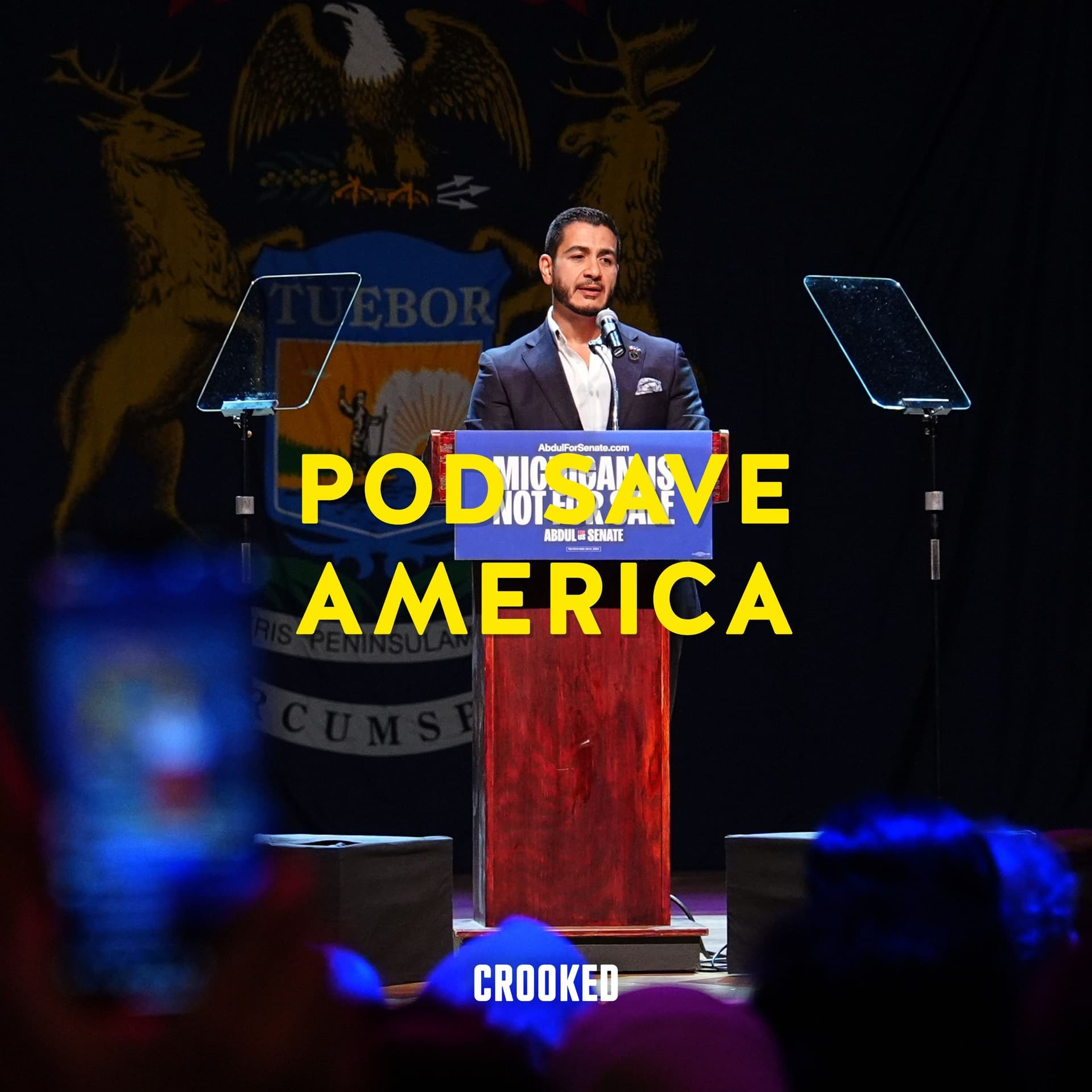
Pod Save America bonus episode analyzing Abdul El-Sayed’s Michigan Democratic Senate primary win and previewing the general-election fight against Republican Mike Rogers, including discussion of polling, coalition math, and expected attack ads.
Guests
No separate guests; hosts Jon Favreau and Dan Pfeiffer interview each other and include an upcoming Bernie Sanders interview segment (not included in this transcript).
Guest/figure backgrounds
Abdul El-Sayed is a progressive Muslim candidate who ran an anti-establishment campaign in Michigan, outspending opponents heavily despite being outspent 11-to-1 by outside groups. Haley Stevens is the defeated Democratic nominee. Mike Rogers is a long-time Michigan Republican congressman/Trump-skeptical figure who will be the general-election opponent.
Key claims
Michigan polling was unreliable due to electorate composition uncertainty. AIPAC spending (about $32M) likely hurt Stevens by making her the “establishment/money” candidate. Abdul’s coalition overperformed with young and college-educated voters and in Dearborn, but underperformed with working-class and black voters, posing a general-election challenge.
Notable examples
Dearborn voting “80-20” for Abdul; Stevens winning Hillary Scholten’s Western Michigan district while losing Rashida Tlaib’s district; attacks tying Rogers to Blue Cross Blue Shield rate hikes, opioid legislation, and Trump “boot-licking.”
Written by AI. May contain mistakes. Listen to the episode to check what was said.
Chapters
Tap a time to open that second in VOAbdul El-Sayed's Victory Analysis
3:16 to 7:40
Examining the unexpected results of the Michigan Senate race and polling dynamics.
“Abdul El-Sayed is now the Democratic nominee for the U.S.”
Impact of AIPAC on the Race
7:41 to 11:30
Discussing the influence of AIPAC spending on Haley Stevens's campaign.
“And Haley Stevens maximized the rest of it, and you ended up with a very, very close race.”
Voter Perspectives and Future Implications
11:31 to 14:00
Insights from Michigan Democrats about candidate perceptions and future trends.
“AIPAC establishment candidate might have fared better than Stevens did in a one-on-one race with Abdul.”
Impact of APAC on Candidacies
14:00 to 15:08
Discussion on how APAC's influence shapes candidate fundraising and strategies.
“So it definitely impacted her candidacy.”
Reflections on the Primary Results
17:27 to 19:44
Analysis of Abdul El-Sayed's primary victory and its implications for party unity.
“Any other thoughts on the primary race and results before we turn to the general?”
Navigating the General Election Landscape
19:44 to 23:23
Discussion on the challenges Abdul faces in the general election against Mike Rogers.
“Earlier, we heard a preview of Abdul's general election message against Mike Rogers.”
Character and Strategy in Political Campaigns
23:23 to 28:05
Exploration of how candidates' characters and perceptions affect electoral success.
“and Donald Trump being seen as less extreme than Kamala Harris was a real warning sign that he was going to win that race.”
Linking Mike Rogers to Trump
28:05 to 29:10
Discussion on Mike Rogers' quotes and their implications for Trump support in Michigan.
“He's made everything more expensive while he got rich.”
Linking Mike Rogers to Trump
30:31 to 31:48
Discussion on Mike Rogers' quotes and their implications for Trump support in Michigan.
“Doomscrolling, the latest news cycle, keeps your brain buzzing and worse, it raises your core body temperature.”
Abdul's Election Strategy and Challenges
31:49 to 37:54
Analysis of Abdul El-Sayed's coalition and strategies for the general election.
“You might as well wake up ready for them.”
Show all 23 chapters
Cultural and Economic Dynamics in Elections
37:55 to 42:01
Exploration of the cultural and social concerns affecting working-class voter behavior in elections.
“The establishment and center left Democrats are like, well, the left can't do this.”
Understanding Abdul El-Sayed's Strategy
42:01 to 45:24
Explore Abdul El-Sayed's approach to appealing to voters in Michigan, particularly regarding Israel and affordability issues.
“And the reason I want to bring Israel up here, because some people will argue that he needs to moderate on Israel and aids Israel in particular to win.”
Analyzing Recent Primaries and Implications
45:25 to 48:40
Discussion on the outcomes of various primary races in Michigan and their significance for the Democratic party.
“the lefty candidate, Will Lawrence, who's the Sunrise Movement co-founder, beat two more moderate Democrats who split the vote.”
Lessons from the Michigan Primaries
48:41 to 51:58
Examining the lessons learned from the Michigan primaries and the challenges faced by the Democratic Party.
“For the second hand, we're like, hey, DSCC, stop endorsing in these primaries.”
Interview with Senator Bernie Sanders
51:59 to 56:00
Senator Bernie Sanders discusses Abdul El-Sayed's victory and its implications for the future of the Democratic Party.
“Different profile, but we're also in a different world now where almost everyone is going to face a primary.”
Analyzing Abdul El-Sayed's Victory
56:00 to 56:41
Discussion on the significance of Abdul's win and voter demographics.
“and there was no spending difference, How many points would he have won?”
Progressive Wins and Voter Engagement
56:41 to 59:24
Exploration of progressive candidates' success and voter turnout strategies.
“He didn't do as well in sort of the working class city and blue collar suburbs.”
Endorsements and Candidate Evaluation
59:24 to 1:02:12
Bernie discusses criteria for endorsing progressive candidates.
“Do you have tax breaks to billionaires and cut back on health care and education, etc., etc.”
Defining Progressive Politics
1:02:12 to 1:04:59
Bernie addresses the differences between his views and other progressive candidates.
“So those are some of the things that we look at.”
Realistic Promises for the Future
1:04:59 to 1:07:48
Discussion on what Democratic candidates can promise voters realistically.
“On the other hand, you never want to promise voters things that you can't actually get done.”
Concerns Over AI and Its Impact
1:07:48 to 1:09:54
Bernie shares his thoughts on the implications of artificial intelligence.
“And we are going to explain to the American people why he vetoed it.”
Navigating Truth in the Age of Deep Fakes
1:10:00 to 1:11:43
Learn about the impact of deep fakes on public perception and democracy.
“kind of deep fake of me on your program saying how much I love Donald Trump and what a great job he is.”
Thank You and Farewell
1:11:43 to 1:11:57
A closing conversation with Senator Sanders and appreciation for his insights.
“thank you as always for joining Pod Save America.”
Transcript
Automatic transcript. May contain errors.0:00Today's presenting sponsor is SimpliSafe Home Security. In politics, as in so many fields, being proactive matters. If you're waiting for your opponent to strike first, you're already on your back foot. The same rule applies in home security. Unlike traditional security systems that only alert you after a break-in is already underway, SimpliSafe is designed to help stop intruders before they get inside. Smart AI-powered outdoor cameras detect suspicious activity at the perimeter of your home and alert live US-based agents to step in. SimpliSafe's agents assess the threat, intervene through the outdoor camera to ward off trespassers, then call for 911 dispatch.
0:33Our CEO, Lucinda, recently had a SimpliSafe installed in her home, and she said it was quick and easy to install. It was up and running in no time. It's been working great for her, and it gives her the peace of mind to know who's dropping by. Or if you want, you can easily chat with visitors through the camera, even when you're away. SimpliSafe has been protecting your world for 20 years. Right now, you can get 50 % off a new SimpliSafe system. Go to simplisafe.com slash crooked. That's simplisafe.com slash crooked for 50 % off. There's no safe like SimpliSafe. At Radiolab, we love nothing more than nerding out about science, neuroscience, chemistry.
1:10Jon Favreau:But we do also like to get into other kinds of stories. Stories about policing or politics, country music, hockey, sex of bugs. Regardless of whether we're looking at science or not science, we bring a rigorous curiosity to get you the answers and hopefully make you see the world anew. Radiolab, adventures on the edge of what we think we know. Wherever you get your podcasts. Hey, it's Tommy from Pod Save America and Pod Save the World. Last year, 2 ,500 people joined us at Crooked Con for conversations with some of the smartest organizers, least annoying politicians, and most interesting voices in politics to talk about how to fix this mess.
1:47Jon Favreau:Even President Obama made a surprise appearance. We're doing it all again, November 5th to 7th in Washington, D.C., with even more podcasts, panels, and workshops. Plus, there'll be drinks, which we'll need after the midterms, no matter which way they go. Get tickets at crookedcon.com. If you're a friend of the pod, you get a discount, too. See you there. kitchen and bathroom professionals know what goes behind the tile matters that's why trade pros trust fiber cement hardy backer board to keep tile firmly in place resist cracking and help block moisture chosen in over 40 million kitchens and bathrooms hardy backer board what the best build on shop now at participating home depot lowe's and floor and decor stores for more information visit jameshardy.com slash hardybacker.
2:55Welcome to Pod Save America. I'm Jon Favreau. I'm Dan Pfeiffer. So we were going to record a reaction to Tuesday's election results last night, but the Michigan Senate race was much closer than all the polling suggested. So here we are today bringing you a bonus pod, complete with an interview with Bernie Sanders, which you'll hear in a bit. But first, the headline. Abdul El-Sayed is now the Democratic nominee for the U.S. Senate race in Michigan. With more than 95 % of the vote in, he defeated Haley Stevens by 1.48.5 % to 47.5 % and will face former Republican Congressman, current Florida homeowner, Mike Rogers.
3:34On one hand, polls had Abdul ahead of Haley by anywhere between 10 to 19 points. And his, his team's confidence heading into Tuesday certainly matched that margin. On the other, we have a very progressive Muslim candidate who took on the entire democratic establishment in D.C. and Michigan was outspent 11 to 1 by$60 million in outside spending, including a$32 million APEC spend that's more than any group has spent in any Democratic primary this cycle. And Abdul still won. Haley Stevens very graciously conceded and Mallory McMorrow, who had also been in the race, actually introduced Abdul at his victory event Wednesday morning, where he previewed his argument against Mike Rogers.
4:23Jon Favreau:Mike Rogers is a guy who will do anything Blue Cross Blue Shield wants him to do, including raise your rates. Mike Rogers is a guy who introduced legislation to increase the flow of opioids. He did that while I was in high school. Mike Rogers is a guy whose politics and vision and perspective are old. Mike Rogers is a guy who has never shied away from a corporation he could do a favor for. Mike Rogers is a guy who, believe it or not, went back to Florida so he could lick every single boot Donald Trump owns to beg for his endorsement. I'm so sorry. If you want a senator who's going to lick some boots, fine, go vote for Mike Rogers.
5:06Jon Favreau:But if you want a senator who's going to stand up to Donald Trump, then you've got your option right here. Michiganders are sick and tired of BS politics coming in to divide us when there's so much more we can unite to actually guarantee if we're willing to come together around it. So if all Mike Rogers got is that his name is Abdul and my name is Mike, you're going to be surprised how many people are going to be like, yeah, but that's the Abdul who wants to bring down the price of my groceries and gas and stop us sending money abroad and make sure that I got healthcare. So yeah, I like that Abdul over your Mike from Florida.
5:40All right, we'll get to that message in a bit, but let's start with the closer than expected results. What do you make of that? And what happened with the polling? What happened with the polling? That's a great question. And a very hard one to answer because we don't have exit polls in this race. So it's hard to measure what the pollsters expected in terms of primary composition to what actually happened. But I will say that Michigan is a very hard state to poll. It always has been. Uh, it doesn't have a in-state pollster that is incredibly well-regarded and it doesn't in the most well-regarded one, the epic poll, which came out a few weeks ago that had Haley Stevens up 10.
6:21So no one seems to know what no one really knew what this electorate was going to look like. Best guess is it people oversampled highly engaged college educated voters who overwhelmingly voted for Abdul, hence the margin undersampled. Taylor's over time. Yeah. We've seen it happen nationally. We now have it happening in Democratic politics. And I was talking about this on Polar Coaster, which is coming out on Thursday, which everyone should check out. But it's actually the opposite polling error that happened in the 2025 gubernatorial races where they undersampled highly engaged voters. Well, I mean, it's, they were being - Oh yeah, that's right.
7:00So it's all very confusing. Let's put all the polling stuff aside because the polling stuff only really matters here in one regard, which is it has everyone and mess with everyone's expectations. If the polls have been tied or had shown Haley Stevens up a few points going into election day and Abdul one by one, this would be the shot heard around the world. It would be, as you point out, this incredible victory of a Muslim man named Abdul El-Sayed beating the entire democratic machine, beating AIPAC, beating Chuck Schumer, beating Gretchen Whitmer and winning. And it would be this incredible victory.
7:34But because our expectation was he was going by a lot and that expectation was magnified by the fact that the first counties that came in showed him dramatically outperforming what people expect his margins to be, the expectations got messed up. And so the reason this race probably ended up playing out the way it was always going to play out, what ended up happening here is that Abdul had the typical coalition of a very progressive candidate in Michigan and nationally, which is a lot of young voters and a lot of college-educated voters and struggled with the rest of the coalition. And Haley Stevens maximized the rest of it, and you ended up with a very, very close race.
8:13Yeah, someone pointed out that Hillary Scholten, who represents a Western Michigan district, was a big Haley Stevens supporter. Abdul won her district. But Haley Stevens won Rashida Tlaib's district. They're like, what's going on there? It's like, well, Hillary Scholten's district is a suburban district, heavily white, college educated and lefty progressive candidates do well with those voters. And Rashida Tlaib's district is much more diverse black voters, especially. And that's how, you know, more moderate Democratic candidates tend to do well in those places. I think in a place like Michigan, yeah, if you have combining college educated white voters, Arab American voters, Muslim voters, which there's obviously a bigger portion in Michigan than any other state and younger voters and all the colleges around Michigan.
9:12That's probably that's the I would guess that's the coalition that Abdul assembled to get him over the top. Yeah, that's right. That's exactly right. And you can't understate the importance of the Muslim population, particularly in Dearborn, which Abdul won essentially 80-20. Yeah. And that makes you so much. And just to your point on college-educated voters voting for Abdul is that Haley Stevens only won her own district by four points. Yeah. I'd love for someone to do some analysis of, because there's no, like you said, there's no exit polls, just some like county-by-county analysis. because Haley Stevens did really well in a lot of rural counties, smaller towns, medium-sized towns, which is not unexpected.
9:54But then like Abdul did well in some northern rural counties and other places. So, you know, we're sort of overgeneralizing just based on certain counties here and there, but I'd love to see a more detailed analysis. Let's just talk about APAC for a second. Do you think in the end, APAC spending was a net positive or negative for Haley Stevens? Because I went into the race when the expectations were that Abdul would win by a lot, saying that it is clearly a negative. Because not only did they not help her win the race, but also they provided maybe the most effective argument for her opponent. Now, you could argue it the other way now that it was only a one-point race, but I don't know.
10:38What do you think? Yeah, it's a somewhat complicated argument because being associated with AIPAC, being the AIPAC candidate, was bad for Haley Stevens. AIPAC has a negative 37 % favorability rating among Democrats in Michigan. It also made her the candidate of big money in politics because the AIPAC ads were so ubiquitous, AIPAC spent north of$30 million in this race. And so in that sense, it definitely hurt her and made her an establishment candidate in an anti-establishment environment. However, Haley Stevens was not a great fundraiser. You know, according to ad impact data, of the$60 million that was spent on her behalf, 97 % of the ads were paid for by someone other than the Haley Stevens campaign.
11:24So absent that financial support, it's hard to see how she is this competitive. Conversely, a candidate who did not have that, I think, net negative imprimatur of being the AIPAC establishment candidate might have fared better than Stevens did in a one-on-one race with Abdul. Yeah, I was trying to like doing a thought experiment because I think other Democrats who were more pro-Israel have to contend with this at some point, which is what if Hayley Stevens had said, no, I don't want, I don't want AIPAC's endorsement. I don't want the outside spending. My views on Israel are what they are. I'm not going to change those views.
12:01But I just don't think this outside money is worth it. We shouldn't have outside money in politics. And I don't want AIPAC's endorsement because I disagree with, you know, the Netanyahu regime, whatever it may be, whatever she could say without completely flip-flopping, which is, you know. Well, I think she could have. I mean, her best move would have been to completely flip-flop or at least have a more nuanced position to put her on aid to Israel with conditions, perhaps, that put her more in the mainstream of the current Democratic Party. but the cost of that would be$30 million of APEC money.
12:29But she also got north of$10 million in spending by another super PAC that was essentially, I think, a vessel for DSCC donors and people and the establishment in the Schumer world who wanted Haley Stevens, similar to the spending that happened on Josh Turk's behalf in Iowa. Yeah, I was thinking about that because I listened to Sarah Longwell's focus group podcast with Jonathan Cohn, who knows Michigan really well, and they talked to Michigan Democrats. And I was surprised by, I mean, first of all, you know, it's always good to listen to voters because the way they viewed this primary was so different than the national discourse and what you see online.
13:11Like a lot of those Democrats, like they liked both Stevens and Abdul. And to the extent that there were negative things said about Haley Stevens, so many of these voters brought up APAC and outside spending and money in politics. And it's just, you know, it really broke through not only her ads that, you know, APAC ran on her behalf, but the idea that she was a candidate that was taking all this outside money. And one of the polls that came out from, I can't remember which one it was, that was not the Emerson poll, but one of the polls in the final stretch did a word cloud. Now, this is obviously overly poor Abdul poll.
13:48So take them with a grain of salt, many grains of salt, but they did a word cloud of things associated with Haley Stevens and APAC is like giant in the middle of that. And money, I think is the other very big word in that word cloud. So it definitely impacted her candidacy. It's just very hard to say how she, could she have raised the money absent all the support from APAC enough to compete with Abdul, who's an excellent grassroots fundraiser? Could she have, was there a way in which Schumer at all could have funneled more money to her through a non-APAC vehicle? Open question. But I think you generally, I cannot see, based on these results, a 2028 candidate soliciting, accepting, or courting APAC to either endorse them or run ads on their behalf.
14:38And if you are a more pro-Israel candidate in 2028 on the scale, on whatever the scale is for 2028 candidates. And APAC starts running the United Democracy Project, whatever it's called, or one of those shadow packs where it's going to be asked, you have to go like to hold a press camera in front of APAC demanding they take it down. That's sort of what I was saying. It'll hurt you. Yeah. Okay. That was my thought too, but wanted to see what you thought.
15:07Jon Favreau:Pod Save America is brought to you by Article. Article makes it effortless to build a home that lasts without the boutique markup. Their curated collections of mid-century coastal and Scandi furniture are designed to mix and match perfectly so you can create a cohesive designer look that will stand the test of time. We got a bunch of great article stuff at this office. It looks good. It all showed up really fast. It was more affordable. We got some really comfy couches and chairs and desks and just like a ton of great stuff that all work together, even though we bought them in many different times.
15:37Jon Favreau:Article offers fast, affordable shipping across the US and Canada with options for professional assembly if you prefer a hands-off experience. Have a question or need help with your design choices, Articles Customer Care Team is available seven days a week, offering knowledgeable support and even free interior design services to help you get your home just right. With Articles 30-day satisfaction guarantee, you can shop with confidence, knowing that if you're not completely in love with your new furniture, you can easily return it. This peace of mind ensures you can invest in your home without hesitation.
16:05Jon Favreau:Articles is offering our listeners$50 off your first purchase of$100 or more. To claim, visit article.com slash crooked and the discount will be automatically applied at checkout. That's article.com slash crooked for$50 off your first purchase of$100 or more. Pod Save America is brought to you by Wild Alaskan Company. The difference between low and high quality seafood is enormous, but it's also one of those things that's tough to accurately assess for yourself in the grocery store. Wild Alaskan Company offers the best way to get wild-caught high quality seafood delivered to your door on your schedule.
16:38Each Wild Alaskan box comes with individually portioned fillets, Vacuum sealed, easy to prep, and great for any meal, no matter how quick or elevated. All fish is quick, frozen, fresh from the Alaskan waters, which helps lock in its freshness, texture, flavor, and key nutrients like omega-3s. It's fish you can trust with no GMOs, antibiotics, or other additives. Every order supports sustainable harvesting practices and Alaskan fishermen whose history is tied to the region and practice. I had some oil back. It's great. I love Wild Alaskan. I really like their tuna. And, you know, it's really, it tastes great.
17:12Wild Alaskan Company is so confident that their fish is the best that they offer 100 % satisfaction and money-back guarantee so you can try your first box risk-free. Go to wildalaskan.com slash crooked for$35 off your first order of premium. Wild caught seafood. That's wildalaskan.com slash crooked for$35 off your first order. Any other thoughts on the primary race and results before we turn to the general? I mean, there's been a lot of, just this morning, you know, Abdul has a lot of work to do and the whole Democratic Party does to sort of bridge the divides from this pretty bruising primary.
17:50I think they were off to a really good start. Haley Stevens graciously conceded, had a nice post. And Mallory McMorrow, she introduced Abdul and Abdul was saying all the right things. So everyone seems to be saying all the right things this morning as of Wednesday morning, which is great. But how big of a challenge do you think it will be for Abdul to unite the rest of the party? It does not appear like it's going to be a challenge to unite the political establishment nationally and in Michigan. Everyone seems to understand the urgency of the task. I've really, you know, I've been pretty critical of how Abdul has talked about his opponents in this race, especially when it appeared, and he certainly believed he was winning.
18:32It was not always the most gracious, but he did the exact right thing here. I think his tone was right both last night when he went out and spoke to voters before we knew the results and then this morning he responded to Haley Stevens' tweet supporting Abdul in a very gracious way. Gretchen Whitmer immediately endorsed Abdul this morning. The Senate Majority Pack, which has been rooting pretty extensively, I imagine, as a Chuck Schumer vehicle for Haley Stevens to win, had a video out this morning supporting Abdul. So I think that part is going exactly as planned. This is a conversation you should put into the general is, can the voters in the coalitions come together?
19:13I think the activists, even the people who have been the biggest people fighting against Abdul on Twitter, national democratic activist types, this morning were like, Abdul's our nominee, go support Abdul. Here's how you give to Abdul. I was an Ali McMorrow supporter throughout this race. I donated to Abdul this morning, Encourage everyone in my newsletter to do it. I think people are doing the right thing here. But can you get the voters who just heard$60 million of arguments against Abdul to come and support him? And that is the challenge in the general election. Okay, so let's get to the general.
19:45Earlier, we heard a preview of Abdul's general election message against Mike Rogers. Here's the first ad from the Republican Senate Committee.
19:53Jon Favreau:Durman Mohammed El-Sayed, the most radical Senate candidate in America. I'm pretty dangerous. dangerous el sayed pledged support for the leader of the muslim brotherhood a designated foreign terrorist group he wants to hike taxes on michigan waitresses delivery drivers and seniors on social security joined a sex offender and a murderer to demand the mass release of dangerous prisoners and when his ally claimed america deserved 9-11 america deserved 9-11 dude el sayed refused to disavow i'm not here to disavow people's views abdul el sayed too radical too dangerous wrong from Michigan. Welcome to the general.
20:26Thoughts on the app? I was kicking the teeth this morning, I'll tell you that. Yeah. I like that they combine. I really like the mix of dangerous, scary, Muslim extremist with and he'll raise taxes. It's not as dumb as it sounds. No, I know. But it's just like it's not as dumb as it sounds. And I will say Democrats do the exact same thing, but it is the consultant pollster ad maker brain, which is like, this is tests unpopular, this tests unpopular, let's jam them together. It doesn't matter if they're jammed together in a compelling way or not. I think this is, we can, I don't know if you want to talk about Abdul's argument about Mike Rogers first and then get to this, but I think this ad is better than a lot of people online think.
21:12And I think the combining of it actually makes sense. Yeah. Why do you think that? because when you say that someone wants to like raise taxes on seniors, that is a very hard thing for anyone to imagine. So you have to prove that they are so radical that they'd be willing to do that. And, and by all the other stuff leads to the idea that he is someone so radical that he would do that. Um, and so I do, I do think they like, this is the argument is he's this incredible radical that he will do these other things that affect you because a person who cares about affordability. If they believe if 2024, for example, if they believe that Abdul, I mean, they're good.
21:48They're going to discount a lot of this stuff because the political, but they think that he's a little too extreme. Maybe he says some things in the past, but they think he's actually going to lower his costs. Donald Trump's election proves people will tolerate a lot for someone who will lower their costs. You have to make them believe that he will not lower your costs. And the way to do that is to make him seem so radical. He's willing to do that. It's not the best version of that, but I understand the argument. I think you got to pick one. I think if you are like if I was going to try to persuade people that he was going to he's too extreme and he's so extreme that he would raise seniors taxes, you would say he wants to spend this.
22:21Here are all his plans. He wants to spend this amount of money. He needs this much taxes. He loves government controlled health. Like I would go like if he's going to be a socialist who's going to raise your taxes, you got to make a left on that, which I'm sure that that'll be coming. And then they'll, of course, have another track that is the scary Muslim extremist. I guess the way I would think about this ad is it is a preview of and a signal to donors of what the larger argument will be. This will all over the campaign manifest itself in some ads that are only about Hassan Piker and things he has said in the past, darkening his skin, using his full name.
23:00And there will be ads about affordability. My argument would just be is those things are more connected than I think a lot of Democrats naturally assume. Our ad making is very siloed, and there is an economic argument, and there's a radical argument. And I think in voters' minds, you are softening the ground for the economic argument by showing someone to be extreme. And the candidate who is viewed as less extreme tends to win elections in these last few elections. and Donald Trump being seen as less extreme than Kamala Harris was a real warning sign that he was going to win that race. Well, so then let's talk about Abdul versus Mike Rogers, because I do not think personally he's going to be able to make voters believe that Mike Rogers is extreme.
23:47but it sounded like from his opening message there and what he's been saying about Mike Rogers, that he is going to try to convince voters that it's not about who's the more extreme candidate, but who's fighting for you and who's corrupt, and that he's going to make Mike Rogers the more corrupt candidate.
24:08Yes, I think his argument there too was also his, let's just unload the full clip and see what sticks because there is a, there's a combination of he's corrupt. There's a combination of he's pro data center. There's a combination that he is a pro corporation. Then there is, he is a bootlicker for Trump. I think all of those individually are good arguments and I think that they can go together. Um, yeah, we can discuss the, um, whether that's the, whether he's doing that the right way or not. But, you know, I think, look, this is a state that is a 50-50 state in 2024. It's a plus six and a half to eight point Democratic state this time around, depending on exactly how the generic ballot looks.
24:58And Donald Trump's approval rating is under 40 in some polls in Michigan. So it's like, sometimes we overcomplicate the fucking simple around here. A vote for Mike Rogers, a vote for Donald Trump and Donald Trump to control the Senate, you know is the and be underneath that is a vote for higher costs for you a vote for more powerful corporations vote for tax cuts for billionaires all of that is part of it but that i don't think convincing people that mike rogers himself is corrupt is going to be the argument this is necessarily going to play i think this is what he's contending with and this is a mike rogers specific problem is mike rogers has been representing michigan for a long time or he's been in Michigan politics for a long time.
Read the full transcript
25:39I think that a lot of voters, to the extent that they know who Mike Rogers is, probably remember him as a more moderate Republican. There's plenty of clips of him speaking out against Donald Trump. And I think Abdul has to make people realize before he just says that Mike Rogers is going to be a vote for Donald Trump, that Mike Rogers has changed. Because otherwise, I don't think you can go right to a Mike Rogers. Like I know everyone wants to do, and we talked about this in the main Senate race too, everyone wants to just do like, nationalize the race, make it about the Senate, make it about control of the Senate.
26:17Yeah, I agree with that to an extent, except when you have candidates like a Susan Collins, like a Mike Rogers, who the voters in that state know and think of as more moderate and more willing to buck Trump than your typical Republican. And I think in those instances, you've got to do some work on their character to like persuade people that something has changed about them, that they have either like they've been there too long. They've become corrupt. They only care about themselves and their money. They're now willing to do whatever Trump says just so they can keep their jobs and keep their money and all that kind of shit.
26:46Like you still have to have Trump be part of it, but you have to do some work on the person's character. This Mike Rogers thing is interesting because I have, as I have been arguing for a long time that this is a very hard race because Mike Rogers is not a MAGA buffoon in the eyes of the voters. Right. A MAGA buffoon like a Dr. Oz or a Herschel Walker or some of these other candidates the Democrats benefit from in 2022. There's also no evidence that he is Susan Collins. He underperformed Trump in 2022. I'm sorry, he underperformed Trump in 2024. And I think that is just, he did not, if he were a candidate who was seen as, you know, more, I think, let me put it this way.
27:30We all know, the people in Mike Rogers' district know Mike Rogers. He was there for 18 years, I think. We know Mike Rogers because we watched CNN in the 2010s and he was always on. And he was a very prominent Trump skeptical voice in the 2016 world. world. I don't know. It's unclear to me how many Michigan voters know that. You absolutely have to do work on his character, for sure, to make people understand why the attacks work. But Susan Collins is a very unique proposition in a way in which Mike Rogers is more like running against a generic Republican. I guess also it's tying Mike Rogers to Donald Trump in the same story, which is if we were to talk about Donald Trump right now, we'd say, you know, in his second term, he's fucking out to lunch, corrupt, only cares about himself.
28:20It's a smashing grab. He's made everything more expensive while he got rich. And, you know, they've in the primary, the Michigan Democratic Party has a website like pricehikemike.com, and they have some great Mike Rogers quotes in there. He talks about coffee prices. He goes, oh, my gosh, coffee went up, you know, horror, like being sarcastic. And on tariffs, he said, well, the shoe's going to pinch every once in a while on gas. He said, we're going to be fine. We got plenty of oil on a$50 annual physical. He said, that's probably okay. Right. And then he said, he said, anyone, if voters who blame Trump for high prices are nuts.
28:52Like those are the kind of, I think those are the kind of quotes that both link what you're talking about, which is like, he's just like Trump, but also the guy's way out of touch and he like moved to Florida and has no idea what people in Michigan are going through. I agree.
29:10Jon Favreau:Pod Save America is brought to you by AG1. Summer means enjoying yourself and taking it easy. Maybe some of your wellness goals took a backseat in the process, but that's okay. Now that you're getting back on track, make AG1 the non-negotiable part of your routine. One scoop, eight ounces of cold water every morning before the chaos starts. AG1 helps to maintain energy and fortify immune health. It's clinically shown to support gut health and fill in common nutrient gaps. AG1 is a daily health drink with a multivitamin, pre - and probiotic superfoods and antioxidants. Even though summer is your license to chill, AG1 helps keep one thing consistent.
29:43Jon Favreau:High quality nutritional support every single day, no matter where you start your morning. The next gen formula delivers 75 plus ingredients clinically shown to improve key nutrient levels within three months. Now I use AG1 every day. Use it today. In fact, I often make a smoothie in the morning and that's my breakfast. But even when I don't, you just mix it in water. Still tastes good. And I don't know, I highly recommend it. I like it. It's a great way to get a bunch of greens in your body early without, you know, having to go to the supermarket every other day to buy spinach or whatever. Visit drinkag1.com slash crooked and get a free AG1 flavor sampler and a free bottle of vitamin D3 plus K2 in your welcome kit with your first AG1 subscription order.
30:24Jon Favreau:That's drinkag1.com slash crooked. Pod Save America is brought to you by Sleep Me. When was the last time you went to bed before midnight without scrolling? Doomscrolling, the latest news cycle, keeps your brain buzzing and worse, it raises your core body temperature. Just one more thing that's bad about it. A body that's too warm can't fall into a deep restorative sleep. You're not just mentally exhausted, your body never actually recovered from the day. The fix is simple. Lower your bed temperature. Enter ChiliPad 2.0, the water-based mattress topper that actively controls your bed temperature from 55 to 115 degrees all night long.
30:57No new mattress, no renovation. It fits over what you already have. ChiliPad 2.0 actively cools or warms your bed using water, and water is key here. ChiliPad uses actively chilled water to cool the bed, actually pulling heat away from your body. It's like the difference between standing in front of a fan and jumping into a cold pool. Love ChiliPad. It really works, and it's so nice to have a bed that is like cool and doesn't heat up in the middle of the night, especially if like, you know, you're fighting with your partner over the temperature in the room and they want it a little warmer. You have the ChiliPad on and you can make your side of the bed pretty cool.
31:33It's fantastic. Visit sleep.me slash crooked to get up to$255 off your ChiliPad 2.0 with code crooked. That's S-L-E-E-P dot M-E slash crooked. Free shipping, free returns, and a 30-night trial so you can test it out, dream big, and wake up better. The headlines will still be there in the morning. You might as well wake up ready for them.
31:56So, anything else that Abdul needs to think about ahead of the general? So much. Go for it. I know you wrote a message box on this. I did. 1 ,700 words on no sleep. Look, Abdul's win is incredibly impressive when you put it in the context of everything he was up against. But when you look at the coalition that he won with, it is a coalition that does not bode great for the general election. He overperformed with youth. He overperformed with college-educated voters. He underperformed in rural areas. He underperformed in most rural areas, not all of them. But he underperformed with working-class voters.
32:27And he really got his clock clean with black voters. and the electorate, you can survive in a primary like that because in Michigan, because it's almost 50-50 college-educated, non-college-educated voters in a typical primary. Like we don't have a lot of data on it, but I went back and looked at the 2020 primary between Biden and Bernie because they had exit polls from that. And it was 53 non-college, 47 college-educated in that primary. And probably in a midterm, it's closer to 50-50 or a majority college-educated. In a general election, if you look at 2024 exit poll data, it's more than 60 % non-college-educated.
33:14It is significantly older. The number of percentage of voters over 65, I think, goes up nine points. And so all the voters that Abdul struggled most with are disproportionately a larger portion of the electorate in 2020, in the general election. And I think we, you know, he, once again, this is another progressive candidate running on a working class agenda who did not win working class voters. And you can't, there's no other way to win Michigan, right? So I think, like, I wrote a bunch of things for Abdul to do. I'll first one was unify and sort of, you know, win with grace. And he has done that thus far.
33:56I think that's going in the right direction. The second thing was he has to really think about how to not just do better with black voters, but to make increased turnout with black voters for him. You know, and you can argue that millions and millions of dollars of ads that mislegantly suggested that Barack Obama had endorsed Haley Stevens, contributed to this, and I'm sure it did. But also, historically, candidates with Abdul's profile of sort of this progressive candidate do poorly with black voters. And so he's got work to do there. I hope he calls Barack Obama today and starts to think about how he could be helpful and other Michigan Democrats and others who can help him in that community.
34:39He can be validators in that community. he's gotta be i think the lesson here is he needs to think really hard about how to make himself more broadly appealing i think his campaign was i found so much of it inspiring and exciting and like from a communications and messaging perspective it was really masterful in a lot of ways but i really there the vibes you got was a really like my way or the highway you're with us or you're against us. And he now has to go out and persuade a lot of people. Some of them who voted for Haley Stevens, some of them who are just middle of the road, independent voters who have not thought about politics once since 2024 to support him.
35:21Many of those people are going to disagree with him on Medicare for all on some of the things he said in the past. They're going to disagree with him on Israel. There's real work to do with Jewish Democrats in Michigan. And you have to. you have to be willing to seem like you are open to listening, opening to understanding, opening to agree to disagree, and open to compromise. And if you look at the way that his primary campaign was entirely centered around, and this was an effective strategy because he won, maximizing his base, rallies with Bernie. Many of the final ads had AOC in them. She's a very, very popular Democrat.
36:00And they worked. But he did very little to try to show himself to be different than the caricature of himself as this sort of prototypical leftist candidate. You didn't see he was either unable to get or did not seek out endorsements that would be counterintuitive. A moderate Democrat who endorsed him. A business leader who would endorse him. A former Republican or something like that. or putting the, like, he talks all the time, and I know this happens, of these triple Trump voters who supported Abdul in this primary because Michigan has an open primary. Why aren't those people in ads? Yeah. Right?
36:35You're going to have to do some things that have a much more broadly appealing, that you have to actively reach out to people to not agree with you. And the last thing is, like, you really have to think hard about, you know, he had a very economically centered message, money in your pockets. what is it that did not work with that with working class and democrats let alone working class independents or working class dissolution trump voters is it that it wasn't specific enough is it that people because of the way the race played out people thought that wasn't his top priority and maybe it was they thought his top priority was money in the politics or aid to israel i think this this whole conversation about working class voters um in the democratic primary has sort of like gotten out of hand because like we did this with the Plattner thing in Maine as well.
37:26Like just a few, like Democrats have been doing poorly with working class voters for a long time, as you know. And that is true of moderate Democratic candidates. It's true of liberal Democratic candidates. It's true of progressive Democratic candidates. Like we have been losing working class voters to the Republicans under Donald Trump, especially that he has accelerated it. and it used to be just white voters. And now under Trump, it was Latino voters and some black men as well, right? So it is a party-wide problem. The left says, if you just like, you know, press the economically populist button hard enough that suddenly you're going to win over the working class voters, that has not, there's not a lot of evidence that that is true.
38:09The establishment and center left Democrats are like, well, the left can't do this. And they're not, they say that they're economically populist, but they can't get the working class voters. But it's like, you know what? the establishment candidates aren't really doing that much. There's not a lot of evidence that establishment candidates are doing that much better with the working class voters that you would actually need to win in a close state. Yes, in a primary, Haley Stevens coalition is going to look more working class than Abdul's. But like in the in a general election, it's not like there is any Democrat you can point to in the last 15 fucking years who's really made inroads to the to the working class in a way that that would that would solve this problem, which leads me to believe, which is one thing you could take from this is it is not just about talking up affordability or the right affordability message or the right economic message.
38:56Like there are cultural social concerns that the working class has have, which is why they have moved away from the Democratic Party that I think we all have to contend with here, because it's like, why is Jared Golden winning them in Maine, too? And is like as moderate as they come on a host of issues, but is not some like economically populist hero. I mean, we don't have to get into the golden egg because I agree with your point here. I think if you were trying to win this race and you just lost working class voters in a Democratic primary and the core of your message was pro-working class, it's worth taking a step back and trying to figure out what you need to do to at least perform better than Kamala Harris did with those voters in Michigan so you can win.
39:46Yeah. I guess one way to think about it is we went through this in 08, right? Like we were in a primary with Hillary that lasted 45 years. And every single state, she won working class voters and we did not. And the reason - She won working class white voters. That's one giant difference here is the reason why Obama wins and Bernie and Bill Bradley and all these other progressive candidates lose It's because Obama could win college educated voters and black voters at high numbers. Right. The rest of these voters are not doing that. But what we heard incessantly is Barack Obama has been talking about the working class.
40:23His policies are geared for the working class, but it's just not working. It's just not working. Why isn't it working? And then, you know, he was he still maintained that message through the general and one. Meanwhile, Hillary Clinton was like the hero of working class voters in 2008. And then she runs for president again in 2016 and gets her clock cleaned with working class voters. Well, like these things are always suffer from small sample sizes. But the example for Abdul is Obama, which is we worked really hard to get those voters. And we did it in a lot of ways that were counter to what a typically a typical progressive Democrat would do based on the playbook.
41:04we spent a lot of time talking about the deficit and making sure people's taxpayer money was spent and we're going to have the guy from dave he was going to go through the budget line by line with their you know obama was very spent a lot of time reaching out to voters who disagreed with him on abortion this is what i'm getting at that's what i was getting at yes and i think there's a way in which israel plays into this which i'll get to in a sec and there look you cannot be just I do not want to overlook the fact that both in Obama's case and Abdul's case, race plays a role here. Of course. Right?
41:39The fact that he is, that Obama was a black man and Abdul is a Muslim American certainly plays a role. And that then puts a higher burden on you in the general election because life is not fucking fair to do some things that show, because of the ad we just saw, that show that you can relate to these voters culturally, that you're different than the caricature And you're going to have to find some ways that are, to use the favorite term of some of our moderate friends, that is heterodox or counterintuitive. And the reason I want to bring Israel up here, because some people will argue that he needs to moderate on Israel and aids Israel in particular to win.
42:21And he has done this. And if you actually really listen to what Abdul says, and when he gets asked questions, he is very good at talking about, about reaching out to Jewish Americans who disagree with him, right? But he has work to do there, obviously, and all the money spent against him does not, is why he has a little bit of this deficit. And some of his supporters, his most prominent supporters, are why he has a bit of this deficit. But independent voters in Michigan and nationally agree with Abdul on aid to Israel. Independents are basically very similar to Democrats on this issue. The issue, though, is once you move to the general election and once you move downscale economically, the salience of the issue goes down.
42:59And so I can imagine that if you're a working class voter and you have just paid attention to this race and you hear what Abdul's talking about, you hear what's great, not just what he says, because you're not listening to his full speech, but what's breaking through in media coverage or social media conversation, even in some mail pieces, is AIPAC and Israel. and that these voters who agree with Abdul but affordability is a much higher topic for them can believe that in his mind, priority-wise, that aid to Israel on that basket of issues is higher on his list in affordability. And that hurts you with voters.
43:34And it's one of the reasons Democrats have suffered with these voters. We saw this in the deciding to win report that Simon Bazelon did last year or whenever that was, because time has no meaning. and what voters think Democrats top priorities are is often not the economy, even when it actually is. I think there's a pretty easy way to square this circle and I could see him moving towards this, a dual moving towards this day, which is just people are tired of their money going overseas to be spent on stupid wars. Like Israel's part of this, but like we're at war with Iran right now that is a fucking disaster that Donald Trump is responsible for and Mike Rogers is supporting And Mike Rogers just told Semiford the other day, oh, when I go around, no one talks about Iran and the war, blah, blah, blah.
44:17But by linking affordability concerns to meanwhile, you've got Republicans. And if you put Mike Rogers in the Senate, they're just going to keep sending all your money overseas to fight stupid wars until like, you know, when it should be here in Michigan helping you afford things like I think that's a good message. Yeah, first, that was one I meant to bring that brother is that that pivot was notable in his remarks. and it's going to be interesting when you get asked how he feels about aid to Ukraine in this situation. Yeah. Yeah, that is true. Well, we're not providing much anymore. So there's...
44:51That's right. Fortunately there. But yeah, no, that is... Well, and he's also been, because I saw him on MS now and someone was like, well, you talk about Israel all the time. Well, do you not like Egypt or other ethno-nationalist governments? He's like, no, no, I don't. I would not give aid to them either. Yeah, he basically said he would give aid... Yeah, he doesn't believe in unconditional aid to any country. Right. Which is a very good and wise, and I imagine quite popular position. Yes, right. Okay, we should just talk about Michigan Senate was not the only notable primary last night. Before we go, in Michigan's 7th House District, which is a top target for Dems to flip, the lefty candidate, Will Lawrence, who's the Sunrise Movement co-founder, beat two more moderate Democrats who split the vote.
45:34In Michigan's 13th House District, DSA candidate Donovan McKinney has defeated incumbent Democrat Sheree Thanedar by three points. In Kansas, the more progressive state Senator Cindy Holscher beat Democratic Governor Laura Kelly's pick to succeed her, State Senator Ethan Corson. But over in Missouri, incumbent House Democrat Wesley Bell crushed Cori Bush, who was trying to win her old seat back by 59 to 37. We got a moderate Senate Democratic candidate in Kansas, Adam Hamilton, whose primary victory there moves the race from solid R to likely R. And elsewhere in Washington, and yeah, I know it's something, and elsewhere in Washington and Virginia, incumbent, moderate, established Democrats all won their races, despite some of them facing challenges from the left.
46:15Anything else I missed and any takes on the rest of the primaries from last night? No, I mean, this continues a trend we've seen with a handful of exceptions here and there of progressive anti-establishment candidates winning in races. It's, you can overstate these things. Lawrence won a three-way race. So it would be interesting to see what would happen if he had had a one-on-one with either of the two moderates. Maybe he still would have won then, too. But the anti-Lawrence vote was much larger than Lawrence vote. And the Sri Thonadar race, he is a particularly unpopular Democrat, but still impressive because incumbents don't get knocked off that much.
46:54Then you have the Wesley Bell-Cory Bush one, which is a huge example of this. He was supported heavily by AIPAC. Wesley Bell was. APEC supported his victory against Cori Bush last time. There's a lot of baggage from why Cori Bush lost the first time, scandal stuff there that affected it. And I think Bell, apparently, I guess, in the eyes of his constituents, has been an effective legislator in this time. But if you want to, like, what happened last night is, I think, consistent with the theme we've seen all primary season, which is in races with the right candidates in the right situations, progressive anti-establishment candidates have the advantage in the primary against the more traditional candidates you would expect to win.
47:41I do think your point about Michigan 7th, where if there had only been one candidate facing William Lawrence instead of two, he very well could have lost. And I think for, you know, moderate Democrats who are worried about this or worried about, you know, this sort of this progressive wave, like, if you don't want a DSA candidate to win, like, figure out one candidate to take on that person. I mean, this is this is really hard because I look at that and I'm like, well, most people could be wrong. But the general this is Michigan State is the district that Trump won by one point. It's Alyssa Slotkin's old district.
48:20Democrats should win at this time around. Most of the people whose job it is to try to win the House believe pretty strongly that either Bridget Brink or Matt Mazden would be favorites in that race. It is a toss-up at best with Lawrence. Whether that's correct or fair, I don't know. But so in one sense, you're like, well, why can't these people in Washington figure this shit out and get one person on the race? For the second hand, we're like, hey, DSCC, stop endorsing in these primaries. Why are you endorsing Haley Stevens and Janet Mills and all these other people and just let the voters decide?
48:51But I think there are some lessons here. Not the people in Washington, but if the folks who really are focused on electing more moderates or more electable or more heterodox Democrats or whatever else you want do have to get their shit together. And I think what happened in Michigan 7 and what happened in Michigan Senate, where there was a strong argument that Abdul was less electable than Haley Stevens, that's sort of a moot point right now, but is that there aren't a lot of people in the Democratic Party with the authority and the experience and the trust to tell Democratic primary voters how to think or even to tell candidates which one of them should get out.
49:33and you end up in situations like these where the candidate who in a normal election year might not have won will win this year because the establishment doesn't have the credibility to tell voters. If they can say who's more electable, the voters aren't going to believe them. Look, this is a conversation we'll be having for like the next year, two years. So we don't have to do it all now. But yeah, I think it's less, like I think the ability of some democratic establishment to like move pieces on a chessboard to get the right people that they want in races is like not the best strategy. But I do think it argues for compelling candidates who break out from the crowd, who are also not like, like they don't have to be DSA candidates, but they can at least have, like there's plenty of, I think mainstream Democrats in tough races who I would say the left is probably fine with.
50:23John Ossoff is an example, right? Like John Ossoff has taken some votes that are, you know, pretty moderate votes or things that left lefties might be upset about. But like people are generally fine with him because he is a compelling candidate. And now we're looking, you know, you look in Wisconsin right now, what's going on, right? Like in the governor's race. And they had a lieutenant governor who had to drop out because of scandal. Mandela Barnes also drops out partially because of scandal, partly because he didn't break through. We got David Crowley, who you're going to be talking to on Thursday's show, who last minute got Evers endorsement.
50:56Now they're trying. It's just like you got to have, you've got to run candidates who can really break through and at least say, have a message and have an agenda that people who would normally vote for some of these DSA progressive candidates would still find appealing. The model here in the example is Josh Turek, who was a more moderate candidate, believed to be more electable, was supported by Schumer World and did benefit from $10 million in super PAC spending for that, but was able to, in all the other, you know, Schumer's endorsed in three races. His candidate has lost or dropped out in two of the three.
51:35Turek's the exception. Turek is a very compelling candidate who, even though he had establishment support, does not read like an establishment candidate. And now obviously he has a very unique bio, very unique profile, but the way for moderates to win is to find candidates who do not appear to be just like establishment toadies, right? Ruben Gallego in Arizona in 2024. This is another example of that, right? Alyssa Flocken, honestly. Yeah, yeah, yeah. Different profile, but we're also in a different world now where almost everyone is going to face a primary. And if you think there are a lot of primaries in 2026, wait until 2028.
52:16Fun stuff. Okay, when we come back, I talk to Senator Bernie Sanders.
52:50Jon Favreau:Transcription by CastingWords it. This is my attempt to take the Manifesto back from mass shooters and nihilists and return it to its rightful place with the warriors, the visionaries, the regular folks with just the right amount of crazy. I compare notes with radicals, secessionists, internet trolls out for a laugh, and punk singers screaming their guts out, all trying to turn their anger into the world they want to see. Listen to Manifesto wherever you get your podcasts. Audible subscribers can binge all episodes of Manifesto early and ad-free right now. Join Audible in the Audible app or by subscribing on Apple Podcasts.
53:26Jon Favreau:Hey, it's Tommy from Pod Save America and Pod Save the World. Last year, 2 ,500 people joined us at Crooked Con for conversations with some of the smartest organizers, least annoying politicians, and most interesting voices in politics to talk about how to fix this mess. Even President Obama made a surprise appearance. We're doing it all again November 5th to 7th in Washington, D.C., with even more podcasts, panels, and workshops. Plus, there'll be drinks, which we'll need after the midterms, no matter which way they go. Get tickets at CrookedCon.com. If you're a friend of the pod, you get a discount, too.
53:56Jon Favreau:See you there.
54:01Senator Sanders, welcome back to Pod Save America. Great to be with you. I saw that you described Abdul's primary win as the most extraordinary victory you can think of in modern American politics. What makes you think that? I'll tell you why. And you tell me what you think. Here is a guy who took on the entire Democratic establishment in Michigan, okay? Took on the entire National Democratic establishment, okay? And then took on$70 million of Super PAC and outside funding, about$30 million of it coming from AIPAC. Now, help me out here. You know something about these things. Yeah. Have you ever heard of a candidate in a major race getting outspent nine to one, taken on the entire establishment and winning?
54:55No, not in a primary like that. Now he's got to win the general, though. Then it would really be extraordinary. All right. But all that I'm saying, you ask me, I cannot recall somebody having done that. So it was an extraordinary victory. And in addition, in Michigan last night, we won two congressional races. As you know, Donovan McKinney beat an incumbent in Detroit, will be the next congressman. Will Lawrence won in Lansing, a strong victory. I think he stands a good chance to win in November as well. Yeah, it ended up being a really close race. Abdul won by about a point. What does the close finish tell you about where Democratic voters are right now, especially, you know, the 720 ,000 or so who voted for Haley Stevens?
55:40Well, John, it certainly was a close race. I was up to three o 'clock or four o 'clock in the morning. So if I fall asleep, don't take it personally.
55:50But you have to understand that$70 million was spent against this guy. So I want to rephrase the question and say if it was a fair fight financially and there was no spending difference, How many points would he have won? By 10, 20 points? Maybe. I don't know. But all in all, I think it was an extraordinary victory. I think the message right now, and I think Haley Stevens was very gracious in a concession speech, and she was exactly right. We understand that we have the most dangerous president in the modern history, not modern, in the history of the United States. And we have got to elect Democrats, Democratic control of the Senate and the House.
56:30And we've all got to work together to make that happen. And I think I would suspect that the overwhelming majority of the people who voted for Heli Stevens understand that. So looking at the map, Abdul dominated in college towns, highly educated areas. He didn't do as well in sort of the working class city and blue collar suburbs. And this has been a pattern with more progressive candidates and Democratic primaries with, I think, your presidential races being the notable exception that I can think of. Why do you think more economically populous candidates aren't doing as well with working class voters than more moderate establishment candidates?
57:10Well, I think, and again, let's remember that what last night was a pattern is consistent with what we have seen all over this country, by the way, in the last year from Mamdani's victory in New York City to Melotz Kiros' victory in Colorado and a lot in between. I mean, progressives are winning, John, and winning for a lot of reasons. We're often winning, as was the case last night, with a huge turnout. I think, correct me if I'm wrong, that was a record-breaking turnout in Michigan Democratic running? Yes, yeah, it was. That didn't happen by accident. It happened because, among other things, Abdul was able to bring out a lot of young people who previously did not get involved in the political process.
57:58And a lot of people have kind of given up on politics. But I have absolute confidence that Abdul's message of economic justice, of demanding the billionaires pay their fair share of taxes. And I'll tell you something else. This guy's a doctor. And I desperately need him in the U.S. Senate to help me and others move toward a Medicare for all single payer program. I think it's going to resonate all over Michigan, whether you're Democrat, Republican or independent. it. Do you think it's harder to reach working class voters with that message? Do you think that they just they, you know, people are busy and they're not paying as close attention to politics?
58:38Like, what do you what do you how do you think about that? And you got, you know, you got the internet phenomenon and algorithms where people see what they want to see and what they have seen yesterday. So it's hard to break through that. But what has excited me about Abdul's campaign, and again, Manani did it in New York, others have done it, is he put thousands and thousands of people out on the street. And one of the differences, John, between our campaigns and establishment Democratic campaigns, they always have more money than we do. They hire great consultants. They do good 30-second ads.
59:14We put people out on the street knocking on doors. And I think in Abdul's case in Michigan, we're going to have to have thousands and thousands of people knocking on doors, explaining to Republicans, do you really think it's a good idea? Do you have tax breaks to billionaires and cut back on health care and education, etc., etc. So it's an enormous amount of work to be done. It's going to be done in a grassroots way. I think we win. So as you look to the fall, what is, you know, Abdul's probably going to face even more money than he did in the primary. It's obviously a tougher electorate. What's one thing he has to do and his campaign has to do that they haven't done yet?
59:54I think we still have more work to be done within the African-American community, maybe the women's community. But there are great leaders in the state of Michigan and all over this country who I think and help us make that happen. So you've endorsed a lot of progressive candidates like Abdul the Cycle. You mentioned a few others who won last night. There are also a lot of progressive candidates, DSA candidates running who you haven't endorsed. How do you decide which progressive candidates get your endorsement and which don't? Well, you know, we're not, you know, some kind of huge machine here.
1:00:35So we have to be kind of have to pick and choose. one of the things that people don't know is that we have also endorsed dozens and dozens and dozens of what we call down-ballot candidates, people who are running for school boards, city councils, state legislature, mayor, and small towns. And that, in a sense, becomes, if you like, the farm club, the future leaders of America, some great people in legislature right now that we've helped get elected. And we have trained, by the way. We have programs that say, hey, you want to run for office? This is how you send out a press release. This is how you do social media, et cetera, et cetera.
1:01:12But we have, you know, limited resources. So what we do is, hey, what do you stand for? What do you stand for? If you are a moderate liberal type Democrat, that's great. There are other people who will support you. That's not us. Do you support Medicare for all? Which is more or less for us, I think, if you would ask me if there's one litmus test, probably Medicare for all would be it. Do you support attacks on billionaires? Are you prepared to take on the oligarchs? What is your view about the extremist government in Israel? So you need that information, but that's not enough. Then you have to say, look, you can, and I have seen this, I've experienced this, people are really, they're really smart, they have great answers to everything, they can't run a campaign.
1:01:55You know, it's not easy putting together a campaign. And Abdul did it, by the way. Not everybody can do it. So you've got to say, all right, what's the nature of your campaign? How many volunteers do you have? Well, we don't have any. You're raising any money? No, we're not. Okay, well, that's nice. Have a nice day. You're a great guy, but we're not going to support you. So those are some of the things that we look at. I noticed you haven't yet endorsed in the Wisconsin governor's race. What's your thinking there, and might you endorse? I don't think so. I met Francesca a couple of years ago. I was in Wisconsin, and she seems very, very nice.
1:02:30But again, this is a race I just am not that familiar with. We have not gotten involved in many governor's races. Then we did one in Maine with Troy Jackson. You know, obviously, my major concern right now is seeing that we have a Senate and a House that is going to stand up to Trump. That's really where my focus is. So as of now, we have not been involved in that race. So your brand of progressive politics has always been focused on the material needs of working class people. And I would say that to the extent that you've broken from Democratic Party policy, it's usually around economic issues, health care, etc.
1:03:08There are some DSA candidates today, you know, including some who've won their primaries this cycle, who've also talked about abolishing prisons, defunding or even abolishing the police, abolishing borders. You've never been for any of that. Are you worried that taking those positions, which are unpopular with most voters and even most Democrats, sort of hurt the movement that you've worked really hard to build? Well, you know, look, people have different views. And what you know, as well as I do, that the right wing, that's their job, right? They will take what one person said and put, you know,$80 billion of TV ads on it and make it claim every Democrat supports that.
1:03:48No serious person that I know who is running for office believes in, quote-unquote, defunding the police. I was a mayor for eight years. I worked very closely with cops. They have a very difficult job. Do we need police reform? Do we need to get rid of racism within police departments? Absolutely. Are there jobs that other people can be doing in terms of mental health, drug addiction that now falls on a cop's shoulders? Yeah, I think we should look at that. But nobody I know believes in defunding the police in terms of doing away with prisons. I hope the day comes. I hope the day comes when we don't lead the world and the number of people who are incarcerated.
1:04:25That speaks very poorly of our society. But does that mean that there should not be dangerous people who should be behind bars? Of course, everybody agrees with that. Open borders, no. Most of us believe in comprehensive immigration reform, not opening up all the borders. But a lot of this stuff, as you well know, is what the right wing plays on and multiplies on Fox, you know, 10 times a day and through their ads. But most of the serious candidates that I know and support do not support those things. You have you made a really compelling case that the party, Democratic Party, can't just be anti-Trump.
1:05:05We have to be for something. On the other hand, you never want to promise voters things that you can't actually get done. And I think about this just in terms of the next two years in this cycle. Right. So a bunch of Democrats would say everything goes well and we take Congress. Trump's still president for two years. What do you think Democratic candidates running today can realistically promise voters in terms of a Democratic Congress the next two years? John, I would look at that's a good question that you've raised. I would look at it a little bit differently. OK. I would not start off by saying Donald Trump is president.
1:05:42You know, he probably veto any serious and good piece of legislation. Therefore, we can't bring it up. That's not the way I look at it. I look at it from the position of, and let me be very clear, you may agree with me, you may not. I think the system is horrifically broken. In many ways, we're on a Titanic right now. Every place you look, whether it's healthcare, whether it's transportation, whether it's education, whether it's a corrupt campaign finance system, whether it is oligarchy and massive income and wealth inequality, whether it is climate change. I mean, I can go on and on. It's scary stuff.
1:06:20I mean, we're living in really crazy times. And then on top of that, you've got Donald Trump as president who does everything, you know, does the wrong things every single day. So I think the first thing you do, John, and what my politics is about is to be honest with people. You say, I don't stop. What can you do? What are the problems facing? Are you worried that your kid can't afford to go to college? We're the richest country on earth. What should we do? Did God determine that public education ends in the 12th grade? Can we make public colleges and universities tuition-free? Do you think that zero or four is important for a kid's development?
1:06:56Of course you do. Should we have universal and free child care so that all families can enjoy? Yeah, you can. Oh, Bernie, that's a great idea. How are you going to pay for it? Well, okay, that's another issue. Maybe we demand that large corporations and the wealthiest people stop paying their fair share of taxes. Maybe we don't spend$1.1 trillion on the military. But this is what I believe, John, and it really is at the heart of my politics. You've got to deal with where people are at. They are hurting. They are giving up on democracy in many cases because they don't see government do anything for them.
1:07:33So what my strategy would be to answer your question is, if I had the power and I have some power, I will say to the Democrats, you gain control of the House, you gain control of the Senate, tell you what you're going to do. In the first two, three, four months, you're going to pass Medicare for all. And if Mr. Trump wants to veto it, let him. And we are going to explain to the American people why he vetoed it. And we're going to lower prescription drug costs to the price that other countries around the world are paying. He's going to veto that, fine. We're going to raise the minimum wage. We're going to raise taxes on billionaires.
1:08:10Let Mr. Trump say no. And when he says no, we have transformed politics because the next time around we'll win a landslide victory. That's my view of politics. Looking ahead to 2028, I mean, you've been so outspoken on AI and it's clearly going to be a huge issue, not just in this election, but again, in 2028, when we actually have a presidential race. What do you hope to hear from Democratic candidates and the Democratic Party in terms of how we handle artificial intelligence? John, there are easy answers and there are hard ones. And I got to tell you, of all of the issues out there, this one, you know, how, you know, why you can't sleep at night.
1:08:54This is one of them. Now, maybe I'm crazy and it may well be. Look, I, yeah, first of all, we start off with the assumption is nobody knows what's going to happen. right? You don't, I don't, nobody does. You know, Elon Musk doesn't know, nobody knows. Here is my nightmare. This is what I worry about. You're looking, what I think we can agree on, as the most transformational technology in the history of humanity. Okay, it's going to make the industrial revolution seem like a piece of cake. This stuff is moving quickly in every aspect of our society. How many millions of jobs will be lost? I don't know.
1:09:27What happens to the work because you're a 50-year-old truck driver and now you've got a driverless vehicle taking your job. What happens to you? You're a kid graduating college. There's no entry-level job. What happens to you? You're a lawyer. The firm no longer needs you. What happens to you? So economically, I worry about it. I worry about it also. And I say all these things. And the reason I am fighting these fights is I don't have all the answers. But somebody got to start this discussion and talk about it. All right. Democracy. All right. Tomorrow, there will probably be some kind of deep fake of me on your program saying how much I love Donald Trump and what a great job he is.
1:10:06Right. Yeah. Right. All right. So has that happened to you? Not yet. I'm waiting for it. Yeah, it'll happen. All right. So you're at a moment where people look at the Internet. we don't know truth from fiction. Right? You really don't. You've seen those deep fakes, right? Oh yeah. So if a day before the elections, and you saw what happened to this guy Thomas Massey, where it was alleged, they had a video of him walking into a hotel room with two young congresswomen, right? Total lie. Did older people in Kentucky believe it? Some did. How do you deal with that and protect democracy? literacy. How and what worries me very much, reading scores for our kids is in decline.
1:10:56You know that? Writing capabilities, cognitive capabilities. Kids are addicted to screens. How do you deal with that? Recently, we've seen instances of AI escaping human control. I talked to a Nobel Prize winner who thinks that as AI becomes smarter than human beings, we could face an existential threat.
1:11:16Jon Favreau:All right. These are huge issues. We need to have a, we need to slow it down. That's the first thing we need to do. Mr. Musk cannot run the world and his friends. So that's what I worry about. Same. It's one of the things that keeps me up at night for sure. And especially having two young boys who are going through the education system. You want to make sure they are trained for actual jobs that are going to exist out there and not just looking at their screens. Senator Sanders, thank you as always for joining Pod Save America. I really appreciate the time. Well, thank you, John. Keep up the great work.
1:11:49Thanks. You too. Take care.
1:11:56That's our show for today. Thanks to Bernie for coming on. And Dan and I will be back with a new show on your feet on Friday. Bye, everyone.
1:12:08Pod Save America is a Crooked Media production. Our show is produced by Austin Fisher, Saul Rubin, McKenna Roberts, and Farrah Safari, with Reed Juerlin, Elijah Cohn, and Adrian Hill. Our team includes Matt DeGroat, Ben Hethcote, Jordan Cantor, Charlotte Landis, Carol Pellaviv, David Toles, Mia Kelman, Ryan Young, and Naomi Sengel. Our staff is proudly unionized with the Writers Guild of America East.
1:12:50Jon Favreau:Hey, it's Tommy from Pod Save America and Pod Save the World. Last year, 2 ,500 people joined us at CrookedCon for conversations with some of the smartest organizers, least annoying politicians, and most interesting voices in politics to talk about how to fix this mess. Even President Obama made a surprise appearance. We're doing it all again November 5th to 7th in Washington, D.C., with even more podcasts, panels, and workshops. plus there'll be drinks which we'll need after the midterms no matter which way they go get tickets at crookedcon.com if you're a friend of the pod you get a discount too see you there
From the publisher
Abdul El-Sayed wins Michigan's democratic Senate nomination, defeating Rep. Haley Stevens by one point after a heated campaign about the future of the Democratic party.
Jon and Dan sit down for a bonus pod to talk about how El-Sayed overcame $60+ million in outside spending against him, make sense of the closer-than-expected results, and to preview the general election message against Mike Rogers, the Trump-endorsed Republican nominee.
Then, Senator Bernie Sanders, who endorsed El-Sayd's campaign on the day of its launch, talks to Jon about the future of the progressive movement.
Hate listening to ads? Become a Friends of the Pod subscriber for ad-free episodes of Pod Save America, Pod Save the World, Lovett or Leave It, Runaway Country, Offline with Jon Favreau, and more—plus exclusive content, including bonus episodes of Pod Save America. Subscribe now at crooked.com/friends, on Apple Podcasts, or through the Pod Save America YouTube channel.
You can also request a transcript by emailing transcripts@crooked.com. Include the podcast name, episode title, and air date. Please allow 48 hours for delivery.